Market Overview
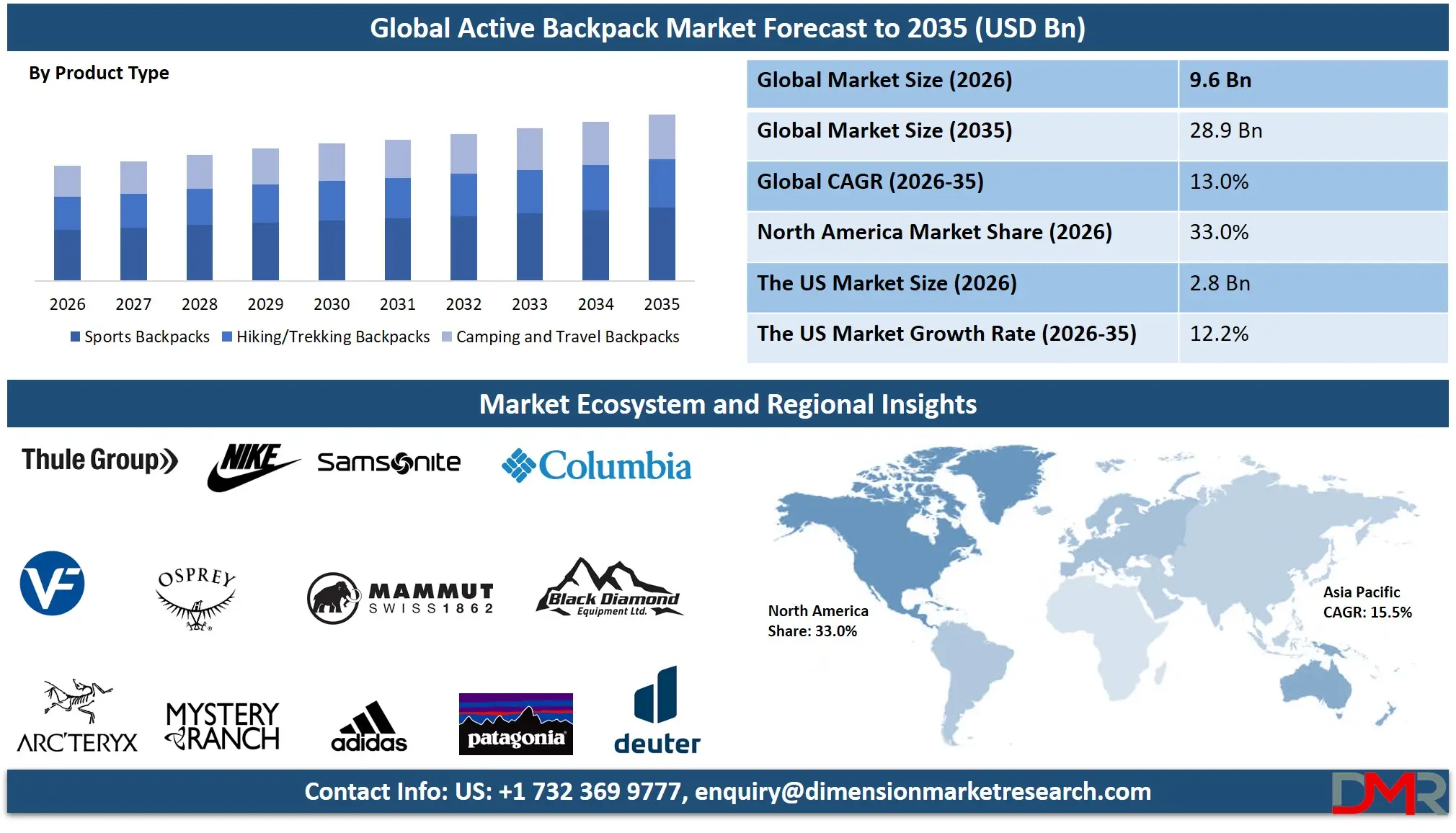
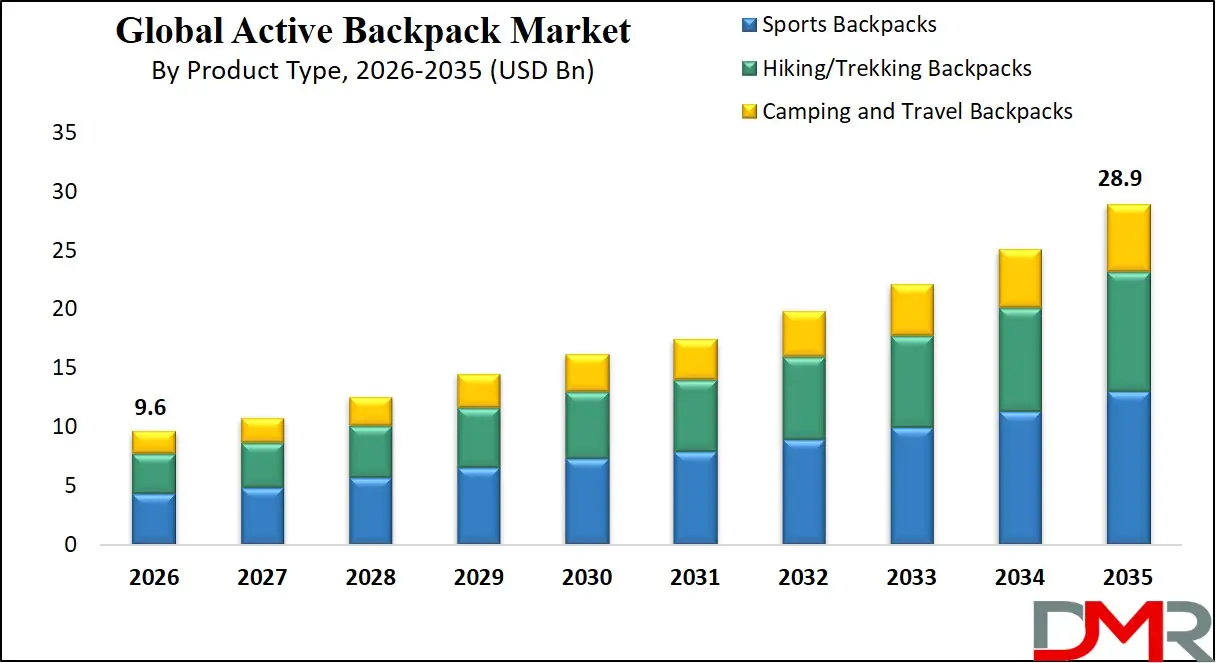
The Global Active Backpack Market is set for substantial expansion, reaching an estimated USD 9.6 billion in 2026 and projected to grow at a strong CAGR of 13.0% from 2026 to 2035, to a market value of USD 28.9 billion by 2035. This robust growth trajectory is fueled by the accelerating adoption of outdoor recreational activities, the rising popularity of fitness and wellness trends, and the increasing demand for specialized, durable, and ergonomic carry solutions across diverse consumer demographics.
ℹ
To learn more about this report –
Download Your Free Sample Report Here
Rising consumer focus on health, wellness, and adventure tourism is compelling individuals to invest in high-performance backpacks designed for specific activities like hiking, trekking, camping, and sports. The rapid expansion of the travel and hospitality sector, coupled with the growth of adventure tourism in emerging economies, is significantly increasing the demand for reliable and feature-rich travel and camping backpacks.
Additionally, growing urbanization and the need for functional yet stylish everyday carry solutions are further accelerating market adoption. Consumers are increasingly seeking backpacks with technical features such as hydration compatibility, anti-theft designs, USB charging ports, lightweight materials, and ergonomic support systems. Brands are integrating innovative materials like rip-stop nylon, recycled fabrics, and weather-resistant coatings to enhance durability and user experience while aligning with sustainability trends.
E-commerce platforms and direct-to-consumer (D2C) models are enabling brands to reach a global customer base with targeted marketing and competitive pricing. Specialty outdoor retail stores continue to play a crucial role in providing expert advice and hands-on product experience. As the lines between urban commuting, fitness, and outdoor adventure continue to blur, the Active Backpack Market is expected to witness sustained double-digit growth through 2035, driven by product innovation and a growing global appetite for active lifestyles.
ℹ
To learn more about this report –
Download Your Free Sample Report Here
Growing government and organizational initiatives promoting physical activity, outdoor education, and sustainable tourism further accelerate global adoption. However, barriers such as fluctuating raw material costs, intense competition from unorganized local players, supply chain complexities, and the challenge of replicating in-store fit and feel online remain. Despite these limitations, the convergence of advanced material science, smart features, and omnichannel retail strategies positions the active backpack as an essential accessory for the modern, mobile consumer through 2035.
The US Active Backpack Market
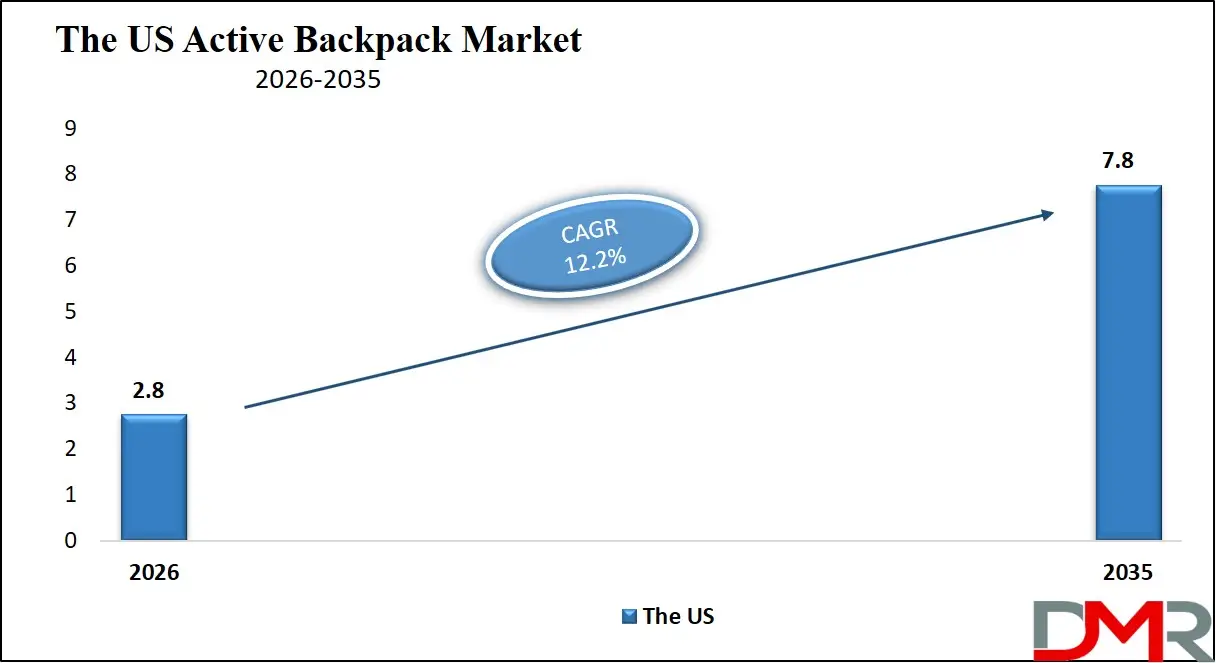
The U.S. Active Backpack Market is projected to reach USD 2.8 billion in 2026 and grow at a CAGR of 12.2%, reaching USD 7.8 billion by 2035. The U.S. leads global adoption due to its deeply ingrained outdoor culture, high participation in fitness activities, and a strong consumer base that values both performance and brand authenticity.
ℹ
To learn more about this report –
Download Your Free Sample Report Here
The proliferation of outdoor recreation, from national park visits to urban hiking and gym culture, fuels demand for specialized backpacks. Major technology platforms and fashion trends also influence the market, with collaborations between heritage outdoor brands and streetwear labels creating new consumer segments. Retail giants such as REI, Dick's Sporting Goods, and Amazon are central to distribution, offering a wide range of products from budget-friendly to premium.
U.S. regulatory and industry support for product safety and sustainability, alongside frameworks promoting responsible manufacturing, encourages investment in eco-friendly materials and ethical production practices. The market is witnessing a shift towards direct-to-consumer models and personalized online shopping experiences, reducing reliance on traditional wholesale channels and enhancing brand loyalty. The rise of remote work has also blurred the lines between commuting and travel packs, further intensifying product diversification and positioning the U.S. as a critical innovator in this space.
The Europe Active Backpack Market
The Europe Active Backpack Market is projected to be valued at approximately USD 2,893.5 million in 2026 and is projected to reach around USD 8,946.2 million by 2035, growing at a CAGR of about 13.4% from 2026 to 2035. Europe's leadership is anchored by its rich history of mountaineering, a strong culture of outdoor sports, and stringent environmental and sustainability regulations, particularly the EU's Circular Economy Action Plan.
Countries such as Germany, the U.K., France, and the Nordic region are widely adopting high-performance backpacks, driven by a high emphasis on quality, durability, and environmental responsibility. The popularity of long-distance hiking trails like the Camino de Santiago and the rise of bikepacking further necessitate robust and specialized carrying equipment.
Europe's high density of established outdoor brands, cross-border travel freedom, and a mature adventure tourism ecosystem drive the demand for innovative, compliant products. Funding and support for sustainable tourism initiatives encourage the use of recycled materials and the development of repairable, long-lasting backpack designs. With a sophisticated consumer base and a regulatory landscape that prioritizes environmental stewardship, Europe remains a highly advanced and essential region for active backpacks.
The Japan Active Backpack Market
The Japan Active Backpack Market is anticipated to be valued at approximately USD 712.4 million in 2026 and is expected to attain nearly USD 2,189.6 million by 2035, expanding at a CAGR of about 13.3% during the forecast period. Japan's aging population and a government push for "Active Senior" and healthy lifestyle initiatives are driving the adoption of lightweight, ergonomic, and easily accessible backpacks for day hikes and urban mobility.
The Ministry of the Environment actively supports sustainable consumption, promoting the use of products made from recycled materials. Japan's leadership in precision manufacturing and fabric technology provides a robust foundation for advanced backpack features, including high-performance waterproofing and ultra-lightweight construction.
Japan's concept of "Kyūyō" (rest and recreation), integrated into corporate culture and supported by a vast network of efficient public transport, makes a functional and stylish backpack essential for weekend getaways and commuting. Companies are deploying backpacks with smart features like RFID protection and integrated charging to appeal to tech-savvy consumers. Japan's cultural emphasis on quality, detail, and reliability positions it as a high-growth, quality-focused market for active backpacks.
Global Active Backpack Market: Key Takeaways
- Strong Global Market Growth Outlook: The Global Active Backpack Market is expected to be valued at USD 9.6 billion in 2026 and is projected to reach USD 28.9 billion by 2035, showcasing rapid expansion supported by rising demand for outdoor recreation and specialized gear.
- High CAGR Driven by Lifestyle Shifts: The market is expected to grow at an impressive CAGR of 13.0% from 2026 to 2035, fueled by accelerating health and wellness trends, increasing adventure tourism, and demand for technical innovation in soft goods.
- Strong Growth Trajectory in the United States: The U.S. Active Backpack Market stands at USD 2.8 billion in 2026 and is projected to reach USD 7.8 billion by 2035, expanding at a CAGR of 12.0% due to high participation in outdoor activities and a strong retail landscape.
- Regional Dominance: North America is expected to capture approximately 33.0% of the global market share in 2026, supported by a strong outdoor culture, high disposable income, and the presence of leading global brands.
- Rapid Advancement in Backpack Technologies: Innovations including smart fabrics, integrated solar panels, anti-theft locking mechanisms, ergonomic load distribution systems, and sustainable materials like recycled ocean plastic are significantly enhancing the functionality and appeal of active backpacks.
- Growing "Gorpcore" Trend Boosts Adoption: The rise of "gorpcore" fashion, where outdoor and utilitarian aesthetics become mainstream, coupled with the need for versatile gear for both city and trail, is driving sustained demand for stylish and functional backpacks.
Global Active Backpack Market: Use Cases
- Weekend Hiking Trips: Day-hikers use lightweight 20-30L packs to carry water, snacks, extra layers, and navigation tools on trails, prioritizing comfort and ventilation.
- Multi-Day Trekking Expeditions: Backpackers rely on large-capacity (50L+) trekking packs with robust suspension systems to carry tents, sleeping bags, cooking gear, and food for extended backcountry journeys.
- Commuting in Urban Environments: City dwellers use sleek, durable backpacks (15-25L) with padded laptop compartments and weather-resistant fabrics to safely carry work essentials and electronics on bikes or public transport.
- Gym and Fitness Activities: Fitness enthusiasts use specialized sports backpacks with separate ventilated compartments for shoes and sweaty gym clothes, keeping the rest of their gear organized and fresh.
- School and University: Students utilize durable and ergonomic backpacks (20-30L) to carry heavy textbooks, laptops, and stationery, with a focus on comfort and back health.
Global Active Backpack Market: Stats & Facts
World Trade Organization (WTO)
- The World Trade Organization maintains global merchandise trade statistics covering more than 200 economies and product categories, including travel goods such as backpacks.
- The WTO and its predecessor organizations have published international trade statistics annually since 1952.
- WTO trade databases include global trade values, volumes, and commodity-level statistics for luggage and travel goods used by policymakers and businesses worldwide.
United Nations Comtrade / Global Trade Databases
- Global backpack import data indicates more than 2,041,413 recorded backpack import shipments worldwide across international trade databases.
- Backpack imports were supplied by over 74,800 global suppliers to more than 136,000 buyers worldwide.
- Backpack trade flows span over 181 exporting countries and 219 importing countries globally.
- Global trade databases recorded approximately 488,944 backpack-bag import shipments across 139 exporting countries and 193 importing countries.
Global Trade Shipment Data (Customs & Trade Records)
- China accounts for about 66% of global backpack export shipments, making it the largest supplier in the international market.
- Vietnam represents around 7% of global backpack export shipments in international trade records.
- India accounts for roughly 7% of global backpack exports, highlighting Asia's strong manufacturing presence.
- The top three importing countries account for approximately 77% of global backpack bag imports in trade shipment databases.
Outdoor Industry Association (United States)
- The outdoor recreation economy generated approximately USD 639.5 billion in economic output in the United States in 2023.
- Outdoor recreation economic activity grew by about 9% between 2022 and 2023 in the United States.
Outdoor Recreation Participation Statistics
- About 54% of Americans aged six and above participated in hiking at least once in 2021, supporting demand for outdoor gear such as backpacks.
- National park visitation related to hiking increased by approximately 15% in 2023, boosting demand for trekking and day backpacks.
Tourism & Outdoor Travel Statistics (Europe)
- In Spain, about 49% of tourists report natural destinations as their primary travel motivation, increasing demand for travel and hiking backpacks.
- Across Europe, around 43% of tourists prioritize nature-based tourism activities, including hiking and trekking.
Impact of Iran Conflict on Global Active Backpack Market
- Supply Chain Disruptions: Regional instability disrupts oil-based raw material supply like nylon and polyester. Manufacturing delays and increased logistics costs impact global backpack production timelines and inventory availability.
- Raw Material Price Volatility: Geopolitical tensions cause fluctuations in crude oil prices, directly increasing costs for petroleum-based fabrics and components. Brands face margin pressure or must raise consumer prices.
- Shift in Travel Patterns: Conflict alters tourism flows in Middle East and neighboring regions. Reduced travel to affected areas decreases demand for travel backpacks while increasing need in safer alternative destinations.
- Manufacturing Relocation Pressures: Brands reconsider regional production dependence on unstable areas. Accelerated diversification of manufacturing bases to Southeast Asia and Eastern Europe increases operational complexity and costs.
Global Active Backpack Market: Market Dynamic
Driving Factors in the Global Active Backpack Market
Rising Participation in Outdoor and Adventure Activities
The increasing global interest in outdoor recreation and adventure tourism is significantly driving demand for active backpacks. Activities such as hiking, trekking, camping, cycling, and backpacking are becoming more popular among younger consumers and urban populations seeking healthier and experience-based lifestyles. As participation grows, consumers require durable, lightweight, and functional backpacks designed specifically for outdoor environments. Features such as hydration reservoirs, ergonomic back panels, weather-resistant materials, and gear attachment systems improve comfort and safety during long trips. Governments and tourism boards promoting nature-based tourism are also encouraging outdoor participation. This growing adventure culture is creating sustained demand for specialized backpacks designed for performance, durability, and convenience in both recreational and professional outdoor activities.
The "Gorpcore" Trend and Fashion-Technology Integration
Active backpacks are increasingly evolving from purely functional gear into fashion-driven lifestyle accessories. The rise of the "gorpcore" trend where outdoor apparel and equipment are incorporated into everyday streetwear has significantly boosted consumer interest in technical backpacks. Younger consumers and urban professionals prefer backpacks that combine rugged outdoor aesthetics with modern design. At the same time, technology integration is transforming backpack functionality. Many modern backpacks include features such as USB charging ports, anti-theft RFID pockets, hidden compartments, and solar charging panels. These features appeal to tech-savvy consumers who want convenience and security in their daily commute or travel. The fusion of fashion, utility, and technology is expanding the consumer base beyond outdoor enthusiasts.
Restraints in the Global Active Backpack Market
Intense Competition and Price Sensitivity
The global active backpack market is highly fragmented, with numerous international brands, regional manufacturers, and local unorganized players competing across multiple price segments. This intense competition places significant pressure on pricing strategies and profit margins. Budget and mid-range segments, in particular, face strong competition from low-cost manufacturers offering similar designs at lower prices. Many consumers prioritize affordability when purchasing backpacks, especially in emerging economies where disposable income levels vary widely. The presence of counterfeit products and imitation designs further intensifies market competition. As a result, premium brands often struggle to justify higher pricing unless they clearly differentiate through advanced features, superior quality, or strong brand identity in the competitive global marketplace.
Supply Chain Volatility and Raw Material Costs
The production of active backpacks relies on several raw materials such as nylon, polyester fabrics, foam padding, zippers, metal buckles, and plastic components. Many of these materials are derived from petrochemical products, making their costs sensitive to fluctuations in global oil prices. Additionally, global supply chain disruptions, transportation delays, geopolitical tensions, and trade tariffs can affect the availability and cost of these materials. Manufacturers may experience increased production expenses, longer lead times, and logistical challenges when sourcing components from multiple international suppliers. Such volatility can squeeze profit margins for companies and may lead to higher retail prices for consumers. These factors create operational uncertainty and limit the ability of manufacturers to maintain stable pricing.
Opportunities in the Global Active Backpack Market
Sustainability and Circular Economy Models
Sustainability is emerging as one of the most significant opportunities in the active backpack market. Consumers are increasingly seeking environmentally responsible products made with sustainable materials and ethical production practices. Many brands are responding by developing backpacks made from recycled polyester, ocean plastics, recycled nylon, and other eco-friendly materials. In addition to sustainable materials, companies are introducing circular economy initiatives such as product repair programs, recycling services, and take-back systems to extend product life cycles. These strategies reduce environmental impact while strengthening brand reputation among environmentally conscious consumers. As sustainability becomes a major purchasing factor, brands that prioritize transparent supply chains and environmentally responsible innovation can attract loyal customers and command premium pricing.
Expansion into Emerging Digital Economies
Emerging markets in Asia-Pacific, Latin America, and parts of Africa present strong growth potential for the active backpack market. Rapid urbanization, rising disposable incomes, and a growing middle class are increasing consumer spending on travel, lifestyle products, and outdoor equipment. In countries such as India, China, Brazil, and Mexico, domestic tourism and adventure activities are expanding quickly, driving demand for functional travel gear. The growth of e-commerce platforms and digital payment systems has also improved product accessibility for consumers in these regions. Manufacturers can capitalize on these opportunities by offering region-specific designs, competitive pricing strategies, and strong online retail presence. Strategic partnerships with local distributors and retailers can further accelerate market penetration.
Trends in the Global Active Backpack Market
Smart and Connected Backpacks
The integration of smart technology into backpacks is becoming an important trend in the global market. Modern backpacks increasingly feature built-in USB charging ports, power banks, GPS tracking systems, and integrated LED lighting for improved safety during travel or cycling. Some innovative designs are also exploring smart fabrics, biometric sensors, and temperature-regulating materials that enhance comfort during outdoor activities. These connected backpacks are particularly attractive to tech-savvy consumers who value convenience, connectivity, and security. As wearable technology and smart accessories continue to evolve, manufacturers are investing in research and development to integrate advanced features into backpacks. This trend is creating a premium product segment that combines traditional outdoor functionality with modern digital capabilities.
Modular and Hybrid Backpack Designs
Consumers are increasingly seeking versatile products that can serve multiple purposes, leading to the rise of modular and hybrid backpack designs. These backpacks are designed with detachable components, expandable compartments, and adjustable storage systems that allow users to adapt the bag for different activities such as commuting, travel, hiking, or business use. For example, some models include removable daypacks, laptop sleeves, or gear modules that can be customized according to the user's needs. This flexibility supports the growing "one-bag travel" philosophy, where travelers prefer a single multifunctional bag instead of multiple pieces of luggage. Modular designs also appeal to minimalists and frequent travelers who value efficiency, portability, and smart organization.
Global Active Backpack Market: Research Scope and Analysis
By Product Type Analysis
Sports backpacks is projected to dominate the product type segment due to their versatility and widespread usage across multiple activities such as gym workouts, cycling, running, and school or daily commuting. These backpacks are typically lightweight, compact, and designed with ergonomic straps, breathable back panels, and dedicated compartments for shoes, water bottles, and electronics. Major global brands such as Nike, Adidas, Puma, and Under Armour dominate this segment by leveraging strong brand recognition and extensive distribution networks. Their ability to integrate stylish designs with functional performance features attracts a large consumer base, particularly among younger demographics and fitness enthusiasts. Sports backpacks are also popular among students and urban commuters who prefer practical and fashionable everyday bags. Continuous product innovation, including water-resistant fabrics, anti-theft pockets, and laptop compartments, further strengthens demand. Additionally, aggressive marketing campaigns, athlete endorsements, and collaborations with sports organizations help leading brands maintain dominance. As fitness culture expands globally and participation in sports activities increases, sports backpacks continue to hold the largest share within the product type segment of the active backpack market.
Hiking and trekking backpacks represent a significant segment within the active backpack market, primarily dominated by specialized outdoor brands that focus on durability, comfort, and technical performance. Companies such as The North Face, Osprey, Deuter, Gregory, and Arc'teryx lead this segment due to their strong reputation among professional hikers, climbers, and adventure travelers. These backpacks are specifically engineered to support long-distance outdoor activities and challenging terrains. Features such as internal or external frames, load-bearing hip belts, adjustable suspension systems, hydration reservoirs, and weather-resistant materials are common in this category.
By Capacity Analysis
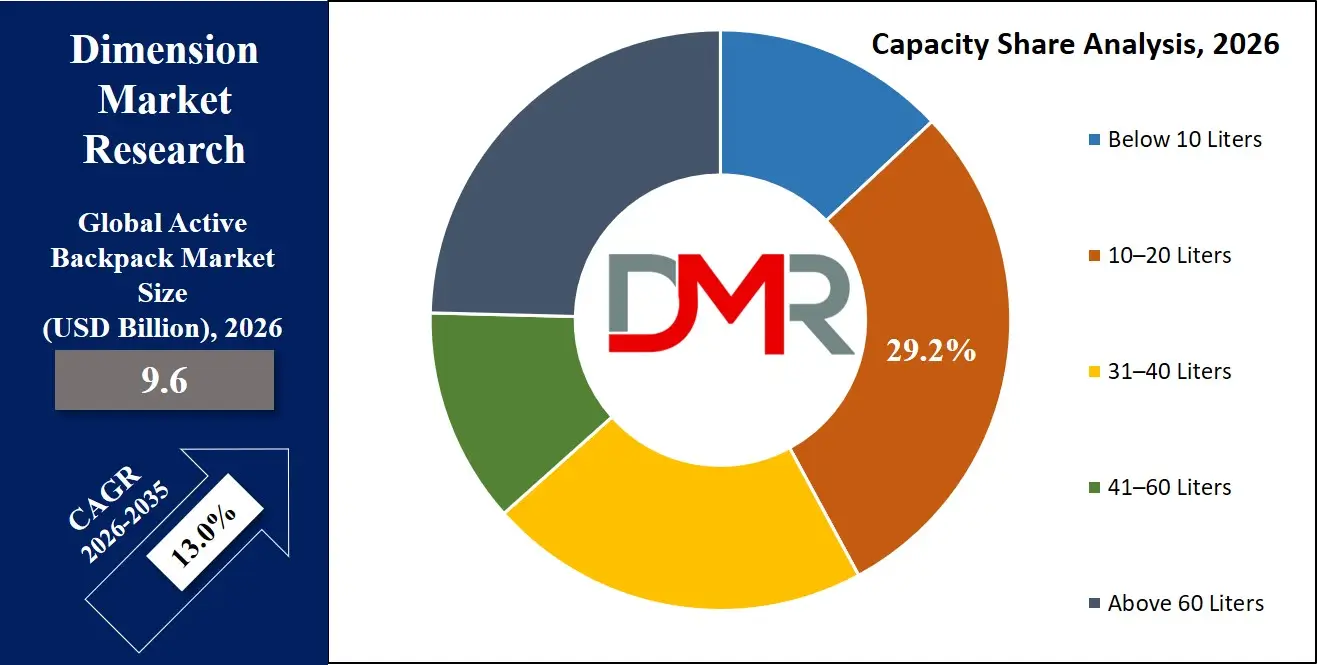
Backpacks with capacities below 10 liters are primarily poised to dominated by brands targeting urban commuters, cyclists, runners, and day-trip users who require compact storage solutions. Companies such as Nike, Adidas, Fjällräven, and Herschel Supply Co. lead this segment due to their strong presence in lifestyle and everyday accessory markets. These backpacks are designed to carry small personal items such as smartphones, wallets, water bottles, and lightweight accessories. Their compact size makes them ideal for short outdoor activities, quick errands, and urban mobility. The design focus in this segment revolves around portability, minimalist aesthetics, and lightweight construction. Many models also include ergonomic straps, water-resistant materials, and reflective safety elements for cyclists or runners. Fashion appeal plays an important role, with brands frequently releasing seasonal designs and collaborations to attract younger consumers. The increasing popularity of minimalist lifestyles and lightweight travel trends continues to drive demand for smaller backpacks within this capacity segment.
ℹ
To learn more about this report –
Download Your Free Sample Report Here
The 10–20 liter capacity segment is dominated by brands that focus on versatile backpacks suitable for daily commuting, school use, and light outdoor activities. Companies such as JanSport, Herschel Supply Co., Fjällräven, and Adidas have established strong leadership in this category. These backpacks offer enough capacity to carry everyday essentials such as laptops, books, water bottles, and gym gear while remaining compact and comfortable for daily use. The design typically includes padded laptop compartments, multiple organizational pockets, and ergonomic shoulder straps. Their popularity among students and office commuters makes this one of the most widely used backpack capacities globally.
By Price Range Analysis
The budget segment is primarily projected to dominated by mass-market manufacturers and private label brands that focus on affordability and large-scale production. Retailers such as Decathlon, Walmart, and Target, along with regional manufacturers in Asia, play a significant role in this category. These backpacks are designed to meet basic consumer needs such as school, commuting, and casual travel while maintaining low manufacturing costs. Materials used in this segment often include standard polyester fabrics and simple zipper systems without advanced technical features. Despite limited performance capabilities, these products remain highly popular among students and price-sensitive consumers in developing economies. Large production volumes allow companies to maintain competitive pricing while reaching a broad customer base. Online marketplaces and discount retail chains also contribute significantly to distribution within this segment. The affordability and accessibility of budget backpacks ensure that this category maintains strong demand across global markets.
The mid-range segment represents one of the most competitive categories in the global active backpack market. It is dominated by established lifestyle and sports brands such as Adidas, Nike, Puma, and JanSport. These brands offer backpacks that balance affordability with improved quality, design, and functionality. Products in this segment typically include padded compartments, durable fabrics, and stylish designs suitable for both urban and outdoor use. Consumers often perceive mid-range backpacks as offering good value for money because they provide better durability and aesthetics compared to budget alternatives.
By Distribution Channel Analysis
E-commerce platforms is poised to dominate the distribution landscape of the global active backpack market due to their wide product selection, convenience, and competitive pricing. Online marketplaces such as Amazon, Alibaba, Flipkart, and brand-owned websites enable consumers to compare products, read reviews, and access global brands easily. Digital retail channels also allow smaller brands and niche manufacturers to reach international markets without extensive physical retail networks. Seasonal discounts, online promotions, and influencer marketing further drive sales through e-commerce platforms. The increasing adoption of smartphones and digital payment systems has accelerated online shopping behavior, particularly among younger consumers. Additionally, advanced logistics and fast delivery services have improved customer satisfaction in online retail. As digital commerce continues to expand globally, e-commerce platforms are expected to remain the fastest-growing and most influential distribution channel in the active backpack market.
Specialty outdoor retail stores dominate sales of technical and performance-oriented backpacks designed for hiking, trekking, and camping activities. Retailers such as REI, Decathlon, and specialized outdoor gear stores provide expert guidance, product demonstrations, and personalized fitting services that are crucial for consumers purchasing high-performance backpacks. Customers often prefer to physically examine backpacks, test weight distribution, and assess comfort before making a purchase. These stores also offer access to premium outdoor brands and specialized equipment that may not be widely available in general retail outlets. Knowledgeable staff and curated product selections help build consumer trust and brand loyalty. Additionally, outdoor retailers often host adventure workshops and community events that strengthen their connection with outdoor enthusiasts. This experiential retail environment ensures that specialty stores remain an important distribution channel for performance-focused backpack products.
The Global Active Backpack Market Report is segmented on the basis of the following:
By Product Type
- Sports Backpacks
- Hiking/Trekking Backpacks
- Camping and Travel Backpacks
By Capacity
- Below 10 Liters
- 10–20 Liters
- 31–40 Liters
- 41–60 Liters
- Above 60 Liters
By Price Range
- Budget (Below <$35)
- Mid-range ($35–$85)
- Premium ($85–$145)
- Luxury (Above >$145)
By Distribution Channel
- E-commerce Platforms
- Specialty Outdoor Retail Stores
- Multi-brand Sports & Lifestyle Store
- Hypermarkets & Supermarkets
- Brand Exclusive Stores
Impact of Artificial Intelligence in the Global Active Backpack Market
- AI for Trend Forecasting and Design: AI analyzes vast datasets from social media, search trends, and sales to identify emerging patterns in color, style, and features. This allows brands to design backpacks that meet future consumer demand with higher precision.
- AI-Driven Personalized Recommendations: E-commerce platforms use AI algorithms to analyze a customer's browsing history, past purchases, and stated activity preferences (e.g., trail running vs. urban commuting) to recommend the most suitable backpacks, improving conversion rates.
- Predictive Inventory and Supply Chain Management: AI-powered systems predict demand based on seasonality, regional trends, and global events, enabling manufacturers and retailers to optimize inventory levels, reduce waste, and manage supply chains more efficiently.
- AI-Based Material Optimization: AI is used to simulate fabric performance and stress points, helping designers create stronger, lighter backpacks using less material. This accelerates innovation in sustainable and high-performance product development.
- Enhanced Customer Service with Chatbots: AI-powered virtual assistants provide 24/7 customer support on e-commerce sites, answering questions about backpack specs, sizing, and return policies, enhancing the online shopping experience.
Global Active Backpack Market: Regional Analysis
Region with the Largest Revenue Share
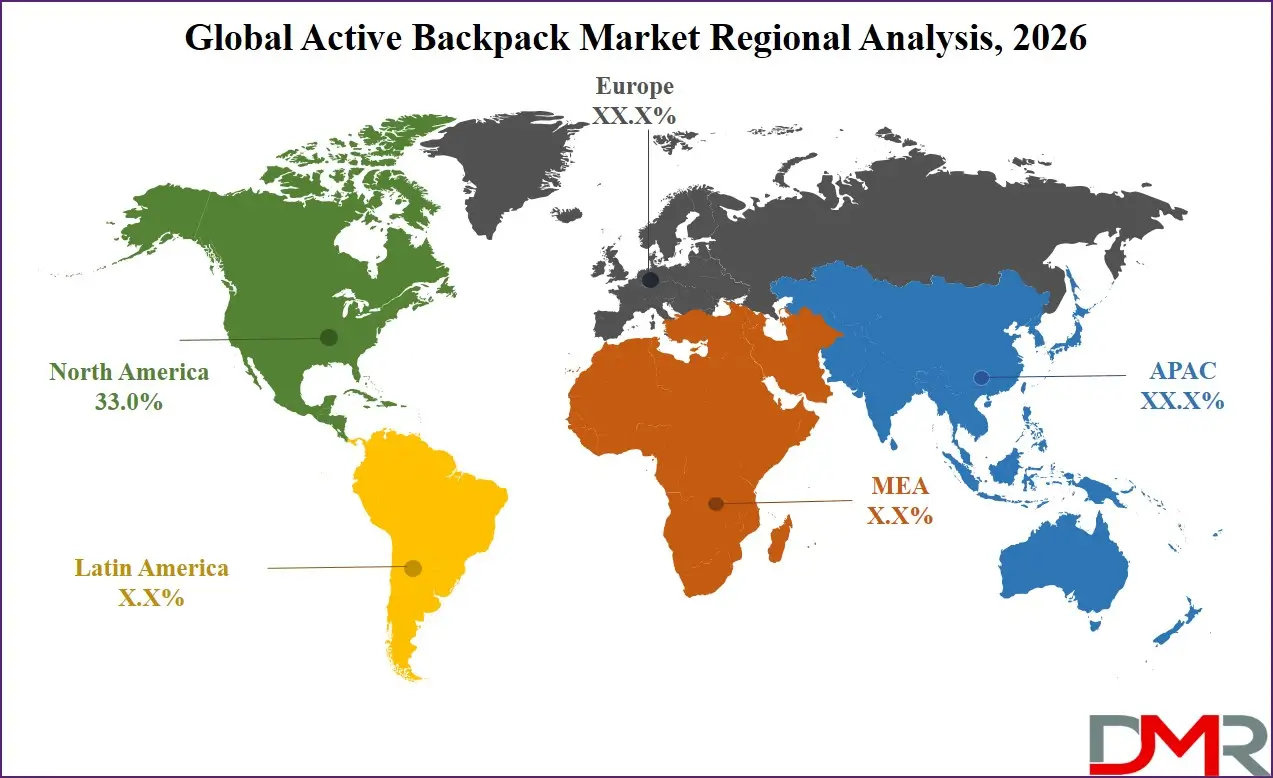
North America is projected to dominate the regional segment with the highest market share, anticipated to hold approximately 33.0% of the total market revenue by the end of 2026, due to its deeply embedded outdoor culture, high disposable income, and the presence of iconic global brands like The North Face, Osprey, and Patagonia. The region is a hub for product innovation and marketing, driving trends in both performance gear and outdoor-inspired fashion. Strong consumer awareness regarding health, wellness, and environmental issues further strengthens demand.
ℹ
To learn more about this report –
Download Your Free Sample Report Here
The United States, in particular, accounts for the largest share within North America due to its vast and diverse national park system, high participation in hiking and camping, and a robust retail infrastructure. Although Asia Pacific is the fastest-growing region, North America continues to hold the largest revenue share due to high average selling prices, brand loyalty, and early adoption of premium technical gear.
Region with the Highest CAGR
Asia-Pacific is poised to hold the highest CAGR and is poised to achieve rapid market share growth due to its massive and increasingly affluent population, a booming domestic tourism sector, and a growing middle class adopting Western outdoor and fitness trends. Countries like China, India, Japan, and South Korea are seeing a surge in interest in hiking, camping, and international travel. Government initiatives promoting tourism and outdoor activities, combined with the rapid expansion of e-commerce platforms like Alibaba and Shopee, are creating fertile ground for market adoption. The region's price sensitivity is being addressed through a wide range of local and international brands offering products at various price points. This, combined with an immense volume of new consumers seeking active lifestyles, positions APAC as the fastest-growing market for active backpacks.
By Region
North America
Europe
- Germany
- The U.K.
- France
- Italy
- Russia
- Spain
- Benelux
- Nordic
- Rest of Europe
Asia-Pacific
- China
- Japan
- South Korea
- India
- ANZ
- ASEAN
- Rest of Asia-Pacific
Latin America
- Brazil
- Mexico
- Argentina
- Colombia
- Rest of Latin America
Middle East & Africa
- Saudi Arabia
- UAE
- South Africa
- Israel
- Egypt
- Rest of MEA
Global Active Backpack Market: Competitive Landscape
The Global Active Backpack Market is highly fragmented and competitive, featuring a mix of century-old heritage brands, innovative lifestyle-focused newcomers, and massive sportswear conglomerates. Leading players like VF Corporation (owner of The North Face, JanSport, Eastpak) and Samsonite (owner of Gregory) leverage their brand portfolios and global distribution networks. Specialized outdoor brands such as Osprey, Deuter, and Mystery Ranch drive market dynamics with a focus on technical innovation, durability, and niche performance features.
Sportswear giants like Nike, Adidas, and Under Armour are significant players, leveraging their brand recognition and vast retail reach to capture the sports and lifestyle segments. Premium fashion houses like Gucci and Prada also compete at the luxury end, while a vast ecosystem of D2C brands and regional manufacturers cater to specific price points and local preferences.
Some of the prominent players in the Global Active Backpack Market are:
- VF Corporation
- Osprey Packs, Inc.
- Deuter Sport GmbH
- Samsonite International S.A. (Gregory Mountain Products)
- Nike, Inc.
- Adidas AG
- Patagonia, Inc.
- Columbia Sportswear Company
- Mammut Sports Group AG
- Black Diamond Equipment, Ltd.
- Mystery Ranch (part of Yeti Holdings)
- Arc'teryx (ANTA Sports Products Limited)
- Thule Group
- Lowe Alpine
- Jack Wolfskin
- Quechua (Decathlon S.A.)
- Herschel Supply Co.
- Fjällräven (Fenix Outdoor AB)
- Karrimor (Frasers Group)
- Other Key Players
Recent Developments in the Global Active Backpack Market
- November 2025: Patagonia unveiled its new line of backpacks made entirely from "NetPlus" 100% recycled fishing nets, reinforcing its commitment to sustainability and circular economy principles.
- October 2025: Osprey demonstrated its enhanced "Anti-Gravity" suspension system at the Outdoor Retailer show, featuring 3D-printed, custom-fit hip belts for unparalleled load-bearing comfort on long treks.
- September 2025: VF Corporation announced a multi-year agreement with a top-3 global logistics company to optimize its supply chain, signaling a focus on improving the speed and sustainability of delivering its brands like The North Face.
- August 2025: Samsonite completed the acquisition of a specialist smart-luggage tech firm to enhance its Gregory backpack line with integrated GPS tracking and digital locking features.
- July 2025: A Horizon Europe grant was awarded to a consortium developing biodegradable and bio-based polymers for outdoor gear, aiming to create a fully compostable backpack for the first time.
- June 2025: Herschel Supply Co. partnered with a major South Korean pop group to launch a limited-edition collection, aiming to capture the Gen Z market in Asia and set new standards for fashion-driven collaborations in the region.
Report Details
| Report Characteristics |
| Market Size (2026) |
USD 9.6 Bn |
| Forecast Value (2035) |
USD 28.9 Bn |
| CAGR (2026–2035) |
13.0% |
| The US Market Size (2026) |
USD 2.8 Bn |
| Historical Data |
2021 – 2025 |
| Forecast Data |
2027 – 2035 |
| Base Year |
2025 |
| Estimate Year |
2026 |
| Report Coverage |
Market Revenue Estimation, Market Dynamics, Competitive Landscape, Growth Factors and etc. |
| Segments Covered |
By Product Type (Sports Backpacks, Hiking/Trekking Backpacks, Camping and Travel Backpacks), By Capacity (Below 10 Liters, 10–20 Liters, 31–40 Liters, 41–60 Liters, Above 60 Liters), By Price Range (Budget [Below <$35], Mid-range [$35–$85], Premium [$85–$145], Luxury [Above >$145]), and By Distribution Channel (E-commerce Platforms, Specialty Outdoor Retail Stores, Multi-brand Sports & Lifestyle Store, Hypermarkets & Supermarkets, Brand Exclusive Stores) |
| Regional Coverage |
North America – The US and Canada; Europe – Germany, The UK, France, Russia, Spain, Italy, Benelux, Nordic, & Rest of Europe; Asia-Pacific – China, Japan, South Korea, India, ANZ, ASEAN, Rest of APAC; Latin America – Brazil, Mexico, Argentina, Colombia, Rest of Latin America; Middle East & Africa – Saudi Arabia, UAE, South Africa, Turkey, Egypt, Israel, & Rest of MEA |
| Prominent Players |
VF Corporation (The North Face), Osprey Packs, Inc., Deuter Sport GmbH, Samsonite International S.A. (Gregory Mountain Products), Nike, Inc., Adidas AG, Patagonia, Inc., Columbia Sportswear Company, Mammut Sports Group AG, Black Diamond Equipment, Ltd., Mystery Ranch (part of Yeti Holdings), Arc'teryx (ANTA Sports Products Limited), Thule Group, Lowe Alpine, Jack Wolfskin, Quechua (Decathlon S.A.), Herschel Supply Co., Fjällräven (Fenix Outdoor AB), Karrimor (Frasers Group), and Other Key Players |
| Purchase Options |
We have three licenses to opt for: Single User License (Limited to 1 user), Multi-User License (Up to 5 Users) and Corporate Use License (Unlimited User) along with free report customization equivalent to 0 analyst working days, 3 analysts working days and 5 analysts working days respectively. |
Frequently Asked Questions
How big is the Global Active Backpack Market?
▾ The Global Active Backpack Market size is estimated to have a value of USD 9.6 billion in 2026 and is expected to reach USD 28.9 billion by the end of 2035.
What is the growth rate in the Global Active Backpack Market?
▾ The market is growing at a CAGR of 13.0 percent over the forecasted period of 2026-2035.
What is the size of the US Active Backpack Market?
▾ The US Active Backpack Market is projected to be valued at USD 2.8 billion in 2026. It is expected to witness subsequent growth as it holds USD 7.8 billion in 2035 at a CAGR of 12.2%.
Which region accounted for the largest Global Active Backpack Market?
▾ North America is expected to have the largest market share in the Global Active Backpack Market with a share of about 33.0% in 2026.
Who are the key players in the Global Active Backpack Market?
▾ Some of the major key players in the Global Active Backpack Market are VF Corporation (The North Face), Osprey Packs, Inc., Samsonite (Gregory), Deuter, Patagonia, and many others.