Market Snapshot
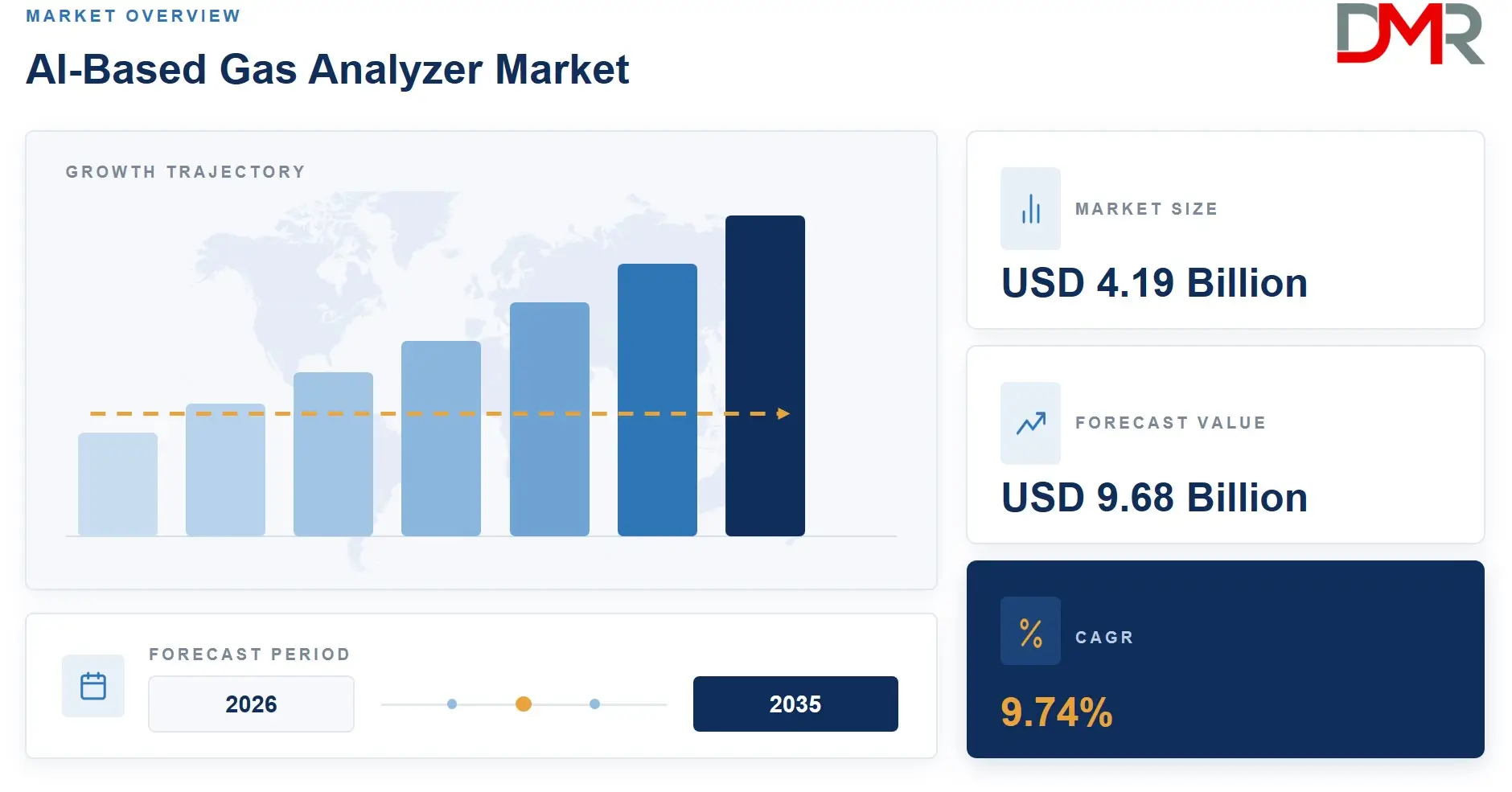
- Global AI-Based Gas Analyzer Market valued at USD 3.82 Billion in 2025, forecast to reach USD 9.68 Billion by 2035 at a CAGR of 9.74%.
- Fixed product type leads with a 70.25% revenue share in 2024, driven by continuous monitoring mandates across power generation and petrochemical plants.
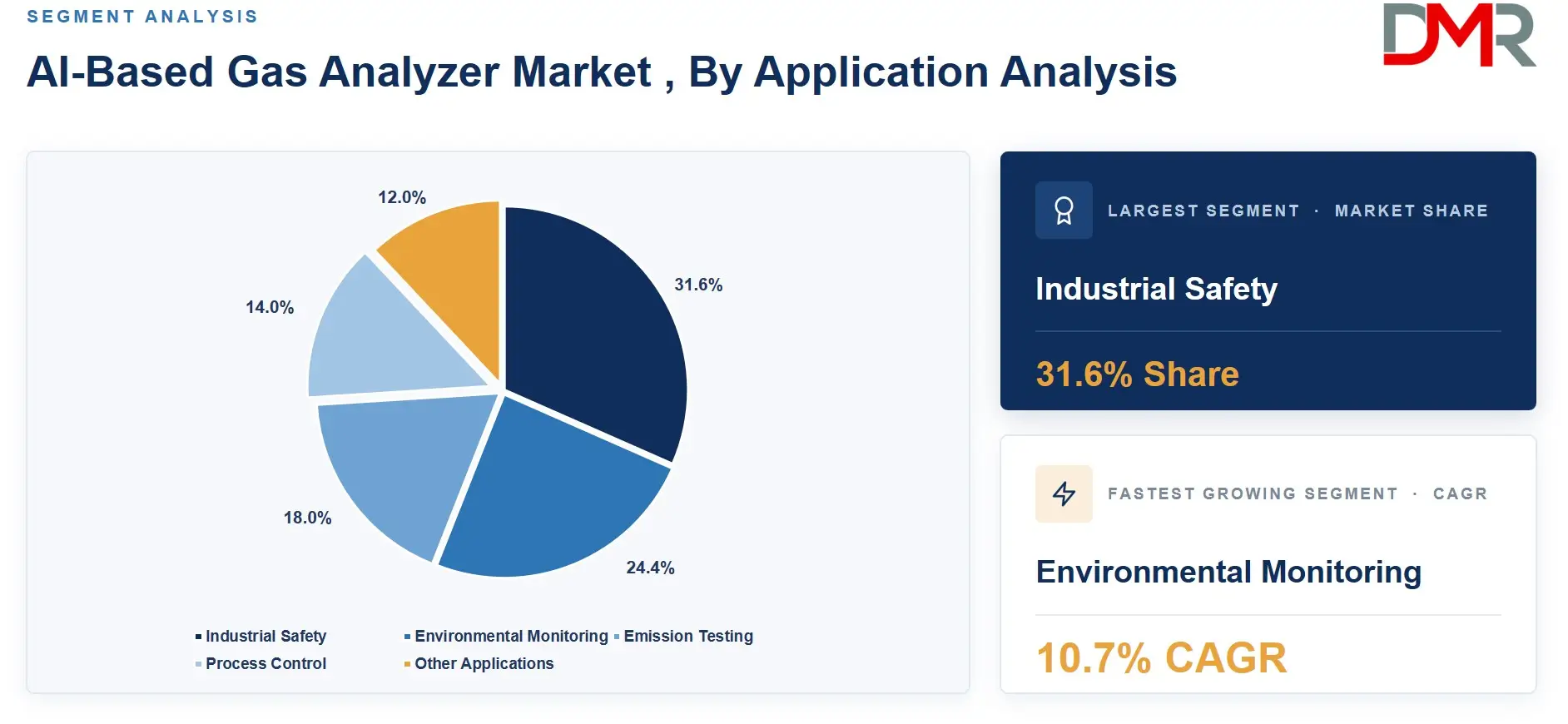
- Industrial Safety is the dominant application with a 31.6% revenue share in 2023; Oil & Gas leads the end-user industry segment.
- Hardware leads the component segment; Infrared (IR) Spectroscopy is the dominant detection technology.
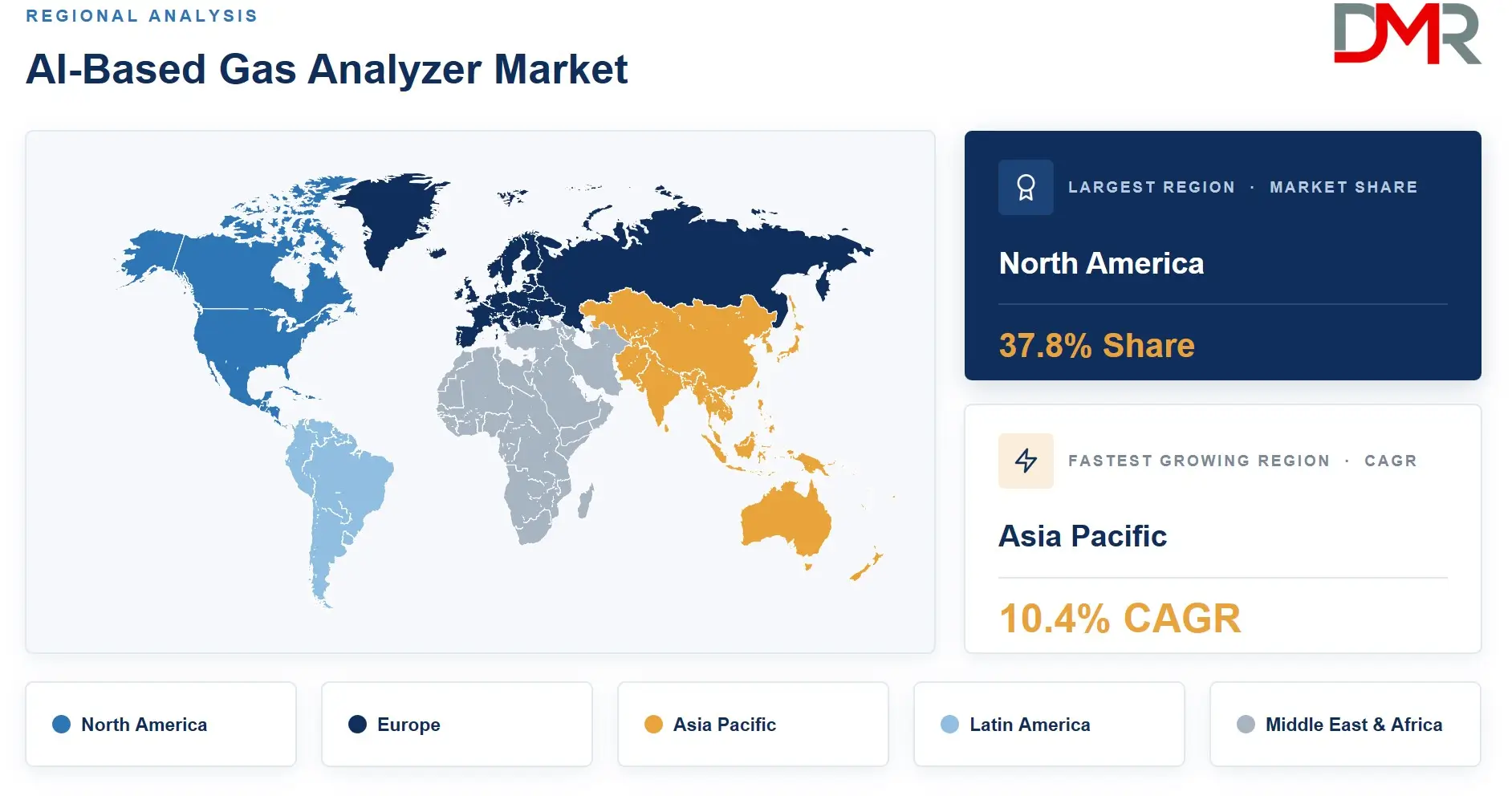
- North America holds a 37.8% revenue share, the highest of any region, supported by stringent EPA and OSHA compliance requirements.
Market Overview
The AI-based gas analyzer market covers instruments, sensor arrays, embedded AI inference engines, and supporting software that detect, measure, and classify gas concentrations across industrial, environmental, and medical environments. The market excludes purely mechanical or manual gas detection equipment that lacks AI-driven data processing. At its boundary, the market connects tightly to industrial automation, environmental monitoring platforms, and occupational health technology — sectors where buyers increasingly demand real-time analytics rather than periodic spot measurements.
AI integration fundamentally changes what a gas analyzer delivers. A conventional analyzer reports a concentration value. An AI-augmented system correlates that value against process conditions, historical baselines, and multi-sensor inputs to flag whether a reading represents a normal process fluctuation or an early precursor to a safety event. Research published in Sensors (Basel) in 2026 shows that an SMOTE-augmented SVM model operating on a 16-sensor metal oxide array achieves a 93% classification accuracy for target gases, a 19-percentage-point improvement over baseline Decision Tree classifiers. Separately, an ANN regression model applied to binary gas mixture analysis attained a correlation coefficient of 99.55% between predicted and measured values. Both results confirm that AI layers built on existing sensor hardware can close the accuracy gap that previously required expensive laboratory-grade instruments.
The market sits at the intersection of three converging forces: regulatory tightening on emissions, corporate decarbonization commitments, and the broad deployment of industrial IoT infrastructure. Buyers span oil and gas operators, power utilities, chemical manufacturers, and — at the emerging edge — healthcare providers and precision agriculture operators. Each of these buyers has a different tolerance for false positives, a different calibration cycle requirement, and a different data integration need. Vendors that can address this heterogeneity without sacrificing accuracy hold a durable pricing advantage over commodity sensor suppliers.
Market Size and Forecast
The Global AI-Based Gas Analyzer Market size is estimated at USD 4.19 Billion in 2026 from USD 3.82 Billion in 2025, and is projected to reach USD 9.68 Billion by 2035, exhibiting a CAGR of 9.74% during the forecast period.
Growth through 2035 rests on two durable structural assumptions: first, that emission compliance requirements will continue tightening across G20 economies, converting previously optional monitoring into mandatory continuous measurement; second, that AI inference costs will fall faster than sensor hardware costs, making AI-augmented analyzers economically viable even for mid-tier industrial operators who previously relied on periodic manual sampling. Research confirms the analytical case for this substitution.
ℹ
To learn more about this report –
Download Your Free Sample Report Here
A chemiresistive sensor array combined with ML classification achieved 85.13% accuracy for CO and NO₂ binary mixture analysis at room temperature, according to a 2025 study in Microchimica Acta. A separate 2024–2025 review documented MLP neural network models achieving below 18% MAPE for 60-minute methane concentration forecasts in underground coal mine environments, demonstrating that AI analyzers can now deliver operationally actionable predictions, not just real-time readings.
Consolidation activity signals that large strategics are treating this growth trajectory as confirmed rather than speculative. In May 2025, MSA Safety acquired M&C TechGroup — a gas analysis manufacturer with approximately USD 55 million in annual revenue for approximately USD 200 million, a valuation that implies premium pricing for specialized gas analysis capabilities. Acquirers paying revenue multiples above three times signal confidence in durable pricing power. Buyers evaluating AI-Based Gas Analyzer Market should note that the window for independent specialist positioning may narrow as consolidation accelerates through the forecast period.
Product Type Analysis
Fixed gas analyzers led the product type segment with a 70.25% share in 2024.
Fixed installations dominate because continuous emission monitoring systems (CEMS) regulations in the US, EU, and China legally require uninterrupted gas concentration records at stationary sources. Power plants, refineries, and chemical complexes cannot satisfy regulators with periodic portable readings. AI integration amplifies the advantage of fixed systems: always-on data streams provide the temporal density that ML models need to detect anomalies, build equipment-specific baselines, and trigger predictive maintenance before process upsets occur. Vendors that embed proprietary AI firmware into fixed analyzer hardware create switching costs that are difficult for competitors to displace on price alone.
Portable analyzers, while accounting for the remaining share, are gaining commercial relevance beyond their traditional role in confined-space entry checks. Field technicians in offshore and mining environments now require AI-scored risk assessments delivered on-device rather than after-the-fact lab analysis. A GAF-CNN deep learning model demonstrated 99.33% classification accuracy for binary gas mixtures using a single ZnO sensor with temperature modulation, confirming that miniaturized AI inference is now viable in a form factor compatible with handheld instruments. Portable device vendors that successfully embed this capability will compete directly with fixed-system vendors in emerging inspection and maintenance workflows rather than operating as a complementary category.
Application Analysis
Industrial Safety accounted for 31.6% of application demand in 2023, the highest of any category.
Industrial safety commands the largest application share because a gas leak or toxic exposure event carries both catastrophic human and regulatory cost. The commercial logic is straightforward: a USD 50,000 AI gas analysis system that prevents a single LTI (lost-time injury) event pays back its full cost within one incident. AI layers add value by reducing false-alarm fatigue — a persistent problem in conventional detection systems — while simultaneously detecting slow-burn concentration buildups that threshold-based sensors miss entirely.
ℹ
To learn more about this report –
Download Your Free Sample Report Here
Environmental monitoring and emission testing represent the fastest-expanding application categories as corporate ESG reporting frameworks move from voluntary to auditable. Process control benefits from AI gas analysis through tighter feedstock-to-output ratio management, with gas composition deviations now linkable to specific process conditions rather than treated as unexplained variance. Medical diagnostics, precision agriculture, and smart building monitoring remain early-stage but structurally significant: each extends the addressable market into buyer segments with no legacy installed base, removing the upgrade-cycle friction that slows adoption in heavy industry.
Key Market Segments
By Product Type
By Component
- Hardware
- Software
- Services
By Technology
- Infrared (IR) Spectroscopy
- Gas Chromatography
- Electrochemical Sensing
- Photoionization Detection (PID)
- Laser-based Detection
- Semiconductor Sensors
- Optical Spectroscopy
By Application
- Industrial Safety
- Environmental Monitoring
- Emission Testing
- Process Control
- Workplace Safety Monitoring
- Medical Diagnostics
- Precision Agriculture
- Smart Building Monitoring
- Air Quality Monitoring
By End-User Industry
- Oil & Gas
- Manufacturing
- Electronics & Semiconductors
- Metal Industry
- Food Processing
- Water & Wastewater Treatment
- Power Generation
- Agriculture
- Chemicals & Petrochemicals
- Automotive
- Healthcare
- Pharmaceuticals
By Deployment Mode
- Cloud-based
- On-premise
- Hybrid
By Gas Type
- Carbon Dioxide (CO₂)
- Oxygen (O₂)
- Carbon Monoxide (CO)
- Methane (CH₄)
- Hydrogen Sulfide (H₂S)
- Nitrogen Oxides (NOx)
- Sulfur Oxides (SOx)
By Connectivity
Regional Analysis
North America captured a 37.8% share of the AI-based gas analyzer market in 2026, equivalent to approximately USD 1.44 Billion.
North America leads because the regulatory apparatus for continuous emissions monitoring is the most mature globally. The US EPA's CEMS mandate covers power generation, chemical, and petroleum refining sectors, creating a legally compelled installed base that existing suppliers now upgrade with AI capabilities. OSHA workplace air quality standards add a parallel procurement cycle in manufacturing and oil and gas. Canada's carbon pricing framework further accelerates adoption by making real-time emission data a direct input to financial liability calculations rather than a compliance checkbox.
ℹ
To learn more about this report –
Download Your Free Sample Report Here
Europe holds the second-largest share, anchored by the EU Industrial Emissions Directive and the expanding ETS scope. ML-calibrated low-cost sensor networks in Europe benefit from a specific regulatory tailwind: a March 2026 study found that optimized RF calibration using only 22% of the measurement period as training data qualifies sensors for indicative measurements under EU Directive 2008/50/EC, significantly lowering the deployment cost for city-scale air quality networks. Asia Pacific is the fastest-growing region, with China's industrial safety mandate and Japan's factory automation programs generating procurement cycles that North America and Europe have already passed through. Latin America and the Middle East and Africa remain early-stage but represent greenfield opportunities where the first vendor to build a compliant network across a major industrial cluster captures long-duration contracts with limited competitive re-tendering.
Key Regions and Countries
North America
Europe
- Germany
- France
- The UK
- Spain
- Italy
- Rest of Europe
Asia Pacific
- China
- Japan
- South Korea
- India
- Australia
- Rest of APAC
Latin America
- Brazil
- Mexico
- Rest of Latin America
Middle East & Africa
- GCC
- South Africa
- Rest of MEA
Market Dynamics
Emission Mandates and Workplace Safety Rules Compress the Decision Window for Buyers
Regulatory agencies across North America, Europe, and Asia have moved from prescribing minimum detection thresholds to mandating continuous, high-frequency, auditable gas monitoring at stationary industrial sources. A single compliance failure now carries both financial penalty and permit-suspension risk. Buyers can no longer defer purchasing decisions to a convenient capital budget cycle. China's coal mining sector illustrates the acute version of this pressure: 60% of serious accidents in coal mines are caused by methane ignition or explosions, and AI models trained on gas, temperature, wind, dust, oxygen, and carbon monoxide sensor data can predict such incidents 30 minutes before they occur, according to research published by Orange/Hello Future. The difference between a 30-minute warning and no warning is not marginal — it is the difference between safe evacuation and a mass casualty event.
Industrial digitalization accelerates regulatory compliance from a cost center into a competitive input. Predictive maintenance programs that embed gas sensor telemetry into asset failure models reduce unplanned downtime at refineries and chemical plants, where a single production interruption can cost millions per day. In January 2026, Teledyne Technologies acquired DD-Scientific, a UK-based manufacturer of high-performance electrochemical gas sensors, for approximately USD 53.4 million, adding electrochemical sensing across power generation, petrochemical, semiconductor, and medical end-users. This acquisition confirms that tier-one instrument vendors view electrochemical gas sensing as a core AI integration layer rather than a commodity component. A 2025 study in Advanced Science also demonstrated a 23-fold increase in sensor sensitivity at 500 ppb using a novel read-bias signal acquisition technique, expanding the concentration range where AI-driven detection delivers actionable differentiation.
Integration Complexity and Model Governance Create Deployment Friction
Connecting AI analytics layers to brownfield gas analyzer networks requires middleware that can translate legacy Modbus or 4–20 mA signal outputs into structured data feeds. Many plant operators lack the in-house systems integration capability to complete this translation without specialist third-party support. Commissioning cycles that should take weeks extend to months, delaying ROI and generating buyer skepticism. ML calibration research also highlights a more subtle problem: a March 2026 EGUsphere preprint found that varying training data temporal resolution from 1 hour to 2 minutes improved RF model normalized RMSE and relative uncertainty by 11–21% for CO, NO₂, O₃, and SO₂ sensors, meaning model performance is highly sensitive to data acquisition configuration choices that end-users may not understand or control. When calibration parameters are misconfigured, AI outputs lose the accuracy advantage over conventional thresholds, eroding operator trust precisely when safety-critical decisions depend on AI-scored readings.
AI-Orchestrated Networks and Open APIs Create New Revenue Layers Above the Hardware
Cross-plant AI gas analyzer networks present a structurally different commercial opportunity from single-site installations. A vendor that aggregates anonymized gas event data across an entire industrial cluster can build shared anomaly libraries, regional early-warning systems, and sector-specific predictive models that no single operator could develop from their own data alone. A 2025 AIMS Environmental Science study deploying a hybrid CNN+LSTM model across multiple environments found that AI monitoring identified 10 previously undetected emission sources in a single industrial zone, a 67% increase over conventional detection methods — with the same model lifting accuracy from 80% to 95% and reducing reporting latency from 24 hours to 1 hour. These are performance gains that open entirely new regulatory use cases, including near-real-time third-party compliance auditing.
Standardized open data platforms that expose gas analyzer streams via APIs represent the most underdeveloped commercial opportunity in the current market structure. A platform that provides clean, calibrated gas data as a service — rather than requiring each buyer to build their own data pipeline — lowers the adoption barrier for smaller industrial operators and simultaneously creates a recurring software revenue stream for vendors that currently monetize only hardware cycles. In February 2026, Emerson launched the Rosemount QX1000, the first hybrid analyzer combining paramagnetic O₂ detection with quantum cascade laser spectroscopy for all other gases in a single device, positioned explicitly for CEMS regulatory compliance. The QX1000 signals that tier-one vendors are bundling hardware novelty with compliance workflow automation — a positioning that sets the template for where software margin will migrate over the next five years.
Market Trends
Always-On Multi-Gas Analysis Replaces Periodic Stack Testing as the Compliance Standard
Regulators and corporate sustainability auditors now expect continuous, timestamped, multi-gas data streams rather than periodic stack test reports. AI filters high-frequency sensor outputs to remove noise, normalize for ambient conditions, and interpret deviations against process-specific baselines — converting raw sensor data into auditable compliance evidence. In May 2026, Gasmet Technologies introduced the GT7000 Tellus, a rack-mountable FTIR analyzer capable of measuring up to 50 gases simultaneously, software-configurable for system-level integration. Early movers that deploy multi-gas continuous networks before regulatory frameworks formalize specific measurement requirements will hold first-mover advantage in the compliance audit market segment, where switching costs are structurally high once a monitoring architecture is certified.
Market Competition Overview
The AI-based gas analyzer market is moderately consolidated at the tier-one hardware level and highly fragmented at the AI software and analytics layer. Fifteen or more named global suppliers compete across product type, technology, and end-user specializations, but the top five vendors — differentiated by proprietary sensor technology, CEMS regulatory approvals, and global service networks — capture a disproportionate share of large-site, compliance-driven contracts. Regulatory approvals act as the primary barrier to entry: obtaining EPA PS-19 or EU MCERTS certification for a new analyzer design requires multi-year testing programs that new entrants cannot shortcut regardless of funding. Established players exploit this barrier by bundling certified hardware with AI software subscriptions, creating a combined offering that regulators recognize and that challengers cannot quickly replicate.
Share dynamics are shifting toward companies that control both sensor fabrication and AI model development. Vendors that depend on third-party sensor components face margin pressure as component costs decline, while vendors with proprietary electrochemical, laser, or FTIR sensing capabilities maintain pricing power. Acquisition activity from 2025 through 2026 — spanning electrochemical sensor makers, multi-gas analyzer specialists, and joint ventures between process automation leaders — signals that competitors have concluded organic AI capability development is too slow. Vendors without a credible AI software roadmap now face accelerating displacement in contract renewals, particularly in power generation and petrochemical end-users where AI-scored compliance reports are replacing manual certification submissions.
Company Profiles
Honeywell positions the AI-based gas analyzer business as an extension of its broader industrial safety and building automation platform. Honeywell's competitive advantage rests on a global installed base spanning oil and gas, chemicals, and smart buildings, which provides the fleet-scale data density required to train and continuously retrain AI inference models at a level no single-site operator can match. The March 2026 launch of the 4-Series NDIR Hydrocarbon Gas Sensor — targeting methane, propane, and butane detection across mining, oil and gas, and petrochemicals — demonstrates that Honeywell is converging optical sensing and AI-ready connectivity into a product family designed for both fixed and portable deployment. The risk to Honeywell's position lies in platform fragmentation: managing gas analysis alongside HVAC, fire, and security in a unified AI layer creates integration complexity that specialized competitors can sidestep by focusing on a single domain.
Siemens builds its gas analysis strategy around industrial digitalization infrastructure, embedding gas analyzer data streams directly into Siemens Xcelerator and process automation platforms. Healthcare diagnostics present an adjacent expansion case: a 2025 study in Chemical Engineering Journal demonstrated a wearable breath gas sensor using deep learning algorithms for CKD diagnosis achieving 96.5% clinical detection accuracy, with detection limits of 100 ppb for NH₃. While Siemens is not the developer of that specific device, the result illustrates the cross-sector opportunity that AI-driven gas analysis opens for companies with established healthcare data infrastructure. Siemens' deepest risk is customer concentration in large industrial accounts — a budget freeze at one refinery or utility segment can disproportionately affect revenue in a given quarter.
Key Players
- Siemens
- Honeywell
- Emerson
- ABB
- Teledyne Technologies
- Ametek
- Mettler Toledo
- Horiba
- Endress+Hauser
- Nova Analytical
- Yokogawa Electric
- Fuji Electric
- Sick AG
- Thermo Fisher Scientific
- Servomex
Recent Developments
- January 2025 — SICK AG and Endress+Hauser launched a 50/50 joint venture — Endress+Hauser SICK GmbH+Co. KG — for the production and development of analyzer and gas flowmeter technologies. Endress+Hauser began exclusive worldwide marketing of SICK's gas analysis portfolio, with approximately 800 SICK employees across 42 countries transferred to the new entity.
- March 2025 — HORIBA Ltd. released the MEXAcube, a compact emissions measurement system built on HORIBA's IRLAM technology using Quantum Cascade Laser-Infrared Spectroscopy. The single device measures nine emission components including NH₃, N₂O, and formaldehyde, and supports testing of carbon-neutral fuels such as hydrogen and ammonia.
- December 2025 — ABB unveiled Sensi+ NG, a multi-gas contaminant analyzer for natural gas and biogas industries enabling continuous real-time monitoring of O₂, H₂S, H₂O, and CO₂ in a single device. The platform eliminates consumables and requires neither frequent calibration nor complex maintenance.
- March 2026 — Honeywell launched the 4-Series NDIR Hydrocarbon Gas Sensor for detecting methane, propane, and butane in industrial settings including mining, oil and gas, petrochemicals, and plastics manufacturing. The sensor supports integration into both fixed and portable gas detectors.
Report Details
| Report Characteristics |
| Market Value (2025) |
USD 3.82 Billion |
| Market Value (2026) |
USD 4.19 Billion |
| Forecast Revenue (2035) |
USD 9.68 Billion |
| CAGR (2026–2035) |
9.74% |
| Base Year for Estimation |
2025 |
| Historic Period |
2020 to 2024 |
| Forecast Period |
2026 to 2035 |
| Report Coverage |
Revenue Forecast, Market Dynamics, Competitive Landscape, Recent Developments |
| Segments Covered |
By Product Type (Fixed, Portable), By Component (Hardware, Software, Services), By Technology (IR Spectroscopy, Gas Chromatography, Electrochemical Sensing, PID, Laser-based, Semiconductor, Optical Spectroscopy), By Application (Industrial Safety, Environmental Monitoring, Emission Testing, Process Control, Workplace Safety, Medical Diagnostics, Precision Agriculture, Smart Building, Air Quality), By End-User Industry (Oil & Gas, Manufacturing, Electronics, Metal, Food Processing, Water & Wastewater, Power Generation, Agriculture, Chemicals, Automotive, Healthcare, Pharmaceuticals), By Deployment Mode (Cloud-based, On-premise, Hybrid), By Gas Type (CO₂, O₂, CO, CH₄, H₂S, NOx, SOx), By Connectivity (Wired, Wireless) |
| Regional Analysis |
North America – US, Canada; Europe – Germany, France, The UK, Spain, Italy, Rest of Europe; Asia Pacific – China, Japan, South Korea, India, Australia, Rest of APAC; Latin America – Brazil, Mexico, Rest of Latin America; Middle East & Africa – GCC, South Africa, Rest of MEA |
| Competitive Landscape |
Siemens, Honeywell, Emerson, ABB, Teledyne Technologies, Ametek, Mettler Toledo, Horiba, Endress+Hauser, Nova Analytical, Yokogawa Electric, Fuji Electric, Sick AG, Thermo Fisher Scientific, Servomex |
| Customization Scope |
Customization for segments and region or country level will be provided. Additional customization can be done based on requirements. |
| Purchase Options |
Three license options: Single User License, Multi-User License (Up to 5 Users), Corporate Use License (Unlimited Users and Printable PDF) |
Frequently Asked Questions
What is the biggest investment opportunity in AI-Based Gas Analyzer Market ?
▾ AI-orchestrated multi-site gas analyzer networks that aggregate data across industrial clusters represent the highest-value unaddressed opportunity. A 2025 AIMS Environmental Science study showed AI monitoring lifted detected emission sources by 67% in a single industrial zone, confirming that networked AI analysis generates insights no single-site installation can produce. Vendors that build shared anomaly libraries and offer open API data access can capture recurring software revenue on top of hardware margins.
Who are the top companies in AI-Based Gas Analyzer Market ?
▾ Siemens, Honeywell, Emerson, ABB, and Teledyne Technologies are among the leading competitors, each operating across multiple gas detection technologies and end-user industries. Horiba, Endress+Hauser, Thermo Fisher Scientific, and Servomex hold strong positions in specific verticals such as emissions testing, process control, and life sciences. Acquisition activity from 2025 to 2026 signals that tier-one players are consolidating the electrochemical and laser sensing sub-segments.
Which segment is growing fastest in AI-Based Gas Analyzer Market and why?
▾ Environmental monitoring and emission testing are expanding fastest among application categories, driven by corporate ESG reporting frameworks converting from voluntary to mandated auditable data. AI-based systems now improve GHG detection accuracy from 80% to 95% while cutting data reporting latency from 24 hours to 1 hour, making them the only viable tool for near-real-time compliance auditing at scale. Regulators and auditors that previously accepted periodic reports are shifting to continuous data requirements, pulling forward demand.
Which region is growing fastest in AI-Based Gas Analyzer Market and why?
▾ Asia Pacific is the fastest-growing region, anchored by China's industrial safety mandates and Japan's factory automation programs, combined with a large and still-upgrading industrial base that is transitioning from conventional to AI-augmented monitoring in a single step. Unlike North America and Europe, Asian operators are not constrained by legacy CEMS certifications, allowing faster technology adoption cycles. India's expanding chemical and pharmaceutical manufacturing sectors add a second layer of procurement demand through the forecast period.
What is the biggest challenge holding AI-Based Gas Analyzer Market back?
▾ Complex system integration between legacy plant control infrastructure and new AI analytics layers is the primary brake on adoption speed. Deployment timelines stretch from weeks to months when middleware must bridge Modbus signal outputs to cloud-based ML pipelines, and every delay erodes the cost-benefit case that justifies procurement. Operators in safety-critical environments also hesitate to rely on AI-scored readings until calibration governance frameworks meet the audit standards that regulators require for compliance submissions.