What is the AI Chronic Disease Prevention Market Size?
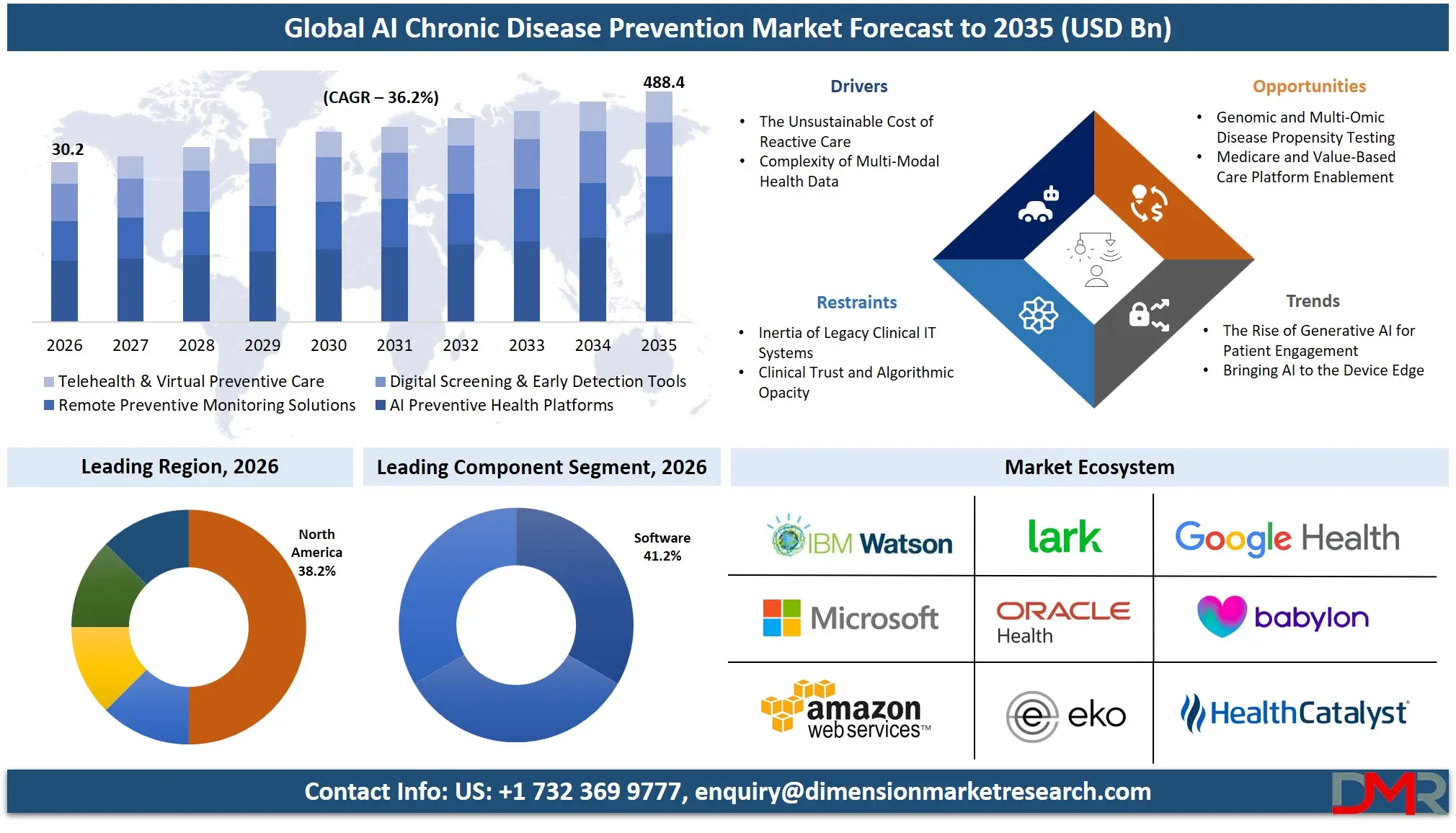
The Global AI Chronic Disease Prevention Market is expected to reach a value of USD 30.2 billion in 2026, and it is further anticipated to reach USD 488.4 billion by 2035, growing at a CAGR of 36.2% during the forecast period.
ℹ
To learn more about this report –
Download Your Free Sample Report Here
The AI chronic disease prevention market has been expanding exponentially as healthcare systems move away from reactive management and towards proactive, preventative approaches all over the world. There are various types of AI tools available in the market, including AI analytics platforms, predictive models, clinical decision support systems, wearable hardware, and specialized services that help organizations identify at-risk populations before a disease is even diagnosed.
The rise in demand to adopt precision medicine, remote patient monitoring, and value-based care programs is necessitating the need for specialized AI-driven solutions. The most common adopters are healthcare providers and payers, and the cloud-based platform is most popular because it is scalable and able to handle large populations of health data. Three of the sectors that are making large in-roads are the BFSI, healthcare, and corporate wellness as they look to cut future costs for cardiovascular disease, diabetes, oncology and neurological disorders.
ℹ
To learn more about this report –
Download Your Free Sample Report Here
The US AI Chronic Disease Prevention Market
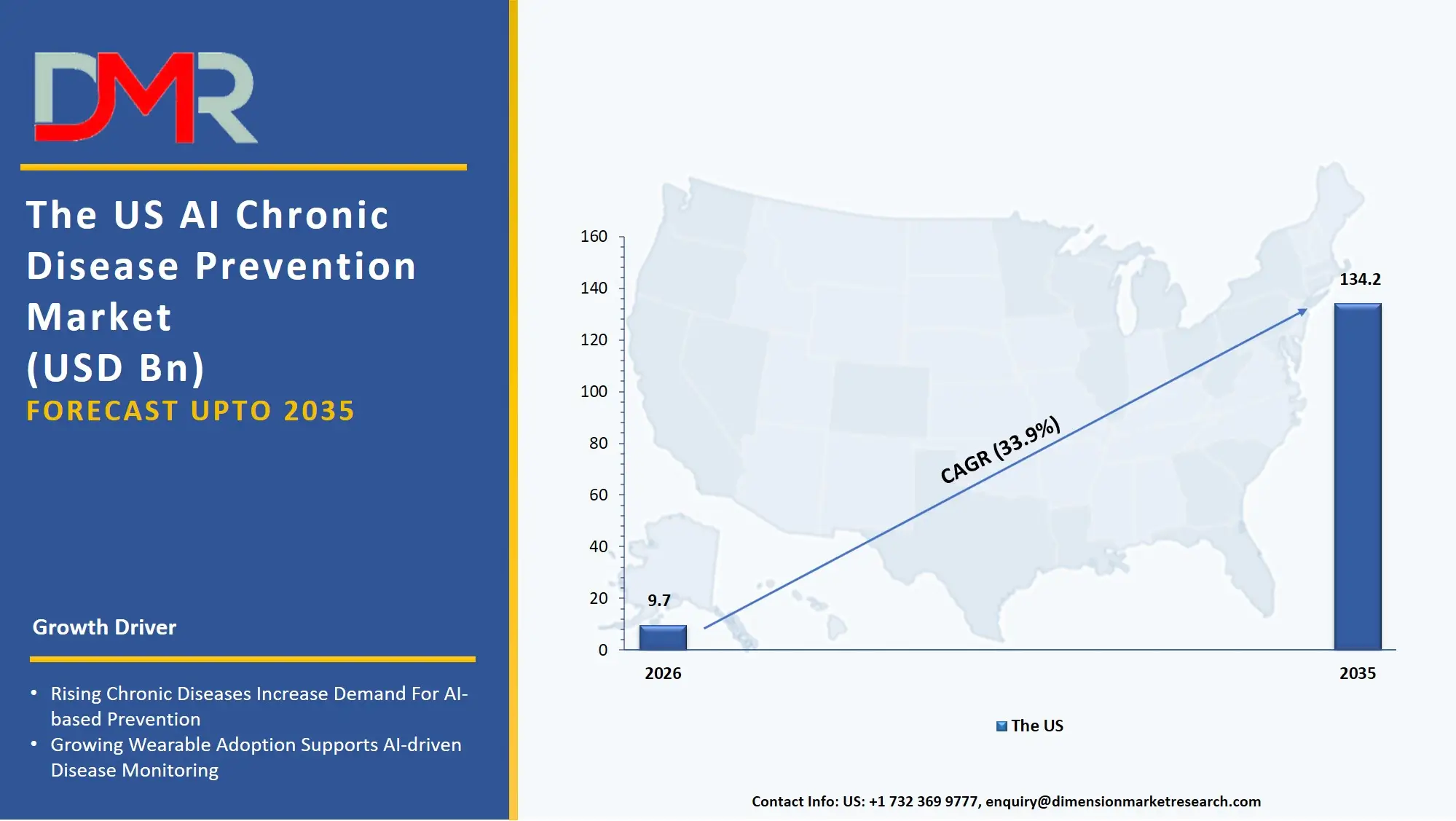
The US AI Chronic Disease Prevention Market is projected to reach USD 9.7 billion in 2026 at a compound annual growth rate of 33.9% over its forecast period, which is further expected to reach a value of USD 134.2 billion by 2035.
ℹ
To learn more about this report –
Download Your Free Sample Report Here
The US remains the biggest and most mature market for AI chronic disease prevention, as preventable chronic disease imposes a huge economic burden on the nation's health system, and AI tools are rapidly being adopted by fortune 500 corporate wellness programs. The market has been typified by high demand for Clinical Decision Support Systems, in which healthcare networks are focused on transforming the traditional diagnostic process into an AI-based early detection system for oncology and cardiovascular disease. Besides, the implementation of Generative AI tools in patient engagement platforms is producing a similar need in Personalized Preventive Care & Treatment Planning services to regulate patient data governance and AI ethics frameworks in home healthcare settings.
The Europe AI Chronic Disease Prevention Market
The Europe AI Chronic Disease Prevention Market is estimated to be valued at USD 8.7 billion in 2026 and is further anticipated to reach USD 135.5 billion by 2035 at a CAGR of 35.4%. The regulatory frameworks including GDPR and the upcoming EU AI Act have a significant impact on the European market and drive the need to employ secure, sovereign cloud-based AI Analytics Platforms for sensitive patient data. This is also being seen across the region, with Remote Preventive Monitoring Solutions seeing a surge in growth as population ageing in Germany and France means IoT-Enabled Sensors and wearables are being used to manage cardiovascular and respiratory diseases at home. Moreover, in the EU, initiatives like the European Health Data Space are driving service providers to implement specific AI Integration services, and deliver interoperability and predictive analytics across European healthcare ecosystems.
The Japan AI Chronic Disease Prevention Market
The Japan AI Chronic Disease Prevention Market is projected to be valued at USD 3.5 billion in 2026. It is further expected to witness robust growth, holding USD 51.2 billion in 2035 at a CAGR of 34.6%. The Japanese market is quite differentiated and it is driven by the world's fastest aging society, which calls for the use of AI in Japan for a national imperative. A significant proportion of the expenditure is attributable to Digital Screening & Early Detection Tools and Remote Patient Monitoring services, which as the government and giant conglomerates roll out AI Preventive Health Platforms to deal with geriatric care beyond overburdened hospitals. A niche segment within the field of Customized Consulting and Maintenance and Support is also the need for local market integration, connecting the legacy Electronic Medical Record (EMR) systems and new Population Health Management (PHM) systems based on artificial intelligence.
Key Takeaways
- Market Size & Forecast: The Global AI Chronic Disease Prevention market is projected to reach USD 30.2 billion in 2026, expanding dramatically to USD 488.4 billion by 2035, driven by two key factors the rising burden of healthcare expenses and the successful implementation of predictive analytics in chronic disease prevention of high-cost disease events.
- Growth Rate & Outlook: Global market growth is expected at a CAGR of 36.2%, due to a shortage of data scientists and clinical informaticists and the increasing complexity in handling multi-modal patient data from wearables, genomics, and electronic health records.
- Primary Growth Drivers: The factors driving growth span from the growing shift toward value-based care from fee-for-service to the demands for Predictive Analytics & Risk Stratification, which demands the ability to accurately predict patient trajectories, and the need for AI Integration and Maintenance and Support skills for AI in clinical workflows.
- Key Market Trends: Major trends include the rise of disease-specific AI solutions, the use of generative AI to power patient-facing Telehealth & Virtual Preventive Care assistants, and a shift toward Population Health Management tools as public health agencies prioritize systemic disease prevention.
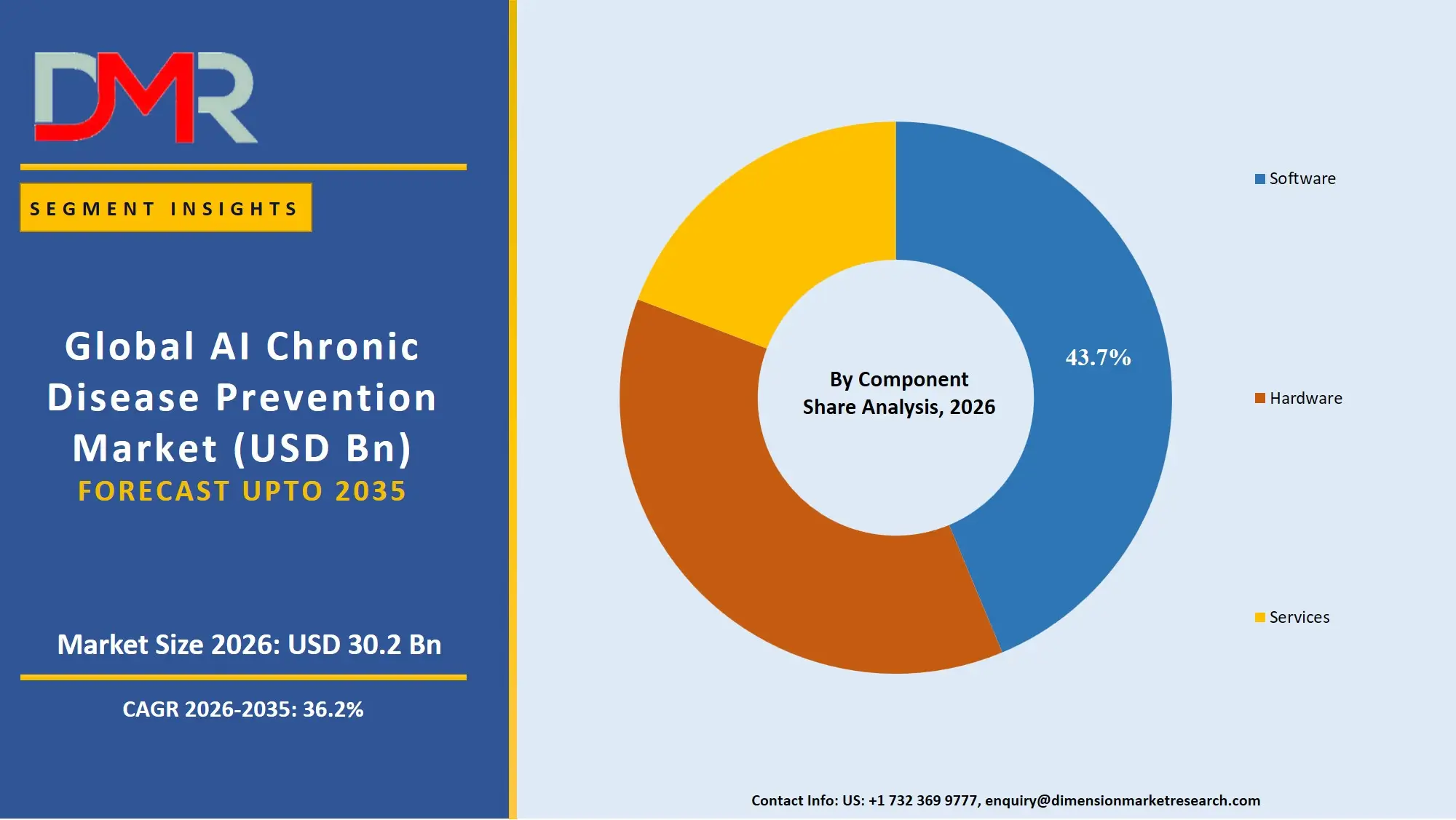
- By Component Analysis: The software segment is projected to hold the highest market share in the Global AI Chronic Disease Prevention Market because of the growing trend of implementing patient monitoring, clinical decision support, and predictive analytics solutions.
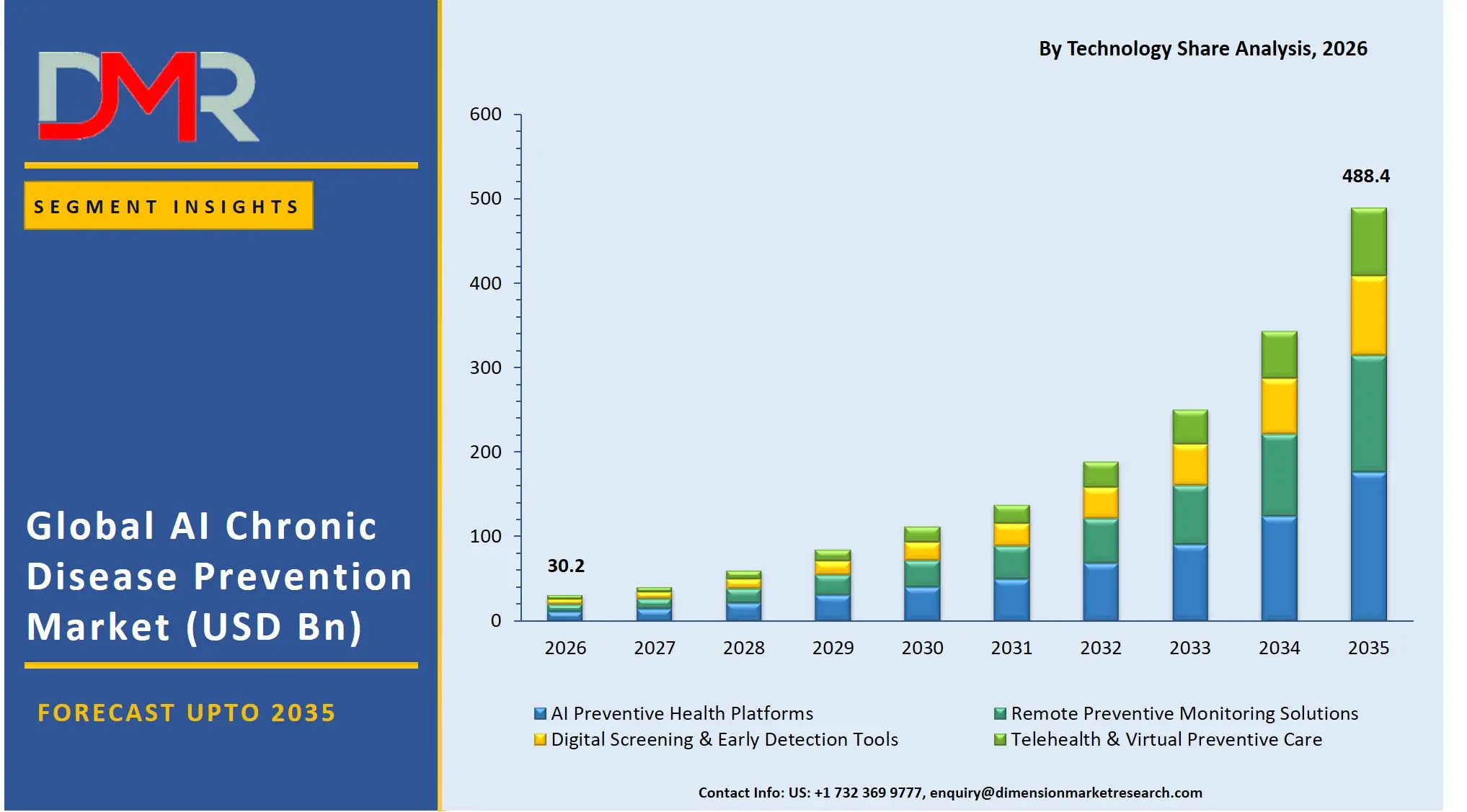
- By Technology Analysis: The AI preventive health platforms are expected to lead the technology segment owing to their integration of predictive analytics, disease screening, patient monitoring and personalized recommendations.
- Regional Leadership: North America is poised to dominate this market with 38.2% of the market share in 2026 as the region has a well-developed healthcare IT infrastructure, established AI technology developers, and the payment systems that significantly encourage preventative care over reactive treatment.
What is the AI Chronic Disease Prevention?
AI Chronic Disease Prevention is a subset of AI technology that uses artificial intelligence and machine learning to detect, categorize, and reduce the likelihood of a chronic disease developing in an acute state. Unlike typical clinical software, these components are the how for moving medicine from treatment to actual prevention. These include AI Analytics Platforms, which for instance are able to combine information from very large and heterogeneous patient data sets; Wearables and IoT-Enabled Sensors, which are constantly collecting physiological data in the real world; and Consulting and AI Integration services that make these predictive workflows a seamless part of the clinical pathway without compromising the care provided. 90 percent of healthcare organizations have hybrid data environments, and professional services are crucial to optimizing clinical workflows, maintaining data security posture and attaining algorithmic accuracy – which is key to reducing disease incidence and subsequent medical costs.
Use Cases
- Cardiovascular Risk Stratification in Health Insurance: Healthcare payers use cardiovascular risk stratification in health insurance to look at claims data, pharmacy, and lab information to determine who is at highest risk for a cardiac event within 12 months, and automatically puts these members into a tailored coaching program.
- AI-Driven Oncology Screening in Hospital Networks: Hospital networks provide digital screening & early detection tools as a service to help analyze radiology imaging and identify suspicious lung nodules or breast lesions, which would have been overlooked by the human eye, in high-volume settings.
- Remote Neurological Monitoring in Home Healthcare: Home healthcare providers leverage remote monitoring devices and ai preventive health platforms to continuously assess gait, speech, and fine motor control of patients with Parkinson's before the onset of an "off" time, and alert caregivers.
- Corporate Wellness Metabolic Disease Prevention: Large employers use a set of Wearables combined with a cloud-based AI platform to anonymously assess aggregate workers for lifestyle-related pre-diabetes symptoms to deliver targeted corporate wellness interventions that reduce insurance costs.
Market Dynamics
Key Drivers in the Global AI Chronic Disease Prevention Market
The Unsustainable Cost of Reactive Care
Chronic diseases, such as diabetes, heart disease, and COPD, which account for the overwhelming majority of health care expenditures, are causing the global healthcare system a financial crisis, due to their exponential growth over time. Treatment of chronic conditions over a lifetime is more expensive than funding is available, present a structural incentive for prevention. This is driving a trend of payers and providers bullpenning into AI-powered screening and prevention platforms to proactively alert to expensive acute episodes. By partnering with a professional service provider to develop and run these AI tools, healthcare providers can hasten the transition to a value-based healthcare delivery model and reduce financial risk from patient populations.
Complexity of Multi-Modal Health Data
Large healthcare enterprises have data spread throughout multiple siloed systems, ranging from EMRs, imaging archives, genomic databases, to streams from wearable devices. Managing a multi-modal data environment is extremely challenging as organizations must be able to normalize, integrate and analyze, both structured and unstructured data to create a single patient risk profile. Without expert assistance, this complexity can lead to inefficiencies, algorithmic bias, and flawed predictions. With this, the demand for AI Integration and Consulting services is on the rise, where they can help organizations develop and maintain strong data pipelines for precise predictive analytics.
Restraints in the Global AI Chronic Disease Prevention Market
Inertia of Legacy Clinical IT Systems
The majority of healthcare companies are still using legacy, old EMR systems that are not optimized for real-time AI inference or streaming data from IoT-connected sensors. While the business world is in dire need of preventative tools, these antiquated systems are a major hurdle to getting them up and running. Adding fast-paced predictive models to transactional patient record systems can be expensive and risky. When dealing with data migrations from proprietary EMR formats, validation and security are essential to prevent any disruption of clinical care. This means that AI prevention becomes more difficult, slows down the adoption rate, and sometimes doesn't even get purchased until after Digital Screening & Early Detection Tools have been deployed.
Clinical Trust and Algorithmic Opacity
Another challenge for physicians adopting the use of this type of "black box" deep learning model is the lack of clinical rationale for the model. While there are economic reasons for "AI developers" to work, executives of health systems are legally and ethically bound to explain decisions for critical care. The services of external artificial intelligence (AI) providers are rigorously evaluated for model explainability, fairness audits and clinical evidence. Healthcare systems have moved to a more model-centric approach that provides clear, interpretable results, making clinical logic and validation now more important than just predictive capabilities for AI companies.
Growth Opportunities in the Global AI Chronic Disease Prevention Market
Genomic and Multi-Omic Disease Propensity Testing
One of the major market growth segments in the AI chronic diseases prevention market is to enable organizations to create secure, AI natural platforms that incorporate whole genome sequencing and lifestyle information to foresee the danger of the disease decades prior. Numerous precision medicine programs are now looking for their own personalized AI solutions to detect pre-symptomatic oncology or neurological risk. These complex clinical prediction tools require expertise in AI Integration and computational biology. The area has a promise for significant demand for services that help translate complex genomic information into actionable and personalized screening schedules.
Medicare and Value-Based Care Platform Enablement
As value-based care contracts require proactive population health tools, the demand to bring together technical AI skills and insight around government payment models is fueling the growth of professional services. This includes programs for targeted vulnerable populations, such as senior cardiovascular, community diabetes prevention and management of early kidney disease. These organizations will have to follow rigorous regulatory requirements and show tangible cost savings. As such, implementation partners for Healthcare Payers & Insurance Providers need to understand the predictive AI as well as the actuarial framework of risk adjustment. Professional service providers can enhance the value added by incorporating AI Preventive Health Platforms into claims adjudication platforms and quality reporting tools.
Trends in the Global AI Chronic Disease Prevention Market
The Rise of Generative AI for Patient Engagement
Generative AI is becoming increasingly adopted as an alternative to traditional and impersonal automated messaging for preventative care. Rather than a one-size-fits-all text reminder, companies are building AI-driven health assistants that can engage with a patient's conversation in an empathetic and personalized way, encouraging them to adopt healthy habits and attend screening appointments. In response to this, AI service providers are offering know-how to optimize massive language models utilizing clinical safety information, which enables secure, medically correct, and compliant interactions with patients throughout Telehealth & Digital Preventive Care solutions.
Bringing AI to the Device Edge
A key trend in consumer wellness is the processing of patient data on the local level for privacy and latency concerns. Next-generation wearables and IoT-Enabled Sensors are moving away from sending raw, sensitive health data to the cloud and integrating small, efficient AI models directly on the device. This leads to a huge demand on hardware-software co-design Consulting and specialized AI Integration services. Healthcare service providers help R&D teams to squeeze complex predictive models for cardiovascular or diabetes monitoring onto a low-power chip to facilitate real-time analysis and alerts without infringing upon patient privacy or draining the batteries.
Research Scope and Analysis
The Global AI Chronic Disease Prevention Market is witnessing significant growth due to the rising adoption of AI-powered software, predictive analytics, cloud-based platforms, and preventive healthcare solutions. Increasing chronic disease prevalence, digital health investments, and demand for early risk detection continue to accelerate market expansion globally.
ℹ
To learn more about this report –
Download Your Free Sample Report Here
By Component Analysis
The software is projected to account for the largest share of the Global AI Chronic Disease Prevention Market as a result of increased adoption of AI analytics platforms, predictive modeling systems, and clinical decision support systems to help identify disease early and assess risk. AI-powered software is playing a vital role in healthcare as providers integrate it to enhance patient monitoring, preventive care, and the reduction of future treatment expenses. Diabetes, Cardiovascular, Oncology risk stratification are extensive applications of predictive analytics solutions to enable pro-active intervention strategies. Cloud-based AI software can also facilitate real-time integration of data from EHRs, wearables, and remote monitoring devices. Concurrently, increased funding for digital health facilities and preventive health interventions further drive software demand. Technology advances, scalability and integration of AI into population health management and telehealth care across the world continue to benefit the segment.
By Technology Analysis
AI preventive health platforms is expected to be dominated by the AI-driven preventive health platforms, which enable healthcare systems to combine predictive analytics, patient monitoring, disease screening, and personalized preventive recommendations under a single roof. These tools support the identification of patients at risk, better early intervention and better long-term disease management results for healthcare providers. The rise in chronic diseases (like diabetes, cardiovascular diseases and cancer) is helping to drive the proliferation of AI-powered preventive health solutions. Also, as data-driven healthcare, real-time analytics and virtual care solutions become increasingly in demand, the platform continues to expand in hospitals, insurers and corporate wellness programs. Digital prevention strategies are also being funded by governments and health services to help decrease the cost of healthcare and hospitalisations. The dominance of segments is further enhanced by ongoing enhancements to machine learning algorithms and interoperability capabilities around the world.
By Deployment Mode Analysis
Cloud-based deployment is projected to become the dominant deployment model in the Global AI Chronic Disease Prevention Market as it offers scalability, cost-efficiency, and facilitates real-time access to data throughout healthcare networks. With cloud platforms, patient records can be easily integrated with wearable devices, artificial intelligence analytics and remote monitoring tools, which enhances the provision of preventive care and streamlines decision-making. Cloud-based solutions have become the preferred choice by healthcare organizations due to their ability to cut infrastructure expenses and make software updates and maintenance easier. Cloud deployment growth is also being fueled by the increasing use of telehealth, virtual preventive care, and remote patient monitoring. Furthermore, cloud infrastructure promotes better collaboration between hospitals, payers, and research centers, and it allows for the secure storage and processing of large healthcare data sets. The market for digital healthcare transformation and AI-powered health management solutions is remaining solidly on top with continued investments.
By Functionality Analysis
The functionality segment is expected to be dominated by predictive analytics and risk stratification, given the growing focus on early detection of chronic disease risks and preventive interventions among healthcare organizations. Predictive models powered by AI use patient history, lifestyle patterns, genetic information and real-time health data to predict patients who are at risk of diabetes, cardiovascular diseases, neurological disorders and more. This feature can help lower hospitalizations, optimize treatment planning, and enhance long-term patient outcomes. Predictive analytics is being used by healthcare organizations and insurers to reduce healthcare costs by proactively preventing diseases and managing care for individuals. Moreover, the greater integration of wearable devices, remote monitoring capabilities, and electronic health records (EHRs) boosts prediction accuracy and clinical productivity. The groundbreaking developments in machine learning and big data analytics contribute to the accelerated growth of the segments across the globe.
By End-User Analysis
Hospitals and Clinics are expected to lead the Global AI Chronic Disease Prevention Market as the use of AI-driven preventive health care technologies for early diagnosis, patient monitoring, and chronic disease risk assessment is growing. These medical institutions amass vast amounts of patient information, making it possible to successfully apply predictive analysis, distant observing services and personalized remedy strategies. As the prevalence of chronic diseases continues to increase and the need for preventive health services grows, hospitals are turning to AI-powered clinical decision support systems and digital health platforms as a way to meet this demand. The increasing burden of chronic diseases and the demand for preventive healthcare services are driving hospitals to adopt AI-powered clinical decision support systems and digital health platforms. Also, using telehealth and remote care solutions enhances patient engagement and continuity of care.
The Global AI Chronic Disease Prevention Market Report is segmented on the basis of the following:
By Component
- Software
- AI Analytics Platforms
- Predictive Models
- Clinical Decision Support Systems
- Hardware
- Wearables
- Remote Monitoring Devices
- IoT-Enabled Sensors
- Services
- AI Integration
- Consulting
- Maintenance And Support
By Technology
- AI Preventive Health Platforms
- Remote Preventive Monitoring Solutions
- Digital Screening & Early Detection Tools
- Telehealth & Virtual Preventive Care
By Deployment Mode
By Functionality
- Predictive Analytics & Risk Stratification
- Diabetes
- Cardiovascular
- Neurological Disorders
- Early Disease Detection & Screening
- Oncology
- Respiratory Diseases
- Diabetes
- Personalized Preventive Care & Treatment Planning
- Cardiovascular
- Neurological
- Oncology
- Remote Patient Monitoring
- Diabetes
- Respiratory Diseases
- Cardiovascular
- Population Health Management
By End-User
- Hospitals & Clinics
- Home Healthcare / Remote Care Settings
- Healthcare Payers & Insurance Providers
- Research Institutes
- Employers / Corporate Wellness Programs
Regional Analysis
Leading Region by Market Share
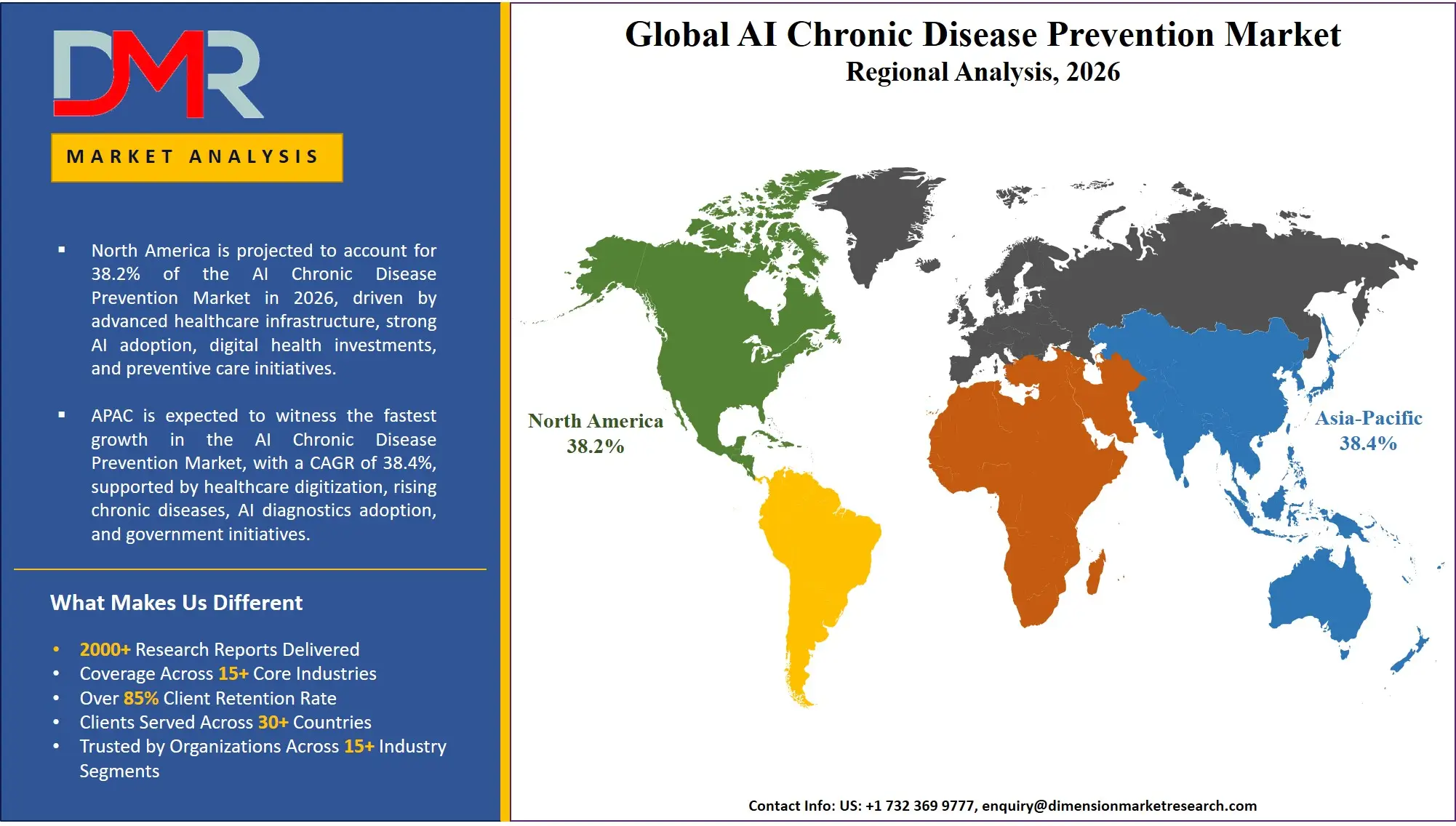
North America is poised to dominate the global AI chronic disease prevention market as it is projected to hold 38.2% of the market share by the end of 2026. The U.S., which leads North America, accounts for the largest market share, thanks to the unmatched concentration of AI technology innovators, and the aggressive push toward value-based care by Medicare and key private payers. A strong digital health ecosystem of digital health giants and specialized AI-SaaS companies, as well as a large body of digital data scientists and clinical informaticists, exists there. The reduction in the substantial expenditure on cardiovascular events and oncology therapies not only supports a steady demand for Predictive Analytics & Risk Stratification software but also fuels the continuous development of algorithms. The investments in the prevention of massive expenditures on cardiovascular events and oncology treatments directly benefit not only the demand for Predictive Analytics & Risk Stratification software but also ongoing algorithm maintenance.
ℹ
To learn more about this report –
Download Your Free Sample Report Here
Fastest-Growing Regional Market
Asia-Pacific is expected to be the most rapidly expanding AI chronic disease prevention market, driven by the government-led sweeping digital health initiatives in India, China, Japan, and Singapore. As a result of the accelerated economic development, extended access to healthcare for the growing middle class and prevalent diabetes and pollution-related respiratory diseases, established hospital chains and public health institutions are forced to take the next step toward replacing legacy diagnostic processes with AI-powered screening systems. There is a high demand for consulting services to build Population-level AI Preventive Health Platforms to support national screening programmes with these large organisations. The region also has a severe shortage of skilled AI and clinical informatics talent, and the need to outsource model development, remote monitoring deployment and Maintenance and Support (M&S) for faster deployment of AI-based preventative initiatives is vital to address the skills gap.
By Region
North America
Europe
- Germany
- The U.K.
- France
- Italy
- Russia
- Spain
- Benelux
- Nordic
- Rest of Europe
Asia-Pacific
- China
- Japan
- South Korea
- India
- ANZ
- ASEAN
- Rest of Asia-Pacific
Latin America
- Brazil
- Mexico
- Argentina
- Colombia
- Rest of Latin America
Middle East & Africa
- Saudi Arabia
- UAE
- South Africa
- Israel
- Egypt
- Rest of MEA
Competitive Landscape
The global AI chronic disease prevention landscape has evolved into a diverse and competitive mix of multinational tech giants, pure-play diagnostic companies and niche healthcare analytics consulting firms. Strategic partnerships with key EMR vendors and cloud hyperscalers (AWS, Azure, Google Cloud) are essential to success as they provide the required go to market access and early access to standardized clinical data. This consolidation trend is growing quickly, as aging traditional medical device and health IT firms buy oncology screening and cardiac remote monitoring AI firms to expand their value-based care offerings. More and more, proprietary intellectual property, such as pre-validated predictive models for particular diseases and novel clinical workflow accelerators, is emerging as a competitive differentiator of value beyond mere technical ability or generic data science approaches.
Some of the prominent players in the Global AI Chronic Disease Prevention Market are:
- Innovaccer
- K Health
- Lark Health
- Eko Health
- OpenEvidence
- IBM Watson Health
- Google Health
- Microsoft
- Amazon Web Services
- Oracle Health
- Tempus
- Owkin
- PathAI
- Aidoc
- Butterfly Network
- Health Catalyst
- Verily
- Babylon Health
- Teladoc Health
- Amwell
- Other Key Players
Recent Developments
- January 2026: Google Health announced a big expansion in its partnership with a suite of AI models for retinal and cardiovascular disease prevention with the introduction of the AI Preventive Health Platform for its professional services clients, such as Hospital & Clinics and Healthcare Payers, which will be integrated into their Clinical Decision Support Systems.
- November 2025: Optum Labs further cemented its partnership with a large EMR vendor and launched a new practice called Risk Stratification AI Consulting and EHR Integration to provide Healthcare Payers & Insurance Providers with predictive model solutions to help manage pre-diabetes and keep pace with the changing federal health equity requirements.
- October 2025: Medtronic acquires European AI start-up to advance its Personalized Preventive Care & Treatment Planning solutions for neurological disorders; to meet complex needs of Research Institutes and Home Healthcare providers to continually optimize deep brain stimulation and drug delivery protocols.
Report Details
| Report Characteristics |
| Market Size (2026) |
USD 30.2 Bn |
| Forecast Value (2035) |
USD 488.4 Bn |
| CAGR (2026–2035) |
36.2% |
| The US Market Size (2026) |
USD 9.7 Bn |
| Historical Data |
2021 – 2025 |
| Forecast Data |
2027 – 2035 |
| Base Year |
2025 |
| Estimate Year |
2026 |
| Segments Covered |
By Component, By Technology, By Deployment Mode, By Functionality, and By End-User |
| Regional Coverage |
North America – The US and Canada; Europe – Germany, The UK, France, Russia, Spain, Italy, Benelux, Nordic, & Rest of Europe; Asia-Pacific – China, Japan, South Korea, India, ANZ, ASEAN, Rest of APAC; Latin America – Brazil, Mexico, Argentina, Colombia, Rest of Latin America; Middle East & Africa – Saudi Arabia, UAE, South Africa, Turkey, Egypt, Israel, & Rest of MEA |
Frequently Asked Questions
How big is the Global AI Chronic Disease Prevention Market?
▾ The Global AI Chronic Disease Prevention market is poised to be valued at USD 30.2 billion in 2026 and is projected to reach USD 488.4 billion by 2035, driven by the universal need for specialized solutions in risk stratification, early diagnosis, and cost-effective disease management.
What is the CAGR of the Global AI Chronic Disease Prevention Market from 2026 to 2035?
▾ The market is expected to grow at a CAGR of 36.2% from 2026 to 2035, reflecting the accelerating adoption of value-based care and the persistent clinical need to predict and prevent high-cost acute episodes before they occur.
What factors are driving the growth of the Global AI Chronic Disease Prevention Market?
▾ Key drivers include the unsustainable cost of reactive healthcare, the imperative to modernize legacy clinical IT systems, the management complexity of multi-modal patient data, and the surge in demand for AI-driven risk stratification amid the payer shift to value-based reimbursement models.
Which region held the largest share of the AI Chronic Disease Prevention Market in 2026?
▾ North America is poised to dominate this market with 38.2% of market share in 2026, driven by a mature health IT ecosystem and aggressive investment by payers and providers in Predictive Analytics & Risk Stratification and AI-driven early detection capabilities.
Which region is expected to grow the fastest in the AI Chronic Disease Prevention Market?
▾ The Asia-Pacific region is expected to grow the fastest, fueled by rapid digital transformation in India, China, and Japan, where AI-Preventive Health Platforms are critical for leapfrogging legacy diagnostics and managing the burden of diabetes and respiratory diseases.
What are the major trends in the Global AI Chronic Disease Prevention Market?
▾ Major trends include the integration of Generative AI into patient engagement workflows, the rise of hardware-embedded AI for edge-based privacy-preserving analytics, the demand for disease-specific Digital Screening & Early Detection Tools, and a focus on algorithmic transparency within Clinical Decision Support Systems.
Who are the key players in the Global AI Chronic Disease Prevention Market?
▾ Key players include multinational technology conglomerates like Google Health and Verily, medical device AI divisions like Siemens Healthineers and Medtronic, payer-owned analytics giants like Optum, and specialized pure-play AI diagnostic firms like Viz.ai and PathAI.
How is the Global AI Chronic Disease Prevention Market segmented?
▾ The market is segmented by Component (Software, Hardware, Services), Technology (AI Preventive Health Platforms, Remote Preventive Monitoring, and Others), Deployment Mode (Cloud-Based, On-Premises), Functionality (Predictive Analytics, Early Detection, Personalized Care, and Other functionality), and End-User (Hospitals & Clinics, Payers, Employers, and other end users).