Market Overview
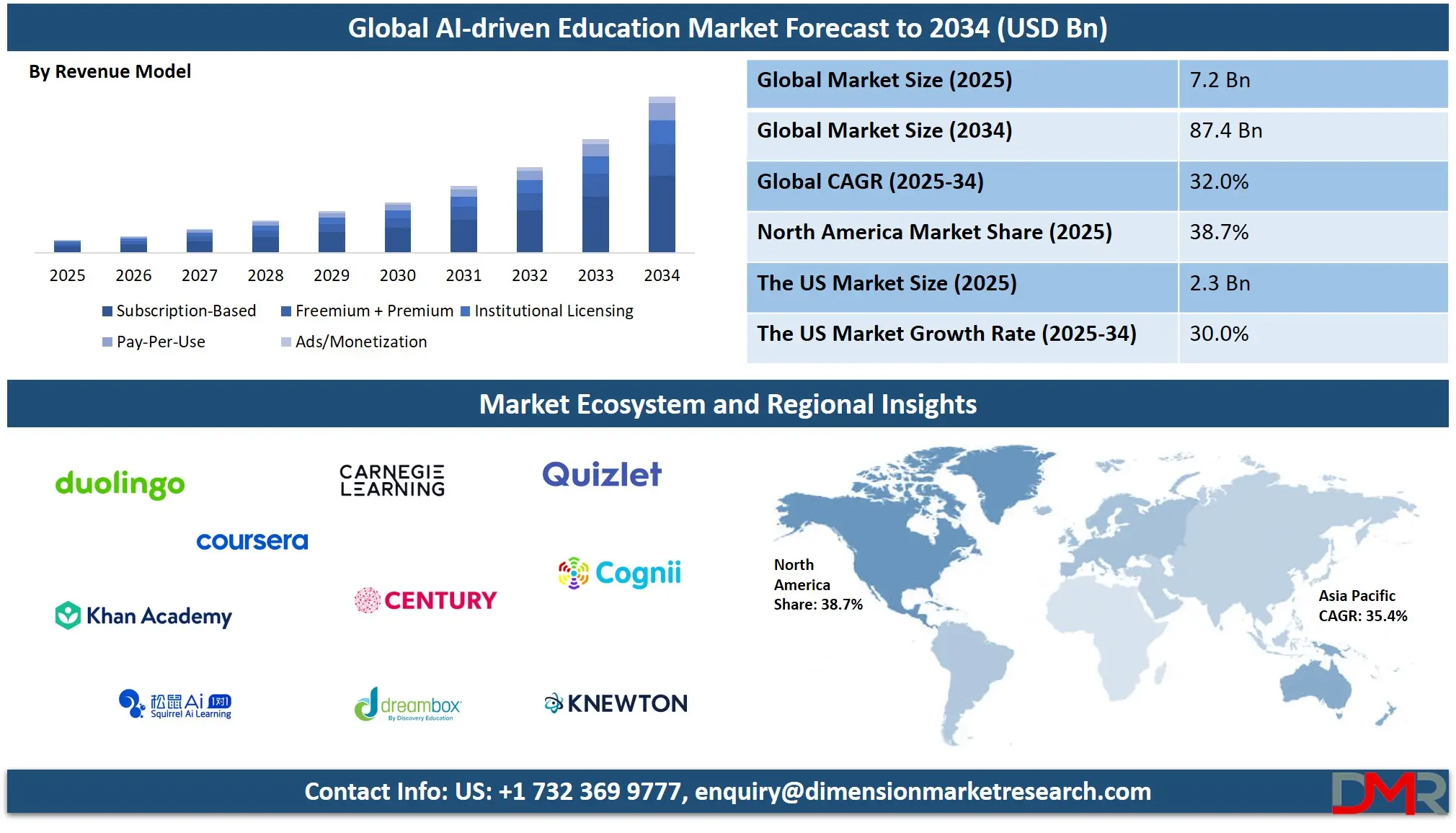
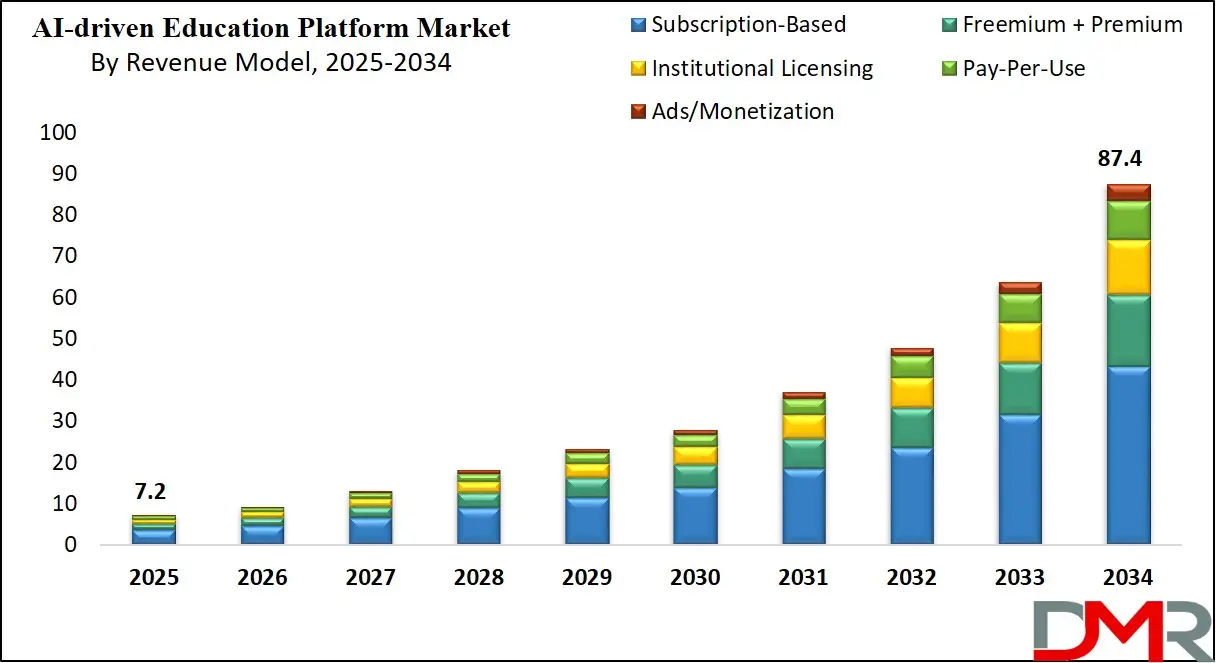
The global AI-driven education platform market is projected to reach USD 7.2 billion in 2025 and grow to USD 87.4 billion by 2034, registering a CAGR of 32.0%, driven by rising demand for personalized learning, adaptive education systems, intelligent tutoring solutions, and data-driven learning analytics across K-12, higher education, and corporate training sectors. This surge aligns with broader advancements in AI in edtech, emphasizing scalable and personalized education solutions.
ℹ
To learn more about this report –
Download Your Free Sample Report Here
An AI-driven education platform is a smart learning system that integrates artificial intelligence technologies to deliver personalized, efficient, and interactive educational experiences. It uses machine learning algorithms, natural language processing, and data analytics to design content according to individual learner profiles, monitor real-time progress, and provide intelligent feedback. These platforms help automate routine academic tasks such as grading, content curation, and student assessment while offering adaptive learning paths and predictive insights to enhance both teaching effectiveness and student outcomes. By bridging gaps in traditional education methods, they enable scalable, flexible, and data-informed learning environments that are reshaping personalized education technology globally.
The global AI-driven education platform market is evolving rapidly due to the growing demand for intelligent, user-centered digital learning solutions across diverse sectors. With the growing adoption of online and blended learning models, educational institutions and training providers are turning to AI-based platforms to offer responsive content, real-time performance tracking, and improved learner engagement.
The integration of AI into educational technologies is enhancing personalization, automating curriculum adjustments, and supporting multilingual learning, making these platforms ideal for K-12 education, higher education, and lifelong learning. Region's such as North America, Europe, and Asia-Pacific are witnessing accelerated growth due to strong digital infrastructure and policy support, fueling the rise of intelligent learning systems across the AI-driven education platform market.
The rise of remote learning, digital classrooms, and skill-based education is driving significant investment in smart education technologies. AI-powered tools are enabling advanced capabilities such as intelligent tutoring systems, automated feedback loops, and content recommendation engines. These features empower teachers with actionable insights while creating customized pathways for students based on their cognitive behavior, interests, and academic performance. As the need for flexible, scalable, and outcome-oriented learning systems grows, AI-driven platforms are playing a central role in educational transformation across both developed and emerging economies.
ℹ
To learn more about this report –
Download Your Free Sample Report Here
Market players are continuously innovating with features like voice-enabled interfaces, immersive learning through AR and VR, and emotion-aware AI to boost engagement and retention. The AI in education market is also expanding into corporate training, where real-time analytics and microlearning support workforce development. As demand rises for platforms that can adapt to various educational standards and cultural contexts, AI-driven systems are being designed to be modular, cloud-based, and interoperable. This ongoing evolution reflects a global shift toward data-driven education, where continuous learning, accessibility, and performance enhancement remain at the core.
The US AI-Driven Education Platform Market
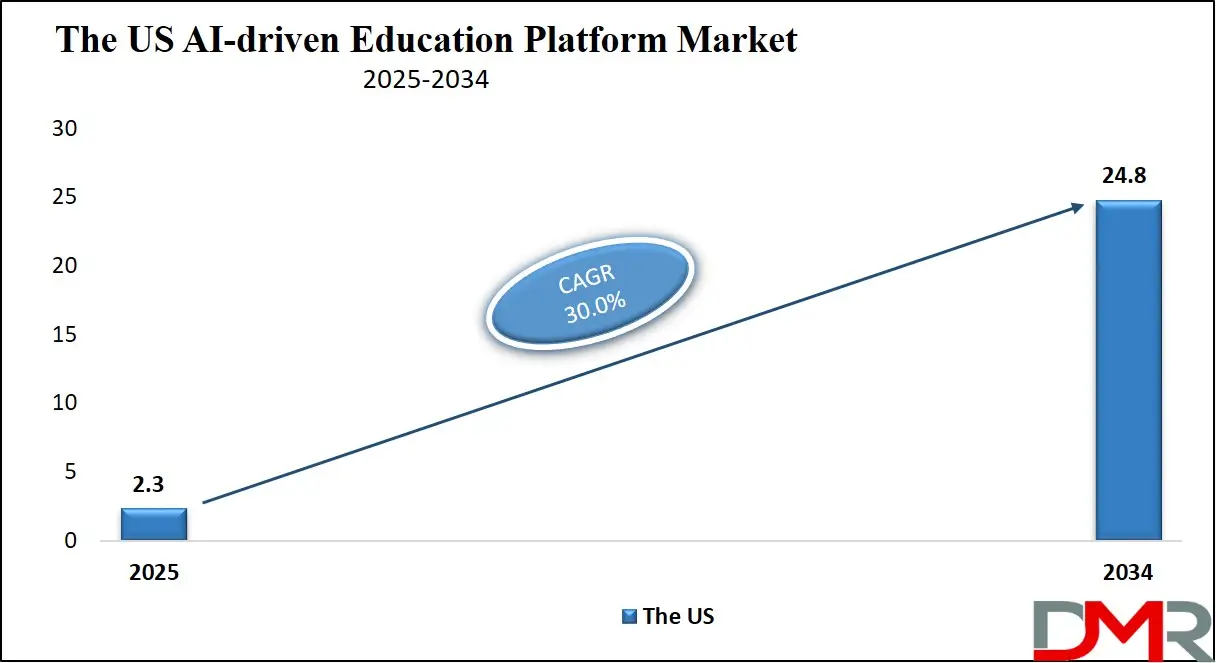
The U.S. AI-driven Education Platform Market size is projected to be valued at USD 2.3 billion in 2025. It is further expected to witness subsequent growth in the upcoming period, holding USD 24.8 billion in 2034 at a CAGR of 30.0%.
The U.S. AI-driven education platform market is undergoing rapid transformation as educational institutions prioritize personalized learning, intelligent automation, and data-driven instruction. Schools, universities, and corporate training centers are adopting AI-based systems to design learning paths, streamline administrative processes, and provide real-time feedback. These platforms utilize technologies such as natural language processing and machine learning to adapt content delivery based on individual learner behavior, helping educators address learning gaps and support diverse academic needs. The growing demand for remote and hybrid learning models has further accelerated the integration of AI into digital classrooms across the country.
ℹ
To learn more about this report –
Download Your Free Sample Report Here
Driving this growth is the shift toward student-centric learning environments, where real-time analytics and adaptive assessments play a critical role in shaping instructional strategies. AI-driven education platforms in the U.S. are enabling dynamic curriculum design, automated grading, and virtual tutoring, creating a more engaging and efficient learning experience. There is also a rising focus on equipping learners with future-ready skills through microlearning, gamified education, and intelligent content recommendations. With ongoing investments in education technology infrastructure and growing awareness of AI's potential, the U.S. market continues to lead in innovation and adoption of smart learning solutions.
The European AI-Driven Education Platform Market
Europe's AI-driven education platform market is projected to reach approximately USD 1.5 billion in 2025, reflecting the region's growing commitment to integrating advanced technologies within its educational systems. This market value underscores the growing adoption of AI-powered solutions across schools, universities, and corporate training programs throughout Western and Northern Europe.
Government's are actively promoting digital transformation in education through funding initiatives and policy frameworks that encourage the use of personalized learning, adaptive assessments, and intelligent tutoring systems. Additionally, the region benefits from a strong technological infrastructure, high internet penetration, and a well-established base of edtech companies, all of which contribute to the widespread deployment of AI-driven platforms designed for diverse learning environments and needs.
The market is expected to grow at a compound annual growth rate (CAGR) of 27.8%, signaling robust expansion fueled by innovation and rising demand for scalable, efficient educational technologies. Factors such as growing investments in AI research, growing awareness of the benefits of personalized learning, and the push for lifelong learning and workforce reskilling are driving this rapid growth.
European educational institutions and corporate entities are leveraging AI to enhance student engagement, optimize curriculum delivery, and improve learning outcomes through data-driven insights. Moreover, the COVID-19 pandemic accelerated digital adoption, further catalyzing interest in AI solutions that support remote and hybrid learning models. As a result, Europe is emerging as a significant and dynamic market within the global AI-driven education platform landscape.
The Japanese AI-Driven Education Platform Market
The Japanese AI-driven education platform market is expected to expand through 2034 as educational institutions and corporate training providers increasingly adopt personalized learning, intelligent tutoring, automated assessment, and AI-enabled workforce development solutions.
Japanese educational organizations are exploring AI applications such as personalized learning, intelligent tutoring systems, and automated assessments to enhance teaching effectiveness and learner engagement. Additionally, the government's emphasis on digital transformation in education, especially in response to workforce challenges posed by an aging population, is fostering interest in AI-driven reskilling and upskilling platforms. This relatively slower pace is influenced by factors such as the country's traditionally conservative approach to adopting new educational technologies and the complexity of integrating AI within existing systems.
However, ongoing investments in research and development, along with initiatives aimed at modernizing education and corporate training, are expected to gradually accelerate market expansion. Japan's focus on leveraging AI to improve workforce productivity and address skill shortages positions the country as a steady, evolving player in the global AI-driven education platform landscape, with opportunities for growth in specialized learning solutions and industry-specific training.
Global AI-Driven Education Platform Market: Key Takeaways
- Market Value: The global AI-driven education platform market is expected to reach a value of USD 87.4 billion by 2034 from a base value of USD 7.2 billion in 2025 at a CAGR of 32.0%.
- By Deployment Type Segment Analysis: Cloud deployment is poised to consolidate its dominance in the deployment type segment, capturing 47.9% of the total market share in 2025.
- By Revenue Model Segment Analysis: Subscription-based revenue models are anticipated to maintain their dominance in the revenue model segment, capturing 49.3% of the total market share in 2025.
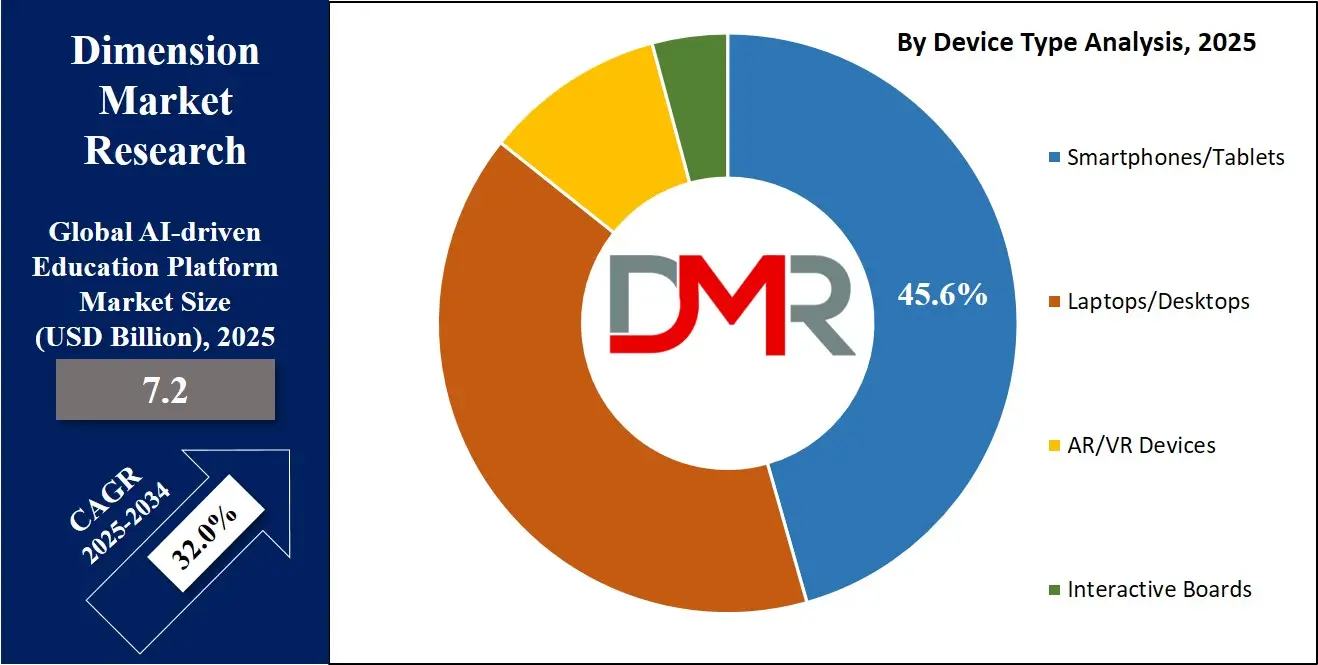
- By Device Type Segment Analysis: Smartphones/Tablets are expected to maintain their dominance in the device type segment, capturing 45.6% of the total market share in 2025.
- By Technology Type Segment Analysis: Machine Learning (ML) technology is poised to consolidate its market position in the technology type segment, capturing 39.7% of the total market share in 2025.
- By Application Segment Analysis: Personalized Learning applications are expected to dominate the application segment, capturing 30.1% of the market share in 2025.
- By End-User Segment Analysis: Higher Education is anticipated to maintain its dominance in the end-user segment, capturing 34.9% of the total market share in 2025.
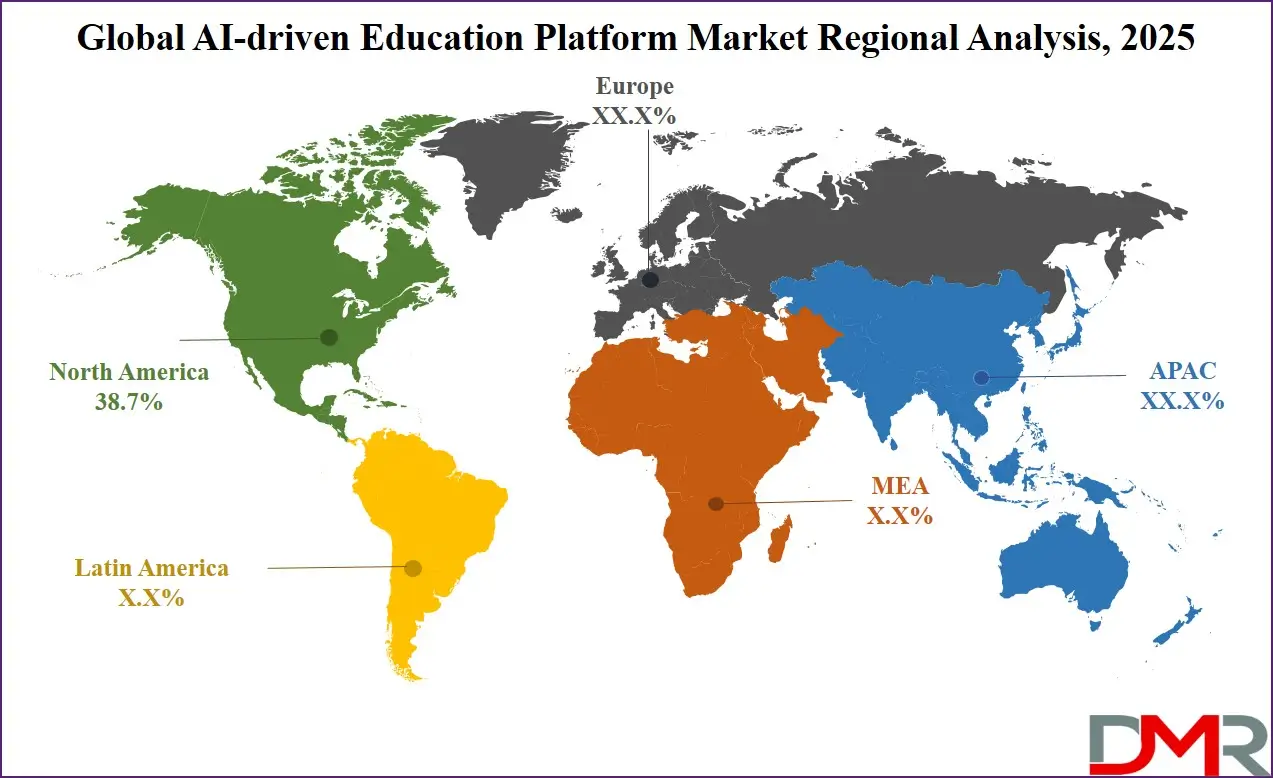
- Regional Analysis: North America is anticipated to lead the global AI-driven education platform landscape with 38.7% of total global market revenue in 2025.
- Key Players: Some key players in the global AI-driven education platform market are Google LLC, Microsoft Corporation, OpenAI, Coursera, Inc., Duolingo, Inc., and Other Key Players.
Global AI-Driven Education Platform Market: Use Cases
- Personalized and Adaptive Learning: AI-driven education platforms analyze learner performance, progress, preferences, and engagement patterns to dynamically adjust content difficulty, pacing, recommendations, and learning pathways. This enables institutions to provide individualized learning experiences at scale.
- AI-Powered Tutoring and Learning Assistance: Conversational AI and intelligent tutoring systems provide students with real-time explanations, guided problem solving, practice exercises, hints, and personalized academic support beyond conventional classroom hours.
- Automated Assessment and Feedback: AI platforms can assist educators with grading, quiz generation, assignment evaluation, formative assessments, and personalized feedback, helping reduce administrative workloads while accelerating feedback cycles.
- AI-Based Content Creation: Generative AI enables educators to develop lesson plans, quizzes, study guides, summaries, practice questions, rubrics, and customized learning resources aligned with curriculum and learner requirements.
- Learning Analytics and Early Intervention: AI-powered analytics identify learning gaps, engagement patterns, and students requiring additional support, enabling educators and institutions to implement targeted interventions and improve learner outcomes.
- Teacher and Administrative Assistance: Education platforms increasingly use AI to support lesson preparation, communication, scheduling, documentation, course management, student support, and routine administrative workflows.
Global AI-Driven Education Platform Market: Stats & Facts
- UNESCO reported that approximately 251 million children and youth remained out of school globally in its 2024/25 monitoring data.
- UNESCO reported that 110 million more children, adolescents, and youth have entered school since 2015, although progress toward universal education remains uneven.
- The U.S. Department of Education's Office of Educational Technology highlighted AI applications in personalized learning, feedback, accessibility, assessment, and instructional support while emphasizing privacy, bias, and governance risks.
- Google reported in December 2025 that Gemini for Education had been integrated into more than 1,000 U.S. higher education institutions, reaching over 10 million students.
- Instructure's 2026 survey of 1,125 education stakeholders found that 90% of surveyed students used AI, while fewer than half of educators surveyed had received formal AI training.
- OpenAI and California State University announced ChatGPT Edu access for more than 460,000 students and 63,000 faculty and staff across 23 campuses in 2025.
- The European Commission's Digital Education Action Plan supports digital transformation across education and includes actions addressing the ethical and responsible use of artificial intelligence and data.
Market Dynamics
Global AI-Driven Education Platform Market: Driving Factors
Rising Demand for Personalized and Adaptive Learning Solutions
The growing need for customized education designed for individual learning styles and abilities is a primary driver for the AI-driven education platform market. Adaptive learning technologies powered by machine learning algorithms analyze student data to deliver personalized content and assessments, enhancing knowledge retention and engagement. Educational institutions and corporate training programs are adopting intelligent tutoring systems and AI-enabled content curation to meet diverse learner needs, promoting inclusive and student-centric education globally.
Expansion of Remote and Hybrid Learning Models
The global shift towards remote and blended learning environments has accelerated the adoption of AI-based education platforms. With advancements in cloud computing and edge AI processing, platforms can offer seamless access to interactive lessons, virtual classrooms, and real-time feedback irrespective of location. This trend is further fueled by improvements in internet infrastructure and mobile device penetration, enabling learners in underserved or remote areas to benefit from quality digital education.
Global AI-Driven Education Platform Market: Restraints
High Initial Investment and Infrastructure Costs
Implementing AI-driven education platforms requires significant capital expenditure on hardware such as AI processors, GPUs, and cloud infrastructure, alongside software development costs. Educational institutions, especially in developing region's, often face budget constraints that limit large-scale adoption. Additionally, integrating AI systems with existing legacy learning management systems can pose technical challenges and require ongoing maintenance expenses.
Data Privacy and Security Concerns
The extensive use of student data for AI training and personalization raises critical concerns regarding data privacy and cybersecurity. Compliance with regulations like GDPR and FERPA mandates strict data protection measures, which can complicate platform deployment. Potential risks of data breaches or misuse of sensitive information may also hinder trust and acceptance among educators, parents, and learners.
Global AI-Driven Education Platform Market: Opportunities
Integration of Immersive Technologies with AI
Combining artificial intelligence with augmented reality (AR), virtual reality (VR), and mixed reality (MR) presents exciting opportunities to enhance experiential learning. AI-driven platforms can create immersive, interactive simulations designed to individual learning preferences, promoting deeper understanding and engagement in subjects such as science, engineering, and medicine. This fusion of immersive tech and AI is opening new frontiers in skills training and vocational education.
Expansion into Corporate Training and Lifelong Learning
The growing emphasis on continuous professional development and upskilling is driving demand for AI-powered microlearning and personalized training modules in the corporate sector. AI-driven platforms offer data-driven insights into employee learning behaviors and skill gaps, enabling organizations to optimize training programs and improve workforce productivity. This market segment provides substantial growth potential beyond traditional academic settings.
Global AI-Driven Education Platform Market: Trends
Adoption of Explainable AI for Transparent Learning Analytics
Explainable AI (XAI) is gaining traction in education to provide transparent and interpretable insights from complex machine learning models. By helping educators understand how AI systems generate recommendations or assessments, XAI fosters trust and accountability. This trend supports ethical AI usage and enhances the effectiveness of data-driven teaching strategies.
Use of Multimodal Learning Analytics
The integration of multimodal data sources such as video, audio, text, and biometric sensors allows AI platforms to analyze a comprehensive set of learner behaviors and emotional states. This holistic approach enables real-time adjustment of instructional content and pacing, leading to more engaging and effective learning experiences. Multimodal analytics is emerging as a powerful tool for personalized education and student well-being monitoring.
Global AI-Driven Education Platform Market: Research Scope and Analysis
By Deployment Type Analysis
Cloud deployment is expected to capture a significant 47.9% of the total AI-driven education platform market share in 2025, reflecting its growing dominance and widespread adoption. This preference is largely due to the unparalleled flexibility that cloud solutions offer, enabling learners and educators to access AI-powered learning environments anytime and from any location with internet connectivity. The cloud's inherent scalability means institutions can easily expand or reduce their usage based on demand without heavy upfront capital expenditures on physical infrastructure.
Furthermore, cloud platforms reduce the burden of IT management and maintenance, as updates, patches, and system optimizations are handled by the service providers, ensuring users benefit from the latest AI advancements, such as machine learning, natural language processing, and real-time analytics without disruption. These factors collectively support seamless remote learning, hybrid classrooms, and global collaboration, driving the preference for cloud deployment in diverse educational and corporate settings.
On-premise deployment, while capturing a smaller share compared to cloud solutions, remains vital for a segment of the market that demands stringent control over data security, privacy, and system customization. Institutions that operate in highly regulated environments or region's with limited or unreliable internet connectivity often prefer on-premise setups, as these allow hosting AI-driven education platforms within their own local IT infrastructure. This control ensures sensitive student information and institutional data are safeguarded against potential breaches, addressing compliance requirements such as GDPR or FERPA.
Additionally, on-premise solutions provide the ability to deeply customize AI algorithms, integration capabilities, and system workflows to align precisely with an organizations specific educational frameworks or corporate policies. However, this deployment model involves substantial upfront investments in hardware like servers equipped with high-performance AI processors and GPUs, as well as ongoing expenses for software licensing, IT staff, and maintenance.
Despite these higher costs and the slower pace of upgrades compared to cloud systems, on-premise deployment remains preferred by organizations prioritizing data sovereignty, operational reliability without internet dependence, and designed AI applications that meet unique learning or training demands.
By Revenue Model Analysis
Subscription-based revenue models are projected to dominate the AI-driven education platform market, expected to account for 49.3% of the total market share in 2025. This model's popularity stems from its ability to provide steady, predictable revenue streams for platform providers while offering educational institutions and learners flexible access to a wide range of AI-powered tools and resources. Subscribers typically pay a recurring fee, monthly or annually, which covers continuous updates, customer support, and access to evolving features like adaptive learning algorithms, personalized content recommendations, and real-time analytics.
This approach allows organizations to scale usage based on their needs without large upfront costs, making it especially attractive for schools, universities, and corporate training departments looking for cost-effective and manageable digital solutions. Additionally, the subscription model supports ongoing innovation and integration of advanced technologies such as machine learning and natural language processing, ensuring that users benefit from cutting-edge educational experiences.
In contrast, the freemium plus premium revenue model is gaining traction as a hybrid strategy that balances accessibility with monetization. Under this model, platforms offer basic AI-driven education features for free, enabling widespread adoption and user engagement.
Learners and educators can access core tools such as limited adaptive quizzes, virtual tutoring, or basic content libraries without any initial cost, lowering barriers to entry and encouraging trial usage. To unlock advanced functionalities, such as in-depth personalized learning pathways, detailed performance analytics, or premium virtual assistants, users upgrade to a paid premium tier.
This dual-tier approach not only expands the user base but also generates revenue from those seeking enhanced experiences and specialized features. The freemium plus premium model is particularly effective in emerging markets and among individual learners who may be hesitant to commit financially upfront, while still offering scalable options for institutions that require comprehensive AI capabilities.
By Device Type Analysis
Smartphones and tablets are expected to continue dominating the AI-driven education platform market by device type, capturing approximately 45.6% of the total market share in 2025. This dominance is fueled by the widespread availability and affordability of mobile devices, which provide learners with unprecedented flexibility to access educational content anytime and anywhere.
The portability of smartphones and tablets, combined with advancements in mobile AI processors like Apple's Neural Engine and Qualcomms Snapdragon AI capabilities, enables smooth performance of complex AI-driven applications such as adaptive learning apps, virtual tutors, and real-time feedback systems. Additionally, the growing penetration of high-speed mobile internet networks, including 4G and 5G, supports seamless streaming of interactive lessons and immersive learning experiences.
These factors make mobile devices the preferred choice for students and professionals seeking on-the-go learning opportunities, especially in region's where traditional computing infrastructure may be limited.
In comparison, laptops and desktops hold a substantial share in the device type segment due to their superior processing power, larger screens, and multitasking capabilities, which are essential for more intensive AI-driven education applications. These devices often feature high-performance CPUs and GPUs, such as Intels Core series or NVIDIA graphics cards, which enable the smooth execution of sophisticated AI models, data analytics, and multimedia-rich content.
Laptops and desktops are favored in traditional classroom settings, higher education institutions, and corporate environments where in-depth study, complex simulations, and comprehensive training programs require robust hardware support. While less portable than mobile devices, their ergonomic design and advanced input options facilitate longer learning sessions and complex workflows. The continued demand for laptops and desktops reflects the need for versatile, high-capacity devices that support a broad range of AI-powered educational tools and interactive content.
ℹ
To learn more about this report –
Download Your Free Sample Report Here
By Technology Analysis
Machine Learning (ML) technology is expected to reinforce its leading role in the AI-driven education platform market, securing around 39.7% of the total market share in 2025. This strong position is attributed to MLs exceptional capability to analyze and interpret large volumes of educational data, enabling the creation of highly personalized and adaptive learning experiences. By continuously learning from student interactions, ML algorithms can design content, recommend targeted resources, and predict academic performance with remarkable accuracy.
The efficiency of ML models is amplified through advanced AI processors like GPUs and TPUs, which support complex computations both on cloud platforms and edge devices. These processors accelerate training and inference phases, making it possible to deploy real-time, scalable educational applications globally. Moreover, ML facilitates intelligent automation in grading, plagiarism detection, and curriculum optimization, reducing the burden on educators while enhancing the overall learning experience. As educational institutions adopt data-driven decision-making, the reliance on ML for actionable insights and improved learner engagement will continue to expand significantly.
Natural Language Processing (NLP) complements ML by focusing on the interaction between computers and human language, playing a crucial role in AI-driven education platforms. NLP enables platforms to understand, interpret, and generate human language, making learning more interactive and accessible. Applications of NLP include conversational AI tutors that provide instant support through chatbots, automated essay scoring that evaluates written content efficiently, and voice-activated assistants that facilitate hands-free learning.
These applications rely on sophisticated techniques such as syntax parsing, semantic analysis, and sentiment detection to comprehend the nuances of language, thereby improving communication and comprehension. By leveraging techniques such as speech recognition, language translation, and sentiment analysis, NLP enhances communication between learners and educational systems, catering to diverse linguistic and cognitive needs. Additionally, NLP supports multilingual education by breaking language barriers, allowing non-native speakers to benefit from AI-driven learning.
The integration of NLP with ML further empowers platforms to deliver context-aware, personalized content and seamless user experiences, driving greater engagement and inclusivity in digital education globally. As voice interfaces and natural language interactions become more prevalent, NLPs impact on shaping the future of education technology will be profound and far-reaching.
By Application Analysis
Personalized learning applications are anticipated to lead the AI-driven education platform market’s application segment, capturing around 30.1% of the market share in 2025. This dominance is driven by the growing demand for designed educational experiences that adapt to the unique needs, strengths, and weaknesses of each learner. Personalized learning leverages advanced AI techniques, including machine learning and data analytics, to continuously assess student performance and preferences, enabling platforms to customize content delivery, pacing, and assessment methods.
These applications analyze vast datasets, from learning behaviors to test results, to create dynamic learning paths that optimize knowledge retention and engagement. The integration of cloud computing and edge AI further facilitates real-time personalization, ensuring learners receive immediate feedback and support regardless of their location or device. As educational institutions and corporate trainers strive to improve learner outcomes and reduce dropout rates, personalized learning solutions are becoming indispensable tools for enhancing motivation, inclusivity, and overall educational effectiveness.
Intelligent Tutoring Systems (ITS) represent another critical application within this segment, offering AI-powered, interactive platforms that simulate one-on-one tutoring experiences. These systems utilize a combination of natural language processing, machine learning, and cognitive modeling to understand individual learner progress and provide customized instruction, hints, and remediation in real time.
ITS can identify specific knowledge gaps and adjust teaching strategies dynamically, helping students master complex concepts through personalized guidance and adaptive problem-solving exercises. By integrating multimodal inputs such as speech, text, and gesture recognition, these systems create immersive learning environments that closely mimic human tutor interactions.
Furthermore, ITS facilitates continuous assessment and detailed analytics, enabling educators to monitor learner progress comprehensively and intervene when necessary. The growing sophistication of ITS, powered by advances in AI processors and cloud infrastructure, is transforming traditional education models by making personalized, scalable tutoring accessible to learners globally.
By End-User Analysis
Higher education is projected to maintain its leading position in the AI-driven education platform market’s end-user segment, expected to capture approximately 34.9% of the total market share in 2025. This dominance stems from universities and colleges adopting AI-powered platforms to enhance teaching effectiveness, streamline administrative tasks, and provide personalized learning experiences for a diverse student population. Higher education institutions leverage AI technologies such as machine learning, natural language processing, and data analytics to deliver adaptive coursework, predictive performance insights, and virtual tutoring services.
These capabilities help address challenges like student retention, skills gap identification, and curriculum optimization. Moreover, the integration of AI in higher education supports remote and hybrid learning models, which have gained prominence in recent years due to technological advancements and shifting educational paradigms. The sector’s ongoing investment in digital transformation and research further drives the demand for innovative AI-driven solutions that improve educational outcomes and operational efficiency.
Corporate and workforce training represents a rapidly growing segment within the AI-driven education platform market, driven by the growing need for continuous skill development and employee upskilling in today’s dynamic business environment. Organizations are adopting AI-powered training platforms to deliver personalized learning paths designed for individual employee roles, skill levels, and career goals. These platforms utilize machine learning algorithms to assess skill gaps, recommend relevant courses, and track progress in real time, enhancing workforce productivity and adaptability.
AI-driven solutions also facilitate scalable onboarding, compliance training, and leadership development programs, often incorporating immersive technologies such as virtual reality and gamification to boost engagement. The use of AI analytics enables organizations to measure training effectiveness and make data-driven decisions to optimize learning investments. As businesses face rapid technological advancements and evolving market demands, the corporate training segment continues to expand, emphasizing the critical role of AI in fostering a skilled and agile workforce.
The AI-driven Education Platform Market Report is segmented on the basis of the following:
By Deployment Type
By Revenue Model
- Subscription Model
- Freemium + Premium
- Institutional Licensing
- Pay-Per-Use
- Ads/Monetization
By Device Type
- Smartphones/Tablets
- Laptops/Desktops
- AR/VR Devices
- Interactive Boards
By Technology
- Machine Learning (ML)
- NLP
- Recommendation Engines
- Speech Recognition
- Computer Vision
- RPA
By Application
- Personalized Learning
- Intelligent Tutoring Systems
- Predictive Analytics
- Smart Content Creation
- Virtual Learning Assistants
- Automated Grading & Assessment
- Adaptive Learning Platforms
By End-User
- Higher Education
- Corporate/ Workforce Training
- K-12 Schools
- Edtech Startups
- Government/ Public Sector
- Special Education Institutions
Regional Analysis
Region with the Largest Revenue Share
North America is expected to lead the global AI-driven education platform market, capturing approximately 38.7% of the total market revenue in 2025. This leadership is driven by the region’s strong technological infrastructure, widespread adoption of advanced AI technologies, and significant investments in digital education solutions by both the public and private sectors. The presence of major technology companies and innovative startups specializing in AI and education technology fuels rapid product development and deployment.
ℹ
To learn more about this report –
Download Your Free Sample Report Here
Additionally, North American educational institutions and corporations are integrating AI-driven platforms to enhance personalized learning, streamline administrative processes, and support remote and hybrid education models. Favorable government policies, high internet penetration, and a large base of tech-savvy learners further bolster market growth, positioning North America as the foremost hub for AI-powered educational innovation and adoption globally.
Region with significant growth
The Asia-Pacific region is poised to exhibit the highest compound annual growth rate (CAGR) in the AI-driven education platform market over the coming years. This rapid growth is fueled by expanding internet penetration, rising smartphone adoption, and growing government initiatives aimed at modernizing education systems across countries like China, India, and Southeast Asian nations.
The region’s large and youthful population creates substantial demand for scalable, affordable, and personalized learning solutions powered by AI technologies. Additionally, growing investments from both private and public sectors in digital infrastructure and AI research accelerate the development and deployment of innovative education platforms. As educational institutions and corporate training programs are embracing AI to bridge skill gaps and improve learning outcomes.
By Region
North America
Europe
- Germany
- The U.K.
- France
- Italy
- Russia
- Spain
- Benelux
- Nordic
- Rest of Europe
Asia-Pacific
- China
- Japan
- South Korea
- India
- ANZ
- ASEAN
- Rest of Asia-Pacific
Latin America
- Brazil
- Mexico
- Argentina
- Colombia
- Rest of Latin America
Middle East & Africa
- Saudi Arabia
- UAE
- South Africa
- Israel
- Turkey
- Egypt
- Rest of MEA
Global AI-driven Education Platform Market: Competitive Landscape
The global competitive landscape of the AI-driven education platform market is characterized by a dynamic mix of established technology giants, innovative startups, and specialized education technology providers vying for market share through continuous innovation and strategic partnerships. Leading companies are investing heavily in research and development to enhance AI capabilities such as machine learning, natural language processing, and data analytics, enabling more personalized and adaptive learning experiences.
Collaboration with academic institutions, government bodies, and corporate clients is common, helping vendors design solutions to diverse regional and sector-specific needs. Market players are also expanding their global footprint through mergers, acquisitions, and alliances to tap into emerging markets and broaden their product portfolios.
Additionally, competition is intensified by the focus on cloud deployment, subscription-based revenue models, and integration of cutting-edge technologies like virtual reality and augmented reality, all aimed at delivering immersive and scalable education solutions. This competitive environment drives rapid technological advancements and continuous improvements in user engagement, positioning the market for sustained growth and innovation.
Some of the prominent players in the AI-driven Education Platform Market are:
- Google LLC
- Microsoft Corporation
- OpenAI
- Coursera, Inc.
- Duolingo, Inc.
- Khan Academy
- Pearson plc
- Instructure, Inc.
- Quizlet, Inc.
- Carnegie Learning, Inc.
- Century Tech
- Sana Labs
- Riiid Inc.
- Alef Education
- Grammarly
- Other Key Players
Recent Developments
- August 2026: OpenAI introduced new education-focused plugins for ChatGPT Work and Codex, designed specifically for K–12 teachers, college educators, and students to use AI with selected course materials and educational context.
- July 2026: Instructure announced Project Athena, an AI-powered study coach for Canvas designed to generate personalized quizzes, study guides, and coaching prompts using students’ course context.
- June 2026: Google introduced new AI-powered learning capabilities, including Study Notebooks in Gemini, designed to provide adaptive lessons based on individual student learning goals.
- June 2026: Microsoft announced new AI-powered teaching and learning capabilities integrated into Microsoft 365 Education, focusing on student engagement, critical thinking, educator support, and responsible AI adoption.
- March 2026: Instructure launched IgniteAI Agent, an agentic AI capability built on AWS that helps educational institutions automate workflows while integrating AI within the Canvas learning ecosystem.
- January 2026: OpenAI launched Education for Countries, an initiative supporting governments and university systems in deploying ChatGPT Edu, AI training, research programs, and personalized learning tools at scale.
- December 2025: Coursera partnered with OpenAI to launch ChatGPT Foundations for Teachers, a course designed to help K–12 educators develop practical skills for applying generative AI in teaching and administrative activities.
Report Details
| Report Characteristics |
| Market Size (2025) |
USD 7.2 Bn |
| Forecast Value (2034) |
USD 87.4 Bn |
| CAGR (2025–2034) |
32.0% |
| Historical Data |
2019 – 2024 |
| The US Market Size (2025) |
USD 2.3 Bn |
| Forecast Data |
2025 – 2034 |
| Base Year |
2024 |
| Estimate Year |
2025 |
| Report Coverage |
Market Revenue Estimation, Market Dynamics, Competitive Landscape, Growth Factors, etc. |
| Segments Covered |
By Deployment Type (Cloud, On-Premise, Hybrid), By Revenue Model (Subscription Model, Freemium + Premium, Institutional Licensing, Pay-Per-Use, Ads/Monetization), By Device Type (Smartphones/Tablets, Laptops/Desktops, AR/VR Devices, Interactive Boards), By Technology (Machine Learning (ML), NLP, Recommendation Engines, Speech Recognition, Computer Vision, RPA), By Application (Personalized Learning, Intelligent Tutoring Systems, Predictive Analytics, Smart Content Creation, Virtual Learning Assistants, Automated Grading & Assessment, Adaptive Learning Platforms), By End-User (Higher Education, Corporate/Workforce Training, K-12 Schools, EdTech Startups, Government/Public Sector, Special Education Institutions) |
| Regional Coverage |
North America – US, Canada; Europe – Germany, UK, France, Russia, Spain, Italy, Benelux, Nordic, Rest of Europe; Asia-Pacific – China, Japan, South Korea, India, ANZ, ASEAN, Rest of APAC; Latin America – Brazil, Mexico, Argentina, Colombia, Rest of Latin America; Middle East & Africa – Saudi Arabia, UAE, South Africa, Turkey, Egypt, Israel, Rest of MEA |
| Prominent Players |
Google LLC, Microsoft Corporation, OpenAI, Coursera, Inc., Duolingo, Inc., Khan Academy, Pearson plc, Instructure, Inc., Quizlet, Inc., Carnegie Learning, Inc., Century Tech, Sana Labs, Riiid Inc., Alef Education, Grammarly, and Other Key Players.
|
Frequently Asked Questions
How big is the global AI-driven education platform market?
▾ The global AI-driven education platform market size is estimated to have a value of USD 7.2 billion in 2025 and is expected to reach USD 87.4 billion by the end of 2034.
What is the size of the US AI-driven education platform market?
▾ The US AI-driven education platform market is projected to be valued at USD 2.3 billion in 2025. It is expected to witness subsequent growth in the upcoming period as it holds USD 24.8 billion in 2034 at a CAGR of 30.0%.
Which region accounted for the largest global AI-driven education platform market?
▾ North America is expected to have the largest market share in the global AI-driven education platform market, with a share of about 38.7% in 2025.
Who are the key players in the global AI-driven education platform market?
▾ Some of the major key players in the global AI-driven education platform market are Duolingo, Coursera, Khan Academy, Squirrel AI, Carnegie Learning, DreamBox Learning, Century Tech, Quizlet, Knewton, Cognii, Byju’s, Riiid, Apeiron Education, Content Technologies Inc., Third Space Learning, Alef Education, Liulishuo (LAIX Inc.), Elevate Labs, Sana Labs, and Other Key Players.
What is the growth rate of the global AI-driven education platform market?
▾ The market is growing at a CAGR of 32.0 percent over the forecasted period.