Market Overview
The global AI-enabled clinical laboratory analyzer market covers automated and semi-automated diagnostic instruments that embed artificial intelligence to interpret, triage, or optimize laboratory test results. Products span molecular diagnostics, hematology, immunoassay, clinical chemistry, coagulation, and urinalysis analyzers, each enhanced by machine learning or deep learning layers. Point-of-care testing devices that lack embedded AI processing and purely manual benchtop instruments fall outside AI-Enabled Lab Analyzer Market 's scope.
Clinical laboratories sit at the intersection of diagnostics, hospital operations, and pharmaceutical research. AI-enabled analyzers connect AI-Enabled Lab Analyzer Market directly to precision medicine pipelines, hospital efficiency mandates, and companion diagnostic development. As genomic test panels expand and biomarker discovery accelerates, conventional analyzers without AI interpretation struggle to handle the data volumes clinicians now require for treatment decisions.
Chronic disease screening programs across North America and Europe have created a structural floor of recurring test volumes. Hospitals under cost pressure treat faster turnaround times as an operating metric, not a clinical nicety. AI-enabled analyzers translate that pressure into purchasing decisions. Vendors that embed predictive flagging and automated reflex-testing logic into their platforms convert clinical necessity into contract-level advantage over competitors offering hardware without analytical intelligence.
Key Takeaways
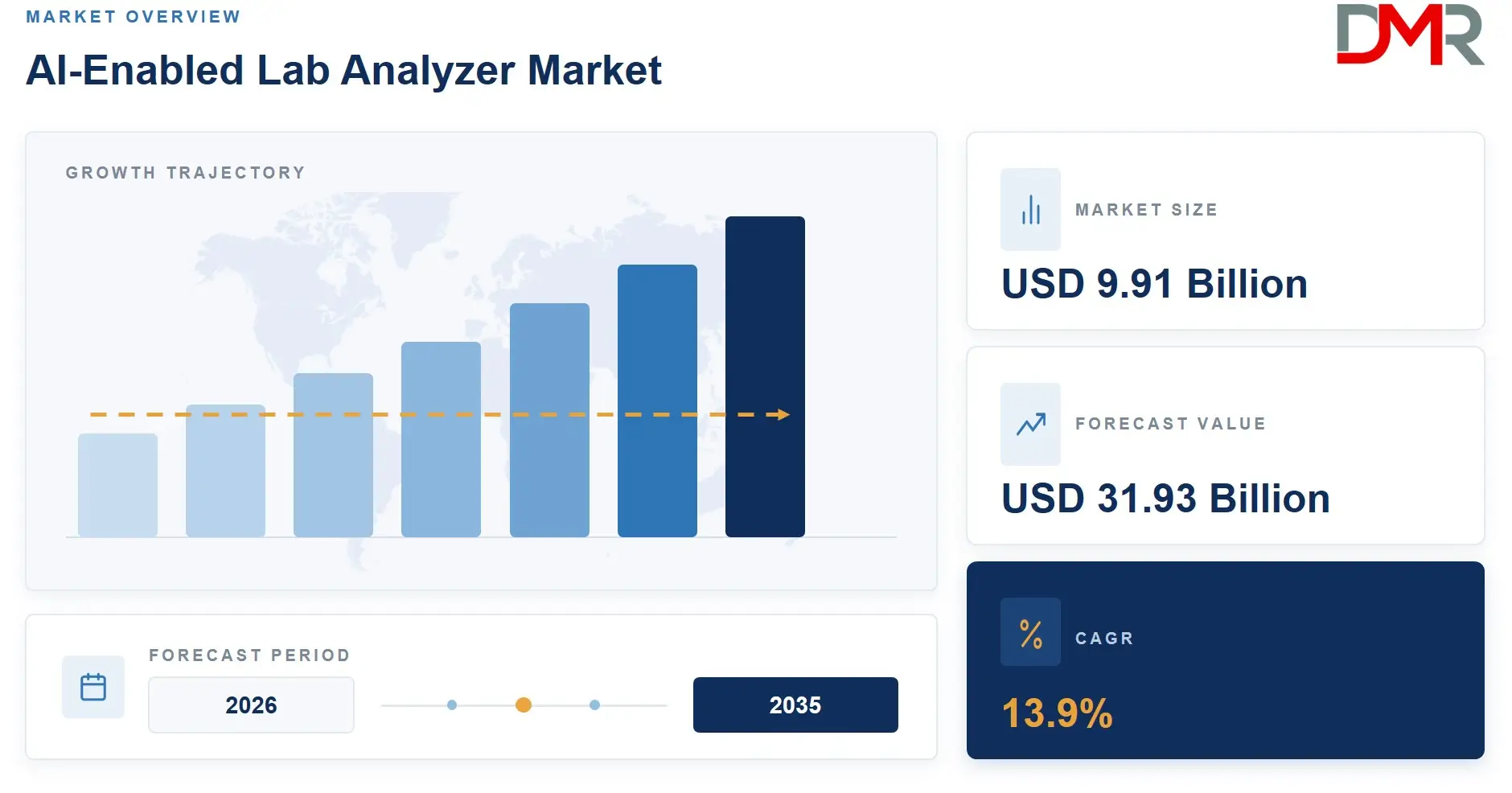
- The market size is USD 9.91 Billion in 2026, and is projected to hit USD 31.93 Billion by 2035 at a CAGR of 13.9%.
- By Analyzer Type: Molecular Diagnostics Analyzers led with a 35.8% share in 2026.
- By Automation Scope: Total Automation Systems led with a 62.34% share in 2026.
- By Process Type: Continuous Flow Processing led with a 68.4% share in 2026.
- By AI Technology: Machine Learning led as the largest category in 2026.
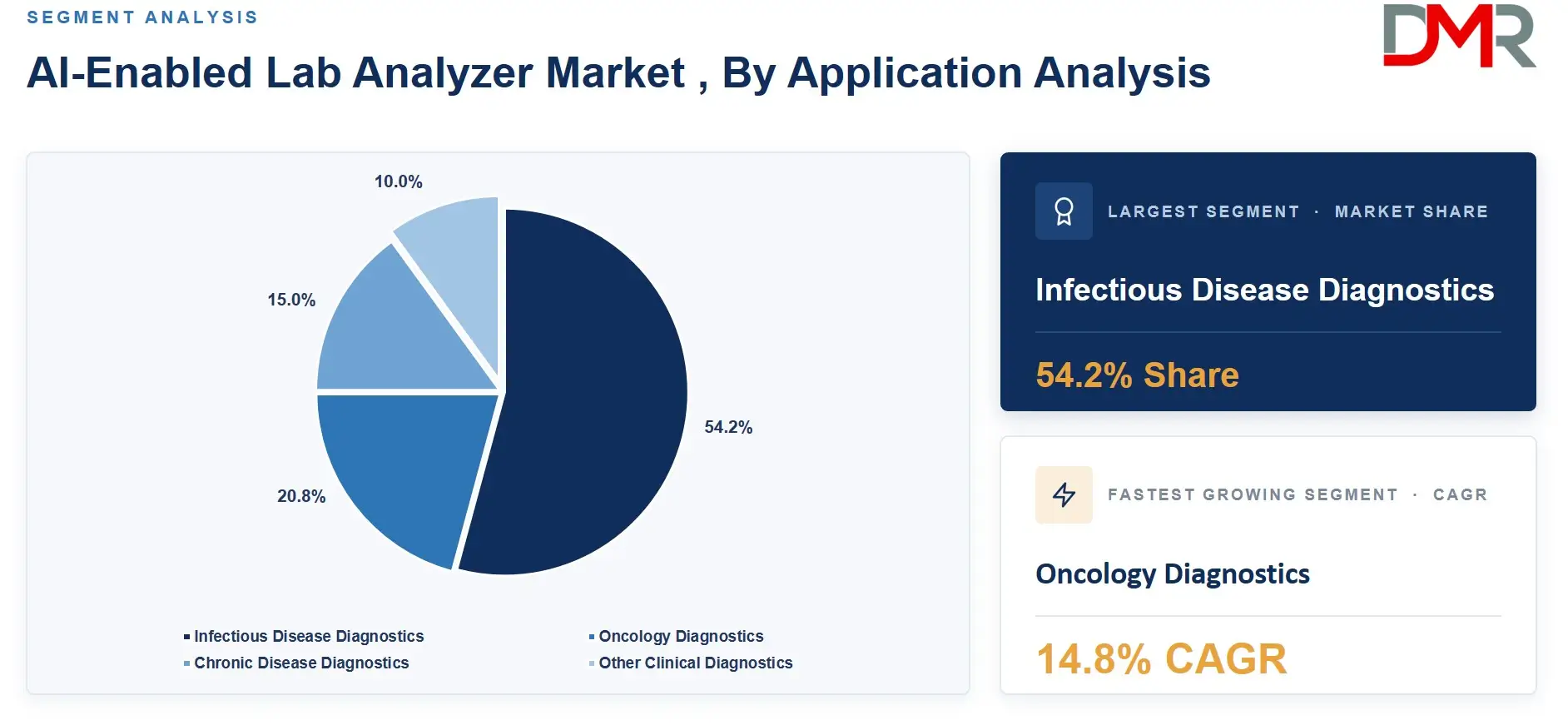
- By Application: Infectious Disease Diagnostics led with a 54.2% share in 2026.
- By Component: Software led with a 46.2% share in 2026.
- By End User: Hospitals & Hospital Laboratories led with a 51.8% share in 2026.
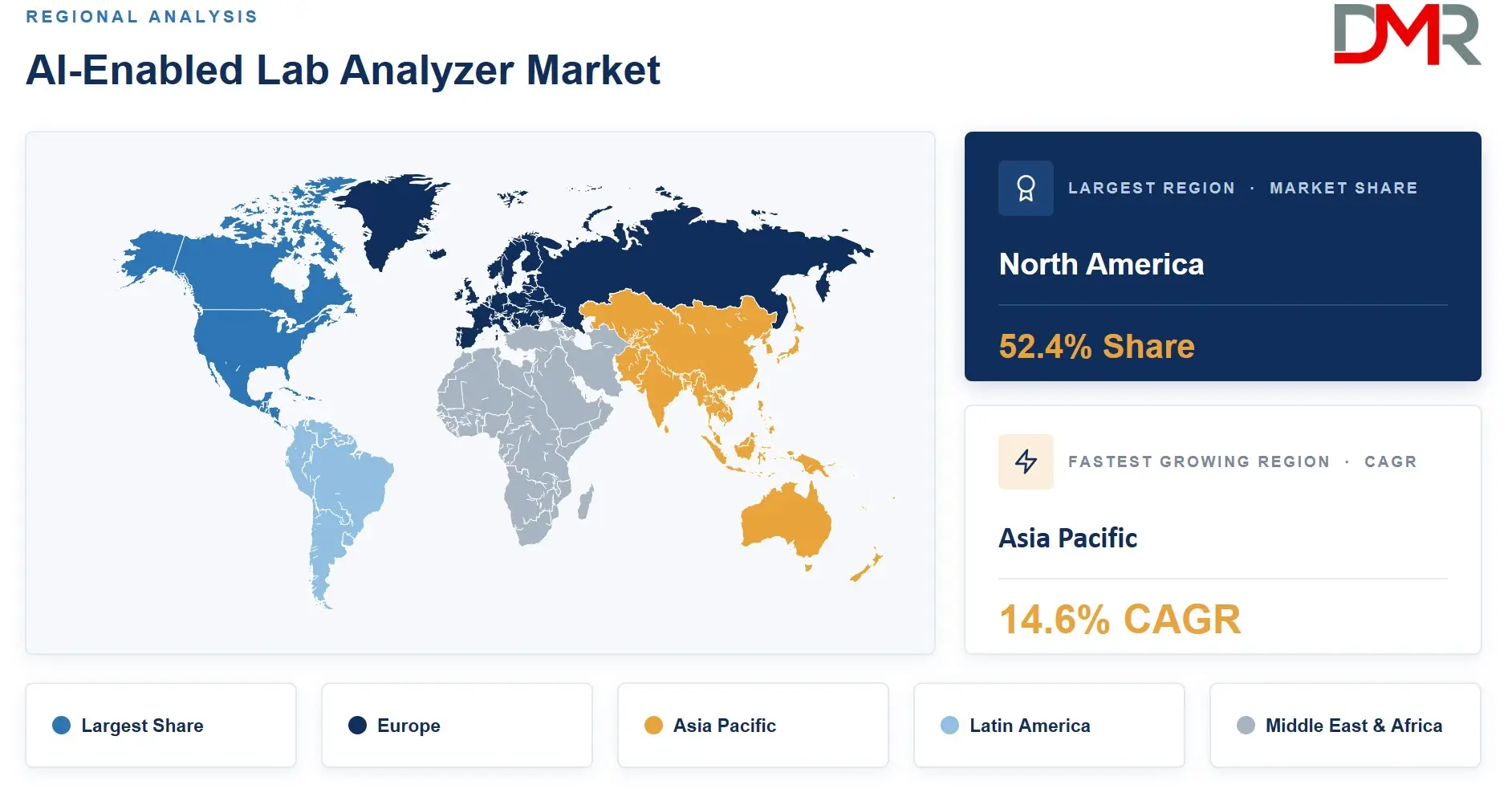
- By Region: North America led with a 52.4% share in 2026.
- Analyzer-as-a-Service subscription models are opening the mid-sized laboratory segment to AI-enabled automation without requiring upfront capital commitments.
Market Size and Forecast
The Global AI-Enabled Clinical Laboratory Analyzer Market size is estimated at USD 9.91 Billion in 2026, and is projected to reach USD 31.93 Billion by 2035, exhibiting a CAGR of 13.9% during the forecast period.
Growth over the historical period reflected the convergence of two structural forces: rising chronic and infectious disease test volumes and the accelerating replacement of legacy analyzers by AI-embedded platforms. Procurement cycles in major hospital networks shortened as turnaround-time benchmarks became contractual obligations. These dynamics brought forward demand that earlier forecasts had distributed across longer replacement windows.\
ℹ
To learn more about this report –
Download Your Free Sample Report Here
The forecast assumes continued hospital network consolidation, sustained pharmaceutical investment in companion diagnostics, and regulatory agencies maintaining accelerated pathways for AI-embedded in-vitro diagnostic devices. As reported by Roche's investor disclosures, the firm's Molecular Lab customer area generated CHF 2.527 billion in sales in 2025 and grew 4% at constant exchange rates, confirming that molecular AI platforms sustain volume even in a post-pandemic normalization environment. In December 2025, Roche launched the next-generation cobas 6800/8800 systems in the U.S., directly demonstrating that tier-one vendors are investing in throughput-optimized platforms ahead of the forecast period peak.
Analyzer Type Analysis
Molecular Diagnostics Analyzers accounted for 35.8% of Analyzer Type demand in 2026, the highest of any category.
Molecular diagnostics analyzers dominate because they handle the highest-complexity tests, including pathogen identification, resistance genotyping, and oncology mutation panels, where AI interpretation reduces the time between sample receipt and actionable result. Hospitals procuring molecular platforms prioritize vendors whose AI layers can process multiplex panels without manual exception review. AI-Enabled Clinical Laboratory Analyzer Market buyers in academic medical centers and reference laboratories treat AI-embedded molecular analyzers as the entry point for broader laboratory automation investments.
Microbiology and immunoassay analyzers represent the fastest-expanding adjacent categories. Immunoassay growth connects directly to chronic disease monitoring volumes and the shift toward high-throughput bench-top automated formats. Clinical chemistry analyzers, split between fully automated and semi-automated lines, serve high-volume core laboratories where AI-driven quality-control flagging reduces rework rates. Coagulation and urinalysis analyzers occupy narrower but stable demand pools, where automation depth rather than AI sophistication defines procurement choice.
Automation Scope Analysis
With a 62.34% share in 2026, Total Automation Systems outpaced all other Automation Scope categories.
Total Automation Systems command the largest share because large hospital laboratories treat fragmented manual workflows as a patient safety and cost liability. Vendors offering end-to-end track-based automation with AI orchestration across pre-analytical, analytical, and post-analytical stages win multi-year system replacement contracts. The capital commitment required filters out challengers that offer only partial automation modules.
Modular Automation Systems serve laboratories that cannot justify full-track capital expenditure, creating a distinct mid-market. Pre-Analytical Systems attract demand from high-volume reference laboratories that need AI-guided sample sorting and priority routing before the analytical stage. Post-Analytical Systems, while smaller, carry high recurring service revenue from software maintenance and data integration contracts with laboratory information systems.
Process Type Analysis
Continuous Flow Processing captured 62.34% of the Process Type segment in 2026, ahead of all rivals.
Continuous Flow Processing holds the leading position because high-throughput hospital laboratories run without interruption across multiple shifts. AI-enabled platforms in this category use predictive scheduling algorithms to queue samples and flag exceptions without stopping the analytical stream. A single instrument downtime event in a continuous-flow system carries measurable cost in delayed results and patient care decisions, creating strong vendor loyalty once a platform is installed.
Discrete Processing serves niche applications where test-specific reaction conditions cannot be standardized within a continuous stream. Point-of-care and specialized reference laboratory segments drive discrete processing demand. Vendors entering this sub-segment compete on test menu breadth and the ability to run low-volume, high-margin assays economically rather than on throughput speed.
AI Technology Analysis
Machine Learning led the AI Technology segment as the largest category in 2026.
Machine Learning commands the leading position across clinical analyzers because supervised and unsupervised learning models have the longest validated track record in diagnostic pattern recognition. Regulatory clearances for ML-based diagnostic aids in hematology and immunoassay have accumulated over nearly a decade, reducing the clinical evidence burden for new entrants using similar architectures. Vendors with large proprietary training datasets derived from instrument fleets hold a durable advantage in model accuracy.
Deep Learning, including Computer Vision and Convolutional Neural Networks, is the fastest-growing sub-category as digital pathology expands into high-volume histology workflows. Natural Language Processing holds a 16% share of the AI Technology segment, applied primarily to unstructured clinical notes and laboratory text reports. Generative AI and Context-Aware Computing remain early-stage but attract disproportionate R&D investment from tier-one vendors anticipating regulatory green-lighting of context-generating clinical decision support modules.
Application Analysis
Infectious Disease Diagnostics led the Application segment with a 54.2% share in 2026.
Infectious disease diagnostics hold the dominant share because global surveillance programs, antimicrobial resistance monitoring, and pandemic preparedness mandates generate structural, non-discretionary test volumes. Laboratory networks in high-burden countries run continuous pathogen surveillance panels that require AI-enabled analyzers capable of high-throughput culture identification and resistance profiling. Buyers in this segment treat platform accuracy and speed as non-negotiable procurement criteria.
ℹ
To learn more about this report –
Download Your Free Sample Report Here
Oncology Diagnostics is the fastest-expanding application category, driven by companion diagnostic requirements tied to targeted therapy approvals. Chronic Disease Diagnostics generates stable recurring volumes from diabetes, cardiovascular, and renal disease monitoring programs. Other Clinical Diagnostics, covering autoimmune and allergy testing, reproductive and toxicology screening, and transplant and genetic disorder diagnostics, represents a fragmented but high-margin opportunity for specialized AI-enabled platforms with niche assay menus.
Component Analysis
Software led the Component segment with a 46.2% share in 2026.
Software dominates because AI algorithms, laboratory information system integration modules, and clinical decision support tools carry higher recurring revenue potential than hardware sold in single capital transactions. Vendors embedding proprietary analytical software into hardware platforms lock customers into long-term software subscription cycles that outlast the physical instrument lifespan. Buyers increasingly evaluate total software capability before committing to hardware procurement.
Hardware including Analyzers, Robotic Platforms, Sample Handling, and Track Systems generates the largest single-transaction revenue per deal but faces ongoing commoditization pressure from Asian manufacturers. Services, covering Implementation, Integration, Maintenance, and Training, grow in line with installed base expansion. Large laboratory networks increasingly negotiate bundled services contracts at the point of hardware purchase, compressing standalone service margins for vendors that do not bundle proactively.
End User Analysis
Hospitals & Hospital Laboratories captured 51.8% of the End User segment in 2026, ahead of all rivals.
Hospitals generate the largest end-user share because in-house laboratory operations feed clinical decisions across emergency, inpatient, and outpatient departments simultaneously. Hospital procurement teams evaluate AI-enabled analyzers on turnaround time reduction, staff-to-result ratios, and integration depth with existing electronic health record systems. Multi-hospital network procurement programs favor vendors with validated middleware and centralized reporting dashboards.
Independent Clinical and Diagnostic Laboratories represent the highest-volume growth opportunity as outsourced testing contracts expand. Pharmaceutical and Biotechnology Companies drive demand for AI-enabled analyzers in biomarker screening and compound safety profiling workflows. Contract Research Organizations require analyzers with validated chain-of-custody documentation and regulatory submission-ready data outputs. Academic and Research Institutes, while smaller by revenue, serve as the primary validation environment for next-generation AI diagnostic models before commercial deployment.
Key Market Segments
By Analyzer Type
- Molecular Diagnostics Analyzers
- Microbiology Analyzers
- Clinical Chemistry Analyzers
- Fully Automated Analyzers
- Semi-Automated Analyzers
- Immunoassay Analyzers
- Bench-top Automated
- Floor-Standing / High-Throughput
- Hematology Analyzers
- 5-Part Differential Analyzers
- 3-Part Differential Analyzers
- AI-Driven Digital Morphology Systems
- Coagulation Analyzers
- Urinalysis Analyzers
By Automation Scope
- Total Automation Systems
- Modular Automation Systems
- Pre-Analytical Systems
- Post-Analytical Systems
By Process Type
- Continuous Flow Processing
- Discrete Processing
By AI Technology
- Machine Learning
- Supervised Learning
- Unsupervised Learning
- Reinforcement Learning
- Deep Learning
- Computer Vision / Image Analysis
- Convolutional Neural Networks (CNNs)
- Natural Language Processing
- Generative AI / Context-Aware Computing
By Application
- Infectious Disease Diagnostics
- Oncology Diagnostics
- Chronic Disease Diagnostics
- Other Clinical Diagnostics
- Autoimmune & Allergy Testing
- Reproductive & Toxicology Testing
- Transplant & Genetic Disorder Diagnostics
By Component
- Software
- AI Algorithms & Analytical Modules
- LIS Integration Software
- Clinical Decision Support Software
- Hardware / Instruments
- Analyzers & Robotic Platforms
- Sample Handling & Track Systems
- Services
- Implementation & Integration
- Maintenance & Training
By End User
- Hospitals & Hospital Laboratories
- Pharmaceutical & Biotechnology Companies
- Independent Clinical & Diagnostic Laboratories
- Contract Research Organizations (CROs)
- Academic & Research Institutes
Regional Analysis
North America led the AI-Enabled Clinical Laboratory Analyzer Market with a 52.4% share in 2026, valued at USD 5.19 Billion.
North America
North America holds the majority share because the U.S. healthcare system combines the world's highest diagnostic test volumes per capita with active reimbursement structures for advanced laboratory services. Hospital networks operating under value-based care contracts treat AI-enabled analyzer investments as cost-reduction tools rather than discretionary upgrades. As reported by Roche investor disclosures, Roche Diagnostics North America generated CHF 4.444 billion in sales in 2025 and grew 9% at constant exchange rates, confirming that top-tier vendors still see strong dollar-denominated volume expansion in the region.
ℹ
To learn more about this report –
Download Your Free Sample Report Here
Canada contributes a smaller but growing share, with provincial health authority procurement programs directing laboratory consolidation toward AI-capable platforms. Canadian public laboratory networks face the same medical technologist shortage pressures driving U.S. automation spending, making AI-enabled triage and exception handling a procurement priority at the provincial level.
Europe, Middle East and Africa
Europe holds the second-largest regional position, supported by centralized national health service procurement and EU regulatory harmonization for in-vitro diagnostics under the IVDR framework. Data published by Roche confirms EMEA Diagnostics sales reached CHF 4.965 billion in 2025 and grew 6% at constant exchange rates, reflecting sustained laboratory network investment across Western European markets. Middle Eastern sovereign healthcare infrastructure programs and African disease surveillance funding add incremental volume to this combined region.
Asia Pacific
Asia Pacific presents the widest divergence between short-term headwinds and long-term structural demand. Roche Diagnostics Asia-Pacific sales stood at CHF 3.386 billion in 2025 and declined 12% at constant exchange rates, reflecting post-COVID inventory normalization and pricing pressure from domestic Chinese manufacturers. Beyond that normalization cycle, the region's disease burden, expanding hospital infrastructure, and government laboratory modernization programs position it as the fastest-growing region through the forecast horizon. The World Bank forecast 2025 growth of 4.5% for East Asia and Pacific and 5.8% for South Asia, supporting purchasing power recovery across the region's largest diagnostics markets.
Latin America
Latin America is a high-growth emerging region for AI-enabled diagnostic platforms. Figures from Roche investor disclosures show Latin America Diagnostics sales reached CHF 1.052 billion in 2025 and grew 11% at constant exchange rates, outpacing most other regions in volume momentum. Brazil and Mexico drive the majority of regional volume through expanding private hospital networks and government universal health programs requiring laboratory quality upgrades.
Key Regions and Countries
North America
Europe
- Germany
- France
- The UK
- Spain
- Italy
- Rest of Europe
Asia Pacific
- China
- Japan
- South Korea
- India
- Australia
- Rest of APAC
Latin America
- Brazil
- Mexico
- Rest of Latin America
Middle East & Africa
- GCC
- South Africa
- Rest of MEA
Macroeconomic Impact
The World Bank projected global economic growth of just 2.3% for 2025, nearly half a percentage point below its earlier forecast, and cut growth projections for nearly 70% of economies worldwide. For capital-intensive medical equipment markets, slower GDP growth tightens hospital budget approval cycles and extends procurement timelines, particularly in public health systems reliant on government expenditure allocations. The World Bank forecast developing economies to grow 3.8% in 2025, while low-income countries are expected to grow 5.3%, signaling that volume growth for lower-cost AI-enabled analyzer platforms will increasingly originate outside mature markets.
Currency volatility creates asymmetric cost pressures for vendors with euro- or Swiss franc-denominated manufacturing selling into emerging market currencies. Trade policy uncertainty affecting reagent and semiconductor component supply chains adds a secondary cost layer that AI-enabled platform vendors with vertically integrated supply structures absorb more effectively than assemblers relying on third-party component networks.
Market Dynamics
Driver: AMR Surveillance and Infectious Disease Burden Drive Test Volume
Antimicrobial resistance has become a global clinical emergency with direct procurement implications for AI-enabled diagnostic analyzers. The CDC's 2019 Antimicrobial Resistance Threats Report confirmed that more than 2.8 million antimicrobial-resistant infections occur in the U.S. each year, causing more than 35,000 deaths. Rapid, AI-guided identification of resistant organisms converts a clinical safety imperative into a laboratory capital investment decision. In May 2025, Danaher entered a partnership with AstraZeneca specifically to scale AI-powered diagnostics for precision medicine, illustrating that leading diagnostic vendors are repositioning around infection and resistance profiling as a core commercial strategy.
U.S. cases of Candida auris increased nearly fivefold between 2019 and 2022, according to the CDC, demonstrating that novel resistant pathogens emerge faster than clinical protocols can adapt without AI-enabled detection tools. WHO tuberculosis surveillance reached 193 countries in 2023, representing over 99% of global TB cases, confirming that AI-enabled molecular analyzers face a permanent, high-volume infectious disease testing mandate. Buyers that delay platform upgrades risk falling outside compliance windows as surveillance standards tighten.
Restraint: Regulatory Complexity and Capital Cost Limit Deployment Speed
AI-embedded in-vitro diagnostic platforms face a multi-jurisdictional regulatory burden that extends time-to-market well beyond conventional analyzer clearance timelines. The U.S. FDA, EU IVDR, and equivalent national bodies each require clinical validation datasets specific to the AI model version deployed, creating parallel submission tracks that consume substantial R&D budgets. Vendors without dedicated regulatory affairs teams treat clearance cycles as existential bottlenecks rather than manageable timelines.
The estimated annual U.S. treatment cost for infections caused by six frequently encountered AMR pathogens exceeds USD 4.6 billion, according to the CDC. That figure frames the cost-of-inaction argument for payers, but hospital procurement committees still face high capital acquisition, middleware integration, and lifecycle maintenance costs that constrain deployment among independent and resource-constrained laboratories. Price-sensitive buyers defer full-automation investments until Analyzer-as-a-Service models reduce the upfront capital requirement to an operating expense line.
Opportunity: Service Models and Edge Deployments Unlock Underserved Segments
Analyzer-as-a-Service subscription structures remove the single largest barrier for mid-sized laboratories. Laboratories that previously could not justify the capital expenditure for full AI-enabled automation now access equivalent capability through monthly operating cost contracts. Vendors that move early to offer subscription pricing capture installed base across a segment historically locked out of the premium AI analyzer tier.
Six bacterial AMR hospital-onset infections rose by a combined 20% during the COVID-19 pandemic versus the pre-pandemic period and remained above pre-pandemic levels through 2022, as reported by the CDC. That sustained above-baseline burden creates a structural demand case for edge-deployable AI analyzers in rural hospitals and decentralized clinics that currently rely on manual or outsourced testing. In July 2025, Scopio Labs received its fourth FDA clearance for enhanced AI-powered RBC and platelet capabilities, demonstrating that regulatory authorities are approving incremental AI enhancements on existing platforms at a pace that validates the decentralized deployment strategy.
Porter's Five Forces
Competitive intensity in the AI-enabled clinical laboratory analyzer market is shaped by high entry barriers, moderate supplier concentration, and strong buyer negotiating power at the enterprise procurement level. New entrants face a multi-year gauntlet of clinical validation requirements, regulatory clearance timelines, and installed-base inertia that protects incumbents with large fleet deployments. Suppliers of advanced optical sensors, proprietary reagent chemistries, and AI semiconductor components hold meaningful pricing leverage, particularly where components are single-sourced or subject to export controls.
Hospital network procurement teams exercise substantial buyer power on capital equipment contracts, using competitive tendering to extract price concessions and bundled service commitments. Substitutes, primarily outsourced reference laboratory services and point-of-care testing devices, constrain premium pricing for mid-complexity analyzers but lack the throughput and AI-integration depth that large hospitals require. Competitive rivalry among tier-one vendors, including Roche, Siemens Healthineers, Abbott, and Danaher, centers on AI model accuracy benchmarks, regulatory clearance speed, and LIS integration capability rather than instrument hardware differentiation alone.
AI and Gen AI Impact
Artificial intelligence reshapes the clinical laboratory analyzer market most directly at the result interpretation and workflow orchestration layers. Machine learning models embedded in hematology and immunoassay analyzers now flag abnormal cell morphologies, detect reagent drift, and triage critical results without requiring a medical technologist to review every sample. Early movers with large proprietary training datasets hold a model accuracy advantage that new entrants cannot replicate without equivalent instrument fleet data. Roche's Near Patient Care customer area generated CHF 1.983 billion in sales in 2025, representing 14.3% of Diagnostics Division revenue, confirming that AI-enabled near-patient and decentralized formats are commercially validated beyond the core laboratory setting.
Generative AI and context-aware computing are entering early clinical deployment for laboratory result narrative generation and cross-panel anomaly explanation. In September 2024, Roche expanded the navify Digital Pathology open environment with additional AI algorithms, directly operationalizing AI-driven cancer diagnostics at scale. Laggards that defer generative AI investment risk losing ground on clinical decision support contracts, where narrative output quality is becoming a procurement differentiator alongside analytical accuracy.
Market Trends
LIS and EHR Connectivity Redefines Laboratory Platform Value
Laboratory analyzer buyers now treat LIS, EHR, and cloud connectivity as baseline procurement requirements rather than premium features. Roche's Pathology Lab customer area generated CHF 1.723 billion in sales in 2025 and grew 14% at constant exchange rates, the fastest-growing area within Roche Diagnostics, confirming that connected pathology platforms command premium contract values. In October 2024, Siemens Healthineers expanded Atellica Integrated Automation to the Atellica CI Analyzer, consolidating 25 manually performed tasks and reducing manual workflow steps by up to 75%. Vendors that cannot demonstrate bidirectional data flow into hospital information ecosystems face exclusion from enterprise replacement tenders regardless of analytical performance.
Market Competition Overview
The AI-enabled clinical laboratory analyzer market is moderately consolidated at the top tier, with a small number of global incumbents holding dominant positions built on installed base scale, proprietary reagent ecosystems, and multi-decade clinical validation archives. Tier-one vendors compete on AI model accuracy, regulatory clearance portfolios, and the depth of LIS and EHR integration rather than on instrument hardware pricing alone. As reported by Roche investor disclosures, the firm's Core Lab customer area generated CHF 7.614 billion in sales in 2025, representing 55.0% of total Diagnostics Division revenue, illustrating the scale advantage that entrenched vendors carry in the high-volume core laboratory segment.
Mid-tier vendors compete in specific analyzer categories or regional markets where global incumbents have lower penetration or slower service networks. In September 2024, Beckman Coulter and Scopio Labs expanded their partnership through a global distribution agreement for Scopio's Full-Field Bone Marrow Aspirate application, illustrating how established distributors are extending AI-enabled specialty product reach rather than developing proprietary AI tools for every niche. Emerging Asian vendors, including Mindray and SNIBE, are gaining share in price-sensitive segments by offering AI-capable platforms at acquisition cost points that Western incumbents have not matched.
Pricing Analysis
Pricing structures in AI-Enabled Lab Analyzer Market segment by automation tier, AI capability depth, and end-user type. Full laboratory automation systems carry the highest capital acquisition cost, while standalone AI-enhanced bench-top analyzers target mid-volume laboratories at a lower entry price. Software subscriptions, reagent rental agreements, and reagent lease models create recurring revenue streams that vendors increasingly prefer over one-time capital transactions. In April 2024, Mindray launched the BS-1000M chemistry analyzer for mid-volume laboratories offering up to 1,000 tests per hour, a direct price-competitive move targeting buyers who cannot justify premium full-automation pricing but require AI-assisted throughput above entry-level instrument capacity.
Premium pricing pressure comes primarily from Asian manufacturers entering the mid-market with analyzers priced 20% to 40% below equivalent Western platforms. Western vendors defend pricing through clinical data archives that validate AI model accuracy, proprietary reagent ecosystems that tie customers to platform-specific consumables, and bundled service contracts that shift the cost comparison from acquisition price to total cost per reportable result. Emerging Analyzer-as-a-Service models convert capital pricing discussions into per-test or monthly subscription comparisons, where incumbents with large fleet efficiencies hold a structural cost advantage over new entrants.
Company Profiles
Roche Diagnostics operates as the market's scale leader, with a diagnostics commercial footprint that covered 193-country tuberculosis surveillance programs and delivered 31 billion diagnostic tests to customers globally in 2025. Roche's Diagnostics Division generated CHF 13.847 billion in sales in 2025, and the firm introduced two new instrument platforms, six digital solutions, and 53 new diagnostic tests within the same year, illustrating a product cadence that smaller competitors cannot sustain. The breadth of Roche's analyzer portfolio, spanning molecular, pathology, core lab, and near-patient formats, enables cross-selling of AI-enabled upgrades across an installed base that a standalone AI software vendor could never access independently.
Siemens Healthineers generated around EUR 22.4 billion in revenue in fiscal 2024 and employed approximately 72,000 people worldwide, making it one of the few competitors with the manufacturing scale and clinical sales infrastructure to challenge Roche across multiple product categories simultaneously. Siemens Healthineers competes on laboratory automation depth, with its Atellica platform consolidating chemistry and immunoassay testing under integrated AI-driven workflow management. The firm's global service network and direct hospital system relationships provide contract renewal leverage that independent AI software vendors cannot replicate without hardware ownership.
Key Players
- Roche Diagnostics (F. Hoffmann-La Roche Ltd.)
- Abbott Laboratories
- Siemens Healthineers AG
- Thermo Fisher Scientific Inc.
- Danaher Corporation (Beckman Coulter Diagnostics)
- Sysmex Corporation
- Mindray Medical International
- bioMérieux SA
- DiaSorin S.p.A.
- Ortho Clinical Diagnostics (QuidelOrtho)
- Randox Laboratories Ltd.
- SNIBE Diagnostics
- HORIBA Ltd.
- Bio-Rad Laboratories Inc.
- Nihon Kohden Corporation
- Boule Diagnostics AB
- Meril Life Sciences Pvt. Ltd.
- Transasia Bio-Medicals Ltd.
- Advanced Instruments (Nova Biomedical)
- EKF Diagnostics Holdings plc
Supply Chain and Value Chain Analysis
The AI-enabled clinical laboratory analyzer supply chain originates with raw material suppliers providing optical components, microfluidic substrates, specialty reagent chemicals, and AI inference semiconductors. Instrument manufacturers integrate these inputs into analyzer platforms before embedding proprietary software, AI model layers, and middleware. Distribution channels split between direct hospital sales teams for large enterprise accounts and regional distributors for mid-sized laboratories and emerging markets. Maximum value creation concentrates at the software and AI algorithm layer, where proprietary model accuracy and regulatory clearance portfolios create pricing power unavailable to hardware assemblers.
Supply chain risk concentrates in two nodes. Specialty reagent raw materials, particularly high-purity biochemicals and monoclonal antibodies, are sourced from a limited number of qualified suppliers, creating single-source vulnerability for key immunoassay consumables. AI inference semiconductor availability depends on foundry capacity constrained by broader semiconductor demand cycles. Vendors with captive reagent manufacturing or multi-sourced component strategies carry a meaningful supply resilience advantage over those relying entirely on external suppliers.
Regulatory Landscape
The U.S. FDA governs AI-enabled in-vitro diagnostic devices under the De Novo, PMA, or 510(k) pathways, with the Breakthrough Device Designation offering an accelerated route for novel AI-embedded diagnostics. The EU In Vitro Diagnostic Regulation replaced the legacy IVDD framework, imposing stricter clinical evidence requirements and Notified Body review obligations that extend time-to-market for AI-embedded platforms sold into European markets. Regulatory agencies in Japan, China, and Australia each maintain distinct submission and clinical data localization requirements, creating a multi-track clearance burden for global platform vendors.
AI-specific regulatory guidance is evolving across all major jurisdictions, with the FDA publishing predetermined change control plan frameworks that allow vendors to update AI models post-clearance under predefined conditions. Vendors that embed change control documentation into their development workflows from the design stage reduce regulatory cycle times meaningfully compared to those treating regulatory submission as a post-development activity. Cybersecurity and algorithmic auditability requirements are expanding from voluntary guidance into enforceable product specifications across U.S., EU, and UK jurisdictions.
Investment and White Space Analysis
Investment flows concentrate on AI software layers, digital pathology platforms, and companion diagnostic co-development programs tied to targeted oncology therapies. Pharmaceutical and biotechnology companies direct capital toward AI-enabled analyzers that can support companion diagnostic validation workflows, creating co-investment structures between instrument vendors and drug developers. Mid-sized independent laboratories represent the largest underserved segment, with Analyzer-as-a-Service models only beginning to address the capital access barrier that has historically excluded this tier from AI-enabled automation investments.
Edge-deployable AI analyzers for decentralized clinics and rural hospitals in South Asia, Sub-Saharan Africa, and Latin America constitute the highest-growth white space opportunity with the lowest current competitive density. Global incumbents have built their installed bases around high-complexity hospital environments. Smaller, purpose-built vendors that design AI-enabled platforms for connectivity-constrained settings face limited direct competition from tier-one players. Closed-loop reflex-testing platforms, where an initial result automatically triggers follow-on test recommendations, represent a near-term monetization opportunity for software-layer vendors already embedded in laboratory information systems.
Recent Developments
- May 2026: Roche agreed to acquire PathAI for up to USD 1.05 billion, strengthening Roche's AI-powered pathology and diagnostic capabilities.
- August 2026: Roche and Eli Lilly received U.S. FDA clearance for the Elecsys pTau217 blood test, which can run on more than 4,500 Roche laboratory analyzers in the U.S.
- April 2025: Roche received FDA Breakthrough Device Designation for its VENTANA TROP2 RxDx Device, described by Roche as the first breakthrough designation for a computational pathology companion diagnostic.
- July 2026: Beckman Coulter launched the DxU 1800 System, a fully automated urinalysis solution combining a urine chemistry analyzer with automated microscopy technology.
- March 2025: Beckman Coulter received FDA 510(k) clearance for the DxC 500i Clinical Analyzer, an integrated clinical chemistry and immunoassay analyzer.
- September 2025: Siemens Healthineers introduced the Atellica DT 250 Analyzer, an automated analyzer for drug testing, therapeutic-drug monitoring, and toxicology applications.
Report Details
| Report Characteristics |
| Market Value (2026) |
USD 9.91 Billion |
| Forecast Revenue (2035) |
USD 31.93 Billion |
| CAGR (2026–2035) |
13.9% |
| Base Year for Estimation |
2025 |
| Historic Period |
2020 – 2024 |
| Forecast Period |
2026 – 2035 |
| Report Coverage |
Revenue Forecast, Market Dynamics, Competitive Landscape, Recent Developments |
| Segments Covered |
By Analyzer Type (Molecular Diagnostics Analyzers, Microbiology Analyzers, Clinical Chemistry Analyzers, Immunoassay Analyzers, Hematology Analyzers, Coagulation Analyzers, Urinalysis Analyzers), By Automation Scope (Total Automation Systems, Modular Automation Systems, Pre-Analytical Systems, Post-Analytical Systems), By Process Type (Continuous Flow Processing, Discrete Processing), By AI Technology (Machine Learning, Deep Learning, Natural Language Processing, Generative AI / Context-Aware Computing), By Application (Infectious Disease Diagnostics, Oncology Diagnostics, Chronic Disease Diagnostics, Other Clinical Diagnostics), By Component (Software, Hardware / Instruments, Services), By End User (Hospitals & Hospital Laboratories, Pharmaceutical & Biotechnology Companies, Independent Clinical & Diagnostic Laboratories, Contract Research Organizations, Academic & Research Institutes) |
| Regional Analysis |
North America – US and Canada; Europe – Germany, France, The UK, Spain, Italy, and Rest of Europe; Asia Pacific – China, Japan, South Korea, India, Australia, and Rest of APAC; Latin America – Brazil, Mexico, and Rest of Latin America; Middle East & Africa – GCC, South Africa, and Rest of MEA |
| Competitive Landscape |
Roche Diagnostics (F. Hoffmann-La Roche Ltd.), Abbott Laboratories, Siemens Healthineers AG, Thermo Fisher Scientific Inc., Danaher Corporation (Beckman Coulter Diagnostics), Sysmex Corporation, Mindray Medical International, bioMérieux SA, DiaSorin S.p.A., Ortho Clinical Diagnostics (QuidelOrtho), Randox Laboratories Ltd., SNIBE Diagnostics, HORIBA Ltd., Bio-Rad Laboratories Inc., Nihon Kohden Corporation, Boule Diagnostics AB, Meril Life Sciences Pvt. Ltd., Transasia Bio-Medicals Ltd., Advanced Instruments (Nova Biomedical), EKF Diagnostics Holdings plc |
| Customization Scope |
Customization for segments and region or country level will be provided. Additional customization can be done based on requirements. |
| Purchase Options |
Three license options: Single User License, Multi-User License (Up to 5 Users), and Corporate Use License (Unlimited Users and Printable PDF) |
Frequently Asked Questions
What is the biggest investment opportunity in the AI-Enabled Clinical Laboratory Analyzer market?
▾ Analyzer-as-a-Service subscription models for mid-sized laboratories represent the most immediate capital deployment opportunity. Independent laboratories historically excluded from full-automation investments now access AI-enabled platforms through operating expense contracts, opening a large underserved customer tier. Edge-deployable AI analyzers for rural and decentralized settings in South Asia and Sub-Saharan Africa carry the highest long-term volume upside with minimal current competition from global incumbents.
Who are the top companies in the AI-Enabled Clinical Laboratory Analyzer market?
▾ The leading vendors include Roche Diagnostics, Abbott Laboratories, Siemens Healthineers, Thermo Fisher Scientific, and Danaher Corporation (Beckman Coulter Diagnostics). Roche holds the broadest installed base, delivering 31 billion diagnostic tests to customers globally in 2025. Sysmex, Mindray, and bioMérieux lead in specific categories including hematology, mid-volume chemistry, and microbiology respectively.
Which segment is growing fastest in the AI-Enabled Clinical Laboratory Analyzer market and why?
▾ Oncology Diagnostics is the fastest-growing application segment, driven by companion diagnostic development tied to targeted therapy approvals across major pharmaceutical pipelines. Regulatory agencies are approving AI-embedded companion diagnostics at an accelerating pace, creating mandatory procurement requirements for laboratories supporting clinical trials and post-approval monitoring. Within AI Technology, Deep Learning and Computer Vision applications are expanding fastest as digital pathology enters routine high-volume histology workflows.
Which region is growing fastest in the AI-Enabled Clinical Laboratory Analyzer market and why?
▾ Latin America is the fastest-growing region in near-term momentum, with Roche Diagnostics reporting 11% constant exchange rate growth in the region in 2025. Asia Pacific carries the highest long-term volume potential as hospital infrastructure expansion in China, India, and Southeast Asia drives laboratory modernization investment. South Asia's forecast GDP growth of 5.8% for 2025 provides the purchasing power context for continued diagnostic platform procurement through the forecast period.
What is the biggest challenge holding AI-Enabled Lab Analyzer Market back?
▾ Multi-jurisdictional regulatory clearance requirements represent the primary constraint on market velocity. AI-embedded in-vitro diagnostic platforms must clear separate clinical validation and submission processes in the U.S., EU, Japan, China, and other major markets, each requiring jurisdiction-specific evidence packages. High capital acquisition and middleware integration costs create a secondary deployment barrier for independent and resource-constrained laboratories that subscription models are only beginning to address.