Market Snapshot
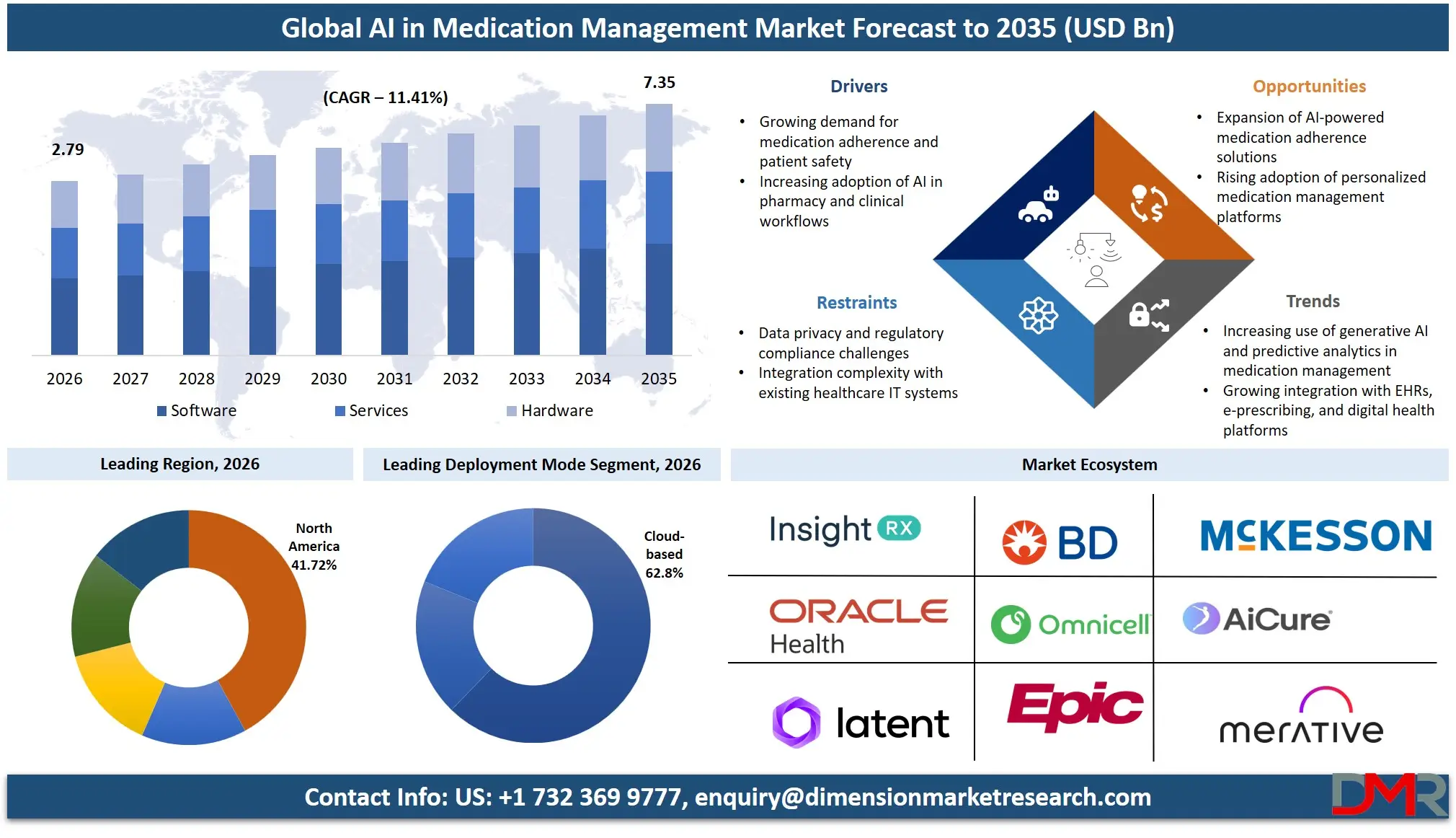
- The AI in Medication Management Market size is USD 2.5 Billion in 2025, reached USD 2.79 Billion in 2026, and is projected to hit USD 7.35 Billion by 2035 at a CAGR of 11.41%.
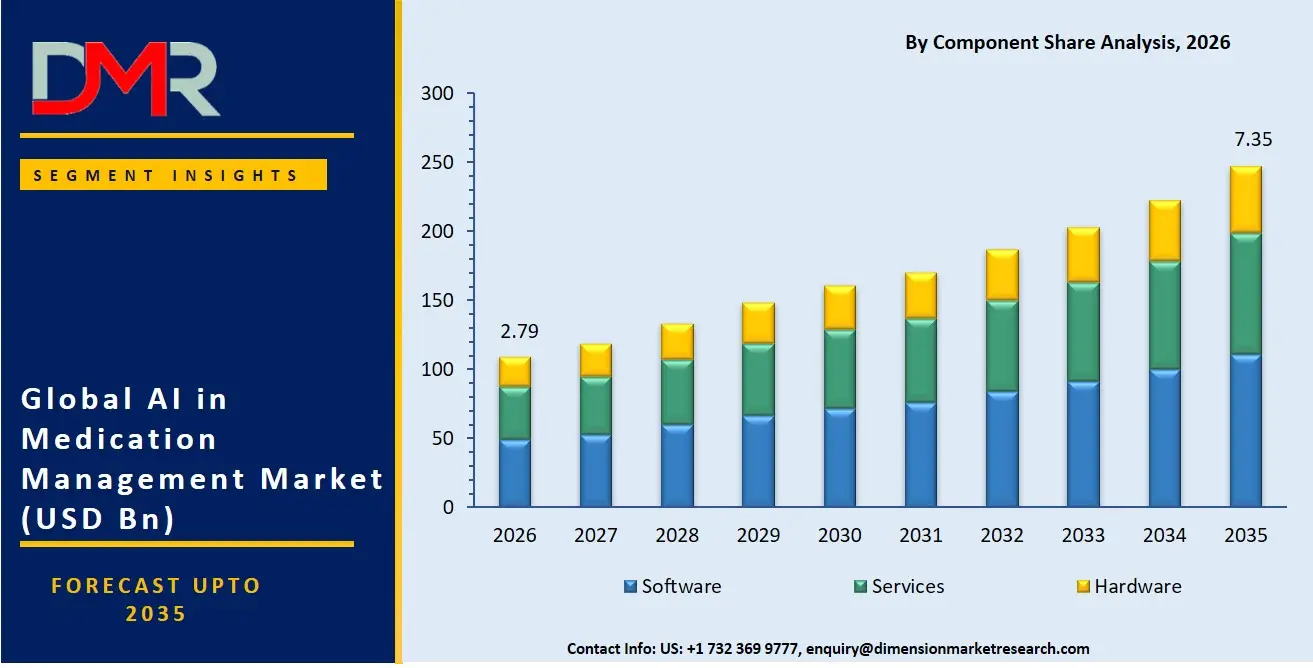
- Software leads all component segments with a 50.31% revenue share in 2026.
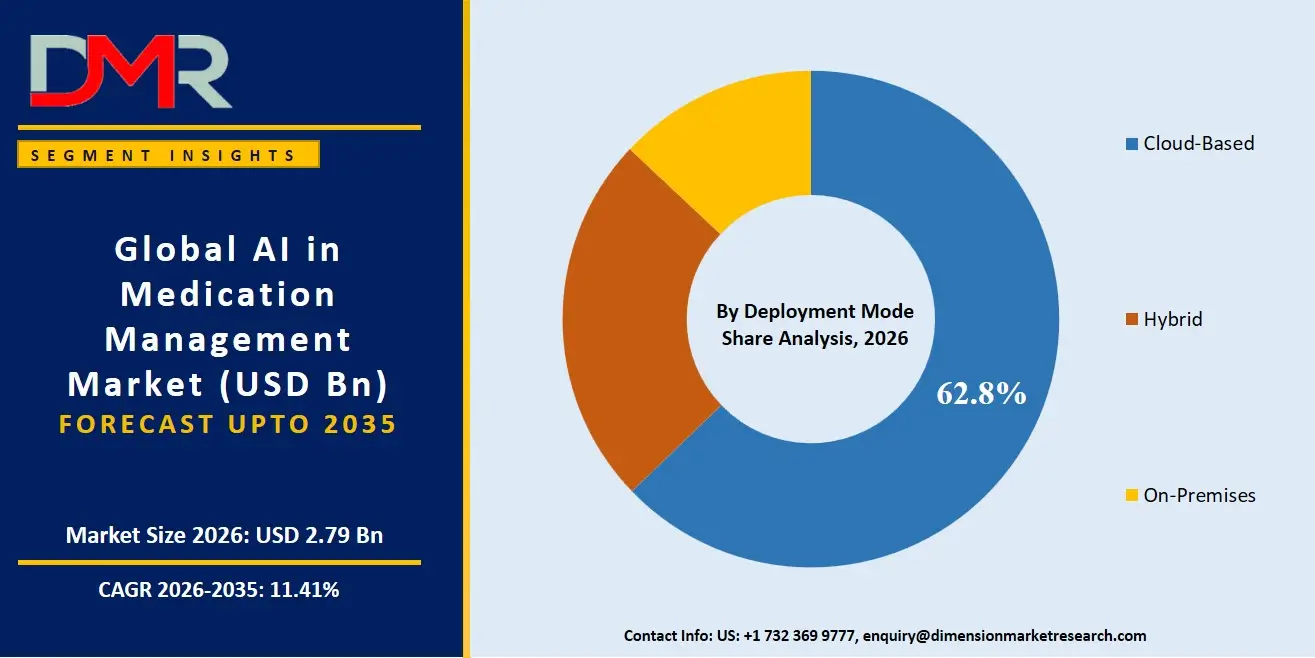
- Cloud-Based deployment holds a 62.81% share, reflecting strong enterprise preference for scalable infrastructure.
- Machine Learning and Predictive Models account for 54.71% of the technology segment.
- Medication Adherence and Engagement is the dominant application with a 39.41% share.
- Hospitals lead end-user demand with a 47.83% revenue share.
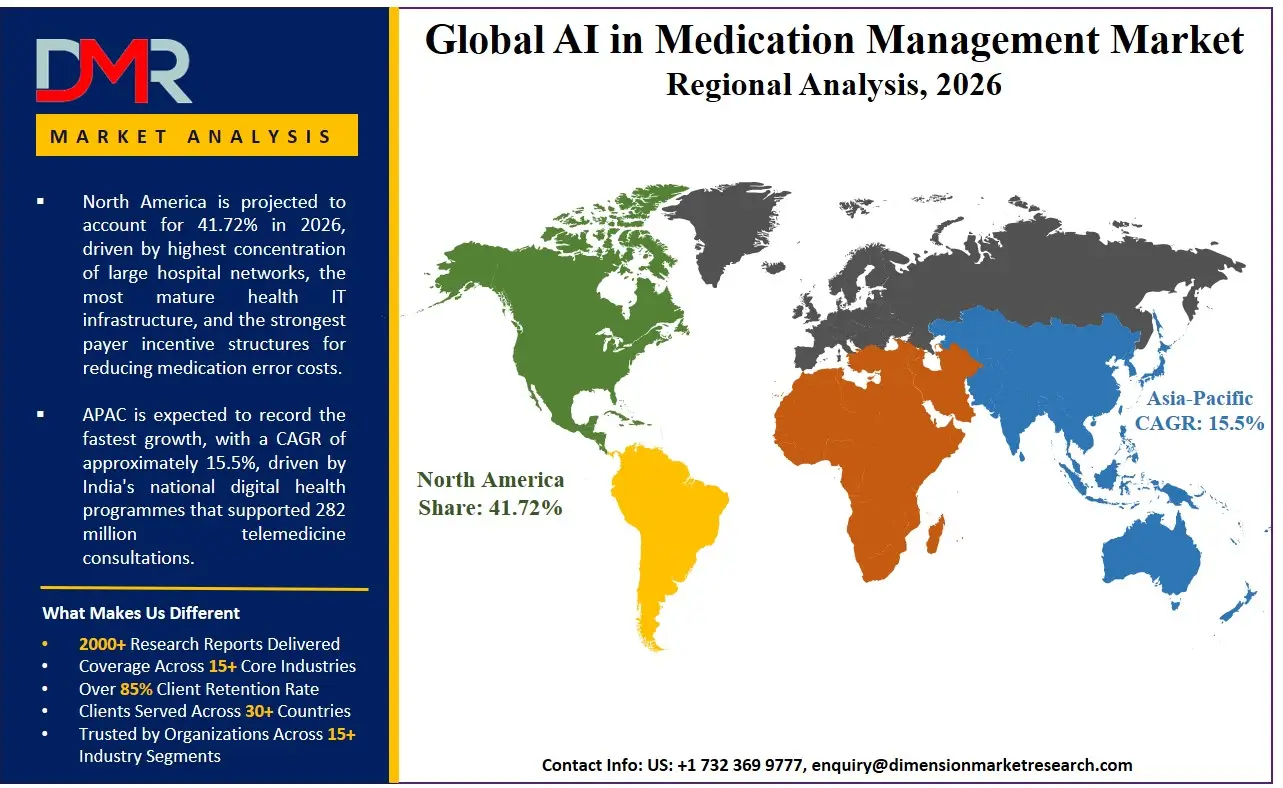
- North America is the leading region with a 41.72% share of global revenue.
Market Overview
The AI in Medication Management Market covers software, services, and hardware solutions that apply artificial intelligence to prescription verification, adherence monitoring, adverse drug event surveillance, clinical decision support, and pharmacy inventory optimisation. As reported by market data, the global market stood at USD 2.5 billion in 2025. Systems falling outside this scope include general electronic health records without embedded AI functionality and standalone pharmacy dispensing equipment that operates without machine learning integration.
ℹ
To learn more about this report –
Download Your Free Sample Report Here
Medication errors cost the global healthcare system between $37.6 and $42 billion annually, based on data from dosepacker.com. That cost baseline is the primary commercial rationale for AI in Medication Management Market. Pharmacists currently catch 30 to 70% of medication-ordering errors manually, and hospital error rates remain between 8% and 25%. AI tools are designed to close the remaining gap at scale, which no human-only workflow can replicate cost-effectively across large patient populations.
AI reshapes AI in Medication Management Market by moving medication oversight from reactive to predictive. Machine learning models now predict nonadherence with an AUC of up to 0.935, according to a 2025 multilevel intervention review published on PMC. That level of predictive accuracy shifts the clinical and commercial value of medication management from error correction toward early intervention, which reduces downstream costs and improves patient outcomes simultaneously.
Key Statistics
- AI-driven automated dispensing cabinets achieved a 36% reduction in opioid-related medication errors in hospital postoperative recovery wards. Source, ScienceDirect.
- A Canadian insurance company recorded a 43% drop in support inquiries after deploying an AI-powered medication management platform, with zero data breaches. Source, Master of Code.
- IBM's DataProbe AI system identified $41.5 million in false Medicare claims within a few months by analyzing hospital billing records. Source, PMC.
- AI-enabled tools under India's National TB Elimination Programme achieved a 27% decline in adverse TB outcomes and a 12 to 16% rise in case detection rates. Source, Press Information Bureau, India.
- A 2025 meta-analysis found a pooled SMD of 0.71 favouring digital and AI-driven medication adherence interventions for older adults. Source, PMC.
- Rerouting 30% of low-acuity cases through AI-enabled symptom-checker chatbots could meaningfully ease emergency department crowding. Source, PMC.
Market Size and Forecast
The Global AI in Medication Management Market size is estimated at USD 2.79 Billion in 2026 from USD 2.5 Billion in 2025, and is projected to reach USD 7.35 Billion by 2035, exhibiting a CAGR of 11.41% during the forecast period.
The forecast rests on two structural assumptions. The first is continued hospital adoption of AI-driven clinical decision support, where hospitals already account for a 47.83% end-user share and face sustained pressure to reduce the 8 to 25% medication error rate documented across facilities. The second is the shift toward cloud infrastructure, with 62.81% of deployments already cloud-based, which lowers the cost of scaling AI tools across multi-site health systems. Both conditions favour sustained double-digit revenue growth through 2035.
Market Dynamics
Medication Errors and Cost Pressure Force AI Adoption
Global medication error costs between $37.6 and $42 billion annually create a non-negotiable financial case for AI deployment, based on data from dosepacker.com. Health systems cannot absorb those costs indefinitely. Every dollar invested in AI-driven error reduction delivers measurable returns, which makes budget approval cycles shorter than in most healthcare technology categories.
AI tools already show measurable clinical impact. As per BMJ Open, 71% of studies showed a statistically significant reduction in medication errors when AI-based decision support was applied in primary care. That evidence base gives procurement teams the clinical validation they need to justify large-scale rollouts across hospital networks.
Data Privacy Risks Slow Enterprise Deployment
AI medication management platforms process sensitive patient data at high volume, creating regulatory and liability exposure that slows enterprise adoption. Hospitals operating across multiple jurisdictions face inconsistent data governance requirements, which raises integration costs and extends deployment timelines. Vendors that cannot show clear data residency controls lose deals to more compliance-ready competitors.
Predictive Adherence Creates a New Commercial Layer
Machine learning models that predict nonadherence with an AUC of up to 0.935, as reported by a 2025 PMC review, open a commercial opportunity beyond error prevention. Payers and pharmacy benefit managers can use these models to intervene before costly hospitalizations occur. That creates a separate revenue stream for AI vendors who can package adherence prediction as a standalone payer-facing product, distinct from traditional hospital-focused tools.
Market Trends
AI Shifts Medication Management from Reactive to Preventive
The market is moving away from tools that catch errors after prescribing toward systems that prevent adverse events before they occur. A 27% reduction in serious nephrotoxicity complications in ICU settings, reported by ScienceDirect, shows that real-time pharmacovigilance models can intervene at the point of clinical risk. Early movers building preventive AI layers into existing hospital workflows will hold a structural advantage as payors begin linking reimbursement to adverse event rates rather than service volume.
Software Analysis
In 2026, Software held a dominant market position in the By Component segment of the AI in Medication Management Market, with a 50.31% share. Software captures the largest share because it delivers the core AI functionality, including predictive models, clinical decision support, and adherence monitoring, without requiring physical infrastructure investment from buyers. Health systems can deploy software updates across thousands of endpoints simultaneously, which makes it the most scalable and margin-efficient component category for vendors.
ℹ
To learn more about this report –
Download Your Free Sample Report Here
Services and Hardware account for the remaining share, with contrasting growth profiles. Services grow as hospitals require implementation support, staff training, and ongoing model validation for regulatory compliance. Hardware, which includes AI-enabled dispensing cabinets and bedside devices, grows more slowly but commands higher per-unit contract values. The shift toward cloud-based software reduces reliance on proprietary hardware, which means hardware vendors must differentiate through integration capability rather than standalone device performance.
Cloud-Based Analysis
With a 62.81% share, Cloud-Based deployment holds the strongest position in the By Deployment Mode segment, reflecting the preference of multi-site health systems for infrastructure that scales without capital expenditure. Cloud platforms allow AI models to train on larger, cross-institutional datasets, which improves predictive accuracy over time. That compounding data advantage makes cloud-first vendors progressively harder to displace once a health system is fully integrated.
ℹ
To learn more about this report –
Download Your Free Sample Report Here
Hybrid deployment captures a meaningful share among health systems that must keep certain patient data on-premises for regulatory reasons while still accessing cloud-based AI capabilities. On-Premises deployment remains relevant in markets with strict data sovereignty laws, though its share shrinks as regulators in major economies clarify cloud compliance pathways. Vendors that support all three modes without separate product lines hold the strongest enterprise sales position.
Machine Learning and Predictive Models Analysis
Machine Learning and Predictive Models accounts for 54.71% of the By Technology segment, a position earned by its direct link to the two highest-value use cases, nonadherence prediction and adverse drug event detection. Models achieving an AUC of up to 0.935 for nonadherence prediction, as reported by PMC, show accuracy levels that clinical teams trust enough to act on without additional manual review. That trust threshold is what converts AI output into clinical workflow change.
Natural Language Processing captures share through automated clinical documentation, prescription extraction from unstructured notes, and patient communication tools. Computer Vision supports pill identification and dispensing verification, with strongest adoption in high-volume pharmacy and inpatient settings. Generative AI Assistants are the fastest-growing sub-segment, entering the market through medication counselling chatbots and automated prior authorization drafting. Generative AI's growth rate matters to vendors because it represents an expansion of the addressable market beyond clinical staff into patient-facing interfaces.
Medication Adherence and Engagement Analysis
Medication Adherence and Engagement leads the By Application segment with a 39.41% share, driven by the direct financial return it delivers to payers and health systems. A 25 to 59% increase in adherence through AI-driven interventions, documented in a 2025 PMC meta-analysis, translates into fewer hospitalizations and lower total cost of care. That outcome is measurable, attributable, and reportable to payers, which shortens the sales cycle for adherence-focused vendors.
Medication Decision Support and Interaction Checking holds the second-largest application share by addressing the prescription error problem that costs the system up to $42 billion annually. Prescription and Order Verification, Medication Reconciliation, and Precision Dosing each serve distinct clinical workflows within hospitals and specialty care settings. ADE Surveillance and Pharmacovigilance is the fastest-growing application as regulators and pharmaceutical companies increase their post-market safety monitoring obligations. Inventory and Shortage Optimization gains traction in markets where drug shortages have created measurable supply disruptions at the hospital formulary level.
Hospitals Analysis
Hospitals lead the By End User segment with a 47.83% share, a position that reflects both scale and risk concentration. Hospital medication error rates between 8% and 25%, cited by dosepacker.com, create the strongest institutional incentive for AI investment. A single serious adverse drug event in a hospital carries clinical, legal, and reputational costs that no administrator can ignore, which sustains procurement budgets for medication AI even during broader hospital cost-reduction cycles.
Pharmacies represent the second-largest end-user group, deploying AI primarily for dispensing verification and drug interaction checking at the point of sale. Payers and PBMs are adopting AI adherence tools to reduce avoidable claims costs, making them an increasingly important commercial channel for vendors. Pharmaceutical and Life Sciences Companies use AI for pharmacovigilance and trial medication monitoring, a high-value but project-based revenue stream. Home Care and Virtual Care Providers are the fastest-growing end-user segment as remote patient management expands medication oversight beyond clinical settings into the home environment.
Key Market Segments
By Component
- Software
- Services
- Hardware
By Deployment Mode
- Cloud-Based
- Hybrid
- On-Premises
By Technology
- Machine Learning and Predictive Models
- Natural Language Processing
- Computer Vision
- Generative AI Assistants
By Application
- Medication Adherence and Engagement
- Medication Decision Support and Interaction Checking
- Prescription and Order Verification
- Medication Reconciliation
- Inventory and Shortage Optimization
- Precision Dosing and Therapy Optimization
- ADE Surveillance and Pharmacovigilance
By End User
- Hospitals
- Pharmacies
- Payers and PBMs
- Pharmaceutical and Life Sciences Companies
- Home Care and Virtual Care Providers
Regional Analysis
In 2026, North America held a dominant position with a 41.72% share of global revenue. The region leads because it combines the highest concentration of large hospital networks, the most mature health IT infrastructure, and the strongest payer incentive structures for reducing medication error costs. The $37.6 to $42 billion annual global cost of medication errors falls disproportionately on North American health systems given their fee-for-service history and high litigation exposure, creating direct financial pressure to deploy AI at scale.
ℹ
To learn more about this report –
Download Your Free Sample Report Here
Europe holds the second-largest regional share, with adoption concentrated in Germany, the UK, and France where national health systems have begun integrating AI decision support into formulary management protocols. Asia Pacific is the fastest-growing region, anchored by India's national digital health programmes that supported 282 million telemedicine consultations with AI-assisted tools as of 2025, as reported by India's Press Information Bureau. Latin America and the Middle East and Africa regions show earlier-stage adoption, with growth tied to hospital infrastructure expansion and mobile health platform deployment rather than enterprise-level clinical AI integration.
Key Regions and Countries
North America
Europe
- Germany
- France
- The UK
- Spain
- Italy
- Rest of Europe
Asia Pacific
- China
- Japan
- South Korea
- India
- Australia
- Rest of APAC
Latin America
- Brazil
- Mexico
- Rest of Latin America
Middle East & Africa
- GCC
- South Africa
- Rest of MEA
Competitive Landscape
The AI in Medication Management Market is moderately fragmented, with established health IT vendors holding share in hospital and pharmacy channels while a growing cohort of specialized AI-native companies competes in adherence, pharmacovigilance, and precision dosing. Established players have the integration advantage inside existing EHR and dispensing ecosystems, which reduces switching costs for buyers already committed to their platforms. Specialized entrants compete on model performance and speed of deployment rather than breadth of product portfolio.
The competitive dynamic is shifting as AI-native companies demonstrate clinical outcomes that legacy vendors cannot match with retrofitted rule-based systems. Acquisition activity, such as DrFirst's purchase of Myndshft Technologies in April 2024 to add automated prior authorization, shows that established players are buying capability rather than building it. New entrants with strong evidence bases and payer relationships have a credible path to scale before consolidation narrows the market to a smaller number of integrated platforms.
Company Profiles
Omnicell holds a strong position in the medication dispensing and inventory automation segment, supplying AI-enabled cabinet and software solutions to hospital pharmacy networks. The company's advantage lies in its installed base across inpatient facilities, which gives its AI models access to large dispensing datasets that improve error detection accuracy over time. The risk is that cloud-native competitors can replicate core analytics functionality without requiring hardware procurement, which pressures Omnicell's bundled model.
Becton, Dickinson and Company competes across medication delivery, infusion management, and clinical decision support, integrating AI into workflows that span the full hospital medication cycle. Its scale across both devices and software creates cross-sell opportunities within existing hospital relationships. The challenge is that its broad portfolio requires AI investment across multiple product lines simultaneously, which can slow the depth of capability development compared to single-focus AI-native competitors.
Key Players
- Omnicell
- Becton, Dickinson and Company
- Epic Systems Corporation
- McKesson Corporation
- Oracle Health
- AiCure
- EveryDose
- InsightRX
- Latent Health
- MDI Health
- MedAware
- Medisafe
- Merative
- OrbitalRX
- PGxAI
- Plenful
- Praventa Health
- Synapse Medicine
- Truentity Health
- CareClinic
- MyTherapy
- Mango Health
Supply Chain and Value Chain Analysis
The value chain in AI in Medication Management Market runs from clinical data infrastructure through AI model development, software integration, and deployment into hospital, pharmacy, and payer workflows. The highest value concentration sits at the model and software layer, where proprietary training data and validated clinical outcomes create defensible differentiation. Raw data access is the primary upstream bottleneck. Vendors without long-term data sharing agreements with large health systems face model performance constraints that limit their ability to compete on the accuracy metrics that procurement teams now require.
The biggest downstream risk is EHR integration complexity. AI tools that cannot connect cleanly to Epic, Oracle Health, or major pharmacy management systems face adoption barriers regardless of their standalone performance. Vendors that build certified integration layers early hold a structural distribution advantage, as hospital IT teams strongly prefer solutions that do not require custom middleware builds on their side.
Regulatory Landscape
The FDA's Software as a Medical Device (SaMD) framework governs AI-based clinical decision support tools in the United States, requiring vendors to demonstrate clinical validation before deployment in prescription verification and adverse event detection workflows. The FDA's ongoing development of a predetermined change control plan pathway allows AI vendors to update models post-approval without full re-submission, which reduces the regulatory drag on continuous model improvement. Vendors that build compliance infrastructure early gain a faster iteration cycle than those treating regulation as a late-stage consideration.
Europe's EU AI Act, which classifies high-risk AI applications in healthcare under mandatory conformity assessment requirements, creates both a barrier and a quality signal for vendors operating across member states. Health systems in regulated markets increasingly require evidence of regulatory clearance before procurement approval, which means clinical validation is now a commercial prerequisite, not just a compliance obligation. Vendors without a clear regulatory pathway in their primary markets face deal losses to compliant competitors regardless of model performance.
Recent Developments
- February 2026: Wolters Kluwer Health launched Medi-Span Expert AI, an AI-ready medication intelligence solution supporting prescription renewals, verification, clinical decision support, adverse-event monitoring, and automated medication workflows.
- October 2025: Graph AI raised $3 million in seed funding to expand its AI-powered pharmacovigilance and drug-safety platform for medication monitoring and adverse-event detection.
- April 2024: DrFirst acquired Myndshft Technologies to integrate automated prior authorization and medical-benefit verification into its medication management platform, improving access and adherence for specialty medications.
- January 2024: UpDoc emerged from stealth and launched a conversational AI platform for medication prescription management and chronic condition support, backed by Mayo Clinic, Eli Lilly, Polaris Partners, and Oxeon Partners.
Report Details
| Report Characteristics |
| Market Value (2025) |
USD 2.5 Billion |
| Market Value (2026) |
USD 2.79 Billion |
| Forecast Revenue (2035) |
USD 7.35 Billion |
| CAGR (2026–2035) |
11.41% |
| Base Year for Estimation |
2025 |
| Historic Period |
2020–2024 |
| Forecast Period |
2026–2035 |
| Report Coverage |
Revenue Forecast, Market Dynamics, Competitive Landscape, Recent Developments |
| Segments Covered |
By Component (Software, Services, Hardware), By Deployment Mode (Cloud-Based, Hybrid, On-Premises), By Technology (Machine Learning and Predictive Models, Natural Language Processing, Computer Vision, Generative AI Assistants), By Application (Medication Adherence and Engagement, Medication Decision Support and Interaction Checking, Prescription and Order Verification, Medication Reconciliation, Inventory and Shortage Optimization, Precision Dosing and Therapy Optimization, ADE Surveillance and Pharmacovigilance), By End User (Hospitals, Pharmacies, Payers and PBMs, Pharmaceutical and Life Sciences Companies, Home Care and Virtual Care Providers) |
| Regional Analysis |
North America – US and Canada; Europe – Germany, France, The UK, Spain, Italy, and Rest of Europe; Asia Pacific – China, Japan, South Korea, India, Australia, and Rest of APAC; Latin America – Brazil, Mexico, and Rest of Latin America; Middle East & Africa – GCC, South Africa, and Rest of MEA |
| Competitive Landscape |
Omnicell, Becton Dickinson and Company, Epic Systems Corporation, McKesson Corporation, Oracle Health, AiCure, EveryDose, InsightRX, Latent Health, MDI Health, MedAware, Medisafe, Merative, OrbitalRX, PGxAI, Plenful, Praventa Health, Synapse Medicine, Truentity Health, CareClinic, MyTherapy, Mango Health |
| Customization Scope |
Customization for segments, region/country-level will be provided. Additional customization can be done based on the requirements. |
| Purchase Options |
We have three licenses to opt for: Single User License, Multi-User License (Up to 5 Users), Corporate Use License (Unlimited User and Printable PDF). |
Frequently Asked Questions
What is the biggest investment opportunity in AI in Medication Management Market?
▾ ADE Surveillance and Pharmacovigilance is the highest-growth application segment, as pharmaceutical companies face rising post-market safety monitoring obligations globally. Graph AI's $3 million seed raise in October 2025 specifically targeted this segment, signalling early-stage capital interest before enterprise consolidation sets in.
Who are the top companies in AI in Medication Management Market?
▾ Omnicell and Becton, Dickinson and Company lead among established players, competing through installed hospital infrastructure and integrated product portfolios. AI-native specialists including AiCure, InsightRX, MedAware, and Medisafe compete on model performance in focused use cases such as adherence monitoring and precision dosing.
Which segment is growing fastest in AI in Medication Management Market and why?
▾ Generative AI Assistants is the fastest-growing technology sub-segment, expanding the addressable market from clinical staff tools into patient-facing medication counselling and automated prior authorization. Home Care and Virtual Care Providers is the fastest-growing end-user segment as remote medication management moves beyond pilot programmes into standard care pathways.
Which region is growing fastest in AI in Medication Management Market and why?
▾ Asia Pacific is the fastest-growing region, anchored by India's national digital health infrastructure, which supported 282 million AI-assisted telemedicine consultations as of 2025. Government-led deployment at national scale compresses adoption timelines that typically take a decade through private-sector channels alone.
What is the biggest challenge holding AI in Medication Management Market back?
▾ Data privacy regulation and EHR integration complexity are the two structural barriers slowing enterprise deployment. Vendors operating across multiple jurisdictions face inconsistent compliance requirements that extend procurement timelines and raise implementation costs, particularly for AI tools that process sensitive patient medication records at scale.