What is the AI-Powered Genomic Counseling Market Size?
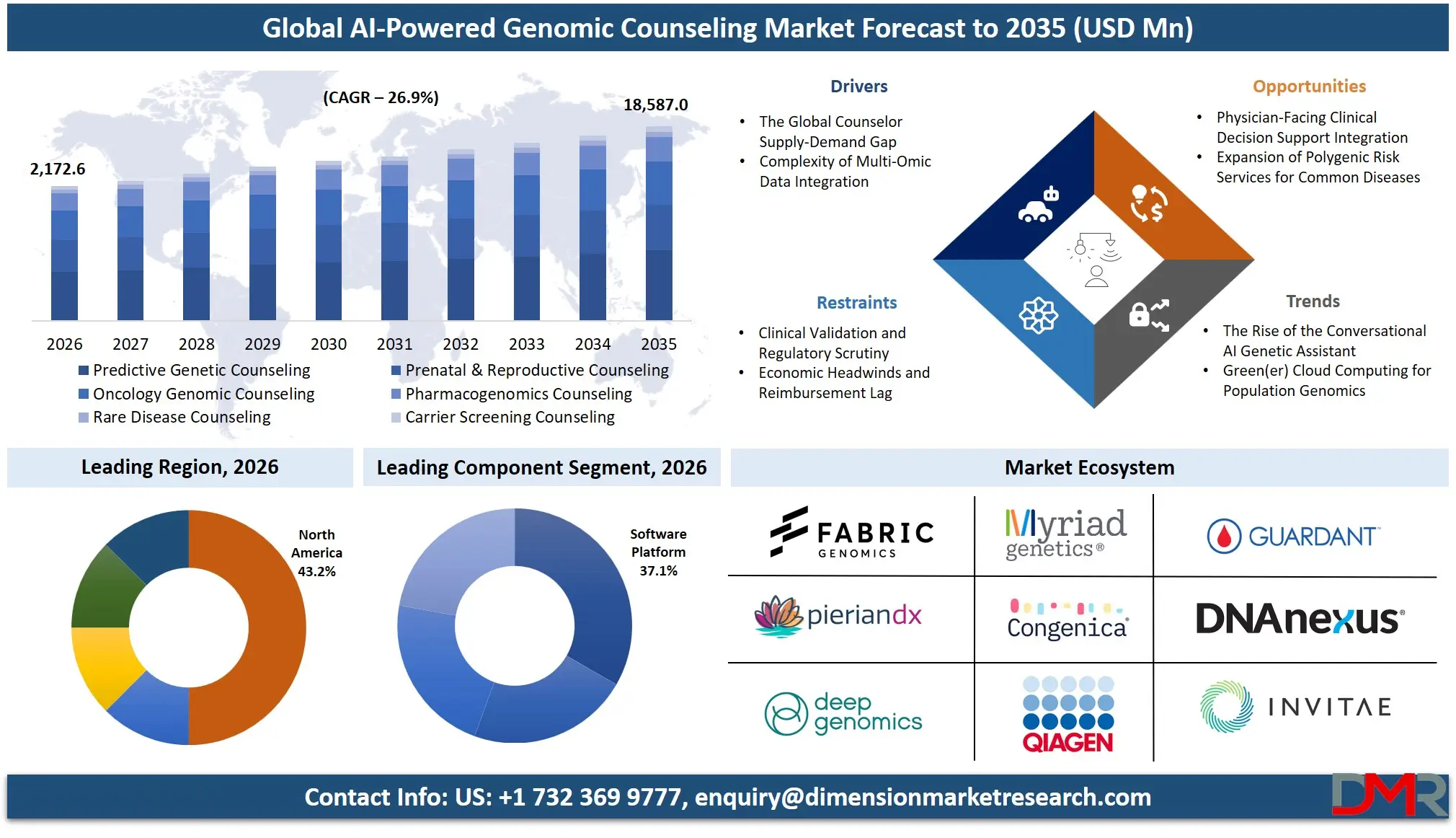
The Global AI-Powered Genomic Counseling Market is expected to reach a value of USD 2,172.6 million in 2026, and it is further anticipated to reach USD 18,587.0 million by 2035, growing at a CAGR of 26.9% during the forecast period.
ℹ
To learn more about this report –
Download Your Free Sample Report Here
The AI-assisted genomic counseling market is expanding exponentially due to the escalation of complexity of multi-omic data interpretation, which has surpassed the capacity of the legacy genetic counseling team. The market is comprised of AI algorithms, predictive analytics engines, tele-genetic counselling platforms, and specialized services that help clinicians and patients make sense of and use raw genomic data to provide actionable, understandable and clinically relevant health insights.
The growing need to speed up the detection of rare diseases, to more effectively individualize cancer treatment, and to increase the number of population-wide carrier screening programs has created a need for specialized AI-based tools. Cloud-based platforms are the most popular, as they're capable of handling large volumes of data and the computational work involved, and hospitals, diagnostic labs and direct-to-consumer (DTC) companies represent the most frequent adopters because they are capable of securely sharing data. Oncology, reproductive health and pharmacogenomics are areas that are leading the way and demand safe, compliant and very accurate decision-support ecosystems.
ℹ
To learn more about this report –
Download Your Free Sample Report Here
The US AI-Powered Genomic Counseling Market
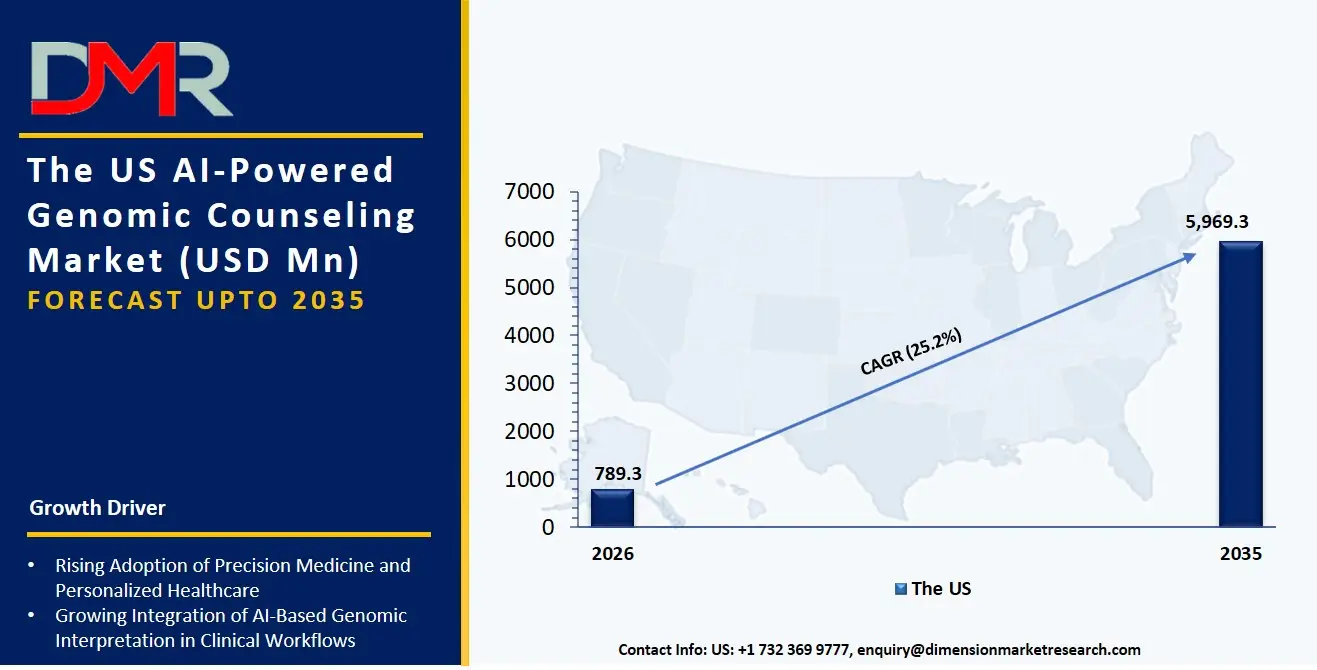
The US AI-Powered Genomic Counseling Market is projected to reach USD 789.3 million in 2026 at a compound annual growth rate of 25.2% over its forecast period, which is further value of USD 5,969.3 million by 2035.
The US remains the largest and most advanced market for AI-enabled genomic counseling, with key health systems making aggressive moves to integrate genomics into the standard of care and a growing number of population genomics initiatives such as All of Us. High demand for Oncology Genomic Counseling platforms featuring organisations that strive to match patients to targeted drugs and clinical trials based on complex tumour mutational profiles has typified the market. Moreover, the use of Generative AI to drive conversational agents in pre-test family history education has created an additional demand for NLP Engines to automatically extract family history data from unstructured clinical notes and transform it into structured pedigrees.
ℹ
To learn more about this report –
Download Your Free Sample Report Here
The Europe AI-Powered Genomic Counseling Market
The Europe AI-Powered Genomic Counseling Market is estimated to be valued at USD 590.5 million in 2026 and is further anticipated to reach USD 4,750.0 million by 2035 at a CAGR of 26.1%. The regulatory frameworks including GDPR and the forthcoming European Health Data Space (EHDS) have a significant impact on the European market and drive the need to employ Clinical Variant Knowledgebases and sovereign, cloud-based interpretation platforms. Accelerated growth of Rare Disease Counseling services is also being experienced in the region as cross-border initiatives like the 1+ Million Genomes Initiative in Germany and France try to solve diagnostic odysseys for undiagnosed patients. Moreover, the push to harmonise genomic data sharing is also forcing service providers to develop AI Integration & Deployment Services (IDS) to enable data residency and interoperability in the disjointed European health systems.
The Japan AI-Powered Genomic Counseling Market
The Japan AI-Powered Genomic Counseling Market is projected to be valued at USD 245.5 million in 2026. It is further expected to witness robust growth, holding USD 1,890.0 million in 2035 at a CAGR of 25.5%. The Japanese market is unique, with a corporate and governmental drive to implement genomic medicine in response to a super-aging society and the need to manage a surge in age-related cancers and neurological disorders. Predictive Risk Assessment Algorithms and Pharmacogenomics Counseling platforms make up a large part of the spending as large pharmaceutical companies and national research centers migrate to cloud-based genomic computing infrastructures. Moreover, the lack of deep local market integration between legacy hospital EHR systems and modern AI-driven variant interpretation engines is a niche area in NLP-driven patient data abstraction and workflow integration.
Key Takeaways
- Market Size & Forecast: The Global AI-Powered Genomic Counseling market is projected to reach USD 2,172.6 million in 2026, expanding dramatically to USD 18,587.0 million by 2035, driven by both the unsustainability of the shortage of certified genetic counselors and the fall in sequencing costs.
- Growth Rate & Outlook: Global market growth is expected at a CAGR of 26.9%, driven where clinical variant interpretation is a critical bottleneck and the increased complexity of managing polygenetic risk scores and multi-omic data in clinical practice.
- Primary Growth Drivers: The transition from population-specific screening to universal genomic analysis, the need for Clinical Decision Support Platforms to triage variants, and the need to integrate NLP engines to scale patient engagement without proportionately scaling staff.
- Key Market Trends: Growth of Pharmacogenomic repositories to predict drug response, the emergence of generative AI-powered chatbots in patient engagement & counseling portals to provide pre-test education, and the shift to tele-genetic counseling platforms to address underserved regions are major trends.
- By Deployment Mode Analysis: Cloud-Based models are expected to dominate because of the extensive nature of genomic data gravity and the need for federated access of data. Hybrid approaches are becoming a necessity, because they enable integration between on-premise hospital systems and public cloud-based AI interpretative engines.
- By End User Analysis: Hospitals & clinics and diagnostic laboratories are poised to dominate as they are the most profitable end-users on the basis of requirement of clinical integration. The fastest-growing segment is DTC Genomics Companies, which are looking to augment their consumer offerings with AI-powered clinical-grade interpretation services.
- Regional Leadership: North America is poised to dominate this market with 43.2% of the market share in 2026 due to its well-developed technological ecosystem that combines advanced genomic research, liquid biopsy adoption, and a favorable reimbursement environment, making it a leader in this market.
What is the AI-Powered Genomic Counseling?
AI-Powered Genomic Counseling encompasses the use of specialized software, knowledge bases, and professional services utilizing AI to enhance or automate the human-driven process of genetic counseling. These are solutions that are complementary to the sequencing instrument itself and that address the how of genomic data translation. That includes AI Algorithms & Analytics Engines to detect pathogenic variants from thousands of other non-pathogenic variants, Genetic Databases & Knowledge Repositories to offer curated clinical evidence, and Software Platforms to provide risk evaluations via Patient Engagement & Counseling Portals. With laboratories generating terabytes of data per patient, AI tools are needed to achieve scalable variant interpretation, patient comprehension, and long-term follow-up, making genomic investments translate into tangible clinical utility and improved health outcomes, as opposed to unresolved data points.
Use Cases
- Scaling Oncology Tumor Board Decisions: With AI integration & deployment services, large cancer centers can integrate machine learning diagnostic models into their EMR workflows, allowing AI to match a patient's somatic mutations with targeted therapies and clinical trial opportunities in real-time without manual literature review.
- Automating Pre-Test Education for Carrier Screening: DTC genomics companies leverage Generative AI & Conversational AI chatbots as a front-line digital genetic counseling assistant to educate prospective parents about carrier screening concepts, informed consent and triage complex cases to human counselors through tele-genetic counseling platforms.
- Ending the Rare Disease Diagnostic Odyssey: Pediatric hospitals utilize variant interpretation engines to perform an autonomous phenotype-to-genotype matching using NLP on unstructured clinical notes, significantly reducing the time needed to diagnose critically ill newborns suffering from rare hereditary diseases.
- Preemptive Pharmacogenomic Screening: Large integrated delivery networks leverage Population genomic databases along with predictive analytics to presurgically screen patients for pharmacogenes and deliver actionable alerts to the physician through clinical decision support platforms, just moments before they prescribe an anesthetic or cardiovascular drug.
Market Dynamics
Key Drivers in the Global AI-Powered Genomic Counseling Market
The Global Counselor Supply-Demand Gap
There is an urgent need globally for board-certified genetic counselors with the expertise to interpret NGS panels and to communicate complex uncertainty. The number of trained counsellors is linear and the amount of genomic data is exponential. The critical point is that this structural failure in the labor market is causing healthcare providers to look for technologies like AI-powered platforms to handle increased throughput to eliminate unsustainable staffing strategies. These AI-driven solutions automate tasks such as variant triage, patient communication and report creation so that human counselors are able to remain on the highest value cases and work within the scope of their licenses.
Complexity of Multi-Omic Data Integration
Modern clinical genomics has progressed from being a single-gene, single-platform approach to integrated platforms that integrate genomics, transcriptomics, proteomics and metabolomics data. The attempt to control a multi-omic interpretation environment is very complex. Organizations must reconcile evidence, data repository, algorithm verification and clinical report on various platforms with differing standards. Without the expert guidance of AI engines, this complexity can lead to diagnostic errors and delays. As a result, more and more clinics are looking for cloud-based solutions for interpretation and knowledge repositories that can help them function effectively in these data-rich environments.
Restraints in the Global AI-Powered Genomic Counseling Market
Clinical Validation and Regulatory Scrutiny
Most health care systems are still using legacy validation quality systems designed for a single test, but not for an AI algorithm that is constantly learning and updating itself based on new data. With these existing regulatory frameworks, dynamic AI diagnostic models could be more accurate, but they pose a major challenge to clinical adoption. Having an algorithm semantically analyzing free-text that is used to predict a disease can be expensive and risky to validate and get FDA and/or IVDR approval. Non-deterministic outputs are a concern to regulators and liability for misdiagnosis is a concern for organizations. Thus, the uncertainty of regulation slows down the introduction of new algorithmic innovations, especially for predictive and diagnostic machine learning models.
Economic Headwinds and Reimbursement Lag
Health systems are very hesitant to invest in new digital health technology without billing codes, due to both unstable economies and limited hospital budgets. Although precision medicine is a strategic priority, executives are feeling the pressure to show return on investment in the near-term. AI Interpretation Engines and Telehealth platforms can be costly with high subscription fees and software costs that are subject to intense scrutiny. AI tools that are merely augmenting manual processes and offering no immediate labor savings have fallen out of favor, as businesses refuse to invest in them until they can be monetized via new codes. In turn, AI vendors need to change their messaging from clinical sophistication to operational efficiency and revenue cycle enablement.
Growth Opportunities in the Global AI-Powered Genomic Counseling Market
Physician-Facing Clinical Decision Support Integration
One of the most significant growth opportunities is assisting organizations in embedding AI-powered genomic knowledge into the standard clinical workflow through EHR/EMR Integrated Platforms. Many physicians acknowledge that they are not yet familiar with how to apply the results from an isolated genetic test but they now want point-of-care advice tailored to their patient's information and co-morbidities. Special skills in SMART on FHIR APIs, Clinical UX Design, and evidence-based medicine taxonomies are required to create these sophisticated integrated environments. AI service providers can help organizations create a real-time genomic decision support tool, which can be non-intrusive and act in the background to benefit organizations by increasing prescription safety and assisting with diagnosis, thus making system integration services in high demand.
Expansion of Polygenic Risk Services for Common Diseases
Academic studies are now beginning to validate Polygenic Risk Scoring Tools, and with the need to bring deep learning expertise and an understanding of preventative cardiology and public health, the rise of AI counseling services is being driven. This involves risk scores for coronary artery disease, type 2 diabetes and breast cancer. In the healthcare industry, particularly in preventative and executive health, it is crucial to handle patient anxiety and communicate probabilistic risks effectively. Professional AI implementation partners will be expected to connect polygenetic models with existing clinical risk calculators, implement them using Patient Engagement Portals and set up counseling processes that allow patients to understand the highly probabilistic terms and concepts of the models.
Trends in the Global AI-Powered Genomic Counseling Market
The Rise of the Conversational AI Genetic Assistant
Generative AI is becoming increasingly adopted by labs and clinics as a solution to the traditional 1-to-1 workflow bottleneck in genetic counseling. Companies are building LLM-powered interfaces to deliver pre-test education and real-time post-test FAQ support at scale, instead of having to wait weeks for a human counselor. The platforms alleviate the workforce of the cognitive strain and manage the huge quantity and low complexity interactions of benign results. In response, AI genomic vendors are providing services in medical prompt engineering, hallucination prevention, and developing empathetic conversation structure to ensure that these digital assistants meet psychological care standards as expected in genetic counseling.
Green(er) Cloud Computing for Population Genomics
Institutions operating large genomic databases of populations are coming under pressure to minimize their carbon footprints thus environmental sustainability, or "digital sobriety," has become a major point in the genomic cloud computing equation. Today, businesses are looking for cloud architectures that reduce costs on storage and are energy-efficient. This has brought about the need for efficient workflow management services. AI solution providers help organizations to choose energy-efficient cloud regions, to tier data by clinical utility, and to take advantage of "just-in-time" compute for generating results from rare variant queries, and to avoid data waste using redundant file formats that are generated when a VCF is created, such as FASTQ.
Research Scope and Analysis
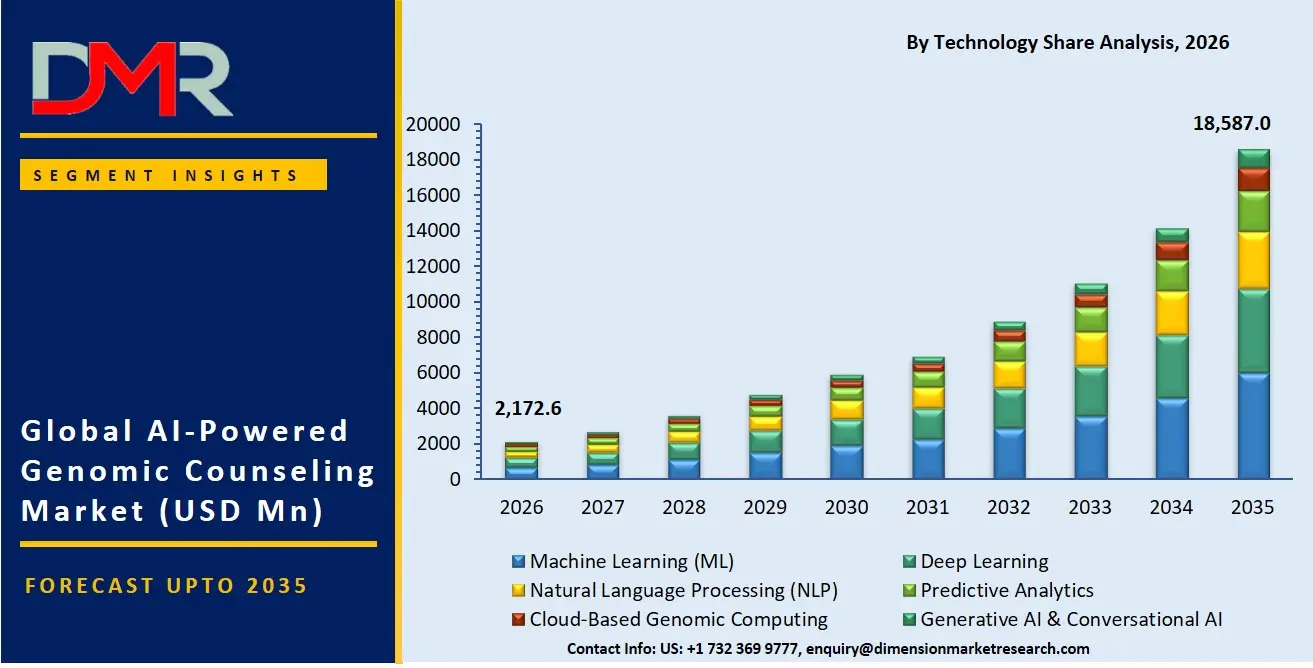
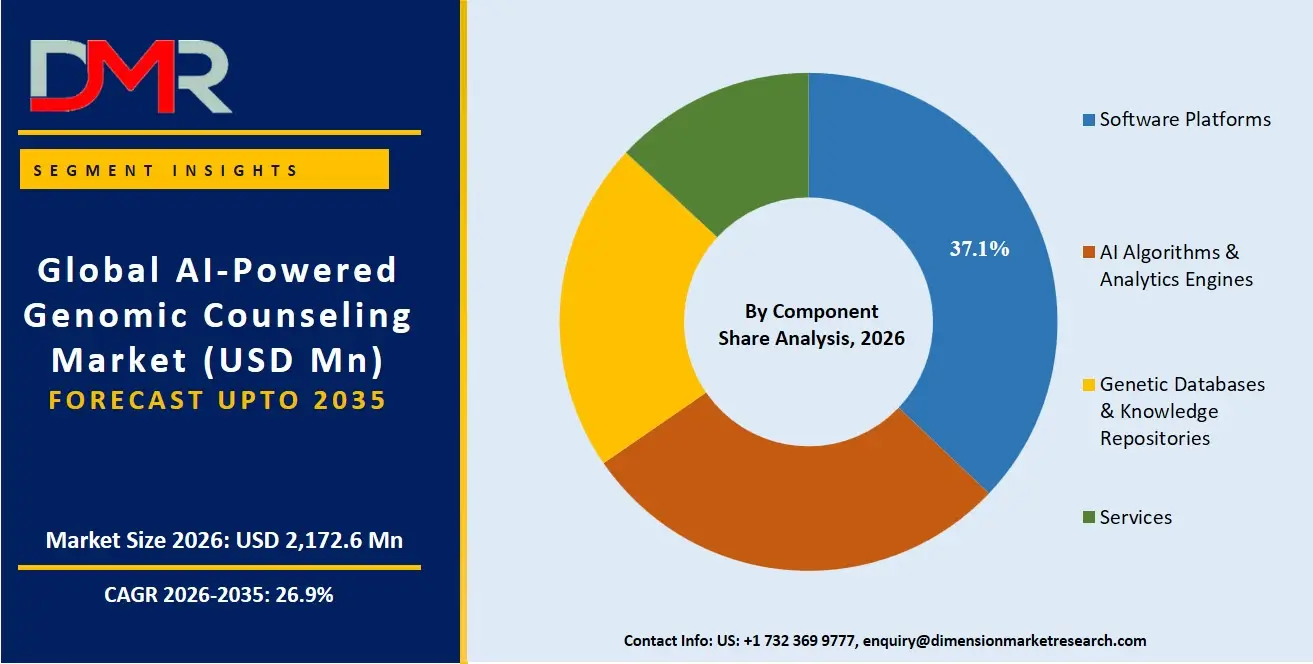
The AI-powered genomic counseling market is witnessing strong growth driven by rising adoption of precision medicine, AI-based genomic interpretation, cloud deployment, and oncology applications. Increasing use of machine learning, cancer risk assessment, and hospital-based genomic workflows continues to accelerate market expansion globally.
ℹ
To learn more about this report –
Download Your Free Sample Report Here
By Component Analysis
In the component segment, software platforms are projected to be leading, as they serve as the foundation for the operations of AI-driven genomic counseling workflows. Genomics interpretation platforms, clinical reporting, tele-counselling, patient engagement and workflow automation are applications that healthcare providers rely on more and more. As more and more providers look to integrate their systems into EHR or EMR, this enhances adoption. Such platforms are used to accelerate clinical decision-making, facilitate scalable genomic analysis and manage large patient data sets efficiently. The medical institution and diagnostic labs are looking for centralized software ecosystems that help with the efficiency of counseling and help save time on interpretation. Furthermore, cloud-based genomic platforms facilitate remote counseling and collaborative care, becoming a key aspect of precision medicine efforts.
By Technology Analysis
The technology segment is projected to be dominated by machine learning since it is the main analytical tool used to interpret and predict healthcare applications from genomic data. The capability of ML models to accurately analyze huge amounts of genomic data, uncover patterns, and produce clinically relevant insights is efficient. In the healthcare industry, ML algorithms are being used more and more to predict susceptibility to diseases, classify variants, and plan the treatment. The technology drastically cuts down on manual analysis time and increases accuracy and efficiency of the work flow for diagnostics. Additionally, ML is extensively applied in clinical decision support systems as well as pharmacogenomic applications, all of which are crucial for precision medicine initiatives. Technological advances, such as improvements in computational power and cloud infrastructure, as well as advances in genomic sequencing technologies, further facilitate adoption. Furthermore, adaptive learning based on new genomic data is supported with ML, allowing for further improvement of predictive accuracy.
By Deployment Mode Analysis
Cloud-based deployment are poised to dominate because genomic counseling workflows require scalable computing infrastructure that can be designed to process vast amounts of genomic and clinical data. Cloud platforms offer healthcare organizations flexibility in storage, real-time analytics, remote access, and cost-effective scalability without huge investment in on-site infrastructure. As more and more patients are provided with tele-genetic counseling and multi-location healthcare networks are becoming increasingly common, the demand for cloud-based systems is growing. By securely sharing data and managing workflows in a central location, cloud deployment also allows for easier collaboration between medical institutions, such as hospitals, laboratories, research institutions, and genetic counselors. Cloud environments can offer the required compute power when needed to perform genomic analysis using AI. In addition, cloud providers constantly improve their cybersecurity, compliance standards and interoperability capabilities to align with the needs of the healthcare sector. The market is moving towards subscription business models for healthcare IT and remote patient engagement solutions, further bolstering the dominance of cloud-based deployment.
By Counseling Type Analysis
The dominance of oncology genomic counseling segment can be attributed to the fact that cancer is one of the largest applications of precision medicine and genomic diagnostics across the world. Genomic counseling is now being used more and more to help identify the risk of hereditary cancers, to help direct targeted therapy, and as a component of personalized oncology treatment strategies. The advent of companion diagnostics and next generation sequencing in the treatment of cancers continues to drive up the need for genomic interpretation services. AI technologies help speed up and improve precision in identifying actionable mutations and enable clinical decision-making and improve patient outcomes. The increasing incidence of cancer worldwide and awareness of hereditary cancer syndromes are further contributing to market growth. There is also a strong demand for advanced counselling solutions as pharmaceutical companies and oncology centres invest heavily in precision oncology programs. Further, AI-based oncology counselling contributes to the reduction of complexity in interpretation, and it is also capable of scalable patient management making it the dominant segment in the market.
By Workflow Stage Analysis
The most critical and technologically complex step in genomic counseling is the interpretation of genomic data, and this is reflected in the portion the workflow stage segment represents. AI tools for interpretation accelerate, increase accuracy, and scale the discovery of pathogenic variants, hereditary risks, and biomarkers associated with therapeutics. With the increasing complexity and volume of genomic data, healthcare providers are more and more relying on automated interpretation systems. With the increasing adoption of next generation sequencing, multi-omics technologies, there has been a heightened need for advanced interpretation platforms that can offset the manual burden. The quality of interpretation directly impacts clinical choices, individual care plans, and counselling results. Moreover, AI-powered interpretation engines also benefit from ongoing learning by leveraging large and growing genomic databases, which enhances predictive capabilities as more data becomes available. The need for interpretation in precision medicine workflow is still very high and hence this is the largest participants segment of the market.
By Application Analysis
The application segment is expected to be led by cancer risk assessment as the genomic technologies are increasingly being applied in the detection of inherited cancer predispositions and in early disease detection strategies. AI-driven genomic analysis is widely used in healthcare to assess genetic mutations associated with various diseases, including breast cancer, colorectal cancer, and ovarian cancer. As awareness of the importance of preventive healthcare and personalised oncology is increasing, the demand for predictive cancer screening solutions is accelerating. AI can improve the risk assessment process by quickly and accurately interpreting intricate genomic patterns and combining family history information with clinical data. The market is further bolstered by the surge in incidence of cancer worldwide and the growing use of precision medicine programs. The pharmaceutical and biotechnology sectors have also poured substantial resources into genomic research on cancer, further increasing the utilization of AI-driven cancer risk assessment tools. Dominating the importance of cancer risk assessment is the clinical need for early detection, targeted therapy planning, and preventive intervention.
By End User Analysis
In the end-user segment, the hospitals and clinics are expected to lead this segment as the main source of genomic testing, counselling, diagnosis and precision medicine implementation. To enhance diagnostic precision and treatment customization, these healthcare institutions are increasingly adopting AI-driven genomic counseling solutions as part of their standard procedures. In the hospital there is a huge demand for the use of genomic sequencing in oncology, rare disease management, reproductive health and pharmacogenomics. Hospitals are also equipped with the infrastructure needed to handle large volumes of patient data, coordinated care across multiple disciplines, and sophisticated clinical decision-support systems. AI-powered counselling tools assist clinicians to streamline genomic interpretation and shorten turnaround times in patient consultations. Further, healthcare providers' investment in digital health infrastructure and precision medicine projects facilitates ongoing adoption. As the key end-user market worldwide, hospitals and clinics play a central role in patient diagnosis and treatment.
The Global AI-Powered Genomic Counseling Market Report is segmented on the basis of the following:
By Component
- Software Platforms
- Genomic Interpretation Software
- Clinical Decision Support Platforms
- Patient Engagement & Counseling Portals
- Tele-Genetic Counseling Platforms
- Workflow & Case Management Systems
- Reporting & Visualization Tools
- EHR/EMR Integrated Platforms
- AI Algorithms & Analytics Engines
- Variant Interpretation Engines
- Predictive Risk Assessment Algorithms
- Polygenic Risk Scoring Tools
- Natural Language Processing (NLP) Engines
- Machine Learning Diagnostic Models
- Genetic Databases & Knowledge Repositories
- Population Genomic Databases
- Rare Disease Databases
- Oncology Genomic Databases
- Pharmacogenomic Repositories
- Clinical Variant Knowledgebases
- Family History & Pedigree Databases
- Multi-Omics Data Repositories
- Services
- Genetic Counseling Services
- AI Integration & Deployment Services
- Training & Support Services
By Technology
- Machine Learning (ML)
- Deep Learning
- Natural Language Processing (NLP)
- Predictive Analytics
- Cloud-Based Genomic Computing
- Generative AI & Conversational AI
By Deployment Mode
- Cloud-Based
- On-Premise
- Hybrid
By Counseling Type
- Predictive Genetic Counseling
- Prenatal & Reproductive Counseling
- Oncology Genomic Counseling
- Pharmacogenomics Counseling
- Rare Disease Counseling
- Carrier Screening Counseling
By Workflow Stage
- Pre-Test Assessment
- Genomic Data Interpretation
- Risk Evaluation & Counseling
- Report Generation & Delivery
- Patient Follow-Up & Monitoring
- Clinical Decision Support
By Application
- Cancer Risk Assessment
- Cardiovascular Disease Screening
- Neurological Disorder Prediction
- Personalized Medicine
- Drug Response Prediction
- Hereditary Disease Detection
By End User
- Hospitals & Clinics
- Diagnostic Laboratories
- Research & Academic Institutes
- Direct-to-Consumer (DTC) Genomics Companies
- Pharmaceutical & Biotechnology Companies
- Telehealth & Digital Health Providers
Regional Analysis
Leading Region by Market Share
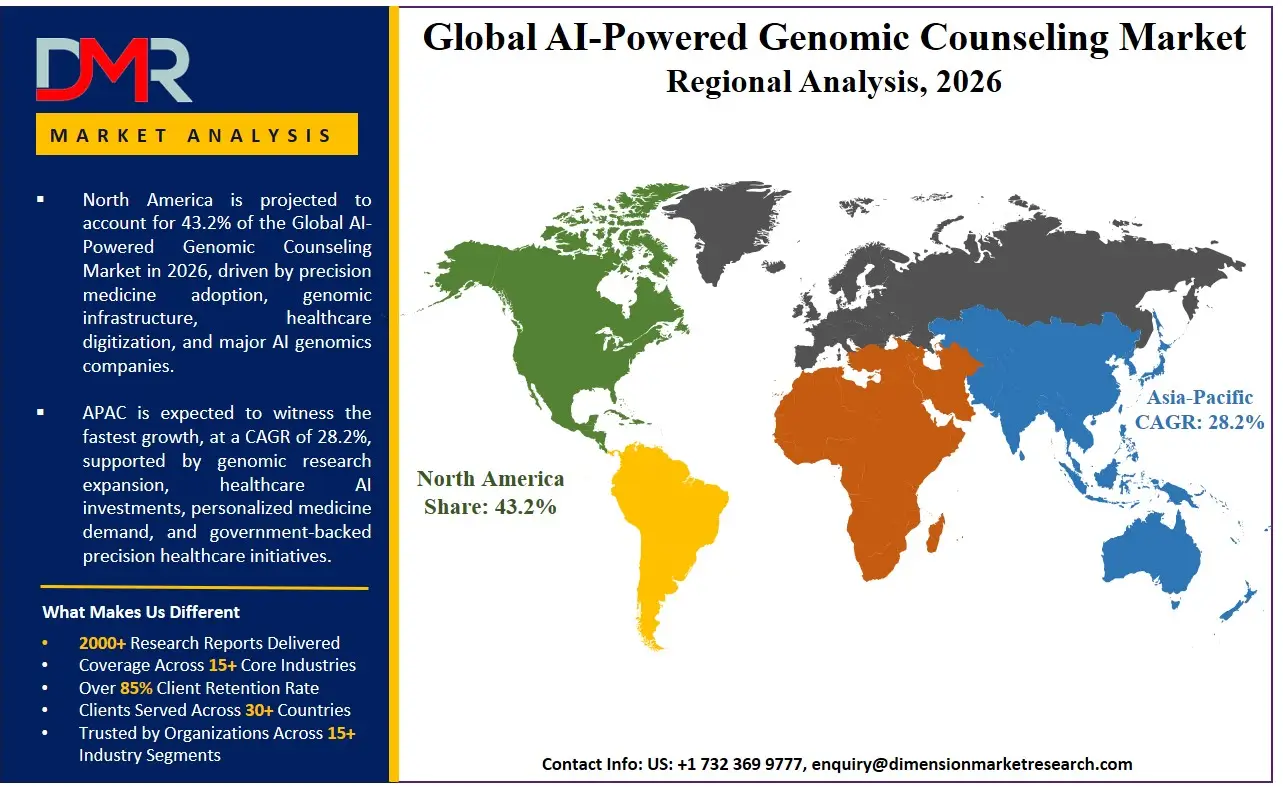
North America is poised to dominate the global AI-powered genomic counseling market as it is projected to hold a 43.2% of the market share in 2026. In North America, the U.S. dominates the market, owing to unmatched concentration of NIH-funded biobank resources, the presence of dominant key players in the precision oncology liquid biopsy market, and the aggressive penetration of the value-based care model in cancer. The region is also home to an existing network of global bioinformatics software vendors, bioinformatics venture studios focused on health, and extensive talent in the form of biostatisticians and genetic epidemiologists. The combination of institutional investment in multi-modal AI, advanced analytics for diseases that cannot be diagnosed from static PDF-based reporting, and the general shift towards retirement of such reporting styles, all create a consistent need for AI-powered interpretation and re-analysis over the years. In addition, a favorable private payer landscape for telehealth genetic counseling is emerging, offering a strong third-party reimbursement pathway to support substantial software investments by health systems to justify investments in telehealth genetic counseling.
ℹ
To learn more about this report –
Download Your Free Sample Report Here
Fastest-Growing Regional Market
The Asia-Pacific market is projected to grow at the fastest rate, with the aggressive biotech industrialization in India, China, Japan and Singapore, and massive newly introduced sequencing initiatives in the region, spearheaded by government-led initiatives. Established hospitals and fertility chains are all being driven to move beyond basic karyotyping to full AI-driven genetic screening, due to the rapid economic growth, the emergence of a health-conscious middle class, and the dynamic growth of cross-border reproductive services. To handle scale and provide diagnostic accuracy similar to the Western world, Clinical Decision Support Platforms and Cloud-Based Genomic Computing are high in demand in these health systems. There is also a critical shortage of formally trained genetic counselors in the region, creating an absolutely must have requirement to adopt Conversational AI and NLP-powered digital assistants to catch-up with the skills gap, and achieve faster ROI for clinical genomics projects.
By Region
North America
Europe
- Germany
- The U.K.
- France
- Italy
- Russia
- Spain
- Benelux
- Nordic
- Rest of Europe
Asia-Pacific
- China
- Japan
- South Korea
- India
- ANZ
- ASEAN
- Rest of Asia-Pacific
Latin America
- Brazil
- Mexico
- Argentina
- Colombia
- Rest of Latin America
Middle East & Africa
- Saudi Arabia
- UAE
- South Africa
- Israel
- Egypt
- Rest of MEA
Competitive Landscape
The competitive environment of the global AI-powered genomic counseling market has become highly dynamic with a heterogeneous array of multinational enterprise software vendors, specialized omics data cloud providers, and niche AI-powered start-ups. It's all about strategic partnerships and co-marketing with the sequencing giants, such as Illumina or Thermo Fisher and securing early access to raw data specifications for new instruments. The path towards market consolidation is accelerating, with traditional laboratory information management system (LIMS) vendors purchasing NLP and deep learning engineering-specific boutiques in order to keep up with the digital health era. Deep learning-based functional effect predictors, automated clinical variant classification systems that have proven to save time in clinician arbitration, and other proprietary intellectual property are becoming a more critical differentiator than superficial visualizations or generic dashboard interfaces.
Some of the prominent players in the Global AI-Powered Genomic Counseling Market are:
- Illumina
- Thermo Fisher Scientific
- SOPHiA GENETICS
- Tempus AI
- Fabric Genomics
- Invitae
- Myriad Genetics
- QIAGEN
- Deep Genomics
- DNAnexus
- Congenica
- PierianDx
- GeneDx
- Freenome
- PathAI
- Guardant Health
- Natera
- GRAIL
- Genomenon
- Genoox
- Other Key Players
Recent Developments
- January 2026: Hippocratic AI further enhanced its Generative AI-driven patient engagement solution for oncology and rare disease health systems by leveraging conversational AI interfaces for automated post-test counseling, FAQ support, and family communication workflows.
- November 2025: Triomics expanded partnerships with top cancer centers and pharmaceutical partners, releasing clinical trial matching solutions for academic research settings that leverage NLP to analyze genomic VCFs and unstructured EHR data.
- October 2025: Abbott Laboratories acquires German AI innovator LARALAB to strengthen automated clinical risk assessments, AI-powered clinical reporting and sovereign cloud-based diagnostics for government-led population health and newborn screening programs.
Report Details
| Report Characteristics |
| Market Size (2026) |
USD 2,172.6 Mn |
| Forecast Value (2035) |
USD 18,587.0 Mn |
| CAGR (2026–2035) |
26.9% |
| The US Market Size (2026) |
USD 789.3 Mn |
| Historical Data |
2021 – 2025 |
| Forecast Data |
2027 – 2035 |
| Base Year |
2025 |
| Estimate Year |
2026 |
| Segments Covered |
By Component, By Technology, By Deployment Mode, By Counseling Type, By Workflow Stage, By Application, and By End User |
| Regional Coverage |
North America – The US and Canada; Europe – Germany, The UK, France, Russia, Spain, Italy, Benelux, Nordic, & Rest of Europe; Asia-Pacific – China, Japan, South Korea, India, ANZ, ASEAN, Rest of APAC; Latin America – Brazil, Mexico, Argentina, Colombia, Rest of Latin America; Middle East & Africa – Saudi Arabia, UAE, South Africa, Turkey, Egypt, Israel, & Rest of MEA |
Frequently Asked Questions
How big is the Global AI-Powered Genomic Counseling Market?
▾ The Global AI-Powered Genomic Counseling market is poised to be valued at USD 2,172.6 million in 2026 and is projected to reach USD 18,587.0 million by 2035, driven by the universal need for scalable solutions to the genetic counselor shortage and complex variant interpretation.
What is the CAGR of the Global AI-Powered Genomic Counseling Market from 2026 to 2035?
▾ The market is expected to grow at a CAGR of 26.9% from 2026 to 2035, reflecting the accelerating complexity of genomic datasets and the transition to whole-genome sequencing in routine clinical workflows.
What factors are driving the growth of the Global AI-Powered Genomic Counseling Market?
▾ Key drivers include the critical global shortage of genetic counselors, the imperative to reclassify variants of uncertain significance over time, the complexity of polygenic risk scoring, and the surge in demand for integrating genomic data directly into clinical decision support systems.
Which region held the largest share of the AI-Powered Genomic Counseling Market in 2026?
▾ North America, specifically the United States, is projected to hold a dominant market share in 2026, driven by a mature liquid biopsy ecosystem and aggressive health system investment in Precision Oncology Genomic Counseling and AI-driven Population Health applications.
Which region is expected to grow the fastest in the AI-Powered Genomic Counseling Market?
▾ The Asia-Pacific region is expected to grow the fastest, fueled by rapid clinical digitization and government precision medicine initiatives in China, Japan, and India, where Software Platforms and Telehealth are critical for leapfrogging the lack of legacy genetic counseling infrastructure.
What are the major trends in the Global AI-Powered Genomic Counseling Market?
▾ Major trends include the integration of Generative AI into patient engagement portals, the rise of population-scale genomic databases to power new AI algorithms, the demand for Pharmacogenomic Repositories to enable drug-response predictions, and the focus on automating the pre-test assessment workflow stage.
Who are the key players in the Global AI-Powered Genomic Counseling Market?
▾ Key players in the Global AI-Powered Genomic Counseling Market include Illumina, Thermo Fisher Scientific, QIAGEN, SOPHiA GENETICS, Tempus AI, Invitae, Fabric Genomics, GeneDx, PierianDx, and Congenica, driven by innovation in AI-powered genomic interpretation, precision medicine, and clinical decision-support platforms.
How is the Global AI-Powered Genomic Counseling Market segmented?
▾ The market is segmented by Component, Technology, Deployment Mode, Counseling Type, Workflow Stage, Application, and End User.