Global Ambulatory Cardiac Monitoring Device Market snapshot
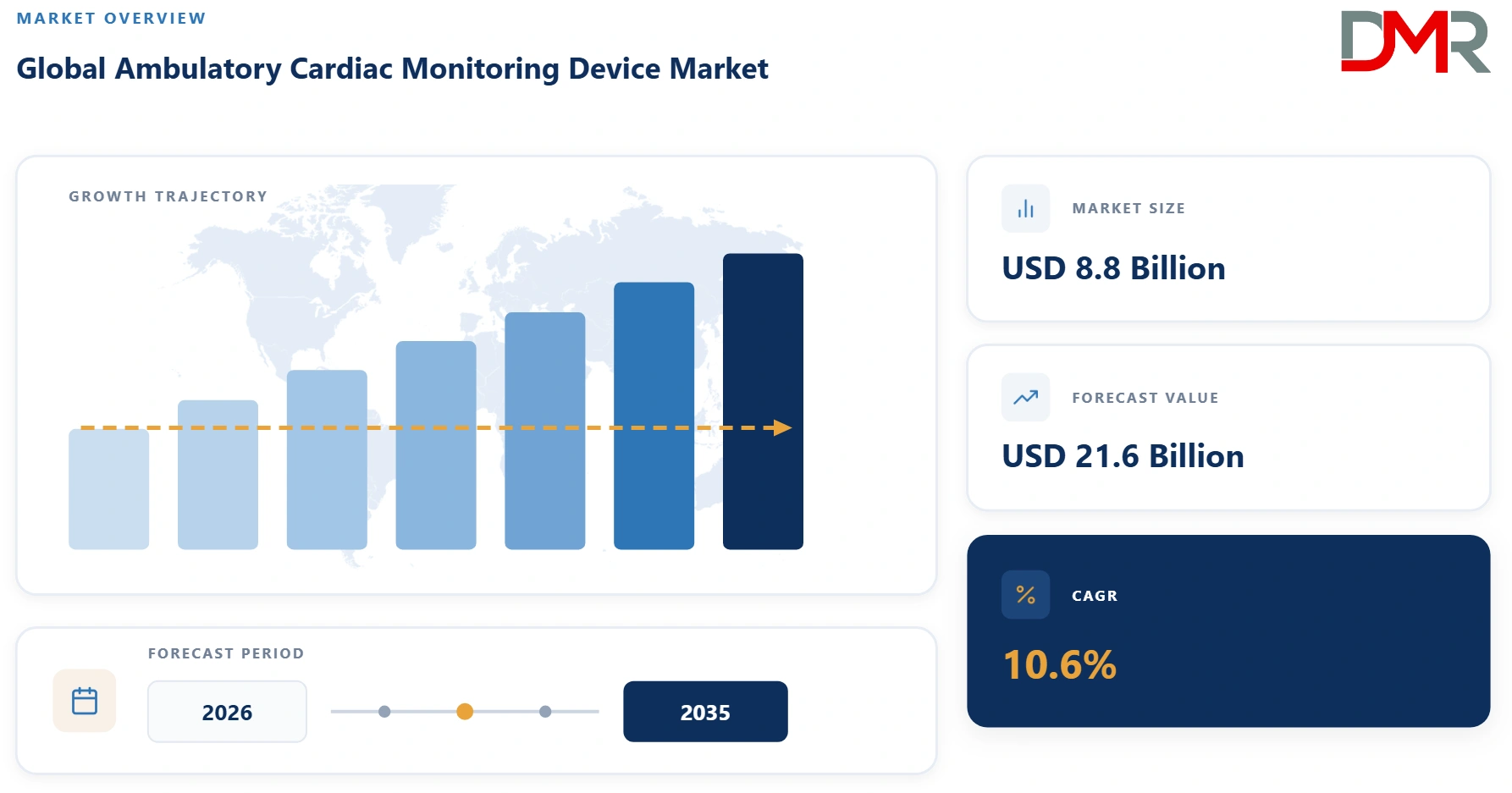
- Global Ambulatory Cardiac Monitoring Device Market size in 2026 is: USD 8.8 Bn
- Global Ambulatory Cardiac Monitoring Device Market size in 2035 is: USD 21.6 Bn
- Global CAGR from 2026 to 2035 is: 10.6%
- Holter Monitors are the leading device segment in 2026: 30.2%
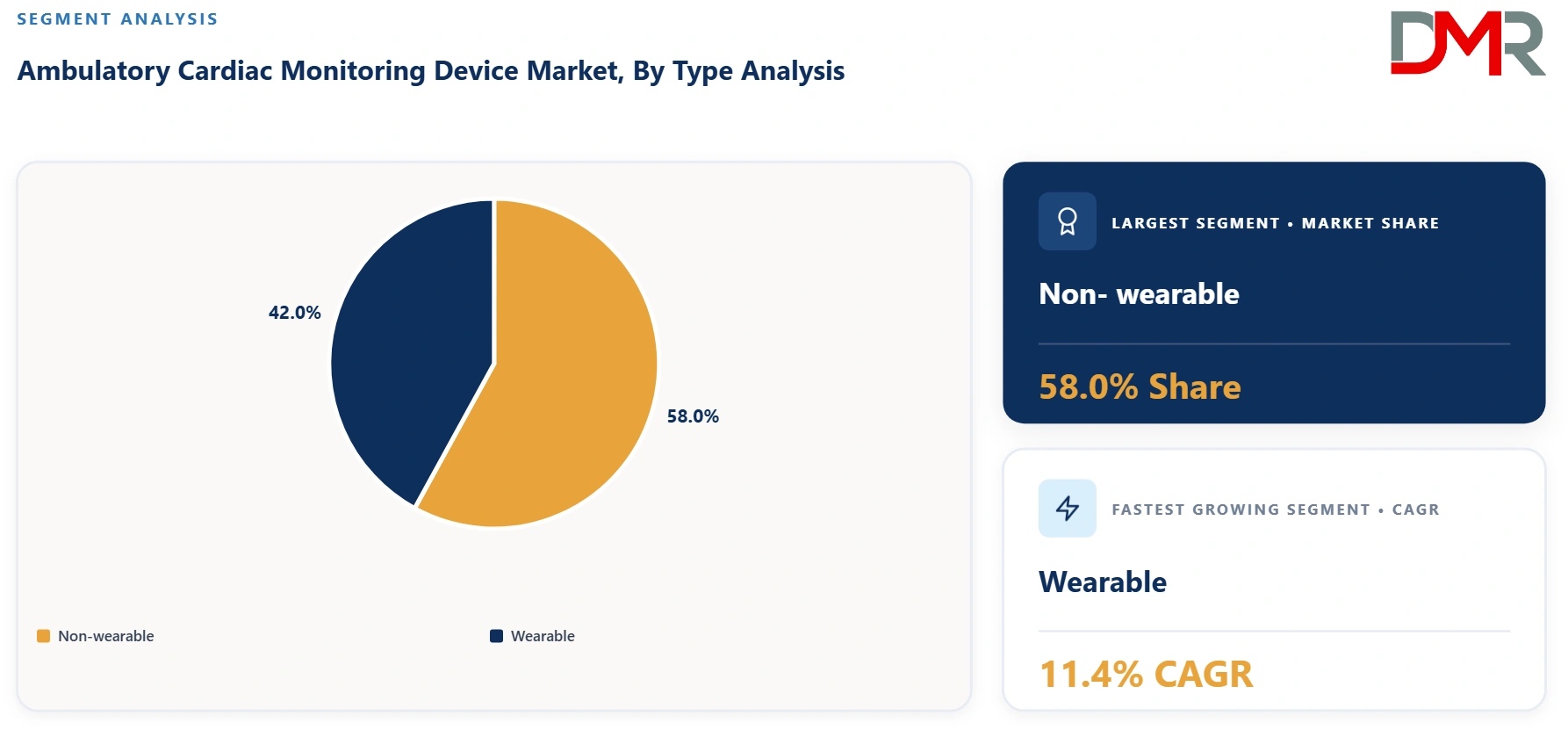
- Non-wearable Devices are the leading type segment in 2026: 58.0%
- Hospitals and Clinics are the leading end user segment in 2026: 49.2%
- Arrhythmia Detection is the leading application segment in 2026: 66.1%
- Mobile Cardiac Telemetry Devices are the expected fastest-growing device segment: 11.9% CAGR
- Wearable Devices are the expected fastest-growing type segment: 11.4% CAGR
- Ambulatory Surgical Centers are the expected fastest-growing end user segment: 11.3% CAGR
- Heart Rate and Rhythm Monitoring is the expected fastest-growing Application segment: 11.2% CAGR
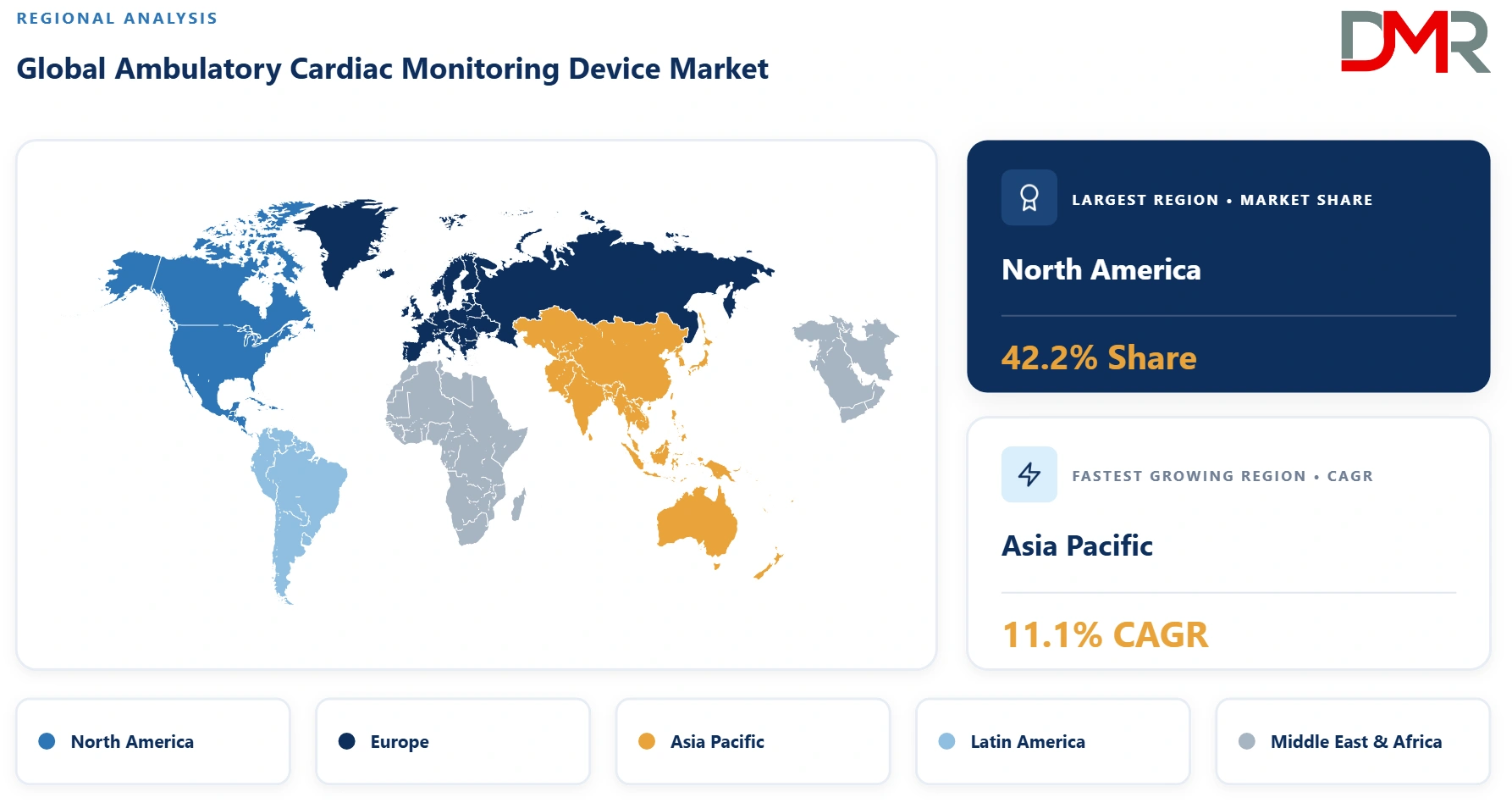
- North America is the leading region in 2026: 42.2%
- Asia Pacific is the expected fastest-growing region: 11.1% CAGR
What is Global Ambulatory Cardiac Monitoring Device Market? Global Ambulatory Cardiac Monitoring Device Market Size.
The Global Ambulatory Cardiac Monitoring Device Market size is valued at USD 8.8 billion in 2026, and it is further anticipated to reach a market value of USD 21.6 billion by 2035 at a CAGR of 10.6%.
ℹ
To learn more about this report –
Download Your Free Sample Report Here
Global Ambulatory Cardiac Monitoring Device Market is driven by the rising incidence of cardiovascular diseases and growing need for constant cardiac monitoring. The devices enable detection of any arrhythmia or other cardiac disorders during daily routine activities. The rising use of wearable electrocardiogram devices, Holter monitoring systems, and remote monitoring systems has facilitated the growth of the market. Technological developments in terms of wireless technology, artificial intelligence, and remote healthcare services have improved the cardiac monitoring processes.
Use Cases
- Exploration of Symptomatic Cases: People who suffer from palpitations, dizziness, fainting, and weakness can use ambulatory monitors to collect data on heart activity during these episodes. This data will help to understand whether these cases are caused by arrhythmia when a regular ECG test is not enough to diagnose the problem.
- Cardiac Monitoring after Stroke: In selected cases when a patient suffers from stroke with unknown reasons, ambulatory cardiac monitoring is done to detect atrial fibrillation that may have been overlooked previously. With extended monitoring, the chances of finding heart rhythm disorders that might have caused stroke increase, which would help to prevent other strokes in the future.
- Remote Patient Monitoring and Follow-Up Treatment: Wireless cardiac monitoring and portable ECG machines allow patients to monitor their heart activity from home while physicians analyze the data collected at a remote location. This technology will assist in the continuous monitoring of patients suffering from cardiac problems, the evaluation of treatment efficiency, and the elimination of unnecessary hospital visits for heart rhythm recording.
- Detection and Diagnosis of Arrhythmia: Arrhythmia is diagnosed using ambulatory cardiac monitors. These monitors detect any abnormalities in heart rhythms, such as irregular, fast, or slow heartbeats. Unlike conventional electrocardiogram (ECG) tests, which diagnose arrhythmia when one is stationary, these ambulatory cardiac monitors monitor the heart's activity when patients conduct themselves in their normal daily routines.
Key Takeaways
- Market Growth: The Global Ambulatory Cardiac Monitoring Device Market is predicted to expand from USD 8.8 billion in 2026 to USD 21.6 billion by 2035 due to increasing cases of cardiovascular disease, rising demand for constant cardiac monitoring, and technological advancements in cardiac monitoring remotely.
- Holter Monitors Rule the Device Category: It is estimated that Holter Monitors will dominate the market in 2026, accounting for 30.2% of the market. These devices have been used for identifying abnormal heart rhythms for a prolonged period, which helps them take the lead in the market.
- Non-wearable Devices Dominate by Type: It is estimated that non-wearable devices will hold 58.0% of the market in 2026. Non-wearable devices are used widely in clinical settings for recording cardiac activities, which helps them take the lead in the market. However, Wearable Devices will witness the fastest CAGR of 11.4%.
- Arrhythmia Detection is Expected to Drive Application Segment: Arrhythmia Detection is estimated to hold 66.1% of the market share in 2026 owing to increasing demands for early detection and monitoring of irregular heartbeats. Heart Rate and Rhythm Monitoring is anticipated to be the fastest-growing application segment with a CAGR of 11.2%.
- Hospitals and Clinics to Dominate End User Segment: Hospitals and Clinics are estimated to hold 49.2% of the market share in 2026 owing to established cardiac diagnostic facilities and availability of health care professionals in these institutions. Ambulatory Surgical Centers are anticipated to be the fastest-growing end-user segment with a CAGR of 11.3%.
- North America to be the Dominant Region: North America is estimated to have a 42.2% share of the market in 2026 owing to developed healthcare infrastructure, presence of cardiologists, favorable reimbursement policies, and use of advanced technologies in cardiac monitoring.
- Asia Pacific Possesses Huge Growth Potential: The highest growth rate will be registered by the Asia-Pacific region with a CAGR of 11.1%. Higher investments in the healthcare industry, increased awareness regarding cardiovascular diseases, and increased use of remote monitoring devices will provide huge growth opportunities to the market players.
How AI/Gen AI Is Transforming the Global Ambulatory Cardiac Monitoring Device Market?
AI and GenAI are changing the Global Ambulatory Cardiac Monitoring Device Market through cardiac data analysis, arrhythmia detection, and clinical reporting. The use of AI algorithms for analysis of ECG recordings obtained from Holter monitors, ECG patches, and mobile cardiac telemetry allows the identification of patterns related to arrhythmia detection and various arrhythmias. This helps in prioritizing abnormal recordings, decreasing the workload related to manual analysis, and supports remote patient monitoring. Additional assistance in the form of GenAI comes through cardiac report summaries, organization of patient data, and generation of structured clinical documents.
Key Drivers in the Global Ambulatory Cardiac Monitoring Device Market
Rising Prevalence of Cardiovascular Diseases
An increasing incidence of cardiovascular diseases, especially heart rhythm problems including atrial fibrillation, is creating the demand for ambulatory cardiac monitoring devices. Most heart disorders happen occasionally and therefore cannot be detected through normal medical check-ups. Ambulatory cardiac monitoring devices assist medical practitioners in monitoring the electrical activity of the heart over a prolonged period of time while patients are undertaking their daily activities. It helps in the early detection of heart diseases, the preparation of treatment strategies, and the treatment of heart problems.
Rising Need for Earlier and More Accurate Detection of Cardiovascular Problems
The focus on early disease detection is contributing to the increased use of cardiac monitoring equipment. Cardiac monitoring equipment allows medical practitioners to look into palpitation, dizziness, fainting, and arrhythmias that are not necessarily visible during an ECG test. The use of these devices will allow the identification of intermittent arrhythmia as well as give more information about the condition. There is a need to improve diagnostic accuracy and avoid missed cardiovascular problems, which is leading to the use of these devices.
Restraints in the Global Ambulatory Cardiac Monitoring Device Market
Expensive Monitoring Devices and Services
The high cost of the Ambulatory Cardiac Monitoring Devices might make it impossible for their acquisition, particularly for developing countries. The sophisticated Ambulatory Cardiac Monitoring Devices such as the mobile cardiac telemetry devices and ECG patch devices will be more expensive owing to the fact that apart from the cost of the device itself, there is cost of the software, cost of transferring and analyzing the data collected by the device. It will be difficult for hospitals, which have budget constraints, and patients whose insurance coverage is inadequate to afford the cost.
Patient Discomfort and Noncompliance with Monitoring Protocols
Some patients may have skin irritations caused by the adhesion of electrodes, discomfort when wearing the monitoring device, and inconveniences when carrying the recording device for long durations. Such problems are likely to be more evident depending on the type of monitoring device being used during sleep, bathing, exercising, or working. Early removal of the monitoring devices and noncompliance with monitoring protocols by some patients will result in incomplete recordings.
Growth Opportunities in the Global Ambulatory Cardiac Monitoring Device Market
Expansion into Emerging Healthcare Markets
Emerging markets, such as India, Indonesia, and Brazil, offer opportunities for companies involved in ambulatory cardiac monitoring due to the uneven availability of advanced cardiac diagnostic services across different regions. Increasing healthcare infrastructure, higher investments in diagnostic centers, and increasing knowledge about cardiovascular diseases could encourage the use of such solutions not only in large hospitals but also outside them. It will be possible for companies to engage in collaborations with local hospitals and healthcare institutions, while flexible pricing and device renting could facilitate the adoption of technologies in smaller facilities.
AI in Automatic ECG Analysis
The application of artificial intelligence in developing software that analyzes huge amounts of data collected through prolonged monitoring is a great opportunity for companies. AI-based solutions can identify potential anomalies in heart rhythm, sort ECG recordings for further analysis by clinicians, and make their work less labor-intensive. It will be possible for companies to create software products that are capable of working in conjunction with current monitoring devices and clinical information systems.
Trends in the Global Ambulatory Cardiac Monitoring Device Market
Development of Small and Patient-Friendly Devices
Among the many trends in the Global Ambulatory Cardiac Monitoring Device Market, one trend that is gaining prominence is the development of small and patient-friendly devices. Companies are working on improving devices by making them smaller and lighter with longer battery life. In addition, companies are working on better electrodes, which can be worn comfortably by patients. All these developments enable patients to continue their regular activities like walking, work, and even sleeping without getting disrupted because of the devices.
Integration of Multiple Health Measurements
The combination of heart rate monitoring with the entire system of remote patient monitoring is yet another market trend that is currently on the rise. Depending on the specific devices applied, these remote monitoring systems can incorporate electrocardiogram monitoring with other types of health measurements like the amount of oxygen in the blood, blood pressure, and level of activity. This way, medical practitioners can have a clearer picture of the health status of their patients instead of using only the data regarding heart rhythm. Integrated monitoring systems can facilitate collaborative patient monitoring and follow-up, especially in the case of patients with multiple diseases.
Research Scope and Analysis
The Global Ambulatory Cardiac Monitoring Device Market is segmented based on Device into Holter Monitors, Event Monitors, Mobile Cardiac Telemetry Devices, Implantable Loop Recorders, ECG Patch Monitors, and Wearable ECG Monitors; Type into Non-wearable and Wearable devices; End User into Hospitals and Clinics, Ambulatory Surgical Centers, and Others; and Application into Arrhythmia Detection, Cardiac Ischemia and Myocardial Infarction Detection, Heart Rate and Rhythm Monitoring, Syncope and Palpitations Monitoring, Pre/Post-Operative Monitoring, and Others. Geographically, the market includes North America, Europe, Asia-Pacific, Latin America, and the Middle East and Africa.
ℹ
To learn more about this report –
Download Your Free Sample Report Here
By Device Analysis
The Holter Monitors have the largest market share by value, which is estimated to be 30.2% in 2026. The key factor for the segment’s leadership is its extensive use in heart activity recordings and irregularities detections during prolonged time periods. Mobile Cardiac Telemetry is projected to show the highest CAGR of 11.9% from 2026 through 2035.
By Type Analysis
The Non-wearable Devices have the major market share by value, which is 58.0% in 2026. This high market share is determined by the usage of classical ambulatory monitoring devices in cardiac diagnostics procedures. However, Wearable Devices will show a faster growth rate with an estimated CAGR of 11.4% from 2026 through 2035.
By Application Analysis
Arrhythmia Detection has the largest share of around 66.1% in the application category in 2026 because of widespread ambulatory heart monitoring usage in the detection of intermittent heart activity irregularities. The fastest-growing segment by CAGR of 11.2% will be the Heart Rate and Rhythm Monitoring from 2026 through 2035.
By End User Segment Analysis
The Hospitals and Clinics segment account for the largest share, with approximately 49.2%, of the end-user segment in 2026 because of the presence of specialized cardiac care, diagnostics, and skilled healthcare providers. Ambulatory Surgical Centers is expected to have the fastest growth at a CAGR of 11.3% till 2035, owing to the increasing preference for outpatient surgical procedures and the need for efficient cardiac monitoring before and after surgery in Ambulatory Surgical Centers.
The Global Ambulatory Cardiac Monitoring Device Market Report is segmented based on the following:
By Device
- Holter Monitors
- Event Monitors
- Mobile Cardiac Telemetry Devices
- Implantable Loop Recorders
- ECG Patch Monitors
- Wearable ECG Monitors
By Type
- Non-wearable
- Wearable
By End User
- Hospitals and Clinics
- Ambulatory Surgical Centers
- Others
By Application
- Arrhythmia Detection
- Atrial Fibrillation
- Tachycardia
- Bradycardia
- PACs/PVCs
- Cardiac Ischemia and Myocardial Infarction Detection
- Heart Rate and Rhythm Monitoring
- Syncope and Palpitation Monitoring
- Pre/Post-Operative Monitoring
- Others
Regional Analysis
North America is the Leading Region in the Global Ambulatory Cardiac Monitoring Device Market
The North American region is the dominant player of the Global Ambulatory Cardiac Monitoring Device Market in 2026, having a market share of 42.2%, which is valued at USD 3.7 billion. This is because of the presence of highly developed healthcare infrastructure, availability of cardiologists, and use of advanced technologies in the field of cardiac monitoring. The U.S. forms a large part of the market owing to the availability of Holter monitors, ECG-enabled wearable technology, and remote cardiac monitoring services. Reimbursement systems and the presence of major medical device manufacturers also contribute to the growth of the market in the region.
ℹ
To learn more about this report –
Download Your Free Sample Report Here
Asia Pacific is the Fastest-Growing Region in the Global Ambulatory Cardiac Monitoring Device Market
The Asia-Pacific region is predicted to be the fastest-growing one with CAGR of 11.1% during 2026-2035. Market growth drivers will include increasing demand for cardiology diagnostics, improvement of the healthcare system infrastructure, and the increasing popularity of digital health technologies. Main markets will be China, India, Japan, South Korea, and Australia. Development of hospitals, diagnostic centers, and connected healthcare systems will create good conditions for the development of portable cardiology monitoring devices.
The Europe Ambulatory Cardiac Monitoring Market
Key factors that have contributed to the success of the Europe Ambulatory Cardiac Monitoring Device Market include the presence of sound healthcare facilities and increased prevalence of cardiovascular diseases, along with an increasing need for early detection of cardiac arrhythmia. Countries such as Germany, the UK, France, Italy, and Spain play a pivotal role in developing the regional market with their sophisticated cardiology services. Increased usage of wearable ECG monitoring devices, remote patient monitoring, and wireless cardiac devices has made it easy to conduct continuous heart monitoring.
The Latin America Ambulatory Cardiac Monitoring Market
The drivers for the Latin America Ambulatory Cardiac Monitoring Device Market include the increased prevalence of cardiovascular diseases, the growing need for diagnosis, and improved healthcare infrastructure. Some of the important regions of the market include Brazil and Mexico owing to the presence of a large number of patients as well as the growing investments being made in hospitals and diagnostic centers in these countries. The use of Holter monitors, event monitors, and wearable ECG devices will help in the growth of the market in the region.
The Middle East and Africa Ambulatory Cardiac Monitoring Market
The Market for ambulatory cardiac monitoring devices in the Middle East and Africa Region is driven by rising awareness about cardiovascular diseases, development in healthcare infrastructure, and investments in diagnostic equipment. Countries like Saudi Arabia, UAE, and South Africa are helping in the development of the regional market with their increasing number of hospitals and cardiology departments. The increasing use of digital healthcare, cardiac monitoring devices, and remote monitoring systems is paving the way for the expansion of the market. However, the lack of availability of specialized diagnostics centers and costly equipment might restrict the market growth in certain countries of the region.
Major Country Analysis
United States Ambulatory Cardiac Monitoring Market
The U.S. Ambulatory Cardiac Monitoring Device Market is estimated to be valued at USD 3.1 billion in 2026 and is projected to reach approximately USD 7.7 billion by 2035, growing at a CAGR of 10.8% during the forecast period. Market growth is driven by the increasing prevalence of cardiovascular diseases, rising demand for early arrhythmia detection, and the growing need for continuous cardiac monitoring outside hospitals. Holter monitors, mobile cardiac telemetry, and wearable ECG devices support the diagnosis and management of heart rhythm disorders. Additionally, advancements in remote patient monitoring, wireless connectivity, and home-based healthcare are expected to improve accessibility and support market expansion.
Japan Ambulatory Cardiac Monitoring Device Market
The Japan Ambulatory Cardiac Monitoring Device Market is supported by the country’s aging population, well-established healthcare infrastructure, and growing demand for continuous cardiac assessment. ECG devices, Holter monitors, and mobile cardiac telemetry help healthcare professionals detect arrhythmias and evaluate heart activity during daily routines. The increasing adoption of wearable monitoring technologies and connected healthcare solutions is improving the convenience of cardiac diagnosis. Additionally, advancements in remote patient monitoring and the growing emphasis on early detection of cardiovascular conditions are expected to create further opportunities for manufacturers and healthcare providers across Japan.
Saudi Arabia Ambulatory Cardiac Monitoring Device Market
The Saudi Arabia Ambulatory Cardiac Monitoring Device Market is driven by healthcare sector modernization, increasing demand for cardiac diagnostics, and the growing adoption of remote monitoring technologies. ECG devices and Holter monitors help healthcare professionals detect arrhythmias and assess heart activity over extended periods. Mobile cardiac telemetry and wearable monitoring solutions are also creating opportunities for more convenient cardiac assessment outside traditional healthcare facilities. Additionally, investments in healthcare infrastructure, the expansion of digital health services, and increasing emphasis on early diagnosis and preventive care are expected to support market development across the country.
Regulatory Landscape
Regulations play a vital role in the innovation and commercialization of Global Ambulatory Cardiac Monitoring technologies. The FDA regulates all medical-device approval regulations in the USA. There are also regulations for medical devices in Japan and Saudi Arabia. In order to sell a product in the USA, Japan, and Saudi Arabia, it is necessary to demonstrate that the device is safe and meets certain standards and quality parameters. The extensive use of wireless ECG patches, remote monitoring, and artificial intelligence (AI) based data analysis might lead to additional regulations concerning software certification, cybersecurity, and protection of patients' personal information. Despite the fact that regulations increase the cost of development and time to market, companies can gain some competitive advantages because of their high-quality clinical data and quality management.
Technology Analysis
Technology is providing new possibilities to make cardiac monitoring easier and more efficient in a non-hospital environment. The wireless ECG patches, connected Holter monitors, and mobile cardiac telemetry allow continuous monitoring of the patient’s heart activity as well as remote analysis conducted by healthcare practitioners. The wearables and connected monitoring devices increase mobility and help to ensure timely clinical evaluation. Artificial intelligence can be used in detecting the heart rhythm disorders, prioritizing alarms, and analyzing data. Nonetheless, such barriers as false alarms, security concerns, device problems, and integration difficulties can affect the market development negatively.
White Space Analysis
The Global Ambulatory Cardiac Monitoring Device Market presents some unexploited possibilities through home-monitoring devices, low-cost wearable ECG devices, AI-enabled software, and underdeveloped healthcare markets. While wireless and connected devices present a lucrative segment in themselves, there is still room for user-friendly devices that can cater to elderly patients or those who need long-term rhythm monitoring. Utilization of telemedicine technology can ensure better access to cardiac assessment services in rural and remote regions, especially in developing countries. The AI-enabled software can also assist medical personnel in efficiently analyzing huge amounts of ECG data. High cost of the devices, insufficient reimbursement, data privacy, and false alarms can hinder their adoption.
By Region
North America
Europe
- Germany
- France
- The U.K.
- Italy
- Spain
- Rest of Europe
Asia-Pacific
- China
- Japan
- India
- Australia
- South Korea
- Rest of APAC
Latin America
- Mexico
- Brazil
- Rest of LATAM
Middle East & Africa
- Saudi Arabia
- The UAE
- South Africa
- Rest of MEA
Competitive Landscape
The competition within the Global Ambulatory Cardiac Monitoring industry stems from companies already present in the field of medical device manufacturing and technology provision; it is based on producing unique and precise equipment that allows remote monitoring. Among the leading competitors in this sphere are iRhythm Technologies, Abbott Laboratories, Medtronic, Boston Scientific, Philips, GE HealthCare, Baxter, and Nihon Kohden. The development of wearables such as ECG patches, mobile cardiac telemetry, connected medical devices, as well as AI application in ECG analysis for the detection of arrhythmia more efficiently and ensuring higher patient comfort, is important for the manufacturers. The influence of partnerships, mergers, and integrations with digital health platforms should also be considered when speaking of competition in the sphere.
Some of the prominent players in the Global Ambulatory Cardiac Monitoring Device Market are:
- iRhythm Technologies, Inc.
- Abbott Laboratories
- Medtronic plc
- Koninklijke Philips N.V.
- GE HealthCare Technologies Inc.
- Boston Scientific Corporation
- Baxter International Inc.
- ZOLL Medical Corporation
- Nihon Kohden Corporation
- Fukuda Denshi Co., Ltd.
- BIOTRONIK SE & Co. KG
- AliveCor, Inc.
- Bittium Oyj
- Schiller AG
- Cardioline S.p.A.
- Shenzhen Mindray Bio-Medical Electronics Co., Ltd.
- Cardiac Insight, Inc.
- Edan Instruments, Inc.
- Biotricity Inc.
- Medicomp, Inc.
- ACS Diagnostics
- ScottCare Cardiovascular Solutions
- Telerhythmics LLC
- LifeSignals, Inc.
- Nissha Medical Technologies
- Midmark Corporation
- Nasiff Associates, Inc.
- NorthEast Monitoring, Inc.
- Lepu Medical Technology
- MicroPort Scientific Corporation
- Norav Medical Ltd.
- BPL Medical Technologies
- Bexen Cardio
- OSYPKA MEDICAL
- HeartBeam, Inc.
- SmartCardia AG
- Vivalink, Inc.
- Shimmer Research Ltd.
- Wellysis
- Others
Recent Development
- In August, 2026, iRhythm Technologies announced a definitive agreement to acquire VitalConnect for approximately USD 287.5 million. The proposed acquisition is intended to expand iRhythm’s ambulatory cardiac monitoring portfolio with mobile cardiac telemetry, wearable biosensors, and multi-parameter monitoring capabilities. The deal reflects a broader industry move toward connected monitoring across outpatient, inpatient, and hospital-to-home care settings.
- In July, 2025, Philips announced a collaboration with Epic to integrate its ambulatory cardiac monitoring and diagnostic services with Epic’s Aura specialty diagnostics platform. The integration aims to improve interoperability between cardiac monitoring systems and electronic health records, helping healthcare providers access diagnostic information more efficiently. This development reflects growing demand for connected cardiac-care workflows, streamlined clinical data management, and coordinated patient care.
Report Details
| Report Characteristics |
| Market Size (2026) |
USD 8.8 Bn |
| Forecast Value (2035) |
USD 21.6 Bn |
| CAGR (2026–2035) |
10.6% |
| The US Market Size (2026) |
USD 3.1Bn |
| Historical Data |
2021 – 2025 |
| Forecast Data |
2026 – 2035 |
| Base Year |
2026 |
| Segments Covered |
By Device, By Type, By End User, By Application |
| Regional Coverage |
North America – The US and Canada; Europe – Germany, France, The UK, Italy, Spain, Rest of Europe; Asia-Pacific – China, Japan, India, Australia, South Korea, Rest of APAC; Latin America – Mexico, Brazil, Colombia, Argentina, Rest of LATAM; Middle East & Africa – Saudi Arabia, The UAE, South Africa, Rest of MEA |
Frequently Asked Questions
How big is the Global Ambulatory Cardiac Monitoring Device Market?
▾ The Global Ambulatory Cardiac Monitoring Device Market is estimated to be valued at USD 8.8 billion in 2026 and is projected to reach approximately USD 21.6 billion by 2035.
What is the CAGR of the Global Ambulatory Cardiac Monitoring Device Market from 2026 to 2035?
▾ The global Ambulatory Cardiac Monitoring Device Market is anticipated to grow at a compound annual growth rate (CAGR) of 10.6% during the forecast period from 2026 to 2035.
What factors are driving the growth of the Global Ambulatory Cardiac Monitoring Device Market?
▾ The market is driven by the increasing prevalence of cardiovascular diseases, rising demand for early detection of cardiac arrhythmias, growing adoption of remote patient monitoring, advancements in wearable monitoring technologies, and the increasing need for continuous cardiac assessment outside hospitals.
What are the major trends in the Global Ambulatory Cardiac Monitoring Device Market?
▾ The market is witnessing a shift toward wearable ECG devices, wireless cardiac monitoring systems, mobile cardiac telemetry, and remote patient monitoring solutions. Technological advancements in connected devices, real-time data transmission, and artificial intelligence-assisted analysis are also improving cardiac monitoring and supporting more convenient patient care.
Which region held the largest share of the Global Ambulatory Cardiac Monitoring Device Market in 2026?
▾ North America is estimated to hold the largest share of the global Ambulatory Cardiac Monitoring Device Market in 2026, accounting for approximately 42.2% of the total market, based on the supplied market estimates.
Which region is expected to grow the fastest in the Global Ambulatory Cardiac Monitoring Device Market?
▾ Asia Pacific is expected to be the fastest-growing regional market during the forecast period, supported by the rising burden of cardiovascular diseases, expanding healthcare infrastructure, increasing healthcare expenditure, and improving access to advanced cardiac diagnostic technologies.
Who are the key players in the Global Ambulatory Cardiac Monitoring Device Market?
▾ Key players in the Global Ambulatory Cardiac Monitoring Device Market include iRhythm Technologies, Inc., Abbott Laboratories, Medtronic plc, Koninklijke Philips N.V., GE HealthCare Technologies Inc., Boston Scientific Corporation, ZOLL Medical Corporation, Nihon Kohden Corporation, AliveCor, Inc., BIOTRONIK SE & Co. KG, Biotricity Inc., SCHILLER AG, Cardioline S.p.A., Edan Instruments, Inc., and SmartCardia AG, among others.
How is the Global Ambulatory Cardiac Monitoring Device Market segmented?
▾ The market is segmented by Device into Holter Monitors, Event Monitors, Mobile Cardiac Telemetry devices, Implantable Loop recorders, ECG Patch monitors, and wearable ECG Monitors. By Type, it is divided into Wearable Devices and Non-wearable Devices. By Application, it includes Arrhythmia Detection, Cardiac Ischemia and Myocardial Infarction Detection, Heart Rate and Rhythm Monitoring, Syncope and Palpitation Monitoring, Pre/Post-Operative Monitoring, and Others. By End User, it is categorized into Hospitals and Clinics, Ambulatory Surgical Centers, and other healthcare settings. Geographically, the market is analyzed across North America, Europe, Asia Pacific, Latin America, and the Middle East and Africa.