America Clinical Laboratory Test Market Snapshot
- Market Size, 2026: USD 79.6 Billion
- Market Size, 2035: USD 146.2 Billion
- Americas CAGR, 2026–2035: 7.0%
- Leading Test Type: Clinical Chemistry, 24.5%
- Leading Application: Infectious Diseases, 19.5%
- Leading Sample Type: Blood, 65.0%
- Fastest-Growing Test Type: Molecular Diagnostics, 8.4% CAGR
- Leading Region: North America, 87.2%
What is the America Clinical Laboratory Test and its Market Size?
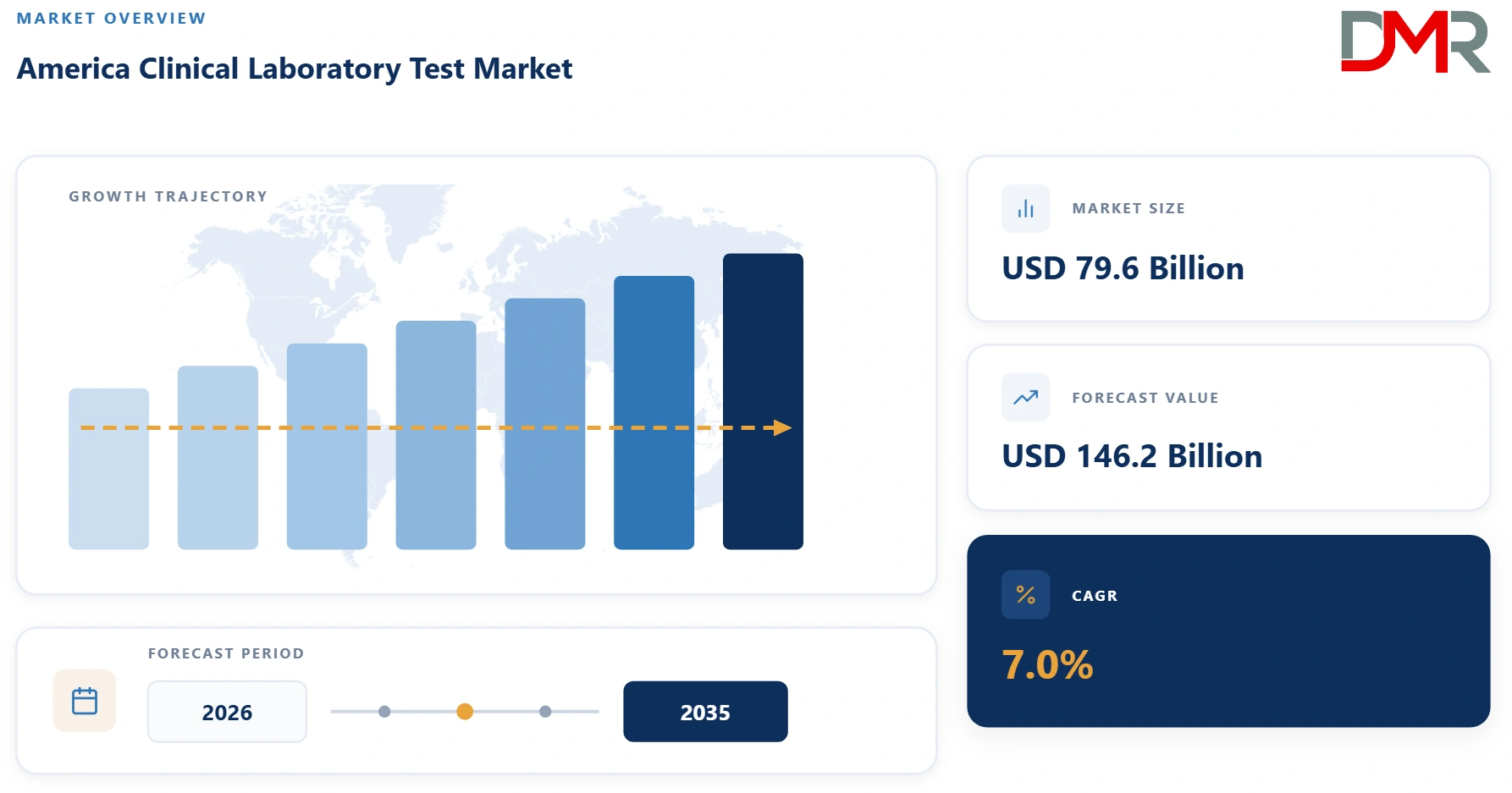
The America Clinical Laboratory Test Market is projected to reach USD 79.6 billion in 2026 and is projected to reach approximately USD 146.2 billion by 2035, representing a 7.0% CAGR.
ℹ
To learn more about this report –
Download Your Free Sample Report Here
The Americas clinical laboratory test market comprises diagnostic examinations performed on human specimens to support disease screening, diagnosis, prognosis, treatment selection, treatment monitoring and preventive healthcare. It includes routine tests such as complete blood counts, metabolic panels and urinalysis, as well as higher-value molecular diagnostics, genetic testing, immunology, microbiology, pathology and specialty oncology testing.
Use Cases
- Routine health screening: Chemistry, hematology and metabolic tests identify disease risks during preventive healthcare examinations.
- Infectious disease diagnosis: Molecular, microbiology and serology tests identify pathogens and support treatment decisions.
- Cancer diagnosis: Pathology and molecular tests characterize tumors and identify clinically actionable biomarkers.
- Chronic disease monitoring: Laboratory biomarkers track diabetes, cardiovascular, kidney and liver disease progression.
- Genetic testing: Sequencing and molecular assays identify hereditary disease risks and clinically relevant mutations.
- Precision medicine: Companion diagnostics and molecular profiling match patients with increasingly targeted therapies.
Key Takeaways
- Market size: The Americas clinical laboratory test market is estimated at USD 79.6 billion in 2026 and is projected to reach USD 146.2 billion by 2035.
- Growth: The market is expected to expand at approximately 7.0% CAGR during 2026–2035.
- Growth drivers: Aging populations, chronic diseases, cancer screening, preventive medicine, healthcare expenditure and precision diagnostics are supporting demand.
- Segment leadership: Clinical chemistry is the largest test category, while infectious diseases represent the largest application.
- Fastest growth: Molecular diagnostics is expected to grow at approximately 8.4% CAGR, exceeding the overall market.
- Regional leadership: North America represents approximately 87.2% of the 2026 Americas market, while Latin America provides the stronger long-term growth opportunity.
How AI is Transforming the Americas Clinical Laboratory Test Market?
Artificial intelligence is increasingly being integrated into laboratory workflows, digital pathology, diagnostic interpretation, test utilization, specimen management and patient-facing services. Large laboratory companies are deploying AI alongside automation and digital platforms. Labcorp, for example, has expanded its collaboration with PathAI to deploy an FDA-cleared digital pathology platform and has also introduced AI applications for laboratory operations and patient engagement. Quest Diagnostics has introduced AI-assisted patient interpretation tools and expanded automation across specimen processing and cervical cancer screening.
AI can reduce manual workload, improve turnaround time, support quality control and enable more consistent interpretation of complex pathology and molecular data. It also allows laboratories to extract additional clinical value from longitudinal test-result datasets.
Key Drivers in the America Clinical Laboratory Test Market
Rising Prevalence of Chronic and Infectious Diseases:
The Americas Clinical Laboratory Test Market is being driven by the increasing prevalence of chronic diseases such as diabetes, cardiovascular disorders, cancer, kidney disease and metabolic conditions. These diseases require frequent laboratory testing for screening, diagnosis, treatment selection and ongoing monitoring. Aging populations in North America are further increasing demand for routine and specialized diagnostics. In Latin America, improving healthcare access and greater awareness of preventive testing are expanding the patient base. Infectious diseases also continue to support testing demand through respiratory disease screening, sexually transmitted infection testing, gastrointestinal diagnostics and antimicrobial-resistance monitoring. The growing emphasis on early diagnosis is encouraging healthcare providers to incorporate laboratory testing earlier in the patient-care pathway.
Expansion of Precision Medicine and Advanced Diagnostics:
The increasing adoption of precision medicine is creating strong demand for molecular diagnostics, genetic testing, companion diagnostics and other advanced laboratory technologies. Oncology is a major application area, with molecular profiling increasingly used to identify biomarkers and guide targeted treatment decisions. Similar applications are emerging in inherited diseases, infectious diseases, cardiology and neurological disorders. Improvements in sequencing technologies, PCR platforms, automation and bioinformatics are making complex diagnostics more accessible to laboratories across the Americas. Healthcare providers are also increasingly using laboratory biomarkers to support personalized treatment and monitor therapeutic response. This transition toward more specialized testing is increasing the clinical importance of laboratories and encouraging investments in advanced analytical platforms.
Restraints in the America Clinical Laboratory Test Market
Reimbursement and Pricing Pressure:
Pricing and reimbursement pressure remains a significant challenge for the Americas Clinical Laboratory Test Market. Routine laboratory tests are highly competitive and can experience substantial price pressure because of their high testing volumes and standardized nature. In North America, government and private-payer reimbursement policies can restrict price increases, while laboratories must simultaneously manage rising costs for labor, equipment, reagents, transportation and compliance. In Latin America, reimbursement conditions vary considerably between countries and healthcare systems. Economic volatility, currency fluctuations and differences in healthcare funding can further affect laboratory profitability. These conditions are encouraging providers to improve operational efficiency, centralize testing, automate workflows and expand into higher-value specialty diagnostics.
Regulatory Complexity and Skilled Workforce Requirements:
Clinical laboratories operate under stringent quality, accreditation, safety and reporting requirements. Regulatory requirements can become particularly complex for molecular diagnostics, genetic testing, laboratory-developed tests and emerging AI-supported diagnostic technologies. Laboratories must invest continuously in quality-management systems, validation procedures, staff training and regulatory compliance. At the same time, the industry requires skilled medical technologists, pathologists, molecular scientists and laboratory specialists. Shortages of qualified personnel can increase operating costs and limit the ability of laboratories to expand testing capacity. Smaller laboratories may face greater challenges because they have fewer resources to support specialized compliance teams, advanced equipment and highly trained personnel.
Growth Opportunities in the America Clinical Laboratory Test Market
Growth of Molecular Diagnostics and Oncology Testing:
Molecular diagnostics represents one of the strongest opportunities in the Americas Clinical Laboratory Test Market. Increasing cancer incidence and the growing use of targeted therapies are creating demand for tumor profiling, companion diagnostics, liquid biopsy, circulating tumor DNA and minimal residual disease testing. Genetic and molecular testing is also expanding into hereditary diseases, infectious diseases and pharmacogenomics. Laboratories that develop specialized testing capabilities can achieve stronger differentiation than providers focused primarily on routine diagnostics. North America offers opportunities through advanced clinical infrastructure and pharmaceutical partnerships, while Latin America provides significant potential as access to molecular diagnostics expands beyond major urban healthcare centers. The continued shift toward personalized medicine should further increase demand for complex laboratory services.
Expansion of Decentralized and Consumer Diagnostics:
Home-based sample collection, direct-to-consumer testing, employer health programs and digitally ordered laboratory services are creating new opportunities for diagnostic providers. Consumers increasingly expect convenient access to health information without requiring repeated visits to hospitals or physician offices. This model is particularly suitable for preventive screening, metabolic health, women's health, infectious diseases and selected genetic tests. Digital platforms can connect patients, physicians, laboratories and healthcare providers, improving accessibility and reducing administrative friction. In Latin America, expanding private healthcare networks and diagnostic chains provide additional opportunities for decentralized collection combined with centralized laboratory processing. Providers with strong logistics, digital ordering capabilities and broad test menus are well positioned to benefit from this trend.
Trends in the America Clinical Laboratory Test Market
Increasing Laboratory Automation and Digitalization:
Laboratories across the Americas are increasingly adopting automation for specimen handling, sample preparation, analytical testing, quality control and result reporting. Digital laboratory systems are improving connectivity between diagnostic providers, hospitals, physicians and patients. Digital pathology is also gaining momentum, allowing tissue samples to be digitized for remote review and AI-assisted analysis. Automation is particularly important for large laboratories because it helps increase testing capacity while reducing manual workload and improving consistency. As laboratories become more technology-driven, investment in artificial intelligence, laboratory information systems, robotics and data analytics is expected to become an increasingly important competitive differentiator.
Laboratory Consolidation and Strategic Partnerships:
The Americas Clinical Laboratory Test Market is experiencing continued consolidation as large diagnostic providers acquire regional laboratories, establish hospital partnerships and develop centralized testing facilities. Consolidation enables laboratories to achieve economies of scale, improve purchasing power, centralize complex testing and expand geographic coverage. Health-system partnerships are also allowing hospitals to outsource selected laboratory operations while maintaining access to broad diagnostic capabilities. In Latin America, consolidation is particularly important as private diagnostic chains expand their networks and modernize technical laboratories. The competitive environment is therefore gradually shifting toward larger integrated platforms that combine specimen-collection networks, centralized laboratories, specialty diagnostics, automation and digital healthcare services.
Research Scope and Analysis
The Americas clinical laboratory test market is segmented by Test Type, Application, Sample Type and End User. These dimensions capture differences in diagnostic complexity, disease demand, specimen economics and laboratory purchasing behavior across North America and Latin America.
ℹ
To learn more about this report –
Download Your Free Sample Report Here
By Test Type Analysis
Clinical Chemistry is estimated to be the largest test-type category in 2026, accounting for approximately 24.5% of Americas market revenue. Its leadership reflects the exceptionally high volume of metabolic panels, liver-function tests, renal tests, electrolyte measurements, glucose testing and other chemistry procedures performed across hospitals, primary-care settings and reference laboratories. Hematology is estimated to be the second-largest category at approximately 15.8%, supported by widespread CBC and blood-disorder testing. Molecular Diagnostics is expected to be the fastest-growing segment at approximately 8.4% CAGR, driven by oncology, infectious disease, genetic testing and precision medicine. Genetic testing is also expected to grow above the market average as hereditary disease screening and pharmacogenomics expand. Immunology and serology remain important for autoimmune disease and infectious disease applications, while microbiology, coagulation, histopathology, cytology and urinalysis provide stable recurring demand. In Latin America, HbA1c testing is identified as a particularly strong individual test category, while North American market research also identifies HbA1c as a leading high-value test segment.
By Application Analysis
Infectious Diseases represent the largest application category, estimated at approximately 19.5% of the 2026 market. Demand is supported by respiratory infections, sexually transmitted infections, gastrointestinal pathogens, antimicrobial-resistance surveillance and periodic outbreaks. Oncology represents the second-largest application at approximately 17.0% and is expected to be the fastest-growing application at around 8.0% CAGR. The oncology opportunity extends from conventional pathology to molecular profiling, liquid biopsy, companion diagnostics and minimal residual disease monitoring. Diabetes and metabolic disorders form another large recurring testing pool because patients require repeated HbA1c, glucose and lipid testing. Cardiovascular disease generates substantial chemistry and biomarker testing, while kidney and liver disease creates recurring demand for renal and hepatic panels. Genetic and hereditary disorders represent a smaller current revenue pool but have significant long-term growth potential because sequencing and molecular testing are becoming more clinically actionable and accessible.
By Sample Type Analysis
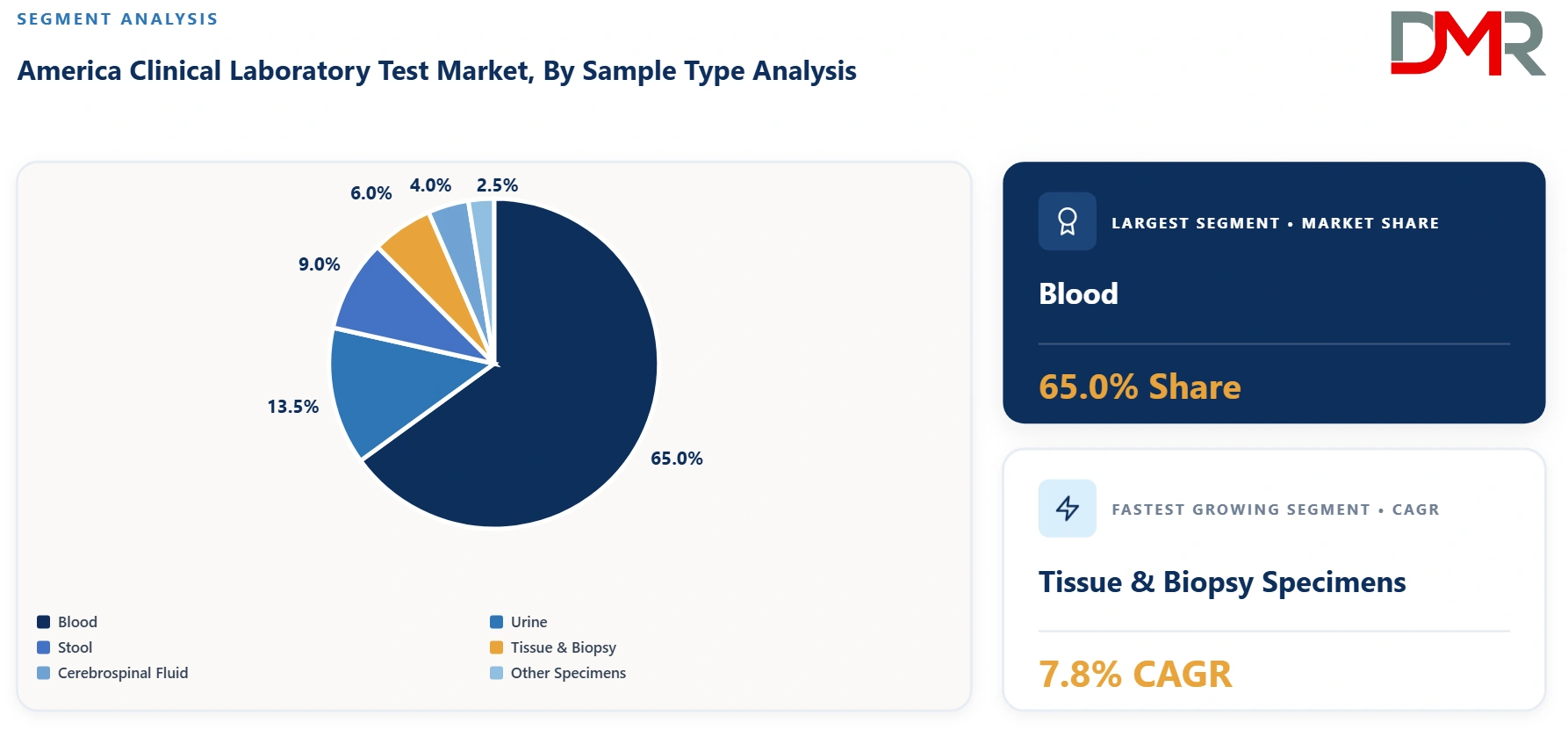
Blood dominates the market with an estimated 65.0% share in 2026, reflecting its use across chemistry, hematology, immunology, coagulation, infectious disease, molecular and genetic testing. Blood collection infrastructure is mature throughout North America and increasingly standardized across major Latin American diagnostic networks. Urine is estimated to be the second-largest specimen category at approximately 13.5%, driven by urinalysis, kidney disease, urinary tract infections and metabolic assessment. Tissue and biopsy specimens represent approximately 9.0% but are expected to grow at roughly 7.8% CAGR, reflecting increased pathology, immunohistochemistry and molecular oncology. Stool, cerebrospinal fluid and other specimens account for smaller shares but remain clinically important for gastrointestinal, neurological and specialized infectious diseases. Liquid biopsy and blood-based molecular testing are likely to increase the relative importance of blood specimens during the forecast period.
By End User Analysis
Hospitals & Clinics are estimated to remain the largest end-user segment with approximately 40.0% share in 2026. Hospitals require broad laboratory menus and rapid turnaround for emergency, inpatient, surgical and outpatient care. Independent Clinical Laboratories account for approximately 22.5%, while Diagnostic Laboratory Chains represent around 20.5%. Diagnostic chains are expected to be among the fastest-growing end users, at approximately 7.6% CAGR, because consolidation enables them to centralize complex testing while maintaining geographically distributed collection centers. Physician offices and ambulatory care centers are gaining importance as healthcare delivery moves toward outpatient settings. In North America, hospital outsourcing and laboratory-management partnerships are accelerating this transition; Quest's Corewell Health arrangement provides an example of a large health system combining hospital laboratory management with centralized reference testing. In Latin America, private diagnostic groups are similarly pursuing centralized laboratory infrastructure and standardized technology platforms.
The America Clinical Laboratory Test Market Report is segmented on the basis of the following:
By Test Type
- Clinical Chemistry
- Hematology
- Coagulation
- Immunology & Serology
- Microbiology
- Molecular Diagnostics
- Genetic Testing
- Histopathology & Cytology
- Urinalysis
- Other Tests
By Application
- Infectious Diseases
- Oncology
- Cardiovascular Diseases
- Diabetes & Metabolic Disorders
- Kidney & Liver Diseases
- Autoimmune & Inflammatory Diseases
- Genetic & Hereditary Diseases
- Other Clinical Conditions
By Sample Type
- Blood
- Urine
- Stool
- Tissue & Biopsy
- Cerebrospinal Fluid
- Other Specimens
By End User
- Hospitals & Clinics
- Independent Clinical Laboratories
- Diagnostic Laboratory Chains
- Physician Offices & Ambulatory Care Centers
- Other Healthcare Facilities
Regional Analysis
North America is the dominant regional market, representing approximately 87.2% of Americas clinical laboratory test revenue in 2026. Its leadership is primarily attributable to the U.S. healthcare system's large diagnostic-testing volume, sophisticated reference laboratory infrastructure, advanced molecular testing adoption and high healthcare expenditure. Canada contributes a smaller but technologically advanced market with strong public-health laboratory infrastructure. Latin America accounts for approximately 12.8% of the Americas market but offers higher long-term growth potential. Brazil and Mexico represent the principal Latin American markets, supported by large populations, expanding private healthcare networks and increasing diagnostic expenditure. Argentina and Colombia provide smaller but strategically relevant markets, while Rest of Latin America presents opportunities in private laboratory consolidation, infectious disease testing and chronic-disease screening.
Regulatory Landscape
The regulatory landscape is one of the most important determinants of market entry, innovation and operating cost. In the U.S., laboratories are subject to CLIA requirements, while Canada uses federal and provincial healthcare and laboratory frameworks. Latin American markets are governed by country-specific health authorities and accreditation systems, creating a more fragmented regulatory environment. Molecular diagnostics and laboratory-developed tests face greater scrutiny because analytical validity, clinical utility, quality systems and reporting standards become increasingly important as testing moves into treatment-selection decisions. Regulatory complexity favors larger laboratory groups that can maintain dedicated compliance and quality teams. At the same time, stronger standards can increase physician and patient confidence in advanced testing. Brazil's diagnostic sector is moving toward more standardized and automated infrastructure, while Mexican, Argentine and Colombian private laboratories are increasingly adopting international quality and accreditation practices. The regulatory trajectory therefore represents both a compliance cost and a barrier-to-entry advantage for sophisticated laboratory networks.
Investment and White Space Analysis
Investment opportunities are concentrated in molecular diagnostics, oncology, genetic testing, digital pathology, automation, decentralized collection and laboratory-management outsourcing. North America offers attractive opportunities for specialty diagnostics, AI-enabled workflows and health-system laboratory partnerships, although reimbursement and consolidation make routine testing relatively competitive. Latin America provides greater white space because diagnostic access remains uneven and private laboratory networks are still consolidating. Brazil and Mexico are the strongest investment markets due to their population scale, healthcare infrastructure and established private diagnostic providers. Argentina and Colombia provide opportunities in specialty diagnostics and laboratory modernization. Rest of Latin America offers smaller individual markets but attractive opportunities through regional platforms, centralized reference laboratories and cross-border specialty testing. Investors are likely to favor businesses that combine recurring routine-testing volumes with differentiated molecular or specialty portfolios, rather than pure commodity testing providers.
By Region
North America
Latin America
- Mexico
- Brazil
- Argentina
- Colombia
- Rest of Latin America
Competitive Landscape
The Americas clinical laboratory test market is moderately consolidated in North America and more fragmented across Latin America. Quest Diagnostics and Labcorp are leading independent laboratory providers in the U.S., while major health systems operate extensive hospital laboratories and regional reference networks. Canada contains a mix of public, hospital and private laboratory providers. Latin America has strong regional players such as Dasa and other national diagnostic chains alongside multinational technology and laboratory companies. Competitive differentiation increasingly depends on test-menu breadth, turnaround time, geographic coverage, payer relationships, automation, specialty diagnostics, digital integration and price. M&A and hospital partnerships remain important strategies. Quest's Corewell Health joint venture and Labcorp's regional laboratory acquisitions demonstrate how large providers are using partnerships and acquisitions to increase scale.
Some of the prominent players in the America Clinical Laboratory Test Market are:
- Quest Diagnostics
- Labcorp
- Eurofins Scientific
- Sonic Healthcare
- Mayo Clinic Laboratories
- ARUP Laboratories
- NeoGenomics Laboratories
- OPKO Health / BioReference Health
- Siemens Healthineers
- Abbott Laboratories
- Roche Diagnostics
- QIAGEN
- Danaher
- Thermo Fisher Scientific
- Bio-Rad Laboratories
- bioMérieux
- Agilent Technologies
- Sysmex
- Beckman Coulter
- Becton, Dickinson and Company
- DiaSorin
- Ortho Clinical Diagnostics
- Fujifilm
- Hologic
- Exact Sciences
- Natera
- Guardant Health
- Myriad Genetics
- Veracyte
- CareDx
- Fulgent Genetics
- Invitae
- Adaptive Biotechnologies
- Genomic Health
- Foundation Medicine
- Charles River Laboratories
- Fresenius Medical Care
- DaVita
- Unilabs
- SYNLAB
- Other Key Players
Recent Developments
- In September 2026, Labcorp acquired MLM Medical Labs, expanding its central and specialty laboratory capabilities and creating a wholly owned laboratory network spanning four continents, strengthening its position in high-complexity and clinical-trial testing.
- In July 2026, Quest Diagnostics reported second-quarter revenue of $3.04 billion, up 10.2% year over year, and raised its full-year 2026 revenue guidance to $11.95–$12.05 billion, supported by continued physician, hospital and consumer demand.
- In June 2026, Quest Diagnostics received New York State approval for Haystack MRD, its circulating-tumor-DNA test for residual or recurring solid-tumor disease, expanding availability of the test across all 50 U.S. states.
- In March 2026, Labcorp completed its acquisition of selected Laboratory Alliance of Central New York assets and entered an agreement to manage Crouse Health's inpatient laboratory operations, expanding its regional laboratory footprint.
- In February 2026, Dasa announced a strategic modernization of 18 Brazilian technical operating centers through long-term partnerships with Roche, Abbott, Beckman Coulter, Mindray, Stago and QuidelOrtho, emphasizing automation and standardized diagnostic infrastructure.
- In January 2026, Quest Diagnostics and Corewell Health completed their Michigan laboratory joint venture, with Quest holding 51% and managing laboratory services across Corewell Health's 21 hospitals while a 100,000-square-foot centralized laboratory is developed.
Report Details
| Report Characteristics |
| Market Size (2026) |
USD 79.6 Bn |
| Forecast Value (2035) |
USD 146.2 Bn |
| CAGR (2026–2035) |
7.0% |
| Historical Data |
2021 – 2025 |
| Forecast Data |
2026 – 2035 |
| Base Year |
2025 |
| Segments Covered |
By Test Type, By Application, By Sample Type, By End User |
| Regional Coverage |
North America – The US and Canada; Latin America – Mexico, Brazil, Colombia, Argentina, Rest of LATAM |
Frequently Asked Questions
What is the size of the Americas Clinical Laboratory Test Market in 2026?
▾ The Americas Clinical Laboratory Test Market is estimated at approximately USD 79.6 billion in 2026, covering North America and Latin America.
What will the Americas Clinical Laboratory Test Market be worth by 2035?
▾ The Americas Clinical Laboratory Test Market is projected to reach approximately USD 146.2 billion by 2035, supported by increasing diagnostic testing demand.
What is the CAGR of the Americas Clinical Laboratory Test Market from 2026 to 2035?
▾ The Americas Clinical Laboratory Test Market is expected to expand at approximately 7.0% CAGR from 2026 to 2035.
What are the key factors driving the Americas Clinical Laboratory Test Market?
▾ Major growth drivers include aging populations, chronic diseases, preventive screening, cancer diagnostics, precision medicine, automation and increasing healthcare expenditure.
Which segment dominates the Americas Clinical Laboratory Test Market?
▾ Clinical Chemistry is estimated to be the leading test-type segment, accounting for approximately 24.5% of the Americas Clinical Laboratory Test Market in 2026.
Which segment is expected to grow fastest in the Americas Clinical Laboratory Test Market?
▾ Molecular Diagnostics is expected to be the fastest-growing major test-type segment, with an estimated 8.4% CAGR during 2026–2035.
Which region dominates the Americas Clinical Laboratory Test Market?
▾ North America is expected to dominate the Americas Clinical Laboratory Test Market, accounting for approximately 87.2% of market revenue in 2026.
Which region is expected to grow fastest in the Americas Clinical Laboratory Test Market?
▾ Latin America is expected to record faster percentage growth than North America, driven by healthcare infrastructure expansion, private laboratory investment and increasing diagnostic access.
Who are the key players in the Americas Clinical Laboratory Test Market?
▾ Major participants include Quest Diagnostics, Labcorp, Sonic Healthcare, BioReference Laboratories, Dasa, Fleury, ARUP Laboratories, Mayo Clinic Laboratories and NeoGenomics Laboratories.
What are the major trends shaping the Americas Clinical Laboratory Test Market?
▾ Key trends include molecular diagnostics, AI-enabled laboratory workflows, automation, digital pathology, consumer testing, laboratory consolidation and hospital-laboratory partnerships.
How is the Americas Clinical Laboratory Test Market segmented?
▾ The Americas Clinical Laboratory Test Market is segmented by Test Type, Application, Sample Type, End User and Region, covering North America and Latin America.
What countries are covered in the Americas Clinical Laboratory Test Market?
▾ The market covers the U.S. and Canada under North America, and Mexico, Brazil, Argentina, Colombia and Rest of Latin America under Latin America.