Market Snapshot
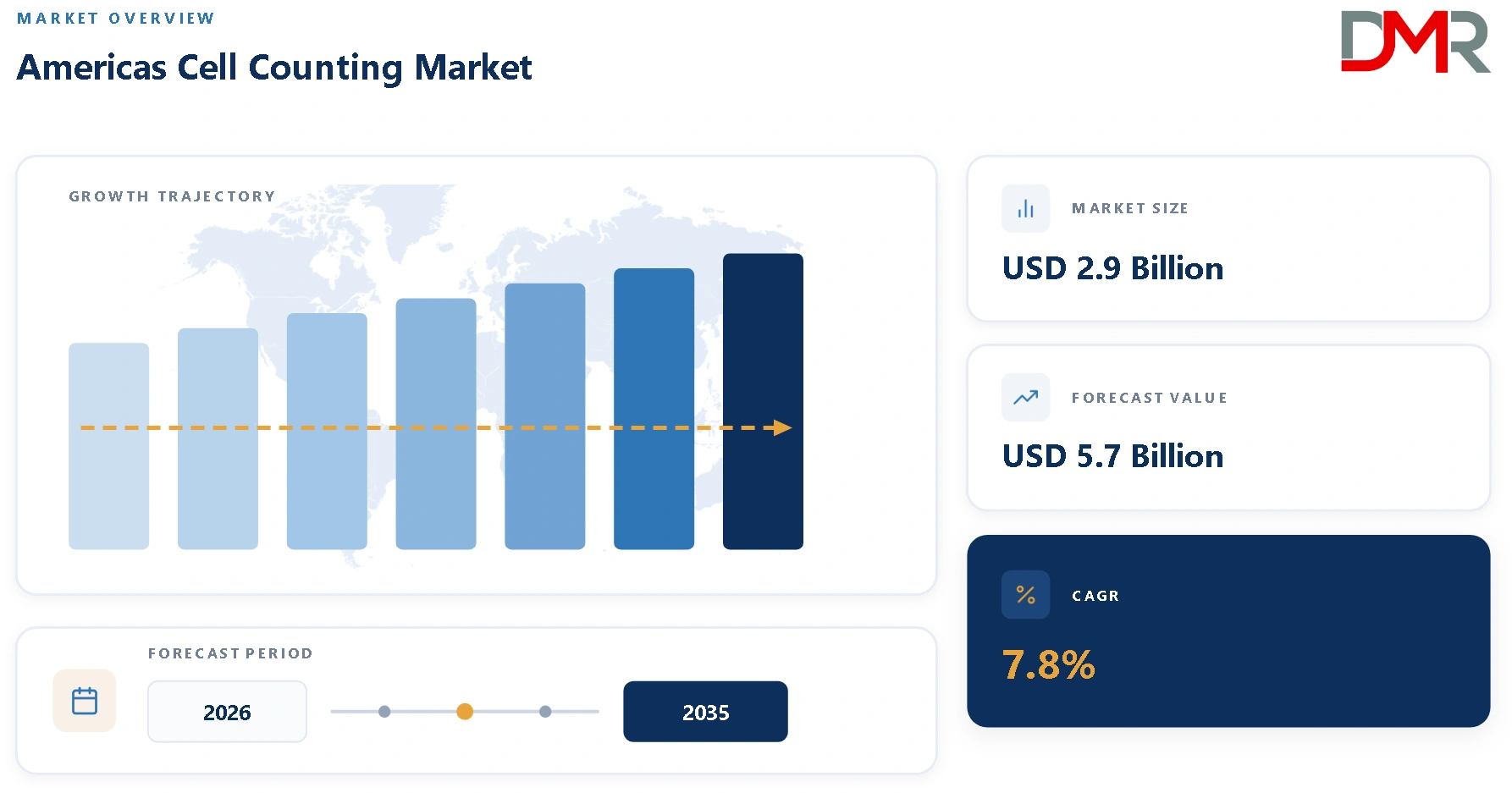
- Market Size (2026): USD 2.9 Bn
- Forecast Value (2035): USD 5.7 Bn
- CAGR (2026-2035): 7.8%
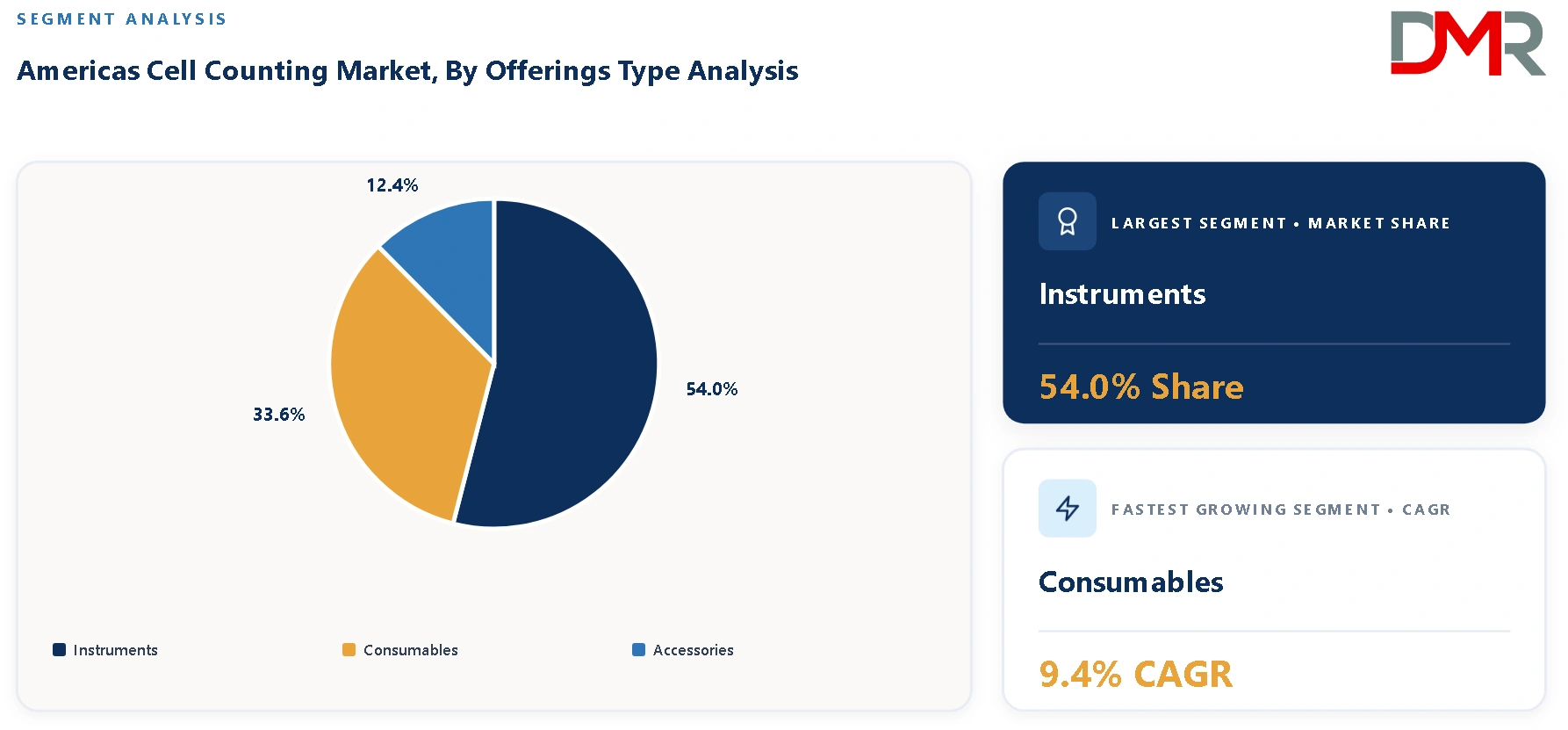
- Leading Product (2026): Instruments, approximately 54%
- Fastest-Growing Product: Consumables, at a CAGR of 9.4%
- Leading Cell Type (2026): Human Cells, around 57%
- Leading End User (2026): Pharmaceutical & Biotechnology Companies, close to 39%
- Key Players: Thermo Fisher Scientific, Danaher, Bio-Rad Laboratories and others
What is Americas Cell Counting Market and its Market Size?
The Americas Cell Counting Market size is estimated to reach USD 2.9 Bn in 2026 and is further anticipated to reach USD 5.7 Bn by 2035, at a CAGR of 7.8%.
ℹ
To learn more about this report –
Download Your Free Sample Report Here
The market covers instruments, consumables, accessories and related solutions used to determine cell concentration, viability and selected cellular characteristics across research, bioprocessing, diagnostics and quality-control workflows in the Americas. The scope includes automated and manual counting technologies such as hemocytometers, image-based counters, impedance-based systems, flow cytometry-enabled counting and fluorescence-based methods.
Cell counting is a foundational laboratory activity because cell concentration and viability influence experimental reproducibility, assay performance, bioprocess yield and cell therapy manufacturing. Manual counting remains relevant in cost-sensitive laboratories, while automated imaging systems are increasingly preferred where throughput, standardized analysis and reduced operator variability are important. Flow-based platforms add multiparametric information and are particularly valuable in advanced research and cell characterization.
Demand is concentrated in pharmaceutical and biotechnology companies, academic and research institutes, hospitals and diagnostic laboratories, contract research organizations, and cell and gene therapy manufacturers. Purchasing decisions increasingly consider workflow automation, compatibility with existing instruments, sample volume, analysis software, consumable cost and the ability to generate reproducible data for regulated processes.
The Americas market benefits from a large installed base of life sciences instrumentation and significant pharmaceutical, biotechnology and academic research activity. The United States accounts for the largest regional demand pool, while Canada and major Latin American markets provide additional growth through expanding research infrastructure, bioprocessing capacity and adoption of automated laboratory systems.
Use Cases
- Cell Culture Monitoring: Research laboratories use cell counters to quantify viable cells before seeding, passaging or downstream assays. Automated imaging reduces manual counting variation and enables more consistent cell-density measurements across repeated experiments.
- Bioprocess Optimization: Biomanufacturing teams monitor viable cell density during upstream processing to evaluate culture health and determine harvest or feeding decisions. Reliable counting supports process control and helps identify deviations before they affect batch performance.
- Cell Therapy Manufacturing: Cell therapy developers use counting and viability measurements during cell isolation, expansion, formulation and final product testing. High-quality measurements are essential because dosing, yield and release decisions can depend directly on viable cell concentration.
- Clinical and Research Diagnostics: Diagnostic and hospital laboratories apply cell counting to hematology, immunology and specialized cellular assays. Multiparametric systems can combine counting with phenotype information, expanding the value of cell analysis beyond concentration alone.
Key Takeaways
- Market Size & Share: The market is estimated at USD 2.9 Bn in 2026 and is projected to reach USD 5.7 Bn by 2035.
- Product Analysis: Instruments are expected to account for approximately 54% of 2026 revenue, while consumables are expanding at a CAGR of 9.4%.
- Cell Type Analysis: Human cells are projected to represent around 57% of 2026 demand due to their importance in biomedical research, cell therapy and clinical workflows.
- Application Analysis: Research applications are projected to lead 2026 demand at approximately 36%, while cell and gene therapy applications are expanding faster.
- End User Analysis: Pharmaceutical and biotechnology companies are expected to account for close to 39% of 2026 demand, supported by drug discovery, bioprocessing and advanced therapy development.
- Distribution Channel Analysis: Direct sales are expected to remain the leading channel at around 46% of 2026 revenue, while e-commerce and digital procurement continue to expand for standardized consumables.
How AI/Gen AI is Transforming the Americas Cell Counting Market?
AI is strengthening cell counting by improving image segmentation, cell classification and automated quality assessment. Computer vision models can distinguish cells from debris, identify overlapping cells and estimate viability from brightfield or fluorescence images. This reduces operator dependence and supports more standardized measurements across laboratories.
Generative AI is increasingly useful around the data layer. LLM document processing can organize experimental records and generate structured summaries, while AI-assisted analytics can compare cell-counting results across batches and flag anomalous measurements. In high-throughput laboratories, AI can also help prioritize images for manual review and connect cell-counting outputs with downstream assay data.
- Computer Vision: AI-based segmentation improves identification of individual cells in dense or heterogeneous samples.
- Viability Classification: Machine learning can classify live, dead and ambiguous cells using brightfield or fluorescence image features.
- LLM Document Processing: AI can structure experimental notes, batch records and cell-counting observations for researcher review.
- Anomaly Detection: Predictive models can flag unusual cell-density or viability patterns that may indicate sample or process problems.
Key Drivers in the Americas Cell Counting Market
Demand is being supported by increasing laboratory automation and the expansion of cell-based research, bioprocessing and advanced therapy development.
- Expansion of Cell-Based Research and Bioprocessing: Cell culture is embedded in drug discovery, vaccine research, biologics production, cell therapy and academic biology. Every stage requires reliable measurements of cell concentration and viability, creating recurring demand for counting instruments and consumables. As workflows become more complex, laboratories need measurements that are reproducible and digitally traceable rather than dependent on manual observation. This favors automated imaging and flow-based systems, particularly in facilities running many samples per day. Growth is also supported by the expansion of cell and gene therapy manufacturing, where cell counts influence process yields, dosing calculations and quality-control decisions.
- Laboratory Automation and Standardization: Laboratories are increasingly automating repetitive sample preparation, counting and analysis tasks to improve throughput and reduce operator variability. Automated counters can standardize image acquisition, cell recognition and viability calculations while transferring results into laboratory information systems. This is especially valuable in multi-site research organizations and regulated manufacturing environments, where comparable data are needed across operators and batches. The commercial effect extends beyond the instrument because automated workflows increase recurring demand for compatible slides, cartridges, reagents and software. Suppliers that provide integrated hardware and consumable ecosystems can therefore strengthen customer retention.
Restraints in the Americas Cell Counting Market
Market expansion is constrained by instrument cost, competition from established laboratory methods and differences in sample requirements across cell types.
- High Cost of Advanced Automated Systems: Automated image-based and flow-based counters can require meaningful upfront investment compared with manual hemocytometers and low-cost microscopy. Smaller laboratories, academic groups and price-sensitive institutions may therefore continue using manual methods for routine counting. The adoption barrier is strongest when sample volumes are low and labor costs are not a major operational concern. Suppliers must demonstrate measurable gains in throughput, reproducibility and data quality to justify capital expenditure. Consumable costs can further influence total cost of ownership, particularly for laboratories with large sample volumes.
- Sample and Method Variability: Cell size, morphology, aggregation, debris and staining behavior can vary substantially across biological samples. A counting method optimized for one cell population may require different settings or validation for another. This limits the possibility of a single standardized platform serving every application without workflow customization. Advanced instruments can address more sample types but often increase complexity. As a result, laboratories may retain multiple counting approaches, slowing full replacement of legacy equipment and creating a fragmented competitive environment.
Growth Opportunities in the Americas Cell Counting Market
Growth opportunities are concentrated in automated consumables, cell therapy workflows and connected cell-analysis platforms.
- Cell and Gene Therapy Manufacturing: Expansion of advanced therapy pipelines creates demand for high-reproducibility counting and viability measurements at multiple manufacturing steps. Vendors can differentiate through validated workflows, closed-system compatibility and digital batch records.
- Connected Cell Analysis: Integration of counters with laboratory information systems, cloud analytics and automated sample handling can increase workflow value. Suppliers that combine counting with morphology, viability and phenotypic analysis can address more complex laboratory requirements.
- Consumables and Recurring Revenue: Single-use slides, cartridges, reagents and assay kits provide recurring revenue and can increase customer retention around installed instruments. Product designs that simplify handling and reduce sample preparation can support adoption in high-throughput laboratories.
Trends in the Americas Cell Counting Market
The market is moving toward automated, image-based and digitally connected workflows. Laboratories increasingly expect counting systems to deliver not only a cell concentration but also standardized images, viability information, audit trails and integration with downstream data systems.
- Automated Image-Based Counting: Imaging systems are replacing manual counting where reproducibility and throughput justify automation.
- Multiparametric Cell Analysis: Flow-based and fluorescence-enabled platforms increasingly combine counting with viability and phenotype measurements.
- Closed and Single-Use Workflows: Cell therapy and bioprocessing applications favor systems that minimize contamination risk and reduce manual handling.
- Digital Connectivity: Instruments are increasingly integrated with laboratory information systems and cloud-based analytics to support traceability and centralized monitoring.
Research Scope and Analysis
Segment performance is assessed across product, cell type, application, end user and distribution channel. Each axis identifies the sub-segment carrying the largest share of 2026 revenue and the one expanding fastest through 2035, with the commercial reason behind each position.
ℹ
To learn more about this report –
Download Your Free Sample Report Here
By Product
Instruments are projected to hold the largest share by product in 2026, accounting for approximately 54% of revenue because automated counters, flow-based systems and imaging platforms represent the principal capital equipment used to generate standardized cell-count measurements. Consumables create recurring revenue through slides, cartridges, reagents and staining products. Growth, however, is concentrated in consumables, expanding at a CAGR of 9.4% between 2026 and 2035 as installed instrument bases expand and laboratories move toward higher-throughput workflows. The segment benefits from repeat purchasing and platform-specific consumable ecosystems.
By Cell Type
Human cells are expected to lead the cell type axis in 2026, representing around 57% of revenue because human cell models dominate pharmaceutical research, cell therapy development, diagnostics and translational biology. Animal cells remain important for preclinical research and bioprocessing, while microbial cells support fermentation and microbiology applications. Growth is concentrated in human cells, expanding at a CAGR of 8.6% through 2035 as cell-based therapies, primary cell research and human disease models increase demand for accurate viability and concentration measurements.
By Application
Research applications are projected to represent approximately 36% of 2026 revenue, supported by widespread use of cell counting in culture maintenance, assay preparation and experimental standardization. Bioprocessing and diagnostics remain major application areas, while cell and gene therapy has a smaller current base but a higher growth rate. Growth is concentrated in cell and gene therapy applications, expanding at a CAGR of 11.3% from 2026 to 2035 as manufacturing pipelines require controlled cell counts throughout expansion, formulation and release workflows.
By End User
Pharmaceutical and biotechnology companies are expected to account for close to 39% of 2026 revenue because these organizations use cell counting across discovery, biologics development, bioprocessing and advanced therapy programs. Academic and research institutes form another large installed base, particularly for image-based counters and flow cytometry workflows. Growth is concentrated in contract research organizations, expanding at a CAGR of 10.2% as outsourcing increases the number of samples processed through specialized laboratories and shared technology platforms.
By Distribution Channel
Direct sales are projected to lead distribution in 2026 at around 46% of revenue because capital instruments often require application support, demonstrations, installation and technical service. Distributors remain important across Canada and Latin America, especially where manufacturers do not maintain direct commercial infrastructure. Growth is concentrated in online and digital procurement, expanding at a CAGR of 12.1% through 2035 as standardized consumables and lower-complexity instruments become easier to purchase through e-commerce and laboratory procurement platforms.
The Americas Cell Counting Market Report is Segmented Based on the Following
By Product
- Instruments
- Consumables
- Accessories
By Cell Type
- Human Cells
- Animal Cells
- Microbial Cells
- Others
By Application
- Research
- Bioprocessing
- Diagnostics
- Cell & Gene Therapy
- Others
By End User
- Pharmaceutical & Biotechnology Companies
- Academic & Research Institutes
- Hospitals & Diagnostic Laboratories
- Contract Research Organizations
- Others
By Distribution Channel
- Direct Sales
- Distributors
- Online Channels
- Others
Regulatory Landscape
Cell counting products are subject to different regulatory requirements depending on whether they are used as general laboratory research tools, clinical diagnostic systems, or components of regulated manufacturing workflows. In the United States, instruments used for clinical diagnosis can fall under FDA medical device requirements, while research-use-only systems operate under a different commercial framework. In Canada, Health Canada requirements apply to applicable medical devices and diagnostic products. Latin American markets add country-specific registration and import requirements. The commercial opening is for suppliers that clearly define intended use, maintain documentation and support validation. The restraint is regulatory complexity when a platform is intended for both research and clinical environments.
Technology Analysis
Cell counting technology is evolving from manual microscopy toward automated imaging, fluorescence-based counting, impedance measurement and multiparametric flow analysis. Automated imaging is particularly attractive because it combines concentration measurement with morphology and viability assessment, while flow cytometry adds higher-dimensional phenotyping. The commercial white space lies in systems that combine reliable counting with low sample volume, fast analysis, automated quality control and digital connectivity. The principal challenge is method validation across diverse cell populations. Suppliers that improve segmentation accuracy and simplify workflows can gain share, but the performance advantage must be demonstrated against established manual and automated methods.
Competitive Landscape
Competition includes diversified life sciences companies, laboratory instrumentation specialists and focused cell-analysis vendors. Large suppliers benefit from broad distribution and complementary portfolios, while specialists compete through image analysis, workflow simplicity and application-specific performance. The market is also shaped by consumable ecosystems, service contracts and software integration. Companies with strong installed bases can defend share through recurring consumables and upgrades, while newer entrants can compete through lower workflow complexity and specialized applications.
Some of the Prominent Players in the Americas Cell Counting Market Are
- Thermo Fisher Scientific
- Danaher
- Bio-Rad Laboratories
- Merck KGaA
- Roche
- Agilent Technologies
- Revvity
- Becton, Dickinson and Company
- F. Hoffmann-La Roche
- Sysmex Corporation
- Beckman Coulter
- Cytek Biosciences
- Nexcelom Bioscience
- DeNovix
- Logos Biosystems
- NanoEntek
- Countstar
- ChemoMetec
- Sartorius
- Miltenyi Biotec
- Sony Biotechnology
- NanoString Technologies
- QIAGEN
- Abcam
- Bio-Techne
- Corning
- Eppendorf
- Hamilton Company
- Tecan
- Molecular Devices
- Oxford Nanopore Technologies
- Illumina
- Standard BioTools
- 10x Genomics
- Berkeley Lights
- Axion BioSystems
- Luminex
- Agilent Technologies Canada
- STEMCELL Technologies
- BioLegend
- Other Key Players
Recent Developments
- In 2026, leading life sciences instrument suppliers continued expanding automated cell-analysis workflows by integrating imaging, viability assessment and software-based analysis into broader laboratory automation platforms.
- In 2026, cell and gene therapy developers increased adoption of automated cell-counting and viability solutions for manufacturing process control, strengthening demand for reproducible measurements and digital batch records.
- In 2026, laboratory suppliers expanded digital procurement and connected-instrument capabilities, supporting recurring consumable sales and remote workflow monitoring across distributed research organizations.
- In 2025, major life sciences companies continued broadening automation offerings for cell culture and bioprocessing, increasing the role of standardized cell-counting workflows in high-throughput laboratories.
- In 2025, adoption of advanced cell-analysis technologies continued to expand across cell therapy research and manufacturing, increasing demand for instruments capable of combining concentration and viability measurements with traceable data.
Report Details
| Report Characteristics |
| Market Size (2026) |
USD 2.9 Bn |
| Forecast Value (2035) |
USD 5.7 Bn |
| CAGR (2026–2035) |
7.8% |
| Historical Data |
2021 – 2025 |
| Forecast Data |
2026 – 2035 |
| Base Year |
2025 |
| Segments Covered |
By Product, By Cell Type, By Application, By End User, and By Distribution Channel |
| Regional Coverage |
Americas - United States, Canada, Brazil, Mexico, Argentina, Colombia, Chile, and Rest of Latin America |
Frequently Asked Questions
How big is the Americas Cell Counting Market?
▾ The Americas Cell Counting Market is estimated at USD 2.9 Bn in 2026 and is projected to reach USD 5.7 Bn by 2035. The scope includes cell-counting instruments, consumables and accessories used in research, bioprocessing, diagnostics and cell and gene therapy workflows across the Americas.
What is the growth rate of the Americas Cell Counting Market?
▾ The Americas Cell Counting Market is projected to expand at a CAGR of 7.8% from 2026 to 2035. Growth is supported by laboratory automation, expansion of cell-based research, bioprocessing and cell therapy, and increasing demand for reproducible and digitally traceable measurements.
Which country holds the largest share in the Americas Cell Counting Market?
▾ The United States is expected to hold the largest share of the Americas Cell Counting Market because of its large pharmaceutical and biotechnology industry, extensive academic research base, advanced bioprocessing capacity and significant adoption of automated laboratory instrumentation.
Who are the key players in the Americas Cell Counting Market?
▾ Key players include Thermo Fisher Scientific, Danaher, Bio-Rad Laboratories, Merck KGaA, Roche, Agilent Technologies, Revvity, Becton, Dickinson and Company, Sysmex Corporation, Beckman Coulter and specialized cell-analysis companies such as Cytek Biosciences, Nexcelom Bioscience and ChemoMetec.
What is the leading product in the Americas Cell Counting Market?
▾ Instruments are expected to remain the leading product category, accounting for approximately 54% of 2026 revenue. Automated cell counters, image-based systems and flow-based platforms are increasingly preferred where laboratories require higher throughput and reduced operator variability.
Which product is growing fastest in Americas Cell Counting Market ?
▾ Consumables are projected to be the fastest-growing product segment, expanding at a CAGR of approximately 9.4% from 2026 to 2035. Recurring purchases of slides, cartridges, reagents and staining products increase as the installed base of automated cell-counting systems expands.
Which end user represents the largest demand pool in Americas Cell Counting Market?
▾ Pharmaceutical and biotechnology companies are expected to represent close to 39% of 2026 demand. These organizations use cell counting throughout drug discovery, cell culture, biologics production, process development and cell and gene therapy manufacturing.