Americas Medical Rubber Balloon Products Market Snapshot
- Market Size 2026: USD 0.86 billion
- Market Size 2035: USD 1.26 billion
- Americas CAGR, 2026-2035: 4.3%
- Leading Product Segment: Angioplasty Balloons, 43%
- Leading Material Segment: Thermoplastic Elastomers, 34%
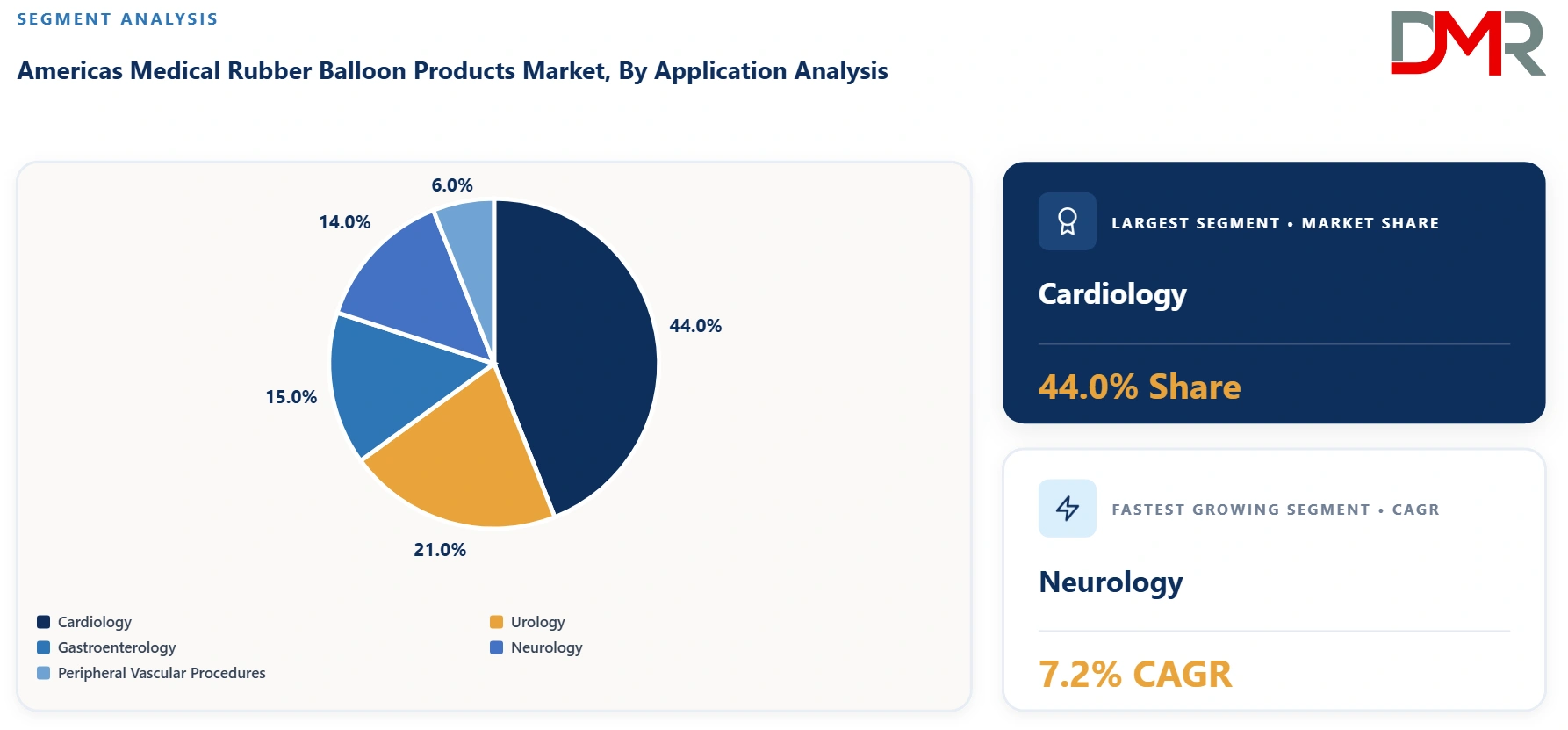
- Leading Application Segment: Cardiology, 44%
- Fastest-Growing Segment: Neurology, 7.2% CAGR
- Leading Region: North America, 75%
What is the Americas Medical Rubber Balloon Products and its Market Size?
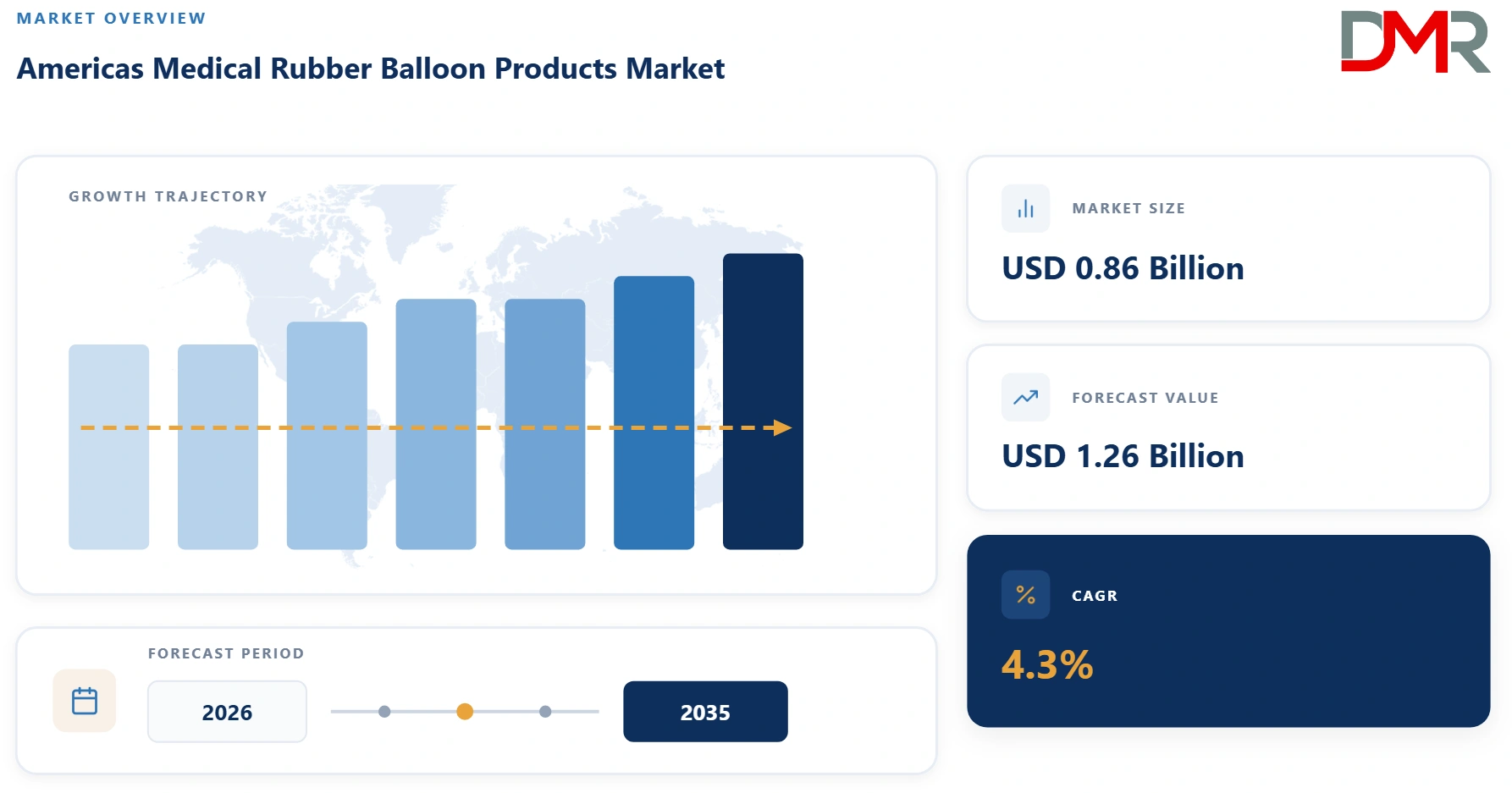
The Americas Medical Rubber Balloon Products market is estimated at USD 0.86 billion in 2026 and is projected to reach approximately USD 1.26 billion by 2035, representing a 4.3% CAGR.
ℹ
To learn more about this report –
Download Your Free Sample Report Here
The market includes angioplasty balloons, dilating balloons, occlusion balloons, balloon-tipped catheters and other specialty medical balloons. Demand is supported by increasing cardiovascular and peripheral vascular disease prevalence, aging populations, higher procedural volumes, expansion of ambulatory care, and continued migration toward minimally invasive interventions.
Use Cases
- Coronary angioplasty: Balloon catheters dilate narrowed coronary arteries and support stent deployment or post-dilatation.
- Peripheral vascular intervention: High-pressure and drug-coated balloons treat stenotic peripheral arteries and dialysis-access lesions.
- Urological drainage: Foley and specialty balloon catheters provide bladder drainage following surgery or during prolonged treatment.
- Gastrointestinal dilation: Endoscopic balloons incrementally dilate strictures while minimizing repeated device exchanges.
- Neurovascular intervention: Small-profile balloons support vessel remodeling, occlusion and selected complex neurovascular procedures.
- Occlusion and sizing: Specialty balloons temporarily block vessels or anatomical passages for controlled diagnostic and therapeutic procedures.
Key Takeaways
- Market size: Americas Medical Rubber Balloon Products is estimated at USD 0.86 billion in 2026, reaching USD 1.26 billion by 2035.
- Growth: The market is expected to expand at approximately 4.3% CAGR during 2026-2035.
- Primary drivers: Cardiovascular disease burden, aging, minimally invasive procedures, outpatient care and device innovation.
- Segment leadership: Angioplasty balloons lead product demand, while cardiology is the largest application.
- Fastest growth: Neurological balloon applications are projected to grow fastest as specialized, low-profile devices expand.
- Regional leadership: North America accounts for approximately 75% of Americas revenue, supported by advanced healthcare infrastructure, high procedural intensity and strong medtech investment.
How Advanced Materials, Digital Engineering and AI-Enabled Design are Transforming the Market?
Advanced polymer engineering is becoming a major differentiator in medical balloon products. Manufacturers increasingly use thermoplastic elastomers, silicone systems, polyisoprene and engineered multilayer constructions to achieve precise compliance, controlled expansion, high burst resistance and lower-profile delivery systems. Specialty coatings—including hydrophilic coatings—also improve catheter tracking and crossability. Teleflex products, for example, specify controlled-compliance balloon materials and hydrophilic or hydrophobic coatings for different intervention requirements.
Technology improves procedural efficiency through faster deflation, predictable balloon diameter, reduced friction, improved pushability and lower device profiles. Data-driven engineering and computational modeling allow manufacturers to optimize balloon geometry, wall thickness and fatigue characteristics before physical validation. FDA requirements emphasize repeat inflation performance, burst pressure and failure-mode testing, making engineering consistency a central competitive requirement.
Key Drivers in the Americas Medical Rubber Balloon Products Market
Rising Cardiovascular and Chronic Disease Burden:
The Americas Medical Rubber Balloon Products Market is primarily driven by the growing burden of cardiovascular, peripheral vascular, urological, and gastrointestinal diseases. An aging population, increasing prevalence of diabetes, obesity, hypertension, and other chronic conditions is expanding the patient pool requiring minimally invasive interventions. Balloon-based products are widely used for vessel dilation, lesion preparation, stent deployment, occlusion, drainage, and other therapeutic procedures. The increasing complexity of vascular disease is also encouraging physicians to use specialized products such as high-pressure, drug-coated, compliant, and perfusion balloons. Strong procedural volumes across hospitals and specialized intervention centers are therefore supporting consistent demand for medical balloon products throughout the Americas.
Growing Adoption of Minimally Invasive Procedures:
The Americas Medical Rubber Balloon Products Market is benefiting from the healthcare industry's continued shift toward minimally invasive treatment. Balloon-based interventions can reduce surgical trauma, recovery periods, hospital stays, and overall procedural burden compared with conventional open surgery in appropriate indications. Healthcare providers are increasingly adopting catheter-based procedures across cardiology, peripheral vascular care, gastroenterology, urology, and neurology. The expansion of outpatient treatment and ambulatory surgical facilities is further supporting demand for compact, easy-to-use, and rapidly deployable balloon systems. Manufacturers are responding by developing lower-profile catheters, improved balloon materials, faster inflation and deflation mechanisms, and products designed for complex anatomical conditions.
Restraints in the Americas Medical Rubber Balloon Products Market
Stringent Regulatory and Clinical Requirements:
The Americas Medical Rubber Balloon Products Market faces significant regulatory barriers because balloon-based medical devices must demonstrate safety, reliability, biocompatibility, and consistent clinical performance. Manufacturers must conduct extensive testing of balloon construction, burst resistance, inflation and deflation characteristics, dimensional accuracy, catheter integrity, and material compatibility. Regulatory requirements increase product-development costs and extend commercialization timelines. Changes to materials, manufacturing processes, coatings, or device configurations can require additional validation and regulatory assessment. Smaller manufacturers may find these requirements particularly challenging because they require substantial technical, clinical, quality-control, and regulatory resources. Differences in approval and registration requirements between countries across the Americas further increase compliance complexity for companies seeking regional expansion.
Pricing Pressure and Supply Chain Challenges:
The Americas Medical Rubber Balloon Products Market is also constrained by pricing pressure, particularly for standardized and frequently used products. Hospitals and healthcare networks increasingly emphasize cost containment, group purchasing, procurement efficiency, and value-based purchasing. This creates pressure on manufacturers to maintain competitive pricing while investing in research, advanced materials, manufacturing quality, and regulatory compliance. Specialty medical-grade elastomers and engineered polymers can also increase production costs because they require strict material specifications and quality controls. Supply-chain disruptions affecting polymers, specialty chemicals, components, packaging, or sterilization services can further influence production costs and delivery schedules. These factors can limit margins and make differentiation increasingly important for manufacturers.
Growth Opportunities in the Americas Medical Rubber Balloon Products Market
Expansion of Specialty and Drug-Coated Balloon Technologies:
The Americas Medical Rubber Balloon Products Market offers substantial opportunities through the development of advanced specialty balloon technologies. Drug-coated balloons, high-pressure balloons, scoring balloons, cutting balloons, perfusion balloons, and other specialized products can address complex clinical requirements while providing manufacturers with greater product differentiation. Drug-coated technologies are particularly attractive because they combine mechanical vessel treatment with localized drug delivery. Growing physician familiarity with these technologies, increasing clinical evidence, and demand for alternatives to conventional interventions can support adoption. Manufacturers that develop products with improved drug delivery, predictable expansion, enhanced deliverability, lower profiles, and stronger clinical outcomes can gain competitive advantages and access higher-value segments of the market.
Increasing Demand for Latex-Free and Advanced Materials:
The transition toward synthetic and engineered materials presents another important opportunity in the Americas Medical Rubber Balloon Products Market. Silicone, polyisoprene, thermoplastic elastomers, and other specialized materials can provide controlled mechanical characteristics, flexibility, biocompatibility, and latex-free alternatives. Demand for latex-free products is particularly relevant where repeated or prolonged patient contact creates concerns regarding latex sensitivity. Advanced materials can also enable manufacturers to design thinner balloon walls, smaller catheter profiles, improved burst resistance, and more predictable expansion characteristics. Companies capable of combining material innovation with procedure-specific designs can move beyond commodity competition and develop higher-value products for cardiology, urology, gastroenterology, neurology, and peripheral vascular procedures.
Trends in the Americas Medical Rubber Balloon Products Market
Increasing Product Specialization:
The Americas Medical Rubber Balloon Products Market is shifting from standardized products toward procedure-specific and application-focused solutions. Manufacturers are developing balloons designed for complex coronary lesions, peripheral vascular disease, gastrointestinal strictures, neurovascular procedures, and specialized urological applications. Products with specialized coatings, controlled compliance, high-pressure capabilities, improved tracking, and rapid deflation are gaining importance. This trend is encouraging companies to compete through clinical performance and procedural efficiency rather than relying solely on price.
Shift Toward Advanced Synthetic Materials:
The Americas Medical Rubber Balloon Products Market is experiencing gradual movement toward advanced synthetic and engineered elastomer materials. Thermoplastic elastomers, silicone, and polyisoprene are gaining attention because they can provide predictable mechanical performance and support latex-free product development. Material innovation is enabling manufacturers to reduce device profiles, improve flexibility, enhance balloon control, and meet increasingly demanding procedural requirements. This trend is contributing to premiumization and creating opportunities for differentiated products across high-value medical applications.
Research Scope and Analysis
The Americas market is analyzed by Product Type, Material, Application and End User, with revenue estimated across North America, Latin America and selected major countries. The segmentation emphasizes balloon-centric medical devices rather than the broader medical-rubber category containing gloves, condoms and industrial rubber products.
ℹ
To learn more about this report –
Download Your Free Sample Report Here
By Product Type Analysis
Angioplasty balloons represent the dominant product category, accounting for an estimated 43% of Americas revenue in 2026, reflecting their extensive use in coronary and peripheral vascular interventions. Demand is supported by cardiovascular disease prevalence, established PCI infrastructure and continuing adoption of minimally invasive vascular treatment. Published global angioplasty-balloon estimates similarly identify standard balloons as the largest product category, while North America remains the leading regional market. Catheter balloons are the second-largest category at approximately 22%, supported by urological, gastrointestinal and specialty catheter procedures. The fastest-growing sub-segment is catheter balloons used in specialized neurological and complex intervention procedures, estimated at approximately 6.5% CAGR, as manufacturers develop smaller profiles and improved navigation. Dilating balloons account for approximately 18%, benefiting from gastrointestinal and airway applications; occlusion balloons represent approximately 11%, primarily serving vascular and diagnostic applications; and other medical balloons account for the remaining 6%.
By Material Analysis
Thermoplastic elastomers (TPEs) are estimated to lead the material mix with approximately 34% share in 2026, reflecting their ability to combine flexibility, dimensional stability, controlled compliance and manufacturability. Engineered polymer systems are increasingly favored for sophisticated catheter balloons where predictable expansion is essential. Silicone rubber is the second-largest material at approximately 29%, particularly important in urology and applications requiring biocompatibility and long-term flexibility. Latex rubber contributes approximately 20% and retains a substantial installed base because of its cost-effectiveness and elasticity, especially in conventional balloon catheters. Polyisoprene, at roughly 10%, is the fastest-growing material at approximately 6.8% CAGR, benefiting from demand for synthetic, latex-free elastomer alternatives. Neoprene represents approximately 7%, with applications concentrated in specialized products where resistance and flexibility are important.
By Application Analysis
Cardiology is the largest application, representing approximately 44% of the Americas market in 2026, driven by coronary angioplasty, stent optimization, lesion preparation and specialty coronary procedures. The enormous installed base of interventional cardiology facilities in the United States supports this dominance. Urology ranks second at approximately 21%, underpinned by urinary retention, postoperative drainage and long-term catheterization. Neurology is projected to be the fastest-growing application at approximately 7.2% CAGR, although from a smaller base, because neurovascular procedures require increasingly sophisticated low-profile balloon systems capable of navigating complex anatomy. Gastroenterology accounts for approximately 15%, supported by endoscopic stricture dilation, while peripheral vascular procedures account for approximately 14%, benefiting from increasing treatment of peripheral artery disease and dialysis-access lesions. Other niche applications comprise the remaining 6%.
By End User Analysis
Hospitals remain the dominant end-user group, accounting for approximately 63% of 2026 revenue, because hospitals contain the majority of catheterization laboratories, vascular intervention suites, operating rooms and high-acuity specialty departments. Hospitals also have the purchasing scale and clinical infrastructure needed to adopt specialty balloon systems. Ambulatory surgical centers (ASCs) are the second-largest category at approximately 18% and are expected to be the fastest-growing end-user at approximately 6.1% CAGR, supported by the migration of suitable minimally invasive procedures into lower-cost outpatient settings. Specialty clinics account for approximately 12%, particularly in urology, gastroenterology and vascular medicine. Diagnostic centers represent approximately 4%, while research laboratories account for approximately 3%, primarily reflecting experimental devices, clinical development and specialized diagnostic balloon applications.
The Americas Medical Rubber Balloon Products Market Report is segmented on the basis of the following:
By Product Type
- Angioplasty Balloons
- Dilating Balloons
- Occlusion Balloons
- Catheter Balloons
- Other Medical Balloons
By Material
- Latex Rubber
- Silicone Rubber
- Thermoplastic Elastomers
- Polyisoprene
- Neoprene
By Application
- Cardiology
- Urology
- Gastroenterology
- Neurology
- Peripheral Vascular Procedures
By End User
- Hospitals
- Ambulatory Surgical Centers
- Specialty Clinics
- Diagnostic Centers
- Research Laboratories
Regional Analysis
North America dominates the Americas Medical Rubber Balloon Products market, accounting for approximately 75% of 2026 revenue, with the United States representing the overwhelming majority of regional demand. The country's leadership is attributable to sophisticated hospital infrastructure, high cardiovascular disease burden, strong reimbursement mechanisms, established interventional cardiology networks and the presence of major device manufacturers. Published research places North America's share of the broader medical rubber and balloon products market at approximately 40% globally, while the U.S. also represents a major share of the standalone angioplasty-balloon market. Canada contributes a smaller but technologically mature market, while Latin America accounts for approximately 25% of the Americas market. Brazil and Mexico are the largest Latin American markets, supported by expanding private healthcare capacity and rising procedure volumes. Latin America is expected to grow faster than North America, at approximately 6.0-6.5% CAGR, although currency volatility, reimbursement limitations and unequal healthcare access constrain the pace of premium-device adoption.
Regulatory Landscape
The regulatory environment is a fundamental competitive factor in Americas medical balloon products. In the United States, PTCA and peripheral angioplasty balloon catheters are generally Class II devices subject to 510(k) requirements, while FDA-recognized ISO 10555-4 establishes requirements for sterile, single-use balloon dilatation cathetersProduct developers must demonstrate dimensional accuracy, burst-pressure performance, inflation/deflation characteristics, biocompatibility and manufacturing consistency. Recent FDA records show continued clearance activity for peripheral and specialty balloon products, including the GORE Tri-Lobe Balloon Catheter and Parafleet PTA balloon systems in 2025. In Canada and Latin America, local registration, importation and quality requirements add complexity. Regulatory compliance therefore favors established companies with validated manufacturing platforms and substantial clinical/regulatory resources.
Investment and White Space Analysis or Epidermatology based on the network
Technology competition is shifting toward precision balloon engineering rather than simple rubber elasticity. Modern products increasingly incorporate controlled-compliance polymers, hydrophilic coatings, low-profile shafts, radiopaque markers, specialty folding patterns and drug-delivery surfaces. Teleflex's product portfolio demonstrates the direction of development, with specialized balloon materials and coatings designed around crossability, pushability and controlled expansion. Specialty devices such as perfusion balloons introduce entirely new functionality, while drug-coated balloons combine mechanical intervention with localized pharmacological treatment. Medtronic's Prevail platform illustrates the expansion of drug-coated balloon indications. Going forward, competitive advantage will increasingly depend on clinical evidence, profile reduction, predictable deployment, material science and procedure-specific performance rather than basic manufacturing scale alone.
By Region
North America
Latin America
- Mexico
- Brazil
- Argentina
- Colombia
- Rest of Latin America
Competitive Landscape
The Americas Medical Rubber Balloon Products market is moderately consolidated at the advanced-device level but fragmented across commodity and specialty products. Major participants include Abbott Laboratories, Boston Scientific, Medtronic, Terumo Corporation, Teleflex, BD, Merit Medical Systems and Cordis. Competition centers on product performance, clinical evidence, physician familiarity, catheter deliverability, pricing and breadth of procedural portfolios. Companies increasingly use product launches, clinical trials, strategic partnerships, regulatory clearances and portfolio expansion to gain share. Specialty balloons provide greater differentiation and margins, whereas conventional balloon products face stronger procurement and price competition.
Some of the prominent players in the Americas Medical Rubber Balloon Products Market are:
- Boston Scientific
- Medtronic
- Abbott Laboratories
- Becton, Dickinson and Company
- Cardinal Health
- Johnson & Johnson MedTech
- Cook Medical
- Teleflex
- Stryker
- Edwards Lifesciences
- Terumo
- B. Braun
- Smith+Nephew
- Integra LifeSciences
- Hollister
- 3M
- Coloplast
- The Hygenic Corporation
- Allied Healthcare Products
- Ohio Medical
- Ambu
- Merit Medical Systems
- AngioDynamics
- CONMED
- Integer Holdings
- Freudenberg Medical
- TekniPlex
- Nordson MEDICAL
- Vention Medical
- Putnam Plastics
- Qosina
- Raumedic
- Zeus
- Lubrizol Life Science
- Saint-Gobain Life Sciences
- Parker Hannifin
- Trelleborg Healthcare & Medical
- Avient
- Applied Medical
- Argon Medical Devices
- Other Key Players
Recent Developments
- In May 2025, Medtronic announced expanded European indications for its Prevail paclitaxel-coated PTCA balloon, including complex bifurcation lesions and additional high-risk coronary disease populations.
- In March 2025, Teleflex reported preliminary U.S. IDE results for its Ringer Perfusion Balloon Catheter, designed to manage coronary perforations while maintaining distal coronary blood flow during prolonged balloon inflation.
- In March 2025, Medtronic presented real-world registry data for Prevail at CRT 2025, reporting performance comparable with contemporary drug-coated balloons across complex coronary lesions.
- In February 2025, W. L. Gore & Associates received FDA substantial-equivalence clearance for its GORE Tri-Lobe Balloon Catheter, expanding the U.S. specialty balloon-device landscape.
- In February 2025, Teleflex revised its Ringer Perfusion Balloon Catheter materials and commercial documentation, highlighting continued development of specialized coronary balloon technologies and clinical applications.
Report Details
| Report Characteristics |
| Market Size (2026) |
USD 0.86 Bn |
| Forecast Value (2035) |
USD 1.26 Bn |
| CAGR (2026–2035) |
4.3% |
| Historical Data |
2021 – 2025 |
| Forecast Data |
2026 – 2035 |
| Base Year |
2025 |
| Segments Covered |
By Product Type, By Material, By Application, By End User |
| Regional Coverage |
North America – The US and Canada; Latin America – Mexico, Brazil, Colombia, Argentina, Rest of LATAM |
Frequently Asked Questions
What is the size of the Americas Medical Rubber Balloon Products Market in 2026?
▾ The Americas Medical Rubber Balloon Products Market is estimated at USD 0.86 billion in 2026, covering balloon products across major medical applications.
What will the Americas Medical Rubber Balloon Products Market reach by 2035?
▾ The Americas Medical Rubber Balloon Products Market is projected to reach approximately USD 1.26 billion by 2035, reflecting sustained market expansion.
What is the CAGR of the Americas Medical Rubber Balloon Products Market?
▾ The Americas Medical Rubber Balloon Products Market is projected to grow at approximately 4.3% CAGR from 2026 to 2035.
What are the key drivers of the Americas Medical Rubber Balloon Products Market?
▾ The Americas Medical Rubber Balloon Products Market is driven by cardiovascular disease, aging populations, minimally invasive procedures, outpatient care and specialty balloon innovation.
Which product segment leads the Americas Medical Rubber Balloon Products Market?
▾ Angioplasty balloons lead the Americas Medical Rubber Balloon Products Market, accounting for an estimated 43% share in 2026.
Which region dominates the Americas Medical Rubber Balloon Products Market?
▾ North America dominates the Americas Medical Rubber Balloon Products Market with approximately 75% share in 2026, supported by advanced healthcare infrastructure.
Which application is growing fastest in the Americas Medical Rubber Balloon Products Market?
▾ Neurology is projected to be the fastest-growing application in the Americas Medical Rubber Balloon Products Market, with an estimated 7.2% CAGR.
Who are the key players in the Americas Medical Rubber Balloon Products Market?
▾ Key players in the Americas Medical Rubber Balloon Products Market include Abbott, Boston Scientific, Medtronic, Terumo, Teleflex, BD, Merit Medical and Cordis.