Americas Safety Lancet Market Snapshot
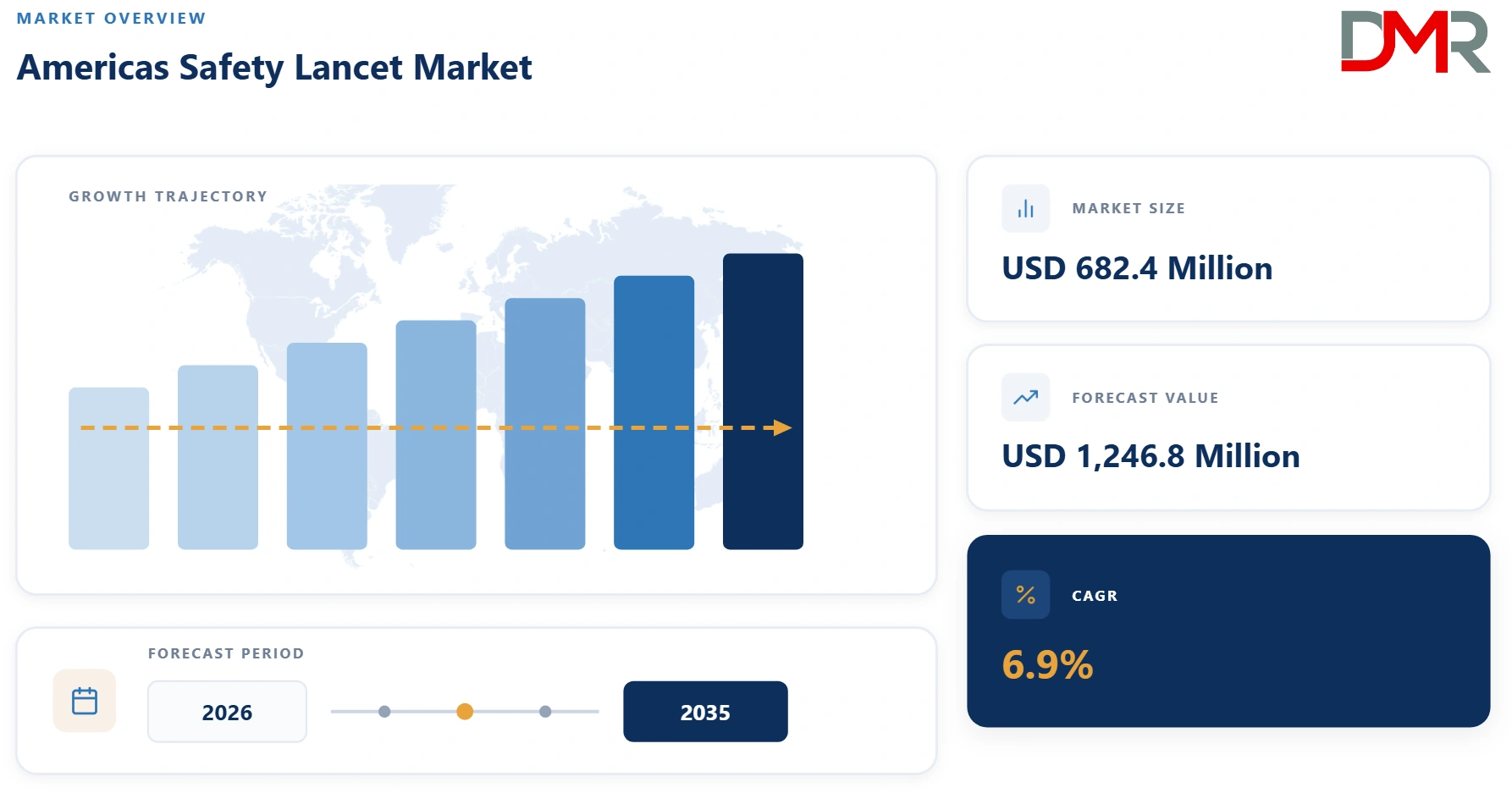
- Americas Safety Lancet Market Size in 2026: USD 682.4 Million
- Americas Safety Lancet Market Size in 2035: USD 1,246.8 Million
- Americas CAGR from 2026 to 2035: 6.9%
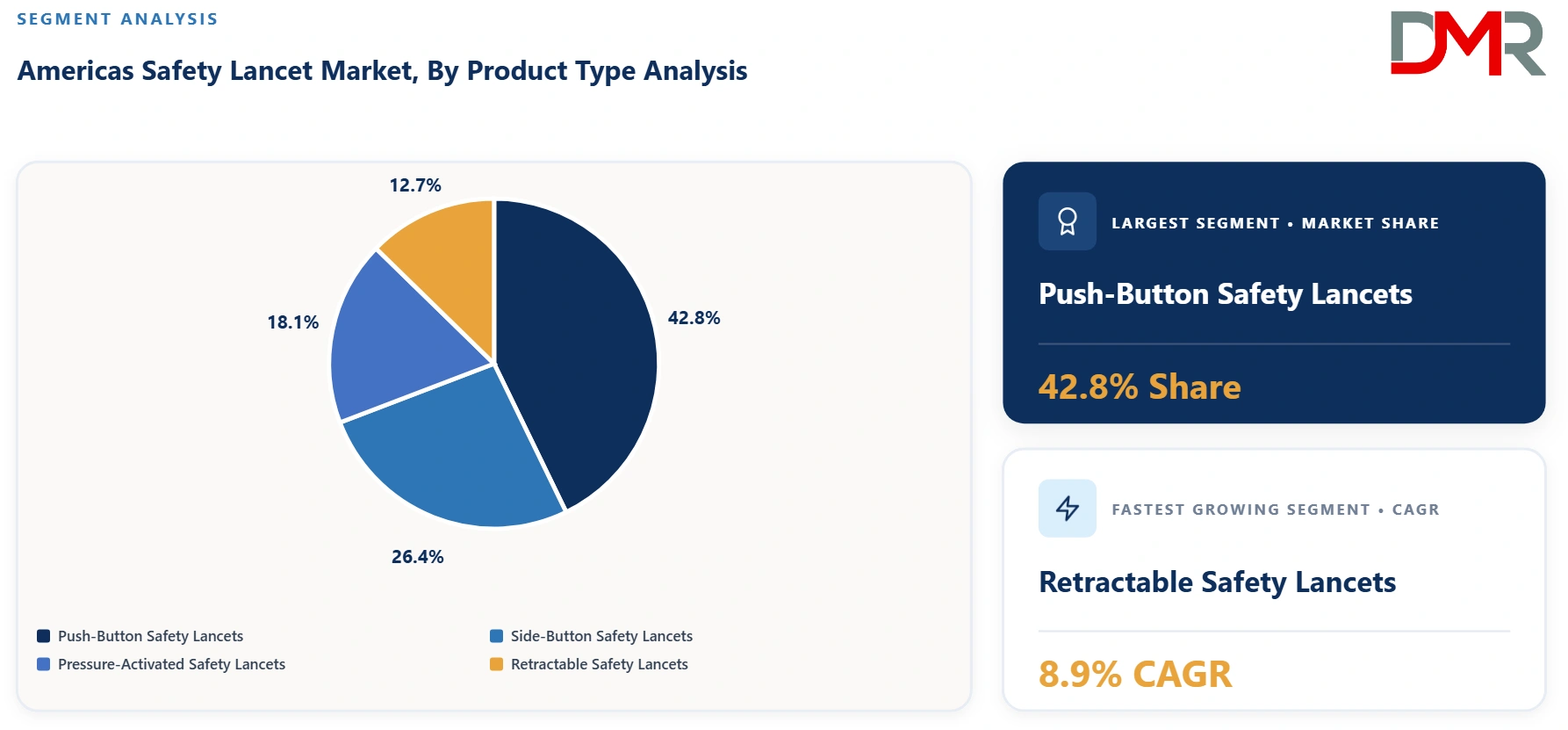
- Push-Button Safety Lancets is the leading product type segment in 2026: 42.8%
- Standard-Flow Lancets is the leading blood volume segment in 2026: 54.6%
- Blood Glucose Monitoring is the leading application segment in 2026: 61.3%
- Home Healthcare/Self-Monitoring is the leading end user segment in 2026: 48.7%
What is the Americas Safety Lancet Market and its Market Size?
The Americas Safety Lancet Market is projected to be valued at USD 682.4 Million in 2026 and is projected to reach USD 1,246.8 Million by 2035, expanding at a CAGR of 6.9% during the forecast period.
ℹ
To learn more about this report –
Download Your Free Sample Report Here
Growth is being propelled by the region's substantial and growing diabetes prevalence driving sustained blood glucose self-monitoring demand across both the United States and rapidly growing Latin American markets, continued regulatory and hospital occupational safety emphasis on needlestick injury prevention favoring safety-engineered lancet devices over conventional lancets, and expanding home healthcare and self-monitoring trends supporting sustained retail and direct-to-consumer safety lancet demand. The maturing of low-pain, pressure-activated and retractable safety lancet technology improving patient comfort and compliance with regular self-monitoring routines, growing newborn and neonatal screening program expansion across Latin American healthcare systems, and continued hospital and clinical laboratory adoption of safety-engineered lancet devices in compliance with occupational safety regulations are reshaping the market from a largely conventional lancet product base into an increasingly safety-engineered, patient comfort-oriented product category. Investment is accelerating as manufacturers expand safety lancet product lines while healthcare systems and self-monitoring consumers across the Americas increasingly favor safety-engineered devices over conventional lancet alternatives.
Use Cases
- Diabetes Self-Monitoring Blood Glucose Testing: Individuals with diabetes across the United States, Canada, and growing Latin American diabetic populations use safety lancets for regular self-administered blood glucose testing, representing the largest single application driving safety lancet demand across the region.
- Hospital and Clinical Laboratory Point-of-Care Testing: Hospitals and clinical laboratories use safety lancets for point-of-care blood glucose, coagulation, and hemoglobin testing, adopting safety-engineered devices to comply with occupational safety regulations protecting healthcare workers from needlestick injury risk.
- Newborn and Neonatal Screening Programs: Hospitals and public health screening programs across the Americas use specialized low-volume safety lancets for newborn heel-stick blood collection supporting mandatory neonatal screening for metabolic and genetic conditions.
- Home Healthcare Coagulation Monitoring for Anticoagulant Therapy Patients: Patients on long-term anticoagulant therapy use safety lancets for home-based coagulation monitoring, supporting more convenient and frequent monitoring compared to traditional clinic-based blood draw requirements.
Key Takeaways
- Market Size: The Americas Safety Lancet Market is anticipated to be valued at USD 682.4 Million in 2026 and is forecast to reach USD 1,246.8 Million by 2035, expanding at a CAGR of 6.9%.
- Growth Outlook: Market expansion is sustained by substantial and growing regional diabetes prevalence driving self-monitoring demand, continued occupational safety regulatory emphasis favoring safety-engineered lancets, and expanding home healthcare and self-monitoring adoption across the Americas.
- Primary Growth Drivers: Rising diabetes prevalence across North America and Latin America driving blood glucose self-monitoring demand, continued occupational safety regulation favoring safety-engineered lancet adoption, growing home healthcare and self-monitoring trends, and expanding newborn screening program coverage across Latin America are accelerating market growth.
- By Product Type Analysis: Push-Button Safety Lancets is projected to lead the product type segment with a 42.8% share in 2026, reflecting their widespread use and cost-effectiveness for routine blood glucose self-monitoring. Retractable Safety Lancets is the fastest-growing product type segment at 8.9% CAGR, driven by growing hospital preference for enhanced needlestick injury prevention features.
- By Blood Volume Analysis: Standard-Flow Lancets is expected to dominate with a 54.6% share in 2026, supported by their broad suitability across routine glucose monitoring and general diagnostic testing applications. Low-Flow Lancets is the fastest-growing blood volume segment at 8.2% CAGR, driven by growing pediatric and neonatal screening application demand.
- By Application Analysis: Blood Glucose Monitoring is poised to lead with a 61.3% share in 2026, reflecting the scale of diabetic self-monitoring demand across the region. Newborn/Neonatal Screening is the fastest-growing application segment at 8.6% CAGR, driven by expanding mandatory neonatal screening program coverage across Latin American healthcare systems.
- By End User Analysis: Home Healthcare/Self-Monitoring is projected to dominate with a 48.7% share in 2026, reflecting the substantial scale of diabetic patient self-monitoring conducted outside clinical settings. Diagnostic Laboratories is the fastest-growing end user segment at 8.4% CAGR, driven by continued point-of-care testing expansion.
- By Region Analysis: North America is expected to command a 74.6% share in 2026, reflecting the scale of its diabetic population and established safety lancet adoption relative to Latin America. Latin America is the fastest-growing region segment at 9.3% CAGR, driven by rapidly growing diabetes prevalence and expanding healthcare access across Brazil, Mexico, and other leading Latin American markets.
Key Drivers in the Americas Safety Lancet Market
Rising Diabetes Prevalence Across North America and Latin America Driving Self-Monitoring Demand
The Americas region continues to experience substantial growth in diabetes prevalence, with the United States maintaining a large and growing diabetic population while Latin American markets including Brazil and Mexico experience rapidly rising diabetes rates associated with demographic and lifestyle changes. This sustained growth in the region's diabetic population directly drives blood glucose self-monitoring device and consumable demand, including safety lancets, as regular blood glucose testing represents a foundational component of diabetes self-management across nearly all patient populations regardless of treatment approach.
Continued Occupational Safety Regulation Favoring Safety-Engineered Lancet Adoption
Sustained regulatory emphasis on healthcare worker needlestick injury prevention, reflected in occupational safety requirements across both U.S. and Canadian healthcare systems and increasingly adopted across leading Latin American healthcare markets, continues to drive hospital and clinical laboratory adoption of safety-engineered lancet devices over conventional, non-safety lancet alternatives. This regulatory-driven adoption pattern provides a durable, compliance-oriented demand foundation for safety lancet products within institutional healthcare settings across the region.
Restraints in the Americas Safety Lancet Market
Price Competition and Commoditization Pressure Within the Safety Lancet Category
The safety lancet product category faces substantial price competition and commoditization pressure, particularly within the high-volume blood glucose self-monitoring segment, as safety lancets have become a relatively mature, widely available product category with numerous competing manufacturers offering functionally similar products. This price competition dynamic represents a meaningful restraint on the Americas Safety Lancet Market, constraining manufacturer margins and limiting the pricing premium available even for products offering incremental safety or comfort feature improvements relative to established competing products.
Growth Opportunities in the Americas Safety Lancet Market
Low-Pain and Enhanced Comfort Lancet Technology for Improved Patient Compliance
Growing recognition that patient discomfort associated with frequent blood glucose self-monitoring can undermine diabetes management compliance presents a substantial opportunity for manufacturers developing low-pain, enhanced comfort safety lancet technology. Companies capable of demonstrating meaningfully improved patient comfort and willingness to maintain recommended testing frequency can differentiate from commoditized competing products and capture premium positioning within the self-monitoring consumer market.
Latin American Healthcare Access Expansion Supporting Growing Diabetic Population Needs
Continued healthcare access expansion and diabetes screening and management program development across Brazil, Mexico, Colombia, and Argentina presents a substantial opportunity for safety lancet manufacturers to expand regional distribution and market development presence serving the region's rapidly growing diabetic patient population. Companies establishing strong distribution relationships and affordable product positioning suited to Latin American healthcare system economics can capture significant growth as regional diabetes screening and management program coverage continues expanding.
Trends in the Americas Safety Lancet Market
Growing Integration of Safety Lancets with Broader Connected Diabetes Management Devices
Safety lancet manufacturers are increasingly developing products designed for integration with broader connected diabetes management device ecosystems, including compatibility with digital blood glucose monitoring platforms and diabetes management mobile applications. This integration trend reflects the broader digitization of diabetes self-management technology and growing consumer expectation for connected, data-tracking capability across all components of their diabetes monitoring routine.
Continued Expansion of Newborn Screening Program Coverage Across Latin America
Latin American healthcare systems continue to expand mandatory newborn screening program coverage, requiring safety lancet devices specifically designed for neonatal heel-stick blood collection procedures. This expanding screening program coverage across the region reflects growing public health investment in early disease detection infrastructure, creating sustained specialized safety lancet demand growth within this application category.
Research Scope and Analysis
The Americas Safety Lancet Market is segmented by product type, blood volume, application, end user, and region, covering push-button, side-button, pressure-activated, and retractable safety lancets, blood glucose monitoring, coagulation testing, and newborn screening applications, and North American and Latin American country markets.
ℹ
To learn more about this report –
Download Your Free Sample Report Here
By Product Type Analysis
Push-Button Safety Lancets is projected to dominate the Americas Safety Lancet Market with 42.8% share in 2026, reflecting their widespread adoption and cost-effectiveness for routine blood glucose self-monitoring across the region's substantial diabetic patient population. Retractable Safety Lancets is expected to register the highest CAGR of 8.9% during 2026-2035, driven by growing hospital and clinical laboratory preference for the enhanced needlestick injury prevention features these devices offer relative to alternative safety lancet designs.
By Blood Volume Analysis
Standard-Flow Lancets are anticipated to dominate the Americas Safety Lancet Market by blood volume, accounting for 54.6% share in 2026, supported by their broad suitability across routine glucose monitoring and general diagnostic testing applications representing the majority of safety lancet use cases. Low-Flow Lancets are projected to register the highest CAGR of 8.2% between 2026 and 2035, driven by growing pediatric and neonatal screening application demand requiring specialized low-volume blood collection devices.
By Application Analysis
Blood Glucose Monitoring is projected to lead the Americas Safety Lancet Market with an estimated 61.3% share in 2026, reflecting the substantial scale of diabetic self-monitoring demand across both established North American and rapidly growing Latin American diabetic patient populations. Newborn/Neonatal Screening is expected to register the fastest CAGR of 8.6% through 2035, driven by expanding mandatory neonatal screening program coverage across Latin American healthcare systems.
By End User Analysis
Home Healthcare/Self-Monitoring is projected to dominate the Americas Safety Lancet Market with 48.7% share in 2026, reflecting the substantial scale of diabetic patient self-monitoring conducted outside traditional clinical settings across the region. Diagnostic Laboratories is expected to register the fastest CAGR of 8.4% through 2035, driven by continued point-of-care testing expansion across hospital and outpatient clinical laboratory settings.
The Americas Safety Lancet Market Report is segmented based on the following:
By Product Type
- Push-Button Safety Lancets
- Side-Button Safety Lancets
- Pressure-Activated Safety Lancets
- Retractable Safety Lancets
By Blood Volume
- Low-Flow Lancets
- Standard-Flow Lancets
- High-Flow Lancets
By Application
- Blood Glucose Monitoring
- Coagulation Testing
- Hemoglobin Testing
- Newborn/Neonatal Screening
- Others
By End User
- Hospitals and Clinics
- Home Healthcare/Self-Monitoring
- Diagnostic Laboratories
- Others
By Region Analysis
North America, comprising the United States and Canada, is projected to lead the Americas Safety Lancet Market with an estimated 74.6% share in 2026, reflecting the substantial scale of its diabetic population, established healthcare infrastructure, and mature safety lancet adoption relative to Latin America. Latin America, comprising Mexico, Brazil, Colombia, Argentina, and the Rest of LATAM, is expected to register the fastest CAGR of 9.3% through 2035, driven by rapidly growing diabetes prevalence and expanding healthcare access across the region's leading economies.
By Region
North America
Latin America
- Mexico
- Brazil
- Colombia
- Argentina
- Rest of LATAM
Technology Analysis
Technology development is increasingly shaping competitiveness in the Americas Safety Lancet Market as manufacturers invest in advanced spring-loaded and pressure-activated mechanisms reducing puncture pain and improving patient comfort, precision depth-control technology optimizing blood volume yield while minimizing tissue trauma, and connected device compatibility supporting integration with digital diabetes management platforms. Growing use of ergonomic design improvements is supporting easier self-administration for elderly and dexterity-limited patient populations who represent a substantial portion of the diabetic self-monitoring market. Opportunities are expanding for manufacturers developing low-pain lancet technology specifically targeted at improving self-monitoring compliance, as well as cost-effective product designs suited to Latin American healthcare system economics and affordability requirements. However, achieving meaningful product differentiation and pricing power within a mature, commoditized product category remains an ongoing challenge across the industry.
Investment and White Space Analysis
Investment opportunities in the Americas Safety Lancet Market are expanding alongside substantial and growing regional diabetes prevalence, continued occupational safety regulatory emphasis, and expanding healthcare access across Latin America. Significant white space exists in low-pain and enhanced comfort lancet technology improving patient self-monitoring compliance, connected device integration supporting digital diabetes management ecosystems, and Latin American market development supporting the region's rapidly growing diabetic patient population. Companies with strong product differentiation through comfort and compliance-focused innovation, established relationships with major diabetes device and pharmacy retail channels, and Latin American distribution capability are positioned to capture premium, longer-duration growth opportunities. However, price competition and commoditization pressure within the broader safety lancet category can constrain margins and differentiation opportunities for manufacturers unable to establish meaningful product or brand differentiation.
Competitive Landscape
The Americas Safety Lancet Market is moderately consolidated and competitive, comprising large diversified global diabetes care and medical device companies with substantial Americas operations, specialized lancet and blood glucose monitoring accessory manufacturers, and regional Latin American medical device distributors. Competition centers on product comfort and safety feature differentiation, established relationships with diabetes device manufacturers and pharmacy retail channels, hospital and clinical laboratory institutional purchasing relationships, and Latin American market distribution and affordability positioning. Large diversified global companies benefit from broad diabetes care product portfolios and established retail and institutional distribution relationships, while specialized manufacturers compete through focused product innovation within the lancet category specifically. Companies increasingly differentiate through comfort-focused innovation and connected device integration rather than basic safety mechanism functionality alone.
Some of the prominent players in the Americas Safety Lancet Market are:
- Becton, Dickinson and Company (BD)
- Cardinal Health, Inc.
- Medline Industries, LP
- Abbott Laboratories
- F. Hoffmann-La Roche Ltd.
- HTL-STREFA S.A.
- Owen Mumford Ltd.
- Terumo Corporation
- SARSTEDT AG & Co. KG
- B. Braun SE
- Nipro Corporation
- Greiner Bio-One International GmbH
- Ypsomed Holding AG
- ARKRAY, Inc.
- AgaMatrix, Inc.
- McKesson Corporation
- Improve Medical Technology Co., Ltd.
- HemoCue AB
- TaiDoc Technology Corporation
- MediPurpose Pte. Ltd.
- SteriLance Medical
- UltiMed, Inc.
- LifeScan, Inc.
- Ascensia Diabetes Care Holdings AG
- Dynarex Corporation
- Pharma Supply, Inc.
- Simple Diagnostics, Inc.
- Carelife USA Inc.
- Omron Healthcare, Inc.
- Smiths Medical
- SafePoint Technologies, LLC
- MHC Medical Products
- Unisto AG
- Gerresheimer AG
- Merit Medical Systems, Inc.
- Shandong Lianfa Medical Plastic Products Co., Ltd.
- Guangzhou iCare Medical Technology Co., Ltd.
- Tianjin Huahong Technology Co., Ltd.
- Sterimed Group
- Biosense Technologies Pvt. Ltd.
- Other Key Players
Recent Developments
- May 2026: The U.S. FDA granted 510(k) clearance to Verifine Safety Lancets, classified as single-use blood lancets incorporating an integral sharps-injury prevention feature, supporting commercialization within the U.S. capillary blood-sampling market.
- March 2026: The U.S. FDA cleared the company’s Safety Lancet XXXVII, featuring automatic needle retraction and an internal dual-spring mechanism designed to support capillary blood sampling and reduce sharps injuries.
- March 2026: HTL-STREFA updated instructional resources for multiple safety lancet products, including Acti-Lance, ergoLance, Haemolance Plus, MediSafe Solo, and Medlance Plus, reinforcing professional education and safe capillary blood collection practices.
- February 2025: The U.S. FDA granted 510(k) clearance for SteriLance’s Disposable Blood Lancet portfolio, including Soft Pro, Softsure, Softsure Pro, and Softsense, strengthening its blood-sampling device offering in America.
Report Details
| Report Characteristics |
| Market Size (2026) |
USD 682.4 Mn |
| Forecast Value (2035) |
USD 1,246.8 Mn |
| CAGR (2026–2035) |
6.9% |
| Historical Data |
2021 – 2025 |
| Forecast Data |
2026 – 2035 |
| Base Year |
2025 |
| Segments Covered |
By Product Type, By Blood Volume, By Application, and By End User |
| Country Coverage |
North America (United States, Canada), Latin America (Mexico, Brazil, Colombia, Argentina, Rest of LATAM) |
Frequently Asked Questions
How big is the Americas Safety Lancet Market?
▾ The Americas Safety Lancet Market is poised to be valued at USD 682.4 Million in 2026 and is projected to reach USD 1,246.8 Million by 2035, reflecting substantial regional diabetes prevalence and continued occupational safety regulatory emphasis on needlestick injury prevention.
What is the CAGR of the Americas Safety Lancet Market from 2026 to 2035?
▾ The market is projected to expand at a compound annual growth rate (CAGR) of 6.9% between 2026 and 2035, supported by rising diabetes prevalence, continued safety-engineered device adoption, and expanding Latin American healthcare access.
What factors are driving the growth of the Americas Safety Lancet Market?
▾ Growth is driven by rising diabetes prevalence across North America and Latin America driving blood glucose self-monitoring demand, continued occupational safety regulation favoring safety-engineered lancet adoption, growing home healthcare and self-monitoring trends, and expanding newborn screening program coverage across Latin America.
What are the major trends in the Americas Safety Lancet Market?
▾ Major trends include growing integration of safety lancets with broader connected diabetes management devices, continued expansion of newborn screening program coverage across Latin America, and rising investment in low-pain, enhanced comfort lancet technology.
Who are the key players in the Americas Safety Lancet Market?
▾ Key market participants include Becton, Dickinson and Company (BD), Roche Diagnostics, Abbott Laboratories, Owen Mumford, and Terumo Corporation, among other global and regional safety lancet manufacturers.
How is the Americas Safety Lancet Market segmented?
▾ The market is segmented by product type, blood volume, application, end user, and region, with North America comprising the United States and Canada, and Latin America comprising Mexico, Brazil, Colombia, Argentina, and the Rest of LATAM.