Indication Covered
The report covers amyotrophic lateral sclerosis (ALS), also known as Lou Gehrig's disease or motor neuron disease, as a progressive and fatal neurodegenerative disorder, with emphasis on its clinical burden, treatment patterns, therapeutic innovation, and commercial market development across the seven markets covered. ALS is characterized by the progressive degeneration of upper and lower motor neurons in the brain, brainstem, and spinal cord, leading to muscle weakness, muscle wasting, loss of voluntary movement, and eventual respiratory failure. The disease is classified into sporadic ALS, which accounts for the large majority of cases, and familial ALS, which is associated with inherited genetic mutations. Although the exact cause remains unclear, genetic mutations, oxidative stress, mitochondrial dysfunction, protein aggregation, and environmental factors are associated with disease development.
The indication scope includes major clinical manifestations and associated disease conditions relevant to treatment demand, including:
- Sporadic ALS
- Familial ALS
- ALS with SOD1 Mutations
- ALS with C9orf72 Repeat Expansions
- ALS with FUS and TARDBP Mutations
- ALS with Bulbar Involvement (Speech and Swallowing Impairment)
- ALS with Respiratory Insufficiency
- ALS with Frontotemporal Cognitive and Behavioral Changes
Sporadic ALS remains the largest focus because it represents the majority of diagnosed patients and creates sustained demand for disease-modifying medication, multidisciplinary supportive care, and long-term disease management. The report also considers familial ALS because identification of causative genes has enabled genetically targeted therapies, such as antisense oligonucleotides directed at SOD1-associated disease, and is shaping precision-medicine development.
Other difficult-to-treat manifestations, including progressive limb weakness, dysarthria, dysphagia, sialorrhea, spasticity, pain, pseudobulbar affect, malnutrition, and respiratory failure, are evaluated as areas of continuing clinical need.
The treatment landscape covers pharmacological treatment, multidisciplinary supportive care, and advanced and emerging therapies. Particular attention is given to disease-modifying medications, genetically targeted antisense therapies, cell-based interventions, and emerging therapeutic platforms designed to protect motor neurons, address underlying genetic mechanisms, and slow functional decline, which remains inadequately controlled by currently available treatment.
Epidemiology Parameters
ALS is a rare but serious neurodegenerative disorder that primarily affects middle-aged and older adults. Epidemiological studies report differences in incidence, prevalence, age at onset, and phenotype distribution across populations. These differences are influenced by genetic background, age structure, diagnostic practices, access to specialist neurological care, registry coverage, and disease awareness. The epidemiological assessment considers both sporadic and familial ALS, recognizing that disease onset site, rate of progression, survival, and treatment requirements can vary considerably between patients.
ℹ
To learn more about this report –
Download Your Free Sample Report Here
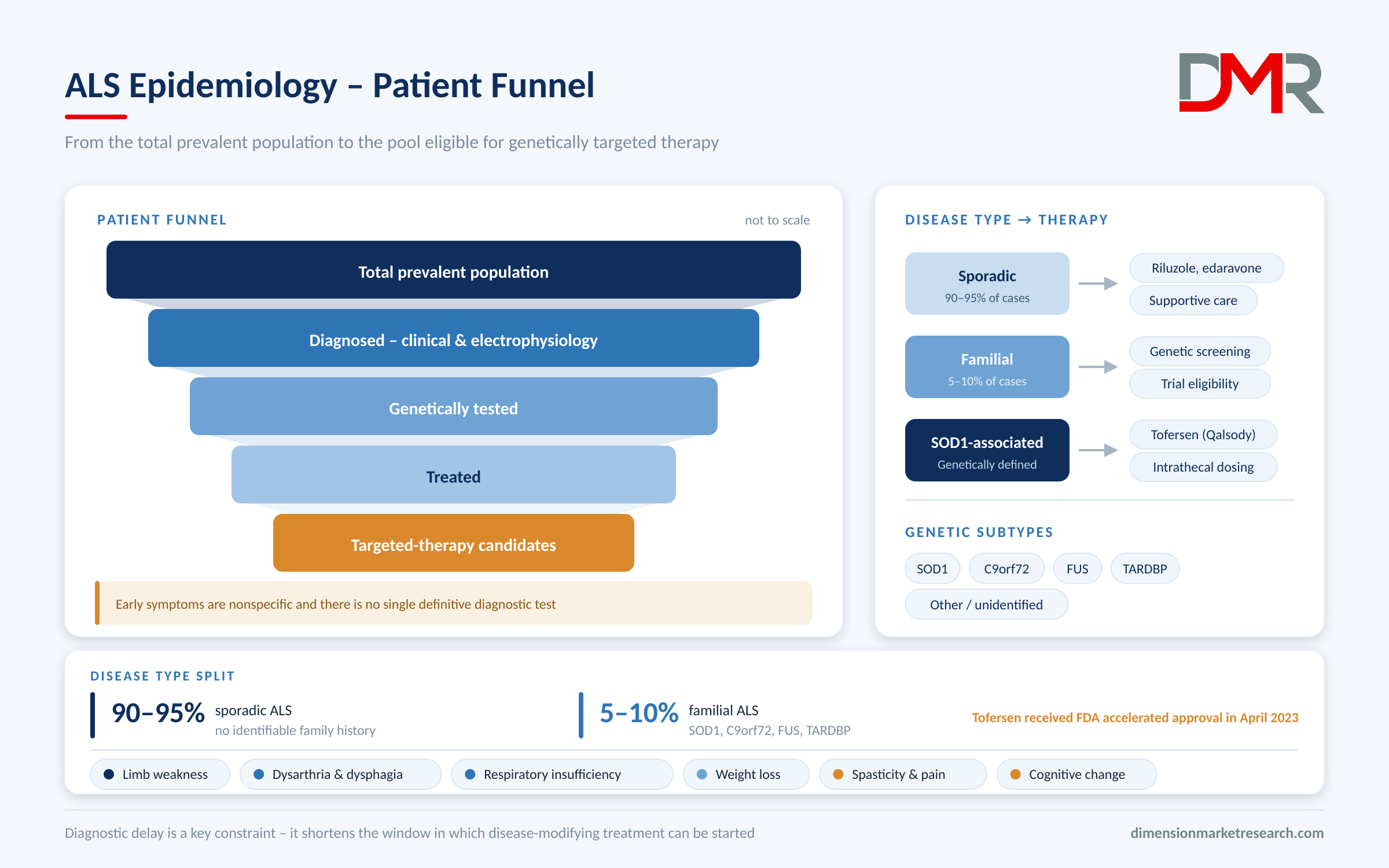
The epidemiology assessment provides a structured evaluation of the ALS population from overall prevalence through diagnosis and treatment. Key parameters include:
- Total ALS Patient Population
- Prevalent Population
- Incidence Population
- Diagnosed Patient Population
- Treated Patient Population
- Untreated Patient Population
- Treatment-Eligible Population
- Disease Type Distribution
- Genetic Subtype Distribution
- SOD1-Associated ALS Population
- Patients Receiving Disease-Modifying Pharmacological Treatment
- Patients Receiving Multidisciplinary Supportive Care
- Age and Gender Distribution
- Age at Onset
- Diagnosis Rate and Diagnostic Delay
- Treatment Rate
- Treatment Penetration
- Survival and Disease Progression
- Regional Disease Burden
- Epidemiological Trends
The analysis distinguishes between the overall prevalent population, diagnosed patients, and individuals actively receiving disease-specific treatment. This distinction is important because ALS is frequently diagnosed after a considerable delay, as early symptoms such as muscle weakness, cramps, or slurred speech can be nonspecific and may initially be attributed to other conditions. Diagnosis is primarily clinical and is supported by electrophysiological testing, neuroimaging to exclude other causes, and genetic testing where indicated.
The report also evaluates the influence of genetic testing, improved diagnostic pathways, specialist ALS clinics, patient registries, and increasing disease awareness on the identification and management of ALS. Earlier diagnosis can improve access to approved treatment, supportive care, and clinical trials. Advances in respiratory support, nutritional management, and multidisciplinary care have contributed to improved quality of life, increasing the need for coordinated long-term management of mobility, communication, swallowing, and breathing impairments.
Patient Segmentation
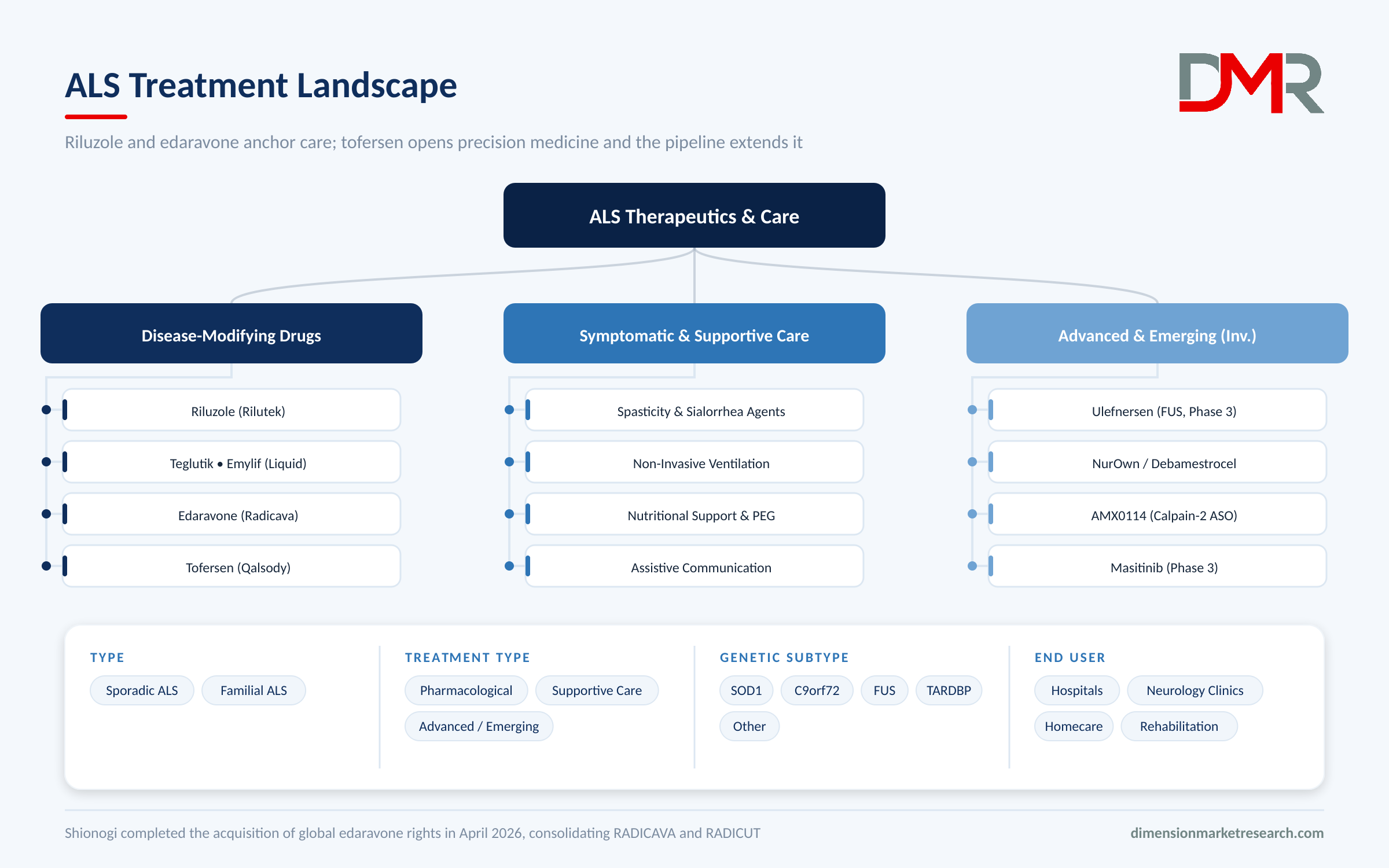
The ALS patient population is segmented according to disease type, genetic subtype, disease manifestation, treatment status, and therapeutic requirements. This approach provides a clearer understanding of patients eligible for different treatment categories and helps assess the potential addressable population for emerging therapies.
ℹ
To learn more about this report –
Download Your Free Sample Report Here
By Disease Type
Sporadic ALS: Patients develop the disease without an identifiable family history or clear inherited pattern. Sporadic ALS accounts for approximately 90–95% of diagnosed cases, and its development may be influenced by genetic susceptibility, environmental exposures, aging, and other biological mechanisms. Management centers on disease-modifying medication, symptomatic treatment, respiratory and nutritional support, and multidisciplinary care.
Familial ALS: Patients have an inherited form of the disease associated with genetic mutations passed through families, accounting for approximately 5–10% of cases. It is commonly associated with mutations in genes such as SOD1, C9orf72, FUS, and TARDBP. Genetic screening and molecular diagnostics play an important role in identifying patients eligible for genetically targeted therapies and clinical trials.
By Genetic Subtype
- SOD1-Associated ALS
- C9orf72-Associated ALS
- FUS-Associated ALS
- TARDBP-Associated ALS
- Other and Unidentified Genetic Causes
Genetic subtyping is used to assess the population eligible for precision therapies. Genetic subtypes are not applicable to all patients, and a proportion of sporadic patients may also carry causative variants. These categories therefore support assessment of therapeutic eligibility rather than representing a separate market segmentation.
By Disease Manifestation
- Limb Motor Function Decline
- Bulbar Involvement (Speech and Swallowing)
- Respiratory Insufficiency
- Nutritional Impairment and Weight Loss
- Cognitive and Behavioral Changes
Disease manifestations may occur simultaneously in individual patients. These categories are therefore used to assess clinical burden and therapeutic requirements rather than representing mutually exclusive patient populations.
By Treatment Status
- Diagnosed and Treated
- Diagnosed and Untreated
- Undiagnosed
The treatment-status segmentation helps identify differences between the total disease population and patients actively receiving medical intervention. Improvements in diagnostic pathways, genetic testing, physician awareness, specialist clinic availability, and healthcare accessibility can gradually increase the diagnosed and treated population.
By Treatment Requirement
- Disease-Modifying Pharmacological Treatment Candidates
- Symptomatic Pharmacological Treatment Candidates
- Genetically Targeted Therapy Candidates (SOD1-Associated ALS)
- Respiratory Support Candidates
- Nutritional Support Candidates
- Assistive Communication and Rehabilitation Candidates
- Palliative Care Candidates
- Advanced and Emerging Therapy Candidates (Investigational)
This segmentation helps evaluate how changes in clinical guidelines, diagnostic practices, treatment eligibility, reimbursement, and emerging therapeutic technologies can influence treatment selection. Patients may qualify for multiple interventions at different stages, and these categories should not be interpreted as mutually exclusive populations.
Geographic Coverage
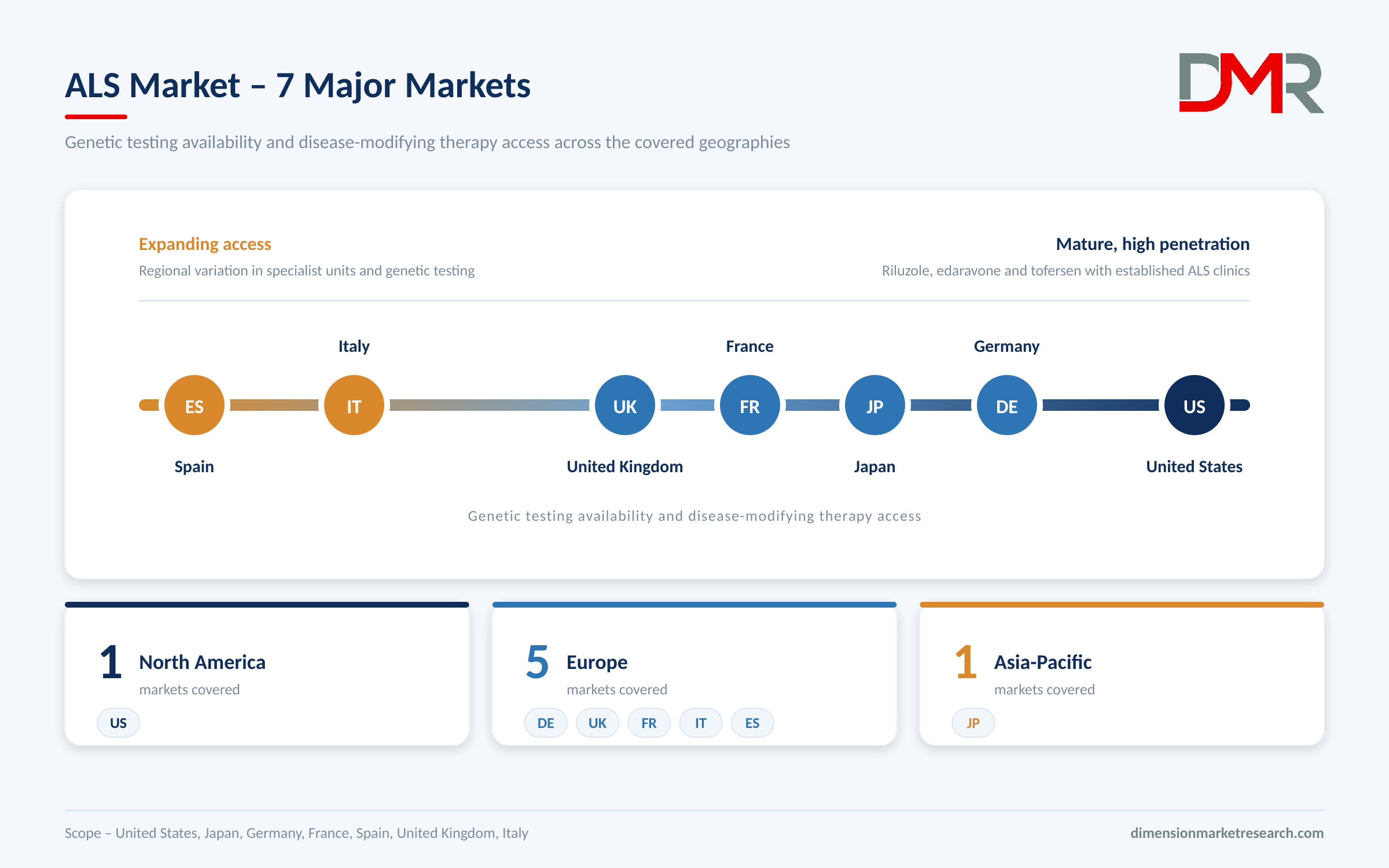
The report provides detailed market, treatment, epidemiological framework, and competitive analysis across seven major markets:
- United States
- Japan
- Germany
- France
- Spain
- United Kingdom
- Italy
The geographic analysis considers differences in disease recognition, diagnostic infrastructure, genetic testing availability, specialist ALS care accessibility, orphan-drug reimbursement, regulatory environment, physician adoption, and competitive activity. These factors are important because the commercial opportunity for ALS therapies differs between markets according to regulatory approvals, health technology assessment outcomes, and the organization of multidisciplinary care.
ℹ
To learn more about this report –
Download Your Free Sample Report Here
United States
The United States represents the largest ALS market, supported by established neurology networks, multidisciplinary ALS clinics, patient advocacy organizations, a strong clinical research ecosystem, and pharmaceutical innovation. Approved treatments include riluzole, edaravone, and tofersen (QALSODY), which received accelerated approval from the U.S. FDA in April 2023 for adults with SOD1-associated ALS.
The market is characterized by demand for approved disease-modifying medication, comprehensive supportive care, and the development of investigational therapies targeting genetic and cellular mechanisms. Treatment decisions are influenced by disease progression, genetic status, insurance coverage, and specialist recommendations. Continued investment in precision medicine and expanded genetic testing may create opportunities for improving long-term disease management, subject to clinical and regulatory outcomes.
Japan
Japan represents an established market with developed healthcare infrastructure, specialist neurological services, and strong clinical research activity in motor neuron disease. Riluzole and edaravone are important components of disease-modifying treatment, supported by national insurance coverage and a rapidly aging population.
Japan is also an important center of therapeutic innovation and clinical development for ALS. Treatment selection is influenced by disease stage, specialist recommendations, reimbursement conditions, and clinical outcomes. Increasing awareness of genetic testing and the continued development of advanced therapies may support future treatment opportunities.
Germany
Germany represents the largest European ALS market, supported by developed healthcare infrastructure, specialized neuromuscular and ALS outpatient centers, and strong participation in clinical research. Riluzole is established as a standard disease-modifying treatment, and tofersen has been authorized in the European Union for eligible patients with SOD1-associated ALS.
The market is influenced by benefit assessment and reimbursement processes for innovative medicines, specialist access, clinical treatment guidelines, and the adoption of genetic testing. Participation in international clinical development may support the future introduction of advanced therapies, depending on regulatory approval and demonstrated therapeutic benefit.
France
France represents an important European market supported by a network of specialized ALS reference centers, developed healthcare infrastructure, and established multidisciplinary care pathways. Riluzole, supportive care, respiratory and nutritional management, and palliative care are important components of ALS management, with tofersen available to eligible SOD1-associated ALS patients following European authorization.
The market is influenced by health technology assessment, reimbursement conditions, early access mechanisms, specialist availability, and rare-disease policy. Continued clinical research into genetically targeted and cell-based therapies may create opportunities for addressing the limitations of existing treatment options.
Spain
Spain represents a growing European ALS market with a large aging population, public healthcare coverage, and increasing attention to long-term care needs for patients with severe and progressive disability. Riluzole is established as a disease-modifying treatment, and tofersen is authorized in the European Union for eligible patients with SOD1-associated ALS.
The market is influenced by national and regional reimbursement decisions, availability of specialist neuromuscular units, the funding of home care and assistive technologies, and advocacy for patients with ALS. Recent national initiatives supporting dependency care and expanding access to multidisciplinary services may influence demand for supportive care, although access can vary between regions.
United Kingdom
The United Kingdom benefits from established motor neuron disease care centers, specialist neurology services, patient organizations, and experience in coordinated multidisciplinary care. Diagnosis and treatment involve specialist neurological assessment, with riluzole, symptomatic management, respiratory support, nutritional management, and palliative care used according to patient needs.
Market development is influenced by regulatory decisions, health technology assessment, clinical treatment recommendations, and access to expert care centers. Continued improvements in diagnostic recognition, genetic testing, long-term follow-up, and research into advanced therapies may support the management of patients with ALS.
Italy
Italy represents an important European ALS market, supported by established public healthcare infrastructure, specialized neurological centers, patient registries, and active clinical research. Riluzole remains an established disease-modifying treatment, while the Italian Medicines Agency (AIFA) introduced reimbursement access for QALSODY (tofersen) for eligible patients with SOD1-associated ALS, effective September 22, 2026.
The market is influenced by national reimbursement policies, regional healthcare accessibility, genetic testing availability, and multidisciplinary disease management. Continued investment in neurological research, home-based care, respiratory assistance, and advanced therapeutic development is expected to support future market growth.
Market Segmentation
The global ALS market is segmented by type, treatment type, and end user, with detailed analysis across seven major countries. The segmentation encompasses established pharmaceutical treatments, multidisciplinary supportive care, and emerging therapeutic approaches, including gene-targeted therapies, antisense oligonucleotides, and cell-based interventions.
By Type
Sporadic ALS
Sporadic ALS represents the most common form of the disease, occurring without an identifiable family history or clear inherited pattern, and accounts for approximately 90–95% of diagnosed cases. The segment benefits from a large patient base and sustained demand for disease-modifying medication, symptomatic treatment, and supportive care throughout the disease course.
Familial ALS
Familial ALS is an inherited form of the disease associated with genetic mutations, accounting for approximately 5–10% of cases. Although the patient population is smaller, the segment is a focus of precision-medicine development because identification of causative genes such as SOD1, C9orf72, FUS, and TARDBP supports genetically targeted therapeutic approaches.
By Treatment Type
- Pharmacological Treatment
- Supportive Care
- Advanced / Emerging Therapies
Pharmacological Treatment encompasses pharmaceutical drugs administered to slow disease progression, manage symptoms, and improve survival or quality of life. It includes disease-modifying medications such as riluzole and edaravone, alongside symptomatic medications addressing muscle spasticity, excessive salivation, pain, and emotional disturbances. Continuous treatment requirements generate recurring pharmaceutical demand.
Supportive Care encompasses multidisciplinary interventions designed to maintain physical functioning, manage complications, and improve quality of life, including respiratory support, nutritional management, physical, occupational, and speech therapy, assistive communication devices, and palliative care. These interventions address progressive muscle weakness, swallowing difficulties, mobility limitations, and breathing impairments.
Advanced / Emerging Therapies encompass innovative approaches targeting the genetic, molecular, and cellular mechanisms associated with ALS progression, including gene-targeted therapies, antisense oligonucleotides, stem cell-based interventions, RNA-targeted treatments, and experimental neuroprotective therapies. Commercial adoption of investigational therapies depends on clinical evidence, long-term safety, regulatory approval, and reimbursement.
By End User
- Hospitals
- Neurology Clinics
- Homecare
- Rehabilitation Centers
Hospitals are important for diagnosis, infusion or intrathecal administration of specialized therapies, respiratory and nutritional interventions, and management of advanced disease complications. Neurology clinics, including dedicated multidisciplinary ALS clinics, support specialist diagnosis, prescription of disease-modifying treatment, and regular monitoring of functional decline.
Homecare is an increasingly important setting because patients experience progressive loss of mobility and often require long-term non-invasive ventilation, feeding support, and caregiver assistance outside the hospital. Rehabilitation centers support physical, occupational, and speech therapy aimed at preserving independence and communication. Investigational gene and cell therapies are administered through specialized treatment centers.
Market Dynamics
Growth Drivers
Increasing Prevalence of ALS and Growing Aging Population
ALS primarily affects middle-aged and older adults, making demographic aging an important contributor to the number of individuals requiring neurological care. Progressive motor neuron degeneration creates sustained demand for disease-modifying medication, respiratory assistance, nutritional support, and multidisciplinary healthcare services. Improvements in disease awareness and neurological assessment also facilitate earlier identification, expanding the diagnosed patient population.
Advancements in Disease-Modifying Drugs and Targeted Therapeutics
The availability of approved disease-modifying medication and the introduction of genetically targeted therapy for SOD1-associated ALS represent important advances in treatment. Continued progress in antisense oligonucleotide technology, biomarker development, and clinical research may support additional therapeutic options and encourage further investment, although approval and commercial availability of investigational therapies remain uncertain.
Growing Healthcare Investments and Expansion of Specialized Neurological Services
Healthcare institutions are increasingly focusing on comprehensive disease management through coordinated treatment programs, specialist ALS clinics, and registry-based research. Growing investment in neurological services, genetic diagnostics, and rare-disease policy supports patient identification, specialist referral, and sustained utilization of both pharmaceutical products and supportive care solutions.
Market Restraints
High Treatment Costs and Limited Financial Accessibility
Managing ALS requires continuous medical supervision, pharmaceutical interventions, respiratory assistance, nutritional support, and specialized rehabilitation, creating substantial financial burdens for patients and healthcare systems. Advanced disease-modifying and genetically targeted therapies involve considerable development, manufacturing, and commercialization expenses, contributing to elevated treatment prices. Progressive disability also increases dependence on assistive equipment, professional caregivers, and home healthcare services.
Limited Diagnostic Accuracy and Delayed Disease Identification
Early symptoms of ALS are often nonspecific and may resemble other neurological or musculoskeletal conditions, contributing to prolonged diagnostic delay. Delayed identification can limit the period during which patients benefit from disease-modifying treatment and restricts timely referral for genetic testing and clinical trials. The absence of a single definitive diagnostic test further complicates early detection.
Market Opportunities
Expanding Potential for Gene Therapy and Precision Medicine
Increasing understanding of genetic mutations associated with ALS is enabling the development of therapeutic approaches tailored to specific patient populations. Technologies such as antisense oligonucleotides, gene silencing, RNA interference, and gene editing offer potential opportunities to address underlying molecular abnormalities. Advancements in genetic sequencing and molecular diagnostics support identification of patients eligible for targeted interventions.
Expansion of ALS Treatment Access Across Emerging Economies
Improving healthcare infrastructure, growing awareness of neurodegenerative disease, and expanding reimbursement coverage may increase access to approved ALS treatment and supportive care in developing healthcare systems. Regulatory approvals and reimbursement decisions in additional countries illustrate the potential for broader international access to genetically targeted treatments.
Development of Novel Therapeutic Targets and Combination Treatments
Ongoing research into the biological mechanisms of motor neuron degeneration is identifying new therapeutic targets and supporting the evaluation of combination approaches. Collaborations between pharmaceutical companies, biotechnology developers, academic institutions, and research organizations may accelerate translational research and clinical development.
Market Trends
Increasing Integration of Digital Health and Remote Patient Monitoring
Healthcare providers are adopting telemedicine platforms, wearable devices, mobile health applications, and connected medical equipment to monitor patients outside conventional clinical settings. These technologies facilitate remote assessment of respiratory function, mobility, speech patterns, and functional changes, and reduce travel burdens for individuals with progressive mobility limitations.
Rising Adoption of Home-Based and Multidisciplinary Care Models
Coordinated multidisciplinary care involving neurologists, respiratory specialists, nutritionists, therapists, palliative care providers, and caregivers is increasingly recognized as central to ALS management. Home-based care, home ventilation, and community-based services are expanding to support patients with advanced disability while reducing hospital burden.
Competitive Landscape
The global ALS market is characterized by a limited number of established commercial products and a broad pipeline of emerging pharmaceutical and biotechnology developers focused on genetically targeted therapy, cell-based treatment, and novel neuroprotective approaches.
Leading companies covered in the competitive assessment include:
- Shionogi & Co., Ltd.
- Biogen Inc.
- Sanofi S.A.
- Italfarmaco S.p.A.
- Zambon S.p.A.
- Ionis Pharmaceuticals, Inc.
- Eisai Co., Ltd.
- Amylyx Pharmaceuticals, Inc.
- BrainStorm Cell Therapeutics Inc.
- AB Science S.A.
Competition in the global Amyotrophic Lateral Sclerosis (ALS) Market is increasingly focused on developing treatments capable of demonstrating meaningful improvements in survival, functional preservation, and quality of life, particularly through genetically targeted therapies and advanced drug delivery formulations. Established companies benefit from clinical experience, regulatory approvals, specialist relationships, and commercialization infrastructure, while emerging developers are exploring differentiated therapeutic mechanisms to address the limitations of existing treatments.
The competitive environment is shaped by the presence of Shionogi & Co., Ltd. in edaravone-based treatments (RADICAVA and RADICUT), Biogen Inc. in genetically targeted therapy through QALSODY (tofersen), and Sanofi S.A. in conventional disease-modifying treatment through RILUTEK (riluzole). Italfarmaco S.p.A. and Zambon S.p.A. contribute through alternative riluzole formulations, including TEGLUTIK and EMYLIF, respectively, designed to address drug administration challenges among patients experiencing swallowing difficulties. Ionis Pharmaceuticals, Inc. contributes through antisense oligonucleotide technology and its collaboration with Biogen in developing tofersen, while Eisai Co., Ltd. has participated in investigational ALS drug development. Amylyx Pharmaceuticals, Inc. remains relevant to the historical treatment and clinical development landscape following the withdrawal of RELYVRIO in 2024. BrainStorm Cell Therapeutics Inc. and AB Science S.A. contribute to the investigational treatment landscape through cell-based therapies and small-molecule therapeutic approaches, respectively. These companies reflect the evolving competitive environment, encompassing established commercial treatments, precision medicine, alternative drug formulations, and investigational therapeutic platforms.
The competitive assessment distinguishes between commercially available pharmaceutical treatments, clinical-stage investigational therapies, and emerging therapeutic approaches. Product differentiation, geographic expansion, regulatory approvals, reimbursement accessibility, and pipeline innovation remain important competitive factors. Companies with expertise in neuroscience, precision medicine, advanced pharmaceutical formulations, and established distribution networks are well positioned to address the evolving treatment requirements and unmet clinical needs of ALS patients.
Recent Developments
- November 2026 – BrainStorm Advances Preparations for Phase 3b ENDURANCE Study: BrainStorm Cell Therapeutics provided an update on clinical, operational, and manufacturing preparations for its Phase 3b ENDURANCE study of NurOwn (debamestrocel) in earlier-stage ALS patients. The investigational cell-based therapy remains under clinical development, with the study designed under a Special Protocol Assessment agreed with the U.S. FDA.
- September 2026 – Ionis Announces Positive Phase 3 Results for Ulefnersen: Ionis Pharmaceuticals announced positive topline results from its Phase 3 FUSION study evaluating ulefnersen in patients with FUS-associated ALS. The study achieved its primary endpoint, demonstrating statistically significant improvements in a combined assessment of functional impairment and survival compared with placebo, supporting further development of genetically targeted ALS treatment.
- September 2026 – AB Science Updates Masitinib Clinical Development Strategy: AB Science announced a revised clinical development plan following a Good Clinical Practice inspection. The company expects to resume its Phase 3 masitinib study in ALS during the fourth quarter of 2027, subject to regulatory assessment, highlighting the continuing clinical development and regulatory challenges associated with investigational ALS therapies.
- August 2026 – Amylyx Completes Third Cohort Enrollment in LUMINA Trial: Amylyx Pharmaceuticals completed enrollment of the third cohort of its Phase 1 LUMINA clinical trial evaluating AMX0114, an investigational antisense oligonucleotide targeting calpain-2. The study assesses safety, tolerability, and biological activity in ALS patients, reflecting the company's continued involvement in genetically targeted therapeutic research following the withdrawal of RELYVRIO.
- April 2026 – Shionogi Completes Acquisition of Global Edaravone Rights: Shionogi completed the acquisition of global rights to edaravone from Tanabe Pharma Corporation, including intellectual property and commercialization rights associated with RADICAVA and RADICUT. The acquisition strengthens Shionogi's rare-disease portfolio, expands its international commercial infrastructure, and establishes its position as a major commercial ALS treatment provider.
Report Coverage
The report provides a comprehensive assessment of the global ALS market across the seven specified markets. It integrates epidemiological analysis with commercial market assessment to provide a broader understanding of the current and future treatment landscape.
The study covers:
- Indication Covered
- Epidemiology Parameters
- Patient Segmentation
- Geographic Coverage
- Market Segmentation
- Units of Measurement
- Study Period
- Data Sources
- Companies Covered
- Report Deliverables
- Out of Scope
- Customization