Market Snapshot
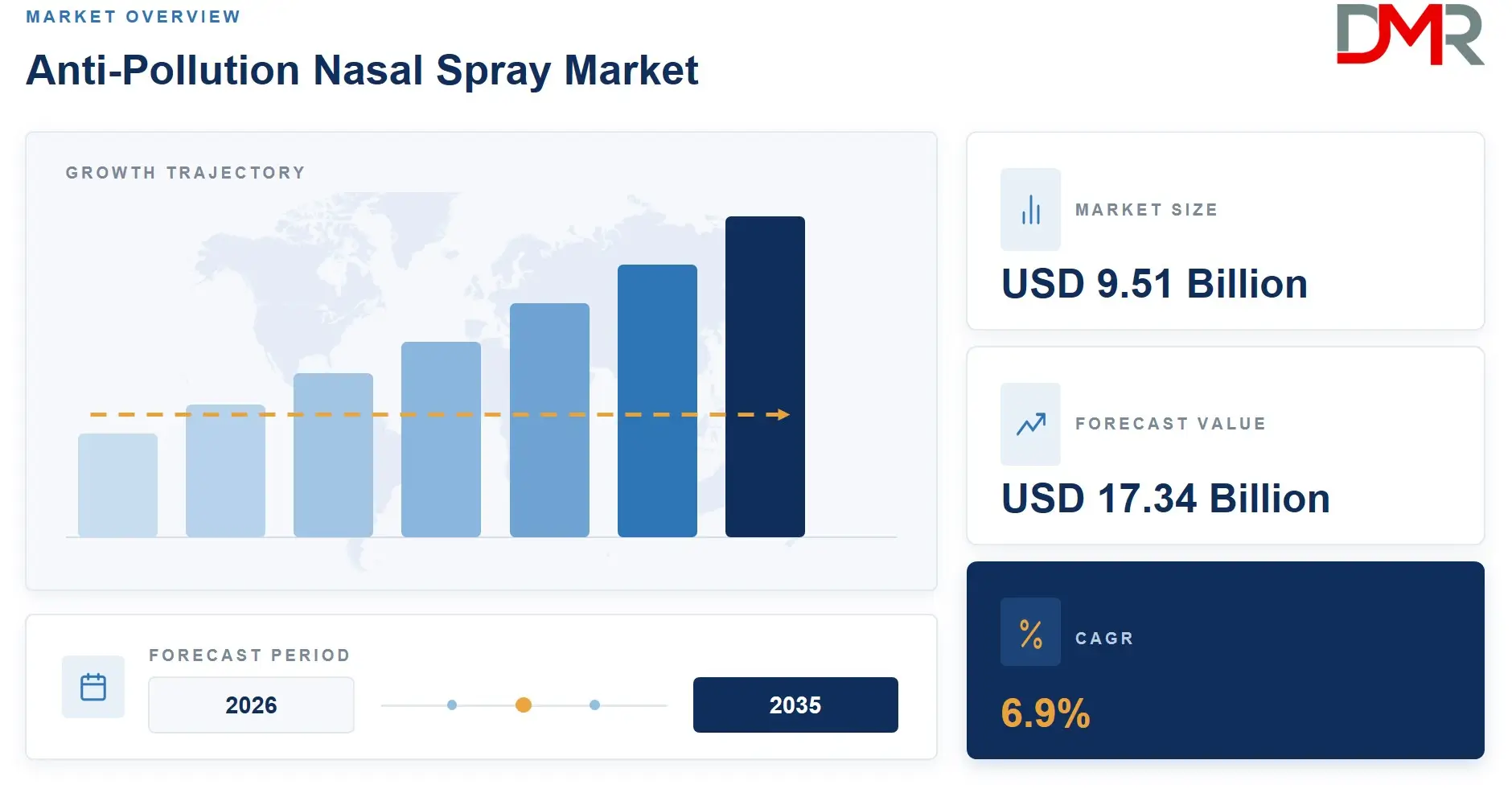
- The Global Anti-Pollution Nasal Spray Market was valued at USD 8.9 Billion in 2025 and is projected to reach USD 17.34 Billion by 2035, at a CAGR of 6.9% from 2026 to 2035.
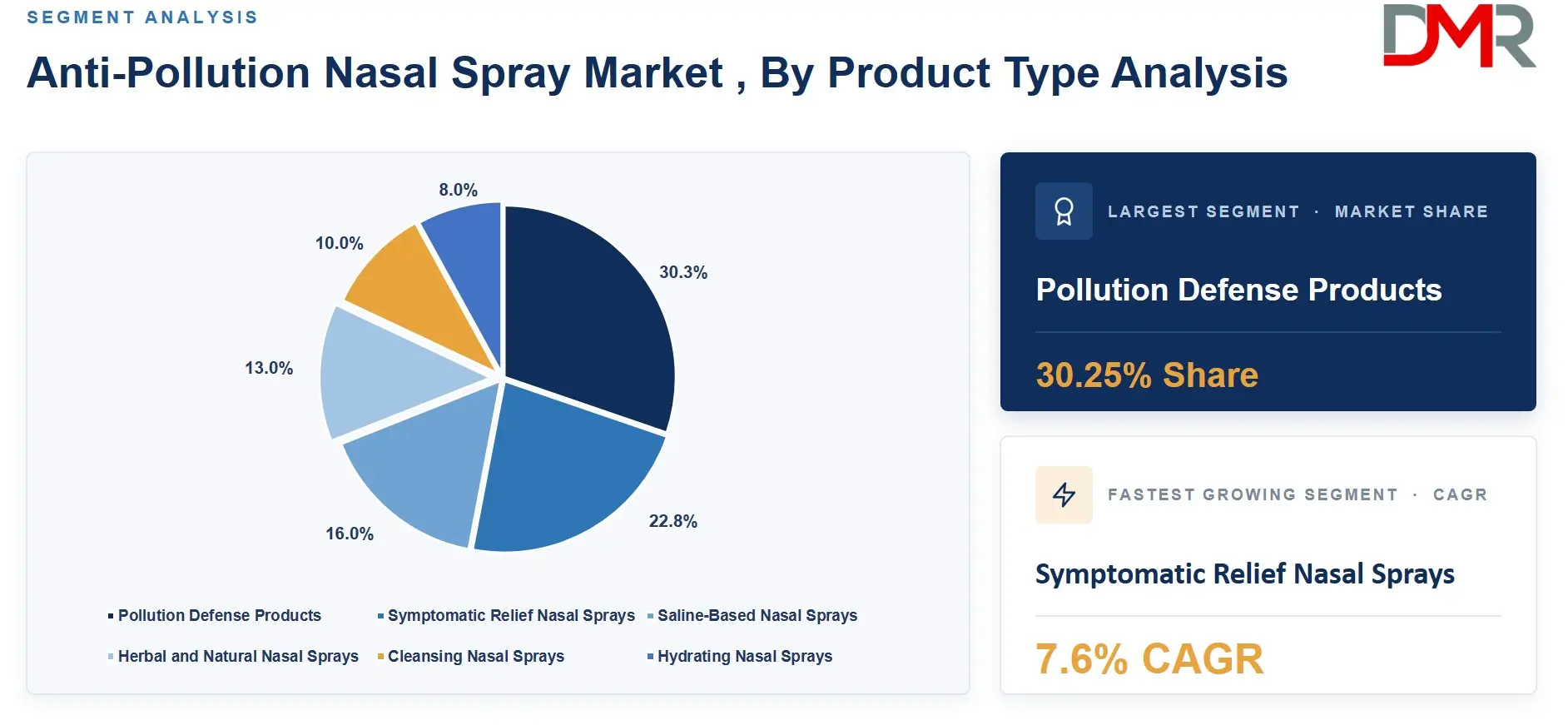
- Pollution Defense Products held the largest share within the Product Type segment at 30.25% in 2025; Symptomatic Relief Nasal Sprays represent the fastest-growing sub-type.
- By Distribution Channel, Retail Pharmacies led with 43.25% share in 2025; Online Channels are expanding fastest.
- By End User, Household Consumers dominated with 47.21% share in 2025; Occupational and Industrial Users are the fastest-growing end-user category.
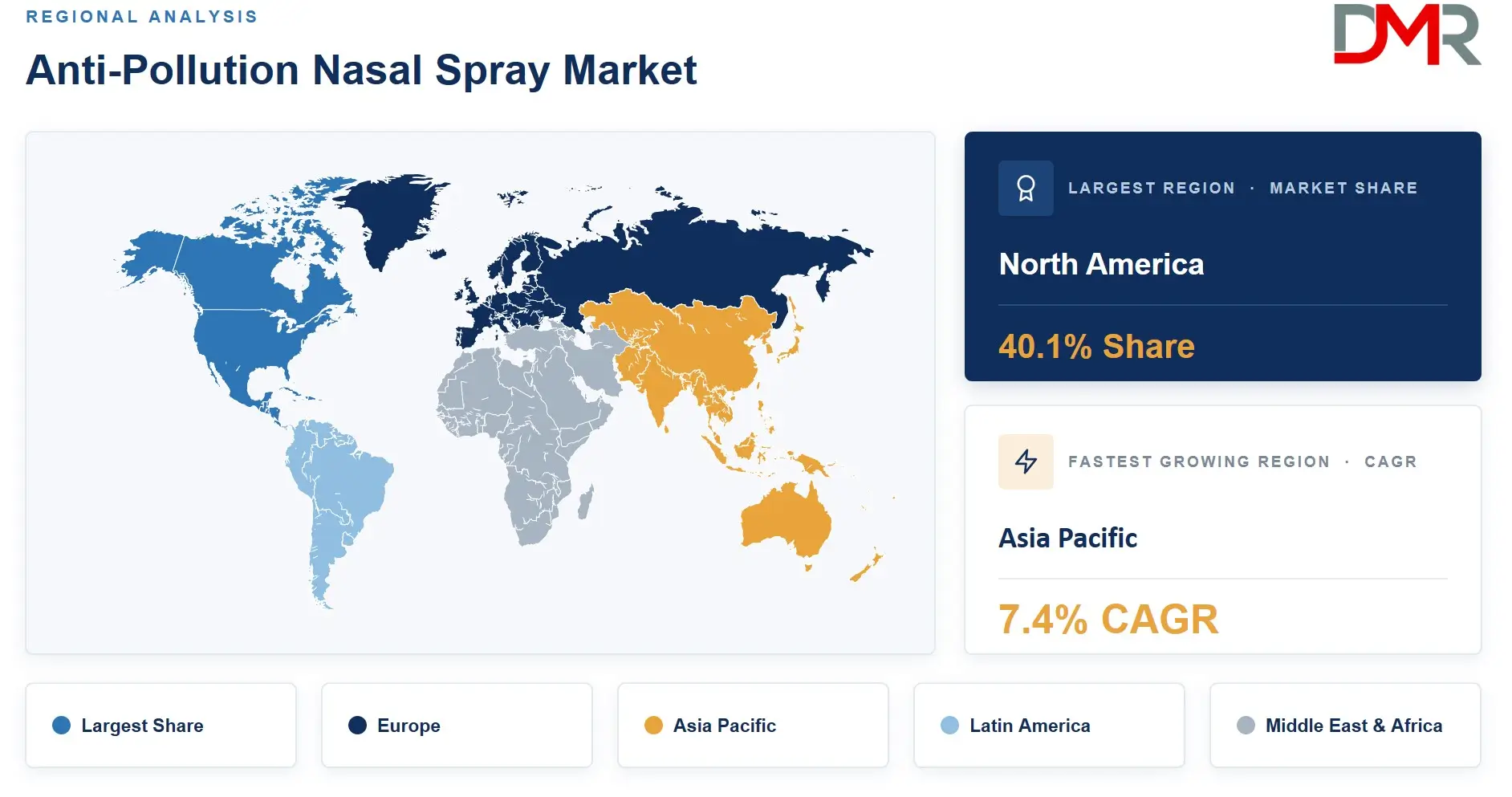
- North America is the largest regional market, accounting for 40.1% of global demand in 2025; Asia-Pacific is the fastest-growing region.
Market Overview
The Anti-Pollution Nasal Spray Market encompasses topical nasal formulations designed to block, neutralize, or cleanse particulate matter and environmental pollutants from nasal passages. Product types span Pollution Defense sprays, Saline-Based and Herbal/Natural formulations, Cleansing and Hydrating variants, and Symptomatic Relief sprays. The market excludes oral respiratory drugs, systemic corticosteroids, surgical nasal interventions, and air-purification hardware. It sits at the intersection of the OTC consumer health category and the broader USD 8.9 Billion nasal care industry, giving it dual access to pharmacy shelf space and wellness retail channels.
Clinician-generated evidence is strengthening product credibility beyond the wellness aisle. As reported by an Indian expert consensus published in 2025, topical nasal corticosteroid sprays achieved symptom control in 91.07% of patients, a performance benchmark that elevates clinical awareness of regular nasal spray regimens. In March 2025, ARS Pharmaceuticals secured U.S. FDA approval for the 1 mg pediatric version of neffy, signaling a broader demographic expansion across the nasal spray category. Vendors that align positioning with clinical outcomes will gain physician endorsement faster than those relying purely on consumer advertising.
Anti-pollution nasal sprays occupy a unique position because they straddle preventive health and daily personal care. Urban consumers in high-PM2.5 environments increasingly treat the products as routine hygiene items rather than reactive medicines. That behavioral shift pulls this category closer to cosmetic-adjacent personal care, shortening the purchase decision cycle and widening the addressable consumer base beyond traditional allergy sufferers.
Market Size and Forecast
The Global Anti-Pollution Nasal Spray Market size is estimated at USD 9.51 Billion in 2026 from USD 8.9 Billion in 2025, and is projected to reach USD 17.34 Billion by 2035, exhibiting a CAGR of 6.9% during the forecast period.
Growth through the forecast horizon rests on three reinforcing assumptions: continued urban PM2.5 elevation, expanding OTC shelf penetration, and rising clinician awareness of daily nasal spray protocols. EAACI and ARIA guidelines published in 2025 classify persistent rhinitis as symptoms occurring at least 4 days per week and at least 4 weeks consecutively, recommending daily intranasal corticosteroid use for these patients, as confirmed by findings from the 2025 allergy journal update. That clinical definition pulls millions of patients into a sustained-use pattern, anchoring repeat purchase volumes that underpin the mid-single-digit CAGR. Supply-side momentum is equally visible: as per regulatory approvals, the U.S. FDA cleared neffy 2 mg in August 2024, the first needle-free epinephrine nasal spray to market, demonstrating active regulator appetite for novel nasal delivery formats.
ℹ
To learn more about this report –
Download Your Free Sample Report Here
A downside scenario could materialize if clinical evidence on particle-blocking efficacy fails to advance, dampening physician endorsement rates and limiting insurance coverage consideration. An upside case, supported explicitly by the data, involves faster adoption among occupational health programs and accelerated regulatory harmonization across high-burden markets in Asia and Latin America.
Product Type Analysis
Pollution Defense Products led the Product Type segment with a 30.25% share in 2026.
Pollution Defense Products command the largest share because they address the most precise unmet need in high-PM2.5 urban environments. Buyers in megacities across China, India, and Southeast Asia purchase these products as a first-line defense before any symptoms develop. The preventive positioning allows premium pricing and generates year-round demand that seasonal allergy formulations cannot replicate.
ℹ
To learn more about this report –
Download Your Free Sample Report Here
Symptomatic Relief Nasal Sprays are the fastest-growing sub-category. A clinical foundation supports their acceleration: a 2025 Indian expert consensus published in PMC confirms that combining a nasal corticosteroid with an antihistamine is recommended for severe cases where prior corticosteroid monotherapy has failed, broadening the eligible patient population for combination-type symptomatic sprays. Saline-Based and Herbal/Natural sprays are attracting millennial and Gen Z buyers who prefer formulations without pharmaceutical actives. Cleansing and Hydrating variants are capturing frequency-of-use demand from consumers integrating nasal hygiene into daily routines, similar to skincare.
Distribution Channel Analysis
With a 43.25% share in 2026, Retail Pharmacies outpaced all other Distribution Channel categories.
Retail Pharmacies dominate because pharmacist recommendations remain a decisive factor in OTC respiratory product selection. Consumers uncertain about product differences default to pharmacist advice, and established shelf presence in pharmacy chains creates a high structural barrier for new entrants without the marketing budget to achieve similar visibility.
Online Channels are the fastest-growing distribution outlet, driven by subscription-purchase behavior and the growing comfort of urban consumers with direct-to-consumer health platforms. Hospital and Clinic Pharmacies are steady but slow-growing, limited by formulary restrictions. Supermarkets and General Retail capture impulse buyers, but the category's perceived therapeutic nature keeps their share lower than pure consumer goods.
End User Analysis
Household Consumers accounted for 47.21% of End User demand in 2026, the highest of any category.
Household Consumers lead because daily household air quality concerns, particularly in dense urban apartments, have normalized nasal spray use as a personal hygiene product. Parents purchasing products for children and elderly family members amplify transaction frequency within the household segment, creating multi-unit purchases per visit.
Occupational and Industrial Users are the fastest-growing end-user segment. Construction workers, logistics personnel, and field-service employees in high-particulate environments represent a largely untapped demand pool that corporate health programs are beginning to address. Healthcare Institutions maintain steady volume for post-procedural nasal care. Travel and Outdoor Users are a smaller but engaged segment concentrated around high-air-pollution travel corridors in Asia and the Middle East.
Key Market Segments
By Product Type
- Pollution Defense Products
- Symptomatic Relief Nasal Sprays
- Saline-Based Nasal Sprays
- Herbal and Natural Nasal Sprays
- Cleansing Nasal Sprays
- Hydrating Nasal Sprays
By Distribution Channel
- Retail Pharmacies
- Online Channels
- Supermarkets and General Retail Stores
- Hospital and Clinic Pharmacies
By End User
- Household Consumers
- Occupational and Industrial Users
- Healthcare Institutions
- Travel and Outdoor Users
Regional Analysis
North America led all regions with a 40.1% share in 2026, equivalent to USD 3.57 Billion.
North America's leadership reflects a combination of high OTC consumer health spending per capita, deep pharmacy retail infrastructure, and physician awareness of nasal spray protocols. U.S. regulators have demonstrated active appetite for novel nasal delivery formats, creating a pipeline of approved products that continuously refreshes shelf offerings. Canada adds bilingual regulatory frameworks that complement cross-border brand strategies.
Asia-Pacific is the fastest-growing region, pulled by PM2.5 crisis-level readings in cities across India, China, and Southeast Asia. Pollution episodes in Delhi and Beijing generate acute consumer demand spikes that are gradually converting into habitual daily use. Europe holds a substantial share underpinned by EMA's stringent product quality standards, which act as quality signals for consumers and support premium pricing. Latin America and the Middle East and Africa regions are earlier-stage markets. Cities in Brazil, Mexico, and the GCC are seeing rising urban pollution awareness, though price sensitivity limits penetration of premium formulations for now.
ℹ
To learn more about this report –
Download Your Free Sample Report Here
Key Regions and Countries
North America
Europe
- Germany
- France
- The UK
- Spain
- Italy
- Rest of Europe
Asia Pacific
- China
- Japan
- South Korea
- India
- Australia
- Rest of APAC
Latin America
- Brazil
- Mexico
- Rest of Latin America
Middle East & Africa
- GCC
- South Africa
- Rest of MEA
Market Dynamics
Urban Pollution Burden and Regulatory Normalization Drive Preventive Spray Adoption
A WHO 2025 database update confirms that approximately 140 countries now have national standards for PM10 and PM2.5, representing a 17% increase over the prior version of the database, as reported by the WHO. Governments enacting air-quality legislation simultaneously signal to citizens that pollution is a managed health risk, shifting consumer psychology toward protective product purchases. That signal benefits anti-pollution nasal spray producers directly: government advisories function as indirect demand catalysts that no single manufacturer's marketing budget could replicate.
Clinical protocol guidance reinforces the structural driver further. The PCRS-UK May 2025 respiratory society update advises patients to start nasal corticosteroid sprays at least 2 weeks before the expected onset of the hay-fever season. Pre-season initiation extends the active purchase window beyond symptomatic periods, building habitual use that sustains year-round unit volume. ARS Pharmaceuticals' commercial launch of neffy in September 2024 demonstrated that consumers are ready to adopt novel nasal delivery formats when clinical backing and regulatory approval co-exist.
Weak Clinical Consensus Limits Physician Endorsement and Repeat Purchase
Anti-pollution nasal sprays face a credibility ceiling. No long-term randomized controlled data currently confirms that particle-blocking nasal sprays reduce respiratory morbidity endpoints over multi-year follow-up. Without that evidence, physicians in primary care remain cautious about formal product recommendations. Consumers who buy once but receive no clinical reinforcement default to discontinuation, compressing the repeat purchase rate that brands need to achieve sustainable revenue.
Decongestant nasal spray use limited to under 7 consecutive days, as advised in the PCRS-UK 2025 guidance to avoid rebound effects, illustrates a broader issue: prescriber caution about nasal spray overuse is deeply embedded in clinical culture. That caution extends to anti-pollution sprays by association, even when rebound risk does not apply to saline or barrier formulations. Vendors must invest in disaggregating their products' safety profiles from the decongestant category in clinician education materials.
Occupational Channels and Co-Branded Allergy Products Expand Addressable Markets
Corporate occupational health programs covering industrial, logistics, and construction workforces represent a distribution channel that sits entirely outside consumer retail. Once a corporate buyer integrates anti-pollution sprays into a workplace health kit, per-employee unit volumes are predictable and repeat without individual purchase decisions. The AAOA 2025 article confirms that mild allergic rhinitis responds adequately to once-daily nasal steroid spray dosing, while severe cases require twice-daily use, establishing tiered clinical protocols that product vendors can align with occupational health severity screening tools.
The regulatory environment for novel nasal formats is opening. The EMA CHMP adopted a positive opinion recommending approval of EURneffy (adrenaline nasal spray) for severe type I allergic reactions in June 2024, establishing regulatory precedent for next-generation nasal-spray formulations beyond traditional saline. Lupin Limited's July 2025 entry into the U.S. generic nasal spray market with Ipratropium Bromide Nasal Solution demonstrates that established generic pharmaceutical players are accelerating their nasal portfolio investments, validating the category's commercial attractiveness for both branded and generic competitors.
Market Trends
Air Quality Monitoring Apps Shift Consumer Behavior From Reactive to Preventive
Government-backed and consumer-facing AQI monitoring applications are converting pollution alerts into nasal spray purchase triggers. Brands that build in-app partnerships or launch spray reminders tied to high-pollution forecasts will own a behavioral loop that competitors without digital infrastructure cannot replicate. The AAOA 2025 guidance confirms that daily spray use for at least 7–14 days is required before clinical benefit is fully assessable, creating a minimum engagement window that subscription commerce models can capitalize on immediately.
Market Competition Overview
The Anti-Pollution Nasal Spray Market is moderately fragmented, with global consumer health conglomerates holding leading positions across pharmacy channels while mid-size specialty pharma companies target clinical and allergy-focused sub-segments. No single player captures a dominant revenue majority, which keeps promotional intensity high and price competition active across Saline-Based and Herbal formulations. Large incumbents compete primarily on brand equity, shelf placement, and physician sampling programs rather than on proprietary formulation patents.
The FDA's 2025 guidance highlights that particle size variability in manufacturing can produce inconsistent medication dose per spray, as confirmed by data published by the U.S. FDA. Manufacturers with advanced milling and process control capabilities use this manufacturing precision as a differentiation lever, since quality failures at the production level can trigger FDA warning letters that damage brand equity permanently. Generic market entrants are increasing pressure on Saline and Symptomatic Relief sub-categories, compressing margins and forcing branded players to accelerate innovation in Pollution Defense and combination formulations.
Company Profiles
GSK plc operates at the intersection of branded OTC nasal care and prescription respiratory medicine, giving the company dual access to pharmacy-level shelf space and clinician-driven recommendation pipelines. GSK's global distribution network across North America and Europe allows rapid deployment of new nasal spray formulations without the channel-building investment that smaller competitors must bear. The company's risk lies in maintaining premium price positioning as generic nasal spray competition accelerates across its core Saline and Symptomatic Relief categories.
Haleon plc carved out a distinct innovation position within the anti-pollution nasal spray space. At the October 2024 CPHI Milan event, the next-generation Otrivin Nasal Mist, co-developed with Aptar Pharma using microdroplet delivery technology, was showcased as a premier innovation finalist for the CPHI Pharma Awards. Microdroplet delivery enables more uniform nasal coverage, directly addressing the dose consistency challenge that regulators and clinicians consider critical. Haleon's co-development model with a device specialist also demonstrates that consumer health incumbents are building capability through partnerships rather than internal R&D alone.
Key Players
- GSK plc
- Haleon plc
- Himalaya Wellness Company
- NeilMed Pharmaceuticals, Inc.
- Xlear, Inc.
- Altamira Therapeutics Ltd.
- Aurena Laboratories AB
- B.F. Ascher and Company, Inc.
- Bausch Health Companies Inc.
- Bayer AG
- Church and Dwight Co., Inc.
- Cipla Limited
- Dr. Reddy's Laboratories Ltd.
- Jadran-Galenski laboratorij d.d.
- Kenvue Inc.
- Merck and Co., Inc.
- Nasaleze International Limited
- Novartis AG
- Procter and Gamble Co.
- Reckitt Benckiser Group plc
- Sandoz Group AG
- Sun Pharmaceutical Industries Limited
- The Arm and Hammer Company
Supply Chain and Value Chain Analysis
Raw material flows originate from active pharmaceutical ingredient (API) manufacturers supplying corticosteroid compounds, saline mineral processors, and botanical extractors for Herbal formulations. Contract development and manufacturing organizations (CDMOs) convert these inputs into final dosage-form nasal sprays, integrating specialized milling and spray-pump assembly. FDA 2025 guidance confirms that milling process controls cover feed rate, air pressure, air flow rate, and lot processing count to maintain consistent particle size, as per data published by the FDA. Inconsistent particle size is the primary upstream quality risk; a failure at this stage propagates through the entire supply chain to the end consumer's dose accuracy.
Maximum value concentration sits at the branded formulation and channel-access stage. Branded players that own pharmacist relationships and shelf contracts extract margins significantly above generic fill manufacturers. The most acute bottleneck is pump-device supply: specialty actuator manufacturers for microdroplet and metered-dose pumps remain few globally, creating lead-time risk for product launches that require novel delivery mechanisms.
Regulatory Landscape
The EMA's 2025 revised guideline on pharmaceutical quality of inhalation and nasal medicinal products specifies that nasal sprays must demonstrate consistent delivered dose across labeled actuations, with acceptance criteria requiring 20–30 actuations to fall within ±15% of the target dose, as per the EMA 2025 guideline. A 2025 technical review published in ScienceDirect confirms that inspiratory flow rates of 15, 35, and 55 L/min through nasal airway replicas produce materially different particle deposition patterns, requiring nasal spray devices to be characterized at a minimum of three discrete flow-rate conditions. Compliance with these precision requirements bars low-investment generic entrants from European markets and sustains pricing power for manufacturers with validated manufacturing platforms.
In North America, U.S. FDA process-control guidance for nasal spray manufacturing imposes strict particle-size consistency standards at the milling stage. Globally, the WHO 2025 air-quality database update establishing standards in 140 countries creates a parallel regulatory architecture that indirectly defines the disease burden context for product approval dossiers. Vendors preparing submissions in high-burden markets like India and Brazil must increasingly align pollution-exposure epidemiology data with their clinical evidence packages to satisfy local health authorities.
Investment and White Space Analysis
Investment is flowing toward novel delivery mechanisms and pediatric formulations. Approval of the neffy 1 mg pediatric nasal spray by the U.S. FDA in March 2025 validated pediatric nasal spray as a credible commercial category, and co-promotion agreements such as the ARS Pharmaceuticals and ALK-Abelló deal confirmed that specialist allergy channel partnerships accelerate revenue faster than mass-market launches alone. Vendors with microdroplet and dry-powder delivery platforms hold a structural first-mover advantage in the precision dosing sub-category that is likely to attract venture and strategic investment over the 2026-to-2028 window.
Geographic white space sits in Latin American and Southeast Asian cities where PM2.5 burdens match or exceed those in Northern India but where branded anti-pollution nasal spray penetration remains negligible. City-specific pollutant-profile customization, a strategy with no major branded incumbent currently executing at scale, represents the clearest underserved niche. Occupational health contract channels in manufacturing and logistics hubs across Vietnam, Indonesia, and Mexico offer recurring volume with low customer-acquisition costs relative to retail pharmacy shelf-fight economics.
Recent Developments
- April 2024: Marinomed Biotech AG announced expansion of its Carragelose portfolio, including the launch of COLDAMARIS Allergie in Austria via Sigmapharm and entry into the Mexican pharmaceutical market through an exclusive distribution partnership with M8 Pharmaceuticals.
- August 22, 2024: The European Commission officially granted marketing authorization for EURneffy (adrenaline nasal spray) across all EU member states, following the earlier CHMP positive opinion.
- January 13, 2025: NeilMed Pharmaceuticals launched a direct product-support initiative, donating complimentary Sinus Rinse saline kits to first responders combating wildfire conditions across Los Angeles to mitigate toxic smoke inhalation.
- May 2025: ARS Pharmaceuticals made the 1 mg pediatric neffy dose widely available in nationwide pediatric channels and launched commercialization through a co-promotion agreement with allergy specialist ALK-Abelló.
- July 4, 2025: Lupin Limited officially launched Ipratropium Bromide Nasal Solution (0.03% and 0.06% strengths) in the U.S. market to treat rhinorrhea symptoms linked to perennial and seasonal allergies, expanding its generic respiratory segment.
- November 6, 2025: Nasus Pharma received a formal No-Objection Letter from Health Canada and dosed its first human participant in a Phase 2 clinical study evaluating NS002, its proprietary intranasal dry-powder epinephrine delivery platform.
Report Details
| Report Characteristics |
| Market Value (2025) |
USD 8.9 Billion |
| Market Value (2026) |
USD 9.51 Billion |
| Forecast Revenue (2035) |
USD 17.34 Billion |
| CAGR (2026–2035) |
6.9% |
| Base Year for Estimation |
2025 |
| Historic Period |
2020 – 2024 |
| Forecast Period |
2026 – 2035 |
| Report Coverage |
Revenue Forecast, Market Dynamics, Competitive Landscape, Recent Developments |
| Segments Covered |
By Product Type (Pollution Defense Products, Symptomatic Relief Nasal Sprays, Saline-Based Nasal Sprays, Herbal and Natural Nasal Sprays, Cleansing Nasal Sprays, Hydrating Nasal Sprays); By Distribution Channel (Retail Pharmacies, Online Channels, Supermarkets and General Retail Stores, Hospital and Clinic Pharmacies); By End User (Household Consumers, Occupational and Industrial Users, Healthcare Institutions, Travel and Outdoor Users) |
| Regional Analysis |
North America – US and Canada; Europe – Germany, France, The UK, Spain, Italy, and Rest of Europe; Asia Pacific – China, Japan, South Korea, India, Australia, and Rest of APAC; Latin America – Brazil, Mexico, and Rest of Latin America; Middle East & Africa – GCC, South Africa, and Rest of MEA |
| Competitive Landscape |
GSK plc, Haleon plc, Himalaya Wellness Company, NeilMed Pharmaceuticals Inc., Xlear Inc., Altamira Therapeutics Ltd., Aurena Laboratories AB, B.F. Ascher and Company Inc., Bausch Health Companies Inc., Bayer AG, Church and Dwight Co. Inc., Cipla Limited, Dr. Reddy's Laboratories Ltd., Jadran-Galenski laboratorij d.d., Kenvue Inc., Merck and Co. Inc., Nasaleze International Limited, Novartis AG, Procter and Gamble Co., Reckitt Benckiser Group plc, Sandoz Group AG, Sun Pharmaceutical Industries Limited, The Arm and Hammer Company |
| Customization Scope |
Customization for segments and region or country level will be provided. Additional customization can be done based on requirements. |
| Purchase Options |
Three license options: Single User License, Multi-User License (Up to 5 Users), and Corporate Use License (Unlimited Users and Printable PDF) |
Frequently Asked Questions
What is the biggest investment opportunity in Anti-Pollution Nasal Spray Market ?
▾ The clearest investment opportunity lies in city-specific anti-pollution formulations for Latin America and Southeast Asia, where urban PM2.5 levels are severe but branded nasal spray penetration remains minimal. Occupational health procurement channels in industrial and logistics workforces also offer predictable, recurring unit volumes with lower customer-acquisition costs than pharmacy retail competition.
Who are the top companies in Anti-Pollution Nasal Spray Market ?
▾ Leading companies include GSK plc, Haleon plc, Himalaya Wellness Company, NeilMed Pharmaceuticals, and Bayer AG, among more than 20 active competitors. GSK and Haleon hold the strongest dual positions across both pharmacy OTC and clinician recommendation pipelines globally.
Which segment is growing fastest in Anti-Pollution Nasal Spray Market and why?
▾ Symptomatic Relief Nasal Sprays are growing fastest within the Product Type segment, supported by clinical guidelines recommending combination corticosteroid and antihistamine regimens for severe rhinitis patients. Online Channels lead distribution growth, and Occupational and Industrial Users represent the fastest-growing end-user category, as corporate health programs expand particulate protection mandates.
Which region is growing fastest in Anti-Pollution Nasal Spray Market and why?
▾ Asia-Pacific is the fastest-growing region, driven by crisis-level PM2.5 readings in megacities across India, China, and Southeast Asia. Consumer behavior in these markets is shifting from reactive symptom treatment toward daily preventive nasal hygiene, expanding the addressable user base well beyond traditional allergy sufferers.
What is the biggest challenge holding Anti-Pollution Nasal Spray Market back?
▾ The absence of long-term clinical trial data confirming that particle-blocking nasal sprays reduce measurable respiratory morbidity endpoints is the primary constraint. Without that evidence base, physician endorsement rates remain low and insurance reimbursement recognition is limited, capping market expansion in healthcare-reimbursed channels and anchoring consumer perception of these products as discretionary items.