Market Overview
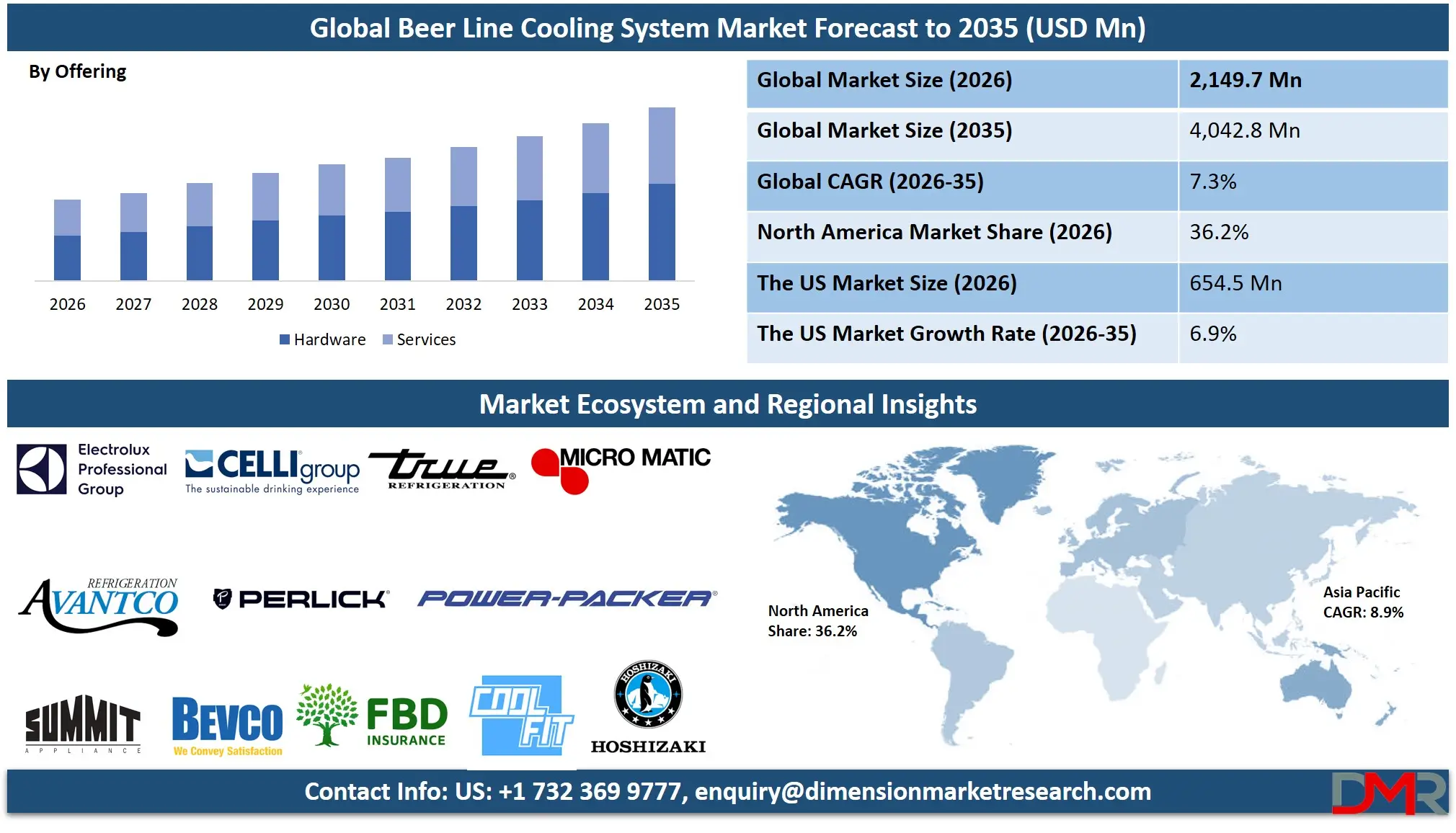
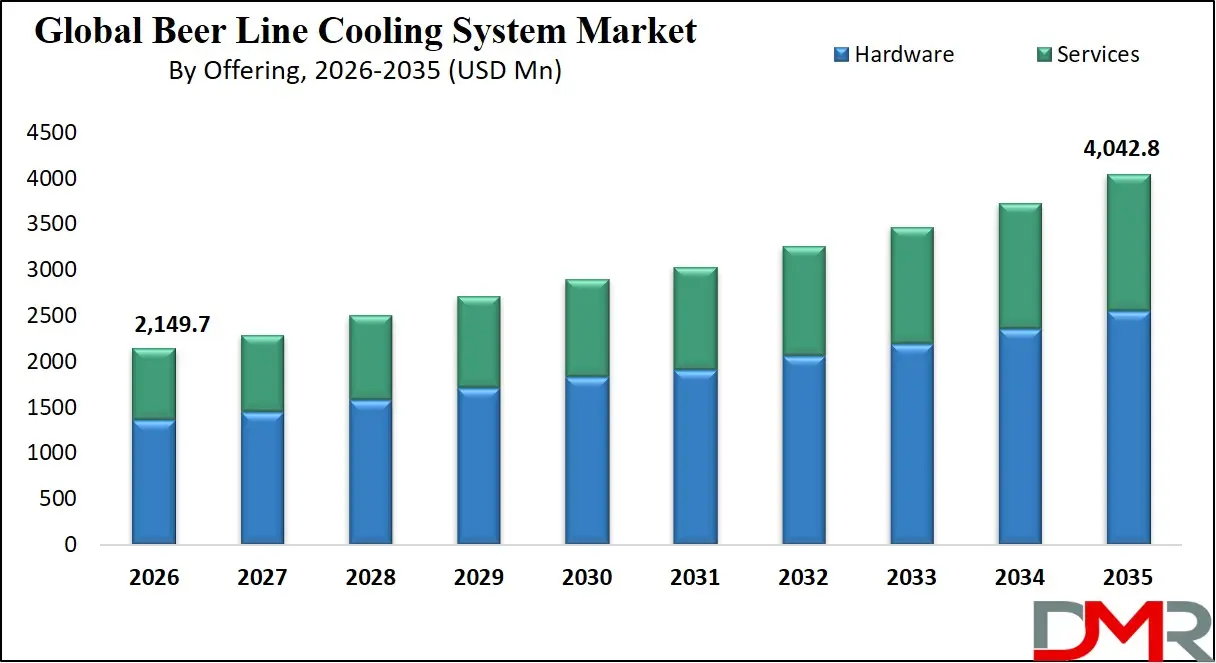
The Global Beer Line Cooling System Market is set for substantial expansion, reaching an estimated USD 2,149.7 million in 2026 and projected to grow at a strong CAGR of 7.3% from 2026 to 2035, to a market value of USD 4,042.8 million by 2035. This robust growth trajectory is fueled by the accelerating global demand for high-quality draft beer, the proliferation of microbreweries and craft beer establishments, and the increasing need for energy-efficient and reliable cooling solutions to maintain optimal beer serving temperatures.
ℹ
To learn more about this report –
Download Your Free Sample Report Here
Rising consumer expectations for a perfect pint, coupled with the significant financial impact of beer waste due to temperature fluctuations and foaming, are compelling hospitality venues and beverage distributors to invest in advanced beer line cooling systems. The rapid expansion of the hospitality sector, including new bars, restaurants, hotels, and large-scale entertainment venues, is significantly increasing demand for efficient cooling infrastructure.
Additionally, growing regulatory standards related to food safety, hygiene, and equipment efficiency in commercial kitchens and bars are further accelerating market adoption. Establishments are increasingly integrating advanced glycol chillers, smart temperature monitoring systems, and energy-efficient trunk lines to reduce operational costs, minimize beer wastage, and ensure consistent product quality.
The shift towards remote monitoring and IoT-enabled cooling systems, along with modular and scalable chiller designs, is enabling both small brewpubs and large stadiums to implement precise and cost-effective temperature control solutions. As the global culture of craft beer and premium on-premise dining experiences continues to thrive, the Beer Line Cooling System Market is expected to witness sustained growth through 2035, driven by quality assurance and operational efficiency priorities.
ℹ
To learn more about this report –
Download Your Free Sample Report Here
Growing investments in large-scale entertainment and hospitality projects, including sports stadiums, convention centers, and casino resorts, further accelerate global adoption. However, barriers such as high initial installation costs, the complexity of retrofitting in existing buildings, varying energy efficiency regulations, and the need for specialized maintenance remain. Despite these limitations, the convergence of energy-efficient technologies, smart controls, and modular system designs positions beer line cooling as a critical Offering of the global on-trade beverage industry through 2035.
The US Beer Line Cooling System Market
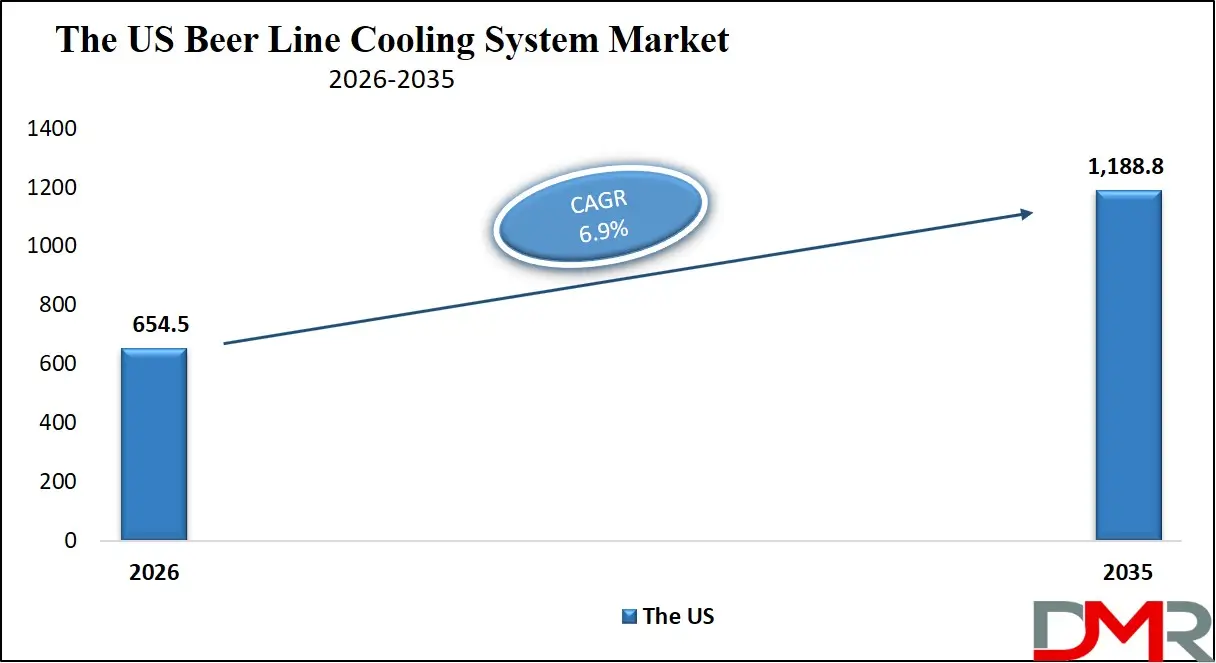
The U.S. Beer Line Cooling System Market is projected to reach USD 654.5 million in 2026 and grow at a CAGR of 6.9%, reaching USD 1,188.8 million by 2035. The U.S. leads global adoption due to its massive and mature craft beer industry, with over 9,000 breweries, and a strong culture of on-premise consumption in bars and restaurants.
ℹ
To learn more about this report –
Download Your Free Sample Report Here
The proliferation of craft breweries and brewpub concepts, coupled with a high premium placed on draft beer quality, fuels demand for advanced glycol cooling systems and long-draw setups. Major stadiums, entertainment districts, and high-volume restaurant chains are integrating sophisticated cooling systems to manage large-scale draft operations efficiently and minimize product loss.
U.S. energy efficiency standards, driven by bodies like the Department of Energy (DOE), encourage investment in high-performance, low-energy cooling technologies. The market is witnessing a shift towards smart, IoT-enabled chillers that offer remote temperature monitoring and predictive maintenance alerts, reducing downtime and ensuring consistent pour quality. The focus on sustainability and reducing carbon footprint has further intensified the interest in systems with natural refrigerants and optimized energy consumption, positioning the U.S. as a key innovator in this space.
The Europe Beer Line Cooling System Market
The Europe Beer Line Cooling System Market is projected to be valued at approximately USD 580.0 million in 2026 and is expected to reach around USD 1,100.0 million by 2035, growing at a CAGR of about 6.8% from 2026 to 2035. Europe's leadership is anchored by its deep-rooted beer culture, particularly in countries such as Germany, the United Kingdom, Belgium, and the Czech Republic, where draft beer consumption remains strong across pubs, breweries, stadiums, and hospitality venues.
Countries such as Germany, the U.K., France, and Italy are widely adopting advanced cooling systems, driven by a high density of traditional pubs, modern bars, and seasonal beer gardens. Strict EU regulations regarding food safety and the use of refrigerants (F-Gas Regulation) further necessitate the adoption of modern, compliant, and efficient cooling equipment.
Europe's strong tourism industry, high density of hospitality venues, and the growing craft beer movement drive the demand for reliable and scalable cooling solutions. Funding and support for energy efficiency upgrades in the hospitality sector encourage the replacement of old, inefficient systems with modern, environmentally friendly chillers. With a sophisticated consumer base and a regulatory landscape that prioritizes environmental sustainability, Europe remains a highly advanced and essential region for beer line cooling services.
The Japan Beer Line Cooling System Market
The Japan Beer Line Cooling System Market is anticipated to be valued at approximately USD 110.0 million in 2026 and is expected to attain nearly USD 215.0 million by 2035, expanding at a CAGR of about 6.9% during the forecast period. Japan's unique hospitality culture, stringent quality standards, and the government's push to attract tourists are driving the adoption of high-precision draft beer systems.
The Japanese Industrial Standards (JIS) for food service equipment and the emphasis on meticulous preparation and service in the "Izakaya" (pub) and restaurant scenes promote the use of reliable cooling technologies. Japan's leadership in precision engineering and technology adoption provides a robust foundation for advanced systems, including compact, energy-efficient chillers suitable for space-constrained urban venues.
Japan's tourism boom, driven by major corporations and hospitality groups, integrates high-quality draft beer experiences into everything from themed bars to luxury hotels. Venues are deploying advanced beer line cooling to ensure the perfect pour for both domestic and international visitors, combating the risk of quality inconsistency in a market with extreme seasonal temperature variations. Japan's cultural emphasis on craftsmanship and reliability positions it as a high-growth, quality-focused market for cooling solutions.
Global Beer Line Cooling System Market: Key Takeaways
- Strong Global Market Growth Outlook: The Global Beer Line Cooling System Market is expected to be valued at USD 2,149.7 million in 2026 and is projected to reach USD 4,042.8 million by 2035, showcasing rapid expansion supported by rising demand for high-quality draft beer and operational efficiency.
- Steady CAGR Driven by Quality and Efficiency Demands: The market is expected to grow at a steady CAGR of 7.3% from 2026 to 2035, fueled by the global expansion of the craft beer segment, increasing focus on reducing beer waste, and the need for energy-efficient cooling technologies.
- Strong Growth Trajectory in the United States: The U.S. Beer Line Cooling System Market stands at USD 654.5 million in 2026 and is projected to reach USD 1,188.8 million by 2035, expanding at a CAGR of 6.9% due to its large craft beer ecosystem and focus on premium on-premise experiences.
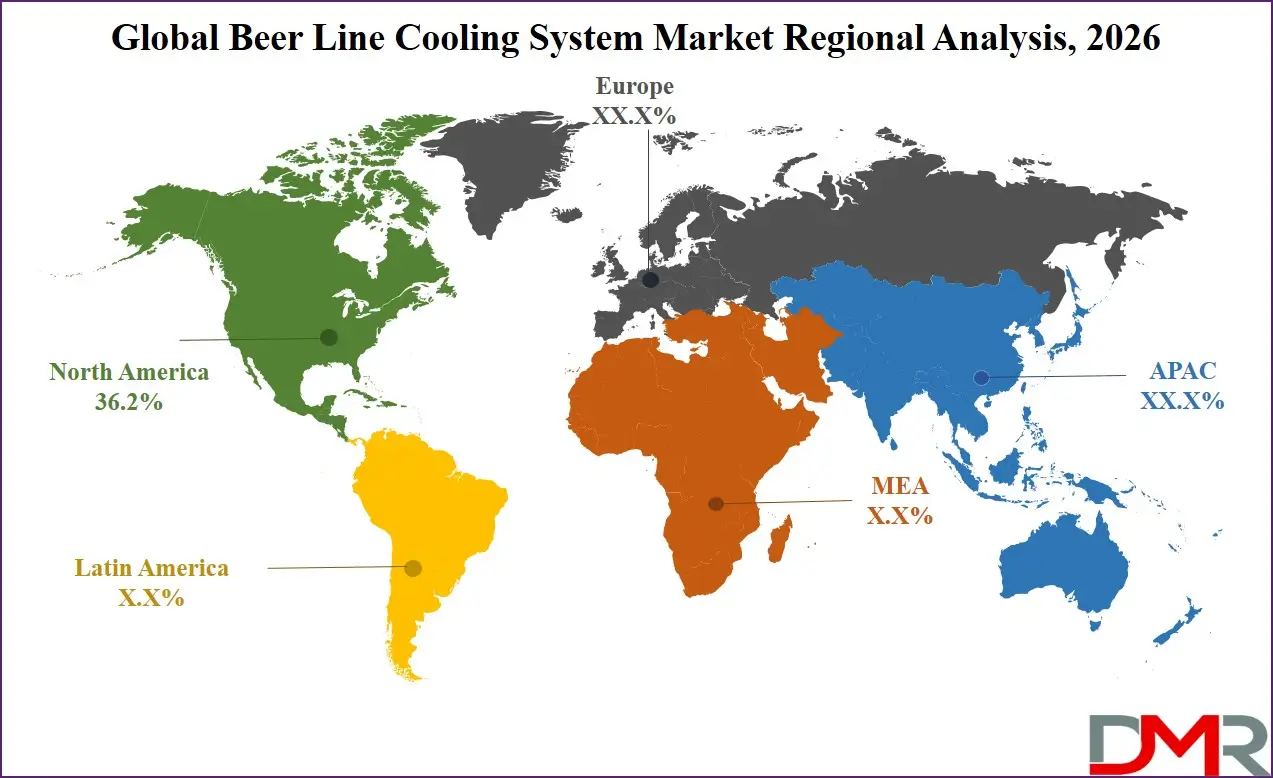
- Regional Dominance: North America is expected to capture approximately 36.2% of the global market share in 2026, supported by its deep-rooted beer culture, high density of pubs and bars, and stringent environmental and food safety regulations.
- Rapid Advancement in Cooling Technologies: Innovations including IoT-enabled remote temperature monitoring, energy-efficient variable-speed compressors, modular and scalable chiller designs, and the use of eco-friendly refrigerants are significantly enhancing the performance, sustainability, and reliability of cooling systems.
- Growing Focus on Reducing Beer Waste Boosts Adoption: The significant financial losses associated with beer spoilage due to improper serving temperatures, coupled with the need for consistent product quality, is driving sustained demand for robust, precise line cooling solutions.
Global Beer Line Cooling System Market: Use Cases
- Craft Brewery Taprooms: Breweries use dedicated glycol chillers to cool lines running from serving tanks to the bar taps, ensuring their flagship beers are served at the ideal temperature, directly from the source.
- High-Volume Sports Stadiums: Large venues with multiple bars across several decks rely on centralized remote chiller systems to circulate glycol to hundreds of tap towers, maintaining beer quality during high-demand events.
- Historic Pubs in the UK: Traditional pubs with long cellar-to-bar runs utilize through-wall or direct-draw systems to keep beer at the correct temperature from the keg to the glass, a critical factor for cask ale quality.
- Hotel and Restaurant Chains: Multi-location hospitality groups standardize on modular beer line chillers to ensure brand consistency and simplify maintenance across all their properties.
- Festivals and Temporary Events: Event organizers deploy portable, self-contained beer line cooling units to serve high-quality draft beer at outdoor festivals, ensuring freshness without permanent infrastructure.
Global Beer Line Cooling System Market: Stats & Facts
Brewers Association & U.S. Government (official industry association data)
- The U.S. had about 9,761 operating breweries in 2023, a figure tracked by U.S. federal alcohol regulators and Brewers Association data (based on official filings).
- Of these, more than 9,400 were craft breweries operating independently.
- Craft breweries produced over 24 million barrels of beer in 2023.
- Craft beer accounted for approximately 13% of total U.S. beer volume.
- Craft beer accounted for nearly 25% of total U.S. beer retail dollar sales.
- The U.S. craft brewing industry contributed over USD 77 billion to the U.S. economy.
- The craft brewing sector supported over 460,000 jobs in the U.S.
- In 2023, hundreds of new breweries opened while several dozens closed tracked through official permit changes.
Eurostat / EU Brewing Output (EU government statistics)
- EU countries produced 32.7 billion litres of alcoholic beer in 2024.
- Additional 2 billion litres of non-alcoholic beer (<0.5% alcohol) were produced in 2024.
- Germany produced about 7.2 billion litres of beer in 2024 (largest EU producer).
- Spain produced about 4.0 billion litres of beer in 2024.
- Poland produced around 4,042.8 million litres of beer in 2024.
- The Netherlands exported approximately 1.5 billion litres of beer in 2024.
- EU barley harvest (critical brewing raw material) was about 49 million tonnes in 2024.
- EU barley was grown on around 10.3 million hectares in 2024.
International Beer Consumption & Production (government links via trade bodies)
- Global beer production is reported to exceed 1.9 billion hectolitres annually (national production statistics compiled by official agencies).
- U.S. craft brewers produced over 24 million barrels, representing double-digit millions of hectolitres (official production figures).
- Brewing energy use in European breweries averages 3.5–5.5 GJ per hectoliter official energy surveys of industrial sectors show this high energy requirement in brewing, which drives need for effective cooling and refrigeration.
- Barley accounts for roughly 70% of raw materials cost in beer production official agricultural cost breakdowns for breweries.
AHRI / U.S. Government-linked HVACR Statistics
- The Air-Conditioning, Heating, and Refrigeration Institute (AHRI) represents more than 300 manufacturers of heating, cooling, water-heating, and refrigeration equipment including commercial refrigeration that supports beer chillers.
- AHRI member products and certified performance data are often used in government regulatory contexts for HVACR standards.
Official Brewing & Facility Operations
- Brewing water usage averages between 3–7 litres per litre of beer produced highlighting overall cooling and environmental control significance.
- Fermentation and conditioning require controlled temperatures (often 0–4 °C for lagers), which depends on refrigeration and line cooling infrastructure.
- Average fermentation times in brewing range from 5–7 days, while lager conditioning (cold storage) lasts 4–6 weeks all requiring reliable cooling technology.
Global Beer Line Cooling System Market: Market Dynamic
Driving Factors in the Global Beer Line Cooling System Market
Escalating Demand for Premium Draft Beer Quality
The single most significant driver is the consumer's and venue owner's demand for a perfect pint. In a competitive hospitality market, beer quality is a key differentiator. Fluctuations in temperature from the keg to the tap directly cause foaming (waste), flat beer, and off-flavors. Beer line cooling systems ensure a consistent thermal environment, preserving the beer's intended taste, aroma, and carbonation. This directly translates to higher customer satisfaction, reduced product waste (increasing profitability), and a stronger brand reputation for the venue, making investment in reliable cooling a necessity rather than an option.
Proliferation of Craft Breweries and Remote Serving Locations
The explosion of craft breweries has fundamentally changed the market. Unlike macro breweries with direct-draw setups, craft breweries often have taprooms located adjacent to their brewhouse, requiring lines to run through non-refrigerated spaces. Furthermore, the trend of serving beer in large stadiums, convention centers, and entertainment districts necessitates long-draw systems that can transport beer over significant distances. These complex setups are impossible without robust glycol or remote chiller systems, creating a structural demand driver for the market.
Restraints in the Global Beer Line Cooling System Market
High Initial Capital Investment and Installation Complexity
The primary barrier to adoption, especially for smaller venues, is the significant upfront cost. A complete beer line cooling system, including a chiller, trunk line, regulators, and installation, represents a major capital expense. Retrofitting a system into an existing building adds further complexity and cost, often requiring significant construction work to run lines through walls, floors, or ceilings. This can deter smaller pubs or restaurants from upgrading older, less efficient, or direct-draw systems.
Ongoing Maintenance and Technical Expertise Requirement
Beer line cooling systems are not "set and forget." They require regular maintenance, including cleaning the lines, checking glycol levels, inspecting pumps, and monitoring for leaks. Furthermore, diagnosing issues like temperature inconsistencies or pump failures often requires specialized technical knowledge. The lack of readily available, skilled technicians in some regions can lead to system downtime, beer waste, and increased long-term operational costs, acting as a restraint for some potential buyers.
Opportunities in the Global Beer Line Cooling System Market
Smart, IoT-Enabled Cooling Systems
The integration of Internet of Things (IoT) technology presents a massive opportunity. Smart chillers equipped with sensors and Wi-Fi connectivity can provide venue owners with real-time data on beer temperature, glycol pressure, and system performance via a smartphone app. This enables predictive maintenance (alerting the owner to a potential pump failure before it happens), remote troubleshooting, and data-driven insights into energy consumption. This "smart" capability transforms a passive piece of equipment into an active management tool, offering significant value to multi-location operators and large venues.
Expansion into Emerging Hospitality Markets
Rapid economic growth and an expanding middle class in regions like Southeast Asia, Latin America, and parts of Africa are fueling a boom in new bars, hotels, and restaurants. These emerging markets represent a greenfield opportunity for beer line cooling system manufacturers. As Western-style drinking establishments and international hotel chains expand, there is a corresponding need to install modern, reliable draft beer infrastructure from the outset, creating a significant growth vector for companies that can offer localized support and training.
Trends in the Global Beer Line Cooling System Market
Modular and Scalable Chiller Systems
There is a clear trend away from "one-size-fits-all" systems towards modular and scalable cooling solutions. A small brewpub may need a 1/2 HP chiller, while a large stadium might require multiple 10 HP units working in tandem. Manufacturers are offering systems that can be easily scaled by adding modular chiller units to a central manifold. This allows venues to start with a system that fits their current needs and budget, and expand it seamlessly as their business grows, without replacing the entire infrastructure.
Focus on Energy Efficiency and Sustainability
With rising energy costs and increasing environmental awareness, energy efficiency has moved from a "nice-to-have" to a core purchase criterion. This trend is driving the adoption of chillers with high-efficiency compressors, variable speed drives, and "free cooling" modes that use ambient air when temperatures are low. Furthermore, there is a growing shift towards using natural refrigerants (like propane (R290) or CO2 (R744)) with lower Global Warming Potential (GWP), aligning with global sustainability goals and stricter environmental regulations like the EU F-Gas Regulation.
Global Beer Line Cooling System Market: Research Scope and Analsis
By Offering Analysis
The hardware segment is projected to maintain its dominance in the Global Beer Line Cooling System Market, capturing the largest share of revenue when compared to installation and maintenance services. This leadership position is fundamentally attributed to the nature of the core cooling equipment namely chiller units, trunk lines, and dispensing components which constitutes the single largest capital expenditure in any draft beer system installation. The initial purchase and periodic replacement of this essential equipment form the primary revenue stream for the market.
Modern hardware has evolved beyond simple refrigeration. Contemporary chiller units are sophisticated assets that provide advanced capabilities such as precise temperature control, energy-efficient operation using eco-friendly refrigerants, and seamless integration with smart monitoring systems. The market relies heavily on three primary hardware types: glycol chillers for long-distance cooling, remote condensing units for centralized cooling, and self-contained direct-draw coolers for smaller setups. Hospitality establishments prioritize durable, reliable, and high-capacity hardware to ensure consistent beer quality and to minimize costly downtime caused by equipment failure.
While ancillary services such as installation, routine line cleaning, and technical support are vital for ongoing operational integrity and generate valuable recurring revenue, they typically complement rather than surpass hardware sales in overall market value. As the global hospitality sector expands with new venue openings and older systems are retrofitted to meet modern efficiency standards, the hardware segment is expected to sustain its leadership, solidifying its role as the financial and functional backbone of the beer line cooling industry.
By Cooling Type Analysis
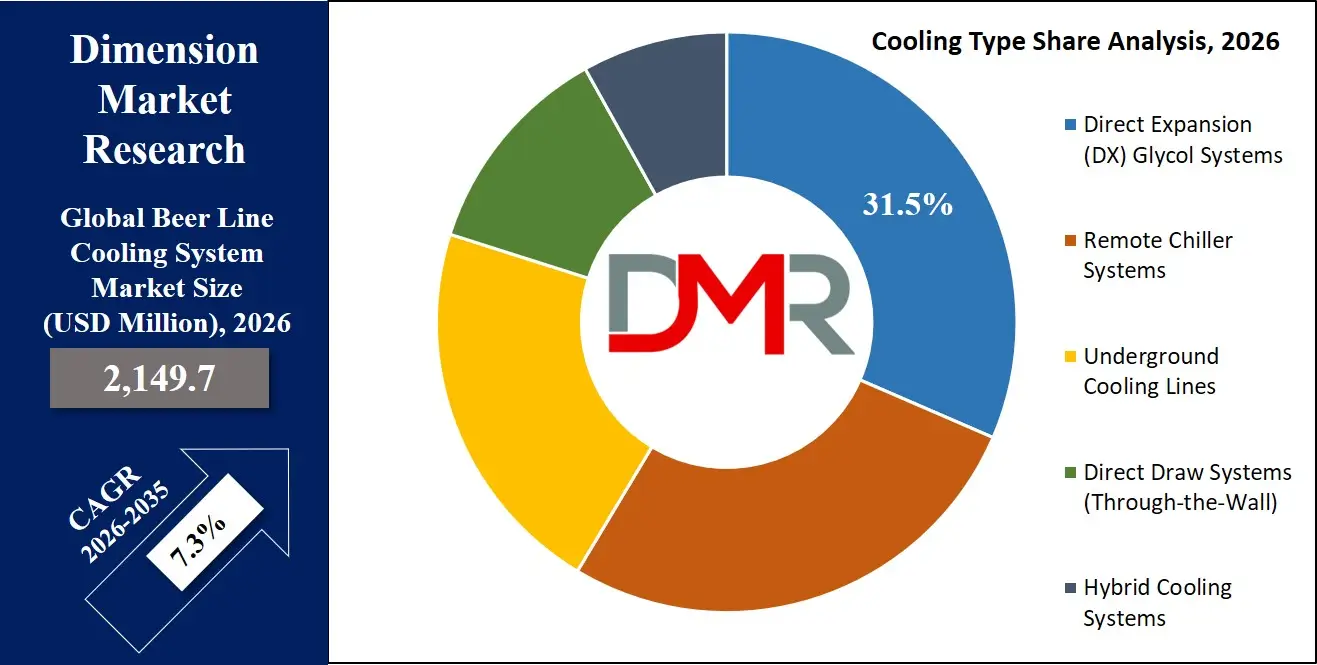
Glycol cooling systems, specifically those utilizing Direct Expansion (DX) technology, are anticipated to dominate the cooling type segment of the market. Their supremacy is driven by their superior efficiency and unique suitability for long-draw applications, which are essential in modern, complex venue layouts. These systems operate by chilling a food-grade glycol mixture via a central chiller unit and pumping it through insulated trunk lines to cool the beer lines over extended distances, often spanning hundreds of feet.
ℹ
To learn more about this report –
Download Your Free Sample Report Here
The technical advantage of glycol systems lies in their ability to deliver precise and remarkably stable temperature control from the keg to the tap faucet. This precision is critical for preserving the integrity of the beer, preventing issues like foaming or flavor degradation, and ensuring that the product served matches the brewer's intent. Furthermore, their flexibility is unmatched; a single, powerful glycol chiller can efficiently serve multiple tap towers and bar stations across different floors or sections of a venue, reducing the need for redundant equipment. This makes them the indispensable choice for large-scale operations such as sports stadiums, entertainment complexes, hotels, and high-volume bars.
Although remote direct-draw systems remain common in smaller, simpler setups like basic pubs, their application is inherently limited by distance. As the hospitality industry continues to trend toward larger, more architecturally complex venues, the demand for the powerful, versatile, and reliable cooling provided by glycol-based systems is expected to drive their continued market dominance.
By Application Analysis
The Pubs, Bars & Restaurants segment is projected to dominate the application landscape of the beer line cooling system market. This dominance is not attributable to the size of individual installations but to the sheer, overwhelming number of these establishments operating globally and their central role as the primary venues for draft beer sales. This diverse segment encompasses everything from small, traditional neighborhood pubs to large urban gastropubs and high-end cocktail bars featuring extensive, rotating draft lists.
For these venues, a reliable cooling system is not an optional accessory but a core component of daily operations and profitability. A failure in the cooling system translates directly and immediately into revenue loss from unsellable beer, increased product waste, and dissatisfied customers who may choose to go elsewhere. The necessity for consistent beer quality, minimal waste, and ease of use drives a continuous and predictable demand for both new installations and replacement systems. Moreover, the intensely competitive nature of the hospitality industry pushes these establishments to continually invest in high-quality, aesthetically pleasing dispensing equipment to attract and retain discerning clientele.
While other segments like large stadiums and craft brewery taprooms are experiencing rapid growth and involve larger, more complex individual system installations, they lack the cumulative volume and consistent replacement cycle of the broader pubs, bars, and restaurants sector. This vast and permanent network ensures its continued dominance as the primary market driver.
By Operation Type Analysis
Remote monitoring and automated systems are emerging as the fastest-growing and increasingly dominant operation type within the beer line cooling system market. This segment represents a significant technological leap, encompassing chillers and systems integrated with Internet of Things (IoT) sensors and cloud-based software. These smart systems enable real-time temperature monitoring, instant alert notifications for temperature excursions, comprehensive data logging for compliance, and predictive maintenance analytics.
The decisive shift towards automation is driven by the operational need to reduce labor costs, prevent costly human error, and enable a predictive rather than reactive maintenance approach. For multi-location operators, such as large restaurant groups or pub chains, the benefits are particularly pronounced. They can now monitor the performance and health of all their draft systems from a single central dashboard. If a temperature spike occurs at a location miles away, an alert is sent immediately, allowing for a rapid remote diagnostic or a dispatched service call before significant quantities of beer spoil. This "set-it-and-forget-it" capability provides peace of mind and operational efficiency.
Coupled with the ability to collect and analyze data for optimizing energy consumption and system performance, this technology is rapidly becoming the new standard for sophisticated operations. The market is definitively moving away from reliance on purely manual checks and reactive adjustments, embracing automated systems that offer greater control, efficiency, and cost savings.
By End-Use Analysis
The On-Trade segment is unequivocally projected to dominate the end-use landscape of the beer line cooling system market. This segment encompasses all commercial establishments where beer is sold and consumed on the premises, including the core markets of pubs, bars, restaurants, hotels, stadiums, and entertainment venues. The fundamental function of a beer line cooling system is to deliver beer in optimal condition at the point of consumption, creating an intrinsic and undeniable link to the on-trade channel.
Virtually all draft beer produced globally is consumed within these on-trade settings, making this end-use segment the primary and most essential market for cooling infrastructure. The financial health and operational success of on-trade venues are directly tied to the quality of their draft beer offering, which is, in turn, wholly dependent on a reliable and high-performing cooling system. Poorly cooled beer leads to waste, reputational damage, and lost sales, making this equipment a critical business investment.
The continuous and dominant demand from this sector is fueled by a combination of factors: the sheer global volume of on-premise consumption points, cyclical investment in new venues, the renovation and upgrade of existing establishments, and the constant pressure to maintain competitive advantage through superior product quality. While the Off-Trade (e.g., retail stores with growler-filling stations) and industrial segments exist, they represent only a fraction of the market volume when compared to the vast and permanent global network of on-premise consumption points that define the On-Trade.
The Global Beer Line Cooling System Market Report is segmented on the basis of the following:
By Offering
- Hardware
- Glycol Chillers / Power Packs
- Trunk Lines / Bundles
- Remote Condensing Units
- Direct-Draw Coolers
- Temperature Controllers & Sensors
- Services
- Installation & Commissioning
- Maintenance & Repair
- Line Cleaning Services
- Consulting & Design Services
By Cooling Type
- Direct Expansion (DX) Glycol Systems
- Remote Chiller Systems
- Underground Cooling Lines
- Direct Draw Systems (Through-the-Wall)
- Hybrid Cooling Systems
By Application
- Draft Beer Systems (Primary Cooling)
- Craft Breweries & Taprooms
- Pubs, Bars & Restaurants
- Hotels & Resorts
- Stadiums, Arenas & Convention Centers
- Casinos & Gaming Venues
By Operation Type
- Manual Systems
- Semi-Automated Systems
- Remote Monitoring / Automated Systems
By End-Use
- On-Trade (Commercial Consumption)
- Pubs & Bars
- Restaurants
- Hotels & Accommodation
- Stadiums & Entertainment Venues
- Off-Trade (Retail)
- Industrial (Brewery-Owned Facilities)
Impact of Artificial Intelligence in the Global Beer Line Cooling System Market
- AI for Predictive Maintenance: AI algorithms analyze data from sensors on chiller pumps, compressors, and lines to predict potential failures before they occur. This allows venue operators to schedule maintenance proactively, avoiding costly downtime and beer spoilage.
- AI-Driven Energy Optimization: AI can learn a venue's usage patterns (peak hours, slow days) and external temperature conditions to dynamically adjust chiller operation. This optimizes energy consumption without compromising beer temperature, leading to significant cost savings.
- Smart Temperature Regulation: AI-powered controllers can maintain beer temperature with far greater precision than traditional thermostats, reacting to minor fluctuations in real-time to ensure a perfectly consistent pour every time.
- Automated Fault Detection and Diagnosis: When a system issue arises, AI can analyze sensor data to instantly diagnose the root cause (e.g., low glycol level, failing pump, line blockage) and provide specific guidance to maintenance staff, reducing repair time.
- Learning from System Networks: AI systems across a network of venues (e.g., a restaurant chain) can aggregate operational data to identify best practices for efficiency and longevity, automatically updating system parameters across all locations.
Global Beer Line Cooling System Market: Regional Analysis
Region with the Largest Revenue Share
North America is projected to dominate the Global Beer Line Cooling System Market, holding an estimated 36.2% share in 2026. This leadership is primarily driven by the region's exceptionally mature and high-volume craft beer industry, with over 9,500 breweries in the U.S. alone creating massive demand for sophisticated draft systems. The strong culture of on-premise consumption in sports stadiums, entertainment districts, bars, and restaurants necessitates complex, long-draw glycol cooling setups to maintain beer quality across extensive venues. Furthermore, stringent energy efficiency standards encourage the adoption of advanced, high-performance chillers. The high financial stakes of beer waste and the premium placed on a perfect pint in a competitive hospitality market compel significant investment in reliable cooling infrastructure. This combination of a vast installed base, demand for premium quality, and a focus on operational efficiency firmly establishes North America's market dominance.
ℹ
To learn more about this report –
Download Your Free Sample Report Here
Region with the Highest CAGR
Asia-Pacific holds the highest CAGR and is poised to achieve rapid market share growth due to its booming tourism industry, rapid westernization of drinking habits, and explosive growth in the number of bars, hotels, and restaurants. Countries like China, Vietnam, Japan, and South Korea are seeing a surge in craft beer popularity and the construction of large-scale entertainment complexes and international hotel chains.
The region's rapidly growing middle class with disposable income is fueling demand for premium on-premise experiences. This, combined with a hot and humid climate in many parts of the region, makes reliable beer line cooling not just a quality tool but an absolute necessity for serving draught beer, positioning APAC as the fastest-growing market.
By Region
North America
Europe
- Germany
- The U.K.
- France
- Italy
- Russia
- Spain
- Benelux
- Nordic
- Rest of Europe
Asia-Pacific
- China
- Japan
- South Korea
- India
- ANZ
- ASEAN
- Rest of Asia-Pacific
Latin America
- Brazil
- Mexico
- Argentina
- Colombia
- Rest of Latin America
Middle East & Africa
- Saudi Arabia
- UAE
- South Africa
- Israel
- Egypt
- Rest of MEA
Global Beer Line Cooling System Market: Competitive Landscape
The Global Beer Line Cooling System Market is highly fragmented, comprising a diverse mix of multinational refrigeration manufacturers, specialized draft beer equipment suppliers, and strong regional players. Established companies such as Micro Matic and Celli Group hold significant market presence due to their comprehensive product portfolios that span taps, dispensing towers, regulators, glycol chillers, and fully integrated draft beer systems. Their ability to offer end-to-end dispensing solutions positions them strongly across commercial hospitality, breweries, and large entertainment venues.
Specialized manufacturers including PowerPacker, Cool Fit, and Bevco focus primarily on cooling and pressure technologies, driving product innovation in glycol-based systems, energy-efficient chillers, and advanced temperature control mechanisms. These companies play a critical role in improving beer quality preservation, operational efficiency, and long-draw dispensing performance.
Meanwhile, large commercial refrigeration companies such as True Manufacturing and Hoshizaki integrate beer line cooling systems within broader commercial refrigeration portfolios. Their extensive distribution networks and established brand recognition in foodservice equipment strengthen their competitive position, particularly in hotels, restaurants, and institutional settings.
Regional manufacturers further intensify competition by offering customized solutions tailored to local regulatory requirements, installation practices, and hospitality trends. Strong relationships with distributors and service providers enable these players to compete effectively despite the presence of global brands.
Some of the prominent players in the Global Beer Line Cooling System Market are:
- Micro Matic A/S
- Celli Group S.p.A.
- PowerPacker International B.V.
- Cool Fit Ltd.
- Bevco, Inc.
- True Manufacturing Co., Inc.
- Hoshizaki Corporation
- Perlick Corporation
- Summit Appliances (Felix Storch, Inc.)
- FBD Holdings plc (through licensing agreements in some regions)
- Omcan Inc.
- Avantco Refrigeration
- Electrolux Professional AB
- Ali Group S.r.l.
- Uniform S.p.A.
- Beerjet (part of the Heineken portfolio)
- Kegerator.com
- KegWorks
- Other Key Players
Recent Developments in the Global Beer Line Cooling System Market
- November 2025: Micro Matic launched a new generation of IoT-enabled glycol chillers, "IntelliChill," featuring remote monitoring and predictive maintenance alerts, designed specifically for large-scale stadium and arena applications.
- October 2025: PowerPacker announced a strategic partnership with a leading European pub chain to replace all their existing cooling systems with its new energy-efficient, CO2-based refrigerant models, aiming for a 25% reduction in energy costs.
- September 2025: True Manufacturing introduced a new line of modular, outdoor-rated beer line chillers for use in beer gardens and patio bars, expanding its product range for the hospitality market.
- August 2025: Celli Group completed the acquisition of a specialized Italian manufacturer of glycol trunk lines to vertically integrate its supply chain and enhance its system solution offerings.
- July 2025: A joint industry research project, funded by a major brewing conglomerate, developed a new standard for "ultra-low waste" draft systems, incorporating advanced line cooling and purging technologies.
- June 2025: Bevco, Inc. partnered with a major North American sports league to become the exclusive provider of beer line cooling equipment for its newly renovated stadiums, highlighting the importance of large-venue contracts.
Report Details
| Report Characteristics |
| Market Size (2026) |
USD 2,149.7 Mn |
| Forecast Value (2035) |
USD 4,042.8 Mn |
| CAGR (2026–2035) |
7.3% |
| The US Market Size (2026) |
USD 654.5 Mn |
| Historical Data |
2021 – 2025 |
| Forecast Data |
2027 – 2035 |
| Base Year |
2025 |
| Estimate Year |
2026 |
| Report Coverage |
Market Revenue Estimation, Market Dynamics, Competitive Landscape, Growth Factors and etc. |
| Segments Covered |
By Offering (Hardware, Services), By Cooling Type (Direct Expansion (DX) Glycol Systems, Remote Chiller Systems, Underground Cooling Lines, Direct Draw Systems (Through-the-Wall), Hybrid Cooling Systems), By Application (Draft Beer Systems (Primary Cooling), Craft Breweries & Taprooms, Pubs, Bars & Restaurants, Hotels & Resorts, Stadiums, Arenas & Convention Centers, Casinos & Gaming Venues), By Operation Type (Manual Systems, Semi-Automated Systems, Remote Monitoring / Automated Systems), By End-Use (On-Trade (Commercial Consumption), Off-Trade (Retail), Industrial (Brewery-Owned Facilities)) |
| Regional Coverage |
North America – The US and Canada; Europe – Germany, The UK, France, Russia, Spain, Italy, Benelux, Nordic, & Rest of Europe; Asia-Pacific – China, Japan, South Korea, India, ANZ, ASEAN, Rest of APAC; Latin America – Brazil, Mexico, Argentina, Colombia, Rest of Latin America; Middle East & Africa – Saudi Arabia, UAE, South Africa, Turkey, Egypt, Israel, & Rest of MEA |
| Prominent Players |
Micro Matic A/S, Celli Group S.p.A., PowerPacker International B.V., Cool Fit Ltd., Bevco, Inc., True Manufacturing Co., Inc., Hoshizaki Corporation, Perlick Corporation, Summit Appliances (Felix Storch, Inc.), FBD Holdings plc (through licensing agreements in some regions), Omcan Inc., Avantco Refrigeration, Electrolux Professional AB, Ali Group S.r.l., Uniform S.p.A., Beerjet (part of the Heineken portfolio), Kegerator.com, KegWorks., and Other Key Players |
| Purchase Options |
We have three licenses to opt for (Single User License (Limited to 1 user), Multi-User License (Up to 5 Users) and Corporate Use License (Unlimited User) along with free report customization equivalent to 0 analyst working days, 3 analysts working days and 5 analysts working days respectively. |
Frequently Asked Questions
How big is the Global Beer Line Cooling System Market?
▾ The Global Beer Line Cooling System Market size is estimated to have a value of USD 2,149.7 million in 2026 and is expected to reach USD 4,042.8 million by the end of 2035.
What is the growth rate in the Global Beer Line Cooling System Market?
▾ The market is growing at a CAGR of 7.3 percent over the forecasted period of 2026-2035.
What is the size of the US Beer Line Cooling System Market?
▾ The US Beer Line Cooling System Market is projected to be valued at USD 654.5 million in 2026. It is expected to witness subsequent growth as it holds USD 1,188.8 million in 2035 at a CAGR of 6.9%.
Which region accounted for the largest Global Beer Line Cooling System Market?
▾ North America is expected to have the largest market share in the Global Beer Line Cooling System Market with a share of about 36.2% in 2026.
Who are the key players in the Global Beer Line Cooling System Market?
▾ Some of the major key players in the Global Beer Line Cooling System Market are Micro Matic A/S, Celli Group S.p.A., PowerPacker International B.V., True Manufacturing, Bevco, Inc., and many others.