Big Data Analytics in Transportation Market snapshot
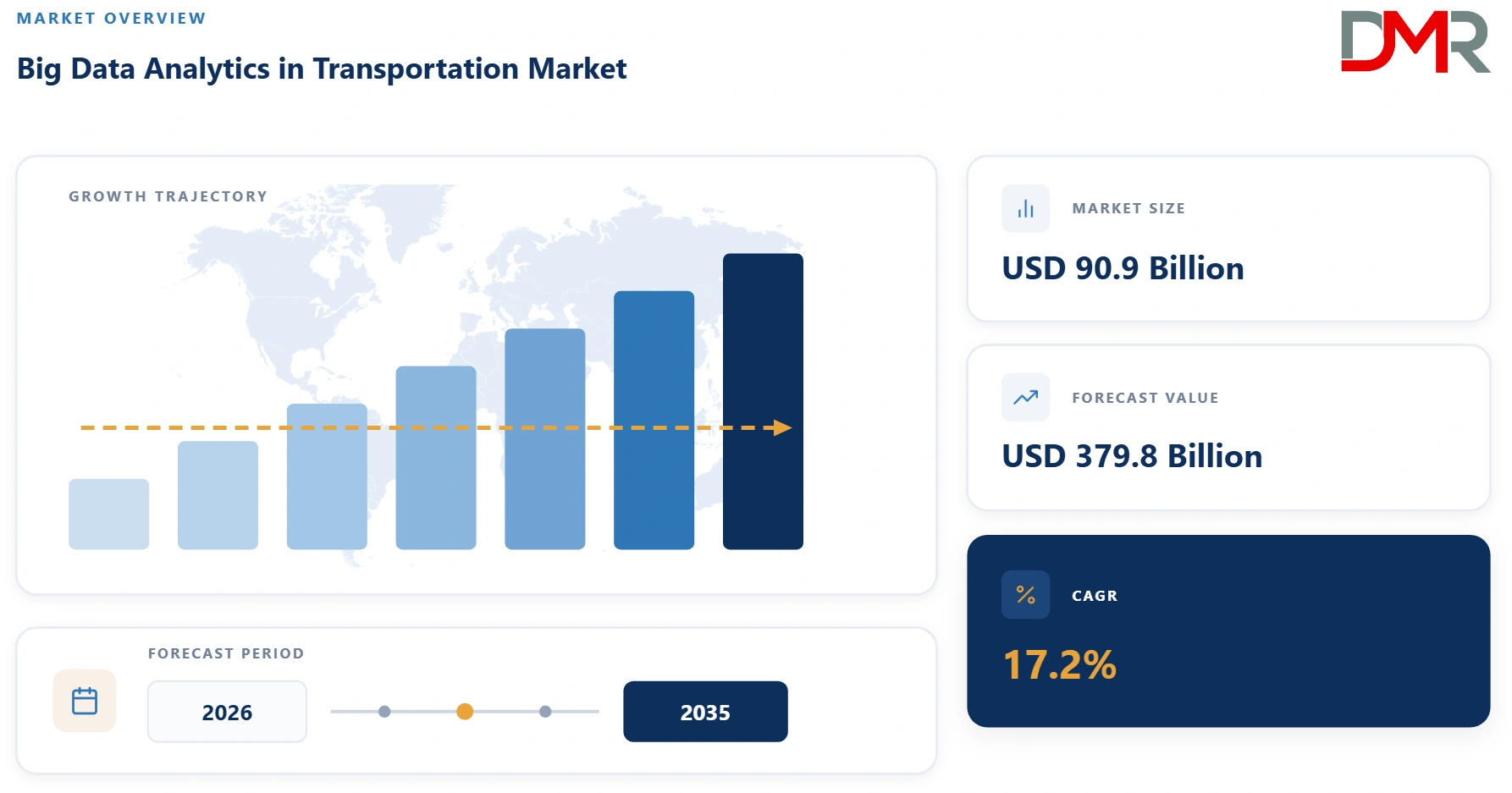
- Big Data Analytics in Transportation Market size in 2026 is: USD 90.9 Billion
- Big Data Analytics in the Transportation Market size in 2035 is: USD 379.8 Billion
- Global CAGR from 2027 to 2035 is: 17.2%
- Machine Learning is the leading technology segment in 2026: 32.1%
- Traffic Management is the leading application segment in 2026: 27.4%
- Vehicle Telematics is the leading data source segment in 2026: 30.6%
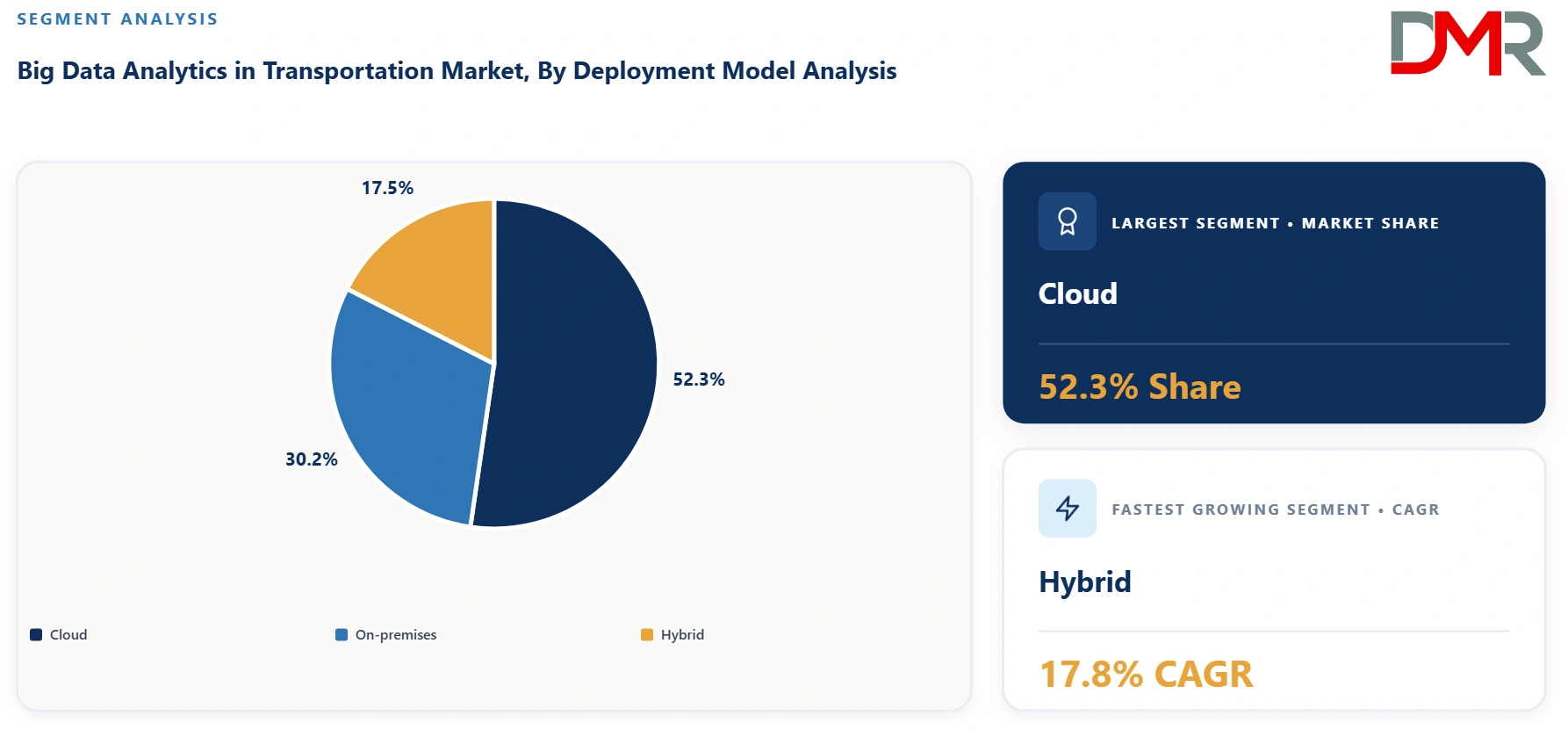
- Cloud is the leading deployment model segment in 2026: 52.3%
- Freight and Logistics is the leading end-user segment in 2026: 32.8%
- Deep Learning is the expected fastest-growing technology segment: 17.9% CAGR
- Predictive Maintenance is the expected fastest-growing application segment: 18.2% CAGR
- Vehicle Telematics is the expected fastest-growing data source segment: 18.5% CAGR
- Hybrid is the expected fastest-growing deployment model segment: 17.8% CAGR
- Smart Cities are the expected fastest-growing end-user segment: 18.0% CAGR
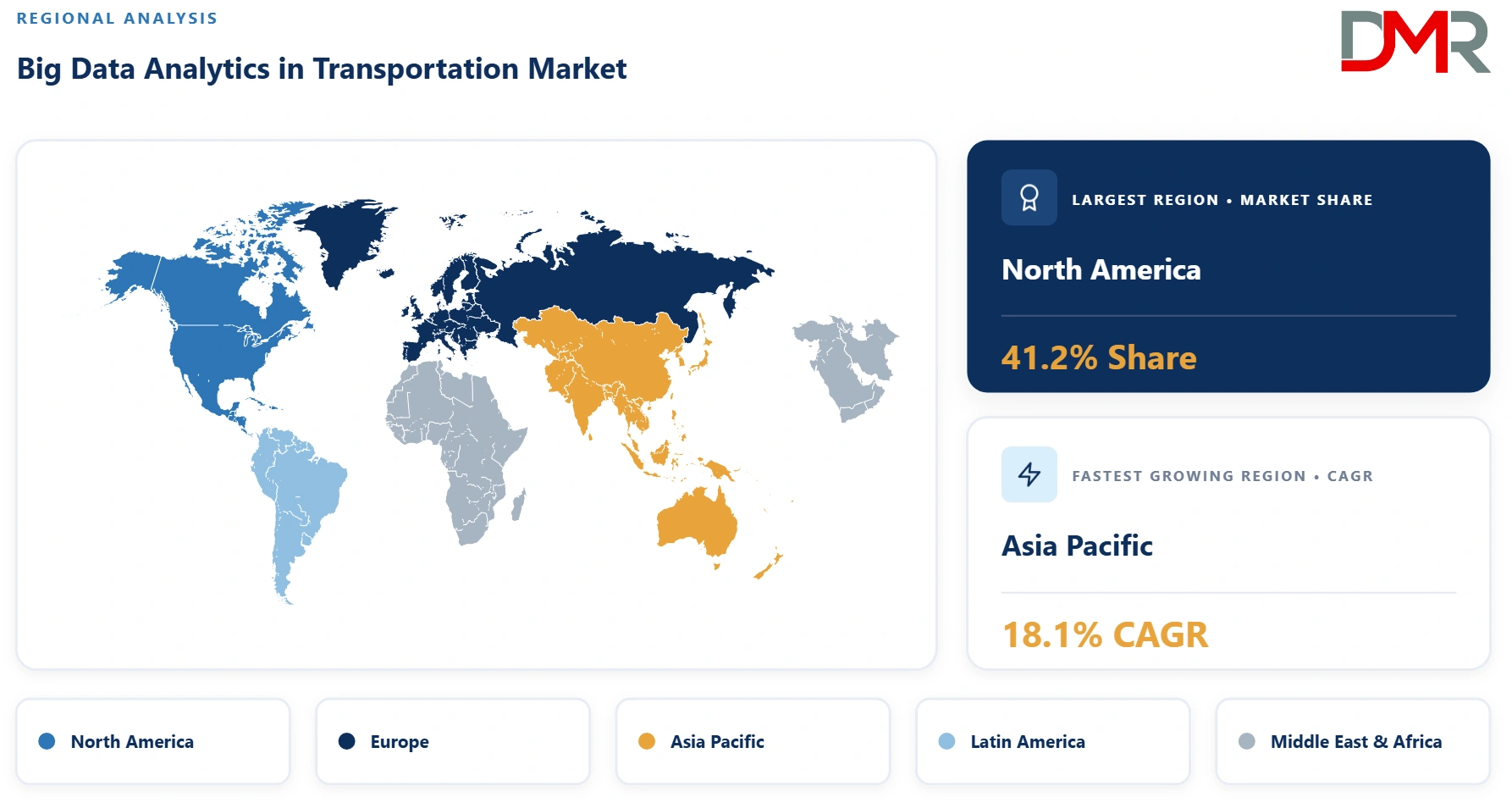
- North America is the leading region in 2026: 41.2%
- Asia Pacific is the expected fastest-growing region: 18.1% CAGR
What is Big Data Analytics in Transportation Market? Big Data Analytics in Transportation Market Size.
The Big Data Analytics in Transportation Market size is valued at USD 90.9 billion in 2026, and it is further anticipated to reach a market value of USD 379.8 billion by 2035 at a CAGR of 17.2%.
ℹ
To learn more about this report –
Download Your Free Sample Report Here
The Big Data Analytics in Transportation Market deals with the application of advanced analytics technologies to gather, process, and analyze large quantities of data associated with the transportation industry. This assists transportation organizations to become more efficient in their operations, optimize routes, improve fleet management, decrease congestion in traffic, and provide better experiences for passengers. Technologies like artificial intelligence, machine learning, deep learning, and data mining are some of the technologies employed in the market. The adoption of connected cars, GPS technology, IoT sensors, and cloud computing platforms is boosting market growth.
Use Cases
- Real-Time Traffic Monitoring and Congestion Control: The use of Big Data Analytics in transportation allows the traffic authorities to monitor and detect traffic congestion in real time. The data is gathered through traffic cameras, road sensors, GPS technologies, and connected vehicles that track the movements of vehicles and road conditions. With the help of the analysis of the collected data, traffic authorities can detect congested areas, change timings of traffic lights, and offer alternate routes to drivers.
- Fleet management and Route Optimization: The transport and logistics industries apply Big Data Analytics technology to track the position of vehicles, their fuel consumption, drivers' performance, the timing of delivery, and the effectiveness of the chosen route. The use of GPS and telematics data enables the understanding of how the vehicles move and what the inefficient routes are. The analytics system may suggest better routes that are suitable in terms of traffic, distance, and delivery demand.
- Predictive Maintenance of Transportation Vehicles: Through Big Data Analytics, transportation firms are able to anticipate the likelihood of vehicle or equipment malfunctions even before they happen. By analyzing data gathered through various sensors on the vehicle, including sensors in the engine and brake systems, the firms can detect abnormal behavior patterns in the vehicle. By analyzing past data and current conditions of the vehicles, the companies can anticipate when the vehicle needs maintenance or part replacements to avoid malfunctions and cut down costs.
- Logistics and Supply Chain Optimization: Big Data Analytics provides an opportunity for logistics companies to streamline their processes related to cargo delivery and transportation. The analytics process uses such factors as cargo shipping history, information about warehouses, GPS location, traffic, and shipping schedule to detect inefficiencies within the operations. With the help of these factors, businesses may optimize delivery routes, track cargo movement, estimate delivery time, and coordinate the activities of the warehouses and carriers.
Key Takeaways
- Market Growth: It is expected that the Global Big Data Analytics in Transportation Market will grow from USD 90.9 billion in 2026 to USD 379.8 billion in 2035 at a CAGR of 17.2%. Some factors fueling growth in the market include increasing use of data-based transportation systems and growing need for real-time traffic management.
- Machine Learning Dominates the Technology Segment: Machine Learning is projected to lead the technology segment in 2026, capturing a market share of 32.1%. Analyzing huge volumes of transportation data, identifying traffic patterns, and decision-making through predictions are some of the factors driving machine learning in the market. However, Deep Learning is projected to witness the highest growth rate of CAGR 17.9%.
- Traffic Management Dominates the Application Market Share: Traffic Management holds 27.4% of the market in 2026, backed by increasing need for real-time traffic monitoring and management of road infrastructure to avoid congestion. The Predictive Maintenance segment is expected to be the fastest-growing application market segment, with a CAGR of 18.2%, backed by the growing usage of data analytics for vehicle and infrastructure failure prediction.
- Vehicle Telematics Dominates the Data Source Market Share: Vehicle Telematics holds 30.6% of the market in 2026, backed by growing adoption of GPS technologies, connected vehicles, and real-time vehicle performance tracking. The same segment is forecast to maintain its dominance as the fastest-growing data source market share, backed by a CAGR of 18.5%.
- Cloud Dominates the Deployment Model Segmentation: Cloud holds 52.3% of the total market size in 2026 due to its scalability, flexibility, and capability to manage huge amounts of data related to transportation. Nevertheless, the Hybrid deployment model is expected to be the fastest-growing segment, growing at a CAGR of 17.8%. This is because more and more transport companies are increasingly opting to combine cloud and on-premises platforms.
- Freight and Logistics Leads the End-User Segment: Freight and Logistics holds 32.8% of the total market share in 2026 owing to the rising demand for shipment tracking, route optimization, and delivery management. Moreover, Smart Cities are estimated to be the fastest-growing End-User segment, growing at a CAGR of 18.0%.
- North America to Dominate the Market: North America holds a 41.2% share of the market in 2026 on account of development in transportation networks, increased penetration of connected car technology, investments in data analytics, and availability of technology vendors.
- Growth Opportunity for Asia Pacific: Asia Pacific is expected to witness the highest CAGR of 18.1% during the forecast period. Urbanization, rise in vehicles, logistics, initiatives to make Smart Cities, and investment in intelligent transportation networks are expected to present many growth opportunities for players in the market.
How AI/Gen AI Is Transforming Big Data Analytics in the Transportation Market?
AI and Generative AI are contributing greatly to the revolution of Big Data Analytics in the transportation market through the processing of big data and gaining insights to make intelligent decisions. AI makes it possible for processing of real-time data gathered from vehicles, GPS systems, traffic sensors and weather platforms, and making the routes optimum and congestion-free and efficient management of the fleets. Machine learning algorithms can be utilized to gain insight into traffic patterns, the need for maintenance for vehicles, and to make transportation safer. Generative AI will further help in the transportation industry through automating the reports, traffic forecasting, simulation of transportation, and allowing users to interface with big data through conversations. Through these techniques, logistics companies will be able to plan their deliveries better and use resources efficiently.
Key Drivers in the Big Data Analytics in Transportation Market
Increasing Usage of Connected Vehicles and IoT Devices
With an increasing use of connected cars, GPS technologies, and Internet of Things devices, huge amounts of transportation-related data are being produced. Connected technologies keep on collecting data regarding the location of the car, its speed, fuel usage, and traffic movements. It becomes essential for the transportation industry to have analytics platforms that will be able to analyze this data and make sense of it. The increase in availability of real-time data has motivated organizations to adopt big data analytics platforms.
Increasing Demand for Increased Transportation Operation Efficiency
Transportation companies are trying to reduce their costs by increasing operational efficiency. High fuel consumption, inefficient use of cars, delivery delays, and unnecessary travel can increase costs. The use of Big Data Analytics allows businesses to analyze past and current data in order to find inefficiencies in resource allocation and operations. Using data related to delivery schedules, driving performance, fuel consumption, and routes, businesses can make more efficient decisions.
Restraints in the Big Data Analytics in Transportation Market
Issues in Data Integration and Interoperability
Transport companies utilize various platforms for software, vehicles, tracking services, and management of data that may not necessarily work well together. The combination of data from the above sources is usually very difficult. There might be issues of data formats, compatibility, and even data quality. Such organizations will have to invest in new infrastructure and integration solutions before implementing an advanced analytics platform. Issues of data integration and interoperability will make it harder to adopt Big Data Analytics, especially for those transport firms using old systems.
Issues with Security and Data Privacy
There is a lot of sensitive information processed by Big Data Analytics platforms. Some of these include vehicle locations, information on drivers, passengers, and any other information on the transport activities. The collection of such information brings about various risks of data breaches, cyber-attacks, and misuse of data. Transport organizations should ensure there are proper security controls, access, and encryption of data to protect information from being misused. This issue will also increase costs of compliance with data privacy regulations.
Growth Opportunities in the Big Data Analytics in Transportation Market
Data-Driven Expansion of Public Transportation Services
The development of modern public transport networks enables Big Data Analytics vendors to collaborate with government organizations and transport operators. Modern buses, metros, railways, and other types of transport produce important data on passenger demand, mobility behavior, passenger flow, and transport service use. Analytics software may help in analyzing such data in order to determine unmet demand, plan transport capacity, and develop better scheduling. The modernization of public transportation facilities is expected to fuel the growth of demand for specialized analytics software.
Transportation Insurance Analytics
Increasing data on usage and driving behavior enables analytics companies to target the transportation insurance market. Insurance companies may use data produced by telematics devices to analyze drivers' driving behavior, mileage, usage of the vehicle, and accident-related behavior. Such data analysis will allow insurers to perform better risk assessments and claims processing as well as offer better insurance prices to customers. The increasing usage of usage-based insurance models drives the adoption of advanced data analytics software by insurers. Thus, analytics software finds another application outside traffic management and logistics.
Trends in the Big Data Analytics in Transportation Market
Increased Use of Edge Analytics
Edge analytics is becoming one of the critical trends in the transport sector due to its capability to process data in a location near where it has been created instead of transmitting data to cloud-based platforms. Connected vehicles, roadside sensors, and transport infrastructure can process some data locally and create more responsive actions. The method is especially effective for applications that need immediate data, such as collision alerts, monitoring the safety of vehicles, and adjusting traffic lights. Interest in low-latency data processing drives companies operating in transportation technology to develop edge computing capabilities in analytics platforms.
Usage of Digital Twin Technology in Transport Networks
The popularity of digital twin technology is increasing because organizations involved in the transport industry are exploring the opportunities associated with virtual modeling of physical assets and infrastructure. Digital twins utilize information received from sensors, vehicles, traffic systems, and infrastructure databases to recreate the current reality. The use of digital twins together with the analysis of big data allows simulating various traffic situations, evaluating the effectiveness of infrastructure, and investigating the possible effects of some changes before implementing them.
Research Scope and Analysis
The Big Data Analytics in Transportation Market is segmented based on Technology into Artificial Intelligence, Machine Learning, Deep Learning, Data Mining, and Text Analytics, Application into Traffic Management, Logistics and Supply Chain Optimization, Fleet Management, Predictive Maintenance, Passenger Experience Enhancement, Others, Data Source into Sensor Data, Vehicle Telematics, Traffic Data, Weather Data, and Social Media Data, Deployment Model into Cloud, On-premises, and Hybrid, and End-User into Automotive and Transportation, Freight and Logistics, Passenger Transportation, Government, Smart Cities, and Others. Geographically, the market includes North America, Europe, Asia Pacific, Latin America, and the Middle East and Africa.
ℹ
To learn more about this report –
Download Your Free Sample Report Here
By Technology Analysis
The Machine Learning technology segment holds the largest market share by value, accounting for 32.1% of the global market in 2026. The success of this technology segment can be attributed to its capability of analyzing vast amounts of transportation data, traffic patterns, and decision making. The Deep Learning technology segment is forecasted to experience the highest CAGR of 17.9% during 2027-2035.
By Application Analysis
The Traffic Management application segment holds the largest market share by value, accounting for 27.4% of the global market in 2026. The success of this application segment can be attributed to the growing use of data analysis to monitor traffic, detect congestion patterns, and ensure smooth traffic flow. The Predictive Maintenance application segment is forecasted to experience the highest CAGR of 18.2% during 2027-2035.
By Data Source Analysis
The Vehicle Telematics category leads in terms of market share in 2026 at 30.6%. This can be attributed to an increasing volume of vehicle-related data available, such as locations, speed, fuel usage, and driver behaviors, which enables transport businesses to have better visibility of operations. The Vehicle Telematics segment is expected to witness the highest growth among all data sources, with a CAGR of 18.5% through 2027–2035.
By Deployment Model Analysis
The Cloud deployment model accounted for the largest market share at 52.3% in 2026. This is owing to the ability of cloud deployment models to process a huge amount of transportation data as well as flexible access to analytics platforms irrespective of their location. The Hybrid deployment model is forecasted to exhibit the highest CAGR of 17.8% during 2027-2035.
By End-User Analysis
Freight and Logistics segment accounts for the largest market share at 32.8% in 2026. The segment's dominance is due to increasing demand for analysis of shipment details, delivery planning, monitoring of logistics activities, and enhancing visibility in the supply chain. The Smart Cities end user segment is expected to register the highest growth rate of 18.0% CAGR from 2027 to 2035.
The Big Data Analytics in Transportation Market Report is segmented based on the following:
By Technology
- Artificial Intelligence
- Machine Learning
- Deep Learning
- Data Mining
- Text Analytics
By Application
- Traffic Management
- Logistics and Supply Chain Optimization
- Fleet Management
- Predictive Maintenance
- Passenger Experience Enhancement
- Others
By Data Source
- Sensor Data
- Vehicle Telematics
- Traffic Data
- Weather Data
- Social Media Data
By Deployment Model
By End-User
- Automotive and Transportation
- Freight and Logistics
- Passenger Transportation
- Government
- Smart Cities
- Others
Regional Analysis
North America is the Leading Region in the Big Data Analytics in Transportation Market
The North America region holds a market dominance in the Big Data Analytics in Transportation Market in 2026, holding a market share of 41.2%, valued at USD 37.5 billion. This is attributed to the presence of an advanced transportation network, the presence of connected vehicles, and rising investments in data-driven transportation networks. The U.S. dominates the regional market on account of its established logistics network, presence of technology firms, and increasing adoption of analytics solutions driven by artificial intelligence. Moreover, rising investments in smart mobility and fleet management are propelling the market growth in the region.
ℹ
To learn more about this report –
Download Your Free Sample Report Here
Asia Pacific is the Fastest-Growing Region in the Big Data Analytics in Transportation Market
Asia Pacific is anticipated to be the most rapidly developing region within the Big Data Analytics in Transportation Market, with a CAGR of 18.1% throughout the forecast period from 2027 to 2035. The main factors behind such a development are the fast pace of urbanization, high rates of vehicle ownership, and investments in smart transportation systems. China, India, Japan, and South Korea are the countries that are introducing new technologies aimed at efficient traffic management. Moreover, the rapid development of e-commerce, logistics, and Smart Cities projects is generating a high demand for Big Data Analytics solutions.
The Europe Big Data Analytics in Transportation Market
Big Data Analytics in Transportation is becoming increasingly popular in Europe as the region is well-equipped with an advanced transportation infrastructure, the sustainability of which is gaining more attention along with increasing investments in intelligent transport systems. Nations like Germany, the UK, and France are aiding the development of the market in the region with their efforts towards connected vehicles, smart traffic management, and logistics. Moreover, the pressure of decreasing emissions coupled with increased focus on public transport efficiency is encouraging the application of data analytics.
The Latin America Big Data Analytics in Transportation Market
Latin America is witnessing an emerging trend in the adoption of Big Data Analytics in Transportation, due to the continuous modernization of the transport infrastructure and increasing investments in technology. Countries like Brazil, Mexico, and Argentina are adding to the growth of the regional market through the development of logistics infrastructure, smart car technologies, and intelligent traffic management systems. In addition, the increasing congestion in cities, e-commerce activities, and the need to provide efficient public transportation services are driving the adoption of data analytics technologies.
The Middle East and Africa Big Data Analytics in Transportation Market
The adoption of Big Data Analytics across the transportation sector has increased significantly in the Middle East and Africa region owing to investments in developing smart cities, transportation infrastructure, and digital transformation programs. Such countries as UAE, Saudi Arabia, and South Africa are playing a role in market growth in the region owing to the development of intelligent transportation systems and logistics systems. Besides, the increase in urbanization, freight transportation activities, and traffic management have been driving the use of data analytics solutions in transportation.
Major Country Analysis
United States Big Data Analytics in Transportation Market
The U.S. Big Data Analytics in Transportation Market is valued at USD 31.6 billion in 2026, and the market is expected to grow to about USD 134.3 billion by 2035, registering a CAGR of 17.5%. The growth of the market is attributed to the growing use of connected vehicles, increasing need for real-time traffic monitoring, and rising investments in ITS. Big data analytics solutions provide transportation organizations with efficient route optimization, effective fleet management, vehicle performance monitoring, and improved logistics operations. Moreover, the development of artificial intelligence, cloud computing, and predictive analytics technologies can help in the improvement of transportation efficiency.
Japan Big Data Analytics in Transportation Market
Growth of the Japan Big Data Analytics in Transportation Market is being witnessed on account of the advanced infrastructure of transport in Japan, increased use of connected vehicles, and increasing attention towards smart mobility. Big Data Analytics are being used by the operators of transport for monitoring traffic, optimizing railway operation, improving fleet management, and increasing efficiency in logistics. The high technological capability of Japan, along with its approach towards automation, is making it possible for Japan to adopt artificial intelligence, machine learning, and predictive analytics in transport.
Saudi Arabia Big Data Analytics in Transportation Market
The growth of the Saudi Arabia Big Data Analytics in Transportation Market can be attributed to various factors including the rise in investments made in the development of transport infrastructure and the rise in digital transformation efforts along with smart cities developments. Through the adoption of big data analytics solutions, transporters are able to achieve better traffic management, logistics operations optimization, vehicle performance tracking, and better mobility solutions. The country's Vision 2030 will ensure that intelligent transport systems, connected mobility, and logistics networks are built through the adoption of Big Data Analytics.
Technology Analysis
The technology analysis of the Global Big Data Analytics in Transportation Market sheds light on the increased use of Artificial Intelligence, Machine Learning, Deep Learning, and Cloud Computing in transportation. Real-time data processing and predictive analysis have become significant technological trends that can help enterprises with better traffic management, fleet utilization, and logistics. Edge computing and Generative AI are new technological trends that bring the advantages of accelerated decision-making and automatic data analysis to enterprises. On the other hand, data integration problems, cyber-attacks, expensive implementation processes, and a shortage of experienced professionals are among the most serious challenges in this area.
Investment and White Space Analysis
Investment and White Space Analysis of the Global Big Data Analytics in Transportation Market identifies emerging opportunities in smart mobility, intelligent traffic management, autonomous transportation, and digital logistics infrastructure. Increasing investments in Smart Cities projects, connected vehicle networks, and cloud-based analytics platforms are creating opportunities for technology providers to develop specialized transportation solutions. Emerging economies also offer considerable potential due to infrastructure modernization and growing demand for efficient public transportation. However, high initial investment requirements, uncertain returns, fragmented data infrastructure, and cybersecurity concerns may restrict investment decisions. Companies investing in scalable analytics platforms, AI-powered solutions, and underserved transportation applications can strengthen their market presence and capture new revenue opportunities.
By Region
North America
Europe
- Germany
- France
- The U.K.
- Italy
- Spain
- Rest of Europe
Asia Pacific
- China
- Japan
- India
- Australia
- South Korea
- Rest of APAC
Latin America
- Mexico
- Brazil
- Rest of LATAM
Middle East and Africa
- Saudi Arabia
- The UAE
- South Africa
- Rest of MEA
Competitive Landscape
The Big Data Analytics in Transportation Market is competitive owing to the presence of technology firms, analytics solution providers, and transportation software companies. Leading firms in the market are concentrating on innovation, alliances, product development, and acquisitions in order to build a strong position in the market. Players are also investing heavily in artificial intelligence (AI), machine learning, cloud computing, and predictive analytics in order to provide high-end solutions for traffic management, fleet optimization, logistics planning, and transportation management. The rising requirement for real-time processing of data and intelligent transportation systems is compelling market players to enhance their technological skills. Apart from this, collaborations with transportation operators, government organizations, and Smart Cities developers are benefiting market players by boosting their business activities.
Some of the prominent players in the Global Big Data Analytics in Transportation Market are:
- IBM Corporation
- Oracle Corporation
- SAP SE
- Microsoft Corporation
- Amazon.com, Inc.
- Alphabet Inc.
- Cisco Systems, Inc.
- SAS Institute Inc.
- Palantir Technologies Inc.
- Snowflake Inc.
- Databricks, Inc.
- Esri
- Hexagon AB
- Trimble Inc.
- The Descartes Systems Group Inc.
- WiseTech Global Limited
- Manhattan Associates, Inc.
- Siemens AG
- TomTom N.V.
- HERE Technologies
- INRIX, Inc.
- Teralytics AG
- Geotab Inc.
- Samsara Inc.
- Motive Technologies, Inc.
- Powerfleet, Inc.
- Gurtam
- Fleetio, Inc.
- Lytx, Inc.
- Kapsch TrafficCom AG
- Q-Free ASA
- SWARCO AG
- Miovision Technologies Incorporated
- Conduent Incorporated
- Almaviva S.p.A.
- Indra Sistemas, S.A.
- Hitachi, Ltd.
- NEC Corporation
- Robert Bosch GmbH
- Others
Recent Developments
- In September 2026, Samsara announced that its Model Context Protocol (MCP) brings live operational context into AI tools used by teams. The announcement describes how the integration connects Samsara's operational data with AI tools, allowing users to access information from their connected operations within the tools they already use.
- In April 2026, Descartes Systems Group announced the introduction of its Fleet Data Intelligence platform on the Global Logistics Network. The platform combines an AI agent named René with machine learning capabilities to analyze fleet execution data. It provides real-time insights, identifies operational inefficiencies, and supports service-time predictions. Descartes also stated that early deployments increased route density by up to 30%, enabling fleets to complete more stops without adding vehicles or drivers.
Report Details
| Report Characteristics |
| Market Size (2026) |
USD 90.9 Bn |
| Forecast Value (2035) |
USD 379.8 Bn |
| CAGR (2027–2035) |
17.2% |
| The US Market Size (2026) |
USD 31.6 Bn |
| Historical Data |
2021 – 2025 |
| Forecast Data |
2027 – 2035 |
| Base Year |
2026 |
| Segments Covered |
By Technology, By Application, By Data Source, By Deployment Model, By End-User |
| Regional Coverage |
North America – The US and Canada; Europe – Germany, France, The UK, Italy, Spain, Rest of Europe; Asia-Pacific – China, Japan, India, Australia, South Korea, Rest of APAC; Latin America – Mexico, Brazil, Colombia, Argentina, Rest of LATAM; Middle East & Africa – Saudi Arabia, The UAE, South Africa, Rest of MEA |
Frequently Asked Questions
How big is the Global Big Data Analytics In Transportation Market?
▾ The Global Big Data Analytics in Transportation Market is estimated to be valued at USD 90.9 billion in 2027 and is projected to reach approximately USD 379.8 billion by 2035.
What is the CAGR of the Global Big Data Analytics in Transportation Market from 2027 to 2035?
▾ The Global Big Data Analytics in Transportation Market is anticipated to grow at a compound annual growth rate (CAGR) of 17.2% during the forecast period from 2027 to 2035.
What factors are driving the growth of the Global Big Data Analytics in Transportation Market?
▾ The market is driven by the increasing adoption of connected vehicles and IoT devices, rising demand for transportation operational efficiency, growing investments in smart transportation infrastructure, and increasing use of real-time data analytics for traffic management, fleet optimization, and logistics planning.
What are the major trends in the Global Big Data Analytics in Transportation Market?
▾ The market is witnessing increasing adoption of artificial intelligence, machine learning, edge analytics, and digital twin technology. The integration of connected vehicle data, cloud-based analytics platforms, and predictive maintenance solutions is also improving transportation planning, traffic monitoring, and operational decision-making.
Which region held the largest share of the Global Big Data Analytics in Transportation Market in 2026?
▾ North America is estimated to hold the largest share of the Global Big Data Analytics in Transportation Market in 2026, accounting for approximately 41.2% of the total market.
Which region is expected to grow the fastest in the Global Big Data Analytics in Transportation Market?
▾ Asia Pacific is expected to be the fastest-growing regional market during the forecast period, registering a CAGR of 18.1%. Growth is supported by rapid urbanization, increasing investments in Smart Cities projects, expanding transportation infrastructure, and growing adoption of connected mobility and intelligent transportation systems.
Who are the key players in the Global Big Data Analytics in Transportation Market?
▾ Key players in the Global Big Data Analytics in Transportation Market include IBM Corporation, Oracle Corporation, SAP SE, Microsoft Corporation, Amazon.com, Inc., Alphabet Inc., Cisco Systems, Inc., SAS Institute Inc., Palantir Technologies Inc., Snowflake Inc., Databricks, Inc., Esri, Hexagon AB, Trimble Inc., The Descartes Systems Group Inc., WiseTech Global Limited, Siemens AG, TomTom N.V., HERE Technologies, INRIX, Inc., Geotab Inc., Samsara Inc., and Kapsch TrafficCom AG, among others.
How is the Big Data Analytics in Transportation Market segmented?
▾ The Global Big Data Analytics in Transportation Market is segmented based on Technology into Artificial Intelligence, Machine Learning, Deep Learning, Data Mining, and Text Analytics; Application into Traffic Management, Logistics and Supply Chain Optimization, Fleet Management, Predictive Maintenance, Passenger Experience Enhancement, and Others; Data Source into Sensor Data, Vehicle Telematics, Traffic Data, Weather Data, and Social Media Data; Deployment Model into Cloud, On-premises, and Hybrid; and End-User into Automotive and Transportation, Freight and Logistics, Passenger Transportation, Government, Smart Cities, and Others. Geographically, the market is segmented into North America, Europe, Asia Pacific, Latin America, and the Middle East and Africa.