What is the Bio-based Propylene Glycol Market Size?
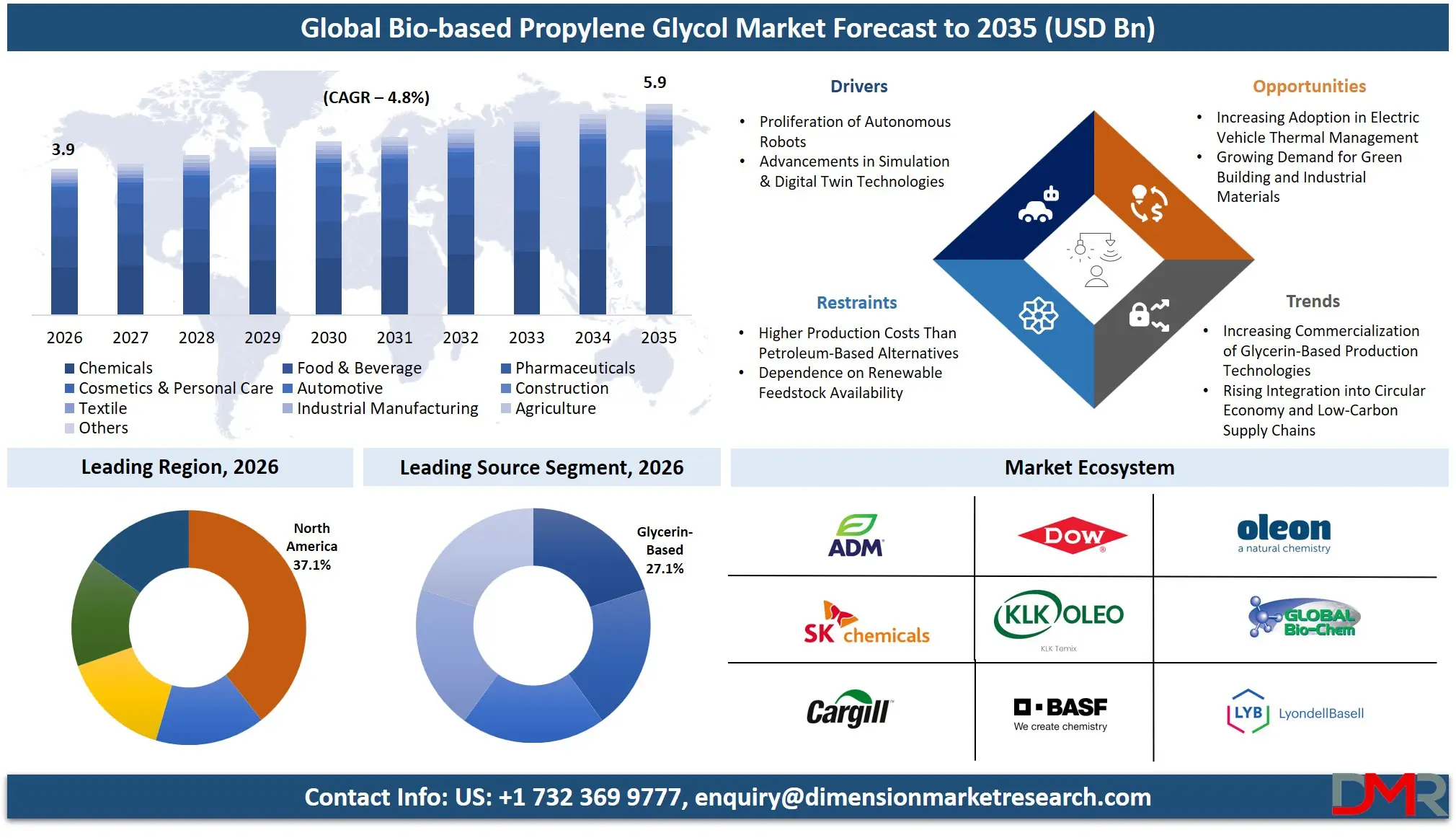
The Global Bio-based Propylene Glycol Market is expected to reach a value of USD 3.9 billion in 2026, and it is further anticipated to reach USD 5.9 billion by 2035, growing at a CAGR of 4.8% during the forecast period.
ℹ
To learn more about this report –
Download Your Free Sample Report Here
The bio-based propylene glycol market is experiencing steady growth as industries across the value chain intensify their sustainability mandates and transition away from petroleum-derived feedstocks. The market consists of glycerin-based, sorbitol-based, and corn-based glycols, among others, which serve as drop-in replacements for conventional propylene glycol in pharmaceuticals, cosmetics, food and beverage, and industrial applications. The increasing consumer preference for natural and plant-derived ingredients, coupled with tightening environmental regulations on carbon emissions, is driving the necessity for specialized bio-based production processes. The cosmetics, pharmaceutical, and food and beverage sectors are the most frequent adopters, with industrial and pharmaceutical grades remaining the most popular due to their purity profiles and broad applicability. The unsaturated polyester resins (UPR), antifreeze, and cosmetics sectors are key players as they require non-toxic, renewable, and high-performance glycol solutions.
The US Bio-based Propylene Glycol Market
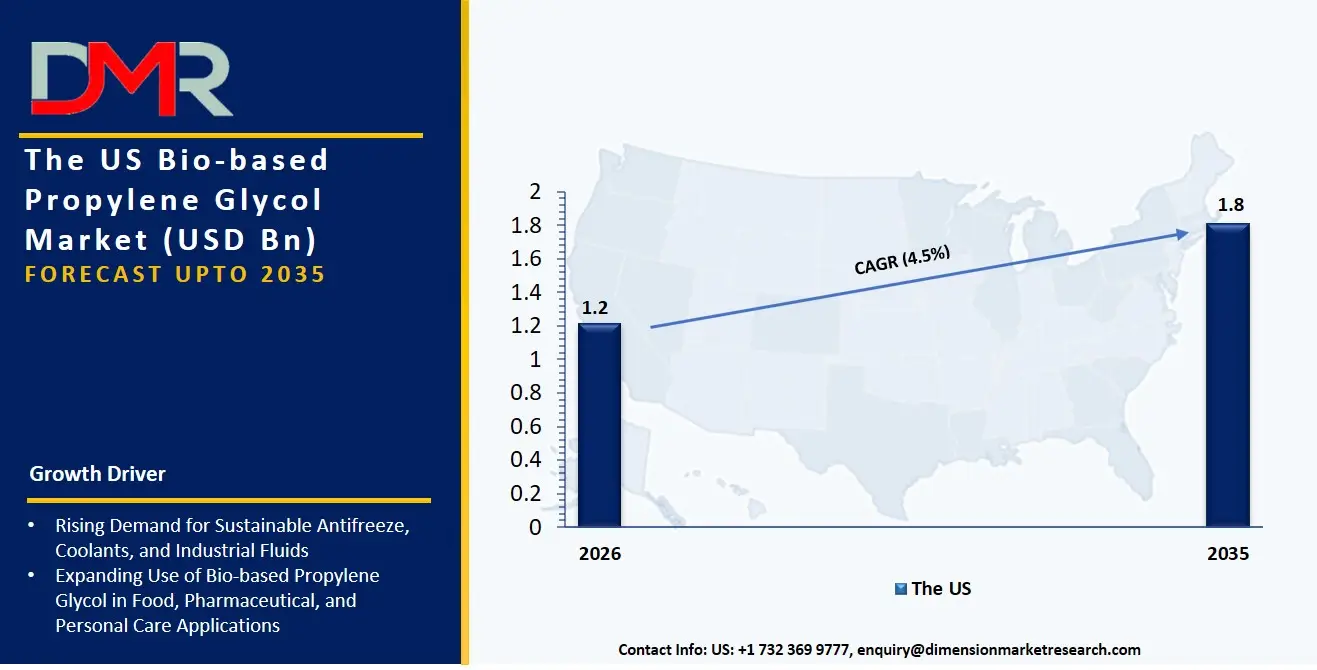
The US Bio-based Propylene Glycol Market is projected to reach USD 1.2 billion in 2026 at a compound annual growth rate of 4.5% over its forecast period, culminating in a value of USD 1.8 billion by 2035.
ℹ
To learn more about this report –
Download Your Free Sample Report Here
The US continues to be a frontrunner and mature market in bio-based propylene glycol due to the active formulation modernization efforts of multinational chemical and consumer goods companies and the growing availability of domestic soybean and corn feedstocks. The market has been typified by high demand for glycerin-based products, whereby manufacturers are focused on leveraging surplus crude glycerol from biodiesel production into high-purity industrial and pharmaceutical-grade glycols. Besides, the implementation of USDA BioPreferred labeling on end-products is producing a parallel need in cosmetic grade and food grade applications to substantiate natural marketing claims and supply chain transparency.
The Europe Bio-based Propylene Glycol Market
The Europe Bio-based Propylene Glycol Market is estimated to be valued at USD 1.1 billion in 2026 and is further anticipated to reach USD 1.7 billion by 2035 at a CAGR of 4.8%. The regulatory frameworks including REACH and the European Green Deal have a significant impact on the European market, driving the need to employ catalytic conversion technologies and certified sustainable sourcing. Accelerated growth in bio-based functional fluids and antifreeze products is also being experienced in the region as automotive and industrial manufacturing sectors in Germany and France are trying to strike a balance between operational performance and ecological toxicity standards. In addition, consumer-facing brands are challenging ingredient suppliers to create dedicated corn-based and sugarcane-based propylene glycol offerings to provide full traceability and naturality across cosmetic and pharmaceutical ecosystems.
The Japan Bio-based Propylene Glycol Market
The Japan Bio-based Propylene Glycol Market is projected to be valued at USD 332.5 million in 2026 at a CAGR of 4.5%. The Japanese market is unique, with a corporate drive for green procurement in response to stringent chemical substance control laws and an aging, health-conscious population. Pharmaceutical grade and cosmetic grade bio-based propylene glycol make up a large part of the spending as Japanese conglomerates replace synthetic excipients in topical and oral formulations with plant-derived alternatives. There is also a strong need for deep local market integration to bridge gaps between traditional fermentation-based processes and modern catalytic conversion facilities, which forms a niche in high-purity glycerin-based refining and application-specific solvent technologies.
Key Takeaways
- Market Size & Forecast: The Global Bio-based Propylene Glycol market is projected to reach USD 3.9 billion in 2026, expanding steadily to USD 5.9 billion by 2035, fueled by the dual drivers of corporate net-zero pledges and the mandatory substitution of fossil-based chemicals in consumer goods.
- Growth Rate & Outlook: Global market growth is expected at a CAGR of 4.8%, driven by a fundamental shift in end-user industry specifications and the escalating complexity of certifying bio-based content across multi-tier supply chains.
- Primary Growth Drivers: Key forces include the widespread availability of low-cost crude glycerol as a byproduct of biodiesel, the need for non-toxic antifreeze and deicing fluids to protect sensitive ecosystems, and the integration of bio-based glycols into unsaturated polyester resins (UPR) for green building materials requiring specialized formulation expertise.
- Key Market Trends: Major trends include the rise of Bonsucro-certified sugarcane-based glycol for eco-conscious cosmetics, the use of novel catalytic conversion methods to enhance product purity, and the shift toward pharmaceutical grade vegetable oil-based 1,3-propanediol as brands prioritize clean-label excipients.
- By Application Analysis: Unsaturated Polyester Resins (UPR) and Antifreeze & Coolants are expected to dominate volume demand due to their industrial scale. High-value applications in Cosmetics & Personal Care and Pharmaceuticals are driving margin growth, as these segments increasingly require segregated, non-petroleum supply chains.
- By End User Analysis: Chemicals and Cosmetics & Personal Care are the most lucrative end-user verticals due to their high-volume blending requirements and clean-label marketing. The Pharmaceuticals segment is the fastest-growing sector as regulatory pharmacopeias modernize monographs to explicitly permit bio-based excipients in oral and injectable formulations.
- Regional Leadership: North America is poised to dominate this market with 37.1% of the market share in 2026 due to its large-scale feedstock availability and well-developed biorefinery ecosystem that utilizes glycerin-based production to its fullest and makes it a leader in this market.
What is the Bio-based Propylene Glycol?
Bio-based Propylene Glycol comprises specialized renewable chemical intermediates and ingredients offered by agribusiness processors, chemical manufacturers, and bio-refineries to assist formulators in transitioning through the entire product lifecycle. These materials, unlike petroleum-derived propylene glycol (the commodity chemical itself), are defined by the origin of their carbon atoms. This involves Glycerin-Based processing to valorize waste streams from biodiesel, Sorbitol-Based hydrogenolysis to create food-grade humectants, and Corn-Based and Sugarcane-Based fermentation pathways to produce drop-in ingredients that are chemically identical to their fossil counterparts. With over 60% of consumers actively seeking plant-derived ingredients, bio-based propylene glycol is needed to achieve substantiated naturality claims, secure eco-certifications, and ensure seamless performance, making agricultural feedstocks translate into tangible product differentiation, as opposed to mere chemical parity.
Use Cases
- Bio-UPR in Green Building Construction: Building material companies source bio-based unsaturated polyester resins made with glycerin-based propylene glycol to formulate low-VOC composite panels for LEED-certified building projects, reducing embodied carbon without sacrificing durability.
- Renewable Excipients in Oral Formulations: Pharmaceutical manufacturers use pharmaceutical grade, corn-based propylene glycol as a carrier solvent in pediatric cough syrups, moving away from allergen-laden petroleum grades to hypoallergenic plant-based alternatives.
- Non-Toxic Aircraft Deicing Fluids: Airport authorities deploy corn-based deicing fluids formulated with industrial grade bio-propylene glycol to achieve critical low-temperature viscosity profiles while drastically reducing aquatic toxicity compared to conventional ethylene glycol fluids.
- Clean-Label Skin Care Humectants: Cosmetic formulators integrate cosmetic grade sugarcane-based propylene glycol into moisturizers to act as a natural humectant, substantiating "100% natural origin" claims required by retailers like Whole Foods and Credo Beauty.
How AI is Transforming the Bio-based Propylene Glycol Market?
Artificial intelligence (AI) is transforming the bio-based propylene glycol market by improving feedstock selection, optimizing production processes, and accelerating sustainable product development. AI-powered analytics enable manufacturers to monitor glycerin and other renewable feedstocks, predict quality variations, and optimize catalyst performance, resulting in higher production efficiency and lower operational costs. Machine learning models simulate reaction conditions, reducing energy consumption and improving product yield while minimizing waste and emissions. AI also enhances predictive maintenance by identifying equipment issues before failures occur, improving plant reliability and reducing downtime. In supply chain management, AI forecasts demand, optimizes inventory, and streamlines logistics for food, pharmaceutical, cosmetics, and industrial applications. Additionally, AI supports research into advanced bio-based formulations with enhanced purity and performance, enabling faster commercialization. These capabilities help manufacturers improve sustainability, reduce costs, strengthen regulatory compliance, and remain competitive in the evolving renewable chemicals industry.
Market Dynamics
Key Drivers in the Global Bio-based Propylene Glycol Market
Rising Demand for Sustainable and Renewable Chemicals
Growing environmental concerns and stringent regulations aimed at reducing greenhouse gas emissions are driving the adoption of bio-based propylene glycol across multiple industries. Manufacturers are increasingly replacing petroleum-derived propylene glycol with renewable alternatives produced from glycerin, corn, and sugarcane to meet sustainability goals. Bio-based propylene glycol offers lower carbon emissions while maintaining comparable chemical and physical properties. Government incentives promoting bio-based products, expanding circular economy initiatives, and increasing corporate commitments toward carbon neutrality further accelerate market growth. Continuous improvements in production technologies and renewable feedstock availability continue strengthening commercial adoption across industrial, pharmaceutical, food, and personal care applications worldwide.
Expanding Applications in Food, Pharmaceuticals, and Personal Care
The growing use of bio-based propylene glycol in food, pharmaceutical, and personal care products is a major driver supporting global market expansion. The compound functions as a solvent, humectant, stabilizer, and carrier in numerous formulations while offering excellent safety and regulatory acceptance. Rising consumer preference for naturally derived ingredients and sustainable product formulations encourages manufacturers to adopt renewable alternatives. Expanding pharmaceutical production, increasing processed food consumption, and rising demand for premium cosmetics further stimulate product consumption. Continuous innovation in bio-based formulations and stricter regulations supporting environmentally responsible ingredients contribute significantly to sustained market growth across these high-value industries.
Restraints in the Global Bio-based Propylene Glycol Market
Higher Production Costs Than Petroleum-Based Alternatives
Bio-based propylene glycol generally carries higher production costs than conventional petroleum-derived propylene glycol due to renewable feedstock pricing, advanced processing technologies, and comparatively smaller production volumes. Complex conversion processes, catalyst requirements, and supply chain costs contribute to elevated manufacturing expenses. These cost differences can discourage adoption in price-sensitive industrial sectors despite growing sustainability awareness. Fluctuations in agricultural feedstock prices further affect manufacturing economics and product pricing. Although technological advancements are gradually improving production efficiency and reducing costs, price competitiveness remains a major restraint limiting widespread commercialization across several industrial applications.
Dependence on Renewable Feedstock Availability
Production of bio-based propylene glycol relies heavily on renewable feedstocks such as glycerin, corn, sugarcane, and vegetable oils, making supply dependent on agricultural production and biodiesel manufacturing. Seasonal fluctuations, climate-related events, and competition with food production may influence raw material availability and pricing. Supply chain disruptions can create uncertainty for manufacturers requiring stable production capacity and long-term contracts. Variations in feedstock quality may also affect production efficiency and product consistency. Strengthening feedstock diversification and improving biomass processing technologies remain essential for overcoming these supply-related challenges and supporting future market expansion.
Growth Opportunities in the Global Bio-based Propylene Glycol Market
Increasing Adoption in Electric Vehicle Thermal Management
The rapid expansion of electric vehicles presents significant growth opportunities for bio-based propylene glycol in advanced coolant and heat transfer fluid applications. Electric vehicle battery systems require efficient thermal management to ensure safety, performance, and battery longevity. Bio-based propylene glycol provides effective heat transfer properties while supporting automotive sustainability objectives. Growing investments in electric mobility, stricter vehicle emission regulations, and increasing battery manufacturing capacity continue driving demand for environmentally friendly cooling solutions. Continuous advancements in coolant formulations and renewable chemical technologies are expected to strengthen market opportunities within the rapidly evolving electric vehicle ecosystem.
Growing Demand for Green Building and Industrial Materials
The increasing adoption of sustainable construction materials and environmentally friendly industrial products creates attractive growth opportunities for bio-based propylene glycol. It is widely used in unsaturated polyester resins, paints, coatings, adhesives, and heat transfer systems that support green building initiatives. Rising infrastructure development, stricter environmental regulations, and growing corporate sustainability commitments encourage manufacturers to incorporate renewable chemical ingredients into industrial formulations. Continuous innovation in bio-based resins and coatings further expands commercial applications. Increasing investments in sustainable manufacturing and low-carbon construction solutions are expected to generate substantial long-term demand for bio-based propylene glycol worldwide.
Trends in the Global Bio-based Propylene Glycol Market
Increasing Commercialization of Glycerin-Based Production Technologies
A major trend shaping the global bio-based propylene glycol market is the growing commercialization of glycerin-based production technologies. Manufacturers increasingly utilize surplus glycerin from biodiesel production as a renewable feedstock to improve sustainability and reduce production costs. Advances in catalytic hydrogenolysis processes have enhanced conversion efficiency, product purity, and manufacturing scalability. Integration with biodiesel value chains also supports circular economy objectives by maximizing resource utilization. Continued investments in production capacity and catalyst development are strengthening commercial competitiveness and enabling broader adoption of glycerin-based bio-propylene glycol across numerous industrial applications.
Rising Integration into Circular Economy and Low-Carbon Supply Chains
Bio-based propylene glycol manufacturers are increasingly aligning production strategies with circular economy principles and low-carbon supply chains. Companies are emphasizing renewable feedstocks, waste minimization, energy-efficient manufacturing, and lifecycle carbon reduction to meet evolving customer expectations and regulatory requirements. Strategic collaborations across agriculture, biodiesel, and specialty chemicals industries are improving raw material utilization and supply chain resilience. Growing adoption of sustainability certifications and environmental product declarations further enhances market acceptance. This increasing focus on responsible production practices continues positioning bio-based propylene glycol as an important renewable chemical supporting global decarbonization initiatives.
Research Scope and Analysis
The Global Bio-based Propylene Glycol Market is segmented by source, product type, manufacturing process, application, distribution channel, and end user. The report analyzes renewable feedstocks, production technologies, industrial and specialty grades, diverse application areas, sales channels, and demand across chemicals, pharmaceuticals, food, cosmetics, automotive, construction, textile, industrial manufacturing, agriculture, and other end-use industries worldwide.
ℹ
To learn more about this report –
Download Your Free Sample Report Here
By Source Analysis
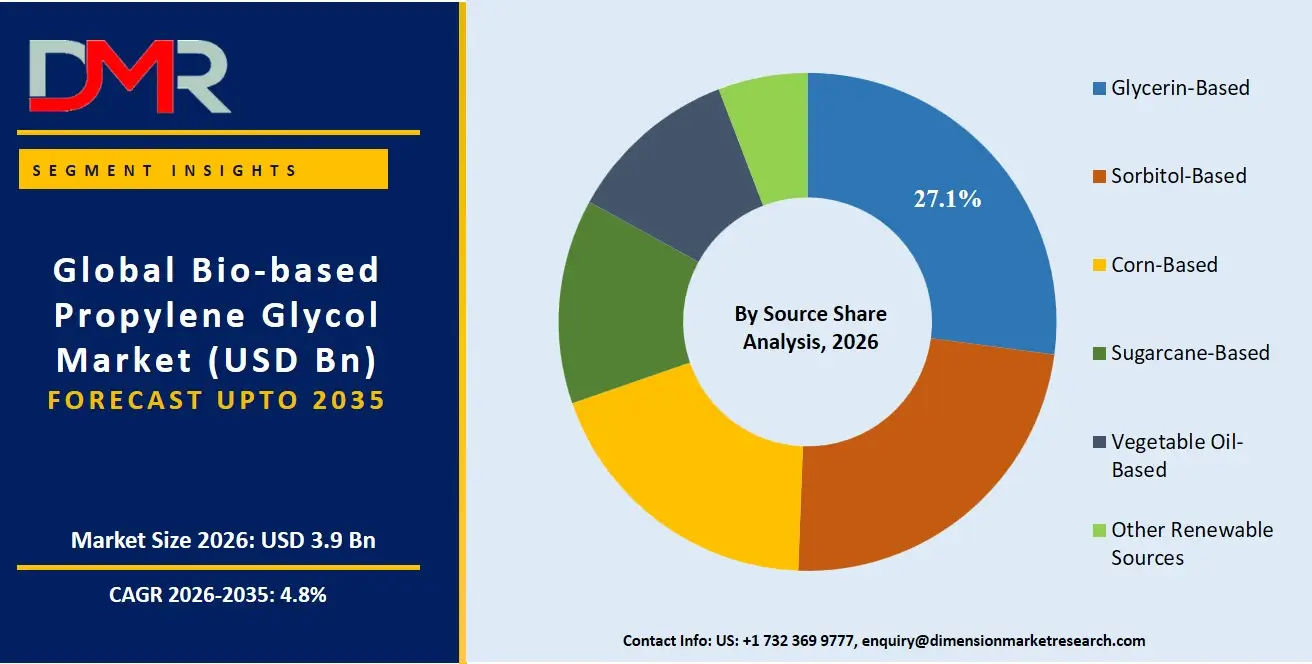
Glycerin-based bio-propylene glycol is projected to dominate the global market owing to the abundant availability of glycerin as a by-product of biodiesel production and its cost-effective conversion into bio-based propylene glycol through hydrogenolysis. The process is commercially mature, scalable, and supports high product purity suitable for industrial and pharmaceutical applications. Increasing global biodiesel production has strengthened glycerin supply, ensuring reliable feedstock availability. Manufacturers favor glycerin because it enables reduced greenhouse gas emissions compared with petroleum-derived alternatives while supporting circular economy initiatives. Strong regulatory support for renewable chemicals and continuous improvements in catalytic conversion technologies further reinforce glycerin-based production as the leading source segment.
By Product Type Analysis
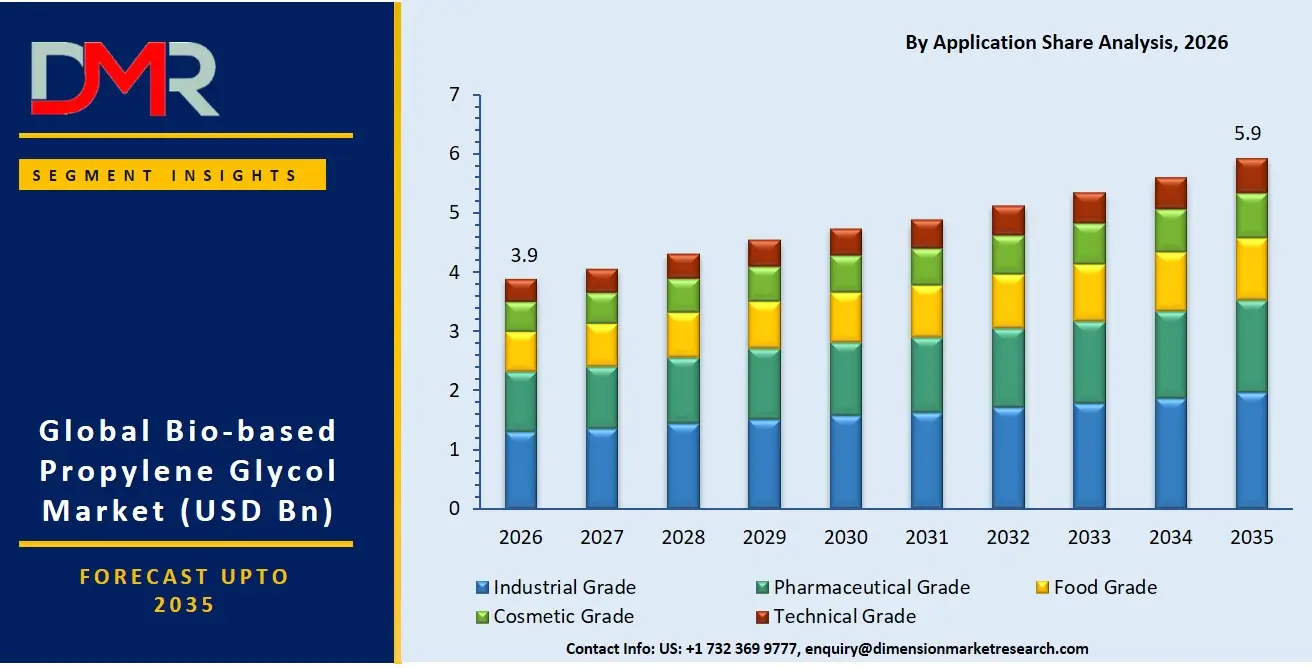
Industrial-grade bio-based propylene glycol is poised to account for the largest market share because of its widespread use across unsaturated polyester resins, antifreeze, coolants, paints, coatings, deicing fluids, and heat transfer applications. Industries increasingly adopt renewable industrial-grade formulations to reduce carbon footprints while maintaining excellent thermal stability, corrosion resistance, and processing performance. The growing construction, automotive, and industrial manufacturing sectors continue generating substantial demand for sustainable industrial chemicals. Manufacturers also benefit from established production technologies and broad regulatory acceptance across industrial applications. Continuous infrastructure development and increasing emphasis on environmentally friendly industrial materials further strengthen industrial-grade bio-based propylene glycol's market leadership.
By Manufacturing Process Analysis
Hydrogenolysis of glycerol is anticipated to dominates the manufacturing process segment due to its high commercial maturity, production efficiency, and compatibility with abundant renewable glycerin feedstocks. The technology enables high conversion yields, excellent product quality, and cost-effective large-scale manufacturing compared with emerging production methods. Continuous catalyst improvements have enhanced process efficiency while reducing energy consumption and operating costs. Strong integration with biodiesel production supports feedstock security and circular economy objectives. Major manufacturers continue investing in hydrogenolysis facilities because the process provides reliable commercial scalability and supports increasing global demand for renewable chemicals, making it the preferred production technology worldwide.
By Application Analysis
Unsaturated polyester resins is expected to represent the largest application segment due to extensive use of bio-based propylene glycol in producing durable composite materials for construction, transportation, marine, wind energy, and infrastructure industries. Bio-based propylene glycol enhances resin flexibility, chemical resistance, and mechanical performance while reducing environmental impact.
ℹ
To learn more about this report –
Download Your Free Sample Report Here
Growing demand for lightweight composite materials and sustainable manufacturing practices continues accelerating adoption. Increasing investments in renewable energy infrastructure, commercial buildings, and transportation further support market expansion. Continuous innovation in composite technologies and rising preference for renewable feedstocks ensure that unsaturated polyester resin production remains the dominant application for bio-based propylene glycol globally.
By Distribution Channel Analysis
Direct sales are poised to dominate the distribution channel segment because bio-based propylene glycol is primarily supplied in bulk quantities to industrial manufacturers through long-term contractual agreements. Large chemical producers, resin manufacturers, pharmaceutical companies, and cosmetics manufacturers prefer direct procurement to ensure consistent product quality, reliable supply, customized technical support, and competitive pricing. Direct sales also facilitate close collaboration between suppliers and customers during product development and regulatory compliance. Increasing industrial demand for renewable chemicals, coupled with integrated supply chain management and strategic partnerships, continues reinforcing direct sales as the preferred distribution channel across the global bio-based propylene glycol market.
By End User Analysis
The chemicals industry is poised to dominate end-user demand because bio-based propylene glycol serves as an essential intermediate in manufacturing resins, solvents, plasticizers, functional fluids, surfactants, and specialty chemical formulations. Chemical manufacturers increasingly replace petroleum-derived glycols with renewable alternatives to achieve sustainability targets and comply with tightening environmental regulations. Growing demand for bio-based intermediates across multiple downstream industries continues supporting consumption. Established industrial infrastructure, broad product compatibility, and increasing investments in green chemistry further strengthen adoption. Continuous expansion of bio-based specialty chemicals and industrial formulations ensures that the chemicals sector remains the largest consumer of bio-based propylene glycol worldwide.
The Global Bio-based Propylene Glycol Market Report is segmented on the basis of the following:
By Source
- Glycerin-Based
- Sorbitol-Based
- Corn-Based
- Sugarcane-Based
- Vegetable Oil-Based
- Other Renewable Sources
By Product Type
- Industrial Grade
- Pharmaceutical Grade
- Food Grade
- Cosmetic Grade
- Technical Grade
By Manufacturing Process
- Hydrogenolysis of Glycerol
- Fermentation-Based Process
- Catalytic Conversion
- Other Bio-based Production Processes
By Application
- Unsaturated Polyester Resins (UPR)
- Antifreeze & Coolants
- Food & Beverage
- Food Additives
- Flavor Carriers
- Humectants
- Pharmaceuticals
- Oral Formulations
- Topical Formulations
- Injectable Formulations
- Cosmetics & Personal Care
- Skin Care Products
- Hair Care Products
- Oral Care Products
- Deicing Fluids
- Functional Fluids
- Paints & Coatings
- Detergents & Cleaners
- Plasticizers
- Heat Transfer Fluids
- Others
By Distribution Channel
- Direct Sales
- Distributors & Wholesalers
- Online Sales
By End User
- Chemicals
- Food & Beverage
- Pharmaceuticals
- Cosmetics & Personal Care
- Automotive
- Construction
- Textile
- Industrial Manufacturing
- Agriculture
- Others
Regional Analysis
Leading Region by Market Share
ℹ
To learn more about this report –
Download Your Free Sample Report Here
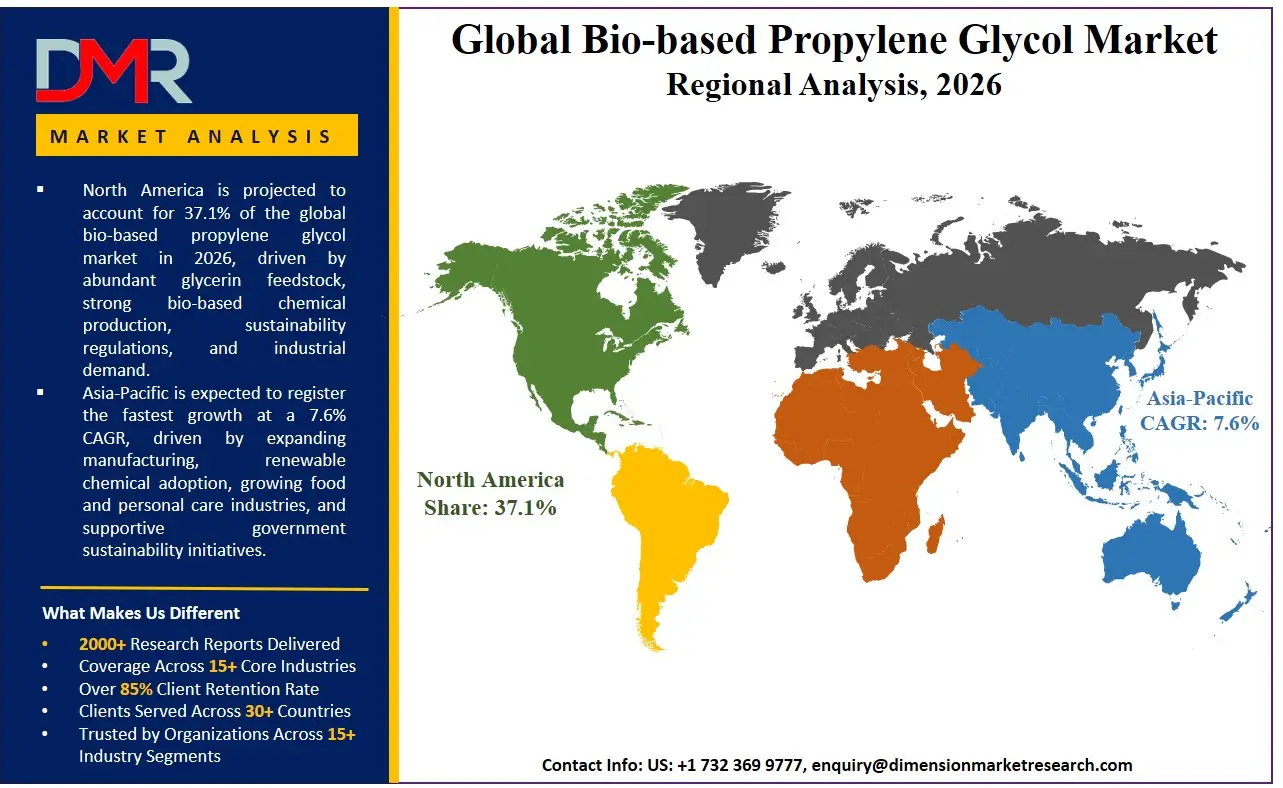
North America is poised to dominate the global bio-based propylene glycol market as it is projected to hold 37.1% of the market share by the end of 2026. The United States, which dominates North America, has the highest share in the bio-based propylene glycol market because of the unmatched concentration of integrated soybean crush and biodiesel refining assets and the aggressive renewable product marketing by Fortune 500 consumer goods conglomerates. The area has an established ecosystem of agricultural processors, specialty chemical distributors, and a rich pool of green chemistry engineering talent. Enterprise investment in environmental labels, sustainable packaging, and the overall retirement of diesel particulate-emitting fleets for B20 biodiesel blends contributes to the continued demand for crude glycerin refining and downstream hydrogenolysis along with continuous logistics optimization. Moreover, a favorable USDA BioPreferred purchasing mandate perpetually finances upcoming biorefinery enterprises that need expert direct sales and compliance certification to achieve expeditious federal procurement and consumer trust.
Fastest-Growing Regional Market
Asia-Pacific is expected to be the most rapidly expanding bio-based propylene glycol market, driven by the government-led sweeping biodiesel blending mandates in India, China, Indonesia, and Malaysia. The fast-paced economic growth, the rise of an aspirational middle-income population, and the dynamic expansion of the local personal care and pharmaceutical economy are compelling established palm oil conglomerates and state-owned energy firms to discard wasteful glycerol flaring practices. Distributor and wholesaler partnerships are in high demand to help these large agricultural organizations head in the direction of certified food and cosmetic grade production. There is also a severe lack of qualified traceability certification and catalytic conversion engineering talent in the region, and it is necessary to outsource quality assurance and EU-compliant Good Manufacturing Practice (GMP) consulting to cover the expertise gap and enable faster validation of export-ready bio-glycol shipments.
By Region
North America
Europe
- Germany
- The U.K.
- France
- Italy
- Russia
- Spain
- Benelux
- Nordic
- Rest of Europe
Asia-Pacific
- China
- Japan
- South Korea
- India
- ANZ
- ASEAN
- Rest of Asia-Pacific
Latin America
- Brazil
- Mexico
- Argentina
- Colombia
- Rest of Latin America
Middle East & Africa
- Saudi Arabia
- UAE
- South Africa
- Israel
- Egypt
- Rest of MEA
Competitive Landscape
The competitive environment of global bio-based propylene glycol has become highly dynamic with a heterogeneous array of multinational agribusiness corporations, specialty chemical giants, and niche biotech fermentation companies. The key to success will be the profound strategic alliances with biodiesel refiners and major consumer packaged goods (CPG) companies like Unilever or L'Oréal because they will open the necessary offtake agreements and early access to new proprietary formulations. The movement towards market consolidation is rapidly progressing with traditional petroleum refineries acquiring glycerin-to-glycol technology startups and oleochemical intermediates specialists to stay afloat. Proprietary intellectual property, including high-selectivity copper-based catalysts and specific microbial strains for fermentation-based processes, is becoming a more important basis of competitive differentiation than just price parity or generic bulk chemical distribution approaches.
Some of the prominent players in the Global Bio-based Propylene Glycol Market are:
- ADM
- Cargill, Incorporated
- Dow Inc.
- BASF SE
- LyondellBasell Industries
- SK Chemicals Co., Ltd.
- Global Bio-Chem Technology Group Company Limited
- Oleon NV
- Temix Oleo Srl
- Metabolic Explorer S.A.
- Braskem S.A.
- Godavari Biorefineries Limited
- Corbion N.V.
- DuPont de Nemours, Inc.
- Ashland Inc.
- Milliken & Company
- Avient Corporation
- Renewable Energy Group, Inc.
- Susterra® Propanediol
- Haihang Industry Co., Ltd.
- Other Key Players
Recent Developments
- December 2025: ADM expanded its bio-based propylene glycol production capacity in North America to meet growing demand from food, pharmaceutical, and personal care industries seeking renewable, low-carbon glycols.
- May 2024: Dow Inc. announced the expansion of its propylene glycol production capacity at its integrated manufacturing facility in Map Ta Phut, Thailand, increasing capacity by 80 kilotons per year to support rising global demand.
- November 2024: Clariant AG announced plans to expand storage capacity for recycled mono propylene glycol (MPG) in Sweden to support increasing demand for sustainable aircraft deicing fluids through additional storage tanks and improved logistics infrastructure.
Report Details
| Report Characteristics |
| Market Size (2026) |
USD 3.9 Bn |
| Forecast Value (2035) |
USD 5.9 Bn |
| CAGR (2026–2035) |
4.8% |
| The US Market Size (2026) |
USD 1.2 Bn |
| Historical Data |
2021 – 2025 |
| Forecast Data |
2027 – 2035 |
| Base Year |
2025 |
| Estimate Year |
2026 |
| Segments Covered |
By Source, By Product Type, By Manufacturing Process, By Application, By Distribution Channel, By End User |
| Regional Coverage |
North America – The US and Canada; Europe – Germany, The UK, France, Russia, Spain, Italy, Benelux, Nordic, & Rest of Europe; Asia-Pacific – China, Japan, South Korea, India, ANZ, ASEAN, Rest of APAC; Latin America – Brazil, Mexico, Argentina, Colombia, Rest of Latin America; Middle East & Africa – Saudi Arabia, UAE, South Africa, Turkey, Egypt, Israel, & Rest of MEA |
Frequently Asked Questions
How big is the Global Bio-based Propylene Glycol Market?
▾ The Global Bio-based Propylene Glycol market is poised to be valued at USD 3.9 billion in 2026 and is projected to reach USD 5.9 billion by 2035, driven by the universal need for sustainable, non-toxic ingredients in cosmetics, pharmaceutical excipients, and green antifreeze solutions.
What is the CAGR of the Global Bio-based Propylene Glycol Market from 2026 to 2035?
▾ The market is expected to grow at a CAGR of 4.8% from 2026 to 2035, reflecting the accelerating shift toward agricultural feedstocks in the chemical industry and the persistent need for carbon footprint reduction across industrial and consumer value chains.
What factors are driving the growth of the Global Bio-based Propylene Glycol Market?
▾ Key drivers include the structural oversupply of biodiesel-derived crude glycerol, the imperative to replace toxic deicing fluids with benign alternatives, the regulatory complexity of clean-label marketing, and the surge in demand for Pharmaceutical Grade and Cosmetic Grade plant-based excipients amid evolving organic certification laws.
Which region held the largest share of the Bio-based Propylene Glycol Market in 2026?
▾ North America is poised to hold 37.1% of the market share in 2026, driven by a mature biodiesel and corn wet-milling ecosystem and aggressive enterprise investment in Glycerin-Based chemical manufacturing and bio-based UPR capabilities.
Which region is expected to grow the fastest in the Bio-based Propylene Glycol Market?
▾ The Asia-Pacific region is expected to grow the fastest, fueled by rapid green chemistry expansion in China, India, and Southeast Asia, where glycerol valorization and catalytic conversion consulting are critical for transitioning large palm oil and sugar conglomerates to zero-waste biorefinery operations.
What are the major trends in the Global Bio-based Propylene Glycol Market?
▾ Major trends include the integration of mass-balance certification into chemical distribution workflows, the rise of Bio-PDO from vegetable oil fermentation, the demand for Bonsucro-certified sugarcane-based ingredients, and the focus on high-purity distillation within complex catalytic conversion process environments.
Who are the key players in the Global Bio-based Propylene Glycol Market?
▾ Key players include integrated agribusiness companies like ADM and Cargill, diversified chemical giants like BASF, Dow, and Huntsman, oleochemical specialists like Oleon, and dedicated bio-fermentation ventures like DuPont Tate & Lyle Bio Products.
How is the Global Bio-based Propylene Glycol Market segmented?
▾ The market is segmented by Source, Product Type, Manufacturing Process, Application, Distribution Channel, and End User.