What is the Biodegradable Electronics Market Size?
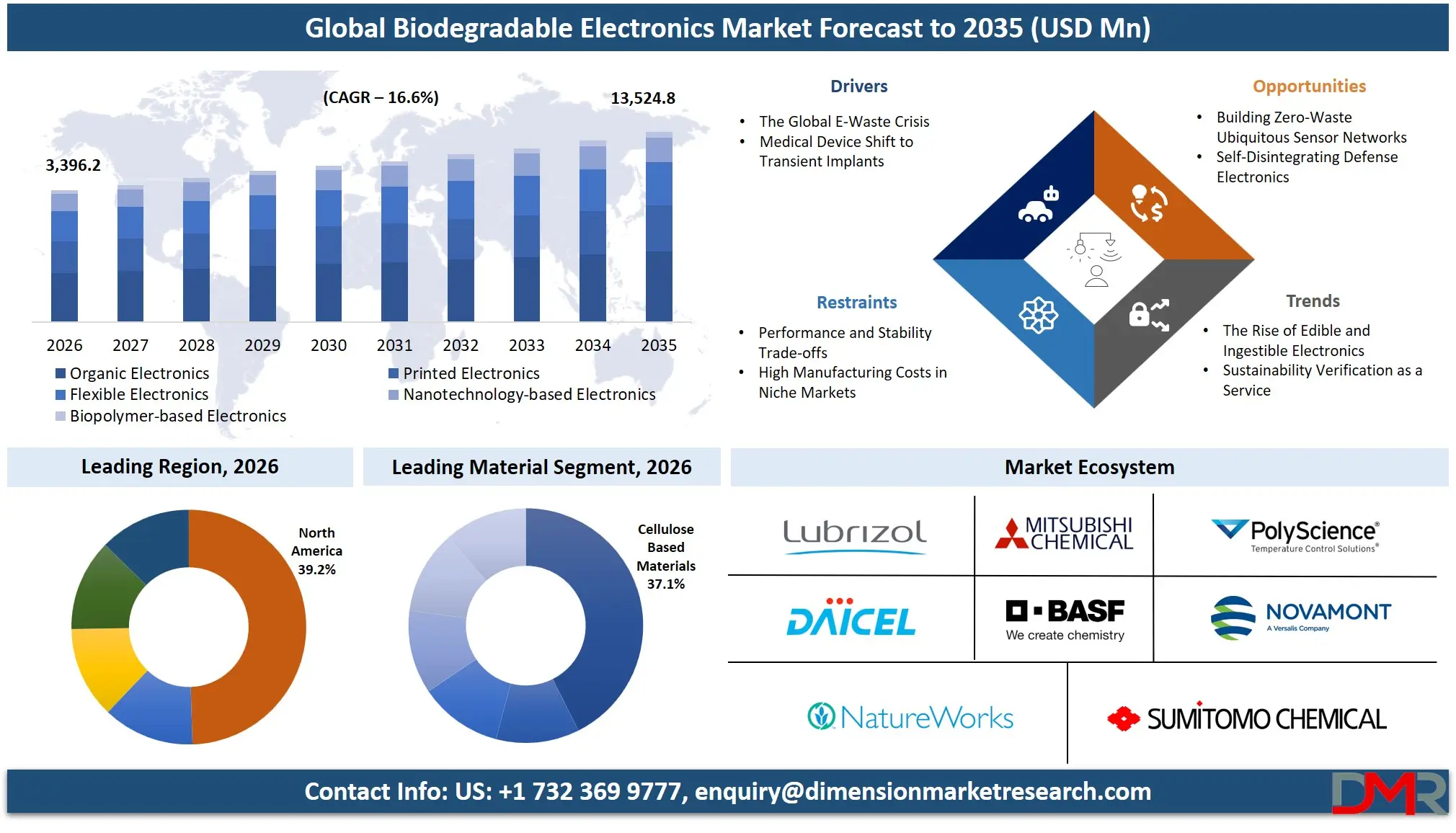
The Global Biodegradable Electronics Market is expected to reach a value of USD 3,396.2 million in 2026, and it is further anticipated to reach USD 13,524.8 million by 2035, growing at a CAGR of 16.6% during the forecast period.
ℹ
To learn more about this report –
Download Your Free Sample Report Here
The biodegradable electronics market has been growing at a rapid pace as companies and consumers are accelerating the speed of sustainability change and moving from persistent e-waste products to transient, green electronics. The market includes transient sensors, displays, batteries, and printed circuit boards (PCBs) that are intended to dissolve, resorb or decompose safely in environmental or biological settings.
The growing demand to deploy ubiquitous sensor networks, implantable medical technologies and smart packaging creates the need for tailored research and production. Medical practitioners are the prime users and biodegradable sensors and batteries are the most common due to their safe biocompatibility and no-extraction requirement. Healthcare, environmental and consumer electronic markets are the major market segments as they require safe, compliant and environmentally-dissolvable electronic ecosystems.
ℹ
To learn more about this report –
Download Your Free Sample Report Here
The US Biodegradable Electronics Market
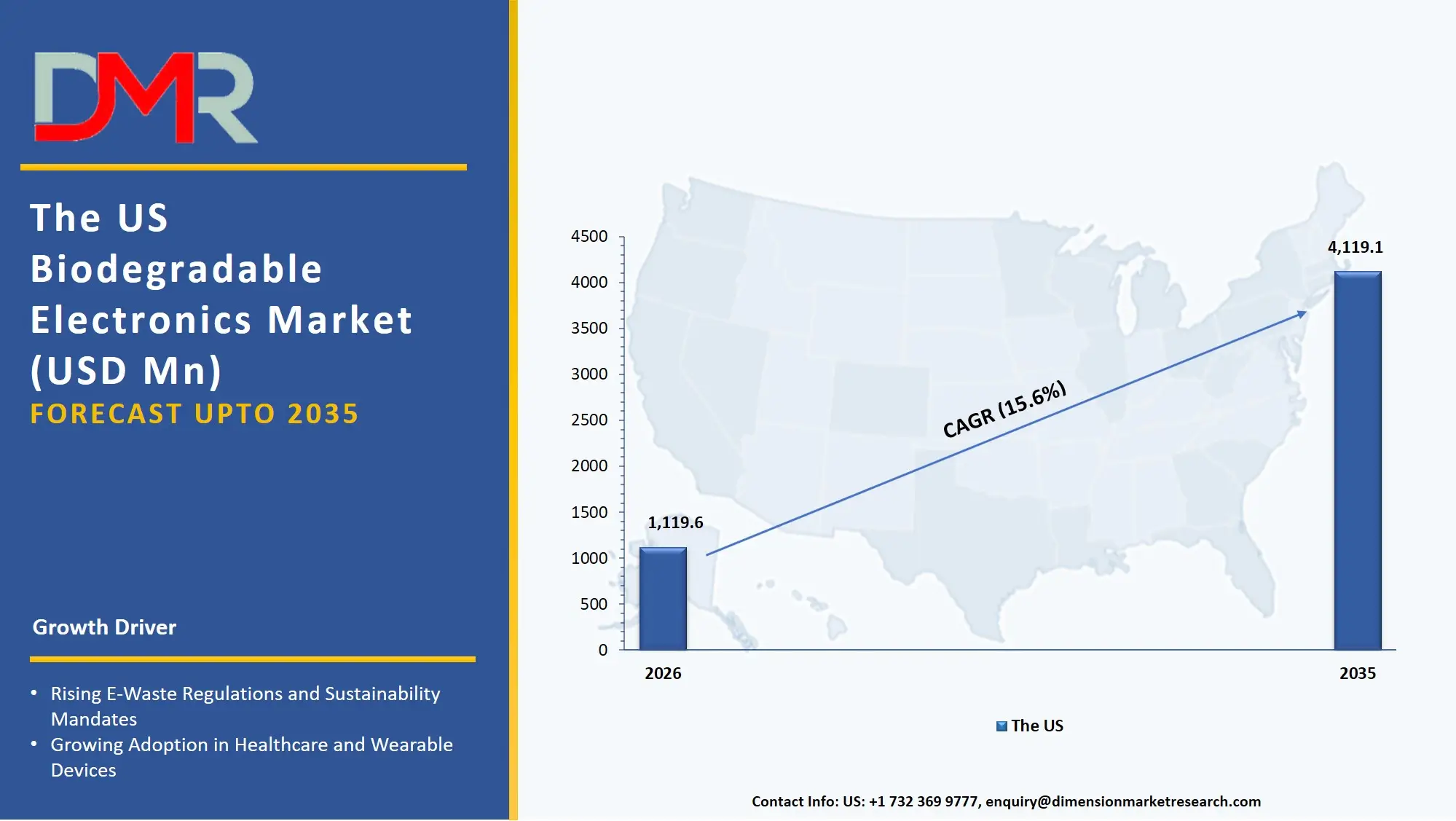
The US Biodegradable Electronics Market is projected to reach USD 1,119.6 million in 2026 at a compound annual growth rate of 15.6% over its forecast period, which is further expected to reach a value of USD 4,119.1 million by 2035.
ℹ
To learn more about this report –
Download Your Free Sample Report Here
The US remains the most mature market in biodegradable electronics because of the active research and innovation in material science of leading research institutions and the widespread adoption of point-of-care medical devices. The market has been characterised by heavy need for biodegradable sensors as healthcare professionals are seeking temporary sensing implants to track post-surgery recovery without the need to remove them. In addition, the use of flexible bioresorbable substrates is creating a similar demand in temporary printed circuit boards to control the dissolution rate and ensure data destruction in military systems.
The Europe Biodegradable Electronics Market
The Europe Biodegradable Electronics Market is estimated to be valued at USD 962.2 million in 2026 and is further anticipated to reach USD 3,674.2 million by 2035 at a CAGR of 16.0%. The regulatory environment such as WEEE (Waste Electrical and Electronic Equipment) Directives and the forthcoming EU Ecodesign for Sustainable Products Regulation (ESPR) have profound effects on the market in Europe, and create demand for the use of cellulose-based materials and polylactic acid (PLA) substrates in consumer electronics. In addition, the region is also witnessing a rapid growth in smart packaging services as the food and beverage industries in Germany and France are striving to balance supply chain transparency with a reduction in plastic waste. Moreover, initiatives like the EU Circular Economy Action Plan are demanding tailor-made organic electronic designs for biodegradability and safe disposal in European ecosystems.
The Japan Biodegradable Electronics Market
The Japan Biodegradable Electronics Market is projected to be valued at USD 362.7 million in 2026. It is further expected to witness robust growth, holding USD 1,344.7 million in 2035 at a CAGR of 15.7%. The Japanese market is distinctive with corporate aspirations towards Society 5.0 to counter the country's ageing population and a cultural ethos of material efficiency. Biodegradable batteries and medical devices are a significant portion of the investment as conglomerates create ingestible medical robots and transitory health patches. There is also an urgent need to merge paper-based traditional crafts with electronics, to connect the gaps between flexible electronics and consumer disposability, which is a niche in printed electronics and biopolymer-based electronics.
Key Takeaways
- Market Size & Forecast: The Global Biodegradable Electronics market is projected to reach USD 3,396.2 million in 2026, expanding dramatically to USD 13,524.8 million by 2035, fueled by the dual drivers of innovation in implantable medical devices and the legislative requirement to phase out persistent toxic e-waste.
- Growth Rate & Outlook: Global market growth is expected at a CAGR of 16.6%, due to a deficit of experts in bioresorbable materials and increasing challenges in controlling dissolution of transient electronic devices.
- Primary Growth Drivers: Key forces include the shift from persistent e-waste to a biodegradable end-of-life cycle, the requirement for silk protein bio-engineering to prevent device degradation, and the use of nanotechnology-based electronics that require specific manufacturing expertise.
- Key Market Trends: Key trends include the emergence of custom biodegradable products and the adoption of machine learning tools in material discovery to automatically characterise polymer degradation, and the importance of biodegradable memory devices as government agencies increasingly favour physically transient data storage.
- By Product Type Analysis: Biodegradable sensors are poised to dominate the market. due to increased need for short-term data collection in medical and environmental sectors. They allow brief, safe, and low-risk use, and enable fast and effective decision-making, especially in pressure, gas and electrophysiological sensors.
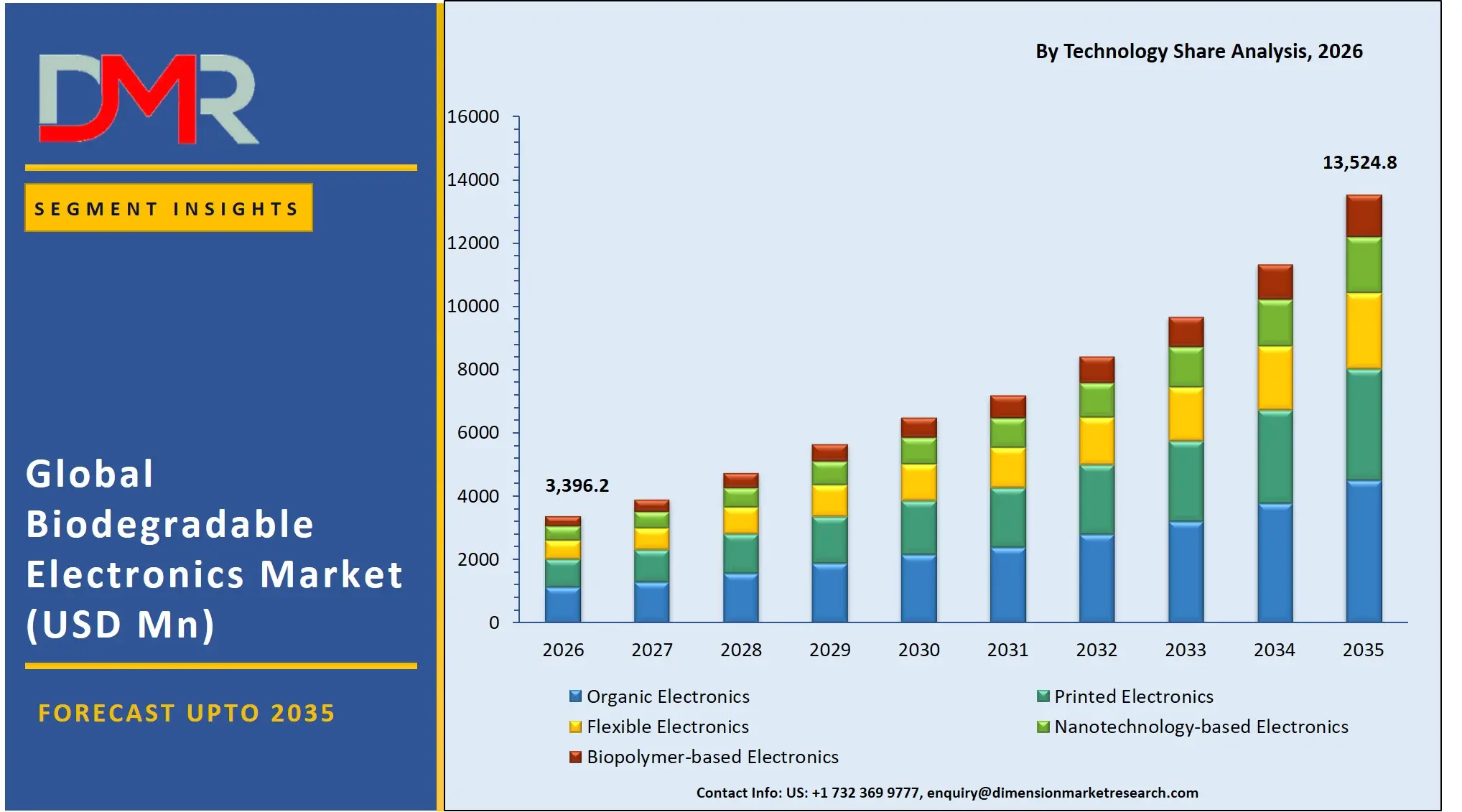
- By Technology Analysis: Organic electronics are expected to dominate this segment due their biocompatibility and flexible properties. They are carbon-based, allowing for controlled degradation and removal of toxic elements.
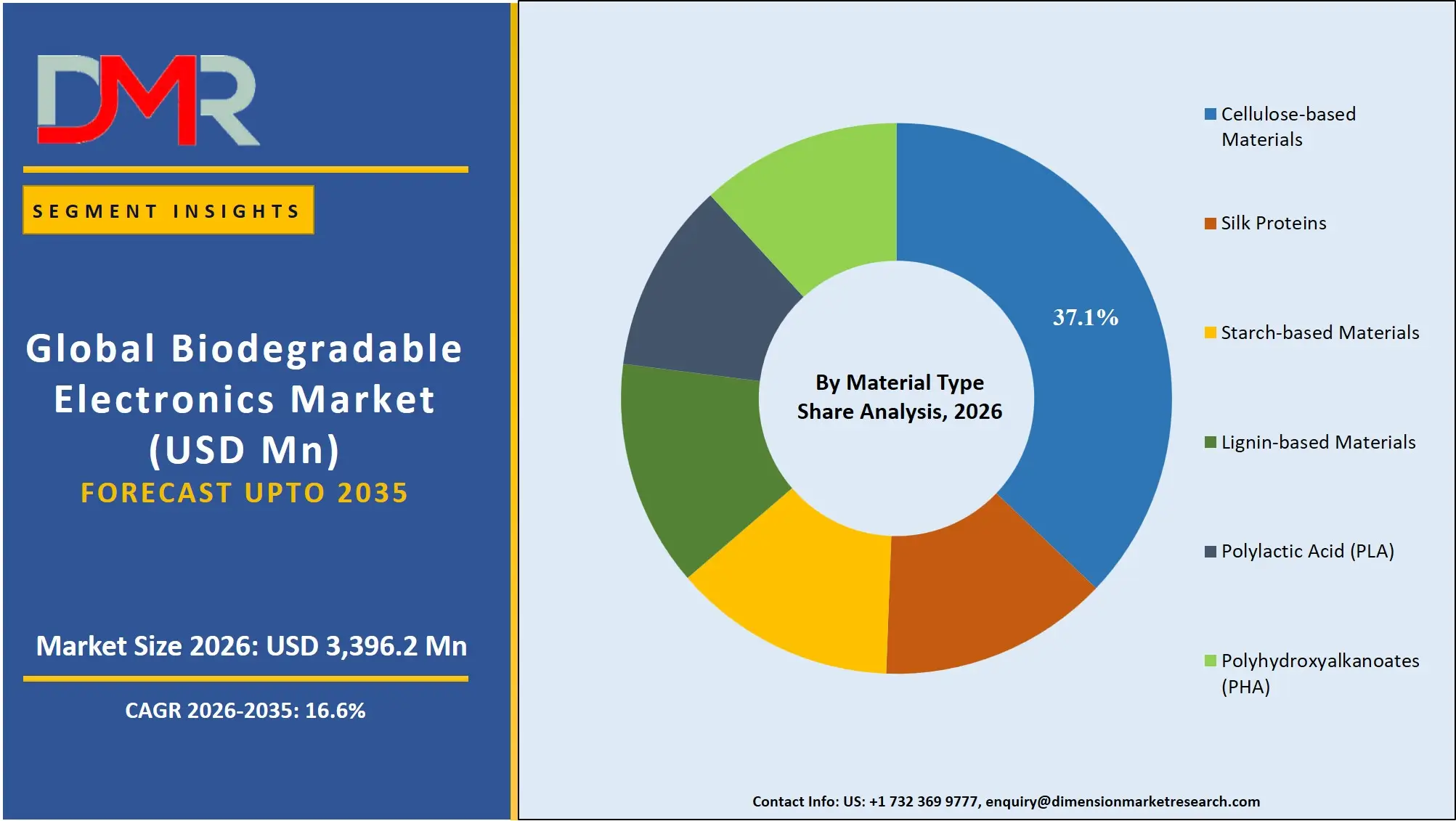
- By Material Type Analysis: Cellulose-based materials are anticipated to lead the segment owing to its cost effectiveness, biodegradability and strength. Other materials, such as PLA, PHA and silk proteins, are also popular due to their compatibility and performance, while starch and lignin are limited by scalability.
- Regional Leadership: North America is poised to dominate this market with 39.2% of the market share in 2026 because of its strong biotechnology industry which makes the most of advanced material science and is a frontrunner in this market.
What is the Biodegradable Electronics?
Biodegradable Electronics are physical devices and components that are specifically designed by material scientists, research institutes and manufacturers to help companies and providers through the entire product life cycle of a transient product. These products, compared to traditional electronics that sit in landfills for hundreds of years, are associated with how to safely decompose. This includes organic electronics to transmit signals without the use of toxic metals, printed electronics to produce circuits on compostable films, and nanotechnology electronics to enable devices to dissolve safely in water or bodily fluids. As 90% of electronics companies consider sustainable options, biodegradable products are required to enable safe waste disposal, patient comfort for health care, and sensor dispersal for agriculture, making transient investments lead to a meaningful environmental impact, rather than technical obsolescence.
Use Cases
- Implantable Post-Surgical Sensors in Healthcare: Hospital networks commission research institutes to design and manufacture biodegradable sensors and transistors to measure intracranial pressure in patients with brain trauma, which safely dissolve after the critical recovery period, avoiding a second surgery to remove them.
- Precision Agriculture Soil Monitoring: Agribusiness associations use biodegradable capacitors and batteries to seed millions of transient soil sensors that monitor moisture content and nutrient concentrations across large crop fields, with the entire unit safely degrading into organic biomass after harvest, with no residual toxicity.
- Transient Data Security in Defense: Government & defense agencies use biodegradable memory and circuit boards to develop reconnaissance electronics that physically dissolve when commanded or after a deadline to prevent leak of sensitive information and hardware reverse-engineering.
- Smart Packaging Supply Chains: Consumer product companies use biodegradable displays and biopolymers to develop electronics integrated into perishable food products, offering a visual record of temperature abuse and spoilage, safely composted in industrial composting facilities.
How AI is Transforming the Biodegradable Electronics Market?
The biodegradable electronics industry is being transformed by AI in speeding up the discovery of transient materials, and improving dissolution prediction. Using AI in material science, simulation tools can automatically test thousands of biopolymer combinations to predict their degradation rates, and can also significantly reduce manual experimentation and lab work, time to market and project risks. Also, AI features in manufacturing help manufacturers control the deposition of silk proteins and cellulose-based materials by identifying micron-scale issues and suggesting corrective action to increase manufacturing yields.
AI is also centering around governance and medical approvals. In terms of medical applications, smart agents in molecular-dynamics simulations constantly run simulations of the interaction between biodegradable batteries and capacitors and human enzymes, to detect toxicity and side-products to ensure companies are adhering to regulations such as the FDA's biocompatibility guidelines.
Market Dynamics
Key Drivers in the Global Biodegradable Electronics Market
The Global E-Waste Crisis
Global societies are grappling to manage the escalating accumulation of electronic waste, which contains persistent toxic metals and eternal polymers. The rate of disposal of these devices is outpacing the rate at which they can be recycled, creating a structural environmental problem. This is driving a shift towards governments adopting biodegradable substrates instead of conventional rigid printed circuit boards (PCBs). The rules require electronics manufacturers to invent temporary sensors, displays and batteries. Developing such devices helps countries to hasten their sustainability goals and reduce long-term environmental impacts from poor disposal practices.
Medical Device Shift to Transient Implants
Specialised healthcare facilities also employ multiple transient monitoring devices that are mainly used for post-operative care of the heart, brain and bones to ensure that they are not dependent on a second surgery but rather provide real-time information. Companies must match the dissolution rate of polylactic acid (PLA) scaffolds to the healing process, and use a combination of materials to prevent premature degradation. This might lead to inflammation, toxic by-product clustering or device failure without the help of sophisticated biopolymer electronics. Hence, a need for biodegradable capacitors and biodegradable transistors that can help clinicians to function in such critical physiological environments is gaining traction.
Restraints in the Global Biodegradable Electronics Market
Performance and Stability Trade-offs
The majority of transient devices still use materials that were originally designed to be biocompatible, and not necessarily for optimal electrical properties. Such technological issues are a barrier to widespread acceptance, despite the superior performance and stability of conventional electronics. It may be risky to use water-sensitive and unreliable components with low carrier mobility organic semiconductors. Biodegradable memory devices for data storage over long time periods require a moisture-proof barrier. Electronics manufacturers fear product recalls, data loss and reputation risks of transient devices that fail within their expected lifetime.
High Manufacturing Costs in Niche Markets
Small-batch production and customised material synthesis have led electronics manufacturers to be reluctant to retrofit manufacturing facilities for transient electronics. Despite biodegradable innovation being a high priority, procurement managers are being pushed to rationalise the cost premium of silk proteins and polyhydroxyalkanoates (PHA) over commodity silicon. The supply chain and unique lithography-free patterning techniques for biopolymers-based electronics are expected to be scrutinized. Industry has moved to hybrid approaches that gradually integrate degradable components into the existing devices rather than a full-blown replacement.
Growth Opportunities in the Global Biodegradable Electronics Market
Building Zero-Waste Ubiquitous Sensor Networks
A key opportunity in the biodegradable electronics market is to help the agricultural and environmental industries to develop mass deployment of zero-collection transient sensors. Many environmental agencies have attempted to collect data by using manual loggers, but they now want their own stand-alone sensor networks that disappear after deployment. The creation of these transient environmental sensors is a highly specific combination of biodegradable photovoltaic power for electricity, starch-based substrates and cellulose-based humidity sensors. Material scientists can help agricultural agencies to develop scalable and personalised eco-sensor networks that help in precision agriculture, pollution monitoring and flooding forecasting.
Self-Disintegrating Defense Electronics
The combination of military security and materials innovation is fueling the development of transient devices as defense manufacturers develop physical security products. These include sensors that weather balloons can drop and environmentally degradable drone circuit boards. Government & defense agencies must comply with mission security and zero recovery. Therefore, they need implementation partners that understand the transient kinetics and electronic warfare compliance (EWC) environment. To enhance value proposition, device designers could explore the integration of water-soluble transistors with a trigger mechanism and RF communication channels, compliant with military standards, and customizable suicide triggers.
Trends in the Global Biodegradable Electronics Market
The Rise of Edible and Ingestible Electronics
The use of edible electronics is increasingly being taken up in medical food-tech to replace conventional medical probes. Suppliers are developing ingestible diagnostic devices that are swallowed as food, rather than using invasive endoscopes or needle biopsies, with electronics transiently operating in the stomach. These systems allow the simplicity of diagnosing gut bleeding, measuring body temperature and the targeted delivery of drugs. To address this, biodegradable battery and sensor suppliers are offering expertise in creating food-grade dielectric formulations, packaging using beeswax and gelatin, and safe metallic contacts of magnesium and zinc.
Sustainability Verification as a Service
Material claims verification is also becoming a critical feature in supply chain choices as companies strive to meet ESG goals and avoid allegations of greenwash. Companies now want to have certifications that ensure full compostability rather than just bio-sourced materials. This has brought about the need to have cradle-to-grave lifecycle analysis consulting. Independent testers help manufacturers of electronics to choose certified compostable substrates such as functionalized lignins, comply to layer adhesion to avoid flaking, and minimize the use of non-degradable metallic inks through the use of carbon-based printed electronics.
Research Scope and Analysis
The biodegradable electronics market is driven by rising demand for sustainable healthcare monitoring, organic electronics, and eco-friendly materials. Growth is supported by innovations in biodegradable sensors, cellulose-based substrates, and temporary medical devices, with strong adoption across electronics manufacturing and healthcare industries.
ℹ
To learn more about this report –
Download Your Free Sample Report Here
By Product Type Analysis
Biodegradable Sensors are poised to dominate the product type segment of the global biodegradable electronics market because companies require transient data collection before they can invest in larger transient systems. Often companies lack the expertise to determine the substrate, dissolution rate and sensitivity ratio that is most suitable for their medical and environmental monitoring needs. Sensors can help companies design monitoring plans, evaluate the readiness of the biological interface, the expected lifetime and solving inflammatory or toxic issues. There is a strong need for pressure sensors, gas sensors and electrophysiological sensors. The increase in the use of closed-loop and independent monitoring by health care providers leads to an increase in the need to use specific sensing products. These products reduce patient risk, improve clinical decision-making with data, and accelerate healing and positively impact on the return on investment of biodegradable technology.
By Technology Analysis
Organic Electronics is projected to remains the dominant technology domain due to its carbon-based chemistry and biocompatibility. Academic institutes prefer organic polymers for the removal of non-biodegradable metal oxides and the controllable dissolution timespan of conjugated carbon bonds, which eliminates hazardous material etching and costly heavy metal licensing fees. The technology enables skin-conformal form factors, and medical engineers to switch critical epidermal patches and bioresorbable stents on in days instead of months. As such, the manufacturing ecosystem flourishes around organic electronics, with a emphasis on key support processes such as the synthesis of complex inks from lignin, material purity and oxygen inhibition control, and custom dielectric layer deposition to ensure organic transistors switch without hysteresis.
By Material Type Analysis
Cellulose-based materials are poised to dominate this segment in this market due to their availability, low cost, biodegradability and high mechanical strength. Cellulose is readily sourced from plants and is ideal for substrates in printed and flexible electronics. Polyactic acid (PLA) and polyhydroxyalkanoates (PHA) are also major players owing to their commercial availability and processability. Silk-based proteins are emerging in high-end applications such as biomedical products due to their biocompatibility and degradation properties. Starch and lignin derivatives are new entrants but have problems with strength and processing costs. In general, biodegradable, cost-efficient and performing materials are preferred, especially those that can be incorporated into existing electronic manufacturing processes.
By Application Analysis
This market is anticipated to be dominated by healthcare devices in terms of application because it fundamentally alters the economics of patient care by offering unmatched temporary monitoring and reducing the complications associated with surgery and the cost of secondary extraction surgeries. Health-care providers use temporary physiological monitoring to fix spikes in intracranial pressure without implant rejection. However, the dynamic water and enzyme-laden environment of the body presents the same challenge. The industry requires precise structures in hydrolysis kinetics to control premature swelling, by-product phagocytosis to prevent inflammation in neural tissues and encapsulation design to ensure that devices perform at an optimum level for a specific duration and then safely degrade into bioresorbable monomers.
By End User Analysis
The end user market is led by electronics manufacturers who are the principal developers and adopters of biodegradable materials in their products. Their commitment to sustainability and regulatory compliance is key to adoption. Healthcare providers are the second-largest segment, using biodegradable electronics in innovative medical therapies and monitoring devices. Universities are critical in initial development and innovation, especially materials and device engineering. Public and military agencies contribute with funding and use cases for transient electronics. Agricultural organisations are also starting to use them for precision agriculture. In general, those with robust R&D and compliance requirements are driving adoption in this new market.
The Global Biodegradable Electronics Market Report is segmented on the basis of the following:
By Product
- Biodegradable Sensors
- Biodegradable Displays
- Biodegradable Transistors
- Biodegradable Capacitors
- Biodegradable Batteries
- Biodegradable Circuit Boards
- Biodegradable Memory Devices
- Biodegradable Photovoltaic Devices
By Technology
- Organic Electronics
- Printed Electronics
- Flexible Electronics
- Nanotechnology-based Electronics
- Biopolymer-based Electronics
By Material Type
- Cellulose-based Materials
- Silk Proteins
- Starch-based Materials
- Lignin-based Materials
- Polylactic Acid (PLA)
- Polyhydroxyalkanoates (PHA)
By Application
- Consumer Electronics
- Healthcare Devices
- Environmental Monitoring
- Agriculture
- Military & Defense
- Smart Packaging
- Other Application
By End User
- Electronics Manufacturers
- Healthcare Providers
- Agricultural Organizations
- Government & Defense Agencies
- Research Institutions
Regional Analysis
Leading Region by Market Share
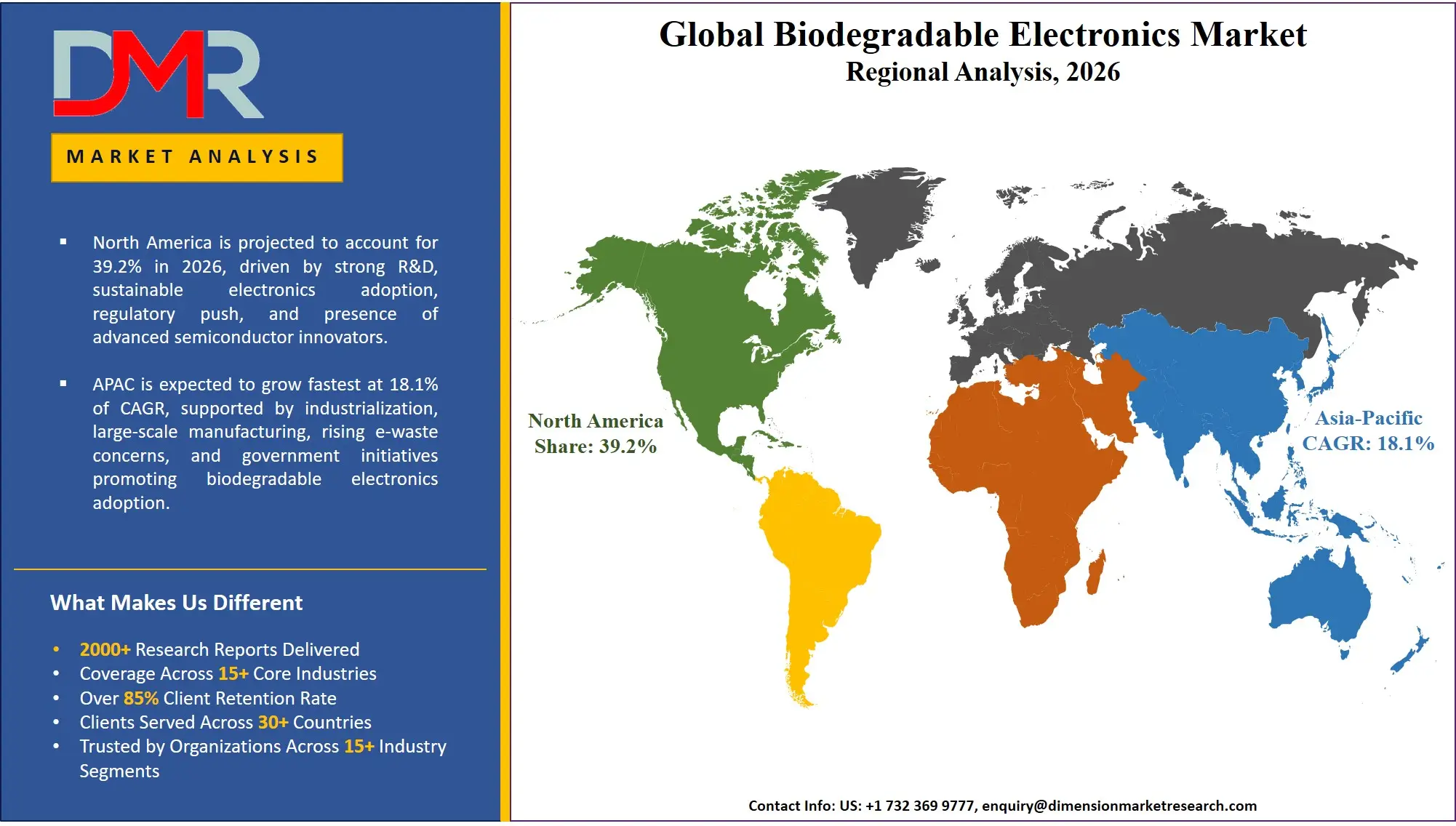
North America is poised to dominate the global biodegradable electronics market as it is projected to hold 39.2% of the market share by the end of 2026. North America, led by the US, has the largest share in biodegradable electronics market due to the unrivalled cluster of DARPA-funded transient electronics programs and the active sustainability-transformation strategy of the medical device giants. It is home to a robust network of global research universities, artisanal material synthesis companies, and a talent pool of bio-nanotechnology and organic polymer chemists. Public investment in bioresorbable devices, new analytical modeling techniques and the overall phasing out of hard implantable devices ensure that the need for cellulose and silk protein processing and ongoing lifecycle analysis also provides the market with opportunities. Further, a positive venture capital environment continuously funds emerging transient-circuit startups that require specialist bio-testing and validation services for the FDA breakthrough device status and patient safety approval.
ℹ
To learn more about this report –
Download Your Free Sample Report Here
Fastest-Growing Regional Market
The fastest-growing biodegradable electronics market is Asia-Pacific, due to the government-led massive plastic-ban and soil-recovery programs in India, China, Japan and Southeast Asia. The rapid pace of agricultural transformation, the emergence of health-driven consumers and the robust growth in the precision farming economy is driving large electronics foundries and government agricultural departments to abandon unsustainable modes of production. These large enterprises need smart packaging consultancy to move towards transient sensors and biopolymer-based electronics. The region also lacks expert green-chemistry talent, and it is imperative to outsource material chemistry and printed electronics processing to fill the talent gap and accelerate the development of 100% compostable smart labels.
By Region
North America
Europe
- Germany
- The U.K.
- France
- Italy
- Russia
- Spain
- Benelux
- Nordic
- Rest of Europe
Asia-Pacific
- China
- Japan
- South Korea
- India
- ANZ
- ASEAN
- Rest of Asia-Pacific
Latin America
- Brazil
- Mexico
- Argentina
- Colombia
- Rest of Latin America
Middle East & Africa
- Saudi Arabia
- UAE
- South Africa
- Israel
- Egypt
- Rest of MEA
Competitive Landscape
The global biodegradable electronics market is extremely fluid with a diverse mix of multinational material conglomerates, organic semiconductor portfolios of the large global system integrators and boutique bio-nanotechnology startups. The fundamental strategic partnerships with healthcare institutions, agricultural consortia and military forces will be the key to success because they will provide the required pilot program opportunities and timely access to the new physiological data platforms. Market consolidation is well under way with the chemical giants being forced to buy out the silk protein purification and transient RF engineering boutiques to keep afloat. The proprietary intellectual property such as automated degradation prediction software and application-specific hydrolysis accelerators are increasingly a more significant differentiator than the simple polymer feedstock supply or the traditional R&D contracting services.
Some of the prominent players in the Global Biodegradable Electronics Market are:
- BASF SE
- NatureWorks LLC
- Mitsubishi Chemical Corporation
- Novamont S.p.A.
- Total Corbion PLA
- Daicel ChemTech
- Polysciences, Inc.
- Lubrizol Corporation
- CD Bioparticles
- Evonik Industries AG
- Merck KGaA
- Novaled GmbH
- Asahi Kasei Corporation
- AU Optronics Corporation
- Fujifilm Dimatix, Inc.
- DuPont de Nemours, Inc.
- LG Chem Ltd.
- Sumitomo Chemical Co., Ltd.
- Avery Dennison Corporation
- PragmatIC Semiconductor Ltd.
- Other Key Players
Recent Developments
- April 2026: Kyung Hee University and partner research institutes developed stretchable biodegradable semiconductors for next-generation in-vivo electronics. This helps enable transient medical devices, expedites product development and commercialization, and improves health monitoring while allowing safer integration of bioresorbable electronics.
- January 2026: Samsung Electronics unveiled a carbon-friendly e-paper display made with bio-resin derived from phytoplankton, cutting down on carbon emissions. The development reflects advancements in eco-consumer electronics, and demonstrates the company's dedication to sustainable materials and next-generation green manufacturing technologies.
- December 2025: Northeastern University researchers discovered environmental hazards of biodegradable electronics, with potential microplastics formed during biodegradation. This research underscores the importance of better material design, life-cycle analysis and regulation to achieve sustainable, safe electronics.
Report Details
| Report Characteristics |
| Market Size (2026) |
USD 3,396.2 Mn |
| Forecast Value (2035) |
USD 13,524.8 Mn |
| CAGR (2026–2035) |
16.6% |
| The US Market Size (2026) |
USD 1,119.6 Mn |
| Historical Data |
2021 – 2025 |
| Forecast Data |
2027 – 2035 |
| Base Year |
2025 |
| Estimate Year |
2026 |
| Segments Covered |
By Product (Biodegradable Sensors, Biodegradable Displays, Biodegradable Transistors, Biodegradable Capacitors, Biodegradable Batteries, Biodegradable Circuit Boards, Biodegradable Memory Devices, Biodegradable Photovoltaic Devices), By Technology (Organic Electronics, Printed Electronics, Flexible Electronics, Nanotechnology-based Electronics, Biopolymer-based Electronics), By Material Type (Cellulose-based Materials, Silk Proteins, Starch-based Materials, Lignin-based Materials, Polylactic Acid (PLA), Polyhydroxyalkanoates (PHA)), By Application (Consumer Electronics, Healthcare Devices, Environmental Monitoring, Agriculture, Military & Defense, Smart Packaging, Other Applications), and By End User (Electronics Manufacturers, Healthcare Providers, Agricultural Organizations, Government & Defense Agencies, Research Institutions) |
| Regional Coverage |
North America – The US and Canada; Europe – Germany, The UK, France, Russia, Spain, Italy, Benelux, Nordic, & Rest of Europe; Asia-Pacific – China, Japan, South Korea, India, ANZ, ASEAN, Rest of APAC; Latin America – Brazil, Mexico, Argentina, Colombia, Rest of Latin America; Middle East & Africa – Saudi Arabia, UAE, South Africa, Turkey, Egypt, Israel, & Rest of MEA |
Frequently Asked Questions
How big is the Global Biodegradable Electronics Market?
▾ The Global Biodegradable Electronics market is poised to be valued at USD 3,396.2 million in 2026 and is projected to reach USD 13,524.8 million by 2035, driven by the universal need for specialized transient devices in green technology, bioresorbable medical implants, and zero-waste environmental monitoring.
What is the CAGR of the Global Biodegradable Electronics Market from 2026 to 2035?
▾ The market is expected to grow at a CAGR of 16.6% from 2026 to 2035, reflecting the accelerating complexity of polymer-based transient devices and the persistent shortage of internal bio-electronics engineering talent.
What factors are driving the growth of the Global Biodegradable Electronics Market?
▾ Key drivers include the global e-waste crisis, the imperative to eliminate secondary implant removal surgeries, the management complexity of moisture-sensitive transient circuits, and the surge in demand for cellulose-based and silk protein substrates amid evolving single-use plastic bans.
Which region held the largest share of the Biodegradable Electronics Market in 2026?
▾ North America is anticipated to dominate this market with 39.2% of the market share in 2026, driven by a mature defense-funded research ecosystem and aggressive healthcare investment in biodegradable sensors and AI-driven transient device capabilities.
Which region is expected to grow the fastest in the Biodegradable Electronics Market?
▾ The Asia-Pacific region is expected to grow the fastest, fueled by rapid precision agriculture transformation in India, China, and Japan, where printed electronics and biopolymer-based smart packaging are critical for transitioning large farming conglomerates to zero-collection monitoring operations.
What are the major trends in the Global Biodegradable Electronics Market?
▾ Major trends include the integration of edible and ingestible circuits into healthcare, the rise of sustainable lifecycle verification consulting, the demand for application-specific transient monitoring solutions, and the focus on dissolution performance within complex physiological and marine environments.
Who are the key players in the Global Biodegradable Electronics Market?
▾ Key players in the global biodegradable electronics market include Toshiba Corporation, Samsung Electronics Co., Ltd., Panasonic Corporation, BASF SE, and Dow Inc., focusing on sustainable materials and innovation.
How is the Global Biodegradable Electronics Market segmented?
▾ The Global Biodegradable Electronics Market is segmented By Product, Technology, Material Type, Application, and End User.