Market Overview
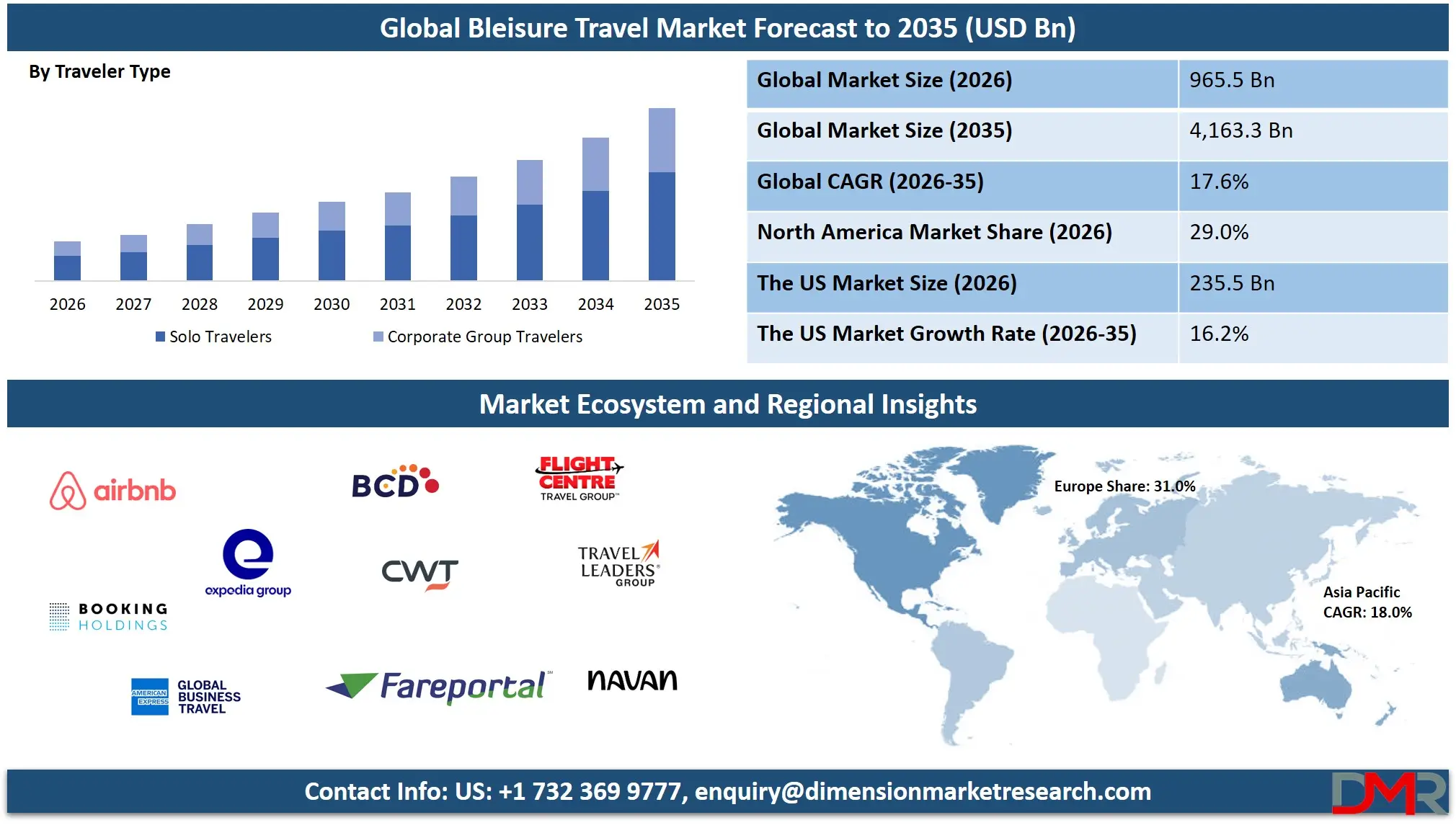
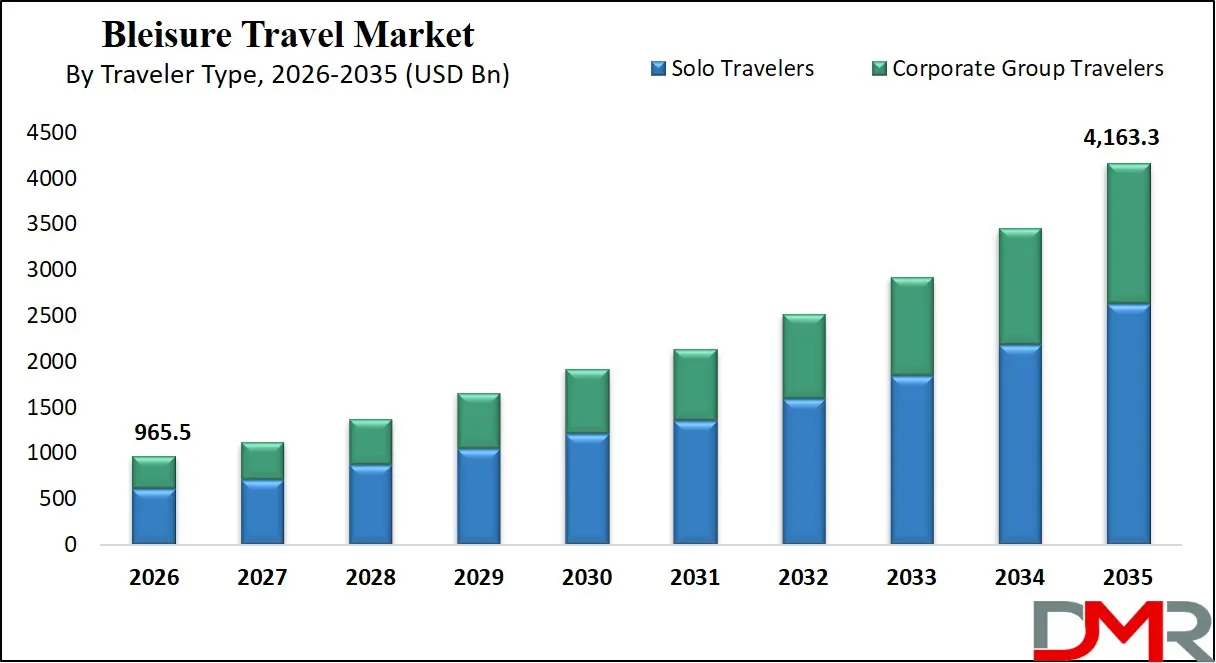
The global bleisure travel market is estimated to reach USD 965.5 billion in 2026 and is expected to grow at a CAGR of 17.6% from 2026 to 2035, reaching approximately USD 4,163.3 billion by 2035, driven by rising business travel, increasing demand for combined business and leisure trips, flexible corporate travel policies, and growing adoption of experiential tourism among corporate travelers.
ℹ
To learn more about this report –
Download Your Free Sample Report Here
Bleisure travel refers to a travel trend where individuals combine professional work trips with leisure activities, allowing business travelers to extend their stay at a destination for personal exploration, relaxation, or tourism experiences. This concept has gained strong momentum as employees increasingly seek better work life balance while companies encourage flexible travel policies. Professionals attending meetings, conferences, exhibitions, or corporate events often add extra days to explore local attractions, cultural experiences, dining, or recreation. The growth of remote work tools, digital connectivity, and flexible work arrangements has made it easier for travelers to manage professional responsibilities while enjoying leisure activities at the same destination.
The global bleisure travel market represents the ecosystem of services and solutions that facilitate the blending of business travel with personal tourism experiences across domestic and international destinations. It includes airline services, accommodation providers, travel management companies, corporate booking platforms, online travel agencies, and destination service providers that cater to professionals extending work trips for leisure purposes. Increasing corporate travel frequency, growth in international conferences and exhibitions, and rising demand for experiential tourism have strengthened the adoption of combined business and leisure travel worldwide.
ℹ
To learn more about this report –
Download Your Free Sample Report Here
The market is also shaped by evolving corporate travel policies, digital booking platforms, and the expansion of hospitality services designed specifically for hybrid travelers. Hotels, resorts, and serviced apartments are increasingly offering extended stay packages, flexible booking options, and business friendly amenities to attract professionals who wish to integrate work commitments with recreational experiences. Growing participation of millennials in the workforce, expansion of global corporate networks, and the rapid development of urban tourism infrastructure are further supporting the expansion of the global bleisure travel market.
The US Bleisure Travel Market
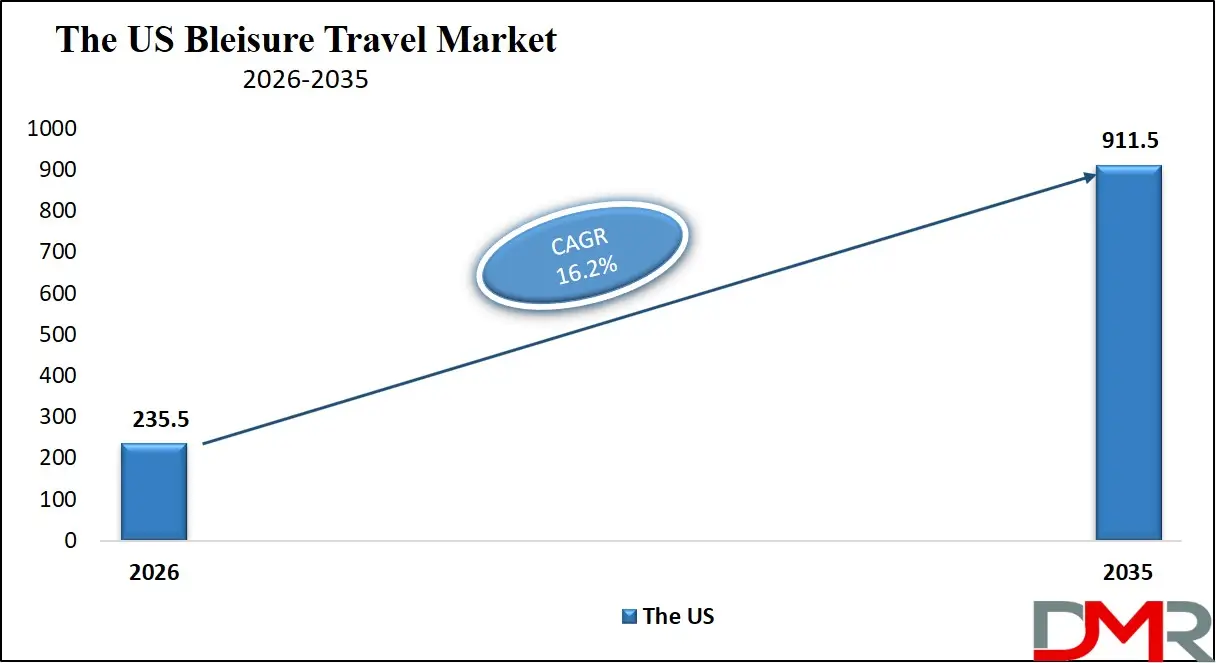
The U.S. Bleisure Travel Market size is expected to reach at USD 235.5 billion in 2026. It is further expected to witness subsequent growth in the upcoming period, holding USD 911.5 billion in 2035 at a CAGR of 16.2%.
ℹ
To learn more about this report –
Download Your Free Sample Report Here
The US bleisure travel market is one of the largest and fastest-growing segments within the global travel industry, driven by a high volume of business trips combined with leisure activities. Major corporate hubs, conventions, and trade shows across the US encourage professionals to extend work trips for tourism, entertainment, and cultural experiences. Increasing corporate travel budgets, advanced transportation networks, and a growing preference for experiential travel have strengthened the adoption of bleisure travel. The trend is supported by a workforce seeking work-life balance while exploring destinations during business trips.
The US market is further fueled by flexible corporate travel policies, remote work capabilities, and digital booking platforms that simplify trip planning and integration of leisure activities. Hotels, resorts, and extended-stay accommodations across key US cities cater specifically to business travelers adding leisure extensions. Rising participation of millennials and Generation Z in corporate travel, combined with growing domestic tourism infrastructure, is accelerating demand for bleisure travel experiences in the US, making it a critical segment for the travel and hospitality industry.
The Europe Bleisure Travel Market
The Europe bleisure travel market is projected to reach approximately USD 299.0 billion in 2026, reflecting its position as the largest regional contributor to the global market. The region benefits from a high volume of corporate travel, well-established business hubs, and a strong tourism infrastructure, which encourages professionals to extend their business trips for leisure activities. Cities with major conference centers, trade show venues, and cultural attractions provide travelers with the opportunity to combine work commitments with sightseeing, local experiences, and recreational activities, making Europe a preferred destination for bleisure travel.
The market's growth is further supported by the increasing adoption of flexible corporate travel policies, advanced digital booking platforms, and the rising demand for experiential tourism among professionals. Hotels, resorts, and serviced apartments across Europe are offering tailored packages and business-friendly amenities to cater to bleisure travelers, while airlines and travel agencies are providing bundled services that integrate work and leisure components. The combination of these factors, along with rising participation of millennials and tech-savvy professionals in business travel, drives a robust CAGR of 18.9% in the European bleisure travel market.
The Japan Bleisure Travel Market
The Japan bleisure travel market is projected to reach approximately USD 77.2 billion in 2026, reflecting steady growth driven by a combination of domestic and international business travel. Major corporate hubs such as Tokyo, Osaka, and Nagoya host a significant number of conferences, trade shows, and corporate meetings, encouraging professionals to extend their trips for leisure activities. Travelers often combine work commitments with sightseeing, cultural experiences, local dining, and recreational pursuits, supported by Japan's well-developed transportation infrastructure, hospitality services, and tourism-friendly environment.
The market's growth is further fueled by increasing adoption of flexible corporate travel policies and digital booking platforms that simplify trip planning. Hotels, serviced apartments, and resorts are offering tailored packages and business-friendly amenities to attract bleisure travelers, while airlines and travel agencies provide integrated solutions combining work and leisure. Additionally, rising interest in experiential tourism and cultural exploration among business professionals contributes to the sustained CAGR of 16.5%, making Japan a key regional market for the global bleisure travel industry.
Global Bleisure Travel Market: Key Takeaways
- Global Market Size and Growth: The global bleisure travel market is projected to reach USD 965.5 billion in 2026, with a robust CAGR of 17.6% expected through 2035, highlighting rapid expansion in business-meets-leisure travel worldwide.
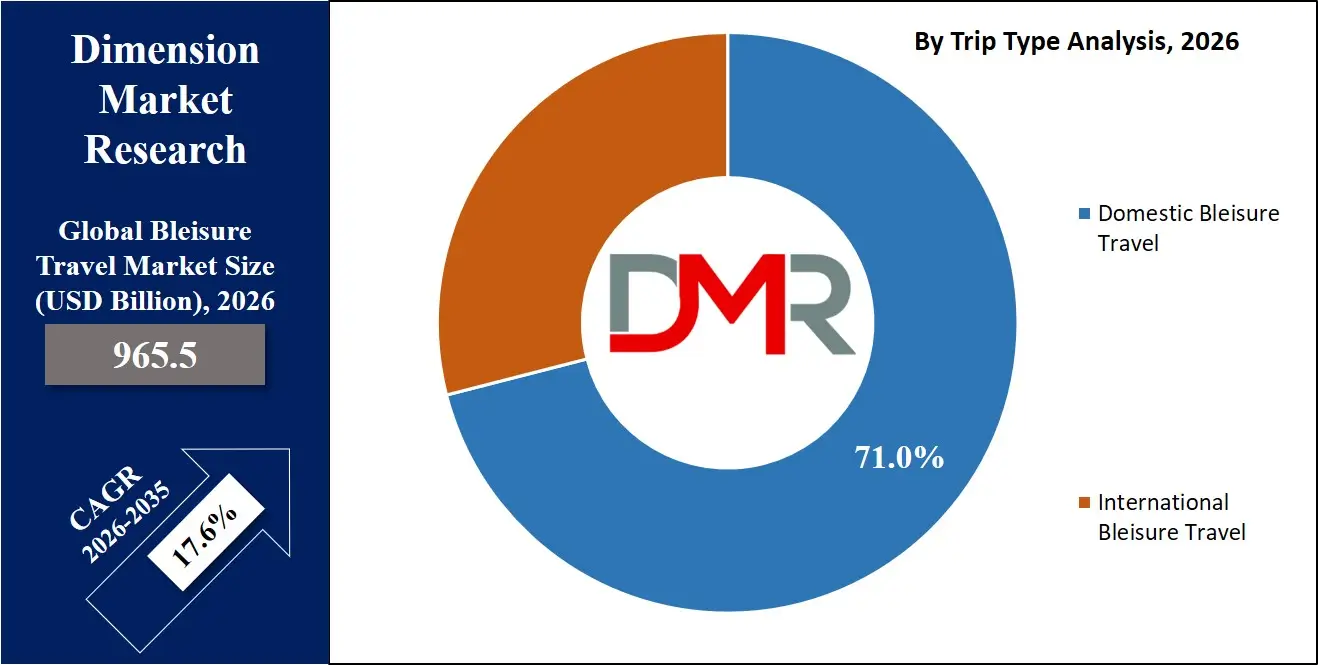
- Dominance of Domestic Travel: Domestic bleisure travel is set to dominate the trip type segment, capturing approximately 71% of the total market share in 2026, driven by convenience, affordability, and accessibility for business professionals.
- Largest and Fastest-Growing Region: Europe is both the largest and fastest-growing regional market, with a projected market value of USD 299.0 billion in 2026 and a CAGR of 18.9%, underscoring strong corporate travel infrastructure and high adoption of experiential tourism.
- US Market Expansion: The US bleisure travel market is expected to reach USD 235.5 billion in 2026, expanding to USD 911.5 billion by 2035 at a 16.2% CAGR, reflecting increasing corporate travel frequency and preference for combining work and leisure.
- Key Traveler Demographics: Solo travelers and millennials are the primary drivers of bleisure adoption, with solo travel expected to capture 63% market share and millennials representing 42% of total travelers in 2026, emphasizing the influence of tech-savvy, experience-driven professionals.
Global Bleisure Travel Market: Use Cases
- Corporate Conferences and Trade Shows: Professionals attending conferences and exhibitions often extend trips for sightseeing and leisure activities. Cities with event infrastructure benefit from higher hotel occupancy and tourism revenue, while corporate travelers enjoy networking and cultural experiences alongside work commitments.
- Extended Business Trips: Business travelers on domestic or international assignments frequently add extra days for recreation, local tours, or cultural visits. Hotels and serviced apartments offer packages for longer stays, combining work facilities with leisure amenities.
- Remote Work and Digital Nomad Travel: Remote work enables employees to travel while managing work duties. Bleisure travel allows professionals to enjoy sightseeing, local experiences, and flexible accommodations while staying productive.
- Corporate Incentive and Reward Travel: Companies use bleisure trips as incentives or rewards for employees, blending business objectives with leisure experiences. This encourages employee engagement, loyalty, and enhances the overall corporate travel experience.
Global Bleisure Travel Market: Stats & Facts
- UN World Tourism Organization (UNWTO)
- In 2025 an estimated 1.52 billion international tourists were recorded globally, about 60 million more than in 2024, showing continued recovery in global travel demand.
- In 2023 international tourism reached close to 90 % of pre‑pandemic levels of global visits and receipts, signaling near full recovery in travel activity.
- OECD / National Government Data
- In 2023, the travel and tourism sector in the United States generated USD 764 billion in economic value added and employed 6.6 million people, showing sectoral importance to employment and GDP.
- The US Travel Association forecast expected international visitation to reach 85.2 million in 2025 and 91.1 million in 2026, reflecting growth in travel activity.
- Tourism Consumption Statistics (Japan Govt)
- In 2024, domestic travel consumption in Japan was 25.15 trillion yen, up 14.8 % year‑on‑year, with hotel consumption at 20.33 trillion yen and day‑trip consumption at 4.82 trillion yen.
- Travel Behavior / Tourism Trends (UNWTO & Govt Context)
- International tourist arrivals grew 4 % in 2025, reflecting continued strong travel demand worldwide.
- Domestic tourism comprises a major portion of total global tourism activity as reported in UNWTO data dashboards.
Global Bleisure Travel Market: Market Dynamic
Driving Factors in the Global Bleisure Travel Market
Rising Business Travel Frequency
The increasing number of domestic and international business trips is a key driver for bleisure travel. Professionals attending meetings, conferences, and trade shows are more inclined to extend trips for tourism, sightseeing, and cultural experiences. Growing corporate travel budgets and demand for experiential tourism further encourage the integration of leisure activities into business travel itineraries.
Growing Preference for Work-Life Balance
Employees increasingly prioritize work-life balance and stress-free travel experiences. The flexibility to explore destinations during business trips enhances job satisfaction, retention, and productivity. Corporates are adopting travel policies that support extended stays, enabling professionals to combine professional commitments with recreational activities effectively.
Restraints in the Global Bleisure Travel Market
High Travel Costs
The additional expenses associated with extending business trips for leisure, including accommodation, local transportation, and sightseeing, can deter adoption, especially for small and medium-sized enterprises. Elevated costs limit the number of professionals who can leverage bleisure opportunities.
Corporate Travel Policy Limitations
Strict travel policies and budget restrictions imposed by organizations may restrict employees from extending business trips for leisure. Limited approval processes and reimbursement constraints hinder widespread adoption of bleisure travel among corporate travelers.
Opportunities in the Global Bleisure Travel Market
Integration of Digital Booking Platforms
Online travel agencies, mobile apps, and corporate travel management tools create opportunities to streamline bleisure travel planning. Platforms offering combined flight, accommodation, and leisure packages allow professionals to seamlessly customize their trips, enhancing convenience and adoption.
Expansion of Experiential Tourism
Growing interest in cultural tours, adventure activities, local culinary experiences, and wellness tourism presents a significant opportunity. Service providers can develop tailored bleisure packages that cater to diverse traveler preferences, driving market growth globally.
Trends in the Global Bleisure Travel Market
Adoption of Flexible Accommodation Solutions
Hotels, resorts, and serviced apartments increasingly offer long-stay packages and co-working amenities, catering to professionals extending business trips. Flexibility in check-in, workspaces, and integrated leisure facilities supports the evolving bleisure travel trend.
Rise of Millennial and Gen Z Business Travelers
Younger professionals are driving the demand for bleisure experiences, valuing cultural immersion, local exploration, and social media-worthy experiences during business trips. Travel providers are tailoring services to meet the expectations of these tech-savvy, experience-driven travelers.
Global Bleisure Travel Market: Research Scope and Analysis
By Trip Type Analysis
In the trip type segment of the global bleisure travel market, domestic bleisure travel is expected to dominate, capturing approximately 71.0% of the total market share in 2026. This dominance is largely driven by the convenience, affordability, and accessibility of domestic travel, which allows business professionals to extend their work trips for leisure activities without the complexities of international travel such as visas, currency exchange, and longer transit times. Domestic bleisure trips often involve short extensions to explore nearby attractions, local culture, dining experiences, or recreational activities, making them highly popular among frequent business travelers seeking work-life balance.
ℹ
To learn more about this report –
Download Your Free Sample Report Here
On the other hand, international bleisure travel represents a smaller portion of the market but is steadily growing as globalization and cross-border corporate operations expand. International trips provide professionals with opportunities to combine business commitments with exploring new countries, cultures, and experiences. Although these trips involve higher costs and longer planning times, they appeal to employees who want to maximize their time abroad by integrating leisure activities with meetings, conferences, or corporate events. International bleisure travel also supports the tourism ecosystem of host countries, contributing to hotel occupancy, local attractions, and transportation services, and is increasingly facilitated by corporate travel policies that encourage extended stays for business travelers.
By Travel Purpose Structure Analysis
In the travel purpose structure segment of the bleisure travel market, business-dominant bleisure trips are expected to lead, capturing around 64.0% of the total market share in 2026. These trips are primarily motivated by professional commitments such as meetings, conferences, corporate events, or client visits, with leisure activities added as an extension. Business-dominant travelers typically plan their trips around work schedules, using the extra time to explore local attractions, cultural sites, dining options, or recreational activities. This structure allows employees to balance productivity with personal enjoyment, while companies benefit from efficient use of corporate travel budgets.
Leisure-dominant bleisure trips, although representing a smaller portion of the market, are increasingly gaining traction as professionals plan travel primarily for personal enjoyment while incorporating business-related tasks such as networking, workshops, or training sessions. These trips are often longer and focus more on sightseeing, cultural experiences, wellness activities, and relaxation, with work commitments being secondary. Leisure-dominant bleisure travel caters to employees who value experiential tourism and flexible travel policies, enabling them to combine personal exploration with professional responsibilities, thus supporting overall market growth and stimulating local tourism ecosystems.
By Travel Duration Analysis
In the travel duration segment of the bleisure travel market, short bleisure trips lasting two to four days are expected to dominate, capturing approximately 43.0% of the total market share in 2026. These trips are preferred by business professionals who can conveniently extend their work-related travel by a few days to explore local attractions, participate in cultural experiences, or enjoy recreational activities without disrupting their work commitments. Short trips are cost-effective, require minimal additional planning, and allow travelers to balance professional responsibilities with leisure, making them the most popular choice among corporate travelers globally.
Weekend extensions, typically lasting one to two days, represent another significant portion of the market, appealing to professionals seeking quick getaways after business engagements. These trips usually involve minimal overnight stays and focus on immediate relaxation, sightseeing, or local culinary experiences. Weekend extensions are especially popular for domestic travel where employees can maximize leisure time without the need for long-distance travel or extensive planning. This format supports efficient use of corporate travel budgets while providing employees the opportunity to rejuvenate and explore nearby destinations during business trips.
By Traveler Type Analysis
In the traveler type segment of the bleisure travel market, solo travelers are expected to dominate, capturing around 63.0% of the total market share in 2026. These travelers, typically individual professionals, prefer the flexibility to plan trips according to their own schedules, combining business meetings, conferences, or client visits with leisure activities such as sightseeing, local cultural experiences, and recreational pursuits. Solo bleisure travel allows professionals to explore destinations at their own pace while maintaining productivity during work commitments, making it the most popular choice for business travelers seeking a balance between work and personal enjoyment.
Corporate group travelers, while representing a smaller portion of the market, are increasingly participating in bleisure travel by extending group business trips to include leisure experiences. These travelers often attend meetings, incentive programs, or corporate events together and take advantage of organized leisure activities such as city tours, team-building excursions, or cultural experiences. Group bleisure travel provides companies the opportunity to enhance employee engagement and strengthen team cohesion while generating additional revenue for hospitality and tourism providers through extended stays and collective leisure services.
By Age Group Analysis
In the age group segment of the bleisure travel market, millennials are expected to dominate, capturing approximately 42.0% of the total market share in 2026. Millennials, known for valuing experiences and work-life balance, prefer to combine business trips with leisure activities such as sightseeing, cultural exploration, local cuisine, and recreational experiences. Their tech-savvy nature and comfort with digital booking platforms enable them to efficiently plan extended trips, integrating work commitments with personal enjoyment. The emphasis on flexible travel, experiential tourism, and social media sharing makes millennials the largest driving force in bleisure travel.
Generation X, while representing a smaller portion of the market, also contributes significantly to bleisure travel. Professionals in this age group often prioritize combining efficiency with relaxation, extending business trips to include cultural visits, wellness activities, and family-friendly leisure options. They typically have higher disposable incomes and established careers, allowing them to invest in premium accommodations, longer stays, and curated experiences. Generation X travelers support the market's growth by seeking quality travel experiences that balance professional obligations with personal enrichment.
By Accommodation Type Analysis
In the accommodation type segment of the bleisure travel market, hotels and resorts are expected to dominate, capturing approximately 58.0% of the total market share in 2026. These establishments attract business travelers extending their trips for leisure due to their convenient locations near business districts, conference centers, and tourist attractions. Hotels and resorts offer a combination of professional amenities such as meeting rooms, Wi-Fi, and business centers along with leisure facilities like spas, restaurants, and recreational options, making them the preferred choice for professionals seeking to balance work obligations with relaxation and local exploration.
Serviced apartments and extended-stay hotels, while representing a smaller portion of the market, are increasingly gaining popularity among bleisure travelers who prefer more flexible and home-like accommodations. These properties offer amenities such as kitchenettes, larger living spaces, and co-working areas, allowing travelers to manage work tasks efficiently while enjoying longer stays. Serviced apartments are particularly appealing for extended domestic or international trips, providing comfort, privacy, and the ability to experience destinations at a slower pace while integrating leisure activities with professional commitments.
By Booking Channel Analysis
In the booking channel segment of the bleisure travel market, online travel agencies (OTAs) are expected to dominate, capturing approximately 47.0% of the total market share in 2026. OTAs provide business travelers with convenience, flexibility, and a wide range of options for flights, accommodations, and leisure activities, all in a single platform. Professionals extending their work trips for tourism or cultural experiences benefit from easy comparisons, personalized recommendations, and bundled packages, which simplify trip planning and enhance the overall travel experience. The accessibility of mobile apps and real-time booking tools further strengthens the dominance of OTAs.
Direct corporate booking portals, while capturing a smaller share of the market, remain an important channel for companies managing business travel. These portals allow organizations to maintain control over travel budgets, streamline approvals, and access negotiated rates for flights, hotels, and extended stay options. Corporate travelers using these platforms can integrate bleisure activities within pre-approved itineraries, ensuring compliance with company policies while enjoying the flexibility to explore local attractions and leisure experiences during business trips.
By Industry Vertical Analysis
In the industry vertical segment of the bleisure travel market, corporate travelers are expected to dominate, capturing approximately 67.0% of the total market share in 2026. This dominance is driven by frequent domestic and international business trips undertaken by employees of private companies for meetings, client visits, conferences, and trade shows. Corporations increasingly encourage employees to extend their trips for leisure activities such as sightseeing, cultural experiences, and local recreation, which enhances job satisfaction and work-life balance. The high volume of corporate travel and rising adoption of flexible travel policies make this segment the largest contributor to the bleisure travel market.
Government and public sector travelers, while accounting for a smaller portion of the market, also participate in bleisure travel by combining official trips with personal leisure activities. Employees attending seminars, official meetings, or training programs may extend their stay to explore nearby attractions, participate in cultural events, or engage in recreational experiences. Although constrained by stricter travel policies and budget limitations, government and public sector travelers contribute to market growth, particularly in regions where official travel overlaps with popular tourist destinations.
The Global Bleisure Travel Market Report is segmented on the basis of the following:
By Trip Type
- Domestic Bleisure Travel
- International Bleisure Travel
By Travel Purpose Structure
- Business-Dominant Bleisure
- Leisure-Dominant Bleisure
By Travel Duration
- Short Bleisure Trips (2–4 Days)
- Weekend Extensions (1–2 Days)
- Extended Bleisure Trips (5–7 Days)
By Traveler Type
- Solo Travelers
- Corporate Group Travelers
By Age Group
- Millennials
- Generation X
- Generation Z
- Baby Boomers
By Accommodation Type
- Hotels & Resorts
- Serviced Apartments & Extended Stay Hotels
- Vacation Rentals
- Other Accommodation
By Booking Channel
- Online Travel Agencies (OTAs)
- Direct Corporate Booking Portals
- Travel Management Companies (TMCs)
- Offline Travel Agencies
By Industry Vertical
- Corporate
- Government & Public Sector Travelers
- Entrepreneurs & Freelancers
Impact of Artificial Intelligence in the Global Bleisure Travel Market
The impact of artificial intelligence in the global bleisure travel market has been transformative, enabling more personalized, efficient, and seamless travel experiences for business professionals extending trips for leisure. AI-powered platforms analyze traveler preferences, past bookings, and behavioral data to recommend tailored itineraries that combine flights, accommodations, and local experiences, helping professionals optimize both work and leisure components of their trips. Chatbots and virtual assistants provide 24/7 support for booking changes, local guidance, and customer service, reducing planning time and enhancing convenience for travelers.
AI also supports predictive analytics for hotels, resorts, and travel management companies, helping them forecast demand, optimize pricing, and offer targeted promotions for bleisure travelers. Automated itinerary planning, dynamic pricing, and intelligent route suggestions increase operational efficiency while improving traveler satisfaction. Furthermore, AI-powered recommendation engines enhance experiential tourism by suggesting local attractions, dining options, and wellness activities based on real-time trends, traveler demographics, and individual interests. Overall, artificial intelligence drives growth in the bleisure travel market by improving personalization, streamlining booking processes, and enhancing the overall business-meets-leisure experience.
Global Bleisure Travel Market: Regional Analysis
Region with the Largest Revenue Share
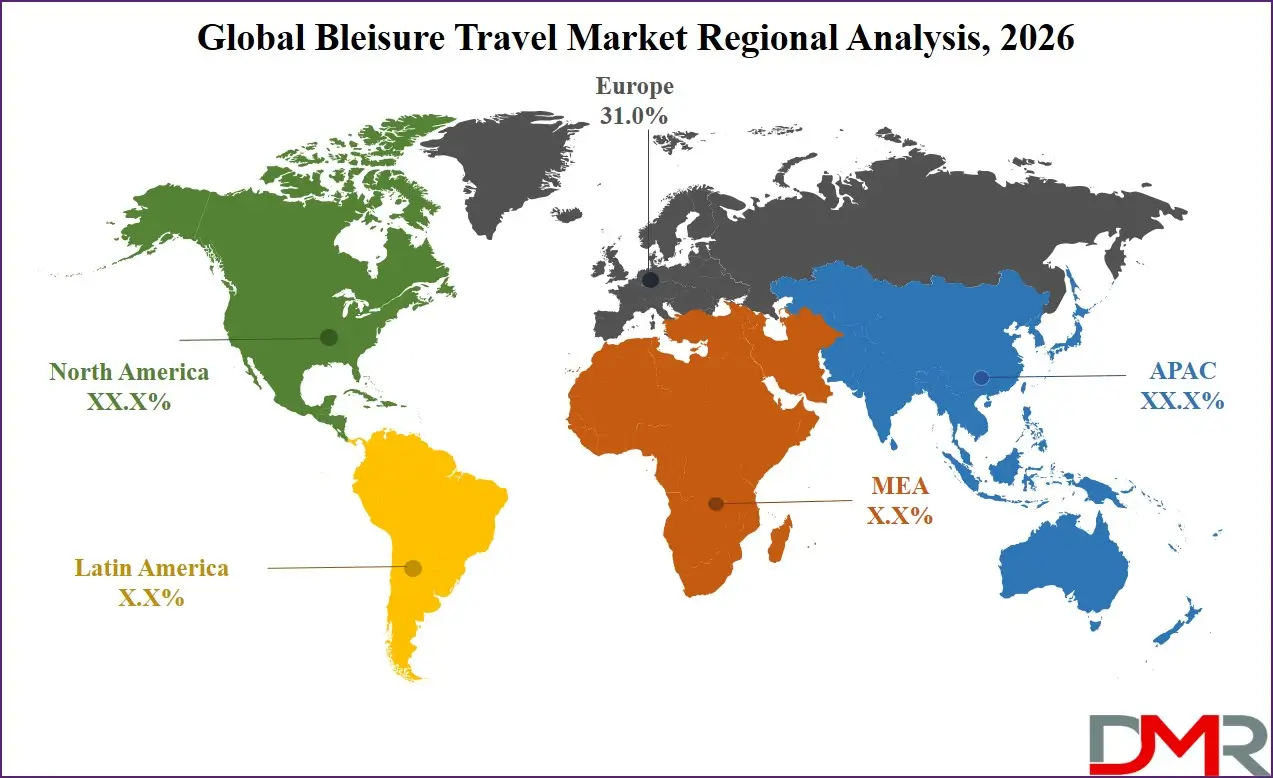
Europe is expected to lead the global bleisure travel market, capturing approximately 31.0% of total market revenue in 2026. The region's dominance is driven by a high volume of domestic and international business travel, well-developed infrastructure, and a strong presence of corporate hubs and conference destinations. Professionals in Europe frequently extend business trips for sightseeing, cultural exploration, dining experiences, and recreational activities, supported by flexible corporate travel policies and advanced digital booking platforms. The combination of robust tourism ecosystems, efficient transportation networks, and rising demand for experiential travel reinforces Europe's position as the largest regional contributor to the bleisure travel market.
ℹ
To learn more about this report –
Download Your Free Sample Report Here
Region with the Highest CAGR
Europe is projected to record the highest CAGR in the global bleisure travel market during the forecast period, driven by increasing business travel, the growing adoption of experiential tourism, and well-established corporate and convention infrastructure. Rising demand for combining professional trips with leisure activities, along with supportive travel policies and advanced digital booking platforms, enables travelers to seamlessly extend work trips for sightseeing, cultural experiences, and recreational activities. The region's focus on enhancing work-life balance for professionals and the expansion of hospitality services tailored to bleisure travelers further accelerates growth, making Europe the fastest-growing region in the market.
By Region
North America
Europe
- Germany
- The U.K.
- France
- Italy
- Russia
- Spain
- Benelux
- Nordic
- Rest of Europe
Asia-Pacific
- China
- Japan
- South Korea
- India
- ANZ
- ASEAN
- Rest of Asia-Pacific
Latin America
- Brazil
- Mexico
- Argentina
- Colombia
- Rest of Latin America
Middle East & Africa
- Saudi Arabia
- UAE
- South Africa
- Israel
- Egypt
- Rest of MEA
Global Bleisure Travel Market: Competitive Landscape
The competitive landscape of the global bleisure travel market is characterized by intense rivalry among travel service providers, online booking platforms, and corporate travel management firms aiming to attract both business and leisure travelers. Key players are focusing on strategic partnerships, technology adoption, and service diversification to enhance value propositions, improve customer experience, and capture larger market shares. Innovations in mobile booking, personalized travel solutions, loyalty programs, and data‑driven marketing are helping companies differentiate their offerings, while investments in digital platforms and AI‑enabled tools are facilitating seamless integration of work and leisure travel planning. Expansion into emerging markets and enhancement of experiential travel packages are also shaping competitive dynamics.
Some of the prominent players in the Global Bleisure Travel Market are:
- Airbnb
- Expedia Group
- Booking Holdings
- American Express Global Business Travel
- BCD Travel
- Carlson Wagonlit Travel (CWT)
- Flight Centre Travel Group
- Travel Leaders Group
- Fareportal
- Navan
- TravelPerk
- Corporate Travel Management
- Wexas Travel
- JTB Corporation
- DER Touristik
- TUI Group
- Trip.com Group
- Marriott International
- Hilton Worldwide Holdings
- Accor
- Other Key Players
Recent Developments in the Global Bleisure Travel Market
- Nov 2025: Perk (formerly TravelPerk) launched its new AI‑powered travel and spend management platform uniting travel bookings, expense automation, and invoice processing into a single intelligent corporate travel experience, marking a strategic product expansion for business and bleisure travelers.
- Sep 2025: Direct Travel completed the acquisition of ATPI Ltd, creating one of the world's largest travel management companies and expanding service capabilities across corporate and leisure travel segments
- Jul 2025: American Express Global Business Travel finalized its acquisition of CWT Holdings after regulatory challenges were dropped, consolidating major players in the business travel management space.
Report Details
| Report Characteristics |
| Market Size (2026) |
USD 965.5 Bn |
| Forecast Value (2035) |
USD 4,163.3 Bn |
| CAGR (2026–2035) |
17.6% |
| The US Market Size (2026) |
USD 235.5 Bn |
| Historical Data |
2021 – 2025 |
| Forecast Data |
2027 – 2035 |
| Base Year |
2025 |
| Estimate Year |
2026 |
| Report Coverage |
Market Revenue Estimation, Market Dynamics, Competitive Landscape, Growth Factors and etc. |
| Segments Covered |
By Trip Type (Domestic Bleisure Travel, International Bleisure Travel), By Travel Purpose Structure (Business-Dominant Bleisure, Leisure-Dominant Bleisure), By Travel Duration (Short Bleisure Trips 2–4 Days, Weekend Extensions 1–2 Days, Extended Bleisure Trips 5–7 Days), By Traveler Type (Solo Travelers, Corporate Group Travelers), By Age Group (Millennials, Generation X, Generation Z, Baby Boomers), By Accommodation Type (Hotels & Resorts, Serviced Apartments & Extended Stay Hotels, Vacation Rentals, Other Accommodation), By Booking Channel (Online Travel Agencies OTAs, Direct Corporate Booking Portals, Travel Management Companies TMCs, Offline Travel Agencies), and By Industry Vertical (Corporate, Government & Public Sector Travelers, Entrepreneurs & Freelancers) |
| Regional Coverage |
North America – The US and Canada; Europe – Germany, The UK, France, Russia, Spain, Italy, Benelux, Nordic, & Rest of Europe; Asia-Pacific – China, Japan, South Korea, India, ANZ, ASEAN, Rest of APAC; Latin America – Brazil, Mexico, Argentina, Colombia, Rest of Latin America; Middle East & Africa – Saudi Arabia, UAE, South Africa, Turkey, Egypt, Israel, & Rest of MEA |
| Prominent Players |
Airbnb, Expedia Group, Booking Holdings, American Express Global Business Travel, BCD Travel, Carlson Wagonlit Travel, Flight Centre Travel Group, Travel Leaders Group, Fareportal, Navan, TravelPerk, Corporate Travel Management, Wexas Travel, JTB Corporation, DER Touristik, TUI Group, Trip.com Group, Marriott International, Hilton Worldwide Holdings, Accor, and Other Key Players |
| Purchase Options |
We have three licenses to opt for: Single User License (Limited to 1 user), Multi-User License (Up to 5 Users) and Corporate Use License (Unlimited User) along with free report customization equivalent to 0 analyst working days, 3 analysts working days and 5 analysts working days respectively. |
Frequently Asked Questions
How big is the Global Bleisure Travel Market?
▾ The Global Bleisure Travel Market size is estimated to have a value of USD 965.5 billion in 2026 and is expected to reach USD 4,163.3 billion by the end of 2035.
What is the growth rate in the Global Bleisure Travel Market in 2026?
▾ The market is growing at a CAGR of 17.6% over the forecasted period of 2026.
What is the size of the US Bleisure Travel Market?
▾ The US Bleisure Travel market is projected to be valued at USD 235.5 billion in 2026. It is expected to witness subsequent growth in the upcoming period as it holds USD 911.5 billion in 2035 at a CAGR of 16.2%.
Which region accounted for the largest Global Bleisure Travel Market?
▾ Europe is expected to have the largest market share in the Global Bleisure Travel Market with a share of about 31.0% in 2026.
Who are the key players in the Global Bleisure Travel Market?
▾ Some of the major key players in the Global Bleisure Travel Market are Airbnb, Expedia Group, Booking Holdings, American Express Global Business Travel, BCD Travel, Carlson Wagonlit Travel, Flight Centre Travel Group, Travel Leaders Group, Fareportal, Navan, TravelPerk, Corporate Travel Management, and many others.