Market Overview
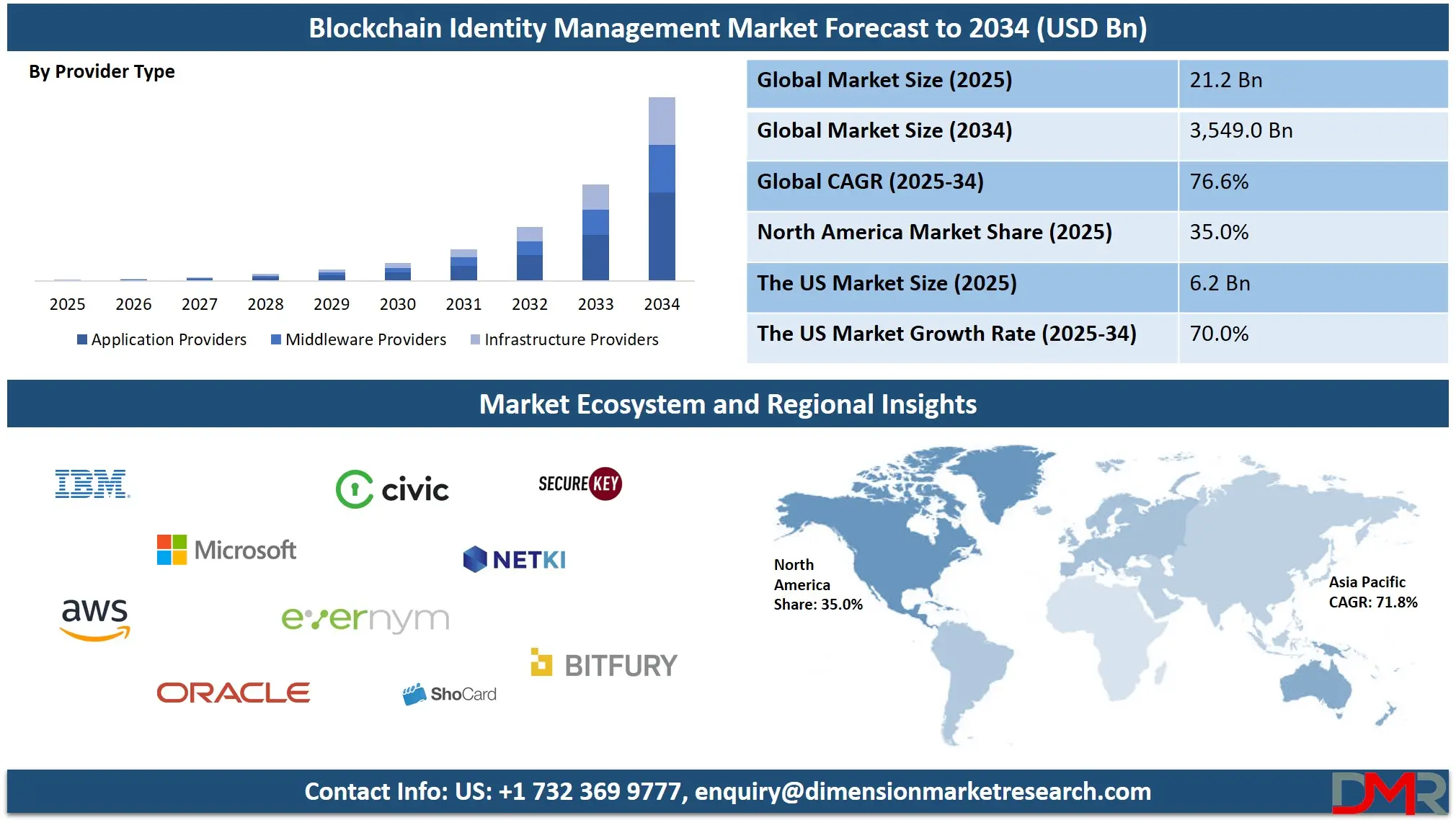
The global Blockchain Identity Management Market is projected at USD 21.2 billion in 2025 and is expected to reach USD 3,549.0 billion by 2034, growing at a CAGR of 76.6%, driven by rising adoption of decentralized identity solutions and secure digital verification across key industries.
Blockchain Identity Management refers to a system that leverages distributed ledger technology to securely verify, store, and manage digital identities. It provides a decentralized approach to identity verification where individuals and organizations can maintain control over their personal and sensitive information while ensuring transparency and immutability. By eliminating the need for centralized authorities, it reduces the risks of identity theft, data breaches, and unauthorized access.
Blockchain identity systems often utilize cryptographic techniques, smart contracts, and secure authentication mechanisms to enhance trust, streamline compliance processes, and enable seamless interactions across digital platforms, financial services, government programs, and other sectors that require robust identity solutions.
The global Blockchain Identity Management Market encompasses the entire ecosystem of solutions, services, and platforms designed to manage digital identities using blockchain technology. It includes software providers offering identity verification applications, middleware platforms that facilitate integration with existing IT infrastructures, and consulting services that assist enterprises in adopting blockchain-based identity frameworks.
The market growth is driven by increasing demand for secure digital identities, regulatory requirements in banking and finance, rising cybersecurity concerns, and the need for digital transformation across industries. Adoption is expanding across enterprise sizes from large corporations to small and medium enterprises, with sectors such as financial services, information technology, healthcare, and government leading the implementation of decentralized identity solutions.
The market is characterized by technological advancements such as permissioned and public blockchain networks, cryptographic authentication, and self-sovereign identity models that offer users full control over their personal data. Key factors influencing market expansion include strategic partnerships, increased cloud-based deployment of identity solutions, government initiatives promoting digital identity systems, and the growing integration of blockchain identity with Internet of Things applications.Regional dynamics also play a significant role, with North America currently holding substantial market share due to technological maturity, while Asia Pacific shows rapid growth fueled by increasing digital adoption, smart city initiatives, and rising investments in secure identity infrastructures.
The US Blockchain Identity Management Market
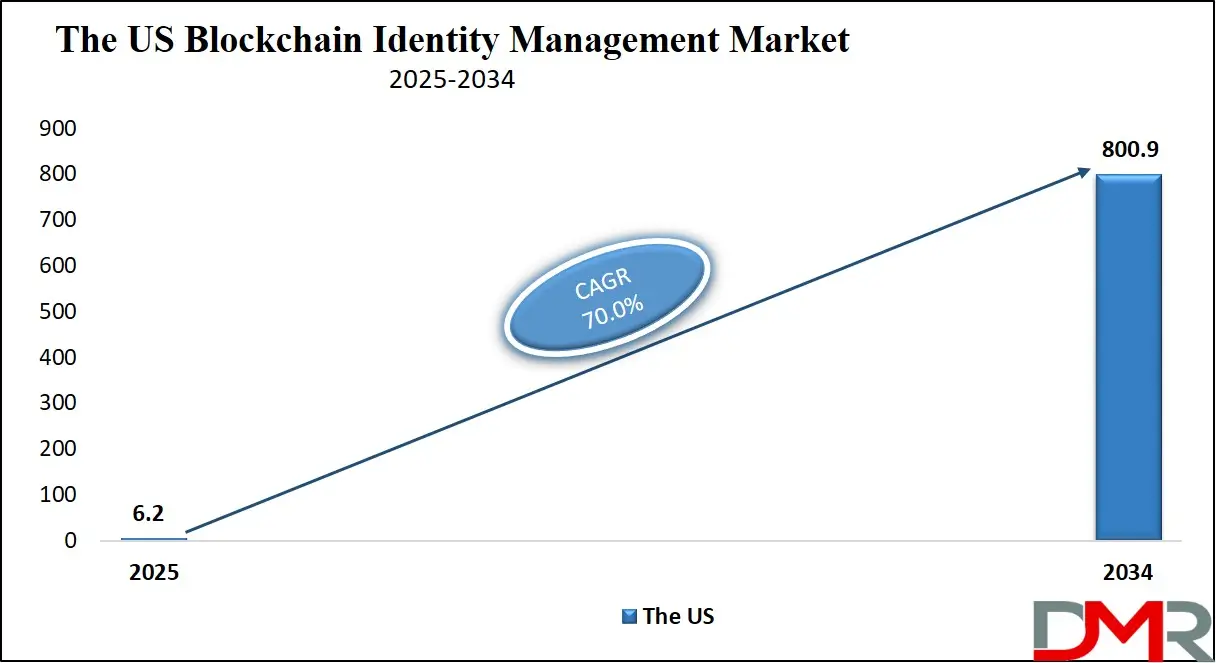
The U.S. Blockchain Identity Management market size is projected to be valued at USD 6.2 billion by 2025. It is further expected to witness subsequent growth in the upcoming period, holding USD 800.9 billion in 2034 at a CAGR of 70.0%.
The US Blockchain Identity Management Market is witnessing significant growth driven by increasing demand for secure digital identity verification, fraud prevention, and compliance with stringent regulatory frameworks in financial services, healthcare, and government sectors. Enterprises are adopting blockchain-based identity platforms to enhance data security, reduce identity theft, and streamline Know Your Customer processes.
The market encompasses software solutions, middleware platforms, and consulting services that enable organizations to implement decentralized identity systems. Rising investments in cryptographic authentication, self-sovereign identity models, and cloud-based blockchain identity solutions are further propelling market adoption across large enterprises and small to medium-sized businesses.
Technological innovation and strategic collaborations are key factors shaping the US market, with permissioned and public blockchain networks being widely deployed to ensure transparency, immutability, and user-controlled identity management. The market is also benefiting from government initiatives promoting digital identity frameworks, cybersecurity standards, and secure online authentication for citizens and enterprises. Sectors such as IT and telecom, BFSI, healthcare, and public services are increasingly integrating blockchain identity solutions to support digital transformation, regulatory compliance, and secure access management. The US market is expected to continue its rapid expansion as enterprises seek scalable, interoperable, and resilient blockchain-based identity management platforms.
Europe Blockchain Identity Management Market
The European Blockchain Identity Management market is projected to reach approximately USD 4.1 billion in 2025, reflecting rapid adoption of decentralized identity solutions across multiple sectors. Key drivers include stringent regulatory frameworks for digital identity, data privacy, and cybersecurity, as well as growing demand from financial services, healthcare, and government organizations for secure, verifiable, and tamper-proof identity management systems. Enterprises are increasingly leveraging blockchain-based platforms to enhance identity verification, prevent fraud, and ensure compliance with KYC and AML regulations. The use of self-sovereign identity models, cryptographic authentication, and interoperable blockchain networks is supporting the expansion of identity management solutions across the region.
The market in Europe is expected to grow at a robust CAGR of 80.1% over the forecast period, driven by technological innovation, strategic partnerships, and increasing investment in secure digital infrastructure. Cloud-based deployment of blockchain identity solutions is gaining traction among enterprises seeking scalable and cost-efficient identity management platforms. Governments across Europe are also promoting digital identity initiatives, including national e-ID systems and citizen authentication programs, which are further fueling market growth. The combination of regulatory support, rising awareness of data privacy, and the increasing adoption of blockchain-enabled identity platforms positions Europe as a significant and rapidly expanding market in the global blockchain identity management landscape.
Japan Blockchain Identity Management Market
The Japanese Blockchain Identity Management market is projected to reach approximately USD 800 million in 2025, driven by growing demand for secure digital identity solutions across financial services, healthcare, and government sectors. Organizations in Japan are increasingly adopting blockchain-based platforms to enhance identity verification, prevent fraud, and comply with regulatory requirements such as KYC and AML. The emphasis on self-sovereign identity, cryptographic authentication, and secure credential management is helping enterprises streamline operations, protect sensitive data, and offer privacy-preserving digital identity solutions to customers and citizens.
The market is expected to grow at a strong CAGR of 82.4% over the forecast period, supported by technological innovation, strategic collaborations, and increasing investment in secure digital infrastructure. Cloud-based blockchain identity solutions are becoming more prevalent as they provide scalability, interoperability, and cost efficiency for enterprises of all sizes. Government initiatives promoting national digital ID programs and secure citizen authentication systems are further fueling adoption. With a combination of regulatory support, technological advancements, and heightened awareness of data privacy and cybersecurity, Japan is emerging as a key and rapidly expanding market in the global blockchain identity management landscape.
Global Blockchain Identity Management Market: Key Takeaways
- Market Value: The global Blockchain Identity Management market size is expected to reach a value of USD 3,549.0 billion by 2034 from a base value of USD 21.2 billion in 2025 at a CAGR of 76.6%.
- By Offering Segment Analysis: Software Solutions are expected to maintain their dominance in the offering segment, capturing 62.0% of the total market share in 2025.
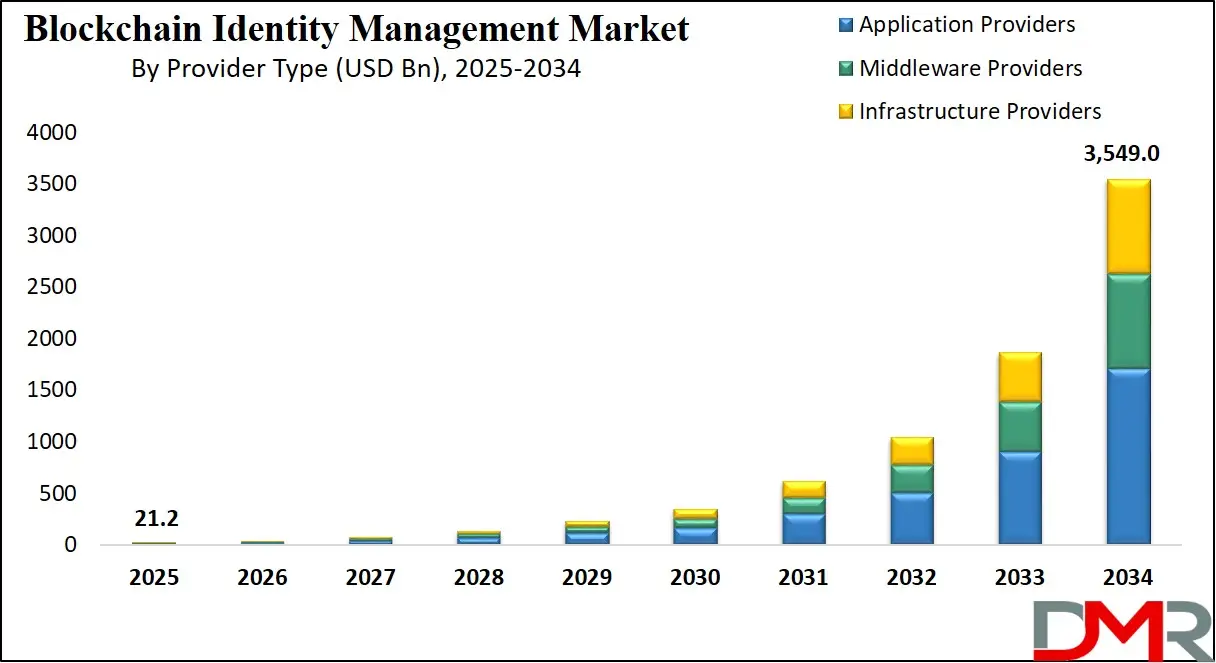
- By Provider Type Segment Analysis: Application Providers are anticipated to dominate the provider type segment, capturing 48.0% of the total market share in 2025.
- By Network Type Segment Analysis: Permissioned Blockchains will dominate the network type segment, capturing 72.0% of the market share in 2025.
- By Enterprise Size Segment Analysis: Large Enterprises will account for the maximum share in the enterprise size segment, capturing 68.0% of the total market value.
- By Industry Vertical Segment Analysis: The BFSI industry will dominate the industry vertical segment, capturing 24.0% of the market share in 2025.
- Regional Analysis: North America is anticipated to lead the global Blockchain Identity Management market landscape with 35.0% of total global market revenue in 2025.
- Key Players: Some key players in the global Blockchain Identity Management market are IBM, Microsoft, Amazon Web Services, Oracle, Civic Technologies, Evernym, ConsenSys (uPort), SecureKey Technologies, Netki, ShoCard, Bitfury Group, Factom, KYC‑Chain, and Others.
Global Blockchain Identity Management Market: Use Cases
- Digital Identity Verification: Blockchain-based identity solutions allow individuals and organizations to securely verify identities across digital platforms. By using decentralized ledgers and cryptographic authentication, users can maintain control over personal information while reducing identity fraud. This is critical for sectors such as banking, fintech, and e-commerce, where secure onboarding and Know Your Customer compliance are essential.
- Secure Access Management: Enterprises leverage blockchain identity systems to control access to sensitive data and applications. Permissioned blockchain networks enable immutable audit trails and role-based access controls, enhancing cybersecurity and preventing unauthorized access. This use case is especially relevant for IT, government agencies, and healthcare institutions managing confidential information.
- Regulatory Compliance and KYC/AML: Financial institutions adopt blockchain identity management to streamline compliance with KYC (Know Your Customer) and AML (Anti-Money Laundering) regulations. Decentralized identity platforms facilitate real-time verification, reduce manual documentation, and improve reporting efficiency. This reduces operational costs while ensuring adherence to global regulatory standards.
- Self-Sovereign Identity and Data Privacy: Blockchain empowers individuals with self-sovereign identity solutions, allowing full control over personal data sharing. Users can selectively disclose information without relying on centralized authorities, enhancing privacy and trust. This is widely applied in digital government services, healthcare records, and online authentication systems where secure and verifiable identity is paramount.
Impact of Artificial Intelligence on the global Blockchain Identity Management market
Artificial Intelligence is transforming the global Blockchain Identity Management market by enhancing identity verification, fraud detection, and risk management processes. AI-powered algorithms can analyze behavioral patterns, detect anomalies, and automate authentication workflows, making blockchain identity systems more efficient and secure. Integration of machine learning with decentralized identity platforms enables predictive analytics for real-time decision-making, improves compliance with KYC and AML regulations, and strengthens data privacy. This synergy of AI and blockchain accelerates adoption across financial services, healthcare, government, and digital platforms, driving innovation in secure, self-sovereign, and intelligent identity management solutions.
Global Blockchain Identity Management Market: Stats & Facts
- Organisation for Economic Co‑operation and Development (OECD) — “Digital public infrastructure” 2025 Survey
- 73 % of OECD countries (24 out of 33) report that “digital identity” is available as part of their digital public infrastructure.
- Data‑sharing systems are implemented in 85 % of those 33 OECD countries (28 out of 33).
- Base registry frameworks exist in 64 % of OECD countries (21 out of 33).
- 55 % of OECD countries (18 out of 33) say that at least 75 % of public services are accessible through a secure digital identity mechanism.
- In leading countries (Nordic countries, Korea, Netherlands), more than 90 % of the population use a digital identity to access services.
- World Bank / Identification for Development (ID4D) — Global Dataset (2024 release)
- As of mid‑2022, 186 out of 198 countries globally (≈ 94%) have a foundational ID system where identity records are stored in digital format.
- About 132 countries (≈ 67% of all countries) support some form of digital identity verification or authentication for in-person services and transactions.
- Around 3.3 billion people globally do not have access to a government‑recognized digital identity that can be used for secure online transactions.
- Approximately 850 million people worldwide lack any official identification at all (i.e., no legal ID).
- Eurostat / European Commission — 2024 EU e‑Government / eID Statistics
- In 2024, 70 % of EU citizens aged 16–74 used online public services (i.e., interacted with public authorities online in the prior 12 months).
- 44 % of EU citizens used e‑government services in the previous 12 months to obtain information about services, benefits, laws, opening hours, or similar.
- In some EU countries (Denmark, Netherlands, Finland, Sweden), public‑service e‑government usage rates were over 95 % in 2024.
- National / Country‑level eID / eID‑use Data (2023–2024)
- In a 2023 survey, 80 % of internet users used electronic identification (eID) in the previous 12 months to access public or private online services.
- Of those, 95 % used eID to access private‑sector services such as banking, transport, and online marketplaces.
- Global Progress & Gaps in Digital ID (ID4D / World Bank analysis)
- Nearly all countries now have digital ID systems, yet 2.9 billion people globally still lack access to a digital‑ID credential that lets them securely transact online.
- In many low‑ and middle‑income countries, a substantial share of adults remain without government‑recognized digital identity credentials, restricting access to financial services, social welfare, and online services.
Global Blockchain Identity Management Market: Market Dynamics
Global Blockchain Identity Management Market: Driving Factors
Rising Demand for Secure Digital Identity Verification
The increasing need for robust digital identity verification across financial services, healthcare, government, and e-commerce sectors is driving adoption of blockchain identity solutions. Organizations are seeking decentralized platforms that ensure immutability, transparency, and protection against identity theft and data breaches. Integration with cryptographic authentication, self-sovereign identity models, and secure cloud-based deployment further fuels market growth.
Regulatory Compliance and Fraud Prevention Requirements
Stringent regulatory frameworks for KYC (Know Your Customer), AML (Anti-Money Laundering), and data protection are compelling enterprises to adopt blockchain identity management systems. These platforms enable real-time verification, tamper-proof audit trails, and secure data sharing, reducing operational risks and ensuring compliance across diverse industries while strengthening trust and accountability.
Global Blockchain Identity Management Market: Restraints
High Implementation Costs and Complexity
Deploying blockchain-based identity management solutions involves significant investment in infrastructure, skilled personnel, and system integration. Small and medium-sized enterprises may face challenges in adopting these platforms due to financial constraints, technical expertise gaps, and complexity in integrating blockchain with legacy IT systems.
Interoperability and Standardization Challenges
The lack of universal standards and interoperability between different blockchain networks and existing identity systems hampers widespread adoption. Organizations struggle with integrating decentralized identity solutions across multiple platforms, applications, and regions, limiting seamless identity verification and data portability.
Global Blockchain Identity Management Market: Opportunities
Integration with Artificial Intelligence and IoT
Combining AI-powered analytics, machine learning algorithms, and IoT-enabled devices with blockchain identity management opens new opportunities for predictive authentication, risk assessment, and real-time monitoring. This enhances user experience, strengthens security, and expands application across smart cities, connected healthcare, and fintech solutions.
Expansion in Emerging Economies and Government Initiatives
Rapid digitalization, smart city projects, and national e-ID initiatives in Asia Pacific, Latin America, and the Middle East present substantial growth opportunities. Governments and enterprises are increasingly deploying blockchain identity solutions to enhance citizen services, streamline public sector operations, and promote secure digital transactions.
Global Blockchain Identity Management Market: Trends
Adoption of Self-Sovereign Identity Models
There is a growing shift towards self-sovereign identity, where individuals control their personal data and selectively share information without centralized intermediaries. This trend supports privacy-preserving authentication, secure online services, and enhanced trust in digital ecosystems.
Preference for Cloud-Based Blockchain Identity Solutions
Enterprises are increasingly opting for cloud-hosted blockchain identity platforms to reduce IT overhead, ensure scalability, and facilitate remote access. Cloud-based deployment enables faster implementation, cost efficiency, and integration with enterprise applications, accelerating market adoption globally.
Global Blockchain Identity Management Market: Research Scope and Analysis
By Offering Analysis
In the offering segment of the Blockchain Identity Management market, software solutions are expected to maintain a leading position, capturing approximately 62.0% of the total market share in 2025. These solutions include applications for digital identity verification, authentication, access management, and secure credential storage. Organizations across industries are increasingly adopting blockchain-based software to streamline identity management processes, enhance data security, and reduce the risk of identity theft and fraud. Software platforms provide features such as self-sovereign identity models, cryptographic authentication, and integration with enterprise IT systems, making them essential for both large corporations and small to medium enterprises seeking reliable and scalable identity management solutions.
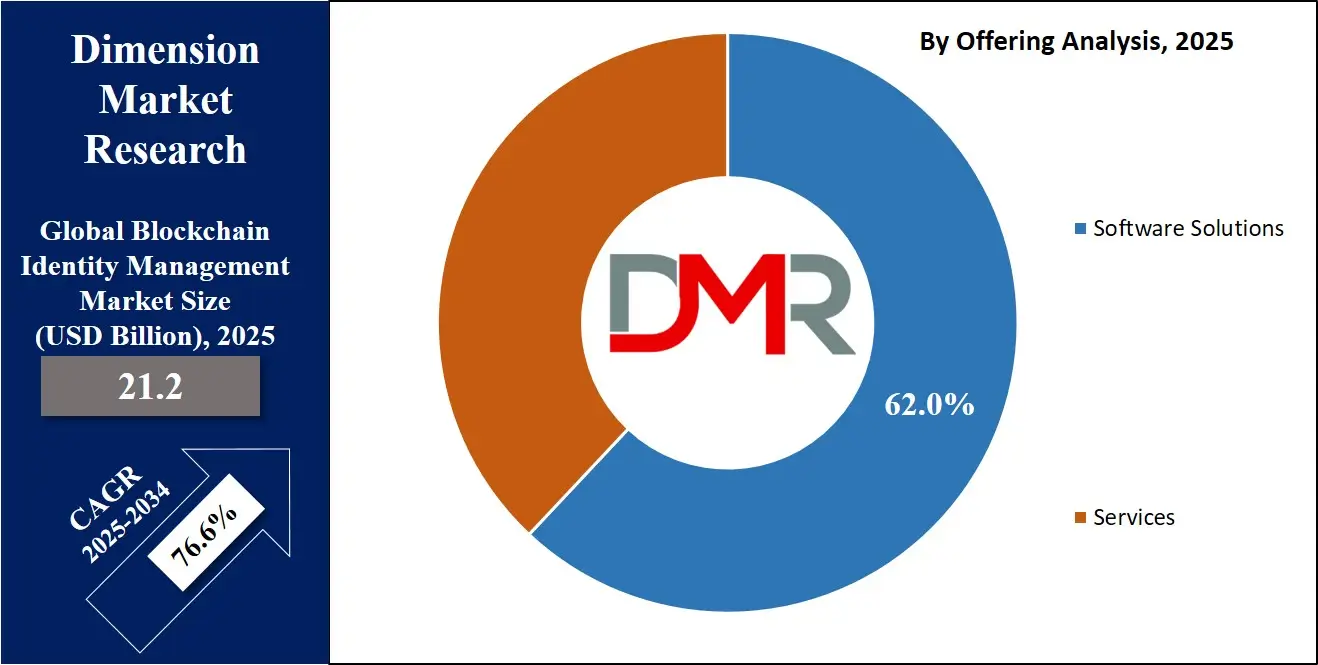
Services within this market segment also play a crucial role by supporting the deployment, customization, integration, and ongoing management of blockchain identity systems. Consulting, implementation, and maintenance services help organizations navigate technical complexities, ensure compliance with regulatory standards, and optimize the performance of decentralized identity platforms. Service providers assist in integrating blockchain identity solutions with existing IT infrastructure, training personnel, and providing technical support, enabling enterprises to maximize the benefits of secure and efficient identity management. While services hold a smaller share compared to software solutions, they are essential for driving adoption, particularly for enterprises new to blockchain technology or seeking tailored identity management solutions.
By Provider Type Analysis
In the provider type segment of the Blockchain Identity Management market, application providers are expected to lead, capturing around 48.0% of the total market share in 2025. These providers develop and offer end-to-end blockchain identity solutions, including digital identity verification, authentication platforms, access control applications, and credential management tools. Their offerings are designed to meet the growing demand for secure, decentralized, and user-controlled identity systems across various industries such as financial services, healthcare, government, and IT. Application providers focus on delivering software that is scalable, interoperable, and easy to integrate with existing enterprise systems, making them the primary choice for organizations seeking ready-to-deploy blockchain identity solutions.
Middleware providers also play a significant role in this market segment by enabling seamless integration between blockchain identity applications and enterprise IT infrastructure. They offer platforms and tools that facilitate communication, interoperability, and data exchange across different systems, networks, and applications. Middleware solutions support secure transactions, real-time verification, and efficient identity management workflows, ensuring that blockchain-based identity solutions can operate effectively within complex organizational environments. While middleware providers hold a smaller market share compared to application providers, their solutions are critical for enterprises looking to implement robust, scalable, and interoperable blockchain identity systems.
By Network Type Analysis
In the network type segment of the Blockchain Identity Management market, permissioned blockchains are expected to dominate, capturing approximately 72.0% of the market share in 2025. Permissioned blockchain networks offer controlled access where only authorized participants can validate transactions and access data, making them highly suitable for enterprises and government organizations that require strong security, privacy, and compliance with regulatory standards. These networks ensure data immutability and transparency while allowing organizations to maintain control over sensitive identity information. The structured and secure environment provided by permissioned blockchains supports applications such as digital identity verification, secure credential management, and access control in sectors like banking, healthcare, and public administration.
Public blockchains, on the other hand, are decentralized networks where anyone can participate in the validation process and access the ledger. While they hold a smaller share compared to permissioned networks, public blockchains provide high transparency, resilience, and trust without the need for centralized authorities. They are often used for applications requiring open verification, peer-to-peer identity management, and global interoperability. Public blockchain solutions enable individuals to control their own digital identities through self-sovereign identity models, offering enhanced privacy and security, and are increasingly being explored for fintech applications, cross-border digital identity systems, and decentralized authentication platforms.
By Enterprise Size Analysis
In the enterprise size segment of the Blockchain Identity Management market, large enterprises are expected to account for the maximum share, capturing around 68.0% of the total market value. These organizations are increasingly adopting blockchain identity solutions to enhance security, streamline digital identity verification, and ensure compliance with stringent regulatory requirements such as KYC and AML. Large enterprises benefit from scalable software platforms, advanced cryptographic authentication, and permissioned blockchain networks that provide control over sensitive data while enabling efficient identity management across multiple departments and geographies. The robust IT infrastructure, higher budgets, and strategic focus on digital transformation allow these enterprises to implement comprehensive blockchain-based identity systems effectively.
Small and medium enterprises also form a significant part of the market, although their share is smaller compared to large organizations. SMEs are adopting blockchain identity solutions to improve operational efficiency, secure customer data, and gain trust in digital transactions without relying on traditional centralized identity systems. Service providers play an important role for SMEs by offering consulting, integration, and maintenance support, allowing these organizations to overcome technical challenges and infrastructure limitations. Cloud-based deployment and subscription-based blockchain identity platforms are increasingly popular among SMEs, enabling them to access advanced identity management solutions at lower costs while supporting growth and compliance objectives.
By Industry Vertical Analysis
In the industry vertical segment of the Blockchain Identity Management market, the BFSI industry is expected to dominate, capturing around 24.0% of the market share in 2025. Financial institutions are increasingly leveraging blockchain identity solutions to enhance secure digital identity verification, streamline Know Your Customer processes, prevent fraud, and comply with stringent regulatory standards such as KYC and AML. The adoption of decentralized identity platforms enables banks, insurance companies, and fintech organizations to protect sensitive customer information, maintain immutable records, and facilitate faster and more efficient transactions. Advanced cryptographic authentication, self-sovereign identity models, and integration with enterprise IT systems make blockchain identity solutions essential for the BFSI sector.
The IT and telecom sector also represents a key segment within the market, adopting blockchain identity management solutions to secure networks, manage user access, and enhance digital identity verification for customers and employees. Telecom operators and IT service providers are increasingly deploying decentralized identity platforms to protect subscriber information, prevent identity theft, and ensure secure authentication across digital services. Middleware and software solutions facilitate seamless integration with existing IT infrastructure, enabling service providers to manage identity data efficiently while supporting regulatory compliance and improving operational efficiency. This segment is witnessing steady growth as organizations focus on cybersecurity, digital transformation, and secure identity management.
The Blockchain Identity Management Market Report is segmented on the basis of the following:
By Offering
- Software Solutions
- Services
By Provider Type
- Application Providers
- Middleware Providers
- Infrastructure Providers
By Network Type
- Permission Blockchains
- Public Blockchains
By Enterprise Size
- Large Enterprises
- Small and Medium Enterprises
By Industry Vertical
- BFSI
- IT & Telecom
- Government and Public Sector
- Healthcare and Life Sciences
- Retail and E-commerce
- Other Industries
Global Blockchain Identity Management Market: Regional Analysis
Region with the Largest Revenue Share
North America is expected to lead the global Blockchain Identity Management market, capturing approximately 35.0% of total market revenue in 2025. The region’s dominance is driven by the presence of technologically advanced enterprises, widespread adoption of digital identity solutions, and stringent regulatory frameworks in financial services, healthcare, and government sectors.
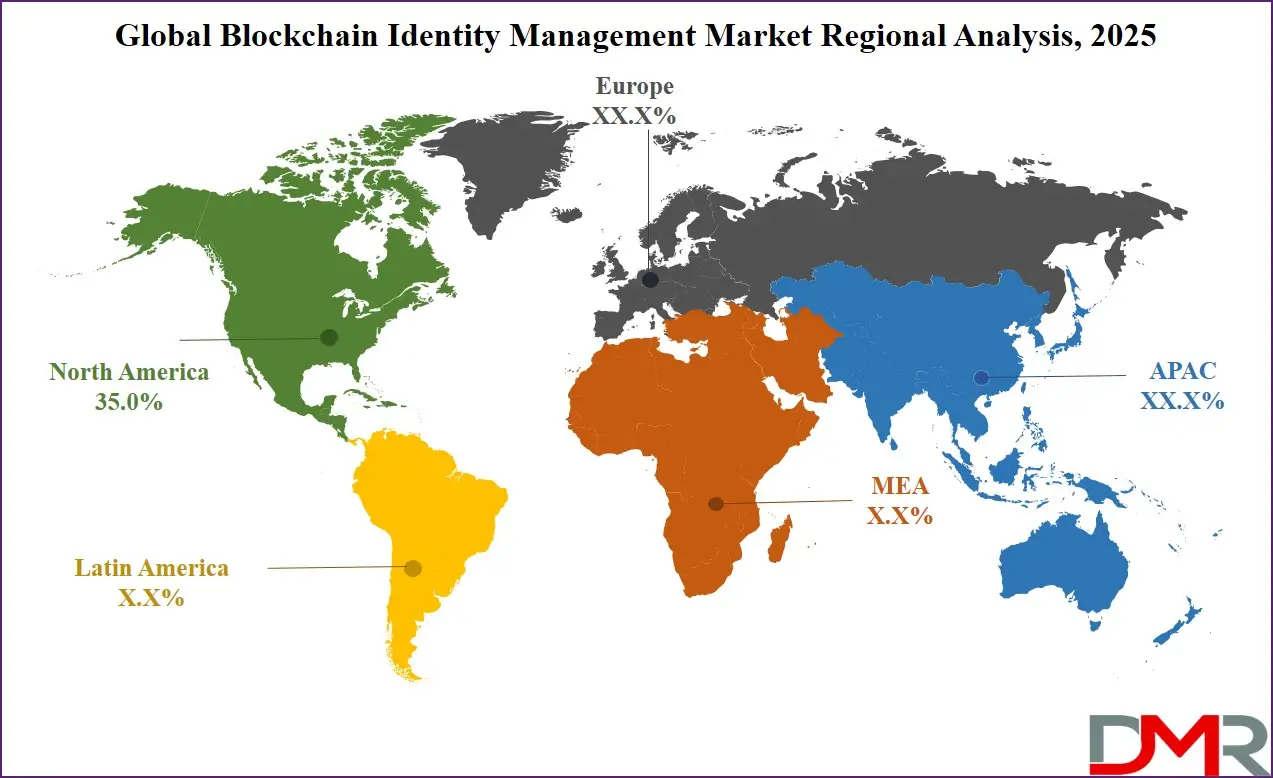
Organizations in the United States and Canada are increasingly implementing blockchain-based identity verification, secure access management, and self-sovereign identity platforms to enhance data security, prevent fraud, and ensure compliance with KYC and AML regulations. The maturity of IT infrastructure, high awareness of cybersecurity, and continuous investment in blockchain innovation contribute to North America’s leadership in the market.
Region with significant growth
The Asia Pacific region is expected to witness significant growth in the Blockchain Identity Management market due to rapid digitalization, expanding fintech adoption, and government initiatives promoting national e-ID programs and smart city projects. Rising investments in cloud-based blockchain identity platforms, increasing demand for secure digital verification, and growing awareness of data privacy are driving adoption across industries such as banking, healthcare, and public services. Countries like China, India, Japan, and Australia are emerging as key markets, with enterprises and government agencies leveraging decentralized identity solutions to enhance security, streamline authentication processes, and support large-scale digital transformation initiatives.
By Region
North America
Europe
- Germany
- The U.K.
- France
- Italy
- Russia
- Spain
- Benelux
- Nordic
- Rest of Europe
Asia-Pacific
- China
- Japan
- South Korea
- India
- ANZ
- ASEAN
- Rest of Asia-Pacific
Latin America
- Brazil
- Mexico
- Argentina
- Colombia
- Rest of Latin America
Middle East & Africa
- Saudi Arabia
- UAE
- South Africa
- Israel
- Egypt
- Rest of MEA
Global Blockchain Identity Management Market: Competitive Landscape
The competitive landscape of the global Blockchain Identity Management market is marked by a mix of established technology firms, specialized blockchain vendors, and agile startups — all striving to gain advantage through innovation in decentralized identity platforms, privacy‑enhancing cryptographic tools, and interoperability features. Many providers differentiate themselves by offering full‑stack identity solutions that combine credential issuance, verifiable‑credential ecosystems, and wallet‑enabled authentication to meet rising demand for distributed digital identity. Others focus on middleware, infrastructure and integration services that enable enterprises and governments to plug blockchain identity into legacy systems and compliance environments. Competition intensifies around areas like self‑sovereign identity, regulatory compliance (data protection and KYC/AML readiness), interoperability across blockchain networks, and scalability for large enterprise deployments. Strategic collaborations, partnerships, and ongoing R&D efforts remain central to gaining market share in this rapidly evolving, moderately concentrated yet dynamic sector.
Some of the prominent players in the global Blockchain Identity Management market are:
- IBM
- Microsoft
- Amazon Web Services (AWS)
- Oracle
- Civic Technologies
- Evernym
- ConsenSys (uPort)
- SecureKey Technologies
- Netki
- ShoCard
- Bitfury Group Limited
- Factom
- KYC‑Chain Limited
- Procivis AG
- Dock Labs (Dock Labs AG)
- LeewayHertz
- Peer Ledger Inc.
- Cambridge Blockchain
- SelfKey Foundation / SelfKey
- Blockpass
- Other Key Players
Global Blockchain Identity Management Market: Recent Developments
- Oct 2025: A firm released an upgraded on‑chain identity verification and compliance solution featuring reusable digital identities and on‑chain attestations, enabling businesses to onboard users with privacy‑preserving blockchain attestations and automated KYC/AML compliance.
- Oct 2025: A major enterprise in the Middle East signed a strategic partnership to deploy a decentralized digital identity solution across its diverse subsidiaries — including energy, environment, real estate, healthcare and technology — marking a significant real‑world adoption and integration of blockchain‑based identity infrastructure into traditional business verticals.
- Aug 2025: A self‑sovereign identity platform built on distributed ledger technology was launched, offering decentralized credential issuance, verifiable credentials, and portable digital identity wallets to support secure identity verification and user‑controlled data privacy.
- Aug 2025: An identity‑proofing and authentication company secured USD 57 million in a Series B funding round to expand its identity‑management offerings globally, strengthen biometric and passwordless authentication solutions, and accelerate rollout of identity‑first security services.
Report Details
| Report Characteristics |
| Market Size (2025) |
USD 21.2 Bn |
| Forecast Value (2034) |
USD 3,549.0 Bn |
| CAGR (2025–2034) |
76.6% |
| The US Market Size (2025) |
USD 6.2 Bn |
| Historical Data |
2019 – 2024 |
| Forecast Data |
2026 – 2034 |
| Base Year |
2024 |
| Estimate Year |
2025 |
| Report Coverage |
Market Revenue Estimation, Market Dynamics, Competitive Landscape, Growth Factors and etc. |
| Segments Covered |
By Offering (Software Solutions, Services), By Provider Type (Application Providers, Middleware Providers, Infrastructure Providers), By Network Type (Permission Blockchains, Public Blockchains), By Enterprise Size (Large Enterprises, Small and Medium Enterprises), and By Industry Vertical (BFSI, IT & Telecom, Government and Public Sector, Healthcare and Life Sciences, Retail and E-commerce, Other Industries) |
| Regional Coverage |
North America – The US and Canada; Europe – Germany, The UK, France, Russia, Spain, Italy, Benelux, Nordic, & Rest of Europe; Asia-Pacific – China, Japan, South Korea, India, ANZ, ASEAN, Rest of APAC; Latin America – Brazil, Mexico, Argentina, Colombia, Rest of Latin America; Middle East & Africa – Saudi Arabia, UAE, South Africa, Turkey, Egypt, Israel, & Rest of MEA |
| Prominent Players |
IBM, Microsoft, Amazon Web Services, Oracle, Civic Technologies, Evernym, ConsenSys (uPort), SecureKey Technologies, Netki, ShoCard, Bitfury Group, Factom, KYC Chain, and Others. |
| Purchase Options |
We have three licenses to opt for: Single User License (Limited to 1 user), Multi-User License (Up to 5 Users) and Corporate Use License (Unlimited User) along with free report customization equivalent to 0 analyst working days, 3 analysts working days and 5 analysts working days respectively. |
Frequently Asked Questions
The global Blockchain Identity Management market size is estimated to have a value of USD 21.2 billion in 2025 and is expected to reach USD 3,549.0 billion by the end of 2034.
The US Blockchain Identity Management market is projected to be valued at USD 6.2 billion in 2025. It is expected to witness subsequent growth in the upcoming period as it holds USD 800.9 billion in 2034 at a CAGR of 70.0%.
North America is expected to have the largest market share in the global Blockchain Identity Management market, with a share of about 35.0% in 2025.
Some of the major key players in the global Blockchain Identity Management market are IBM, Microsoft, Amazon Web Services, Oracle, Civic Technologies, Evernym, ConsenSys (uPort), SecureKey Technologies, Netki, ShoCard, Bitfury Group, Factom, KYC Chain, and Others.
The market is growing at a CAGR of 76.6 percent over the forecasted period.