Market Overview
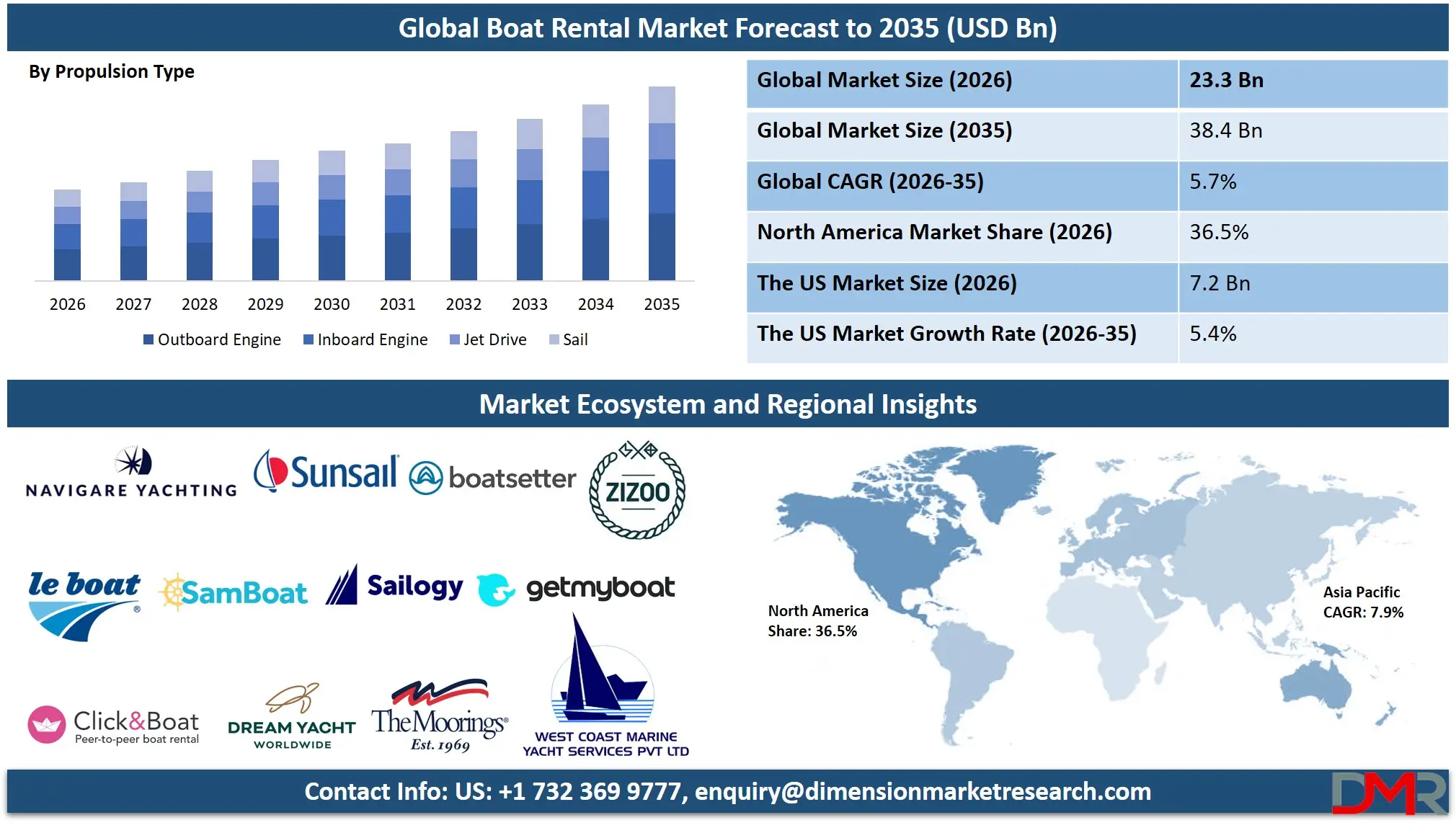
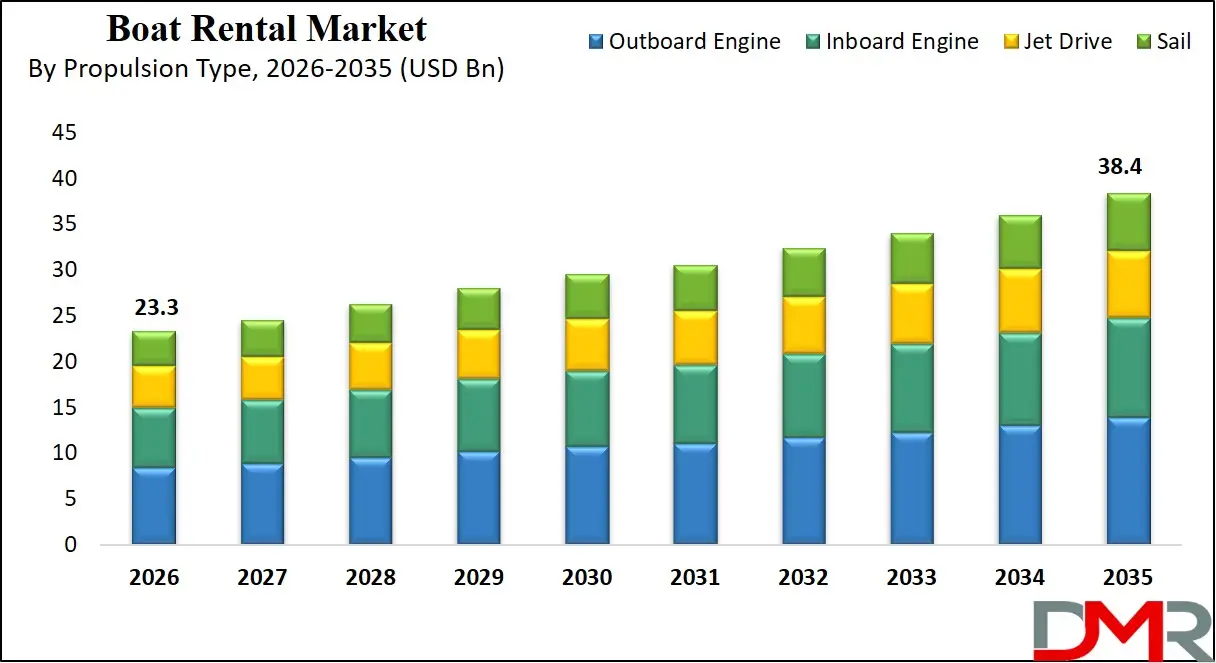
The Global Boat Rental Market is set for substantial expansion, reaching an estimated USD 23.3 billion in 2026 and projected to grow at a strong CAGR of 5.7% from 2026 to 2035, to the market value of USD 38.4 billion by 2035. This robust growth trajectory is fueled by the accelerating adoption of peer-to-peer (P2P) boat-sharing platforms, experience-based travel, on-water tourism activities, and self-drive charter services across coastal and inland waterways.
ℹ
To learn more about this report –
Download Your Free Sample Report Here
Rising consumer preference for unique vacation experiences over traditional accommodation, coupled with the growing accessibility of boating through mobile applications, is compelling rental companies to digitize their fleets and implement advanced fleet management systems. The rapid expansion of coastal tourism, marine recreational activities, fishing expeditions, and private celebrations such as weddings and parties is significantly increasing demand for reliable and diverse boat rental options.
Additionally, growing disposable incomes and the normalization of subscription-based models for luxury assets are further accelerating market adoption. Boat owners are increasingly leveraging digital platforms to monetize underutilized assets, while renters seek flexible, short-term access to a variety of vessels without the high costs of ownership. Charter companies are integrating IoT-based telematics, GPS tracking, and contactless booking and payment solutions to enhance customer trust and streamline operations.
Digital-first booking models, app-based customer support, and integrated insurance solutions are enabling both individual owners and fleet operators to offer secure, globally accessible rental services. As marine tourism evolves and urban populations seek new recreational outlets, the Boat Rental Market is expected to witness sustained double-digit growth through 2035, driven by the sharing economy and experiential travel trends.
ℹ
To learn more about this report –
Download Your Free Sample Report Here
Growing government initiatives promoting coastal infrastructure development, blue economy frameworks, and sustainable marine tourism further accelerate global adoption. However, barriers such as varying maritime regulations, liability and insurance complexities, seasonal demand fluctuations, and the high costs of vessel maintenance remain. Despite these limitations, the convergence of digital platforms, marine technology, and the global shift toward access-over-ownership models positions boat rental as a central pillar of modern marine leisure and tourism through 2035.
The US Boat Rental Market
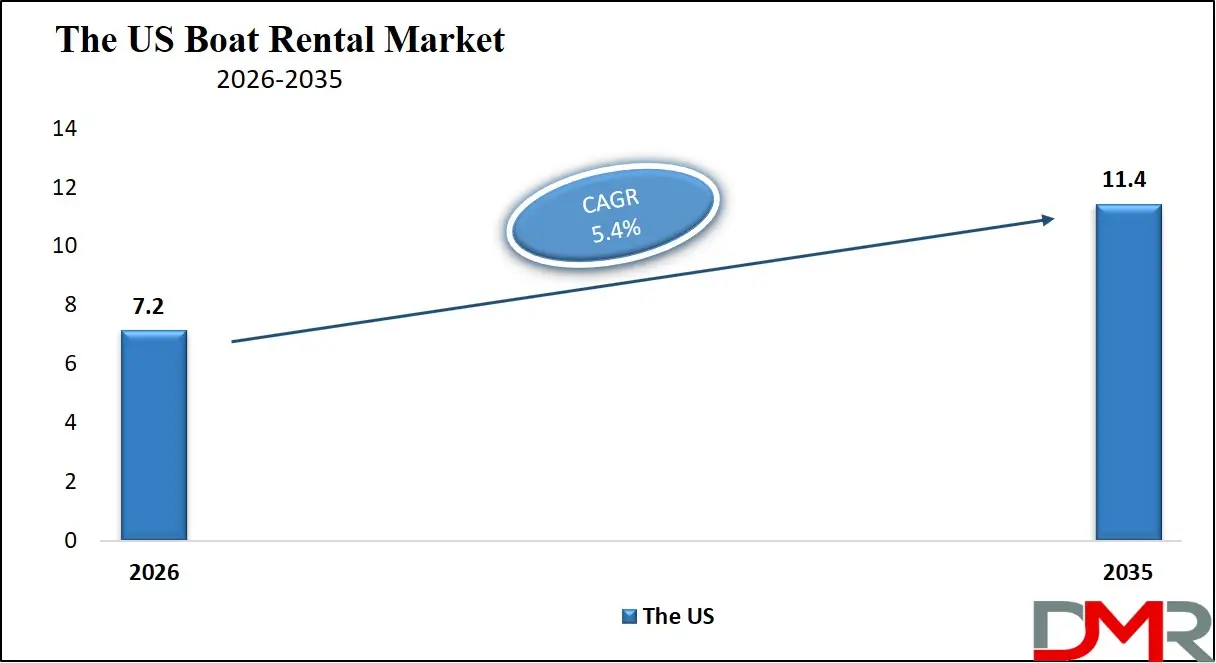
The U.S. Boat Rental Market is projected to reach USD 7.2 billion in 2026 and grow at a CAGR of 5.4%, reaching USD 11.4 billion by 2035. The U.S. leads global adoption due to its extensive coastline, vast network of inland lakes and rivers, and a strong culture of recreational boating supported by a mature marine insurance and financing ecosystem.
ℹ
To learn more about this report –
Download Your Free Sample Report Here
The proliferation of experience-based platforms in coastal hubs like Florida, California, and the Great Lakes region, coupled with consumers' desire for on-water experiences without ownership commitments, fuels demand for diverse rental options. Major peer-to-peer platforms such as GetMyBoat and Boatsetter, alongside traditional charter companies, are integrating advanced booking and contactless handover technologies to streamline the rental process.
U.S. regulatory support for recreational boating safety, alongside frameworks from the U.S. Coast Guard, encourages investment in rental operator training and vessel maintenance standards. The market is witnessing a shift toward app-based fleet management and telematics integration, reducing administrative overhead and enhancing the customer experience. The rise of social media and influencer marketing highlighting "dayboat" lifestyles has further intensified the focus on premium, Instagram-worthy rental experiences, positioning the U.S. as a critical innovator in this space.
The Europe Boat Rental Market
The Europe Boat Rental Market is projected to be valued at approximately USD 4.6 billion in 2026 and is projected to reach around USD 6.6 billion by 2035, growing at a CAGR of about 4.5% from 2026 to 2035. Europe's leadership is anchored by its rich maritime heritage, dense concentration of coastlines, and the Mediterranean's status as the world's premier yachting destination, supported by a strong regulatory environment focused on marine safety and environmental protection.
Countries such as Italy, Greece, France, Croatia, and Spain are widely adopting rental services, driven by high inbound tourism and a culture of coastal exploration. The EU's Blue Economy strategy and initiatives for sustainable marine tourism further necessitate responsible and regulated rental operations across member states.
Europe's high density of marinas, established charter bases, and a mature sailing culture drive the demand for both crewed and bareboat charter solutions. Funding and support for cross-border waterway tourism encourage digital platform integration and the standardization of licensing recognition across countries like the Netherlands, Germany, and the U.K. With a sophisticated customer base and a regulatory landscape that prioritizes environmental sustainability and safety, Europe remains a highly advanced and essential region for boat rental services.
The Japan Boat Rental Market
The Japan Boat Rental Market is anticipated to be valued at approximately USD 1.1 billion in 2026 and is expected to attain nearly USD 1.9 billion by 2035, expanding at a CAGR of about 6.5% during the forecast period. Japan's unique island geography and a government push for regional revitalization and marine leisure are driving the adoption of accessible boating experiences, making boat rental a cornerstone of domestic tourism expansion.
The Ministry of Land, Infrastructure, Transport and Tourism (MLIT) actively supports the development of marina infrastructure and marine safety education, promoting the use of recreational vessels for both tourism and local community events. Japan's leadership in advanced manufacturing and high disposable income provides a robust foundation for premium rental services, including luxury yacht charters and technologically advanced fishing boats.
Japan's concept of "Marine Day" and growing interest in coastal lifestyles, driven by urban populations seeking weekend getaways, integrates boat rental into everything from corporate entertainment to family excursions. Companies are deploying app-based booking to combat language barriers and ensure the integrity of transactions in Tokyo Bay, Okinawa's tourist hubs, and regional fishing communities. Japan's cultural emphasis on safety, service quality, and technological integration positions it as a high-growth, quality-focused market for rental solutions.
Global Boat Rental Market: Key Takeaways
- Strong Global Market Growth Outlook: The Global Boat Rental Market is expected to be valued at USD 23.3 billion in 2026 and is projected to reach USD 38.4 billion by 2035, showcasing rapid expansion supported by rising demand for experiential travel and on-water recreation.
- High CAGR Driven by Sharing Economy Adoption: The market is expected to grow at an impressive CAGR of 5.7% from 2026 to 2035, fueled by accelerating digitalization of the marine industry, peer-to-peer platform growth, and increasing consumer preference for access over ownership worldwide.
- Strong Growth Trajectory in the United States: The U.S. Boat Rental Market stands at USD 7.2 billion in 2026 and is projected to reach USD 11.4 billion by 2035, expanding at a CAGR of 5.4% due to a strong boating culture and high penetration of digital booking platforms.
- Regional Dominance: North America is expected to capture approximately 36.5% of the global market share in 2026, supported by its dense coastlines, mature marine tourism infrastructure, and the popularity of the Mediterranean as a global yachting hub.
- Rapid Advancement in Rental Technologies: Innovations including app-based contactless check-in, IoT-enabled fleet tracking, onboard telematics for engine health, and AI-driven dynamic pricing models are significantly enhancing operational efficiency, safety, and customer experience of rental services.
- Growing Experiential Travel Boosts Adoption: Rising global consumer spending on unique travel experiences, coupled with the need for flexible and short-term leisure options, is driving sustained demand for a wide variety of boat rental solutions.
Global Boat Rental Market: Use Cases
- Peer-to-Peer Boat Sharing: Individual boat owners list their vessels on digital platforms to generate income, while renters gain access to a diverse fleet of local boats for day trips or fishing excursions.
- Crewed Luxury Charters: Affluent tourists book fully crewed yachts and catamarans for multi-day vacations in destinations like the Caribbean or Mediterranean, seeking personalized service and premium on-water experiences.
- Self-Drive Fishing Excursions: Enthusiasts rent specialized fishing boats (center consoles, bass boats) for short periods to access prime fishing spots independently, often using apps to find and book available vessels nearby.
- Corporate and Private Events: Companies and individuals charter large yachts or party boats for team-building events, product launches, weddings, or private celebrations on the water.
- Water Sports and Adventure Tourism: Renters book jet skis, speedboats, or sailboats specifically for towing water skiers, wakeboarders, or for adventure-based exploration of coastal caves and coves.
Global Boat Rental Market: Stats & Facts
International Council of Marine Industry Associations (ICOMIA)
- The global recreational boating fleet is estimated at over 30 million vessels.
- Annual retail expenditure on marine products and services exceeds USD 40 billion.
- Powerboats account for the majority of the global fleet, with a significant percentage being used for fishing and watersports.
- The United States has the largest recreational fleet, followed by Canada and Australia on a per-capita basis.
National Marine Manufacturers Association (NMMA)
- In the U.S., recreational boating has an annual economic impact of over USD 230 billion.
- Approximately 100 million Americans go boating annually.
- New powerboat unit sales in the U.S. average over 250,000 per year.
- Outboard boats remain the most popular segment, representing over 90% of new powerboat sales.
European Boating Industry (EBI)
- The European boating industry has an annual turnover of approximately EUR 48 billion.
- There are an estimated 6 million registered recreational boats in Europe.
- The industry supports over 280,000 jobs directly and indirectly.
- Boat charter and tourism-related activities represent a significant and growing share of the market's revenue.
Global Boat Rental Market: Market Dynamic
Driving Factors in the Global Boat Rental Market
Escalating Demand for Experiential and Sharing Economy Travel
The global shift from material ownership to experiential consumption is a major driver for boat rental. Modern travelers and consumers increasingly seek unique, shareable experiences. Renting a boat for a few hours or days provides access to a lifestyle and adventure that ownership cannot offer without the associated costs and responsibilities of mooring, maintenance, and insurance. Digital platforms have democratized this access, connecting boat owners with a vast market of renters and fueling the growth of on-water recreation.
Rising Coastal and Marine Tourism
The growth of global tourism, particularly in coastal regions, directly fuels the boat rental market. Destinations are increasingly marketing their waterways and marine life as key attractions. Activities such as snorkeling, island hopping, sunset cruises, and coastal sightseeing are high on tourist itineraries, creating consistent demand for both bareboat and crewed rental options. Investment in marina infrastructure and water taxi services further supports this growth by making boating more accessible to visitors.
Restraints in the Global Boat Rental Market
Fragmented Regulatory and Licensing Landscape
The significant challenge of navigating disparate maritime regulations, licensing requirements, and liability laws across different countries and even states creates friction. What is permissible for a renter in one region may be illegal in another. Achieving compliance with local boating safety laws, alcohol limits, and environmental zones requires deep local knowledge, which can be difficult for global booking platforms to standardize. This inconsistency can lead to verification failures or legal risks, negatively impacting user experience and operator scalability.
Liability, Insurance, and Asset Risk Complexity
Boat rental involves high-value physical assets and inherent safety risks. Crafting insurance policies that adequately cover both the owner's asset and the renter's liability is complex and costly. Incidents of damage, theft, or accidents can lead to significant financial disputes and reputational damage. Determining fault and processing claims, especially across borders, creates significant operational and legal complexity for rental platforms and individual owners, making it difficult to build a universally trusted and seamless workflow.
Opportunities in the Global Boat Rental Market
Expansion into Emerging Coastal Economies
Emerging markets in Southeast Asia, Latin America, and the Middle East represent major growth opportunities due to rapid tourism development, expanding middle classes, and increasing government focus on marine leisure. Countries like Thailand, Vietnam, Mexico, and the UAE are seeing a surge in coastal infrastructure and luxury tourism, creating massive demand for charter and rental services. Localized solutions, partnerships with regional marina operators, and integrated crew and concierge services can improve accessibility, driving the next wave of market expansion.
AI-Driven Dynamic Pricing and Fleet Optimization
The integration of AI not only for booking management but for analyzing demand patterns, weather forecasts, and local events creates new value streams. AI can power dynamic pricing models, where rental rates are adjusted in real-time based on seasonality, day of the week, and last-minute availability. This transforms fleet management from a static schedule into an intelligent, revenue-optimizing system that maximizes asset utilization, smooths demand fluctuations, and continuously improves profitability for fleet owners.
Trends in the Global Boat Rental Market
Contactless and Digitalized Customer Journey
The rise of fully digitalized rental experiences, from online booking and e-signature of contracts to app-based check-in and GPS-guided vessel walkthroughs, is gaining significant traction. This trend leverages mobile technology to provide a seamless, frictionless customer journey, reducing the need for in-person meetings and paperwork. This method is far more efficient for operators and is becoming the gold standard for user experience in the modern sharing economy.
Subscription-Based Boating Models
Platforms are enabling flexible membership and subscription access across multiple vessel types and locations. This ensures recurring revenue for operators and hassle-free access for frequent users by automatically selecting the optimal vessel based on the user's location, past preferences, and real-time availability. This trend supports the growth of boating as a regular lifestyle activity rather than a one-off vacation expense, building a loyal customer base for operators.
Global Boat Rental Market: Research Scope and Analysis
By Boat Type Analysis
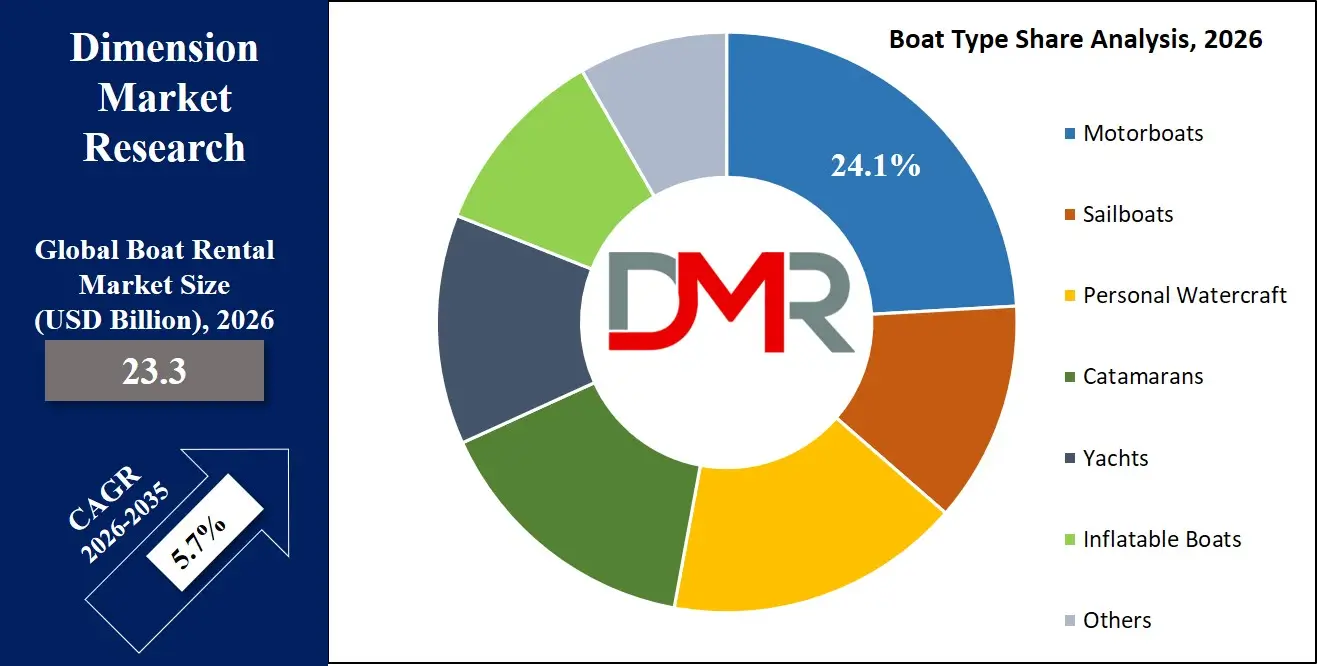
The motorboat segment is projected to dominate the Global Boat Rental Market, accounting for the largest revenue share compared to sailboats and other vessels. This dominance is primarily driven by their ease of operation, accessibility to novice users, and versatility for a wide range of activities such as waterskiing, fishing, and coastal cruising. Businesses across tourism hotspots, marina operators, and peer-to-peer platforms require a fleet of reliable motorboats capable of processing high rental volumes.
ℹ
To learn more about this report –
Download Your Free Sample Report Here
Modern rental motorboats are equipped with user-friendly outboard engines, GPS, and safety gear, making them ideal for self-drive rentals. These features significantly reduce the skill barrier for renters, expanding the potential customer base. Rental companies prefer durable, low-maintenance models that offer analytics on engine hours and fuel consumption, enabling proactive fleet management.
Additionally, the shift toward "dayboat" experiences has increased reliance on versatile bowriders and deck boats. While luxury yachts and sailboats cater to niche markets, motorboats generate the highest rental frequency due to their broad appeal. As marine tourism expands globally and platforms prioritize user-friendly experiences, the motorboat segment is expected to maintain its leadership position due to continuous design innovation and engine efficiency.
By Propulsion Type Analysis
Outboard engines are expected to dominate the market due to their flexibility, ease of maintenance, and cost efficiency. Rental operators increasingly prefer outboard-powered boats because they offer superior maneuverability in shallow waters, simpler winterization, and lower repair costs compared to inboard engines. As rental businesses scale their fleets across multiple geographies, outboards enable quicker turnover and easier part replacement.
Outboard-powered boats allow for instant power tilt and better deck space utilization, which is particularly beneficial for fishing boats, center consoles, and smaller rental fleets. They support high rental frequency, automatic oil injection systems, and compatibility with various boat hulls. This is particularly attractive for operators in freshwater lakes and coastal areas alike.
Another major advantage of outboard propulsion is the ability to repower boats easily, extending the life of the hull and maintaining fleet modernity. While inboard and jet drive systems remain relevant for watersports applications requiring large wakes or shallow drafts, their adoption is comparatively limited due to higher maintenance costs and complexity. As rental companies prioritize uptime and serviceability, outboard-powered vessels continue to lead the market.
By Rental Duration Analysis
Short-term rentals (hourly/daily) is anticipated to dominate the rental duration segment due to their strong appeal to tourists and casual users seeking flexibility, convenience, and affordability. These rentals are widely used for sunset cruises, fishing trips, watersports, and spontaneous on-water outings.
Short-term rentals remain popular because they lower the barrier to entry for first-time boaters. It is extensively used by visitors to coastal cities, lake towns, and resort areas. This model strengthens customer acquisition by allowing users to try boating without a significant time or financial commitment, significantly reducing the risk of a disappointing experience.
The growth of app-based booking platforms, which are optimized for quick, local rentals, further drives adoption of this duration. As tourism flows increase, operators are prioritizing high-turnover rental models to maximize asset utilization and revenue per vessel.
Although long-term charters (weekly/monthly) are gaining traction for dedicated vacationers and liveaboard experiences, short-term rentals continue to dominate because of their mass-market appeal, lower cost per session, and proven effectiveness for generating consistent cash flow. Their widespread adoption across multiple customer types ensures continued leadership in this segment.
By Customer Type Analysis
Tourists & leisure travelers is projected to dominate the customer type segment due to higher travel frequency, desire for unique vacation experiences, and greater spending on activities. International and domestic visitors to coastal regions, islands, and lake resorts generate millions of rental requests annually, requiring highly scalable and accessible booking systems.
These customers prioritize convenience, safety, and unique photo opportunities. The influence of social media and travel reviews requires operators to maintain high-quality fleets and seamless customer service. Additionally, tourists often operate across multiple language barriers, necessitating rental systems capable of handling international licenses, multi-lingual support, and digital check-in processes.
Tourists also adopt guided tours and captain-assisted rentals, enhancing safety and local knowledge. While local residents are increasingly adopting boat rentals for weekend recreation, their transaction frequency and spending per trip remain lower compared to tourists. Consequently, tourists & leisure travelers continue to generate the majority of market revenue and are expected to sustain their dominant position.
By Booking Channel Analysis
Online platforms & mobile apps is forecasted to dominate the booking channel segment, driven by the growing need for convenience, transparency, and instant confirmation. With rising smartphone penetration, consumers rely heavily on digital channels to compare vessel options, check real-time availability, read reviews, and complete secure transactions.
Platforms use these tools to validate user identities and process digital payments. Rental operators leverage direct online bookings to reduce reliance on physical offices and phone reservations, improving operational efficiency and data collection.
Online reviews have become increasingly important as consumers rely on peer validation before booking. Boat rental platforms provide a critical marketplace connecting supply and demand.
Although traditional channels such as marina walk-ins and phone bookings are still relevant, online platforms remain the primary revenue drivers. As digital payment ecosystems expand globally and social media drives discovery, this segment will continue to dominate due to its direct role in enhancing accessibility and customer choice.
By Application Analysis
The tourism & recreation sector is expected to dominate the application segment due to high global travel volumes and the growing integration of on-water activities into mainstream vacation itineraries. Tour operators, hotels, and destination management companies require diverse fleets for sightseeing excursions, snorkeling trips, and sunset cruises.
Travel regulations and destination marketing campaigns require tourism businesses to offer safe and memorable boating experiences. The rise of all-inclusive resorts and experience-based travel platforms has further accelerated demand for reliable booking integration.
Fishing platforms and watersports schools also rely on rentals to service enthusiasts, but tourism remains the largest revenue contributor due to its high volume and global reach. Given the economic impact of coastal tourism, operators allocate significant marketing budgets toward capturing this segment.
While private events and commercial applications also contribute significantly, tourism remains the largest revenue contributor due to passenger volume and global seasonality.
The Global Boat Rental Market Report is segmented on the basis of the following:
By Boat Type
- Motorboats
- Bowriders
- Center Consoles
- Deck Boats
- Sailboats
- Daysailers
- Catamarans
- Yachts
- Personal Watercraft
- Catamarans
- Yachts
- Mega Yachts
- Cruising Yachts
- Inflatable Boats
- Others
By Propulsion Type
- Outboard Engine
- Inboard Engine
- Jet Drive
- Sail
By Rental Duration
- Short-Term Rentals (Hourly / Daily)
- Long-Term Rentals (Weekly / Monthly)
By Customer Type
- Tourists & Leisure Travelers
- Local Residents
- Commercial/Business
By Booking Channel
- Online Platforms & Mobile Apps
- Direct Operator Website
- Walk-ins & Phone Bookings
- Travel Agents & Tour Operators
By Application
- Tourism & Recreation
- Fishing
- Watersports
- Skiing
- Wakeboarding
- Diving
- Corporate Events & Private Charters
Impact of Artificial Intelligence in the Global Boat Rental Market
- AI for Fraud Pattern & Anomaly Detection: AI analyzes vast datasets of user profiles and booking requests to identify subtle patterns indicative of fraudulent intent, such as synthetic identities or stolen payment methods, allowing platforms to flag or block high-risk bookings with high precision in real-time.
- AI-Driven Dynamic Pricing (Revenue Management): AI algorithms assess the pricing potential of a rental by combining vessel type, seasonal demand, local events, and weather forecasts to determine optimal daily rates, maximizing revenue for fleet owners.
- Predictive Maintenance and Fleet Health Scoring: AI-powered systems continuously learn from engine telematics and usage data to predict maintenance needs, reducing unexpected breakdowns and improving fleet availability for rental.
- AI-Based Personalization and Recommendation: AI analyzes user search history and past rentals to recommend ideal vessels and locations, enhancing the customer experience and increasing booking conversion rates.
- Learning from Global Risk and Damage Data: AI systems aggregate and anonymize damage and insurance claim data across a global customer base to identify emerging risk factors (e.g., specific vessel models prone to certain damages), enabling all operators to benefit from collective learning and adjust safety protocols.
Global Boat Rental Market: Regional Analysis
Region with the Largest Revenue Share
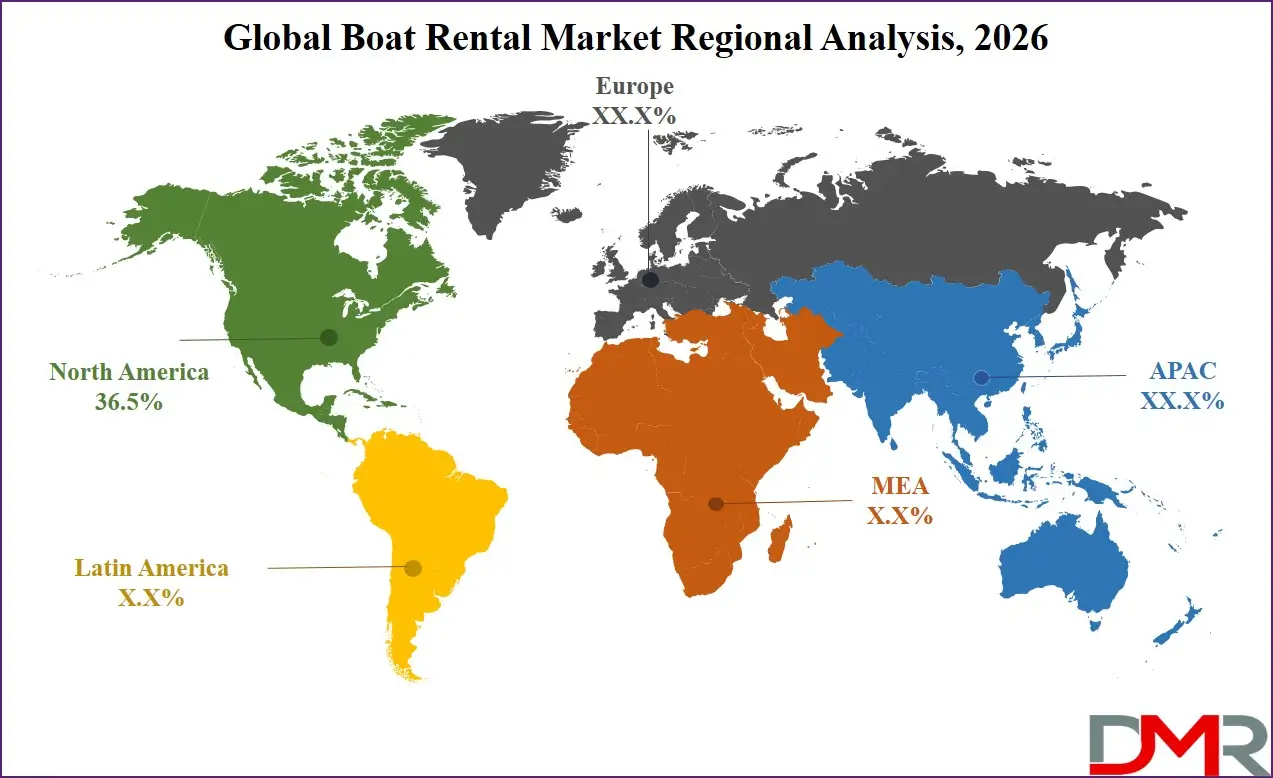
North America is projected to dominate the regional segment with the highest market share as it is anticipated to hold 36.5% of the total market revenue by the end of 2026. North America's dominance in the mobile number verification market is driven by its highly mature digital economy, where online banking, e-commerce, and fintech platforms process massive transaction volumes requiring secure authentication. The region faces elevated cyber threats, including frequent SIM swapping and account takeover attacks, compelling businesses to adopt advanced verification solutions. A strong regulatory push from bodies like the FCC and FTC mandates stringent consumer data protection, making verification a compliance necessity. Furthermore, the presence of major technology innovators (Twilio, etc.) and a tech-savvy population expecting seamless yet secure digital experiences accelerates adoption of sophisticated methods like SIM swap detection and silent authentication, solidifying its leading market share.
ℹ
To learn more about this report –
Download Your Free Sample Report Here
Region with the Highest CAGR
Asia-Pacific holds the highest CAGR and is poised to achieve rapid market share growth due to its expansive coastlines, rising middle class, booming domestic tourism, and significant government investment in marina and island development. Countries like Thailand, Vietnam, China, and the Philippines are investing heavily in tourism infrastructure to attract both international and local visitors. Destinations like Phuket, Ha Long Bay, and the Maldives are creating fertile ground for adoption. The region's growing preference for luxury experiences is being addressed through premium charter services and partnerships between global booking platforms and regional marina operators. This, combined with an immense and growing volume of tourists, positions APAC as the fastest-growing market for boat rental systems.
By Region
North America
Europe
- Germany
- The U.K.
- France
- Italy
- Russia
- Spain
- Benelux
- Nordic
- Rest of Europe
Asia-Pacific
- China
- Japan
- South Korea
- India
- ANZ
- ASEAN
- Rest of Asia-Pacific
Latin America
- Brazil
- Mexico
- Argentina
- Colombia
- Rest of Latin America
Middle East & Africa
- Saudi Arabia
- UAE
- South Africa
- Israel
- Egypt
- Rest of MEA
Global Boat Rental Market: Competitive Landscape
The Global Boat Rental Market is moderately fragmented, featuring a mix of global peer-to-peer platforms, traditional charter operators with digital transformations, and marine technology providers. Leading players like GetMyBoat and Boatsetter leverage their vast, community-driven marketplaces and digital infrastructure to offer rental as a core service. Pure-play charter companies such as Dream Yacht Worldwide and The Moorings are driving market dynamics with their owned and managed fleets, offering premium, full-service experiences.
Marina groups and regional operators play a crucial role as key inventory providers, while technology startups are increasingly integrating rental management software, telematics, and dynamic pricing into their platforms. Regional tourism boards and hotel consortia are also active, forming partnerships to offer curated on-water experiences directly to guests.
Some of the prominent players in the Global Boat Rental Market are:
- GetMyBoat
- Boatsetter
- Dream Yacht Worldwide
- The Moorings (a Travelopia company)
- Sunsail
- Sailogy S.A.
- Zizoo LTD
- Click&Boat
- Nautal (part of SamBoat)
- SamBoat
- Le Boat
- Navigare Yachting
- West Coast Marine
- Fraser Yachts
- Burgess
- Boataround
- Boatbound
- Incrediblue
- Marinas.com
- Other Key Players
Recent Developments in the Global Boat Rental Market
- November 2025: GetMyBoat introduced its "Instant Book & Go" feature, using enhanced digital contracting to provide a fully contactless rental experience, enabling renters to access vessels without meeting the owner.
- October 2025: Dream Yacht Worldwide demonstrated its enhanced mobile app at the Cannes Yachting Festival 2026, highlighting seamless itinerary planning, onboard concierge requests, and integrated check-in for its global fleet.
- September 2025: Boatsetter announced a multi-year agreement with a top-3 global hospitality group to power on-water experiences for guests at its coastal resorts across the Caribbean and Mexico.
- August 2025: Sailogy completed the acquisition of a specialist marine insurance tech firm to enhance its platform's ability to offer real-time, bundled insurance policies for peer-to-peer rentals.
- July 2025: A Horizon Europe grant was awarded to a consortium developing smart buoy and IoT mooring systems for rental fleets, aiming to enhance safety and optimize dock space utilization in busy marinas.
- June 2025: Zizoo partnered with a major hotel chain in Greece to provide its guests with exclusive access to its fleet of dayboats, aiming to set new standards for integrated luxury travel experiences in the region.
Report Details
| Report Characteristics |
| Market Size (2026) |
USD 23.3 Bn |
| Forecast Value (2035) |
USD 38.4 Bn |
| CAGR (2026–2035) |
5.7% |
| The US Market Size (2026) |
USD 7.2 Bn |
| Historical Data |
2021 – 2025 |
| Forecast Data |
2027 – 2035 |
| Base Year |
2025 |
| Estimate Year |
2026 |
| Report Coverage |
Market Revenue Estimation, Market Dynamics, Competitive Landscape, Growth Factors and etc. |
| Segments Covered |
By Boat Type (Motorboats, Sailboats, Personal Watercraft, Catamarans, Yachts, Inflatable Boats, Others), By Propulsion Type (Outboard Engine, Inboard Engine, Jet Drive, Sail), By Rental Duration (Short-Term Rentals (Hourly / Daily), Long-Term Rentals (Weekly / Monthly)), By Customer Type (Tourists & Leisure Travelers, Local Residents, Commercial/Business), By Booking Channel (Online Platforms & Mobile Apps, Direct Operator Website, Walk-ins & Phone Bookings, Travel Agents & Tour Operators), By Application (Tourism & Recreation, Fishing, Watersports, Corporate Events & Private Charters) |
| Regional Coverage |
North America – The US and Canada; Europe – Germany, The UK, France, Russia, Spain, Italy, Benelux, Nordic, & Rest of Europe; Asia- Pacific– China, Japan, South Korea, India, ANZ, ASEAN, Rest of APAC; Latin America – Brazil, Mexico, Argentina, Colombia, Rest of Latin America; Middle East & Africa – Saudi Arabia, UAE, South Africa, Turkey, Egypt, Israel, & Rest of MEA |
| Prominent Players |
GetMyBoat, Boatsetter, Dream Yacht Worldwide, The Moorings (a Travelopia company), Sunsail, Sailogy S.A., Zizoo LTD, Click&Boat, Nautal (part of SamBoat), SamBoat, Le Boat, Navigare Yachting, West Coast Marine, Fraser Yachts, Burgess, Boataround, Boatbound, Incrediblue, Marinas.com, and Other Key Players |
| Purchase Options |
We have three licenses to opt for (Single User License (Limited to 1 user), Multi-User License (Up to 5 Users) and Corporate Use License (Unlimited User) along with free report customization equivalent to 0 analyst working days, 3 analysts working days and 5 analysts working days respectively. |
Frequently Asked Questions
How big is the Global Boat Rental Market?
▾ The Global Boat Rental Market size is estimated to have a value of USD 23.3 billion in 2026 and is expected to reach USD 38.4 billion by the end of 2035.
What is the growth rate in the Global Boat Rental Market?
▾ The market is growing at a CAGR of 5.7 percent over the forecasted period of 2026-2035.
What is the size of the US Boat Rental Market?
▾ The US Boat Rental Market is projected to be valued at USD 7.2 billion in 2026. It is expected to witness subsequent growth as it holds USD 11.4 billion in 2035 at a CAGR of 5.4%.
Which region accounted for the largest Global Boat Rental Market?
▾ North America is expected to have the largest market share in the Global Boat Rental Market with a share of about 36.5% in 2026.
Who are the key players in the Global Boat Rental Market?
▾ Some of the major key players in the Global Boat Rental Market are GetMyBoat, Boatsetter, Dream Yacht Worldwide, The Moorings, Sailogy, Zizoo, and many others.