What is the Brain Computer Interface Market Size?
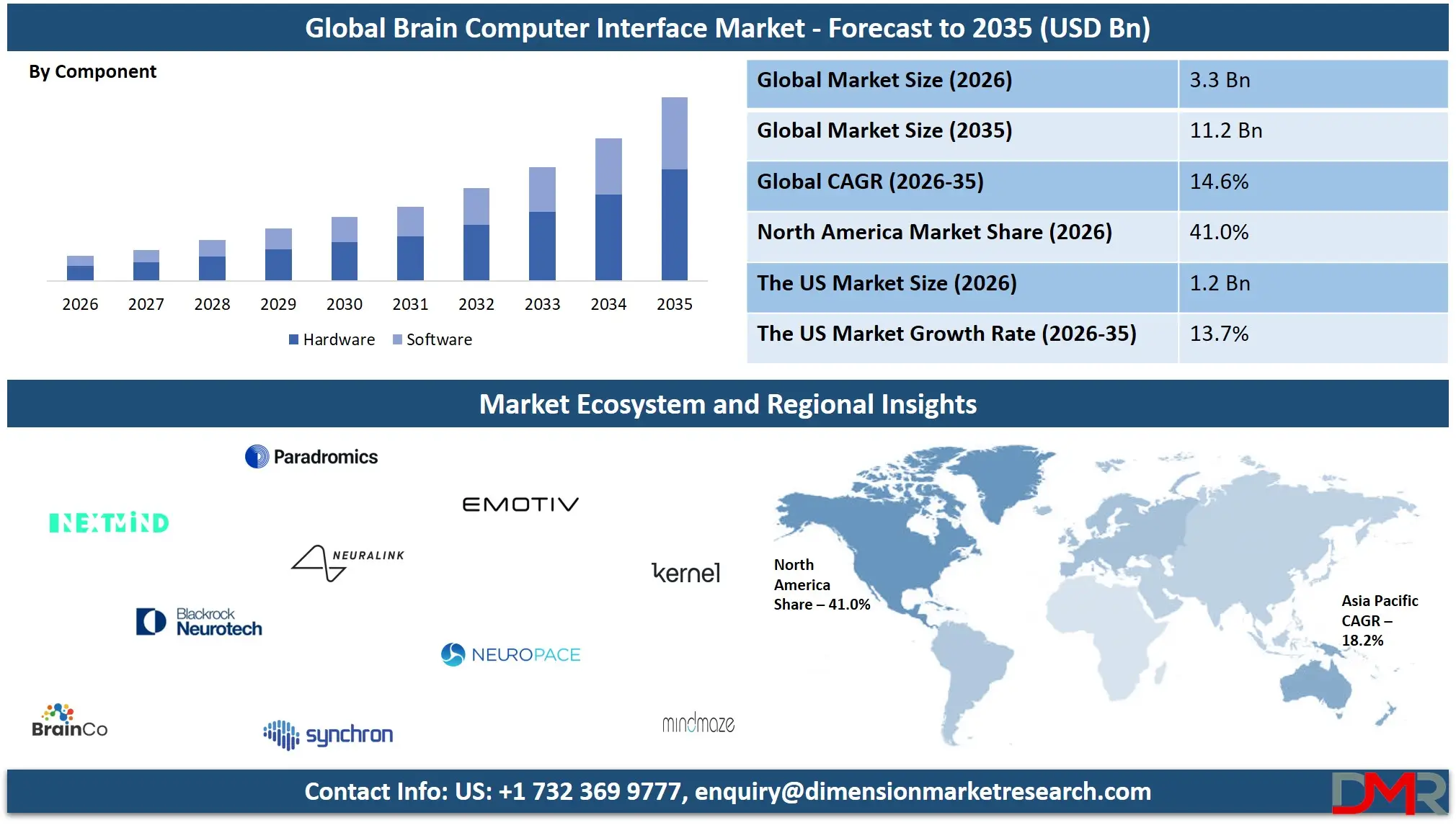
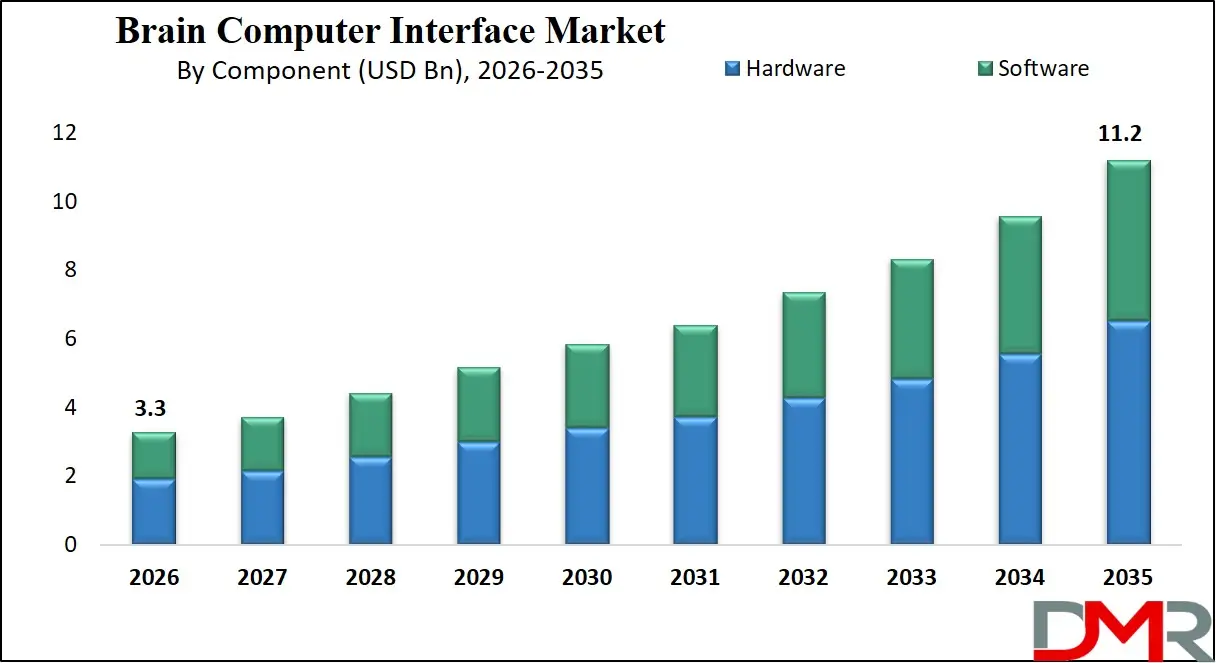
The Brain Computer Interface Market size is projected to reach USD 3.3 billion in 2026 and grow at a compound annual growth rate of 14.6% to reach a value of USD 11.2 billion in 2035, driven by commitments toward net-zero emissions.
ℹ
To learn more about this report –
Download Your Free Sample Report Here
The Brain Computer Interface (BCI) market is the sphere of technologies that allow direct contact with the human brain and external devices, bypassing the usual neuromuscular channels. It consists of hardware like electrodes and headsets, signal-processing software and integrated systems which are applied in healthcare, gaming and research.
The market is of relevance because of the increased cases of neurological disorders and the need to use assistive technologies. The current trends include non-invasive solutions, the integration of AI, and wearable neurotechnology, which are driving innovation, making them more accessible, and extending their uses beyond the clinical to consumer and industrial sectors worldwide.
ℹ
To learn more about this report –
Download Your Free Sample Report Here
The US Brain Computer Interface Market
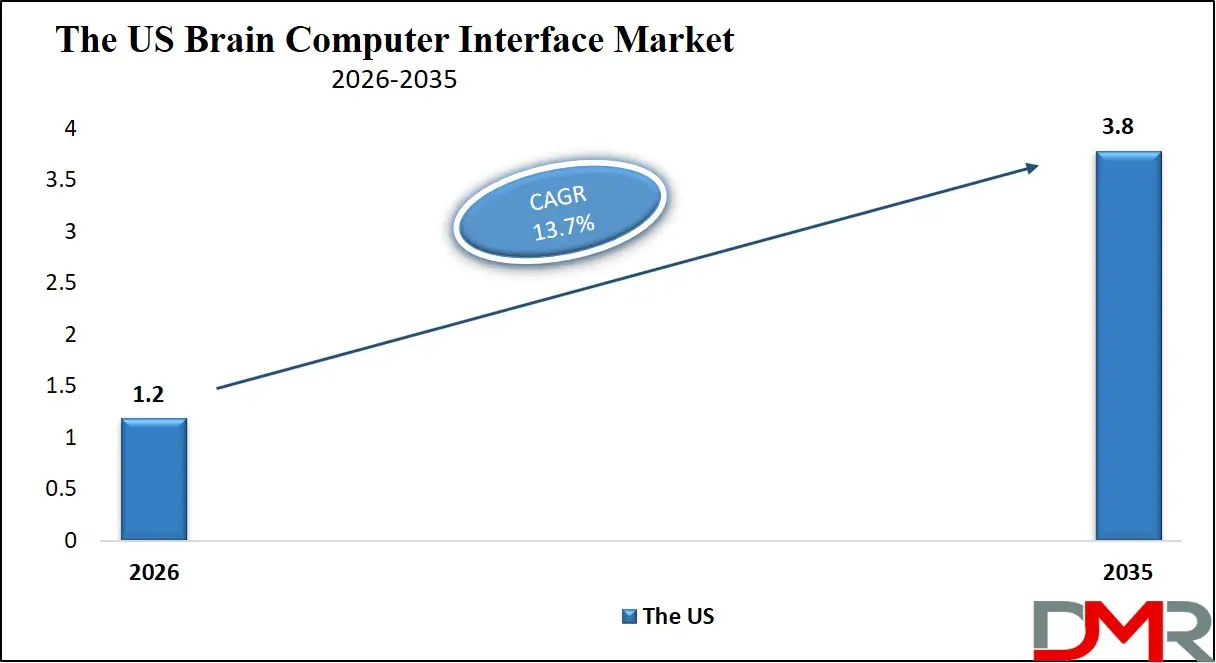
The US Brain Computer Interface Market size is projected to reach USD 1.2 billion in 2026 and grow at a CAGR of 13.7% during the forecast period.
ℹ
To learn more about this report –
Download Your Free Sample Report Here
The US BCI market is driven by substantial funding on research, elaborate healthcare facilities, and involvement of technology innovators and neuroscience centers. The innovation is sped up by government funding by agencies such as NIH (National Institutes of Health) and DARPA (Defense Advanced Research Projects Agency) particularly in neuroprosthetics and defense. The existence of startups and incumbents boosts competition and technological development. However, regulatory pathways are strict but safe and reliable and contribute to trust and acceptance within the clinical and non-clinical setting.
Europe Brain Computer Interface Market
The Europe Brain Computer Interface Market size is estimated to be USD 726.0 million in 2026 and its CAGR of 14.1% over the forecast period.
The BCI market in Europe enjoys the advantages of progressive regulatory measures and policies, including the European Green Deal and digital health policies. The area focuses on ethical AI and patient safety, which affects the standards of BCI development. Germany, France and the UK are the countries that are ahead in terms of research and adoption of healthcare. Academia and industry work together to facilitate innovation, and funding programs facilitate neurotechnology projects, which have led to consistent growth and integration into rehabilitation and assistive technologies.
Japan Brain Computer Interface Market
Japan Brain Computer Interface Market size will be USD 132.0 million in 2026 and CAGR is 13.9% in the forecast period.
The BCI market in Japan is growing with an ageing population and rising demand of assistive healthcare technologies. The role of government programs in favor of robotics and innovative healthcare systems is important. Non-invasive BCIs can be adopted fast in consumer electronics and rehabilitation, due to urbanization and the maturity of technology. Nonetheless, there are challenges in high development costs and complexities in regulations. The electronics business and the emphasis on innovation in Japan offer great opportunities in terms of expansion in medical and non-medical business.
Key Takeaways
- Market Size & Forecast: The Brain Computer Interface Market size is projected to reach USD 3.3 billion in 2026 and is anticipated to have a value of USD 11.2 billion in 2035.
- Growth Rate & Outlook: The Brain Computer Interface Market size is set to grow at a compound annual growth rate of 14.6% during the forecast period of 2026 to 2035.
- Primary Growth Drivers: Some of the major growth drivers in the market include rising prevalence of neurological disorders, advancements in neurotechnology and AI integration, and more.
- Key Market Trends: Some of the major trends in the market are shift toward non-invasive technologies, integration of digital health ecosystems, and more.
- By Component: The hardware segment is anticipated to get the majority share of the Brain Computer Interface market in 2026.
- By Application: The healthcare segment is expected to get the largest revenue share in 2026 in the Brain Computer Interface market.
- By Type: The non-invasive BSI segment is expected to get the largest revenue share in 2026 in the Brain Computer Interface market.
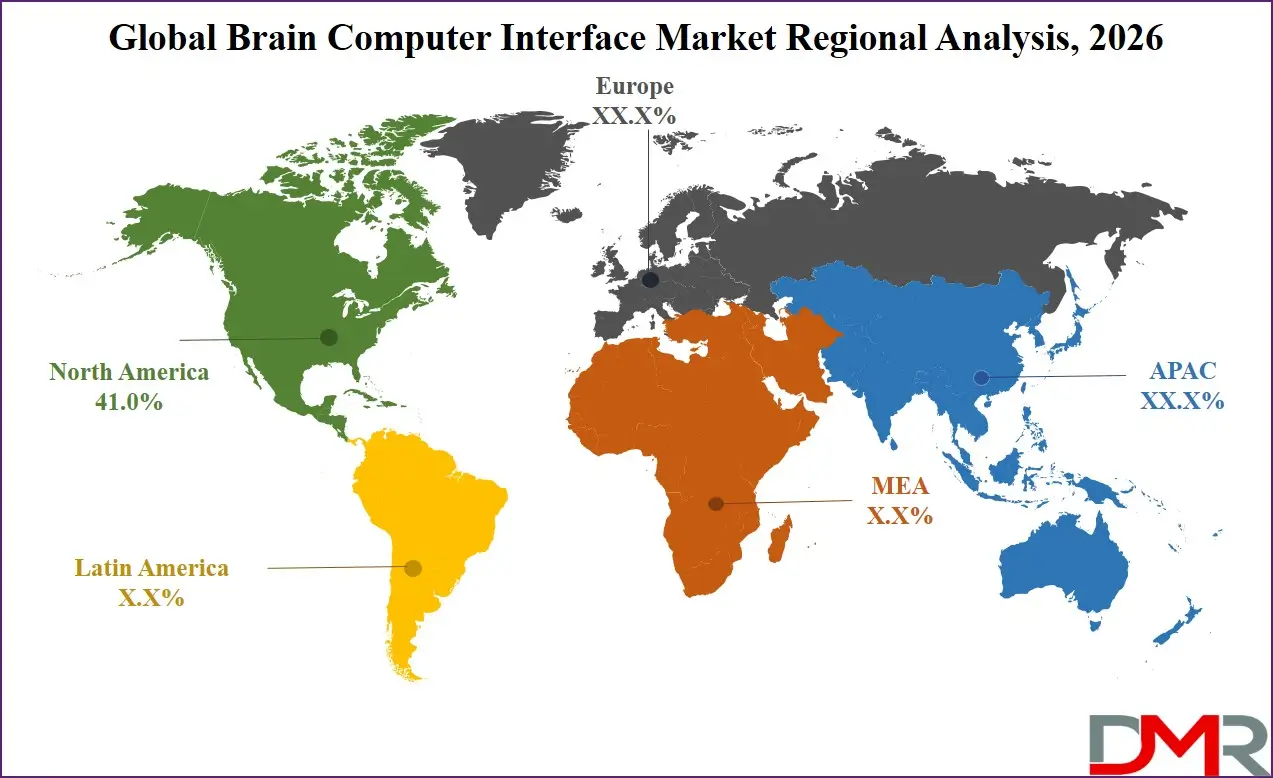
- Regional Leadership: North America is set to lead the Brain Computer Interface market with an estimated 41.0% share in 2026.
What is the Brain Computer Interface?
A Brain Computer Interface (BCI) is a technology which records the signals in the brain, processes them with the help of computational algorithms and then converts them into the commands used by external devices. It usually incorporates the use of sensors or electrodes to measure neural activity, signal acquisition devices, and software processing and analysis. The interaction between BCI and the brain can be invasive, partially invasive, or non-invasive. These systems play an important role in facilitating direct human-machine communication, serving individuals with neurological disorders, and contributing to the development of neuroengineering, neuroscience, and technologies to enhance humans.
Use Cases
- Healthcare Rehabilitation: BCIs enable stroke and paralysis patients to regain motor control through neurofeedback and assistive devices, enhancing recovery outcomes and independence.
- Neuroprosthetics: Advanced prosthetic limbs integrated with BCIs allow users to control movements using brain signals, improving precision and quality of life.
- Gaming & Entertainment: BCIs provide immersive experiences by enabling users to control gameplay using cognitive responses, enhancing engagement and innovation in digital entertainment.
- Communication Systems: BCIs assist individuals with severe disabilities in communicating through brain signals, enabling text generation or device control without physical interaction.
How AI Is Transforming the Brain Computer Interface Market
Artificial intelligence is an essential aspect of augmenting the functionality of BCIs by increasing signal decoding and pattern recognition. With the help of machine learning algorithms, complex neural signals can be accurately interpreted, which means that it is possible to create faster and more reliable communication between the brain and external devices.
AI is also useful in helping adaptive learning systems in BCIs, which provides customized answers to user behavior. This enhances the user experience, boosts efficiency in rehabilitation treatments and enhances innovation in medical and consumer practice.
Market Dynamic
Driving Factors in the Brain Computer Interface Market
Rising Prevalence of Neurological Disorders
The rising rate of neurological disorders, including Alzheimer disease, Parkinson disease, and spinal cord injuries, is a key contributor to the BCI market. The conditions lead to high demand of assistive and rehabilitative technologies. BCIs are very useful in the current healthcare systems as they provide innovative ways of restoring lost functions, improving patient outcomes, and lowering long-term healthcare costs.
Advancements in Neurotechnology and AI Integration
The BCI market is being hugely enhanced by technological advances in neural signal processing, machine learning and sensor miniaturization. AI can increase the responsiveness and accuracy of BCIs by augmenting the interpretation of signals. There is an increase in applications because continuous R&D and innovation in wearable and non-invasive devices are making BCIs more accessible, efficient and commercially viable within industries.
Restraints in the Brain Computer Interface Market
High Development and Implementation Costs
BCI systems are expensive and demand advanced hardware and specialized software, and extensive clinical validation. These costs constrain the adoption, particularly in developing areas. Also, the cost of maintenance and training also adds to the overall cost of ownership, so BCI solutions can become widespread to smaller healthcare providers and research institutions.
Ethical and Regulatory Challenges
The issues regarding privacy of data, safety of brain signals and ethics of mind-machine interaction represent serious obstacles. Severe regulatory approvals make commercialization of products delayed. Besides, the general lack of trust and absence of uniform regulations in various regions prevents its mass implementation, which affects the rate of market development.
Opportunities in the Brain Computer Interface Market
Expansion into Consumer Electronics
It has a huge potential of growth with the integration of BCIs in consumer goods like gaming systems, wearable technology, and smart home controls. With the advancement of non-invasive technologies, BCI can now be user friendly and cost effective allowing it to be used by the mass market outside of clinical practice.
Government Support and Research Funding
Government spending on neuroscience and neurotechnology research is growing and opening up new sources of growth. Innovation, accelerated product development and commercialization are supported by funding programs and public-private partnerships, making BCIs more accessible in the healthcare and industrial sectors.
Trends in the Brain Computer Interface Market
Shift Toward Non-Invasive Technologies
Non-invasive BCIs are increasingly more popular because of their safety, cost-effectiveness and user friendly nature. The trend is being propelled by progress in EEG and wearable sensors which can be used by a wider range of people in healthcare, games, and research without the risks of surgical interventions.
Integration of Digital Health Ecosystems
BCIs are also becoming more accessible to digital health platforms where they can be used to monitor, remotely diagnose, and provide customized treatment in real-time. This tendency correlates with the overall trend in favor of telemedicine and connected healthcare, improving patient care and increasing the role of BCIs in the medical system of the modern world.
Research Scope and Analysis
By Type Analysis
The non-invasive BCI segment will be leading the market with a projected share of 52 in 2026. Its management is motivated by safety, cost-effectiveness, and convenience over invasive substitutes, and thus it is very suitable to adopt in large-scale. Non-invasive systems are also commonly used in research, rehabilitation and gaming, and provide a flexible alternative to surgical risks. Also, wearable EEG devices and user-friendly interfaces are on the rise and are increasing adoption. In the meantime, invasive BCIs, which have a smaller share, are the most rapidly growing because they are more precise and effective in more complicated medical uses, like neuroprosthetics. Their growth is set to increase tremendously in the years to come as a result of increasing clinical trials, development of neurosurgical procedures and increased investments in implantable technologies.
By Component Analysis
Hardware takes the lead by an estimated 2026 share of 58% due to the critical usage of electrodes, headsets and signal acquisition systems in BCI functionality. Ongoing innovation in the area of miniaturization, wireless connectivity, wearable device design, reinforces the dominance of this segment. Hardware expansion is also brought about by the increasing need to have compact and portable BCI systems. The quickest expanding segment, though, is software, which is driven by the development of AI-driven analytics and signal processing functionality. With increasingly advanced forms of BCI, there is a growing demand of higher-order data interpretation tools. Advanced machine learning algorithms are advancing accuracy, adaptability and real-time responsiveness, and software is becoming a vital element in providing cozy and effective BCI performance.
By Technology Analysis
Electroencephalography (EEG) dominates the segment, accounting for a market share of 47% by 2026, owing to its non-invasive nature, affordability, and extensive applications both clinically and otherwise. EEG-driven BCIs find frequent use in research activities, neurofeedback training, and consumer products, thus ensuring their market dominance. Further advancements that improve signal accuracy and develop wearable EEG headsets have contributed positively to their usability. fMRI constitutes the fastest-growing segment, thanks to innovations in imaging systems and increased use in accurate neurological assessments. Though more expensive than other types, fMRI is preferred for its precise spatial resolution and accurate brain mapping features.
By Application Analysis
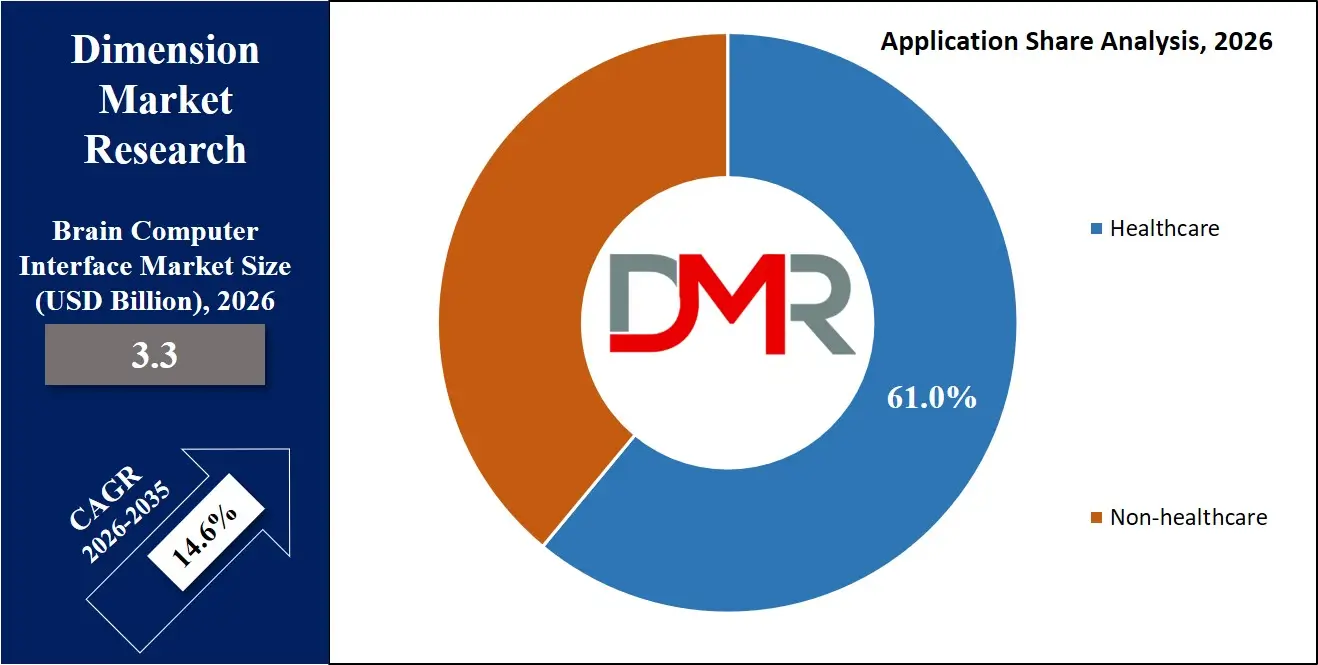
Applications in healthcare sector have a prominent position and are expected to contribute 61% towards the global BCI market size by 2026 owing to the growing usage of brain computer interface in neuroprosthetics, rehabilitation, and disabled communications system. Increasing prevalence of neurological disorders and rising adoption of technology to meet the demands for disabled persons' assistive technologies support the growth of this category.
ℹ
To learn more about this report –
Download Your Free Sample Report Here
Advancement in the usage of brain computer interfaces in clinical applications is improving the treatment outcomes. Non-healthcare applications in gaming and entertainment are the most rapidly growing applications owing to increasing consumer preference and technological development.
By End Use Industry Analysis
Healthcare is expected to be the largest end-user, accounting for 49% of the market share by 2026 due to the adoption of BCI technology by hospitals and rehabilitation facilities. The need for BCI technology to treat neurology diseases makes it a consistent choice of end users. The growth of BCIs' integration into clinical operations as well as rehabilitation increases the chances of success among other technologies. Another significant part of the market is research organizations, which help in the creation of new innovations in the market. Consumer and technology firms are growing rapidly because of new opportunities in gaming and wearable devices.
The Brain Computer Interface Market Report is segmented on the basis of the following:
By Type
- Invasive BCI
- Partially Invasive BCI
- Non-Invasive BCI
By Component
- Hardware
- Electrodes
- Headsets/BCI Devices
- Signal Acquisition Systems
- Software
- Signal Processing
- Data Interpretation & Analytics
By Technology
- Electroencephalography (EEG)
- Electrocorticography (ECoG)
- Functional Magnetic Resonance Imaging (fMRI)
- Near-Infrared Spectroscopy (NIRS)
By Application
- Healthcare
- Neuroprosthetics
- Rehabilitation
- Communication & Control
- Non-Healthcare
- Gaming & Entertainment
- Research & Development
By End-Use Industry
- Healthcare Providers
- Research & Academic Institutions
- Consumer & Technology Companies
Regional Analysis
Leading Region in the Brain Computer Interface Market
North America will lead the BCI industry in 2026, holding a projected market share of 41.0%. This is attributed to its sophisticated health care facilities, abundant research funding, and presence of renowned technology developers. Government assistance, especially from the USA, has been influential in propelling growth and adoption via research grants and defense-related initiatives. North America's dominant position in the BCI industry can also be attributed to high awareness levels, rapid uptake of technological innovations, and intensive clinical studies.
ℹ
To learn more about this report –
Download Your Free Sample Report Here
Fastest Growing Region in the Brain Computer Interface Market
The Asia-Pacific region represents the fastest-growing BCI market segment owing to the rapid economic growth, increased investment in the healthcare sector, and awareness about neurotechnology in the region. Nations such as China, Japan, and India are spending considerable sums of money on research and innovations. The large population of the region coupled with the high incidence of neurological disorders among patients drives demand for innovative healthcare services. Additionally, the expansion of technology ecosystems and the emergence of startup companies are driving BCI market growth.
By Region
North America
Europe
- Germany
- The U.K.
- France
- Italy
- Russia
- Spain
- Benelux
- Nordic
- Rest of Europe
Asia-Pacific
- China
- Japan
- South Korea
- India
- ANZ
- ASEAN
- Rest of Asia-Pacific
Latin America
- Brazil
- Mexico
- Argentina
- Colombia
- Rest of Latin America
Middle East & Africa
- Saudi Arabia
- UAE
- South Africa
- Israel
- Egypt
- Rest of MEA
Competitive Landscape
The Brain Computer Interface industry is marked by rapid innovation, high barriers to entry, and constant spending on R&D. Firms concentrate on the creation of sophisticated, intuitive, and affordable products to achieve an edge over their rivals. The formation of partnerships with universities and healthcare organizations is a frequent practice among firms to speed up innovation. Patent protection and technology serve as significant competitive advantages, while compliance with regulations is crucial for entering the market.
Some of the prominent players in the global Brain Computer Interface are:
- Neuralink
- Synchron
- Blackrock Neurotech
- Kernel
- NeuroPace
- Emotiv
- g.tec medical engineering
- Paradromics
- MindMaze
- BrainCo
- NeuroSky
- OpenBCI
- NextMind
- CTRL-Labs
- Cognixion
- Neurable
- Interaxon
- Bitbrain
- Compumedics
- Natus Medical
- Other Key Players
Recent Developments
- In March 2026, The Chinese government has granted approval for the use of a brain-computer interface device that assists paralyzed individuals in regaining their ability to move their hands. The brain-computer interface was approved for commercial use after approval from the government’s regulatory agency. The system, designed by Borui Kang Medical Technology, helps patients who have suffered spinal cord injuries in moving a robot glove through the use of brain signals.
- In January 2026, two new technological projects at Datasea Inc., both centered on the application of acoustics in brain-computer interface and in the control of rehabilitation robots, have been recently revealed by the company. By building upon their own unique acoustics-powered systems, Datasea Inc. has made significant strides towards an implementation of their BCI system, from signal analysis up to practical applications in medicine and robotics.
- In July 2025, CorTec GmbH made progress as it became the first company to successfully implant a human patient with its Brain Interchange™ BCI device. The surgery took place at Harborview Medical Center with approval from the Food and Drug Administration (FDA). This experiment is geared toward determining the safety of using brain-computer interfaces for improving limb recovery in stroke patients. This research was spearheaded by renowned scientists with funding from the National Institutes of Health (NIH).
Report Details
| Report Characteristics |
| Market Size (2026) |
USD 3.3 Bn |
| Forecast Value (2035) |
USD 11.2 Bn |
| CAGR (2026–2035) |
14.6% |
| Historical Period |
2021 – 2025 |
| Forecast Period |
2027 – 2035 |
| Base Year |
2025 |
| Estimate Year |
2026 |
| Segments Covered |
By Type (Invasive BCI, Partially Invasive BCI, Non-Invasive BCI), By Component (Hardware, Software), By Technology (Electroencephalography (EEG), Electrocorticography (ECoG), Functional Magnetic Resonance Imaging (fMRI), Near-Infrared Spectroscopy (NIRS)), By Application (Healthcare, Non-Healthcare), By End-Use Industry (Healthcare Providers, Research & Academic Institutions, Consumer & Technology Companies) |
| Regional Coverage |
North America – The US and Canada; Europe – Germany, The UK, France, Russia, Spain, Italy, Benelux, Nordic, & Rest of Europe; Asia-Pacific – China, Japan, South Korea, India, ANZ, ASEAN, Rest of APAC; Latin America – Brazil, Mexico, Argentina, Colombia, Rest of Latin America; Middle East & Africa – Saudi Arabia, UAE, South Africa, Turkey, Egypt, Israel, & Rest of MEA |
Frequently Asked Questions
How big is the Brain Computer Interface Market?
▾ The Brain Computer Interface Market size is expected to reach USD 3.3 billion by 2026 and is projected to reach USD 11.2 billion by the end of 2035.
What is the CAGR of the Brain Computer Interface Market from 2026 to 2035?
▾ The market is growing at a CAGR of 14.6 percent over the forecasted period.
What factors are driving the growth of the Brain Computer Interface Market?
▾ Rising prevalence of neurological disorders, advancements in neurotechnology and AI integration, and more are the factors driving the growth of the Brain Computer Interface Market.
What are the major trends in the Brain Computer Interface Market?
▾ Shift toward non-invasive technologies, integration of digital health ecosystems, and more are some of the major trends in the market.
Who are the key players in the Brain Computer Interface Market?
▾ Some of the key players in the Brain Computer Interface Market include BrainCo, Kernel, Neuralink, and more.
How is the Brain Computer Interface Market segmented?
▾ The Brain Computer Interface Market is segmented by type, component, technology, application, and end-use industry.
Which region held the largest share of the Brain Computer Interface Market in 2026?
▾ North America is set to lead the Brain Computer Interface market with an estimated 41.0% share in 2026.
Which region is expected to grow the fastest in the Brain Computer Interface Market?
▾ Asia-Pacific is the fastest-growing region in the Brain Computer Interface market during the forecast period.