Canada Food Packaging Market Snapshot
- Canada Food Packaging Market Size in 2026: USD 9.8 Billion
- Canada Food Packaging Market Size in 2035: USD 16.9 Billion
- Canada CAGR from 2026 to 2035: 6.2%
- Plastics is the leading material type segment in 2026: 38.6%
- Flexible Packaging is the leading packaging type segment in 2026: 47.3%
- Modified Atmosphere Packaging is the leading technology segment in 2026: 24.8%
- Bakery and Confectionery is the leading application segment in 2026: 21.4%
- Food and Beverage Manufacturers is the leading end user segment in 2026: 68.9%
What is the Canada Food Packaging Market and its Market Size?
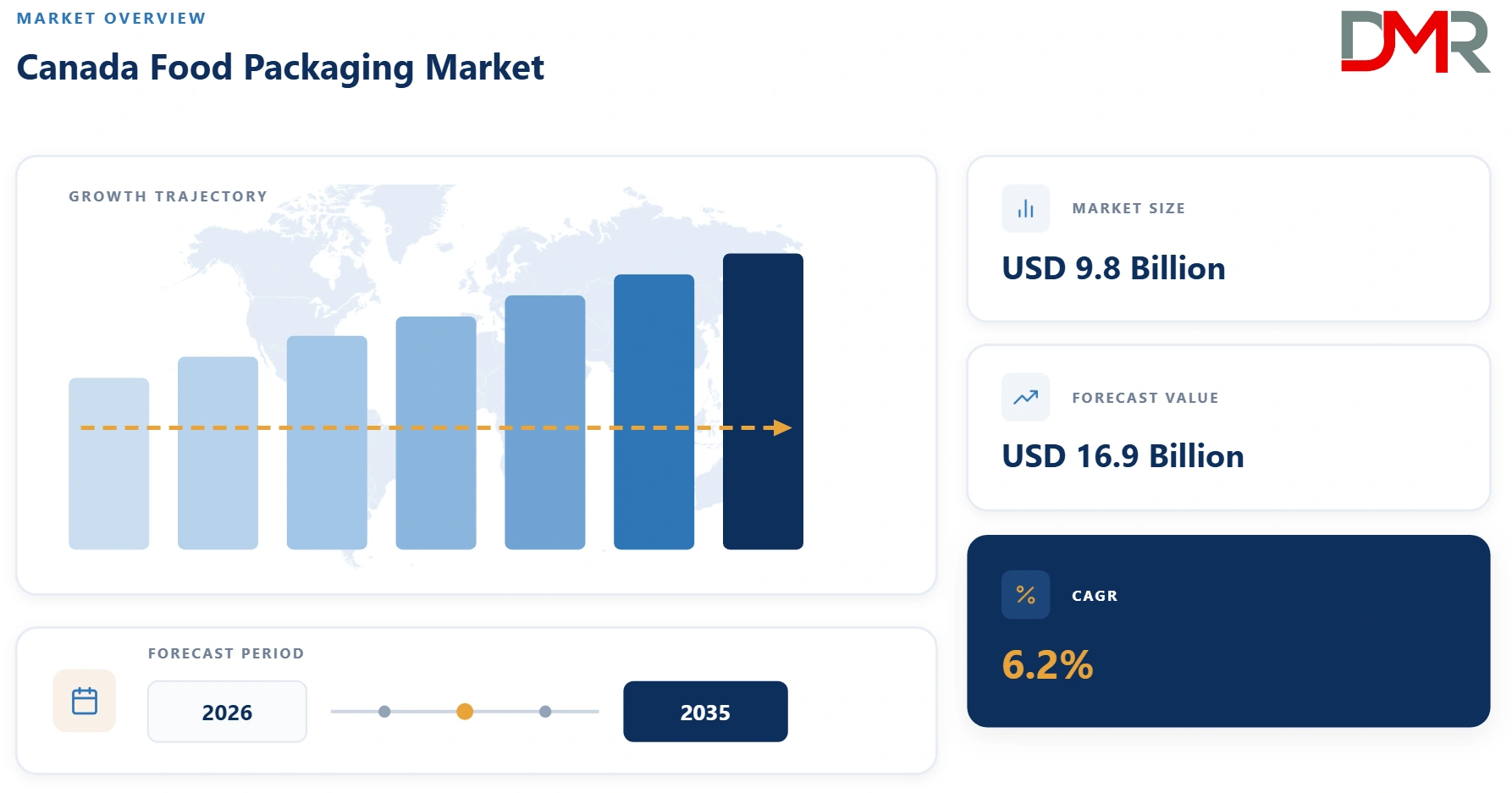
The Canada Food Packaging Market is projected to be valued at USD 9.8 Billion in 2026 and is projected to reach USD 16.9 Billion by 2035, expanding at a CAGR of 6.2% during the forecast period.
ℹ
To learn more about this report –
Download Your Free Sample Report Here
Growth is being propelled by sustained demand for convenience, portion-controlled, and ready-to-eat food formats among time-constrained consumers, tightening federal and provincial packaging waste regulations under Canada's extended producer responsibility framework, and continued expansion of grocery e-commerce and food delivery channels that require durable, protective, and increasingly sustainable packaging formats. The maturing of recyclable and compostable material technologies capable of matching the barrier performance of conventional plastics, growing food manufacturer and retailer investment in packaging redesign to meet provincial recycling and plastics reduction targets, and rising consumer demand for shelf-life-extending active and intelligent packaging technologies are reshaping the market from primarily protection- and shelf-life-focused packaging toward a more sustainability-integrated, technology-enabled category. Investment is accelerating as packaging manufacturers adapt to Canada's evolving federal single-use plastics regulations and provincially administered extended producer responsibility programs.
Use Cases
- Modified Atmosphere Packaging for Fresh Meat and Produce: Meat processors and fresh produce packers use modified atmosphere packaging to extend shelf life and preserve product appearance and quality during distribution across Canada's long domestic supply chains, reducing spoilage-related waste.
- Flexible Packaging for Snack and Bakery Products: Snack food and bakery manufacturers rely on flexible pouch and film packaging formats to provide lightweight, cost-effective barrier protection while supporting on-the-go and portion-controlled consumption trends among Canadian consumers.
- Recyclable and Compostable Packaging Redesign for Retailer Compliance: Food and beverage manufacturers reformulate packaging into recyclable mono-material or compostable formats to comply with provincial extended producer responsibility program requirements and meet major grocery retailers' sustainability procurement standards.
- Protective Packaging for Grocery E-Commerce and Meal Kit Delivery: Online grocery platforms and meal kit companies use insulated, moisture-resistant, and temperature-stable packaging solutions to maintain product quality and food safety for chilled and frozen items shipped directly to consumers across long delivery distances.
Key Takeaways
- Market Size: The Canada Food Packaging Market is anticipated to be valued at USD 9.8 Billion in 2026 and is forecast to reach USD 16.9 Billion by 2035, expanding at a CAGR of 6.2%.
- Growth Outlook: Market expansion is sustained by continued consumer demand for convenience and ready-to-eat food formats, tightening extended producer responsibility and plastics reduction regulation, and growing grocery e-commerce and food delivery channel expansion requiring durable, protective packaging.
- Primary Growth Drivers: Provincial extended producer responsibility program expansion, federal single-use plastics policy development, sustained consumer preference for convenience and portion-controlled packaging formats, and growing retailer sustainability procurement standards are accelerating packaging innovation and reformulation.
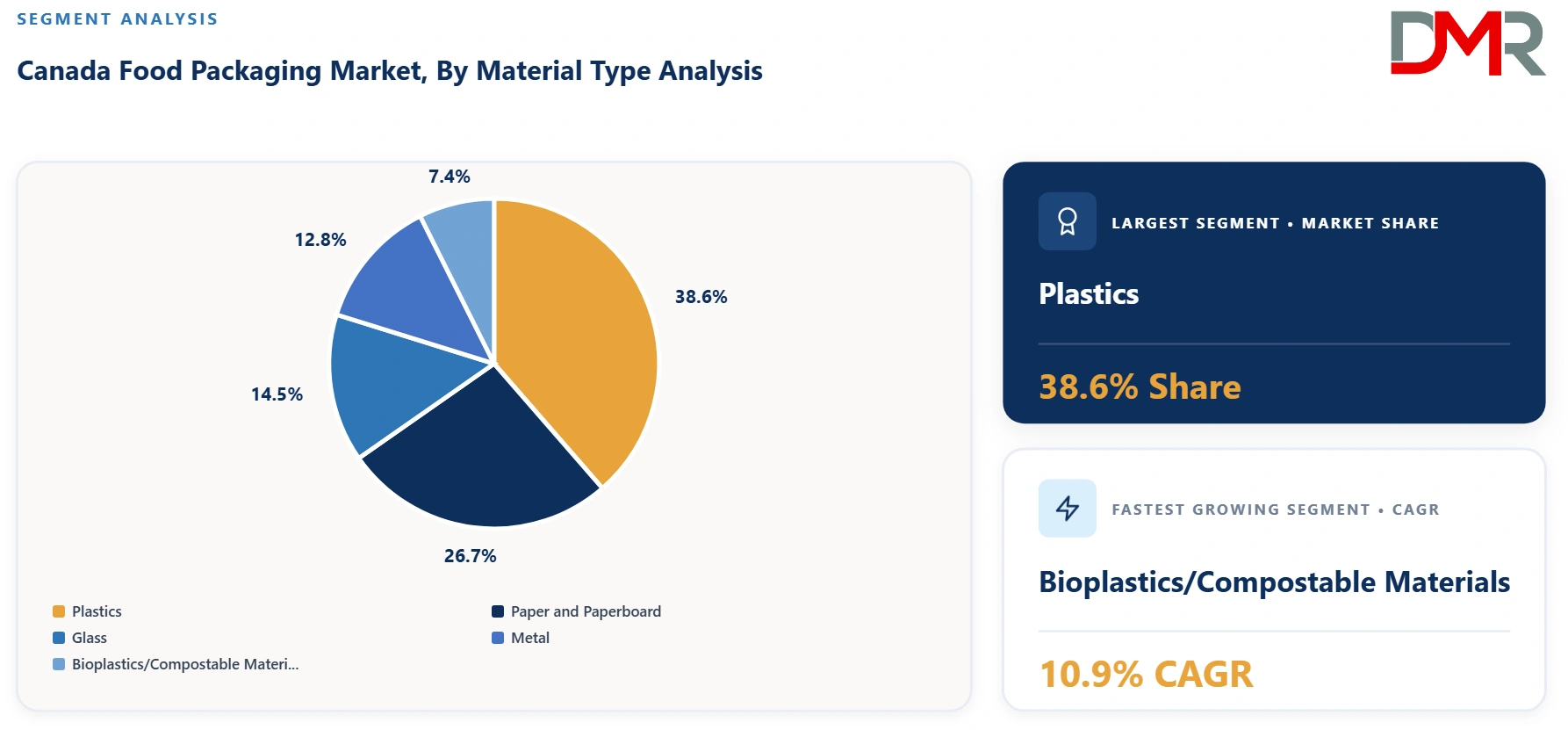
- By Material Type Analysis: Plastics is projected to lead the material type segment with a 38.6% share in 2026, reflecting its continued cost-effectiveness and barrier performance despite regulatory pressure. Bioplastics/Compostable Materials is the fastest-growing material type segment at 10.9% CAGR, driven by expanding compostable packaging adoption in response to provincial regulatory requirements.
- By Packaging Type Analysis: Flexible Packaging is expected to dominate with a 47.3% share in 2026, supported by widespread use across snack, bakery, and prepared food categories. Flexible Packaging is also among the fastest-growing packaging type segments as manufacturers increasingly adopt recyclable mono-material film structures.
- By Technology Analysis: Modified Atmosphere Packaging is poised to lead with a 24.8% share in 2026, reflecting its central role in extending shelf life for fresh meat, produce, and prepared foods across Canada's long domestic distribution routes. Active and Intelligent Packaging is the fastest-growing technology segment at 9.7% CAGR, driven by rising demand for freshness indicators and extended shelf-life solutions.
- By Application Analysis: Bakery and Confectionery is expected to command a 21.4% share in 2026, underpinned by high SKU diversity and frequent packaging turnover. Ready-to-Eat and Frozen Foods is the fastest-growing application segment at 8.4% CAGR, fuelled by sustained consumer demand for convenience-oriented meal formats.
- By End User Analysis: Food and Beverage Manufacturers are projected to dominate with a 68.9% share in 2026, reflecting their position as the primary purchasers of packaging materials and formats. Retailers and Grocery Chains is the fastest-growing end user segment at 8.1% CAGR, driven by expanding private label packaging redesign initiatives tied to sustainability commitments.
Key Drivers in the Canada Food Packaging Market
Tightening Federal and Provincial Packaging Waste Regulation
Canada's evolving federal single-use plastics policy, combined with provincially administered extended producer responsibility programs that assign packaging waste management costs and obligations to producers, is a central driver of reformulation and innovation across the Food Packaging Market. Provinces including British Columbia, Ontario, and Quebec have implemented or are expanding extended producer responsibility frameworks requiring producers to fund recycling systems and, in many cases, meet minimum recycled-content or recyclability standards. Food and beverage manufacturers operating nationally must navigate this evolving, provincially variable regulatory landscape, often adopting more stringent standards across their broader packaging strategy to simplify multi-province compliance.
Sustained Consumer Demand for Convenience and Portion-Controlled Formats
Continued consumer preference for convenient, portion-controlled, and on-the-go food packaging formats, driven by busy lifestyles and growing single- and smaller-household demographics, is sustaining strong demand across flexible and rigid packaging categories. Manufacturers continue introducing new portion sizes, resealable formats, and easy-open packaging designs to meet evolving consumer usage preferences, particularly across snack, bakery, and ready-to-eat categories where packaging format innovation directly supports product differentiation and purchase frequency.
Restraints in the Canada Food Packaging Market
Regulatory Fragmentation Across Provincial Extended Producer Responsibility Programs
Variation in extended producer responsibility program requirements, timelines, and administrative structures across Canadian provinces represents a meaningful restraint on the Food Packaging Market. Manufacturers operating nationally must track and comply with differing provincial reporting, fee, and material standard requirements, increasing administrative complexity and compliance costs relative to a single harmonized national framework. This regulatory fragmentation can complicate packaging standardization strategies and slow the pace at which manufacturers can implement consistent, nationally applicable sustainable packaging programs.
Growth Opportunities in the Canada Food Packaging Market
Recyclable Mono-Material Flexible Packaging for Provincial Compliance
Growing need for flexible packaging formats that meet increasingly stringent provincial recyclability standards presents a substantial opportunity for packaging manufacturers developing mono-material film structures that maintain barrier performance while improving end-of-life recyclability. Manufacturers capable of replacing multilayer plastic laminates with recyclable alternatives are well positioned to capture reformulation contracts from food and beverage brands navigating extended producer responsibility compliance requirements across multiple provinces.
Domestic Sustainable Packaging Manufacturing Capacity Expansion
Rising demand for compostable and recyclable packaging materials, combined with supply chain risk associated with imported sustainable packaging inputs, presents an opportunity for Canadian manufacturers to expand domestic bioplastic and fiber-based packaging production capacity. Companies investing in Canadian manufacturing facilities can offer reduced supply chain risk, shorter lead times, and improved cost competitiveness relative to imported alternatives, capturing market share as provincial regulatory deadlines drive sustained sustainable packaging demand.
Trends in the Canada Food Packaging Market
Harmonization Efforts Across Provincial Extended Producer Responsibility Frameworks
Industry associations and provincial regulators are increasingly engaging in harmonization discussions aimed at reducing administrative complexity and aligning reporting and material standards across provincial extended producer responsibility programs. While full national harmonization remains an ongoing process, growing alignment on core reporting requirements and material eligibility standards is gradually reducing compliance burden for manufacturers operating across multiple provinces, supporting more efficient national packaging strategy development.
Growing Integration of Active and Intelligent Packaging Technologies
Food manufacturers and retailers are increasingly adopting active and intelligent packaging technologies, including oxygen scavengers, freshness indicators, and moisture-control solutions, to extend shelf life and reduce food waste across Canada's long domestic distribution routes. This trend is particularly relevant given the extended transit times required to move fresh and perishable products across Canada's dispersed population geography, positioning active packaging as both a food waste reduction and product quality preservation strategy.
Research Scope and Analysis
The Canada Food Packaging Market is segmented by material type, packaging type, technology, application, and end user, covering plastics, paper and paperboard, glass, metal, bioplastics, flexible and rigid packaging, modified atmosphere and active packaging technologies, and manufacturer, foodservice, and retail end users.
ℹ
To learn more about this report –
Download Your Free Sample Report Here
By Material Type Analysis
Plastics is projected to dominate the Canada Food Packaging Market with approximately 38.6% share in 2026, reflecting continued cost-effectiveness and barrier performance advantages despite growing regulatory and consumer pressure toward alternatives. Bioplastics/Compostable Materials is expected to register the highest CAGR of 10.9% during 2026-2035, driven by expanding adoption in response to provincial extended producer responsibility requirements and growing retailer sustainability procurement standards.
By Packaging Type Analysis
Flexible Packaging is anticipated to dominate the Canada Food Packaging Market by packaging type, accounting for approximately 47.3% share in 2026, supported by widespread use across snack, bakery, and prepared food categories requiring lightweight, cost-effective barrier protection. Continued innovation toward recyclable mono-material flexible structures is expected to support sustained growth in this segment as manufacturers respond to provincial recyclability requirements.
By Technology Analysis
Modified Atmosphere Packaging is projected to lead the Canada Food Packaging Market by technology, accounting for approximately 24.8% share in 2026, reflecting its central role extending shelf life for fresh meat, seafood, and produce products distributed across Canada's long domestic supply chains. Active and Intelligent Packaging is expected to register the fastest CAGR of 9.7% between 2026 and 2035, driven by rising manufacturer and retailer interest in freshness indicators and extended shelf-life technologies that reduce food waste during extended transit.
By Application Analysis
Bakery and Confectionery is projected to lead the Canada Food Packaging Market with an estimated 21.4% share in 2026, underpinned by high product and SKU diversity requiring varied packaging formats and frequent packaging redesign cycles. Ready-to-Eat and Frozen Foods is expected to register the fastest CAGR of 8.4% through 2035, driven by sustained consumer demand for convenience-oriented meal formats requiring durable, freezer-stable, and often microwave-safe packaging solutions.
By End User Analysis
Food and Beverage Manufacturers are projected to dominate the Canada Food Packaging Market with approximately 68.9% share in 2026, reflecting their position as the primary purchasers of packaging materials across all product categories. Retailers and Grocery Chains are expected to register the fastest CAGR of 8.1% through 2035, driven by expanding private label packaging redesign initiatives tied to sustainability commitments and provincial compliance requirements.
The Canada Food Packaging Market Report is segmented based on the following:
By Material Type
- Plastics
- Paper and Paperboard
- Glass
- Metal
- Bioplastics/Compostable Materials
By Packaging Type
- Flexible Packaging
- Rigid Packaging
By Technology
- Modified Atmosphere Packaging
- Vacuum Packaging
- Aseptic Packaging
- Active and Intelligent Packaging
- Conventional Packaging
By Application
- Bakery and Confectionery
- Dairy Products
- Beverages
- Meat, Poultry and Seafood
- Fruits and Vegetables
- Ready-to-Eat and Frozen Foods
- Others
By End User
- Food and Beverage Manufacturers
- Foodservice Operators
- Retailers and Grocery Chains
Technology Analysis
Technology development is increasingly shaping competitiveness in the Canada Food Packaging Market as manufacturers invest in recyclable mono-material film structures, improved compostable resin formulations, and active packaging technologies suited to Canada's long-distance domestic distribution requirements. Growing use of digital printing and standardized recyclability labeling is supporting clearer consumer disposal guidance amid provincially varying recycling program requirements. Opportunities are expanding for manufacturers investing in barrier coating alternatives that reduce reliance on non-recyclable multilayer plastic structures, as well as intelligent packaging sensors capable of monitoring product freshness across extended transit times. However, achieving consistent barrier performance and cost competitiveness while meeting increasingly stringent provincial recyclability and compostability standards remains a persistent technical challenge.
Investment and White Space Analysis
Investment opportunities in the Canada Food Packaging Market are expanding alongside tightening provincial extended producer responsibility regulation, sustained consumer demand for convenience formats, and growing retailer sustainability procurement standards. Significant white space exists in domestically manufactured compostable and recyclable packaging materials, active and intelligent packaging technologies suited to long-distance distribution, and standardized packaging solutions capable of meeting varying provincial regulatory requirements without extensive reformulation. Manufacturers with strong domestic production capacity, proven recyclability and compostability certification, and established relationships with major Canadian food and retail brands are positioned to capture premium, longer-duration contracts. However, provincial regulatory fragmentation, import dependency for certain sustainable material inputs, and cost premiums associated with some sustainable alternatives can constrain adoption pace and pressure margins for smaller manufacturers.
Competitive Landscape
The Canada Food Packaging Market is moderately consolidated and increasingly competitive, comprising large diversified global and North American packaging companies, specialty sustainable packaging manufacturers, and paper and pulp-based packaging producers with Canadian operations. Competition centers on recyclability and compostability innovation, domestic manufacturing capacity, multi-province regulatory compliance expertise, and established relationships with major Canadian food and beverage brands and retailers. Large diversified packaging companies benefit from scale, integrated material science capabilities, and broad customer relationships across North America, while specialty and domestic manufacturers compete on Canadian regulatory expertise and localized supply chain reliability. Companies increasingly differentiate through verified sustainability certification, multi-province compliance capability, and domestic production resilience rather than material cost alone.
Some of the prominent players in the Canada Food Packaging Market are:
- Amcor plc
- Winpak Ltd.
- TC Transcontinental
- Cascades Inc.
- Berry Global Group
- Sealed Air Corporation
- Sonoco Products Company
- ProAmpac
- Mondi plc
- Huhtamaki Oyj
- Constantia Flexibles
- Tetra Pak
- Novolex
- St. Johns Packaging
- Covertech Flexible Packaging
- Emmerson Packaging
- Flair Flexible Packaging Corporation
- CCL Industries
- Sigma Plastics Group
- Printpack
- American Packaging Corporation
- Coveris
- Genpak
- ALPLA Group
- Greif, Inc.
- Graphic Packaging International
- Smurfit Westrock
- International Paper
- DS Smith
- Dart Container Corporation
- Pactiv Evergreen
- Amhil North America
- Glenroy, Inc.
- UFlex Limited
- Packaging Corporation of America
- Silgan Holdings
- Crown Holdings
- Ball Corporation
- Plastipak Packaging
- Graham Packaging
- Other Key Players
Recent Developments
- July 2026: Winpak Ltd. reported progress in expanding packaging capacity, including new extrusion and converting capabilities supporting food applications such as poultry, dairy, and specialty packaging.
- March 2026: TC Transcontinental completed the sale of its packaging business to ProAmpac Holdings Inc. for cash proceeds of approximately CAD 2.1 billion, significantly reshaping the Canadian flexible packaging competitive landscape.
- February 2026: Amcor commercialized AmPrima Plus recycle-ready packaging with Canadian dairy cooperative Agropur for its Grand Cheddar cheese, achieving an 82% reduction in packaging weight.
- January 2026: Cascades Inc. announced the sale of its Richmond, British Columbia corrugated packaging plant as part of its strategy to optimize its packaging operations and asset portfolio.
Report Details
| Report Characteristics |
| Market Size (2026) |
USD 9.8 Bn |
| Forecast Value (2035) |
USD 16.9 Bn |
| CAGR (2026–2035) |
6.2% |
| Historical Data |
2021 – 2025 |
| Forecast Data |
2026 – 2035 |
| Base Year |
2025 |
| Segments Covered |
By Material Type, By Packaging Type, By Technology, By Application, and By End User |
| Country Coverage |
Canada |
Frequently Asked Questions
How big is the Canada Food Packaging Market?
▾ The Canada Food Packaging Market is valued at USD 9.8 Billion in 2026 and is projected to reach USD 16.9 Billion by 2035, reflecting sustained demand for protective, convenient, and increasingly sustainable packaging across the food and beverage manufacturing industry.
What is the CAGR of the Canada Food Packaging Market from 2026 to 2035?
▾ The market is projected to expand at a compound annual growth rate (CAGR) of 6.2% between 2026 and 2035, supported by tightening provincial extended producer responsibility regulation, sustained consumer demand for convenience formats, and growing retailer sustainability procurement standards.
What factors are driving the growth of the Canada Food Packaging Market?
▾ Growth is driven by provincial extended producer responsibility program expansion, federal single-use plastics policy development, sustained consumer preference for convenience and portion-controlled packaging formats, and growing retailer sustainability procurement standards.
What are the major trends in the Canada Food Packaging Market?
▾ Major trends include harmonization efforts across provincial extended producer responsibility frameworks, growing integration of active and intelligent packaging technologies, and continued innovation in recyclable mono-material flexible packaging structures.
Who are the key players in the Canada Food Packaging Market?
▾ Key market participants include Winpak Ltd., Cascades Inc., Intertape Polymer Group, TC Transcontinental Packaging, and Amcor, among other diversified and specialty Canadian and North American packaging manufacturers.
How is the Canada Food Packaging Market segmented?
▾ The market is segmented by material type, packaging type, technology, application, and end user, with demand analysis concentrated across Ontario, Quebec, British Columbia, and the Prairie provinces.