Canada Plant-Based Food Ingredients Market Snapshot
- Canada Plant-Based Food Ingredients Market Size in 2026: USD 2.1 Billion
- Canada Plant-Based Food Ingredients Market Size in 2035: USD 4.8 Billion
- Canada CAGR from 2026 to 2035: 9.6%
- Plant Proteins is the leading ingredient type segment in 2026: 44.7%
- Pea is the leading source segment in 2026: 33.8%
- Dry is the leading form segment in 2026: 64.2%
- Plant-Based Meat Alternatives is the leading application segment in 2026: 28.9%
- Food and Beverage Manufacturers is the leading end user segment in 2026: 79.3%
What is the Canada Plant-Based Food Ingredients Market and its Market Size?
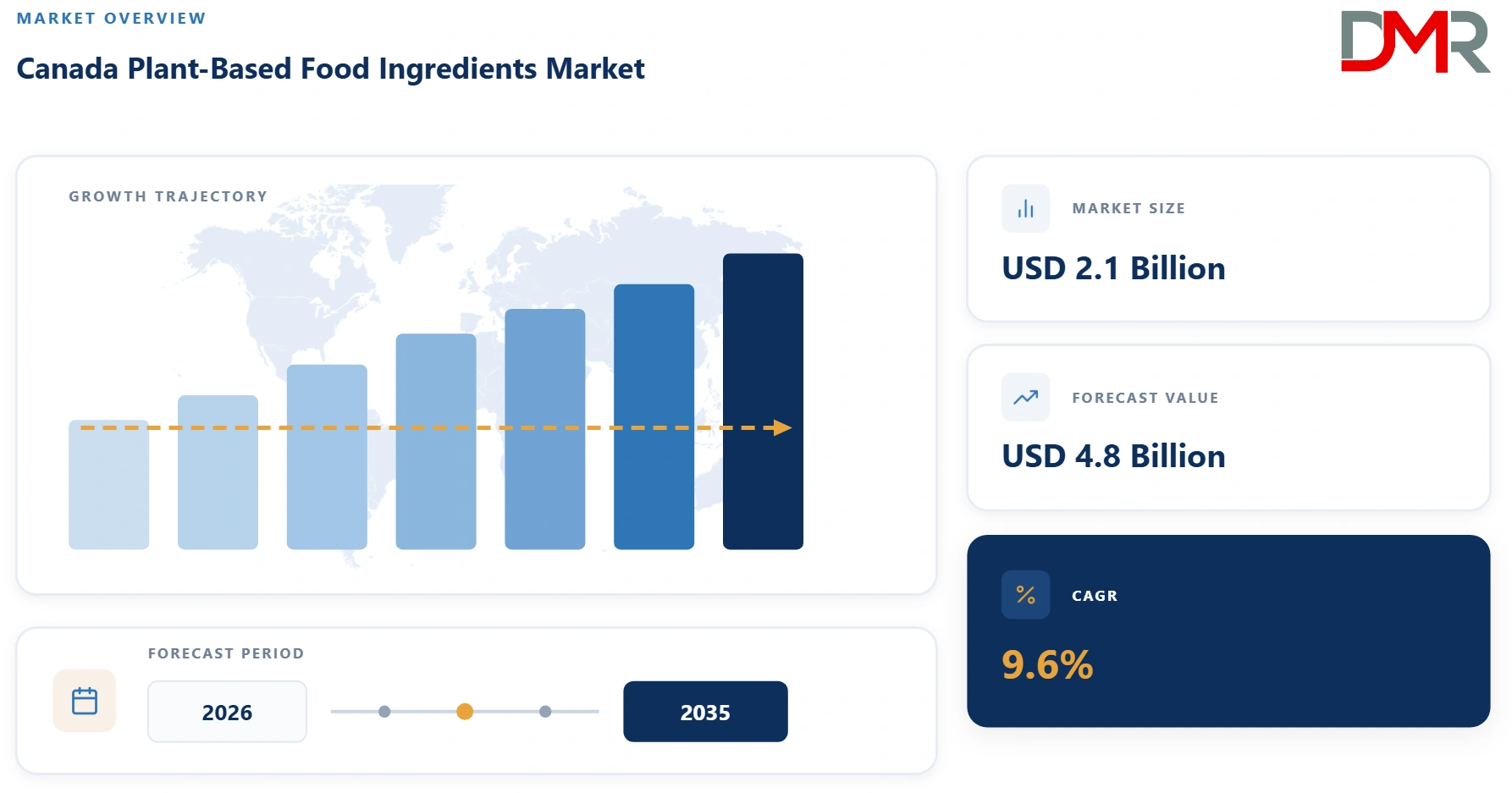
The Canada Plant-Based Food Ingredients Market is projected to be valued at USD 2.1 Billion in 2026 and is projected to reach USD 4.8 Billion by 2035, expanding at a CAGR of 9.6% during the forecast period.
ℹ
To learn more about this report –
Download Your Free Sample Report Here
Growth is being propelled by Canada's position as one of the world's largest pea and pulse growing and processing nations, sustained federal and provincial investment in plant protein industrial infrastructure through initiatives such as Protein Industries Canada, and continued consumer demand for plant-based meat and dairy alternatives, functional proteins, and flexitarian-oriented food products. The maturing of domestic pea, canola, and oat protein fractionation capacity that reduces reliance on imported plant protein isolates, growing food and beverage manufacturer investment in taste and texture innovation to address ongoing consumer sensory concerns with early-generation plant-based products, and expanding export demand for Canadian-processed plant protein ingredients are reshaping the market from a raw commodity export-oriented industry into a higher-value, domestically processed ingredient manufacturing sector. Investment is accelerating as Canadian processors scale pea and pulse protein fractionation facilities while pursuing both domestic food manufacturer and international ingredient export customers.
Use Cases
- Pea Protein Isolate for Plant-Based Meat Alternative Manufacturing: Plant-based meat alternative manufacturers source Canadian-grown and processed pea protein isolate as a primary structural protein ingredient, capitalizing on domestic supply chain proximity and Canada's position as a leading global pea protein processing hub.
- Oat and Pea-Based Dairy Alternative Formulation: Plant-based dairy alternative manufacturers incorporate Canadian oat and pea protein and fiber ingredients into milk, yogurt, and cheese alternative formulations, leveraging domestic oat production strength and growing pea protein functional ingredient availability.
- Canola Protein Development for Emerging Applications: Ingredient developers and food manufacturers explore emerging canola protein isolate applications in bakery, beverage, and nutritional products, capitalizing on Canada's position as the world's leading canola producer and ongoing research investment in canola protein extraction technology.
- Sports Nutrition and Functional Food Protein Fortification: Nutraceutical and sports nutrition companies incorporate plant-based protein ingredients, particularly pea and hemp protein, into powders, bars, and functional beverages targeting consumers seeking plant-based protein fortification alternatives to whey and other animal-derived proteins.
Key Takeaways
- Market Size: The Canada Plant-Based Food Ingredients Market is anticipated to be valued at USD 2.1 Billion in 2026 and is forecast to reach USD 4.8 Billion by 2035, expanding at a CAGR of 9.6%.
- Growth Outlook: Market expansion is sustained by Canada's structural strength in pea, pulse, and canola production and processing, continued government investment in plant protein industrial infrastructure, and sustained consumer demand for plant-based meat, dairy, and functional protein products.
- Primary Growth Drivers: Federal and provincial investment in domestic plant protein processing infrastructure, Canada's position as a leading global pea and canola producer, sustained flexitarian and plant-based consumer demand, and growing export demand for Canadian-processed protein ingredients are accelerating market growth.
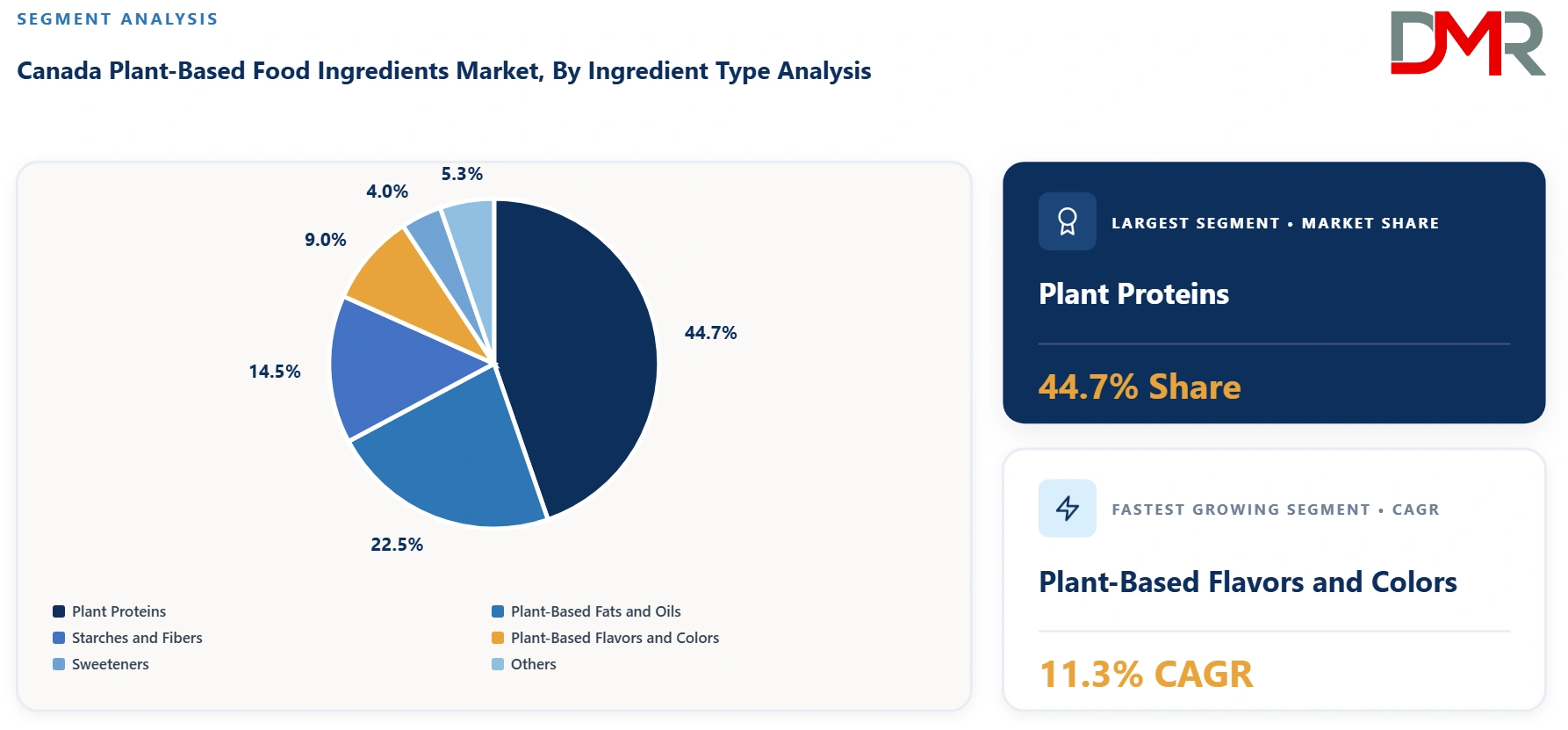
- By Ingredient Type Analysis: Plant Proteins is projected to lead the ingredient type segment with a 44.7% share in 2026, reflecting sustained demand across meat and dairy alternative and nutritional applications. Plant-Based Flavors and Colors is the fastest-growing ingredient type segment at 11.3% CAGR, driven by manufacturer investment in improving the taste and sensory appeal of plant-based product formulations.
- By Source Analysis: Pea is expected to dominate with a 33.8% share in 2026, supported by Canada's leading global position in pea production and processing capacity. Canola is the fastest-growing source segment at 12.1% CAGR, driven by emerging investment in canola protein extraction technology capitalizing on Canada's substantial canola production base.
- By Form Analysis: Dry is poised to lead with a 64.2% share in 2026, supported by longer shelf stability and lower transportation costs for powdered protein and ingredient formats. Liquid is the fastest-growing form segment at 9.8% CAGR, driven by rising demand for ready-to-use plant-based ingredient systems in beverage manufacturing.
- By Application Analysis: Plant-Based Meat Alternatives is expected to command a 28.9% share in 2026, reflecting sustained retail and foodservice availability of plant-based meat products. Nutritional and Sports Nutrition Products is the fastest-growing application segment at 11.7% CAGR, fuelled by rising consumer interest in plant-based protein fortification for fitness and wellness applications.
- By End User Analysis: Food and Beverage Manufacturers are projected to dominate with a 79.3% share in 2026, reflecting their position as the primary purchasers of bulk plant-based ingredient volumes. Nutraceutical and Supplement Companies is the fastest-growing end user segment at 11.9% CAGR, driven by expanding plant-based protein powder and functional supplement product development.
Key Drivers in the Canada Plant-Based Food Ingredients Market
Structural Strength in Domestic Pea, Pulse, and Canola Production
Canada's position as one of the world's largest producers and exporters of peas, lentils, and canola provides a structural foundation for domestic plant protein ingredient processing that few other markets can match. This agricultural strength has attracted significant investment in domestic fractionation and processing infrastructure aimed at capturing greater value from raw crop production by processing pulses and oilseeds into higher-value protein isolates, concentrates, and functional ingredients domestically rather than exporting unprocessed commodities. This structural agricultural advantage is expected to continue supporting sustained investment in Canadian plant protein ingredient manufacturing capacity.
Sustained Government Investment in Plant Protein Industrial Infrastructure
Federal and provincial government investment in plant protein industrial development, including through Global Innovation Cluster initiatives supporting the plant protein sector, has provided meaningful funding and coordination support for domestic ingredient processing capacity expansion, research and development, and commercialization of novel plant protein extraction and functionality-enhancement technologies. This sustained public sector support has helped de-risk private investment in plant protein processing infrastructure and accelerated commercialization timelines for emerging ingredient technologies, reinforcing Canada's position as a globally significant plant protein ingredient processing hub.
Restraints in the Canada Plant-Based Food Ingredients Market
Persistent Consumer Taste and Texture Concerns with Plant-Based Products
Ongoing consumer concerns regarding the taste, texture, and overall sensory experience of plant-based meat and dairy alternative products represent a significant restraint on the Canada Plant-Based Food Ingredients Market. Despite substantial formulation improvement over recent years, a meaningful segment of consumers continues to cite sensory dissatisfaction as a barrier to repeat purchase of plant-based alternatives, which can slow the pace of category growth and, by extension, moderate ingredient demand growth relative to earlier, more optimistic industry projections for plant-based product category expansion.
Growth Opportunities in the Canada Plant-Based Food Ingredients Market
Canola Protein Commercialization for Novel Applications
Canada's position as the world's leading canola producer presents a substantial, still largely untapped opportunity for ingredient developers to commercialize canola protein isolates and concentrates for food and beverage applications. Continued research investment in canola protein extraction and functionality technology, building on Canada's already extensive canola processing infrastructure originally developed for oil production, could unlock a significant new domestic plant protein ingredient category leveraging existing agricultural and processing strengths.
Taste and Texture Innovation Partnerships with Flavor and Ingredient Houses
Growing food manufacturer investment in improving the sensory quality of plant-based products presents an opportunity for ingredient suppliers offering integrated flavor-masking, texture-enhancement, and formulation support alongside core protein ingredient supply. Suppliers capable of addressing the taste and texture challenges that continue to limit broader plant-based product adoption can differentiate from commodity ingredient sellers and capture higher-value, formulation-partnership-oriented contracts with food and beverage manufacturer clients.
Trends in the Canada Plant-Based Food Ingredients Market
Growing Export Orientation of Canadian Plant Protein Processing Capacity
Canadian plant protein processors are increasingly positioning domestic fractionation and processing capacity to serve international ingredient export markets, in addition to domestic food and beverage manufacturer demand, capitalizing on Canada's raw material production advantages and growing global demand for plant protein ingredients. This export orientation is encouraging continued investment in processing capacity scale and international quality certification, positioning Canadian plant protein ingredient manufacturers as increasingly significant global suppliers rather than primarily domestic-market-focused producers.
Diversification Beyond Pea Protein Toward Multi-Source Ingredient Portfolios
While pea protein remains the dominant plant protein ingredient in the Canadian market, processors and ingredient developers are increasingly diversifying into oat, canola, and other domestically abundant crop-based protein and functional ingredient sources. This diversification reflects both efforts to reduce reliance on any single crop source amid agricultural price and yield volatility, and growing recognition that different protein sources offer distinct functional and nutritional properties suited to different food and beverage application requirements.
Research Scope and Analysis
The Canada Plant-Based Food Ingredients Market is segmented by ingredient type, source, form, application, and end user, covering plant proteins, fats and oils, starches and fibers, flavors, pea, soy, canola, oat sourcing, and meat alternative, dairy alternative, bakery, beverage, and nutritional applications.
ℹ
To learn more about this report –
Download Your Free Sample Report Here
By Ingredient Type Analysis
Plant Proteins is projected to dominate the Canada Plant-Based Food Ingredients Market with approximately 44.7% share in 2026, reflecting sustained demand across plant-based meat and dairy alternative formulation and nutritional and sports nutrition product applications. Plant-Based Flavors and Colors is expected to register the highest CAGR of 11.3% during 2026-2035, driven by growing manufacturer investment in addressing persistent consumer taste and sensory concerns limiting broader plant-based product category adoption.
By Source Analysis
Pea is anticipated to dominate the Canada Plant-Based Food Ingredients Market by source, accounting for approximately 33.8% share in 2026, supported by Canada's leading global position in pea production and established domestic pea protein fractionation processing capacity. Canola is projected to register the highest CAGR of 12.1% between 2026 and 2035, driven by emerging investment in canola protein extraction technology that capitalizes on Canada's substantial existing canola production and processing infrastructure.
By Form Analysis
Dry ingredients are projected to dominate the Canada Plant-Based Food Ingredients Market with an estimated 64.2% share in 2026, supported by favorable shelf stability and transportation economics for powdered protein isolates and concentrates relative to liquid formats. Liquid ingredients are expected to register the fastest CAGR of 9.8% through 2035, driven by growing demand for ready-to-use plant-based protein and functional ingredient systems within beverage manufacturing applications.
By Application Analysis
Plant-Based Meat Alternatives is expected to lead the Canada Plant-Based Food Ingredients Market by application, accounting for approximately 28.9% share in 2026, supported by sustained retail and foodservice availability and continued consumer trial of plant-based meat products. Nutritional and Sports Nutrition Products is projected to achieve the fastest CAGR of 11.7% during 2026-2035, driven by rising consumer interest in plant-based protein fortification across fitness, wellness, and general nutrition-focused product categories.
By End User Analysis
Food and Beverage Manufacturers are projected to dominate the Canada Plant-Based Food Ingredients Market with approximately 79.3% share in 2026, reflecting their position as the primary bulk purchasers of plant protein and other plant-based ingredient volumes. Nutraceutical and Supplement Companies are expected to register the fastest CAGR of 11.9% through 2035, driven by expanding development of plant-based protein powders, bars, and functional supplement products targeting health and wellness-focused consumers.
The Canada Plant-Based Food Ingredients Market Report is segmented based on the following:
By Ingredient Type
- Plant Proteins
- Plant-Based Fats and Oils
- Starches and Fibers
- Plant-Based Flavors and Colors
- Sweeteners
- Others
By Source
- Pea
- Soy
- Wheat
- Canola
- Oat
- Others
By Form
By Application
- Plant-Based Meat Alternatives
- Plant-Based Dairy Alternatives
- Bakery and Snacks
- Beverages
- Nutritional and Sports Nutrition Products
- Others
By End User
- Food and Beverage Manufacturers
- Foodservice Operators
- Nutraceutical and Supplement Companies
Technology Analysis
Technology development is increasingly shaping competitiveness in the Canada Plant-Based Food Ingredients Market as processors invest in advanced fractionation techniques, enzymatic and fermentation-based processing methods, and functionality-enhancement technologies aimed at improving the taste, texture, and nutritional profile of plant protein ingredients. Growing use of extrusion technology is supporting improved texturization of plant proteins for meat alternative applications, while research into canola and novel pulse protein extraction methods is expanding the range of commercially viable domestic protein sources. Opportunities are expanding for companies developing precision fermentation-based flavor and functional ingredient technologies, as well as clean-label processing methods that avoid extensive chemical modification. However, achieving cost-competitive, large-scale commercialization of newer extraction technologies for sources such as canola protein remains an ongoing technical and capital investment challenge.
Investment and White Space Analysis
Investment opportunities in the Canada Plant-Based Food Ingredients Market are expanding alongside Canada's structural agricultural production advantages, sustained government plant protein sector investment, and continued consumer demand for plant-based food and nutritional products. Significant white space exists in canola protein commercialization, taste and texture enhancement ingredient technologies, export-oriented processing capacity expansion, and functional ingredient development for sports nutrition and specialized dietary applications. Processors with strong domestic raw material sourcing relationships, advanced fractionation technology, and export market development capability are positioned to capture premium, longer-duration ingredient supply contracts. However, persistent consumer sensory concerns limiting broader plant-based category growth, capital intensity of processing facility expansion, and competition from established global ingredient suppliers can constrain margins and growth pace for some domestic processors.
Competitive Landscape
The Canada Plant-Based Food Ingredients Market is moderately consolidated and increasingly competitive, comprising large diversified global ingredient companies with Canadian processing operations, specialized domestic pea and pulse protein processors, and emerging Canadian companies focused on novel protein source commercialization. Competition centers on raw material sourcing relationships, protein extraction and functionality technology, taste and texture innovation capability, and export market development. Large diversified global companies benefit from broad research and development resources and established international customer relationships, while specialized domestic processors compete on Canadian agricultural sourcing advantages and closer government and industry cluster relationships. Companies increasingly differentiate through functional ingredient innovation and formulation support services rather than commodity protein ingredient supply alone.
Some of the prominent players in the Canada Plant-Based Food Ingredients Market are:
- Archer Daniels Midland Company
- Cargill, Incorporated
- Ingredion Incorporated
- Roquette Frères
- Bunge Global SA
- AGT Food and Ingredients
- Burcon NutraScience Corporation
- Avena Foods Limited
- Belle Pulses Ltd.
- Prairie Fava Ltd.
- Hensall Co-op
- Simpson Seeds Inc.
- Parrish & Heimbecker, Limited
- Richardson International Limited
- The Scoular Company
- Above Food Corp.
- Agrocorp Processing Ltd.
- Canada Protein Ingredients
- KeyLeaf Life Sciences
- Grain Millers, Inc.
- CanMar Foods Ltd.
- PURIS
- Cosucra Groupe Warcoing SA
- BENEO GmbH
- Kerry Group plc
- Tate & Lyle PLC
- International Flavors & Fragrances Inc.
- dsm-firmenich
- Axiom Foods, Inc.
- Döhler Group
- Glanbia plc
- Corbion N.V.
- Jungbunzlauer Suisse AG
- Griffith Foods
- Palsgaard A/S
- Nexira
- Gellert Global Group
- SunOpta Inc.
- Manitoba Harvest
- ProteinQure Inc.
- Other Key Players
Recent Developments
- March 2026: AGT Foods partnered with Sweet Nutrition on a CAD 4.0 million project to improve pea, lentil, and faba bean protein, starch, and fibre functionality while increasing throughput at AGT’s Regina extrusion facility.
- June 2026: Burcon NutraScience reported first commercial production and sales of its Peazzaz pea protein, Puratein C canola protein, and FavaPro fava protein, marking a shift toward commercial-scale plant protein ingredient sales.
- July 2025: Avena Foods launched its Avena Regen Ag Protocol line of verified oat, bean, chickpea, lentil, and pea ingredients, providing traceable regenerative-agriculture ingredient options for food manufacturers.
- June 2025: Hensall Co-op joined NRGene Canada, Pulse Genetics, and Yumasoy Foods in a CAD 4.28 million soybean innovation project aimed at developing high-protein non-GMO soybean varieties and a new single-ingredient plant-based protein product.
Report Details
| Report Characteristics |
| Market Size (2026) |
USD 2.1 Bn |
| Forecast Value (2035) |
USD 4.8 Bn |
| CAGR (2026–2035) |
9.6% |
| Historical Data |
2021 – 2025 |
| Forecast Data |
2026 – 2035 |
| Base Year |
2025 |
| Segments Covered |
By Ingredient Type, By Source, By Form, By Application, and By End User |
| Country Coverage |
Canada |
Frequently Asked Questions
How big is the Canada Plant-Based Food Ingredients Market?
▾ The Canada Plant-Based Food Ingredients Market is valued at USD 2.1 Billion in 2026 and is projected to reach USD 4.8 Billion by 2035, reflecting sustained growth in domestic plant protein processing capacity and continued consumer demand for plant-based food products.
What is the CAGR of the Canada Plant-Based Food Ingredients Market from 2026 to 2035?
▾ The market is projected to expand at a compound annual growth rate (CAGR) of 9.6% between 2026 and 2035, supported by Canada's structural agricultural production advantages, sustained government plant protein sector investment, and continued consumer demand for plant-based products.
What factors are driving the growth of the Canada Plant-Based Food Ingredients Market?
▾ Growth is driven by federal and provincial investment in domestic plant protein processing infrastructure, Canada's position as a leading global pea and canola producer, sustained flexitarian and plant-based consumer demand, and growing export demand for Canadian-processed protein ingredients.
What are the major trends in the Canada Plant-Based Food Ingredients Market?
▾ Major trends include growing export orientation of Canadian plant protein processing capacity, diversification beyond pea protein toward multi-source ingredient portfolios including canola and oat, and increasing investment in taste and texture innovation to address consumer sensory concerns.
Who are the key players in the Canada Plant-Based Food Ingredients Market?
▾ Key market participants include Roquette Canada, Ingredion, AGT Food and Ingredients, Merit Functional Foods, and Burcon NutraScience, among other diversified global and specialized domestic plant protein processors.
How is the Canada Plant-Based Food Ingredients Market segmented?
▾ The market is segmented by ingredient type, source, form, application, and end user, with demand analysis concentrated across Saskatchewan, Manitoba, Alberta, and Ontario.