Market Overview
Cancer tumor profiling covers the molecular and genomic characterization of malignant tissue and circulating tumor material to guide therapy selection, stratify patients, and monitor disease progression. The market spans instruments and sequencing systems, assays, reagents, consumables, and clinical testing services. Companion diagnostic development, biomarker discovery, and clinical-trial patient enrollment also fall within scope. Direct drug manufacturing, radiation equipment, and non-oncology genomics testing sit outside Cancer Tumor Profiling Market 's boundaries.
As reported by SEER, the U.S. records new cancer cases at a rate of 450.7 per 100,000 people per year, sustaining a structural floor of diagnostic volume that flows directly into profiling laboratories and hospital oncology centers. Profiling now sits at the intersection of diagnostics and therapeutics. Oncologists cannot prescribe an expanding class of biomarker-linked targeted therapies without a validated molecular profile. Regulatory agencies have made companion diagnostics a de facto requirement for many approvals, binding tumor profiling permanently to the treatment decision pathway.
Technology compresses the economics of profiling year over year. Next-generation sequencing panels now interrogate hundreds of genes in a single run, replacing the sequential single-gene testing model that dominated oncology workflows a decade ago. Cloud-based data platforms and AI-assisted variant interpretation translate sequencing output into clinical reports faster than molecular tumor boards can convene. Each cost reduction and speed improvement extends profiling from large academic cancer centers into community oncology practices, widening the addressable testing population and reshaping the competitive map for both laboratory service providers and instrument manufacturers.
Key Takeaways
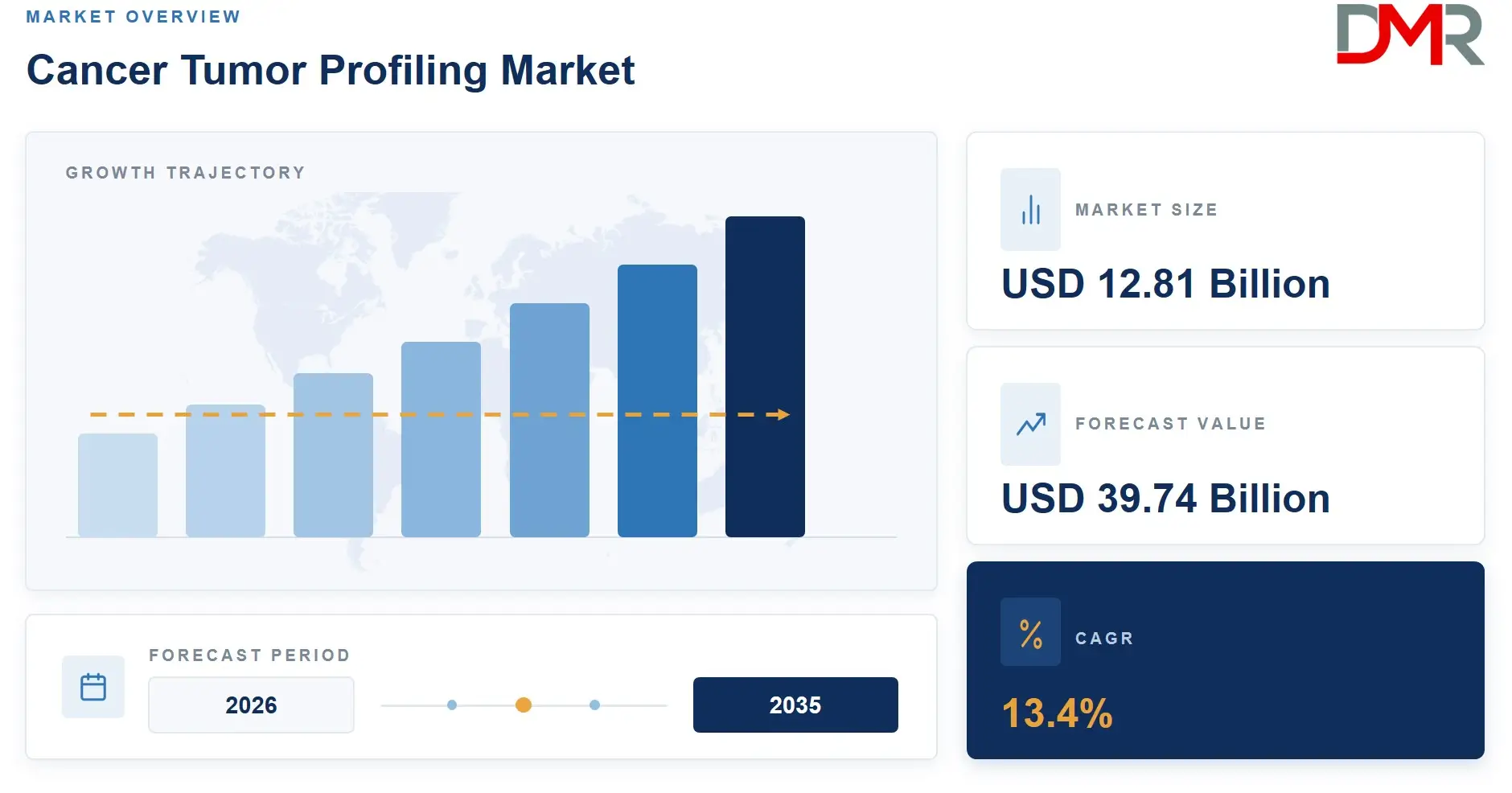
- The market size is USD 12.81 Billion in 2026, and is projected to hit USD 39.74 Billion by 2035 at a CAGR of 13.4%.
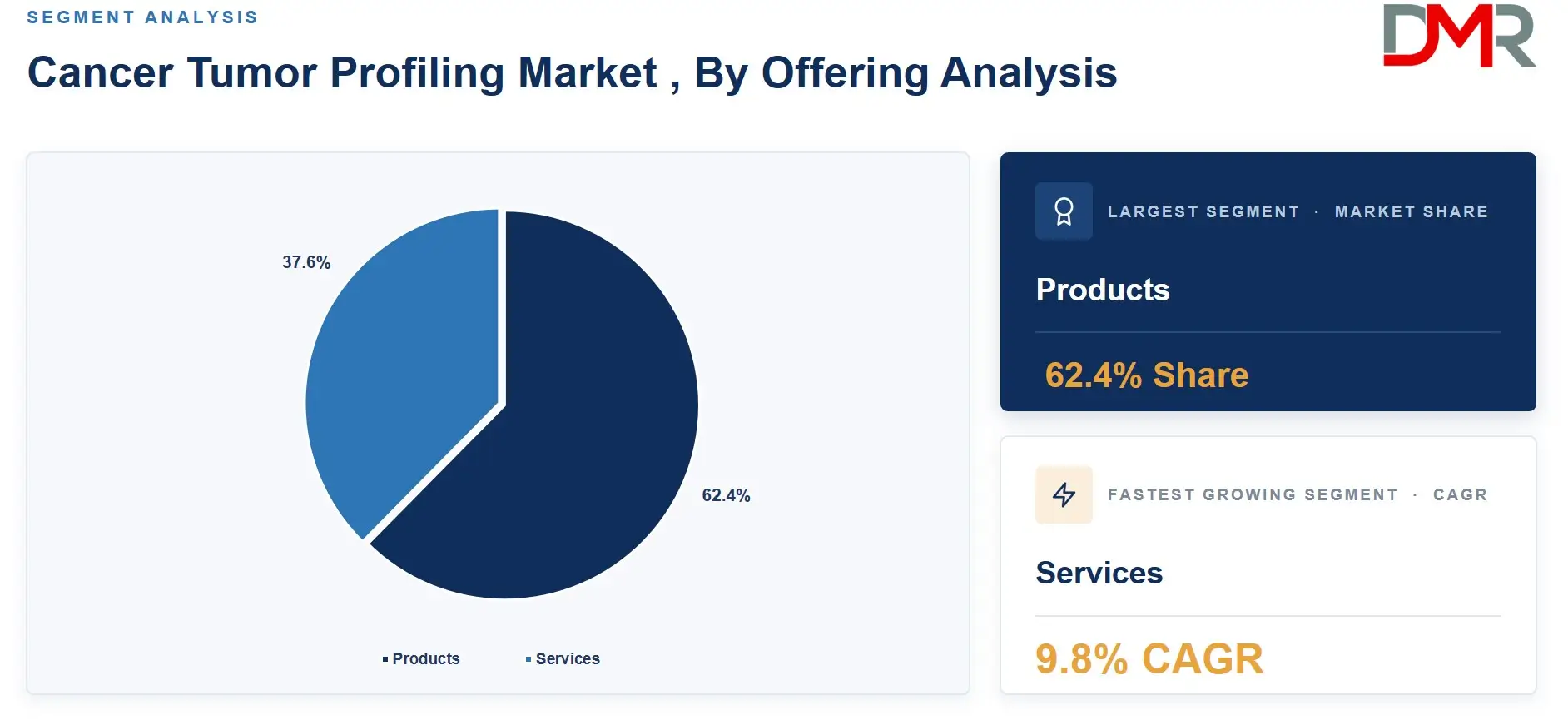
- By Offering: Products led as the largest category with a 62.4% share in 2026.
- By Product Type: Clinical Tumor Profiling Testing Services led as the largest category in 2026.
- By Technology: Next-generation Sequencing led with a 43.8% share in 2026.
- By Sample Type: Blood-based Samples led as the largest category in 2026.
- By Application: Cancer Diagnosis, Molecular Characterization, and Prognostic/Risk Assessment led as the largest category in 2026.
- By Cancer Type: Solid Tumors led as the largest category in 2026.
- By End User: Hospitals, Cancer Centers, and Oncology Clinics led as the largest end-user category in 2026.
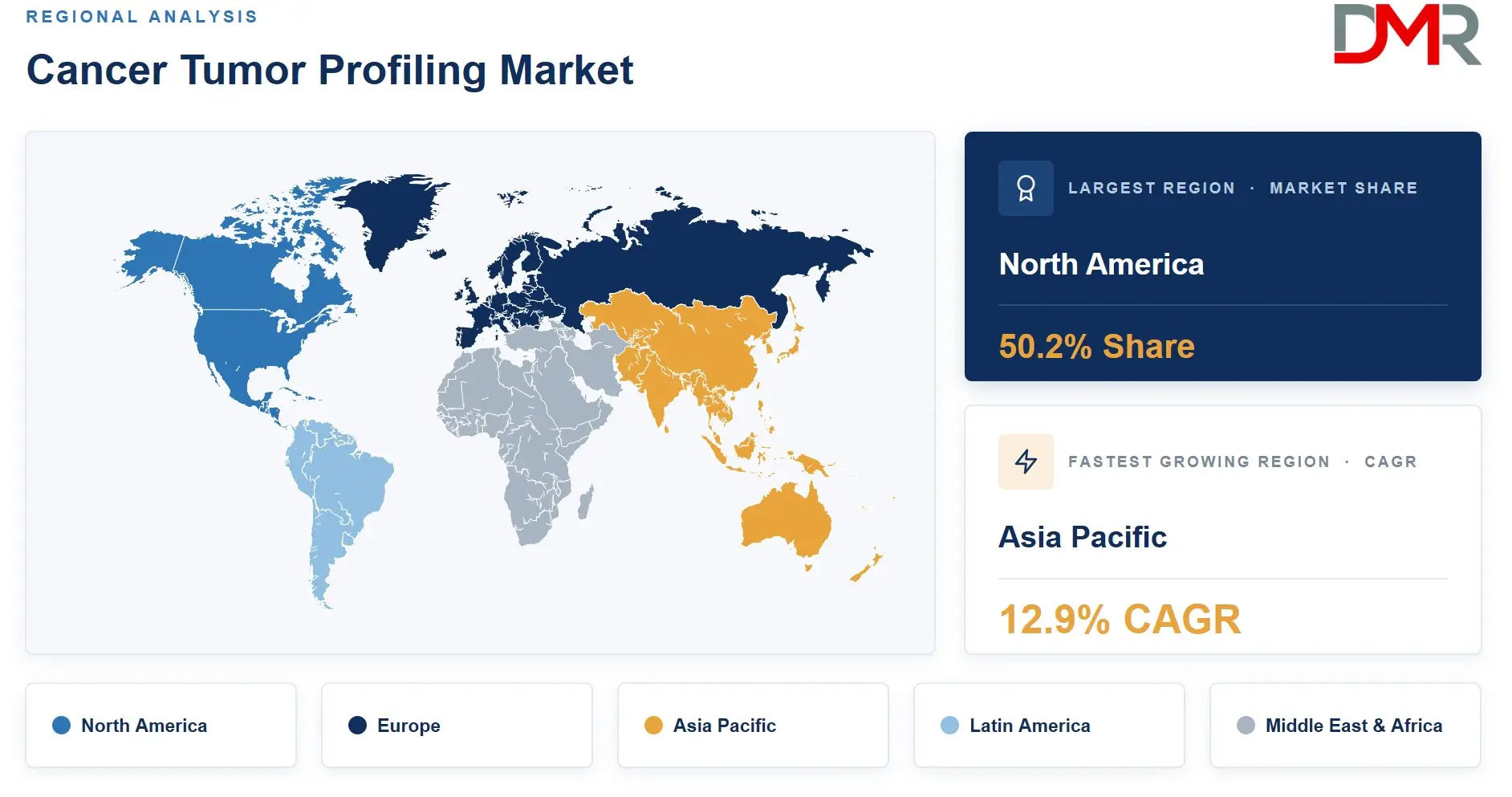
- By Region: North America led with a 50.2% share in 2026.
- Asia Pacific is the fastest-growing region, expanding at a CAGR of 12.9% through the forecast period.
Market Size and Forecast
The Global Cancer Tumor Profiling Market size is estimated at USD 12.81 Billion in 2026, and is projected to reach USD 39.74 Billion by 2035, exhibiting a CAGR of 13.4% during the forecast period.
ℹ
To learn more about this report –
Download Your Free Sample Report Here
As reported by the FDA, three colorectal-cancer screening IVDs were authorized in 2024, including Guardant Health's Shield blood-based test, marking regulatory validation of non-invasive profiling modalities beyond tissue biopsy. Companion diagnostic expansion, rising oncology treatment volumes, and sequential guideline updates embedding molecular testing into standard-of-care pathways collectively underpin the growth trajectory. The forecast assumes continued biomarker-linked therapy approvals, stable reimbursement progression in North America and Europe, and accelerating laboratory infrastructure build-out across Asia Pacific.
Guardant Health reported full-year 2025 revenue of $982.0 million, representing 33% year-over-year growth, according to a filing released in February 2026. Liquid-biopsy commercialization at this scale confirms that blood-based profiling is no longer an emerging modality. The volume of clinical profiling tests ordered has moved beyond early adopters and into mainstream oncology practice, pulling the broader market's growth curve steeper than prior-period analyst estimates had projected.
Offering Analysis
Products led the Offering segment with a 62.4% share in 2026.
Hardware and consumable-driven revenue dominates because every clinical or research profiling workflow requires sequencing instruments, reagents, and assay kits before any service layer can be deployed. Illumina's consumables represented 72% of total consolidated revenue in 2024, as reported by the company's SEC filing, illustrating how recurring reagent and kit purchases lock in a revenue base that instrument placements initiate but do not alone sustain. A single installed sequencer generates years of downstream consumable spend, creating a durable annuity model for leading product vendors.
Instruments and systems captured a minority share of product revenue, consistent with Illumina's disclosure that instrument sales represented 11% of consolidated revenue in 2025. Services, the remaining segment, includes contract testing, biopharmaceutical support, and companion diagnostic development. Services grow fastest among pharma and biotech customers that prefer outsourced profiling over internal laboratory capital investment. That shift narrows margins per test but extends vendor reach into pharmaceutical R&D pipelines, making service providers structurally important to drug development timelines.
ℹ
To learn more about this report –
Download Your Free Sample Report Here
Technology Analysis
Next-generation Sequencing accounted for 43.8% of Technology demand in 2026, the highest of any category.
NGS dominance reflects the segment's unmatched breadth per assay run. FoundationOne CDx evaluates alterations across 324 genes, plus MSI and TMB signatures, as listed in FDA's PMA database, providing oncologists a comprehensive genomic picture from a single tissue submission. Caris Life Sciences' MI Cancer Seek covers 228 genes, MSI, TMB, and breast-cancer copy-number amplification within one panel, per FDA documentation. Panels at this breadth have displaced multi-assay sequential workflows for advanced solid-tumor cases, concentrating testing volume and reimbursement claims within the NGS category.
Immunohistochemistry retains a strong position in tissue-based companion diagnostics, particularly for protein-expression biomarkers that genomic panels do not capture. In Situ Hybridization and Polymerase Chain Reaction serve defined clinical niches, including HER2 amplification confirmation and rapid mutation screening respectively, where turnaround time or cost constraints favor simpler technologies. Each non-NGS modality holds durable share in specific clinical scenarios rather than competing directly with comprehensive sequencing panels across the full solid-tumor workflow.
Sample Type Analysis
Blood-based Samples led the Sample Type segment as the largest category in 2026.
Guardant Health performed approximately 87,000 Shield colorectal-cancer screening tests in 2025, per SEC filings, demonstrating the commercial-scale volume that liquid biopsy can generate once a test earns FDA authorization and payer coverage. Blood-based profiling removes the procedural burden of tissue biopsy, cuts collection-to-result cycle time, and enables longitudinal repeat testing that tissue cannot support economically. Guardant's volume trajectory confirms that oncologists and patients are adopting blood-based alternatives at a pace that restructures sample-type mix across the market.
Tissue-based samples remain clinically essential for de novo diagnosis, tumor microenvironment characterization, and any profiling workflow where spatial context matters. MI Cancer Seek detects single-nucleotide variants and insertions/deletions across 228 genes in FFPE tumor tissue, as recorded in FDA's PMA documentation, showing that tissue-based NGS panels continue to advance in gene coverage and clinical utility. Bone marrow retains a specialized role in hematologic malignancy profiling, where marrow aspirate provides the clearest signal of clonal composition that blood or solid-tissue samples cannot fully replicate.
Application Analysis
Cancer Diagnosis, Molecular Characterization, and Prognostic/Risk Assessment led the Application segment as the largest category in 2026.
Diagnosis and molecular characterization sit at the entry point of every patient's oncology journey, making this application category the broadest by volume. Before a treatment plan can be constructed, clinicians need a confirmed cancer type, a molecular subtype, and a risk stratification. Comprehensive tumor profiling satisfies all three requirements in a single workflow, which is why this application category captures the largest share of test volume and revenue across both tissue and liquid-biopsy platforms.
Treatment Selection and Companion Diagnostics and Treatment Response and Resistance Monitoring represent the fastest-growing application categories. Biomarker-linked therapies require a validated companion diagnostic before a prescription can be written. Resistance monitoring generates repeat test volume across the duration of treatment, compounding revenue per patient far beyond the initial diagnostic run. Research and Drug Development, Clinical Trials, and Early Drug Discovery applications provide a stable commercial floor funded by pharmaceutical and biotech R&D budgets rather than clinical reimbursement, insulating this portion of demand from payer policy shifts.
Cancer Type Analysis
Solid Tumors led the Cancer Type segment as the largest category in 2026.
Lung cancer generated 2.5 million new cases globally in 2022, equal to 12.4% of all cancer diagnoses, per WHO data, making it the single largest molecular-testing volume driver within the solid-tumor category. Female breast cancer contributed 2.3 million new cases in 2022, or 11.6% of all diagnoses, and colorectal cancer added 1.9 million new cases, representing 9.6%, per the same WHO source. The combined incidence weight of these three tumor types anchors NGS panel demand, companion diagnostic development, and clinical-trial enrollment pipelines for the foreseeable forecast period.
Liquid tumor and hematologic malignancy profiling commands a smaller but technically demanding share. SEER projects 79,320 new U.S. non-Hodgkin lymphoma cases and 36,110 new myeloma cases in the near term, sustaining profiling volumes for assays targeting clonal mutations, chromosomal rearrangements, and minimal residual disease markers specific to blood cancers. Leukemia, lymphoma, and myeloma patients require profiling at diagnosis, at remission assessment, and at relapse, generating repeat test cycles that differ structurally from the single-profile model more common in solid-tumor workflows.
End User Analysis
With a majority share in 2026, Hospitals, Cancer Centers, and Oncology Clinics outpaced all other End User categories.
Hospital and cancer center settings concentrate profiling demand because they house the oncology specialists, pathology departments, and multidisciplinary tumor boards that order and interpret comprehensive molecular tests. Dedicated cancer hospitals deepen this concentration by combining high patient volumes with in-house laboratory infrastructure that supports same-day or next-day sample processing. The clinical environment also makes these institutions the primary sites for companion diagnostic ordering, which is tightly bound to prescribing authority and treatment planning workflows that occur within hospital oncology settings.
Pharmaceutical and biotechnology companies represent the second largest end-user category, driven by companion diagnostic co-development and clinical-trial profiling contracts. Contract Research Organizations and central laboratories serve this pharma demand efficiently by providing scalable, standardized profiling capacity without the clinical overhead of hospital infrastructure. Independent and specialty reference laboratories capture a growing share of community-oncology test volume as profiling panels become more standardized and community practices seek cost-efficient outsourced molecular testing rather than maintaining in-house sequencing equipment.
Key Market Segments
By Offering
- Products
- Clinical Tumor Profiling Testing Services
- Instruments & Systems
- Assays, Kits, Reagents, and Consumables
- Biopharmaceutical, Clinical-Trial, and Companion Diagnostic Services
- Services
By Technology
- Next-generation Sequencing
- Immunohistochemistry
- In Situ Hybridization
- Polymerase Chain Reaction
- Other Tumor Technologies
By Sample Type
- Blood-based Samples
- Tissue-based Samples
- Bone Marrow
- Other Sample Types
By Application
- Cancer Diagnosis, Molecular Characterization, and Prognostic/Risk Assessment
- Research & Drug Development Applications
- Clinical Trials, Patient Stratification, and Enrolment
- Biomarker, Target, and Early Drug Discovery
- Treatment Response & Resistance Monitoring
- Treatment Selection & Companion Diagnostics
- Preclinical Development & Validation
- Clinical Applications
- Residual Disease, Post-treatment Surveillance, and Recurrence Detection
By Cancer Type
- Solid Tumors
- Lung Cancer
- Breast Cancer
- Colorectal Cancer
- Prostate Cancer
- Melanoma
- Head & Neck Cancers
- Gynecologic Cancers
- Brain & Central Nervous System Tumors
- Other Solid Tumors
- Liquid Tumors/Hematologic Malignancies
- Leukemia
- Lymphoma
- Multiple Myeloma & Other Liquid Tumors
By End User
- Hospitals, Cancer Centers, and Oncology Clinics
- Dedicated Cancer Hospitals & Cancer Centers
- Multispecialty Hospitals
- Pharmaceutical & Biotechnology Companies
- Contract Research Organizations & Central Laboratories
- Independent & Specialty Reference Laboratories
- Other End Users
Regional Analysis
North America led the Regional Analysis with a 50.2% share in 2026, valued at USD 6.43 Billion.
North America
North America's majority share reflects the concentration of FDA-authorized companion diagnostics, a reimbursement environment where Medicare and commercial payers cover an expanding list of NGS panel indications, and a dense network of academic cancer centers and reference laboratories capable of processing high-complexity molecular tests. SEER projects 112,000 new U.S. melanoma cases in 2026, a single-cancer indication large enough to sustain a targeted profiling product category on its own. The U.S. regulatory and clinical infrastructure has created a self-reinforcing cycle: new therapy approvals require companion diagnostics, companion diagnostics require validated profiling assays, and validated profiling assays generate guideline recommendations that drive reimbursement coverage.
Asia Pacific
Asia Pacific expands at the fastest regional rate among all geographies, with a CAGR of 12.9% projected through the forecast period. China, Japan, South Korea, and India are expanding public oncology programs, broadening national cancer registries, and investing in domestic NGS sequencing capacity. Large cancer centers in Beijing, Shanghai, Tokyo, and Mumbai are placing instrument orders and building local genomic data pools that reduce dependence on international reference laboratories. Reimbursement frameworks in Japan and South Korea have begun covering NGS-based profiling for specific tumor types, creating a template that other regional markets are expected to follow within the forecast window.
ℹ
To learn more about this report –
Download Your Free Sample Report Here
Europe
European markets are adopting tumor profiling within national oncology networks and hospital-based molecular pathology units. Germany, France, and the United Kingdom lead adoption, supported by public health budgets that prioritize precision medicine programs at tertiary cancer centers. The EU's In Vitro Diagnostic Regulation has lengthened device approval timelines, creating a near-term friction point for new assay launches, but the structural demand from rising cancer incidence and updated ESMO treatment guidelines continues to pull testing volumes upward across the region.
Latin America
Latin America represents an underpenetrated market where access to molecular profiling remains concentrated in private hospitals and major urban centers in Brazil and Mexico. Public reimbursement for NGS-based testing is limited across most of the region, restricting routine comprehensive genomic profiling to patients who can afford out-of-pocket costs or access clinical trial protocols. Infrastructure investment from global diagnostics companies targeting Brazil's large cancer patient population will determine the pace of adoption through the forecast period.
Middle East & Africa
The Middle East, led by GCC member states, is building cancer center capacity through sovereign health investment programs. Saudi Arabia and the UAE are importing advanced oncology infrastructure, including molecular pathology laboratories equipped for NGS profiling, as part of broader healthcare diversification strategies. Sub-Saharan Africa remains structurally limited by laboratory capacity and trained workforce constraints, with access to tumor profiling confined to a small number of urban reference centers in South Africa and Nigeria.
Key Regions and Countries
North America
Europe
- Germany
- France
- The UK
- Spain
- Italy
- Rest of Europe
Asia Pacific
- China
- Japan
- South Korea
- India
- Australia
- Rest of APAC
Latin America
- Brazil
- Mexico
- Rest of Latin America
Middle East & Africa
- GCC
- South Africa
- Rest of MEA
Macroeconomic Impact
The World Bank forecasts global economic growth of 2.5% in 2026, a moderate expansion pace that constrains public health budget growth in emerging markets while leaving high-income healthcare systems largely insulated from demand compression. As reported by the WTO, world merchandise-trade volume increased 4.6% in 2025, supporting cross-border instrument shipments, reagent supply chains, and the logistics networks that move biological samples between collection sites and central reference laboratories. A tighter macroeconomic environment raises the bar for reimbursement decisions by cost-conscious national health systems, making clinical evidence of profiling utility a prerequisite for budget allocation rather than an optional supplement.
Currency volatility affects the cost structure of profiling vendors that manufacture instruments and reagents in North America or Europe and sell them into Asia Pacific or Latin American markets. A stronger U.S. dollar inflates local-currency instrument prices in growth markets, slowing capital equipment cycles and pushing buyers toward leasing arrangements or service-based access models. Healthcare systems in lower-income countries face a structural tension between rising cancer incidence and flat public procurement budgets, making cost-reduced profiling solutions, including locally manufactured reagents and cloud-based bioinformatics, a commercial necessity rather than a strategic option.
Market Dynamics
Driver: Biomarker-Linked Therapy Approvals Mandate Companion Diagnostic Testing
WHO recorded 20.0 million new cancer cases and 9.7 million deaths globally in 2022, establishing a baseline patient volume large enough to sustain high-complexity profiling demand across all major tumor types. The NCI projected 2,041,910 new cancer diagnoses and 618,120 cancer deaths in the United States alone for 2025. Population aging compounds incidence growth independently of detection improvement, expanding the addressable precision oncology population without requiring changes in diagnostic practice.
The FDA authorized 76 oncology devices in 2024, including 27 in-vitro diagnostics and four new IVDs carrying 11 companion-diagnostic claims, according to FDA's 2024 oncology regulatory review. A companion diagnostic approval creates an immediate, non-discretionary testing requirement: oncologists cannot prescribe the linked targeted therapy without a validated biomarker result. Thermo Fisher's Oncomine Dx Express Test, approved by the FDA in July 2025, assesses mutations across 42 DNA genes, and the FDA simultaneously authorized two new NGS-based tumor-profiling assays with companion-diagnostic claims in 2024, per agency records, creating direct reimbursable test volume tied to specific prescribing indications.
Restraint: Reimbursement Gaps and Specimen Variability Limit Routine Adoption
Fragmented payer coverage prevents comprehensive genomic profiling from becoming routine across all care settings. U.S. payers approve NGS panel reimbursement on an assay-specific and indication-specific basis, meaning a panel validated for non-small cell lung cancer carries no automatic coverage for ovarian or bladder cancer, even on the same instrument platform. Community oncology practices face a coverage verification burden that slows test ordering and creates billing uncertainty, particularly for recently approved panels still working through local coverage determination processes.
Specimen quality undermines test reliability in ways that guideline updates cannot fully resolve. Tumor heterogeneity means a single biopsy may not represent the full mutational landscape of a large or metastatic tumor. Pre-analytical variability in FFPE tissue fixation, transport conditions, and storage duration introduces quality failures that result in uninformative reports, requiring repeat biopsies that delay treatment decisions and erode clinician confidence in routine molecular testing outside specialized centers.
Opportunity: Decentralized Trial Matching and Emerging-Market Expansion
SEER projects 333,830 new U.S. prostate-cancer cases in 2026, a tumor type with an expanding list of biomarker-linked therapeutic targets including BRCA and homologous recombination deficiency markers. Community oncology trial-matching platforms can convert rare genomic alterations identified through routine profiling into decentralized clinical-trial enrollment, connecting patients in non-academic settings to protocol-specific therapies they would not otherwise access. Guardant Health's September 2025 partnership with PathGroup made the Shield blood test available to more than 250 hospitals and health systems across 25 U.S. states, demonstrating how distribution partnerships extend profiling access to community settings at a scale that direct salesforces alone cannot achieve.
Spatial multi-omics profiling for tumor microenvironment mapping and integrated proteogenomic testing represent earlier-stage opportunities with high upside. Emerging-market laboratory networks in South and Southeast Asia offer a complementary growth vector by providing localized, lower-cost profiling infrastructure to cancer patient populations that academic center-dependent testing models cannot efficiently serve. Both opportunity vectors require capital investment before revenue materializes, but each targets structural gaps in current profiling coverage that established vendors have not yet filled.
Porter's Five Forces
Competitive rivalry within cancer tumor profiling is intense and concentrated. A small number of vendors hold FDA-authorized companion diagnostic claims that function as regulatory moats, because FDA authorization for a specific therapeutic indication cannot be replicated by a competitor without a separate clinical validation program and parallel therapy partnership.
Supplier power is moderate: high-purity reagent manufacturers and specialized optical component suppliers serve a narrow customer base of sequencing platform developers, giving them price influence, but long-term supply agreements and vendor qualification requirements limit abrupt switching costs. Buyer power varies sharply by channel. Hospital and reference laboratory buyers negotiate volume contracts that compress service margins, while pharmaceutical companies embedded in co-development partnerships prioritize platform compatibility and data quality over price.
Threat of substitutes is present but limited in scope. Immunohistochemistry and PCR-based methods retain clinically validated positions in specific indications, but no single-gene or protein-expression method replicates the breadth that a 200-plus-gene NGS panel delivers in one run. New entrant barriers are high. Regulatory authorization timelines, laboratory accreditation requirements, bioinformatics infrastructure costs, and the need for clinical evidence supporting medical utility collectively filter out undercapitalized players before they can reach commercial scale.
AI and Gen AI Impact
Artificial intelligence reshapes the interpretation layer of tumor profiling more immediately than it changes specimen collection or sequencing chemistry. Variant classification algorithms now filter sequencing output against curated clinical databases faster than human reviewers can, reducing the time between data generation and a reportable molecular result. AI-assisted variant interpretation compresses molecular tumor board review cycles, a bottleneck that had constrained same-day or next-day reporting even when sequencing throughput was sufficient. In May 2025, Tempus AI announced a collaboration with Illumina pairing Tempus's multimodal clinical and genomic data assets with Illumina sequencing platforms, signaling an industry shift toward AI-native profiling workflows where data interpretation is embedded in the instrument ecosystem rather than handled separately downstream.
Generative AI applied to clinical report synthesis can convert complex variant call files into structured oncologist-facing summaries without human curation at each report. Tempus AI's reported 2025 net revenue of approximately $1.272 billion, up approximately 83% year over year per SEC filings, reflects how aggressively the market is pricing AI-enabled precision oncology services above conventional profiling offerings. Vendors that cannot embed AI interpretation into their workflow will face a structural disadvantage as buyers increasingly evaluate reporting speed and interpretive depth alongside assay gene coverage and regulatory authorization.
Market Trends
Liquid Biopsy and Comprehensive Panels Displace Tissue-Only Sequential Testing
Liquid-biopsy companion diagnostics are displacing tissue-only testing for therapy selection and longitudinal disease monitoring as FDA authorization validates blood-based assays for specific therapeutic indications. Comprehensive NGS panels are replacing sequential single-gene assays across advanced solid-tumor workflows.
The Oncomine Dx Express Test assesses copy-number variants across 10 DNA genes. It detects fusions or splice variants across 18 RNA targets, per FDA PMA documentation, illustrating the multi-analyte breadth that single-panel runs now deliver. In December 2025, Guardant Health announced a collaboration with Trial Library to combine large-scale genomic data with AI-powered clinical-trial matching, demonstrating how profiling output is moving beyond diagnostic reporting into active patient navigation and enrollment workflows.
Market Competition Overview
The cancer tumor profiling market is moderately consolidated at the top, with a small cluster of large diversified life-science companies holding the majority of FDA-authorized companion diagnostic positions and sequencing platform installations. The competitive hierarchy is defined less by company size than by the number of regulatory-cleared companion diagnostic claims a vendor holds, because each approved claim represents a locked-in test volume tied to a specific therapeutic pathway. Vendors without a companion diagnostic portfolio compete primarily on price and turnaround time in the reference laboratory and contract testing segments, where differentiation is harder to sustain as panel designs converge.
Tempus AI reported 2025 net revenue of approximately $1.272 billion, up approximately 83% year over year, according to SEC filings released in February 2026, driven by its acquisitions of Paige.AI and OneOme and expansion of its AI-enabled oncology data platform. Growth at this rate in a market growing at a 13.4% CAGR signals market-share capture rather than market-expansion alone. Established instrument vendors face a new category of AI-native competitor that monetizes multimodal clinical data and interpretive services, not just sequencing chemistry or panel breadth, which is forcing a redefinition of where competitive advantage in tumor profiling is created and defended.
Pricing Analysis
Tumor profiling pricing reflects a wide spectrum anchored to test complexity, regulatory status, and ordering channel. A single FDA-authorized companion diagnostic that guides a specific first-line therapy commands a price premium over a research-use-only panel covering equivalent genes, because the regulatory authorization carries reimbursement eligibility that unlocks commercial payment. Comprehensive genomic profiling panels covering 300-plus genes carry average list prices ranging from several hundred to several thousand U.S. dollars per test in North America, with actual realized prices varying by payer contract, hospital negotiated rate, and volume commitment. Regional price differentiation is significant. Asian and Latin American markets price profiling panels at substantial discounts to North American list prices to compete with local laboratory alternatives and match public healthcare procurement constraints.
Downward pressure on per-gene analysis costs from sequencing chemistry improvements has shifted vendor pricing strategy toward volume and recurring revenue rather than per-test margin defense. Consumable attachment rates, as illustrated by Illumina's 72% consumables revenue share, indicate that reagent and kit pricing is a more durable margin source than instrument pricing alone. Market leaders use companion diagnostic pricing as a floor, while challengers discount standalone panels to win reference laboratory contracts and build test-volume scale before seeking reimbursement coverage for additional indications.
Company Profiles
F. Hoffmann-La Roche AG holds the broadest companion diagnostic portfolio in the tumor profiling market, anchored by FoundationOne CDx, which covers 324 genes plus MSI and TMB signatures and carries multiple FDA-authorized companion-diagnostic indications across solid tumors. Roche's integration of molecular profiling into its pharmaceutical and diagnostics divisions allows the company to position tumor profiling as both a standalone laboratory service and a required prerequisite for its own oncology drug portfolio, creating a self-reinforcing commercial structure that independent diagnostics vendors cannot easily replicate.
Guardant Health, Inc. leads the liquid-biopsy segment with a commercialization trajectory that separates it from tissue-based competitors. Oncology revenue reached $683.6 million in 2025, a 26% increase year over year, and oncology test volume grew 34% over the same period, per SEC filings. Total 2025 revenue reached $982.0 million, up 33% year over year. In August 2025, Tempus AI completed its acquisition of Paige.AI for approximately $102.7 million, adding computational pathology capabilities to its AI-enabled oncology data platform and intensifying competitive pressure on vendors that have not yet embedded AI interpretation into core profiling workflows.
*Note on Stat 26: Illumina is listed as a Key Player but is not among the top 2 profiled companies designated from the data. Per Rule 11, only top 2 companies receive profiles. Stat 26 (Illumina $4.343B revenue) was assigned to Company Profiles. It is placed in the Key Players context paragraph below.*
Illumina, Inc., the leading sequencing platform provider, reported total consolidated revenue of $4.343 billion in 2025, per SEC filings, reflecting the scale at which instrument and consumable infrastructure underpins virtually all NGS-based profiling workflows across the competitive landscape.
Key Players
- F. Hoffmann-La Roche AG
- Illumina, Inc.
- Guardant Health, Inc.
- Tempus AI, Inc.
- Thermo Fisher Scientific Inc.
- QIAGEN N.V.
- Labcorp (OmniSeq)
- Exact Sciences Corporation
- Natera, Inc.
- NeoGenomics Laboratories, Inc.
- Myriad Genetics, Inc.
- Agilent Technologies, Inc.
- Abbott Laboratories
- Quest Diagnostics Incorporated
Supply Chain and Value Chain Analysis
The tumor profiling supply chain begins with specialty chemical and biological raw material suppliers that produce high-purity oligonucleotides, enzymes, flow cell consumables, and antibody reagents used in sequencing and IHC workflows. Global trade reached $33 trillion in 2024, a 3.7% increase per UNCTAD, with goods trade accounting for approximately $25 trillion and services trade approximately $8 trillion. Cross-border reagent flows and instrument shipments operate within this global trade environment, exposing profiling supply chains to tariff policy, export controls, and freight disruptions that can delay laboratory restocking or instrument delivery cycles.
Maximum value in the chain concentrates at the assay design and bioinformatics interpretation layers, where proprietary panel compositions and clinical-grade variant databases create defensible intellectual property rather than commodity chemistry. The biggest bottleneck sits at the laboratory processing and accreditation layer. A profiling assay must be run in a CLIA-certified and CAP-accredited laboratory in the United States, creating a qualification barrier that limits which facilities can legally report clinical results. Reference laboratories and central labs capture margin at this accreditation-gated processing step, making laboratory network scale a structural advantage for vendors that own or partner with certified testing facilities.
Regulatory Landscape
The FDA's companion diagnostic framework is the primary regulatory force shaping market access in North America. A tumor profiling assay intended to select patients for a specific therapy must receive FDA authorization as a companion diagnostic before commercial prescribing can occur. The FDA authorized nine expanded companion-diagnostic indications across six previously authorized IVDs in 2024, per agency records, extending reimbursable testing indications for existing authorized panels. In 2024, Agilent's MAGE-A4 IHC 1F9 pharmDx received companion diagnostic approval as the required selection test for Tecelra, the first FDA-approved T-cell receptor gene therapy, demonstrating that the companion diagnostic framework is expanding into novel therapeutic modalities beyond kinase inhibitors and immune checkpoint blockers.
European regulation is in transition. The EU In Vitro Diagnostic Regulation replaced the former IVD Directive and has extended conformity assessment timelines for high-risk assays, including NGS-based profiling panels. Notified Body review capacity constraints are creating approval delays for new panel launches seeking CE-IVDR marking, creating a window where clinically validated U.S.-authorized assays reach European markets later than domestic demand warrants. Asia Pacific regulatory frameworks are heterogeneous. Japan's PMDA, China's NMPA, and South Korea's MFDS each maintain separate companion diagnostic approval pathways that require local clinical data submissions and limit the direct transferability of FDA or CE authorizations across jurisdictions.
Investment and White Space Analysis
Investment in cancer tumor profiling concentrates in three vectors: liquid-biopsy platform scaling, AI-enabled data interpretation infrastructure, and companion diagnostic co-development partnerships with pharmaceutical companies. Liquid biopsy attracts capital because blood-based profiling can be repeated across treatment cycles without surgical access, generating a larger addressable test volume per patient than tissue biopsy. Guardant Health's November 2025 upsized equity offering provided approximately $284.4 million in net proceeds, signaling continued investor conviction in liquid-biopsy commercialization at scale despite a company not yet generating positive net income.
White space concentrates in community oncology settings, emerging-market laboratory networks, and integrated proteogenomic testing services. Community practices order molecular profiling at a fraction of the rate of academic cancer centers, leaving a structural gap between guideline-recommended testing and actual test volumes in non-specialist settings. Emerging markets in South and Southeast Asia represent high-growth, low-penetration geographies where localized, lower-cost profiling infrastructure has not yet been built to match rising cancer incidence. Proteogenomic testing, which captures protein expression data beyond what DNA-level sequencing provides, remains a largely pre-commercial opportunity awaiting standardized clinical validation frameworks before routine adoption can scale.
Report Details
| Report Characteristics |
| Market Value (2026) |
USD 12.81 Billion |
| Forecast Revenue (2035) |
USD 39.74 Billion |
| CAGR (2026–2035) |
13.4% |
| Historical Data |
2020 – 2024 |
| Forecast Data |
2026 – 2035 |
| Base Year |
2025 |
| Estimate Year |
2026 |
| Report Coverage |
Revenue Forecast, Market Dynamics, Competitive Landscape, Recent Developments |
| Segments Covered |
By Offering (Products, Services); By Technology (Next-generation Sequencing, Immunohistochemistry, In Situ Hybridization, Polymerase Chain Reaction, Other Tumor Technologies); By Sample Type (Blood-based Samples, Tissue-based Samples, Bone Marrow, Other Sample Types); By Application (Cancer Diagnosis/Molecular Characterization/Prognostic Risk Assessment, Research & Drug Development, Clinical Trials/Patient Stratification/Enrolment, Biomarker/Target/Early Drug Discovery, Treatment Response & Resistance Monitoring, Treatment Selection & Companion Diagnostics, Preclinical Development & Validation, Clinical Applications, Residual Disease/ Post-treatment Surveillance/Recurrence Detection); By Cancer Type (Solid Tumors, Liquid Tumors/Hematologic Malignancies); By End User (Hospitals/Cancer Centers/Oncology Clinics, Pharmaceutical & Biotechnology Companies, Contract Research Organizations & Central Laboratories, Independent & Specialty Reference Laboratories, Other End Users) |
| Regional Coverage |
North America – US, Canada; Europe – Germany, France, UK, Spain, Italy, Rest of Europe; Asia-Pacific – China, Japan, South Korea, India, Australia, Rest of APAC; Latin America – Brazil, Mexico, Rest of Latin America; Middle East & Africa – GCC, South Africa, Rest of MEA |
| Prominent Players |
F. Hoffmann-La Roche AG, Illumina Inc., Guardant Health Inc., Tempus AI Inc., Thermo Fisher Scientific Inc., QIAGEN N.V., Caris Life Sciences, Labcorp (OmniSeq), Exact Sciences Corporation, Natera Inc., NeoGenomics Laboratories Inc., Myriad Genetics Inc., Agilent Technologies Inc., Abbott Laboratories, Quest Diagnostics Incorporated, and Other Key Players |
| Customization Scope |
Customization for segments and region or country level will be provided. Additional customization can be done based on requirements. |
| Purchase Options |
Three license options: Single User License, Multi-User License (Up to 5 Users), and Corporate Use License (Unlimited Users and Printable PDF)
|
Recent Developments
- November 2024 — Caris Life Sciences received FDA approval for MI Cancer Seek, an NGS-based tumor profiling test covering 228 genes plus MSI and TMB signatures, with seven companion-diagnostic indications authorized at approval.
- 2024 — The FDA authorized two new NGS-based tumor-profiling assays with companion-diagnostic claims as part of its 2024 oncology device review cycle, expanding the roster of reimbursable genomic profiling tests tied to specific therapeutic indications.
- 2024 — The FDA authorized three colorectal-cancer screening IVDs, including Guardant Health's Shield blood-based test, formally validating liquid biopsy as a screening-eligible modality under a new IVD category.
- 2024 — Foundation Medicine's FoundationOne CDx received four additional companion-diagnostic claims in 2024, expanding its authorized indications across multiple tumor types and treatment settings.
- November 2025 — Guardant Health priced an upsized public equity offering expected to deliver approximately $284.4 million in net proceeds, directed toward continued commercialization of blood-based oncology profiling services.
- February 2026 — Tempus AI reported full-year 2025 adjusted EBITDA improved by $97.3 million year over year to negative $7.4 million, reflecting improved operating leverage despite integration costs from the Paige.AI and OneOme acquisitions completed during 2025.
Frequently Asked Questions
What is the biggest investment opportunity in the Cancer Tumor Profiling market?
▾ Community oncology settings represent the clearest underserved opportunity. Profiling test volumes in non-academic practices run well below guideline-recommended rates. Liquid-biopsy distribution partnerships and AI-assisted reporting platforms that lower operational barriers for community labs are the entry vectors attracting the most capital in the current period.
Who are the top companies in the Cancer Tumor Profiling market?
▾ Leading companies include F. Hoffmann-La Roche AG, Illumina Inc., Guardant Health Inc., Tempus AI Inc., Thermo Fisher Scientific Inc., QIAGEN N.V., Caris Life Sciences, Labcorp (OmniSeq), Exact Sciences Corporation, Natera Inc., NeoGenomics Laboratories Inc., Myriad Genetics Inc., Agilent Technologies Inc., Abbott Laboratories, and Quest Diagnostics Incorporated.
Which segment is growing fastest in the Cancer Tumor Profiling market and why?
▾ Blood-based sample profiling and liquid-biopsy companion diagnostics are expanding fastest within the market. Regulatory authorization of blood-based assays for therapy selection and screening removes the procedural barrier of tissue biopsy, enabling repeat testing across treatment cycles and pulling test volume from tissue-only workflows into higher-frequency blood-based protocols.
Which region is growing fastest in the Cancer Tumor Profiling market and why?
▾ Asia Pacific expands at the fastest rate, with a CAGR of 12.9% projected through 2035. National oncology programs in China, Japan, South Korea, and India are investing in domestic NGS sequencing infrastructure. Reimbursement frameworks in Japan and South Korea have begun covering NGS profiling for specific tumor types, creating a template that neighboring markets are expected to follow.
What is the biggest challenge holding Cancer Tumor Profiling Market back?
▾ Fragmented payer reimbursement is the primary constraint. Comprehensive genomic profiling panels require indication-specific and assay-specific coverage determinations from each payer, creating a billing burden that delays test ordering in community settings and limits routine adoption of newly authorized panels outside major academic cancer centers.