Market Snapshot
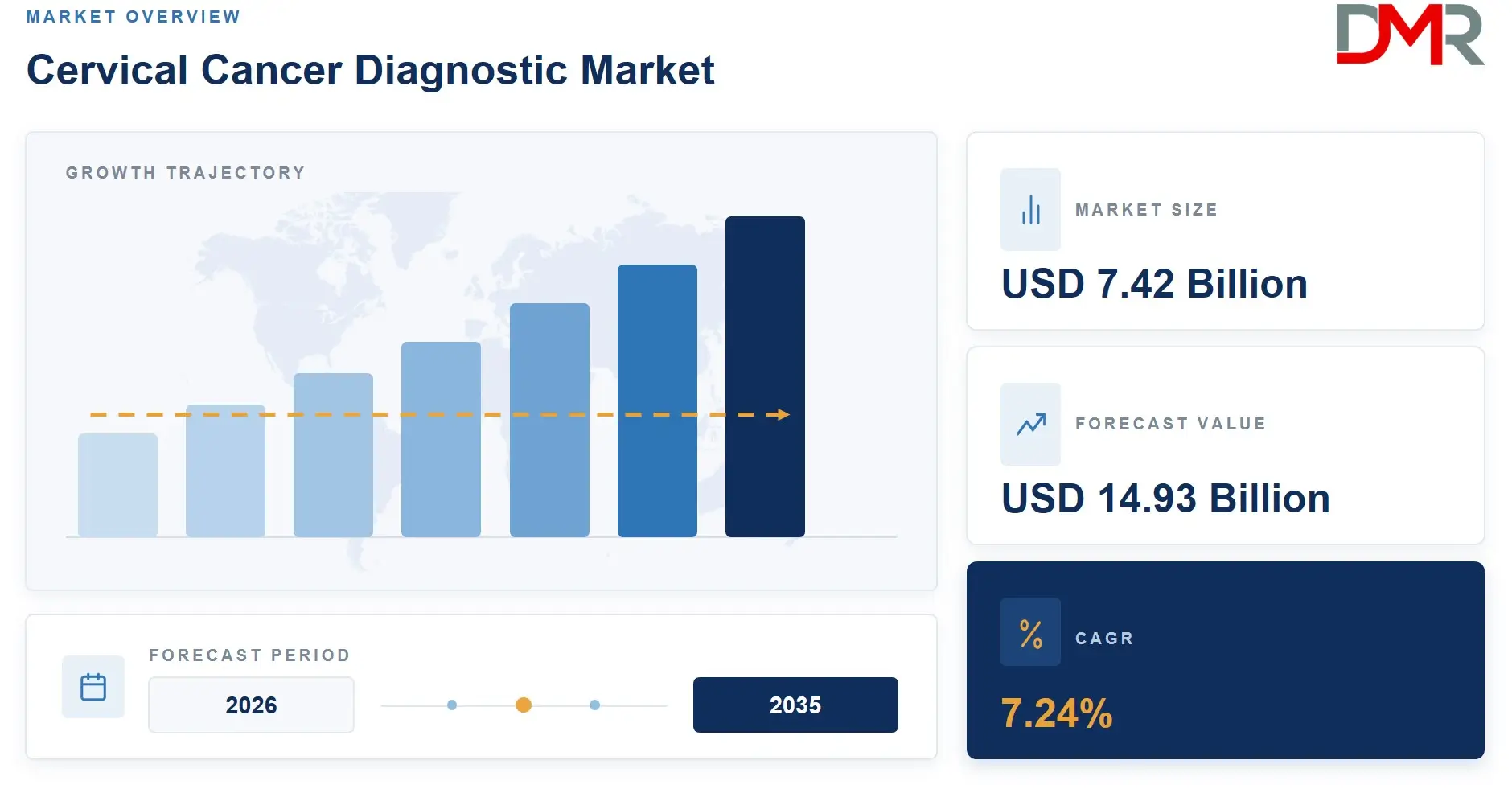
- Global Cervical Cancer Diagnostic Market value in 2025: USD 7.42 Billion
- Projected market value by 2035: USD 14.93 Billion
- Forecast CAGR (2026–2035): 7.24%
- Dominant Test Type segment: Pap Smear Testing (largest position in 2025); HPV Testing (fastest growing)
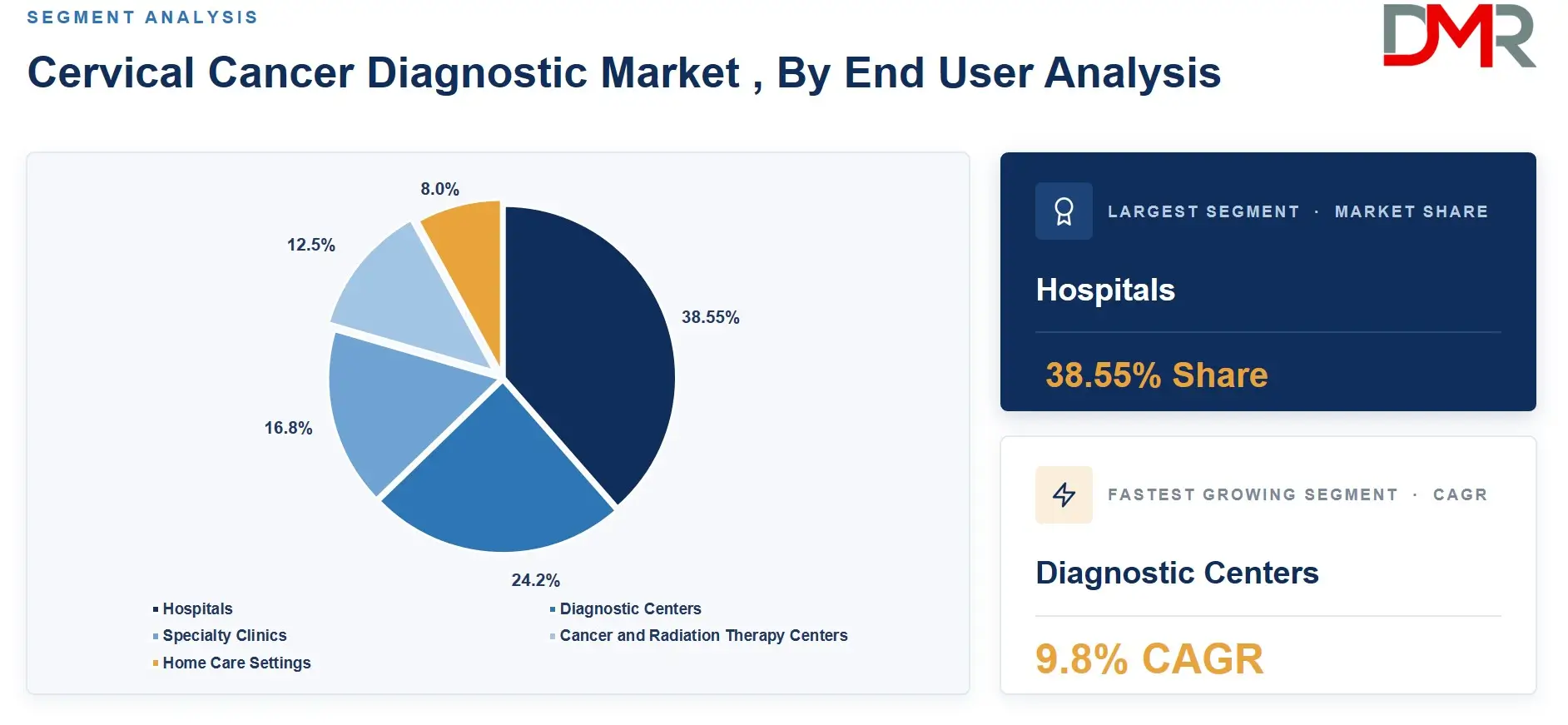
- Dominant End User segment: Hospitals with a 38.55% share in 2025; Diagnostic Centers (fastest growing)
- Dominant Technology segment: Molecular Diagnostics with a 38.27% share in 2025; Liquid-Based Cytology (fastest growing)
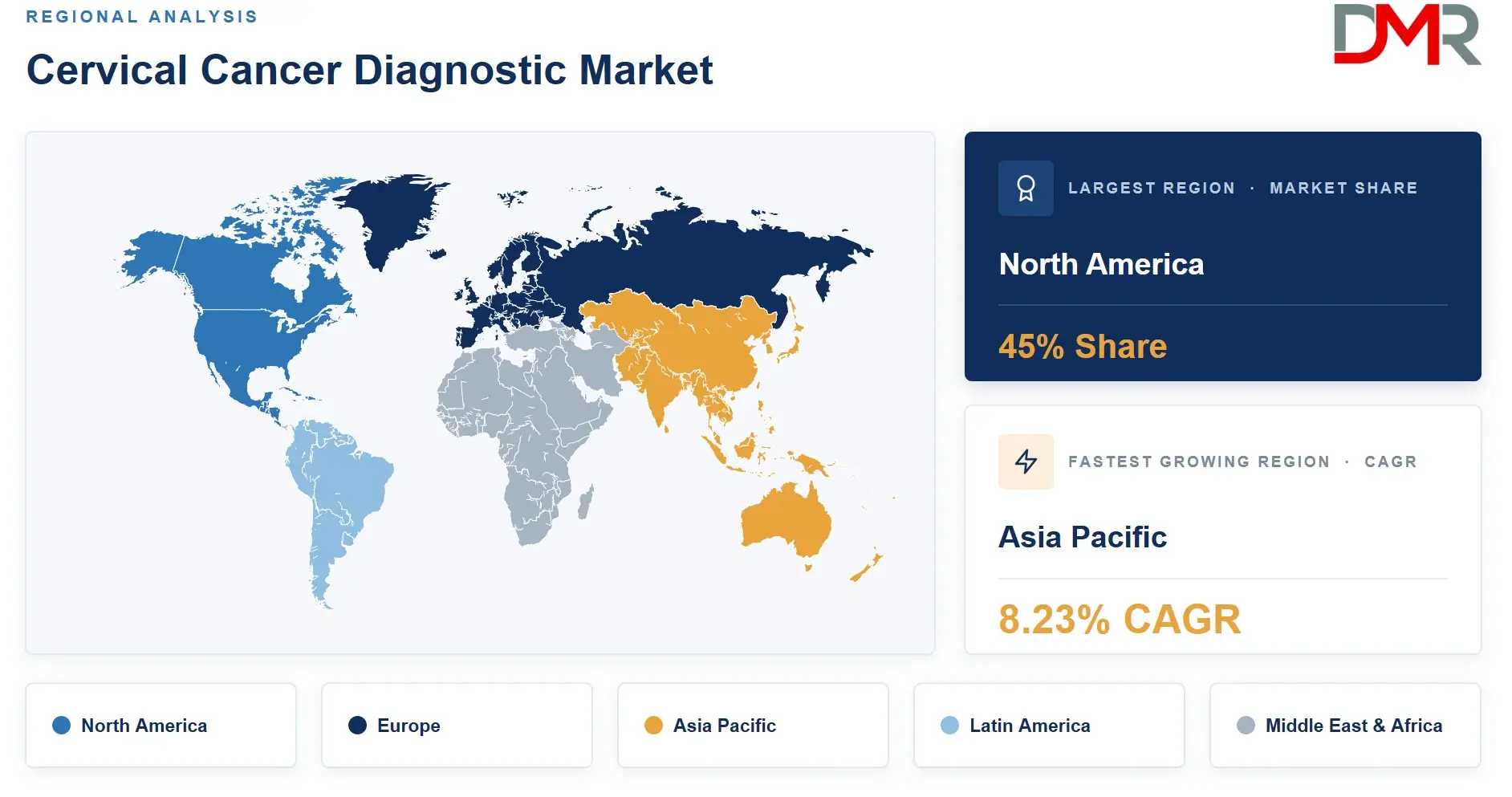
- Dominant region: North America (largest market); Asia-Pacific (fastest growing)
Market Overview
The cervical cancer diagnostic market encompasses all products and services used to screen, detect, and confirm cervical abnormalities and HPV infection, ranging from Pap smear cytology and colposcopy devices to high-throughput molecular HPV assays, liquid-based cytology platforms, and AI-assisted digital imaging systems. The market excludes therapeutic oncology products, surgical instruments, and systemic cancer treatments, though it sits directly upstream of the treatment pathway. Every confirmed diagnosis feeds oncology, radiotherapy, and surgical volumes, making diagnostic accuracy a commercial multiplier well beyond the screening segment itself.
Cervical cancer diagnostics connect tightly to the broader in vitro diagnostics industry and to public health infrastructure spending. National screening mandates, WHO elimination targets, and donor-funded procurement in low- and middle-income countries now drive procurement decisions at scale. A 2025 study published in Scientific Reports found overall concordance of 78.15% between urine and cervical HPV test results, and 85.71% between vaginal self-samples and clinician-collected cervical samples, as reported by the University of Manchester. These figures validate self-collection alternatives as clinically defensible substitutes, a finding that reconfigures distribution economics for established vendors.
Artificial intelligence is accelerating differentiation within the cytology sub-segment. In January 2024, BD entered a strategic collaboration with Techcyte to deploy an AI algorithm assisting cytologists and pathologists in whole-slide imaging for cervical cancer detection. Deals of this type embed diagnostic software into existing laboratory workflows, raising switching costs and providing an upgrade path that pure reagent suppliers cannot replicate.
Market Size and Forecast
The Global Cervical Cancer Diagnostic Market size is estimated at USD 7.96 Billion in 2026 from USD 7.42 Billion in 2025, and is projected to reach USD 14.93 Billion by 2035, exhibiting a CAGR of 7.24% during the forecast period.
The forecast rests on two compounding drivers. National screening programs are expanding coverage from a base that remains severely uneven across income groups. A 2025 global women's health analysis published on PMC confirmed that lifetime cervical cancer screening coverage among women aged 30–49 stands at 84% in high-income countries but only 11% in low-income countries, a 73-percentage-point gap that represents addressable demand yet to be converted into paid diagnostic volume. As donor-funded programs close this gap across Sub-Saharan Africa and South Asia, volume uplift will disproportionately benefit vendors with WHO-prequalified platforms.
ℹ
To learn more about this report –
Download Your Free Sample Report Here
HPV-based primary screening is replacing cytology in high-income markets, lifting per-test revenue per patient episode. As reported by the 2025 NCI/NIH Cervical Cancer Screening PDQ, HPV-based primary screening delivers approximately 60–70% greater protection against invasive cervical cancer relative to cytology alone, a clinical advantage that health ministries cite when justifying higher reimbursement rates. In September 2024, BD began shipping its FDA-approved HPV self-collection kits to U.S. healthcare facilities, signalling the start of a mainstream commercial rollout. Downside risk concentrates in cytology platform vendors whose installed-base economics erode as molecular reimbursement parity narrows the cost differential.
Test Type Analysis
HPV Testing led the Test Type segment as the fastest-growing category, outpacing Pap Smear Testing across all high-income screening guidelines by 2026.
HPV Testing has crossed a regulatory threshold that cements its long-term dominance. European and North American guidelines now position HPV DNA testing as the primary screening modality, relegating Pap smear to a reflex or co-test role. A 2025 IJRCOG study found HPV DNA sensitivity of 95.24% and specificity of 72.16%, against liquid-based cytology sensitivity of 89.68% and specificity of 79.92%. The 5.56-percentage-point sensitivity gain drives clinician preference in settings where missed cases carry both clinical and legal consequences.
Pap Smear Testing retains the largest installed base in 2025, anchored by sunk infrastructure in public health laboratories across middle-income countries. Colposcopy serves as the mandatory follow-up gate for screen-positive cases, making it volume-stable but not volume-growing. Cervical Biopsies and Endocervical Curettage remain procedural necessities in pathology confirmation. A 2025 Scientific Reports study found that clinician-collected cervical samples achieved sensitivity of 93.60% for CIN2+, confirming that conventional biopsy workflows maintain diagnostic authority at the confirmation stage even as upstream screening shifts to self-collection HPV formats.
End User Analysis
Hospitals accounted for 38.55% of End User demand in 2026, the highest of any category.
Hospitals anchor diagnostic volumes because colposcopy referrals, biopsies, and confirmatory pathology require procedural infrastructure unavailable in lower-acuity settings. High-throughput molecular platforms operate most cost-effectively when processing large batches, giving hospital laboratories a unit-economics advantage over standalone clinics. Diagnostic Centers are expanding fastest, absorbing routine HPV primary screening that no longer requires hospital-based cytopathologists.
ℹ
To learn more about this report –
Download Your Free Sample Report Here
Specialty Clinics and Cancer and Radiation Therapy Centers capture patients at higher acuity points, where diagnostic spend per patient is elevated but volume is lower. Home Care Settings represent the frontier category, enabled by FDA-approved self-collection kit formats. Vendors that build direct-to-consumer channels through pharmacy distribution or mail-based programs bypass hospital procurement entirely, creating a structurally separate commercial pathway with different margin profiles.
Technology Analysis
Molecular Diagnostics captured 38.27% of the Technology segment in 2026, ahead of all rival modalities.
Molecular Diagnostics commands the largest share because PCR-based HPV assays deliver the sensitivity and genotype specificity that screening guidelines now require. Liquid-Based Cytology is the fastest-growing technology, benefiting from dual utility: it serves both as a cytology substrate and as the preferred sample medium for reflex HPV co-testing, allowing laboratories to extract maximum clinical value from a single patient sample.
Digital Cytology and AI-Assisted Imaging is the category with the steepest trajectory change. Machine-learning models now reduce cytologist workload per slide while raising throughput in high-volume public screening labs. Immunohistochemistry and Biomarker Testing occupies a differentiated niche in pathology confirmation, where protein expression markers such as p16/Ki-67 identify lesions most likely to progress, reducing unnecessary colposcopy referrals in triage workflows.
Key Market Segments
By Test Type
- HPV Testing
- HPV DNA Testing
- HPV mRNA Testing
- Pap Smear Testing
- Conventional Pap Smear
- Liquid-Based Cytology Pap Smear
- Colposcopy
- Cervical Biopsies and Endocervical Curettage
- Other Diagnostic Tests
By End User
- Hospitals
- Diagnostic Centers
- Specialty Clinics
- Cancer and Radiation Therapy Centers
- Home Care Settings
By Technology
- Molecular Diagnostics
- Liquid-Based Cytology
- Digital Cytology and AI-Assisted Imaging
- Immunohistochemistry and Biomarker Testing
Regional Analysis
North America anchored the largest regional share in 2026, accounting for more than 45% of global cervical cancer diagnostic revenue, equivalent to over USD 3.34 Billion.
North America leads because reimbursement systems compensate molecular HPV testing at premium rates, and FDA-cleared platforms set the global commercial benchmark. U.S. screening guidelines mandated by USPSTF and ACOG drive consistent annual testing cycles across a large, insured female population. The regulatory environment rewards innovation rapidly: multiple HPV self-collection platforms received FDA approval between 2024 and 2026, pulling forward adoption ahead of comparable European timelines.
ℹ
To learn more about this report –
Download Your Free Sample Report Here
Asia-Pacific delivers the fastest volume growth, with national elimination programs in Indonesia setting measurable targets. Indonesia's National Cervical Cancer Elimination Plan (2023–2030), in effect during 2025, sets a goal that at least 70% of eligible women be screened and at least 90% of diagnosed women receive appropriate treatment, as published by the ICCP portal. In February 2025, Metropolis Healthcare, in collaboration with Roche Diagnostics India, launched a high-risk HPV DNA self-sampling test across India, demonstrating that private diagnostic networks are moving ahead of public program rollouts in large APAC markets. Europe occupies the structural middle ground: established national screening programs maintain high coverage but switch to molecular platforms incrementally due to legacy cytology infrastructure lock-in. Latin America and Middle East and Africa combine donor funding with nascent national program build-outs, positioning them as the highest-upside regions for HPV platform vendors over the next decade.
Key Regions and Countries
North America
Europe
- Germany
- France
- The UK
- Spain
- Italy
- Rest of Europe
Asia Pacific
- China
- Japan
- South Korea
- India
- Australia
- Rest of APAC
Latin America
- Brazil
- Mexico
- Rest of Latin America
Middle East & Africa
- GCC
- South Africa
- Rest of MEA
Market Dynamics
WHO Elimination Mandate and Molecular Superiority Drive Procurement at Scale
The WHO Cervical Cancer Elimination Initiative sets a binding target of 70% screening coverage by 2030 across high-burden low- and middle-income countries. Governments in Sub-Saharan Africa and South Asia are translating this mandate into national program budgets, which in turn trigger procurement tenders for high-throughput HPV DNA platforms. A 2025 PMC global analysis found that low-income countries currently reach only 11% lifetime screening coverage among women aged 30–49, meaning the gap to the WHO target spans 59 percentage points. Vendors with WHO-prequalified assays hold a structural advantage in capturing these tenders.
Molecular diagnostics now dominate HPV testing volume because their predictive values leave cytology behind in high-stakes screening decisions. A 2025 UK study reported by the University of Manchester found urine HPV testing delivered a negative predictive value of 99.8%, providing near-certainty reassurance in a negative screen. In November 2025, the BD Onclarity HPV Assay received WHO prequalification, opening procurement access across dozens of LMIC national programs simultaneously. In May 2024, Roche received FDA approval for one of the first HPV self-collection solutions in the United States, validating the commercial model that several subsequent entrants now follow.
Legacy Infrastructure and Participation Barriers Constrain Volume Conversion
Health systems in middle-income countries carry sunk costs in cytology staining equipment, slide-reading infrastructure, and pathologist training pipelines. Reallocating capital budgets toward molecular HPV platforms requires both financing and retraining, a dual barrier that extends incumbent cytology vendor contracts by three to five years beyond what guidelines would otherwise support. Procurement officers in these settings face a classic capital replacement dilemma: new platforms show superior outcomes data, but replacement costs arrive as a lump sum while benefits accrue gradually over screening cycles.
Cultural, psychological, and logistical barriers suppress participation among target populations in resource-limited regions. Women in conservative or rural communities face social stigma around gynaecological examinations. Self-collection formats partially address this barrier, but kit distribution infrastructure, literacy requirements for instructions, and follow-up compliance rates all remain unsolved challenges that limit the effectiveness of even well-funded national programs.
Self-Collection and mRNA Differentiation Open Addressable Segments
Mail-based and pharmacy-distributed HPV self-collection kits convert previously unreachable women into active screened patients. The clinical case for self-collection is now robust: sensitivity across sample types is high and the NPV of a negative urine HPV test effectively rules out high-grade disease. As reported by the NCI/NIH PDQ in 2025, randomized trials show HPV DNA primary screening reaches sensitivity of up to 95% for CIN2+, compared with 55% for Pap cytology, a 40-percentage-point advantage that supports guideline adoption of self-collection formats. In July 2025, BD submitted an FDA application for an at-home HPV test covering more high-risk HPV strains than any previously approved platform, which signals that the at-home segment will rapidly commoditize basic HPV DNA detection and shift competitive pressure toward genotyping depth and analytical specificity.
HPV mRNA detection assays target high-risk populations as a clinically differentiated tier above commoditized DNA testing. mRNA positivity indicates active viral transcription rather than merely viral presence, a distinction that reduces unnecessary colposcopy referrals by filtering out transient infections unlikely to progress. Vendors deploying integrated HPV vaccination and screening bundles within primary healthcare capture LMIC procurement programs at the elimination strategy level, embedding their platforms into national health architecture rather than competing on single-test pricing alone.
Market Trends
Self-Collection Validation and AI Integration Redefine Screening Infrastructure
WHO-endorsed validation of self-collected samples as non-inferior to clinician-collected specimens shifts cervical cancer screening from a clinic-based procedure to a distributed, patient-led activity. A 2025 UK study found urine HPV testing detected 96% of women with CIN2+ lesions, as reported by the University of Manchester. Simultaneously, deep learning models applied to Pap smear images achieved classification accuracy above 95% for the top convolutional neural network architectures, as confirmed by a 2025 EJGO study, enabling high-volume automated triage. In April 2026, the BD Onclarity HPV Self-Collection Kit received FDA clearance for at-home use, marking the formal transition of self-collection from pilot status to mainstream commercial deployment. Early movers embedding AI triage into self-collection workflows will own both the sample and the interpretation, a combined position that raises switching costs substantially.
Market Competition Overview
The cervical cancer diagnostic market is moderately consolidated at the platform level but fragmented in the reagent and device accessories tier. Four to six major multinational IVD companies control the dominant share of high-throughput HPV molecular testing revenue, supported by FDA and CE-IVD cleared platforms that function as procurement requirements in most national programs. Market share concentration is highest in North America and Western Europe, where reimbursement frameworks reward cleared platforms and limit entry by smaller vendors without regulatory pedigree.
Share migration is accelerating toward molecular HPV platforms and away from conventional cytology suppliers. A 2025 ScienceDirect evaluation reported that machine-learning models for cervical cancer detection achieved AUC values between 0.92 and 0.98, a performance range that exceeds conventional cytology and creates an evidence base for AI-integrated platform premiums. Competitive intensity is highest in the self-collection segment, where three or more FDA-approved platforms now compete on genotyping breadth, sample type versatility, and integration with existing laboratory analyzers. Vendors that secure WHO prequalification gain a parallel pathway into LMIC public procurement, where the competitive dynamics are dominated by volume pricing and fulfillment capacity rather than clinical differentiation alone.
Company Profiles
F. Hoffmann-La Roche Ltd occupies the leading commercial position across both HPV molecular testing and self-collection formats. Roche's cobas HPV platform holds market-leading installed base in U.S. and European reference laboratories, and the company's move into self-collection diversifies its revenue from laboratory reagents toward direct-to-consumer and pharmacy channels. In November 2025, Roche launched a new HPV testing platform designed to improve diagnostic accuracy and throughput speed, reinforcing its position ahead of the self-collection commoditization cycle. The primary strategic risk for Roche is price compression as competing FDA-cleared platforms multiply and buyers use competitive tenders to drive down per-test pricing in high-volume programs.
Abbott Laboratories strengthened its HPV screening portfolio through regulatory execution. In September 2025, Abbott's Alinity m HR HPV assay received FDA PMA approval for high-risk HPV primary screening, placing Abbott's platform alongside Roche Cobas and BD Onclarity as approved options for self-collection in healthcare settings. Abbott's advantage is its Alinity analyzer installed base across hospital and reference laboratory accounts, which gives its HPV assay a ready deployment channel without requiring capital equipment displacement by buyers.
Key Players
- Abbott Laboratories
- Becton, Dickinson and Company
- F. Hoffmann-La Roche Ltd
- Hologic, Inc.
- QIAGEN N.V.
- Agilent Technologies, Inc.
- BGI Genomics Co., Ltd.
- bioMérieux SA
- Carl Zeiss Meditec AG
- CooperSurgical, Inc.
- Danaher Corporation
- DYSIS Medical Ltd.
- Femasys Inc.
- Guided Therapeutics, Inc.
- MedGyn Products, Inc.
- Olympus Corporation
- Quest Diagnostics Incorporated
- Seegene Inc.
- Siemens Healthineers AG
- Thermo Fisher Scientific Inc.
Regulatory Landscape
Regulatory frameworks in major markets now explicitly name HPV DNA testing as the preferred primary screening modality. The Abu Dhabi Department of Health 2025 cervical cancer screening standard specifies a 5-year screening interval using HPV DNA tests as the primary modality for asymptomatic women aged 25–65 years, as published in the DOH standard document. This institutionalizes a fixed multi-year diagnostic cycle and defines the minimum product specification vendors must meet to participate in that program. Comparable standards in the EU and North America are similarly transitioning away from cytology-first frameworks, creating a regulatory current that flows directly against legacy Pap smear platform vendors.
FDA clearance for HPV self-collection and at-home formats is reshaping the regulatory boundary between prescription and over-the-counter diagnostics in the U.S. market. Regulatory approval now functions as a commercial moat: platforms cleared for self-collection can access home care and pharmacy distribution channels that cleared-but-not-self-collection platforms cannot. Vendors operating in LMICs depend on WHO prequalification as the equivalent regulatory signal, and procurement agencies in these markets treat prequalification as a binary inclusion criterion rather than a performance variable.
Investment and White Space Analysis
Investment in cervical cancer diagnostics concentrates in two zones: FDA-clearance pathways for self-collection formats in North America, and WHO prequalification campaigns targeting LMIC procurement. The highest-return white space sits at the intersection of mRNA HPV detection and self-collection, a combination that no single platform yet delivers at scale with full regulatory clearance across multiple jurisdictions. Vendors that close this gap own both the clinical differentiation argument and the distribution channel advantage simultaneously.
Women aged 20–40 represent an underserved diagnostic segment in markets where screening guidelines begin at age 25 or 30 but HPV exposure peaks in the early twenties. Point-of-care and rapid-result formats for pharmacy or primary care settings also remain undercapitalized relative to their addressable volume. Central Asian and Sub-Saharan African markets combine low current penetration with active national program build-outs, making them high-growth entry points for vendors with cost-competitive platforms and established LMIC distribution relationships.
Recent DevelopmentsIn
- February 2026, Hologic's Aptima HPV Assay received FDA approval for clinician-collected primary HPV screening, becoming the only mRNA-based assay approved for all guideline-recommended methods. The approval was supported by a clinical study covering more than 650,000 women.
- April 2026, Blackstone and TPG completed the acquisition of Hologic, Inc. for up to USD 79 per share in cash including a contingent value right, following stockholder approval in February 2026.
- March 2024, the FDA approved the Quest Diagnostics HPV Self-Collection Kit, enabling home-based cervical cancer screening nationwide across the United States.
- May 2024, IOTA Diagnostic received CDSCO approval in India for its M-Strip menstrual blood self-sampling device for non-invasive cervical cancer screening.
- April 2025, AIIMS researchers unveiled a ddPCR-based blood test capable of tracking cervical cancer therapy efficacy by detecting circulating HPV DNA for real-time monitoring.
- June 2025, Hera Biotech acquired Herafem, a point-of-care cervical cancer diagnostic platform, to integrate rapid on-site screening capabilities for emerging markets.
- February 2026, TruScreen signed its first sales contract in Uzbekistan for 8 AI-enabled cervical cancer screening devices and 8,280 single-use sensors, extending the company's presence across Central Asia.
- April 2024, Genmab and Pfizer announced FDA approval of the supplemental BLA for TIVDAK (tisotumab vedotin-tftv) for recurrent or metastatic cervical cancer after prior chemotherapy.
Report Details
| Report Characteristics |
| Market Value (2025) |
USD 7.42 Billion |
| Market Value (2026) |
USD 7.96 Billion |
| Forecast Revenue (2035) |
USD 14.93 Billion |
| CAGR (2026–2035) |
7.24% |
| Base Year for Estimation |
2025 |
| Historic Period |
2020 – 2024 |
| Forecast Period |
2026 – 2035 |
| Report Coverage |
Revenue Forecast, Market Dynamics, Competitive Landscape, Recent Developments |
| Segments Covered |
By Test Type (HPV Testing, Pap Smear Testing, Colposcopy, Cervical Biopsies and Endocervical Curettage, Other Diagnostic Tests), By End User (Hospitals, Diagnostic Centers, Specialty Clinics, Cancer and Radiation Therapy Centers, Home Care Settings), By Technology (Molecular Diagnostics, Liquid-Based Cytology, Digital Cytology and AI-Assisted Imaging, Immunohistochemistry and Biomarker Testing) |
| Regional Analysis |
North America – US, Canada; Europe – Germany, France, The UK, Spain, Italy, Rest of Europe; Asia Pacific – China, Japan, South Korea, India, Australia, Rest of APAC; Latin America – Brazil, Mexico, Rest of Latin America; Middle East & Africa – GCC, South Africa, Rest of MEA |
| Competitive Landscape |
Abbott Laboratories, Becton Dickinson and Company, F. Hoffmann-La Roche Ltd, Hologic Inc., QIAGEN N.V., Agilent Technologies Inc., BGI Genomics Co. Ltd., bioMérieux SA, Carl Zeiss Meditec AG, CooperSurgical Inc., Danaher Corporation, DYSIS Medical Ltd., Femasys Inc., Guided Therapeutics Inc., MedGyn Products Inc., Olympus Corporation, Quest Diagnostics Incorporated, Seegene Inc., Siemens Healthineers AG, Thermo Fisher Scientific Inc. |
| Customization Scope |
Customization for segments and region or country level will be provided. Additional customization can be done based on requirements. |
| Purchase Options |
Three license options: Single User License, Multi-User License (Up to 5 Users), and Corporate Use License (Unlimited Users and Printable PDF). |
Frequently Asked Questions
What is the biggest investment opportunity in Cervical Cancer Diagnostic Market ?
▾ The highest-return opportunity sits in HPV mRNA self-collection platforms that combine clinical differentiation with pharmacy or mail-based distribution. Low-income countries currently show only 11% lifetime screening coverage versus 84% in high-income countries, quantifying the volume gap that donor-funded procurement and national elimination programs are beginning to address. Vendors with WHO-prequalified assays and LMIC distribution capacity are positioned to capture the largest share of this conversion.
Who are the top companies in Cervical Cancer Diagnostic Market ?
▾ F. Hoffmann-La Roche Ltd, Becton Dickinson and Company, Abbott Laboratories, Hologic Inc., and QIAGEN N.V. represent the dominant platforms across molecular HPV testing, liquid-based cytology, and self-collection formats. These five companies hold the broadest portfolio of FDA-cleared and WHO-prequalified assays across the screening pathway.
Which segment is growing fastest in Cervical Cancer Diagnostic Market and why?
▾ HPV Testing is the fastest-growing Test Type, Diagnostic Centers the fastest-growing End User, and Liquid-Based Cytology the fastest-growing Technology. HPV DNA and mRNA assays are displacing Pap smear as the primary screening modality because their sensitivity advantage — reaching 95% for CIN2+ versus 55% for cytology — is now embedded in clinical guidelines across high-income markets.
Which region is growing fastest in Cervical Cancer Diagnostic Market and why?
▾ Asia-Pacific delivers the fastest volume growth, driven by large female populations in India and Indonesia entering national screening programs for the first time. Indonesia's National Cervical Cancer Elimination Plan sets a target of at least 70% of eligible women being screened, against a baseline that currently sits well below this threshold, creating structural demand for high-throughput and self-collection diagnostic platforms.
What is the biggest challenge holding Cervical Cancer Diagnostic Market back?
▾ Legacy cytology infrastructure lock-in within middle-income health systems is the primary structural restraint. Capital reallocation from slide-staining and pathologist-dependent workflows to molecular HPV platforms requires lump-sum investment that many health ministries defer across multiple budget cycles. Cultural barriers and low screening participation among target populations compound the conversion problem in LMIC settings where the diagnostic need is greatest.