China Plant-Based Food Ingredients Market Snapshot
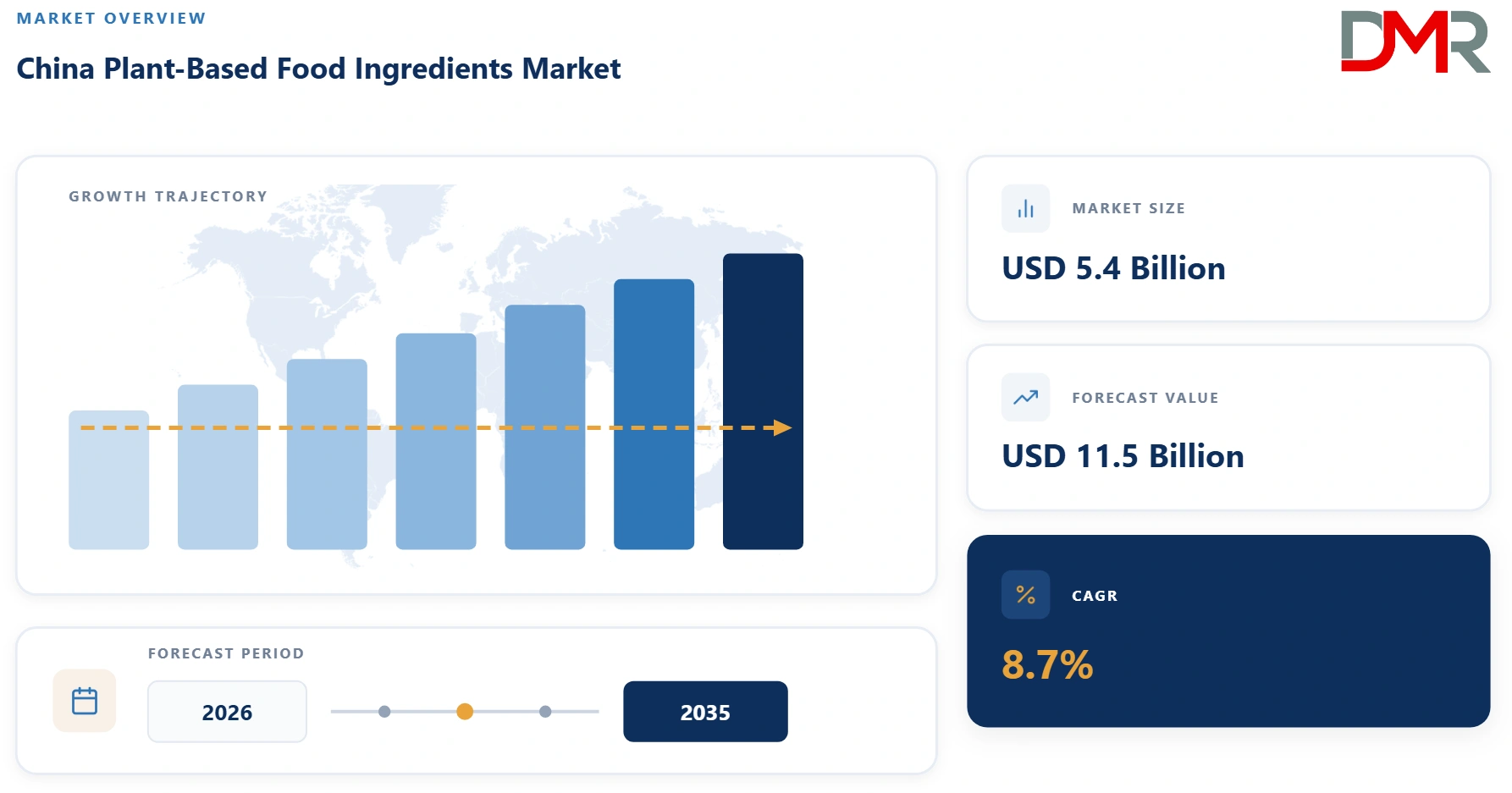
- Market Size in 2026: USD 5.4 billion
- Market Size in 2035: USD 11.5 billion
- China Market CAGR, 2026-2035: 8.7%
- Leading Ingredient Type: Plant Proteins, 55% share
- Leading Source: Soy, 46% share
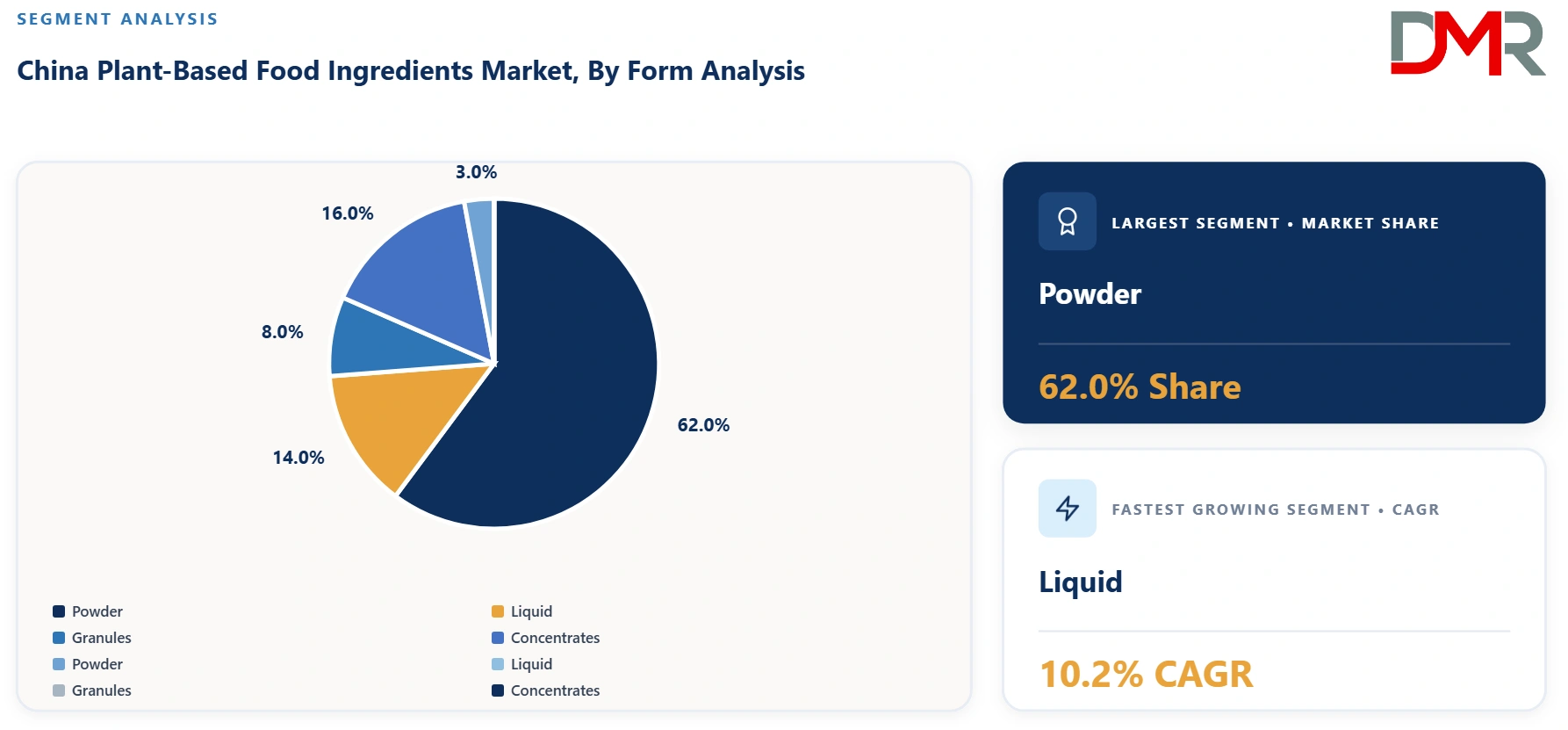
- Leading Form: Powder, 62% share
- Fastest-Growing Source Segment: Pea, 11.8% CAGR
- Largest Application: Dairy & Dairy Alternatives, 24% share
- Largest End User: Food & Beverage Manufacturers , 67% share
What is the China Plant-Based Food Ingredients and its Market Size?
China Plant-Based Food Ingredients comprises plant-derived raw materials, functional ingredients and formulation systems used to manufacture foods, beverages, nutritional products and foodservice products. The market includes proteins isolated or concentrated from soy, peas, wheat, rice and other crops; plant oils and fats; starches and fibers; plant-derived sweeteners; colors, flavors and extracts; and specialized functional ingredients. Their primary value proposition is to improve nutrition, texture, taste, stability, functionality and formulation economics while helping manufacturers develop plant-forward, vegan, vegetarian, hybrid and protein-enriched products.
ℹ
To learn more about this report –
Download Your Free Sample Report Here
The China plant-based food ingredients market is estimated at USD 5.4 billion in 2026 and is projected to reach approximately USD 11.5 billion by 2035, representing an estimated 8.7% CAGR. This estimate sits between the growth trajectories of the broader Chinese plant-based food market and more rapidly expanding plant-protein categories.
Growth is being supported by greater demand for protein fortification, plant-based dairy and meat formulations, sports and specialized nutrition, clean-label products, sugar reduction, functional fibers and improved sensory performance. Domestic processing capacity and ingredient innovation are also reducing dependence on imported specialty ingredients.
Use Cases
- Meat and seafood alternatives: Textured proteins provide structure, bite, juiciness and protein content in plant-based meat formulations.
- Dairy alternatives: Plant proteins, oils, stabilizers and fibers improve creaminess, emulsification and nutritional density.
- Protein beverages: Soluble plant proteins enable high-protein shakes, RTDs, powders and nutrition beverages.
- Sports nutrition: Protein isolates, hydrolysates and blends support protein fortification in bars, powders and functional drinks.
- Bakery and confectionery: Plant proteins, fibers, starches and specialty fats improve nutrition, texture and processing performance.
- Prepared foods: Functional plant ingredients enhance formulation efficiency in noodles, sauces, soups, frozen foods and ready meals.
Key Takeaways
- Market size: The market is estimated at USD 5.4 billion in 2026 and is forecast to reach USD 11.5 billion by 2035.
- Growth: An estimated 8.7% CAGR reflects expanding plant-protein, functional nutrition and formulation demand.
- Ingredient dominance: Plant proteins account for approximately 55% of market value.
- Source dominance: Soy remains the largest source at approximately 46%, benefiting from China's mature soy-processing infrastructure and established consumer familiarity.
- Fastest growth: Pea ingredients are projected to grow around 11.8% CAGR, supported by diversification away from soy and demand for clean-label and allergen-friendly formulations.
- Strategic shift: Competitive advantage is moving from simple ingredient supply toward sensory optimization, texturization, solubility, nutrition and application-specific technical support.
How AI/Gen AI is Transforming the China Plant-Based Food Ingredients Market?
Advanced food-processing technologies including extrusion, enzymatic hydrolysis, fermentation, protein isolation, microencapsulation and precision blending are reshaping China's plant-based ingredient market. Extrusion enables manufacturers to transform protein concentrates into meat-like structures, while hydrolysis can improve solubility, digestibility and sensory performance. Fermentation is increasingly being investigated for reducing off-notes and improving functionality.
The primary commercial benefit is the ability to solve traditional plant-protein limitations: beany flavors, poor solubility, weak texture and inconsistent functionality. New processing approaches also enable higher protein concentrations and customized ingredient systems.
Key Drivers in the China Plant-Based Food Ingredients Market
Expansion of Protein-Enriched and Plant-Forward Food Applications
The strongest structural driver is the expansion of protein-enriched foods and beverages beyond traditional vegetarian products. Chinese consumers are increasingly exposed to protein powders, functional beverages, meal replacements, high-protein snacks and plant-forward foods. This broadens the addressable market for ingredient suppliers because plant proteins are increasingly used for nutrition enhancement, rather than solely as animal-protein replacements.
Expansion of Domestic Processing and Ingredient Innovation
China possesses extensive agricultural-processing infrastructure and a mature soybean ecosystem, providing domestic manufacturers with scale and cost advantages. This infrastructure is increasingly being extended into pea, fava bean, mung bean, rice and other plant proteins.
Restraints in the China Plant-Based Food Ingredients Market
Sensory and Functional Limitations
Taste and texture remain important barriers to wider adoption of plant-derived ingredients. Soy can generate characteristic flavors, while pea proteins may exhibit vegetal or bitter notes. Protein concentration can also increase viscosity, chalkiness or undesirable mouthfeel in beverages and nutrition products. Meat alternatives require complex structural characteristics that cannot always be achieved with commodity protein ingredients.
Growth Opportunities in the China Plant-Based Food Ingredients Market
Premium Pea, Fava Bean and Multi-Protein Systems
Pea protein represents one of the strongest opportunities because it provides manufacturers with an alternative to soy while supporting non-dairy and non-soy formulations. The opportunity extends beyond basic pea isolate into textured pea protein, hydrolysates, high-solubility grades and blends with rice, potato or other proteins.
Functional Ingredients Beyond Protein
The next stage of market development will extend beyond protein. Plant-derived fibers, starches, specialty fats, natural colors, extracts, sweeteners and texture systems can capture value from manufacturers reformulating products for healthier nutrition profiles.
Trends in the China Plant-Based Food Ingredients Market
Shift From “Plant-Based” to “Plant-Forward” Formulation
Ingredient demand is increasingly moving beyond products designed purely to imitate meat or dairy. Hybrid products and plant-forward foods allow manufacturers to use plant proteins, fibers and oils while retaining familiar sensory characteristics. Roquette's recent portfolio explicitly targets both plant-based and hybrid meat applications.
Clean Label and Sensory Optimization
Clean-label positioning is becoming closely linked with technical ingredient innovation. Manufacturers want shorter ingredient lists without sacrificing taste, texture or nutritional value. This is accelerating investment in neutral-tasting proteins, naturally functional fibers and less complex processing systems.
Research Scope and Analysis
The market is segmented By Ingredient Type, By Source, By Form, By Application and By End User. The analysis focuses on food-grade ingredient revenue supplied to Chinese food, beverage, nutrition and foodservice manufacturers, excluding finished plant-based foods and feed ingredients.
ℹ
To learn more about this report –
Download Your Free Sample Report Here
By Ingredient Type Analysis
Plant Proteins dominate the China plant-based food ingredients market with an estimated 55% share in 2026, reflecting their broad use in meat alternatives, dairy alternatives, beverages, sports nutrition and prepared foods. Soy protein remains the largest protein family because of China's mature soybean processing ecosystem, established functionality and competitive cost. Plant Oils & Fats represent approximately 14%, supported by dairy alternatives, bakery, confectionery and meat-alternative applications where fat is required for creaminess and mouthfeel. Plant-Based Starches & Fibers hold around 13% and benefit from texturization, binding, water management and nutrition applications. Plant-Based Sweeteners account for approximately 7%, while plant colors, flavors and extracts represent about 6%. Other functional plant ingredients contribute roughly 5%. The fastest-growing category is expected to be plant proteins, particularly specialized pea, fava bean and hydrolyzed proteins, with premium protein formats growing faster than commodity soy. Demand is increasingly shifting toward ingredients with multiple functional attributes rather than simple protein content.
By Source Analysis
Soy is estimated to account for approximately 46% of market revenue in 2026, making it the dominant source. Its leadership reflects China's historical soy consumption, large-scale crushing infrastructure, established food applications and comparatively attractive economics. Published research similarly identifies soy as China's leading plant-protein source, while pea protein is expected to grow more rapidly. Pea represents approximately 19% and is the fastest-growing source, with an estimated 11.8% CAGR, driven by demand for soy diversification, non-dairy formulations and improved sensory performance. Wheat accounts for about 10%, supported by gluten and textured-protein applications; rice contributes 7%, particularly in hypoallergenic and beverage applications. Oat represents approximately 5%, while corn, potato and coconut contribute about 4%, 3% and 3%, respectively. Other sources including fava bean, mung bean, chickpea, sunflower and specialty crops collectively represent roughly 3%. The strategic opportunity lies in multi-source formulation systems that optimize nutrition, cost, taste and texture.
By Form Analysis
Powder dominates the market with an estimated 62% share in 2026, because dry ingredients are comparatively economical to transport, store and dose and can be incorporated into protein powders, bakery mixes, beverages, meat alternatives and prepared foods. Concentrates account for approximately 16% and include protein and other functional concentrates designed to provide high-value nutritional or technical functionality. Liquid ingredients represent roughly 14% and are expected to grow faster than the overall market, at approximately 10.2% CAGR, because they support ready-to-drink beverages, dairy alternatives, sauces and liquid nutrition. Granules account for around 8%, primarily reflecting textured proteins and specialized food systems. The fastest growth is expected in liquid and specialty concentrate formats as manufacturers increasingly prioritize convenience and simplified processing. Suppliers capable of providing stable, shelf-stable liquid systems and highly soluble protein concentrates can capture additional value from beverage and nutrition manufacturers.
By Application Analysis
Dairy & Dairy Alternatives represent the largest application at approximately 24% of 2026 market revenue, reflecting demand for plant-based milk, yogurt, creamers, desserts and other dairy-replacement products. Meat & Seafood Alternatives follow at around 22%, where textured proteins, binders, starches and fats are used to reproduce meat-like functionality. Beverages represent approximately 16%, including protein drinks, plant-based beverages and functional beverages. Bakery and confectionery account for 12%, while sports and nutrition products represent 10%. Prepared foods contribute around 8%, with infant and specialized nutrition at approximately 4% and other food applications at 4%. Sports & Nutrition Products are expected to be the fastest-growing application, at approximately 11.5% CAGR, because protein fortification is becoming mainstream rather than limited to specialist athletes. Manufacturers supplying soluble, neutral-tasting proteins and hydrolysates are positioned to benefit.
By End User Analysis
Food & Beverage Manufacturers represent the dominant end-user category, accounting for approximately 67% of 2026 revenue. These companies purchase proteins, fats, starches, fibers, flavors and other ingredients at scale for packaged foods and beverages. Nutraceutical & Dietary Supplement Manufacturers account for approximately 14% and are expected to record the fastest growth at roughly 10.7% CAGR, driven by plant-based protein powders, functional nutrition, meal replacements and healthy-aging products. Foodservice Operators contribute approximately 8%, supported by plant-forward menus, coffee beverages and restaurant innovation. Retail & Private-Label Manufacturers represent about 7%, increasingly using contract ingredient systems for differentiated products. Other end users account for approximately 4%. The major opportunity is the convergence of food and nutrition: ingredient suppliers can serve both mainstream food manufacturers and higher-margin specialized nutrition companies with common protein, fiber and functional ingredient platforms.
The China Plant-Based Food Ingredients Market Report is segmented on the basis of the following:
By Ingredient Type
- Plant Proteins
- Plant Oils & Fats
- Plant-Based Starches & Fibers
- Plant-Based Sweeteners
- Plant-Based Colors, Flavors & Extracts
- Other Functional Plant-Based Ingredients
By Source
- Soy
- Pea
- Wheat
- Rice
- Oat
- Corn
- Potato
- Coconut
- Other Plant Sources
By Form
- Powder
- Liquid
- Granules
- Concentrates
By Application
- Meat & Seafood Alternatives
- Dairy & Dairy Alternatives
- Bakery & Confectionery
- Beverages
- Sports & Nutrition Products
- Prepared Foods
- Infant & Specialized Nutrition
- Other Food Applications
By End User
- Food & Beverage Manufacturers
- Nutraceutical & Dietary Supplement Manufacturers
- Foodservice Operators
- Retail & Private-Label Manufacturers
- Other End Users
Regulatory Landscape
China's regulatory environment is an important market-shaping factor because ingredient suppliers must satisfy food-safety, labeling, additive and novel-food requirements before products can achieve broad commercial adoption. National and industry standards influence ingredient specifications, permitted uses, claims and labeling practices, making regulatory expertise an important competitive capability. The market opportunity is strongest for established suppliers capable of maintaining traceability, documentation and consistent quality across multiple ingredient grades. Regulatory complexity is also a barrier to smaller entrants, particularly those introducing novel proteins, fermentation-derived ingredients or new functional claims. Companies entering China should therefore prioritize regulatory mapping, local application support and early validation with food manufacturers. The opportunity is not simply compliance: suppliers that provide regulatory-ready technical documentation can shorten customer development cycles and become preferred formulation partners. Published China market research highlights NHC and SAMR requirements as important factors in food safety, novel ingredients and nutritional claims.
Investment and White Space Analysis or Epidermatology based on the network
The strongest investment white spaces are high-functionality proteins, clean-tasting pea ingredients, textured proteins, protein hydrolysates, plant fibers and integrated formulation systems. Commodity soy remains difficult for new entrants to differentiate because of scale and established supply chains. By contrast, specialty ingredients can command better margins when they solve specific formulation problems. Recent product development illustrates this transition: Roquette has expanded into textured wheat and pea proteins and introduced a clean-tasting pea isolate designed to improve sensory performance. Chinese companies are also broadening portfolios into pea, fava bean, mung bean and peptide products. Foodchem's June 2026 launch of soy, pea and wheat peptides illustrates demand for higher-functionality plant-derived nutrition ingredients. Investment should therefore favor companies with application laboratories, proprietary processing technologies, domestic manufacturing, strong quality systems and diversified raw-material access.
Competitive Landscape
The China plant-based food ingredients market is moderately fragmented, with large agricultural processors competing alongside specialist plant-protein producers and multinational ingredient companies. Competition increasingly occurs on four dimensions: raw-material economics, ingredient functionality, sensory performance and technical support. Large domestic players benefit from scale, domestic supply chains and relationships with major food manufacturers. International suppliers compete through advanced processing technology, specialized proteins and application expertise. Key participants include Yihai Kerry, Shuangta Food, ADM, Roquette, Ingredion and other regional and global ingredient suppliers. Yihai Kerry maintains a broad Chinese food-ingredient footprint, while Shuangta has developed a diversified portfolio spanning pea, fava bean, mung bean, fiber and textured proteins.
Some of the prominent players in the China Plant-Based Food Ingredients Market are:
- Yantai Shuangta Food
- Shandong Jianyuan Group
- Shandong Yuwang Ecological Food
- Gushen Biotechnology Group
- Shandong Wonderful Industrial Group
- Shandong Sinoglory Health Food
- Shandong Fufeng Group
- Qingdao Tianjiao Biotech
- Shandong Huatai Food
- Yantai Oriental Protein Tech
- Baolingbao Biology
- Shandong Jiusan Oil & Grain
- Shandong Topower Technology
- Shandong Jie Jing Food
- Qingdao Samin Chemical
- Shandong Zhongyang Biotechnology
- Linyi Ruikang Food
- Qingdao Green Foodstuff
- Shandong Jinhui International
- Hubei Yihua Technology
- Anhui Huatai Food
- Guangdong Yihai Kerry
- COFCO Corporation
- Wilmar International
- Archer Daniels Midland (ADM)
- Cargill
- Roquette
- Ingredion
- Bunge
- Kerry Group
- IFF
- Tate & Lyle
- Corbion
- DSM-Firmenich
- Puris
- Axiom Foods
- ETChem
- Shandong Oriental Ocean Sci-Tech
- Qingdao Haizhiyuan Seaweed
- Hunan Huacheng Biotech
- Other Key Players
Recent Developments
- June 2026: Foodchem launched soy, pea and wheat peptide ingredients produced through enzymatic hydrolysis, expanding its plant-protein portfolio toward functional nutrition, beverages and food applications.
- February 2026: Roquette launched NUTRALYS Pea 850F, a pea protein isolate engineered for a cleaner, more neutral taste and improved formulation performance.
- June 2025: Roquette expanded its NUTRALYS portfolio with textured wheat protein and large-chunk textured pea protein, targeting nutritious, cost-effective and versatile meat-alternative formulations.
- June 2025: Yihai Kerry began development of a large-health-product R&D and production base in Taizhou, strengthening its capabilities in China's health and nutrition ingredient ecosystem.
Report Details
| Report Characteristics |
| Market Size (2026) |
USD 5.4 Bn |
| Forecast Value (2035) |
USD 11.5 Bn |
| CAGR (2026–2035) |
8.7% |
| Historical Data |
2021 – 2025 |
| Forecast Data |
2026 – 2035 |
| Base Year |
2025 |
| Segments Covered |
By Ingredient Type, By Source, By Form, By Application, By End User |
| Country Coverage |
China |
Frequently Asked Questions
What is the market size of the China Plant-Based Food Ingredients market in 2026?
▾ The China Plant-Based Food Ingredients market is estimated at approximately USD 5.4 billion in 2026, covering plant proteins and other functional plant-derived food ingredients.
What will the China Plant-Based Food Ingredients market reach by 2035?
▾ The China Plant-Based Food Ingredients market is projected to reach approximately USD 11.5 billion by 2035, supported by increasing demand for plant proteins and functional ingredients.
What is the CAGR of the China Plant-Based Food Ingredients market from 2026 to 2035?
▾ The China Plant-Based Food Ingredients market is estimated to grow at approximately 8.7% CAGR between 2026 and 2035.
Which ingredient type dominates the China Plant-Based Food Ingredients market?
▾ Plant proteins dominate the China Plant-Based Food Ingredients market, accounting for an estimated 55% share in 2026.
Which source is expected to grow fastest in the China Plant-Based Food Ingredients market?
▾ Pea is expected to be the fastest-growing major source in the China Plant-Based Food Ingredients market, with an estimated 11.8% CAGR.
What are the major trends shaping the China Plant-Based Food Ingredients market?
▾ Major trends in the China Plant-Based Food Ingredients market include clean-label formulation, neutral-tasting proteins, textured ingredients, protein fortification and multi-source protein systems.
Who are the key players in the China Plant-Based Food Ingredients market?
▾ Key players in the China Plant-Based Food Ingredients market include Yihai Kerry, Shuangta Food, ADM, Roquette and Ingredion, alongside other domestic and international suppliers.
What are the major growth opportunities in the China Plant-Based Food Ingredients market?
▾ Major opportunities in the China Plant-Based Food Ingredients market include specialty proteins, textured proteins, protein hydrolysates, functional fibers and customized multi-ingredient formulation systems.