Market Snapshot
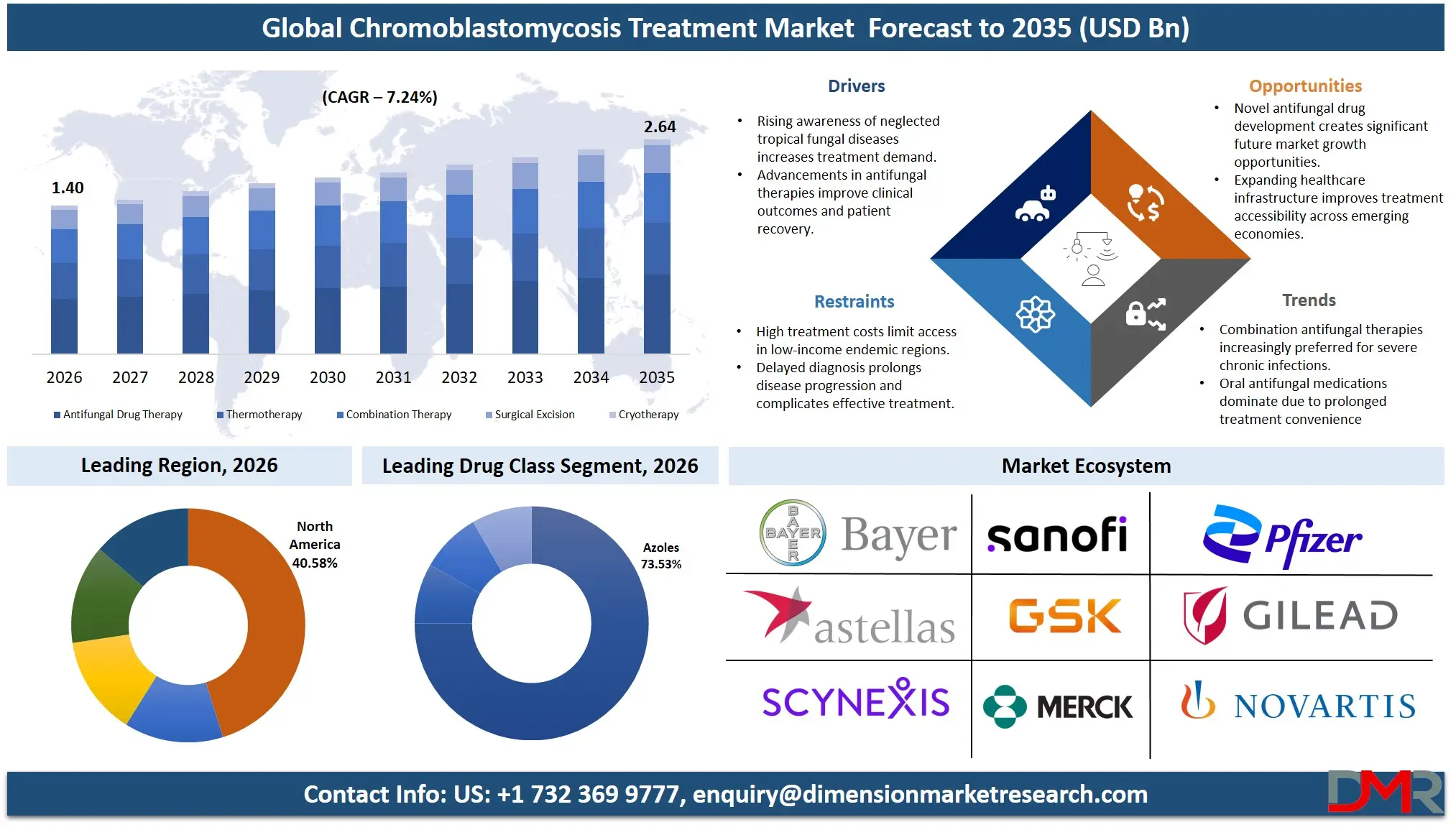
- The Global Chromoblastomycosis Treatment Market was valued at USD 1.31 Billion in 2025 and is forecast to reach USD 2.64 Billion by 2035, at a CAGR of 7.24%.
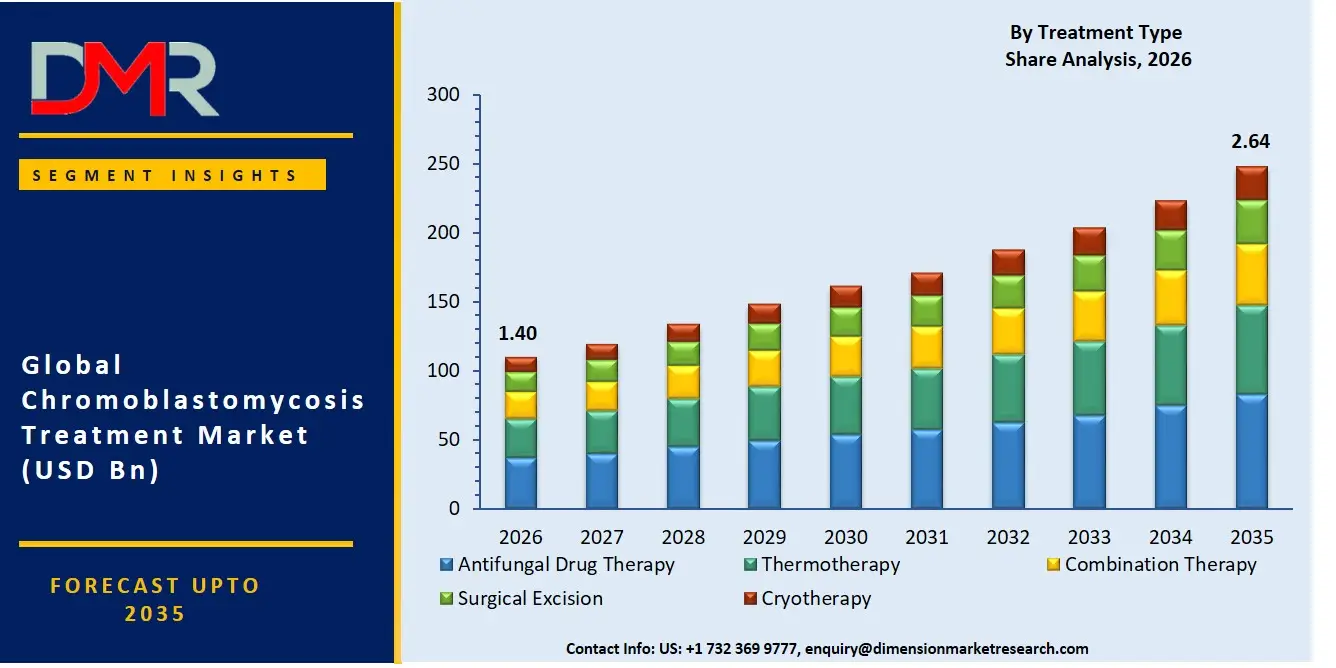
- Antifungal Drug Therapy led the Treatment Type segment with a 59.28% share in 2026.
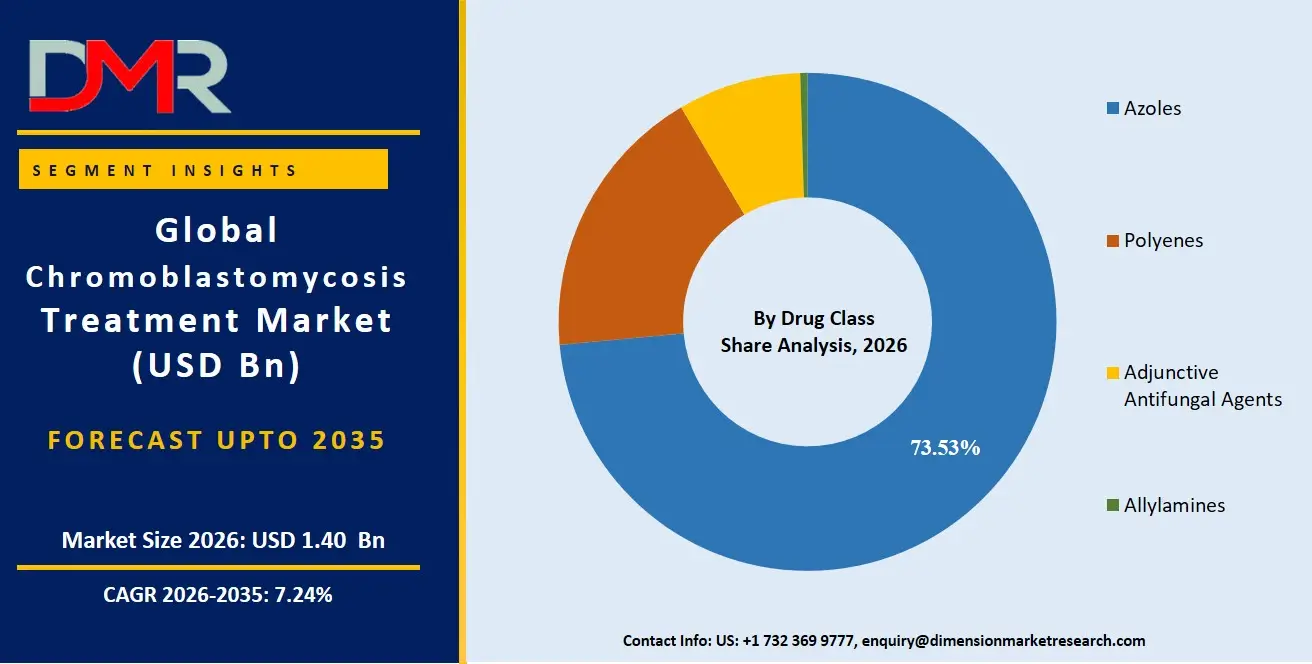
- Azoles dominated the Drug Class segment with a 73.53% share in 2026.
- Hospitals led End User demand with a 48.51% share in 2026.
- Oral route dominated Route of Administration in 2026.
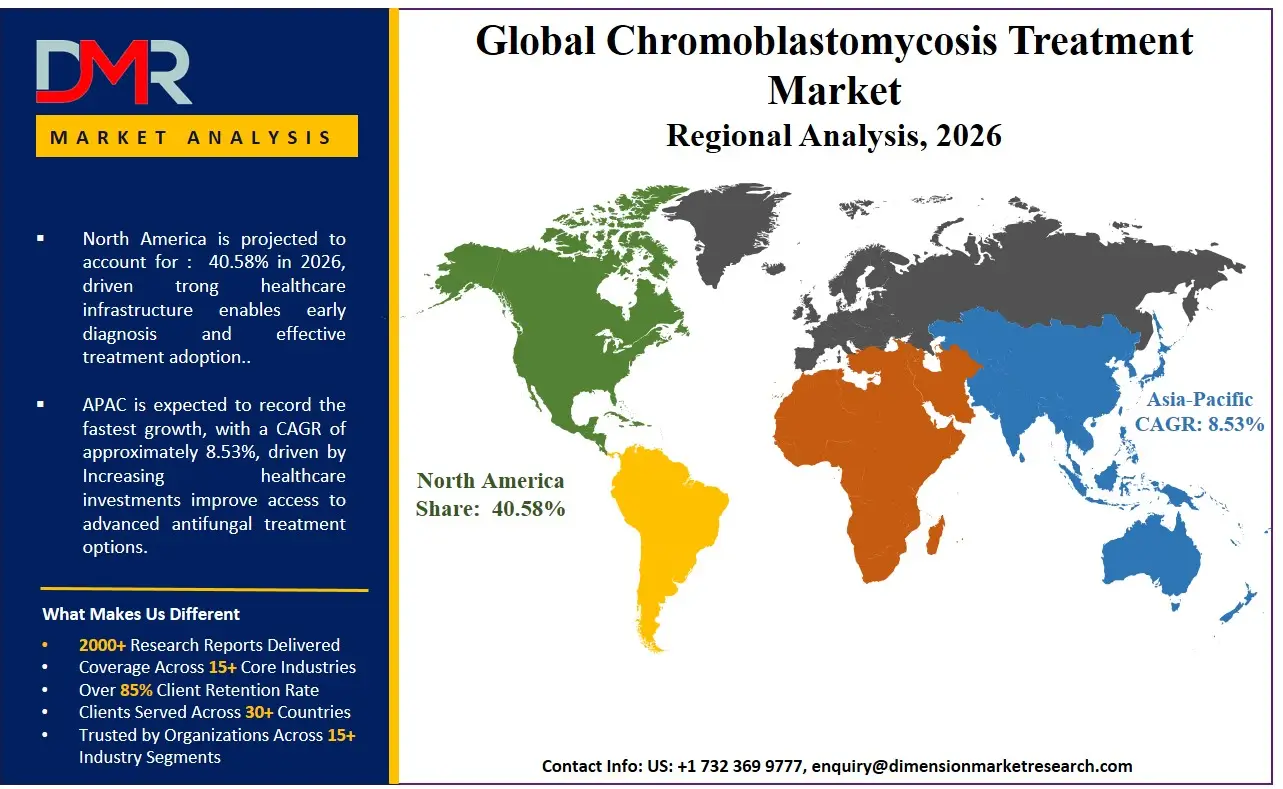
- North America held the largest regional share at 40.58% in 2026.
- Asia-Pacific is the fastest-growing region through 2035.
Market Overview
The chromoblastomycosis treatment market covers pharmaceutical and procedural interventions targeting a chronic subcutaneous fungal infection caused by dematiaceous fungi, principally Fonsecaea pedrosoi. Included segments span antifungal drug therapies, cryotherapy, thermotherapy, surgical excision, and combination regimens. The market excludes broader dermatophytosis and systemic mycosis products, though it intersects with the neglected tropical disease drug pipeline where fungal indications increasingly share development tracks and procurement infrastructure.
ℹ
To learn more about this report –
Download Your Free Sample Report Here
Chromoblastomycosis sits within the orphan-disease tier of the global antifungal industry, where high per-patient treatment complexity converts a low-prevalence infection into a commercially meaningful revenue stream. Based on data from Johns Hopkins ABX Guide, a standard treatment course combines 6–8 cryotherapy sessions with months of continuous oral antifungal dosing. That procedural and pharmaceutical burden creates per-patient revenue events far larger than those seen in typical dermatological infections, which is why specialty pharma and rare-disease divisions rather than primary-care commercial teams own this market.
Pipeline assets developed for aspergillosis and candidiasis are now being evaluated against refractory chromoblastomycosis, drawing institutional R&D budgets into a disease that historically attracted only academic interest. WHO's NTD designation has accelerated this shift by creating funded case-management mandates in endemic countries. The commercial implication is that chromoblastomycosis is transitioning from an academic curiosity to an addressable rare-disease market with defined reimbursement pathways in multiple jurisdictions.
Market Size and Forecast
The Global Chromoblastomycosis Treatment Market size is estimated at USD 1.40 Billion in 2026 from USD 1.31 Billion in 2025, and is projected to reach USD 2.64 Billion by 2035, exhibiting a CAGR of 7.24% during the forecast period.
Historical growth was constrained by limited diagnostic reach in endemic tropical regions, where most infections went unconfirmed and untreated. The forecast acceleration rests on two structural inputs. CDC guidance published in 2025 confirms that prolonged oral therapy is the clinical standard, with itraconazole maintained at 300–400 mg per day for 6–8 months or longer in many protocols. A Tandfonline-published terbinafine series reinforced the duration dynamic: 75% of patients achieved cure within a mean treatment period of 7 months, while the remaining patient required approximately 14.4 months to reach significant improvement. Those timelines mean each confirmed patient generates sustained pharmaceutical revenue across multiple prescription cycles.
In May 2026, Juno Pharmaceuticals launched posaconazole modified-release tablets in Australia carrying an approved indication for chromoblastomycosis in patients intolerant of or refractory to standard therapy. That registration demonstrates expanding regulatory acceptance of second-line oral agents and directly supports the forecast assumption that addressable patient volume will grow beyond the current itraconazole-monotherapy base. Downside risk exists if public health procurement stalls or novel antifungal pipeline assets fail to secure reimbursement at commercially viable price points in endemic markets.
Treatment Type Analysis
Antifungal Drug Therapy led the Treatment Type segment with a 59.28% share in 2026.
Oral antifungal monotherapy commands the largest share because it remains the most scalable intervention across endemic markets with limited procedural infrastructure. Itraconazole holds first-line status across major clinical guidelines, yet published trial data exposes a structural limitation. As documented in a Wiley-published trial, only 22% of patients achieved lesion cure on itraconazole 200 mg per day alone. The remaining 78% required 400 mg per day combined with cryotherapy to reach resolution. That failure rate at standard monotherapy doses systematically pushes clinicians toward combination protocols, raising per-patient drug spend and opening revenue opportunities for vendors supplying both antifungal and procedural components of care.
ℹ
To learn more about this report –
Download Your Free Sample Report Here
Combination Therapy and Cryotherapy carry the clearest volume growth trajectory within the remaining categories. A case series published in IJORD documented marked lesion improvement in an Indian patient following 8 consecutive weekly liquid nitrogen sessions over approximately two months, confirming that cryotherapy functions as a procedural complement rather than a standalone cure. Terbinafine-based regimens add a second pharmaceutical dimension: Johns Hopkins ABX Guide notes cumulative patient exposure of approximately 45,000 to 90,000 mg over a 180-day terbinafine course, making allylamine therapy a high-volume drug consumption event. Surgical excision and thermotherapy remain niche, reserved for contained lesions where pharmacotherapy has failed, and are unlikely to capture meaningful share growth over the forecast period.
Drug Class Analysis
With a 73.53% share in 2026, Azoles outpaced all other Drug Class categories.
Azoles dominate because itraconazole has anchored first-line treatment protocols across all major clinical guidelines and public procurement programs for decades. Generic itraconazole is widely available in endemic regions at price points accessible to public health buyers. Posaconazole and voriconazole, also within the azole class, are now adopted for refractory cases in higher-resource settings, reinforcing total azole share even as prescribers move away from itraconazole monotherapy specifically in complex cases.
ℹ
To learn more about this report –
Download Your Free Sample Report Here
Allylamines represent the fastest-shifting sub-segment within the remaining drug classes. Guidelines increasingly position terbinafine as either a monotherapy alternative or a combination partner for azoles in moderate-to-severe disease, pulling allylamine volumes higher without displacing azole demand. Polyenes retain a marginal role in severe or azole-intolerant patients. Adjunctive Antifungal Agents, including 5-flucytosine and first-in-class pipeline compounds such as fosmanogepix and ibrexafungerp, currently hold a thin share but attract disproportionate prescriber interest in refractory cases where standard regimens have failed. Vendors who establish early clinical credibility in the allylamine-azole combination space will capture the fastest-growing prescribing tier before consolidation occurs.
Route of Administration Analysis
Oral administration captured the dominant share of Route of Administration demand in 2026, ahead of all other delivery categories.
Oral delivery leads because chromoblastomycosis management requires months of continuous dosing outside hospital settings. Patients in endemic tropical regions carry treatment into daily agricultural and rural life, making oral tablets the only practical format at scale. Topical agents serve a narrow adjunctive role, primarily 5-fluorouracil cream in combination protocols, and cannot substitute for systemic therapy given the depth of fungal penetration into dermal and subcutaneous tissue.
Parenteral administration remains a last-resort category for hospitalized patients with severe or disseminated disease. Posaconazole injection received Australian registration in April 2026 specifically covering chromoblastomycosis patients intolerant of or refractory to alternative therapies. That label expansion signals that intravenous pathways are being formally built out for second-line use in high-acuity settings. Vendors who hold parenteral antifungal registrations in endemic or high-migration countries access a hospital channel where price sensitivity is substantially lower than in the oral generics market.
End User Analysis
Hospitals accounted for 48.51% of End User demand in 2026, the highest of any category.
Hospitals concentrate treatment volume because chromoblastomycosis diagnosis requires specialist dermatology and clinical microbiology capacity unavailable in primary care. Culture confirmation and histopathological identification of muriform cells are prerequisite for a definitive diagnosis. Patients reaching hospitals are typically severe or treatment-refractory cases, which also drives higher per-patient antifungal spend compared with community settings.
Dermatology Clinics and Specialty Care Centers are growing their collective share as awareness campaigns tied to the WHO NTD roadmap push earlier specialist referral. Homecare and Ambulatory Settings capture patients on maintenance oral antifungal regimens who no longer require supervised administration. Pharmaceutical distributors targeting community pharmacy networks in Asia-Pacific and Latin America can address this ambulatory tier, where generic oral azole volumes are rising faster than hospital channel volumes and competitive intensity from large integrated health systems is lower.
Key Market Segments
By Treatment Type
- Antifungal Drug Therapy
- Thermotherapy
- Combination Therapy
- Surgical Excision
- Cryotherapy
By Drug Class
- Azoles
- Polyenes
- Adjunctive Antifungal Agents
- Allylamines
By Route of Administration
By End User
- Hospitals
- Homecare and Ambulatory Settings
- Dermatology Clinics
- Specialty Care Centers
Regional Analysis
North America held a 40.58% share of the Chromoblastomycosis Treatment Market in 2026, representing approximately USD 0.53 Billion in revenue.
North America leads despite low endemic disease prevalence because the region hosts the deepest antifungal reimbursement infrastructure, the highest concentration of specialist dermatology centers, and the most active clinical trial pipeline for novel antifungals targeting rare mold infections. US practitioners price branded and premium-generic antifungals at rates that substantially inflate per-patient revenue relative to endemic-region pricing. Reported cases from the surgical cosmetic literature document that clinicians in this market actively individualize dosing, with one published case using itraconazole at 100 mg per day alongside cryosurgery, half of many standard regimens, illustrating that sustained drug revenue persists even at reduced dose levels.
ℹ
To learn more about this report –
Download Your Free Sample Report Here
Asia-Pacific is the fastest-growing region, driven by rural healthcare access expansion in endemic belts across India, Thailand, southern China, and broader Southeast Asia. Unlike North America where patients arrive through specialist referral pathways, Asia-Pacific caseloads are being converted from previously undiagnosed agricultural worker populations into treated patients, a dynamic that pulls demand forward. Latin America carries the highest absolute disease burden per capita in endemic pockets but translates that into lower commercial revenue due to constrained pharmaceutical purchasing power and fragmented reimbursement systems. Europe and Middle East & Africa participate primarily through travel-medicine management and imported-case protocols, with growth tied to awareness programs rather than endemic exposure.
Key Regions and Countries
North America
Europe
- Germany
- France
- The UK
- Spain
- Italy
- Rest of Europe
Asia Pacific
- China
- Japan
- South Korea
- India
- Australia
- Rest of APAC
Latin America
- Brazil
- Mexico
- Rest of Latin America
Middle East & Africa
- GCC
- South Africa
- Rest of MEA
Market Dynamics
WHO Designation and Novel Pipeline Assets Expand Treated Patient Volume
WHO's 2017 NTD designation for chromoblastomycosis restructured the funding architecture around this disease. Governments and multilateral health bodies now carry case-management mandates in endemic countries, converting previously invisible infections into formally diagnosed and treated patient cohorts. Public procurement channels are opening for subsidized antifungal access programs, pulling demand forward in markets that had no commercial incentive to serve these patients before the designation.
First-in-class pipeline assets including fosmanogepix, olorofim, and ibrexafungerp target azole-refractory dematiaceous fungi and are advancing through late-stage development. In August 2024, Basilea Pharmaceutica secured European Commission approval for pediatric use of isavuconazole (Cresemba) alongside a two-year market exclusivity extension, confirming that regulators are actively accommodating new antifungal entrants in orphan fungal indications. Pakistani combination-therapy data confirms complete clinical and mycological cure when itraconazole and terbinafine run concurrently, with patients accumulating approximately 36,000 mg itraconazole and 45,000 mg terbinafine across a 6-month course. That cumulative drug load illustrates the recurring revenue available to suppliers across each completed treatment cycle.
Absent Global Standards and Low-Income Patient Concentration Suppress Commercial Returns
No globally standardized treatment guideline exists for chromoblastomycosis. As reported by the CDC, itraconazole cure rates span 15% to 80% across published clinical studies, a range so wide that payers and prescribers struggle to build confident reimbursement or formulary decisions. Outcome variance at this scale signals that disease severity, fungal strain, and regimen duration interact in ways no single protocol reliably controls.
Diagnostic latency compounds the commercial problem. CDC guidance confirms that chromoblastomycosis-causing fungi may require 2–4 weeks to produce identifiable colonies in culture. That delay pushes definitive diagnosis weeks behind clinical presentation, deferring treatment initiation and suppressing early pharmaceutical demand. A concentration of the global disease burden among low-income agricultural populations in tropical regions further limits willingness-to-pay and constrains commercial pharmaceutical investment in dedicated chromoblastomycosis programs.
Combination Regimens and Point-of-Care Diagnostics Open Underserved Patient Tiers
Refractory and large-lesion patients represent the clearest commercial white space in this market. A 2024 Lebanese triple-therapy case published in PMC documented sustained lesion clearance with 0% recurrence at both 3-month and 6-month post-treatment follow-ups using oral itraconazole combined with cryotherapy and topical 5-fluorouracil. That outcome positions multi-modal combination protocols as a credible second-line standard for patients who fail itraconazole monotherapy, creating a defined prescribing tier vendors can target with bundled or companion-product strategies.
LAMP and RCA-based point-of-care molecular diagnostics are enabling decentralized field detection in basic rural laboratory settings, removing the 2–4-week culture delay that currently suppresses early case identification. Earlier confirmed diagnosis directly expands the addressable treated patient pool. WHO NTD Roadmap 2021–2030 DALY-reduction targets are also creating public-private procurement channels that give commercial suppliers a subsidized-access entry point into endemic markets they could not serve profitably under pure market-pricing models.
Market Trends
DNA Sequencing and Second-Line Azoles Displace Culture-Dependent Diagnosis and Itraconazole Monotherapy
DNA-barcode sequencing is replacing culture-and-histopathology as the confirmation standard for chromoblastomycosis in resource-adequate settings, compressing the diagnostic timeline that has historically delayed treatment initiation. Posaconazole and voriconazole adoption for refractory disease is accelerating in higher-resource centers, pulling prescribing away from itraconazole monotherapy. Thai pulse-therapy data shows clinicians already testing structured intermittent protocols, with itraconazole delivered at 2,800 mg per 7-day pulse cycle to manage tolerability over extended treatment periods. Vendors who can supply diagnostic-compatible antifungal portfolios and support combination-protocol labeling will be earliest to benefit as these two trends converge.
Market Competition Overview
The chromoblastomycosis treatment market is fragmented, with no single company holding dominant share across all treatment modalities. Competitive positioning is primarily driven by generic antifungal portfolio breadth, regulatory label coverage for fungal sub-indications, and procurement relationships with public health bodies. Branded innovators hold advantage in higher-resource markets through patent-protected formulations and exclusivity extensions, while generic manufacturers compete on price and distribution reach in endemic low-income regions.
A 2024 AJHS-published case report documents that standard itraconazole dosing at 200 mg twice daily maintained for 6 months produced no clinical improvement in a severe case, requiring a switch to alternative antifungals. That outcome, replicated across the broader literature, shifts competitive advantage toward companies holding registrations for second-line agents. Posaconazole is the primary beneficiary of this prescribing shift, and companies that secured posaconazole approvals for refractory chromoblastomycosis during 2026 are positioned ahead of competitors still reliant on itraconazole formulations alone.
Company Profiles
GSK plc holds a broad antifungal infectious disease portfolio and maintains procurement relationships with public health agencies across multiple WHO NTD-program countries. The company's strategic advantage in chromoblastomycosis derives less from a dedicated product line and more from its distribution infrastructure in endemic markets in Africa and Asia-Pacific, positioning it to supply oral azole generics at volume through subsidized NTD procurement channels as those programs scale.
Merck & Co., Inc. competes through its established antifungal franchise and late-stage pipeline exposure to novel agents targeting refractory mold infections. Merck's investment in clinical trial infrastructure for rare fungal indications gives it a credible pathway to label expansions that directly address the refractory chromoblastomycosis patient tier, where commercial pricing power is higher than in first-line generics and where competitive density is currently low.
Key Players
- GSK plc
- Merck & Co., Inc.
- Novartis AG
- Sanofi
- SCYNEXIS, Inc.
- Astellas Pharma Inc.
- Pfizer Inc.
- Gilead Sciences, Inc.
- Bayer AG
- Sun Pharmaceutical Industries Limited
- Viatris Inc.
- Aurobindo Pharma Limited
- Cipla Limited
- Dr. Reddy's Laboratories Limited
- Teva Pharmaceutical Industries Limited
- Glenmark Pharmaceuticals Limited
- Hikma Pharmaceuticals PLC
- Johnson & Johnson
- Mycovia Pharmaceuticals, Inc.
Supply Chain and Value Chain Analysis
The chromoblastomycosis treatment supply chain originates with active pharmaceutical ingredient manufacturers producing itraconazole, terbinafine, and posaconazole intermediates, predominantly in India and China. API output flows to formulation facilities that produce oral tablets, capsules, and parenteral solutions before reaching specialty distributors. In endemic Latin American and Asian markets, the final distribution layer is public health procurement rather than retail pharmacy, meaning that government tender outcomes effectively control volume allocation at the point of care.
Maximum value concentration sits at the formulation and brand-registration stage, where companies holding approved indications for chromoblastomycosis-specific labeling can command premium pricing in refractory-patient channels. The highest supply chain risk lies in the diagnostic confirmation bottleneck: culture-dependent identification delays treatment initiation by weeks, keeping patients outside the treated market longer than the pharmacological supply chain requires. Point-of-care molecular diagnostic adoption will directly expand the volume flowing through the antifungal supply chain by shortening that pre-treatment gap.
Regulatory Landscape
Chromoblastomycosis sits within the orphan-drug and neglected-tropical-disease regulatory frameworks in most jurisdictions, granting sponsors access to expedited review pathways, extended market exclusivity, and reduced filing fees. The European Commission's August 2024 approval of isavuconazole (Cresemba) for pediatric use, accompanied by a two-year exclusivity extension, illustrates that regulators are applying orphan-disease incentives to antifungal sub-indications even where the primary fungal indication is broader. Australia's Therapeutic Goods Administration registered two new posaconazole formulations in 2026 with explicit chromoblastomycosis labeling, signaling that smaller markets are actively filling indication gaps that larger jurisdictions have not yet formally addressed.
No globally harmonized clinical guideline exists, which creates regulatory asymmetry: companies must navigate country-level label negotiation rather than referencing a single international standard. FDA Breakthrough Therapy Designation momentum for novel antifungal classes is redirecting late-stage trial attention toward rare-mold indications, which may produce the first prospective regulatory pathway specifically designed around refractory chromoblastomycosis endpoints within the forecast period.
Investment and White Space Analysis
Investment flows in this market concentrate in two areas: novel antifungal pipeline assets targeting azole-refractory dematiaceous fungi, and diagnostic platforms that shorten the pre-treatment identification window. The refractory-patient tier carries the highest commercial return because branded second-line agents face lower generic competition and serve buyers in higher-income health systems with functioning reimbursement. Companies with existing azole or allylamine franchises can extend into this tier through label expansion rather than new molecular entity investment, lowering the capital threshold for market entry.
Geographic white space exists across Asia-Pacific rural endemic belts and parts of Latin America where confirmed-case volumes are rising but commercial pharmaceutical penetration remains low. HIV protease inhibitor repurposing against Fonsecaea pedrosoi virulence represents a low-cost adjunctive therapy opportunity requiring only repositioning clinical data rather than de novo drug development. Public-private procurement structures created by the WHO NTD Roadmap 2021–2030 provide a subsidized-access entry mechanism for companies unable to compete on commercial pricing alone in these underpenetrated geographies.
Recent Developments
- April 2026: Juno Pharmaceuticals received Australian registration for Posaconazole Juno concentrated injection, with an approved indication covering chromoblastomycosis in patients intolerant of or refractory to alternative therapies.
- May 2026: Pharmacor launched Pharmacor Posaconazole modified-release tablets in Australia with approved labeling that includes chromoblastomycosis when alternative therapies are not suitable or have failed.
Report Details
| Report Characteristics |
| Market Value (2025) |
USD 1.31 Billion |
| Market Value (2026) |
USD 1.40 Billion |
| Forecast Revenue (2035) |
USD 2.64 Billion |
| CAGR (2026–2035) |
7.24% |
| Base Year for Estimation |
2025 |
| Historic Period |
2020 to 2024 |
| Forecast Period |
2026 to 2035 |
| Report Coverage |
Revenue Forecast, Market Dynamics, Competitive Landscape, Recent Developments |
| Segments Covered |
By Treatment Type (Antifungal Drug Therapy, Thermotherapy, Combination Therapy, Surgical Excision, Cryotherapy), By Drug Class (Azoles, Polyenes, Adjunctive Antifungal Agents, Allylamines), By Route of Administration (Oral, Topical, Parenteral), By End User (Hospitals, Homecare and Ambulatory Settings, Dermatology Clinics, Specialty Care Centers) |
| Regional Analysis |
North America – US, Canada; Europe – Germany, France, UK, Spain, Italy, Rest of Europe; Asia-Pacific – China, Japan, South Korea, India, Australia, Rest of APAC; Latin America – Brazil, Mexico, Rest of Latin America; Middle East & Africa – GCC, South Africa, Rest of MEA |
| Competitive Landscape |
GSK plc, Merck & Co. Inc., Novartis AG, Sanofi, SCYNEXIS Inc., Astellas Pharma Inc., Pfizer Inc., Gilead Sciences Inc., Bayer AG, Sun Pharmaceutical Industries Limited, Viatris Inc., Aurobindo Pharma Limited, Cipla Limited, Dr. Reddy's Laboratories Limited, Teva Pharmaceutical Industries Limited, Glenmark Pharmaceuticals Limited, Hikma Pharmaceuticals PLC, Johnson & Johnson, Mycovia Pharmaceuticals Inc. |
| Customization Scope |
Customization for segments and region or country level will be provided. Additional customization can be done based on requirements. |
| Purchase Options |
We have three licenses to opt for: Single User License, Multi-User License (Up to 5 Users), and Corporate Use License (Unlimited Users and Printable PDF). |
Frequently Asked Questions
What is the biggest investment opportunity in Chromoblastomycosis Treatment Market ?
▾ The refractory-patient tier represents the clearest near-term opportunity. Branded second-line agents face limited generic competition and serve buyers in higher-income health systems. Companies holding posaconazole or novel antifungal registrations with explicit chromoblastomycosis labeling are best positioned to capture this premium prescribing segment before the competitive field fills.
Who are the top companies in Chromoblastomycosis Treatment Market ?
▾ GSK plc, Merck & Co., Inc., Novartis AG, Sanofi, SCYNEXIS, Inc., Astellas Pharma Inc., Pfizer Inc., Gilead Sciences, Inc., Bayer AG, and Sun Pharmaceutical Industries Limited are among the leading participants. Generic manufacturers including Cipla, Aurobindo, and Teva compete on distribution reach and pricing in endemic low-income markets.
Which segment is growing fastest in the chromoblastomycosis treatment market and why?
▾ Combination Therapy is the fastest-growing Treatment Type segment. Clinical evidence consistently shows that itraconazole monotherapy fails a substantial share of patients, with 78% of patients in one published trial requiring higher-dose regimens plus cryotherapy to achieve cure. That failure rate structurally pushes prescribers toward multi-modal protocols and expands per-patient drug and procedure spend.
Which region is growing fastest in the chromoblastomycosis treatment market and why?
▾ Asia-Pacific is growing fastest. Rural healthcare access expansion across India, Thailand, southern China, and Southeast Asia is converting previously undiagnosed agricultural worker caseloads into formally treated patients. Unlike North America, where per-patient revenue is high but case volumes are low, Asia-Pacific offers volume growth at improving but still modest per-patient price points.
What is the biggest challenge holding Chromoblastomycosis Treatment Market back?
▾ The absence of globally standardized treatment guidelines is the primary structural challenge. As reported by the CDC, itraconazole cure rates range from 15% to 80% across clinical studies, a variance that undermines payer confidence and complicates formulary decisions. Without consistent outcome benchmarks, reimbursement bodies in endemic markets have limited incentive to fund antifungal programs at commercially viable price levels.