Indication Covered
The report covers chronic constipation as a chronic gastrointestinal disorder, with emphasis on its clinical burden, treatment patterns, therapeutic innovation, and commercial market development across the seven major markets. Chronic constipation is primarily characterized by persistently infrequent bowel movements, difficult stool passage, hard stools, straining, and a sensation of incomplete evacuation, often associated with altered colonic transit, impaired anorectal function, or disturbances in gut motility. The condition can range from mild, intermittent bowel irregularity to severe, persistent constipation associated with fecal impaction, substantial discomfort, and impaired quality of life, requiring lifestyle modifications, laxatives, prescription medications, and specialist interventions.
The indication scope includes major clinical manifestations and associated disease conditions relevant to treatment demand, including:
- Functional chronic constipation
- Chronic idiopathic constipation (CIC)
- Slow-transit constipation
- Normal-transit constipation
- Defecatory disorders and pelvic floor dyssynergia
- Opioid-induced constipation (OIC)
Chronic idiopathic constipation remains a primary focus because of its substantial prevalence, persistent symptoms, and recurring need for pharmacological management. The report also considers opioid-induced constipation because of its clinical relevance among patients receiving long-term opioid therapy and its distinct treatment requirements. Other difficult-to-treat manifestations and complications, including refractory constipation, fecal impaction, and constipation associated with neurological, metabolic, or medication-related conditions, are evaluated as areas of continuing clinical need.
The treatment landscape covers osmotic laxatives, stimulant laxatives, stool softeners and bulk-forming agents, prescription secretagogues, and prokinetic agents. Particular attention is given to advanced therapies targeting intestinal fluid secretion and gastrointestinal motility, as well as emerging prescription treatments, combination approaches, and microbiome-directed strategies.
Epidemiology Parameters
Chronic constipation represents a significant chronic gastrointestinal disease burden across the major healthcare markets covered in the report. Epidemiological patterns vary substantially between countries because of differences in dietary habits, physical activity, aging populations, genetic susceptibility, healthcare access, disease awareness, diagnostic practices, and availability of gastroenterologists and specialized diagnostic services.
ℹ
To learn more about this report –
Download Your Free Sample Report Here
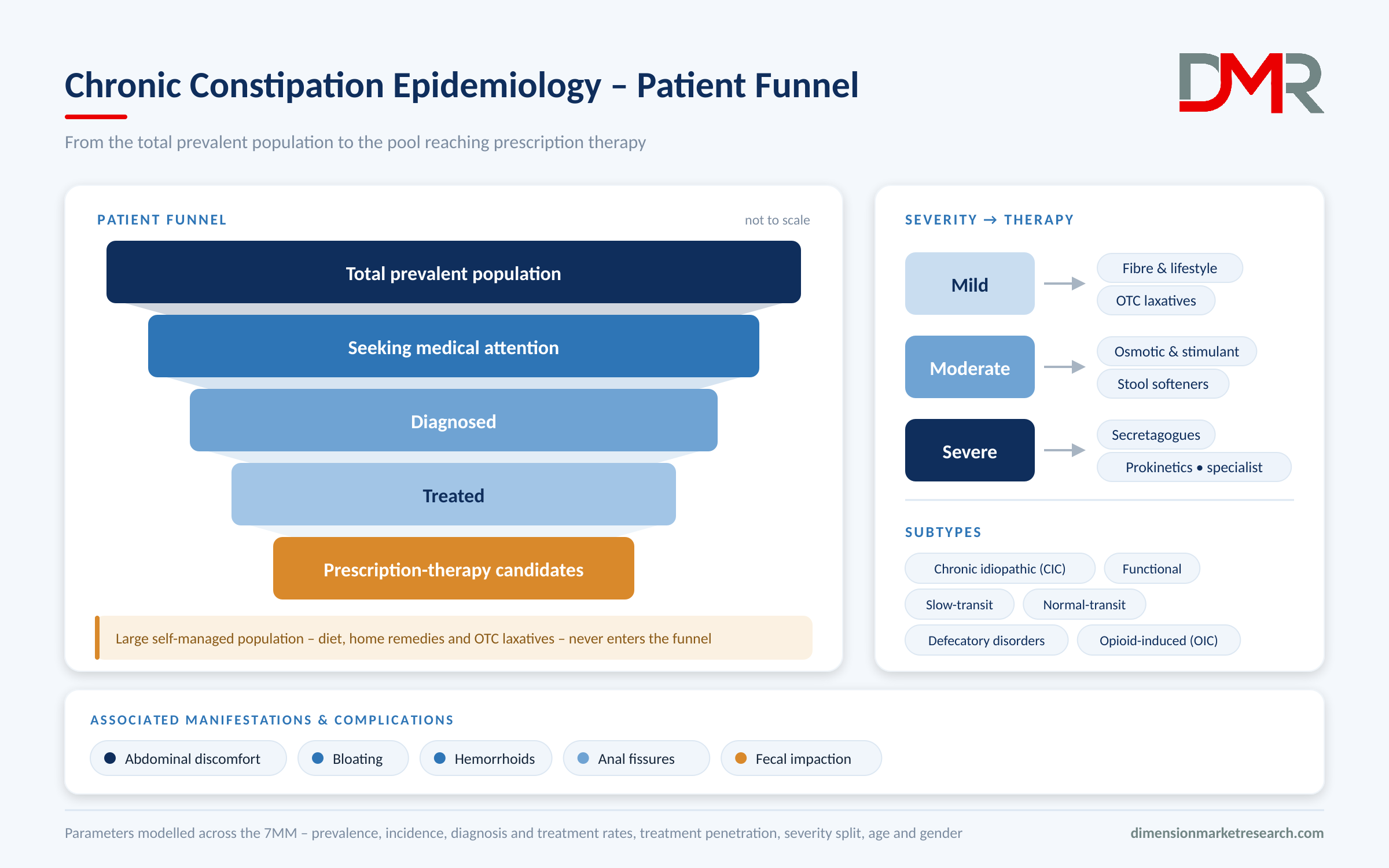
The epidemiology assessment provides a structured evaluation of the chronic constipation population from overall prevalence through diagnosis and treatment. Key parameters include:
- Total chronic constipation patient population
- Prevalent population
- Incidence population, where reliable data are available
- Diagnosed patient population
- Treated patient population
- Untreated patient population
- Treatment-eligible population
- Disease severity distribution
- Mild chronic constipation population
- Moderate chronic constipation population
- Severe chronic constipation population
- Chronic idiopathic constipation population
- Opioid-induced constipation population
- Age distribution
- Gender distribution, where available
- Diagnosis rate
- Treatment rate
- Treatment penetration
- Regional disease burden
- Epidemiological trends
The analysis distinguishes between the broader prevalent population and patients who are diagnosed and actively receiving treatment. This distinction is particularly important because many patients self-manage symptoms through dietary changes, over-the-counter laxatives, and home remedies without seeking medical attention. Consequently, the population receiving prescription medications may represent only a proportion of individuals experiencing chronic constipation.
The report also evaluates the increasing recognition of chronic constipation as a persistent gastrointestinal disorder that can substantially affect daily functioning and quality of life. Associated manifestations such as abdominal discomfort, bloating, hemorrhoids, anal fissures, and fecal impaction can influence treatment decisions, disease monitoring, healthcare utilization, and long-term management strategies.
Patient Segmentation
The chronic constipation patient population is segmented according to disease severity, disease manifestation, treatment status, and therapeutic requirements. This approach provides a clearer understanding of the population eligible for different treatment categories and helps assess the potential addressable population for advanced therapies.
By Disease Severity
Mild: Patients with limited symptom burden are generally managed through dietary fiber supplementation, adequate fluid intake, physical activity, and over-the-counter laxatives. Treatment decisions are influenced by bowel movement frequency, stool consistency, symptom duration, dietary habits, quality-of-life impact, previous treatment response, and patient preference.
Moderate: Patients with persistent symptoms or inadequate response to initial management may require osmotic laxatives, stimulant laxatives, stool softeners, or prescription therapies. Increasing symptom burden and quality-of-life considerations can encourage movement toward more effective pharmacological treatment and further diagnostic assessment.
Severe: Patients with prolonged constipation, substantial abdominal discomfort, complications, suspected motility disorders, or inadequate response to conventional treatment are more likely to require prescription medications, combination therapy, specialist evaluation, and selected procedural interventions. This segment represents an important contributor to prescription chronic constipation treatment demand.
By Disease Type
- Chronic idiopathic constipation
- Functional constipation
- Slow-transit constipation
- Normal-transit constipation
- Defecatory disorders
- Opioid-induced constipation
By Treatment Status
- Diagnosed and Treated
- Diagnosed and Untreated
- Undiagnosed
The treatment-status segmentation helps identify the gap between the total disease population and the population actively participating in healthcare treatment. Improvements in awareness, primary care assessment, specialist availability, diagnostic capabilities, and healthcare access can gradually increase the diagnosed and treated population.
By Treatment Requirement
- Lifestyle Modification and Dietary Fiber Candidates
- Over-the-Counter Laxative Candidates
- Prescription Osmotic and Stimulant Therapy Candidates
- Prescription Secretagogue Therapy Candidates
- Prokinetic Therapy Candidates
- Opioid-Induced Constipation-Specific Therapy Candidates
This segmentation helps evaluate how changes in treatment guidelines, physician preferences, reimbursement, and therapy availability can shift patients between conventional and prescription treatment categories.
Geographic Coverage
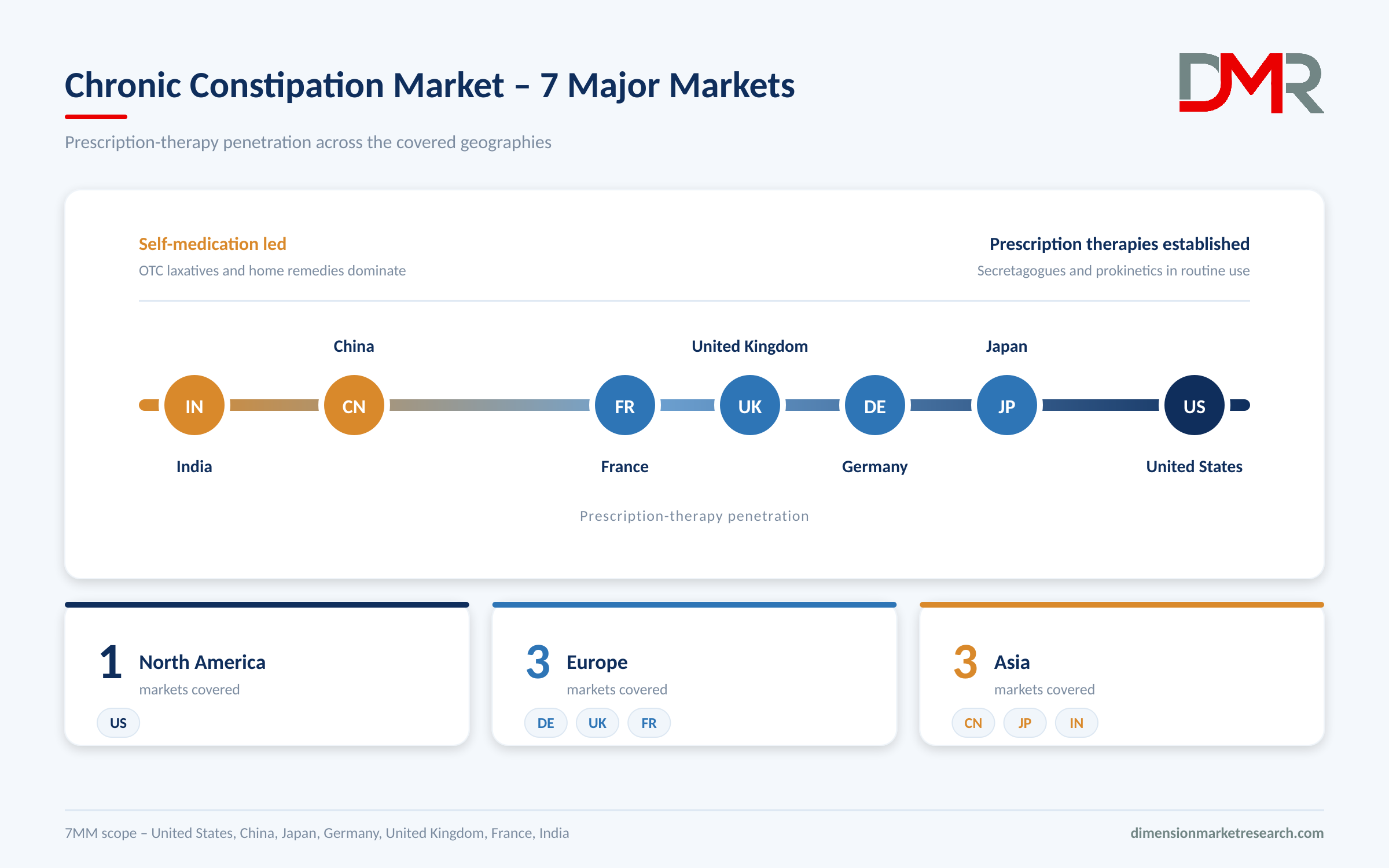
The report provides detailed market, epidemiology, treatment, and competitive analysis across 7 major markets:
- United States
- China
- Japan
- Germany
- United Kingdom
- France
- India
The geographic analysis considers differences in patient population, diagnosis rates, healthcare infrastructure, treatment accessibility, reimbursement, therapeutic penetration, regulatory environment, physician adoption, and competitive activity. These factors are particularly important because the commercial opportunity for chronic constipation therapies differs considerably between mature pharmaceutical markets and high-growth emerging markets.
ℹ
To learn more about this report –
Download Your Free Sample Report Here
United States
The United States represents one of the most important chronic constipation markets, supported by established gastroenterology networks, high awareness of gastrointestinal disorders, broad availability of over-the-counter treatments, and access to prescription therapies. Prescription medications such as linaclotide, plecanatide, lubiprostone, and prucalopride have established roles in the management of selected patients with chronic idiopathic constipation.
The market is also characterized by competition between inexpensive laxatives and newer prescription treatments. Treatment selection is influenced by symptom severity, clinical efficacy, safety, dosing frequency, payer restrictions, patient preference, and prior treatment history. Continued development of novel mechanisms and expansion of treatment options into additional patient populations are expected to influence competition.
China
China represents a significant long-term growth opportunity because of its large population and increasing recognition of chronic constipation as a gastrointestinal disorder requiring sustained management in selected patients. Improvements in healthcare infrastructure, gastrointestinal specialist availability, and access to diagnostic services are supporting greater recognition and treatment of persistent constipation.
The market is gradually experiencing increased opportunities for prescription therapies, although affordability, reimbursement coverage, treatment accessibility, and differences between urban and rural healthcare services remain important considerations. Domestic pharmaceutical development, broader availability of conventional treatments, and increasing awareness of gastrointestinal health may also influence competitive intensity.
Japan
Japan represents a mature healthcare and pharmaceutical market with sophisticated medical infrastructure and established gastroenterology services. An aging population, established diagnostic capabilities, and the availability of prescription laxatives and gastrointestinal motility agents support continued demand for chronic constipation management.
Treatment decisions are influenced by clinical efficacy, safety, reimbursement conditions, dosing convenience, and physician familiarity. The market also provides opportunities for innovative therapies that can demonstrate meaningful improvements in bowel movement frequency, stool consistency, tolerability, and treatment convenience, particularly among older adults and patients with persistent symptoms.
Germany
Germany represents a leading European chronic constipation market with established specialist networks and access to a broad range of conventional and prescription gastrointestinal therapies. Treatment pathways are supported by a developed healthcare system, established clinical management practices, and access to diagnostic evaluation for patients with persistent or complicated symptoms.
The market is influenced by generic competition, treatment costs, reimbursement considerations, and the introduction of therapies with differentiated mechanisms. Continued use of conventional laxatives alongside prescription secretagogues and prokinetic agents is expected to remain important to market development.
United Kingdom
The UK chronic constipation market benefits from established clinical guidance, primary care services, specialist gastroenterology networks, and structured treatment pathways. Conventional laxatives remain central to initial management, while prescription treatments may be considered for selected patients who have inadequate responses to standard therapies.
Market development is influenced by healthcare-system prescribing criteria, cost-effectiveness considerations, clinical outcomes, and access to specialist services. Increasing emphasis on improving symptom control, reducing treatment burden, and managing refractory constipation supports continued interest in differentiated pharmacological approaches.
France
France represents an important European market supported by developed healthcare infrastructure, specialist gastroenterology services, and established reimbursement mechanisms. Conventional laxatives and prescription gastrointestinal medications form important components of chronic constipation management, with treatment intensity varying according to symptom severity and underlying cause.
Market growth is influenced by therapeutic innovation, treatment accessibility, reimbursement conditions, and the availability of affordable generic medicines. The introduction of therapies with different mechanisms of action and improved treatment convenience may influence prescribing patterns, particularly among patients with persistent symptoms or inadequate response to conventional management.
India
India represents a high-potential chronic constipation market because of its large population, expanding healthcare infrastructure, increasing gastrointestinal health awareness, and improving access to specialty care. A substantial number of patients manage symptoms through dietary modifications, home remedies, and over-the-counter products, creating opportunities for improved diagnosis and evidence-based treatment.
Affordability remains an important factor influencing treatment selection, particularly for newer prescription therapies. Greater availability of cost-effective laxatives, increasing specialist coverage, and improved patient awareness can support future market expansion. Clinical evidence generated in Indian patient populations may also contribute to understanding the suitability of newer treatment approaches in local clinical practice.
Market Segmentation
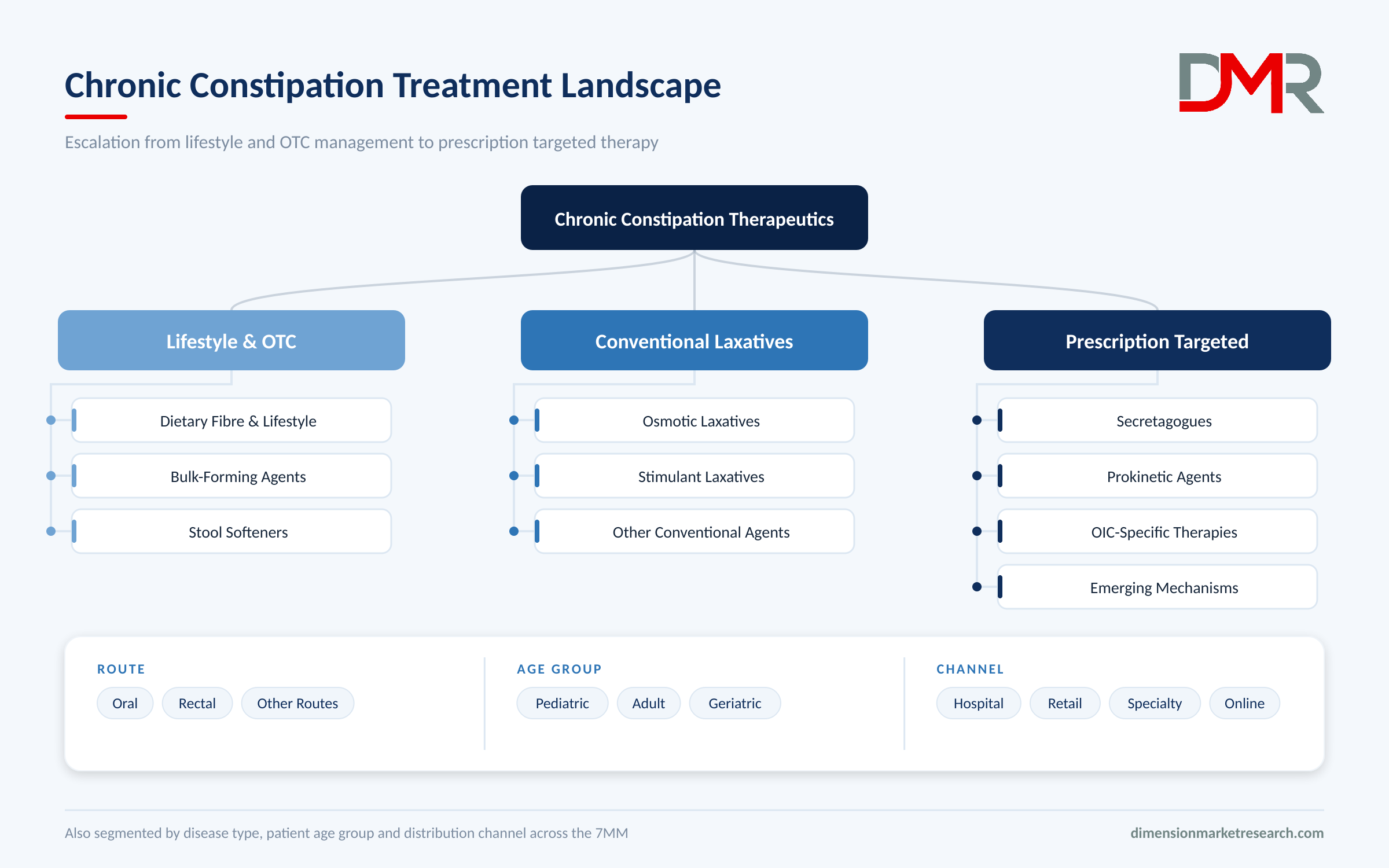
The chronic constipation market is segmented across drug class, treatment type, route of administration, patient age group, and distribution channel. The segmentation captures established conventional treatment categories, prescription pharmacological therapies, and emerging therapeutic approaches used across different patient populations and healthcare settings.
ℹ
To learn more about this report –
Download Your Free Sample Report Here
By Drug Class
Osmotic Laxatives
Osmotic laxatives represent a major segment of the chronic constipation market because of their established clinical use, broad availability, and role in increasing intestinal water content to facilitate stool passage. These therapies are frequently used in patients with persistent constipation and are often considered before escalation to prescription medications.
The segment includes polyethylene glycol, lactulose, and other osmotic agents. Established treatment experience, accessibility, relatively low cost, and availability in multiple formulations continue to support utilization across adult and older patient populations.
Stimulant Laxatives and Other Conventional Agents
Stimulant laxatives and other conventional agents represent an important segment because of their ability to promote bowel movements through stimulation of intestinal motility or modification of stool consistency. These treatments are commonly used for short-term symptom relief, rescue treatment, or selected chronic management strategies.
The segment includes bisacodyl, senna, sodium picosulfate, bulk-forming fiber agents, and stool softeners such as docusate. Their relatively low cost and broad availability support continued use, although treatment choice depends on symptom patterns, tolerability, and clinical circumstances.
Prescription Secretagogues and Prokinetic Agents
Prescription secretagogues and prokinetic agents represent an important advanced-treatment segment for patients with chronic idiopathic constipation who require alternatives to conventional laxatives. Secretagogues increase intestinal fluid secretion, while prokinetic agents enhance gastrointestinal motility through different pharmacological mechanisms.
The segment includes linaclotide, plecanatide, lubiprostone, and prucalopride, subject to country-specific approvals and indications. Clinical evidence, physician familiarity, patient response, and the availability of differentiated mechanisms influence adoption in eligible populations.
Access Data
By Treatment Type
- Lifestyle Modification and Dietary Fiber
- Over-the-Counter Laxatives
- Prescription Osmotic and Stimulant Laxatives
- Prescription Secretagogues
- Prokinetic and Other Targeted Therapies
Lifestyle modification and conventional laxatives remain central to initial management, while prescription secretagogues and prokinetic agents provide alternatives for patients with persistent symptoms or inadequate response to first-line treatment. Treatment selection varies according to disease severity, underlying cause, patient age, previous response, tolerability, and healthcare access.
By Route of Administration
Oral administration remains the dominant route because most conventional laxatives and prescription chronic constipation medications are available as oral powders, liquids, capsules, or tablets. Rectal administration remains relevant for selected patients requiring suppositories or enemas for more immediate relief or management of difficult stool passage. Route selection depends on symptom severity, patient preference, age, treatment objectives, and the clinical circumstances requiring intervention.
By Patient Age Group
- Pediatric Patients
- Adult Patients
- Geriatric Patients
Adult patients represent a major treatment population because chronic idiopathic constipation frequently requires ongoing symptom management and may lead to prescription treatment when conventional approaches are insufficient. Pediatric patients require age-appropriate assessment and treatment selection, while geriatric patients represent an important segment because of age-related physiological changes, reduced mobility, comorbidities, and medication-related constipation. Differences in safety requirements, formulation preferences, and underlying causes influence therapeutic demand across age groups.
By Distribution Channel
- Hospital Pharmacies
- Retail Pharmacies
- Specialty Pharmacies
- Online Pharmacies
Distribution patterns vary by treatment type, country, reimbursement environment, and healthcare system. Retail pharmacies are particularly important for over-the-counter laxatives and commonly prescribed oral medications, while hospital pharmacies serve patients receiving specialist evaluation or treatment for complicated constipation. Online pharmacies may contribute to convenient access to conventional and prescription treatments where permitted, while specialty pharmacy channels can support selected higher-cost prescription products and patient access programs.
Market Dynamics
Growth Drivers
Increasing Adoption of Prescription Therapies
Prescription therapies continue to be an important growth driver in the chronic constipation market. Their ability to improve bowel movement frequency, stool consistency, and symptom control provides treatment alternatives for patients who do not achieve adequate relief through lifestyle modification and conventional laxatives.
The growing use of secretagogues and prokinetic agents is particularly important as physicians increasingly consider treatment effectiveness, tolerability, symptom persistence, and dosing convenience when selecting therapies. Expanded clinical experience and improved recognition of chronic idiopathic constipation are also supporting the use of prescription treatments in appropriate patients.
Advancement in Gastrointestinal Disease Biology-Based Drug Development
Advances in understanding the biological mechanisms underlying chronic constipation have created opportunities for more targeted therapeutic intervention. Pharmaceutical companies are increasingly investigating treatments designed to influence intestinal fluid secretion, chloride and bicarbonate transport, bile acid pathways, and gastrointestinal motility rather than relying exclusively on conventional laxative mechanisms.
Development activity includes novel intestinal transport inhibitors, improved secretagogues, prokinetic agents, combination approaches, and microbiome-directed strategies. These developments may expand treatment choices for patients with persistent symptoms and create additional competition among pharmaceutical companies.
Increasing Healthcare Access in Emerging Markets
Improving healthcare infrastructure and rising healthcare expenditure are increasing access to gastrointestinal diagnosis and treatment in emerging markets. Expansion of specialist networks and greater awareness of persistent bowel symptoms are also helping identify patients who previously relied exclusively on self-medication or remained untreated.
China and India are particularly important growth opportunities because of their large patient populations. Greater availability of affordable medicines, improvements in specialist access, and increasing adoption of evidence-based treatment approaches could support market penetration.
Growing Recognition of Chronic Constipation-Related Clinical Burden
The increasing understanding of chronic constipation as a persistent gastrointestinal disorder with substantial effects on daily functioning and quality of life is encouraging more comprehensive disease management. Recognition of complications such as fecal impaction, hemorrhoids, anal fissures, and medication-related constipation can encourage earlier evaluation, treatment optimization, and continued monitoring.
This shift can increase demand for more effective treatment approaches and create opportunities for therapies capable of providing sustained symptom relief, particularly among patients with refractory disease and older adults with multiple comorbidities.
Market Restraints
High Cost of Advanced Prescription Therapies
Prescription secretagogues and other newer gastrointestinal treatments can carry substantially higher treatment costs than conventional laxatives. Higher costs can create affordability challenges for patients and increase pressure on healthcare payers.
In emerging markets, limited reimbursement coverage and high out-of-pocket expenditure can restrict access to newer prescription treatments. Cost considerations may therefore continue to influence treatment selection and delay the adoption of innovative therapies, particularly when lower-cost alternatives remain widely available.
Treatment Accessibility Gap
Unequal access to gastroenterologists, specialist clinics, diagnostic services, and prescription medicines remains a major challenge. Rural and underserved populations may experience delays in evaluating persistent symptoms and have fewer treatment options for complicated or refractory constipation.
Differences in healthcare infrastructure between regions can therefore result in significant variations in diagnosis, treatment penetration, and clinical outcomes. Limited access to specialized motility testing may also delay identification of underlying defecatory disorders in selected patients.
Variable Patient Response
Although conventional and prescription therapies provide effective symptom relief for many patients, treatment response is not uniform across the chronic constipation population. Some individuals may experience inadequate initial response, adverse effects, recurrence of symptoms, poor adherence, or persistent constipation despite combination therapy.
The need to modify or switch treatments can increase healthcare utilization and creates continuing demand for therapies offering predictable symptom control, improved tolerability, and convenient long-term administration.
Competitive Landscape
The global chronic constipation market is characterized by competition among pharmaceutical companies with established gastrointestinal drug portfolios, manufacturers of conventional laxatives, and emerging developers focused on differentiated mechanisms and treatment approaches.
Leading companies covered in the competitive assessment include:
- AbbVie
- Ironwood Pharmaceuticals
- AstraZeneca
- Bausch Health Companies
- Takeda Pharmaceutical Company
- Shionogi
- EA Pharma
- Abbott Laboratories
- Bayer
- Ardelyx
Competition is increasingly focused on demonstrating differentiated clinical outcomes, improved bowel movement frequency, better symptom control, tolerability, and treatment convenience. Companies are investing in intestinal secretagogues, prokinetic agents, bile acid transporter inhibitors, alternative formulations, and lifecycle expansion into additional age groups or related gastrointestinal indications.
The competitive environment is also influenced by generic availability, over-the-counter laxative competition, pricing pressure, reimbursement restrictions, and physician familiarity with established products. Prescription secretagogues and other targeted gastrointestinal approaches are expected to remain important areas of competition, particularly among patients who do not respond adequately to conventional treatment.
Pipeline innovation is another competitive factor. Companies with established gastrointestinal research capabilities, differentiated mechanisms, and diversified product portfolios may be better positioned to respond to changing treatment preferences and persistent unmet needs in chronic idiopathic constipation and difficult-to-treat patient populations.
Recent Developments
- January 2026 – Ardelyx advances tenapanor development for chronic idiopathic constipation: Ardelyx announced that the first patient had been dosed in ACCEL, a Phase III clinical trial evaluating tenapanor for chronic idiopathic constipation in adults. The study is designed to assess safety and efficacy over 26 weeks and represents an expansion of the clinical development program for tenapanor, a sodium/hydrogen exchanger 3 (NHE3) inhibitor. The development highlights continued industry interest in differentiated intestinal transport mechanisms and their potential to provide additional treatment options for patients with persistent constipation.
- November 2025 – AbbVie and Ironwood advance pediatric linaclotide treatment options: The US Food and Drug Administration approved Linzess (linaclotide) capsules for pediatric patients aged seven years and older with irritable bowel syndrome with constipation. The approval established the first FDA-approved treatment specifically for pediatric IBS-C and expanded the age-specific treatment options for children and adolescents experiencing constipation-associated abdominal pain. The development reflects continued investment in evidence-based gastrointestinal therapies and the potential to address treatment gaps in younger patient populations.
Report Coverage
The report provides a comprehensive assessment of the chronic constipation market across the seven specified major markets. It integrates epidemiological analysis with commercial market assessment to provide a broader understanding of the current and future treatment landscape.
The study covers:
- Indication Covered
- Epidemiology Parameters
- Patient Segmentation
- Geographic Coverage
- Market Segmentation
- Units of Measurement
- Study Period
- Data Sources
- Companies Covered
- Report Deliverables
- Out of Scope
- Customization