What is the Clinical Workflow Solutions Market Size?
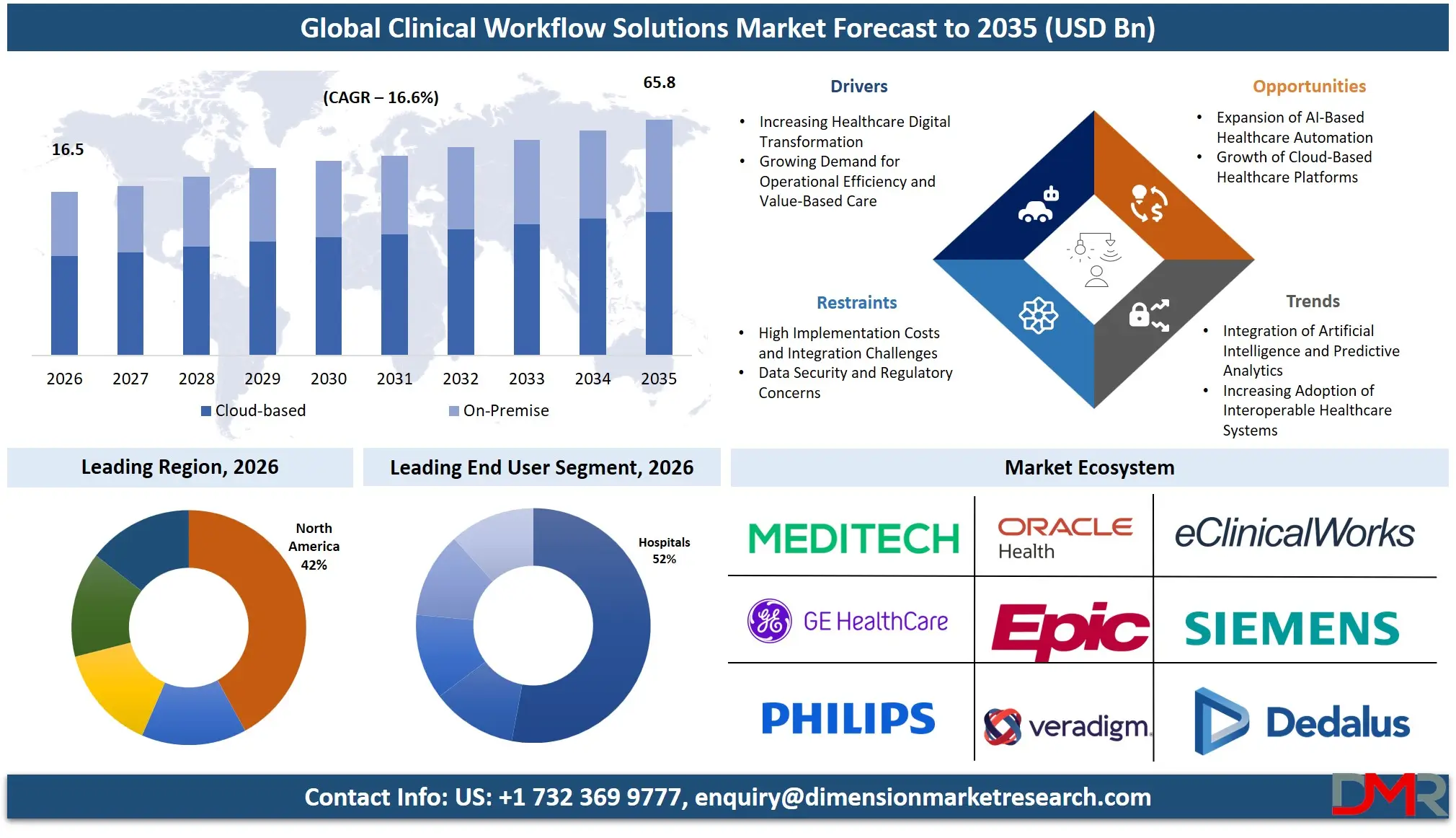
The Clinical Workflow Solutions Market size is expected to be USD 16.5 billion in 2026 and increase at a compound annual growth rate of 16.6% to USD 65.8 billion in 2035 due to growing demand for operational efficiency and value-based care.
ℹ
To learn more about this report –
Download Your Free Sample Report Here
Clinical Workflow Solutions refer to digital technologies and platforms designed to optimize, automate, and streamline healthcare processes across clinical environments. These solutions integrate electronic health records (EHRs), patient management systems, clinical decision support tools, scheduling platforms, and data analytics to improve operational efficiency and patient care delivery. The market is gaining importance due to increasing healthcare digitization, rising demand for value-based care, and the need to reduce administrative burdens among healthcare professionals. Emerging trends such as artificial intelligence, cloud-based healthcare platforms, interoperability standards, and automation are significantly influencing market expansion by enabling smarter, faster, and more coordinated clinical operations.
The US Clinical Workflow Solutions Market
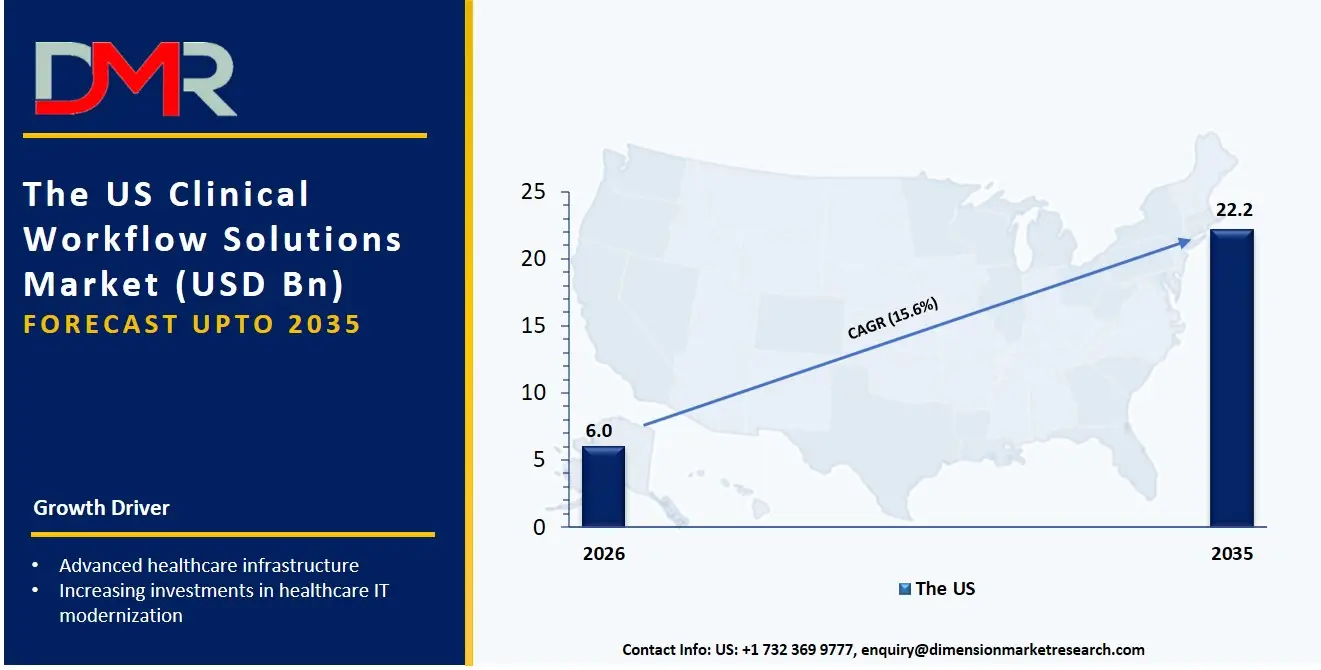
The US Clinical Workflow Solutions Market size is estimated to be USD 6.0 billion in 2026 and is expected to increase at a CAGR of 15.6% over the forecast period.
ℹ
To learn more about this report –
Download Your Free Sample Report Here
The US Clinical Workflow Solutions market is driven by advanced healthcare infrastructure, high adoption of electronic health records, and increasing investments in healthcare IT modernization. Hospitals and healthcare networks are adopting workflow automation and AI-enabled solutions to improve efficiency, reduce operational costs, and enhance patient outcomes. Government initiatives such as healthcare interoperability standards and digital health incentives continue to support adoption. The presence of established healthcare technology providers and strong demand for integrated care delivery systems make the US one of the most developed markets globally.
Europe Clinical Workflow Solutions Market
The Europe Clinical Workflow Solutions Market size is estimated to be USD 3.6 billion in 2026 and is expected to increase at a CAGR of 15.8% over the forecast period.
The European Clinical Workflow Solutions market is expanding due to increasing digital transformation initiatives, healthcare modernization programs, and regulatory support for interoperable healthcare systems. Policies focused on improving healthcare accessibility and efficiency, including digital health strategies aligned with the European Green Deal and sustainability objectives, are encouraging technology adoption. Countries such as Germany, the UK, and France are leading adoption due to strong healthcare infrastructure and investments in electronic health systems. Growing demand for remote healthcare, automation, and AI-based clinical support solutions is accelerating innovation across the region.
Japan Clinical Workflow Solutions Market
The market size of Japan Clinical Workflow Solutions will be USD 1.0 billion in 2026 and at a CAGR of 15.7% in the forecast period.
The Japan Clinical Workflow Solutions market is growing due to an aging population, rising healthcare demand, and government efforts to improve healthcare efficiency through digital transformation. Japan's advanced technology ecosystem supports adoption of AI-driven clinical platforms, automation tools, and integrated hospital management systems. Increasing pressure on healthcare providers to manage chronic diseases and optimize workforce utilization is driving demand for workflow solutions. Government initiatives promoting healthcare digitalization and smart hospital development are creating opportunities, although challenges such as legacy systems and integration complexities remain key considerations.
Key Takeaways
- Market Size & Forecast: The Clinical Workflow Solutions Market size is projected to reach USD 16.5 billion in 2026 and is anticipated to have a value of USD 65.8 billion in 2035.
- Growth Rate & Outlook: The Clinical Workflow Solutions Market size is set to grow at a compound annual growth rate of 16.6% during the forecast period of 2026 to 2035.
- Primary Growth Drivers: Some of the major growth drivers in the market are Growing Demand for Operational Efficiency and Value-Based Care and more.
- Key Market Trends: Some of the major trends in the market are Increasing Adoption of Interoperable Healthcare Systems and more.
- By Deployment Type: Cloud based segment is anticipated to get the majority share of the Clinical Workflow Solutions Market in 2026.
- By Solution Type: Clinical Documentation Solution is expected to get the largest revenue share in 2026 in the Clinical Workflow Solutions Market.
- By End User Type: Hospitals is expected to get the largest revenue share in 2026 in the Clinical Workflow Solutions Market.
- Regional Leadership: North America is set to lead the Clinical Workflow Solutions Market with an estimated 42.0% share in 2026.
What is the Clinical Workflow Solutions?
Clinical Workflow Solutions are healthcare technology platforms designed to manage, optimize, and automate the processes involved in delivering clinical services. These solutions include software tools that support patient scheduling, clinical documentation, care coordination, decision-making, resource management, workflow automation, data integration, and healthcare analytics. They connect healthcare professionals, patients, medical systems, and operational processes to improve efficiency, reduce manual tasks, and enhance the quality of care delivery. Key components include electronic health record integration, clinical decision support systems, interoperability tools, automation platforms, and AI-enabled healthcare applications. The solutions are becoming increasingly important as healthcare organizations focus on digital transformation, improved patient outcomes, and efficient management of growing healthcare demands.
Use Cases
- Clinical Documentation Automation: Clinical workflow solutions help healthcare professionals automate documentation processes by integrating speech recognition, AI-assisted note generation, and electronic medical record systems. These technologies reduce administrative workload, improve documentation accuracy, and allow clinicians to spend more time on patient care activities.
- Patient Flow Management: These solutions optimize patient movement across hospitals by improving admission, discharge, appointment scheduling, and resource allocation processes. Healthcare providers use workflow platforms to reduce waiting times, prevent bottlenecks, and enhance overall operational efficiency within clinical environments.
- Clinical Decision Support: Clinical workflow platforms integrate analytics and AI-based recommendations to support healthcare professionals in diagnosis and treatment decisions. These systems analyze patient data, medical history, and clinical guidelines to provide evidence-based insights and improve healthcare outcomes.
- Care Coordination and Interoperability: Clinical workflow solutions enable seamless communication between departments, healthcare facilities, and providers through integrated data-sharing systems. Improved interoperability enhances coordinated care delivery, reduces information gaps, and supports better management of complex patient cases.
How AI Is Transforming the Clinical Workflow Solutions Market
Artificial Intelligence is significantly transforming Clinical Workflow Solutions by enabling automation, predictive analytics, and intelligent decision-making across healthcare environments. AI-powered systems assist clinicians by automating documentation, analyzing patient information, identifying risks, and providing real-time recommendations. These technologies reduce administrative workloads and allow healthcare professionals to focus more on direct patient care.
AI is also improving operational efficiency by optimizing scheduling, patient flow management, resource allocation, and clinical communication. Machine learning algorithms help healthcare providers predict patient demand, improve diagnosis support, and personalize treatment pathways. The integration of AI with workflow platforms is enhancing accuracy, reducing delays, improving patient experiences, and supporting more efficient healthcare delivery models.
Market Dynamic
Driving Factors in the Clinical Workflow Solutions Market
Growing Demand for Operational Efficiency and Value-Based Care
Healthcare providers are increasingly focusing on improving patient outcomes while reducing operational costs, creating strong demand for clinical workflow optimization solutions. These platforms help automate repetitive tasks, enhance resource utilization, and improve communication among healthcare teams. The shift toward value-based care models is encouraging organizations to adopt technologies that support better care coordination, patient engagement, and performance monitoring. As healthcare systems face increasing patient volumes and workforce challenges, workflow automation is becoming an essential tool for improving productivity and service quality.
Restraints in the Clinical Workflow Solutions Market
Data Security and Regulatory Concerns
Healthcare organizations handle sensitive patient information, making cybersecurity and regulatory compliance major concerns for clinical workflow solution adoption. Data privacy regulations require strict security measures, which can increase operational complexity for providers. Concerns regarding unauthorized access, data breaches, and compliance failures may slow technology adoption. Healthcare organizations must invest in secure platforms and robust data governance frameworks to ensure safe utilization of digital workflow technologies.
Opportunities in the Clinical Workflow Solutions Market
Growth of Cloud-Based Healthcare Platforms
The increasing preference for scalable and flexible healthcare IT infrastructure is creating opportunities for cloud-based Clinical Workflow Solutions. Cloud platforms enable easier deployment, remote accessibility, and cost-effective management compared with traditional systems. Small and medium healthcare providers are adopting cloud solutions to access advanced workflow capabilities without significant infrastructure investments. Growing demand for connected healthcare ecosystems and remote care management is expected to further support cloud adoption.
Trends in the Clinical Workflow Solutions Market
Increasing Adoption of Interoperable Healthcare Systems
Interoperability is becoming a major trend as healthcare providers seek seamless data exchange between different platforms and departments. Modern clinical workflow solutions are being designed to integrate with electronic health records, medical devices, and external healthcare networks. Improved connectivity supports coordinated care, enhances patient experiences, and enables healthcare organizations to build more efficient digital ecosystems
Research Scope and Analysis
The Clinical Workflow Solutions market analysis covers key segments, regional trends, growth drivers, challenges, opportunities, and technological advancements. The research evaluates solution types, deployment models, end users, competitive strategies, and emerging innovations such as artificial intelligence, automation, and cloud-based healthcare workflow technologies shaping market development.
ℹ
To learn more about this report –
Download Your Free Sample Report Here
By Solution Analysis
Clinical Documentation Solutions represent one of the leading segments within the Clinical Workflow Solutions market due to their direct impact on reducing administrative burdens and improving healthcare record accuracy. In 2026, Clinical Documentation Solutions are estimated to account for approximately 24% market share of the overall market. Their dominance is driven by increasing adoption of electronic health records, rising clinician workload, and growing demand for automated documentation tools. AI-powered medical transcription, voice recognition, and automated note-generation technologies are strengthening this segment. Meanwhile, Clinical Decision Support Solutions are expected to be among the fastest-growing segments due to increasing use of AI analytics, predictive models, and evidence-based recommendations that support faster and more accurate clinical decisions.
By Deployment Mode Analysis
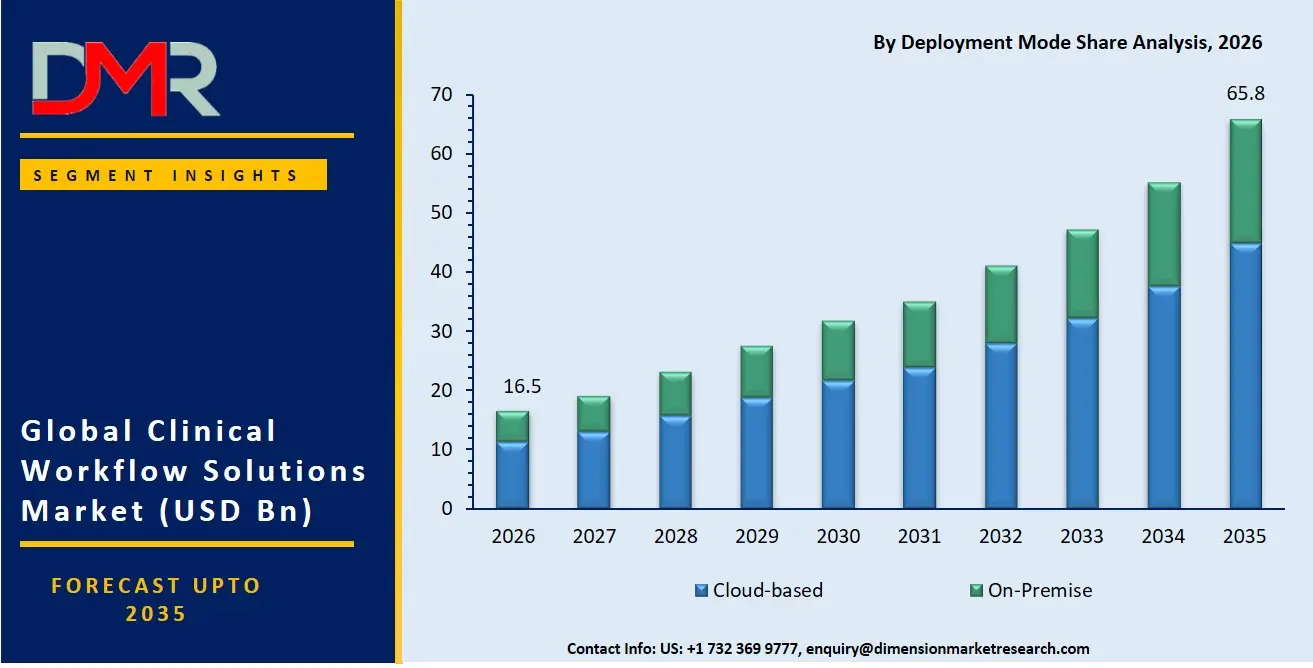
Cloud-based Clinical Workflow Solutions are expected to lead the deployment segment due to their scalability, cost efficiency, and ability to support remote healthcare operations. In 2026, cloud-based solutions are estimated to hold approximately 68% market share within the deployment category.
ℹ
To learn more about this report –
Download Your Free Sample Report Here
Healthcare organizations increasingly prefer cloud platforms because they enable easier system upgrades, real-time data access, and integration with multiple healthcare applications. The fastest-growing segment within this category is also cloud deployment, supported by increasing adoption among small and medium healthcare providers, expansion of telehealth services, and demand for flexible healthcare IT infrastructure. Cloud-based systems are becoming essential for building connected and interoperable healthcare ecosystems.
By End User Analysis
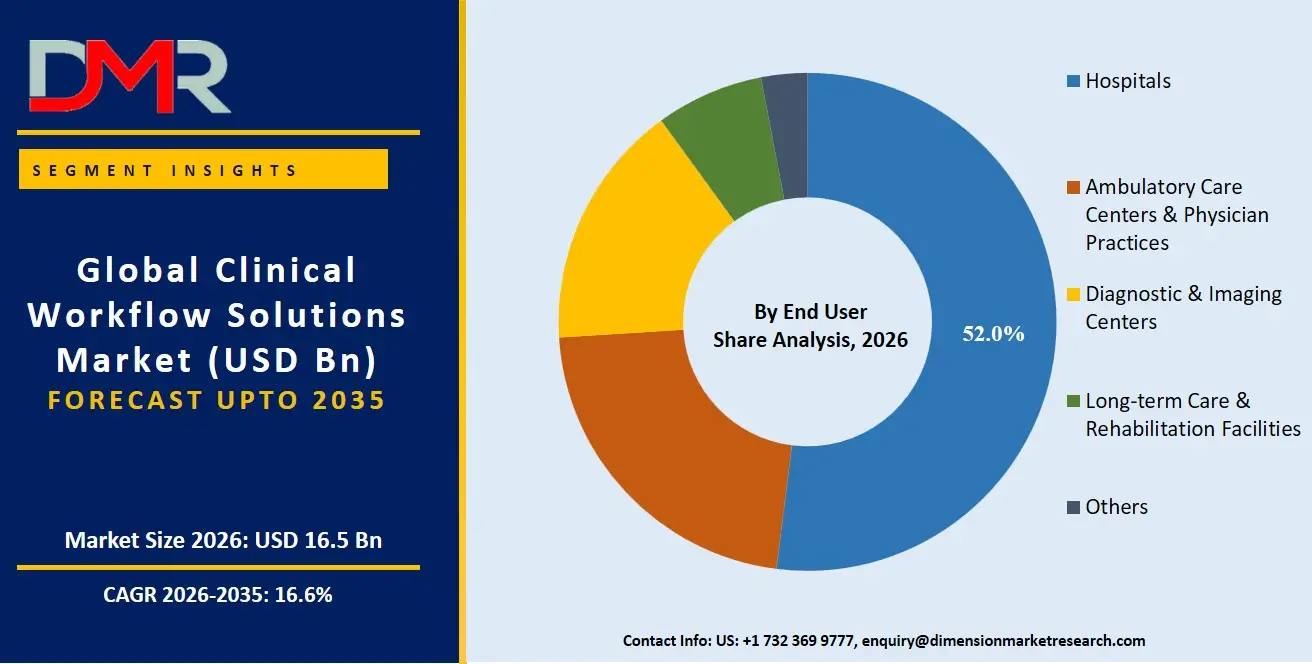
Hospitals represent the leading end-user segment in the Clinical Workflow Solutions market due to their complex operational requirements and high demand for integrated healthcare management systems. In 2026, hospitals are estimated to account for approximately 52% market share among end users. Large healthcare facilities are adopting workflow solutions to improve patient flow, automate documentation, enhance communication between departments, and optimize resource utilization. The fastest-growing end-user segment is expected to be ambulatory care centers and physician practices due to increasing adoption of digital healthcare solutions, growing outpatient services, and the need for efficient patient management systems. Smaller healthcare providers are increasingly investing in cloud-based workflow platforms to improve service delivery.
The Clinical Workflow Solutions Market Report is segmented on the basis of the following:
By Solution
- Clinical Documentation Solutions
- Workflow Automation Solutions
- Care Coordination Solutions
- Clinical Decision Support Solutions (CDSS)
- Patient Flow Management Solutions
- Scheduling & Resource Management Solutions
- Data Integration & Interoperability Solutions
- Analytics & Reporting Solutions
By Deployment Mode
By End User
- Hospitals
- Ambulatory Care Centers & Physician Practices
- Diagnostic & Imaging Centers
- Long-term Care & Rehabilitation Facilities
- Others
Regional Analysis
Leading Region in the Clinical Workflow Solutions Market
ℹ
To learn more about this report –
Download Your Free Sample Report Here
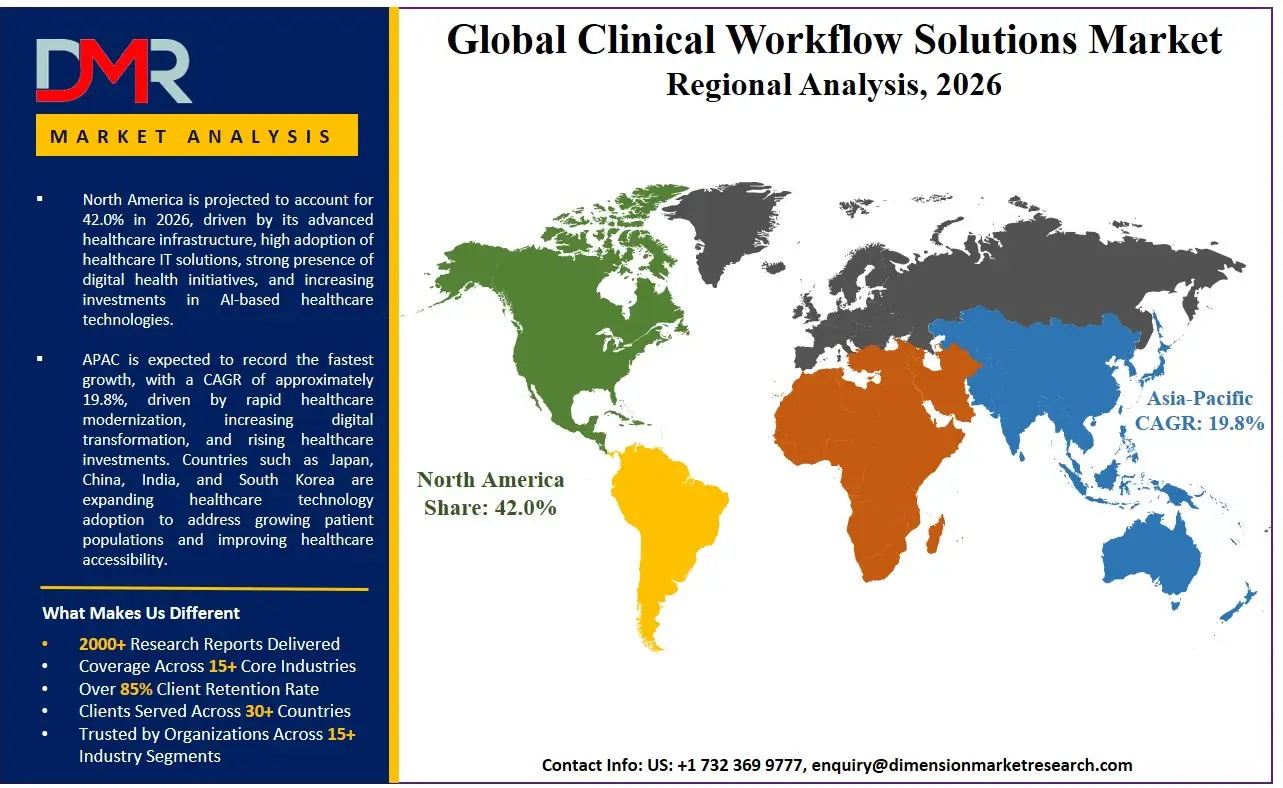
North America is expected to remain the leading region in the Clinical Workflow Solutions market, accounting for approximately 42% market share in 2026. The region's dominance is supported by advanced healthcare infrastructure, high adoption of healthcare IT solutions, strong presence of digital health initiatives, and increasing investments in AI-based healthcare technologies. The US healthcare system's focus on improving efficiency, reducing costs, and enhancing patient outcomes is driving widespread adoption of workflow automation platforms. Government support for interoperability, electronic health records, and healthcare innovation further strengthens regional growth. High technology readiness among hospitals and healthcare providers continues to position North America as the largest market.
Fastest Growing Region in the Clinical Workflow Solutions Market
Asia-Pacific is projected to be the fastest-growing region in the Clinical Workflow Solutions market due to rapid healthcare modernization, increasing digital transformation, and rising healthcare investments. Countries such as Japan, China, India, and South Korea are expanding healthcare technology adoption to address growing patient populations and improving healthcare accessibility. Government initiatives promoting smart hospitals, electronic healthcare systems, and AI-driven healthcare solutions are accelerating market expansion. Increasing urbanization, rising healthcare spending, and the need for efficient healthcare delivery models are creating strong opportunities for workflow solution providers across the region.
By Region
North America
Europe
- Germany
- The U.K.
- France
- Italy
- Russia
- Spain
- Benelux
- Nordic
- Rest of Europe
Asia-Pacific
- China
- Japan
- South Korea
- India
- ANZ
- ASEAN
- Rest of Asia-Pacific
Latin America
- Brazil
- Mexico
- Argentina
- Colombia
- Rest of Latin America
Middle East & Africa
- Saudi Arabia
- UAE
- South Africa
- Israel
- Egypt
- Rest of MEA
Competitive Landscape
The Clinical Workflow Solutions market is characterized by strong competition driven by innovation, technology integration, and strategic partnerships. Market participants focus on developing scalable platforms, improving interoperability capabilities, and integrating artificial intelligence to differentiate their offerings. Companies are investing heavily in research and development to enhance automation, analytics, and user experience. Strategic collaborations with healthcare organizations, technology providers, and research institutions are becoming important approaches for expanding market presence. High regulatory requirements, data security standards, and the need for seamless healthcare integration create entry barriers while encouraging continuous innovation among existing participants.
Some of the prominent players in the global Clinical Workflow Solutions are:
- Epic Systems Corporation
- Oracle Health
- Veradigm
- MEDITECH
- GE HealthCare
- Philips
- Siemens Healthineers
- Wolters Kluwer Health
- athenahealth
- eClinicalWorks
- Altera Digital Health
- Agfa HealthCare
- Dedalus Group
- InterSystems
- NextGen Healthcare
- TELUS Health
- Stryker (Vocera)
- Baxter International (Hillrom)
- RLDatix
- Hyland Software
- Other Key Players
Recent Developments
- In June 2025, Tempus announced an expansion of its Tempus One generative AI clinical assistant by integrating the platform directly into electronic health record systems. The enhanced solution enables physicians to access patient data, clinical insights, and workflow support directly within existing care environments. The platform focuses on improving treatment decisions, particularly in oncology and precision medicine applications, by combining AI capabilities with clinical data analysis. This development highlights the growing movement toward embedded AI assistants that support real-time clinical workflows, reduce information complexity, and enhance healthcare decision-making processes.
- In January 2025, Augmedix, a provider of ambient AI medical documentation solutions and a subsidiary of Commure, secured a contract with Vizient to expand access to its AI workflow products across healthcare providers. The agreement enables Vizient's healthcare members to utilize Augmedix solutions, including AI tools that automatically generate medical notes from clinician-patient conversations. The development supports broader adoption of AI-driven documentation automation by reducing administrative burdens, improving clinical efficiency, and supporting healthcare organizations seeking scalable workflow solutions. The integration capability with multiple electronic health record systems strengthens its position in the healthcare automation market.
- In January 2025, DeepScribe and Flatiron Health announced a strategic partnership to introduce oncology-focused ambient AI documentation capabilities into Flatiron's OncoEMR platform. The collaboration integrates DeepScribe's AI-powered clinical documentation technology with Flatiron's cloud-based oncology electronic medical record system, enabling clinicians to automatically capture and organize complex cancer care documentation. The initiative aims to reduce administrative workload for oncology providers, improve documentation accuracy, and enhance physician-patient interaction. The partnership expands access to AI workflow automation across Flatiron's healthcare network and represents a significant advancement in specialty-specific clinical workflow optimization.
Report Details
| Report Characteristics |
| Market Size (2026) |
USD 16.5 Bn |
| Forecast Value (2035) |
USD 65.8 Bn |
| CAGR (2026–2035) |
16.6% |
| Historical Period |
2021 – 2025 |
| Forecast Period |
2027 – 2035 |
| Base Year |
2025 |
| Estimate Year |
2026 |
| Segments Covered |
By Solution, By Deployment Mode, By End User |
| Regional Coverage |
North America – The US and Canada; Europe – Germany, The UK, France, Russia, Spain, Italy, Benelux, Nordic, & Rest of Europe; Asia-Pacific – China, Japan, South Korea, India, ANZ, ASEAN, Rest of APAC; Latin America – Brazil, Mexico, Argentina, Colombia, Rest of Latin America; Middle East & Africa – Saudi Arabia, UAE, South Africa, Turkey, Egypt, Israel, & Rest of MEA |
Frequently Asked Questions
How big is the Clinical Workflow Solutions Market?
▾ The Clinical Workflow Solutions Market size is expected to reach USD 16.5 billion by 2026 and is projected to reach USD 65.8 billion by the end of 2035.
What is the CAGR of the Clinical Workflow Solutions Market from 2026 to 2035?
▾ The market is growing at a CAGR of 16.6 percent over the forecasted period.
What factors are driving the growth of the Clinical Workflow Solutions Market?
▾ Rising Adoption of Remote Healthcare Technologies, and more are the factors driving the growth of the Clinical Workflow Solutions Market.
What are the major trends in the Clinical Workflow Solutions Market?
▾ Increasing Adoption of Interoperable Healthcare Systems, and more are some of the major trends in the market.
Who are the key players in the Clinical Workflow Solutions Market?
▾ Some of the key players in the Clinical Workflow Solutions Market include Oracle, Siemens, Philips, and more.
How is the Clinical Workflow Solutions Market segmented?
▾ The Clinical Workflow Solutions Market is segmented by solution, deployment mode, end user.
Which region held the largest share of the Clinical Workflow Solutions Market in 2026?
▾ North America is set to lead the Clinical Workflow Solutions Market with an estimated 42.0% share in 2026.
Which region is expected to grow the fastest in the Clinical Workflow Solutions Market?
▾ Asia Pacific is the fastest-growing region in the Clinical Workflow Solutions Market during the forecast period.