Global Clostridium Difficile Infection Market Snapshot
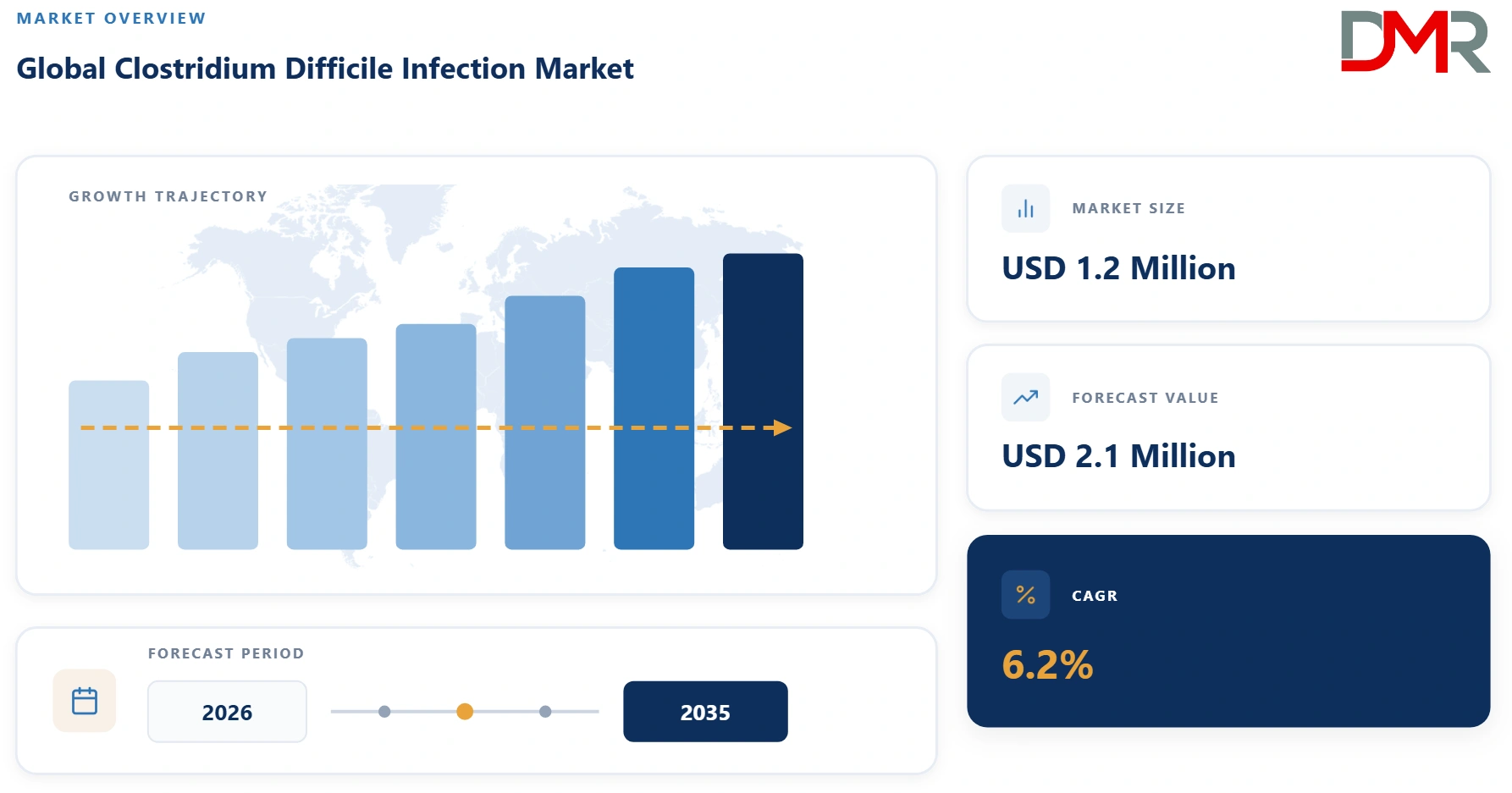
- Global Clostridium Difficile Infection Market Size in 2026: USD 1.2 billion
- Global Clostridium Difficile Infection Market Size in 2035: USD 2.1 billion
- Global CAGR from 2027 to 2035: 6.2%
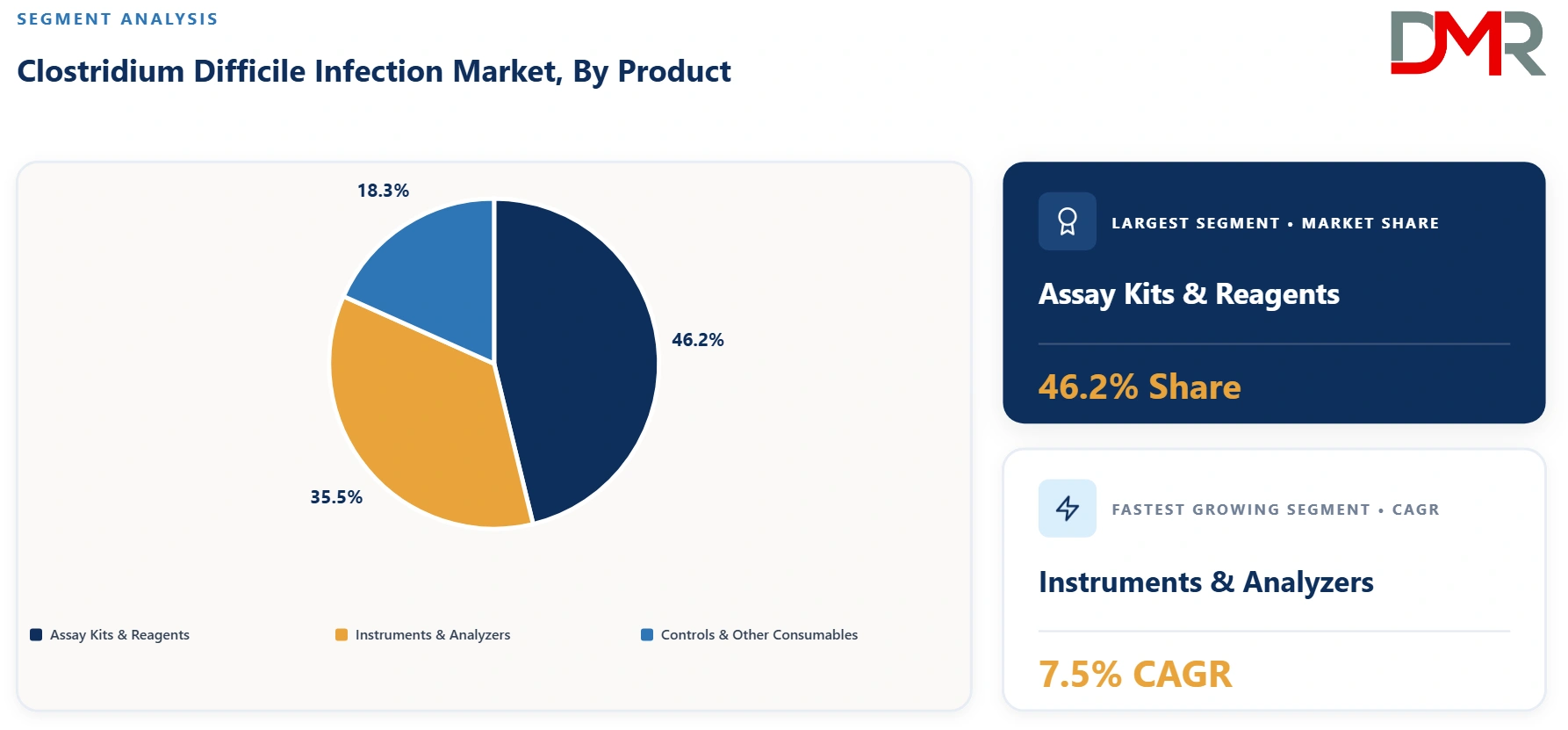
- Assay Kits & Reagents are the leading Product segment in 2026: 46.2%
- Hospital Laboratories is the leading End User segment in 2026: 52.3%
- Instruments & Analyzers is the fastest-growing Product segment: 7.5%
- Independent Diagnostic Laboratories is the fastest-growing End User segment: 6.9% CAGR
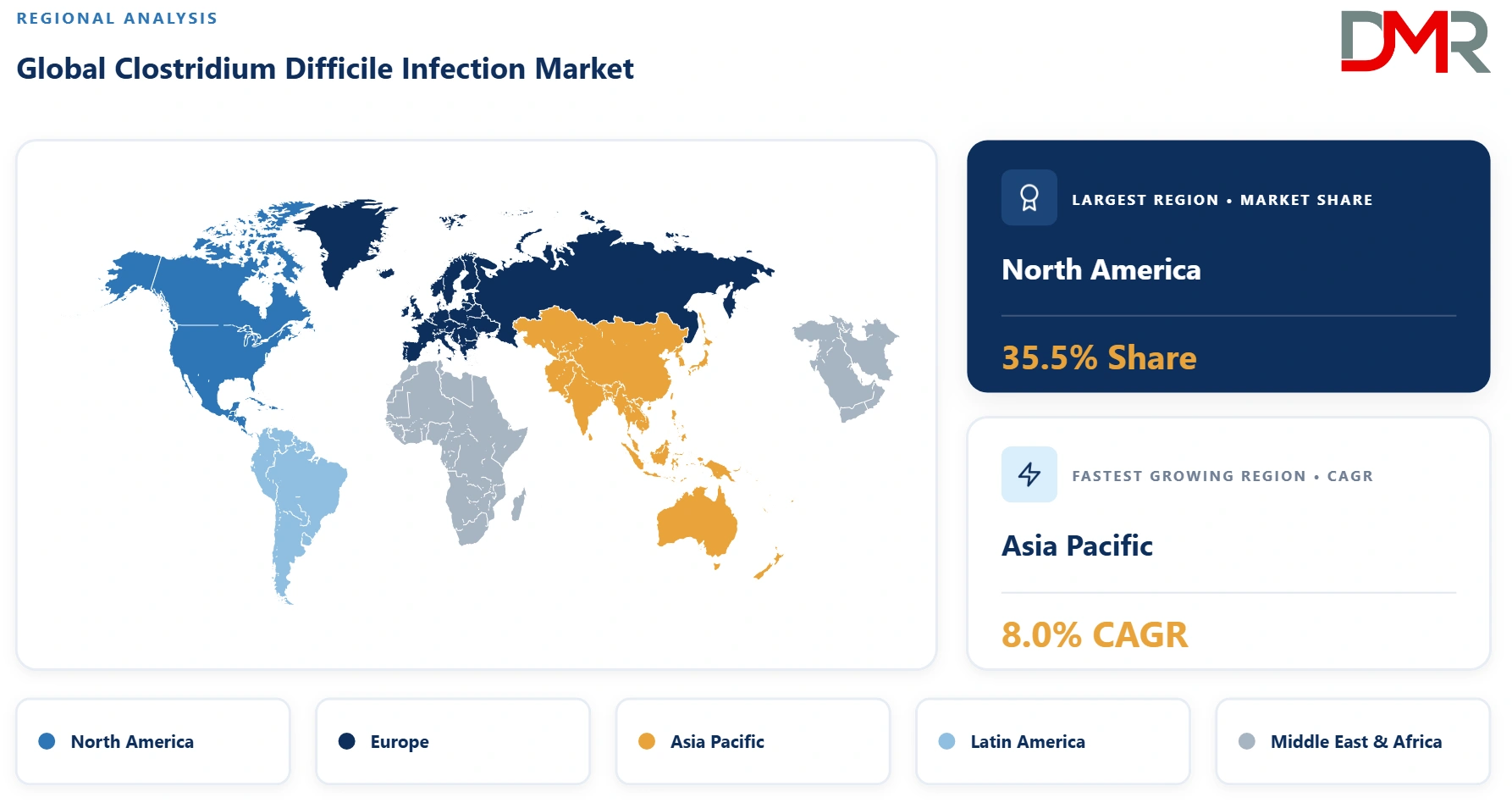
- North America is the leading Region in 2026: 35.5%
- Asia Pacific is the fastest-growing Region: 8.0% CAGR
What is the Global Clostridium Difficile Infection and its Market Size?
The Global Clostridium Difficile Infection Market size is projected to be valued at USD 1.2 billion in 2026, and it is further anticipated to reach a market value of USD 25.2 billion by 2035 at a CAGR of 6.2%.
ℹ
To learn more about this report –
Download Your Free Sample Report Here
The global Clostridium Difficile Infection Market has been growing steadily over the past decade due to an increase in hospital-acquired infections and increasing awareness about infectious diseases. CDI mainly causes problems in the large intestine, resulting in conditions such as diarrhea, abdominal pain, fever, and inflammation. It commonly occurs in patients who have taken antibiotics for a long period, particularly older adults and hospitalized patients. The growth of this market is mainly driven by the increasing demand for accurate and early diagnosis of infection. Hospital Laboratories, diagnostic laboratories, and healthcare facilities are adopting advanced testing methods, including molecular diagnostics, immunoassays, and toxin detection tests, to identify infection quickly and accurately. These technologies help healthcare professionals detect the bacteria, provide timely treatment, reduce the spread of infection, and improve patient outcomes. Rising healthcare spending, improvements in laboratory testing equipment, and growing efforts to control hospital-acquired infections are further supporting the growth of the global market.
Use Cases
- Selection of Treatment and Monitoring: Clostridium Difficile Infection tests are very important in helping health professionals choose the right treatment depending on the condition of the patient. The test helps health professionals know whether the patient should be under antibiotic treatment or any other treatment measures. The health professionals continue to monitor the symptoms and the recovery of the patient. Repeat testing is normally done for patients experiencing new or recurring symptoms.
- Early Detection and Diagnosis of Infection: Clostridium Difficile Infection diagnostic testing is widespread in Hospital Laboratories and diagnostic laboratories when testing patients who are infected with the disease and showing symptoms like diarrhea, abdominal pain, among others. Diagnostic testing techniques like molecular diagnostics, immunoassay and toxin testing help the medical personnel to make proper diagnosis and initiate treatment of the disease early enough.
- Prevention and Control of Hospital-Acquired Infection: Clostridium Difficile Infection diagnostic testing is a vital procedure for the prevention and control of hospital infection. The health care providers conduct the test in patients and then adopt measures that help to prevent the further spread of the bacteria. This is very important in protecting other patients, particularly the elderly ones.
- Clinical Research & Drug Development: Clostridium Difficile Infection Diagnostic Tests are employed for clinical research to examine bacterial infection and help develop new drugs, vaccines, and other microbiome-based therapies. Diagnostic tests are used by pharmaceutical firms, research laboratories, and health organizations to screen eligible candidates for trials and examine their treatment results as well as disease patterns.
Key Takeaways
- Global Market Value: The Global Clostridium Difficile Infection Market generated revenue of USD 1.2 billion in 2026 and is further anticipated to reach USD 25.2 billion by 2035.
- Global Growth Rate: The Global Clostridium Difficile Infection Market is expected to have a CAGR of 6.2% during the forecast period from 2027 to 2035.
- Technology Trends: The increasing advancements in technologies such as AI, machine learning, molecular diagnostics, automated laboratory instruments, PCR-based testing, and rapid immunoassays are improving the accuracy, speed, and efficiency of Clostridium difficile infection detection, supporting early diagnosis, timely treatment, and effective infection control in healthcare facilities.
- Market Drivers: The rising prevalence of hospital-acquired infection, increasing antibiotic usage, growing elderly population, rising demand for rapid and accurate diagnostic testing, and increasing awareness of infection prevention and control are the major factors driving the growth of the Global Clostridium Difficile Infection Market.
- Product Segment Analysis: The Assay Kits & Reagents segment is anticipated to be the largest product segment, having a market share of 46.2% by the end of 2026. Whereas the Instruments & Analyzers segment is expected to be the fastest-growing segment with a CAGR of 7.5% from 2027 to 2035.
- End User Segment Analysis: Hospital Laboratories is the major end-user segment, representing the highest market share of 52.3% in 2026, while the Independent Diagnostic Laboratories segment is projected to have the highest growth rate with a CAGR of 6.9% during the forecast period.
- Regional Analysis: The North America region is poised to hold the largest market share of 35.5% in the global market in 2026. The Asia Pacific region is expected to be the fastest-growing region with a CAGR of 8.0% during the forecast period.
How AI/Gen AI is Transforming the Clostridium Difficile Infection Market?
The market for Clostridium Difficile Infection is benefiting from the use of artificial intelligence (AI) and generative artificial intelligence (GenAI). Through artificial intelligence, there is an improvement in efficiency in infection detection, diagnosis, and monitoring of the infection in patients. Through artificial intelligence, physicians and other health practitioners can be able to use test results from laboratories to detect patterns of infection or even identify patients who are at risk of developing infection. On the other hand, through generative artificial intelligence, medical researchers and other experts in the industry can conduct drug discovery and patient medical records analysis.
Key Drivers in the Global Clostridium Difficile Infection Market
Market Drivers
Higher Rate of Nosocomial Infection
One of the important factors driving the market growth is the rate of nosocomial infection. Patients undergoing long-term antibiotic treatment, elderly patients, and immunocompromised patients are more likely to suffer from such infection. Healthcare institutions are resorting to the use of diagnostic tools that will be able to identify infection in the early stages of development to prevent spreading it among other patients.
Higher Need for Rapid and Accurate Infection Diagnosis
The increasing demand for rapid and accurate infection diagnosis is driving the market. Healthcare organizations are utilizing modern technologies like molecular diagnostics, immunoassay, and toxin assay for diagnosing C. difficile infection. Improvements in laboratory automation and diagnostic technologies are making these solutions increasingly acceptable in laboratories.
Market Restraints
High Costs of Diagnostic Technology
The high cost of using advanced technology for diagnostics is affecting the market growth of such advanced technology, particularly in developing countries. The high costs associated with molecular diagnostic systems, automation systems and test kits and regular maintenance needed make it hard for smaller Hospital Laboratories and diagnostic laboratories to access such diagnostic technology. Limited funding and lack of facilities at the laboratories make it difficult to acquire such advanced infection testing technology.
Issues Associated with Accuracy of Tests and Interpretations
There are issues with diagnosing Clostridium Difficile infection, which act as barriers to market growth. It may be possible for certain diagnostic tests to identify bacteria in individuals who are not infected, while other diagnostics are unable to diagnose the infection.
Market Opportunities
Development of Healthcare Infrastructure in Developing Countries
The development of healthcare infrastructure in developing countries is one of the major market opportunities that exist in the market for Clostridium Difficile Infection. The development of healthcare infrastructure through Hospital Laboratories and diagnostic laboratories in the Asian-Pacific, Latin American, and Middle Eastern developing countries is offering a number of opportunities for companies in the manufacturing of diagnostic kits and reagents, as well as laboratory equipment.
Development of Rapid and Automated Testing Techniques
Rapid testing methods and automation of testing processes provide market players with some good market opportunities. The development of rapid testing methods and automation of molecular diagnostics and immunoassay tests is offering a lot of opportunities to companies that manufacture testing devices and kits.
Market Trends
Use of Molecular Diagnostics Tests
The increase in the use of molecular diagnostics tests is a trend prevailing in the market for Clostridium Difficile Infection. PCR techniques are being increasingly used by Hospital Laboratories and laboratories to detect the presence of toxin-producing bacteria. The tests are highly sensitive and give fast results as compared to the culture techniques and are now being integrated into the automation process in laboratories.
Use of Multistep Testing Techniques
Another trend prevailing in the market for Clostridium Difficile Infection is the use of multistep testing techniques. The laboratories employ GDH antigen testing, toxin testing, and molecular diagnostics to make proper diagnoses. This two-step and three-step testing helps the practitioners distinguish between infection and colonization of the bacteria.
Research Scope and Analysis
The Global Clostridium Difficile Infection Market is segmented based on product into assay kits & reagents, instruments & analyzers, and controls & other consumables. By testing technology, the market is categorized into molecular diagnostics, immunoassays, and culture-based & cell cytotoxicity assays. Based on detection target, the market is segmented into GDH antigen, toxins A & B, toxin-encoding genes, and other detection targets. By testing workflow, the market is divided into single-step testing, two-step testing, and three-step testing. In terms of end users, the market comprises hospital laboratories, independent diagnostic laboratories, reference laboratories, and others.
ℹ
To learn more about this report –
Download Your Free Sample Report Here
By Product
Assay Kits & Reagents are projected to dominate the product segment in the Clostridium Difficile Infection market as they will hold 46.2% of the total market share in 2026. The dominance is due to the higher demand for faster and more accurate tests, the rise in nosocomial infections, and the emergence of molecular diagnostics and immunoassays. The assay kits and reagents are widely used by hospitals and diagnostic centers for testing the presence of bacterial toxins and antigens, early detection of infection, and treatment of infection. Instruments & Analyzers are poised to have the highest CAGR of 7.5% during the forecast period (2027–2035) in the Product segment, driven by increasing adoption of automated diagnostic systems, growing demand for rapid molecular testing, advancements in laboratory equipment, rising healthcare investments, and the need for accurate and efficient infection detection.
By End User Analysis
Hospital Laboratories are anticipated to be the most dominant end-user segment in the Clostridium Difficile Infection Market with a forecasted market share of 52.3% at the end of 2026. The growth of hospital laboratories in the end-user segment can be attributed to an increase in hospital-acquired infections, patient admissions, demand for fast diagnostic tests, and availability of state-of-the-art laboratory equipment. More hospitals are using molecular diagnostics and immunoassays to diagnose infection and prevent their transmission. Conversely, Independent Diagnostic Laboratories are anticipated to grow with the highest CAGR of 6.9% during the forecast period from 2027 to 2035 in the Clostridium Difficile Infection Market owing to increasing demands for specialized diagnostic services, adoption of advanced molecular testing techniques, laboratory outsourcing, growing diagnostic networks, and increased demand for accurate and fast infection testing services.
The Global Clostridium Difficile Infection Market Report is segmented based on the following:
By Product
- Assay Kits & Reagents
- Instruments & Analyzers
- Controls & Other Consumables
By Testing Technology
- Molecular Diagnostics
- Immunoassays
- Culture-Based & Cell Cytotoxicity Assays
By Detection Target
- GDH Antigen
- Toxins A & B
- Toxin-Encoding Genes
- Combined GDH & Toxin Detection
By Testing Workflow
- Standalone
- Two-Step
- Three-Step
By End User
- Hospital Laboratories
- Independent Diagnostic Laboratories
- Reference Laboratories
- Others
Regional Analysis
North America is the Leading Region in the Global Clostridium Difficile Infection Market
North America is expected to become the dominant force within the Global Clostridium Difficile Infection Market as it will hold a market share of 35.5% in 2026. The dominance of the market is attributed to the occurrence of a high number of hospital-acquired infections, highly developed healthcare infrastructure, usage of molecular diagnostic techniques, increasing awareness regarding the prevention of infection, presence of diagnostic companies in the region, and investments in laboratory equipment.
ℹ
To learn more about this report –
Download Your Free Sample Report Here
Asia Pacific is the Fastest-Growing Region in the Global Clostridium Difficile Infection Market
Asia Pacific is expected to witness the fastest-growing regional market with a compound annual growth rate of 8.0% during the forecast period from 2027 to 2035, due to an increase in healthcare spending, development of diagnostic laboratories, increase in hospital-acquired infections, increased consciousness of infectious diseases, use of molecular diagnostics, and greater availability of advanced healthcare facilities in countries such as China, India, and Japan.
Europe Clostridium Difficile Infection Market
The Europe Clostridium Difficile Infection Market includes the existence of well-developed healthcare infrastructure, an increase in the number of hospital-acquired infections, and increasing demand for diagnosis. Nations like Germany, France, the UK, and Italy are becoming more inclined towards using molecular diagnostics, immunoassays, and laboratory automation systems to diagnose C. difficile infection. Increasing awareness regarding infection control, increased use of antibiotics, and initiatives by the government for patient safety will help in the growth of this market.
Latin America Clostridium Difficile Infection Market
The Latin America Clostridium Difficile Infection market is predicted to witness growth owing to improvements in healthcare infrastructure, awareness regarding hospital-acquired infection, and rise in the demand for rapid diagnostic techniques. Some of the key countries in the Latin America Clostridium Difficile Infection market include Brazil and Mexico owing to the presence of extensive hospital infrastructure, rising investments in healthcare, and advancements in laboratory testing. Gradual adoption of molecular diagnosis, immunoassays, and toxin tests is helping in diagnosing the infection accurately.
Middle East and Africa (MEA) Clostridium Difficile Infection Market
The Middle East and Africa Clostridium Difficile Infection Market is being propelled by an increased investment in healthcare infrastructure, improved awareness about infectious diseases, and increased need for accurate diagnostics. Nations like Saudi Arabia and the UAE are making investments in modern healthcare infrastructure, better laboratories, and molecular diagnostics in order to detect infection. In South Africa, there is an emphasis by healthcare professionals on offering improved lab testing and preventing nosocomial infection. Despite the fact that advanced diagnostics are not easily available in some nations, an increase in the number of healthcare facilities and better laboratory infrastructure will help drive growth.
Major Countries Analysis
United States Clostridium Difficile Infection Market
The US Clostridium Difficile Infection Market is projected to be valued at USD 0.4 billion in 2026. It is expected to witness subsequent growth in the upcoming period, reaching USD 2.0 billion in 2035. There are immense opportunities within the US Clostridium Difficile Infection market because of the high prevalence of infection among patients in hospitals, increased usage of antibiotics, and high demand for fast and accurate diagnostic techniques. The availability of well-established health care facilities, well-equipped labs, and the presence of top companies in the domain of diagnostic technologies is fueling the growth of the market. In addition, there is increasing awareness regarding the prevention of infection, increased usage of molecular diagnostics and immunoassay methods, increased health care expenditure, and patient safety initiatives taken by the government.
Japan Clostridium Difficile Infection Market
The Japan Clostridium Difficile Infection Market is expanding because of its well-equipped healthcare system, ageing population, and increasing incidence of hospital-acquired infection. There are improvements being made by hospitals and diagnostic laboratories towards detecting the infection using advanced molecular tests, immunoassays, and automated laboratory test systems. The increased prevalence of PCR tests, toxin tests, and rapid diagnostic kits is driving the market. Further, increased healthcare spending, increased antibiotic consumption, and increased government initiatives towards the improvement of infection prevention and safety measures have encouraged the use of advanced diagnostic systems.
Saudi Arabia Clostridium Difficile Infection Market
Market growth of the Clostridium Difficile Infection market in Saudi Arabia is backed by Vision 2030 strategies that include healthcare development, development of hospital infrastructure, and development of diagnostic services. The growth in investments in hospital labs, diagnostic tools, and healthcare infrastructure is leading to opportunities in molecular diagnostics, immunoassays, and rapid infection detection kits. There is an increase in the use of technology-based test techniques to diagnose Clostridium difficile infection at early stages and prevent its transmission. Growth in private healthcare investments, increasing awareness of nosocomial infection, and developments in laboratory facilities are driving market growth.
Regulatory Landscape
The global Clostridium Difficile Infection Market is characterized by a regulated healthcare market comprising of diagnostic test clearance, laboratory quality standards, patient safety, and infection control guidelines. In the United States, the Food and Drug Administration (FDA) regulates medical diagnostics equipment, whereas the Centers for Disease Control and Prevention (CDC) gives directives on infection control. In Europe, there is the IVDR (In Vitro Diagnostic Regulation) governing diagnostic tests and laboratory products. In Japan, the Pharmaceuticals and Medical Devices Agency (PMDA) is instrumental in the evaluation of diagnostic technology. Other guidelines that influence the development, clearance, and adoption of C. difficile diagnostic products include laboratory accreditation guidelines, healthcare data privacy, and infection control guidelines.
Investment and White Space Analysis
Growing spending on molecular diagnostics, automated laboratory devices, rapid testing systems, and healthcare infrastructure is fueling innovations in the Global Clostridium Difficile Infection Market. Diagnostic firms, healthcare providers, research centers, and medical technology providers are spending heavily on cutting-edge testing systems to enhance the accuracy of infection detection, shorten the testing process, and strengthen the infection control process within hospitals. Great potential exists in the areas of rapid molecular tests, combination of GDH and toxin tests, automated testing systems, and inexpensive testing systems. The developing nations in the regions of Asia Pacific, Latin America, and Middle East & Africa hold great prospects owing to growing healthcare infrastructure, laboratory infrastructure, awareness regarding hospital-acquired infection, and demand for economical testing systems.
By Region
North America
Europe
- Germany
- France
- The U.K.
- Italy
- Spain
- Rest of Europe
Asia-Pacific
- China
- Japan
- India
- Australia
- South Korea
- Rest of APAC
Latin America
- Mexico
- Brazil
- Rest of LATAM
Middle East & Africa
- Saudi Arabia
- The UAE
- South Africa
- Rest of MEA
Competitive Landscape
The competitive structure of the Global Clostridium Difficile Infection Market includes established pharmaceutical companies, biotechnology firms, and companies developing innovative treatments for bacterial infection. Major players operating in this market include Merck & Co., Inc., Pfizer Inc., Ferring Pharmaceuticals, Astellas Pharma Inc., Seres Therapeutics, Inc., Nestlé Health Science, Vedanta Biosciences, Inc., Acurx Pharmaceuticals, Inc., and Summit Therapeutics Inc. These companies are involved in the development, commercialization, or research of antibiotics, microbiome-based therapies, vaccines, and other treatment solutions for Clostridium difficile infection. Companies are focusing on research and development to improve treatment effectiveness, reduce infection recurrence, and address antibiotic resistance. Major trends in the competitive landscape include the development of targeted antibiotics, microbiome-based treatments, innovative bacterial therapies, and new approaches to preventing recurrent infection.
Some of the prominent players in the Global Clostridium Difficile Infection Market are:
- Abbott Laboratories
- bioMérieux SA
- Becton, Dickinson and Company
- F. Hoffmann-La Roche Ltd.
- Thermo Fisher Scientific Inc.
- QIAGEN N.V.
- Cepheid
- Meridian Bioscience, Inc.
- QuidelOrtho Corporation
- DiaSorin S.p.A.
- TECHLAB, Inc.
- Hologic, Inc.
- Bio-Rad Laboratories, Inc.
- Seegene Inc.
- R-Biopharm AG
- CerTest Biotec S.L.
- Coris BioConcept
- Savyon Diagnostics Ltd.
- Aidian Oy
- SD Biosensor, Inc.
- Fujirebio Holdings, Inc.
- Biomerica, Inc.
- Biopanda Reagents Ltd.
- Pro-Lab Diagnostics Inc.
- Microgen Bioproducts Ltd.
- Sacace Biotechnologies S.r.l.
- Kogene Biotech Co., Ltd.
- NovaTec Immundiagnostica GmbH
- Cortez Diagnostics, Inc.
- Creative Diagnostics
- Microbiologics, Inc.
- AusDiagnostics Pty Ltd.
- LG Chem Ltd.
- GC MS Corp.
- Bruker Corporation
- Zhejiang Orient Gene Biotech Co., Ltd.
- Medotex Biotechnology Co., Ltd.
- Bioingentech Ltd.
- Intelligent Medical Devices, Inc.
- Vela Diagnostics
Recent Developments
- In August 2026, Roche Molecular Systems, Inc. received U.S. FDA 510(k) clearance for its cobas Cdiff Nucleic Acid Test and associated positive and negative controls for use on the cobas Liat System. The updated test detects the Clostridioides difficile toxin B gene (tcdB) and incorporates modified assay software and an updated result-calculation algorithm, supporting molecular diagnostic testing workflows.
- In February 2025, Cepheid received U.S. FDA 510(k) clearance for its Xpert C. difficile/Epi molecular diagnostic assay. The test detects toxin B gene sequences and supports presumptive identification of the epidemic 027/NAP1/BI strain in stool specimens from patients suspected of having C. difficile infection, strengthening the company's molecular diagnostics portfolio.
- February 2025, bioMérieux SA received U.S. FDA clearance for its BIOFIRE FILMARRAY Gastrointestinal (GI) Panel Mid, a multiplex PCR diagnostic test capable of detecting 11 gastrointestinal pathogens, including Clostridioides difficile toxin A/B gene targets. The panel delivers results in approximately one hour and supports streamlined laboratory testing and gastrointestinal infection diagnosis.
Report Details
| Report Characteristics |
| Market Size (2026) |
USD 1.2 Bn |
| Forecast Value (2035) |
USD 2.1 Bn |
| CAGR (2027–2035) |
6.2% |
| The US Market Size (2026) |
USD 0.4 Bn |
| Historical Data |
2021 – 2025 |
| Forecast Data |
2027 – 2035 |
| Base Year |
2026 |
| Segments Covered |
By Product, By Testing Technology, By Detection Target, By Testing Workflow, By End User |
| Regional Coverage |
North America – The US and Canada; Europe – Germany, France, The UK, Italy, Spain, Rest of Europe; Asia-Pacific – China, Japan, India, Australia, South Korea, Rest of APAC; Latin America – Mexico, Brazil, Colombia, Argentina, Rest of LATAM; Middle East & Africa – Saudi Arabia, The UAE, South Africa, Rest of MEA |
Frequently Asked Questions
How big is the Clostridium Difficile Infection Market?
▾ The Global Clostridium Difficile Infection Market is projected to be valued at USD 1.2 billion in 2026 and is expected to reach USD 25.2 billion by 2035.
What is the CAGR of the Clostridium Difficile Infection Market from 2027 to 2035?
▾ The Global Clostridium Difficile Infection Market is anticipated to grow at a compound annual growth rate (CAGR) of 6.2% during the forecast period from 2027 to 2035.
What factors are driving the growth of the Clostridium Difficile Infection Market?
▾ The increase in the market is due to the increasing incidence of hospital-acquired infection, increasing use of antibiotics, rising demand for fast and accurate diagnosis tests, rising health care expenditure, developments in molecular diagnostics, increased adoption of automated laboratory equipment, increasing awareness about infection control measures, and increasing infrastructure in diagnostic laboratories.
What are the major trends in the Clostridium Difficile Infection Market?
▾ Trends in this domain include the increasing use of molecular diagnostics, PCR test kits, rapid immunoassays, laboratory automated machines, simultaneous GDH antigen and toxin detection tests, and multiplex testing techniques. Moreover, increased investment in artificial intelligence, laboratory automation, diagnostic tools, and cost-effective test kits is resulting in more accurate identification of infection, decreased testing times, and effective prevention of infection.
Which region held the largest share of the Clostridium Difficile Infection Market in 2026?
▾ North America is poised to hold the largest share of the Global Clostridium Difficile Infection Market in 2026, accounting for 35.5% of the total market.
Which region is expected to grow the fastest in the Clostridium Difficile Infection Market?
▾ Asia Pacific is projected to be the fastest-growing regional market during the forecast period, registering a CAGR of 8.0%.
Who are the key players in the Clostridium Difficile Infection Market?
▾ Major companies operating in the Global Clostridium Difficile Infection Market include Abbott Laboratories, bioMérieux SA, Becton, Dickinson and Company, F. Hoffmann-La Roche Ltd., Thermo Fisher Scientific Inc., QIAGEN N.V., Cepheid, Meridian Bioscience, Inc., QuidelOrtho Corporation, DiaSorin S.p.A., TECHLAB, Inc., Hologic, Inc., Bio-Rad Laboratories, Inc., Seegene Inc., R-Biopharm AG, CerTest Biotec S.L., Coris BioConcept, Savyon Diagnostics Ltd., Aidian Oy, SD Biosensor, Inc., Fujirebio Holdings, Inc., Biomerica, Inc., Biopanda Reagents Ltd., Pro-Lab Diagnostics Inc., Microgen Bioproducts Ltd., Sacace Biotechnologies S.r.l., Kogene Biotech Co., Ltd., NovaTec Immundiagnostica GmbH, Cortez Diagnostics, Inc., Creative Diagnostics, Microbiologics, Inc., AusDiagnostics Pty Ltd., LG Chem Ltd., GC MS Corp., Bruker Corporation, Zhejiang Orient Gene Biotech Co., Ltd., Medotex Biotechnology Co., Ltd., Bioingentech Ltd., Intelligent Medical Devices, Inc., Vela Diagnostics, and other key players.
How is the Clostridium Difficile Infection Market segmented?
▾ Market segmentation is carried out on the basis of Product, which comprises Assay Kits & Reagents, Instruments & Analyzers, and Controls & Other Consumables. Segmentation based on Testing Technology is as follows: Molecular Diagnostics, Immunoassays, and Culture-Based & Cell Cytotoxicity Assays. Segmentation based on Detection Target is as follows: GDH Antigen, Toxins A & B, Toxin-Encoding Genes, and Combined GDH & Toxin Detection. Segmentation based on Testing Workflow is as follows: Standalone, Two-Step, and Three-Step. Segmentation based on End User is as follows: Hospital Laboratories, Independent Diagnostic Laboratories, Reference Laboratories, and Others. The geographical breakdown of market analysis is as follows: North America, Europe, Asia Pacific, Latin America, and Middle East & Africa.