Market Snapshot
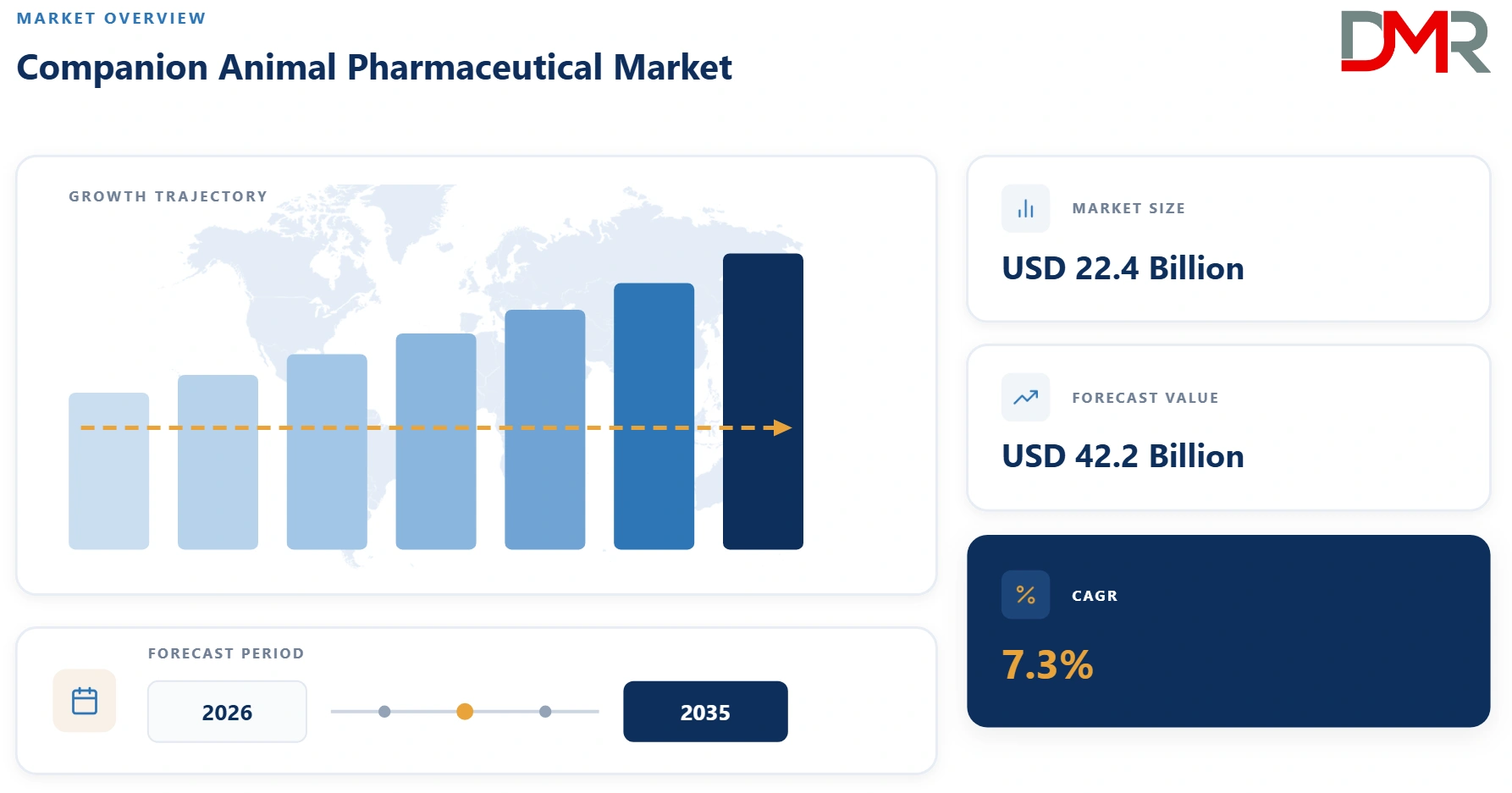
- Market Size (2026): USD 22.4 Bn
- Forecast Value (2035): USD 42.2 Bn
- CAGR (2026-2035): 7.3%
- Largest Region (2026): North America, approximately 40.9%
- Fastest-Growing Region: Asia-Pacific
- Leading Product Type (2026): Veterinary Drugs, around 63.8%
- Leading Animal Type (2026): Dogs, close to 57.4%
- Key Players: Zoetis, Merck Animal Health, Boehringer Ingelheim Animal Health, Elanco, and Others
What is Companion Animal Pharmaceutical Market and its Market Size?
Global Companion Animal Pharmaceutical Market size is estimated to reach USD 22.4 Bn in 2026 and is further anticipated to reach USD 42.2 Bn by 2035, at a CAGR of 7.3%.
ℹ
To learn more about this report –
Download Your Free Sample Report Here
The market comprises prescription and non-prescription pharmaceutical and biological products developed to prevent, control, or treat diseases in dogs, cats, horses, and other companion animals. The scope includes parasiticides, anti-infectives, pain and inflammation therapies, dermatology products, endocrine and metabolic drugs, oncology medicines, vaccines, monoclonal antibodies, and other targeted therapeutics distributed through veterinary and pharmacy channels.
Demand is supported by increasing pet ownership, higher spending per animal, longer companion-animal lifespans, and growing diagnosis of chronic conditions such as osteoarthritis, atopic dermatitis, diabetes, chronic kidney disease, cardiac disorders, and cancer. As owners increasingly view pets as family members, treatment decisions are shifting toward longer-duration disease management and advanced therapies that improve mobility, comfort, and quality of life.
The industry is also moving toward biologics and species-specific targeted therapies. Monoclonal antibodies, next-generation immunomodulators, long-acting injectables, and more convenient oral or topical formulations are expanding treatment options. These innovations can improve adherence and address conditions for which conventional small-molecule therapies have limitations.
Commercial success depends on clinical differentiation, regulatory approval, veterinarian adoption, safety evidence, manufacturing quality, intellectual property, and access through veterinary clinics and retail or online channels. Large animal-health companies retain advantages in R&D scale and global distribution, while specialist developers can compete in underserved therapeutic niches.
Use Cases
- Parasite Prevention and Control: Monthly or long-acting flea, tick, heartworm, and intestinal parasite therapies are used to protect companion animals from infestations and vector-borne diseases while supporting recurring preventive-care revenue.
- Chronic Pain and Osteoarthritis Management: Veterinarians use anti-inflammatory drugs, analgesics, and newer biologic therapies to manage chronic musculoskeletal pain, improve mobility, and maintain quality of life in aging dogs and cats.
- Dermatology and Allergy Treatment: Prescription therapies address atopic dermatitis, pruritus, infections, and inflammatory skin disorders through oral drugs, injectables, topical medicines, and targeted immunologic treatments.
- Vaccination and Infectious Disease Prevention: Core and risk-based vaccines protect dogs, cats, and other companion animals from infectious diseases and remain a central component of preventive veterinary medicine.
Key Takeaways
- Market Size & Share: Global revenue is estimated at USD 22.4 Bn in 2026, with North America contributing approximately 40.9%.
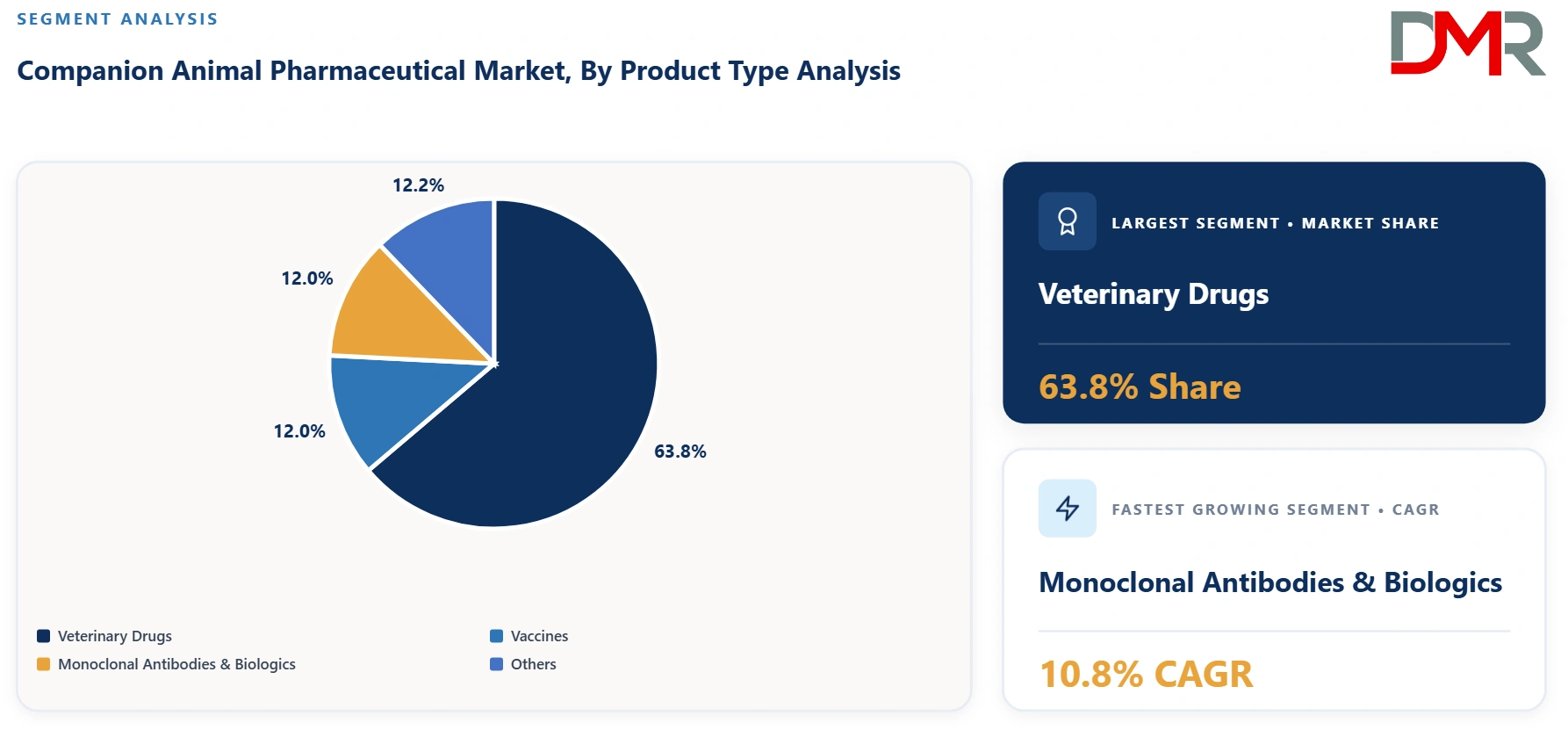
- Product Type Analysis: Veterinary Drugs are estimated to hold 63.8% of 2026 revenue, while Monoclonal Antibodies & Biologics are projected to expand at 10.8% CAGR.
- Animal Type Analysis: Dogs lead with approximately 57.4% share in 2026, while feline pharmaceuticals are projected to expand at 8.2% CAGR.
- Drug Class Analysis: Parasiticides hold approximately 28.6% share, while oncology drugs are projected to record a 10.1% CAGR through 2035.
- Regional Analysis: Asia-Pacific is projected to be the fastest-growing region, with an estimated CAGR of 8.8% from 2026 to 2035.
- Commercial Catalyst: Online pharmacies are projected to expand at approximately 10.4% CAGR as refill convenience and digital pet-health purchasing increase.
How AI/Gen AI is Transforming the Companion Animal Pharmaceutical Market?
AI is increasingly used in veterinary drug discovery to prioritize biological targets, predict molecular properties, identify repurposing opportunities, and support biomarker development. Machine learning can combine clinical records, imaging, laboratory results, and genomic data to improve patient stratification and help developers identify companion-animal populations most likely to benefit from targeted therapies.
Generative AI can also support literature synthesis, protocol drafting, pharmacovigilance case processing, regulatory document preparation, and medical-information workflows. In commercial settings, AI can help manufacturers forecast demand by therapeutic category and improve veterinarian education. Adoption requires validated datasets, human review, data governance, and careful separation between decision-support functions and regulated clinical or regulatory judgments.
- Drug Discovery: AI models can prioritize compounds and biologic targets for species-specific therapeutic development.
- Pharmacovigilance: Automated classification can help identify safety signals and organize adverse-event reports for expert review.
- Clinical Development: Predictive analytics can support trial-site selection, patient eligibility, endpoint analysis, and dose optimization.
- Commercial Forecasting: AI can improve demand planning by integrating prescription trends, seasonality, disease incidence, and channel data.
Key Drivers in the Global Companion Animal Pharmaceutical Market
Rising Pet Ownership and Higher Healthcare Spending
The expanding companion-animal population and increasing willingness of owners to spend on preventive and therapeutic care are major demand drivers. Higher expenditure supports routine parasite control, vaccination, dermatology treatment, chronic pain management, and long-term therapies for age-related diseases. Pet humanization is also increasing acceptance of advanced medicines that may carry premium prices but provide improved convenience or clinical outcomes. As veterinary diagnostic capability improves, more chronic and complex diseases are identified, broadening the treated population and increasing pharmaceutical utilization across the animal lifecycle.
Expansion of Targeted and Long-Acting Therapies
Animal-health R&D is shifting toward therapies designed around specific disease pathways and species needs. Monoclonal antibodies, targeted immunomodulators, long-acting injectables, and advanced dermatology and pain treatments can improve efficacy or dosing convenience compared with conventional therapy. These products expand the commercial value of categories such as osteoarthritis, allergy, oncology, and chronic disease management. Successful launches also encourage veterinarians and owners to consider sustained treatment rather than episodic symptom control, increasing the recurring revenue opportunity for manufacturers.
Restraints in the Global Companion Animal Pharmaceutical Market
High Cost of Advanced Therapies
Innovative biologics and specialty medicines can carry higher treatment costs because of R&D investment, complex manufacturing, regulatory requirements, and ongoing monitoring. Since a substantial share of companion-animal care is paid directly by owners, affordability can limit uptake, particularly for chronic conditions requiring repeated dosing. Differences in pet insurance penetration further influence access. Manufacturers therefore need to demonstrate meaningful clinical value while considering dosing convenience, treatment duration, and channel economics.
Lengthy Regulatory and Development Timelines
Companion-animal pharmaceuticals require evidence of safety, efficacy, quality, and appropriate labeling before commercialization. Development can involve species-specific pharmacology, field studies, manufacturing validation, and post-market safety obligations. These requirements increase capital needs and extend timelines, particularly for novel biologics or new molecular entities. Smaller developers may face financing constraints before reaching approval, while global manufacturers must manage different regulatory pathways and product registrations across major markets.
Growth Opportunities in the Global Companion Animal Pharmaceutical Market
Feline Therapeutics and Underserved Chronic Diseases
Cats represent a growing opportunity because several chronic feline conditions still have fewer approved treatment options than comparable canine indications. Kidney disease, hyperthyroidism, osteoarthritis pain, diabetes, obesity, and dermatologic disorders create opportunities for formulations designed around feline physiology and owner-administration challenges. Palatable oral liquids, long-acting injections, transdermal approaches, and targeted biologics can improve adherence and expand the treated population.
Emerging-Market Expansion and Digital Distribution
Urban pet ownership is increasing across Asia-Pacific and Latin America, creating demand for branded preventive medicines, vaccines, dermatology therapies, and chronic-disease treatments. Manufacturers can expand through local distributors, veterinary chains, e-commerce partnerships, and regionally adapted product portfolios. Online pharmacy growth also creates opportunities for recurring prescription refills and preventive products, provided regulatory requirements for veterinary prescriptions and product authenticity are maintained.
Trends in the Global Companion Animal Pharmaceutical Market
Growth of Monoclonal Antibodies and Biologics
Biologic medicines are becoming a more visible part of companion-animal treatment, particularly in chronic pain and dermatology. Their ability to target specific pathways and offer extended dosing intervals can improve adherence and create differentiated premium products. Continued investment in antibody discovery, manufacturing platforms, and species-specific validation is expected to broaden biologic pipelines into additional inflammatory, oncologic, and chronic indications.
Shift Toward Convenience-Focused Formulations
Product development increasingly emphasizes administration convenience through chewables, flavored tablets, spot-on products, oral liquids, and longer-acting injectable therapies. Convenience matters because owner adherence directly affects treatment outcomes in chronic and preventive care. Manufacturers that reduce dosing frequency or administration difficulty can strengthen veterinarian recommendation and owner persistence, particularly in cats, multi-pet households, and long-duration disease management.
Research Scope and Analysis
The market is analyzed by Product Type, Drug Class, Animal Type, Route of Administration, and Distribution Channel, with regional assessment across North America, Europe, Asia-Pacific, Latin America, and Middle East & Africa.
ℹ
To learn more about this report –
Download Your Free Sample Report Here
By Product Type
Veterinary Drugs is estimated to lead the product type category with around 63.8% of revenue in 2026, supported by established veterinarian use, broad product availability, and recurring treatment demand. Growth, however, is concentrated in Monoclonal Antibodies & Biologics, which is projected to expand at a CAGR of 10.8% between 2026 and 2035. Expansion is supported by product innovation, improved diagnosis, owner willingness to pursue advanced treatment, and increasing access through veterinary and digital channels. Competitive positioning will depend on clinical differentiation, safety, dosing convenience, veterinarian acceptance, pricing, and reliable supply.
By Drug Class
Parasiticides is estimated to lead the drug class category with around 28.6% of revenue in 2026, supported by established veterinarian use, broad product availability, and recurring treatment demand. Growth, however, is concentrated in Oncology Drugs, which is projected to expand at a CAGR of 10.1% between 2026 and 2035. Expansion is supported by product innovation, improved diagnosis, owner willingness to pursue advanced treatment, and increasing access through veterinary and digital channels. Competitive positioning will depend on clinical differentiation, safety, dosing convenience, veterinarian acceptance, pricing, and reliable supply.
By Animal Type
Dogs is estimated to lead the animal type category with around 57.4% of revenue in 2026, supported by established veterinarian use, broad product availability, and recurring treatment demand. Growth, however, is concentrated in Cats, which is projected to expand at a CAGR of 8.2% between 2026 and 2035. Expansion is supported by product innovation, improved diagnosis, owner willingness to pursue advanced treatment, and increasing access through veterinary and digital channels. Competitive positioning will depend on clinical differentiation, safety, dosing convenience, veterinarian acceptance, pricing, and reliable supply.
By Route of Administration
Oral is estimated to lead the route of administration category with around 42.7% of revenue in 2026, supported by established veterinarian use, broad product availability, and recurring treatment demand. Growth, however, is concentrated in Parenteral, which is projected to expand at a CAGR of 8.1% between 2026 and 2035. Expansion is supported by product innovation, improved diagnosis, owner willingness to pursue advanced treatment, and increasing access through veterinary and digital channels. Competitive positioning will depend on clinical differentiation, safety, dosing convenience, veterinarian acceptance, pricing, and reliable supply.
By Distribution Channel
Veterinary Hospitals & Clinics is estimated to lead the distribution channel category with around 58.9% of revenue in 2026, supported by established veterinarian use, broad product availability, and recurring treatment demand. Growth, however, is concentrated in Online Pharmacies, which is projected to expand at a CAGR of 10.4% between 2026 and 2035. Expansion is supported by product innovation, improved diagnosis, owner willingness to pursue advanced treatment, and increasing access through veterinary and digital channels. Competitive positioning will depend on clinical differentiation, safety, dosing convenience, veterinarian acceptance, pricing, and reliable supply.
The Global Companion Animal Pharmaceutical Market Report is Segmented Based on the Following
By Product Type
- Veterinary Drugs
- Vaccines
- Monoclonal Antibodies & Biologics
- Others
By Drug Class
- Parasiticides
- Anti-infectives
- Anti-inflammatory & Pain Management Drugs
- Dermatology Drugs
- Oncology Drugs
- Endocrine & Metabolic Drugs
- Others
By Animal Type
- Dogs
- Cats
- Horses
- Other Companion Animals
By Route of Administration
- Oral
- Parenteral
- Topical
- Others
By Distribution Channel
- Veterinary Hospitals & Clinics
- Retail Pharmacies & Drug Stores
- Online Pharmacies
- Others
Regional Analysis
Global demand is concentrated in established pet-health economies, while faster expansion is expected in regions where companion-animal ownership, veterinary access, pharmaceutical availability, and household spending on pet healthcare are increasing.
Region with the Largest Revenue Share
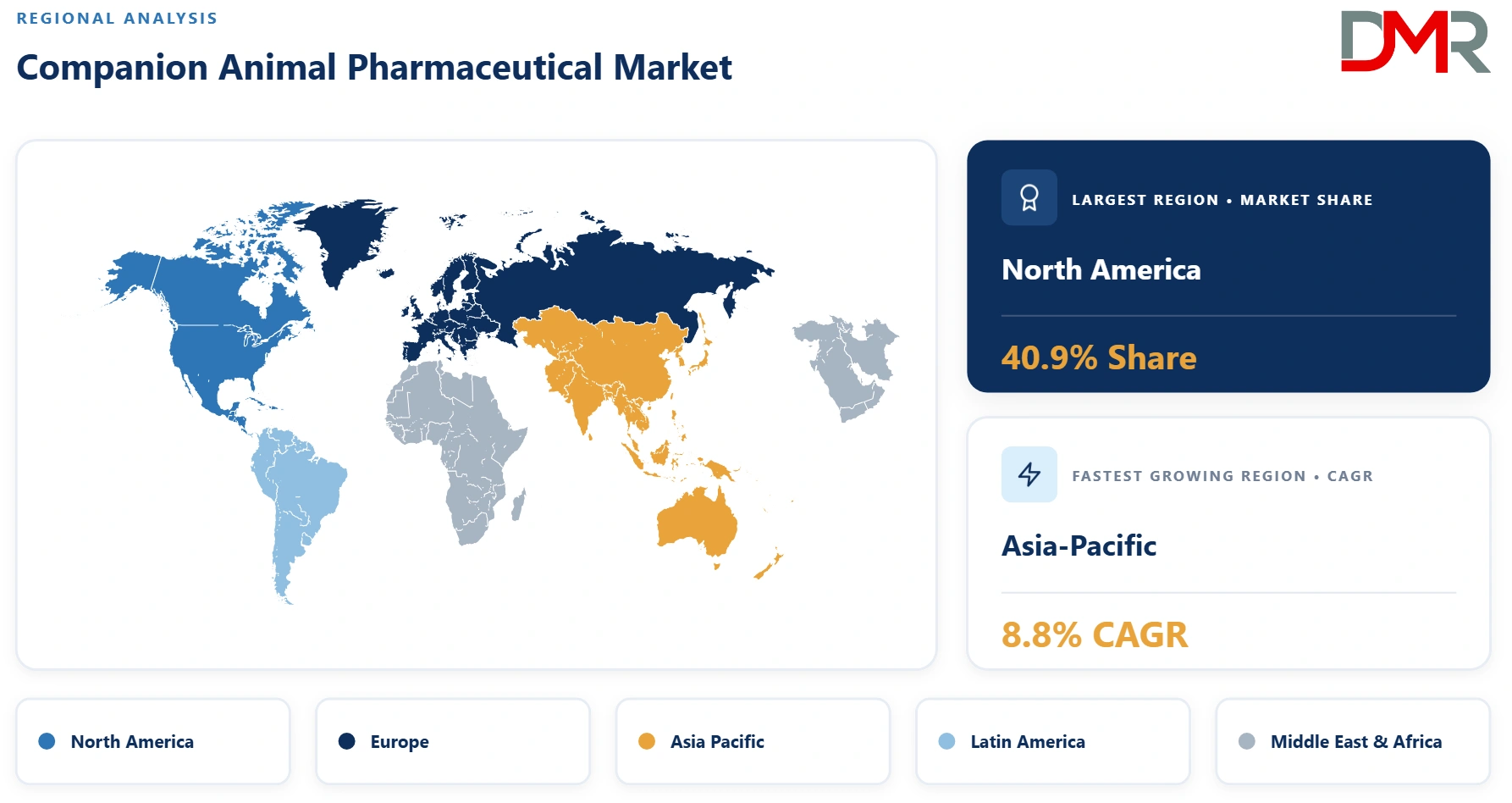
North America is estimated to hold approximately 40.9% of global revenue in 2026. The region benefits from high pet ownership, substantial expenditure per animal, strong veterinary infrastructure, broad access to prescription medicines, and rapid adoption of innovative therapies. The United States represents the majority of regional demand and is a major launch market for new parasiticides, dermatology drugs, pain therapies, vaccines, and biologics. Strong veterinarian engagement and comparatively developed pet-insurance and specialty-care ecosystems support pharmaceutical utilization, although affordability remains an important consideration.
ℹ
To learn more about this report –
Download Your Free Sample Report Here
Region with the Highest CAGR
Asia-Pacific is projected to register the highest regional CAGR at approximately 8.8% from 2026 to 2035. Growth is supported by urban pet adoption, rising household incomes, expansion of organized veterinary clinics, greater preventive-care awareness, and improving availability of branded medicines. China, India, Japan, South Korea, and Australia provide different growth profiles, ranging from mature premium markets to rapidly expanding urban demand. Manufacturers are increasingly using local distribution partnerships, digital channels, and region-specific portfolios to improve market access.
By Region
- North America: The US, Canada
- Europe: Germany, France, The UK, Italy, Spain, Rest of Europe
- Asia-Pacific: China, Japan, India, Australia, South Korea, Rest of APAC
- Latin America: Mexico, Brazil, Colombia, Argentina, Rest of LATAM
- Middle East & Africa: Saudi Arabia, The UAE, South Africa, Rest of MEA
Regulatory Landscape
Companion-animal pharmaceuticals are regulated through veterinary-medicine frameworks that require evidence of product quality, safety, efficacy, manufacturing consistency, and appropriate labeling. Requirements differ across jurisdictions and may include prescription classification, pharmacovigilance, antimicrobial stewardship, environmental assessment, and controls on online dispensing. Novel biologics and conditionally approved products can require specialized development strategies and post-approval commitments. Manufacturers with global ambitions must therefore coordinate regulatory submissions, manufacturing changes, safety surveillance, and lifecycle management across multiple authorities while maintaining veterinarian-facing medical information and compliant promotion.
Patent Analysis
Patent strategy is increasingly important as companion-animal innovation expands beyond established small molecules into antibodies, targeted immunomodulators, novel formulations, delivery systems, and new therapeutic indications. Companies can protect composition of matter, biologic sequences, manufacturing processes, formulations, dosing regimens, and specific veterinary uses. As high-value products approach loss of exclusivity, lifecycle management may include new combinations, formulations, species indications, or dosing schedules. Patent landscapes are particularly relevant in fast-growing categories such as osteoarthritis pain, dermatology, oncology, and biologics, where differentiated intellectual property can support premium positioning and partnership value.
Competitive Landscape
The market is led by multinational animal-health companies with broad portfolios, global regulatory capabilities, established veterinarian relationships, and significant R&D budgets. Competition is strongest in parasiticides, vaccines, dermatology, pain management, anti-infectives, and emerging biologics. Larger companies use product launches, licensing, acquisitions, and lifecycle management to defend category positions, while regional and specialist manufacturers compete through cost, local distribution, niche indications, and formulation expertise. The next competitive phase is expected to place greater emphasis on targeted biologics, feline therapies, chronic disease management, and convenient long-acting treatment.
Some of the Prominent Players in the Global Companion Animal Pharmaceutical Market Are:
- Zoetis Inc.
- Merck Animal Health
- Boehringer Ingelheim Animal Health
- Elanco Animal Health Incorporated
- Virbac S.A.
- Ceva Santé Animale
- Dechra Pharmaceuticals
- Vetoquinol S.A.
- Norbrook Laboratories
- Phibro Animal Health Corporation
- Bimeda
- Kyoritsu Seiyaku Corporation
- Orion Animal Health
- Chanelle Pharma
- HIPRA
- Indian Immunologicals Limited
- Hester Biosciences Limited
- Bioveta a.s.
- Animalcare Group plc
- Eco Animal Health Group plc
- Ourofino Saúde Animal
- Alivira Animal Health
- Zenex Animal Health
- Ashish Life Science
- Veko Care
- Agrolabo S.p.A.
- Vetbiolix
- Endovac Animal Health
- Tianjin Ringpu Bio-Technology Co., Ltd.
- Jurox Pty Ltd
- Candioli Pharma
- Vet-Agro Sp. z o.o.
- Laboratorios Calier
- Laboratorios Karizoo
- Vetanco
- Brouwer
- Agrovet Market Animal Health
- Teknofarma
- NITA-FARM
- Provet Group
- Other Key Players
Recent Developments
- In February 2026, MSD Animal Health announced U.S. FDA approval of NUMELVI (atinvicitinib tablets) for control of pruritus associated with allergic dermatitis in dogs.
- In December 2025, Virbac acquired Felanorm (methimazole) Oral Solution from Norbrook Laboratories, strengthening its feline hyperthyroidism portfolio.
- In October 2025, European authorization was reported for Portela (relfovetmab), a long-acting monoclonal antibody therapy for osteoarthritis pain in cats.
- In September 2025, Virbac launched Vikaly, a medicated renal feed approach for cats with chronic kidney disease, designed to simplify medicine administration.
- In January 2025, Ceva Animal Health entered a long-term collaboration with Touchlight involving dbDNA technology for future animal-health vaccines and therapeutics.
Report Details
| Report Characteristics |
| Market Size (2026) |
USD 22.4 Bn |
| Forecast Value (2035) |
USD 42.2 Bn |
| CAGR (2026–2035) |
7.3% |
| The US Market Size (2026) |
USD 8.0 Bn |
| Historical Data |
2021 – 2025 |
| Forecast Data |
2026 – 2035 |
| Base Year |
2025 |
| Segments Covered |
By Product Type, By Drug Class, By Animal Type, By Route of Administration, By Distribution Channel |
| Regional Coverage |
North America, Europe, Asia-Pacific, Latin America, Middle East & Africa |
Frequently Asked Questions
How big is the Global Companion Animal Pharmaceutical Market?
▾ Global Companion Animal Pharmaceutical Market size is estimated to reach USD 22.4 Bn in 2026 and is projected to reach USD 42.2 Bn by 2035, growing at a CAGR of 7.3%.
What is the growth rate of the Global Companion Animal Pharmaceutical Market?
▾ The market is expected to expand at an estimated CAGR of 7.3% from 2026 to 2035, supported by pet humanization, chronic disease treatment, preventive medicines, and innovation in targeted therapies.
Which region holds the largest share in the Global Companion Animal Pharmaceutical Market?
▾ North America leads the market with approximately 40.9% of global revenue in 2026, supported by high pet-health spending, advanced veterinary infrastructure, and rapid uptake of innovative medicines.
Who are the key players in the Global Companion Animal Pharmaceutical Market?
▾ Prominent companies include Zoetis, Merck Animal Health, Boehringer Ingelheim Animal Health, Elanco Animal Health, Virbac, Ceva Santé Animale, Dechra Pharmaceuticals, and Vetoquinol.
Which segment is leading the Global Companion Animal Pharmaceutical Market?
▾ Veterinary Drugs lead the product-type category with an estimated 63.8% share in 2026, reflecting broad use across parasite control, infectious disease, pain, dermatology, endocrine, and other conditions.
Which segment is expanding fastest in the Global Companion Animal Pharmaceutical Market?
▾ Monoclonal Antibodies & Biologics are projected to record the fastest product-type growth at approximately 10.8% CAGR through 2035 as targeted therapies gain adoption.
What are the major growth drivers in the Global Companion Animal Pharmaceutical Market?
▾ Major growth drivers include rising companion-animal ownership, higher healthcare spending per pet, increasing diagnosis of chronic diseases, and expansion of innovative long-acting and targeted therapies.