What is the Condom Market Size?
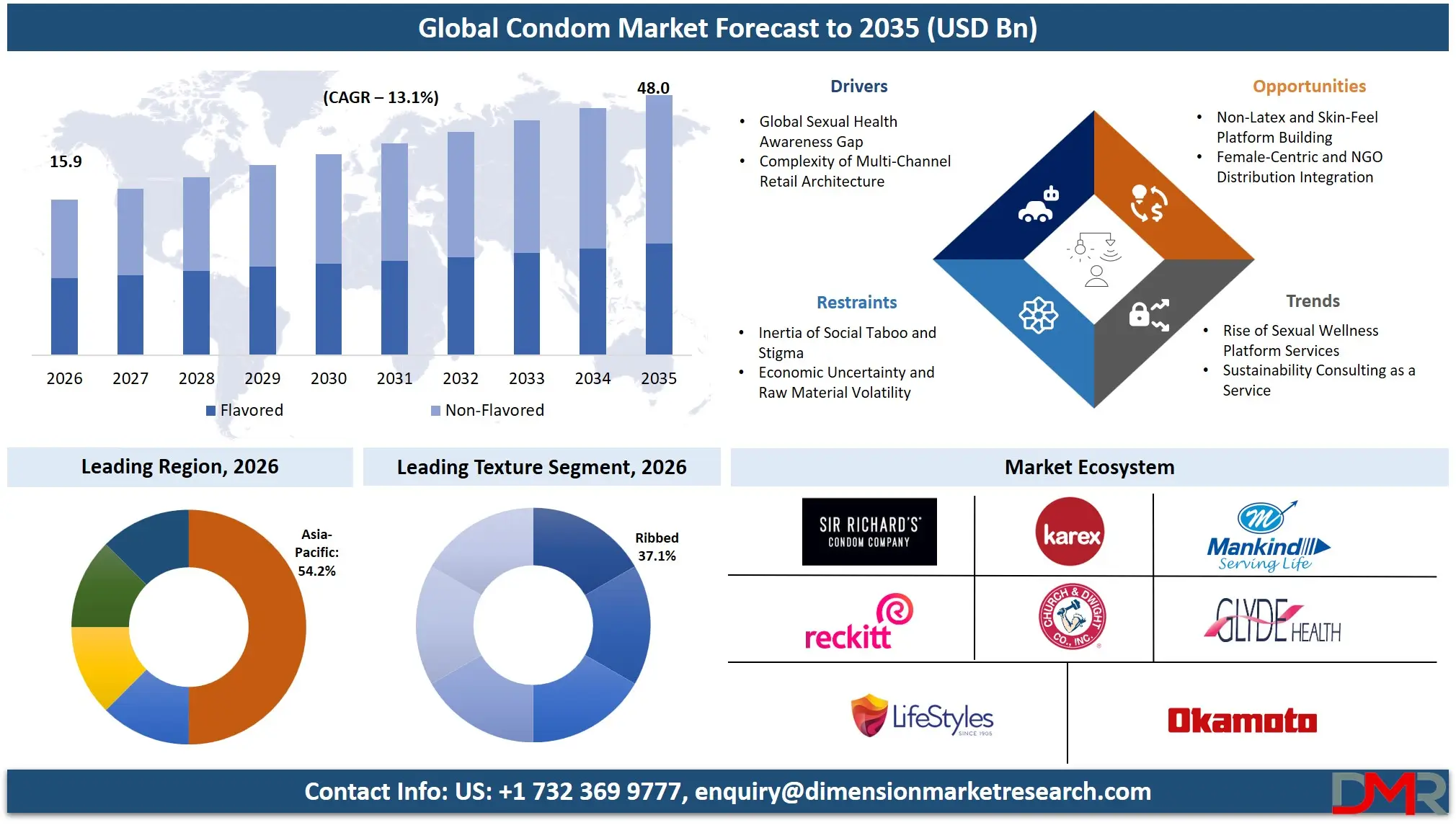
The Global Condom Market is expected to reach a value of USD 15.9 billion in 2026, and it is further anticipated to reach USD 48.0 billion by 2035, growing at a CAGR of 13.1% during the forecast period.
ℹ
To learn more about this report –
Download Your Free Sample Report Here
The condom market has been witnessing a strong growth rate with a growing global focus on sexual health, rising sexually transmitted infections (STIs) and a paradigm shift towards a less stigmatised view of sexual health products. The market is a combination of product innovation, material science, and distribution channels which enable public health and commercial organisations to gain accessibility to the product.
The need to incorporate ultra-thin, skin-like technologies, natural and non-latex products, and textured products for pleasure is creating a demand for specific research, development and marketing expertise. Condom users are largely adults and youth, with male condoms being the most popular type of product due to its convenience and affordability. The BFSI (for corporate wellness), medical, government and NGO markets are important distribution channels as they have to provide safe, compliant and accessible sexual health systems.
ℹ
To learn more about this report –
Download Your Free Sample Report Here
The US Condom Market
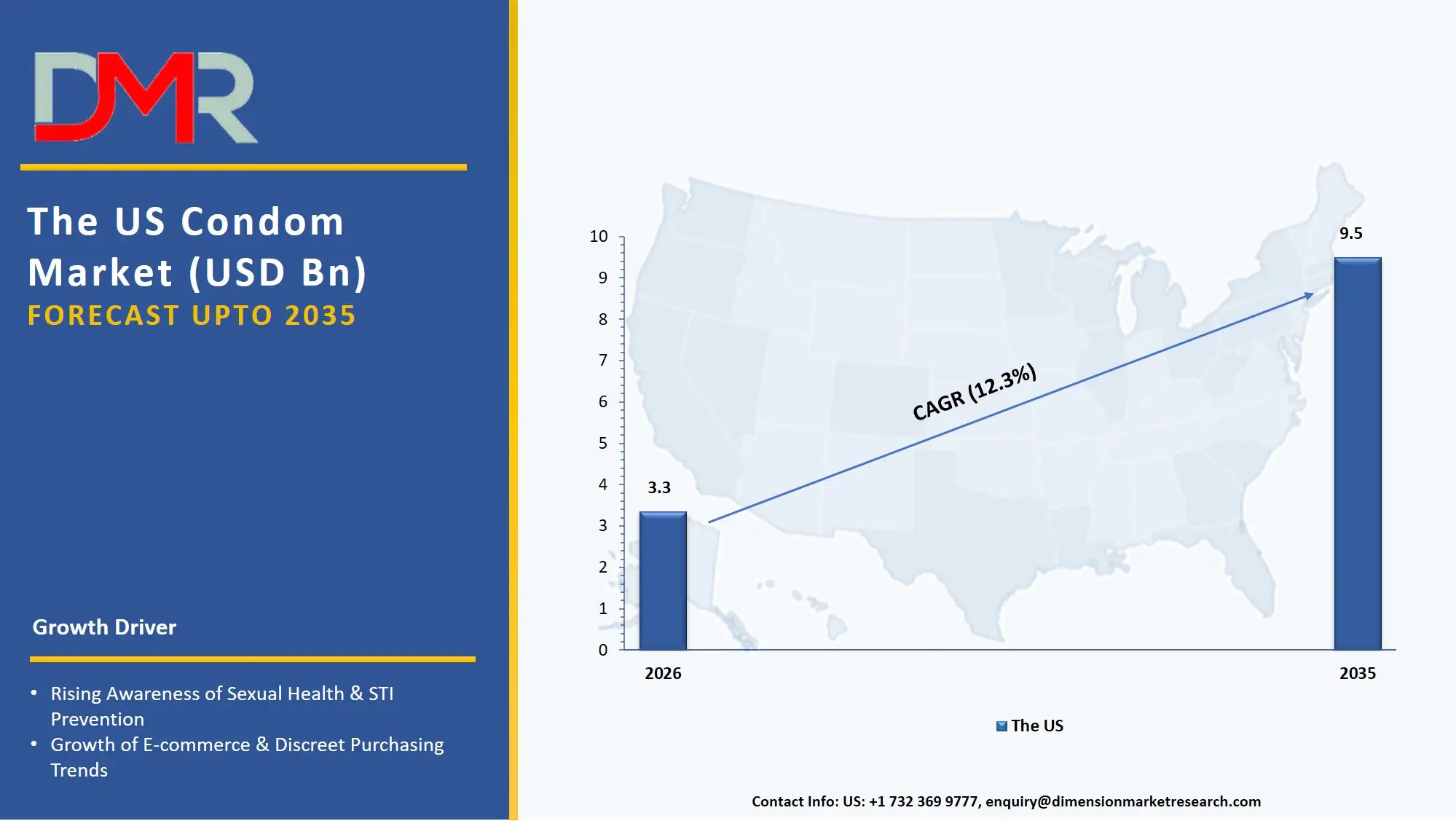
The US Condom Market is projected to reach USD 3.3 billion in 2026 at a compound annual growth rate of 12.3% over its forecast period, which is further forecasted to reach USD 9.5 billion by 2035. The US remains the biggest and most mature market for condoms as a result of the proactively campaigning federal government and the increased distribution of e-commerce brands.
ℹ
To learn more about this report –
Download Your Free Sample Report Here
This market has been characterised by high demand for quality and ultra-thin products where manufacturers are looking to shift from mainstream latex to special polyisoprene and textured condoms that increase pleasure. Further, the adoption of sexual wellness subscription boxes and discreet e-commerce marketing model is also creating this same demand for new distribution approaches to manage customer relationships and ensure product quality in the supply chain.
The Europe Condom Market
The Europe Condom Market is estimated to be valued at USD 4.6 billion in 2026 and is further anticipated to reach USD 13.5 billion by 2035 at a CAGR of 12.7%. The regulatory landscape, such as the EU Medical Device Regulation (MDR), has a profound influence on the European market and create a demand for quality assurance testing and certified natural membrane and non-latex products. It is also witnessing rapid growth in the high-textured condoms and premium condoms as German and French customers strive to balance security and increased pleasure. Also, government-driven public health initiatives are pushing manufacturers to set up special channels to offer accessibility and interoperability in European health systems.
The Japan Condom Market
The Japan Condom Market is projected to be valued at USD 1.7 billion in 2026. It is further expected to witness robust growth, holding USD 4.6 billion in 2035 at a CAGR of 11.9%. The Japanese market is special, with companies involved in a race to the smallest product and material science innovation to meet consumer demands and cultural needs. Ultra-thin polyurethane condoms and special texture products are also a significant component of the sales as local conglomerates shift their manufacturing from latex to synthetic materials. There is also a growing need to embed in the market to connect the existing physical pharmacists and the new online platforms, which is a specialist in direct-to-consumer marketing and express delivery.
Key Takeaways
- Market Size & Forecast: The Global Condom market is projected to reach USD 15.9 billion in 2026, expanding dramatically to USD 48.0 billion by 2035, due to the few factors like the increasing global rates of STIs and the compulsory demystification of sexual health products.
- Growth Rate & Outlook: Global market growth is expected at a CAGR of 13.1%, with a pronounced shortfall in sexual health education in emerging markets and increasing complexity in managing multiple channels of retail and subscription-based direct-to-consumer (DTC) online sales.
- Primary Growth Drivers: Major drivers include the shift from unorganized retail to branded, quality-assured products, the need for public education initiatives on distribution to avoid health epidemics, and the incorporation of new materials science which demands advanced R&D expertise.
- Key Market Trends: Trends include the emergence of gender-neutral and women-specific products, the use of new polymers in ultra-fine textures, and the move towards high-quality non-latex materials as consumers seek comfort and an allergen-free experience.
- By Product Type: Male condoms are poised to dominate due for their low cost, convenience and availability. The market is supported by extensive promotion in public health campaigns and consumer awareness.
- By Material Type: Latex condoms are projected to lead due to low cost, malleability and effectiveness. They are accessible and accommodate variants. Non-latex condoms gain traction among the allergically sensitive but lack popularity; natural membrane condoms have a small luxury market.
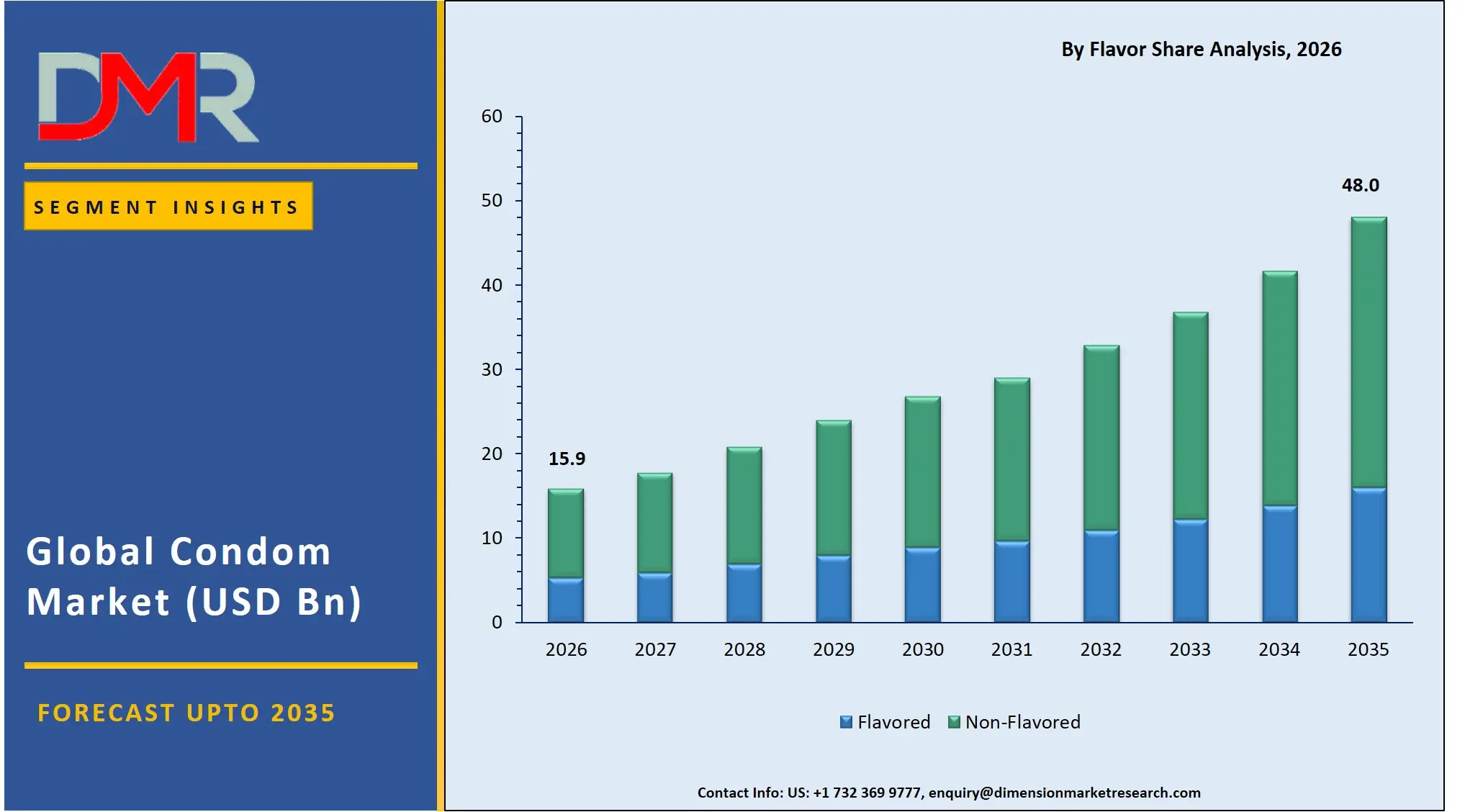
- By Flavor: Non-flavored condoms are expected to dominate as they are used for daily purposes and part of health education programs. Flavored condoms are used for niche applications such as oral sex, restricting their market share, while non-flavored condoms remain in higher global demand.
- Regional Leadership: Asia-Pacific is poised to dominate this market with 54.2% market share in 2026, due to the large population, growing retail and e-commerce, increasing sexual health awareness, and robust government family planning programs.
What is the Condom?
A condom is a disposable barrier contraceptive device used to aid in family planning, prevent the spread of infections, and protect against unintended pregnancy. It's commonly made with materials like latex, polyurethane, or polyisoprene and has various shapes to fit external or internal use. The product functions by creating a physical barrier that prevents direct fluid contact between partners. Its affordability, availability and simplicity of use make it one of the most widely accepted preventive measures globally. Condoms are also an important component of public health programs aimed at curbing the transmission of infectious diseases. Their advocacy by health authorities and governments has led to a greater understanding and uptake, especially in areas where there is an emphasis on preventive health care and population health management.
Use Cases
- Legacy Manufacturing Modernization in B2B Supply: Manufacturers use product development and modernisation services to convert legacy latex dipping lines to automated high-speed polyisoprene production lines, with real-time quality testing and packaging integration.
- Public Health Data Readiness in Government: Health ministries use distribution and logistics services and risk and compliance consulting to secure and standardise data from warehouse systems to a certified storage system, and ensure distribution personnel are ready to be trained in AI-based predictive supply chain models.
- Female Condom Navigation in NGOs: Non-profit agencies engage consulting services to establish awareness paradigms that meet cultural sensitivity laws, so empowerment programs do not run into cultural resistance, but can leverage distribution economies of scale.
- Direct-to-Consumer (DTC) Integration: Global sexual wellness brands use e-commerce integration and marketing automation services to integrate online storefronts with global logistics providers, providing predictive demand sensing and real-time customer engagement visibility.
How AI is Transforming the Condom Market?
The condom market is being transformed by AI through the rapid development of innovative materials, and the efficiency of supply chains. In the Product Development stage, the potential of AI simulation tools to automatically convert design ideas into optimized ultra-thin designs, reduces manual R&D and time-to-market and project risk. On the other hand, AI-based features in Distribution & Logistics help companies manage stock-outs and identify suspicious usage patterns, predict and determine future needs, and recommend actions such as dynamic resupply lanes to complement public health initiatives.
AI is also at the forefront of consumer marketing and public health projects. In consulting services, smart compliance agents are employed to constantly monitor multi-channel marketing environments with regulatory gaps, configuration errors, and policy violations to ensure compliance with regulatory frameworks such as EU MDR, and ISO 4074. Meanwhile, generative AI assistants are supporting sexual education consulting by modelling the effects of educational campaigns and projecting future health scenarios to provide a health impact preview prior to investing in programs.
Market Dynamics
Key Drivers in the Global Condom Market
The Global Sexual Health Awareness Gap
The need for specific awareness campaigns is increasing at a much higher rate than the capacity of public health professionals, which has resulted in a structural gap in the labour market. This has resulted in a shift of outsourcing professional service providers of condom distribution, rather than relying on public health ministry jobs. These firms help with key processes such as social marketing, logistics migration, distribution configuration and managed services that are ongoing. This enables companies to speed up STI prevention programs and reduce the risks of stock outages as a result of capacity challenges.
Complexity of Multi-Channel Retail Architecture
Large-scale enterprises also typically have multiple channels of distribution, mainly pharmacies, e-commerce, and NGO public distribution, to ensure they aren't dependent on a single distribution mode but cover the market. However, managing a multi-channel retail enterprise is extremely complex. Enterprises must coordinate pricing, branding, regulatory and forecasting in multiple platforms using different standards and tools. This could lead to inefficiencies, grey market losses and wasted costs without expert advice. This calls for integration and optimization services to help companies navigate in such settings.
Restraints in the Global Condom Market
Inertia of Social Taboo and Stigma
The majority of people still live in a cultural context that shuns the discussion of sexual health, limiting market expansion. These ingrained attitudes and beliefs present a serious communication challenge to the condom's benefits in terms of public health. There is a risk and cost in promoting pleasure and female-oriented products in conservative markets. Multicultural campaigns need careful planning, experimentation and community engagement. Producers are afraid of product rejection, social resistance and unexpected PR costs during the changeover. As a result, social conservatism slows the uptake of premium products and often slows or even stifles mass-market expansion programmes.
Economic Uncertainty and Raw Material Volatility
Economic uncertainty and volatility in the marketplace has led to a more cautious approach to investment in premium product development. Although health is still a key strategic focus, there is pressure for procurement managers to justify each contract and demonstrate unit economics. The fees and long-term engagement cycles of professional service providers (consultants) are more likely to be scrutinised. Governments are now preferring short-term, volume-based projects that deliver short-term impact metrics and cost reductions.
Growth Opportunities in the Global Condom Market
Non-Latex and Skin-Feel Platform Building
A major opportunity for condom manufacturers is helping them develop safe, non-allergenic polyisoprene and polyurethane product platforms. Many firms have experimented with synthetic alternatives, but they now want to develop their own platforms that fit their own performance, compliance and brand needs. Creating these advanced material ecosystems requires expertise in polymer chemistry, thin-film processing and sensory science. Service firms can help firms develop high-quality, scalable ecosystems that support automation, data analysis and customer preference matching. This sector may generate substantial demand for highly technical consulting and research and development services.
Female-Centric and NGO Distribution Integration
The demand for consideration of both gender sensitivity and specific health networks is adding to the growth of professional services as donors map solutions for women's health. These are female-condom solutions, economic empowerment bundling and public health distribution solutions. UN and NGO sector organisations are to comply with strict gender equity principles and special operation requirements. Therefore, they need implementation partners who understand the technology of the product and the socio-cultural compliance regime.
Trends in the Global Condom Market
The Rise of Sexual Wellness Platform Services
The use of platform engineering is increasingly being embraced by brands as a means of moving beyond siloed retail approaches. Companies are building their own sexual wellness platforms to provide customers with self-serve educational programs and product selection algorithms, instead of relying on pharmacists or other clinicians. These platforms allow for the convenience of subscription management, product recommendations and automation of health content. In response, condom professional service vendors are offering consultancy services for DTC automation, platform design and optimization.
Sustainability Consulting as a Service
Environmental sustainability is also becoming an important focus in the condom procurement decision-making process as companies move towards the inclusion of ESG targets and packaging waste. Companies are looking for material strategies that can assist with performance and cost reduction, and reduce environmental footprint. This has given rise to the need for GreenOps consulting in the latex supply chain. Vendor service professionals help companies in choosing sustainable natural rubber plantations, biodegradable packaging design and avoiding waste using sub-optimal manufacturing capacity.
Research Scope and Analysis
The condom market is primarily driven by male, latex, non-flavored, and ultra-thin condoms due to their affordability, accessibility, safety, and widespread consumer acceptance. Pharmacies and drug stores remain the leading distribution channels, supported by strong public health programs and increasing product innovation globally.
ℹ
To learn more about this report –
Download Your Free Sample Report Here
By Product Type Analysis
Male condoms are projected to dominate this market segment, primarily due to their broader availability, cost-effectiveness and convenience over female condoms. They are widely promoted through public health initiatives and are the first line of defence for contraception and prevention of STIs. They are also widely recognised by consumers and continuously innovated to include new types (ultra-thin and textured). Female condoms, on the other hand, are a niche product, with higher prices, less consumer awareness and fewer retail outlets. Male condoms are also heavily favoured in government and NGO supply programs, further cementing their market share in both developed and emerging markets.
By Material Type Analysis
Latex condoms are poised to dominate the material segment due to their affordability and elasticity, and superior protection from pregnancy and sexually transmitted diseases. They are mass-produced and readily available in the market. Latex also enables a "play" factor with varied products including ribbed, dotted and flavored condoms. While non-latex condoms, which include polyurethane and polyisoprene, are becoming more popular among those with latex allergies, they are more expensive and less accessible. Natural membrane condoms are premium products but less preferred due to low infectivity protection, making latex the preferred option.
By Flavor Analysis
Non-flavored condoms are expected to dominate the flavor segment due to being the standard choice for vaginal sex and representing the vast majority of consumption globally. They are widely available, cheaper and more popular with consumers due to their versatility. Although flavored condoms are on the rise, they are typically used for oral sex and are regarded as a supporting type of product. Further, non-flavored condoms are primarily distributed in large quantities by public health and government agencies for birth control and protection against sexually transmitted diseases. This steady institutional demand ensures non-flavored condoms continue to hold a much larger market share than flavored condoms.
By Texture Analysis
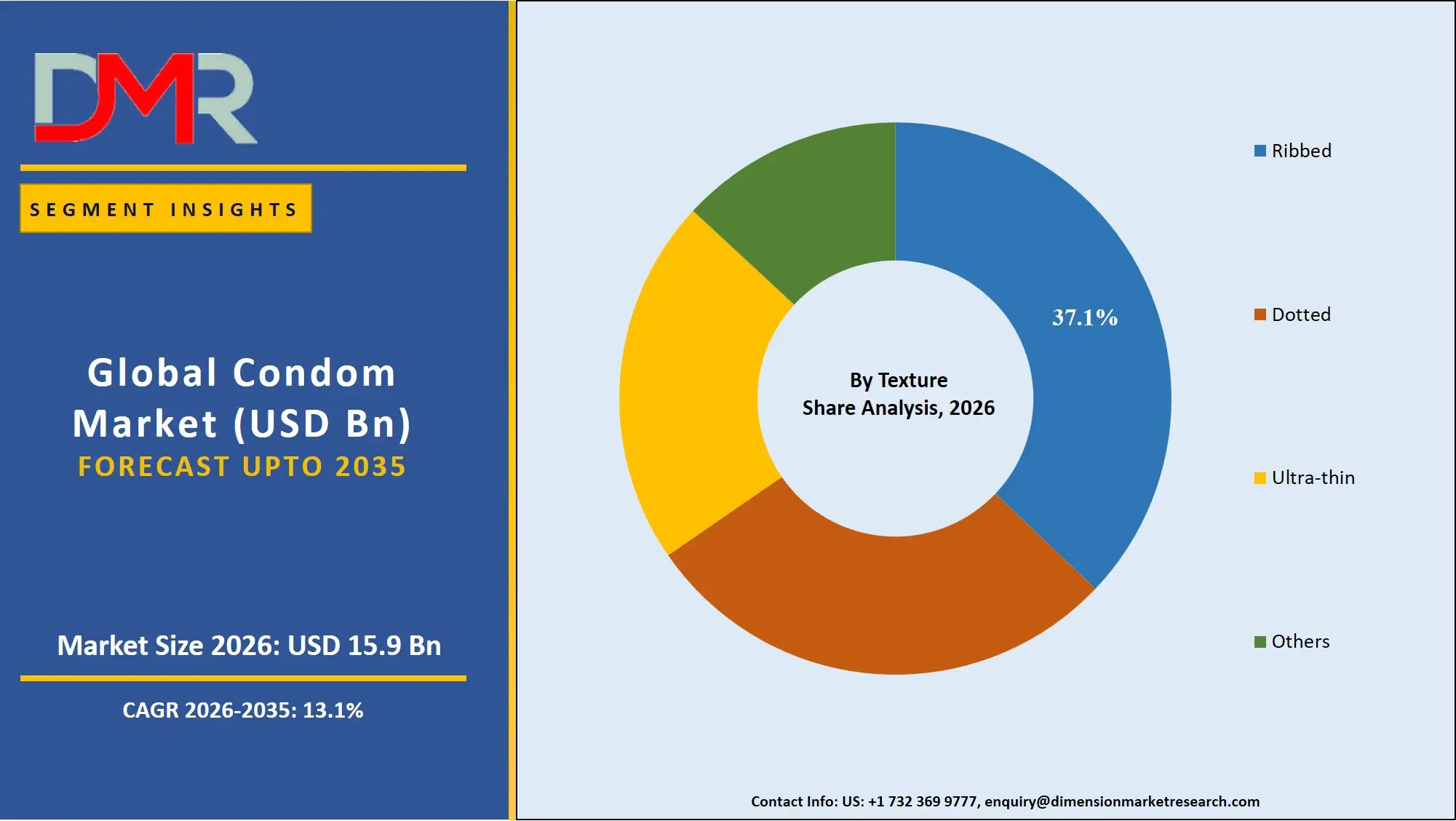
The texture market is poised to be led by ultra-thin condoms as consumers are increasingly focusing on increasing their sensitivity and providing a more natural feel. Technological improvements have allowed the creation of thinner but still safe condoms that enhance user comfort without compromising safety. As a result, there's significant popularity, especially in developed countries where consumers are prepared to pay extra for enhanced functionality. Although ribbed and dotted condoms have their appeal for consumers looking for greater stimulation, these are more specialised products. Ultra-thin types, with their popularity and ongoing innovation, are the preferred option for a wide range of consumers.
By Distribution Channel Analysis
Pharmacies and drug stores are projected to dominate the distribution channel segment as they are widely accessible, reputable, and linked with medical products. Customers may prefer to buy condoms from pharmacies because they guarantee authenticity and provide a professional endorsement. They also serve as important outlets for subsidized and NGO-provided condoms, enhancing their market share. Although supermarkets/hypermarkets play a major role with their bulk sales, and online channels are on the rise as they offer convenience and anonymity, pharmacies remain dominant because of their traditional presence and place within health systems.
The Global Condom Market Report is segmented on the basis of the following:
By Product Type
- Male Condoms
- Female Condoms
By Material Type
- Latex
- Non-Latex (Polyurethane, Polyisoprene)
- Natural Membrane (Lambskin)
By Flavor
By Texture
- Ribbed
- Dotted
- Ultra-thin
- Others
By Distribution Channel
- Pharmacies & Drug Stores
- Supermarkets & Hypermarkets
- Online/E-commerce
- Convenience Stores
- NGOs/Public Distribution
Regional Analysis
Leading Region by Market Share
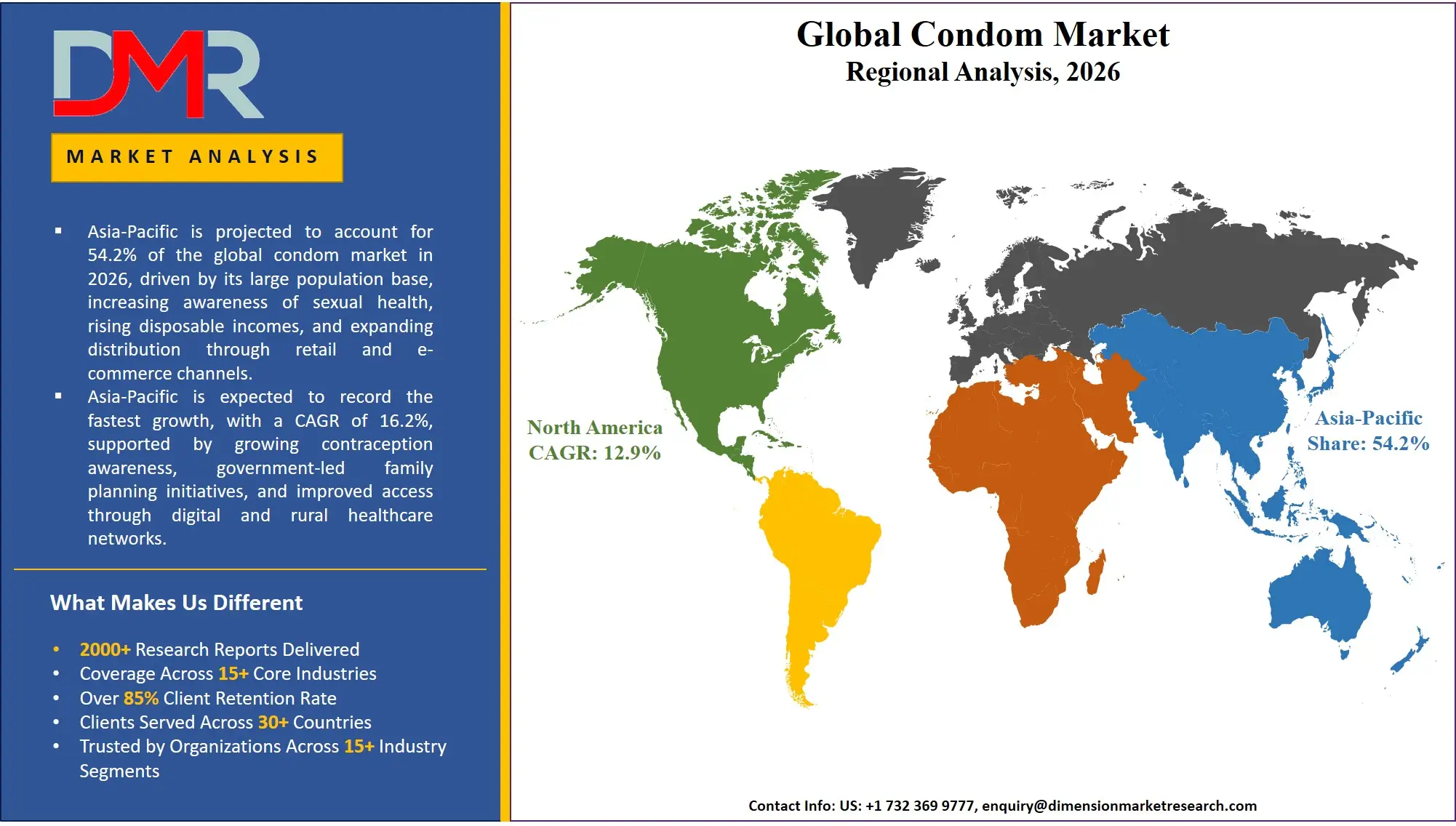
Asia-Pacific is poised to dominate the global condom market as it is projected to hold 54.2% of the market share by the end of 2026. The region's dominance is attributed to its sizeable population, rising awareness of preventive medical care, and robust government-sponsored programs for population control and disease prevention. Major economies like India, China and Japan play a pivotal role in the market through extensive public health initiatives and growing retail and e-commerce distribution. Further, the increase in disposable income and the availability of low-cost products are contributing to increased adoption across both urban and semi-urban regions.
ℹ
To learn more about this report –
Download Your Free Sample Report Here
Fastest-Growing Regional Market
The Asia-Pacific region is also forecasted to be the region with the fastest growth rate, driven by strong economic growth, a growing middle class and rising digital participation. Public and private sector entities are heavily investing in communication programs and new distribution channels, such as e-commerce. In addition, changing consumer perceptions on health and wellness products, along with the emergence of international and regional brands, are resulting in rapid product innovation and premiumization, supporting the regional market growth.
By Region
North America
Europe
- Germany
- The U.K.
- France
- Italy
- Russia
- Spain
- Benelux
- Nordic
- Rest of Europe
Asia-Pacific
- China
- Japan
- South Korea
- India
- ANZ
- ASEAN
- Rest of Asia-Pacific
Latin America
- Brazil
- Mexico
- Argentina
- Colombia
- Rest of Latin America
Middle East & Africa
- Saudi Arabia
- UAE
- South Africa
- Israel
- Egypt
- Rest of MEA
Competitive Landscape
The condom market is highly competitive globally, featuring a blend of multinational giants and local players competing for market share. Major players invest in innovation through the development of ultra-thin condoms, enhanced formulations, and increased comfort features. Robust branding, wide distribution channels and collaborations with health institutions are key competitive strengths. Furthermore, firms are increasingly using digital platforms and direct-to-consumer services to enhance customer relationship and reach. Local producers compete on price and product differentiation, catering to specific preferences and regulatory standards. There is also ongoing investment in advertising to enhance awareness and combat stigma. In summary, the market competition is determined by innovation, pricing, branding, and responsiveness to consumer trends and public health programs.
Some of the prominent players in the Global Condom Market are:
- Reckitt Benckiser
- Church & Dwight
- Karex Berhad
- LifeStyles Healthcare
- Okamoto Industries
- Sagami Rubber Industries
- Fuji Latex Co Ltd
- Thai Nippon Rubber Industry
- Cupid Limited
- HLL Lifecare Limited
- Mankind Pharma
- RFSU AB
- GLYDE Health
- Sir Richard's Condom Company
- Guilin Latex Factory
- Shanghai Dahua Medical Apparatus
- Pleasure Latex Products
- Penta Latex LLP
- J.K. Ansell Ltd
- CPR GmbH
- Other Key Players
Recent Developments
- January 2026: Reckitt Benckiser Group plc is set to expand its Vegan and Non-Latex Innovation Center to enhance its allergy-safe product offerings. This project will explore cutting-edge polyisoprene products and texturing techniques to meet shifting demands of Gen Z and millennial consumers for safer, more comfortable products.
- November 2025: Population Services International strengthened its partnership with World Health Organization to launch a Female Condom Implementation project. The program seeks to enhance uptake and reach in Sub-Saharan Africa through targeted public health distribution and educational campaigns.
- October 2025: Church & Dwight Co., Inc. took over a European sexual wellness start-up to boost its expertise in sourcing natural membranes and offering discreet direct-to-consumer shipments, responding to the growth in demand for discreet, premium offerings.
Report Details
| Report Characteristics |
| Market Size (2026) |
USD 15.9 Bn |
| Forecast Value (2035) |
USD 48.0 Bn |
| CAGR (2026–2035) |
13.1% |
| The US Market Size (2026) |
USD 3.3 Bn |
| Historical Data |
2021 – 2025 |
| Forecast Data |
2027 – 2035 |
| Base Year |
2025 |
| Estimate Year |
2026 |
| Segments Covered |
By Product Type (Male, Female), By Material (Latex, Non-Latex, Natural Membrane), By Flavor (Flavored, Non-Flavored), By Texture (Ribbed, Dotted, Ultra-Thin, Others), And By Distribution Channel (Pharmacies & Drug Stores, Supermarkets & Hypermarkets, Online/E-Commerce, Convenience Stores, NGOs/Public Distribution) |
| Regional Coverage |
North America – The US and Canada; Europe – Germany, The UK, France, Russia, Spain, Italy, Benelux, Nordic, & Rest of Europe; Asia-Pacific – China, Japan, South Korea, India, ANZ, ASEAN, Rest of APAC; Latin America – Brazil, Mexico, Argentina, Colombia, Rest of Latin America; Middle East & Africa – Saudi Arabia, UAE, South Africa, Turkey, Egypt, Israel, & Rest of MEA |
Frequently Asked Questions
How big is the Global Condom Market?
▾ The Global Condom market is poised to be valued at USD 15.9 billion in 2026 and is projected to reach USD 48.0 billion by 2035, driven by the universal need for specialized wellness products for STI prevention, contraception, and intimate pleasure.
Which region held the largest share of the Condom Market in 2026?
▾ Asia Pacific is poised to have dominant share in 2026 in this market, driven by a mature retail ecosystem and aggressive marketing investment in Ultra-thin textures and AI-driven e-commerce capabilities.
Who are the key players in the Global Condom Market?
▾ Key players include Global FMCG companies like Reckitt Benckiser and Church & Dwight, specialized manufacturers like Karex and Okamoto, as well as the industry-specific divisions of healthcare giants, alongside specialized pure-play sexual wellness brands.
What is the CAGR of the Global Condom Market from 2026 to 2035?
▾ The market is expected to grow at a CAGR of 13.1% from 2026 to 2035, reflecting the accelerating complexity of consumer preferences and the persistent shortage of internal sexual health education in underserved regions.
What factors are driving the growth of the Global Condom Market?
▾ Key drivers include the global public health awareness gap, the imperative to modernize legacy product lines with non-latex materials, the management complexity of multi-channel retail and digital deployment, and the surge in demand for premium and flavored products amid evolving social norms.
Which region is expected to grow the fastest in the Condom Market?
▾ The Asia-Pacific region is expected to grow the fastest, fueled by rapid digital transformation in India, China, and Japan, where Social Marketing Consulting is critical for transitioning large populations from unorganized trade to branded, accessible product usage.
What are the major trends in the Global Condom Market?
▾ Major trends include the integration of vegan and sustainable materials, the rise of intimate wellness and GreenOps consulting, the demand for non-allergenic Non-Latex solutions, and the focus on Performance Optimization within textured and dotted product lines.
How is the Global Condom Market segmented?
▾ The market is segmented by Product Type, Material Type, Flavor, Texture, and Distribution Channel.