Market Overview
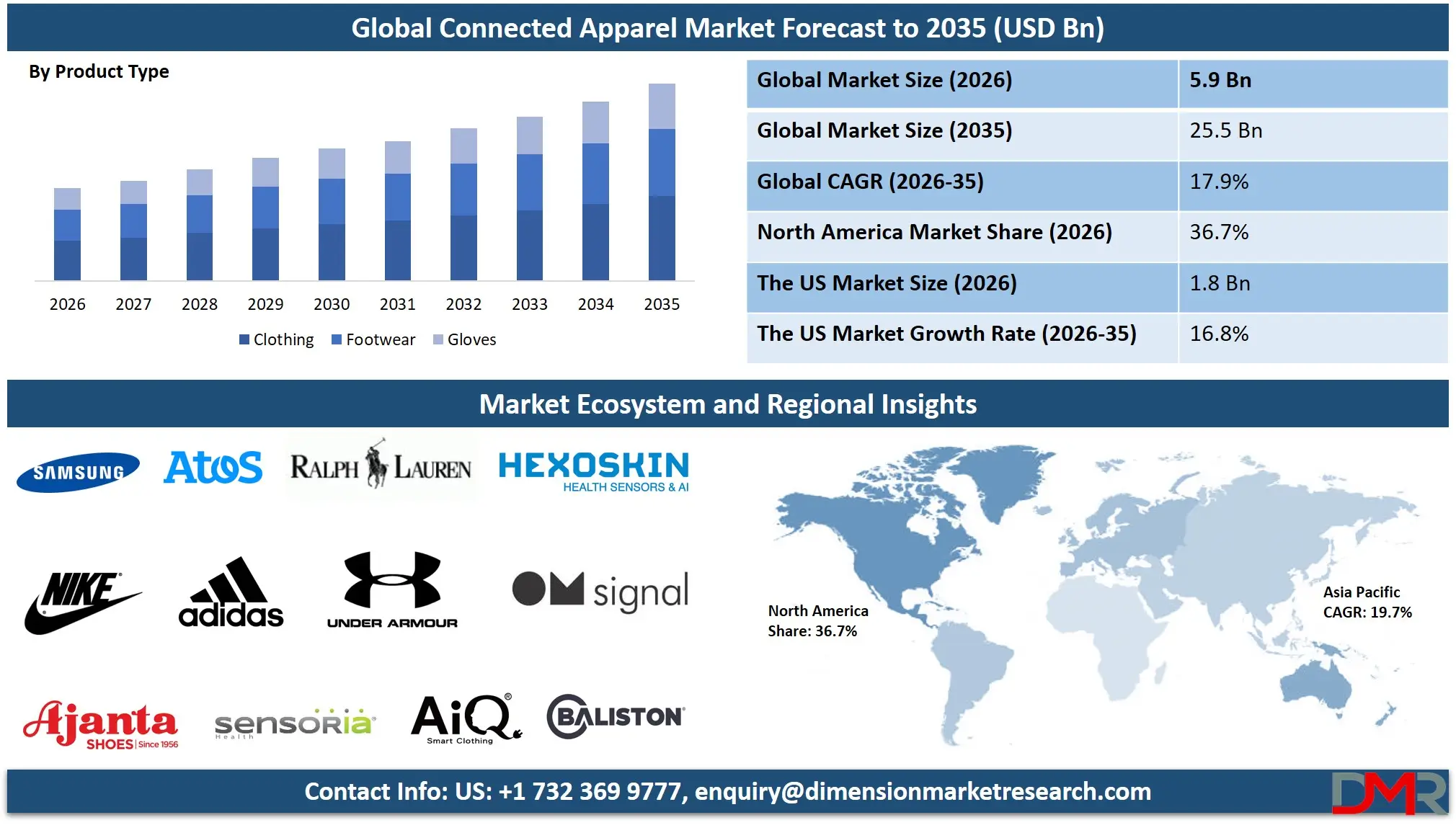
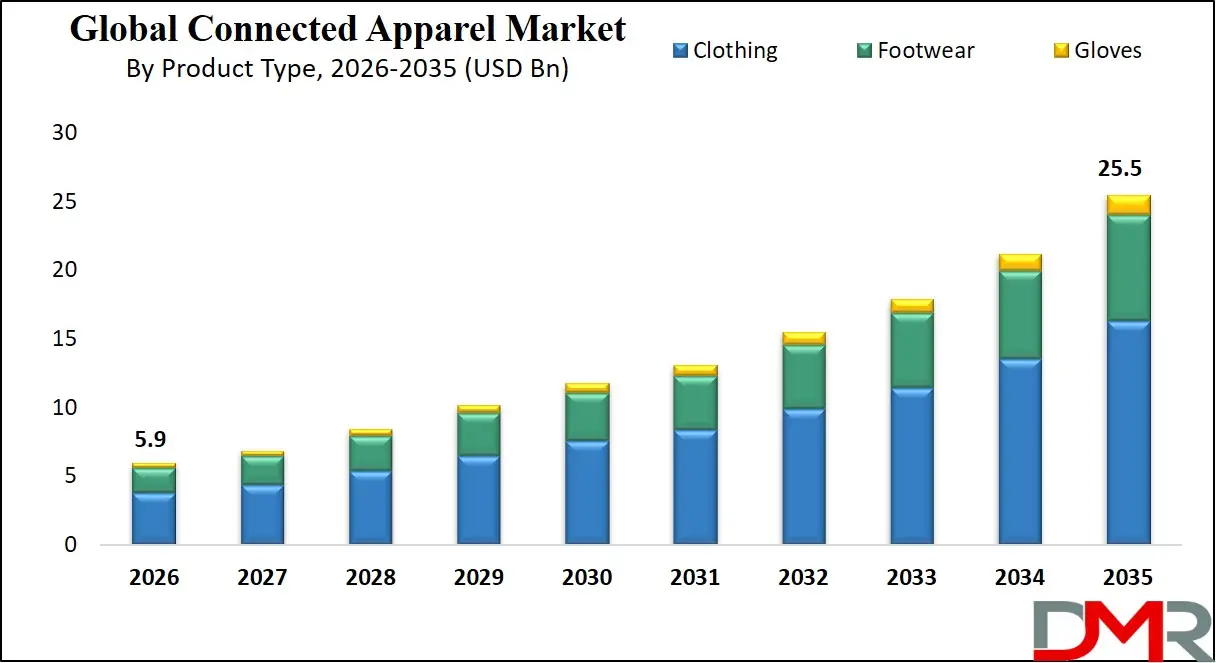
The Global Connected Apparel Market is set for substantial expansion, reaching an estimated USD 5.9 billion in 2026 and projected to grow at a strong CAGR of 17.9% from 2026 to 2035, to the market value of USD 25.5 billion by 2035. This robust growth trajectory is fueled by the accelerating adoption of smart fabrics, miniaturized flexible electronics, biometric sensors, and advanced connectivity modules integrated into clothing across industries.
ℹ
To learn more about this report –
Download Your Free Sample Report Here
Rising consumer focus on preventive healthcare, fitness optimization, real-time health tracking, and personalized wellness insights are compelling apparel manufacturers and technology companies to collaborate on advanced smart garments and connected clothing systems. The rapid expansion of remote patient monitoring, corporate wellness programs, sports performance analytics, and workplace safety initiatives is significantly increasing demand for reliable connected apparel solutions.
Additionally, growing regulatory support for digital health technologies, workplace safety standards, and data privacy compliance related to biometric information are further accelerating market adoption. Businesses are increasingly integrating wearable sensors, ECG monitoring textiles, posture correction garments, temperature-regulating fabrics, and AI-driven health analytics platforms to enhance user engagement and deliver actionable insights.
Cloud-based data platforms, smartphone integration, and scalable IoT infrastructure are enabling enterprises and consumers to implement cost-effective and globally accessible connected apparel services. As health-conscious lifestyles dominate consumer behavior and aging populations seek independent living solutions worldwide, the Connected Apparel Market is expected to witness sustained double-digit growth through 2035, driven by technological convergence and wellness prioritization.
ℹ
To learn more about this report –
Download Your Free Sample Report Here
Growing government initiatives promoting digital health infrastructure, preventive care programs, and occupational safety regulations further accelerate global adoption. However, barriers such as varying data privacy regulations (GDPR, CCPA), high manufacturing costs, challenges in garment washability and durability, and limited consumer awareness remain. Despite these limitations, the convergence of textile engineering, sensor technology, and wireless connectivity positions connected apparel as a transformative segment of the global wearables market through 2035.
The US Connected Apparel Market
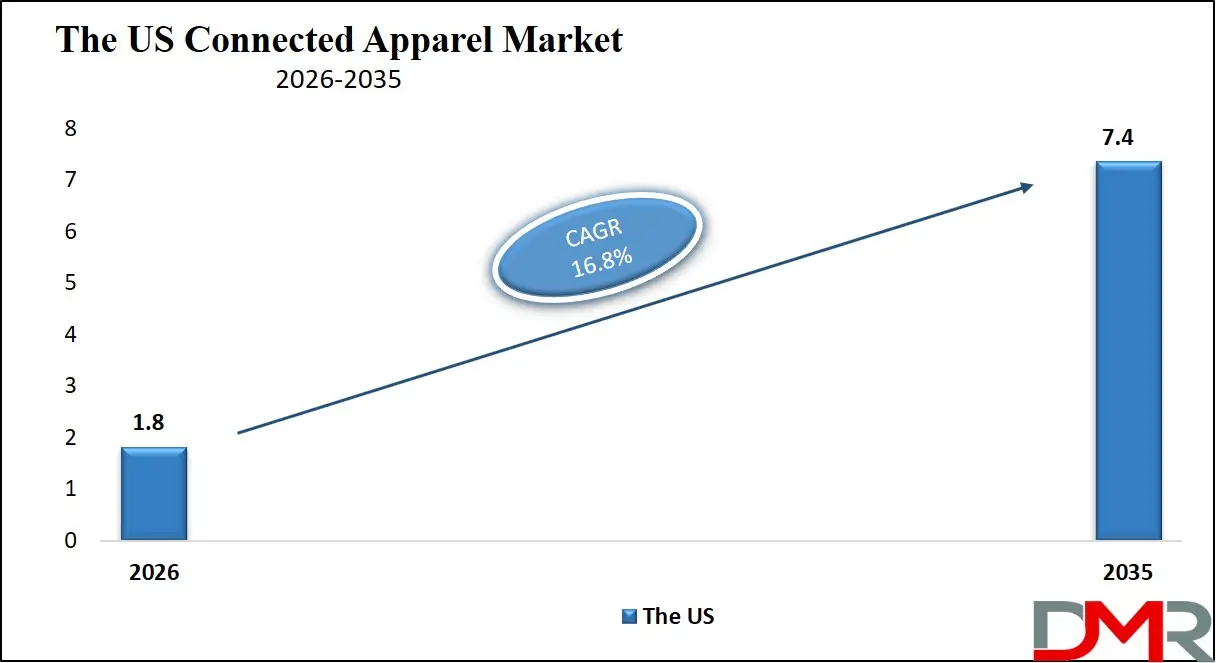
The U.S. Connected Apparel Market is projected to reach USD 1.8 billion in 2026 and grow at a CAGR of 16.8%, reaching USD 7.4 billion by 2035. The U.S. leads global adoption due to its mature healthcare technology ecosystem, high consumer spending on fitness and wellness, and strong presence of major sportswear brands and health technology innovators.
ℹ
To learn more about this report –
Download Your Free Sample Report Here
The proliferation of value-based healthcare models, corporate wellness initiatives, and consumer demand for performance optimization in sports and fitness fuels demand for sophisticated connected apparel solutions. Major technology platforms, healthcare providers, and athletic brands such as Nike, Under Armour, and Apple are integrating advanced biometric sensors into garments to track heart rate, muscle activity, respiration, and movement patterns.
U.S. regulatory support for digital health technologies, alongside frameworks like the FDA's Digital Health Center of Excellence, encourages investment in connected apparel innovations. The market is witnessing a shift toward continuous health monitoring and predictive analytics, reducing reliance on episodic clinical measurements and enhancing preventive care capabilities. The rise of chronic diseases such as diabetes and cardiovascular conditions has further intensified the focus on remote patient monitoring solutions, positioning the U.S. as a critical innovator in this space.
The Europe Connected Apparel Market
The Europe Connected Apparel Market is projected to be valued at approximately USD 2.5 billion in 2026 and is projected to reach around USD 13.6 billion by 2035, growing at a CAGR of about 18.5% from 2026 to 2035. Europe's leadership is anchored by its stringent regulatory environment, particularly the Medical Device Regulation (MDR) and the General Data Protection Regulation (GDPR), which mandate rigorous safety and privacy standards for connected health garments.
Countries such as Germany, the U.K., France, and Italy are widely adopting connected apparel solutions, driven by a high emphasis on preventive healthcare, aging population demographics, and strong textile manufacturing heritage. The U.K.'s National Health Service (NHS) digital health initiatives and the EU's European Health Data Space framework further necessitate robust remote monitoring capabilities across healthcare systems.
Europe's advanced textile industry, strong research institutions, and growing sports technology sector drive the demand for innovative, compliant connected apparel solutions. Funding and support for digital single market initiatives encourage cross-border data collaboration and the standardization of health data formats across member states. With a sophisticated consumer base and a regulatory landscape that prioritizes safety and privacy, Europe remains a highly advanced and essential region for connected apparel services.
The Japan Connected Apparel Market
The Japan Connected Apparel Market is anticipated to be valued at approximately USD 700.0 million in 2026 and is expected to reach nearly USD 4,100.0 million by 2035, expanding at a CAGR of about 19.3% during the forecast period. Japan's rapidly aging population and government push for "Society 5.0" initiatives are driving the adoption of connected health monitoring garments, making smart apparel a cornerstone of elderly care and preventive medicine.
The Ministry of Economy, Trade and Industry (METI) actively supports the development of smart textile technologies and robotics integration, promoting the use of connected apparel for healthcare, industrial safety, and daily wellness monitoring. Japan's leadership in electronics miniaturization, advanced materials science, and high consumer technology adoption provides a robust foundation for innovative apparel solutions.
Japan's concept of "connected living," driven by major corporations such as Toray, Teijin, and Sony, integrates biometric clothing into everything from elderly care facilities to corporate wellness programs. Companies are deploying connected apparel to combat rising healthcare costs and ensure the safety of workers in manufacturing and construction sectors. Japan's cultural emphasis on precision, quality, and technological innovation positions it as a high-growth, quality-focused market for connected apparel solutions.
Global Connected Apparel Market: Key Takeaways
- Strong Global Market Growth Outlook: The Global Connected Apparel Market is expected to be valued at USD 5.9 billion in 2026 and is projected to reach USD 25.5 billion by 2035, showcasing rapid expansion supported by rising demand for digital health monitoring and smart textile innovations.
- High CAGR Driven by Health Technology Adoption: The market is expected to grow at an impressive CAGR of 17.9% from 2026 to 2035, fueled by the accelerating integration of biometric sensors, AI-driven health analytics, and increasing consumer focus on preventive wellness worldwide.
- Strong Growth Trajectory in the United States: The U.S. Connected Apparel Market stands at USD 1.8 billion in 2026 and is projected to reach USD 7.4 billion by 2035, expanding at a CAGR of 16.8% due to high healthcare technology adoption and strong consumer wellness spending.
- Regional Dominance: North America is expected to capture approximately 36.7% of the global market share in 2026, supported by advanced healthcare infrastructure, strong presence of key market players, and high consumer awareness of wearable health technologies.
- Rapid Advancement in Smart Textile Technologies: Innovations including flexible conductive yarns, energy-harvesting fabrics, washable electronic components, and AI-powered biometric analysis are significantly enhancing functionality, durability, and user experience of connected apparel.
- Growing Chronic Disease Burden Boosts Adoption: Rising global incidence of cardiovascular diseases, diabetes, and obesity, coupled with the need for continuous health monitoring solutions, is driving sustained demand for innovative connected apparel products.
Global Connected Apparel Market: Use Cases
- Remote Patient Monitoring: Healthcare providers use connected garments to continuously track patients' vital signs, including heart rate, respiratory rate, and temperature, enabling early intervention and reducing hospital readmissions.
- Athletic Performance Optimization: Professional sports teams and fitness enthusiasts utilize smart clothing to monitor muscle activity, movement efficiency, and recovery metrics, enhancing training programs and preventing injuries.
- Industrial Worker Safety: Manufacturing and construction companies deploy connected apparel to monitor worker fatigue, detect falls, and alert supervisors to potential safety hazards in real-time.
- Posture Correction and Ergonomics: Office workers and individuals with sedentary lifestyles use smart garments that provide haptic feedback to improve posture and reduce musculoskeletal strain.
- Elderly Care and Fall Detection: Aging populations wear connected apparel that automatically detects falls and alerts caregivers or emergency services, enabling independent living with enhanced safety.
Global Connected Apparel Market: Stats & Facts
Eurostat (European Commission – ICT Usage Survey 2024)
- 70% of individuals aged 16–74 in the EU used at least one Internet of Things (IoT) device in 2024.
- 30% of EU individuals used wearable devices such as smartwatches or fitness bands in 2024.
- 8% of individuals used internet-connected health monitoring devices in 2024.
- 84% of individuals aged 16–24 used at least one IoT device.
- IoT usage ranged from 95% in the Netherlands to 46% in Poland.
- 41% of EU individuals had never used any IoT device.
- 9% cited high cost as a barrier to IoT adoption.
- 8% cited privacy concerns as a barrier to IoT adoption.
International Telecommunication Union (ITU)
- 67% of the global population used the internet in 2023.
- Global internet users reached approximately 5.4 billion in 2023.
- 96% of the global population lives within range of a mobile broadband network.
- 78% of people in developed countries use the internet.
- 47% of individuals in least developed countries use the internet.
OECD (Digital Economy Outlook & ICT Surveys)
- Over 60% of businesses in OECD countries use IoT devices.
- Large enterprises show IoT adoption rates exceeding 70% in several OECD countries.
- More than 50% of enterprises collect and analyze data from connected devices.
- ICT sector value added accounts for around 6% of total OECD business sector value added.
- Over 80% of OECD businesses have broadband internet access.
U.S. Bureau of Labor Statistics (BLS)
- U.S. apparel manufacturing employed over 90,000 workers in 2023.
- Textile mills employed approximately 95,000 workers in 2023.
- Employment in computer and electronic product manufacturing exceeded 1 million workers.
- Average annual expenditure on apparel per U.S. consumer unit was over USD 1,800.
U.S. Census Bureau
- U.S. e-commerce sales accounted for over 15% of total retail sales in 2023.
- U.S. retail e-commerce sales exceeded USD 1 trillion in 2023.
- Apparel and accessories represent one of the largest categories in online retail trade.
Ministry of Economy, Trade and Industry (Japan)
- Japan’s wearable device shipments exceeded 6 million units annually.
- Over 70% of Japanese households have broadband internet access.
- Japan’s electronics production value exceeds USD 80 billion annually.
Government of India – Ministry of Textiles
- The Indian technical textiles market is valued at over USD 20 billion.
- National Technical Textiles Mission has an outlay exceeding INR 1,400 crore.
- India’s textile and apparel sector contributes about 2% to national GDP.
- The sector employs over 45 million people directly.
Global Connected Apparel Market: Market Dynamic
Driving Factors in the Global Connected Apparel Market
Escalating Healthcare Costs and Aging Population
The growing global burden of chronic diseases and rapidly aging populations in developed economies are major drivers for connected apparel. Traditional healthcare systems face unsustainable cost pressures, creating urgent demand for continuous remote monitoring solutions that enable early intervention and preventive care. Connected garments that track vital signs, detect falls, and monitor medication adherence provide a cost-effective alternative to frequent clinical visits and hospitalizations, particularly valuable for elderly individuals managing multiple chronic conditions.
Rising Consumer Health and Fitness Consciousness
Consumers worldwide are increasingly taking proactive approaches to health management, driving demand for tools that provide continuous, actionable insights into their physiological status. Connected apparel offers distinct advantages over wrist-worn wearables by enabling more accurate measurements of core body temperature, respiratory function, muscle activity, and posture through direct skin contact across larger body areas. Fitness enthusiasts, athletes, and health-conscious consumers are adopting smart clothing for performance optimization, recovery monitoring, and early detection of potential health issues.
Restraints in the Global Connected Apparel Market
Technical Challenges in Durability and Washability
The integration of electronic components, conductive fibers, and sensors into garments that must withstand repeated washing, stretching, and wear creates significant engineering challenges. Ensuring reliable performance after numerous wash cycles while maintaining comfort, flexibility, and aesthetic appeal requires sophisticated manufacturing processes and materials. Current limitations in washable electronics and durable conductive textiles can lead to product failures, consumer dissatisfaction, and barriers to mainstream adoption, particularly for everyday apparel applications.
High Manufacturing Costs and Pricing Barriers
Connected apparel currently commands premium pricing due to complex manufacturing processes, specialized materials, and low production volumes compared to traditional clothing. The integration of sensors, batteries, connectivity modules, and protective encapsulation significantly increases bill of materials costs. These higher price points limit adoption among price-sensitive consumer segments and create challenges for market expansion beyond early adopters and premium applications such as professional sports and healthcare.
Opportunities in the Global Connected Apparel Market
Integration with Telemedicine and Value-Based Care
The global expansion of telemedicine and shift toward value-based healthcare reimbursement models creates significant opportunities for connected apparel. Healthcare providers seeking to monitor patients remotely between visits can utilize smart garments to collect continuous physiological data, improving care quality while reducing costs. Partnerships between apparel manufacturers, health systems, and insurance companies can create integrated solutions where connected clothing becomes a covered benefit for patients with chronic conditions, dramatically expanding addressable markets.
Expansion into Industrial and Military Applications
Industrial workplaces and military operations represent substantial growth opportunities for connected apparel beyond consumer markets. Smart uniforms that monitor worker fatigue, detect hazardous gas exposure, and alert supervisors to safety incidents can reduce workplace injuries and improve productivity. Military organizations are investing in connected combat uniforms that track soldier health, location, and environmental conditions in real-time. These applications often justify higher price points through demonstrated safety and operational benefits.
Trends in the Global Connected Apparel Market
Energy Harvesting and Battery-Less Operation
The development of energy-harvesting technologies that draw power from body heat, motion, or ambient light is gaining significant traction, addressing one of the most significant usability barriers in connected apparel. Battery maintenance, charging requirements, and limited battery life have constrained adoption. Innovations in thermoelectric generators, piezoelectric materials, and efficient power management enable garments to operate continuously without user intervention, dramatically improving user experience and enabling new applications in continuous health monitoring.
AI-Powered Health Analytics and Personalization
Connected apparel is increasingly leveraging artificial intelligence to transform raw biometric data into personalized health insights and actionable recommendations. Machine learning algorithms analyze individual baseline data, detect anomalies, and predict potential health events before they occur. This shift from simple data collection to intelligent interpretation creates significant value for users and enables applications in early disease detection, stress management, and personalized fitness coaching.
Global Connected Apparel Market: Research Scope and Analysis
By Product Type Analysis
Within the product type segmentation of the Global Connected Apparel Market, Clothing is projected to hold the dominant position, with Top Wear emerging as the leading sub-segment. Smart T-shirts, compression shirts, jackets, and hoodies account for the largest revenue share due to their direct compatibility with biometric sensor placement. These garments allow accurate monitoring of heart rate, respiration rate, muscle activity, posture, and body temperature, making them ideal for fitness and medical applications. The chest area provides optimal proximity to vital organs, which enhances data precision compared to other apparel categories.
Top wear is particularly dominant because it is widely used in sports training, gym workouts, outdoor activities, and rehabilitation programs. Brands primarily focus innovation efforts on smart shirts and performance jackets, further strengthening this segment’s market leadership. Bottom wear, including smart leggings and shorts, follows but holds a comparatively smaller share due to limited sensor placement efficiency.
Inner wear such as smart bras and biometric undergarments is expanding, especially in women’s health monitoring, yet remains niche compared to top wear. Footwear, including smart shoes and socks, is growing steadily in gait analysis and step tracking but faces durability and battery integration challenges. Accessories like gloves, belts, and caps represent the smallest share, mainly used in industrial safety or specialized applications.
Overall, clothing dominates because it offers ease of sensor integration, strong consumer acceptance, scalability across demographics, and direct alignment with the largest application segment fitness and performance monitoring.
By Technology Analysis
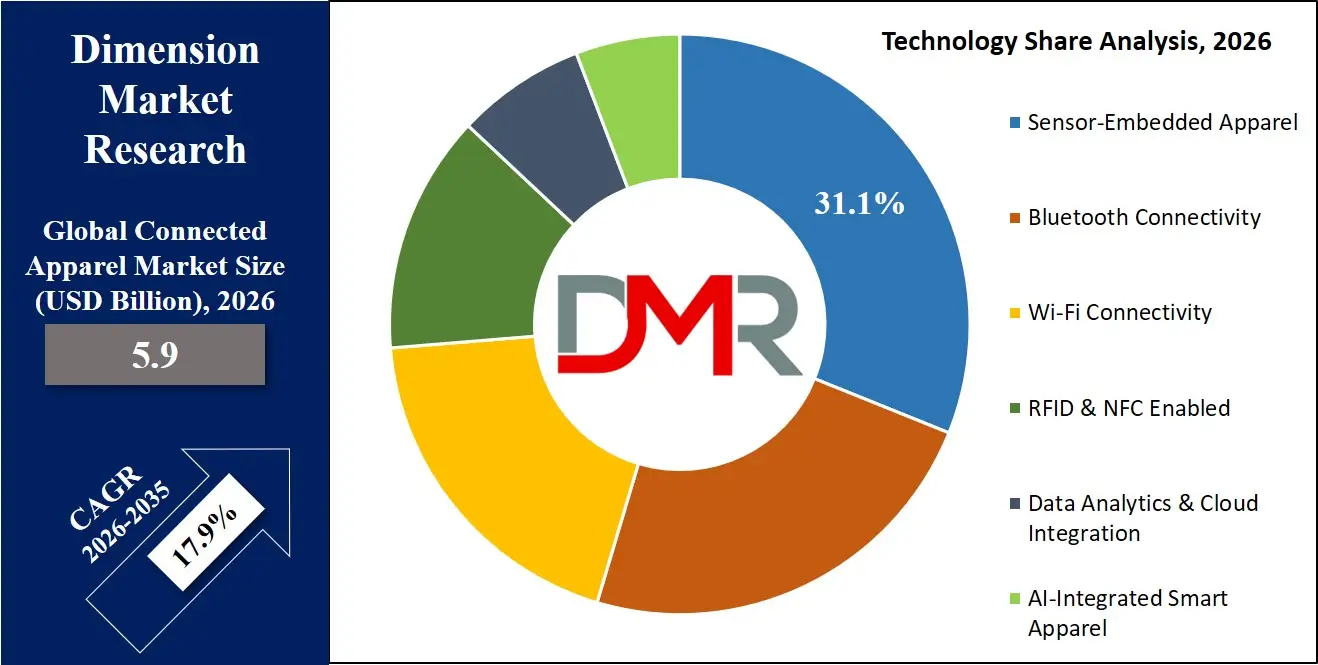
Among technology integration segments, Sensor-Embedded Apparel are anticipated to lead the market by a significant margin. These garments incorporate conductive fibers, microprocessors, and biometric sensors directly into textile structures. This integration enables real-time tracking of physiological parameters such as heart rate, muscle activation, breathing patterns, hydration levels, and temperature. Sensor-embedded technology forms the fundamental infrastructure of connected apparel, making it the most commercially important segment.
The dominance of this segment stems from its direct value proposition: actionable health and performance data. Fitness enthusiasts, athletes, and healthcare providers depend on accurate data monitoring, which sensor-based apparel provides more effectively than detachable devices. The textile-based integration also improves comfort and reduces dependency on bulky wearable gadgets.
ℹ
To learn more about this report –
Download Your Free Sample Report Here
Bluetooth connectivity represents the second-largest technology segment. It facilitates wireless data transmission to smartphones and cloud platforms but acts as a supporting feature rather than a primary differentiator. Wi-Fi-enabled apparel remains limited due to power consumption issues and shorter battery life. RFID and NFC-enabled garments are more prevalent in inventory tracking and retail authentication rather than consumer health monitoring.
AI-integrated smart apparel is an emerging category that enhances predictive analytics and performance insights. However, it is still developing and relies heavily on sensor-based infrastructure.
Therefore, sensor-embedded apparel dominates because it directly drives performance analytics, medical tracking, and fitness monitoring the core revenue-generating applications within the connected apparel ecosystem.
By Application Analysis
The Fitness & Sports Monitoring segment is expected to be the largest and most dominant application in the Global Connected Apparel Market. Rising global health awareness, increased gym participation, growth in professional sports analytics, and consumer interest in self-tracking technologies significantly contribute to this leadership position. Connected apparel enables athletes and fitness enthusiasts to monitor heart rate, calorie burn, endurance levels, muscle strain, and recovery patterns in real time.
Professional sports teams and trainers increasingly rely on smart garments to improve performance outcomes and reduce injury risks. Data-driven coaching strategies have expanded adoption in competitive sports environments. Additionally, integration with mobile fitness applications enhances user engagement, encouraging repeat purchases and ecosystem loyalty.
Healthcare & Medical Monitoring is the second-largest application, particularly in remote patient monitoring and chronic disease management. However, stricter regulatory requirements and longer adoption cycles limit its current market share compared to fitness. Industrial & Workplace Safety apparel is gaining momentum in hazardous environments such as construction and mining, but its scale remains smaller due to limited workforce penetration.
Military & Defense applications are technologically advanced but restricted in volume. Fashion & Lifestyle and Entertainment remain emerging segments with limited mainstream adoption.
Overall, fitness and sports monitoring dominates due to mass consumer demand, strong brand marketing, high frequency of usage, and integration with digital health ecosystems, making it the primary revenue engine of the connected apparel industry.
By Distribution Channel Analysis
In terms of distribution channels, Online Retail is projected to dominate the Global Connected Apparel Market. The rise of e-commerce platforms, direct-to-consumer brand strategies, and digital marketing has significantly strengthened online sales channels. Connected apparel buyers are typically technology-oriented consumers who prefer researching product specifications, comparing features, and reading reviews before purchasing.
Online platforms provide detailed product descriptions, demonstration videos, performance comparisons, and customer feedback, which are essential for complex smart garments. Additionally, brands benefit from lower operational costs, broader geographic reach, and better inventory management through online channels. Subscription-based fitness apps linked with smart apparel also drive digital sales conversions.
Offline retail, including specialty sports stores and brand outlets, plays an important role in experiential purchasing. Customers may prefer trying on garments to evaluate comfort and fit before buying. However, high operational expenses, limited shelf space, and slower product updates reduce offline competitiveness compared to digital platforms.
Furthermore, online retail enables faster global expansion, allowing companies to penetrate emerging markets without significant infrastructure investment. Digital advertising and influencer marketing further boost online visibility.
Therefore, online retail dominates due to convenience, cost efficiency, broader accessibility, digital consumer alignment, and strong integration with connected fitness ecosystems.
By End User Analysis
The Men segment is projected to currently holds the dominant share in the Global Connected Apparel Market. Higher participation of men in structured fitness programs, endurance sports, gym training, and professional athletics significantly contributes to stronger adoption rates. Historically, men have demonstrated higher spending on sports performance technology and wearable analytics tools.
Smart compression shirts, performance jackets, and connected footwear are predominantly marketed toward male consumers, reinforcing segment dominance. Additionally, male consumers are often early adopters of technology-driven sports innovations, accelerating product uptake in this category.
The Women segment is growing steadily, particularly in smart innerwear, yoga apparel, and health-monitoring garments tailored to female wellness tracking. Rising female sports participation and increasing focus on personalized fitness solutions are narrowing the gap. However, overall revenue contribution still trails behind the men’s segment.
Unisex apparel represents a substantial portion of performance wear, especially in gym and recreational sports categories. Children remain the smallest segment, primarily focused on safety tracking or specialized sports training apparel.
Overall, men dominate due to stronger engagement in performance-focused activities, higher disposable income allocated to sports technology, and earlier adoption of connected wearable innovations across fitness and athletic applications.
The Global Connected Apparel Market Report is segmented on the basis of the following:
By Product Type
- Clothing
- Top Wear
- T-Shirts / Shirts
- Jackets
- Hoodies
- Others
- Bottom Wear
- Jeans
- Shorts
- Skirts
- Others
- Inner Wear
- Bras
- Panties / Thongs
- Boxers
- Others
- Footwear
- Gloves
- Belts
- Caps
- Others
By Technology
- Sensor-Embedded Apparel
- Bluetooth Connectivity
- Wi-Fi Connectivity
- RFID & NFC Enabled
- Data Analytics & Cloud Integration
- AI-Integrated Smart Apparel
By Application
- Fitness & Sports Monitoring
- Healthcare & Medical Monitoring
- Military & Defense
- Industrial & Workplace Safety
- Fashion & Lifestyle
- Entertainment
By Distribution Channel
- Online Retail
- Offline Retail
By End User
- Men
- Women
- Unisex
- Children
Impact of Artificial Intelligence in the Global Connected Apparel Market
- AI for Personalized Health Insights: AI algorithms analyze continuous biometric data from connected garments to identify individual health patterns, detect anomalies, and provide personalized recommendations for improving fitness, managing stress, and optimizing recovery.
- Predictive Health Event Detection: Machine learning models trained on large datasets can predict potential health events such as atrial fibrillation episodes, hypoglycemic events, or falls before they occur, enabling preventive interventions and reducing emergency situations.
- Movement Pattern Analysis for Injury Prevention: AI-powered motion analysis identifies biomechanical inefficiencies and injury risk factors from accelerometer and gyroscope data, providing real-time feedback to athletes and workers for technique improvement.
- Contextual Awareness and Activity Recognition: AI systems automatically recognize user activities (walking, running, sleeping, specific exercises) from sensor data, enabling context-appropriate monitoring and reducing false alerts while improving user experience.
- Continuous Model Improvement Through Federated Learning: Privacy-preserving federated learning techniques allow AI models to improve by learning from distributed garment datasets without compromising individual user data, continuously enhancing accuracy and expanding detectable conditions.
Global Connected Apparel Market: Regional Analysis
Region with the Largest Revenue Share
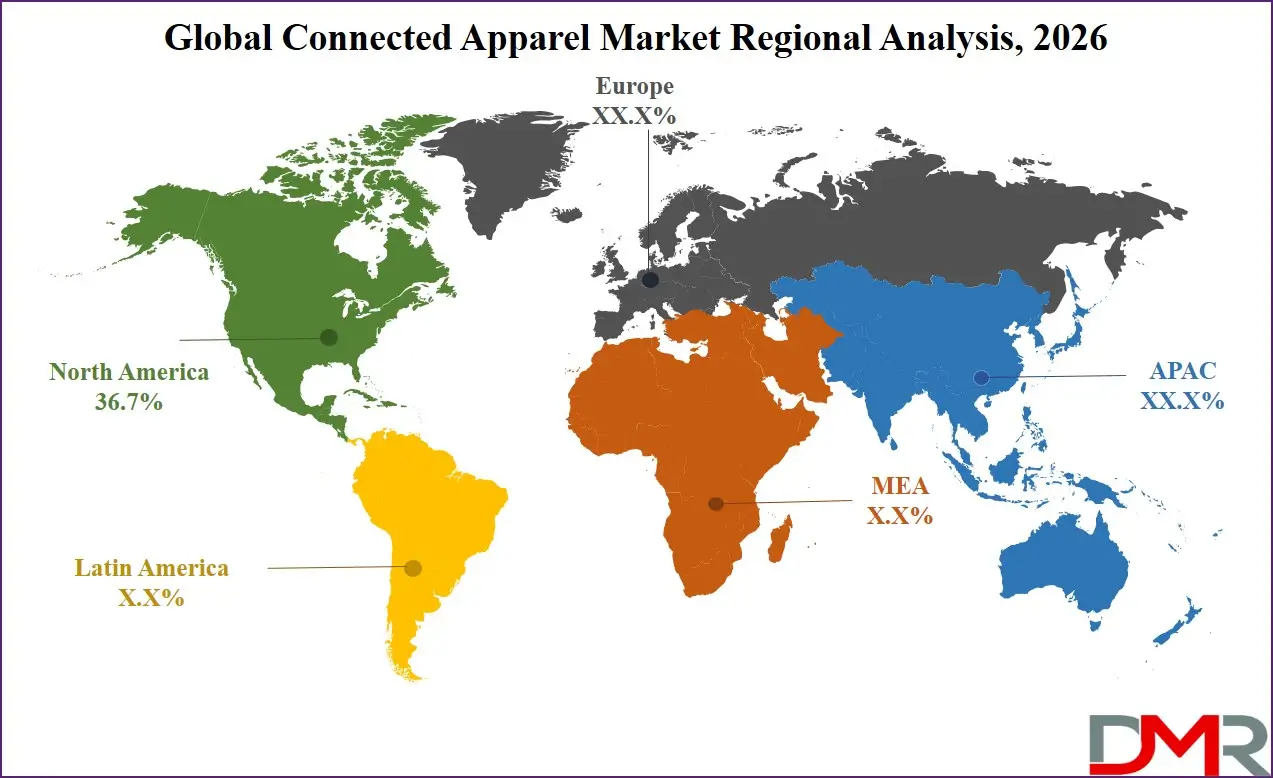
North America is projected to dominate the regional segment with the highest market share as it is anticipated to hold 36.7% of the total market revenue by the end of 2026, due to advanced healthcare infrastructure, high consumer spending on fitness technology, and strong presence of leading sportswear brands and health technology innovators. The region is home to major connected apparel companies and research institutions driving technological advancements in smart textiles and biometric sensing. Strong venture capital investment in digital health and wearables further accelerates innovation.
ℹ
To learn more about this report –
Download Your Free Sample Report Here
The United States, in particular, accounts for the largest share within North America due to its large healthcare technology market, professional sports industry, and consumer willingness to adopt premium wellness products. Although Asia Pacific is the fastest-growing region, North America continues to hold the largest revenue share due to early adoption of connected health technologies and strong reimbursement frameworks for remote patient monitoring.
Region with the Highest CAGR
Asia-Pacific holds the highest CAGR and is poised to achieve rapid market share growth due to its massive population, rapidly aging demographics in countries like Japan and China, expanding middle class with increasing health awareness, and strong manufacturing capabilities for electronics and textiles. Countries such as China, Japan, South Korea, and Australia are investing heavily in digital health infrastructure and smart manufacturing initiatives. The region's price sensitivity is being addressed through localized manufacturing, entry-level product offerings, and partnerships between global technology providers and regional apparel manufacturers. This, combined with government support for preventive healthcare and technological innovation, positions APAC as the fastest-growing market for connected apparel systems.
By Region
North America
Europe
- Germany
- The U.K.
- France
- Italy
- Russia
- Spain
- Benelux
- Nordic
- Rest of Europe
Asia-Pacific
- China
- Japan
- South Korea
- India
- ANZ
- ASEAN
- Rest of Asia-Pacific
Latin America
- Brazil
- Mexico
- Argentina
- Colombia
- Rest of Latin America
Middle East & Africa
- Saudi Arabia
- UAE
- South Africa
- Israel
- Egypt
- Rest of MEA
Global Connected Apparel Market: Competitive Landscape
The Global Connected Apparel Market is moderately fragmented, featuring a mix of established sportswear manufacturers, technology companies, medical device firms, and specialized smart textile innovators. Leading players like Nike, Adidas, and Under Armour leverage their strong brand presence, global distribution networks, and deep understanding of athletic consumers to integrate connected features into premium product lines. Technology giants such as Google, Apple, and Samsung are entering the market through partnerships and acquisitions, bringing expertise in sensors, connectivity, and data analytics.
Specialized connected apparel companies, including Hexoskin, Myzone, Sensoria, and OMsignal are driving market innovation with focused expertise in biometric garment design and clinical validation. Medical device companies like Philips, Medtronic, and Abbott are increasingly incorporating connected garments into remote patient monitoring portfolios, leveraging regulatory expertise and healthcare relationships.
Textile manufacturers such as Toray, Teijin, and Milliken are developing proprietary conductive fabrics and smart materials, positioning themselves as critical upstream suppliers. Emerging startups continue to attract venture investment for novel applications in infant monitoring, pregnancy care, and mental health sensing.
Some of the prominent players in the Global Connected Apparel Market are:
- AiQ Smart Clothing
- Athos
- Hexoskin (Carre Technologies)
- Wearable X
- OMsignal
- Baliston
- Supaspot
- Sensoria Inc.
- Ajanta Shoes
- Ralph Lauren
- Under Armour
- Adidas
- Nike
- Samsung
- Google (Project Jacquard)
- DuPont de Nemours
- Myontec Ltd.
- Schoeller Textil AG
- Epson America
- Xenoma Inc.
- Other Key Players
Recent Developments in the Global Connected Apparel Market
- November 2025: Nike launched its next-generation connected fitness apparel line featuring continuous heart rate monitoring and AI-powered training recommendations, integrating directly with its membership ecosystem and mobile applications.
- October 2025: Philips announced a strategic partnership with a leading European textile manufacturer to develop medical-grade connected garments for cardiac patients, enabling continuous ECG monitoring during daily activities and automatic alerting to healthcare providers.
- September 2025: Google acquired a smart textile startup specializing in gesture-control fabrics, signaling increased investment in wearable technology and potential integration with its Android ecosystem and hardware products.
- August 2025: Under Armour unveiled its new connected recovery system, combining smart sleepwear with environmental sensors and personalized recovery recommendations based on continuous biometric monitoring.
- July 2025: A consortium of Japanese textile manufacturers and electronics companies received government funding to develop next-generation energy-harvesting fabrics that eliminate battery requirements for connected garments.
- June 2025: Medtronic received FDA clearance for its connected garment system designed for post-surgical cardiac patients, enabling hospital-grade monitoring in home settings and reducing readmission rates.
Report Details
| Report Characteristics |
| Market Size (2026) |
USD 5.9 Bn |
| Forecast Value (2035) |
USD 25.5 Bn |
| CAGR (2026–2035) |
17.9% |
| The US Market Size (2026) |
USD 1.8 Bn |
| Historical Data |
2020 – 2025 |
| Forecast Data |
2027 – 2035 |
| Base Year |
2025 |
| Estimate Year |
2026 |
| Report Coverage |
Market Revenue Estimation, Market Dynamics, Competitive Landscape, Growth Factors, and etc. |
| Segments Covered |
By Product Type (Clothing, Footwear, Gloves), By Technology (Sensor-Embedded Apparel, Bluetooth Connectivity, Wi-Fi Connectivity, RFID & NFC Enabled, Data Analytics & Cloud Integration, AI-Integrated Smart Apparel), By Application (Fitness & Sports Monitoring, Healthcare & Medical Monitoring, Military & Defense, Industrial & Workplace Safety, Fashion & Lifestyle, Entertainment), By Distribution Channel (Online Retail, Offline Retail), By End User (Men, Women, Unisex, Children) |
| Regional Coverage |
North America – The US and Canada; Europe – Germany, The UK, France, Russia, Spain, Italy, Benelux, Nordic, & Rest of Europe; Asia- Pacific– China, Japan, South Korea, India, ANZ, ASEAN, Rest of APAC; Latin America – Brazil, Mexico, Argentina, Colombia, Rest of Latin America; Middle East & Africa – Saudi Arabia, UAE, South Africa, Turkey, Egypt, Israel, & Rest of MEA |
| Prominent Players |
AiQ Smart Clothing, Athos, Hexoskin (Carre Technologies), Wearable X, OMsignal, Baliston, SupaSpots, Sensoria Health, Ralph Lauren Corporation, Under Armour, Inc., Adidas AG, Nike, Inc., Samsung Electronics Co., Ltd., Google LLC (Project Jacquard), DuPont de Nemours, Inc., Myontec Ltd., Schoeller Textil AG, Seiko Epson Corporation, Xenoma Inc., Sensatex, Inc., and Other Key Players |
| Purchase Options |
We have three licenses to opt for: Single User License (Limited to 1 user), Multi-User License (Up to 5 Users) and Corporate Use License (Unlimited User) along with free report customization equivalent to 0 analyst working days, 3 analysts working days and 5 analysts working days respectively. |
Frequently Asked Questions
How big is the Global Nutraceutical Excipients Market?
▾ The Global Nutraceutical Excipients Market size is estimated to have a value of USD 8.8 billion in 2026 and is expected to reach USD 19.8 billion by the end of 2035.
What is the growth rate in the Global Nutraceutical Excipients Market?
▾ The market is growing at a CAGR of 7.8 percent over the forecasted period of 2026-2035.
What is the size of the US Nutraceutical Excipients Market?
▾ The US Nutraceutical Excipients Market is projected to be valued at USD 3.0 billion in 2026. It is expected to witness subsequent growth as it holds USD 5.8 billion in 2035 at a CAGR of 7.3%.
Which region accounted for the largest Global Nutraceutical Excipients Market?
▾ North America is expected to have the largest market share in the Global Nutraceutical Excipients Market with a share of about 41.2% in 2026.
Who are the key players in the Global Nutraceutical Excipients Market?
▾ Some of the major key players in the Global Nutraceutical Excipients Market are DuPont (IFF), Roquette Frères, Cargill, Incorporated, BASF SE, Evonik Industries, JRS Pharma, and many others.