What is the Connected Medical Devices Market Size?
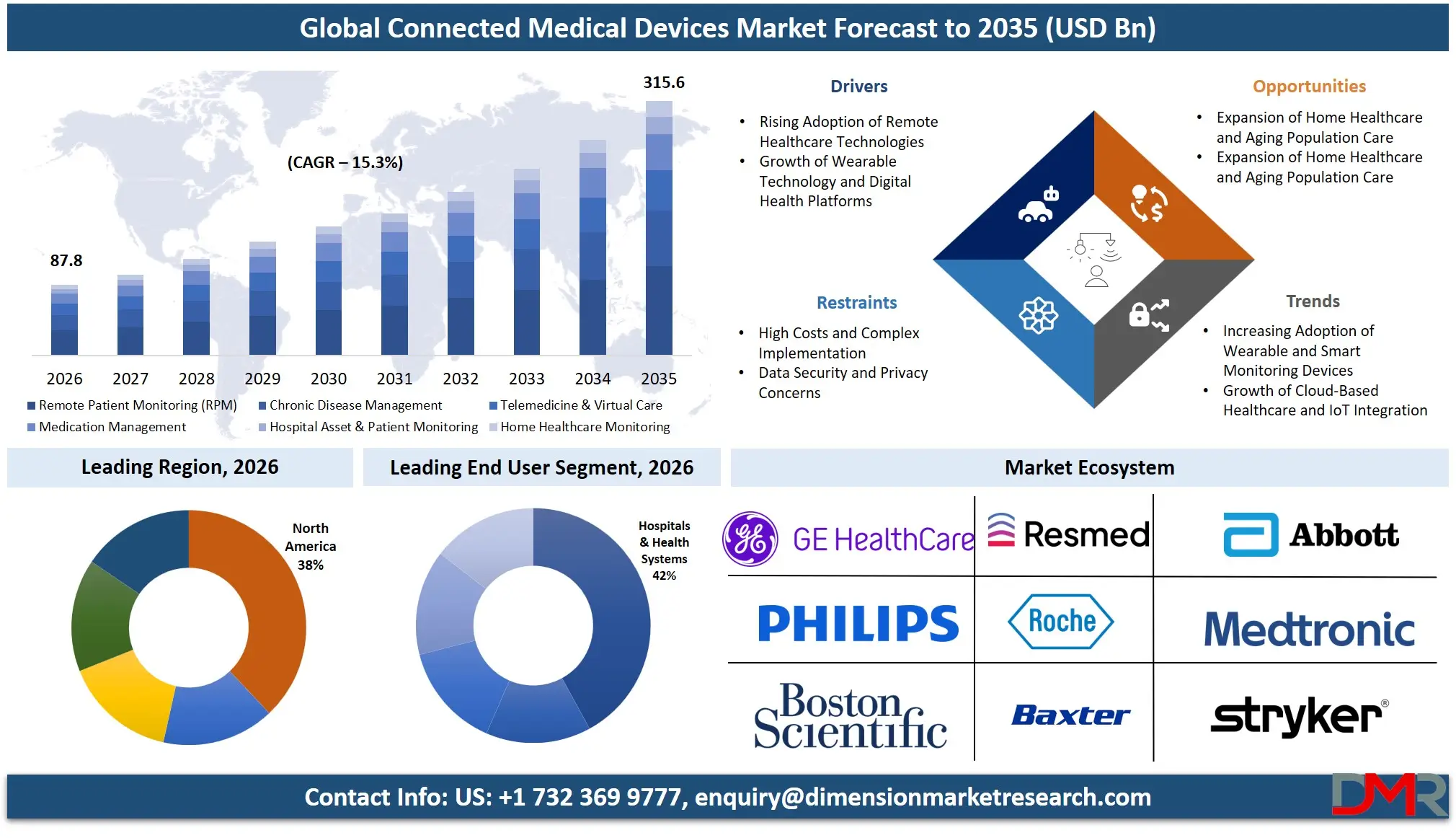
The Connected Medical Devices Market size is expected to be USD 87.8 billion in 2026 and increase at a compound annual growth rate of 15.3% to USD 315.6 billion in 2035 due to rising adoption of remote healthcare technologies.
ℹ
To learn more about this report –
Download Your Free Sample Report Here
The Connected Medical Devices Market refers to the ecosystem of digitally enabled medical devices that use connectivity technologies such as Bluetooth, Wi-Fi, cellular networks, cloud computing, and IoT platforms to collect, transmit, analyze, and share healthcare data. The market includes devices used for monitoring, diagnosis, treatment, and patient management across hospitals, clinics, and home healthcare environments. Growing adoption of remote patient monitoring, rising chronic disease prevalence, increasing demand for personalized healthcare, and advancements in artificial intelligence and wearable technologies are accelerating market expansion. Integration of digital health platforms and value-based healthcare models are further transforming the connected healthcare landscape.
The US Connected Medical Devices Market
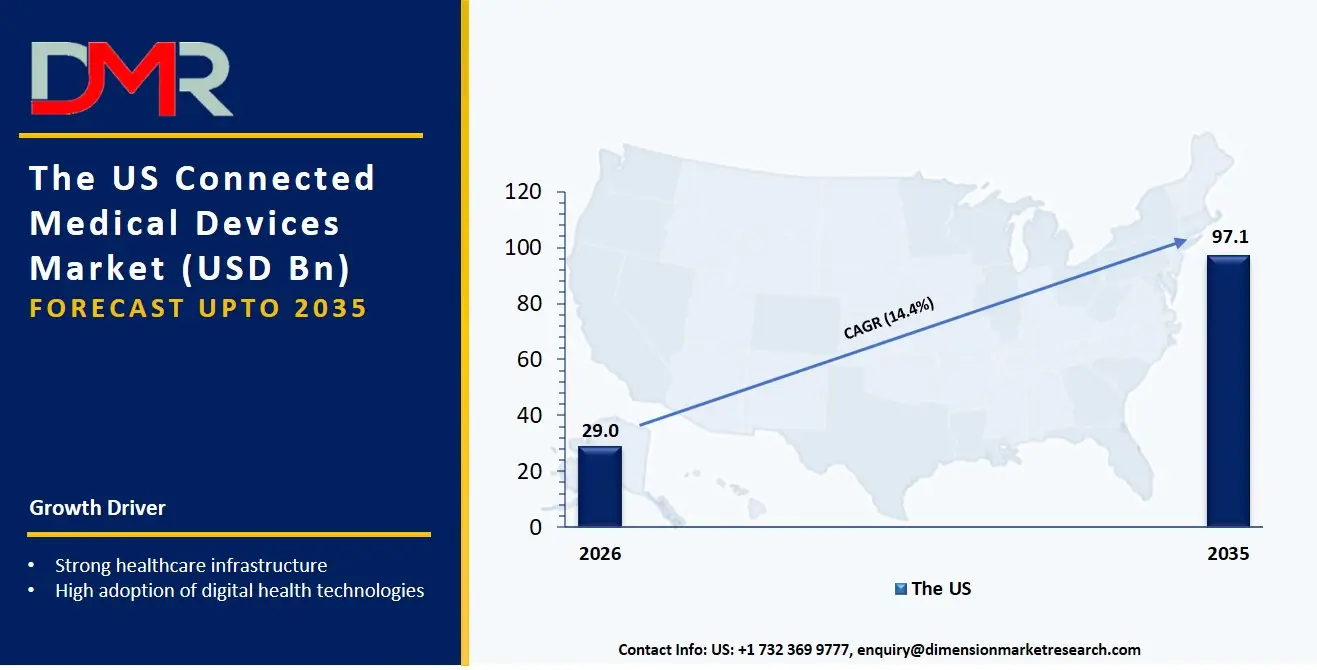
The US Connected Medical Devices Market size is estimated to be USD 29.0 billion in 2026 and is expected to increase at a CAGR of 14.4% over the forecast period.
ℹ
To learn more about this report –
Download Your Free Sample Report Here
The US Connected Medical Devices Market is one of the most advanced markets due to strong healthcare infrastructure, high adoption of digital health technologies, and significant investment in remote monitoring solutions. Growth is supported by increasing chronic disease cases, demand for home healthcare, and favorable reimbursement policies for remote patient monitoring services. Regulatory support from the U.S. Food and Drug Administration has encouraged innovation while maintaining safety standards. Healthcare providers are increasingly adopting connected devices to reduce hospital costs and improve patient outcomes. Major technology-driven healthcare companies continue investing in IoT-enabled medical solutions, AI integration, and cloud-based healthcare platforms.
Europe Connected Medical Devices Market
The Europe Connected Medical Devices Market size is estimated to be USD 17.6 billion in 2026 and is expected to increase at a CAGR of 14.8% over the forecast period.
The Europe Connected Medical Devices Market is expanding due to strong government support for digital healthcare transformation, increasing healthcare expenditure, and growing emphasis on preventive medicine. Regional initiatives such as the European Green Deal and digital health strategies are encouraging sustainable and technology-driven healthcare systems. Countries such as Germany, the UK, and France are leading adoption through healthcare modernization programs and investments in telemedicine infrastructure. Data privacy regulations, including strict healthcare data protection requirements, influence product development strategies. The region is witnessing rising adoption of wearable devices, remote monitoring platforms, and connected hospital systems.
Japan Connected Medical Devices Market
The market size of Japan Connected Medical Devices will be USD 4.4 billion in 2026 and at a CAGR of 15.1% in the forecast period.
The Japan Connected Medical Devices Market is growing due to an aging population, increasing healthcare demand, and government initiatives promoting digital healthcare adoption. Japan's focus on improving elderly care, reducing healthcare costs, and expanding home-based healthcare solutions is driving demand for connected monitoring devices. Urbanization and advanced technology infrastructure support rapid adoption of smart medical equipment, wearable health trackers, and remote patient monitoring solutions. Government programs encouraging healthcare digitalization and artificial intelligence integration are creating opportunities for market growth. However, challenges related to regulatory approvals, data management, and healthcare system integration remain important considerations for industry participants.
Key Takeaways
- Market Size & Forecast: The Connected Medical Devices Market size is projected to reach USD 87.8 billion in 2026 and is anticipated to have a value of USD 315.6 billion in 2035.
- Growth Rate & Outlook: The Connected Medical Devices Market size is set to grow at a compound annual growth rate of 15.3% during the forecast period of 2026 to 2035.
- Primary Growth Drivers: Some of the major growth drivers in the market are Rising Adoption of Remote Healthcare Technologies and more.
- Key Market Trends: Some of the major trends in the market are Growth of Cloud-Based Healthcare and IoT Integration and more.
- By Product Type: Wearable Medical Devices segment is anticipated to get the majority share of the Connected Medical Devices Market in 2026.
- By Application Type: Remote Patient Monitoring is expected to get the largest revenue share in 2026 in the Connected Medical Devices Market.
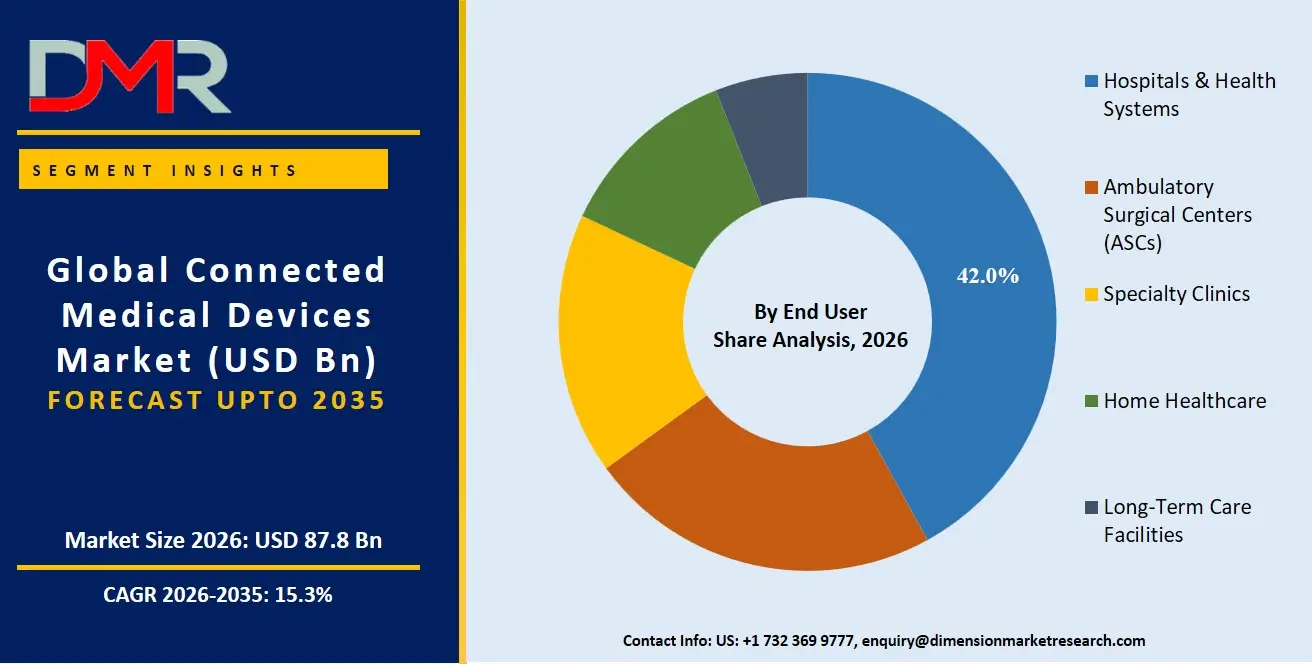
- By End User Type: Hospitals & Health Systems is expected to get the largest revenue share in 2026 in the Connected Medical Devices Market.
- Regional Leadership: North America is set to lead the Connected Medical Devices Market with an estimated 38.0% share in 2026.
What is the Connected Medical Devices?
Connected Medical Devices are healthcare devices integrated with communication technologies that enable real-time data exchange between patients, healthcare providers, and digital health platforms. These devices include wearable monitors, smart diagnostic tools, connected therapeutic devices, implantable devices, and remote monitoring systems designed to track physiological conditions and support clinical decision-making. They combine sensors, software, wireless connectivity, and data analytics to improve healthcare delivery, enhance patient engagement, enable continuous monitoring, and facilitate preventive care. Connected Medical Devices are increasingly important in modern healthcare systems as they support remote care models, improve operational efficiency, and contribute to the transition toward data-driven and patient-centric healthcare.
Use Cases
- Remote Patient Monitoring: Connected Medical Devices enable continuous tracking of patient health parameters such as heart rate, blood pressure, glucose levels, and oxygen saturation outside traditional healthcare settings. These solutions help physicians monitor patients remotely, reduce hospital visits, and improve management of chronic diseases through real-time health data analysis.
- Chronic Disease Management: Connected devices support patients suffering from conditions such as diabetes, cardiovascular disorders, and respiratory diseases by providing continuous health monitoring. Healthcare providers can analyze patient data, identify risks earlier, and personalize treatment plans, improving long-term disease management and reducing healthcare costs.
- Telemedicine & Virtual Care: Connected Medical Devices enhance telemedicine services by allowing healthcare professionals to access patient-generated health information during virtual consultations. These technologies improve diagnosis accuracy, expand healthcare accessibility, and support efficient medical decision-making, particularly for patients in remote or underserved locations.
- Home Healthcare Monitoring: Connected devices are increasingly used in home healthcare environments to provide hospital-quality monitoring outside clinical settings. They enable elderly patients and individuals with chronic conditions to receive continuous care while improving independence, reducing healthcare system pressure, and lowering hospitalization rates.
How AI Is Transforming the Connected Medical Devices Market
Artificial intelligence is improving the performance of Connected Medical Devices by enabling predictive analytics, automated monitoring, and intelligent decision support. AI algorithms analyze real-time patient data collected from connected devices to identify abnormal health patterns and support early intervention. Machine learning models help improve diagnosis accuracy and personalize treatment recommendations based on patient conditions.
AI-powered connected devices are enhancing healthcare efficiency by reducing manual monitoring requirements and improving workflow automation. AI integration also supports advanced features such as predictive maintenance of medical equipment, remote diagnostics, and personalized patient care. The combination of AI, IoT, and connected healthcare platforms is creating more efficient, proactive, and patient-centered healthcare systems.
Market Dynamic
Driving Factors in the Connected Medical Devices Market
Rising Adoption of Remote Healthcare Technologies
Increasing demand for remote healthcare solutions is one of the major factors driving the Connected Medical Devices Market. Healthcare systems worldwide are adopting remote monitoring technologies to manage rising chronic disease cases and reduce pressure on hospitals. Connected devices allow continuous patient observation, faster medical intervention, and improved healthcare accessibility. The expansion of telemedicine services and home healthcare models is encouraging hospitals and healthcare providers to integrate connected monitoring systems. Additionally, advancements in wireless connectivity, cloud computing, and artificial intelligence are improving device capabilities and supporting broader adoption across healthcare environments.
Restraints in the Connected Medical Devices Market
Data Security and Privacy Concerns
Data security risks represent a significant restraint in the Connected Medical Devices Market. These devices collect sensitive patient information, making cybersecurity and data protection critical concerns. Increasing incidents of healthcare data breaches create challenges for manufacturers and healthcare providers. Strict regulatory requirements related to patient data privacy increase compliance complexity and development costs. Companies must invest heavily in secure communication technologies, encryption systems, and cybersecurity solutions to maintain trust among healthcare providers and patients.
Opportunities in the Connected Medical Devices Market
Integration of Artificial Intelligence and Advanced Analytics
The integration of artificial intelligence and advanced analytics provides significant growth opportunities for connected medical device manufacturers. AI technologies enable predictive healthcare insights, early disease detection, automated diagnosis support, and personalized treatment recommendations. Connected devices combined with AI can analyze large volumes of patient data in real time, helping healthcare professionals make faster and more accurate decisions. Growing investment in healthcare AI platforms, smart sensors, and data-driven medical solutions is expected to accelerate innovation and expand the application scope of connected medical devices across hospitals, clinics, and home healthcare environments.
Trends in the Connected Medical Devices Market
Growth of Cloud-Based Healthcare and IoT Integration
Cloud computing and Internet of Things integration are transforming the connected healthcare ecosystem. Healthcare organizations are adopting cloud-based platforms to store, analyze, and manage patient information collected through connected devices. IoT-enabled medical systems allow seamless communication between devices, healthcare professionals, and patients. This trend is improving healthcare efficiency, supporting remote monitoring, and enabling large-scale data analysis. Increasing focus on digital transformation and smart healthcare infrastructure is expected to strengthen adoption of connected medical technologies.
Research Scope and Analysis
The research scope of the Connected Medical Devices Market covers analysis of product types, applications, and end users influencing market growth. The study evaluates technological advancements, adoption trends, regional developments, competitive strategies, and key market dynamics. It examines growth drivers, restraints, opportunities, and emerging innovations shaping the future of connected healthcare solutions across global healthcare ecosystems.
ℹ
To learn more about this report –
Download Your Free Sample Report Here
By Product Type Analysis
The Connected Medical Devices Market by product type is led by Wearable Medical Devices, which are estimated to hold approximately 28% market share in 2026 due to rising consumer adoption, increasing focus on preventive healthcare, and growing demand for continuous health monitoring. Wearable devices such as smart monitoring systems and connected health trackers are widely used for tracking vital signs, fitness parameters, and chronic disease conditions. The fastest-growing segment within this category is expected to be Implantable Connected Devices, driven by advancements in medical technology, increasing demand for personalized treatment solutions, and innovations in remote monitoring capabilities. Improved connectivity, miniaturization, and integration with healthcare platforms are accelerating adoption of advanced connected implants.
By Application Analysis
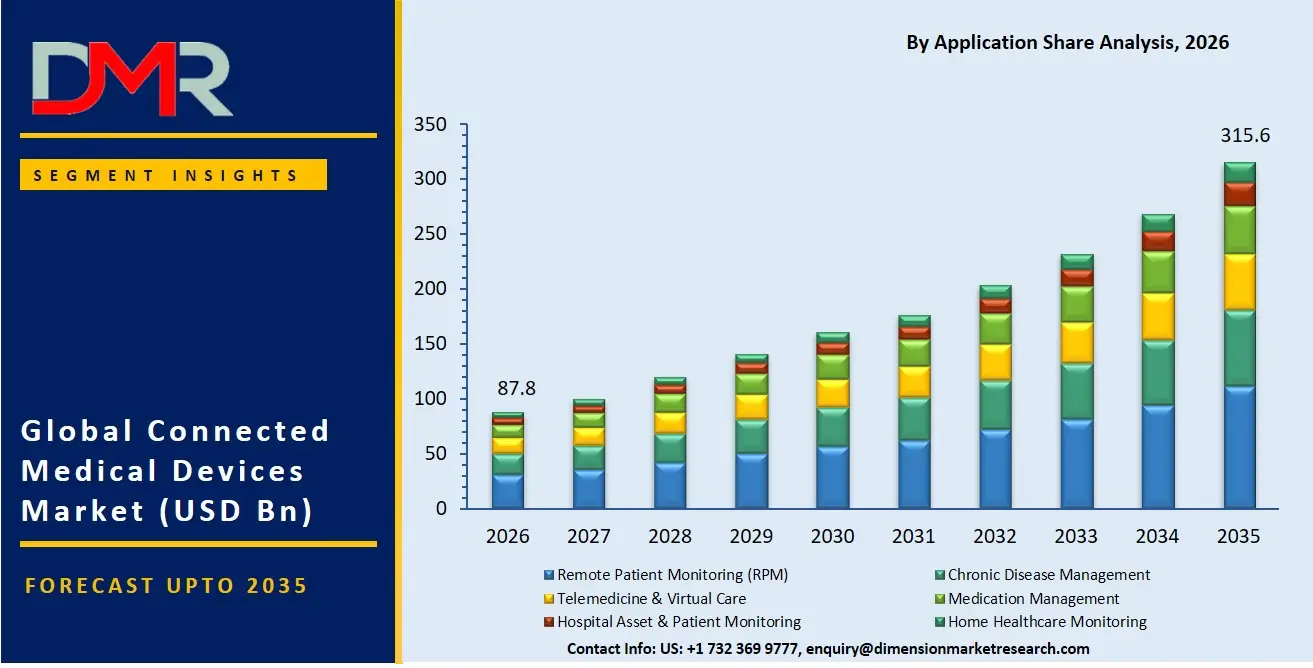
The Connected Medical Devices Market by application is dominated by Remote Patient Monitoring (RPM), which is expected to account for approximately 35% market share in 2026. RPM adoption is increasing due to rising chronic disease prevalence, healthcare cost pressures, and demand for continuous patient monitoring outside hospitals.
ℹ
To learn more about this report –
Download Your Free Sample Report Here
Healthcare providers are increasingly using RPM solutions to improve patient outcomes and reduce unnecessary hospital visits. The fastest-growing application segment is expected to be Telemedicine & Virtual Care, supported by digital healthcare expansion, increasing internet penetration, and greater acceptance of virtual consultations. Integration of connected devices with telehealth platforms is improving remote diagnosis and enhancing healthcare accessibility.
By End User Analysis
The Connected Medical Devices Market by end user is led by Hospitals & Health Systems, expected to hold approximately 42% market share in 2026 due to high adoption of connected monitoring technologies, advanced healthcare infrastructure, and increasing investment in digital transformation. Hospitals are implementing connected devices to improve operational efficiency, enhance patient monitoring, and support data-driven clinical decisions. The fastest-growing end-user segment is expected to be Home Healthcare, driven by aging populations, rising healthcare costs, and increasing preference for convenient care solutions. Connected medical devices enable patients to receive continuous healthcare monitoring at home while reducing dependency on hospital-based services.
The Connected Medical Devices Market Report is segmented on the basis of the following:
By Product Type
- Vital Sign Monitoring Devices
- Cardiac Monitoring Devices
- Diabetes Management Devices
- Respiratory Monitoring Devices
- Neurological Monitoring Devices
- Wearable Medical Devices
- Therapeutic Connected Devices
- Implantable Connected Devices
- Other Connected Medical Devices
By Application
- Remote Patient Monitoring (RPM)
- Chronic Disease Management
- Telemedicine & Virtual Care
- Medication Management
- Hospital Asset & Patient Monitoring
- Home Healthcare Monitoring
By End User
- Hospitals & Health Systems
- Ambulatory Surgical Centers (ASCs)
- Specialty Clinics
- Home Healthcare
- Long-Term Care Facilities
Regional Analysis
Leading Region in the Connected Medical Devices Market
ℹ
To learn more about this report –
Download Your Free Sample Report Here
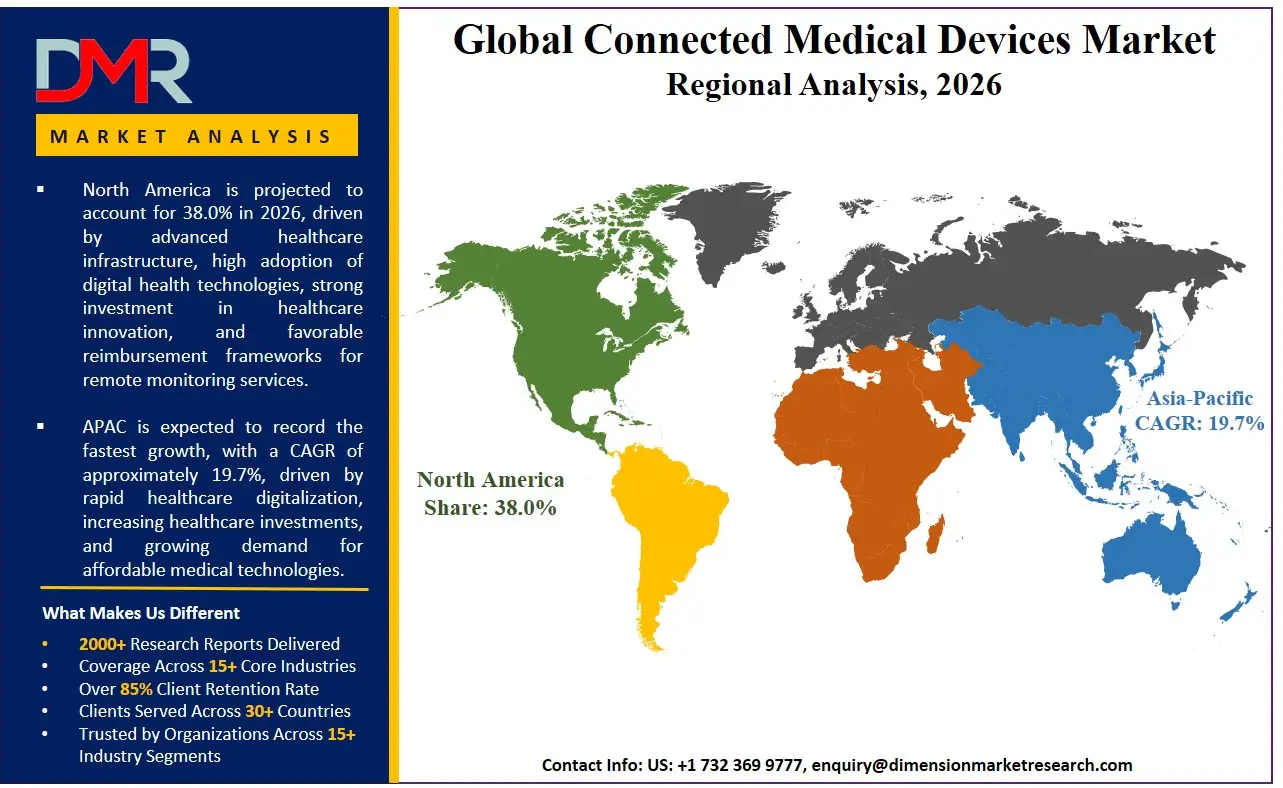
North America is expected to remain the leading region in the Connected Medical Devices Market, accounting for approximately 38% market share in 2026. The region's dominance is supported by advanced healthcare infrastructure, high adoption of digital health technologies, strong investment in healthcare innovation, and favorable reimbursement frameworks for remote monitoring services. The presence of established medical technology ecosystems, increasing chronic disease burden, and growing demand for personalized healthcare solutions further strengthen market growth. Government support, regulatory frameworks, and healthcare digitalization initiatives are encouraging adoption of connected devices across hospitals, clinics, and home healthcare environments.
Fastest Growing Region in the Connected Medical Devices Market
Asia-Pacific is projected to be the fastest-growing region in the Connected Medical Devices Market due to rapid healthcare digitalization, increasing healthcare investments, and growing demand for affordable medical technologies. Countries including Japan, China, and India are witnessing strong adoption of connected healthcare solutions due to aging populations, rising chronic diseases, and expanding healthcare infrastructure. Government initiatives supporting digital healthcare transformation and smart hospital development are creating significant opportunities. Increasing smartphone penetration, improved internet connectivity, and growing awareness of remote healthcare solutions are accelerating regional adoption of connected medical devices.
By Region
North America
Europe
- Germany
- The U.K.
- France
- Italy
- Russia
- Spain
- Benelux
- Nordic
- Rest of Europe
Asia-Pacific
- China
- Japan
- South Korea
- India
- ANZ
- ASEAN
- Rest of Asia-Pacific
Latin America
- Brazil
- Mexico
- Argentina
- Colombia
- Rest of Latin America
Middle East & Africa
- Saudi Arabia
- UAE
- South Africa
- Israel
- Egypt
- Rest of MEA
Competitive Landscape
The Connected Medical Devices Market is characterized by strong competition driven by technological innovation, product differentiation, strategic collaborations, and continuous research and development activities. Market participants are focusing on improving device connectivity, enhancing cybersecurity, integrating artificial intelligence capabilities, and developing user-friendly healthcare solutions to strengthen their market position. High entry barriers exist due to regulatory approval requirements, significant investment in technology development, and the need for reliable healthcare data management systems. Companies are increasingly adopting partnerships with healthcare providers, technology firms, and digital health platforms to expand their ecosystem. Continuous innovation in sensors, cloud platforms, and data analytics remains a key strategy for maintaining competitiveness.
Some of the prominent players in the global Connected Medical Devices are:
- Medtronic plc
- GE HealthCare Technologies Inc.
- Philips Healthcare
- Abbott Laboratories
- Siemens Healthineers AG
- Baxter International Inc.
- Boston Scientific Corporation
- Stryker Corporation
- DexCom, Inc.
- ResMed Inc.
- Masimo Corporation
- Omron Healthcare, Inc.
- Becton, Dickinson and Company (BD)
- Roche Diagnostics
- Johnson & Johnson (through Biosense Webster and digital health solutions)
- Drägerwerk AG & Co. KGaA
- Nihon Kohden Corporation
- Honeywell International Inc.
- Hill-Rom Holdings, Inc. (Baxter)
- Biotronik SE & Co. KG
- Other Key Players
Recent Developments
- In June 2025, connected medical device companies strengthened partnerships with healthcare organizations and technology providers to expand digital healthcare ecosystems. These collaborations focused on combining medical device expertise with cloud computing, artificial intelligence, and data analytics capabilities to improve healthcare delivery. Partnerships aimed to enhance remote monitoring services, develop interoperable healthcare platforms, and improve patient engagement through connected solutions. The increasing collaboration trend demonstrates the industry's focus on creating integrated healthcare networks where medical devices, software platforms, and healthcare professionals work together to deliver efficient and personalized care.
- In March 2025, leading healthcare technology companies expanded their connected medical device portfolios through new product innovations and digital health platform enhancements. The developments focused on improving device accuracy, connectivity, and integration with electronic healthcare systems. Companies increased investments in next-generation wearable devices, remote patient monitoring platforms, and smart diagnostic solutions to address growing demand for home healthcare and chronic disease management. These initiatives highlighted the industry's movement toward decentralized healthcare delivery, where patients can receive continuous monitoring outside traditional medical facilities. The advancements also supported healthcare providers in managing increasing patient volumes through efficient digital solutions.
- In January 2025, several connected healthcare technology providers accelerated investments in artificial intelligence-based medical device solutions to improve remote monitoring and predictive healthcare capabilities. Companies focused on integrating AI algorithms with connected monitoring platforms to provide faster analysis of patient data, enhance clinical decision-making, and support personalized healthcare delivery. These advancements included improvements in wearable monitoring technologies, cloud-based healthcare platforms, and automated patient insights. The development reflects the growing industry shift toward intelligent connected devices capable of supporting preventive healthcare models, reducing hospital workload, and improving patient outcomes through continuous data-driven monitoring.
Report Details
| Report Characteristics |
| Market Size (2026) |
USD 87.8 Bn |
| Forecast Value (2035) |
USD 315.6 Bn |
| CAGR (2026–2035) |
15.3% |
| Historical Period |
2021 – 2025 |
| Forecast Period |
2027 – 2035 |
| Base Year |
2025 |
| Estimate Year |
2026 |
| Segments Covered |
By Product Type, By Application, By End User |
| Regional Coverage |
North America – The US and Canada; Europe – Germany, The UK, France, Russia, Spain, Italy, Benelux, Nordic, & Rest of Europe; Asia-Pacific – China, Japan, South Korea, India, ANZ, ASEAN, Rest of APAC; Latin America – Brazil, Mexico, Argentina, Colombia, Rest of Latin America; Middle East & Africa – Saudi Arabia, UAE, South Africa, Turkey, Egypt, Israel, & Rest of MEA |
Frequently Asked Questions
How big is the Connected Medical Devices Market?
▾ The Connected Medical Devices Market size is expected to reach USD 87.8 billion by 2026 and is projected to reach USD 315.6 billion by the end of 2035.
What is the CAGR of the Connected Medical Devices Market from 2026 to 2035?
▾ The market is growing at a CAGR of 15.3 percent over the forecasted period.
What factors are driving the growth of the Connected Medical Devices Market?
▾ Rising Adoption of Remote Healthcare Technologies, and more are the factors driving the growth of the Connected Medical Devices Market.
What are the major trends in the Connected Medical Devices Market?
▾ Growth of Cloud-Based Healthcare and IoT Integration, and more are some of the major trends in the market.
Who are the key players in the Connected Medical Devices Market?
▾ Some of the key players in the Connected Medical Devices Market include Roche, Baxter, Abbott, and more.
How is the Connected Medical Devices Market segmented?
▾ The Connected Medical Devices Market is segmented by product type, application, end user.
Which region held the largest share of the Connected Medical Devices Market in 2026?
▾ North America is set to lead the Connected Medical Devices Market with an estimated 38.0% share in 2026.
Which region is expected to grow the fastest in the Connected Medical Devices Market?
▾ Asia Pacific is the fastest-growing region in the Connected Medical Devices Market during the forecast period.