What is the Controlled-Release Fertilizers Market Size?
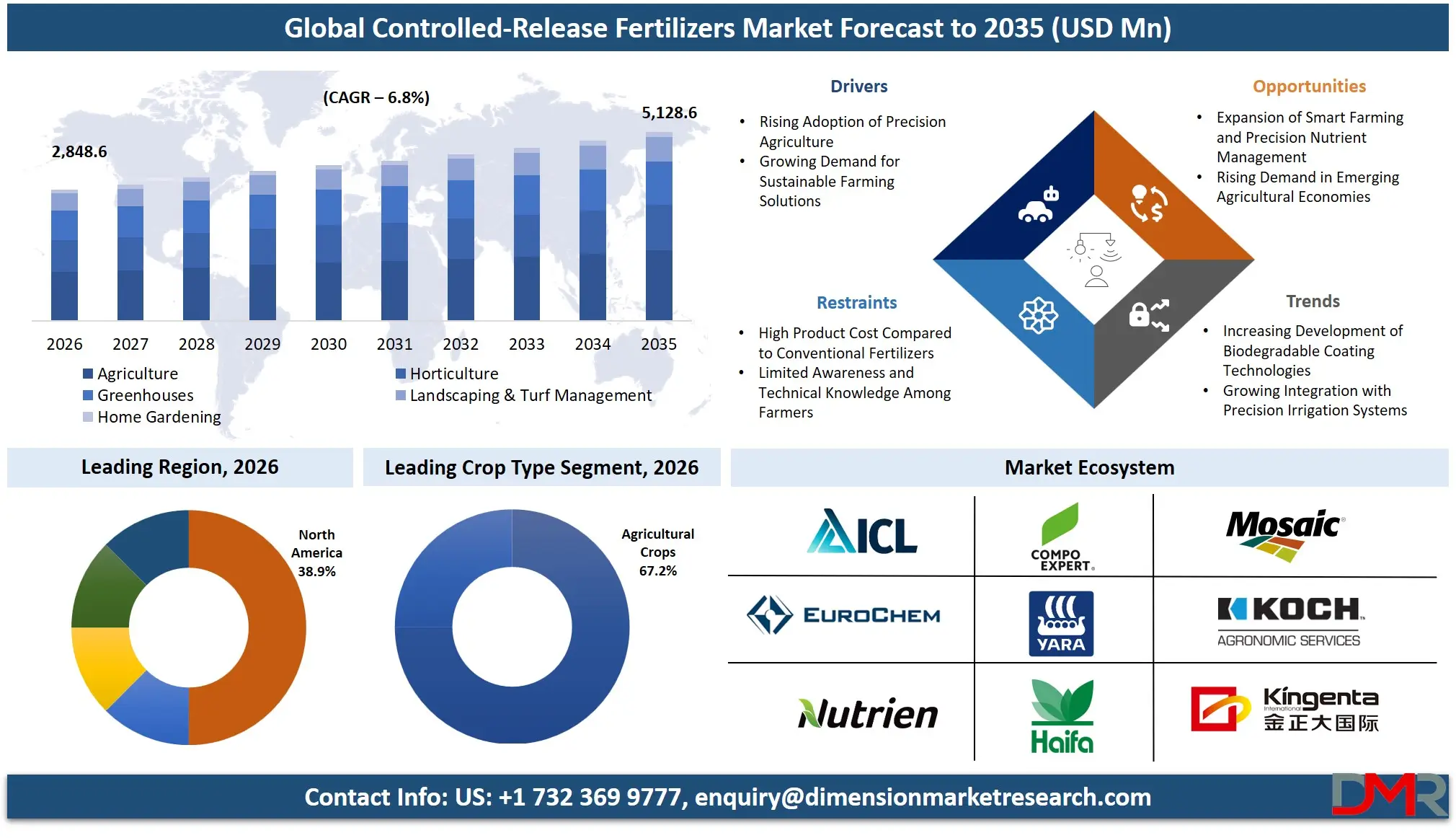
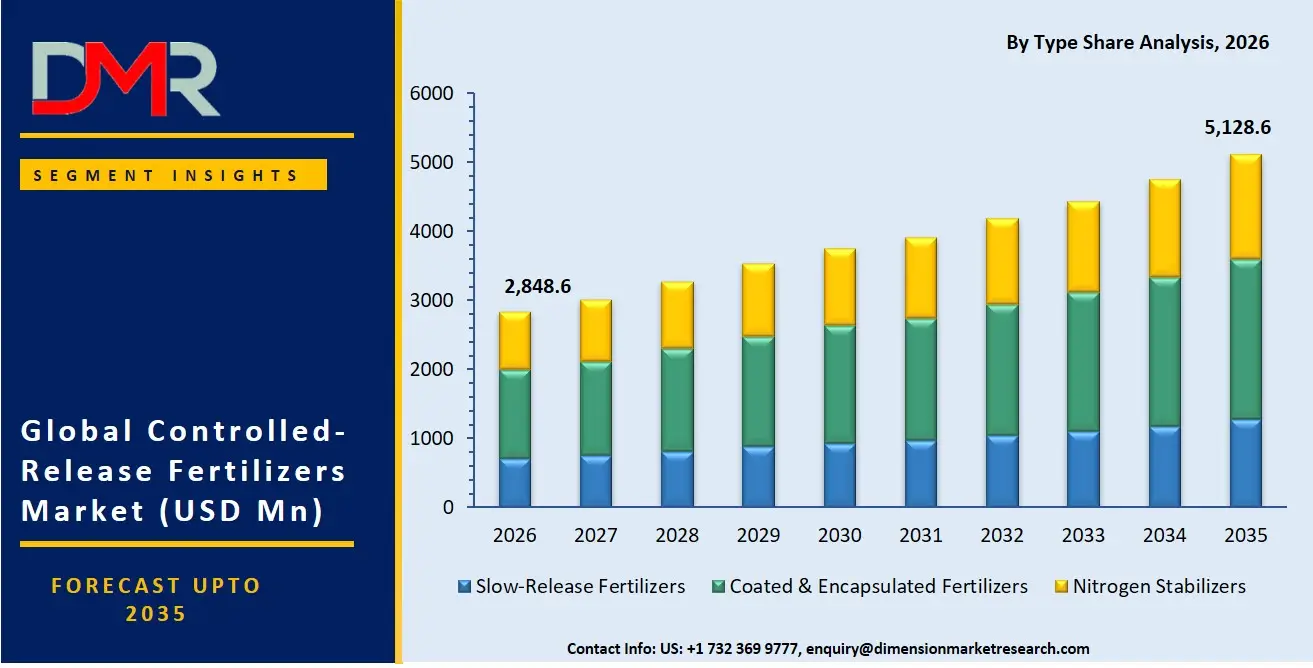
The Global Controlled-Release Fertilizers Market is expected to reach a value of USD 2,848.6 million in 2026, and it is further anticipated to reach USD 5,128.6 million by 2035, growing at a CAGR of 6.8% during the forecast period.
ℹ
To learn more about this report –
Download Your Free Sample Report Here
The Controlled Release Fertilizers Market has seen tremendous growth due to the rise in the interest of the agriculture sector towards sustainable cultivation methods and moving away from traditional bulk fertilization to precision nutrients. The controlled-release fertilizers market comprises coated & encapsulated fertilizers, slow-release fertilizers, and nitrogen stabilizers, helping farmers make optimum use of the nutrients for crops, soil, and soilless substrates.
The rising requirement for deploying water-based release mechanisms, microbes-based release mechanisms, and temperature-based release mechanisms necessitates the emergence of such fertilizer technologies. Large farms have been among the most common customers, with polymer/resin-coated fertilizers gaining much popularity owing to their efficiency and predictable nutrient release patterns. Cereals & grains, fruits & vegetables, and turf & ornamentals are the main industry verticals that require such effective and high-performing nutrient delivery systems.
ℹ
To learn more about this report –
Download Your Free Sample Report Here
The US Controlled-Release Fertilizers Market
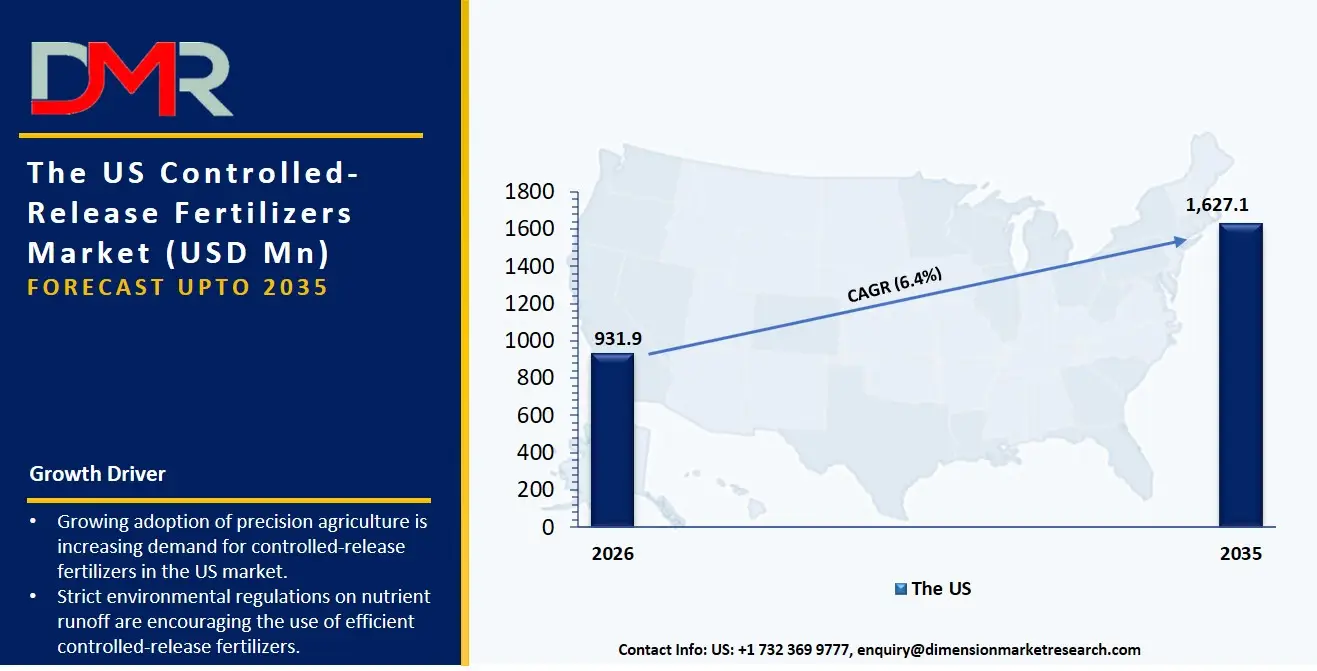
The US Controlled-Release Fertilizers Market is projected to reach USD 931.9 million in 2026 at a compound annual growth rate of 6.4% over its forecast period. The US is the leading country in controlled-release fertilizers as far as market size and development level is concerned owing to the existence of active precision agriculture projects in commercial farms and increasing use of polymer coatings technology. The US market for this type of fertilizer was characterized by significant consumption of high-quality hybrid controlled-release fertilizers where nutrient availability had to be synchronized with certain phenological phases of plants. Furthermore, the use of fertigation systems in growing specialty crops creates a similar need for liquid formulations such as suspensions and solutions.
ℹ
To learn more about this report –
Download Your Free Sample Report Here
The Europe Controlled-Release Fertilizers Market
The Europe Controlled-Release Fertilizers Market is estimated to be valued at USD 910.0 million in 2026 and is further anticipated to reach USD 1,610.0 million by 2035 at a CAGR of 6.5%. The regulations such as those of the EU's Farm to Fork strategy and the strict nitrate rules have an effect on the European market, and this necessitates the use of nitrogen stabilizers like nitrification and urease inhibitors to reduce nutrient runoff. There has been increased development of polymer-based fertilizers in Europe owing to the attempt by horticulture and greenhouses in Spain and Netherlands to find a compromise between irrigation and frequent fertigation. The pressure on companies to make fertilizer coatings that are carbon footprint reducing has prompted the manufacture of coatings that are biodegradable and provide nutrient release profiles depending on different soils in Europe.
The Japan Controlled-Release Fertilizers Market
The Japan Controlled-Release Fertilizers Market is projected to be valued at USD 290.0 million in 2026. It is further expected to witness robust growth, holding USD 500.0 million in 2035 at a CAGR of 6.2%. Japanese market has a special USP that lies in the smart agriculture initiative adopted by the corporations as an answer to shrinking and aging labor force within the industry, thus requiring labor-saving agriculture technologies. Premium smart controlled release fertilizer products and technologies play a significant role in investments made by agricultural cooperatives to convert manual split application of fertilizers for their mission critical program of rice paddy fertilization to controlled release basal application technology. There is also need to establish deep roots within the market to fill the gap between traditional practices and horticulture technology for nursery of fruits and vegetables, creating an opportunity within coated and encapsulated fertilizers.
Key Takeaways
- Market Size & Forecast: The Global Controlled-Release Fertilizers market is forecast to grow to a valuation of USD 2,848.6 million in 2026, growing rapidly to achieve USD 5,128.6 million by 2035. This growth will be largely driven by the twin pressures of global food security and mandatory pollution reductions in nutrient run-off caused by conventional farming practices.
- Growth Rate & Outlook: Global growth rates are expected to be at a CAGR of 6.8%, supported by the urgent need to boost nutrient use efficiency (NUE) and the increased complexity associated with fertigation system management and specialty crop nutrient requirements.
- Primary Growth Drivers: Important factors would be the adoption of more precise nutrient application compared to traditional commodity fertilization, the need for polymer or resin-coated fertilizers owing to the presence of yield-limiting nutrient deficiency in soils, and the utilization of soilless greenhouse technology with controlled release capabilities, which requires expert formulation.
- Key Market Trends: Major trends would be the increasing adoption of crop-specific nutrient release techniques, use of bio coatings within polymer-coated fertilizers to enhance soil health, and the adoption of nitrogen stabilizers owing to increased regulations to minimize the nitrous oxide emissions caused by agriculture.
- By Product Tier Analysis: Coated & encapsulated fertilizers is poised to lead the market attributed to the release of nutrients in a controlled manner, increased efficiency of fertilizers, lower nutrient losses, and improved production of crops. The use in precision and sustainable agriculture adds to the growth.
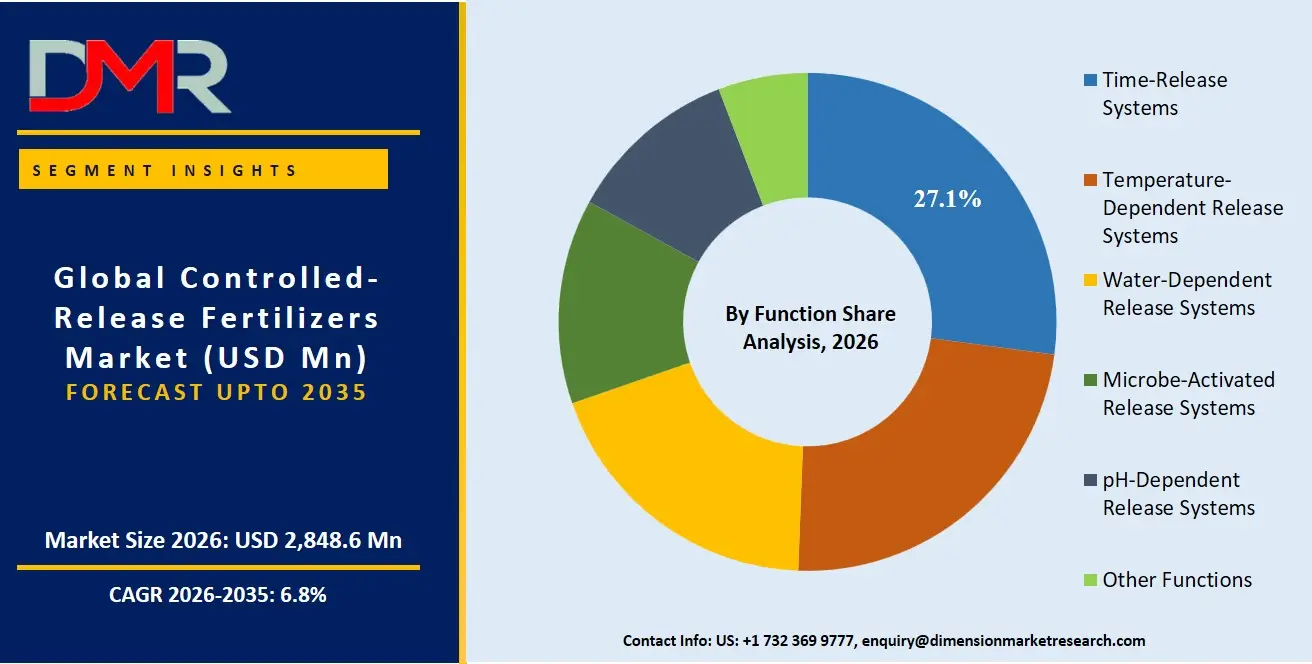
- By Function Analysis: Time-release systems is anticipated to dominate due to continuous availability of nutrients throughout growth periods, less frequent applications, lower risk of runoff of nutrients, and improved productivity. increased interest in sustainable farming practices is fueling adoption of the technology worldwide.
- Regional Leadership: North America is poised to dominate this market with 38.9% of the market share in 2026 owning to well-established precision agriculture infrastructure in itself that makes full use of it and positions it as leader of the market.
What is the Controlled-Release Fertilizers?
Controlled Release Fertilizers are the nutrient technology offerings provided by agricultural input providers that help growers throughout the crop nutrition cycle. The technologies, which are not similar to the traditional soluble fertilizers (because of the instant release of nutrients), are related to the issue of how nutrients will be available. This relates to the following technologies: Slow-Release Fertilizers, among which are Urea-Formaldehyde used to provide initial levels of nutrient availability through microbial decomposition; Coated and Encapsulated Fertilizers, which include Sulfur Coated Fertilizers and Polymer Coated Fertilizers to control the rate of nutrient diffusion based on temperature and moisture; and Nitrogen Stabilizers, such as Nitrification and Urease Inhibitors, to make sure that the nitrogen remains in plant-available form. Given increased scrutiny in relation to environmental issues, controlled release technologies will become necessary for the growers to meet yield goals, reduce costs, and prevent losses of nutrients.
Use Cases
- Single Basal Application in Cereals & Grains: Farmers growing rice and corn engage agronomists' services to create a high-end smart or hybrid controlled-release fertilizer treatment plan that will meet the season's total nitrogen requirements by means of one-time soil treatment prior to sowing.
- Liquid Fertigation in High-Value Fruits & Vegetables: Tomato and pepper farmers working in greenhouses rely on the liquid concentrate forms of nitrogen stabilizers that are applied through fertigation to protect urea fertilizers from volatilization and to provide a precise dose of nutrients to the roots.
- Turf Nutrition on Golf Courses: Golf course managers use polymer or resin coated fertilizers with a time-release property to nurture fairways and greens with a sustained nutrition during 8-12 weeks to avoid growth spurts making the turf undesirable for players.
- Nursery Container Production: Nursery plants are grown in containers using polymer coated fertilizers added as granular prills in the potting mixture that allows for water-induced nutrient release. The approach prevents the development of high electrical conductivity and root burn caused by soluble fertilizers.
How AI is Transforming the Controlled-Release Fertilizers Market?
The emergence of advanced manufacturing technologies is reshaping the landscape of the controlled-release fertilizers industry due to their contribution to innovations in the field of coatings and increased accuracy in nutrient release. The advanced polymer application technologies can help develop defect-free and uniform membranes surrounding nutrient cores when producing Coated & Encapsulated Fertilizers, which will result in highly consistent release of nutrients with minimal deviations, ensuring consistency and safety from possible malfunctions in operation. Additionally, through the implementation of AI in the polymer synthesis process, producers can achieve increased quality of the coating, predicting micro-structural defects in the film and correcting them via adjusting monomer composition in accordance with suggested alterations.
Sustainable chemistry is the central theme of numerous formulation and product development activities. With regard to nitrogen stabilizers, microencapsulation, as well as innovations in solvents, are employed to extend the shelf-life and maintain proper stability and compatibility of both nitrification and urease inhibitors when combined with other crop protection chemicals. Apart from petrochemical-based coating technology, bio-based polymer technology is applied by fertilizer companies as a means of providing growers with a visual picture of the sustainable release cycle of nutrients into soil, which imitates a natural degradation process.
Market Dynamics
Key Drivers in the Global Controlled-Release Fertilizers Market
Rising Adoption of Precision Agriculture
The growing implementation of precision agriculture is one of the key factors behind the growth of the controlled release fertilizers market. More emphasis is being made by farmers on optimizing the production output and preventing the loss of nutrients in addition to causing harm to the environment. The gradual supply of required nutrients from the fertilizers ensures that the use of excess amounts is avoided, which increases the efficiency of nutrient utilization in crops. Modern agricultural techniques such as soil monitoring, precision-guided equipment, and drip irrigation systems play a supporting role in the implementation of controlled release fertilizers.
Growing Demand for Sustainable Farming Solutions
There has been increased concern about sustainable agriculture and the need for environmental conservation, leading to the increased use of controlled release fertilizers worldwide. Traditional fertilizers tend to cause leaching and volatilization of nutrients and emissions of greenhouse gases, which pose environmental problems. The controlled release fertilizers are capable of preventing these problems by ensuring steady release of the nutrients for an extended period. There has been increasing governmental and agricultural sector push for sustainable farming practices through subsidies, legislation, and awareness campaigns. Another factor is that consumers are increasingly demanding sustainably grown food products.
Restraints in the Global Controlled-Release Fertilizers Market
High Product Cost Compared to Conventional Fertilizers
Higher costs associated with controlled release fertilizers continue to act as significant barriers to the expansion of the market. Controlled release fertilizers entail the application of complex coating technologies and specialized production techniques that require higher costs compared to those involved in the production of common fertilizers. Limited budgets and concerns about the returns on investment make it difficult for marginal and small-scale farmers to opt for premium fertilizers. Poor levels of knowledge about the advantages of using controlled release fertilizers among farmers using conventional agricultural practices in developing nations further limit their use.
Limited Awareness and Technical Knowledge Among Farmers
The absence of knowledge about the use and advantages of controlled-release fertilizers is one major restraint facing the market. Most farmers in developing countries still rely on conventional fertilizers because of their ease of use, lower initial cost, and absence of technical know-how. The use of controlled-release fertilizers entails having some knowledge about how nutrients will be released, types of crops that are compatible with such fertilizers, and other issues like soil type. Poor extension service provision and lack of training programs make it difficult for farmers in rural areas to adopt the use of controlled-release fertilizers.
Growth Opportunities in the Global Controlled-Release Fertilizers Market
Expansion of Smart Farming and Precision Nutrient Management
Rapid development in smart agriculture technologies creates significant growth prospects for the market of controlled-release fertilizers. More extensive application of digital agriculture, IoT technology, and data-based nutrient management systems motivates farmers to choose efficient fertilizers. Controlled-release fertilizers are very compatible with the concept of precision agriculture, as the delivery of nutrients is controlled according to the demands of crops. Investment in agriculture automation and sustainability increases potential market growth. With more emphasis on efficiency and sustainability among farmers, the need for better nutrient management systems will create considerable demand in international agricultural markets.
Rising Demand in Emerging Agricultural Economies
Growing markets for controlled-release fertilizers can be found among the emerging economies in the Asia-Pacific region, Latin America, and Africa. With increasing population, food demands, and rising agricultural operations, the need is rising for higher yields from crops in these areas. The support provided by the government through subsidies, agricultural reforms, and educational programs for sustainable fertilizer use is increasing. Moreover, improvements in rural infrastructure and the provision of quality agricultural products are adding to the growth factors for product usage. Higher production of fruits and plantation crops is adding positively to market growth prospects.
Trends in the Global Controlled-Release Fertilizers Market
Increasing Development of Biodegradable Coating Technologies
Companies have been shifting their attention towards creating biodegradable and environmentally safe coatings for controlled-release fertilizers. The use of conventional polymer coatings may lead to environmental issues due to soil residues that accumulate over time. This calls for an alternative that is more sustainable and biodegradable without any adverse effects on soil. Bio-based coatings that decompose into natural substances are being created by companies to meet customer demand. This shift is in line with increased pressure from regulations and farmers to produce products that are sustainable.
Growing Integration with Precision Irrigation Systems
The use of controlled release fertilizers along with high tech irrigation methods like fertigation and drip irrigation is a growing market trend. Farmers are using a variety of nutrients and water management solutions to enhance the effectiveness of crops and save on resource utilization. Controlled release fertilizers in tandem with smart irrigation techniques can help deliver nutrients directly to the roots of crops, thus minimizing waste and maximizing crop yield. This trend is especially prominent in areas where water is scarce and its proper usage becomes imperative. The increasing use of irrigation technology is likely to propel market growth further in the future.
Research Scope and Analysis
The Global Controlled-Release Fertilizers Market Report is segmented by type, function, product tier, formulation, application mode, crop type, distribution channel, and end user. The study covers slow-release, coated, and stabilized fertilizers used across agriculture, horticulture, greenhouses, landscaping, turf management, and home gardening applications worldwide.
ℹ
To learn more about this report –
Download Your Free Sample Report Here
By Type Analysis
Coated and encapsulated fertilizers are projected to lead the industry as they offer a controlled release of nutrients, prevent nutrient loss, and increase fertilizer efficiency for an extended period of time. Polymeric-coated and sulfur-coated types of coated fertilizers have been popular among farmers due to their capacity to increase crop production with minimal environmental effect. The suitability of these fertilizers with precision farming methods and increasing popularity of sustainable agriculture practices is adding impetus to the leading position of this segment in the fertilizer market.
By Function Analysis
Time-release systems based fertilizers is expected to taken the function segment by a wide margin because they provide continuous and long-term supply of nutrients according to the development cycle of crops. This technology helps in minimizing the number of times that fertilizers need to be applied and lowers labor expenses. It also avoids any wastage of nutrients due to loss via volatilization or leaching. Time-Release System technologies are preferred by farmers due to their efficiency in using nutrients and producing high crop yields.
By Product Tier Analysis
The Advanced Polymer/Resin-Coated Fertilizer category is anticipatd to hold the dominant position among the products in terms of segmentation due to better nutrient release control and efficiency compared to regular coated fertilizers. This type of fertilizer has been applied broadly in high-yield crops and other areas requiring optimized nutrient release mechanisms. Its capacity to minimize nutrient loss and improve crop productivity makes the market demand for this product high. Sustainable agricultural practices and the growing need to address environmental concerns pertaining to excessive fertilizer use have led to an increased acceptance of advanced polymer/resin-coated fertilizers.
By Formulation Analysis
Dry Formulations have is expected to be taken the lead in the market on account of convenience in storing, transporting, and application in commercial farming activities. Granules and prills are particularly favored because they offer uniform distribution and timed nutrient release. The compatibility of Dry Formulations with existing farm machinery makes them extremely convenient for cultivating large acres of land. Their long shelf-life and economic value also help in their market success. Moreover, the rising trend of improved nutrient management for cereal and plantation crops is adding further momentum to the leading position of dry controlled-release fertilizers.
By Mode of Application Analysis
The Soil Application category is projected to lead this segment in the global controlled release fertilizers market when it comes to the mode of application section since it provides an easy means of directly delivering nutrients to the root areas of plants. The farmers find it convenient to use controlled-release fertilizers that have been applied to the soil due to their ability to ensure a long period of nutrient availability without any loss due to runoff and evaporation. Soil application has a high degree of efficiency for field crops.
By Crop Type Analysis
The agricultural crops segment leads is projected to lead the crop type category because of the widespread application of controlled release fertilizers among cereals, grains, oil seeds, fruits, and vegetables. The growing requirement for food across the globe and the necessity to improve agriculture productivity have been playing an essential role in the uptake of these products in staple crops farming. These fertilizers assist in enhancing nutrient efficacy and boosting yields while minimizing environmental consequences, which is vital for farming activities. Moreover, technological advancements and favorable government initiatives have played an important role in creating demand.
By Distribution Channel Analysis
Distributors & dealers is anticipated to dominate the distribution channel segment they offer broad market coverage, localized supply and technical assistance to the farmers. They help play a vital part in providing information to the growers regarding fertilizer application, crops suitable and other nutrient management issues. Rural network distribution and collaboration with input suppliers for agriculture enhance the market strength of these distributors and dealers. The farmers depend heavily on the dealers for timely supplies and purchase of products during farming periods. Having a network of dealers is one of the reasons why distributors and dealers dominate the market place.
By End User Analysis
The agriculture industry is anticipated to be leading the end user segment, thanks to the increasing popularity of controlled-release fertilizers used in agriculture. There has been an increased need to produce crops efficiently and sustainably, thereby encouraging farmers to make use of such solutions. The benefits associated with controlled-release fertilizers include optimization of nutrients, better crop yield, and reduced loss of fertilizers, making it ideal for commercial agriculture. Growing global demand for food products, increasing cultivation practices, and increased awareness about sustainability further drive the high demand from the agricultural industry.
The Global Controlled-Release Fertilizers Market Report is segmented on the basis of the following:
By Type
- Slow-Release Fertilizers
- Urea-Formaldehyde
- Urea-Isobutyraldehyde
- Urea-Acetaldehyde
- Other Slow-Release Fertilizers
- Coated & Encapsulated Fertilizers
- Sulfur-Coated Fertilizers
- Polymer-Coated Fertilizers
- Sulfur-Polymer-Coated Fertilizers
- Other Coated & Encapsulated Fertilizers
- Nitrogen Stabilizers
- Nitrification Inhibitors
- Urease Inhibitors
By Function
- Time-Release Systems
- Temperature-Dependent Release Systems
- Water-Dependent Release Systems
- Microbe-Activated Release Systems
- pH-Dependent Release Systems
- Other Functions
By Product Tier
- Basic Coated Fertilizers
- Advanced Polymer/Resin-Coated Fertilizers
- Premium Smart/Hybrid Controlled-Release Fertilizers
By Formulation
- Dry
- Liquid
- Solutions
- Suspensions/Emulsions
- Concentrates
By Mode of Application
- Soil Application
- Foliar Application
- Fertigation
- Seed Treatment
By Crop Type
- Agricultural Crops
- Cereals & Grains
- Oilseeds & Pulses
- Vegetables
- Fruits
- Plantation Crops
- Non-Agricultural Crops
- Turf & Ornamentals
- Nurseries & Greenhouses
- Other Non-Agricultural Crops
By Distribution Channel
- Direct Sales
- Distributors & Dealers
- Agricultural Cooperatives
- Online Retail
By End User
- Agriculture
- Horticulture
- Greenhouses
- Landscaping & Turf Management
- Home Gardening
Regional Analysis
Leading Region by Market Share
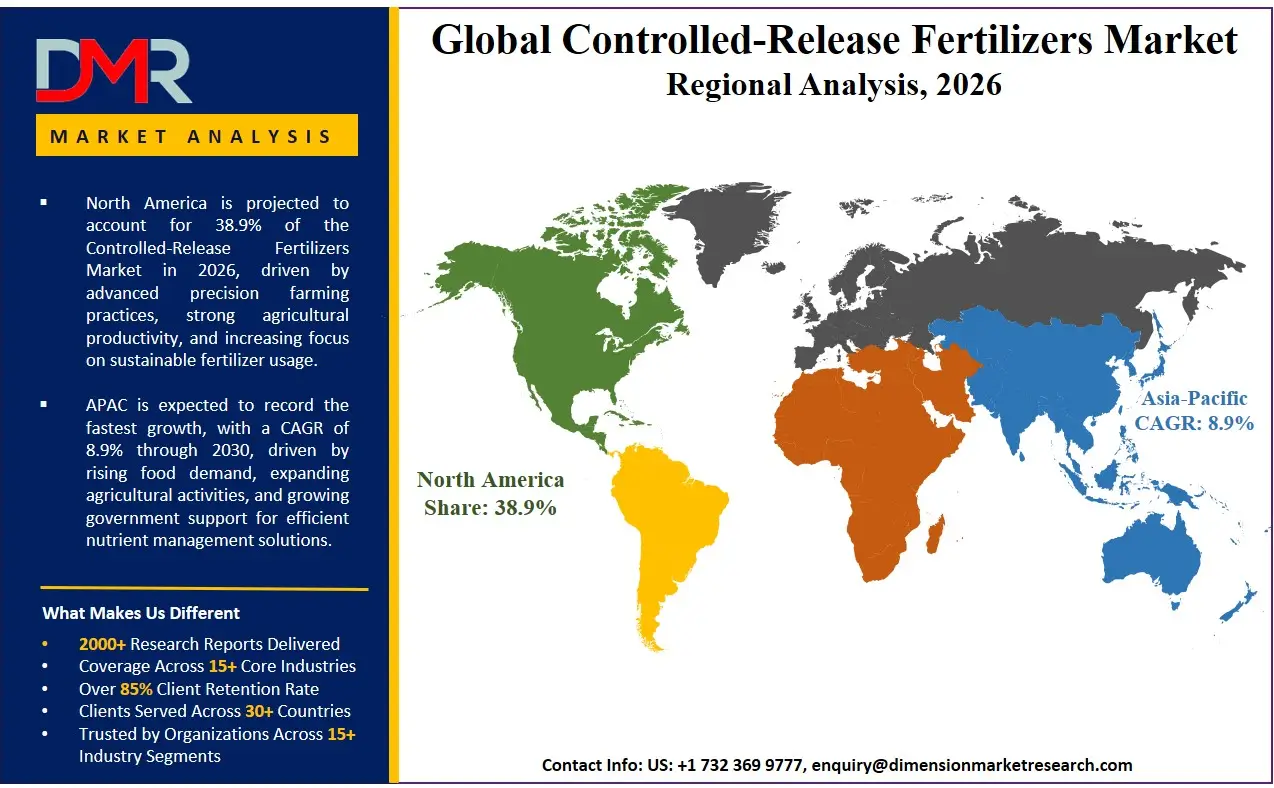
North America is poised to dominate the global controlled-release fertilizers market as it is projected to hold 38.9% of the market share by the end of 2026. North America, led by the United States, dominates the global controlled release fertilizers market due to the high levels of concentration and precision agriculture technologies as well as highly aggressive sustainability initiatives within the commercial farming sector. The region has an existing ecosystem of international fertilizer producers, agricultural cooperative groups, and retailers as well as many skilled crop advisors. Enterprise investments in specialty crops, irrigation systems, and replacement of less efficient broadcasting practices ensure the continual rise in advanced coated polymer/resin fertilizers and smart/hybrid controlled release fertilizers as well as nitrogen stabilizers. Additionally, there is an ongoing entrepreneurial financing environment in favor of emerging biological and coatings companies that require agronomic services to succeed in product development and regulatory processes.
ℹ
To learn more about this report –
Download Your Free Sample Report Here
Fastest-Growing Regional Market
Asia-Pacific is expected to be the most rapidly expanding controlled-release fertilizers market, as it accounts for the ongoing government-driven transformation projects within the farming sector in China, India, Japan, and Southeast Asia. The rapid pace of demographic expansion, the emergence of a middle class in the countries concerned, and the dynamism in the horticulture sector are forcing large-scale agricultural enterprises and small farmers to stop following wasteful practices in their handling of nutrients. Consultation on product performance is highly sought after by these different types of farms in order to guide them towards adopting labor-saving approaches to the handling of nutrients. In addition, there are not many agronomists who can offer advice regarding product application and environmental effects, and it is therefore necessary to outsource this expertise.
By Region
North America
Europe
- Germany
- The U.K.
- France
- Italy
- Russia
- Spain
- Benelux
- Nordic
- Rest of Europe
Asia-Pacific
- China
- Japan
- South Korea
- India
- ANZ
- ASEAN
- Rest of Asia-Pacific
Latin America
- Brazil
- Mexico
- Argentina
- Colombia
- Rest of Latin America
Middle East & Africa
- Saudi Arabia
- UAE
- South Africa
- Israel
- Egypt
- Rest of MEA
Competitive Landscape
The nature of competition in the worldwide market for controlled-release fertilizers has now been greatly enhanced through its diversity of agrochemical firms that are international in nature, technology suppliers in the form of coating technology providers, and specialized firms focused on the production of controlled-release fertilizers. The main factor in ensuring success in this regard will be forming close strategic partnerships with major distributors and agricultural associations since they provide the required market entry point for localizing crop requirements through controlled release technologies. Consolidation within the market has advanced greatly with traditional fertilizer firms making acquisitions of firms specializing in polymer sciences and nutrient delivery models.
Some of the prominent players in the Global Controlled-Release Fertilizers Market are:
- Nutrien Ltd.
- Yara International
- ICL Group
- The Mosaic Company
- Koch Agronomic Services
- COMPO EXPERT
- Haifa Group
- SQM
- Kingenta Ecological Engineering Group
- CF Industries
- EuroChem Group
- OCI Global
- Coromandel International
- ScottsMiracle-Gro
- J.R. Simplot Company
- Tessenderlo Group
- Pursell Agri-Tech
- Van Iperen International
- Aglukon Spezialdünger GmbH & Co. KG
- DeltaChem
- Other Key Players
Recent Developments
- January 2026: ICL Group made an announcement about the expansion of their Innovation and Formulation Center that will support farmers to develop custom fertilizers coated by polymers and resins for improving efficiency in nutrient delivery and fertigation for sustainable crop production in horticulture, fruits, and vegetables.
- November 2025: COMPO EXPERT collaborated with BIO-FED on developing bio-based coating materials and biodegradation testing to support sustainability objectives as well as new European regulatory requirements for micro-plastics in the turf, ornamental, nursery, and greenhouse industries worldwide.
- October 2025: Land O'Lakes, Inc. purchased a technology start-up specializing in liquid formulation, which will support better nitrogen stabilizers and fertigation products, helping improve tank mixing, nitrification, and urease inhibitors' effectiveness for large-scale farms and precision agriculture needs.
Report Details
| Report Characteristics |
| Market Size (2026) |
USD 2,848.6 Mn |
| Forecast Value (2035) |
USD 5,128.6 Mn |
| CAGR (2026-2035) |
6.8% |
| The US Market Size (2026) |
USD 931.9 Mn |
| Historical Data |
2021 – 2025 |
| Forecast Data |
2027 – 2035 |
| Base Year |
2025 |
| Estimate Year |
2026 |
| Segments Covered |
By Type, By Function, By Product Tier, By Formulation, By Mode of Application, By Crop Type, By Distribution Channel, and By End User |
| Regional Coverage |
North America – The US and Canada; Europe – Germany, The UK, France, Russia, Spain, Italy, Benelux, Nordic, & Rest of Europe; Asia-Pacific – China, Japan, South Korea, India, ANZ, ASEAN, Rest of APAC; Latin America – Brazil, Mexico, Argentina, Colombia, Rest of Latin America; Middle East & Africa – Saudi Arabia, UAE, South Africa, Turkey, Egypt, Israel, & Rest of MEA |
Frequently Asked Questions
How big is the Global Controlled-Release Fertilizers Market?
▾ The Global Controlled-Release Fertilizers market is poised to be valued at USD 2,848.6 million in 2026 and is projected to reach USD 5,128.6 million by 2035, driven by the universal need for specialized technologies in nutrient use efficiency, precision agriculture, and sustainable crop production.
What is the CAGR of the Global Controlled-Release Fertilizers Market from 2026 to 2035?
▾ The market is expected to grow at a CAGR of 6.8% from 2026 to 2035, reflecting the accelerating complexity of specialty crop production and the persistent pressure to reduce nutrient loss to the environment.
What factors are driving the growth of the Global Controlled-Release Fertilizers Market?
▾ Key drivers include the global push for higher Nutrient Use Efficiency (NUE), the imperative to reduce labor costs through single-application strategies, the management complexity of high-value fertigation systems, and the surge in demand for nitrogen stabilizers amid evolving nitrate pollution regulations.
Which region held the largest share of the Controlled-Release Fertilizers Market in 2026?
▾ North America, specifically the United States, is poised to hold 38.9% of market share in 2026, driven by a mature precision agriculture ecosystem and aggressive enterprise investment in advanced polymer/resin-coated fertilizers and premium smart/hybrid controlled-release technologies.
Which region is expected to grow the fastest in the Controlled-Release Fertilizers Market?
▾ The Asia-Pacific region is expected to grow the fastest, fueled by rapid agricultural modernization in China, India, and Japan, where labor-saving, single-application controlled-release technology is critical for transitioning smallholder and large-scale operations to more efficient practices.
What are the major trends in the Global Controlled-Release Fertilizers Market?
▾ Major trends include the development of bio-based and biodegradable coatings, the rise of crop-specific nutrient release solutions, the demand for liquid controlled-release formulations for fertigation, and the focus on proving a measurable Return on Investment (ROI) within complex specialty crop systems.
Who are the key players in the Global Controlled-Release Fertilizers Market?
▾ Key players include global fertilizer manufacturers and specialty chemical companies, agricultural cooperatives, and the technology licensing divisions of polymer science firms, alongside specialized pure-play controlled-release fertilizer technology providers.
How is the Global Controlled-Release Fertilizers Market segmented?
▾ The market is segmented by Type, Function, Product Tier, Formulation, Mode of Application, Crop Type, Distribution Channel, and End User.