What is the Cooling Water Treatment Chemicals Market Size?
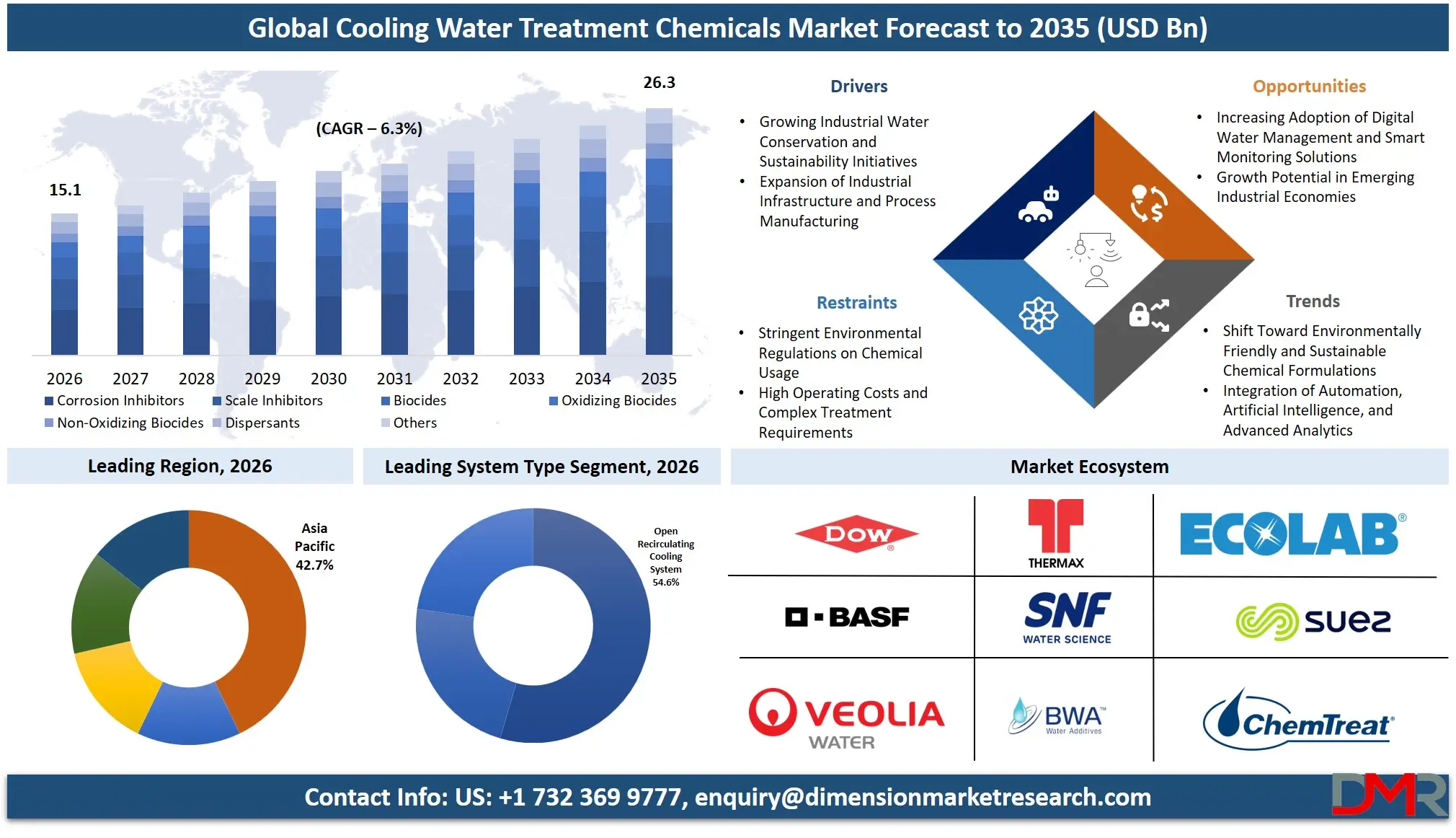
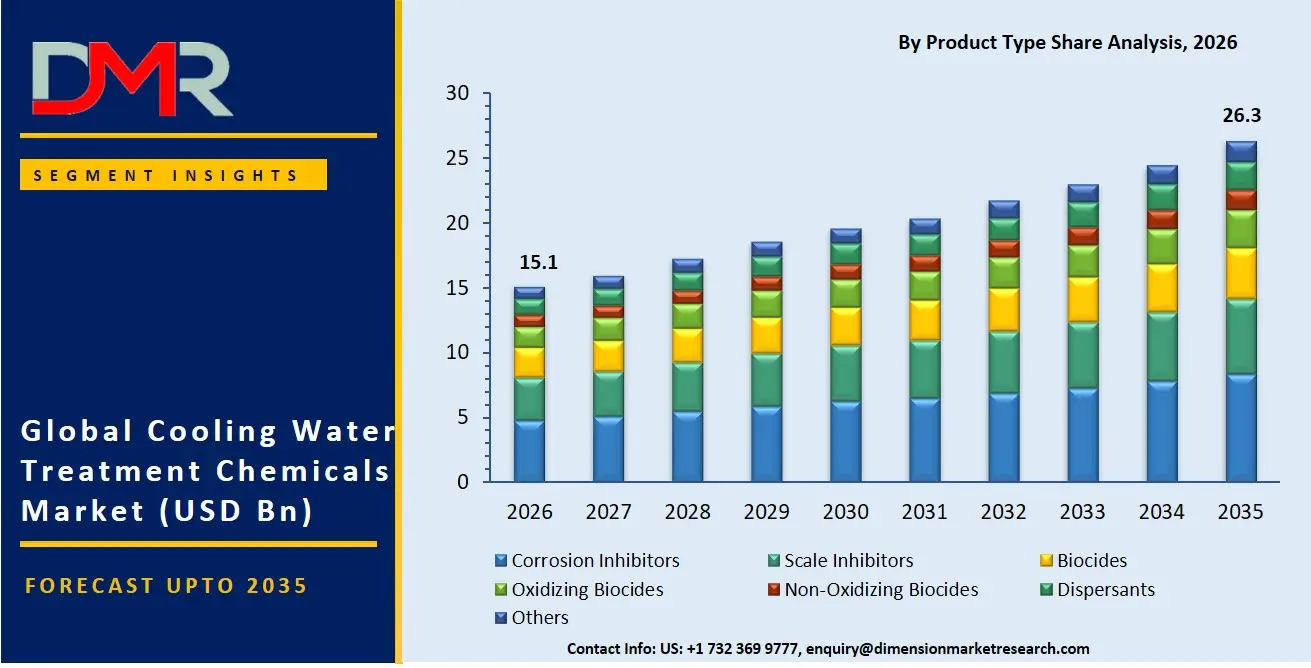
The Cooling Water Treatment Chemicals Market size is expected to be USD 15.1 billion in 2026 and increase at a compound annual growth rate of 6.3% to USD 26.3 billion in 2035 due to Growing Industrial Water Conservation and Sustainability Initiatives.
ℹ
To learn more about this report –
Download Your Free Sample Report Here
Cooling water treatment chemicals comprise specialty formulations designed to maintain the operational efficiency, safety, and longevity of industrial cooling systems by preventing corrosion, scale formation, biological fouling, and suspended solid deposition. These chemicals include corrosion inhibitors, biocides, dispersants, scale inhibitors, and pH adjusters used across power generation, oil and gas, chemical processing, manufacturing, mining, and food industries. The market is gaining strategic importance as industries prioritize water conservation, equipment reliability, and regulatory compliance. Emerging trends such as sustainable chemical formulations, digital water management systems, stricter environmental standards, and smart monitoring technologies are accelerating innovation and expanding adoption across industrial sectors.
The US Cooling Water Treatment Chemicals Market
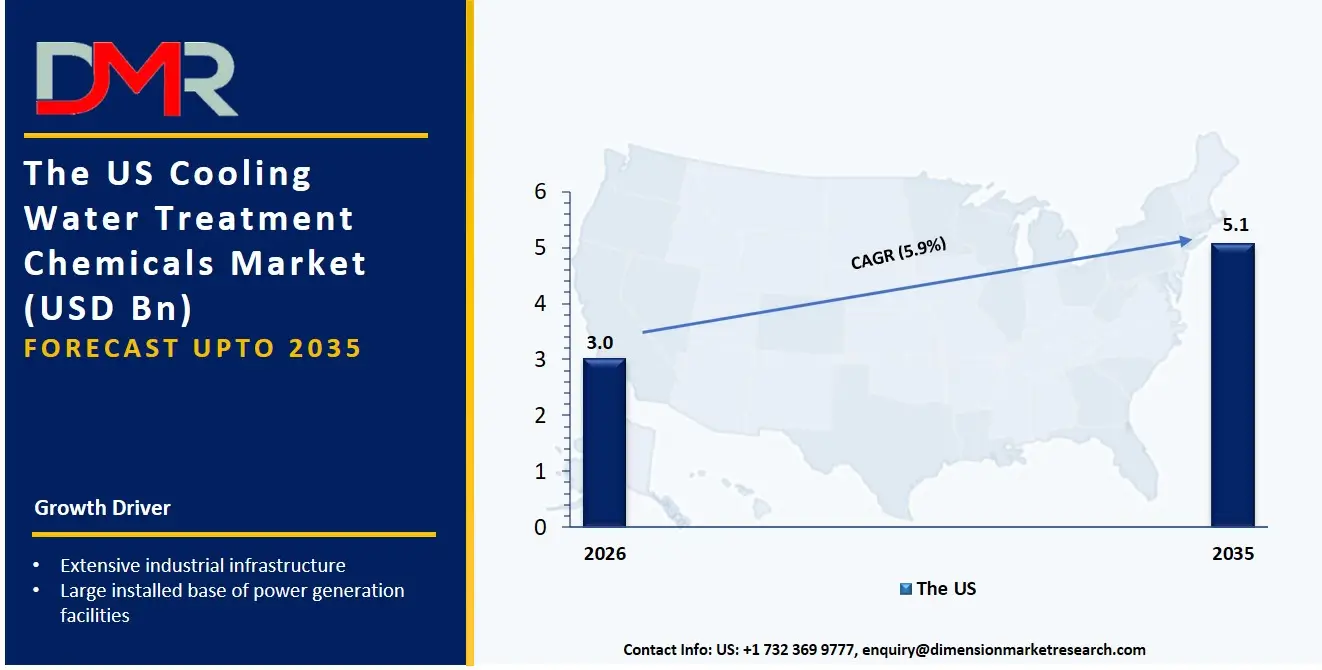
The US Cooling Water Treatment Chemicals Market size is estimated to be USD 3.0 billion in 2026 and is expected to increase at a CAGR of 5.9% over the forecast period.
ℹ
To learn more about this report –
Download Your Free Sample Report Here
The US Cooling Water Treatment Chemicals Market is supported by its extensive industrial infrastructure, large installed base of power generation facilities, advanced manufacturing operations, and stringent environmental compliance requirements. Continuous investment in industrial water reuse, modernization of aging cooling infrastructure, and adoption of digital water monitoring solutions are encouraging chemical demand. Major suppliers focus on developing environmentally compliant formulations with improved operational efficiency, while federal and state regulations continue to promote sustainable industrial water management practices across multiple end-use industries.
Europe Cooling Water Treatment Chemicals Market
The Europe Cooling Water Treatment Chemicals Market size is estimated to be USD 3.8 billion in 2026 and is expected to increase at a CAGR of 5.7% over the forecast period.
The Europe Cooling Water Treatment Chemicals Market is shaped by ambitious environmental sustainability objectives, stringent chemical regulations, and increasing industrial emphasis on water efficiency. Regional initiatives promoting circular economy principles and responsible chemical usage encourage industries to adopt advanced cooling water treatment technologies. Manufacturing, chemical processing, pharmaceuticals, and food industries remain key consumers. Continuous innovation in biodegradable formulations, low-phosphorus chemistries, and environmentally responsible treatment programs strengthens Europe's position as an important technology-driven market for industrial water treatment solutions.
Japan Cooling Water Treatment Chemicals Market
The market size of Japan Cooling Water Treatment Chemicals will be USD 755 million in 2026 and at a CAGR of 6.1% in the forecast period.
The Japan Cooling Water Treatment Chemicals Market benefits from the country's advanced manufacturing ecosystem, high industrial automation, and strong commitment to operational efficiency. Electronics, chemical manufacturing, pharmaceuticals, and power generation industries continue investing in high-performance cooling water management systems. Government support for industrial sustainability, efficient water utilization, and carbon reduction encourages adoption of advanced treatment chemicals. Opportunities are expanding through digital monitoring technologies, although aging industrial infrastructure presents modernization challenges that also stimulate replacement demand.
Key Takeaways
- Market Size & Forecast: The Cooling Water Treatment Chemicals Market size is projected to reach USD 15.1 billion in 2026 and is anticipated to have a value of USD 26.3 billion in 2035.
- Growth Rate & Outlook: The Cooling Water Treatment Chemicals Market size is set to grow at a compound annual growth rate of 6.3% during the forecast period of 2026 to 2035.
- Primary Growth Drivers: Some of the major growth drivers in the market are Growing Industrial Water Conservation and Sustainability Initiatives, and more.
- Key Market Trends: Some of the major trends in the market are Integration of Shift Toward Environmentally Friendly and Sustainable Chemical Formulations, and more.
- By Product Type: Corrosion Inhibitors is anticipated to get the majority share of the Cooling Water Treatment Chemicals Market in 2026.
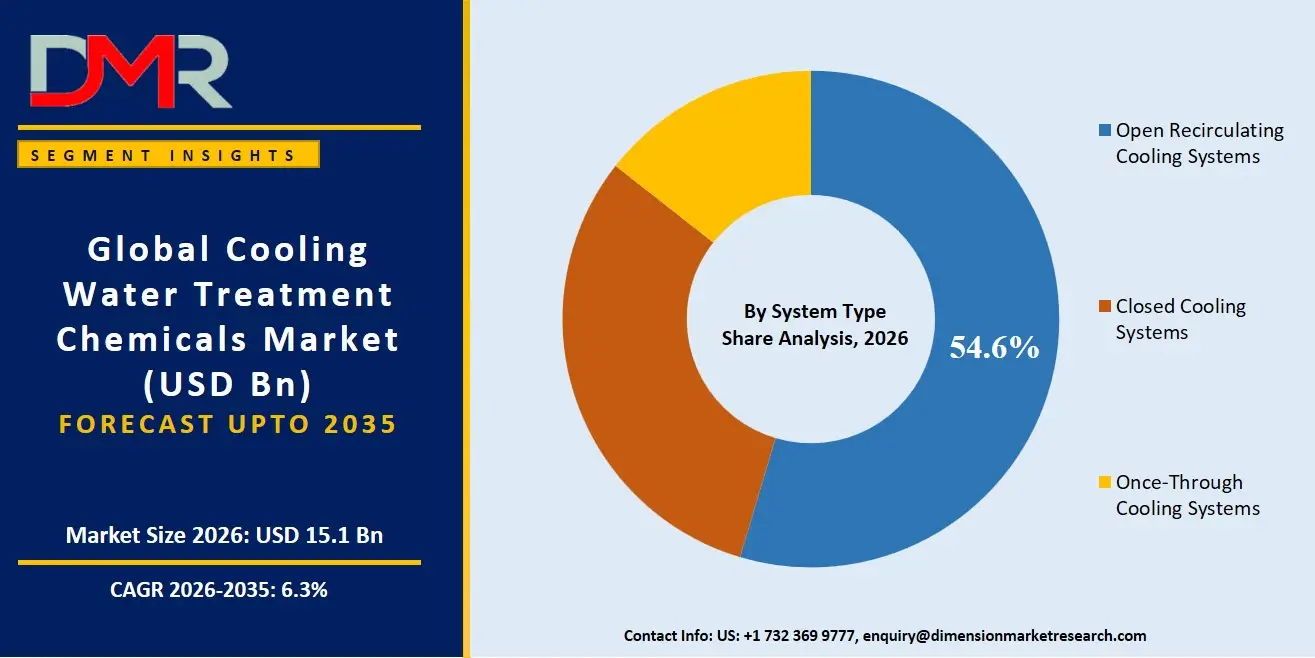
- By System Type: Open recirculating cooling system are expected to get the largest revenue share in 2026 in the Cooling Water Treatment Chemicals Market.
- Regional Leadership: Asia Pacific is set to lead the Cooling Water Treatment Chemicals Market with an estimated 42.7% share in 2026.
What is the Cooling Water Treatment Chemicals?
Cooling water treatment chemicals are specialized chemical formulations used to maintain the quality and performance of industrial cooling water systems by preventing corrosion, mineral scale, microbiological growth, fouling, and sediment accumulation. They optimize heat transfer efficiency, extend equipment lifespan, reduce maintenance costs, minimize system downtime, and improve water utilization. These chemicals are widely applied in cooling towers, condensers, heat exchangers, and recirculating cooling systems operating across diverse industrial facilities.
Use Cases
- Power Plant Cooling System Protection: Cooling water treatment chemicals are extensively used in thermal and nuclear power plants to prevent corrosion, scale accumulation, and microbial contamination in cooling towers and condensers. These treatments improve heat exchange efficiency, reduce maintenance frequency, minimize unplanned outages, and enhance the operational lifespan of expensive equipment while ensuring regulatory compliance.
- Oil & Gas Processing Facilities: Refineries, petrochemical plants, and offshore production facilities rely on cooling water treatment chemicals to maintain stable cooling performance under demanding operating conditions. Specialized formulations protect pipelines, heat exchangers, and cooling circuits against corrosion, biofouling, and mineral deposits, improving equipment reliability and reducing operational costs.
- Industrial Manufacturing Operations: Manufacturing industries including automotive, steel, electronics, and chemicals utilize cooling water treatment chemicals to ensure uninterrupted production processes. Effective treatment minimizes scaling, microbial growth, and system fouling, improving cooling efficiency while lowering water consumption, maintenance expenses, and production downtime.
- Food & Beverage Processing: Food and beverage manufacturers employ cooling water treatment chemicals to maintain hygienic cooling systems while complying with strict quality standards. Proper treatment helps prevent microbial contamination, protects heat exchange equipment, supports efficient production, and reduces water wastage through optimized cooling system performance.
How AI Is Transforming the Cooling Water Treatment Chemicals Market
Artificial intelligence is improving the cooling water treatment chemicals market by enabling predictive analysis of cooling system performance, identifying potential corrosion and scaling risks before failures occur, and optimizing chemical dosage requirements. AI-powered monitoring systems analyze large volumes of operational data from sensors to improve treatment accuracy and reduce unnecessary chemical consumption.
AI technologies are also enhancing customer service, product development, and operational efficiency by supporting automated recommendations, remote system monitoring, and customized treatment programs. Chemical manufacturers are increasingly using AI-driven models to develop improved formulations, predict chemical interactions, and support sustainable water management practices across industrial applications.
Market Dynamic
Driving Factors in the Cooling Water Treatment Chemicals Market
Growing Industrial Water Conservation and Sustainability Initiatives
Industrial facilities worldwide are placing greater emphasis on water conservation, wastewater reduction, and sustainable production practices, significantly driving demand for cooling water treatment chemicals. Industries increasingly recycle cooling water to reduce freshwater consumption and operational costs, creating greater requirements for effective chemical treatment programs. Regulatory authorities are also encouraging efficient industrial water management through stricter discharge standards and environmental compliance measures. As companies pursue sustainability goals while maintaining production efficiency, investments in advanced cooling water treatment solutions continue to expand across power generation, manufacturing, mining, chemicals, and processing industries.
Restraints in the Cooling Water Treatment Chemicals Market
Stringent Environmental Regulations on Chemical Usage
Increasing environmental regulations governing chemical composition, wastewater discharge, and hazardous substance management present significant challenges for manufacturers. Restrictions on phosphorus-based compounds, certain biocides, and other regulated ingredients require continuous product reformulation and extensive regulatory testing. Compliance increases research, manufacturing, and certification costs while extending product development timelines. Smaller suppliers often face greater financial pressure in adapting to evolving environmental standards, limiting market expansion and increasing competitive intensity among established companies with stronger regulatory capabilities.
Opportunities in the Cooling Water Treatment Chemicals Market
Increasing Adoption of Digital Water Management and Smart Monitoring Solutions
The integration of digital technologies, sensors, automation, and real-time analytics into industrial water treatment systems represents a significant growth opportunity for the cooling water treatment chemicals market. Smart monitoring platforms enable industries to optimize chemical dosing, detect early signs of corrosion or scaling, and improve overall cooling system performance. These solutions help reduce chemical wastage, lower operational expenses, and support predictive maintenance strategies. As industries increasingly adopt Industry 4.0 technologies and automated process management, demand for intelligent water treatment programs combining chemicals with digital solutions is expected to increase substantially.
Trends in the Cooling Water Treatment Chemicals Market
Shift Toward Environmentally Friendly and Sustainable Chemical Formulations
A major trend influencing the cooling water treatment chemicals market is the transition toward environmentally sustainable formulations with reduced ecological impact. Industries are increasingly adopting biodegradable chemicals, low-toxicity biocides, and phosphorus-free treatment solutions to comply with environmental regulations and corporate sustainability targets. Manufacturers are investing in research and development to create high-performance alternatives that maintain corrosion and scale protection while minimizing environmental risks. This sustainability-driven transformation is reshaping product development strategies and encouraging innovation across the global cooling water treatment chemical industry.
Research Scope and Analysis
The research scope analyzes the Cooling Water Treatment Chemicals Market across product types, system types, and end-use industries. It evaluates market trends, growth drivers, regional performance, competitive dynamics, technological advancements, and emerging opportunities influencing industry expansion and future adoption patterns.
ℹ
To learn more about this report –
Download Your Free Sample Report Here
By Product Type Analysis
The product type segment of the cooling water treatment chemicals market is dominated by corrosion inhibitors, which are estimated to account for approximately 31.8% share of the global market in 2026. Their leading position is attributed to widespread industrial requirements for protecting metal components, pipelines, heat exchangers, and cooling towers from corrosion-related damage.
ℹ
To learn more about this report –
Download Your Free Sample Report Here
Power generation, oil and gas, and chemical industries represent major consumers due to their dependence on long-term equipment reliability. Meanwhile, biocides are expected to be the fastest-growing segment due to increasing concerns regarding microbial contamination, biofilm formation, and hygiene requirements. Growing adoption of advanced non-oxidizing biocides and environmentally safer microbial control solutions is expected to accelerate segment expansion during the forecast period.
By System Type Analysis
Based on system type, open recirculating cooling systems represent the leading segment, accounting for an estimated 54.6% share of the cooling water treatment chemicals market in 2026. These systems dominate because they are widely used across industrial facilities due to their ability to provide efficient cooling while reducing freshwater consumption compared with once-through systems. Increasing deployment of cooling towers in power plants, manufacturing facilities, and processing industries continues to support demand for chemical treatment solutions. Closed cooling systems are projected to experience the fastest growth due to rising adoption in industries requiring precise temperature control, reduced contamination risks, and improved operational efficiency. Growth in electronics, pharmaceuticals, and advanced manufacturing sectors is expected to drive demand for closed-loop cooling solutions.
By End Use Industry Analysis
The power generation industry is projected to remain the largest end-use segment of the cooling water treatment chemicals market, representing approximately 28.5% share in 2026. The segment's dominance is supported by the extensive use of cooling systems in thermal, nuclear, and renewable power facilities where efficient heat removal is essential for continuous operations. Increasing electricity demand and modernization of aging power infrastructure further strengthen chemical adoption. The pharmaceutical sector is expected to be the fastest-growing end-use segment due to expanding manufacturing capacity, strict contamination control requirements, and increased demand for high-quality cooling systems. Additionally, chemical, semiconductor, and biotechnology industries are accelerating adoption of advanced treatment solutions requiring precise water quality management.
The Cooling Water Treatment Chemicals Market Report is segmented on the basis of the following:
By Product Type
- Corrosion Inhibitors
- Scale Inhibitors
- Biocides
- Oxidizing Biocides
- Non-Oxidizing Biocides
- Dispersants
- Others
By System Type
- Open Recirculating Cooling Systems
- Closed Cooling Systems
- Once-Through Cooling Systems
By End-Use Industry
- Power Generation
- Oil & Gas
- Chemical & Petrochemical
- Food & Beverage
- Pulp & Paper
- Iron & Steel
- Mining & Mineral Processing
- Pharmaceuticals
- Others
Regional Analysis
Leading Region in the Cooling Water Treatment Chemicals Market
ℹ
To learn more about this report –
Download Your Free Sample Report Here
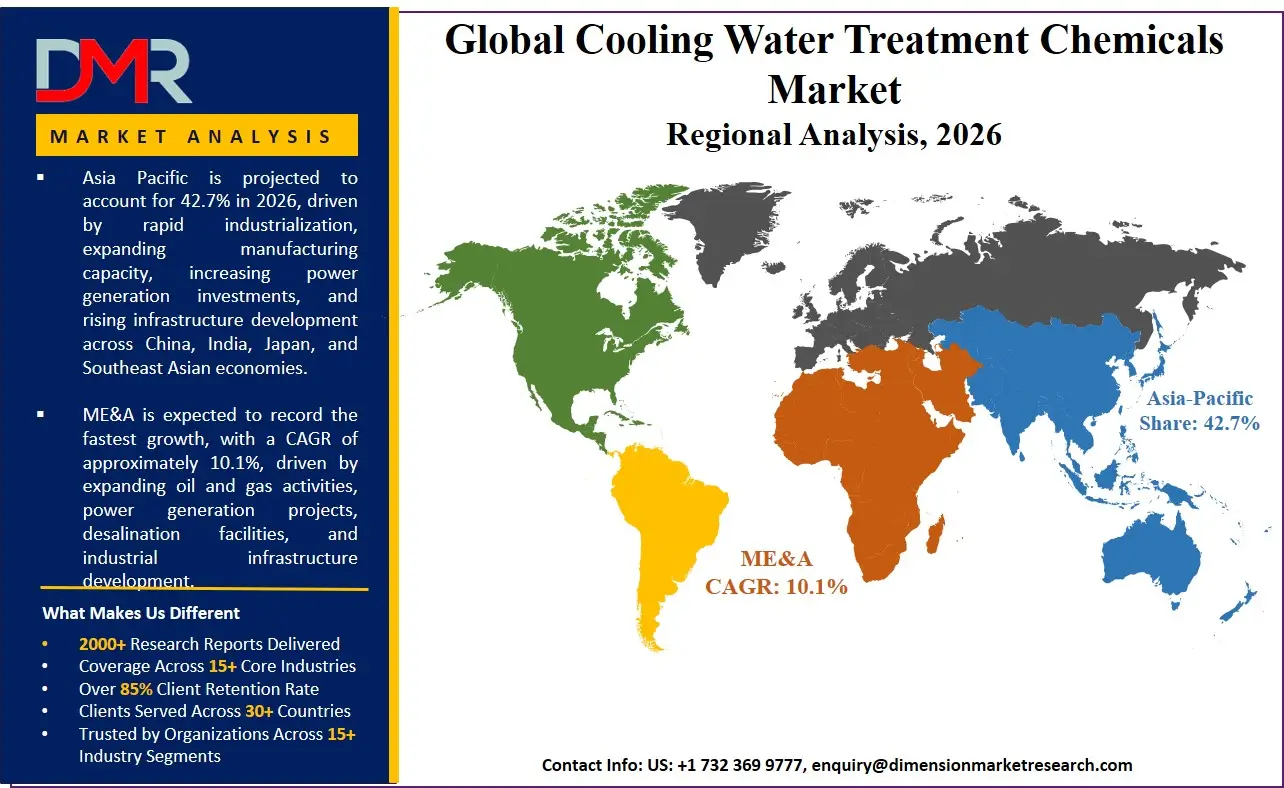
Asia-Pacific is expected to remain the leading region in the cooling water treatment chemicals market, accounting for an estimated 42.7% share of the global market in 2026. The region's dominance is driven by rapid industrialization, expanding manufacturing capacity, increasing power generation investments, and rising infrastructure development across China, India, Japan, and Southeast Asian economies. Growing environmental regulations, water scarcity concerns, and industrial wastewater management initiatives are encouraging adoption of advanced treatment chemicals. The presence of large chemical, petrochemical, steel, and power industries further strengthens regional demand. Government programs supporting industrial sustainability and efficient water utilization continue to enhance market growth throughout the region.
Fastest Growing Region in the Cooling Water Treatment Chemicals Market
The Middle East & Africa region is projected to be the fastest-growing market for cooling water treatment chemicals due to expanding oil and gas activities, power generation projects, desalination facilities, and industrial infrastructure development. Increasing water scarcity has encouraged industries and governments to invest in efficient water management technologies, including advanced cooling water treatment systems. Countries across the region are focusing on industrial diversification, manufacturing expansion, and sustainable resource utilization. Growing investments in petrochemical complexes, energy projects, and water-intensive industries are expected to create strong opportunities for cooling water treatment chemical suppliers over the coming years.
By Region
North America
Europe
- Germany
- The U.K.
- France
- Italy
- Russia
- Spain
- Benelux
- Nordic
- Rest of Europe
Asia-Pacific
- China
- Japan
- South Korea
- India
- ANZ
- ASEAN
- Rest of Asia-Pacific
Latin America
- Brazil
- Mexico
- Argentina
- Colombia
- Rest of Latin America
Middle East & Africa
- Saudi Arabia
- UAE
- South Africa
- Israel
- Egypt
- Rest of MEA
Competitive Landscape
The cooling water treatment chemicals market is characterized by strong competition driven by technological innovation, product differentiation, sustainability initiatives, and customized treatment solutions. Market participants focus on developing environmentally compliant formulations, expanding application-specific product portfolios, and integrating digital monitoring capabilities to strengthen their competitive position. High entry barriers exist due to regulatory requirements, technical expertise, extensive testing procedures, and the need for established customer relationships. Companies are increasingly investing in research and development, strategic collaborations, regional expansion, and advanced water management platforms to improve operational efficiency and capture emerging opportunities. Competitive strategies are shifting toward integrated solutions combining chemicals, automation, and technical services rather than standalone chemical offerings.
Some of the prominent players in the global Cooling Water Treatment Chemicals are:
- Ecolab Inc. (Nalco Water)
- Veolia Water Technologies
- SUEZ Water Technologies & Solutions
- Kurita Water Industries Ltd.
- Solenis LLC
- Kemira Oyj
- BASF SE
- Dow Inc.
- Nouryon
- SNF Group
- Thermax Limited
- BWA Water Additives
- Accepta Ltd.
- Buckman Laboratories International, Inc.
- ChemTreat, Inc.
- Aries Chemical, Inc.
- Aquapharm Chemicals Pvt. Ltd.
- Cortec Corporation
- Italmatch Chemicals S.p.A.
- Henkel AG & Co. KGaA
- Other Key Players
Recent Developments
- In September 2025, Veolia expanded its industrial water management offerings by enhancing integrated solutions combining water treatment chemicals, digital monitoring, and operational services. The company focused on helping industrial users improve cooling system efficiency, reduce water consumption, and achieve sustainability objectives through advanced treatment strategies. The initiative supported sectors with high cooling water requirements, including energy, chemicals, and manufacturing industries. This development reflects growing market demand for comprehensive water management partnerships rather than conventional chemical supply models.
- In June 2025, Kurita Water Industries advanced its sustainable water treatment technology portfolio by focusing on environmentally responsible chemical solutions for industrial cooling applications. The company emphasized reducing environmental impact through optimized chemical formulations and improved water management approaches designed for industrial customers. The development aligned with increasing demand for low-impact treatment chemicals driven by stricter environmental regulations and corporate sustainability goals.
- In February 2025, Ecolab strengthened its industrial water management capabilities by expanding digital monitoring and analytics solutions designed to improve water efficiency and cooling system performance. The company continued integrating advanced data analytics, automation, and connected technologies into its water treatment programs to help industrial customers optimize chemical usage and reduce operational risks. The initiative supports industries such as power generation, manufacturing, and processing by enabling real-time monitoring of cooling system conditions.
Report Details
| Report Characteristics |
| Market Size (2026) |
USD 15.1 Bn |
| Forecast Value (2035) |
USD 26.3 Bn |
| CAGR (2026–2035) |
6.3% |
| Historical Period |
2021 – 2025 |
| Forecast Period |
2027 – 2035 |
| Base Year |
2025 |
| Estimate Year |
2026 |
| Segments Covered |
By Product Type, By System Type, By End-Use Industry |
| Regional Coverage |
North America – The US and Canada; Europe – Germany, The UK, France, Russia, Spain, Italy, Benelux, Nordic, & Rest of Europe; Asia-Pacific – China, Japan, South Korea, India, ANZ, ASEAN, Rest of APAC; Latin America – Brazil, Mexico, Argentina, Colombia, Rest of Latin America; Middle East & Africa – Saudi Arabia, UAE, South Africa, Turkey, Egypt, Israel, & Rest of MEA |
Frequently Asked Questions
How big is the Cooling Water Treatment Chemicals Market?
▾ The Cooling Water Treatment Chemicals Market size is expected to reach USD 15.1 billion by 2026 and is projected to reach USD 26.3 billion by the end of 2035.
What is the CAGR of the Cooling Water Treatment Chemicals Market from 2026 to 2035?
▾ The market is growing at a CAGR of 6.3 percent over the forecasted period.
What factors are driving the growth of the Cooling Water Treatment Chemicals Market?
▾ Growing Industrial Water Conservation and Sustainability Initiatives, and more are the factors driving the growth of the Cooling Water Treatment Chemicals Market.
What are the major trends in the Cooling Water Treatment Chemicals Market?
▾ Increasing Preference for Customized Chemical Treatment Programs, and more are some of the major trends in the market.
Who are the key players in the Cooling Water Treatment Chemicals Market?
▾ Some of the key players in the Cooling Water Treatment Chemicals Market include Thermax, Ecolab, BASF, and more
How is the Cooling Water Treatment Chemicals Market segmented?
▾ The Cooling Water Treatment Chemicals Market is segmented by product type, system type, end-use industry.
Which region held the largest share of the Cooling Water Treatment Chemicals Market in 2026?
▾ Asia Pacific is set to lead the Cooling Water Treatment Chemicals Market with an estimated 42.7% share in 2026.
Which region is expected to grow the fastest in the Cooling Water Treatment Chemicals Market?
▾ ME&A is the fastest-growing region in the Cooling Water Treatment Chemicals Market during the forecast period.