Indication Covered
The report covers chronic obstructive pulmonary disease (COPD) as a common, preventable, and treatable but progressive chronic respiratory disorder, with emphasis on its clinical burden, treatment patterns, therapeutic innovation, and commercial market development across the seven markets covered. COPD is characterized by persistent respiratory symptoms, including breathlessness, chronic cough, and sputum production, together with persistent and usually progressive airflow limitation caused by abnormalities of the airways (chronic bronchitis and small airway disease) and/or the alveoli (emphysema). Diagnosis is confirmed by spirometry, with a post-bronchodilator FEV1/FVC ratio below 0.70. Tobacco smoking remains the leading risk factor, while exposure to biomass fuel smoke, air pollution, occupational dusts and chemicals, alpha-1 antitrypsin deficiency, abnormal lung development, and a history of asthma or childhood respiratory disease also contribute to disease development. Patients experience periodic exacerbations, defined as acute worsening of symptoms requiring additional treatment, which accelerate lung function decline, drive hospitalization, and increase mortality.
The indication scope includes major clinical presentations and associated disease conditions relevant to treatment demand, including:
- Mild to Moderate COPD (GOLD Grades 1–2)
- Severe to Very Severe COPD (GOLD Grades 3–4)
- COPD with Chronic Bronchitis Phenotype
- COPD with Emphysema Phenotype
- COPD with Frequent Exacerbations (GOLD Group E)
- COPD with Eosinophilic (Type 2) Inflammation
- COPD with Chronic Respiratory Failure (Hypoxemia and Hypercapnia)
- COPD with Cardiovascular and Other Comorbidities
Moderate-to-severe COPD with frequent exacerbations remains the largest commercial focus because exacerbations drive hospitalization, accelerated lung function decline, mortality, and a disproportionate share of healthcare cost, and because this population is the target of the most recent therapeutic advances. The report also considers COPD with eosinophilic (type 2) inflammation because identification of elevated blood eosinophils has enabled biomarker-guided biologic therapy, such as IL-4/IL-13 and IL-5 blockade, and is shaping precision-medicine development.
Other difficult-to-treat manifestations, including chronic breathlessness, persistent cough and mucus hypersecretion, exercise limitation, hypoxemia, hypercapnia, pulmonary hypertension, cachexia and muscle wasting, anxiety and depression, and frequent hospital readmission, are evaluated as areas of continuing clinical need.
The treatment landscape covers pharmacological treatment, supportive and interventional care, and biologic and emerging therapies. Particular attention is given to inhaled long-acting bronchodilators and triple therapy, add-on exacerbation-prevention medication, biologics targeting type 2 and alarmin pathways, and novel mechanisms designed to reduce exacerbations, preserve lung function, and address airway inflammation and mucus dysfunction, which remain inadequately controlled by currently available treatment in a large share of patients.
Epidemiology Parameters
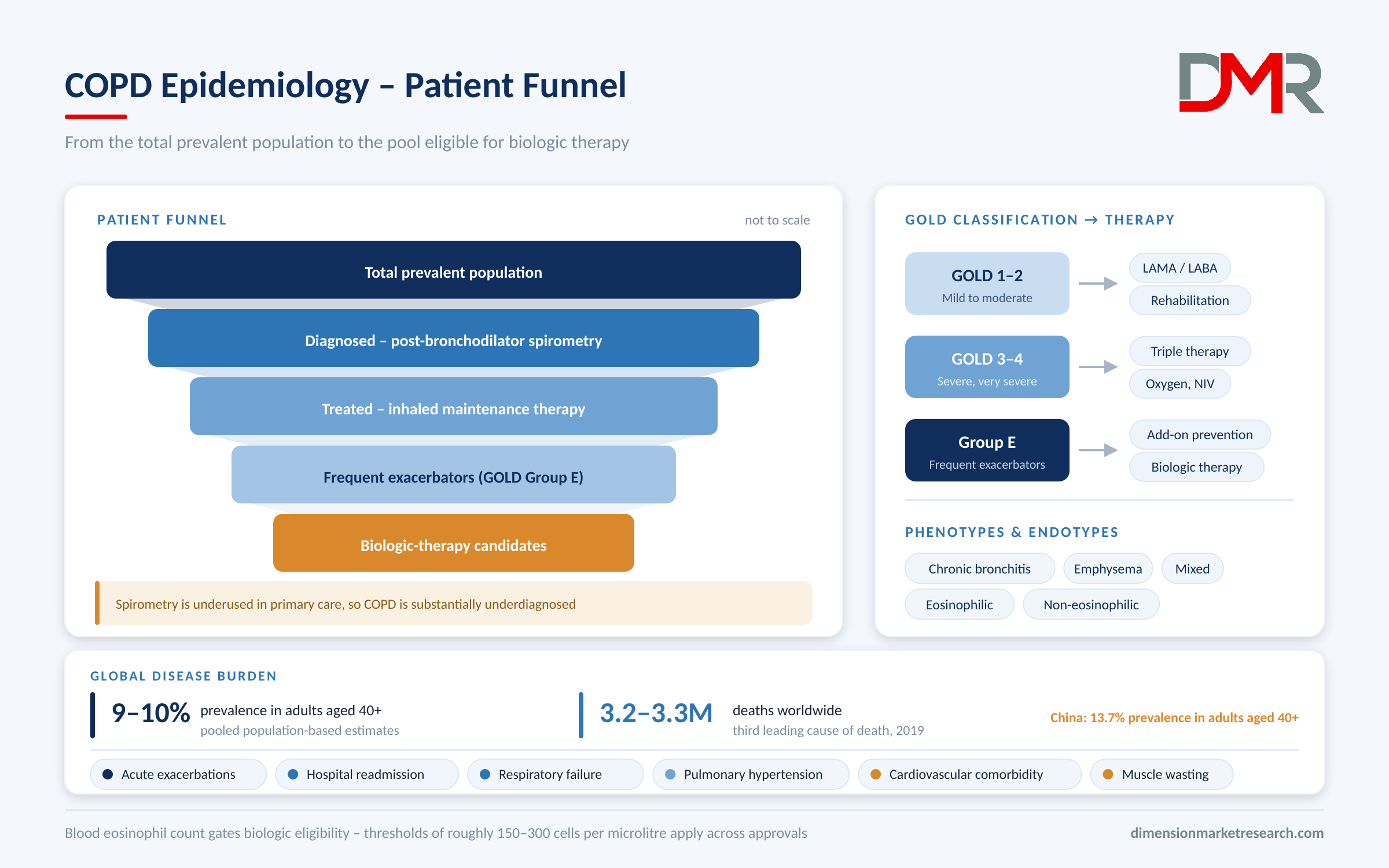
COPD is among the most common chronic diseases worldwide and primarily affects adults over 40 years of age. Pooled estimates from population-based studies place prevalence at roughly 9–10% of adults aged 40 years and older, and COPD ranked as the third leading cause of death globally in 2019, with approximately 3.2–3.3 million deaths. Epidemiological studies report differences in prevalence, severity, and phenotype distribution across populations. These differences are influenced by smoking history, age structure, occupational and environmental exposure, diagnostic practices including spirometry use, access to primary and specialist respiratory care, and disease awareness. The epidemiological assessment considers disease severity, phenotype, and exacerbation risk, recognizing that symptom burden, rate of lung function decline, hospitalization, and treatment requirements can vary considerably between patients.
ℹ
To learn more about this report –
Download Your Free Sample Report Here
The epidemiology assessment provides a structured evaluation of the COPD population from overall prevalence through diagnosis and treatment. Key parameters include:
- Total COPD Patient Population
- Prevalent Population
- Incidence Population
- Diagnosed Patient Population
- Treated Patient Population
- Untreated and Undiagnosed Patient Population
- Treatment-Eligible Population
- Severity Distribution (GOLD Grades 1–4)
- GOLD Group Distribution (A, B, and E)
- Phenotype Distribution (Chronic Bronchitis and Emphysema)
- Eosinophilic (Type 2) COPD Population
- Frequent-Exacerbator Population
- Patients Receiving Triple Therapy
- Patients Receiving Biologic Therapy
- Smoking Status Distribution (Current, Former, and Never Smokers)
- Age and Gender Distribution
- Age at Diagnosis
- Diagnosis Rate and Diagnostic Delay
- Treatment Rate
- Treatment Penetration
- Exacerbation, Hospitalization, and Mortality Rates
- Regional Disease Burden
- Epidemiological Trends
The analysis distinguishes between the overall prevalent population, diagnosed patients, and individuals actively receiving disease-specific treatment. This distinction is important because COPD is substantially underdiagnosed: early symptoms such as breathlessness and chronic cough are frequently attributed to aging, smoking, or physical deconditioning, and spirometry remains underused in primary care. In Spain, for example, the EPISCAN II population study found that about 78% of spirometry-defined COPD was undiagnosed in 2017, with underdiagnosis higher among women and younger patients. Diagnosis requires post-bronchodilator spirometry, supported by symptom assessment, exacerbation history, imaging, and blood eosinophil measurement where indicated.
The report also evaluates the influence of spirometry access, targeted case finding, improved diagnostic pathways, digital and AI-assisted detection, patient registries, and increasing disease awareness on the identification and management of COPD. The GOLD 2026 report places continued emphasis on early diagnosis, case finding, exacerbation-based risk assessment, and personalized treatment. Earlier diagnosis can improve access to smoking cessation, vaccination, pulmonary rehabilitation, optimized inhaled therapy, and, for eligible patients, biologic treatment. Advances in inhaled therapy, home oxygen and non-invasive ventilation, and multidisciplinary care have contributed to improved quality of life, increasing the need for coordinated long-term management of breathlessness, exacerbation prevention, and comorbidities.
Patient Segmentation
The COPD patient population is segmented according to disease severity, GOLD group, phenotype, inflammatory endotype, treatment status, and therapeutic requirements. This approach provides a clearer understanding of patients eligible for different treatment categories and helps assess the potential addressable population for emerging therapies.
ℹ
To learn more about this report –
Download Your Free Sample Report Here
By Disease Severity (GOLD Grade)
Mild (GOLD 1) and Moderate (GOLD 2) COPD: Patients with post-bronchodilator FEV1 at or above 50% of predicted. Many patients in this group remain undiagnosed or are managed in primary care, and moderate disease typically represents the largest share of diagnosed patients in population studies. Management centers on smoking cessation, vaccination, rescue bronchodilators, long-acting bronchodilator maintenance therapy, and pulmonary rehabilitation.
Severe (GOLD 3) and Very Severe (GOLD 4) COPD: Patients with post-bronchodilator FEV1 below 50% of predicted, who carry a higher risk of exacerbations, hospitalization, chronic respiratory failure, and mortality. Management more often involves dual or triple inhaled therapy, add-on exacerbation-prevention medication, long-term oxygen, non-invasive ventilation, interventional lung volume reduction, and evaluation for biologic therapy or lung transplantation.
By Phenotype
- Chronic Bronchitis-Predominant COPD
- Emphysema-Predominant COPD
- Overlapping and Mixed Phenotypes
Phenotypes frequently overlap within individual patients. These categories are therefore used to assess clinical burden and therapeutic requirements, including the role of mucus hypersecretion and the suitability of interventional treatment, rather than representing mutually exclusive patient populations.
By GOLD Group
- Group A: Few Symptoms, Low Exacerbation Risk
- Group B: More Symptoms, Low Exacerbation Risk
- Group E: High Exacerbation Risk (Two or More Moderate Exacerbations, or One or More Leading to Hospitalization)
GOLD grouping combines symptom burden with exacerbation history to guide initial and follow-up pharmacological treatment. Group E patients represent the primary target population for add-on exacerbation-prevention therapy and biologics, and their share of the treated population is a key driver of commercial opportunity.
By Inflammatory Endotype
- Eosinophilic (Type 2) Inflammation
- Non-Eosinophilic Inflammation
Blood eosinophil count is the principal biomarker used to select patients for ICS-containing regimens and for currently approved biologics, with thresholds in the range of approximately 150–300 cells/µL used across approvals and clinical trials. Most patients with type 2 inflammation also have non-type 2 inflammatory pathways, and a large population with low eosinophil counts currently has no approved biologic option. These categories therefore support assessment of therapeutic eligibility rather than representing a fixed market segmentation.
By Treatment Status
- Diagnosed and Treated
- Diagnosed and Untreated
- Undiagnosed
The treatment-status segmentation helps identify differences between the total disease population and patients actively receiving medical intervention. Improvements in spirometry access, case finding, physician awareness, primary care pathways, and healthcare accessibility can gradually increase the diagnosed and treated population.
By Treatment Requirement
- Long-Acting Bronchodilator Candidates (LAMA, LABA, and LAMA/LABA)
- Triple Therapy (ICS/LAMA/LABA) Candidates
- Add-On Exacerbation-Prevention Candidates (Roflumilast, Azithromycin, and Ensifentrine)
- Biologic Therapy Candidates (Eosinophilic COPD)
- Broader Biologic Candidates (Alarmin-Targeted, Investigational)
- Long-Term Oxygen and Non-Invasive Ventilation Candidates
- Pulmonary Rehabilitation and Self-Management Candidates
- Interventional Candidates (Lung Volume Reduction and Lung Transplantation)
- Palliative Care Candidates
This segmentation helps evaluate how changes in clinical guidelines, diagnostic practices, treatment eligibility, reimbursement, and emerging therapeutic technologies can influence treatment selection. Patients may qualify for multiple interventions at different stages, and these categories should not be interpreted as mutually exclusive populations.
Geographic Coverage
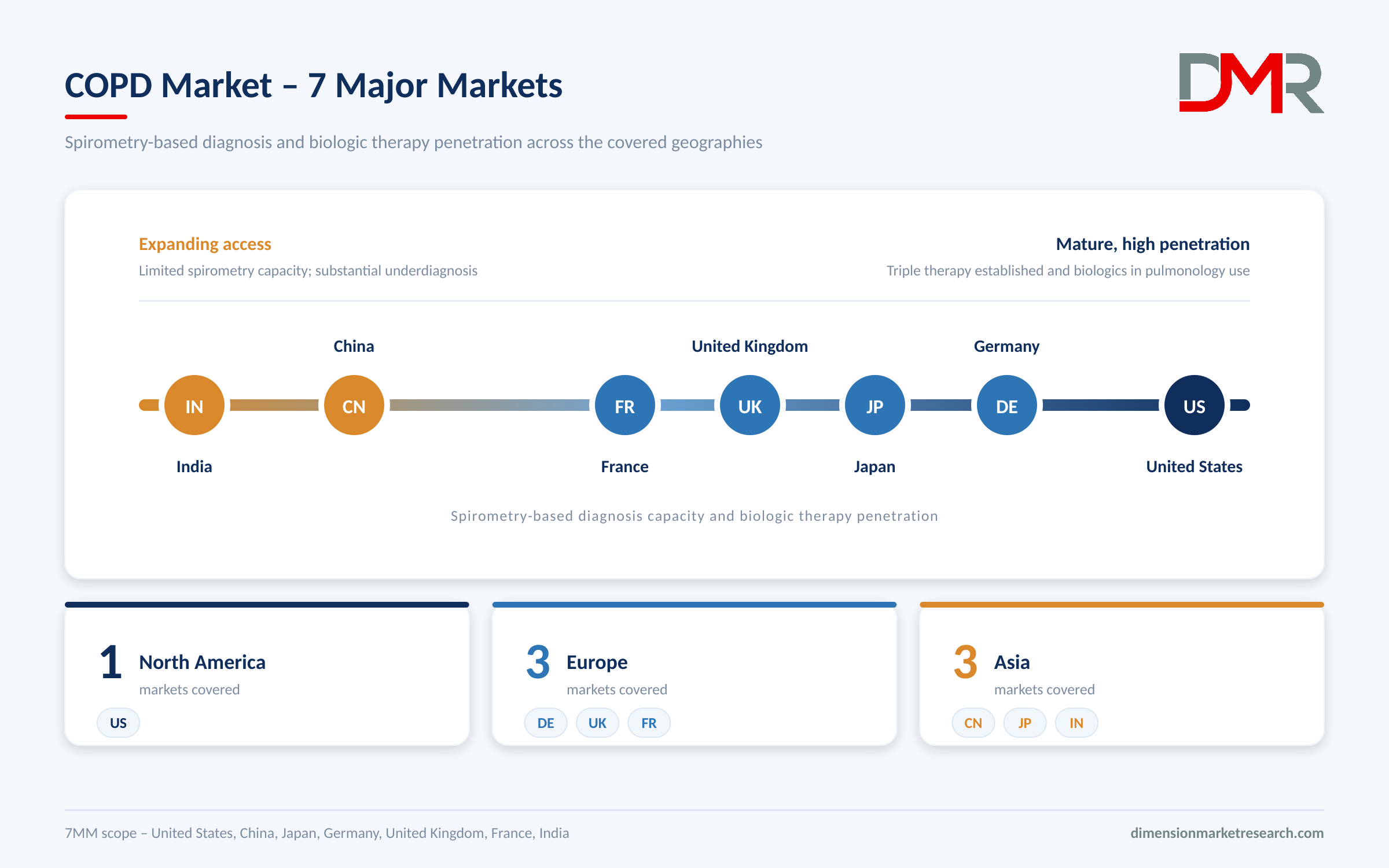
The report provides detailed market, treatment, epidemiological framework, and competitive analysis across seven major markets:
- United States
- Germany
- France
- United Kingdom
- China
- Japan
- India
The geographic analysis considers differences in disease recognition, smoking prevalence, spirometry and diagnostic infrastructure, specialist respiratory care accessibility, biologic reimbursement, regulatory environment, physician adoption, and competitive activity. These factors are important because the commercial opportunity for COPD therapies differs between markets according to regulatory approvals, health technology assessment outcomes, and the organization of primary and specialist care.
ℹ
To learn more about this report –
Download Your Free Sample Report Here
United States
The United States represents the largest COPD market, supported by a large diagnosed population, extensive use of inhaled maintenance therapy, established pulmonology networks, and a strong clinical research ecosystem. Several inhaled triple therapies are widely used, and the U.S. FDA has approved a series of newer options: ensifentrine (OHTUVAYRE), a nebulized PDE3/PDE4 inhibitor, in June 2024; dupilumab (DUPIXENT), the first biologic for COPD, in September 2024 for uncontrolled COPD with an eosinophilic phenotype; and mepolizumab (NUCALA) in May 2025.
The market is characterized by demand for exacerbation-reducing add-on therapy, growing biologic adoption within pulmonology practice, and continued development of investigational agents. Treatment decisions are influenced by exacerbation history, blood eosinophil count, insurance coverage and prior authorization, and specialist recommendations. AstraZeneca's tozorakimab, an IL-33 antibody studied without an eosinophil threshold, has had its biologics license application accepted for FDA priority review, with a decision anticipated in the first quarter of 2027, which could extend biologic eligibility beyond eosinophilic patients, subject to regulatory outcome.
Germany
Germany represents the largest European COPD market, supported by developed healthcare infrastructure, strong outpatient pulmonology networks, and extensive participation in clinical research. Dupilumab was authorized in the European Union in 2024, and mepolizumab was authorized in February 2026 as an add-on maintenance treatment for uncontrolled COPD with raised blood eosinophils.
The market is influenced by benefit assessment and pricing processes for new medicines; the Federal Joint Committee (G-BA) issued its resolution on mepolizumab in COPD on 3 September 2026, and treatment is to be initiated and monitored by specialists experienced in COPD. Specialist access, clinical guidelines, and the adoption of biomarker testing will shape uptake of biologics, depending on regulatory approval and demonstrated therapeutic benefit for future entrants.
France
France represents an important European COPD market supported by a developed hospital and pulmonology network, established pulmonary rehabilitation and home respiratory care services, and a long history of national tobacco-control and respiratory health programs. Biologic options authorized in the European Union for COPD with raised blood eosinophils, together with triple inhaled therapy, form part of the treatment pathway for patients with uncontrolled disease.
The market is influenced by health technology assessment, reimbursement conditions, early access mechanisms, hospital prescribing restrictions, and specialist availability. Continued clinical research into broader-population biologics and novel inhaled anti-inflammatory therapies may create opportunities for addressing the limitations of existing treatment options.
United Kingdom
The United Kingdom has an estimated three million people living with COPD, which is among the leading causes of emergency hospital admission and readmission. The country benefits from established respiratory services, a strong primary care structure, and experience in pulmonary rehabilitation and community respiratory care. The MHRA approved mepolizumab for uncontrolled COPD in January 2026, and NICE has recommended dupilumab as an add-on maintenance treatment for uncontrolled COPD with raised blood eosinophils, under a commercial access agreement.
Market development is influenced by NICE appraisals, NHS commissioning, access to specialist assessment, and primary care diagnosis. NICE has estimated that almost 30,000 people in England could be eligible for dupilumab, and wider uptake may depend on improved spirometry-based diagnosis, exacerbation management, and biomarker testing in routine care.
China
China represents one of the largest COPD markets in the world, with a very large patient population driven by smoking, an aging population, air pollution, and occupational and biomass exposure. The China Pulmonary Health study reported spirometry-defined prevalence of about 13.7% among adults aged 40 years and older, alongside very low rates of prior diagnosis and limited spirometry use in primary care.
The market is influenced by National Medical Products Administration approvals, National Reimbursement Drug List negotiations, volume-based procurement of established inhaled products, domestic manufacturer competition, and the strength of tiered primary care and spirometry capacity. Efforts to expand early diagnosis and standardized management, together with the development of novel inhaled and biologic therapies, may support future treatment opportunities.
Japan
Japan represents an established market with a rapidly aging population, universal insurance coverage, and well-developed respiratory care infrastructure. Long-acting bronchodilators and triple therapy form the backbone of maintenance treatment, and dupilumab was approved in March 2025 as the first biologic for COPD in Japan, based on the BOREAS Phase 3 trial.
Japan is also a participant in global COPD clinical development, including Phase 3 studies of the long-acting IL-5 antibody depemokimab. Treatment selection is influenced by disease severity, eosinophil levels, reimbursement conditions, and guideline recommendations. Growing recognition of undiagnosed COPD in an older population and the continued development of biologic therapies may support future treatment opportunities.
India
India represents a large and growing COPD market with a high disease and mortality burden, driven by tobacco use, household biomass fuel exposure, air pollution, occupational exposure, and the long-term effects of tuberculosis. Underdiagnosis is substantial because spirometry availability is limited, particularly in primary care and rural settings, and symptoms are often attributed to other causes.
The market is influenced by predominantly out-of-pocket payment, the strong presence of domestic manufacturers supplying generic inhaled therapies, the concentration of specialist respiratory care in urban centers, and the high cost of newer agents and biologics. Expanding diagnostic capacity, clean cooking and tobacco-control initiatives, and wider access to maintenance therapy may support future market growth.
Market Segmentation
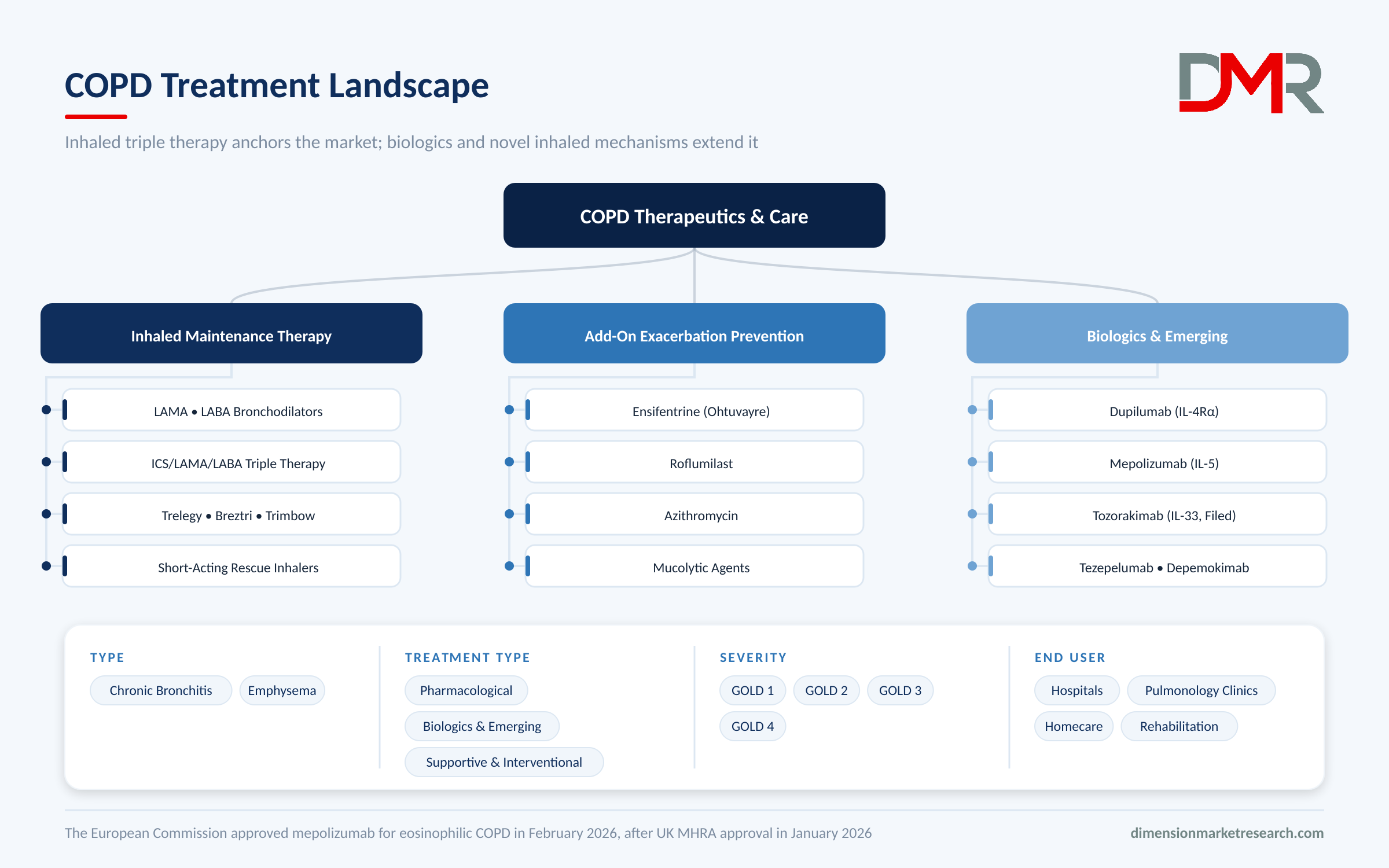
The global COPD market is segmented by type, treatment type, and end user, with detailed analysis across seven major countries. The segmentation encompasses established inhaled pharmaceutical treatments, supportive and interventional care, and biologic and emerging therapeutic approaches, including monoclonal antibodies targeting type 2 and alarmin pathways and novel inhaled anti-inflammatory agents.
By Type
Chronic Bronchitis
Chronic Bronchitis is defined by chronic productive cough, and is associated with mucus hypersecretion and, in many patients, frequent exacerbations. The segment benefits from a large patient base and sustained demand for long-acting bronchodilators, ICS-containing regimens, add-on therapy, and biologics for exacerbation-prone patients with eosinophilic inflammation.
Emphysema
Emphysema involves destruction of alveolar walls, leading to hyperinflation and impaired gas exchange. Patients commonly experience marked breathlessness and exercise limitation, and the segment generates demand for maintenance bronchodilators, pulmonary rehabilitation, long-term oxygen therapy, and interventional options such as lung volume reduction.
By Treatment Type
- Pharmacological Treatment
- Biologics and Emerging Therapies
- Supportive and Interventional Care
Pharmacological Treatment encompasses inhaled long-acting bronchodilators (LAMA, LABA, and fixed-dose combinations), ICS-containing dual and triple therapy, short-acting rescue bronchodilators, and add-on medications such as roflumilast, ensifentrine, azithromycin, and mucolytics. Continuous maintenance treatment generates recurring demand and represents the largest base of treated patients, although established classes face generic competition and inhaler device differentiation plays an important role in competition.
Biologics and Emerging Therapies encompass monoclonal antibodies targeting type 2 and alarmin pathways, including dupilumab (IL-4 receptor alpha) and mepolizumab (IL-5), which are approved for COPD with an eosinophilic phenotype, and investigational agents such as tozorakimab (IL-33), depemokimab (long-acting IL-5), and tezepelumab (TSLP), alongside novel inhaled anti-inflammatory agents. Commercial adoption depends on biomarker-based patient selection, clinical evidence, long-term safety, regulatory approval, and reimbursement.
Supportive and Interventional Care encompasses smoking cessation support, vaccination, pulmonary rehabilitation, self-management programs, long-term oxygen therapy, non-invasive ventilation, endobronchial valve and surgical lung volume reduction, lung transplantation, and palliative care. These interventions address breathlessness, exercise limitation, chronic respiratory failure, and advanced disease.
By End User
- Hospitals
- Pulmonology Clinics
- Homecare
- Pulmonary Rehabilitation Centers
Hospitals are important for diagnosis, management of acute exacerbations, initiation of biologic therapy, non-invasive ventilation, and interventional procedures such as lung volume reduction. Pulmonology clinics, together with primary care practices linked to specialist services, support spirometric diagnosis, prescription of triple and add-on therapy, biomarker-based biologic selection, and regular monitoring of exacerbation risk.
Homecare is an increasingly important setting because patients with advanced disease often require long-term oxygen, home non-invasive ventilation, nebulized therapy, and remote monitoring outside the hospital. Pulmonary rehabilitation centers support exercise training, education, and self-management aimed at reducing breathlessness, improving quality of life, and lowering readmission risk. Newer biologics administered by subcutaneous self-injection can also be delivered in the home setting after specialist initiation.
Market Dynamics
Growth Drivers
Increasing Prevalence of COPD and Growing Aging Population
COPD primarily affects middle-aged and older adults, and the legacy of tobacco exposure, together with exposure to air pollution and occupational hazards, sustains a large population requiring respiratory care. Demographic aging increases the number of patients with moderate-to-severe disease, comorbidities, and exacerbation risk, creating sustained demand for maintenance medication, exacerbation-prevention therapy, oxygen and ventilatory support, and rehabilitation services. Improvements in disease awareness and spirometry-based case finding also expand the diagnosed patient population.
Advancements in Biologics and Novel Inhaled Therapeutics
The introduction of the first biologics for COPD, together with a novel inhaled PDE3/PDE4 inhibitor, represents the most significant expansion of treatment options in more than a decade. Positive Phase 3 data for broader-population biologics, continued progress in alarmin-targeted antibodies, and biomarker development may support additional therapeutic options and encourage further investment, although approval and commercial availability of investigational therapies remain uncertain.
Growing Healthcare Investments and Expansion of Specialized Respiratory Services
Healthcare systems are increasingly focusing on COPD detection, structured disease management, and prevention of exacerbation-related admissions through case-finding programs, pulmonary rehabilitation, integrated care pathways, and specialist referral. Updated clinical guidelines and growing investment in respiratory services support patient identification, appropriate escalation of therapy, and sustained utilization of both pharmaceutical products and supportive care solutions.
Market Restraints
High Treatment Costs and Limited Financial Accessibility
Managing COPD requires lifelong maintenance therapy, repeated treatment of exacerbations, and, in advanced disease, oxygen, ventilatory support, and frequent hospitalization, creating substantial financial burdens for patients and healthcare systems. Newer biologics and branded inhaled therapies involve considerable development and commercialization expenses and are often subject to prior authorization, specialist-prescribing requirements, and reimbursement restrictions that can limit access. Established inhaled classes also face generic competition and pricing pressure.
Underdiagnosis, Delayed Diagnosis, and Limited Biomarker Testing
Early symptoms of COPD are often attributed to smoking or aging, contributing to underdiagnosis and delayed identification, and spirometry remains underused in primary care. Delayed diagnosis limits the period during which patients benefit from smoking cessation, optimized inhaled therapy, and exacerbation prevention, and incomplete use of blood eosinophil testing restricts identification of patients eligible for biologics. Inhaler technique and adherence challenges further limit the real-world effectiveness of established treatments.
Market Opportunities
Expanding Potential for Biologics Across Broader COPD Populations
Current approved biologics are restricted to patients with raised blood eosinophils, leaving a large population of exacerbation-prone patients without a targeted option. Alarmin-targeted antibodies, including IL-33, TSLP, and ST2 pathway inhibitors, together with long-acting IL-5 agents, aim to broaden eligibility and reduce dosing frequency. Advances in biomarker identification and imaging, including assessment of mucus plugging, may support more precise patient selection.
Expansion of COPD Diagnosis and Treatment Access Across Emerging Economies
Improving healthcare infrastructure, growing awareness of chronic respiratory disease, expanding spirometry capacity, and broader reimbursement coverage may increase access to maintenance therapy and biologics in developing healthcare systems. Regulatory approvals in additional countries, including China, illustrate the potential for broader international access to biologic treatment for COPD.
Development of Novel Therapeutic Targets and Combination Treatments
Ongoing research into the mechanisms of airway inflammation, mucus dysfunction, and exacerbation is identifying new therapeutic targets and supporting evaluation of add-on and combination approaches, including inhaled anti-inflammatory agents. Collaborations between pharmaceutical companies, biotechnology developers, academic institutions, and respiratory research organizations may accelerate translational research and clinical development.
Market Trends
Increasing Integration of Digital Health and Remote Patient Monitoring
Healthcare providers are adopting telemedicine platforms, smart inhalers, wearable devices, mobile health applications, and connected oxygen and ventilation equipment to monitor patients outside conventional clinical settings. These technologies facilitate remote assessment of symptoms, adherence, oxygen saturation, and early signs of exacerbation, and support earlier intervention to reduce avoidable hospital admissions.
Rising Adoption of Biomarker-Guided Treatment and Home-Based Care Models
Treatment selection is increasingly guided by exacerbation history and biomarkers such as blood eosinophil count, supporting a shift toward personalized therapy. In parallel, coordinated care involving pulmonologists, primary care physicians, respiratory therapists, nurses, and rehabilitation teams, together with home-based oxygen, ventilation, and tele-rehabilitation programs, is expanding to support patients with advanced disease while reducing hospital burden.
Competitive Landscape
The global COPD market is characterized by a large base of established inhaled products and an expanding set of biologic and novel mechanism entrants, with a broad pipeline of pharmaceutical and biotechnology developers focused on biologics, inhaled anti-inflammatory therapy, and exacerbation prevention.
Leading companies covered in the competitive assessment include:
- GlaxoSmithKline plc
- AstraZeneca PLC
- Sanofi S.A.
- Regeneron Pharmaceuticals, Inc.
- Boehringer Ingelheim International GmbH
- Chiesi Farmaceutici S.p.A.
- Merck & Co., Inc.
- F. Hoffmann-La Roche Ltd
- Amgen Inc.
- Theravance Biopharma, Inc.
Competition in the Global Chronic Obstructive Pulmonary Disease (COPD) Market is increasingly focused on developing treatments capable of demonstrating meaningful reductions in exacerbations, preservation of lung function, and improvements in quality of life, particularly through biologics effective beyond eosinophilic populations and through inhaled therapies with differentiated mechanisms and devices. Established companies benefit from large inhaled-therapy portfolios, regulatory approvals, pulmonologist relationships, and commercialization infrastructure, while emerging developers are exploring differentiated therapeutic mechanisms to address the limitations of existing treatments.
The competitive environment is shaped by GlaxoSmithKline plc in triple therapy through TRELEGY ELLIPTA and in biologics through NUCALA (mepolizumab), with depemokimab, a long-acting IL-5 antibody, in Phase 3 development for COPD. AstraZeneca PLC competes in triple therapy through BREZTRI AEROSPHERE (marketed as TRIXEO AEROSPHERE in Europe) and has filed tozorakimab, an IL-33 antibody, which met its primary endpoint in the replicate Phase 3 OBERON and TITANIA trials and is under regulatory review in the United States, European Union, and China. Sanofi S.A. and Regeneron Pharmaceuticals, Inc. lead the biologic segment through DUPIXENT (dupilumab), the first biologic approved for COPD, while their IL-33 antibody itepekimab produced mixed Phase 3 results and has been reported as discontinued in COPD. Boehringer Ingelheim International GmbH contributes through established long-acting bronchodilator products such as SPIRIVA and STIOLTO, and Chiesi Farmaceutici S.p.A. through the TRIMBOW triple combination and the investigational inhaled PDE4 inhibitor tanimilast.
Merck & Co., Inc. entered COPD through its acquisition of Verona Pharma in October 2025, adding OHTUVAYRE (ensifentrine), which is approved in the United States, although the European marketing authorization application was withdrawn in October 2025; Merck began the Phase 3 ENHANCE-3 study of ensifentrine for exacerbation prevention in November 2026. F. Hoffmann-La Roche Ltd has pursued the ST2-targeting antibody astegolimab, which produced mixed results across Phase 2b and Phase 3 trials. Amgen Inc. is relevant through its collaboration with AstraZeneca on tezepelumab, an anti-TSLP antibody in Phase 3 development for COPD, and Theravance Biopharma, Inc. contributes through the nebulized long-acting muscarinic antagonist YUPELRI (revefenacin). These companies reflect the evolving competitive environment, encompassing established commercial inhaled products, approved biologics, novel inhaled mechanisms, and investigational therapeutic platforms.
Report Coverage
The report provides a comprehensive assessment of the global COPD market across the seven specified markets. It integrates epidemiological analysis with commercial market assessment to provide a broader understanding of the current and future treatment landscape.
The study covers:
- Indication Covered
- Epidemiology Parameters
- Patient Segmentation
- Geographic Coverage
- Market Segmentation
- Units of Measurement
- Study Period
- Data Sources
- Companies Covered
- Report Deliverables
- Out of Scope
- Customization