What is the Critical Care Equipment Market Size?
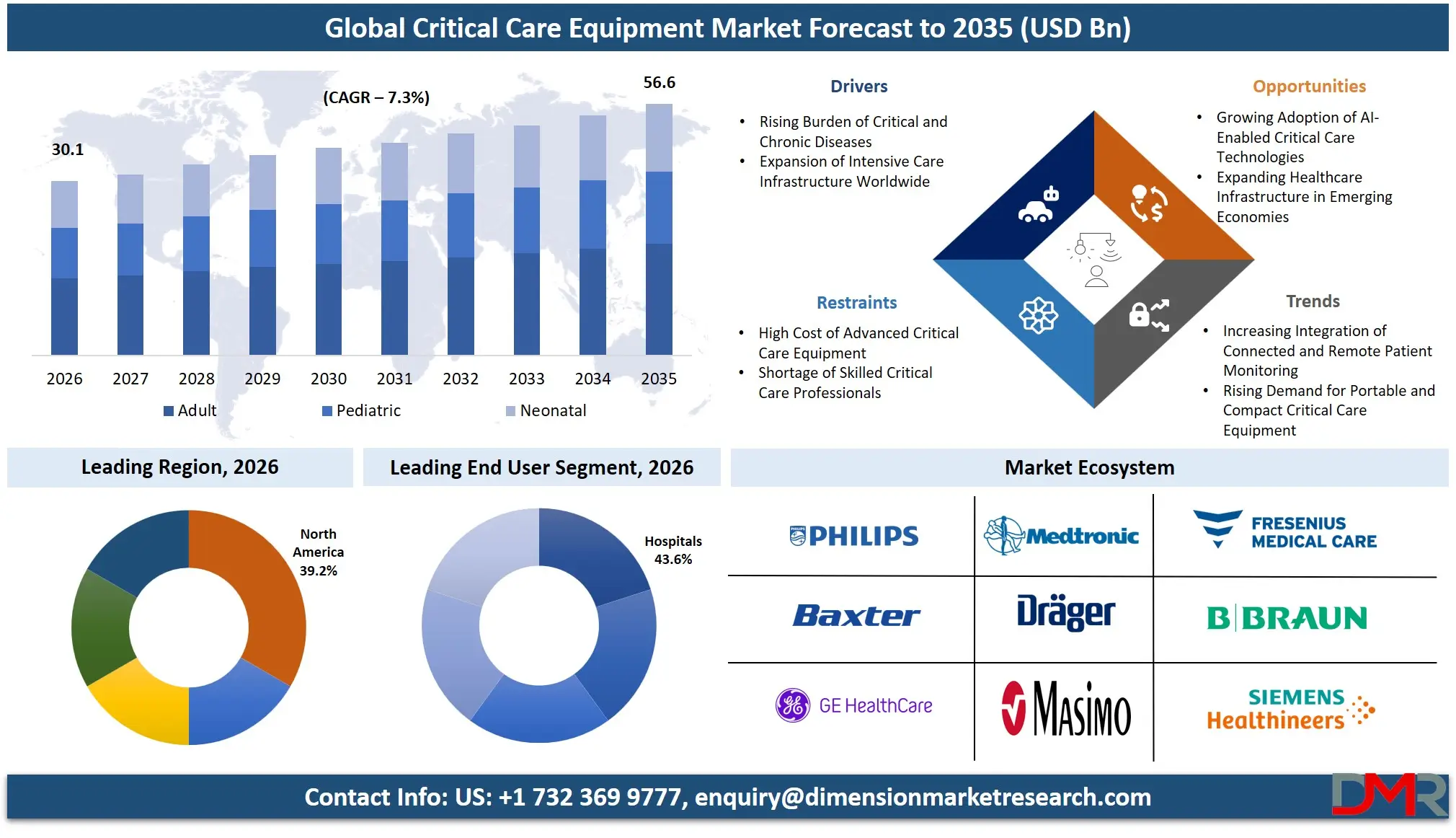
The Global Critical Care Equipment Market is expected to reach a value of USD 30.1 billion in 2026, and it is further anticipated to reach USD 56.6 billion by 2035, growing at a CAGR of 7.3% during the forecast period.
ℹ
To learn more about this report –
Download Your Free Sample Report Here
The critical care equipment market has been experiencing steady growth as healthcare systems worldwide prioritize strengthening their intensive care capabilities and emergency response infrastructure. The market encompasses a wide array of life-sustaining and monitoring technologies, including ventilators, patient monitors, infusion systems, and dialysis equipment, which are essential for managing patients with life-threatening conditions. The increasing prevalence of chronic diseases, a globally aging population, and heightened awareness of pandemic preparedness are driving the consistent demand for specialized critical care devices. Hospitals and emergency medical services are the primary adopters, with multiparameter monitors and intensive care ventilators remaining the most indispensable tools due to their central role in continuous patient assessment and respiratory life support.
The US Critical Care Equipment Market
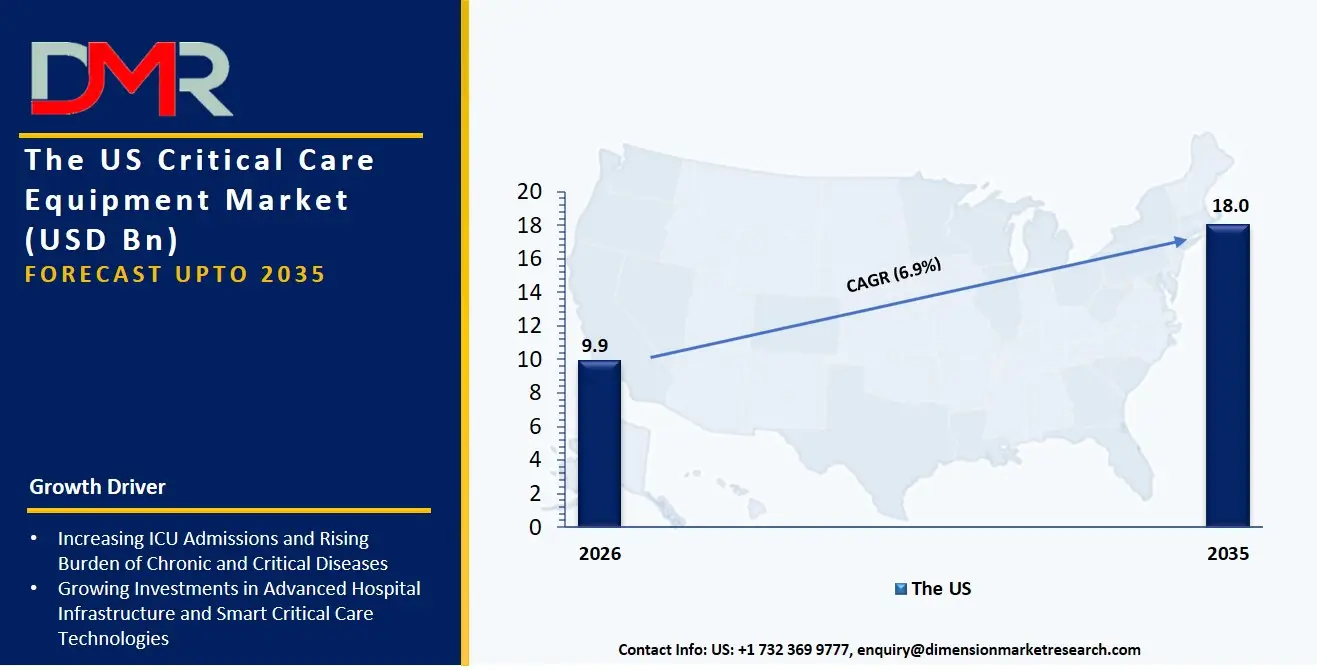
The US Critical Care Equipment Market is projected to reach USD 9.9 billion in 2026 at a compound annual growth rate of 6.9% over its forecast period, culminating in a value of USD 18.0 billion by 2035.
ℹ
To learn more about this report –
Download Your Free Sample Report Here
The US continues to be the largest and most developed market for critical care equipment, driven by a robust hospital infrastructure, high healthcare expenditure, and the ongoing modernization of intensive care units across the nation. The market has been typified by high demand for advanced multiparameter monitors and intelligent ventilator systems, as organizations focus on upgrading to connected, interoperable platforms. Furthermore, the growing need to manage complex cardiac and neurological cases is generating a parallel demand for specialized devices like advanced defibrillators and continuous EEG monitors within critical care environments.
The Europe Critical Care Equipment Market
The Europe Critical Care Equipment Market is estimated to be valued at USD 8.6 billion in 2026 and is further anticipated to reach USD 15.9 billion by 2035 at a CAGR of 7.0%. The European market is significantly shaped by stringent medical device regulations (MDR) and a strong focus on geriatric care, which drives the need for versatile ICU beds, renal care equipment, and respiratory devices for long-term care. Accelerated growth in the adoption of transport ventilators and portable monitoring solutions is also being experienced in the region as cross-border emergency medical services (EMS) networks expand. In addition, government-led initiatives to build stockpiles of critical care equipment for public health emergencies are pushing service providers to create dedicated inventory management and rapid deployment systems for national health services.
The Japan Critical Care Equipment Market
The Japan Critical Care Equipment Market is projected to be valued at USD 1.3 billion in 2026 at a CAGR of 6.6%. The Japanese market is unique, shaped by the world's oldest population and a healthcare system grappling with a declining workforce and the need for smart hospital infrastructure. High-acuity devices such as intensive care ventilators, dialysis equipment, and advanced blood gas analyzers constitute a large portion of spending as hospitals manage a high volume of age-related cardiac and renal failure cases. There is also a strong need for specialized neonatal ventilators and incubator-compatible monitoring devices to support neonatal intensive care units facing complex low-birth-weight cases, creating a niche in miniaturized and highly precise critical care technology.
Key Takeaways
- Market Size & Forecast: The Global Critical Care Equipment market is projected to reach USD 30.1 billion in 2026, expanding steadily to USD 56.6 billion by 2035, fueled by the dual drivers of the rising global burden of chronic diseases and the strategic stockpiling of emergency equipment for pandemic resilience.
- Growth Rate & Outlook: Global market growth is expected at a CAGR of 7.3%, driven by technological convergence, a critical shortage of intensive care specialists, and the escalating complexity of managing polytrauma and multi-organ failure cases with integrated, smart medical devices.
- Primary Growth Drivers: Key forces include the global demographic shift toward an aging population requiring prolonged intensive care, the transition from standalone devices to interconnected, data-driven ICU ecosystems, and the integration of artificial intelligence in patient monitors for predictive analytics, requiring hospitals to invest in next-generation equipment.
- Key Market Trends: Major trends include the rise of modular, scalable ventilator systems, the use of AI-powered clinical decision support tools within multiparameter monitors to detect early signs of sepsis, and the shift toward wearable, wireless patient monitoring solutions that facilitate early mobilization within the ICU.
- By Application Analysis: Respiratory care devices are expected to dominate demand due to the high incidence of chronic obstructive pulmonary disease (COPD) and infectious respiratory illnesses. Professional services are increasingly required to build seamless integration layers that connect ventilators and anesthesia machines with hospital electronic health record (EHR) systems.
- By Patient Group Analysis: The adult patient segment constitutes the largest market share due to a high volume of lifestyle-related cardiac and trauma emergencies. The neonatal segment is the fastest-growing, as innovations in minimally invasive monitoring and gentler, more precise ventilation techniques create demand for specialized equipment.
- Regional Leadership: North America is poised to dominate this market with 39.2% of the market share in 2026 due to its well-developed, high-acuity healthcare ecosystem that utilizes this infrastructure to its fullest and makes it a leader in this market.
What is the Critical Care Equipment Market?
Critical Care Equipment encompasses the specialized hardware and connected platforms used to sustain vital organ function and continuously monitor life-threatening conditions in intensive care units, emergency departments, and other high-acuity settings. These devices, unlike general ward equipment, are designed for continuous, high-precision operation and real-time data integration. This category includes patient monitoring devices to continuously track hemodynamic and respiratory status, ventilators to mechanically support failing lungs, and infusion systems to deliver precise, life-sustaining medications. With 90% of modern ICUs deploying interconnected device networks, critical care equipment is needed to ensure seamless data flow for clinical surveillance, early warning scores, and closed-loop therapeutic control, making technological investments translate into tangible improvements in survival rates, as opposed to isolated point solutions.
Use Cases
- Advanced Cardiac Output Monitoring in Surgery: Cardiac surgeons utilize advanced multiparameter monitors and specialized blood gas analyzers to track real-time hemodynamic changes during and after coronary artery bypass grafting, enabling precise fluid and vasoactive drug management that reduces post-operative complications.
- Intelligent Ventilation for ARDS Management: Intensive care pulmonologists rely on sophisticated intensive care ventilators with adaptive support modes to manage patients with Acute Respiratory Distress Syndrome (ARDS), automatically adjusting pressure and volume on a breath-by-breath basis to prevent ventilator-induced lung injury.
- Continuous Renal Replacement Therapy (CRRT) Integration: Nephrologists in the ICU use integrated dialysis equipment and infusion systems that operate on a shared platform with the central monitor, allowing for precise control of fluid balance and anticoagulation in hemodynamically unstable patients with acute kidney injury.
- Neonatal Neurocritical Care: Neonatologists use specialized, MRI-compatible neonatal ventilators and integrated amplitude-integrated EEG (aEEG) monitoring in transport incubators to provide continuous respiratory support and seizure surveillance during the critical golden hours after a hypoxic-ischemic insult.
How AI is Transforming the Critical Care Equipment Market?
AI is fundamentally changing the critical care equipment market by accelerating the transition from reactive alarms to predictive intelligence and automated clinical workflows. In patient monitoring devices, AI-based algorithms can analyze millions of data points from multiparameter monitors to predict hypotensive episodes or the onset of sepsis hours before a clinician might otherwise recognize the physiological derangement, significantly reducing response times and improving outcomes. Meanwhile, AI-powered features in ventilators allow the systems to learn patient lung mechanics continuously, automatically optimizing ventilator settings like tidal volume and positive end-expiratory pressure (PEEP) to personalize respiratory care and minimize the need for manual titration.
Clinical decision-making and workload management are also being revolutionized by AI. In the application of cardiac care, intelligent monitoring agents continuously analyze complex ECG waveforms to detect subtle arrhythmias and myocardial ischemia patterns that may be missed by traditional threshold-based alarms. Furthermore, generative AI assistants are beginning to be embedded into ICU clinical workflows, automatically drafting structured clinical notes from device data streams, analyzing patterns in blood gas analyzers, and providing evidence-based care bundle compliance suggestions, thereby allowing intensivists to focus more on direct patient care.
Market Dynamics
Key Drivers in the Global Critical Care Equipment Market
Rising Burden of Critical and Chronic Diseases
The increasing prevalence of cardiovascular diseases, respiratory disorders, sepsis, cancer, trauma, and neurological conditions is significantly driving demand for critical care equipment worldwide. These conditions often require continuous patient monitoring, ventilatory support, infusion therapy, and life-support systems in intensive care units (ICUs). Aging populations and the growing incidence of multiple chronic diseases further increase ICU admissions and demand for advanced critical care technologies. Governments and healthcare providers are expanding critical care infrastructure to improve patient outcomes. As the global burden of life-threatening illnesses continues to rise, demand for sophisticated critical care equipment is expected to grow steadily.
Expansion of Intensive Care Infrastructure Worldwide
Healthcare systems across developed and emerging economies are investing heavily in expanding intensive care capacity and modernizing hospital infrastructure. Governments are increasing healthcare expenditure to strengthen emergency preparedness and improve access to advanced critical care services. The establishment of new ICUs, trauma centers, and specialized hospitals has accelerated procurement of ventilators, patient monitors, infusion pumps, and other life-support equipment. Continuous technological upgrades and replacement of outdated systems also contribute to equipment demand. Rising awareness of healthcare resilience following recent global health emergencies further supports long-term investments in critical care infrastructure and advanced medical equipment.
Restraints in the Global Critical Care Equipment Market
High Cost of Advanced Critical Care Equipment
Advanced critical care equipment requires significant capital investment, making affordability a major challenge for many healthcare providers. High acquisition costs, installation expenses, regular maintenance, software upgrades, and calibration requirements increase the total cost of ownership. Smaller hospitals and healthcare facilities in developing regions often face financial constraints that delay equipment procurement. Budget limitations may also restrict technology upgrades despite increasing patient demand. These economic barriers reduce the adoption of premium monitoring systems, ventilators, and advanced life-support technologies, limiting market expansion in resource-constrained healthcare environments.
Shortage of Skilled Critical Care Professionals
The effective operation of sophisticated critical care equipment requires highly trained physicians, nurses, respiratory therapists, and biomedical technicians. Many countries continue to experience shortages of specialized healthcare professionals capable of managing complex ICU technologies. Inadequate training increases the risk of operational errors, equipment misuse, and delayed clinical interventions. Healthcare facilities may hesitate to adopt advanced technologies without sufficient skilled personnel to operate them effectively. Workforce shortages are particularly significant in low- and middle-income countries, creating barriers to optimal utilization of critical care equipment despite growing healthcare needs.
Growth Opportunities in the Global Critical Care Equipment Market
Growing Adoption of AI-Enabled Critical Care Technologies
Artificial intelligence is creating significant opportunities in the critical care equipment market by improving patient monitoring, predictive analytics, and clinical decision support. AI-powered monitoring systems can identify early signs of patient deterioration, enabling timely intervention and reducing ICU complications. Integration of machine learning with ventilators, infusion systems, and multiparameter monitors enhances workflow efficiency and treatment precision. Healthcare providers increasingly seek intelligent equipment capable of supporting personalized critical care. Continued investments in digital healthcare and connected medical technologies are expected to accelerate adoption of AI-enabled critical care solutions worldwide.
Expanding Healthcare Infrastructure in Emerging Economies
Rapid healthcare development across emerging economies offers substantial growth opportunities for critical care equipment manufacturers. Governments are investing in hospital construction, ICU expansion, emergency medical services, and universal healthcare initiatives to improve access to advanced medical care. Rising healthcare expenditure, growing medical tourism, and increasing private sector investment support procurement of modern critical care technologies. International collaborations and local manufacturing initiatives are improving equipment availability while reducing costs. These developments create favorable conditions for expanding market penetration across Asia Pacific, Latin America, the Middle East, and Africa.
Trends in the Global Critical Care Equipment Market
Increasing Integration of Connected and Remote Patient Monitoring
Healthcare providers are increasingly adopting connected critical care equipment capable of transmitting real-time patient data across hospital networks. Integration with electronic health records, cloud platforms, and centralized monitoring stations enables clinicians to monitor multiple patients simultaneously while improving clinical decision-making. Wireless connectivity reduces manual documentation and enhances workflow efficiency. The growing demand for remote ICU management and tele-critical care solutions is encouraging manufacturers to develop interoperable monitoring systems with advanced data analytics. This digital transformation continues to reshape critical care delivery worldwide.
Rising Demand for Portable and Compact Critical Care Equipment
Healthcare facilities are increasingly adopting portable critical care equipment to improve flexibility across emergency departments, ambulances, transport units, and field hospitals. Compact ventilators, mobile patient monitors, transport infusion pumps, and handheld diagnostic devices enable rapid deployment during emergencies and patient transfers. Advances in battery technology, wireless communication, and lightweight materials have improved device mobility without compromising clinical performance. The growing emphasis on emergency preparedness, disaster response, and decentralized healthcare delivery continues to accelerate demand for portable and compact critical care equipment across both developed and emerging healthcare markets.
Research Scope and Analysis
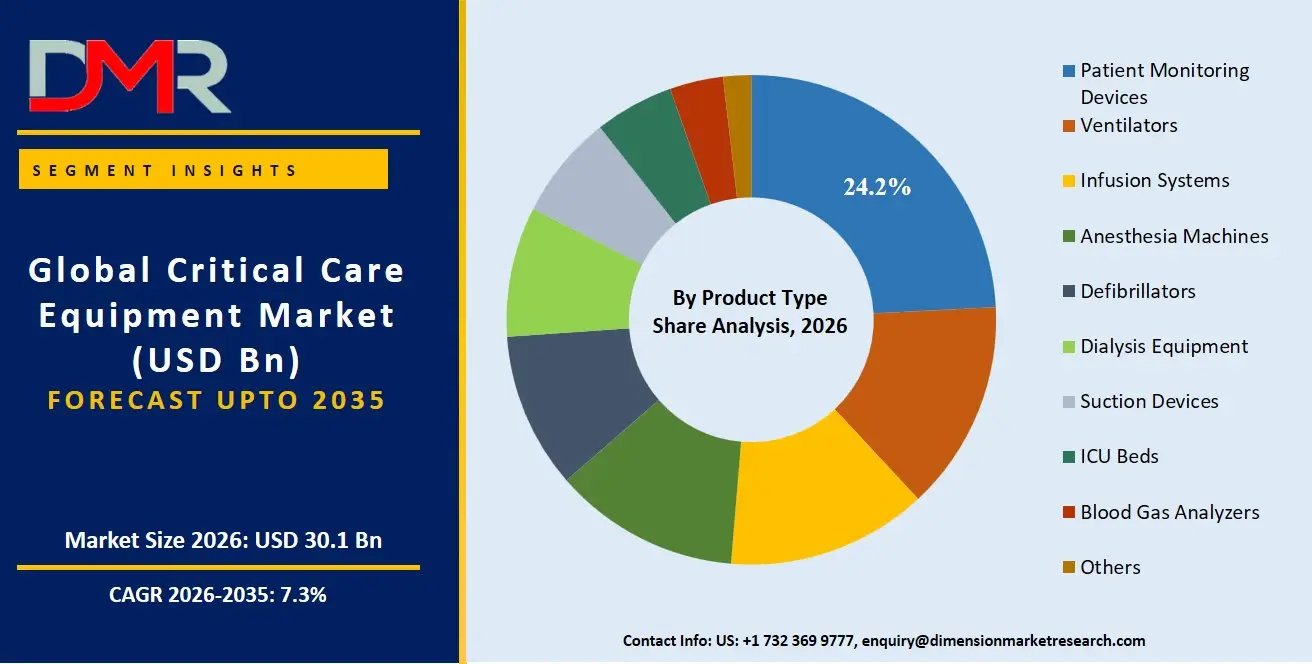
The market is segmented by Product Type, including patient monitoring devices, ventilators, infusion systems, anesthesia machines, defibrillators, dialysis equipment, ICU beds, and blood gas analyzers. Further categorization occurs by Patient Group (adult, pediatric, neonatal), Application (respiratory, cardiac, neurology, trauma, renal, sepsis), and End User (hospitals, ASCs, specialty clinics, EMS, long-term care centers).
ℹ
To learn more about this report –
Download Your Free Sample Report Here
By Product Type Analysis
Patient monitoring devices is projected to dominate the global critical care equipment market because they are essential for continuous assessment of critically ill patients across intensive care units, emergency departments, and operating rooms. Multiparameter monitors, ECG monitors, pulse oximeters, and capnography systems provide real-time monitoring of vital signs, enabling rapid clinical decision-making and early detection of patient deterioration. Their widespread adoption is supported by increasing ICU admissions, rising prevalence of chronic diseases, and growing demand for advanced monitoring technologies. Continuous technological advancements, integration with hospital information systems, and expanding use of wireless and AI-enabled monitoring solutions further strengthen the leadership of patient monitoring devices in the market.
By Patient Group Analysis
The adult segment is poised to dominate the critical care equipment market due to the high incidence of cardiovascular diseases, respiratory disorders, trauma, cancer, sepsis, and multiple chronic conditions among the adult population. Adults account for the majority of intensive care unit admissions globally, resulting in substantial demand for ventilators, patient monitors, infusion systems, and other life-support equipment. The growing elderly population further increases ICU utilization because older adults are more vulnerable to critical illnesses requiring prolonged monitoring and advanced care. Rising hospitalization rates, increasing surgical procedures, and expanding access to intensive care services continue to position adults as the largest patient group in this market.
By Application Analysis
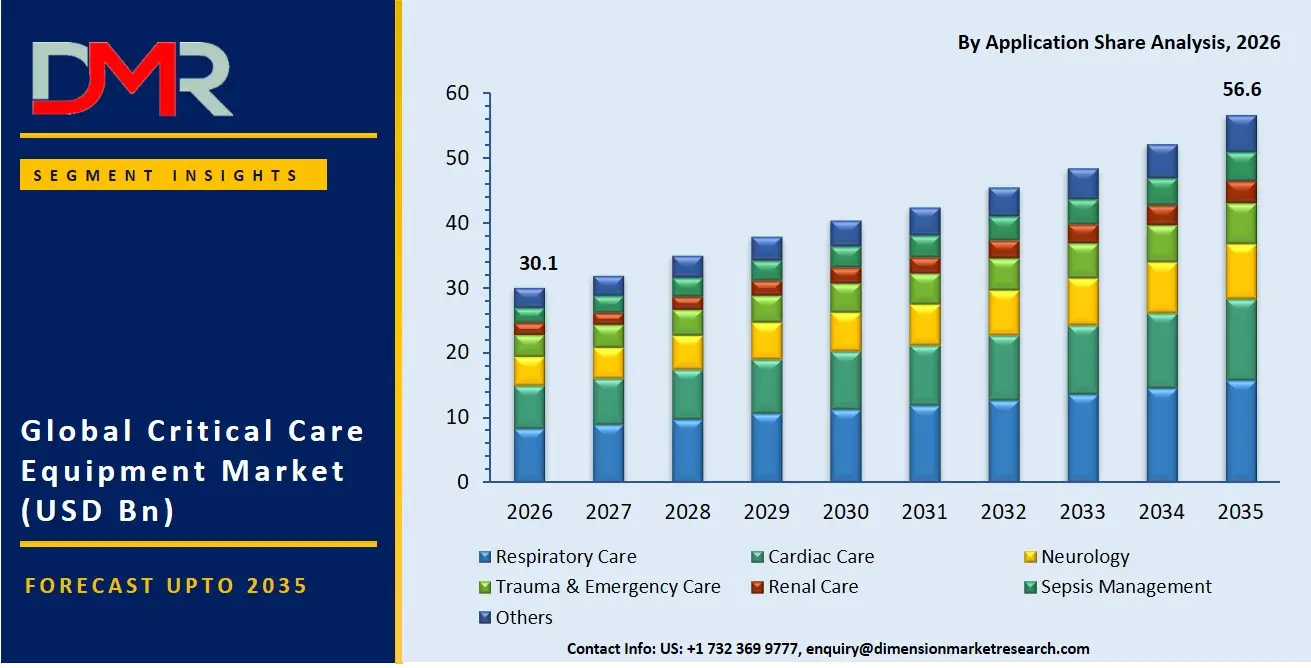
Respiratory care is projected to dominate the application segment because respiratory failure remains one of the leading causes of intensive care unit admissions worldwide. Patients suffering from pneumonia, chronic obstructive pulmonary disease (COPD), acute respiratory distress syndrome (ARDS), asthma, and severe infections frequently require ventilatory support and continuous respiratory monitoring.
ℹ
To learn more about this report –
Download Your Free Sample Report Here
The widespread use of ventilators, pulse oximeters, capnography monitors, and oxygen delivery systems significantly contributes to market demand. Increasing air pollution, aging populations, and the growing prevalence of chronic respiratory diseases continue to drive equipment utilization. Continuous innovation in respiratory support technologies further reinforces this segment's dominant market position.
By End User Analysis
Hospitals are expected to dominate the end-user segment because they serve as the primary centers for intensive care, emergency medicine, trauma management, and complex surgical procedures requiring advanced critical care equipment. Large hospitals operate dedicated intensive care units equipped with patient monitoring systems, ventilators, infusion pumps, anesthesia machines, and life-support technologies to manage critically ill patients. The availability of specialized healthcare professionals, advanced diagnostic infrastructure, and comprehensive treatment capabilities supports high equipment utilization. Increasing investments in hospital infrastructure, expanding ICU capacity, and rising demand for emergency and critical care services continue to strengthen hospitals as the leading end users in the global critical care equipment market.
The Global Critical Care Equipment Market Report is segmented on the basis of the following:
By Product Type
- Patient Monitoring Devices
- Multiparameter Monitors
- ECG Monitors
- Pulse Oximeters
- Capnography Monitors
- Ventilators
- Intensive Care Ventilators
- Transport Ventilators
- Neonatal Ventilators
- Infusion Systems
- Infusion Pumps
- Syringe Pumps
- Anesthesia Machines
- Defibrillators
- Dialysis Equipment
- Suction Devices
- ICU Beds
- Blood Gas Analyzers
- Others
By Patient Group
By Application
- Respiratory Care
- Cardiac Care
- Neurology
- Trauma & Emergency Care
- Renal Care
- Sepsis Management
- Others
By End User
- Hospitals
- Ambulatory Surgical Centers (ASCs)
- Specialty Clinics
- Emergency Medical Services (EMS)
- Long-term Care Centers
Regional Analysis
Leading Region by Market Share
ℹ
To learn more about this report –
Download Your Free Sample Report Here
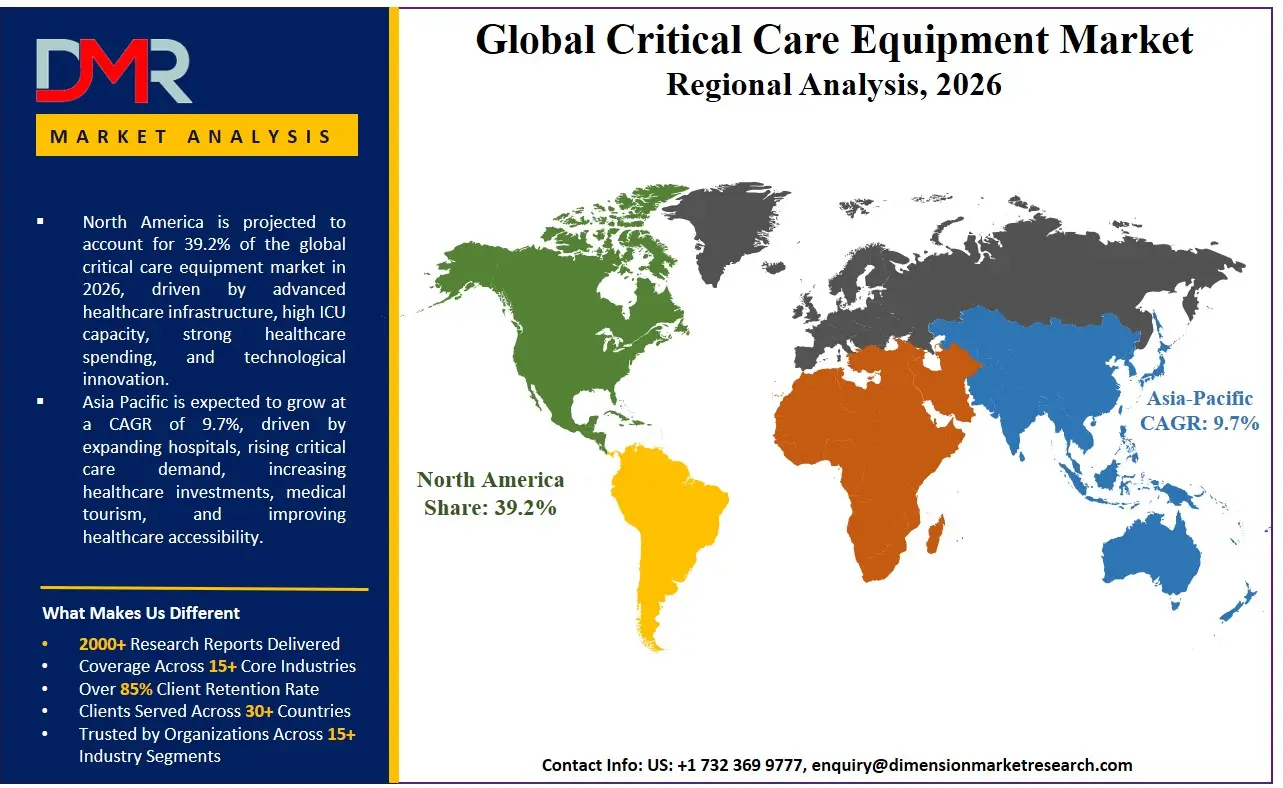
North America is poised to dominate the global critical care equipment market, as it is projected to hold 39.2% of the market share by the end of 2026. The United States, which dominates North America, has the highest share in the critical care equipment market because of an unmatched concentration of advanced tertiary care hospitals and the aggressive modernization agendas of its health networks. The region has an established ecosystem of leading medical device manufacturers, a strong regulatory framework ensuring device quality, and a deep pool of biomedical and clinical engineers. Enterprise investment in artificial intelligence, smart hospital platforms, and the comprehensive replacement of legacy standalone monitors contribute to the continued demand for integrated multiparameter monitors and adaptive ventilators. Moreover, a supportive reimbursement climate and robust venture capital ecosystem persistently finance clinical innovations that rapidly translate into novel critical care solutions.
Fastest-Growing Regional Market
Asia-Pacific is expected to be the most rapidly expanding critical care equipment market, driven by sweeping healthcare infrastructure development initiatives in India, China, and Southeast Asia. The rapid economic growth, expansion of the middle class, and the dynamic rise of medical tourism are compelling both public health services and private hospital chains to discard outdated infrastructure and invest in world-class critical care facilities. Advanced ventilators and dialysis equipment are in high demand to support the expansion of new intensive care departments. There is also a severe lack of specialized intensivists in the region, making it necessary to invest in tele-ICU-capable patient monitoring devices that can bridge the expertise gap and enable centralized, remote-critical-care delivery for smaller hospitals.
By Region
North America
Europe
- Germany
- The U.K.
- France
- Italy
- Russia
- Spain
- Benelux
- Nordic
- Rest of Europe
Asia-Pacific
- China
- Japan
- South Korea
- India
- ANZ
- ASEAN
- Rest of Asia-Pacific
Latin America
- Brazil
- Mexico
- Argentina
- Colombia
- Rest of Latin America
Middle East & Africa
- Saudi Arabia
- UAE
- South Africa
- Israel
- Egypt
- Rest of MEA
Competitive Landscape
The competitive environment of the global critical care equipment market has become highly dynamic, with a heterogeneous array of multinational medical technology conglomerates, specialized high-acuity device manufacturers, and a new wave of digital health-centric startups. The key to success will be building deep, strategic alliances with hospital networks and group purchasing organizations (GPOs), as they open the necessary volume-based contracts and clinical co-development opportunities. The movement toward market consolidation is rapidly progressing, with larger players acquiring niche companies specializing in AI-driven patient monitoring and portable ventilation to remain competitive. Proprietary intellectual property, including predictive health deterioration algorithms and unique sensor technologies, is becoming a more important basis of competitive differentiation than just hardware specifications or generalized product catalogs.
Some of the prominent players in the Global Critical Care Equipment Market are:
- Medtronic plc
- GE HealthCare Technologies Inc.
- Koninklijke Philips N.V.
- Siemens Healthineers AG
- Drägerwerk AG & Co. KGaA
- Baxter International Inc.
- Fresenius Medical Care AG
- ICU Medical, Inc.
- B. Braun SE
- Nihon Kohden Corporation
- Mindray Medical International Limited
- Masimo Corporation
- Edwards Lifesciences Corporation
- Stryker Corporation
- Getinge AB
- Hamilton Medical AG
- ZOLL Medical Corporation
- Abbott Laboratories
- Schiller AG
- Smiths Medical (ICU Medical)
- Other Key Players
Recent Developments
- In June 2026, GE HealthCare launched an AI-enabled critical care patient monitoring platform featuring predictive analytics for early detection of patient deterioration, supporting faster clinical decision-making in intensive care units.
- In April 2026, Philips introduced its next-generation IntelliVue critical care monitoring solution with enhanced interoperability and cloud connectivity, enabling real-time data sharing across hospital intensive care networks.
- In February 2026, Dräger expanded its portfolio of ICU ventilators with a new advanced ventilation system designed to improve lung-protective ventilation strategies and optimize respiratory support for critically ill patients.
- In October 2025, Medtronic plc received regulatory clearance for an upgraded patient monitoring platform integrating advanced physiological monitoring and remote surveillance capabilities to enhance critical care workflow efficiency.
Report Details
| Report Characteristics |
| Market Size (2026) |
USD 30.1 Bn |
| Forecast Value (2035) |
USD 56.6 Bn |
| CAGR (2026–2035) |
7.3% |
| The US Market Size (2026) |
USD 9.9 Bn |
| Historical Data |
2021 – 2025 |
| Forecast Data |
2027 – 2035 |
| Base Year |
2025 |
| Estimate Year |
2026 |
| Segments Covered |
By Product Type, By Patient Group, By Application, and By End User |
| Regional Coverage |
North America – The US and Canada; Europe – Germany, The UK, France, Russia, Spain, Italy, Benelux, Nordic, & Rest of Europe; Asia-Pacific – China, Japan, South Korea, India, ANZ, ASEAN, Rest of APAC; Latin America – Brazil, Mexico, Argentina, Colombia, Rest of Latin America; Middle East & Africa – Saudi Arabia, UAE, South Africa, Turkey, Egypt, Israel, & Rest of MEA |
Frequently Asked Questions
How big is the Global Critical Care Equipment Market?
▾ The Global Critical Care Equipment market is poised to be valued at USD 30.1 billion in 2026 and is projected to reach USD 56.6 billion by 2035, driven by the universal need for advanced life support technologies and continuous monitoring in intensive care units worldwide.
What is the CAGR of the Global Critical Care Equipment Market from 2026 to 2035?
▾ The market is expected to grow at a CAGR of 7.3% from 2026 to 2035, reflecting the accelerating complexity of managing chronic diseases and the persistent need for integrated, intelligent medical device ecosystems.
What factors are driving the growth of the Global Critical Care Equipment Market?
▾ Key drivers include the global burden of chronic diseases, the aging population, the imperative to modernize hospital infrastructure with interoperable devices, and the surge in demand for AI-integrated patient monitoring solutions that provide predictive clinical insights.
Which region held the largest share of the Critical Care Equipment Market in 2026?
▾ North America is projected to hold a 39.2% of market share in 2026, driven by a mature advanced healthcare ecosystem and aggressive hospital investment in smart ICU platforms and next-generation respiratory care devices.
Which region is expected to grow the fastest in the Critical Care Equipment Market?
▾ The Asia-Pacific region is expected to grow the fastest, fueled by rapid healthcare infrastructure development in India, China, and Southeast Asia, where equipping new intensive care units with multiparameter monitors and ventilators is a critical national health priority.
What are the major trends in the Global Critical Care Equipment Market?
▾ Major trends include the integration of AI for predictive analytics into patient monitors and ventilators, the rise of tele-ICU and remote monitoring platforms, the demand for specialized neonatal equipment, and a focus on modular, sustainable device design within complex hospital environments.
Who are the key players in the Global Critical Care Equipment Market?
▾ Key players include global conglomerates like Medtronic, Philips Healthcare, and GE HealthCare, as well as specialized high-acuity device companies like Dräger, Hamilton Medical, and Masimo, alongside leading dialysis and infusion system providers like Fresenius Medical Care and Baxter.
How is the Global Critical Care Equipment Market segmented?
▾ The market is segmented by Product Type, Patient Group, Application, and End User.