What is the Decentralized Clinical Trials Market Size?
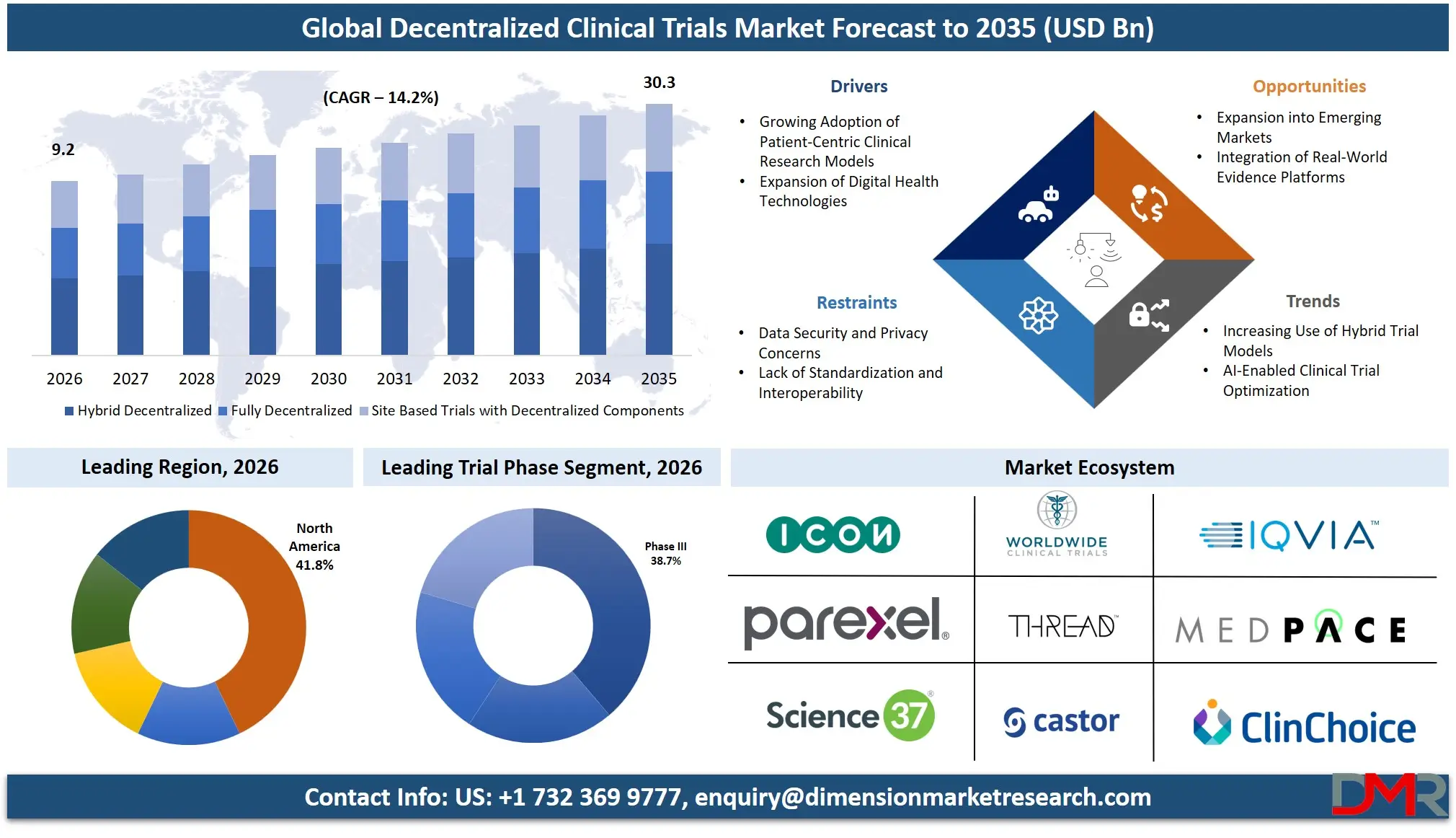
The Decentralized Clinical Trials Market size is expected to be USD 9.2 billion in 2026 and increase at a compound annual growth rate of 14.2% to USD 30.3 billion in 2035 due to patients to various locations for the study, which results in higher costs and lower retention rates.
ℹ
To learn more about this report –
Download Your Free Sample Report Here
Decentralized Clinical Trials (DCT) Market consists of clinical trials that make use of digitally-enabled approaches wherein the entire process of such trials does not necessarily have to be done within the investigational site but could also be achieved remotely with the aid of telemedicine, wearables, electronic consent, remote patient monitoring, direct-to-patient distribution of medicines, and cloud databases. This particular market has revolutionized how clinical trials are conducted within the pharmaceuticals and biotechnology industries since they enable the acquisition of various advantages in terms of patient access, inclusion, and retention, as well as greater efficiency in conducting clinical trials. This has been brought about by advancements in digital technologies, emphasis on patient-focused trials, regulatory authorization of remote trials, and AI and real-world data platforms.
The US Decentralized Clinical Trials Market
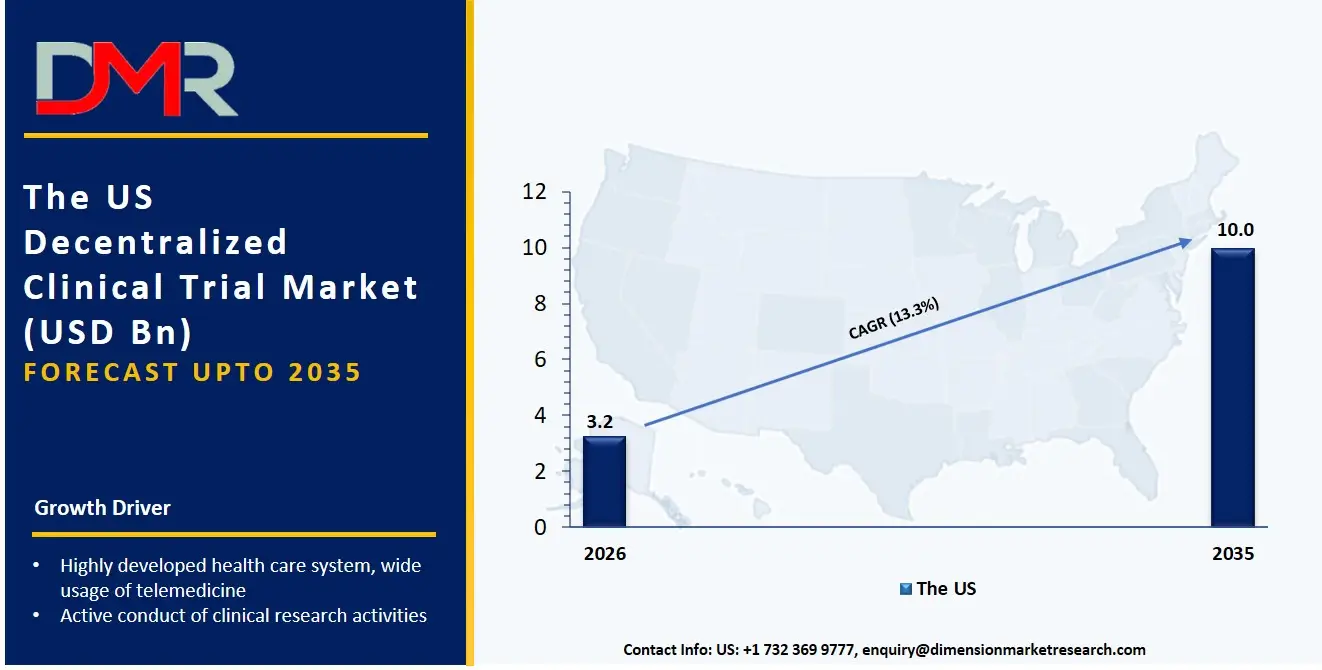
The US Decentralized Clinical Trials Market size is estimated to be USD 3.2 billion in 2026 and is expected to increase at a CAGR of 13.3% over the forecast period.
ℹ
To learn more about this report –
Download Your Free Sample Report Here
The US is the leading market for decentralized clinical trials because of its highly developed health care system, wide usage of telemedicine, active conduct of clinical research activities, and supportive regulation. The final FDA guidance on conducting decentralized clinical trials has helped in achieving additional transparency for drug developers that choose to conduct remote clinical trial operations. Many pharma firms, contract research organizations, and technology vendors make investments into building virtual trial platforms, wearable health monitoring tools, and engagement technologies.
Europe Decentralized Clinical Trials Market
The Europe Decentralized Clinical Trials Market size is estimated to be USD 2.2 billion in 2026 and is expected to increase at a CAGR of 13.1% over the forecast period.
The European region is showing significant adoption of DCT due to digital transformation in healthcare, cross-border clinical research studies, and favorable regulations. The European Green Deal initiative helps indirectly in favor of digitalization measures that lead to reduction in carbon footprints related to traditional studies which require travel. European nations like Germany, the United Kingdom, France, and the Netherlands are adopting telemedicine and use of electronic health record (EHR) in their research programs.
Japan Decentralized Clinical Trials Market
The market size of Japan Decentralized Clinical Trials will be USD 414 million in 2026 and at a CAGR of 13.7% in the forecast period.
The Japanese DCT market is witnessing growth because of the nation's aging population, need for effective participant enrollment, and the government's efforts towards digitalization of healthcare services. Companies are leveraging remote technology in recruiting participants in the trials. The prevalence of chronic diseases and developed healthcare facilities provide good opportunities for using DCTs. Issues associated with regulation and data interoperability still persist; however, technological advancements and robust research capabilities ensure continued growth in the market.
Key Takeaways
- Market Size & Forecast: The Decentralized Clinical Trials Market size is projected to reach USD 9.2 billion in 2026 and is anticipated to have a value of USD 30.2 billion in 2035.
- Growth Rate & Outlook: The Decentralized Clinical Trials Market size is set to grow at a compound annual growth rate of 14.2% during the forecast period of 2026 to 2035.
- Primary Growth Drivers: Some of the major growth drivers in the market Rise in Usage of Patient-Oriented Models in Clinical Trialss, and more.
- Key Market Trends: Some of the major trends in the market are Growing Trend towards Hybrid Trials, and more.
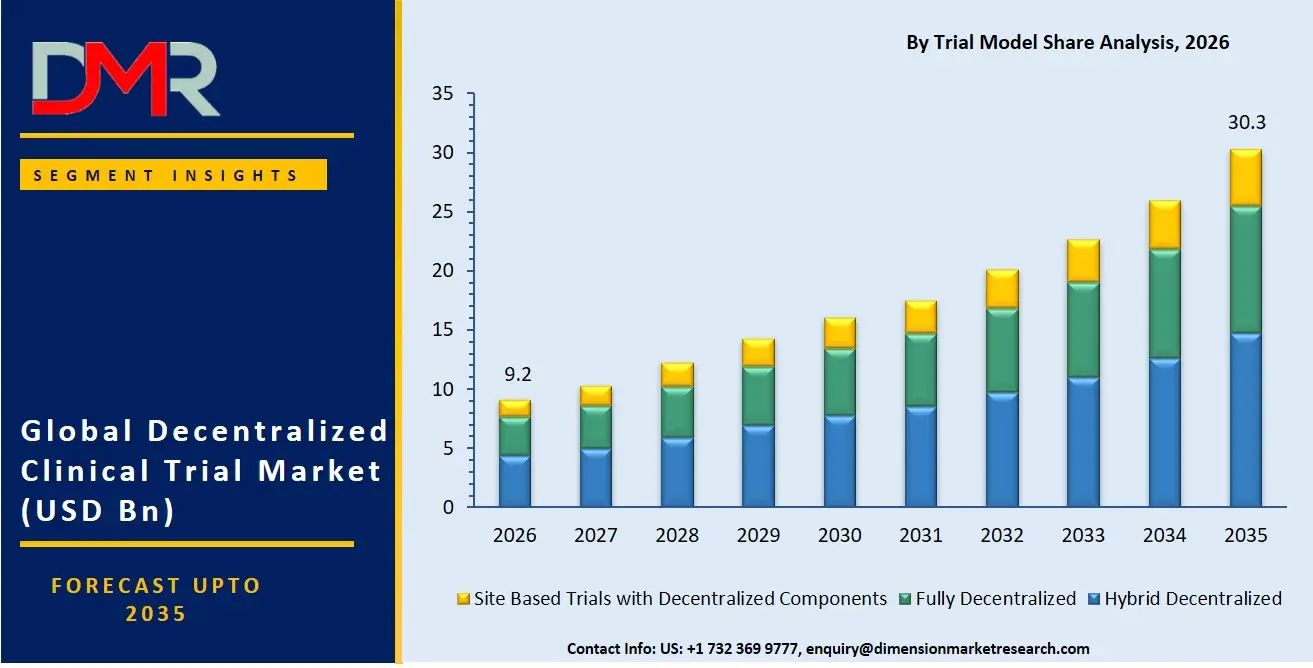
- By Trial Model: Hybrid segment is anticipated to get the majority share of the Decentralized Clinical Trials Market in 2026.
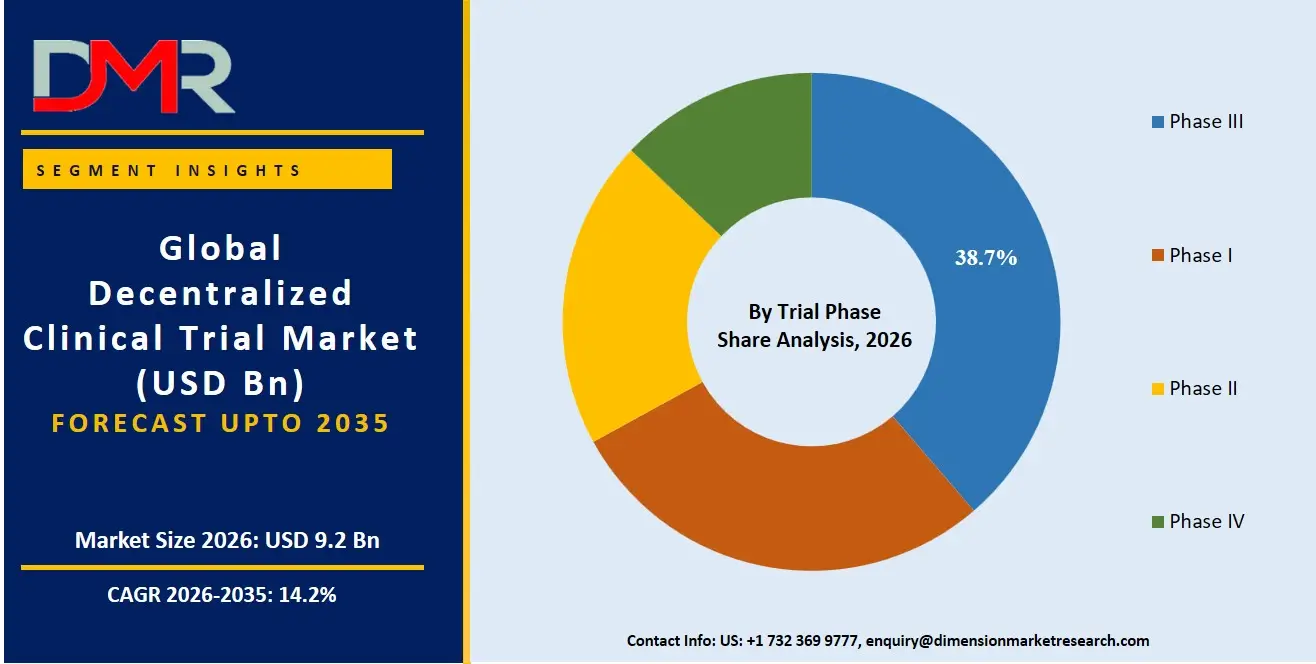
- By Trial Phase: Phase III is expected to get the largest revenue share in 2026 in the Decentralized Clinical Trials Market.
- By Therapeutic Area: Oncology segment is expected to get the largest revenue share in 2026 in the Decentralized Clinical Trials Market.
- Regional Leadership: North America is set to lead the Decentralized Clinical Trials Market with an estimated 41.8% share in 2026.
What is the Decentralized Clinical Trials?
Decentralized Clinical Trials (DCTs) refer to clinical trials that utilize decentralized components in a way that makes it possible for some tasks of a clinical trial to take place outside of the conventional clinical trial settings. Such tasks could include telemedicine visits, eConsent, remote monitoring using connected devices, home health visits, direct delivery of clinical supplies, and digital tools to collect data. Decentralized clinical trials make use of digital health solutions to ensure the facilitation of recruitment, retention, convenience, real-world evidence gathering, and geographical coverage.
Use Cases
- Cancer Studies: The use of DCT technology allows the use of remote patient monitoring systems and virtual visits by patients with oncologic disorders. Such an approach decreases the travel requirements and improves patient recruitment and compliance with long-term follow-ups.
- Rare Disease Research: Patients with rare diseases typically live too far from research institutions, which leads to poor study enrolment. However, DCT solutions can be applied to allow researchers to recruit such patients through telemedicine and home-based nursing services and medicine delivery.
- Chronic Disease Clinical Trials: DCTs employ remote patient monitoring to record health data related to the cardiovascular system, diabetes, and other chronic diseases. This approach allows collecting the required information without regular visits of participants to the research site.
- Post-Market Studies: In recent years, phase IV clinical studies have widely used DCT technology to obtain real-world data from many patients in different locations.
How AI Is Transforming the Decentralized Clinical Trials Market
Artificial intelligence (AI) is revolutionizing the field of decentralized clinical trials by facilitating automatic recruitment of participants, efficient protocol design, and better engagement with patients. The use of machine learning techniques to process huge amounts of data helps in recruiting participants, identifying the risks of dropouts, and improving overall enrollment processes. AI can be applied to communication between patients and decentralized trials via chatbots and other virtual assistants.
AI also improves the quality of data obtained from decentralized trials by automatically monitoring it and predicting any anomalies. Processing data received from wearables in real-time can help to intervene quickly to solve emerging problems.
Market Dynamic
Driving Factors in the Decentralized Clinical Trials Market
Rise in Usage of Patient-Oriented Models in Clinical Trials
The trend of patient-centeredness is a critical catalyst for DCT. Traditional clinical studies usually involve frequent travel by patients to various locations for the study, which results in higher costs and lower retention rates. This problem can be easily solved using various solutions provided by DCT models such as telemedicine, remote monitoring, e-consent, and home-based healthcare delivery systems. This approach benefits both sponsors by recruiting more patients and patients who get access to better facilities.
Restraints in the Decentralized Clinical Trials Market
Data Security and Privacy Issues
The pervasive use of online platforms and interconnected gadgets poses significant threats to cybersecurity and data privacy. Clinical trial sponsors are bound by very strict regulatory guidelines concerning the confidentiality of patient data. The differences in laws pertaining to data privacy across various regions pose a challenge in the execution of clinical trials that span several nations.
Opportunities in the Decentralized Clinical Trials Market
Emerging Markets Expansion
There is significant potential for expansion of services for DCT companies in emerging economies. Increased access to the internet, improved healthcare facilities, and government backing for digital health projects create a promising environment for conducting decentralized clinical trials. Modernization in the healthcare systems of countries in Asia-Pacific, Latin America, and the Middle East provides such an environment.
Trends in the Decentralized Clinical Trials Market
Growing Trend towards Hybrid Trials
Decentralized hybrid clinical trials have gained popularity in recent years due to their ability to integrate the benefits of the conventional trial methods along with the capability of conducting them remotely. The sponsors can use this method in order to meet all regulatory, patient convenience, and data quality concerns.
Research Scope and Analysis
The Decentralized Clinical Trials market analysis will analyze clinical trials, services provided, therapy areas, clinical trial phases, end users, and adoption by regions. This report will analyze the adoption of technologies, regulatory issues, patient-oriented research, digital health advancements, and competition. This report will analyze growth prospects, market barriers, factors influencing adoption, and future market demand.
ℹ
To learn more about this report –
Download Your Free Sample Report Here
By Trial Mode Analysis
The Hybrid Decentralized Trials will have the highest market share of 48.6% in 2026 because of their capacity to achieve regulation, efficiency, and oversight. Hybrid models comprise of remote monitoring, telemedicine, and engagement through digital technology along with site visits at periodic intervals. They can be employed in various therapeutic areas as per requirements.
ℹ
To learn more about this report –
Download Your Free Sample Report Here
Pharmaceutical companies are preferring hybrid trials since they offer efficiency along with good-quality data. The fully decentralized trials are anticipated to show high growth rate owing to advancements in digital technologies and increased confidence among regulators.
By Service Type Analysis
Remote Patient Monitoring is expected to take up around 24.8% share of the market in 2026, becoming the largest service segment within DCTs. Availability of wearable technology, sensor technology, and mHealth makes it possible to collect continuous data and monitor patients in real time. This helps improve clinical results, increase compliance, and facilitate decentralized involvement in the research process. Telemedicine and remote visits continue being the core elements of DCT platforms, while Direct-to-Patient drug shipping services are some of the fastest growing segments because of rising interest in administering drugs at home.
By Therapeutic Area Analysis
The Oncology segment is estimated to dominate the market with a share of 29.4% in 2026 owing to the rise in clinical trials, increase in the incidence of cancers, and rising demand for treatment-specific patient-focused research. Decentralization helps ease the burden on travel for the patients and provides for better long-term follow-up opportunities. The segment will gain from increased investments in pharmaceuticals as well as favorable regulations. The Rare Diseases category is forecasted to be the fastest-growing as recruitment of subjects from dispersed geographic locations becomes problematic.
By Trial Phase Analysis
The phase III clinical trials are anticipated to hold around 38.7% of the total market share by 2026 due to the high number of participants and operational complexity associated with such trials. The use of DCT technology can help in overcoming the issues related to recruitment, retention of patients, and data collection during such trials. The pharmaceutical firms have begun using decentralized technologies to enhance efficiency and minimize costs during pivotal trials. The rapid growth of phase IV studies is anticipated due to the use of decentralized methods.
By End User Analysis
Pharmaceuticals is expected to have the highest share, accounting for 46.2% of the market revenues in 2026. These companies are actively involved in the conducting of clinical studies and are engaged in initiatives to digitally transform their operations. The pressure to shorten drug development processes, as well as engage patients, is one of the primary drivers for adopting DCT. Growth in the biotechnology segment will be faster owing to rising innovations, wider pipelines of clinical trials, and ease of conducting trials.
The Decentralized Clinical Trials Market Report is segmented on the basis of the following:
By Trial Model
- Fully Decentralized Trials
- Hybrid Decentralized Trials
- Site-Based Trials with Decentralized Components
By Service Type
- Telemedicine & Virtual Visits
- Patient Recruitment & Retention
- Electronic Consent (eConsent)
- Remote Patient Monitoring
- Direct-to-Patient (DTP) Drug Supply
- Home Healthcare & Mobile Nursing
- Data Collection & Trial Management Services
By Therapeutic Area
- Oncology
- Cardiovascular Diseases
- Neurological Disorders
- Infectious Diseases
- Metabolic & Endocrine Disorders
- Rare Diseases
- Immunology & Autoimmune Disorders
- Others
By Trial Phase
- Phase I
- Phase II
- Phase III
- Phase IV
By End User
- Pharmaceutical Companies
- Biotechnology Companies
- Contract Research Organizations (CROs)
- Academic & Research Institutes
Regional Analysis
Leading Region in the Decentralized Clinical Trials Market
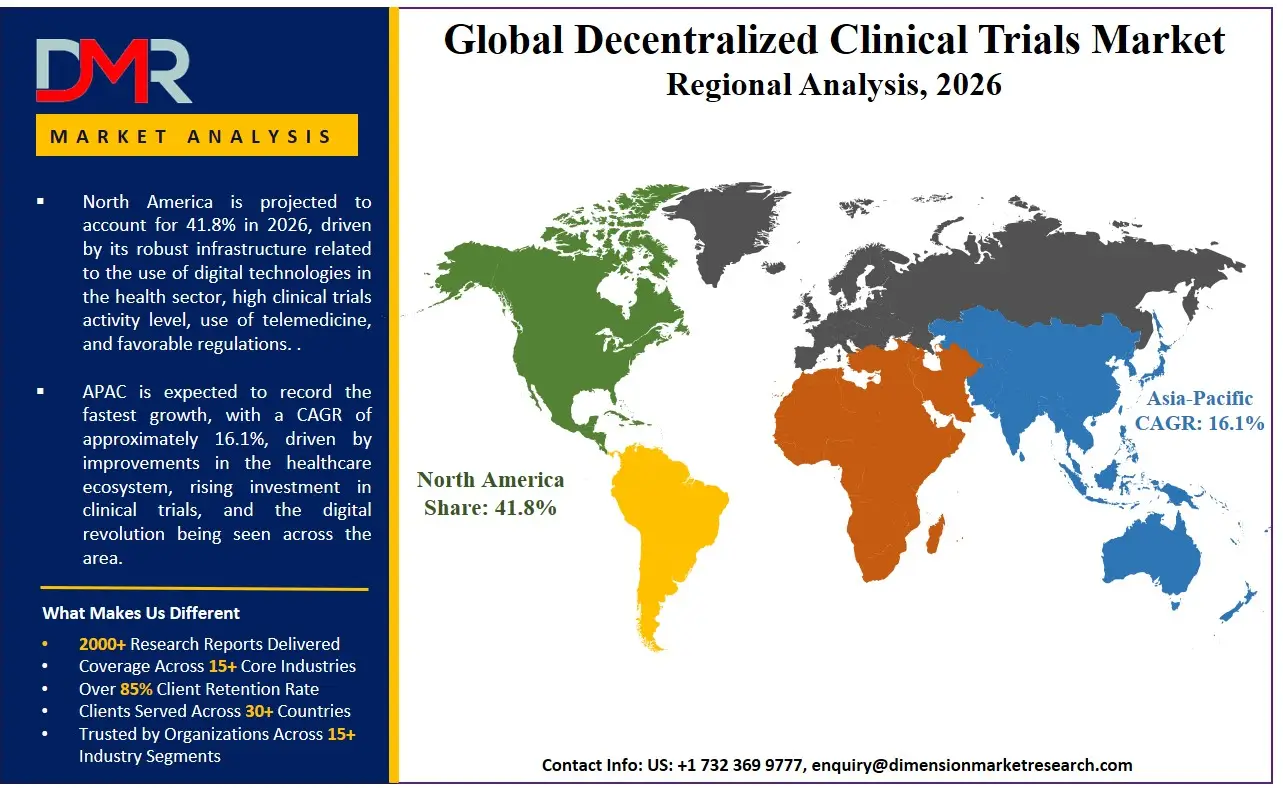
The North American region will dominate the decentralized clinical trials market by holding about 41.8% of the total market share in 2026. The region is well known for its robust infrastructure related to the use of digital technologies in the health sector, high clinical trials activity level, use of telemedicine, and favorable regulations. Guidance on the use of decentralized clinical trials issued by the FDA has boosted sponsors' confidence in the use of remote clinical trial processes. Investments made in the health sector by pharmaceuticals, biotechs, and CROs have strengthened the dominance of the region.
ℹ
To learn more about this report –
Download Your Free Sample Report Here
Fastest Growing Region in the Decentralized Clinical Trials Market
The Asia Pacific region is expected to grow at the fastest rate due to improvements in the healthcare ecosystem, rising investment in clinical trials, and the digital revolution being seen across the area. Nations including China, Japan, South Korea, India, and Australia are bolstering their clinical trial landscape with advancements in regulation and technology. The occurrence of chronic disease, the number of patients, and the need for effective drug discovery provide an optimal environment for DCTs.
By Region
North America
Europe
- Germany
- The U.K.
- France
- Italy
- Russia
- Spain
- Benelux
- Nordic
- Rest of Europe
Asia-Pacific
- China
- Japan
- South Korea
- India
- ANZ
- ASEAN
- Rest of Asia-Pacific
Latin America
- Brazil
- Mexico
- Argentina
- Colombia
- Rest of Latin America
Middle East & Africa
- Saudi Arabia
- UAE
- South Africa
- Israel
- Egypt
- Rest of MEA
Competitive Landscape
The decentralized clinical trials market exhibits fierce competition fueled by technological advancements, regulation expertise, and integrative services. The players in the market concentrate on developing additional capabilities of digital platforms, improving their patient engagement solutions, and upgrading their remote monitoring solutions. Partnership strategies involving technology companies, CROs, healthcare organizations, and drug sponsors are becoming popular. Major capital investment in AI, wearables, cybersecurity, and cloud trial management systems generates competitive advantages for players in the decentralized clinical trials industry. Regulatory compliance, high costs of technology development, and data protection form significant barriers to market entry.
Some of the prominent players in the global Decentralized Clinical Trials are:
- IQVIA
- ICON plc
- Medpace Holdings, Inc.
- Parexel International
- Syneos Health
- Fortrea
- PPD
- Worldwide Clinical Trials
- ClinChoice
- Precision for Medicine
- Medidata Solutions
- Veeva Systems
- Oracle Health Sciences
- Clario
- Signant Health
- THREAD
- Science 37
- Medable
- Castor
- ObvioHealth
- Other Key Players
Recent Developments
- In June 2026, The Metabolic Supply Group introduced the Metabolic Research Network (MRN) to provide an online resource that links well-being-oriented health care professionals such as med spas, clinics for longevity, clinics for weight loss, telehealth services, and specialty care with clinical studies in the country. By doing so, the network intends to increase patient enrollment by connecting the sponsors of clinical trials with interested patients who are searching for new treatment options. The program allows the healthcare professional to contribute to clinical trials while adding more value to their businesses.
- In April 2026, FDA has initiated two proof-of-concept trials to explore the potential application of real-time clinical trial (RTCT) approaches, which will enable regulators to have access to safety data and end-points during the trial itself. This effort is driven by a Request for Information (RFI), which aims at helping the agency develop an overall RTCT pilot program. Moving away from the conventional periodic reporting process, the objective is to benefit in areas of data transparency, safety monitoring, regulatory decision making, and clinical development.
Report Details
| Report Characteristics |
| Market Size (2026) |
USD 9.2 Bn |
| Forecast Value (2035) |
USD 30.3 Bn |
| CAGR (2026–2035) |
14.2% |
| Historical Period |
2021 – 2025 |
| Forecast Period |
2027 – 2035 |
| Base Year |
2025 |
| Estimate Year |
2026 |
| Segments Covered |
By Trial Model, By Service Type, By Therapeutic Area, By Trial Phase, By End User |
| Regional Coverage |
North America – The US and Canada; Europe – Germany, The UK, France, Russia, Spain, Italy, Benelux, Nordic, & Rest of Europe; Asia-Pacific – China, Japan, South Korea, India, ANZ, ASEAN, Rest of APAC; Latin America – Brazil, Mexico, Argentina, Colombia, Rest of Latin America; Middle East & Africa – Saudi Arabia, UAE, South Africa, Turkey, Egypt, Israel, & Rest of MEA |
Frequently Asked Questions
How big is the Decentralized Clinical Trials Market?
▾ The Decentralized Clinical Trials Market size is expected to reach USD 9.2 billion by 2026 and is projected to reach USD 30.3 billion by the end of 2035.
What is the CAGR of the Decentralized Clinical Trials Market from 2026 to 2035?
▾ The market is growing at a CAGR of 14.2 percent over the forecasted period.
What factors are driving the growth of the Decentralized Clinical Trials Market?
▾ Rise in Usage of Patient-Oriented Models in Clinical Trials, and more are the factors driving the growth of the Decentralized Clinical Trials Market.
What are the major trends in the Decentralized Clinical Trials Market?
▾ Growing Trend towards Hybrid Trials, and more are some of the major trends in the market.
Who are the key players in the Decentralized Clinical Trials Market?
▾ Some of the key players in the Decentralized Clinical Trials Market include IQVIA, ICON, PPD, and more
How is the Decentralized Clinical Trials Market segmented?
▾ The Decentralized Clinical Trials Market is segmented by trial model, service type, therapeutic area, trial phase, end user.
Which region held the largest share of the Decentralized Clinical Trials Market in 2026?
▾ North America is set to lead the Decentralized Clinical Trials Market with an estimated 41.8% share in 2026.
Which region is expected to grow the fastest in the Decentralized Clinical Trials Market?
▾ Asia Pacific is the fastest-growing region in the Decentralized Clinical Trials Market during the forecast period.