Denmark Pharmaceutical Market Snapshot
- Market Size in 2026: USD 14.7 billion
- Market Size in 2035: USD 25.5 billion
- CAGR, 2026-2035: 6.4%
- Leading Drug Type Segment, 2026: Prescription Drugs, 86.2%
- Leading Molecule Type Segment, 2026: Small Molecule Drugs, 56.5%
- Leading Formulation Type Segment, 2026: Oral, 48.0%
- Leading Therapeutic Area, 2026: Anti-diabetic Disorders, 23.0%
- Leading Distribution Channel, 2026: Retail Pharmacies, 52.0%
- Fastest-Growing Segment: Rare Diseases, 9.1% CAGR
What is the Denmark Pharmaceutical and its Market Size?
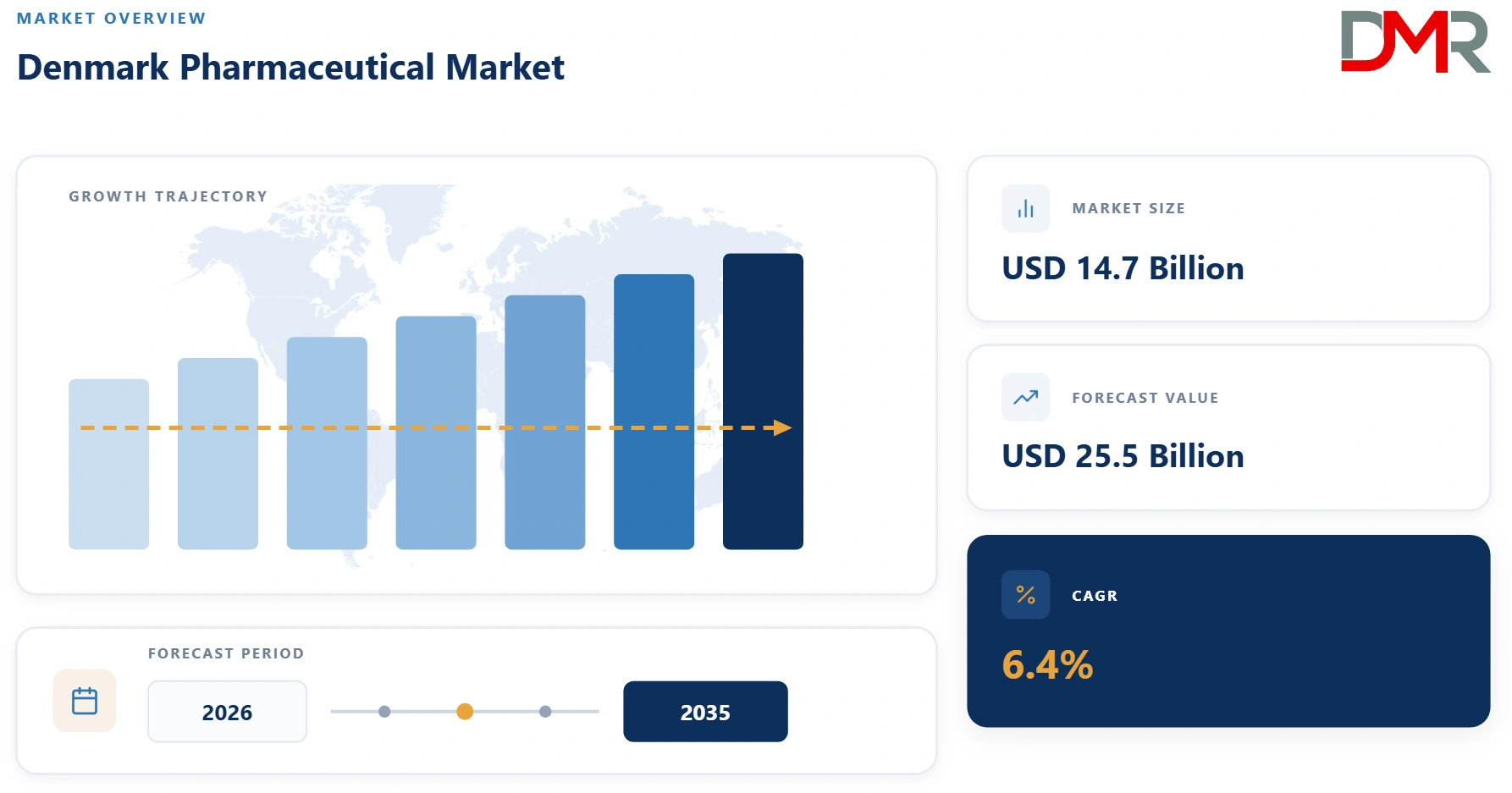
The Denmark pharmaceutical market is estimated at USD 14.7 billion in 2026 and is projected to reach approximately USD 25.5 billion by 2035, representing a 6.4% CAGR.
ℹ
To learn more about this report –
Download Your Free Sample Report Here
The Denmark pharmaceutical market comprises the development, manufacturing, commercialization, distribution and consumption of medicinal products used for prevention, diagnosis support and treatment of human diseases in Denmark. It includes prescription medicines, generic drugs, specialty medicines, biologics, biosimilars and OTC products distributed through hospitals, community pharmacies, online channels and other authorized outlets. The market operates within a highly regulated European framework, with medicinal products requiring authorization from the Danish Medicines Agency or the European Commission before sale.
Use Cases
- Diabetes and obesity management: GLP-1 and related therapies support glycemic control and weight-management treatment pathways.
- Cancer treatment: Innovative targeted therapies, immunotherapies and supportive medicines address increasingly complex oncology care.
- Cardiovascular disease: Pharmaceuticals manage hypertension, dyslipidemia, thrombosis and other major chronic cardiovascular conditions.
- Central nervous system disorders: Antidepressants, antipsychotics, neurological therapies and other CNS medicines support long-term disease management.
- Immune-mediated diseases: Biologics and targeted therapies increasingly treat psoriasis, inflammatory bowel disease and other autoimmune conditions.
- Rare diseases: Specialty medicines and advanced therapies address small patient populations with high unmet medical needs.
Key Takeaways
- Market size: Denmark's pharmaceutical market is estimated at USD 14.7 billion in 2026 and could reach USD 25.5 billion by 2035.
- Growth: The modeled 6.4% CAGR reflects expanding pharmaceutical utilization and a favorable mix shift toward innovative medicines.
- Key driver: Diabetes and obesity treatment are major contributors, reinforced by Denmark's globally significant pharmaceutical capabilities.
- Segment dominance: Prescription medicines represent approximately 86.2% of the 2026 market.
- Technology: Biologics, AI-enabled drug discovery, digital clinical research and advanced manufacturing are reshaping competitive dynamics.
- Fastest growth: Rare-disease medicines are estimated to grow at approximately 9.1% CAGR, followed by selected biologics, injectables and online distribution.
How AI/Gen AI is Transforming the Denmark Pharmaceutical Market?
Artificial intelligence is increasingly being integrated across drug discovery, clinical development, pharmacovigilance, manufacturing and commercial operations. Danish pharmaceutical companies and research institutions can use AI to analyze clinical and real-world health data, identify potential drug targets, optimize molecules, predict trial outcomes and improve patient stratification. Denmark's national life-science strategy specifically highlights the potential for greater use of health data and artificial intelligence. The main benefits include shorter discovery cycles, better trial recruitment, improved manufacturing yields, earlier detection of adverse events and more targeted treatment decisions. AI also supports automated quality-control processes and predictive maintenance in pharmaceutical facilities.
Key Drivers in the Denmark Pharmaceutical Market
Rising Demand for Diabetes, Obesity and Metabolic Therapies
The Denmark Pharmaceutical Market is strongly supported by increasing demand for medicines used to manage diabetes, obesity and related metabolic conditions. An aging population, rising prevalence of chronic diseases and broader clinical recognition of obesity as a long-term disease are increasing the need for effective pharmacological interventions. Denmark also has a particularly strong position in metabolic medicine, supported by leading domestic pharmaceutical expertise and an established research ecosystem. The growing adoption of GLP-1 therapies is expanding treatment opportunities beyond conventional diabetes management into obesity and associated cardiometabolic conditions.
Strong Pharmaceutical Innovation and Life-Science Ecosystem
A highly developed life-science ecosystem is another major growth driver for the Denmark Pharmaceutical Market. Denmark benefits from strong pharmaceutical R&D capabilities, advanced healthcare infrastructure, university-industry collaboration and close integration between public healthcare institutions and private companies. The country's pharmaceutical sector has become an important contributor to economic activity and exports, while substantial research capabilities support the development and commercialization of innovative medicines.
Restraints in the Denmark Pharmaceutical Market
Pricing Pressure and Reimbursement Constraints
Pricing and reimbursement policies represent a significant restraint on the Denmark Pharmaceutical Market. Denmark maintains a cost-conscious healthcare system in which pharmaceutical expenditure is closely managed through reimbursement mechanisms, competitive pricing and generic substitution. These policies support affordability but can limit manufacturers' ability to command premium prices, particularly for medicines without substantial demonstrated clinical advantages. Generic medicines have a strong position in the Danish market, increasing competitive pressure after patent expiry and reducing revenue potential for mature branded products.
Regulatory Complexity and High Development Requirements
The regulatory environment presents another challenge for the Denmark Pharmaceutical Market. Pharmaceutical companies must comply with stringent European and Danish requirements covering clinical development, manufacturing quality, safety monitoring, product authorization and post-market surveillance. These requirements are particularly demanding for biologics, advanced therapies and innovative medicines because development programs require extensive clinical and technical evidence. Smaller biotechnology companies may face additional financial and operational pressure because they often lack the resources and regulatory infrastructure of larger pharmaceutical companies.
Growth Opportunities in the Denmark Pharmaceutical Market
Expansion of Specialty and Rare-Disease Medicines
The expansion of specialty and rare-disease medicines represents an important opportunity for the Denmark Pharmaceutical Market. Advances in genetic diagnosis, precision medicine, biologics and targeted therapies are enabling treatment of conditions that previously had limited therapeutic options. Denmark's strong research infrastructure and specialized healthcare system provide a suitable environment for developing and adopting these therapies. Pharmaceutical companies can benefit from focusing on high-unmet-need therapeutic areas where clinical differentiation is stronger and competition is less concentrated than in conventional primary-care medicines.
Digitalization, AI and Advanced Drug Development
Digital transformation offers substantial opportunities across the Denmark Pharmaceutical Market. Artificial intelligence, real-world health data, electronic health records and digital clinical research can improve drug discovery, patient identification, clinical-trial recruitment and post-market monitoring. Denmark's advanced digital healthcare infrastructure and close integration between healthcare providers and technology systems provide a favorable foundation for these applications. Pharmaceutical companies can use advanced analytics to identify unmet patient needs, optimize clinical development and improve treatment adherence.
Trends in the Denmark Pharmaceutical Market
Shift Toward Biologics and Specialty Therapies
The Denmark Pharmaceutical Market is gradually shifting toward biologics, specialty medicines and targeted therapies. Although conventional small-molecule medicines remain important, biologics are gaining relevance across oncology, immunology, rare diseases and metabolic medicine. Biosimilars are also becoming increasingly important as healthcare systems seek to improve access to biological treatments while controlling expenditure.
Growing Adoption of Digital and Patient-Centric Healthcare
Digitalization is increasingly influencing how medicines are prescribed, distributed and monitored in the Denmark Pharmaceutical Market. Electronic prescriptions, digital patient platforms, remote healthcare services and data-driven treatment management are improving convenience and supporting more integrated care. Pharmaceutical companies are also using digital technologies to generate real-world evidence and monitor treatment outcomes.
Research Scope and Analysis
The Denmark pharmaceutical market is segmented by Drug Type, Molecule Type, Formulation Type, Therapeutic Area and Distribution Channel. The segmentation captures differences in medicine innovation, route of administration, clinical demand, reimbursement characteristics and purchasing behavior.
ℹ
To learn more about this report –
Download Your Free Sample Report Here
By Drug Type Analysis
Prescription drugs dominated the market in 2026 with an estimated 86.2% share, reflecting Denmark's mature healthcare system, specialist-led treatment pathways and high utilization of medicines for chronic diseases. Within prescription medicines, branded drugs are estimated to account for approximately 55.0% of total market revenue, supported by innovative diabetes, obesity, oncology and immunology therapies; generic drugs represent approximately 21.0%, benefiting from substitution policies and patent expiries; and specialty/high-cost prescription medicines represent approximately 10.2%, driven by biologics and rare-disease therapies. OTC drugs account for an estimated 13.8%. For reporting purposes, specialty medicines are treated as a commercial high-value prescription category rather than a mutually exclusive legal classification. Prescription medicines will remain dominant through 2035, while OTC products are expected to grow at approximately 3.8% CAGR, supported by self-care, consumer awareness and digital purchasing. The specialty segment should grow faster, at approximately 8.0% CAGR, because of oncology, immunology and rare-disease innovation. Generic penetration will continue increasing, but value growth will remain constrained by competitive pricing.
By Molecule Type Analysis
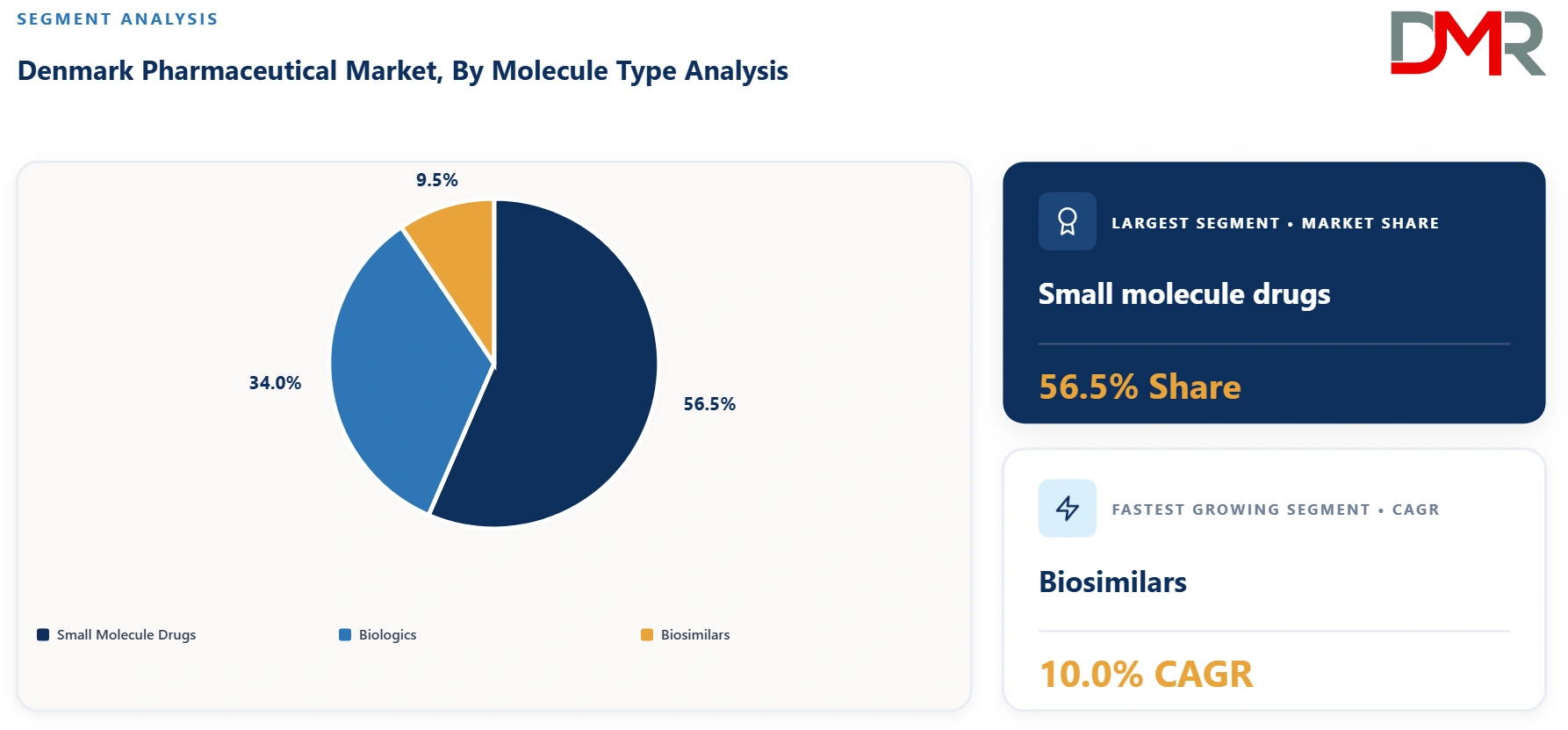
Small molecule drugs represented approximately 56.5% of the market in 2026, making them the largest molecule category because of their extensive use across cardiovascular, CNS, infectious, respiratory and primary-care indications. Their advantages include established manufacturing infrastructure, oral availability, long clinical experience and comparatively straightforward distribution. Biologics account for approximately 34.0%, making them the second-largest category and the principal source of mix-driven pharmaceutical value growth. Monoclonal antibodies represent the largest biologics subcategory, followed by recombinant proteins and other biologic modalities. Biosimilars account for approximately 9.5%, supported by patent expirations and efforts to control healthcare expenditure. Biosimilars are expected to be the fastest-growing molecule sub-segment at approximately 10.0% CAGR, as more biological reference products lose exclusivity and European healthcare systems encourage competitive alternatives. Biologics overall are expected to grow at approximately 8.0% CAGR, exceeding the growth of conventional small molecules and gradually increasing their share of Danish pharmaceutical expenditure.
By Formulation Type Analysis
Oral formulations are estimated to hold the largest 2026 share at 48.0%, reflecting their convenience, patient familiarity, comparatively low administration costs and extensive use in chronic disease treatment. Tablets and capsules remain particularly important in cardiovascular, CNS, diabetes and infectious-disease treatment. Injectable formulations represent approximately 38.0%, making them the second-largest segment and an increasingly important contributor to market value because many biologics, oncology products and metabolic therapies are administered parenterally. Topical formulations account for around 8.0%, supported by dermatology, wound care and localized therapies, while inhalation products contribute approximately 5.0% and other formulations approximately 1.0%. Injectable medicines are projected to be the fastest-growing formulation category at approximately 8.2% CAGR, reflecting expansion of biologics, vaccines, oncology medicines and injectable metabolic therapies. Oral products will remain dominant but may gradually lose share as new injectable and specialty therapies enter the market..
By Therapeutic Area Analysis
Anti-diabetic disorders are estimated to represent 23.0% of the 2026 market, making this the largest therapeutic area. The segment benefits from high chronic-disease treatment needs and the increasing adoption of innovative glucose-lowering and obesity-related metabolic therapies. Oncology is estimated at 16.0%, supported by targeted therapies, immuno-oncology and improved diagnosis. Immunology represents approximately 13.0%, followed by cardiovascular diseases at 11.0%, CNS disorders at 10.0%, respiratory diseases at 8.0%, rare diseases at 7.0%, infectious diseases at 6.0%, and other indications at approximately 6.0%. Rare diseases are expected to be the fastest-growing therapeutic area at approximately 9.1% CAGR, reflecting new orphan medicines, genetic diagnosis, advanced therapies and high unmet clinical need. Oncology and immunology should also outperform the overall market, while cardiovascular medicines will experience comparatively slower value growth because of generic competition and established treatment protocols.
By Distribution Channel Analysis
Retail pharmacies are estimated to represent 52.0% of pharmaceutical market revenue in 2026, making them the dominant distribution channel for community prescriptions, chronic medicines and OTC products. Their leadership reflects Denmark's established pharmacy network and the continued importance of pharmacist-mediated dispensing. Hospital pharmacies account for approximately 34.0%, supported by oncology, biologics, specialty medicines, inpatient treatment and high-cost therapies increasingly administered through hospital settings. Online and mail-order pharmacies account for approximately 14.0%, representing the smallest major channel but the fastest-growing one. Online/mail-order distribution is estimated to expand at approximately 9.0% CAGR through 2035 as digital health adoption, electronic prescriptions and consumer expectations for convenience increase. Hospital pharmacies should also gain share in value terms because specialty and biologic therapies are increasingly managed within specialist healthcare pathways. Retail pharmacies will remain the largest channel but will face gradual channel migration toward digital fulfillment
The Denmark Pharmaceutical Market Report is segmented on the basis of the following:
By Drug Type
- Prescription Drugs
- Branded Drugs
- Generic Drugs
- Specialty Drugs
- Over-the-Counter (OTC) Drugs
By Molecule Type
- Small Molecule Drugs
- Biologics
- Monoclonal Antibodies
- Recombinant Proteins
- Other Biologics
- Biosimilars
By Formulation Type
- Oral
- Injectable
- Topical
- Inhalation
- Others
By Therapeutic Area
- Oncology
- Cardiovascular Diseases
- Anti-diabetic Disorders
- Central Nervous System (CNS) Disorders
- Infectious Diseases
- Respiratory Diseases
- Immunology
- Rare Diseases
- Others
By Distribution Channel
- Hospital Pharmacies
- Retail Pharmacies
- Online & Mail-Order Pharmacies
Regulatory Landscape
Denmark's pharmaceutical industry operates under a highly harmonized European regulatory system, with medicines authorized through national, decentralized, mutual-recognition or centralized procedures. Innovative, biotechnology-derived and certain orphan medicines generally fall within European centralized authorization mechanisms. The Danish Medicines Agency oversees authorization, inspections, adverse-event monitoring, clinical trials, reimbursement-related functions and pharmacy supervision. GMP and GDP compliance creates a high-quality supply environment but increases operational costs. The regulatory environment creates opportunities for companies with strong EU regulatory capabilities, while smaller developers face higher compliance and commercialization barriers. Digital clinical trials, AI-supported evidence generation, real-world data and advanced therapies will increasingly require sophisticated regulatory strategies.
Investment and White Space Analysis
Denmark presents an attractive pharmaceutical investment environment because of its research infrastructure, skilled workforce, established pharmaceutical manufacturers and highly developed healthcare system. The sector invested nearly DKK 16 billion annually in R&D according to industry data, representing roughly 30% of private Danish research investment. The largest white spaces include rare diseases, advanced biologics, obesity and metabolic medicine, AI-enabled drug development, next-generation oral delivery technologies, personalized medicine and sustainable pharmaceutical manufacturing. Investment risks include dependence on a small number of major domestic companies, high labor costs, regulatory complexity and strong public-sector purchasing power. The government's ambition to strengthen production conditions and increase life-science exports should support additional capital deployment.
Competitive Landscape
The Denmark pharmaceutical market is moderately concentrated in value terms but diversified across international and domestic participants. Novo Nordisk is the most influential Danish pharmaceutical company, particularly in diabetes and obesity, while Lundbeck, LEO Pharma, ALK-Abelló and other Danish companies provide strong positions in CNS, dermatology, allergy and specialty medicine. International companies including Pfizer, Roche, AstraZeneca, Sanofi, Novartis, Amgen and others also participate in the market. Competition centers on clinical differentiation, innovation, reimbursement access, manufacturing reliability, intellectual property, product availability and relationships with healthcare providers. Companies increasingly use licensing, acquisitions and strategic partnerships to replenish pipelines. Denmark's pharmaceutical industry also benefits from extensive international commercialization, making global portfolio strategy highly relevant to domestic competitive positioning. Lundbeck reports approximately 80-100 scientific and commercial partnerships, illustrating the importance of external innovation.
Some of the prominent players in the Denmark Pharmaceutical Market are:
- Novo Nordisk
- H. Lundbeck
- LEO Pharma
- ALK-Abelló
- Bavarian Nordic
- FUJIFILM Diosynth Biotechnologies
- Pharmacosmos
- AGC Biologics
- Xellia Pharmaceuticals
- Novo Nordisk Pharmatech
- Ascendis Pharma
- Ferring Pharmaceuticals
- Orifarm Group
- Coloplast
- Zealand Pharma
- Genmab
- Bavarian Nordic ImmunoTherapeutics
- Camurus
- BioPorto
- MinervaX
- IO Biotech
- Galecto
- Evaxion Biotech
- Oncology Venture
- Saniona
- Nykode Therapeutics
- Allarity Therapeutics
- ExpreS2ion Biotechnologies
- Genmab Manufacturing
- Takeda Pharmaceuticals
- Pfizer
- AstraZeneca
- Roche
- Novartis
- Sanofi
- GSK
- MSD
- Bayer
- Boehringer Ingelheim
- Amgen
- Other Key Players
Recent Developments
- August 2026: LEO Pharma agreed to acquire worldwide rights to dersimelagon from Tanabe Pharma for an investigational rare-disease treatment, with the transaction potentially reaching USD 435 million, including upfront and near-term milestone payments.
- June 2026: ALK received EU approval for EURneffy 1 mg for young children at risk of anaphylaxis, expanding access to its needle-free adrenaline treatment and strengthening its specialty-allergy portfolio.
- May 2026: LEO Pharma reported first-quarter revenue growth and highlighted the expansion of Anzupgo and its strategic investment in innovation, reinforcing its focus on global dermatology and specialty medicines.
- April 2026: LEO Pharma agreed to acquire Replay, adding a next-generation gene-therapy platform targeting rare genetic dermatological diseases and strengthening its advanced-therapy pipeline.
- February 2026: Novo Nordisk partnered with Vivtex to develop next-generation oral biologic medicines for obesity and diabetes, with Vivtex eligible for up to USD 2.1 billion in payments plus royalties
Report Details
| Report Characteristics |
| Market Size (2026) |
USD 14.7 Bn |
| Forecast Value (2035) |
USD 25.5 Bn |
| CAGR (2026–2035) |
6.4% |
| Historical Data |
2021 – 2025 |
| Forecast Data |
2026 – 2035 |
| Base Year |
2025 |
| Segments Covered |
By Drug Type, By Molecule Type, By Formulation Type, By Therapeutic Area, By Distribution Channel |
| Country Coverage |
Denmark |
Frequently Asked Questions
What is the size of the Denmark Pharmaceutical Market in 2026?
▾ The Denmark Pharmaceutical Market is estimated at USD 14.7 billion in 2026, covering prescription and OTC pharmaceutical sales within Denmark.
What will the Denmark Pharmaceutical Market be worth in 2035?
▾ The Denmark Pharmaceutical Market is projected to reach approximately USD 25.5 billion by 2035, assuming a 6.4% compound annual growth rate.
What is the expected CAGR of the Denmark Pharmaceutical Market from 2026 to 2035?
▾ The Denmark Pharmaceutical Market is expected to expand at a 6.4% CAGR from 2026 to 2035, driven by specialty medicines, biologics and metabolic therapies.
What are the key growth drivers of the Denmark Pharmaceutical Market?
▾ Key drivers of the Denmark Pharmaceutical Market include rising demand for diabetes and obesity therapies, pharmaceutical innovation, an aging population and strong life-science infrastructure.
Which segment dominates the Denmark Pharmaceutical Market?
▾ Prescription drugs dominate the Denmark Pharmaceutical Market, accounting for an estimated 86.2% share in 2026, supported by chronic disease treatment and specialist care.
Which segment is expected to grow fastest in the Denmark Pharmaceutical Market?
▾ Rare-disease medicines are expected to be the fastest-growing segment in the Denmark Pharmaceutical Market, with an estimated 9.1% CAGR through 2035.
Who are the key players in the Denmark Pharmaceutical Market?
▾ Major players in the Denmark Pharmaceutical Market include Novo Nordisk, Lundbeck, LEO Pharma, ALK-Abelló, Orifarm and Xellia Pharmaceuticals, alongside multinational companies.
What are the major trends shaping the Denmark Pharmaceutical Market?
▾ Major trends in the Denmark Pharmaceutical Market include biologics adoption, GLP-1 therapies, rare-disease innovation, AI-enabled R&D, specialty