Market Snapshot
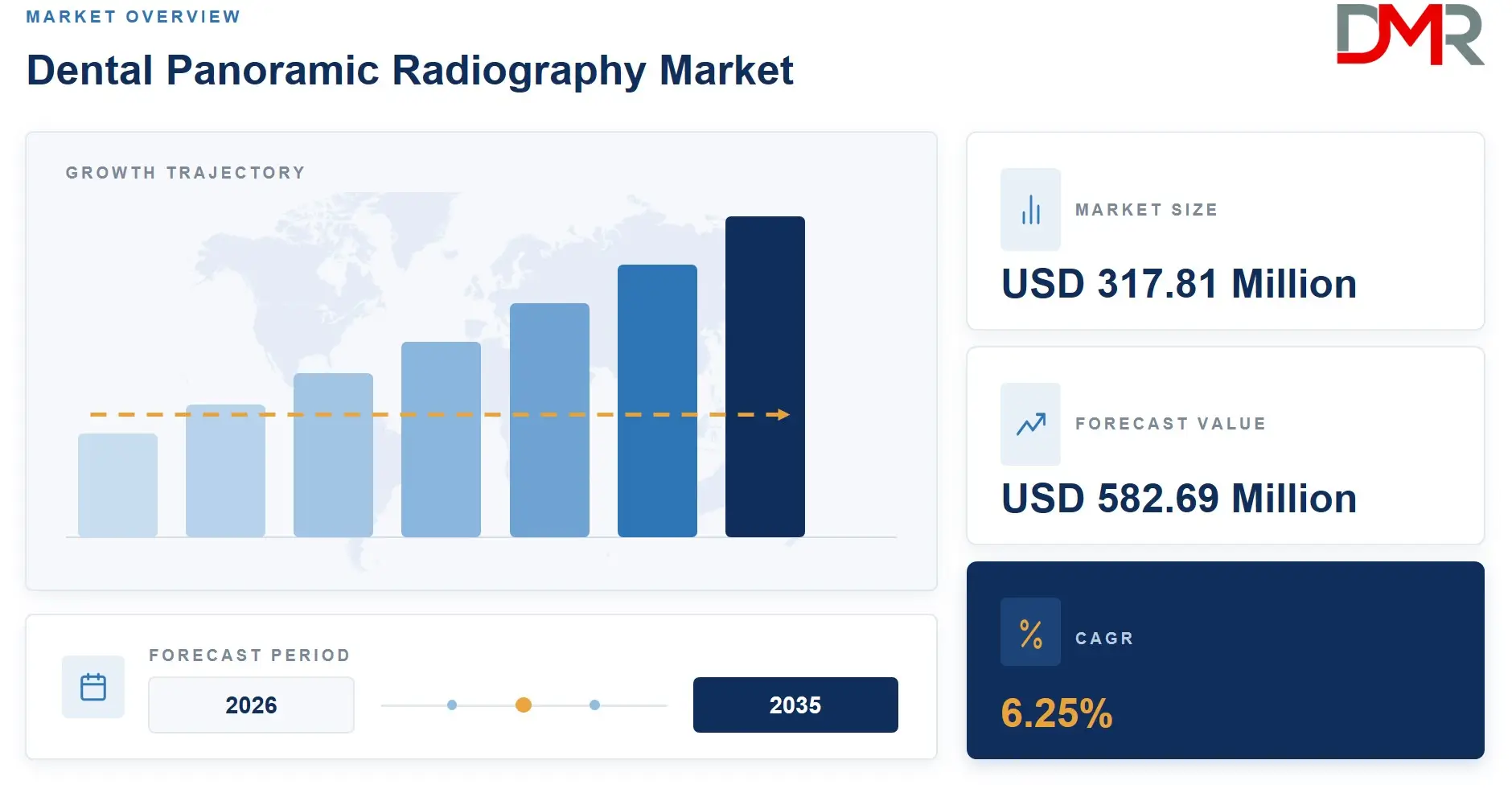
- The Global Dental Panoramic Radiography Market was valued at USD 317.81 Million in 2025 and is projected to reach USD 582.69 Million by 2035, at a CAGR of 6.25% from 2026 to 2035.
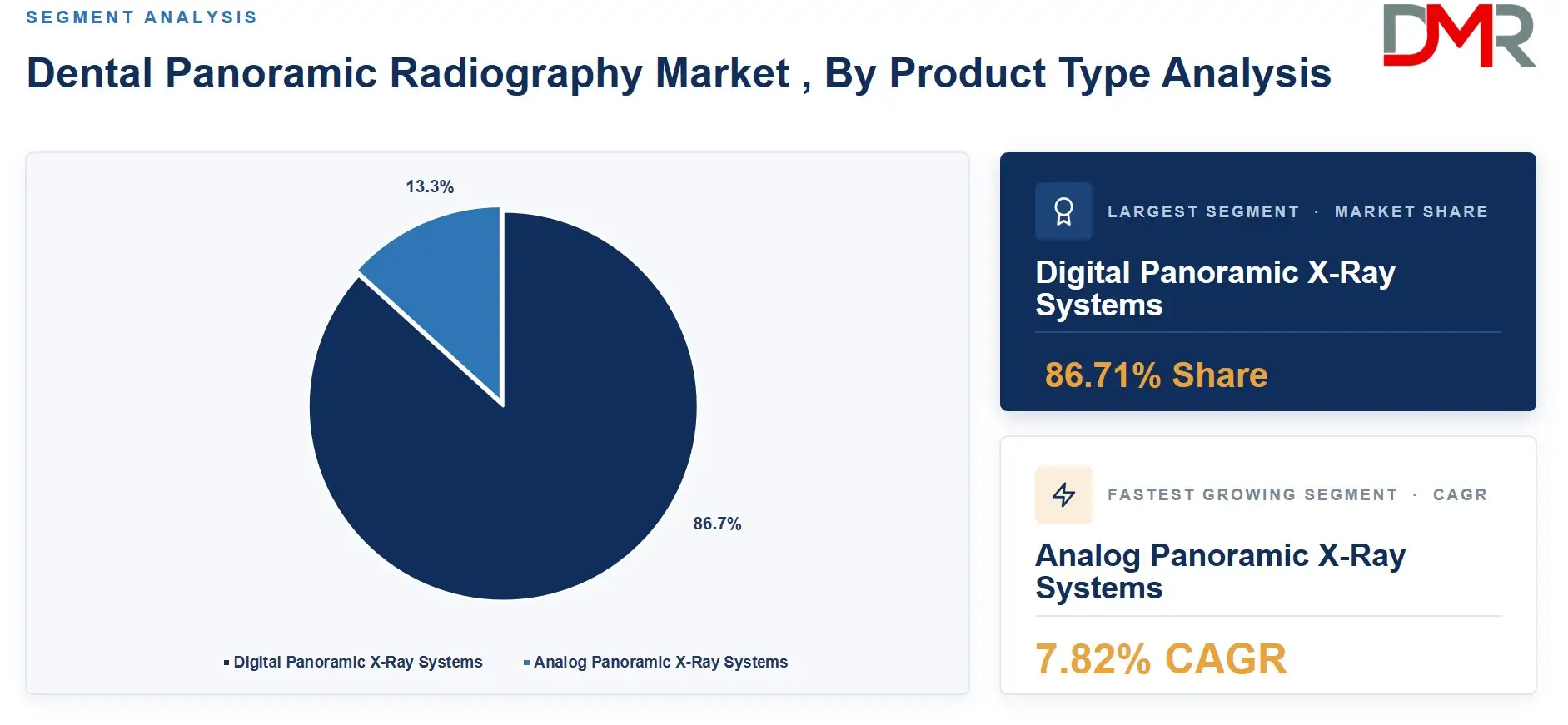
- By Product Type, Digital Panoramic X-Ray Systems led with a 86.71% revenue share in 2025, with Analog Panoramic X-Ray Systems comprising the remaining segment.
- By Technology, 2D Panoramic X-Ray Systems held a 69.4% share in 2025, followed by 3D Panoramic X-Ray Systems and Hybrid Panoramic and Cephalometric Systems.
- By Application, Orthodontics commanded a 48.21% share in 2025, ahead of Implantology, Oral Surgery, Periodontics, and General Dentistry.
- By End User, DSO and Group Practices held a 37.36% share in 2025, followed by Hospitals, Dental Clinics, and Academic and Research Institutes.
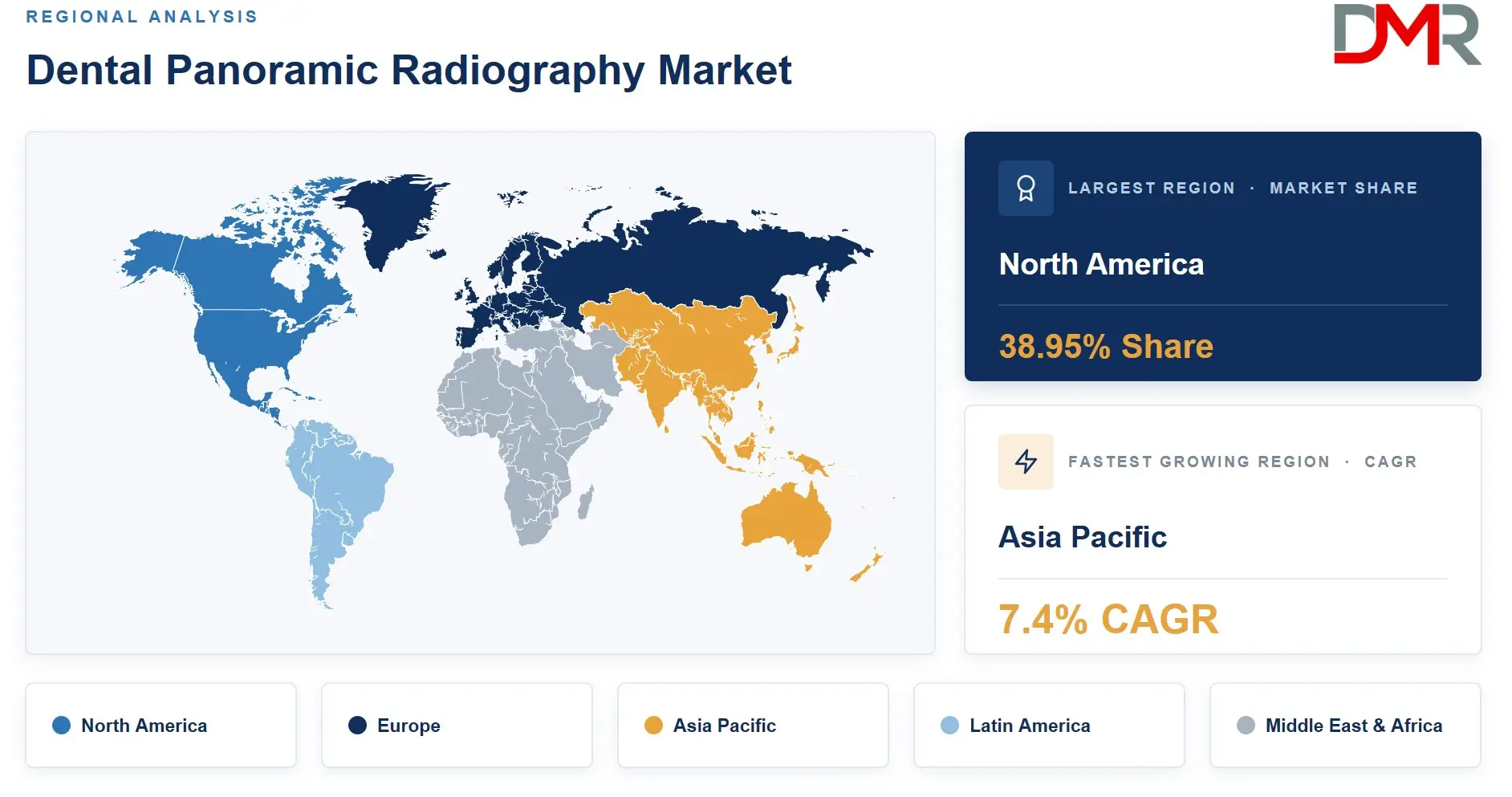
- By Region, North America captured a 38.95% share in 2025, the highest of any region.
Market Size and Forecast
The Global Dental Panoramic Radiography Market size is estimated at USD 337.67 Million in 2026 from USD 317.81 Million in 2025, and is projected to reach USD 582.69 Million by 2035, exhibiting a CAGR of 6.25% during the forecast period.
The forecast rests on three structural assumptions: continued replacement of analog units by direct digital systems, steady growth in orthodontic and implant procedure volumes across both mature and emerging markets, and incremental uptake of hybrid pan/CBCT platforms as single-capital-purchase alternatives to separate imaging rooms. Carestream Dental's February 2024 launch of the CS 8200 3D Access, a four-in-one system combining 2D panoramic, CBCT, 3D object scanning, and optional cephalometric imaging, illustrates how vendors are compressing multiple capital purchases into a single transaction to accelerate replacement cycles in mid-sized practices.
ℹ
To learn more about this report –
Download Your Free Sample Report Here
The positioning of panoramic imaging within the diagnostic hierarchy shapes demand ceiling and floor simultaneously. A 2025 comparative study reported diagnostic accuracy of 72% for panoramic radiography versus 95% for CBCT and 80% for periapical radiographs on periapical lesion classification, as published by PMC12991726. This gap constrains panoramic use in detailed endodontic workups but leaves full-arch screening and pre-surgical planning firmly in panoramic territory. On the AI integration side, a 2025 system analyzed panoramic images and achieved a macro-averaged AUC of 96.2% across eight diagnostic findings, as reported by arxiv.org, signaling that algorithmic overlays can close part of the accuracy gap without requiring a CBCT upgrade.
Product Type Analysis
Digital Panoramic X-Ray Systems led the product type segment with a 86.71% share in 2026.
Digital systems reached near-dominance because direct-sensor technology eliminated film chemistry costs, reduced per-image exposure times, and enabled instant integration with practice management software. Practices replacing analog units rarely face a like-for-like swap. Digital acquisition pairs with cloud archiving and AI diagnostic overlays, making the value proposition well beyond image quality alone.
ℹ
To learn more about this report –
Download Your Free Sample Report Here
Analog Panoramic X-Ray Systems retain a residual presence in cost-constrained rural clinics and lower-income markets where upfront sensor costs remain a barrier. Replacement is occurring, but the pace tracks capital availability rather than clinical preference. Every analog unit that exits the installed base represents a direct digital conversion opportunity, and vendors with trade-in programs are capturing these transitions before competitors can engage.
Technology Analysis
With a 69.4% share in 2026, 2D Panoramic X-Ray Systems outpaced all other technology categories.
2D systems dominate because full-arch two-dimensional imaging satisfies the diagnostic requirements of orthodontic treatment planning, initial implant site assessment, and periodontic bone-level review without the additional radiation burden or processing time of volumetric imaging. Occupational monitoring studies show that panoramic X-ray procedures fall within a 4–30 µSv exposure range for staff working near these units, as reported in PMC6820020, while annual effective doses for dental practice workers average 5.623 mSv for dentists and 5.279 mSv for assistants according to a 2025 evaluation published by ScienceDirect, reinforcing institutional preference for 2D panoramic systems in high-throughput environments.
3D Panoramic X-Ray Systems are capturing share among implantologists and oral surgeons who require bone density and depth data unavailable in flat-panel imaging. Hybrid Panoramic and Cephalometric Systems attract orthodontic-heavy practices where a single unit covers both arch mapping and cephalometric tracing. The CAGR differential between 3D and 2D segments is widening, and practices investing in a single next-cycle imaging unit are increasingly evaluating whether hybrid platforms eliminate the need for a standalone cephalometric unit.
Application Analysis
Orthodontics accounted for 48.21% of application demand in 2026, the highest of any category.
Orthodontic practice protocols mandate pre-treatment full-arch panoramic imaging to assess root morphology, impacted teeth, bone levels, and developing dentition in pediatric patients. No alternative modality delivers equivalent field coverage at comparable dose and cost. Panoramic imaging is therefore a locked-in prerequisite for every orthodontic case start, making orthodontic caseload growth a direct volume multiplier for panoramic system utilization.
Implantology holds the second-largest application share and is the segment with the clearest upgrade pathway to hybrid 3D systems, where bone volume and density data determine implant diameter and angulation. Oral Surgery depends on panoramic imaging for impacted wisdom tooth assessment and jaw pathology screening. Periodontics uses wide-field panoramic views for bone crest mapping across full dentitions. General Dentistry represents the broadest but least imaging-intensive application, with panoramic capture used as a periodic diagnostic baseline rather than a procedure-specific prerequisite.
End User Analysis
DSO and Group Practices captured 37.36% of the end-user segment in 2026, ahead of all rivals.
Dental support organizations prioritize imaging standardization across their networks, making panoramic systems a fleet procurement rather than an individual capital decision. Centralized purchasing agreements with major vendors allow DSOs to negotiate volume pricing, unified service contracts, and phased technology refresh cycles. Network-wide adoption of a single imaging platform also simplifies AI overlay deployment, since a consistent hardware base reduces variability in image output that would otherwise complicate algorithmic training.
Hospitals represent the second-largest end-user group, primarily through oral and maxillofacial surgery departments. Dental Clinics are the most numerous installation sites, but are purchased individually, limiting their negotiating leverage. Academic and Research Institutes drive the adoption of prototype and hybrid systems well ahead of mainstream commercial rollout, and their published validation data directly shape reimbursement arguments in regulatory submissions.
Key Market Segments
By Product Type
- Digital Panoramic X-Ray Systems
- Analog Panoramic X-Ray Systems
By Technology
- 2D Panoramic X-Ray Systems
- 3D Panoramic X-Ray Systems
- Hybrid Panoramic and Cephalometric Systems
By Application
- Orthodontics
- Implantology
- Oral Surgery
- Periodontics
- General Dentistry
By End User
- DSO and Group Practices
- Hospitals
- Dental Clinics
- Academic and Research Institutes
Regional Analysis
North America held a 38.95% share in 2026, equivalent to approximately USD 123.79 Million, the highest of any region.
North America leads because the United States combines the world's highest concentration of DSO networks, a mature insurance reimbursement infrastructure for diagnostic imaging, and an installed base of direct digital panoramic units that drives repeat replacement purchasing. The region's regulatory framework under the FDA cleared early AI-powered imaging tools, allowing vendors to commercialize algorithmic features ahead of other markets. Clinical validation studies published in 2026 confirm AI systems analyzing dental X-rays in North American workflows achieved diagnostic accuracy above 95% for caries and bone loss, as reported by hellopearl.com, which is accelerating provider confidence in AI-paired panoramic platforms.
ℹ
To learn more about this report –
Download Your Free Sample Report Here
Asia-Pacific is the fastest-growing region, propelled by dental tourism expansion across India and Thailand, hospital infrastructure investment in China, and government oral health programs in South Korea and Australia. Europe holds a substantial installed base concentrated in Germany, France, and the UK, where public dental health funding supports routine panoramic imaging. Latin America and the Middle East and Africa remain underpenetrated, with Brazil and GCC countries showing the clearest near-term demand signals as private dental clinic networks expand beyond capital cities.
Key Regions and Countries
North America
Europe
- Germany
- France
- The UK
- Spain
- Italy
- Rest of Europe
Asia Pacific
- China
- Japan
- South Korea
- India
- Australia
- Rest of APAC
Latin America
- Brazil
- Mexico
- Rest of Latin America
Middle East & Africa
- GCC
- South Africa
- Rest of MEA
Market Dynamics
Digital Conversion and Procedure Volume Growth Drive Replacement Demand
Panoramic imaging occupies a dose-efficiency sweet spot that makes analog-to-digital conversion clinically and operationally compelling. A mean effective dose of 1.32 µSv for intraoral radiographs positions panoramic exposures at roughly 13 to 14 times that dose, yet panoramic captures deliver full-arch diagnostic coverage that would require a complete intraoral series at approximately 3.9 µSv total, as documented in PMC8767401. Panoramic radiation is equivalent to just 2 to 3 days of natural background exposure according to 2025 patient-facing guidance published by smalldental.com, a communication advantage that reduces patient hesitation and supports higher imaging frequency in orthodontic and implant planning workflows.
Implantology and orthodontic caseloads are growing in lockstep with cosmetic dentistry demand, and both specialties treat panoramic imaging as a non-optional diagnostic input rather than a discretionary step. Dental tourism hubs in India, Thailand, and Eastern Europe are adding high-throughput imaging capacity to serve price-sensitive international patients at volumes that cost-sensitive analog film cannot sustain. Planmeca's March 2024 launch of AI-powered Romexis tools demonstrated that software enhancements to existing panoramic hardware extend utilization without requiring a hardware replacement, creating incremental demand within the installed base rather than only at the point of sale.
Radiation Compliance Frameworks and Capital Barriers Limit Adoption
ALARA compliance frameworks are tightening the clinical justification threshold for elective panoramic imaging, particularly in low-risk patient cohorts where incidental findings are unlikely. The mean effective dose for panoramic procedures sits at 17.93 µSv with a range from 3.47 to 75.00 µSv depending on equipment and technique, versus a CBCT mean of 121.09 µSv, as reported in PMC8767401. IAEA guidance quantifies panoramic exposure at 4 to 30 µSv against 1 to 8 µSv for intraoral radiographs. Regulators in Germany and the UK are applying these dose differentials to restrict routine panoramic screening outside defined clinical indications, compressing imaging frequency in established European markets.
Single-operator and rural dental clinics face a structural capital barrier. Extraoral panoramic units carry acquisition costs that multi-year return horizons struggle to justify on low daily patient volumes. Slow replacement cycles mean installed analog units stay in service beyond their optimal diagnostic window. Vendors that cannot offer credible trade-in or financing structures will see rural and low-volume practices remain on aging equipment indefinitely.
AI Integration and Portable Systems Open Underserved Channels
Algorithmic overlays are converting panoramic images into higher-value diagnostic assets. A 2025 AI platform improved sensitivity for detecting periapical radiolucencies by 67.9 percentage points over human readers and processed panoramic images 79 times faster, as published on arxiv.org. These performance gains allow radiograph interpretation to shift from a time-intensive clinical bottleneck into a near-automated workflow step, increasing the volume of panoramic scans each practice can process per day without adding radiologist capacity.
Portable and low-radiation panoramic systems are creating deployment channels that fixed-installation hardware cannot reach: mobile dentistry programs, military field clinics, and remote community health camps. Subscription-based cloud archiving is building recurring revenue streams alongside hardware sales, improving vendor revenue predictability and reducing dependence on lumpy capital equipment cycles. Asia-Pacific dental infrastructure expanding at a 6.2% CAGR ahead of saturated North American and European installed bases gives vendors a decade-long window to capture first-mover position before regional consolidation occurs.
Market Trends
AI Overlays and 3D Adoption Are Redefining Panoramic Imaging Value
Deep-learning diagnostic tools are reaching the 34.3% CAGR trajectory in dental AI, and 2025 validation work shows overall clinical acceptability classification at 79.3% accuracy while artifact detection reached 87.2%, as reported by PMC12210116. Parallel to AI adoption, the shift toward 3D CBCT is eroding the diagnostic primacy of flat 2D panoramic imaging in complex casework. Vendors that integrate AI overlays natively into their 2D panoramic platforms are creating a defensible intermediate position: full-arch coverage at 2D cost with AI-enhanced diagnostic yield that delays the case-specific need to upgrade to volumetric CBCT.
Market Competition Overview
The dental panoramic radiography market is moderately consolidated at the top, with four vendors controlling the dominant share of global installed-base volume, while a long tail of regional manufacturers competes on price in cost-sensitive markets. Vendors in the leading tier compete primarily on imaging software ecosystems rather than hardware specifications alone, since direct digital sensor performance has largely converged across premium brands. A 2025 AI quality-assessment study reported coverage classification accuracy of 74.1% and positioning classification accuracy of 77.3% for automated panoramic image review models, as published in PMC12210116, illustrating the algorithmic benchmarks that software-forward vendors are racing to embed into their native imaging platforms before third-party AI providers establish a foothold.
Market share is shifting toward vendors that can offer a credible upgrade pathway from 2D panoramic to hybrid pan/CBCT within a single capital purchase, eliminating the need for a dedicated CBCT room. Vendors without a hybrid or 3D product in their lineup face accelerating share erosion in practices where implantology and oral surgery volumes justify the CBCT transition. Cloud integration and subscription licensing are creating switching costs that hardware alone cannot generate, favoring vendors with established software platforms over pure hardware manufacturers.
Company Profiles
Carestream Dental LLC has positioned itself as a full-spectrum digital dentistry platform by combining panoramic hardware with proprietary imaging software and AI-powered clinical decision tools. The February 2024 launch of the CS 8200 3D Access and the October 2025 introduction of CS 3D Imaging Premium, which automates implant-planning workflows through CBCT and digital impression integration, demonstrate a deliberate strategy of extending value capture well beyond the point of hardware sale. Carestream's approach creates recurring software touchpoints at every stage of the diagnostic and treatment cycle, building revenue durability that pure hardware vendors cannot replicate.
Vatech Co., Ltd. has built competitive advantage around AI-native imaging platforms rather than treating AI as an add-on feature. The August 2025 FDA-cleared Clever One platform integrates panoramic radiographs, CBCT, intraoral scans, facial scans, and treatment planning in a single diagnostic environment, targeting practices seeking to consolidate imaging into one subscription footprint. AI tooth-level diagnostic accuracy between 94.9% and 99.9% has been reported for features including missing teeth, crowns, pontics, and implants in Nature-published research from 2025, though patient-level perfect-match reporting was achieved in 56.5% of cases, identifying full-mouth report completeness as the next clinical validation frontier for Vatech's algorithmic stack.
The YOLOv8-based model reported in 2025 achieved 97.9% accuracy for contrast and density classification across 335 validation images, as published in PMC12210116. This benchmark defines the performance floor that leading vendors must meet or exceed before AI-based quality review can replace manual radiograph rejection workflows in a clinical setting.
Key Players
- Acteon Group
- ASAHI ROENTGEN IND. CO., LTD.
- Carestream Dental LLC
- Cefla s.c.
- Dentsply Sirona Inc.
- DÜRR DENTAL SE
- Envista Holdings Corporation
- FONA Dental s.r.o.
- Genoray Co., Ltd.
- J. MORITA CORP.
- Midmark Corporation
- NewTom S.r.l.
- Owandy Radiology
- Planmeca Oy
- PointNix Co., Ltd.
- PreXion, Inc.
- Trident S.r.l.
- Vatech Co., Ltd.
- VILLA SISTEMI MEDICALI S.p.A.
- Yoshida Dental Mfg. Co., Ltd.
Recent Developments
- August 2025 — Vatech launched Clever One in the United States, an FDA-cleared AI-enabled dental imaging platform integrating panoramic radiographs, CBCT, intraoral scans, facial scans, and treatment-planning tools within a single diagnostic environment.
- August 2025 — Vatech enhanced the Clever One platform with AI lesion-detection capability, enabling automated identification of potential lesions on panoramic images to support faster clinical screening and diagnosis.
- October 2025 — Carestream Dental launched CS 3D Imaging Premium, an AI-powered software platform designed to automate implant-planning workflows by integrating CBCT data and digital impressions.
- 2025 — Vatech expanded commercialization of its Smart Plus New Edition imaging system, featuring AI-powered automatic segmentation, enhanced denoising technology, panoramic imaging, and CBCT capabilities aimed at improving diagnostic precision.
Report Details
| Report Characteristics |
| Market Value (2025) |
USD 317.81 Million |
| Market Value (2026) |
USD 337.67 Million |
| Forecast Revenue (2035) |
USD 582.69 Million |
| CAGR (2026–2035) |
6.25% |
| Base Year for Estimation |
2025 |
| Historic Period |
2020 – 2024 |
| Forecast Period |
2026 – 2035 |
| Report Coverage |
Revenue Forecast, Market Dynamics, Competitive Landscape, Recent Developments |
| Segments Covered |
By Product Type (Digital Panoramic X-Ray Systems, Analog Panoramic X-Ray Systems), By Technology (2D Panoramic X-Ray Systems, 3D Panoramic X-Ray Systems, Hybrid Panoramic and Cephalometric Systems), By Application (Orthodontics, Implantology, Oral Surgery, Periodontics, General Dentistry), By End User (DSO and Group Practices, Hospitals, Dental Clinics, Academic and Research Institutes) |
| Regional Analysis |
North America – US, Canada; Europe – Germany, France, The UK, Spain, Italy, Rest of Europe; Asia Pacific – China, Japan, South Korea, India, Australia, Rest of APAC; Latin America – Brazil, Mexico, Rest of Latin America; Middle East & Africa – GCC, South Africa, Rest of MEA |
| Competitive Landscape |
Acteon Group, ASAHI ROENTGEN IND. CO. LTD., Carestream Dental LLC, Cefla s.c., Dentsply Sirona Inc., DÜRR DENTAL SE, Envista Holdings Corporation, FONA Dental s.r.o., Genoray Co. Ltd., J. MORITA CORP., Midmark Corporation, NewTom S.r.l., Owandy Radiology, Planmeca Oy, PointNix Co. Ltd., PreXion Inc., Trident S.r.l., Vatech Co. Ltd., VILLA SISTEMI MEDICALI S.p.A., Yoshida Dental Mfg. Co. Ltd. |
| Customization Scope |
Customization for segments and region or country level will be provided. Additional customization can be done based on requirements. |
| Purchase Options |
Three license options: Single User License, Multi-User License (Up to 5 Users), and Corporate Use License (Unlimited Users and Printable PDF). |
Frequently Asked Questions
What is the biggest investment opportunity in Dental Panoramic Radiography Market ?
▾ Asia-Pacific represents the clearest near-term investment case, where dental infrastructure is expanding at a 6.2% CAGR ahead of saturated North American and European markets. Portable and low-radiation panoramic systems targeting mobile dentistry and remote clinic channels represent the highest-margin white-space opportunity for vendors willing to build outside the traditional fixed-installation model. Cloud-based image archiving subscriptions add recurring revenue on top of hardware margins.
Who are the top companies in Dental Panoramic Radiography Market ?
▾ The market's leading vendors include Dentsply Sirona, Planmeca Oy, Carestream Dental, Vatech Co., Ltd., and DÜRR DENTAL SE, with a broader set of 20 tracked companies covering the full competitive landscape. Four vendors control the dominant installed-base share globally, while regional specialists compete on price in cost-sensitive markets across Asia and Latin America.
Which segment is growing fastest in Dental Panoramic Radiography Market and why?
▾ 3D Panoramic X-Ray Systems and Hybrid Panoramic and Cephalometric Systems are the fastest-growing technology segments, driven by implantology and oral surgery demand for volumetric bone data that 2D imaging cannot supply. The hybrid pan/CBCT upgrade pathway is tracking an 8.7% CAGR for cone-beam adoption, and practices consolidating imaging into a single capital purchase are accelerating that transition. AI-powered diagnostic overlays raise the clinical yield of both 2D and 3D panoramic captures, reinforcing the investment case for next-generation systems.
Which region is growing fastest in Dental Panoramic Radiography Market and why?
▾ Asia-Pacific is growing fastest, propelled by dental tourism volumes in India and Thailand, hospital infrastructure investment in China, and a 6.2% CAGR in regional dental infrastructure expansion that outpaces North American and European installed-base replacement rates. Government oral health initiatives in South Korea and Australia are adding institutional demand alongside private clinic growth. The region's low existing penetration of direct digital panoramic systems creates a greenfield replacement opportunity that established markets no longer offer.
What is the biggest challenge holding Dental Panoramic Radiography Market back?
▾ High capital outlay and slow replacement cycles are the primary structural brake on market growth, particularly in single-operator and rural dental clinics where daily patient volumes cannot justify the return horizon of a new extraoral panoramic unit. Tightening ALARA compliance frameworks are simultaneously restricting elective panoramic imaging frequency in low-risk cohorts, compressing utilization per installed unit. Together, these forces limit both new unit sales and replacement purchasing in precisely the segments that represent the largest volume of installed locations globally.