Market Overview
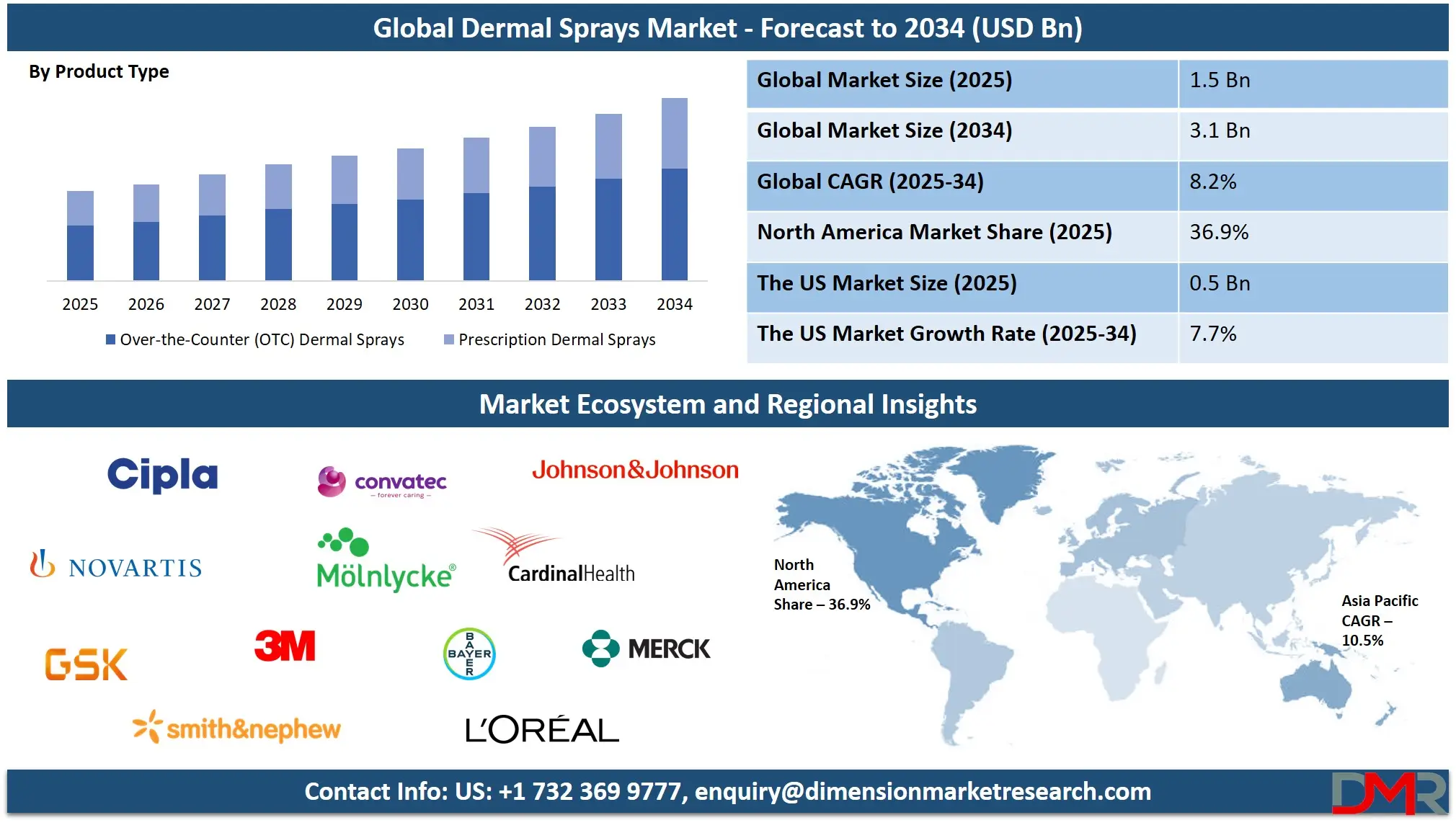
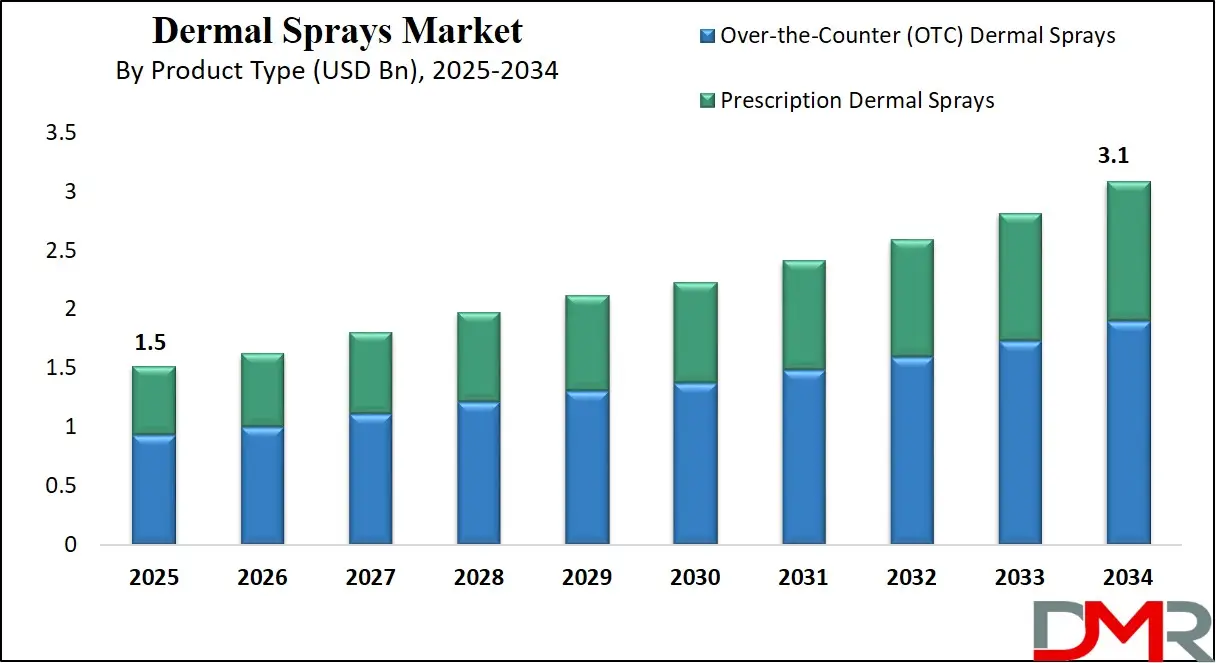
The Global Dermal Sprays Market size is projected to reach USD 1.5 billion in 2025, growing at a compound annual growth rate of 8.2% to USD 3.1 billion in 2034.
ℹ
To learn more about this report –
Download Your Free Sample Report Here
Dermal sprays refer to topical pharmaceutical and consumer healthcare formulations designed for direct application on the skin to deliver therapeutic, preventive, or cosmetic benefits. These products include prescription and over-the-counter sprays used for pain relief, wound care, dermatological conditions, and anti-infective purposes. Dermal sprays utilize technologies such as aerosol delivery, pump mechanisms, foam dispersion, and metered dosing to ensure uniform application, rapid absorption, and minimized contamination. Their significance lies in improving treatment adherence, reducing direct skin contact, and enabling targeted drug delivery across medical and personal care segments.
Growth across this market is influenced by rising incidences of skin disorders, sports injuries, and chronic pain conditions, alongside increasing consumer preference for non-invasive and easy-to-use topical solutions. Advancements in formulation science, including alcohol-free bases, controlled-release compounds, and skin-friendly excipients, are enhancing product effectiveness and safety. The integration of pharmaceutical-grade sprays into home-care routines reflects a broader shift toward self-medication and preventive dermatology.
ℹ
To learn more about this report –
Download Your Free Sample Report Here
Recent years have seen the market transition from basic pain and antiseptic applications to multifunctional sprays addressing inflammation, infection control, and long-term skin health. Increased regulatory clarity for topical drug delivery systems and expanding e-commerce penetration are reshaping accessibility. Sustainability-focused packaging, precision dosing, and hybrid cosmetic-therapeutic products are emerging as influential directions shaping market evolution.
The US Dermal Sprays Market
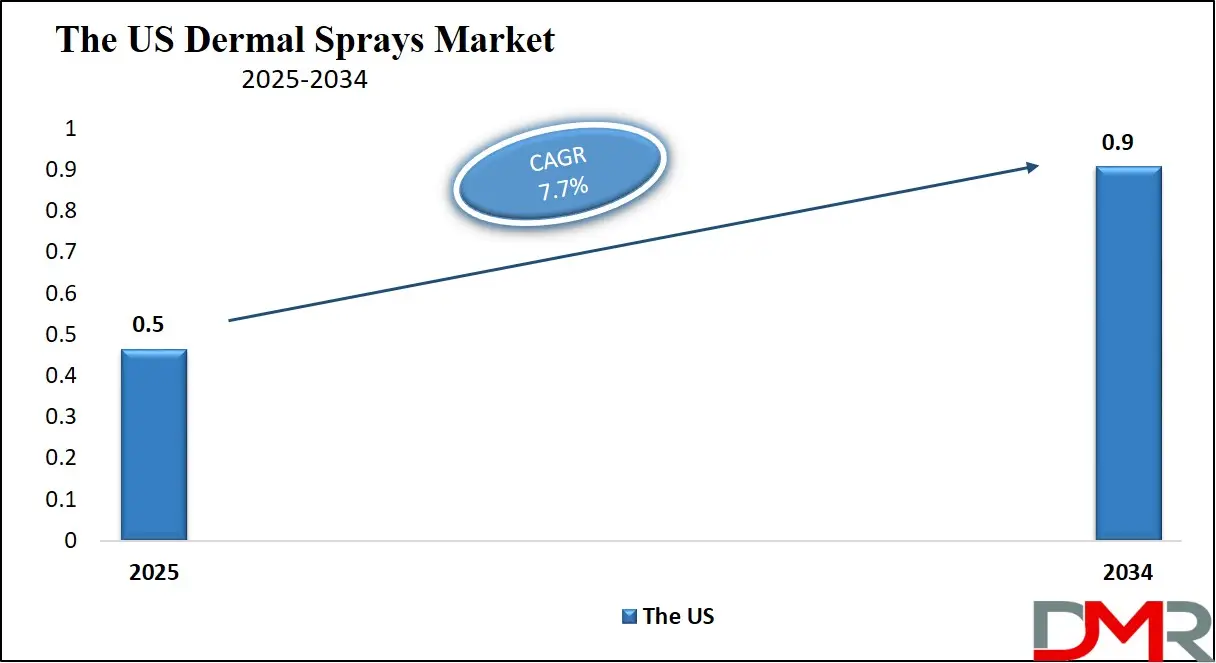
The US Dermal Sprays Market size is projected to reach USD 500 million in 2025 at a compound annual growth rate of 7.7% over its forecast period.
ℹ
To learn more about this report –
Download Your Free Sample Report Here
The United States market is driven by high healthcare spending, widespread availability of OTC products, and strong adoption of topical pain management solutions. A mature pharmaceutical ecosystem supports continuous innovation in dermal spray formulations, particularly for pain relief, wound care, and dermatological conditions. Government bodies such as the FDA play a critical role in ensuring safety and efficacy, which strengthens consumer trust and accelerates adoption. The presence of advanced retail pharmacy networks and growing online pharmacy usage further supports market expansion. Rising sports participation, aging demographics, and preference for non-oral pain therapies continue to reinforce demand across both prescription and consumer segments.
Europe Dermal Sprays Market
Europe Dermal Sprays Market size is projected to reach USD 375 million in 2025 at a compound annual growth rate of 7.9% over its forecast period.
Europe demonstrates steady growth supported by stringent regulatory frameworks and strong emphasis on patient safety and sustainability. Regional initiatives promoting skin health awareness and responsible self-medication are positively influencing adoption. Policies aligned with the European Green Deal are encouraging eco-friendly packaging and low-emission aerosol technologies. Dermatology and wound care remain leading application areas, supported by aging populations and high incidence of chronic skin conditions. Innovation is particularly strong in non-steroidal and natural-ingredient sprays, with countries such as Germany, France, and the UK leading in formulation development and clinical dermatology practices.
Japan Dermal Sprays Market
Japan Dermal Sprays Market size is projected to reach USD 75 million in 2025 at a compound annual growth rate of 8.0% over its forecast period.
Japan’s market benefits from advanced pharmaceutical manufacturing, strong urban healthcare infrastructure, and a rapidly aging population. Demand is highest for pain management, wound care, and dermatological sprays suited for sensitive skin. Government support for innovative drug-delivery systems and preventive healthcare is accelerating adoption. High consumer awareness and preference for hygiene-friendly, contactless application methods favor spray formats. However, regulatory complexity and pricing pressures present challenges. Opportunities lie in premium formulations, metered-dose technologies, and home-care solutions tailored to elderly consumers and outpatient treatment models.
Dermal Sprays Market: Key Takeaways
- Market Growth: The Dermal Sprays Market size is expected to grow by USD 1.5 billion, at a CAGR of 8.2%, during the forecasted period of 2026 to 2034.
- By Product Type: The OTC dermal sprays segment is anticipated to get the majority share of the Dermal Sprays Market in 2025.
- By End User: The home care/ individual consumers segment is expected to get the largest revenue share in 2025 in the Dermal Sprays Market.
- Regional Insight: North America is expected to hold a 36.9% share of revenue in the Global Dermal Sprays Market in 2025.
- Use Cases: Some of the use cases of Dermal Sprays include pain management, wound treatment and more.
Dermal Sprays Market: Use Cases
- Pain Management: Dermal sprays are widely used for localized muscle and joint pain relief, offering rapid absorption and reduced systemic side effects compared to oral analgesics.
- Sports Injury Care: Athletes and physiotherapy clinics rely on sprays for quick application during acute injuries, inflammation management, and post-exercise recovery.
- Wound Treatment: Antiseptic dermal sprays are used for cuts, abrasions, and burns, providing uniform coverage and reducing infection risks without direct contact.
- Dermatological Disorders: Conditions such as eczema, psoriasis, and dermatitis benefit from spray formulations that minimize irritation and ensure even dosing.
- Anti-infective Applications: Antibacterial and antifungal sprays support infection control in both clinical and home-care environments.
- Elderly Home Care: Spray formats simplify medication administration for patients with mobility or dexterity limitations.
- Consumer Skin Care: Moisturizing and anti-itch sprays are increasingly adopted for daily skin maintenance and allergy relief.
Stats & Facts
- World Health Organization reports over 1.9 billion people globally affected by skin conditions in 2024.
- U.S. Centers for Disease Control and Prevention states musculoskeletal pain affects nearly 58% of adults in 2024.
- European Medicines Agency indicates topical drug approvals increased by 14% in 2024.
- Japan Ministry of Health reports a 12% rise in topical analgesic consumption in 2024.
- OECD data shows OTC healthcare product spending grew by 9.1% in 2024.
- U.S. FDA notes aerosol and spray dosage forms account for over 22% of topical approvals in 2025.
- WHO estimates wound care demand to rise at 6.8% annually through 2025.
- European Commission highlights 18% growth in sustainable pharmaceutical packaging adoption in 2024.
- Japan Statistics Bureau reports senior population exceeded 29% in 2025.
- CDC data indicates sports-related injuries surpassed 30 million cases in the U.S. during 2024.
Market Dynamic
Driving Factors in the Dermal Sprays Market
Rising Demand for Non-Invasive Treatment Solutions
The growing preference for non-invasive, easy-to-administer treatments is a major driver shaping the dermal sprays market. Consumers increasingly favor topical solutions that avoid injections or oral medications, reducing systemic side effects and improving compliance. Dermal sprays provide quick relief, precise application, and hygienic usage, which aligns with modern healthcare expectations. The shift toward home-based care and self-management of minor conditions further amplifies demand. Additionally, increased awareness of skin health and pain management solutions supports broader adoption across age groups and clinical settings.
Advancements in Spray Formulation Technologies
Technological progress in formulation science significantly contributes to market growth. Innovations such as metered-dose delivery, foam-based dispersions, and alcohol-free compositions enhance product safety and effectiveness. These advancements improve drug stability, skin penetration, and patient comfort. Pharmaceutical manufacturers are increasingly investing in research to develop multi-functional sprays combining analgesic, anti-inflammatory, and antimicrobial properties. Such innovation strengthens differentiation, expands therapeutic applications, and drives adoption in both prescription and OTC segments.
Restraints in the Dermal Sprays Market
Regulatory Complexity and Compliance Costs
Strict regulatory requirements governing topical pharmaceuticals can restrain market growth. Compliance with safety, labeling, and efficacy standards often increases development timelines and operational costs for manufacturers. Regulatory variations across regions further complicate global product launches. Smaller companies may struggle to meet these requirements, limiting innovation and competition. Additionally, reformulation requirements due to ingredient restrictions or environmental concerns can delay commercialization and affect profit margins.
Product Misuse and Limited Consumer Awareness
Despite convenience, improper use of dermal sprays can reduce treatment effectiveness or cause adverse reactions. Limited consumer understanding regarding dosage, application frequency, and suitability for specific conditions poses challenges. Inconsistent labeling standards and lack of professional guidance for OTC products may contribute to misuse. This can impact consumer trust and lead to cautious adoption, particularly for prescription-strength formulations.
Opportunities in the Dermal Sprays Market
Expansion in Home-Care and Geriatric Applications
The growing elderly population presents significant opportunities for dermal spray manufacturers. Spray formats simplify medication administration for individuals with limited mobility or chronic conditions. Home-care settings increasingly rely on easy-to-use topical solutions, supporting long-term demand. Tailored formulations for sensitive or aging skin further enhance market potential, particularly in developed economies.
Sustainable and Eco-Friendly Packaging Innovations
Rising environmental awareness is creating opportunities for sustainable spray technologies. Manufacturers investing in recyclable containers, low-propellant aerosols, and refillable systems can gain competitive advantage. Regulatory incentives and consumer preference for environmentally responsible products support adoption. Sustainability-driven differentiation is expected to play a critical role in future market expansion.
Trends in the Dermal Sprays Market
Growth of OTC Dermal Sprays
OTC dermal sprays are gaining popularity due to increasing self-medication trends and improved consumer access. Retail pharmacies and online platforms support widespread availability, while brand trust and convenience drive repeat purchases. This trend supports volume growth and encourages product diversification across pain relief, wound care, and skin maintenance categories.
Integration of Digital Health and Smart Packaging
Digitalization is influencing the market through smart packaging and QR-enabled product information. These tools improve usage guidance, track adherence, and enhance consumer engagement. Integration with telehealth services further strengthens the role of dermal sprays in modern treatment pathways.
Impact of Artificial Intelligence in Dermal Sprays Market
- Formulation Optimization: AI accelerates compound selection and stability testing for improved spray performance.
- Predictive Demand Forecasting: Machine learning models improve inventory and supply-chain efficiency.
- Quality Control Automation: AI-driven inspection systems enhance consistency and compliance.
- Personalized Product Development: Data analytics supports customized formulations based on skin type and condition.
- Regulatory Documentation: AI streamlines compliance reporting and approval processes.
- Consumer Behavior Analysis: Algorithms analyze purchasing patterns to refine marketing strategies.
- R&D Cost Reduction: Simulation tools reduce time and cost associated with formulation trials.
Research Scope and Analysis
By Product Type Analysis
Over-the-Counter (OTC) dermal sprays hold approximately 61.4% share in 2025, driven by widespread consumer accessibility and growing self-medication trends. These products are commonly used to manage pain, itching, minor wounds, burns, and skin irritation without the need for medical prescriptions. Strong retail pharmacy penetration, along with rapidly expanding e-commerce and online pharmacy platforms, supports high sales volumes. Rising health awareness and preference for convenient, non-prescription topical solutions further reinforce this segment’s dominance. Manufacturers continue to invest in branding, formulation safety, and multi-benefit claims, while innovation in natural and non-steroidal formulations strengthens long-term consumer trust and repeat usage.
Prescription dermal sprays represent the fastest-growing product type segment, supported by increasing prevalence of dermatological disorders and physician preference for controlled topical drug delivery. These sprays are widely prescribed for conditions such as eczema, psoriasis, dermatitis, and severe inflammatory skin disorders. Growth is driven by rising usage in hospitals, specialty clinics, and dermatology practices where treatment accuracy and efficacy are critical. Advances in both steroidal and non-steroidal formulations have improved therapeutic outcomes while minimizing side effects. Ongoing clinical trials, expanding regulatory approvals, and increasing focus on targeted therapy are expected to steadily enhance market penetration over the forecast period.
By Formulation Analysis
Aerosol sprays account for 48.9% share in 2025, making them the dominant formulation within the dermal sprays market due to their ability to deliver uniform dispersion and consistent coverage over affected skin areas. Aerosol sprays are widely preferred in pain management and wound care applications, as they allow quick, contactless application, reducing the risk of contamination. Continuous technological advancements aimed at lowering propellant emissions and improving eco-friendly packaging have strengthened acceptance amid environmental regulations. High familiarity among consumers, healthcare professionals, and pharmacists further supports adoption, particularly in OTC pain relief and antiseptic spray categories.
Metered dose sprays represent the fastest-growing formulation segment, driven by their ability to deliver precise and controlled dosages with minimal wastage. These sprays are increasingly adopted in prescription applications where dosing accuracy is essential for therapeutic effectiveness and safety. Innovations in valve systems, spray nozzles, and advanced packaging designs have enhanced reliability, consistency, and patient compliance. Metered dose sprays are gaining traction in dermatological and anti-inflammatory treatments, especially in hospital and specialty clinic settings. Growing regulatory emphasis on dose accuracy and patient safety continues to accelerate growth for this technology.
By Therapeutic Application Analysis
Pain management holds a 39.7% share in 2025, positioning it as the leading therapeutic application for dermal sprays. The high prevalence of musculoskeletal disorders, arthritis, sports injuries, and chronic pain conditions significantly drives demand. Dermal sprays are favored for pain relief due to rapid absorption, localized action, and avoidance of systemic side effects associated with oral medications. Their convenience and portability make them widely used across sports medicine, physiotherapy, and home care environments. Aging populations and increasing participation in physical activities further reinforce the sustained demand for pain management dermal sprays globally.
Wound care represents a rapidly expanding therapeutic segment as awareness around hygiene, infection prevention, and effective wound management continues to rise. Dermal sprays used for cuts, abrasions, and burns offer non-contact application, reducing the risk of contamination and improving patient comfort. The increasing incidence of chronic wounds, particularly among elderly and diabetic populations, supports strong growth. Spray formats enable even coverage and faster healing, making them suitable for both clinical settings and home care use. Growing adoption in emergency care, first-aid kits, and outpatient treatments further accelerates market expansion.
By Distribution Channel Analysis
Retail pharmacies account for 44.2% share in 2025, making them the leading distribution channel for dermal sprays. Their dominance is driven by widespread accessibility, strong consumer trust, and the availability of both prescription and OTC products. Pharmacist recommendations play a key role in influencing purchasing decisions, particularly for pain relief, antiseptic, and anti-itch sprays. Retail pharmacies also benefit from strong brand visibility, impulse purchasing, and established supply chains. Expansion of pharmacy chains and in-store healthcare services continues to support steady sales growth across developed and emerging markets.
Online pharmacies and e-commerce platforms represent the fastest-growing distribution channel, supported by increasing digital adoption and preference for convenient purchasing options. Consumers benefit from competitive pricing, home delivery, and easy access to product information. The expansion of telehealth services and digital prescriptions has further strengthened online sales of dermal sprays, particularly for repeat-use products. Improved logistics, subscription models, and mobile health applications continue to enhance customer engagement. This channel is especially attractive to younger consumers and urban populations, driving accelerated growth globally.
By End User Analysis
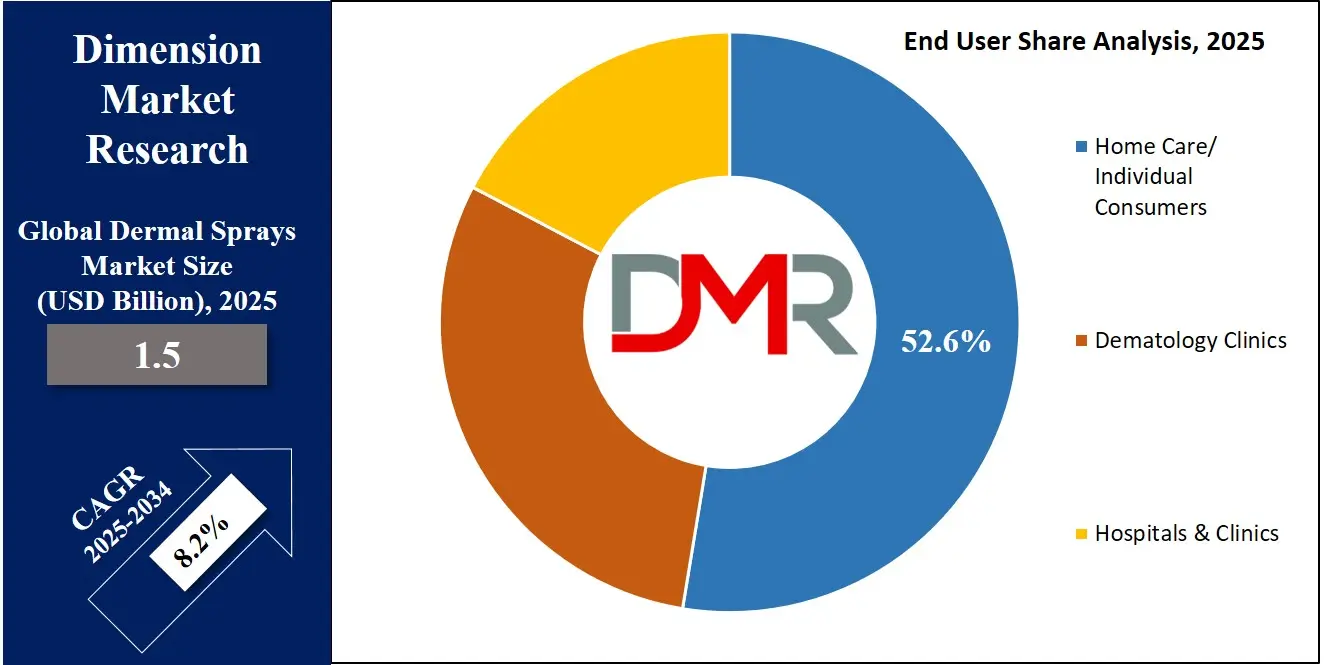
Home care and individual consumers hold a 52.6% share in 2025, making this the dominant end-user segment. Growth is supported by rising self-treatment trends, increasing awareness of topical therapies, and the convenience of spray-based applications. Dermal sprays are widely used for minor injuries, pain relief, skin conditions, and preventive care in home settings. Aging populations managing chronic conditions further strengthen demand, as spray formats reduce physical effort and improve ease of use. The availability of OTC products and online purchasing options continues to reinforce this segment’s leadership.
ℹ
To learn more about this report –
Download Your Free Sample Report Here
Hospitals and clinics represent a steadily growing end-user segment, driven by increasing outpatient treatments and preference for hygienic, contactless application methods. Dermal sprays are commonly used in emergency care, wound management, dermatology, and post-operative treatment due to their efficiency and reduced cross-contamination risks. Clinical adoption is supported by improved formulation safety and dosing precision. Rising patient volumes, shorter hospital stays, and greater emphasis on outpatient care models contribute to consistent demand. Hospitals also play a key role in driving prescription spray usage and professional endorsement.
The Dermal Sprays Market Report is segmented on the basis of the following:
By Product Type
- Prescription Dermal Sprays
- Over-the-Counter (OTC) Dermal Sprays
- Pain Relief
- Antiseptic & Wound Care
- Anti-itch & Allergy
- Skin Care & Moisturizing
By Formulation
- Aerosol Sprays
- Pump Sprays
- Foam Sprays
- Metered Dose Sprays
By Therapeutic Application
- Pain Management
- Muscle & Joint Pain
- Sports Injuries
- Wound Care
- Dermatological Disorders
- Eczema
- Psoriasis
- Dermatitis
- Anti-infective
By Distribution Channel
- Retail Pharmacies
- Hospital Pharmacies
- Online Pharmacies / E-commerce
By End User
- Hospitals & Clinics
- Home Care / Individual Consumers
- Dermatology Clinics
Regional Analysis
Leading Region in the Dermal Sprays Market
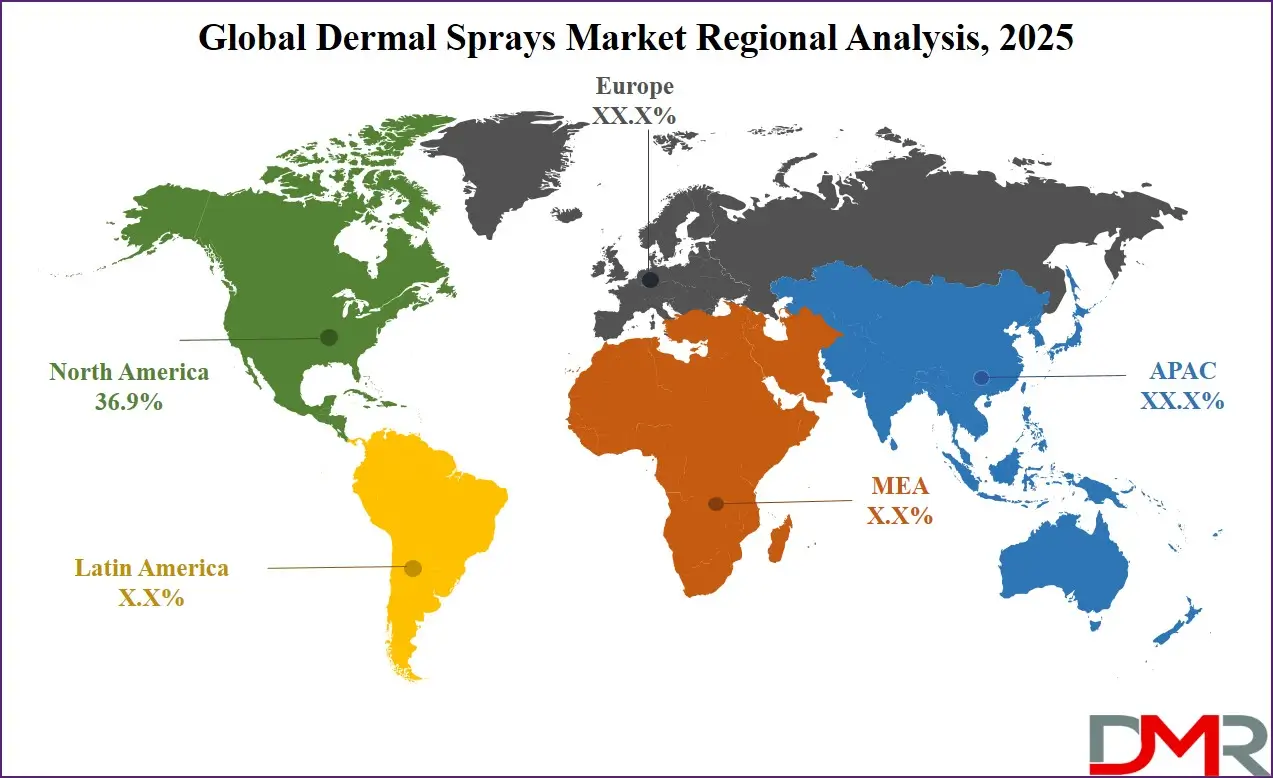
North America holds approximately 36.9% market share in 2025, positioning it as the leading region in the dermal sprays market. This dominance is supported by advanced healthcare infrastructure, a strong culture of OTC product usage, and high levels of consumer awareness regarding topical treatments. Favorable regulatory clarity and well-established approval frameworks encourage continuous product innovation. Extensive retail and online pharmacy networks further improve accessibility across the region. Rising participation in sports, increasing incidence of musculoskeletal disorders, and a growing aging population continue to drive sustained demand for pain management, wound care, and dermatological dermal sprays.
ℹ
To learn more about this report –
Download Your Free Sample Report Here
Fastest Growing Region in the Dermal Sprays Market
Asia-Pacific represents the fastest-growing region in the dermal sprays market, driven by expanding healthcare access, rising disposable incomes, and growing awareness of topical and preventive treatments. Rapid urbanization and population growth are increasing demand for affordable and convenient healthcare solutions. Government initiatives promoting pharmaceutical manufacturing, local production, and healthcare infrastructure development further support market expansion. Demand for OTC dermal sprays is particularly strong due to cost sensitivity and self-care trends, while increasing dermatological conditions are driving prescription spray adoption. Emerging economies within the region offer significant untapped potential, accelerating overall market growth.
By Region
North America
Europe
- Germany
- The U.K.
- France
- Italy
- Russia
- Spain
- Benelux
- Nordic
- Rest of Europe
Asia-Pacific
- China
- Japan
- South Korea
- India
- ANZ
- ASEAN
- Rest of Asia-Pacific
Latin America
- Brazil
- Mexico
- Argentina
- Colombia
- Rest of Latin America
Middle East & Africa
- Saudi Arabia
- UAE
- South Africa
- Israel
- Egypt
- Rest of MEA
Competitive Landscape
The dermal sprays market is characterized by moderate entry barriers, driven by regulatory requirements and formulation expertise. Competitive strategies focus on product differentiation, R&D investment, sustainable packaging, and channel expansion. Companies prioritize portfolio diversification and technological innovation to maintain positioning. Strategic partnerships with pharmacies and digital platforms support market penetration, while continuous improvement in formulation safety and efficacy strengthens competitive advantage.
Some of the prominent players in the global Dermal Sprays are:
- 3M
- Johnson & Johnson
- Smith & Nephew
- ConvaTec Group
- Mölnlycke Health Care
- Medline Industries
- Laboratoires Urgo
- Paul Hartmann
- Cardinal Health
- Reckitt Benckiser
- Galderma
- Bayer
- GlaxoSmithKline
- L’Oréal
- Hisamitsu Pharmaceutical
- Bausch Health Companies
- Cipla
- Glenmark Pharmaceuticals
- Merck & Co.
- Novartis
- Other Key Players
Recent Developments
- In August 2025, Revance announced the launch of two new PanOxyl® products, expanding its acne care portfolio with salicylic acid–based solutions: PanOxyl Acne Gel Wash and PanOxyl Daytime Invisible Patches. The Acne Gel Wash features a gentle, fragrance-free gel-to-foam formula with 2% salicylic acid to cleanse pores, control oil, and reduce acne, blackheads, and whiteheads. Enriched with green tea extract, betaine, zinc PCA, allantoin, blue algae, and aloe, it helps soothe skin, reduce redness, and support hydration.
- In April 2025, AVITA Medical announced the U.S. commercial launch of Cohealyx™, a collagen-based dermal matrix co-developed with Regenity Biosciences. Designed to support cellular migration and revascularization, Cohealyx helps prepare an optimal wound bed, with early integration observed within seven days in initial studies. The product strengthens AVITA’s wound care portfolio alongside the RECELL® System and PermeaDerm®, supporting a two-stage approach to managing full-thickness wounds and potentially improving clinical outcomes.
Report Details
| Report Characteristics |
| Market Size (2025) |
USD 1.5 Bn |
| Forecast Value (2034) |
USD 3.1 Bn |
| CAGR (2025–2034) |
8.2% |
| The US Market Size (2025) |
USD 0.5 Bn |
| Historical Data |
2019 – 2024 |
| Forecast Data |
2026 – 2034 |
| Base Year |
2024 |
| Estimate Year |
2025 |
| Report Coverage |
Market Revenue Estimation, Market Dynamics, Competitive Landscape, Growth Factors and etc. |
| Segments Covered |
By Product Type (Prescription Dermal Sprays, Over-the-Counter (OTC) Dermal Sprays), By Formulation (Aerosol Sprays, Pump Sprays, Foam Sprays, Metered Dose Sprays), By Therapeutic Application (Pain Management, Wound Care, Dermatological Disorders, Anti-infective), By Distribution Channel (Retail Pharmacies, Hospital Pharmacies, Online Pharmacies / E-commerce), By End User (Hospitals & Clinics, Home Care / Individual Consumers, Dermatology Clinics) |
| Regional Coverage |
North America – The US and Canada; Europe – Germany, The UK, France, Russia, Spain, Italy, Benelux, Nordic, & Rest of Europe; Asia-Pacific – China, Japan, South Korea, India, ANZ, ASEAN, Rest of APAC; Latin America – Brazil, Mexico, Argentina, Colombia, Rest of Latin America; Middle East & Africa – Saudi Arabia, UAE, South Africa, Turkey, Egypt, Israel, & Rest of MEA |
| Prominent Players |
3M, Johnson & Johnson, Smith & Nephew, ConvaTec Group, Mölnlycke Health Care, Medline Industries, Laboratoires Urgo, Paul Hartmann, Cardinal Health, Reckitt Benckiser, Galderma, Bayer, GlaxoSmithKline, L’Oréal, Hisamitsu Pharmaceutical, Bausch Health Companies, Cipla, Glenmark Pharmaceuticals, Merck & Co., Novartis, and Other Key Players |
| Purchase Options |
We have three licenses to opt for: Single User License (Limited to 1 user), Multi-User License (Up to 5 Users) and Corporate Use License (Unlimited User) along with free report customization equivalent to 0 analyst working days, 3 analysts working days and 5 analysts working days respectively. |
Frequently Asked Questions
How big is the Global Dermal Sprays Market?
▾ The Global Dermal Sprays Market size is expected to reach USD 1.5 billion by 2025 and is projected to reach USD 3.1 billion by the end of 2034.
Which region accounted for the largest Global Dermal Sprays Market?
▾ North America is expected to have the largest market share in the Global Dermal Sprays Market, with a share of about 36.9% in 2025.
How big is the Dermal Sprays Market in the US?
▾ The US Dermal Sprays market is expected to reach USD 0.5 billion by 2025.
Who are the key players in the Dermal Sprays Market?
▾ Some of the major key players in the Global Dermal Sprays Market include 3M, Bayers, Merck and others.
What is the growth rate in the Global Dermal Sprays Market?
▾ The market is growing at a CAGR of 8.2 percent over the forecasted period.