What is the Diced Cartilage in Rhinoplasty Procedures Market Size?
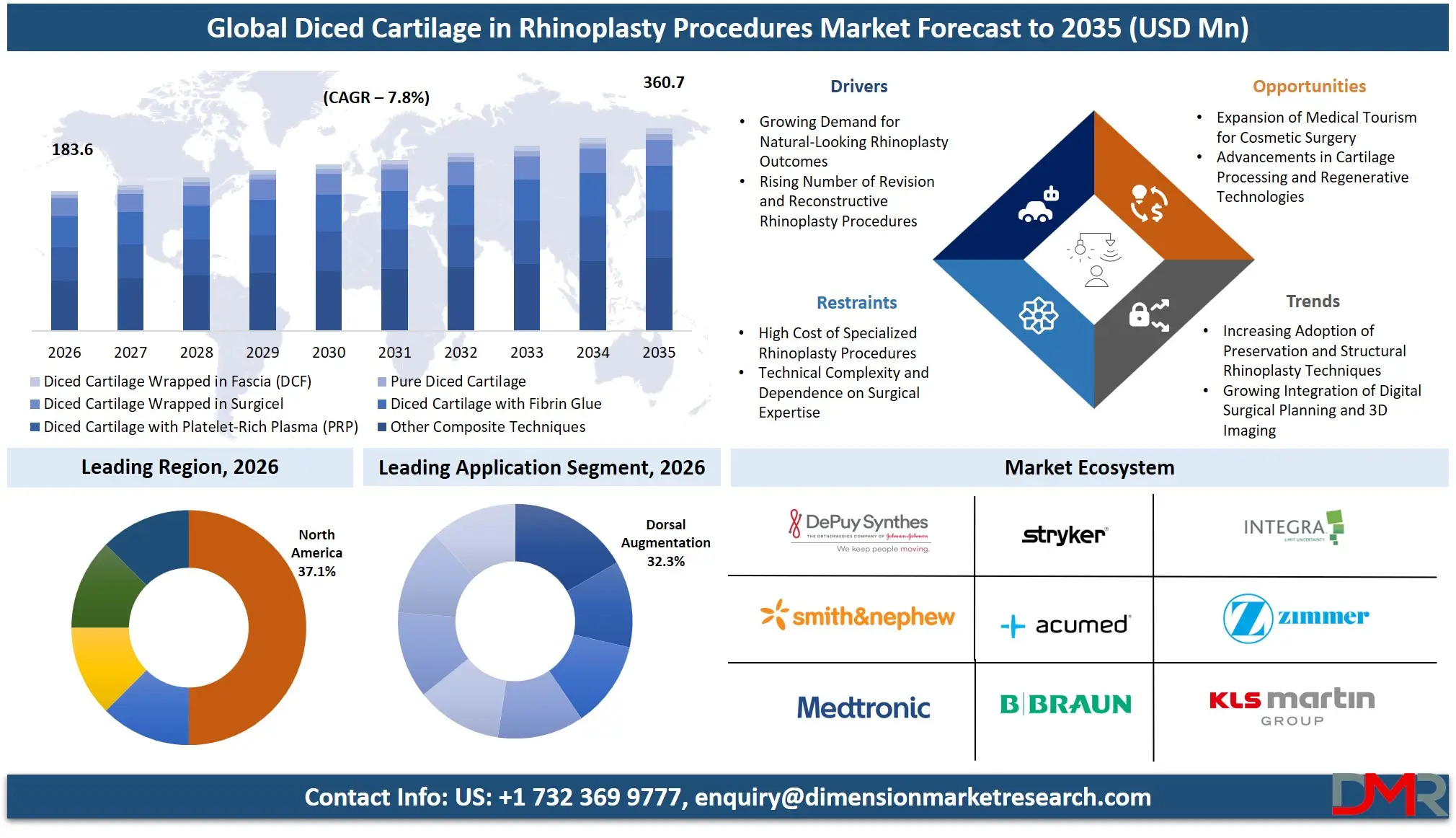
The Global Diced Cartilage in Rhinoplasty Procedures Market is expected to reach a value of USD 183.6 million in 2026, and it is further anticipated to grow to USD 360.7 million by 2035, registering a CAGR of 7.8% during the forecast period.
ℹ
To learn more about this report –
Download Your Free Sample Report Here
The market for diced cartilage in rhinoplasty is experiencing substantial growth, driven by the global increase in aesthetic consciousness and the rising prevalence of revision rhinoplasty. This market encompasses a range of techniques where autologous, allogeneic, or xenogeneic cartilage is finely diced and used as a graft material for nasal reshaping and reconstruction. The shift towards techniques that offer superior aesthetic outcomes, such as the elimination of graft edge visibility and the creation of smooth, natural-looking contours, is a primary catalyst. Diced cartilage grafts, particularly when combined with fascia or fibrin glue, are becoming the gold standard for dorsal augmentation, providing a malleable and palpable result that overcomes the limitations of solid block grafts. The market's expansion is further fueled by advancements in graft preparation techniques and a growing preference for minimally traumatic open and closed rhinoplasty approaches that maximize graft viability and patient recovery.
The US Diced Cartilage in Rhinoplasty Procedures Market
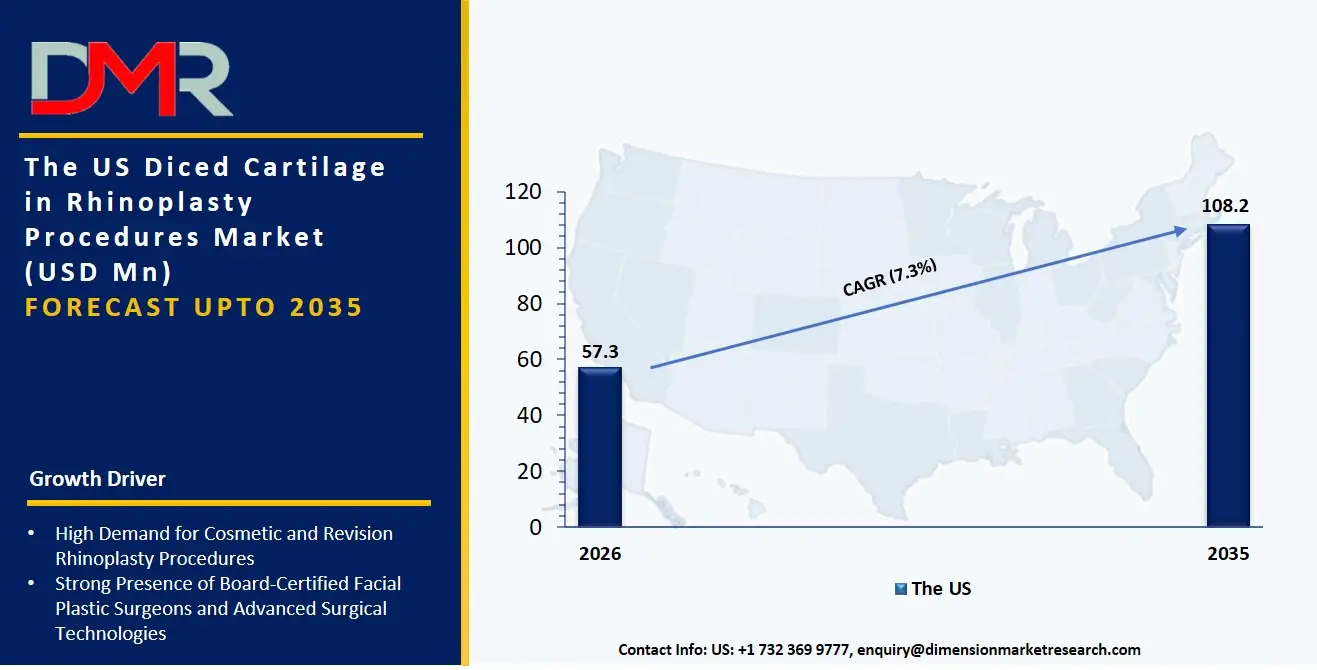
The US Diced Cartilage in Rhinoplasty Procedures Market is projected to reach USD 57.3 million in 2026 and is forecasted to grow at a significant CAGR of 37.1%, culminating in a value of USD 108.2 million by 2035.
ℹ
To learn more about this report –
Download Your Free Sample Report Here
The United States remains the dominant and most advanced market for diced cartilage techniques, underpinned by a high volume of cosmetic and revision rhinoplasty procedures. The market is characterized by a strong preference for autologous costal cartilage grafts, especially in complex revision cases where septal cartilage is depleted. The US is at the forefront of innovation, with leading plastic surgeons and specialty clinics pioneering the use of platelet-rich plasma (PRP) and fibrin glue composites to enhance graft survival and integration. Furthermore, the sophisticated regulatory landscape and high patient expectations are driving demand for specialized Dorsal Camouflage and Saddle Nose Deformity Reconstruction applications, solidifying the market's value.
The Europe Diced Cartilage in Rhinoplasty Procedures Market
The Europe Diced Cartilage in Rhinoplasty Procedures Market is estimated to be valued at USD 53.8 million in 2026 and is further anticipated to reach USD 103.5 million by 2035, growing at a CAGR of 7.5%. The market is an established and sophisticated landscape, driven by a strong tradition of facial plastic surgery and a high demand for both primary and revision aesthetic procedures. The market is heavily influenced by stringent medical device regulations, which ensure the high safety and quality of allogeneic graft materials and surgical adjuncts like fibrin glue. European surgeons have been instrumental in popularizing Diced Cartilage Wrapped in Fascia (DCF) techniques, with a particular focus on deep temporal fascia for creating natural dorsal aesthetic lines. Countries like Germany, the UK, and Italy are key hubs where academic and research institutes collaborate with specialty clinics to advance tissue engineering for xenogeneic cartilage scaffolds. This synergy is fostering growth in advanced graft preparation techniques that prioritize biocompatibility and long-term structural stability.
The Japan Diced Cartilage in Rhinoplasty Procedures Market
The Japan Diced Cartilage in Rhinoplasty Procedures Market is projected to be valued at USD 18.4 million in 2026. It is further expected to witness steady growth, holding USD 35.1 million by 2035 at a CAGR of 7.4%. The market is distinct, driven by unique aesthetic ideals that favor subtle, natural-looking dorsal augmentation and tip refinement over dramatic structural changes. The market is typified by a strong clinical preference for autologous sources, particularly auricular and septal cartilage, to minimize donor site morbidity and avoid the visible scarring associated with costal harvest. Japanese surgeons are key opinion leaders in closed rhinoplasty approaches, utilizing diced cartilage injections for precise nasal contour correction. The integration of advanced biomaterials, such as bio-absorbable wraps and stem-cell-enriched composites, is a notable trend. As the population seeks harmonious facial proportions, the demand for revision rhinoplasty and specialized techniques for congenital nasal defect correction is steadily rising.
Key Takeaways
- Market Size & Forecast: The Global Diced Cartilage in Rhinoplasty Procedures market is projected to reach USD 183.6 million in 2026, expanding steadily to USD 360.7 million by 2035, fueled by the rising preference for revision rhinoplasty and the superior aesthetic outcomes of diced cartilage grafts over monolithic implants.
- Growth Rate & Outlook: Global market growth is expected at a CAGR of 7.8%, propelled by a surge in medical tourism for cosmetic procedures and continuous innovation in graft preparation techniques that enhance chondrocyte viability and graft take.
- Primary Growth Drivers: Key forces include the high rate of revision rhinoplasty due to previous implant complications, the increasing global demand for ethnic rhinoplasty requiring meticulous dorsal augmentation, and the proven efficacy of diced cartilage in providing natural, edge-free contouring.
- Key Market Trends: Major trends include the adoption of "liquid rhinoplasty" concepts using injectable diced cartilage composites, the rise of Platelet-Rich Plasma (PRP) as a biological graft enhancer, and a shift towards using allogeneic cartilage to eliminate donor site harvest.
- By Cartilage Source Analysis: The Autologous Cartilage segment, particularly Costal (Rib) Cartilage, is expected to dominate due to its abundant volume and strength, making it indispensable for major reconstructive and revision procedures. However, Allogeneic Cartilage is gaining traction for primary rhinoplasty to avoid donor site morbidity.
- By Application Analysis: Dorsal Augmentation remains the most prevalent application, as diced cartilage is the material of choice for creating a smooth, straight bridge. Saddle Nose Deformity Reconstruction and Dorsal Camouflage are high-growth applications, addressing complex post-traumatic and post-surgical irregularities.
- Regional Leadership: North America is poised to lead this market with a 38.7% market share in 2026, attributed to its high healthcare expenditure, concentration of board-certified facial plastic surgeons, and robust medical infrastructure that supports advanced surgical techniques.
What is the Diced Cartilage in Rhinoplasty Procedures?
Diced Cartilage in Rhinoplasty Procedures refers to a specialized segment of facial plastic surgery where cartilage, harvested from the patient or a donor source, is meticulously diced into small fragments to form a moldable graft. Unlike solid silicone implants or carved block cartilage, the diced cartilage technique is an advanced procedural approach focused entirely on creating a living, natural-feeling, and seamlessly integrated nasal framework. This involves a spectrum of Graft Preparation Techniques where the cartilage particles are either wrapped in fascia (DCF), mixed with fibrin glue, or combined with PRP to create an injectable or malleable paste. With a high percentage of revision rhinoplasty patients presenting with contour deformities, professional surgical expertise is required to apply these techniques for dorsal augmentation, tip refinement, and the intricate reconstruction of saddle nose deformities, translating surgical skill into predictable, superior aesthetic outcomes.
Use Cases
- Complex Revision Rhinoplasty Post-Implant Removal: Specialty clinics use DCF techniques with autologous costal cartilage to reconstruct the dorsal aesthetic lines in patients who have had previous silicone or Medpor implants removed, providing a natural, complication-free alternative.
- Ethnic Rhinoplasty Dorsal Augmentation: Surgeons utilize Pure Diced Cartilage wrapped in deep temporal fascia for Asian and African American patients seeking dorsal height and projection without the visible edges or long-term bone resorption issues associated with synthetic implants.
- Saddle Nose Deformity Reconstruction: Reconstructive rhinoplasty teams employ diced cartilage with fibrin glue to fill severe dorsal saddling caused by autoimmune disease or trauma, creating a custom-molded graft that restores both function and a natural nasal profile.
- Minimally Invasive Tip Refinement: In closed rhinoplasty, surgeons inject a paste of finely diced auricular cartilage and PRP to precisely augment and contour the nasal tip, avoiding external scars and reducing recovery time.
How AI is Transforming the Diced Cartilage in Rhinoplasty Procedures Market?
Advanced technologies are beginning to redefine the diced cartilage market by enhancing surgical precision and graft predictability. In graft preparation and surgical planning, AI-powered 3D morphing and simulation tools allow surgeons to model the exact post-operative dorsal line, pre-calculating the precise volume of diced cartilage required, thereby minimizing graft waste and optimizing aesthetic outcomes. Meanwhile, regenerative medicine is driving the Graft Preparation Technique segment, where the use of Platelet-Rich Plasma (PRP) and stromal vascular fraction (SVF) enriched composites is gaining momentum. These biological additives are shown to improve the viability and integration of diced cartilage by promoting chondrocyte proliferation and reducing resorption rates.
In consulting and pre-operative assessment, AI-driven analysis of patient demographics is helping specialty clinics identify the most suitable cartilage source and technique for specific ethnic phenotypes, customizing procedural plans. Furthermore, the development of bio-printed scaffolds as a substitute for Surgicel or fascia wraps is a nascent trend, aimed at enhancing the structural integrity and biological remodeling of pure diced cartilage. This innovation is expected to significantly impact applications like saddle nose deformity reconstruction, where a stable, long-lasting scaffold is critical.
Market Dynamics
Key Drivers in the Global Diced Cartilage in Rhinoplasty Procedures Market
Growing Demand for Natural-Looking Rhinoplasty Outcomes
The increasing preference for natural facial aesthetics is a major driver of the diced cartilage in rhinoplasty procedures market. Patients increasingly seek subtle nasal enhancements that preserve facial harmony rather than dramatic alterations. Diced cartilage provides smooth contouring, excellent tissue integration, and reduced visibility of graft edges, making it highly suitable for aesthetic refinement. Rising awareness of advanced rhinoplasty techniques through social media, improved patient education, and greater acceptance of cosmetic surgery have further accelerated demand. Plastic surgeons continue to adopt diced cartilage grafting because of its predictable outcomes, long-term stability, and ability to deliver personalized results with fewer postoperative complications.
Rising Number of Revision and Reconstructive Rhinoplasty Procedures
The growing volume of revision and reconstructive rhinoplasty procedures significantly supports market expansion. Patients requiring correction of previous unsuccessful surgeries, trauma-related deformities, congenital abnormalities, or nasal structural defects often require reliable graft materials that provide durable support. Diced cartilage offers excellent flexibility, contour adaptability, and lower risks of warping compared to larger cartilage grafts. Increasing road accidents, facial trauma cases, and congenital nasal deformity corrections have expanded the need for advanced reconstructive techniques. Continuous improvements in surgical expertise and graft preparation methods have strengthened surgeon confidence in using diced cartilage across increasingly complex rhinoplasty procedures worldwide.
Restraints in the Global Diced Cartilage in Rhinoplasty Procedures Market
High Cost of Specialized Rhinoplasty Procedures
The relatively high cost associated with advanced rhinoplasty procedures remains a significant restraint for market growth. Harvesting autologous cartilage, preparing diced grafts, and performing technically demanding surgeries require experienced surgeons, specialized equipment, and longer operating times. These factors increase overall treatment expenses, limiting accessibility in price-sensitive markets. In many developing countries, cosmetic rhinoplasty is not covered by health insurance, making patients responsible for the full procedure cost. Financial constraints discourage many individuals from opting for premium grafting techniques despite their clinical advantages, thereby restricting broader market penetration across emerging healthcare systems.
Technical Complexity and Dependence on Surgical Expertise
Successful diced cartilage grafting requires advanced surgical skills and extensive clinical experience, limiting its widespread adoption. Improper graft preparation or inaccurate placement can lead to contour irregularities, graft migration, asymmetry, or the need for revision surgery. Surgeons must possess specialized expertise in cartilage harvesting, graft handling, and nasal reconstruction techniques to achieve optimal outcomes. Limited availability of highly trained facial plastic surgeons, particularly in developing regions, restricts procedure volumes. The steep learning curve associated with advanced rhinoplasty techniques continues to present challenges for new practitioners entering the field, thereby slowing broader clinical adoption.
Growth Opportunities in the Global Diced Cartilage in Rhinoplasty Procedures Market
Expansion of Medical Tourism for Cosmetic Surgery
The rapid growth of medical tourism presents significant opportunities for the diced cartilage rhinoplasty market. Countries such as Turkey, South Korea, Thailand, India, and Brazil have become leading destinations for cosmetic surgery due to affordable treatment costs, internationally trained surgeons, and advanced healthcare infrastructure. Patients increasingly travel abroad seeking high-quality rhinoplasty procedures that incorporate advanced grafting techniques. Growing investments in accredited cosmetic surgery centers, improved postoperative care, and attractive medical tourism packages continue to increase international patient inflow. This expanding cross-border demand creates substantial growth potential for specialized rhinoplasty service providers globally.
Advancements in Cartilage Processing and Regenerative Technologies
Ongoing innovations in regenerative medicine and cartilage processing techniques offer strong long-term opportunities for market growth. The integration of platelet-rich plasma (PRP), fibrin glue, tissue engineering, and biologically enhanced graft preparation methods is improving graft survival, healing, and long-term structural stability. Research into bioengineered cartilage substitutes and regenerative biomaterials may further reduce donor-site limitations while enhancing surgical outcomes. Continuous technological advancements are enabling surgeons to deliver more personalized and minimally invasive procedures. These innovations are expected to increase clinical adoption and expand treatment possibilities across both aesthetic and reconstructive rhinoplasty applications.
Trends in the Global Diced Cartilage in Rhinoplasty Procedures Market
Increasing Adoption of Preservation and Structural Rhinoplasty Techniques
Modern rhinoplasty is increasingly shifting toward preservation and structural techniques that emphasize maintaining native nasal anatomy while achieving aesthetic enhancement. Diced cartilage grafting complements these approaches by providing smooth contour correction without excessive tissue removal. Surgeons increasingly prioritize long-term structural integrity, improved airflow, and natural appearance rather than aggressive reshaping. This evolving philosophy has increased the use of precisely prepared cartilage grafts in both primary and revision procedures. Growing surgeon education, specialized rhinoplasty training programs, and international clinical collaborations continue to accelerate the adoption of preservation-focused surgical techniques worldwide.
Growing Integration of Digital Surgical Planning and 3D Imaging
The adoption of digital planning technologies is transforming rhinoplasty procedures across leading cosmetic surgery centers. Three-dimensional facial imaging, computer-assisted surgical planning, and digital simulation software allow surgeons to accurately assess nasal anatomy, plan graft placement, and communicate expected outcomes with patients before surgery. These technologies improve procedural precision, reduce revision rates, and enhance patient satisfaction. As healthcare providers increasingly invest in digital surgical workflows and artificial intelligence-assisted planning tools, the demand for advanced grafting techniques such as diced cartilage implantation is expected to rise alongside improved surgical predictability and personalized treatment planning.
Research Scope and Analysis
The Global Diced Cartilage in Rhinoplasty Procedures Market is segmented by Cartilage Source including Autologous Cartilage, Allogeneic Cartilage, and Xenogeneic Cartilage, Graft Preparation Technique, Procedure Type, Surgical Approach, Application, End User including Specialty Cosmetic & Plastic Surgery Clinics, Hospitals, Ambulatory Surgical Centers, ENT Clinics, and Academic & Research Institutes.
ℹ
To learn more about this report –
Download Your Free Sample Report Here
By Cartilage Source Analysis
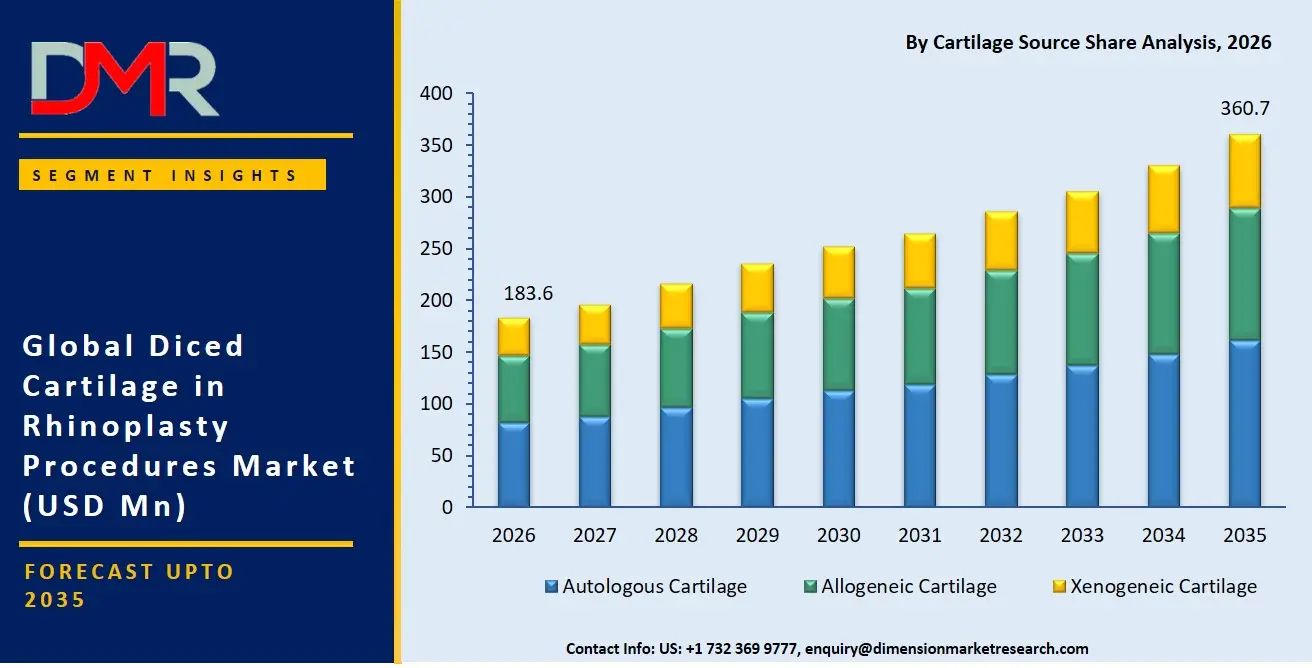
Autologous cartilage is projected to dominate the global diced cartilage in rhinoplasty procedures market because it offers superior biocompatibility, negligible risk of immune rejection, and excellent long-term stability. Surgeons widely prefer harvesting cartilage from the patient's septum, rib, or ear to achieve natural contouring and predictable aesthetic outcomes.
ℹ
To learn more about this report –
Download Your Free Sample Report Here
It remains the gold standard for both primary and revision rhinoplasty, particularly in complex reconstruction cases where graft longevity is essential. The absence of disease transmission risk, combined with high patient acceptance and established surgical protocols, further strengthens its market leadership. Continuous advancements in graft harvesting and preparation techniques also reinforce the widespread adoption of autologous cartilage across global rhinoplasty procedures.
By Graft Preparation Technique Analysis
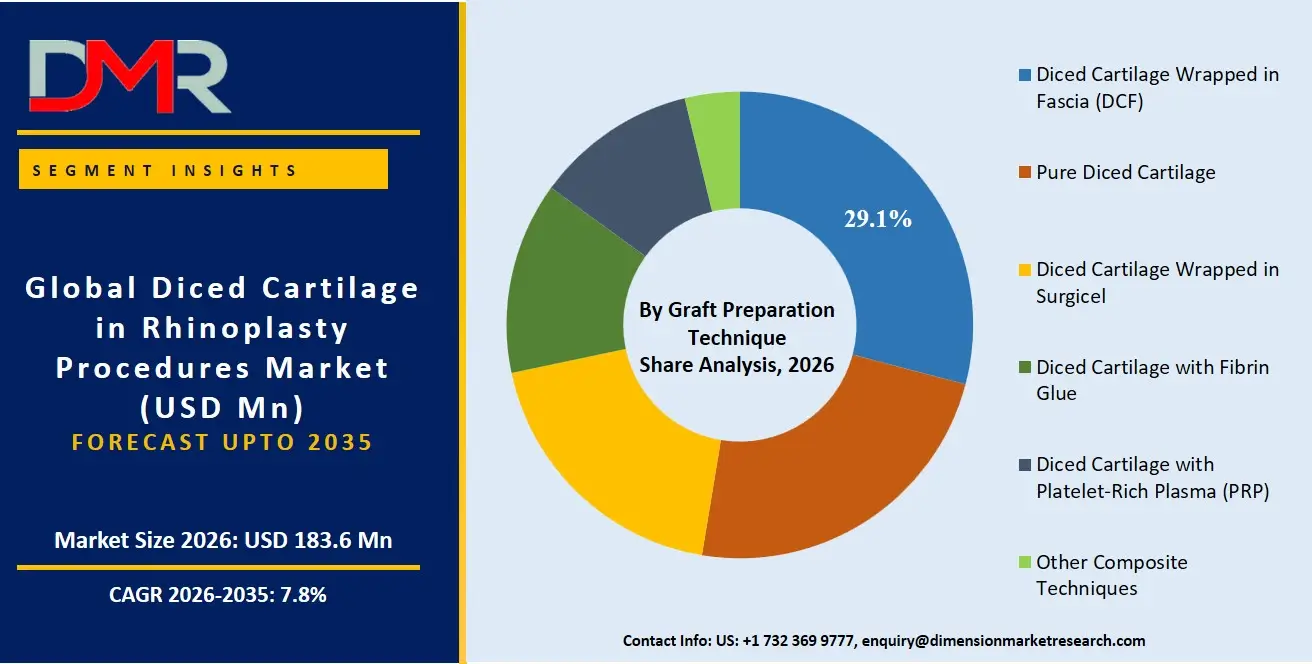
Diced Cartilage Wrapped in Fascia (DCF) is poised to be the leading graft preparation technique due to its excellent structural support, smooth contouring, and reduced visibility of graft irregularities. Wrapping diced cartilage within autologous fascia enhances graft stability while improving integration with surrounding tissues. Plastic surgeons frequently select this technique for dorsal augmentation because it provides a natural appearance and minimizes complications such as graft migration or palpability. Its proven long-term clinical outcomes, high patient satisfaction, and versatility in both cosmetic and reconstructive rhinoplasty have made DCF the preferred approach, particularly among experienced facial plastic and reconstructive surgeons worldwide.
By Procedure Type Analysis
Cosmetic (Aesthetic) Rhinoplasty is projected to account for the largest share of the market owing to the growing global demand for facial aesthetic enhancement. Increasing awareness of cosmetic procedures, rising disposable incomes, and expanding medical tourism have significantly boosted elective rhinoplasty volumes. Diced cartilage grafts are widely utilized to create smoother nasal contours, improve dorsal aesthetics, and achieve natural-looking results. The influence of social media, evolving beauty standards, and advancements in minimally invasive surgical techniques have further accelerated procedure demand. High patient preference for personalized aesthetic outcomes continues to position cosmetic rhinoplasty as the dominant application for diced cartilage grafting.
By Surgical Approach Analysis
Open rhinoplasty is poised to dominate the market because it provides surgeons with superior visualization of nasal anatomy and greater precision during graft placement. The external approach allows accurate positioning of diced cartilage grafts, making it especially suitable for complex cosmetic revisions and reconstructive procedures. Surgeons favor this technique for its enhanced control over nasal framework modification and improved symmetry. Although it involves a slightly longer recovery period, the ability to achieve predictable, high-quality outcomes outweighs this limitation. Its widespread adoption among experienced rhinoplasty specialists continues to support its leadership across global surgical practices.
By Application Analysis
Dorsal augmentation is expected to represent the leading application segment as diced cartilage is extensively used to enhance nasal bridge height and create smooth dorsal contours. It is particularly common among patients seeking aesthetic nasal refinement or correction of congenital or traumatic deformities. Diced cartilage provides a natural feel, reduces contour irregularities, and integrates effectively with surrounding tissues, making it an ideal grafting material. The increasing popularity of ethnic rhinoplasty and personalized facial contouring has further expanded demand for dorsal augmentation procedures. Its broad clinical applicability and consistently favorable surgical outcomes reinforce its dominant market position.
By End User Analysis
Specialty cosmetic and plastic surgery clinics are anticipated to dominate the market due to their high concentration of rhinoplasty procedures and specialized surgical expertise. These centers are equipped with advanced surgical technologies, experienced facial plastic surgeons, and customized treatment protocols focused on aesthetic outcomes. Patients often prefer specialized clinics because of personalized care, shorter waiting times, and access to innovative grafting techniques such as diced cartilage applications. The rapid growth of private cosmetic surgery centers, increasing demand for elective facial procedures, and expanding medical tourism have further strengthened their market share, making them the primary end users for diced cartilage rhinoplasty procedures globally.
The Global Diced Cartilage in Rhinoplasty Procedures Market Report is segmented on the basis of the following:
By Cartilage Source
- Autologous Cartilage
- Septal Cartilage
- Costal (Rib) Cartilage
- Auricular (Ear) Cartilage
- Allogeneic Cartilage
- Xenogeneic Cartilage
By Graft Preparation Technique
- Diced Cartilage Wrapped in Fascia (DCF)
- Pure Diced Cartilage
- Diced Cartilage Wrapped in Surgicel
- Diced Cartilage with Fibrin Glue
- Diced Cartilage with Platelet-Rich Plasma (PRP)
- Other Composite Techniques
By Procedure Type
- Cosmetic (Aesthetic) Rhinoplasty
- Primary Rhinoplasty
- Revision Rhinoplasty
- Reconstructive Rhinoplasty
By Surgical Approach
- Open Rhinoplasty
- Closed Rhinoplasty
By Application
- Dorsal Augmentation
- Dorsal Camouflage
- Tip Refinement & Augmentation
- Nasal Contour Correction
- Saddle Nose Deformity Reconstruction
- Post-Traumatic Nasal Reconstruction
- Congenital Nasal Defect Correction
- Others
By End User
- Specialty Cosmetic & Plastic Surgery Clinics
- Hospitals
- Ambulatory Surgical Centers (ASCs)
- ENT Clinics
- Academic & Research Institutes
Regional Analysis
Leading Region by Market Share
ℹ
To learn more about this report –
Download Your Free Sample Report Here
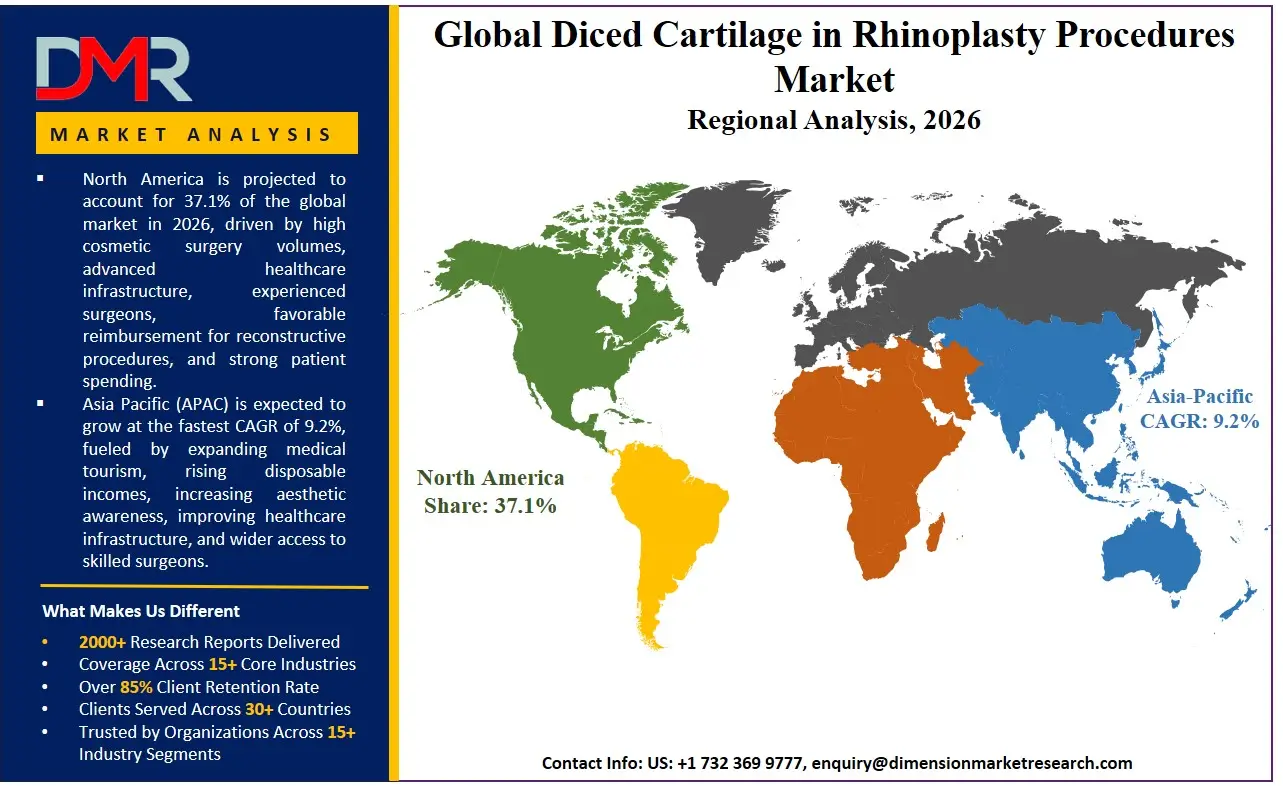
North America is poised to dominate the global diced cartilage in rhinoplasty procedures market, capturing a projected 38.7% market share by the end of 2026. This leadership is driven by the United States, which has the highest volume of rhinoplasty procedures globally and a deeply established culture of facial aesthetic surgery. The region's dominance is attributed to a high concentration of board-certified facial plastic surgeons who are key opinion leaders and early adopters of advanced techniques like DCF and PRP-composites. A strong reimbursement framework for functional and reconstructive rhinoplasty, combined with high discretionary income for purely cosmetic procedures, ensures consistent demand. Moreover, the US is a primary market for FDA-approved allogeneic cartilage products, fueling the shift away from solely autologous sources and making complex dorsal augmentation procedures more accessible to a wider patient base.
Fastest-Growing Regional Market
The Asia-Pacific region is expected to be the most rapidly expanding market, driven by a profound cultural emphasis on facial aesthetics, booming medical tourism, and the widespread demand for ethnic rhinoplasty. In economic powerhouses like South Korea, China, and India, dorsal augmentation and tip refinement using autologous costal cartilage are among the most frequently performed cosmetic procedures. The region is experiencing a significant shift away from synthetic implants due to high complication rates, creating a massive addressable market for revision rhinoplasty with diced cartilage. This rapid growth is further fueled by rising disposable incomes, the strong influence of social media beauty standards, and the proliferation of specialty cosmetic clinics in major urban centers that are aggressively adopting the latest DCF and fibrin glue techniques to attract a discerning clientele.
By Region
North America
Europe
- Germany
- The U.K.
- France
- Italy
- Russia
- Spain
- Benelux
- Nordic
- Rest of Europe
Asia-Pacific
- China
- Japan
- South Korea
- India
- ANZ
- ASEAN
- Rest of Asia-Pacific
Latin America
- Brazil
- Mexico
- Argentina
- Colombia
- Rest of Latin America
Middle East & Africa
- Saudi Arabia
- UAE
- South Africa
- Israel
- Egypt
- Rest of MEA
Competitive Landscape
The competitive landscape of the global diced cartilage in rhinoplasty procedures market is highly specialized and surgeon-driven, with key players ranging from pioneering specialty clinics to manufacturers of innovative surgical biologics and medical devices. The market is characterized by a strong focus on clinical education and the demonstration of superior aesthetic outcomes through publications and global conferences. Key opinion leaders at top academic and research institutes, such as Stanford University, Johns Hopkins, and Yonsei University, are instrumental in shaping global adoption trends by refining techniques like PRP-composites and injectable cartilage. On the commercial front, tissue processing organizations are competing intensely on the safety, sterility, and clinical availability of allogeneic cartilage. Simultaneously, biomedical companies are innovating in the fibrin glue and platelet concentration system markets, providing the essential tools that enable the composite graft preparation techniques. Competitive differentiation is built on a reputation for handling high-volume revision rhinoplasty and training the next generation of surgeons through accredited fellowships.
Some of the prominent players in the Global Diced Cartilage in Rhinoplasty Procedures Market are:
- Stryker Corporation
- Zimmer Biomet Holdings, Inc.
- Johnson & Johnson MedTech (DePuy Synthes)
- Integra LifeSciences Holdings Corporation
- Smith+Nephew plc
- Medtronic plc
- B. Braun SE
- KLS Martin Group
- Acumed LLC
- RTI Surgical Holdings, Inc.
- MTF Biologics
- LifeNet Health
- Arthrex, Inc.
- Cook Medical
- Surgiform Technologies LLC
- Stryker CMF (Craniomaxillofacial Division)
- Collagen Matrix, Inc.
- Baxter International Inc.
- BioHorizons, Inc.
- OssDsign AB
- Other Key Players
Recent Developments
- March 2026: Stryker Corporation expanded its craniomaxillofacial (CMF) surgical portfolio by introducing advanced instrumentation for precision cartilage harvesting and facial reconstruction, supporting improved outcomes in complex rhinoplasty procedures.
- November 2025: Zimmer Biomet Holdings, Inc. strengthened its facial reconstruction offering through enhancements to its CMF fixation systems, enabling improved structural support in reconstructive rhinoplasty surgeries involving cartilage grafting.
- August 2025: KLS Martin Group introduced next-generation rhinoplasty and facial plastic surgery instruments designed to improve the preparation and placement of diced cartilage grafts, enhancing surgical precision and workflow efficiency.
Report Details
| Report Characteristics |
| Market Size (2026) |
USD 183.6 Mn |
| Forecast Value (2035) |
USD 360.7 Mn |
| CAGR (2026–2035) |
7.8% |
| The US Market Size (2026) |
USD 57.3 Mn |
| Historical Data |
2021 – 2025 |
| Forecast Data |
2027 – 2035 |
| Base Year |
2025 |
| Estimate Year |
2026 |
| Segments Covered |
By Cartilage Source, By Graft Preparation Technique, By Procedure Type, By Surgical Approach, By Application, By End User |
| Regional Coverage |
North America – The US and Canada; Europe – Germany, The UK, France, Russia, Spain, Italy, Benelux, Nordic, & Rest of Europe; Asia-Pacific – China, Japan, South Korea, India, ANZ, ASEAN, Rest of APAC; Latin America – Brazil, Mexico, Argentina, Colombia, Rest of Latin America; Middle East & Africa – Saudi Arabia, UAE, South Africa, Turkey, Egypt, Israel, & Rest of MEA |
Frequently Asked Questions
How big is the Global Diced Cartilage in Rhinoplasty Procedures Market?
▾ The Global Diced Cartilage in Rhinoplasty Procedures market is poised to be valued at USD 183.6 million in 2026 and is projected to reach USD 360.7 million by 2035, driven by the global rise in revision rhinoplasty and the technique's ability to provide superior, natural aesthetic outcomes.
What is the CAGR of the Global Diced Cartilage in Rhinoplasty Procedures Market from 2026 to 2035?
▾ The market is expected to grow at a CAGR of 7.8% from 2026 to 2035, reflecting the steady shift from synthetic implants to autologous and allogeneic biological grafts and the adoption of advanced, regenerative composite techniques.
What factors are driving the growth of the Global Diced Cartilage in Rhinoplasty Procedures Market?
▾ Key drivers include the high global rate of revision rhinoplasty due to implant complications, the superior aesthetic and tactile results of diced cartilage grafts, and the increasing demand for ethnic rhinoplasty requiring dorsal augmentation.
Which region held the largest share of the Diced Cartilage in Rhinoplasty Procedures Market in 2026?
▾ North America, specifically the United States, is poised to hold a 38.7% market share in 2026, driven by a high concentration of board-certified facial plastic surgeons and a sophisticated patient base demanding advanced biological graft techniques.
Which region is expected to grow the fastest in the Diced Cartilage in Rhinoplasty Procedures Market?
▾ The Asia-Pacific region is expected to grow the fastest, fueled by booming medical tourism and a significant cultural trend towards dorsal augmentation with autologous materials, leading to a high volume of both primary and revision procedures.
What are the major trends in the Global Diced Cartilage in Rhinoplasty Procedures Market?
▾ Major trends include the rise of injectable diced cartilage composites for closed rhinoplasty, the integration of PRP as a biological enhancer to improve graft viability, and the use of 3D-printed patient-specific molds to precisely shape the final graft.
Who are the key players in the Global Diced Cartilage in Rhinoplasty Procedures Market?
▾ Key players include allograft tissue banks like MTF Biologics and AlloSource, device and biologic manufacturers like Baxter (TISSEEL) and Arthrex (PRP systems), and leading specialty clinics and academic institutes that pioneer and disseminate advanced surgical techniques.
How is the Global Diced Cartilage in Rhinoplasty Procedures Market segmented?
▾ The market is segmented by Cartilage Source, Graft Preparation Technique, Procedure Type, Surgical Approach, Application, and End User, offering a comprehensive analysis of this specialized segment of facial plastic and reconstructive surgery.