Market Overview
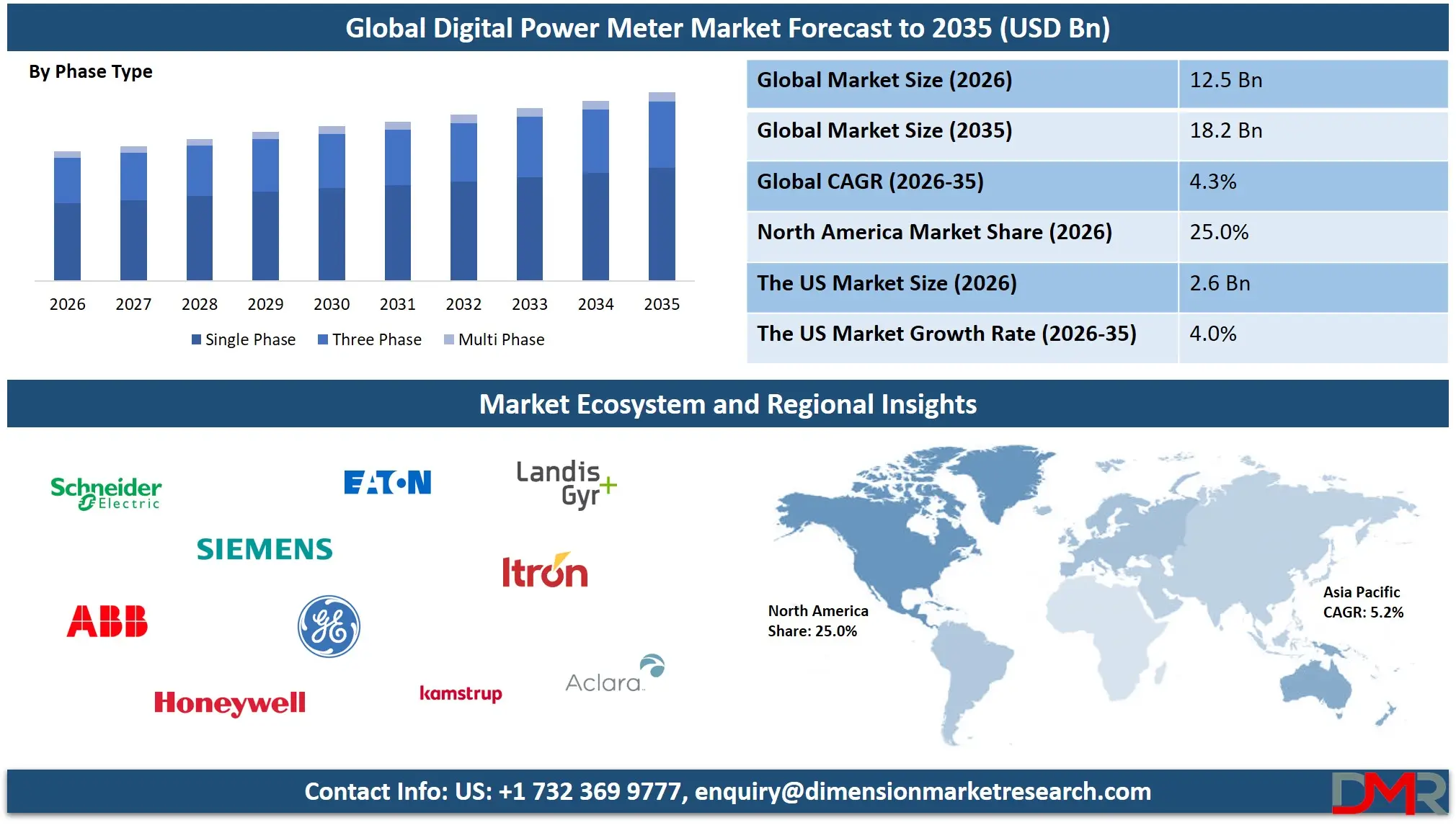
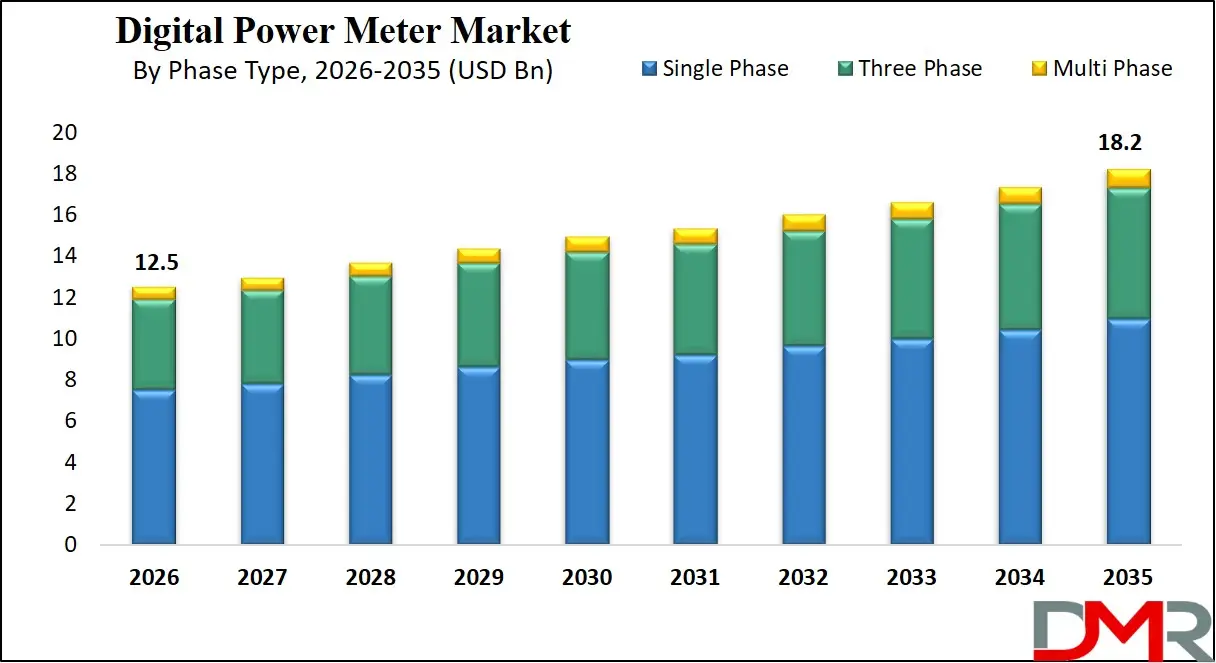
The global Digital Power Meter Market is projected to reach USD 12.5 billion in 2026 and is expected to grow at a CAGR of 4.3% from 2026 to 2035, reaching approximately USD 18.2 billion by 2035, driven by increasing demand for energy monitoring systems, smart grid infrastructure, and advanced electricity metering solutions across residential, commercial, and industrial power management applications.
ℹ
To learn more about this report –
Download Your Free Sample Report Here
A digital power meter is an electronic instrument used to measure and monitor electrical parameters such as voltage, current, power consumption, power factor, frequency, and energy usage within an electrical system. Unlike traditional analog meters, digital power meters use microprocessors and digital signal processing technologies to deliver highly accurate and real time measurements. These devices display readings on digital screens and often include advanced capabilities such as data logging, load analysis, harmonic monitoring, and remote communication. Digital power meters are widely used in residential buildings, commercial facilities, manufacturing plants, and power distribution networks to support efficient energy management, improve power quality monitoring, and help operators understand electricity consumption patterns across connected equipment and systems.
The global Digital Power Meter Market refers to the industry involved in the development, manufacturing, and deployment of digital devices designed to monitor electrical energy usage and power parameters across various sectors. Increasing global demand for energy efficiency, modernization of electrical infrastructure, and the expansion of smart grid technologies are driving the adoption of digital metering solutions worldwide. Utilities and facility operators are integrating digital metering systems to obtain real time energy data, enhance grid reliability, and support demand side management. The growing focus on reducing electricity losses and improving billing accuracy is further encouraging the transition from conventional meters to advanced digital measurement solutions.
ℹ
To learn more about this report –
Download Your Free Sample Report Here
In addition, the market is expanding as industries and commercial establishments increasingly adopt intelligent energy monitoring systems to optimize operational efficiency and control power consumption. Digital power meters play an essential role in energy analytics, load management, and predictive maintenance by providing precise electrical performance insights. Rapid urbanization, increasing electricity demand, and the rise of renewable energy integration are creating new opportunities for advanced power monitoring devices. As digitalization continues to transform the global power infrastructure, digital power meters are becoming critical components of modern energy management systems and smart electrical networks.
The US Digital Power Meter Market
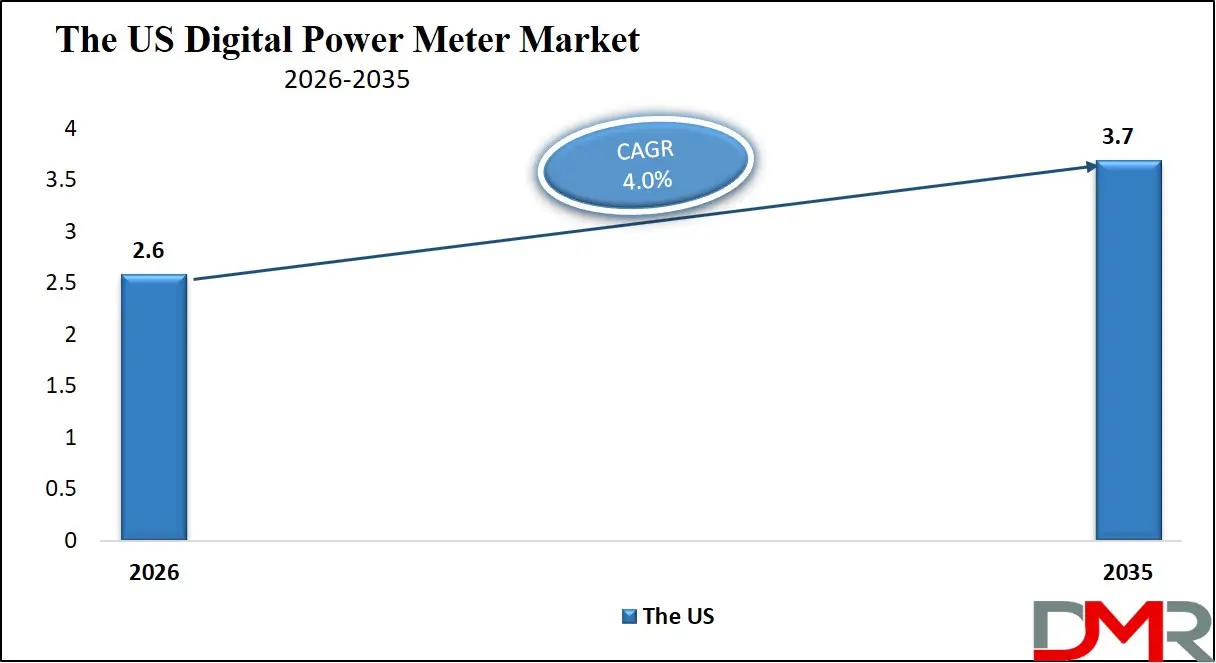
The U.S. Digital Power Meter Market size is expected to reach at USD 2.6 billion in 2026. It is further expected to witness subsequent growth in the upcoming period, holding USD 3.7 billion in 2035 at a CAGR of 4.0%.
ℹ
To learn more about this report –
Download Your Free Sample Report Here
The US Digital Power Meter Market is witnessing steady expansion as utilities and energy providers continue to modernize electrical infrastructure and implement advanced metering systems. Growing deployment of smart grid technologies and automated energy monitoring solutions is increasing the demand for digital power meters across residential and commercial electricity networks. Utilities are focusing on improving billing accuracy, monitoring electricity consumption in real time, and enhancing grid reliability. Increasing adoption of intelligent energy management systems is further supporting the integration of advanced digital metering technologies across various power distribution and monitoring applications in the US.
In addition, rising investments in energy efficiency initiatives and modernization of aging power transmission networks are strengthening the growth of the digital power meter industry in the US. Industrial facilities, commercial buildings, and data centers are increasingly installing advanced electricity metering devices to analyze power usage, monitor load distribution, and improve operational efficiency. Growing emphasis on power quality monitoring and energy analytics is encouraging organizations to deploy digital measurement systems that support better energy management, optimized electricity consumption, and improved overall performance of electrical infrastructure across the country.
The Europe Digital Power Meter Market
The Europe digital power meter market is projected to reach approximately USD 3.3 billion in 2026, expanding at a CAGR of 4.2%. This growth is largely driven by the region's strong focus on energy efficiency, smart grid modernization, and strict regulatory frameworks aimed at reducing energy consumption and carbon emissions. Governments and utilities across Europe are increasingly investing in advanced metering infrastructure and digital monitoring systems to improve power management, optimize energy distribution, and enhance transparency in electricity usage. The rising adoption of renewable energy sources and distributed power generation is also encouraging the deployment of digital power meters that can accurately monitor fluctuating energy flows.
In addition, the expansion of industrial automation, commercial infrastructure, and smart buildings across European economies is further supporting market demand. Digital power meters are widely used in manufacturing facilities, commercial complexes, and residential properties to ensure precise measurement, real-time monitoring, and improved control of electricity consumption. Utilities and energy service providers are also integrating digital metering technologies with IoT-based energy management platforms, enabling predictive maintenance and data-driven decision-making. As a result, the region continues to witness steady growth in the adoption of digital power meters, supported by ongoing technological advancements and supportive energy policies.
The Japan Digital Power Meter Market
The Japan digital power meter market is projected to reach approximately USD 7.5 billion in 2026, expanding at a CAGR of 4.5%. The market growth is primarily supported by the country's strong focus on advanced energy management, smart grid deployment, and modernization of electricity infrastructure. Japan has been actively investing in digital metering technologies to enhance the efficiency and reliability of its power distribution systems. The increasing adoption of smart homes, energy-efficient appliances, and distributed energy resources has also contributed to the demand for accurate and real-time electricity monitoring solutions such as digital power meters.
Furthermore, the rising emphasis on energy conservation and carbon reduction targets is encouraging utilities and industrial facilities to implement advanced power monitoring systems. Digital power meters help organizations track electricity consumption, identify inefficiencies, and optimize overall energy usage. Industrial automation, commercial infrastructure upgrades, and integration of renewable energy sources such as solar power are further strengthening the adoption of digital metering devices across Japan. As utilities continue to expand smart grid projects and energy digitization initiatives, the demand for digital power meters in the country is expected to maintain steady growth over the coming years.
Global Digital Power Meter Market: Key Takeaways
- Market Growth Outlook: The Global Digital Power Meter Market is expected to reach USD 12.5 billion in 2026 and expand to approximately USD 18.2 billion by 2035, registering a CAGR of 4.3% during the forecast period as demand for advanced energy monitoring systems and digital electricity measurement solutions continues to increase worldwide.
- Regional Market Leadership: Asia Pacific is projected to account for about 40.0% of global market revenue in 2026, making it the largest regional market due to strong smart grid investments, expanding power infrastructure, and large scale electricity consumption across emerging economies.
- US Market Expansion: The US Digital Power Meter Market is estimated to reach USD 2.6 billion in 2026 and is projected to grow to USD 3.7 billion by 2035, reflecting a CAGR of 4.0%, supported by modernization of electrical grids and increasing adoption of intelligent power monitoring technologies.
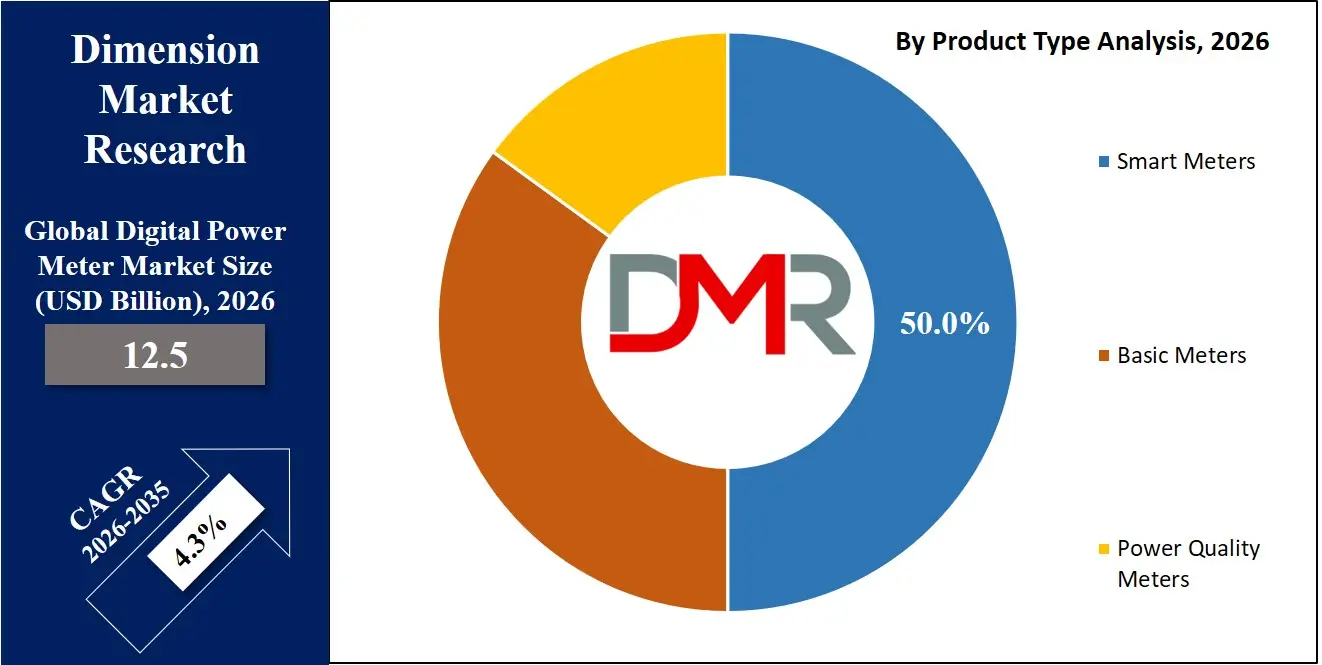
- Product Type Dominance: Within the product category, smart meters are expected to hold approximately 50.0% of the total market share in 2026, driven by increasing deployment of advanced metering infrastructure and the need for real time electricity consumption monitoring.
- End User and System Structure: From an application perspective, single phase meters are anticipated to capture nearly 60.0% of the market, while the residential sector is expected to account for about 50.0% of global demand in 2026, reflecting widespread installation of digital electricity meters in household power distribution networks.
Global Digital Power Meter Market: Use Cases
- Smart Grid Monitoring: Digital power meters support smart grid infrastructure by enabling real time electricity consumption tracking and load monitoring. Utilities use these devices for accurate energy measurement, remote meter reading, and improved grid efficiency across modern power distribution networks.
- Industrial Energy Management: Industries deploy digital power meters to monitor voltage, current, and power usage across manufacturing equipment. These meters help optimize energy consumption, improve power quality monitoring, and support efficient electrical load management in industrial facilities.
- Commercial Building Energy Tracking: Commercial buildings use digital power meters to monitor electricity consumption across offices, malls, and data centers. These devices help facility managers improve energy efficiency, track power usage patterns, and support advanced energy management systems.
- Renewable Energy Integration: Digital power meters are used in renewable energy systems such as solar power installations to track electricity generation and consumption. They enable accurate energy monitoring, grid synchronization, and efficient power distribution within modern renewable energy infrastructure.
Global Digital Power Meter Market: Stats & Facts
- Government of India – Ministry of Power / RDSS Program
- As of June 2025, 3.46 crore smart electricity meters had been installed across India under various government programs.
- Out of these, 2.27 crore smart meters were deployed specifically under the Revamped Distribution Sector Scheme (RDSS).
- The RDSS program approved installation of 20.33 crore smart meters nationwide to modernize electricity distribution infrastructure.
- More than 224 million smart consumer meters have been sanctioned under national smart grid and distribution reforms.
- Around 5.3 million distribution transformer meters have been sanctioned to improve grid monitoring and energy auditing.
- Approximately 206,929 feeder meters were sanctioned to strengthen electricity monitoring across distribution networks.
- National Smart Grid Mission – India
- By early 2023, 103.94 million smart meters had been sanctioned for deployment across the country.
- Around 5.46 million smart meters had already been installed by February 2023.
- Nearly 98.49 million meters were still pending installation during the initial deployment phase.
- About 810,257 smart meters were installed under the Integrated Power Development Scheme.
- Approximately 156,677 meters were deployed under National Smart Grid Mission pilot initiatives.
- Around 162,178 smart meters were installed under the Prime Minister's Development Package for power sector modernization.
- Government Energy Efficiency and Distribution Data – India
- During 2023–2024, around 4.84 million smart consumer meters were installed in India's electricity distribution networks.
- Government electricity reforms target replacement of approximately 250 million conventional meters with smart metering systems.
- As of June 2024, about 11.6 million smart consumer meters had been installed nationwide.
- Around 222 million consumer smart meters were sanctioned across multiple Indian states.
- Over 117 million smart meters had been awarded to vendors for installation.
- Approximately 130,295 feeder smart meters had been awarded for grid monitoring purposes.
- European Energy Regulatory Authorities
- More than 186 million smart electricity meters were installed across European countries by the end of 2023.
- Smart electricity meter penetration in Europe reached about 60 percent of electricity consumers by 2023.
- By 2024, the number of installed smart meters in Europe increased to over 195 million units.
- Around 63 percent of electricity consumers in Europe had smart meters by the end of 2024.
- United Kingdom – Department for Energy Security and Net Zero
- About 60 percent of domestic and business electricity meters in Great Britain were smart meters by 2023.
- Approximately 3.98 million smart meters were reported as faulty or operating outside smart mode during monitoring in 2023.
Global Digital Power Meter Market: Market Dynamic
Driving Factors in the Global Digital Power Meter Market
Growing Demand for Advanced Energy Monitoring
The increasing focus on energy efficiency and electricity consumption optimization is a major factor driving the Digital Power Meter Market. Industries, utilities, and commercial facilities are deploying advanced power monitoring systems to track voltage, current, power factor, and real time electricity usage. Digital metering technologies help organizations analyze load distribution, reduce power losses, and improve operational efficiency. The rising adoption of intelligent energy management systems and smart electrical infrastructure is further accelerating the demand for digital power meters across industrial automation and modern power distribution networks.
Expansion of Smart Grid Infrastructure
Rapid development of smart grid infrastructure worldwide is significantly increasing the demand for digital power meters. Utilities are investing in advanced metering systems to improve grid visibility, enable automated meter reading, and enhance electricity distribution management. Digital power meters support real time energy data collection and remote monitoring, allowing utilities to improve grid reliability and manage peak load demand efficiently. Increasing investments in modern electricity networks and digital power monitoring technologies are strengthening the role of advanced metering devices in next generation power systems.
Restraints in the Global Digital Power Meter Market
High Deployment and Integration Costs
The installation of digital power meters requires significant investment in metering devices, communication infrastructure, and software platforms. Utilities and facility operators often face high capital costs when replacing traditional meters with advanced digital metering systems. Integration with existing electrical infrastructure and energy management systems can also require additional technical upgrades. These financial and operational challenges can slow adoption, particularly in developing regions where power utilities may have limited budgets for large scale smart metering deployments.
Data Security and Privacy Concerns
Digital power meters collect large volumes of electricity consumption data, which can raise concerns related to data privacy and cybersecurity. Utilities and organizations must ensure that energy monitoring systems are protected against unauthorized access and cyber threats. As digital meters become connected through communication networks and cloud based energy management platforms, the risk of data breaches increases. Concerns related to secure data transmission and protection of consumer energy usage information may limit the widespread adoption of advanced digital metering technologies.
Opportunities in the Global Digital Power Meter Market
Integration with Renewable Energy Systems
The rapid growth of renewable energy installations is creating new opportunities for digital power meter deployment. Solar power plants, wind energy projects, and distributed generation systems require accurate electricity measurement to track power generation and grid interaction. Digital metering solutions help monitor energy output, manage grid synchronization, and support efficient power distribution. As renewable energy capacity continues to expand globally, the demand for advanced electricity monitoring devices will increase across modern clean energy infrastructure.
Rising Adoption of Industrial Energy Management
Industries are increasingly implementing energy management systems to monitor power consumption and reduce operational costs. Digital power meters provide real time insights into electrical performance across manufacturing equipment and production facilities. These devices enable predictive maintenance, load balancing, and improved power quality monitoring. Growing emphasis on energy efficiency regulations and sustainable industrial operations is creating strong opportunities for digital power metering solutions across manufacturing, data centers, and heavy industries.
Trends in the Global Digital Power Meter Market
Increasing Adoption of IoT Enabled Power Monitoring
One of the major trends shaping the Digital Power Meter Market is the integration of IoT enabled energy monitoring technologies. Modern digital meters are being equipped with connectivity features that allow real time data transmission to centralized energy management platforms. This enables utilities and facility managers to track electricity usage patterns, detect abnormalities, and optimize power distribution. IoT based power monitoring solutions are transforming traditional metering into intelligent data driven energy management systems.
Growth of Advanced Metering Infrastructure
Advanced metering infrastructure is becoming a key component of modern electricity networks. Utilities are increasingly deploying digital power meters that support automated meter reading, remote diagnostics, and dynamic tariff management. These systems provide detailed energy consumption data that helps improve grid efficiency and enhance electricity demand management. The growing adoption of advanced metering technologies is driving digital transformation across global power distribution systems and smart city energy networks.
Global Digital Power Meter Market: Research Scope and Analysis
By Product Type Analysis
Smart meters are anticipated to dominate the product type segment of the Digital Power Meter Market, capturing around 50.0% of the total market share in 2026. Their dominance is driven by the increasing adoption of advanced metering infrastructure and the growing need for real time electricity consumption monitoring. Utilities and energy providers are increasingly deploying smart metering systems to enable remote meter reading, improve billing accuracy, and enhance grid management capabilities. These devices support two way communication, allowing utilities to collect detailed energy usage data and manage load demand more efficiently. The integration of smart grid technologies, IoT based energy monitoring, and automated power management solutions is further accelerating the adoption of smart digital meters across residential, commercial, and industrial electricity networks.
ℹ
To learn more about this report –
Download Your Free Sample Report Here
Basic meters also continue to play an important role in this market segment, particularly in regions where advanced communication infrastructure is still developing. These digital power meters provide reliable measurement of electrical parameters such as voltage, current, and total energy consumption without advanced connectivity features. They are widely used in small commercial establishments, residential buildings, and local distribution networks where cost efficiency and simple electricity monitoring are primary requirements. Basic digital meters offer improved accuracy compared to traditional analog meters and remain a practical solution for utilities and facility operators seeking dependable power measurement devices with lower installation and operational costs.
By Phase Type Analysis
Single phase meters are anticipated to dominate the phase type segment of the Digital Power Meter Market, capturing around 60.0% of the total market share in 2026. This dominance is largely driven by their extensive use in residential electricity distribution and small commercial establishments. Single phase digital power meters are commonly installed in households, apartments, and small offices to measure electricity consumption and monitor power usage efficiently. The rising number of residential connections, growing urbanization, and expansion of smart metering programs by utilities are significantly contributing to the demand for single phase digital meters. These meters provide accurate energy measurement, support efficient billing systems, and help utilities track electricity consumption across large residential networks.
Three phase meters also represent a significant portion of the market and are primarily used in industrial facilities, large commercial buildings, and heavy power consuming applications. These digital power meters are designed to measure electrical parameters across three phase power systems, which are commonly used for high load equipment and industrial machinery. Manufacturing plants, data centers, shopping complexes, and large infrastructure projects rely on three phase digital meters to monitor load distribution, maintain power quality, and manage electricity consumption more effectively. The increasing growth of industrial operations and commercial infrastructure development continues to support the steady demand for three phase digital power metering solutions.
By Voltage Level Analysis
Low voltage meters are anticipated to dominate the voltage level segment of the Digital Power Meter Market, capturing around 60.0% of the total market share in 2026. This dominance is mainly driven by their widespread deployment across residential buildings, small commercial establishments, and local electricity distribution networks. Low voltage digital power meters are commonly used to measure and monitor electricity consumption at the consumer level, enabling accurate billing and efficient energy monitoring. The rapid expansion of urban housing, increasing electrification, and growing adoption of smart energy management systems are further supporting the demand for low voltage digital metering devices across modern power distribution infrastructure.
Medium voltage meters also represent an important segment of the market, particularly across industrial facilities and large commercial complexes that operate on higher electrical loads. These digital power meters are used to monitor electricity consumption and power quality within medium voltage distribution systems commonly found in manufacturing plants, industrial parks, and large infrastructure projects. They help operators track load performance, monitor voltage stability, and manage energy distribution more effectively across high capacity electrical equipment. Increasing industrialization and rising demand for reliable power monitoring solutions continue to support the adoption of medium voltage digital power meters in advanced electrical networks.
By Installation Type Analysis
Panel mounted digital power meters are anticipated to dominate the installation type segment of the Digital Power Meter Market, capturing around 60.0% of the total market share in 2026. Their dominance is primarily due to their widespread use in electrical control panels, switchboards, and distribution systems across residential, commercial, and industrial facilities. These meters are permanently installed within electrical panels to provide continuous monitoring of voltage, current, power consumption, and overall energy usage. Utilities and facility operators prefer panel mounted digital meters because they offer stable installation, reliable measurement, and easy integration with energy management systems and building power monitoring infrastructure.
Portable digital power meters also represent a notable segment within the market and are commonly used for temporary power measurement, diagnostics, and maintenance activities. These devices are widely used by electrical engineers, technicians, and service providers to analyze power quality, test electrical equipment, and monitor energy consumption during inspections or troubleshooting processes. Portable meters allow flexible measurement across different locations without permanent installation, making them useful for field testing, energy audits, and performance evaluation of electrical systems. Growing demand for mobile power monitoring tools and preventive maintenance solutions is supporting the adoption of portable digital power meters across industrial and commercial environments.
By Communication Technology Analysis
Wireless communication technology is anticipated to dominate the communication technology segment of the Digital Power Meter Market, capturing around 40.0% of the total market share in 2026. The increasing adoption of smart grid systems and advanced metering infrastructure is driving the demand for wireless enabled digital power meters. These meters allow utilities and facility operators to collect real time electricity consumption data through communication networks such as cellular, radio frequency, and Wi-Fi based systems. Wireless connectivity enables remote meter reading, efficient load monitoring, and faster data transmission without the need for extensive cabling. The growing focus on intelligent energy management and digital power monitoring solutions is further supporting the expansion of wireless communication technologies in modern metering systems.
Wired communication technology also holds a significant position in this market segment, particularly in applications where stable and secure data transmission is required. Wired digital power meters commonly use communication protocols such as Ethernet, RS 485, and power line communication to transmit electricity usage data within controlled network environments. These systems are widely deployed in industrial facilities, commercial buildings, and large power distribution networks where reliable connectivity and consistent monitoring are essential. Wired communication meters offer strong data stability and integration with existing energy management platforms, making them suitable for critical infrastructure and large scale electrical monitoring systems.
By End-User Analysis
Residential is anticipated to dominate the end user segment of the Digital Power Meter Market, capturing around 50.0% of the total market share in 2026. This dominance is mainly driven by the large number of household electricity connections and the increasing adoption of digital electricity meters across residential power distribution networks. Utilities are gradually replacing traditional analog meters with digital metering systems to improve billing accuracy and enable better electricity consumption monitoring. Growing urbanization, expansion of residential infrastructure, and government initiatives promoting smart metering programs are further supporting the widespread deployment of digital power meters in homes and apartment complexes.
Commercial applications also represent a significant portion of the market as businesses increasingly adopt advanced electricity monitoring solutions to manage operational energy consumption. Offices, shopping malls, hospitals, hotels, and data centers rely on digital power meters to track electricity usage, monitor load performance, and improve energy efficiency within their facilities. These meters help facility managers analyze consumption patterns, control energy costs, and maintain reliable power distribution across large commercial buildings. Rising demand for energy management systems and sustainable building operations continues to support the adoption of digital power meters across the commercial sector.
The Global Digital Power Meter Market Report is segmented on the basis of the following:
By Product Type
- Smart Meters
- Basic Meters
- Power Quality Meters
By Phase Type
- Single Phase
- Three Phase
- Multi-Phase
By Voltage Level
- Low Voltage
- Medium Voltage
- High Voltage
By Installation Type
- Panel Mounted
- Portable
- Integrated
By Communication Technology
By End-User
- Residential
- Commercial
- Industrial
- Utilities
Impact of Artificial Intelligence in the Global Digital Power Meter Market
Artificial intelligence is increasingly influencing the Global Digital Power Meter Market by enabling smarter and more data driven energy monitoring systems. Modern digital power meters generate large volumes of electricity consumption data, and AI based analytics platforms help utilities and facility operators analyze this data more efficiently. Machine learning algorithms can identify energy usage patterns, forecast electricity demand, and detect abnormalities in voltage, current, and power flow. This improves grid efficiency, enhances load management, and allows utilities to optimize electricity distribution across smart grid infrastructure and advanced energy management networks.
AI is also supporting predictive maintenance and automated energy optimization in modern power systems. By analyzing real time metering data, artificial intelligence can detect potential equipment faults, unusual power consumption behavior, or system inefficiencies before they lead to major operational issues. Utilities and industrial operators can use these insights to improve power quality monitoring, reduce downtime, and enhance the reliability of electrical infrastructure. As digital transformation continues across the global power sector, the integration of AI with digital power meters is helping create more intelligent, efficient, and responsive electricity monitoring and management systems.
Global Digital Power Meter Market: Regional Analysis
Region with the Largest Revenue Share
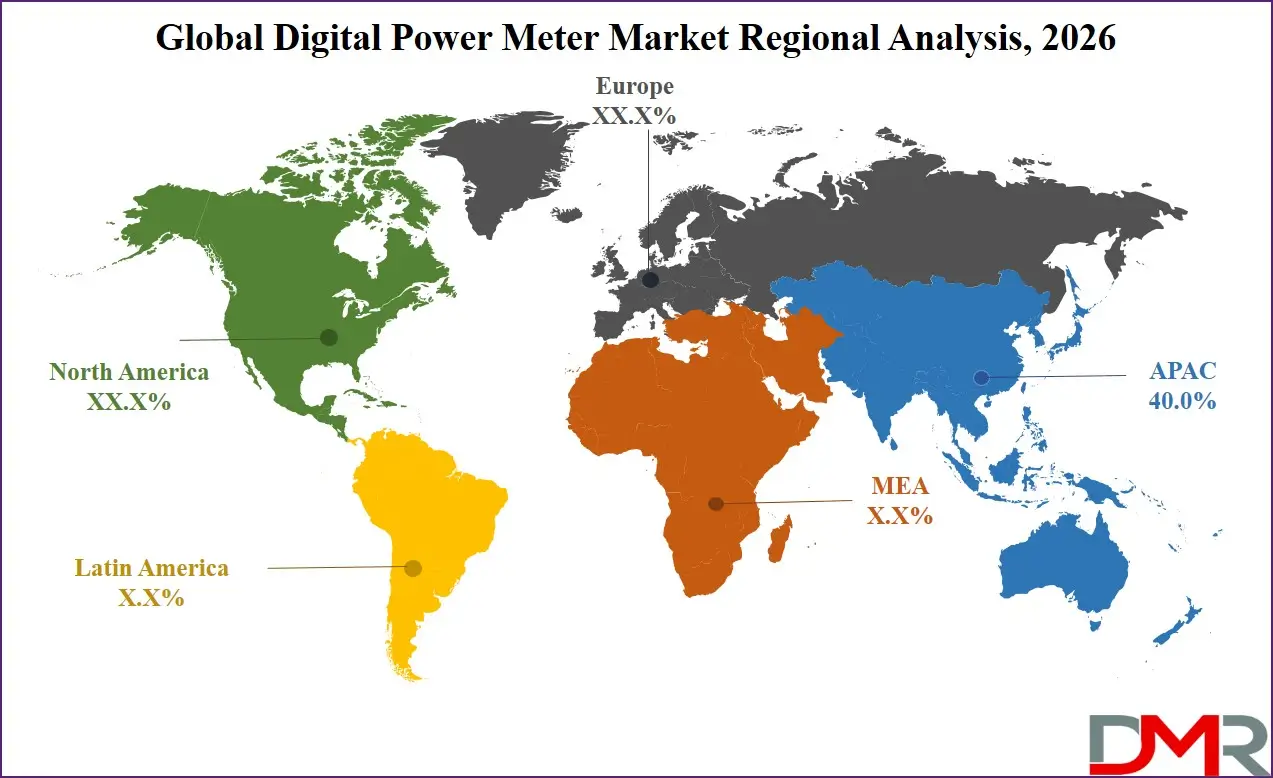
Asia Pacific is anticipated to lead the global Digital Power Meter Market landscape, accounting for around 40.0% of total global market revenue in 2026. The region's dominance is driven by rapid industrialization, expanding urban infrastructure, and increasing electricity demand across major economies such as China, India, Japan, and South Korea. Governments and utilities across the region are actively investing in smart grid development, advanced metering infrastructure, and modern power distribution systems to improve energy efficiency and grid reliability. Additionally, large scale residential electrification, rising commercial construction, and growing adoption of energy management solutions are accelerating the deployment of digital power meters throughout Asia Pacific.
ℹ
To learn more about this report –
Download Your Free Sample Report Here
Region with the Highest CAGR
North America is expected to register the highest CAGR in the Digital Power Meter Market during the forecast period, driven by rapid modernization of electrical infrastructure and increasing adoption of advanced metering technologies. Utilities across the region are investing heavily in smart grid development, automated meter reading systems, and intelligent energy monitoring solutions to improve grid reliability and energy efficiency. The growing presence of data centers, commercial buildings, and industrial automation facilities is also increasing demand for accurate electricity monitoring and power quality management. In addition, supportive government policies promoting energy efficiency and digital transformation of power distribution networks are further accelerating the adoption of digital power meters across the region.
By Region
North America
Europe
- Germany
- The U.K.
- France
- Italy
- Russia
- Spain
- Benelux
- Nordic
- Rest of Europe
Asia-Pacific
- China
- Japan
- South Korea
- India
- ANZ
- ASEAN
- Rest of Asia-Pacific
Latin America
- Brazil
- Mexico
- Argentina
- Colombia
- Rest of Latin America
Middle East & Africa
- Saudi Arabia
- UAE
- South Africa
- Israel
- Egypt
- Rest of MEA
Global Digital Power Meter Market: Competitive Landscape
The global Digital Power Meter Market is characterized by the presence of several established electrical equipment manufacturers and energy technology providers focusing on advanced metering solutions and intelligent power monitoring systems. Companies are investing in product innovation, integrating features such as real time energy monitoring, remote communication capabilities, and advanced power quality analysis to improve operational efficiency and grid management. Market participants are also expanding their portfolios with smart metering technologies that support modern energy management systems and smart grid infrastructure. Increasing demand for accurate electricity measurement across residential, commercial, and industrial sectors continues to encourage technological advancements and global expansion strategies among leading manufacturers in the digital power metering industry.
Some of the prominent players in the Global Digital Power Meter Market are:
- Schneider Electric SE
- Siemens AG
- ABB Ltd.
- Honeywell International Inc.
- Eaton Corporation plc
- General Electric Company
- Landis+Gyr AG
- Itron Inc.
- Kamstrup A/S
- Aclara Technologies LLC
- Sensus USA Inc. (Xylem Inc.)
- Elster Group GmbH
- Jiangsu Linyang Energy Co. Ltd.
- Holley Technology Ltd.
- Iskraemeco d.d.
- Zhejiang Chint Instrument & Meter Co., Ltd.
- Wasion Group Holdings Ltd.
- Secure Meters Ltd.
- Accuenergy Inc.
- Schweitzer Engineering Laboratories, Inc. (SEL)
- Other Key Players
Recent Developments in the Global Digital Power Meter Market
- December 2025: Schneider Electric introduced the One Digital Grid platform, an AI enabled system designed to help utilities modernize grid operations and improve energy management efficiency through integrated digital power monitoring and analytics.
- September 2025: Landis+Gyr divested its EMEA business operations to investment firm AURELIUS as part of a strategic restructuring to strengthen its global smart metering and grid edge technology focus.
- July 2025: Schneider Electric announced the acquisition of the remaining 35% stake in its India joint venture SEIPL, strengthening its presence in energy management technologies and digital power monitoring solutions.
Report Details
| Report Characteristics |
| Market Size (2026) |
USD 12.5 Bn |
| Forecast Value (2035) |
USD 18.2 Bn |
| CAGR (2026–2035) |
4.3% |
| The US Market Size (2026) |
USD 2.6 Bn |
| Historical Data |
2021 – 2025 |
| Forecast Data |
2027 – 2035 |
| Base Year |
2025 |
| Estimate Year |
2026 |
| Report Coverage |
Market Revenue Estimation, Market Dynamics, Competitive Landscape, Growth Factors and etc. |
| Segments Covered |
By Product Type (Smart Meters, Basic Meters, Power Quality Meters), By Phase Type (Single Phase, Three Phase, Multi Phase), By Voltage Level (Low Voltage, Medium Voltage, High Voltage), By Installation Type (Panel Mounted, Portable, Integrated), By Communication Technology (Wireless, Wired, Offline), By End User (Residential, Commercial, Industrial, Utilities) |
| Regional Coverage |
North America – The US and Canada; Europe – Germany, The UK, France, Russia, Spain, Italy, Benelux, Nordic, & Rest of Europe; Asia-Pacific – China, Japan, South Korea, India, ANZ, ASEAN, Rest of APAC; Latin America – Brazil, Mexico, Argentina, Colombia, Rest of Latin America; Middle East & Africa – Saudi Arabia, UAE, South Africa, Turkey, Egypt, Israel, & Rest of MEA |
| Prominent Players |
Schneider Electric SE, Siemens AG, ABB Ltd., Honeywell International Inc., Eaton Corporation plc, General Electric Company, Landis+Gyr AG, Itron Inc., Kamstrup A/S, Aclara Technologies LLC, Sensus USA Inc., Elster Group GmbH, Jiangsu Linyang Energy Co. Ltd., Holley Technology Ltd., Iskraemeco d.d., Zhejiang Chint Instrument & Meter Co., Ltd., Wasion Group Holdings Ltd., Secure Meters Ltd., Accuenergy Inc., Schweitzer Engineering Laboratories, Inc., and other key players. |
| Purchase Options |
We have three licenses to opt for: Single User License (Limited to 1 user), Multi-User License (Up to 5 Users) and Corporate Use License (Unlimited User) along with free report customization equivalent to 0 analyst working days, 3 analysts working days and 5 analysts working days respectively. |
Frequently Asked Questions
How big is the Global Digital Power Meter Market?
▾ The Global Digital Power Meter Market size is estimated to have a value of USD 12.5 billion in 2026 and is expected to reach USD 18.2 billion by the end of 2035.
What is the growth rate in the Global Digital Power Meter Market in 2026?
▾ The market is growing at a CAGR of 4.3% over the forecasted period of 2026.
What is the size of the US Digital Power Meter Market?
▾ The US Digital Power Meter market is projected to be valued at USD 2.6 billion in 2026. It is expected to witness subsequent growth in the upcoming period as it holds USD 3.7 billion in 2035 at a CAGR of 4.0%.
Which region accounted for the largest Global Digital Power Meter Market?
▾ Asia Pacific is expected to have the largest market share in the Global Digital Power Meter Market with a share of about 40.0% in 2026.
Who are the key players in the Global Digital Power Meter Market?
▾ Some of the major key players in the Global Digital Power Meter Market are Schneider Electric SE, Siemens AG, ABB Ltd., Honeywell International Inc., Eaton Corporation plc, General Electric Company, Landis+Gyr AG, Itron Inc., Kamstrup A/S, Aclara Technologies LLC, Sensus USA Inc., Elster Group GmbH, Jiangsu Linyang Energy Co. Ltd, and many others.