Market Overview
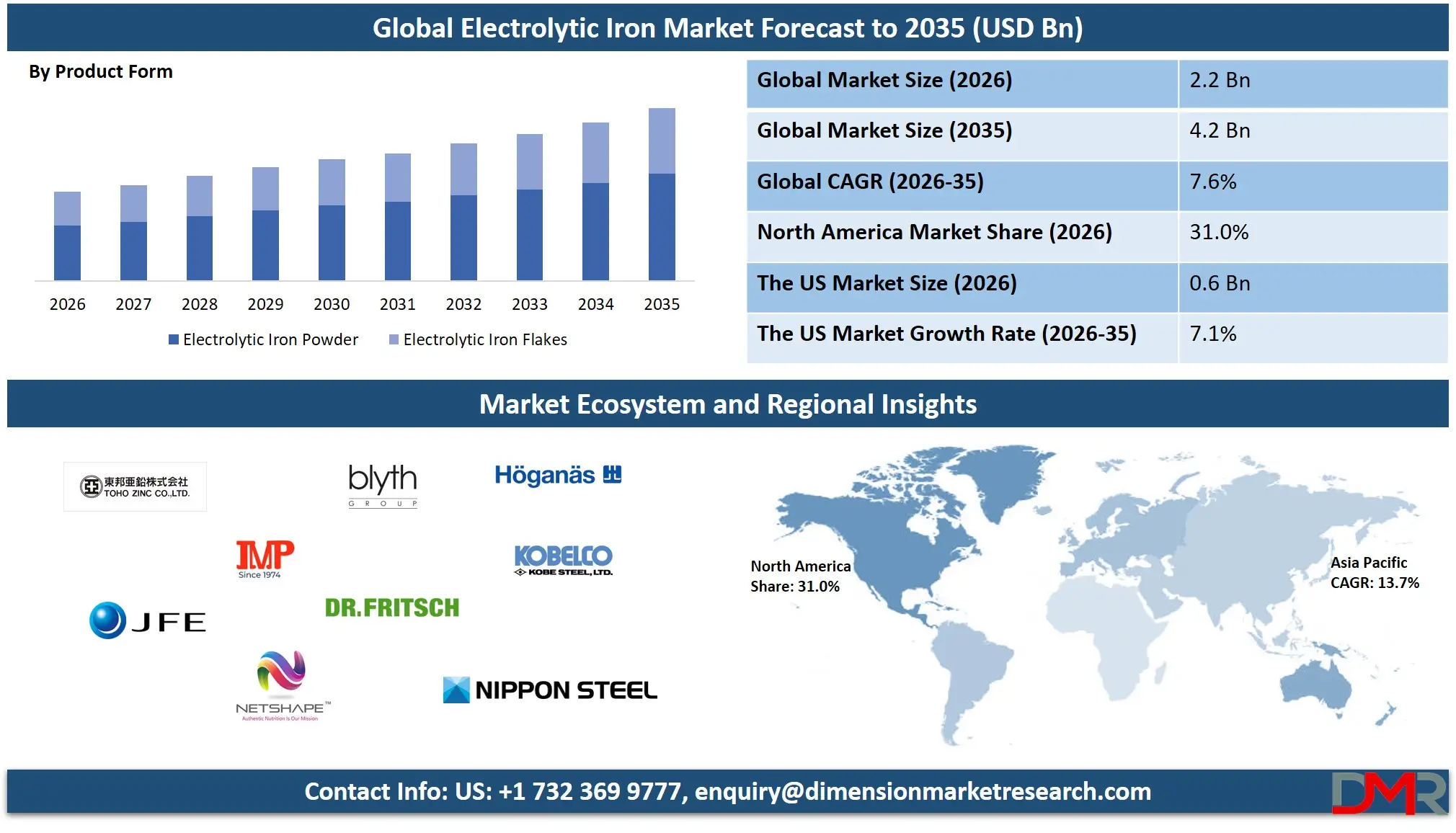
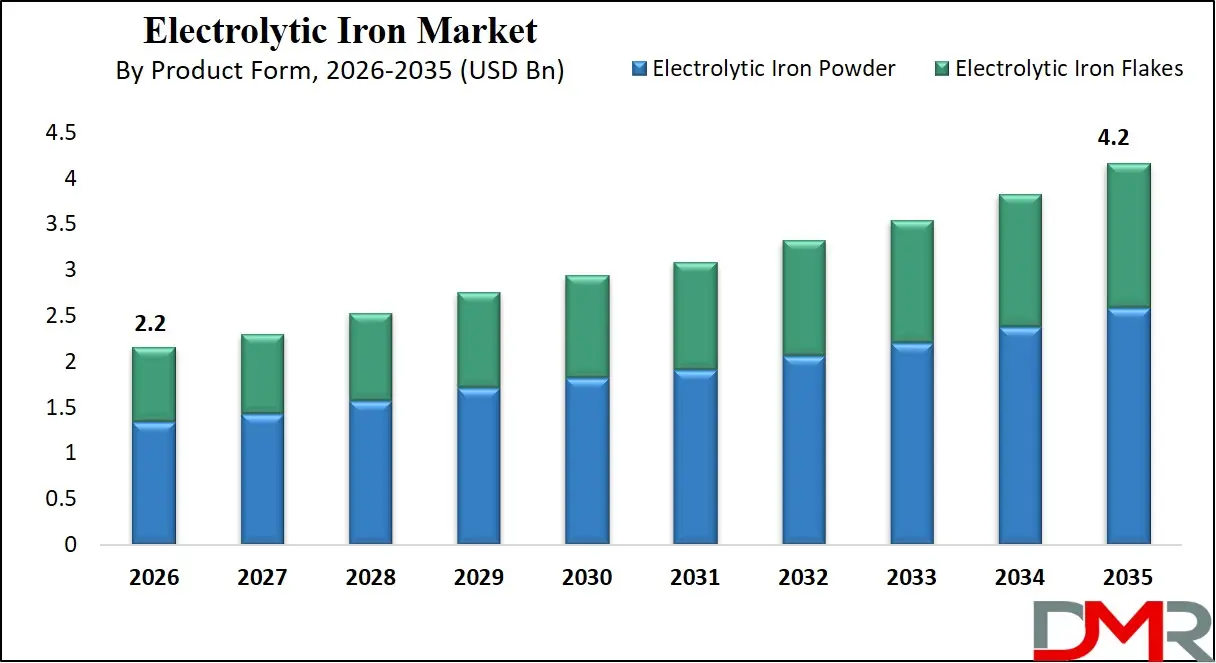
The global electrolytic iron market is projected to reach USD 2.2 billion in 2026 and grow at a CAGR of 7.6% through 2035, supported by rising demand for high purity iron powder in pharmaceuticals, electronics, and powder metallurgy, reaching approximately USD 4.2 billion by the end of the forecast period.
ℹ
To learn more about this report –
Download Your Free Sample Report Here
Electrolytic iron is a high purity form of metallic iron produced through an electrochemical deposition process in which iron ions are reduced and plated onto cathodes from an electrolyte solution. This method allows extremely tight control over chemical composition, particle structure, and impurity levels, making electrolytic iron far superior to conventional smelted or reduced iron when consistency and purity are required. The resulting material is typically processed into powder or flakes and is valued for its low carbon content, uniform grain size, high compressibility, and excellent magnetic and chemical stability. Because of these properties, electrolytic iron is widely used in sensitive applications such as pharmaceutical formulations, magnetic components, electronic devices, specialty alloys, and precision powder metallurgy.
The global Electrolytic Iron Market represents the worldwide production, trade, and consumption of electrolytic iron materials across multiple industrial sectors that demand ultra-clean and performance consistent iron inputs. This market is driven primarily by rising demand from pharmaceutical manufacturing, electronics, automotive components, and advanced material processing where impurities can affect safety, conductivity, magnetic response, and mechanical strength. Growth in medical nutrition, electric vehicles, semiconductor fabrication, and precision engineering is further expanding the use of high purity iron powder and flakes, positioning electrolytic iron as a critical raw material in modern industrial value chains.
ℹ
To learn more about this report –
Download Your Free Sample Report Here
From a commercial perspective, the global Electrolytic Iron Market is shaped by technological innovation in electrolysis processes, tightening quality standards, and increasing emphasis on material traceability and sustainability. Manufacturers are investing in more efficient electrochemical production systems to reduce energy consumption while improving yield and purity, which enhances both cost competitiveness and environmental compliance. At the same time, rising industrialization in Asia Pacific, strong pharmaceutical and electronics demand in North America, and steady specialty alloy consumption in Europe are creating a balanced yet competitive global landscape where suppliers focus on product differentiation, purity grades, and application specific performance to secure long term growth.
Global Electrolytic Iron Market: Key Takeaways
- The global electrolytic iron market is valued at USD 2.2 billion in 2026 and is projected to reach USD 4.2 billion by 2035, growing at a CAGR of 7.6%.
- Electrolytic iron powder dominates the product form segment with a 62.0% share in 2026, followed by electrolytic iron flakes holding the remaining share.
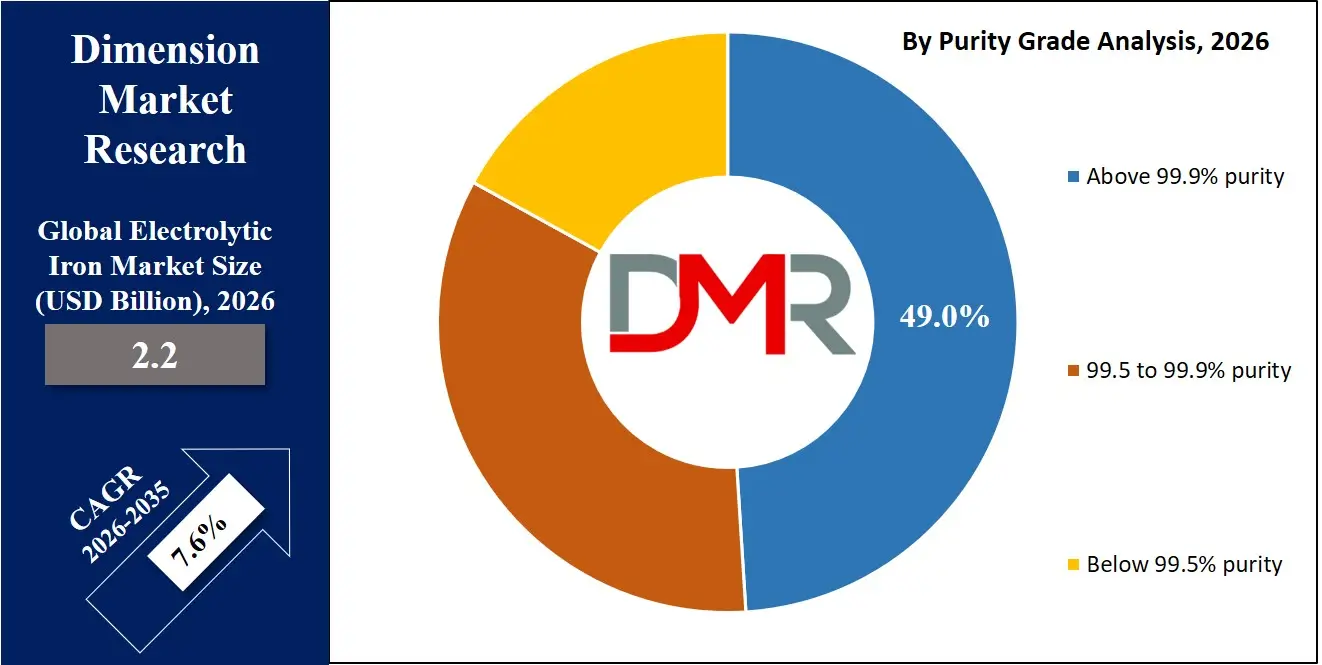
- By purity grade, above 99.9% purity leads with a 49.0% market share in 2026, with the 99.5% to 99.9% purity range as the next significant contributor.
- Pharmaceuticals and healthcare is the largest application segment at 44.0% share in 2026, followed by electronics and magnetic materials as the second major application area.
- Automotive and transportation leads end-use industries with a 34.0% share in 2026, followed by electronics and electrical equipment as a significant contributor.
- North America holds the largest regional revenue share at 31.0% in 2026, driven by pharmaceutical, electronics, and automotive demand.
- Asia Pacific registers the highest regional CAGR over the forecast period, led by growth in China, India, Japan, and Southeast Asia.
- Europe is projected at USD 616 million in 2026, growing at a CAGR of 8.2%, outpacing the global average.
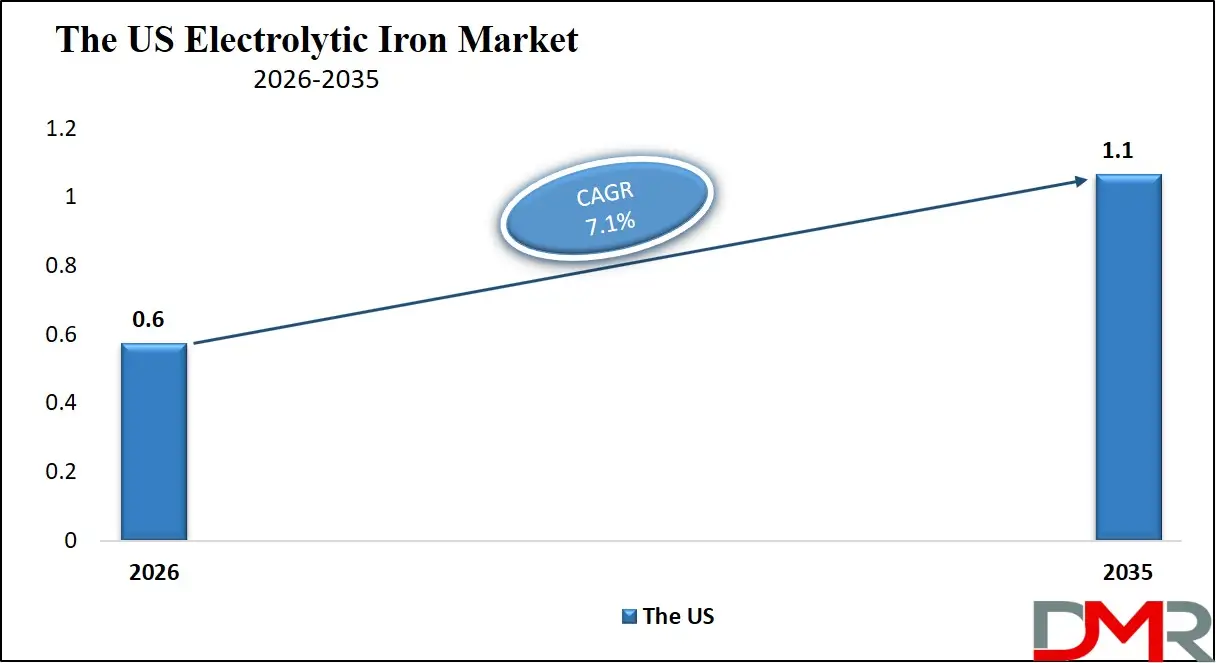
- The U.S. market is estimated at USD 0.6 billion in 2026, expected to reach USD 1.1 billion by 2035 at a CAGR of 7.1%.
- Japan's market is projected at USD 176 million in 2026, growing at a CAGR of 7.0% through the forecast period.
US Electrolytic Iron Market
The U.S. Electrolytic Iron Market size is expected to reach at USD 0.6 million in 2026. It is further expected to witness subsequent growth in the upcoming period, holding USD 1.1 million in 2035 at a CAGR of 7.1%.
The US electrolytic iron market is supported by the country's strong pharmaceutical, healthcare, and advanced manufacturing sectors that require high purity metallic inputs. Domestic drug manufacturers use electrolytic iron extensively in iron based formulations, hematinic products, and excipient blends due to its controlled composition and low impurity profile. At the same time, the expanding electronics and semiconductor industries rely on electrolytic iron for magnetic components, shielding materials, and precision engineered parts. Rising investment in electric vehicles and smart manufacturing continues to reinforce demand for high grade iron powders across multiple industrial value chains.
ℹ
To learn more about this report –
Download Your Free Sample Report Here
The market is also shaped by strict regulatory standards, quality assurance requirements, and a growing focus on supply chain reliability within the United States. Producers emphasize consistent purity, particle size control, and traceability to meet the needs of medical, defense, and technology focused industries. Increasing adoption of powder metallurgy in automotive lightweighting and the growing use of high performance magnetic materials are further strengthening market expansion. In addition, sustainability driven manufacturing and the shift toward localized production are encouraging investments in advanced electrolysis technologies, helping the US remain a high value market for electrolytic iron.
Europe Electrolytic Iron Market
The Europe electrolytic iron market is projected to reach a value of USD 616 million in 2026, supported by strong demand from pharmaceutical manufacturing, advanced electronics, and specialty alloy production across the region. Countries such as Germany, France, and the United Kingdom play a central role due to their well-developed healthcare systems, strict material quality standards, and large base of precision engineering industries. The region's focus on high purity raw materials for drug formulations, medical nutrition, and electronic components continues to position electrolytic iron as a critical input within Europe's industrial ecosystem.
With a CAGR of 8.2%, Europe is expected to grow faster than the global average, driven by innovation in sustainable manufacturing, expanding electric vehicle production, and increasing investment in clean and efficient material processing technologies. European producers are actively upgrading electrolysis methods to improve energy efficiency and purity control, aligning with the region's environmental regulations and decarbonization goals. At the same time, rising demand for magnetic materials, powder metallurgy parts, and pharmaceutical grade iron is creating new opportunities for electrolytic iron suppliers, reinforcing Europe's role as a high value and technologically advanced market.
Japan Electrolytic Iron Market
Japan electrolytic iron market is projected to reach USD 176 million in 2026, supported by the country's strong presence in electronics, automotive manufacturing, and precision engineering. Japanese industries demand extremely high purity iron materials for use in magnetic components, electric motors, semiconductor equipment, and high performance alloys. The pharmaceutical and medical device sectors also contribute steadily to market demand, as electrolytic iron is used in specialized formulations and high reliability applications that require consistent quality and traceability.
With a CAGR of 7.0%, Japan's market growth reflects stable expansion driven by technological innovation and the rising adoption of electric vehicles, robotics, and energy efficient electronics. Japanese manufacturers continue to invest in advanced materials and cleaner production technologies, which supports sustained demand for high grade electrolytic iron. In addition, the country's focus on miniaturization, lightweight materials, and high efficiency systems is increasing the use of iron powders and magnetic materials, reinforcing Japan's role as a key value driven market within the global electrolytic iron industry.
Global Electrolytic Iron Market: Use Cases
- Pharmaceutical and Nutritional Products: Electrolytic iron is used in iron supplements, hematinic drugs, and food fortification due to its high purity, safety, and consistent quality, supporting global healthcare and nutrition demand.
- Electronics and Magnetic Materials: The material is used in magnetic cores, shielding, and electronic components where stable magnetic properties and low impurities are essential for high performance devices.
- Powder Metallurgy and Automotive Parts: Electrolytic iron powder is a key input for sintered automotive components and precision metal parts, enabling strength, durability, and dimensional accuracy.
- Specialty Alloys and Industrial Uses: It is used in specialty alloys, catalysts, and chemical processing where controlled composition and material reliability are required for industrial efficiency.
Global Electrolytic Iron Market: Stats & Facts
- U.S. Geological Survey Iron and Steel Statistics
- Iron and steel account for about 95% of all metals produced worldwide
- Iron ore is mined in more than 50 countries globally
- The top seven iron ore producing countries contribute nearly 75% of global output
- About 98% of all iron ore mined globally is used for steelmaking
- The United States remained among the top ten iron ore producing nations in 2024
- US iron ore mine production exceeded 44 million metric tons in 2024
- Pig iron production in the US exceeded 23 million metric tons in 2024
- Iron based alloys accounted for over 90% of US metal consumption in 2023
- US iron powder consumption increased in pharmaceutical and automotive uses during 2024
- Demand for high purity iron products rose across healthcare and electronics sectors in 2025
- India Brand Equity Foundation Government of India
- India produced 151.14 million tonnes of crude steel in fiscal year 2025
- Finished steel production in India reached 145.30 million tonnes in fiscal year 2025
- India's steel production capacity stood at 200.33 million tonnes in 2025
- Secondary steel plants accounted for 47% of national capacity in 2025
- Iron ore availability in India supports over 700 million tonnes of annual production
- Finished steel consumption in April to July 2025 reached 51.45 million tonnes
- Crude steel production in April to July 2025 reached 54.19 million tonnes
- Steel exports from India reached 1.7 million tonnes in early fiscal 2026
- Steel imports into India stood at 1.67 million tonnes in early fiscal 2026
- India's steel demand growth exceeded 9% in 2025
- General Administration of Customs China
- China imported 1.24 billion metric tons of iron ore in 2024
- China's iron ore imports increased by 4.9% from 2023 to 2024
- China exported 110.72 million tons of steel in 2024
- China's steel exports increased by 22.7% in 2024
- December 2024 steel exports reached 9.73 million tons
- China's steel imports fell to 6.82 million tons in 2024
- Steel imports declined by 10.9% in 2024
- China imported 1.26 billion tons of iron ore in 2025
- Iron ore imports in China grew 1.8% in 2025
- China remained the world's largest iron ore importing country in 2025
- Government of India Iron Ore Trade Data
- India exported 32.2 million metric tons of iron ore in the first nine months of fiscal 2024
- Iron ore exports rose significantly compared with fiscal 2023
- India's iron ore production is projected to reach 330 million tons in fiscal 2025
- Export volumes were driven by higher low grade ore shipments
- India increased iron ore logistics capacity in 2024
- Government allowed selective iron ore exports to improve miner profitability
- Iron ore production growth supported downstream iron processing
- Pellet and sponge iron production increased in 2024
- Domestic iron ore demand remained strong in 2025
- Iron ore mining licenses expanded in multiple states
- Western Australia Department of Mines
- Iron ore production in Western Australia reached 861.3 million tonnes in 2023
- Western Australia contributed over 60% of Australia's mineral output
- Iron ore remained the state's largest mineral commodity in 2024
- Australia remained one of the top three global iron ore suppliers in 2025
Global Electrolytic Iron Market: Market Dynamic
Driving Factors in the Global Electrolytic Iron Market
Rising demand for high purity materials
The increasing use of electrolytic iron in pharmaceuticals, medical nutrition, electronics, and advanced manufacturing is a major growth driver. These industries require iron powder and flakes with extremely low impurity levels and stable chemical composition, which electrolytic production provides. As global healthcare spending rises and electronics become more complex, the need for ultra pure iron materials continues to expand.
Growth of powder metallurgy and electric vehicles
Automotive lightweighting, electric motors, and precision engineered components rely heavily on powder metallurgy. Electrolytic iron powder is widely used to produce high strength sintered parts and magnetic components, making it a critical raw material as electric vehicle production and industrial automation accelerate worldwide.
Restraints in the Global Electrolytic Iron Market
High production and energy costs
Electrolytic iron manufacturing requires electricity intensive electrochemical processes, which raises production costs compared to conventional iron sources. Fluctuating energy prices and the need for high quality electrolytes can limit profit margins for producers, especially in price sensitive industrial markets.
Limited availability of specialized producers
The market depends on a relatively small number of manufacturers with technical expertise in electrolysis and purification. This creates supply concentration risks and can restrict global availability of pharmaceutical grade and electronic grade electrolytic iron.
Opportunities in the Global Electrolytic Iron Market
Expansion in pharmaceutical and nutrition sectors
Rising awareness of iron deficiency, aging populations, and growing consumption of dietary supplements are creating strong opportunities for electrolytic iron in drug formulation and food fortification. Manufacturers that offer high purity and bioavailable iron forms are well positioned to capture long term demand.
Emerging markets and local production
Rapid industrialization in Asia Pacific, Latin America, and parts of the Middle East is increasing demand for specialty metals. Investments in local electrolytic iron production facilities can reduce import dependence and support electronics, automotive, and chemical industries in these regions.
Trends in the Global Electrolytic Iron Market
Shift toward higher purity and specialty grades
End users are increasingly demanding iron powders with tighter impurity control, better particle size distribution, and improved magnetic performance. This is pushing producers to focus on premium grades of electrolytic iron for pharmaceutical, semiconductor, and advanced engineering applications.
Adoption of sustainable and efficient electrolysis technologies
Manufacturers are upgrading electrolysis systems to lower energy consumption, reduce waste, and improve yield. This trend supports environmental compliance while making electrolytic iron more competitive in global markets focused on sustainable materials and cleaner industrial processes.
Product Form Analysis
Electrolytic iron powder is anticipated to dominate the product form segment with a 62.0% share in 2026 because it offers superior purity, uniform particle size, and excellent compressibility, making it ideal for high value applications such as pharmaceuticals, electronics, powder metallurgy, and magnetic components. Its ability to deliver consistent chemical composition and low impurity levels is especially important for drug formulations, nutritional supplements, and precision engineered parts where material performance and safety are critical. The growing demand for electric vehicles, advanced electronics, and medical products continues to push manufacturers toward high purity iron powder, reinforcing its leadership within the overall electrolytic iron market.
Electrolytic iron flakes, while holding a smaller share of the product form segment, play an important role in applications that require larger particle structures, surface coverage, and controlled reactivity. These flakes are widely used in specialty coatings, pigments, magnetic shielding, and certain chemical and cosmetic formulations where powder form is not suitable. Their layered structure and surface characteristics make them useful for blending, dispersion, and visual or functional effects in industrial and consumer products. As industries focus more on specialized formulations and functional materials, electrolytic iron flakes maintain steady demand and provide an important complement to the dominance of iron powder in the market.
Purity Grade Analysis
Electrolytic iron with above 99.9% purity is expected to dominate the purity grade segment with a 49.0% market share in 2026 because it meets the strict quality and performance requirements of high end industries such as pharmaceuticals, electronics, medical devices, and advanced magnetic applications. This grade offers extremely low levels of carbon, sulfur, and other trace impurities, which is essential for drug formulations, iron supplements, semiconductor components, and precision engineered parts. As global industries move toward tighter regulatory standards and higher product reliability, demand for ultra-high purity electrolytic iron continues to rise, making this grade the preferred choice for applications where safety, conductivity, and material consistency are critical.
ℹ
To learn more about this report –
Download Your Free Sample Report Here
The 99.5 to 99.9% purity grade also holds a strong position in the electrolytic iron market because it provides an effective balance between performance and cost. This grade is widely used in powder metallurgy, automotive components, industrial machinery, and food fortification where slightly higher impurity levels are acceptable without compromising product functionality. Its broader affordability compared to ultra-high purity iron makes it attractive for large volume industrial production, especially in sintered metal parts and alloy manufacturing. As automotive manufacturing, construction equipment, and consumer electronics continue to expand globally, this purity range remains an important and stable contributor to overall market demand.
Application Analysis
Pharmaceuticals and healthcare are projected to dominate the application segment with a 44.0% market share in 2026 because electrolytic iron offers the purity, safety, and consistency required for medical and nutritional use. It is widely used in iron supplements, hematinic drugs, injectable formulations, and fortified food products where even trace impurities can affect patient safety and regulatory compliance. The rising prevalence of iron deficiency anemia, growing aging populations, and expanding access to healthcare across both developed and emerging economies are significantly increasing demand for high quality iron inputs. In addition, stricter pharmaceutical standards and the shift toward cleaner excipients continue to strengthen the reliance on electrolytic iron in global healthcare manufacturing.
Electronics and magnetic materials also represent a major application area for electrolytic iron due to its excellent magnetic properties, controlled particle structure, and low impurity profile. The material is used in magnetic cores, electromagnetic shielding, electric motor components, and precision electronic parts that require stable performance and high conductivity. As industries invest in electric vehicles, renewable energy systems, data centers, and advanced consumer electronics, the demand for reliable magnetic materials continues to grow. Electrolytic iron supports these technologies by enabling efficient energy transfer, reduced signal loss, and durable component performance, making it a key material within the expanding electronics value chain.
End-Use Industry Analysis
Automotive and transportation are expected to dominate the end use industry segment with a 34.0% market share in 2026 because electrolytic iron is a core material in powder metallurgy parts, magnetic components, and precision engineered systems used in modern vehicles. It is widely used in gears, bearings, sensor housings, electric motor parts, and braking systems where strength, dimensional accuracy, and magnetic stability are required. The rapid growth of electric vehicles, hybrid drivetrains, and advanced driver assistance systems is further increasing demand for high purity iron materials that can support efficient power transmission and reliable electronic integration across automotive platforms.
Electronics and electrical equipment also represent a significant end use segment for electrolytic iron due to its controlled chemical composition and superior magnetic performance. The material is used in transformers, inductors, electromagnetic shielding, and various electrical components that require stable conductivity and minimal energy loss. With the expansion of renewable energy infrastructure, smart grids, data centers, and consumer electronics, manufacturers are increasingly relying on electrolytic iron to enhance efficiency and durability. Its ability to support high frequency operation and compact component design makes it an important material in the evolving global electronics and electrical equipment market.
The Global Electrolytic Iron Market Report is segmented on the basis of the following:
By Product Form
- Electrolytic Iron Powder
- Electrolytic Iron Flakes
- Fine particle flakes
- Coarse particle flakes
By Purity Grade
- Above 99.9% purity
- 99.5 to 99.9% purity
- Below 99.55 purity
By Application
- Pharmaceuticals and healthcare
- Electronics and magnetic materials
- Powder metallurgy and specialty alloys
- Food fortification and nutritional supplements
- Cosmetics and specialty chemicals
By End-Use Industry
- Automotive and transportation
- Electronics and electrical equipment
- Pharmaceutical manufacturing
- Food and beverage industry
- Chemical and industrial manufacturing
Impact of Artificial Intelligence in the Global Electrolytic Iron Market
Artificial intelligence is increasingly shaping the global electrolytic iron market by enhancing production efficiency, quality control, and cost optimization across the value chain. In manufacturing facilities, AI-enabled process control systems analyze real-time sensor data to optimize electrolysis parameters, reducing energy consumption and minimizing material waste while maintaining high purity outputs. Machine learning algorithms also improve predictive maintenance for critical equipment, cutting unplanned downtime and extending the life of costly electrolytic cells. By automating repetitive tasks and generating actionable insights, AI helps producers achieve higher throughput with consistent material quality that meets stringent pharmaceutical, electronics, and automotive standards.
On the demand side, AI supports better forecasting of market trends and customer requirements by analyzing large datasets from end use industries such as powder metallurgy, electric vehicles, and consumer electronics. This enables suppliers to align production planning with shifting demand patterns and reduce inventory cost. AI-driven quality inspection using computer vision further strengthens product reliability by detecting microstructural defects that traditional inspection methods might miss. In addition, digital twin technologies allow producers to simulate new process configurations and iron grades virtually before implementation, accelerating innovation in materials development and helping firms maintain competitiveness in a rapidly evolving global electrolytic iron market.
Global Electrolytic Iron Market: Regional Analysis
Region with the Largest Revenue Share
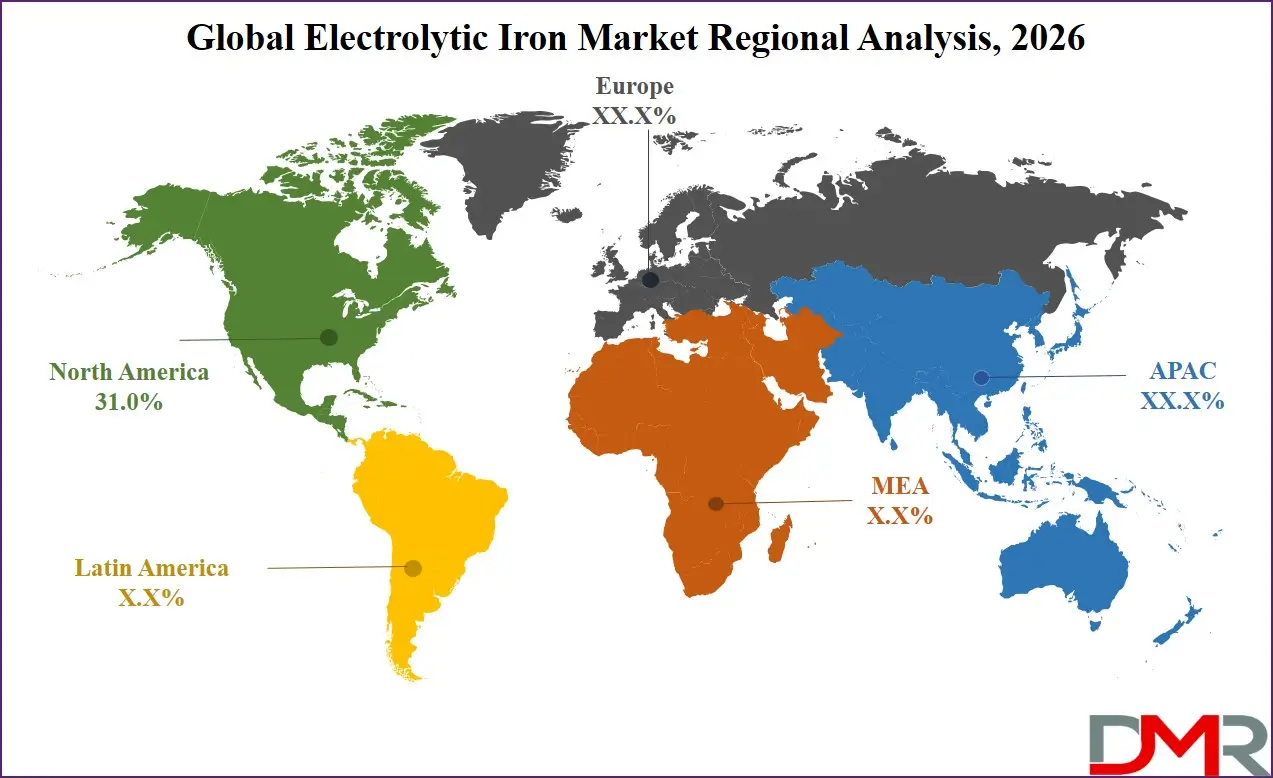
North America is anticipated to lead the global electrolytic iron market with a 31.0% share of total revenue in 2026, driven by strong demand from pharmaceutical manufacturing, advanced electronics, and high precision automotive production. The region benefits from strict quality standards and a well-established healthcare and medical nutrition sector that relies heavily on high purity iron materials. In addition, rising investments in electric vehicles, semiconductor fabrication, and renewable energy infrastructure are increasing the use of electrolytic iron in magnetic components and powder metallurgy parts, reinforcing North America's position as a high value and technologically advanced market.
ℹ
To learn more about this report –
Download Your Free Sample Report Here
Region with the Highest CAGR
Asia Pacific is expected to register the highest CAGR in the global electrolytic iron market over the forecast period, supported by rapid industrialization, expanding pharmaceutical production, and the strong growth of electronics and automotive manufacturing across China, India, Japan, and Southeast Asia. Rising healthcare spending and increasing consumption of iron supplements are boosting demand for high purity iron in the region, while large scale investments in electric vehicles, semiconductors, and industrial automation are accelerating the use of electrolytic iron in magnetic materials and powder metallurgy. In addition, the expansion of local manufacturing facilities and improving technological capabilities are further driving sustained market growth in Asia Pacific.
By Region
North America
Europe
- Germany
- The U.K.
- France
- Italy
- Russia
- Spain
- Benelux
- Nordic
- Rest of Europe
Asia-Pacific
- China
- Japan
- South Korea
- India
- ANZ
- ASEAN
- Rest of Asia-Pacific
Latin America
- Brazil
- Mexico
- Argentina
- Colombia
- Rest of Latin America
Middle East & Africa
- Saudi Arabia
- UAE
- South Africa
- Israel
- Egypt
- Rest of MEA
Global Electrolytic Iron Market: Competitive Landscape
The competitive landscape of the global electrolytic iron market is characterized by moderate fragmentation, with key players focusing on product differentiation, technological innovation, and strategic collaborations to strengthen their market positions. Companies are investing in advanced electrochemical production processes to improve purity levels, reduce energy consumption, and enhance material performance for high growth applications such as healthcare, electronics, and automotive components. Emphasis on quality certification, research and development, and expansion of production capacities is helping firms meet stringent regulatory standards and rising demand across regions. Market competition is also influenced by supply chain optimization, cost efficiency initiatives, and partnerships with end use industries to tailor material grades for specific performance requirements.
Some of the prominent players in the Global Electrolytic Iron Market are:
- TOHO ZINC CO., LTD.
- Industrial Metal Powders Pvt. Ltd.
- JFE Steel Corporation
- NetShape Nutrition Pvt. Ltd.
- Blyth Metals Ltd.
- Dr. Fritsch
- Shanghai Zhiye Industry Co., Ltd.
- Hoganas High Alloys LLC
- OMG Americas, Inc
- Beijing GaoYe Technology Co., Ltd.
- Kobelco (Kobe Steel Ltd.)
- Nippon Steel Corporation
- Thyssenkrupp AG
- BHP Group
- Rio Tinto
- Vale S.A.
- Zhongnuo Xincai
- Shanghai Pantian
- Allied Metals
- Qingdao Ecotech International Trade Co., Ltd.
- Other Key Players
Recent Developments in the Global Electrolytic Iron Market
- December 2025: A strategic asset purchase was completed with the acquisition of an iron ore pelletizing plant in Indiana, strengthening domestic supply of direct reduction grade pellets and merchant pig iron for clean and specialty iron value chains.
- November 2025: A clean iron technology company announced a new demonstration facility in Colorado to produce low carbon electrolytic iron for steelmaking, automotive, and advanced manufacturing applications.
- October 2025: A producer of low emission iron materials secured advance purchase agreements and sold environmental attribute credits to major industrial and technology buyers, accelerating commercial adoption of clean electrolytic iron.
- April 2025: A global trading and industrial group made a strategic investment in a United States based electrolytic iron producer to support greener steel and automotive supply chains.
Report Details
| Report Characteristics |
| Market Size (2026) |
USD 2.2 Bn |
| Forecast Value (2035) |
USD 4.2 Bn |
| CAGR (2026–2035) |
7.6% |
| The US Market Size (2026) |
USD 0.6 Bn |
| Historical Data |
2021 – 2025 |
| Forecast Data |
2027 – 2035 |
| Base Year |
2025 |
| Estimate Year |
2026 |
| Report Coverage |
Market Revenue Estimation, Market Dynamics, Competitive Landscape, Growth Factors and etc. |
| Segments Covered |
By Product Form (Electrolytic Iron Powder, Electrolytic Iron Flakes), By Purity Grade (Above 99.9 Percent, 99.5 to 99.9 Percent, Below 99.5 Percent), By Application (Pharmaceuticals and Healthcare, Electronics and Magnetic Materials, Powder Metallurgy and Specialty Alloys, Food Fortification and Nutritional Supplements, Cosmetics and Specialty Chemicals), By End-Use Industry (Automotive and Transportation, Electronics and Electrical Equipment, Pharmaceutical Manufacturing, Food and Beverage Industry, Chemical and Industrial Manufacturing) |
| Regional Coverage |
North America – The US and Canada; Europe – Germany, The UK, France, Russia, Spain, Italy, Benelux, Nordic, & Rest of Europe; Asia-Pacific – China, Japan, South Korea, India, ANZ, ASEAN, Rest of APAC; Latin America – Brazil, Mexico, Argentina, Colombia, Rest of Latin America; Middle East & Africa – Saudi Arabia, UAE, South Africa, Turkey, Egypt, Israel, & Rest of MEA |
| Prominent Players |
TOHO ZINC CO., LTD., Industrial Metal Powders Pvt. Ltd., JFE Steel Corporation, NetShape Nutrition Pvt. Ltd., Blyth Metals Ltd., Dr. Fritsch, Shanghai Zhiye Industry Co., Ltd., Hoganas High Alloys LLC, OMG Americas, Inc, Beijing GaoYe Technology Co., Ltd., Kobelco (Kobe Steel Ltd.), Nippon Steel Corporation, and many others. |
| Purchase Options |
We have three licenses to opt for: Single User License (Limited to 1 user), Multi-User License (Up to 5 Users) and Corporate Use License (Unlimited User) along with free report customization equivalent to 0 analyst working days, 3 analysts working days and 5 analysts working days respectively. |
Frequently Asked Questions
How big is the Global Electrolytic Iron Market?
▾ The Global Electrolytic Iron Market size is estimated to have a value of USD 2.2 billion in 2026 and is expected to reach USD 4.2 billion by the end of 2035.
What is the growth rate in the Global Electrolytic Iron Market in 2026?
▾ The market is growing at a CAGR of 7.6% over the forecasted period of 2026.
What is the size of the US Electrolytic Iron Market?
▾ The US Electrolytic Iron market is projected to be valued at USD 0.6 billion in 2026. It is expected to witness subsequent growth in the upcoming period as it holds USD 1.1 billion in 2035 at a CAGR of 7.1%.
Which region accounted for the largest Global Electrolytic Iron Market?
▾ North America is expected to have the largest market share in the Global Electrolytic Iron Market with a share of about 31.0% in 2026.
Who are the key players in the Global Electrolytic Iron Market?
▾ Some of the major key players in the Global Electrolytic Iron Market are TOHO ZINC CO., LTD., Industrial Metal Powders Pvt. Ltd., JFE Steel Corporation, NetShape Nutrition Pvt. Ltd., Blyth Metals Ltd., Dr. Fritsch, Shanghai Zhiye Industry Co., Ltd., Hoganas High Alloys LLC, OMG Americas, Inc, Beijing GaoYe Technology Co., Ltd., Kobelco (Kobe Steel Ltd.), Nippon Steel Corporation, and many others.