EMEA Cardiac Valve Market Snapshot
- EMEA Cardiac Valve Market Size in 2026: USD 2.8 Billion
- EMEA Cardiac Valve Market Size in 2035: USD 5.6 Billion
- EMEA CAGR from 2026 to 2035: 8.0%
- Transcatheter Heart Valves is the leading product type segment in 2026: 46.2%
- Aortic Valve is the leading valve type segment in 2026: 58.4%
- Transcatheter Aortic Valve Replacement (TAVR) is the leading procedure type segment in 2026: 51.6%
- Hospitals is the leading end user segment in 2026: 71.3%
What is the EMEA Cardiac Valve Market and its Market Size?
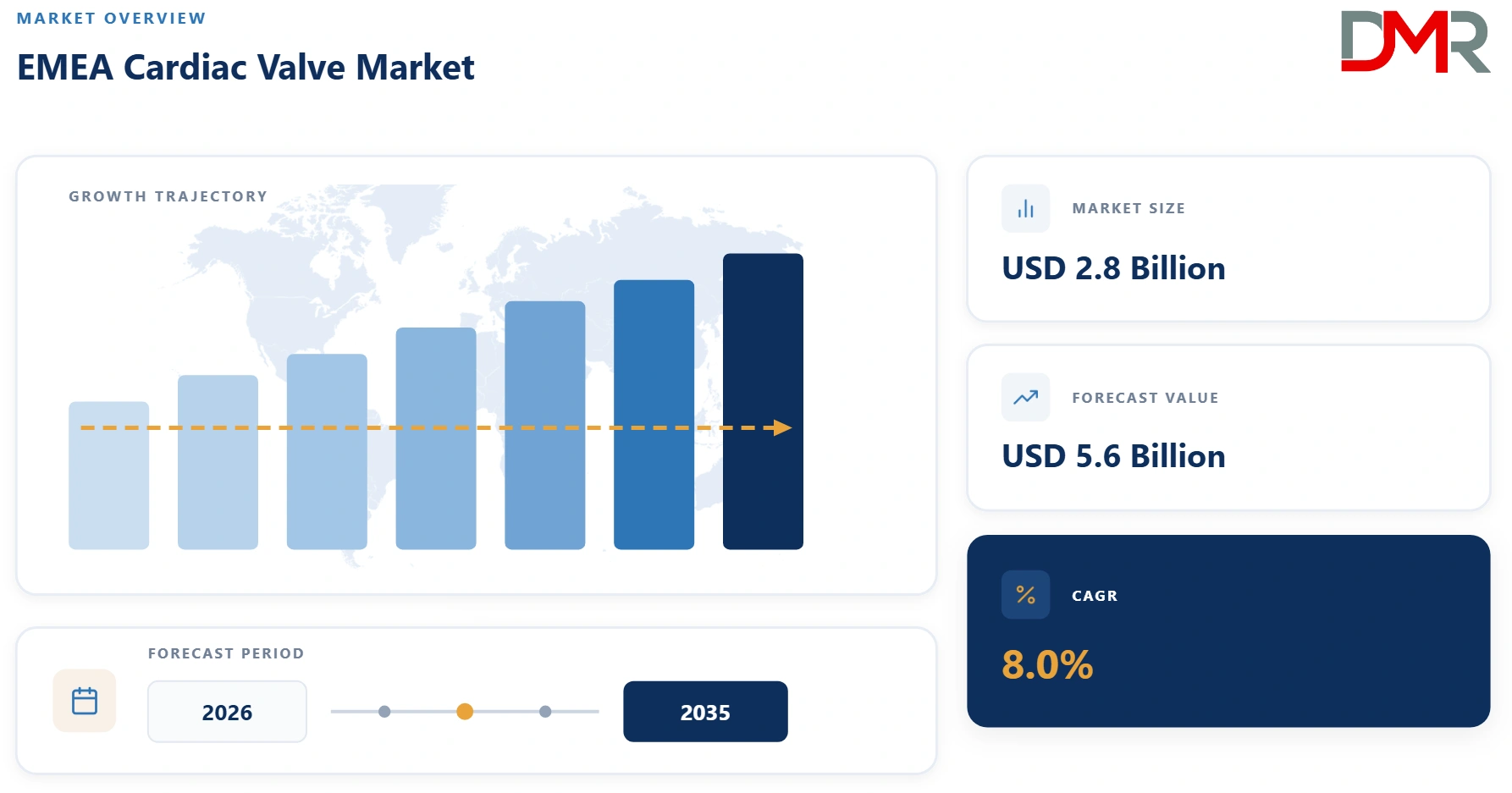
The EMEA Cardiac Valve Market is projected to be valued at USD 2.8 Billion in 2026 and is projected to reach USD 5.6 Billion by 2035, expanding at a CAGR of 8.0% during the forecast period.
ℹ
To learn more about this report –
Download Your Free Sample Report Here
Growth is being propelled by Europe's rapidly aging population driving sustained growth in degenerative aortic stenosis and other valvular heart disease incidence, continued rapid clinical adoption of transcatheter aortic valve replacement as a less invasive alternative to open surgical valve replacement across European healthcare systems, and growing investment in advanced cardiac catheterization and structural heart intervention infrastructure across Gulf Cooperation Council countries and South Africa. The maturing of transcatheter mitral and tricuspid valve repair and replacement technologies expanding minimally invasive treatment options beyond the aortic valve, growing reimbursement support for transcatheter procedures across major European healthcare systems reducing the cost barrier historically limiting broader adoption, and continued expansion of structural heart disease treatment capability across leading Middle Eastern medical centers positioning the region as an emerging structural heart intervention hub are reshaping the market from a traditionally surgery-dominated category into an increasingly transcatheter-focused, minimally invasive cardiac valve treatment industry. Investment is accelerating as device manufacturers and healthcare systems across Europe, the Middle East, and Africa expand transcatheter valve technology adoption and structural heart intervention capability.
Use Cases
- Transcatheter Aortic Valve Replacement for High and Intermediate Surgical Risk Patients: Cardiac centers across Germany, France, the United Kingdom, and other leading European healthcare systems perform transcatheter aortic valve replacement procedures for elderly and higher surgical risk patients with severe aortic stenosis, offering a less invasive treatment alternative to traditional open-heart surgical valve replacement.
- Surgical Mitral Valve Repair for Degenerative Mitral Regurgitation: Cardiac surgeons across major European cardiac centers perform surgical mitral valve repair procedures for patients with degenerative mitral valve disease, representing a well-established surgical treatment approach for eligible patient populations.
- Structural Heart Intervention Program Development Across Gulf Cooperation Council Medical Centers: Leading UAE and Saudi Arabian hospitals invest in structural heart intervention program development, including transcatheter valve replacement capability, as part of broader national healthcare transformation strategies positioning the region as an advanced cardiac care destination.
- Transcatheter Mitral Valve Repair for High-Risk Mitral Regurgitation Patients: Cardiac centers increasingly offer transcatheter mitral valve repair procedures for patients with significant mitral regurgitation who are poor candidates for traditional open surgical repair, reflecting continued expansion of minimally invasive structural heart treatment options beyond the aortic valve.
Key Takeaways
- Market Size: The EMEA Cardiac Valve Market is anticipated to be valued at USD 2.8 Billion in 2026 and is forecast to reach USD 5.6 Billion by 2035, expanding at a CAGR of 8.0%.
- Growth Outlook: Market expansion is sustained by Europe's aging population driving valvular heart disease incidence growth, continued rapid transcatheter valve replacement adoption across European healthcare systems, and growing structural heart intervention infrastructure investment across the Middle East and Africa.
- Primary Growth Drivers: Europe's rapidly aging population driving degenerative valvular heart disease incidence growth, continued clinical shift toward transcatheter valve replacement over open surgery, growing reimbursement support for transcatheter procedures, and expanding structural heart intervention capability across Gulf Cooperation Council countries are accelerating market growth.
- By Product Type Analysis: Transcatheter Heart Valves is projected to lead the product type segment with a 46.2% share in 2026, reflecting rapid and sustained clinical adoption of transcatheter valve replacement technology across the region. Transcatheter Heart Valves is also the fastest-growing product type segment given continued procedure volume growth and expanding treatment indications.
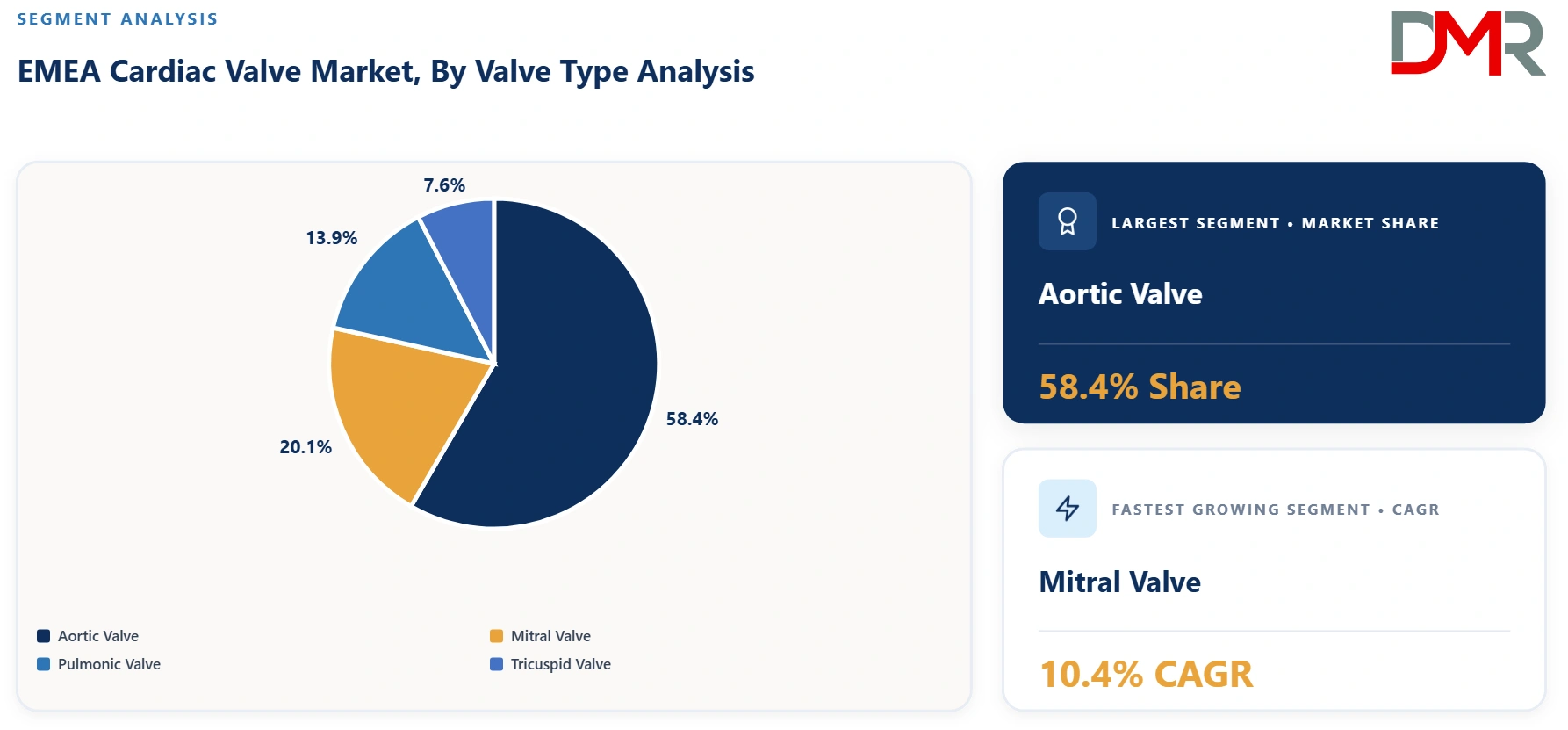
- By Valve Type Analysis: Aortic Valve is expected to dominate with a 58.4% share in 2026, supported by aortic stenosis representing the most common valvular heart disease requiring intervention. Mitral Valve is the fastest-growing valve type segment at 10.4% CAGR, driven by expanding transcatheter mitral repair and replacement technology adoption.
- By Procedure Type Analysis: Transcatheter Aortic Valve Replacement (TAVR) is poised to lead with a 51.6% share in 2026, reflecting its established position as a leading treatment approach for aortic stenosis across European healthcare systems. Transcatheter Mitral Valve Repair/Replacement (TMVR) is the fastest-growing procedure type segment at 13.2% CAGR, driven by continued technology maturation and expanding clinical adoption.
- By End User Analysis: Hospitals are projected to dominate with a 71.3% share in 2026, reflecting the complex, specialized nature of cardiac valve procedures requiring comprehensive hospital-based cardiac surgical and catheterization infrastructure. Cardiac Specialty Centers is the fastest-growing end user segment at 9.6% CAGR, driven by continued development of dedicated structural heart disease treatment centers.
Key Drivers in the EMEA Cardiac Valve Market
Europe's Rapidly Aging Population Driving Degenerative Valvular Heart Disease Incidence Growth
Europe maintains one of the world's most rapidly aging populations, with countries including Germany, Italy, and France among the global leaders in elderly population share. This demographic profile is driving substantial growth in degenerative aortic stenosis and other age-related valvular heart disease incidence, as these conditions predominantly affect elderly populations. This demographic-driven disease burden growth creates a structurally durable and growing demand base for cardiac valve replacement and repair products across the region, with this trend expected to continue as Europe's elderly population share continues expanding throughout the forecast period.
Continued Clinical Shift Toward Transcatheter Valve Replacement Over Open Surgery
European cardiac centers continue to rapidly expand transcatheter aortic valve replacement adoption, extending beyond the technology's original use in high-surgical-risk patients into intermediate and, increasingly, lower-risk patient populations following supportive clinical trial evidence. This continued clinical adoption expansion reflects both the reduced recovery time and complication risk associated with transcatheter approaches relative to traditional open-heart surgical valve replacement, and growing physician and patient comfort with transcatheter technology following over a decade of accumulated clinical experience and outcomes data across European healthcare systems.
Restraints in the EMEA Cardiac Valve Market
Healthcare System Reimbursement and Budget Constraints Affecting Transcatheter Procedure Access
Variation in healthcare system reimbursement policies and budget constraints across European countries, as well as more limited healthcare infrastructure and reimbursement frameworks across parts of the Middle East and Africa, represents a meaningful restraint on the EMEA Cardiac Valve Market. Transcatheter valve procedures typically carry higher device costs than traditional surgical alternatives, and reimbursement policy variation across different national healthcare systems can create disparities in patient access to these less invasive treatment options, potentially limiting the pace of transcatheter technology adoption in markets with more constrained healthcare budgets.
Growth Opportunities in the EMEA Cardiac Valve Market
Transcatheter Mitral and Tricuspid Valve Technology Commercialization
Continued technology development and clinical validation of transcatheter mitral and tricuspid valve repair and replacement devices presents a substantial opportunity for device manufacturers to expand minimally invasive structural heart treatment options beyond the aortic valve, addressing a substantial population of patients with mitral and tricuspid valve disease who are poor candidates for traditional open surgical repair. Companies achieving strong clinical outcomes data and regulatory approval for these emerging valve technology categories can capture significant market share as this next wave of structural heart intervention technology continues maturing.
Structural Heart Intervention Infrastructure Development Across the Middle East and Africa
Growing government and private healthcare investment in structural heart intervention capability across Gulf Cooperation Council countries and South Africa presents a substantial opportunity for cardiac valve device manufacturers to expand regional distribution, physician training support, and market development presence. Companies establishing strong distribution relationships and physician training capability serving these emerging structural heart intervention markets can capture significant growth as regional cardiac care infrastructure continues expanding.
Trends in the EMEA Cardiac Valve Market
Continued Expansion of Transcatheter Valve Replacement into Lower-Risk Patient Populations
European cardiac centers continue to expand transcatheter aortic valve replacement use into progressively lower-surgical-risk and younger patient populations, following supportive clinical trial evidence demonstrating comparable or superior outcomes relative to traditional surgical valve replacement across an expanding range of patient risk categories. This continued clinical scope expansion reflects growing physician confidence in transcatheter valve durability and long-term outcomes data as the technology's clinical experience base continues to mature.
Growing Structural Heart Program Development Across Leading Middle Eastern Medical Centers
Leading hospitals across the UAE and Saudi Arabia continue to invest in developing comprehensive structural heart disease treatment programs, including transcatheter valve replacement and repair capability, as part of broader national healthcare transformation strategies aimed at positioning the region as an advanced cardiac care destination serving both domestic and international patients.
Research Scope and Analysis
The EMEA Cardiac Valve Market is segmented by product type, valve type, procedure type, end user, and region, covering mechanical, tissue, and transcatheter heart valves, aortic, mitral, pulmonic, and tricuspid valve types, and surgical and transcatheter procedure categories across European, Middle Eastern, and African country markets.
ℹ
To learn more about this report –
Download Your Free Sample Report Here
By Product Type Analysis
Transcatheter Heart Valves is projected to dominate the EMEA Cardiac Valve Market with 46.2% share in 2026, reflecting rapid and sustained clinical adoption of transcatheter valve replacement technology across European healthcare systems and growing Middle Eastern structural heart intervention capability. Transcatheter Heart Valves also represents the fastest-growing product type segment overall, driven by continued procedure volume growth and expanding treatment indications into lower-risk patient populations.
By Valve Type Analysis
Aortic Valve is anticipated to dominate the EMEA Cardiac Valve Market by valve type, accounting for 58.4% share in 2026, supported by degenerative aortic stenosis representing the most common valvular heart disease requiring surgical or transcatheter intervention across the region's aging population. Mitral Valve is projected to register the highest CAGR of 10.4% between 2026 and 2035, driven by expanding transcatheter mitral valve repair and replacement technology adoption addressing a substantial population of mitral regurgitation patients.
By Procedure Type Analysis
Transcatheter Aortic Valve Replacement (TAVR) is projected to lead the EMEA Cardiac Valve Market with an estimated 51.6% share in 2026, reflecting its established and growing position as a leading treatment approach for aortic stenosis across European healthcare systems with over a decade of accumulated clinical experience. Transcatheter Mitral Valve Repair/Replacement (TMVR) is expected to register the fastest CAGR of 13.2% through 2035, driven by continued technology maturation and expanding clinical adoption for mitral valve disease treatment.
By End User Analysis
Hospitals are projected to dominate the EMEA Cardiac Valve Market with 71.3% share in 2026, reflecting the complex, specialized nature of cardiac valve procedures requiring comprehensive hospital-based cardiac surgical and catheterization laboratory infrastructure. Cardiac Specialty Centers are expected to register the fastest CAGR of 9.6% through 2035, driven by continued development of dedicated structural heart disease treatment centers across leading European and Middle Eastern healthcare systems.
The EMEA Cardiac Valve Market Report is segmented based on the following:
By Product Type
- Heart Valve Replacement Products
- Mechanical Heart Valves
- Tissue/Bioprosthetic Heart Valves
- Transcatheter Heart Valves
- Heart Valve Repair Products
- Annuloplasty Rings
- Repair Devices
By Valve Type
- Aortic Valve
- Mitral Valve
- Pulmonic Valve
- Tricuspid Valve
By Procedure Type
- Surgical Heart Valve Replacement/Repair
- Transcatheter Aortic Valve Replacement (TAVR)
- Transcatheter Mitral Valve Repair/Replacement (TMVR)
By End User
- Hospitals
- Cardiac Specialty Centers
- Ambulatory Surgical Centers
Regional Analysis
Europe, comprising Germany, France, the United Kingdom, Italy, Spain, and the Rest of Europe, is projected to lead the EMEA Cardiac Valve Market with an estimated 78.6% share in 2026, reflecting the substantial scale of its healthcare systems, established transcatheter valve treatment infrastructure, and aging population disease burden. Middle East, comprising Saudi Arabia, the UAE, and the Rest of Middle East, is expected to register the fastest CAGR of 11.8% through 2035, driven by substantial government investment in structural heart intervention capability positioning the region as an emerging cardiac care hub.
By Region
Europe
- Germany
- France
- The UK
- Italy
- Spain
- Rest of Europe
MEA
- Saudi Arabia
- UAE
- South Africa
- Rest of MEA
Technology Analysis
Technology development is central to the trajectory of the EMEA Cardiac Valve Market as companies invest in next-generation transcatheter valve designs improving durability and reducing paravalvular leak risk, advanced imaging and procedural planning technology supporting more precise transcatheter valve sizing and placement, and expanding transcatheter mitral and tricuspid valve platforms addressing previously underserved structural heart disease categories. Growing use of 3D printing and patient-specific anatomical modeling is supporting improved preprocedural planning for complex structural heart interventions. Opportunities are expanding for companies developing next-generation transcatheter mitral and tricuspid technology, as well as training simulation technology supporting structural heart intervention workforce development across the Middle East and Africa. However, achieving consistent long-term durability data supporting expanded use in younger patient populations remains an important ongoing clinical evidence consideration for transcatheter valve technology.
Investment and White Space Analysis
Investment opportunities in the EMEA Cardiac Valve Market are expanding alongside Europe's aging population and associated valvular heart disease burden growth, continued transcatheter valve replacement clinical adoption expansion, and growing structural heart intervention infrastructure investment across the Middle East and Africa. Significant white space exists in transcatheter mitral and tricuspid valve technology commercialization, structural heart intervention infrastructure and training development across the Middle East and Africa, and continued clinical evidence generation supporting expanded transcatheter valve use in lower-risk and younger patient populations. Companies with strong clinical evidence generation capability, established relationships with major European cardiac centers, and physician training support capability for emerging Middle Eastern and African markets are positioned to capture premium, longer-duration growth opportunities. However, healthcare system reimbursement and budget constraints affecting transcatheter procedure access, particularly across parts of the Middle East and Africa, can constrain the pace of transcatheter technology adoption relative to Europe's more established reimbursement frameworks.
Competitive Landscape
The EMEA Cardiac Valve Market is moderately consolidated and increasingly competitive, comprising large diversified global cardiovascular device companies with substantial EMEA operations, specialized transcatheter valve technology companies, and regional Middle Eastern and African medical device distributors. Competition centers on transcatheter valve technology innovation and long-term clinical outcomes data, established relationships with major European cardiac centers and healthcare systems, physician training and clinical support capability, and Middle Eastern and African market distribution and regulatory expertise. Large diversified global companies benefit from substantial research and development resources and broad cardiac valve product portfolios spanning surgical and transcatheter categories, while specialized transcatheter technology companies compete through deep technical expertise in specific valve categories such as mitral or tricuspid intervention. Companies increasingly differentiate through clinical evidence generation and structural heart program development support rather than device portfolio breadth alone.
Some of the prominent players in the EMEA Cardiac Valve Market are:
- Edwards Lifesciences Corporation
- Medtronic plc
- Abbott Laboratories
- Boston Scientific Corporation
- Artivion, Inc.
- Corcym S.r.l.
- Meril Life Sciences Pvt. Ltd.
- Venus Medtech (Hangzhou) Inc.
- MicroPort CardioFlow Medtech Corporation
- JenaValve Technology, Inc.
- Anteris Technologies Ltd.
- Foldax, Inc.
- Braile Biomédica
- TTK Healthcare Limited
- Lepu Medical Technology (Beijing) Co., Ltd.
- Peijia Medical Limited
- JC Medical, Inc.
- SMT (Sahajanand Medical Technologies)
- Colibri Heart Valve LLC
- HighLife SAS
- Cardiovalve Ltd.
- InnovHeart S.r.l.
- Valcare Medical Ltd.
- Cardiac Dimensions, Inc.
- Affluent Medical SA
- Trisol Medical Ltd.
- Pi-Cardia Ltd.
- NeoChord, Inc.
- CoreMedic GmbH
- Polares Medical SA
- Transcatheter Technologies GmbH
- Xeltis AG
- Biotronik SE & Co. KG
- Balton Sp. z o.o.
- LivaNova PLC
- Labcor Laboratórios Ltda.
- Lepu ScienTech Medical Technology (Shanghai) Co., Ltd.
- Shanghai NewMed Medical Co., Ltd.
- Symetis SA
- Direct Flow Medical, Inc.
- Other Key Players
Recent Developments
- July 2026: Edwards reported continued expansion of its SAPIEN M3 transcatheter mitral valve replacement system in Europe, with additional centers adopting the technology as part of a measured commercial rollout.
- May 2026: Edwards announced 10-year COMMENCE trial results for its RESILIA tissue, demonstrating sustained durability and long-term performance of surgical aortic valves incorporating the technology.
- April 2026: JenaValve began commercializing its Trilogy Transcatheter Heart Valve System following FDA approval for treating symptomatic severe aortic regurgitation in high-risk patients, strengthening its global transcatheter valve portfolio.
Report Details
| Report Characteristics |
| Market Size (2026) |
USD 2.8 Bn |
| Forecast Value (2035) |
USD 5.6 Bn |
| CAGR (2026–2035) |
8.0% |
| Historical Data |
2021 – 2025 |
| Forecast Data |
2026 – 2035 |
| Base Year |
2025 |
| Segments Covered |
By Product Type, By Valve Type, By Procedure Type, and By End User |
| Regional Coverage |
Europe – Germany, France, The UK, Italy, Spain, Rest of Europe; Middle East & Africa – Saudi Arabia, The UAE, South Africa, Rest of MEA |
Frequently Asked Questions
How big is the EMEA Cardiac Valve Market?
▾ The EMEA Cardiac Valve Market is projected to be valued at USD 2.8 Billion in 2026 and is projected to reach USD 5.6 Billion by 2035, reflecting Europe's aging population and continued rapid transcatheter valve replacement adoption across the region.
What is the CAGR of the EMEA Cardiac Valve Market from 2026 to 2035?
▾ The market is projected to expand at a compound annual growth rate (CAGR) of 8.0% between 2026 and 2035, supported by demographic-driven disease burden growth, continued transcatheter technology adoption, and expanding Middle Eastern structural heart intervention investment.
What factors are driving the growth of the EMEA Cardiac Valve Market?
▾ Growth is driven by Europe's rapidly aging population driving degenerative valvular heart disease incidence growth, continued clinical shift toward transcatheter valve replacement over open surgery, growing reimbursement support for transcatheter procedures, and expanding structural heart intervention capability across Gulf Cooperation Council countries.
What are the major trends in the EMEA Cardiac Valve Market?
▾ Major trends include continued expansion of transcatheter valve replacement into lower-risk patient populations, growing structural heart program development across leading Middle Eastern medical centers, and rising commercialization of transcatheter mitral and tricuspid valve technology.
Who are the key players in the EMEA Cardiac Valve Market?
▾ Key market participants include Edwards Lifesciences, Medtronic, Abbott Laboratories, Boston Scientific Corporation, and LivaNova PLC, among other global and specialized cardiovascular device manufacturers.
How is the EMEA Cardiac Valve Market segmented?
▾ The market is segmented by product type, valve type, procedure type, end user, and region, with Europe comprising Germany, France, the United Kingdom, Italy, Spain, and the Rest of Europe; the Middle East comprising Saudi Arabia, the UAE, South Africa and the Rest of Middle East.