Indication Covered
The report covers endometrial cancer as a malignant neoplastic disease of the female reproductive system, with emphasis on its clinical burden, treatment patterns, therapeutic innovation, and commercial market development across the seven major markets. Endometrial cancer begins in the endometrium, the inner lining of the uterus, and occurs most often after menopause, although it can also develop in younger women. The disease is associated with prolonged estrogen exposure without adequate progesterone, obesity, older age, and inherited conditions such as Lynch syndrome, while molecular alterations, including mismatch repair deficiency, POLE mutations, and p53 abnormalities, strongly influence tumor behavior and treatment selection. The condition ranges from early-stage, surgically curable tumors to advanced, recurrent, and metastatic disease requiring chemotherapy, immunotherapy, targeted therapy, hormone therapy, or radiotherapy.
The indication scope includes major histologic subtypes and associated disease conditions relevant to treatment demand, including:
- Endometrioid Carcinoma (Type I)
- Serous Carcinoma
- Clear Cell Carcinoma
- Other Non-Endometrioid Histologies (Type II), Including Carcinosarcoma
- Newly Diagnosed Endometrial Cancer
- Persistent Endometrial Cancer
- Recurrent Endometrial Cancer
- Advanced And Metastatic Endometrial Cancer
Endometrial carcinoma across its endometrioid, serous, clear cell, and other histologic subtypes remains the primary focus because of its substantial diagnosed population and the central role of surgery, adjuvant therapy, and systemic treatment. The report also considers advanced and recurrent disease because of its high systemic treatment burden, limited long-term survival with conventional therapy, and the concentration of therapeutic innovation in this segment. Whether uterine carcinosarcoma is included is specified so that epidemiology and market estimates use the same definition. Other difficult-to-treat presentations, including mismatch repair-proficient (pMMR) and p53-abnormal disease, HER2-positive serous tumors, and disease progressing after platinum chemotherapy and immunotherapy, are evaluated as areas of continuing clinical need.
The treatment landscape covers surgery (hysterectomy with bilateral salpingo-oophorectomy), vaginal brachytherapy and external beam radiotherapy, cytotoxic chemotherapy, immune checkpoint inhibitors, multikinase inhibitors, HER2-directed therapies, hormonal therapies, and antibody-drug conjugates. Particular attention is given to PD-1/PD-L1 inhibitors combined with chemotherapy, pembrolizumab plus lenvatinib, biomarker-guided therapy selection based on mismatch repair status and HER2 expression, and emerging antibody-drug conjugate and targeted approaches. Surgery and radiotherapy are covered for epidemiology and patient-pathway purposes, while market value is assessed for systemic drug therapy only.
Epidemiology Parameters
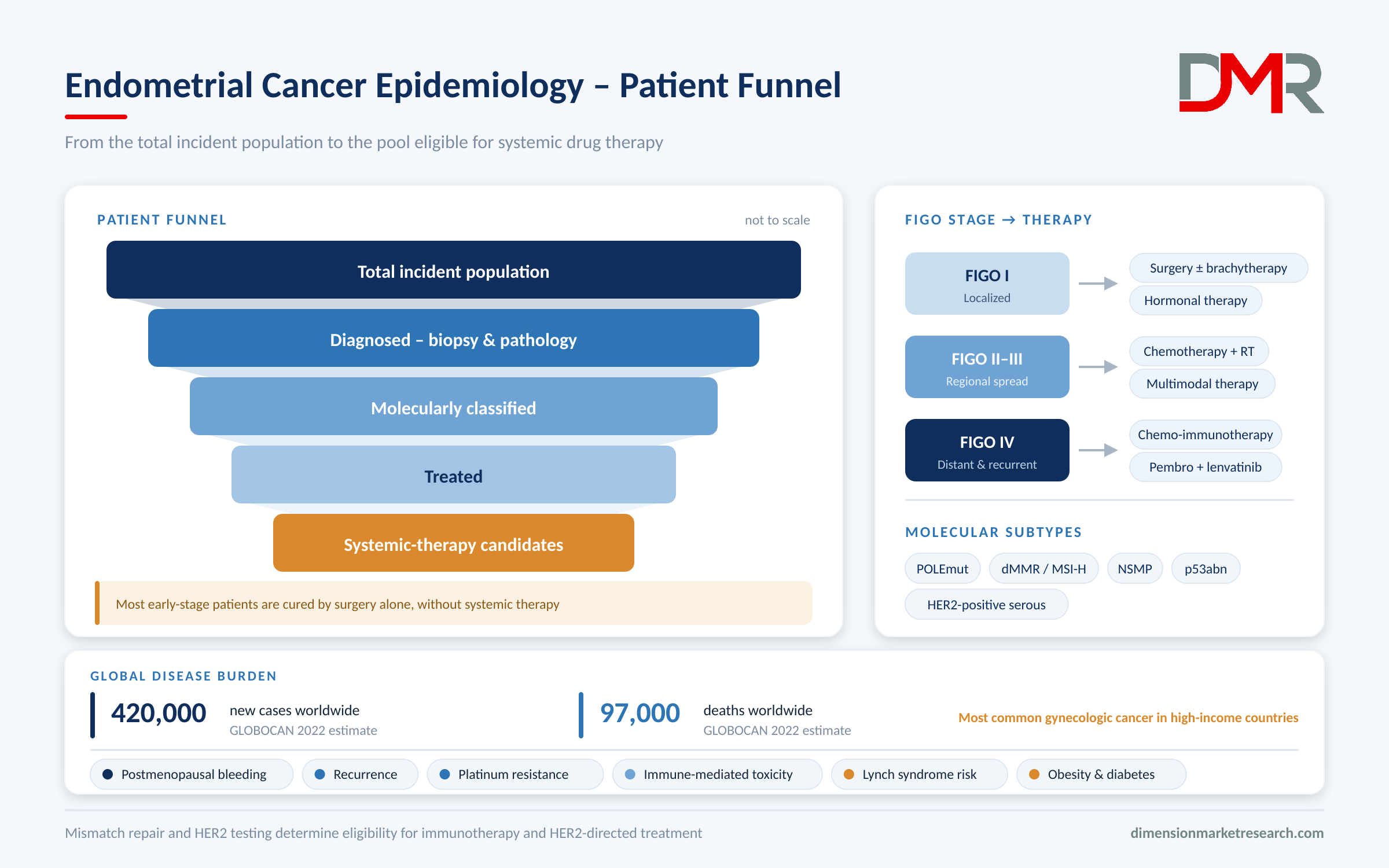
Endometrial cancer represents a significant and growing cancer burden across the major healthcare markets covered in the report. It is the most common gynecologic cancer in high-income countries, and GLOBOCAN 2022 estimated approximately 420,000 new cases and 97,000 deaths worldwide. Epidemiological patterns vary substantially between countries because of differences in population age structure, obesity and diabetes prevalence, hysterectomy rates for benign conditions, access to evaluation of abnormal bleeding, availability of endometrial biopsy and pathology services, molecular testing capacity, and registry coverage.
ℹ
To learn more about this report –
Download Your Free Sample Report Here
The epidemiology assessment provides a structured evaluation of the endometrial cancer population from overall incidence through diagnosis and treatment. Key parameters include:
- Total Endometrial Cancer Patient Population
- Prevalent Population
- Incidence Population
- Diagnosed Patient Population
- Treated Patient Population
- Untreated Patient Population
- Treatment-Eligible Population
- Disease Severity Distribution (By FIGO Stage)
- Localized Endometrial Cancer Population (FIGO Stage I)
- Regional Endometrial Cancer Population (FIGO Stage II–III)
- Metastatic Endometrial Cancer Population (FIGO Stage IV)
- Recurrent And Persistent Endometrial Cancer Population
- Newly Diagnosed Endometrial Cancer Population
- Histologic Type Distribution
- Molecular Subtype Distribution
- Age Distribution
- Diagnosis Rate
- Treatment Rate
- Treatment Penetration
- Treated Cases by Type of Treatment
- Regional Disease Burden
- Epidemiological Trends
The analysis distinguishes between the broader prevalent population and patients who are newly diagnosed and actively receiving treatment. This distinction is particularly important because a proportion of patients may be diagnosed late or remain without confirmed diagnosis, particularly where access to endometrial biopsy, specialist pathology, and gynecologic oncology services is limited. Additionally, many patients with early-stage disease are cured by surgery alone and do not require systemic drug therapy, which means that most pharmaceutical value is concentrated in high-risk, advanced, and recurrent disease.
The report also evaluates the increasing recognition of molecular classification as a complement to stage and histology in assessing recurrence risk. Population aging, rising obesity, and longer survival increase the number of patients diagnosed and living with prior disease, while differences in registry coverage and case definitions, such as registries that report broader uterine cancer categories, affect comparisons across countries. Associated considerations such as delayed evaluation of postmenopausal bleeding, recurrence after initial treatment, treatment-related effects, and long-term quality of life influence treatment decisions, disease monitoring, healthcare utilization, and long-term management strategies.
Patient Segmentation
The endometrial cancer patient population is segmented by age group, histologic subtype, FIGO stage at diagnosis, molecular subtype, and disease status. This approach provides a clearer understanding of the population eligible for different treatment categories and helps assess the potential addressable population for systemic and biomarker-guided therapies.
ℹ
To learn more about this report –
Download Your Free Sample Report Here
By Age Group
- Below 50 Years
- 50 to 64 Years
- 65 to 74 Years
- 75 Years and Above
The 50 to 64 and 65 to 74 age groups represent the core of the patient population because incidence rises after menopause. The 75 years and above group requires individualized treatment decisions based on comorbidities, functional status, and treatment tolerance, while diagnosis in women below 50 years is relevant to hereditary risk, obesity-related disease, and fertility-sparing treatment considerations.
By Histologic Subtype
Endometrioid (Type I): Estrogen-driven tumors that account for the majority of cases and are most often diagnosed at an early stage. Most are managed with surgery, with adjuvant radiotherapy or chemotherapy added according to recurrence risk.
Non-Endometrioid (Type II): Serous, clear cell, and carcinosarcoma tumors with more aggressive biology that account for a disproportionate share of advanced-stage disease and deaths. These patients are more likely to require chemotherapy, immunotherapy, and HER2-directed or other targeted treatment.
By FIGO Stage at Diagnosis
FIGO Stage I (Localized): Disease confined to the uterus, commonly detected early because of postmenopausal bleeding and usually curable by surgery, with adjuvant brachytherapy or chemotherapy for selected high-risk patients.
FIGO Stage II–III (Regional): Disease extending to the cervix, adnexa, pelvic tissues, or regional lymph nodes, generally requiring multimodal treatment combining surgery, radiotherapy, and chemotherapy.
FIGO Stage IV (Distant): Disease with distant spread, which together with recurrent disease drives most systemic therapy demand, including chemo-immunotherapy, targeted therapy, and hormonal treatment.
By Molecular Subtype
- POLE-Mutated (POLEmut)
- Mismatch Repair-Deficient (dMMR/MSI-H)
- No Specific Molecular Profile (NSMP)
- p53-Abnormal (p53abn)
Molecular subtypes follow the FIGO 2023 classification so that patient segmentation and market forecasts remain aligned. POLEmut tumors have an excellent prognosis and are increasingly considered for treatment de-escalation. dMMR/MSI-H tumors respond strongly to PD-1/PD-L1 inhibitors. NSMP is generally the largest group, and p53abn disease carries aggressive biology and the greatest need for new therapies.
By Disease Status
- Newly Diagnosed
- Persistent
- Recurrent
The disease-status segmentation separates patients diagnosed in the study year from those who have persistent or recurrent disease after prior treatment, because recurrent patients are treated in different lines of therapy and are assessed separately from the newly diagnosed funnel.
By Treatment Status
- Diagnosed and Treated
- Diagnosed and Untreated
- Undiagnosed or Not Histologically Confirmed
The treatment-status segmentation helps identify the gap between the total incident population and the population actively receiving treatment. Faster referral after postmenopausal bleeding, wider access to endometrial biopsy and molecular testing, and better coordination between surgical, radiation, and medical oncology teams can gradually increase the diagnosed and treated population.
By Treatment Requirement
- Surgical Treatment Candidates (Hysterectomy with Bilateral Salpingo-Oophorectomy)
- Fertility-Sparing and Hormonal Therapy Candidates
- Adjuvant Radiotherapy Candidates (Vaginal Brachytherapy and External Beam Radiotherapy)
- Adjuvant and First-Line Chemotherapy Candidates (Carboplatin–Paclitaxel)
- Immune Checkpoint Inhibitor Candidates (dMMR/MSI-H and pMMR Disease)
- Pembrolizumab plus Lenvatinib Candidates
- HER2-Directed Therapy Candidates
- Antibody-Drug Conjugate and Other Targeted Therapy Candidates
This segmentation helps evaluate how changes in treatment guidelines, physician preferences, reimbursement, molecular testing, and therapy availability can shift patients between surgery-based care and advanced systemic treatment categories.
Geographic Coverage
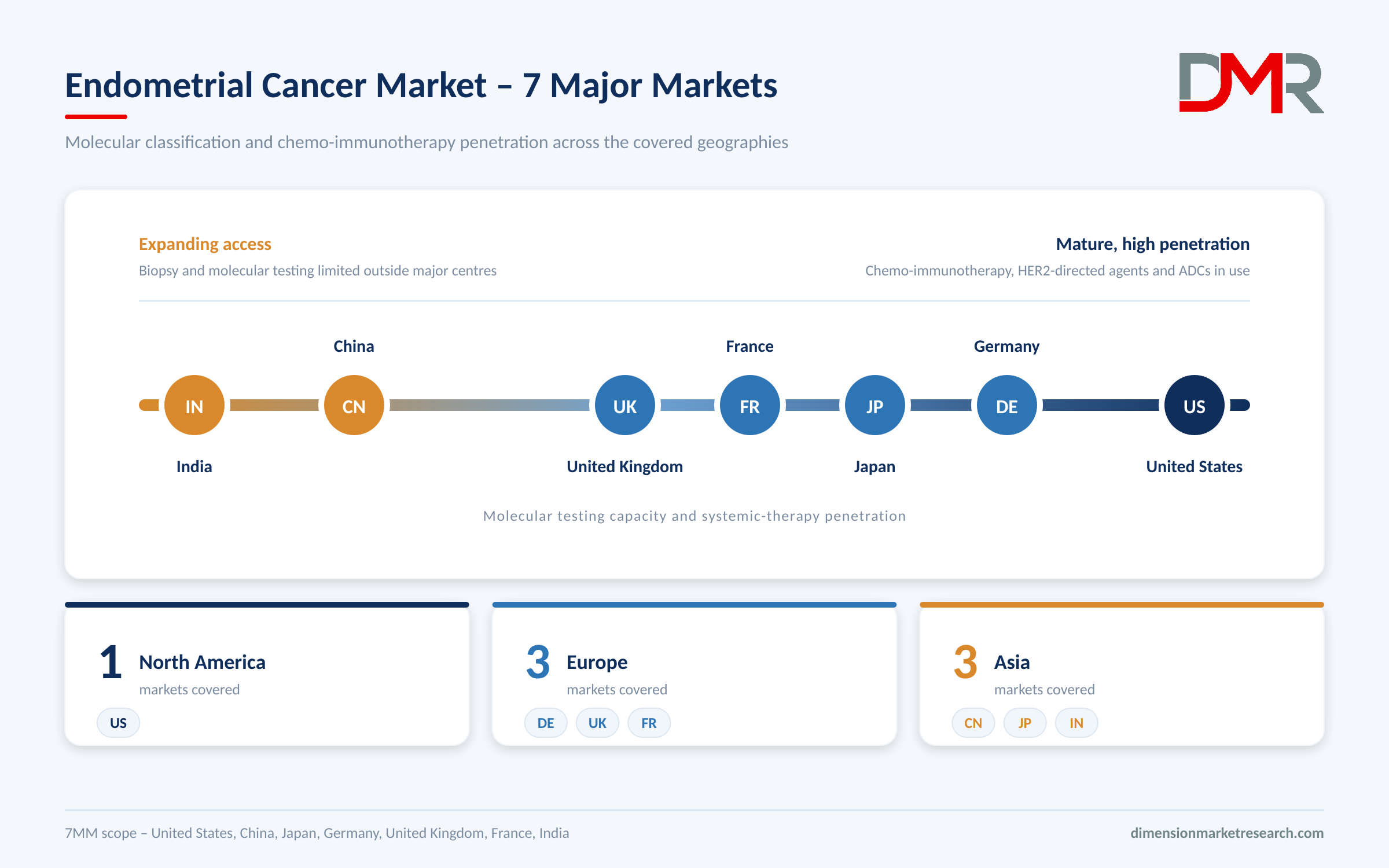
The report provides detailed market, epidemiology, treatment, and competitive analysis across 7 major markets:
- United States
- Germany
- France
- United Kingdom
- China
- Japan
- India
The geographic analysis considers differences in patient population, age structure, obesity prevalence, diagnosis rates, access to biopsy and molecular testing, healthcare infrastructure, reimbursement, therapeutic penetration, regulatory environment, physician adoption, and competitive activity. These factors are particularly important because the commercial opportunity for endometrial cancer therapies differs considerably between mature pharmaceutical markets and high-growth emerging markets.
ℹ
To learn more about this report –
Download Your Free Sample Report Here
United States
The United States represents the largest endometrial cancer market, supported by high disease awareness, a large and aging population, high obesity prevalence, established gynecologic and medical oncology networks, and broad availability of advanced therapies. Chemo-immunotherapy approvals in the first-line setting have rebuilt the treatment landscape around PD-1/PD-L1 inhibitors, and combinations such as pembrolizumab plus lenvatinib are established options after prior platinum-based therapy.
Treatment selection is influenced by mismatch repair status, HER2 expression, prior therapy, tolerability, payer policies, and oncologist familiarity. Biomarker testing is relatively well established, and continued development of antibody-drug conjugates, HER2-directed agents, and combinations for pMMR and p53-abnormal disease is expected to intensify competition.
Germany
Germany represents a leading European endometrial cancer market with established gynecologic oncology centers, certified cancer networks, and strong utilization of guideline-based surgical, radiotherapy, and systemic treatment. A developed healthcare system supports access to pathology, molecular testing, and approved immunotherapies.
The market is influenced by health technology assessment, reimbursement negotiations, and the relative benefit of newer therapies in biomarker-defined populations. Continued adoption of PD-1/PD-L1 inhibitors with chemotherapy and of targeted options for previously treated disease is expected to remain important to market development.
France
France is an important European market supported by developed healthcare infrastructure, specialist cancer centers, and established reimbursement mechanisms. Surgery, radiotherapy, and platinum-based chemotherapy form the treatment backbone, with immunotherapy increasingly integrated into the management of advanced and recurrent disease.
Market growth is influenced by access to molecular testing, reimbursement conditions, regulatory and pricing decisions, and the introduction of therapies with differentiated mechanisms. Referral and care coordination across cancer centers and hospitals shape how quickly eligible patients receive biomarker-guided treatment.
United Kingdom
The UK endometrial cancer market benefits from established clinical guidelines, specialist gynecologic oncology services, and structured treatment pathways. Immunotherapy is incorporated into management of advanced and recurrent disease for eligible patients, and molecular classification is increasingly used alongside stage and histology.
Market development is influenced by healthcare-system treatment criteria, cost-effectiveness assessments, waiting times for diagnostic evaluation, and access to specialist services. Faster referral after postmenopausal bleeding and wider molecular testing are important to earlier diagnosis and appropriate treatment sequencing.
China
China represents a significant long-term growth opportunity because of its large and aging female population, rising obesity and metabolic disease, and increasing recognition of endometrial cancer as a growing gynecologic malignancy. Improvements in healthcare infrastructure, diagnostic capability, and specialist availability are supporting greater diagnosis and treatment access.
The market is gradually experiencing increased adoption of immunotherapy and targeted treatments, although affordability, reimbursement coverage, access to molecular testing, and differences between urban and rural healthcare services remain important considerations. Expansion of domestic oncology innovation, including locally developed PD-1 inhibitors and antibody-drug conjugates, may also increase competitive intensity.
Japan
Japan represents a mature healthcare and pharmaceutical market with sophisticated medical infrastructure and established gynecologic oncology services. An aging population and a strong domestic oncology industry, including companies with products used in endometrial cancer, support continued demand for advanced disease management.
Treatment decisions are influenced by clinical efficacy, safety, reimbursement conditions, patient age, and physician familiarity. The market offers opportunities for therapies that can demonstrate improved survival, better tolerability in older patients, or more convenient administration, as well as growing use of molecular testing to guide treatment.
India
India represents a high-potential endometrial cancer market because of its large population, rising obesity and diabetes prevalence, expanding healthcare infrastructure, and improving access to specialty care. Diagnosis and treatment rates have significant potential for expansion as biopsy facilities, pathology services, and oncology centers become more accessible.
Affordability remains an important factor influencing treatment selection, particularly for immunotherapies, targeted agents, and antibody-drug conjugates, and access to molecular testing is limited outside major centers. Greater availability of lower-cost medicines, increasing specialist coverage, and improving patient awareness can support future market expansion.
Market Segmentation
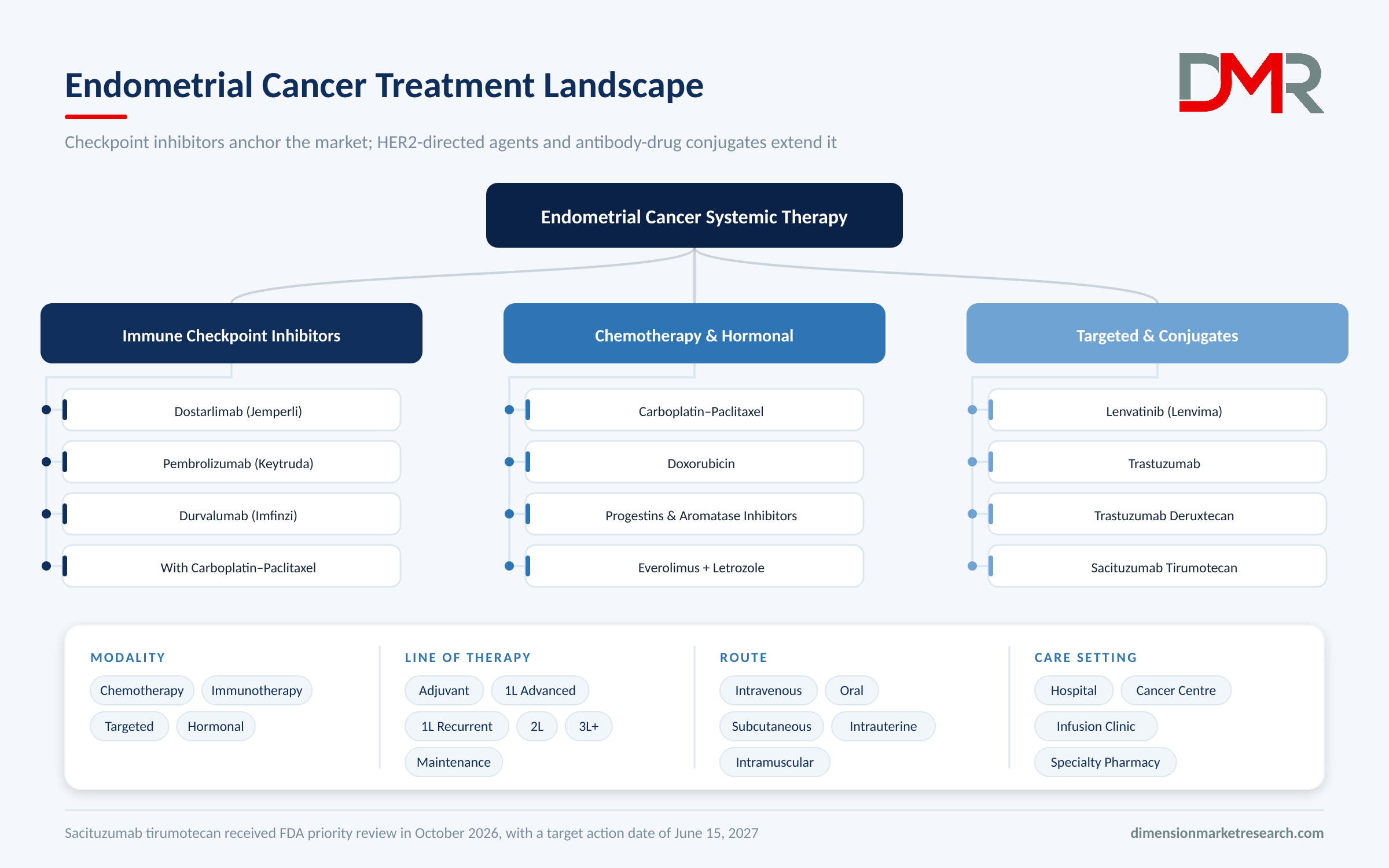
The global endometrial cancer market is defined as systemic drug therapy and is valued in USD million. It is segmented by treatment modality, systemic drug class, line of therapy, route of administration, molecular subtype, and care setting. The segmentation captures both established treatment categories and emerging therapeutic approaches, including immune checkpoint inhibitors, multikinase inhibitors, chemotherapy, HER2-directed therapies, hormonal therapies, and antibody-drug conjugates. Surgery and radiotherapy are not included in market value. They are assessed only in the epidemiology and patient-funnel analysis, because they determine the pool of patients who proceed to adjuvant and systemic therapy. Market value is concentrated in advanced and recurrent disease rather than in the early-stage majority treated by surgery.
By Drug Class
Immune Checkpoint Inhibitors
Immune checkpoint inhibitors represent the largest and fastest-growing segment of the endometrial cancer market. These therapies block the PD-1/PD-L1 pathway and restore T-cell activity against tumor cells, with particularly deep and durable responses in mismatch repair-deficient disease.
The segment includes dostarlimab, pembrolizumab, and durvalumab, used with carboplatin and paclitaxel in the first-line setting and, in selected patients, as monotherapy after prior therapy. First-line chemo-immunotherapy approvals have rebuilt the market around PD-1/PD-L1 agents, and subcutaneous formulations and broader use in pMMR disease continue to support utilization.
Multikinase Inhibitors
Multikinase inhibitors are represented mainly by lenvatinib, used in combination with pembrolizumab for patients with pMMR disease who have progressed after prior systemic therapy. The segment is important for the non-dMMR population, but its growth is influenced by the movement of checkpoint inhibitors into first-line treatment and by tolerability management.
Cytotoxic Chemotherapy
Chemotherapy, principally carboplatin and paclitaxel, with doxorubicin used in later settings, is the volume backbone of systemic treatment. It is used after surgery in selected high-risk patients and as the treatment backbone for advanced or recurrent disease. Chemotherapy loses value share as it becomes the partner to immunotherapy rather than the primary product.
HER2-Directed Therapies
HER2-directed therapies, including trastuzumab and trastuzumab deruxtecan, address HER2-positive disease, particularly serous and other p53-abnormal tumors. The segment is expected to grow quickly as HER2 testing becomes more routine and the antibody-drug conjugate option extends treatment for previously treated patients.
Hormonal Therapies
Hormonal therapies include progestins, aromatase inhibitors, and mTOR inhibitor combinations such as everolimus with letrozole, used for hormone receptor-positive, lower-grade, and fertility-sparing indications. The segment provides a lower-toxicity option for selected patients and contributes meaningful volume despite lower per-patient value.
Antibody-Drug Conjugates and Emerging Therapies
Antibody-drug conjugates and other emerging therapies address patients who progress after platinum chemotherapy and immunotherapy. TROP2-directed and HER2-directed conjugates, PI3K/AKT/mTOR pathway inhibitors, and novel combinations are expected to broaden the treatment landscape and drive the fastest growth, particularly in p53-abnormal and pMMR disease.
By Treatment Modality
- Chemotherapy
- Immunotherapy
- Targeted Therapy
- Hormonal Therapy
Market value covers systemic drug therapy only. Chemotherapy is used after surgery in selected high-risk patients and as the backbone for advanced or recurrent disease, while immunotherapy, targeted therapy, and hormonal therapy are concentrated in advanced, recurrent, and biomarker-selected patients. Surgery (hysterectomy with bilateral salpingo-oophorectomy) and radiotherapy (vaginal brachytherapy and external beam radiotherapy) remain central to treatment of localized disease but are excluded from market value. They are captured in the treated-patient analysis in the epidemiology chapters.
By Line of Therapy
- Adjuvant (High-Risk Early Stage)
- First-Line Primary Advanced
- First-Line Recurrent
- Second-Line Therapy
- Third-Line and Later
- Maintenance and Hormonal
First line is the largest value segment because chemo-immunotherapy is followed by prolonged PD-1/PD-L1 maintenance. Second-line value is shifting forward as checkpoint inhibitors move into first-line treatment, while later-line demand creates opportunities for antibody-drug conjugates and targeted agents. Adjuvant therapy for high-risk early-stage disease is a developing segment as molecular classification refines risk assessment.
By Route of Administration
- Intravenous (Checkpoint Inhibitors, Chemotherapy, Antibody-Drug Conjugates)
- Oral (Lenvatinib, Hormonal and mTOR Inhibitors)
- Subcutaneous (Checkpoint Inhibitor Formulations)
- Intrauterine (Levonorgestrel Intrauterine System, Fertility-Sparing)
- Intramuscular and Other (Depot Progestins)
Intravenous administration, led by PD-1/PD-L1 inhibitors given with carboplatin and paclitaxel, accounts for the largest share of the market. Oral therapy is anchored by lenvatinib and hormonal agents, while subcutaneous checkpoint inhibitor formulations are expected to grow quickly by reducing chair time and moving maintenance dosing out of the infusion suite.
By Molecular Subtype
- POLE-Mutated (POLEmut)
- Mismatch Repair-Deficient (dMMR/MSI-H)
- No Specific Molecular Profile (NSMP)
- p53-Abnormal (p53abn)
Mismatch repair-deficient tumors account for a disproportionately large share of market value relative to patient numbers because of their deep and durable response to PD-1/PD-L1 inhibitors. NSMP is the largest patient group and gains value as chemo-immunotherapy and lenvatinib regimens broaden use beyond dMMR. p53-abnormal disease carries different economics, with aggressive biology, more chemotherapy, and the fastest uptake of HER2-directed agents and antibody-drug conjugates. POLE-mutated tumors have an excellent prognosis and are increasingly de-escalated, so their value share remains marginal.
By Care Setting
- Hospitals (Inpatient and Outpatient)
- Specialty Cancer Centers
- Ambulatory Infusion Centers and Clinics
- Specialty and Retail Pharmacies
- Home Care and Other Settings
Hospitals remain the dominant care setting because staging surgery, platinum chemotherapy, and immunotherapy initiation are delivered in hospital oncology departments. Specialty cancer centers retain complex cases. Ambulatory infusion centers and clinics are expected to be the fastest-growing setting as maintenance immunotherapy and subcutaneous formulations shift out of hospitals, while oral therapies such as lenvatinib and hormonal agents flow through specialty and retail pharmacies.
Market Dynamics
Growth Drivers
Increasing Adoption of Immunotherapy and Biomarker-Guided Therapy
Immunotherapy and biomarker-guided treatment continue to be among the strongest growth drivers in the endometrial cancer market. The ability of PD-1/PD-L1 inhibitors to improve progression-free survival, and in some settings overall survival, has changed first-line treatment for advanced and recurrent disease, with the largest benefit in dMMR/MSI-H tumors.
The growing use of mismatch repair testing, HER2 testing, and molecular classification is particularly important as physicians increasingly select therapy according to tumor biology. Expanded clinical experience and physician familiarity are also supporting adoption across the seven markets.
Advancement in Disease Biology-Based Drug Development
Advances in understanding the molecular biology of endometrial cancer have created opportunities for more precise therapeutic intervention. Companies are investing in antibody-drug conjugates, HER2-directed agents, PI3K/AKT/mTOR pathway inhibitors, and new immunotherapy combinations designed for pMMR and p53-abnormal disease rather than relying solely on chemotherapy.
Development activity is focused on patients who progress after platinum chemotherapy and immunotherapy, improved treatment durability, and combinations that extend the benefit of checkpoint blockade beyond dMMR disease. These developments are expected to increase therapeutic competition.
Rising Disease Burden from Population Aging and Obesity
Population aging, increasing obesity and diabetes prevalence, and lower hysterectomy rates for benign conditions are expected to increase the number of new cases. Longer survival also increases the number of women living with a prior diagnosis, and a larger recurrent population adds to demand for later-line treatment.
China and India are particularly important growth opportunities because of their large populations, rising metabolic risk factors, and expanding oncology infrastructure, while aging cohorts in Japan and Europe sustain demand in mature markets.
Improving Diagnostic Access and Care Pathways
Faster referral after postmenopausal bleeding, wider access to endometrial biopsy, and the linking of registry and hospital records can support earlier diagnosis and better tracking of stage, treatment, and recurrence. Wider molecular testing improves identification of patients eligible for biomarker-directed therapy.
These improvements can increase the diagnosed and treated population, support more comprehensive disease management, and create demand for therapies capable of achieving durable control in advanced and recurrent disease.
Market Restraints
High Cost of Advanced Therapies
Immunotherapies, targeted agents, and antibody-drug conjugates often carry substantially higher treatment costs than chemotherapy or hormonal therapy. High costs create affordability challenges for patients and increase pressure on healthcare payers, particularly for maintenance therapy given for prolonged periods.
In emerging markets, limited reimbursement coverage and high out-of-pocket expenditure can restrict access to advanced treatment. Differences in reimbursement for molecular tests and systemic therapies may therefore continue to influence treatment selection and delay adoption of innovative therapies.
Diagnostic and Treatment Accessibility Gap
Unequal access to gynecologic oncologists, endometrial biopsy, specialist pathology, molecular testing, radiotherapy, and advanced medicines remains a major challenge. Delays in evaluating abnormal bleeding can postpone diagnosis, and rural and underserved populations may face longer diagnostic delays and fewer treatment options.
Differences in healthcare infrastructure and registry coverage can result in significant variation in diagnosis, treatment penetration, access to biomarker-guided therapy, and the reliability of cross-country comparisons.
Limited Options and Variable Response in pMMR and p53-Abnormal Disease
Although immunotherapy has significantly improved outcomes, benefit is less pronounced in pMMR disease, which represents the majority of patients with advanced cancer. Some patients experience inadequate response, progression after first-line therapy, treatment intolerance, or discontinuation because of immune-mediated or kinase-inhibitor toxicities.
The need for effective options after progression on platinum chemotherapy and a checkpoint inhibitor, and for better-tolerated regimens in patients with comorbidities, creates continuing demand for therapies offering durable and predictable disease control.
Competitive Landscape
The global endometrial cancer market is characterized by competition among large pharmaceutical companies with established oncology portfolios and emerging developers focused on antibody-drug conjugates and precision treatment approaches. The market is anchored by PD-1/PD-L1 immunotherapy franchises, with companies differentiated by label breadth, biomarker coverage, combination partners, and commercial reach across the seven markets.
Leading companies covered in the competitive assessment include:
- Merck & Co., Inc.
- GSK plc
- AstraZeneca plc
- Eisai Co., Ltd.
- Daiichi Sankyo Company, Limited
Merck markets KEYTRUDA (pembrolizumab) in combination with carboplatin and paclitaxel, with LENVIMA in selected pMMR disease, and as monotherapy in MSI-H/dMMR disease. GSK markets JEMPERLI (dostarlimab) for dMMR and, with chemotherapy, for advanced or recurrent disease. AstraZeneca markets IMFINZI (durvalumab) with chemotherapy, and, together with Daiichi Sankyo, ENHERTU (trastuzumab deruxtecan) for HER2-expressing solid tumors. Eisai markets LENVIMA (lenvatinib), used with pembrolizumab. Product indications and approval status vary by country and are verified in the marketed product profiles.
Competition is increasingly focused on demonstrating improved survival, activity in pMMR and p53-abnormal disease, tolerability, and convenient administration, including subcutaneous formulations, rather than simply introducing additional therapies within existing classes. The competitive environment is also influenced by upcoming loss of exclusivity for established checkpoint inhibitors, pricing pressure, reimbursement restrictions, and oncologist familiarity with established regimens.
Pipeline innovation is another major competitive factor. Companies with strong clinical-development capabilities and diversified oncology portfolios may be better positioned to respond to changing treatment preferences, particularly through antibody-drug conjugates, HER2-directed agents, and combinations for patients who have progressed after prior platinum chemotherapy and immunotherapy.
Recent Developments
- October 2026 – Merck sacituzumab tirumotecan receives FDA priority review: Merck announced that the US FDA accepted for priority review a biologics license application for sacituzumab tirumotecan (sac-TMT), a TROP2-directed antibody-drug conjugate developed with Kelun-Biotech, for adults with endometrial cancer previously treated with platinum-containing chemotherapy and a PD-1 or PD-L1 inhibitor. The application is supported by the Phase 3 TroFuse-005 trial, which reported improved survival and a higher objective response rate than treatment of physician's choice, and the FDA set a target action date of June 15, 2027. The development highlights increasing interest in antibody-drug conjugates for patients who progress after first-line chemo-immunotherapy.
- June 2026 – GSK dostarlimab reports long-term GARNET survival data: Six-year follow-up data from the GARNET study of dostarlimab monotherapy in pretreated dMMR/MSI-H advanced or recurrent endometrial cancer were presented at the 2026 ESMO Gynaecological Cancers Annual Congress. The long-term follow-up reported no new safety signals and reinforced dostarlimab as a standard-of-care option for this population, underlining the durability of benefit with checkpoint blockade in dMMR/MSI-H disease.
Report Coverage
The report provides comprehensive assessment of the global endometrial cancer market across the seven specified major markets. It integrates epidemiological analysis with commercial market assessment, patient journey, biomarker testing, marketed and pipeline therapy benchmarking, and unmet needs to provide a broader understanding of the current and future treatment landscape.
The study covers:
- Indication Covered
- Epidemiology Parameters
- Patient Segmentation
- Geographic Coverage
- Market Segmentation
- Units of Measurement
- Study Period
- Data Sources
- Companies Covered
- Report Deliverables
- Out of Scope
- Customization