Global Environmental Health Safety Software Market Snapshot
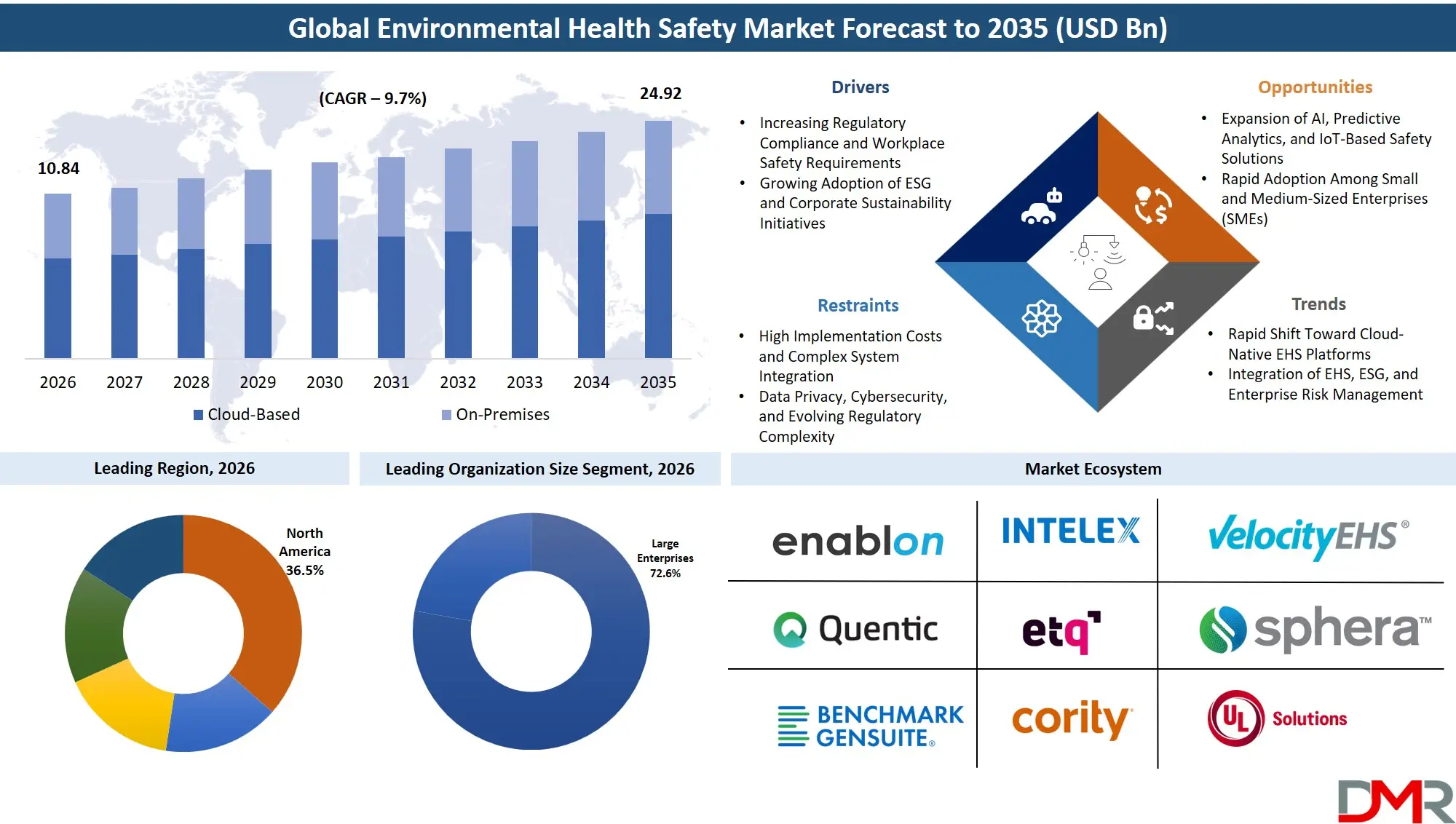
- Estimated Market Size (2026): USD 10.84 Billion
- Projected Market Size (2035): USD 24.92 Billion
- Global CAGR (2026–2035): 9.7%
- Leading Deployment Mode (2026): Cloud-Based, 68.3% Market Share
- Leading Organization Size (2026): Large Enterprises, 72.6% Market Share
- Leading End-user Industry (2026): Manufacturing, 23.8% Market Share
- Fastest-Growing Application: Sustainability & ESG Management, 13.6% CAGR
- Leading Region (2026): North America, 36.5% Market Share
What is Environmental Health Safety and its Market Size?
The Environmental Health & Safety (EHS) market comprises software platforms, consulting services, managed services, and digital solutions that enable organizations to manage workplace safety, occupational health, environmental compliance, operational risks, sustainability initiatives, and regulatory reporting.
EHS solutions assist businesses in identifying workplace hazards, reducing occupational injuries, monitoring environmental performance, ensuring regulatory compliance, managing incidents, conducting audits, and improving corporate sustainability. Modern EHS platforms increasingly integrate cloud computing, artificial intelligence (AI), Internet of Things (IoT), predictive analytics, and mobile technologies to automate compliance processes and enhance operational efficiency.
ℹ
To learn more about this report –
Download Your Free Sample Report Here
Organizations across manufacturing, energy, healthcare, construction, mining, transportation, and government sectors rely on EHS systems to strengthen safety culture, reduce operational risks, improve employee well-being, and meet increasingly stringent environmental and workplace safety regulations.
The Global Environmental Health & Safety (EHS) Market is estimated to reach USD 10.84 billion in 2026 and is projected to grow to approximately USD 24.92 billion by 2035, registering a compound annual growth rate (CAGR) of 9.7% during the forecast period.
Market expansion is driven by tightening occupational safety regulations, increasing environmental compliance requirements, rapid enterprise digitalization, and growing corporate investments in Environmental, Social, and Governance (ESG) initiatives. Organizations are increasingly adopting cloud-based EHS platforms to improve compliance visibility, automate incident reporting, and enable real-time workplace monitoring.
The integration of AI, IoT-enabled sensors, predictive analytics, and mobile applications is transforming traditional safety management into proactive risk management, further accelerating market growth. Rising industrial automation and stricter sustainability reporting standards are expected to create sustained demand throughout the forecast period.
Use Cases
- Workplace Incident Management: Automates reporting, investigation, corrective actions, and incident tracking to improve employee safety.
- Regulatory Compliance Management: Helps organizations comply with OSHA, ISO, environmental, and regional safety regulations.
- Occupational Health Monitoring: Tracks employee health, exposure risks, medical surveillance, and workplace wellness programs.
- Environmental Risk Management: Monitors emissions, waste management, pollution control, and environmental performance indicators.
- Audit & Inspection Management: Digitizes inspections, safety audits, compliance assessments, and corrective action workflows.
- Sustainability & ESG Reporting: Supports ESG data collection, carbon reporting, sustainability metrics, and corporate disclosure requirements.
Key Takeaways
- The global Environmental Health & Safety (EHS) market is projected to grow from USD 10.84 billion in 2026 to USD 24.92 billion by 2035, at a 9.7% CAGR.
- Increasing workplace safety regulations and global ESG adoption are the primary drivers supporting long-term market expansion.
- Cloud-based deployment remains the dominant deployment model due to scalability, lower implementation costs, and easier software updates.
- Manufacturing represents the largest end-user industry owing to stringent safety standards and high operational risk exposure.
- Sustainability & ESG Management is expected to emerge as the fastest-growing application segment as regulatory disclosure requirements continue to expand.
- North America maintains market leadership through advanced regulatory frameworks, mature enterprise software adoption, and strong investment in digital workplace safety technologies.
How AI/Gen AI is Transforming the Environmental Health Safety Software Market?
Artificial Intelligence (AI) has become one of the most transformative technologies shaping the Environmental Health & Safety (EHS) market. AI-powered platforms enable organizations to analyze vast amounts of operational, environmental, and workplace safety data to identify hidden risks before incidents occur.
Machine learning algorithms continuously evaluate historical incident records, worker behavior, environmental conditions, equipment performance, and compliance data to generate predictive safety insights. AI is also improving workplace inspections through computer vision technologies capable of identifying missing personal protective equipment (PPE), unsafe employee behaviors, hazardous working conditions, and equipment abnormalities using surveillance cameras and connected devices.
The integration of AI significantly improves operational efficiency by automating incident reporting, compliance documentation, regulatory updates, corrective action management, and workplace audits. Organizations benefit from reduced administrative workloads, faster regulatory reporting, lower compliance costs, and improved decision-making through predictive analytics.
AI is also reshaping competition within the EHS market by enabling vendors to differentiate their platforms through predictive risk management, automated ESG reporting, intelligent analytics, and real-time workplace monitoring.
Vendors increasingly combine AI with cloud computing, IoT sensors, digital twins, and advanced analytics to deliver proactive EHS solutions rather than traditional reactive compliance systems. As enterprises prioritize digital transformation and sustainability objectives, AI-enabled EHS platforms are expected to become a standard component of enterprise risk and compliance management strategies.
Key Drivers in the Global Environmental Health Safety Software Market
Increasing Regulatory Compliance and Workplace Safety Requirements
One of the primary factors driving the Environmental Health & Safety (EHS) market is the growing emphasis on workplace safety and regulatory compliance across both developed and emerging economies. Governments and regulatory authorities continue to implement stricter occupational health, environmental protection, hazardous material handling, and industrial safety regulations. Organizations are therefore investing in digital EHS solutions to automate compliance management, maintain audit readiness, reduce workplace incidents, and minimize legal and financial risks associated with non-compliance
Growing Adoption of ESG and Corporate Sustainability Initiatives
The increasing importance of Environmental, Social, and Governance (ESG) performance is significantly accelerating demand for EHS solutions. Investors, customers, employees, and regulators are placing greater emphasis on transparent sustainability reporting and responsible business practices. Organizations are therefore integrating EHS management with broader ESG strategies to improve environmental performance, reduce carbon emissions, strengthen workplace safety, and enhance corporate governance.
Restraints in the Global Environmental Health Safety Software Market
High Implementation Costs and Complex System Integration
Despite strong market growth, the high cost of implementing enterprise-wide EHS platforms remains a significant challenge, particularly for small and medium-sized enterprises (SMEs). Deploying comprehensive EHS software often requires substantial investments in software licensing, cloud infrastructure, customization, employee training, consulting services, and long-term maintenance.
Data Privacy, Cybersecurity, and Evolving Regulatory Complexity
As cloud-based EHS platforms become increasingly prevalent, concerns related to cybersecurity, data privacy, and cross-border regulatory compliance have become more prominent. EHS systems often store sensitive employee health records, workplace incident reports, environmental monitoring data, and confidential operational information. Cybersecurity threats, unauthorized access, and data breaches can expose organizations to legal liabilities and reputational damage.
Growth Opportunities in the Global Environmental Health Safety Software Market
Expansion of AI, Predictive Analytics, and IoT-Based Safety Solutions
Artificial intelligence, predictive analytics, and IoT technologies represent one of the most significant growth opportunities within the Environmental Health & Safety market. Connected sensors, wearable devices, drones, and industrial monitoring systems generate continuous streams of operational data that can be analyzed to identify safety risks before incidents occur.
Rapid Adoption Among Small and Medium-Sized Enterprises (SMEs)
Historically, comprehensive EHS solutions were primarily adopted by large multinational corporations due to their higher implementation costs. However, the growing availability of cloud-based Software-as-a-Service (SaaS) platforms is making advanced EHS capabilities increasingly accessible to SMEs. Subscription-based pricing, simplified deployment, remote accessibility, and reduced infrastructure requirements enable smaller organizations to improve workplace safety and regulatory compliance without significant upfront investment.
Trends in the Global Environmental Health Safety Software Market
Rapid Shift Toward Cloud-Native EHS Platforms
Cloud deployment continues to dominate new EHS implementations due to its scalability, flexibility, and lower total cost of ownership. Organizations increasingly prefer cloud-native platforms that enable centralized management of global operations, automatic software updates, mobile accessibility, and seamless integration with enterprise applications. Cloud architecture also supports advanced analytics, AI-powered insights, and real-time collaboration across geographically distributed facilities, making it the preferred deployment model for modern EHS management.
Integration of EHS, ESG, and Enterprise Risk Management
Organizations are increasingly adopting unified platforms that combine Environmental Health & Safety management with ESG reporting, sustainability initiatives, enterprise risk management (ERM), and corporate governance. This integrated approach enables businesses to consolidate compliance data, improve executive visibility, streamline reporting, and align sustainability objectives with operational risk management.
Research Scope and Analysis
The Global Environmental Health & Safety (EHS) Market is segmented by Deployment Mode, Organization Size, Application, and End-user Industry. These segmentation categories provide a comprehensive understanding of adoption patterns across enterprise environments, operational requirements, and industry-specific compliance needs. While cloud deployment continues to dominate due to its scalability and cost efficiency, increasing investments in ESG reporting, AI-enabled risk management, and regulatory compliance are driving growth across multiple application areas and industry verticals.
ℹ
To learn more about this report –
Download Your Free Sample Report Here
By Deployment Mode Analysis
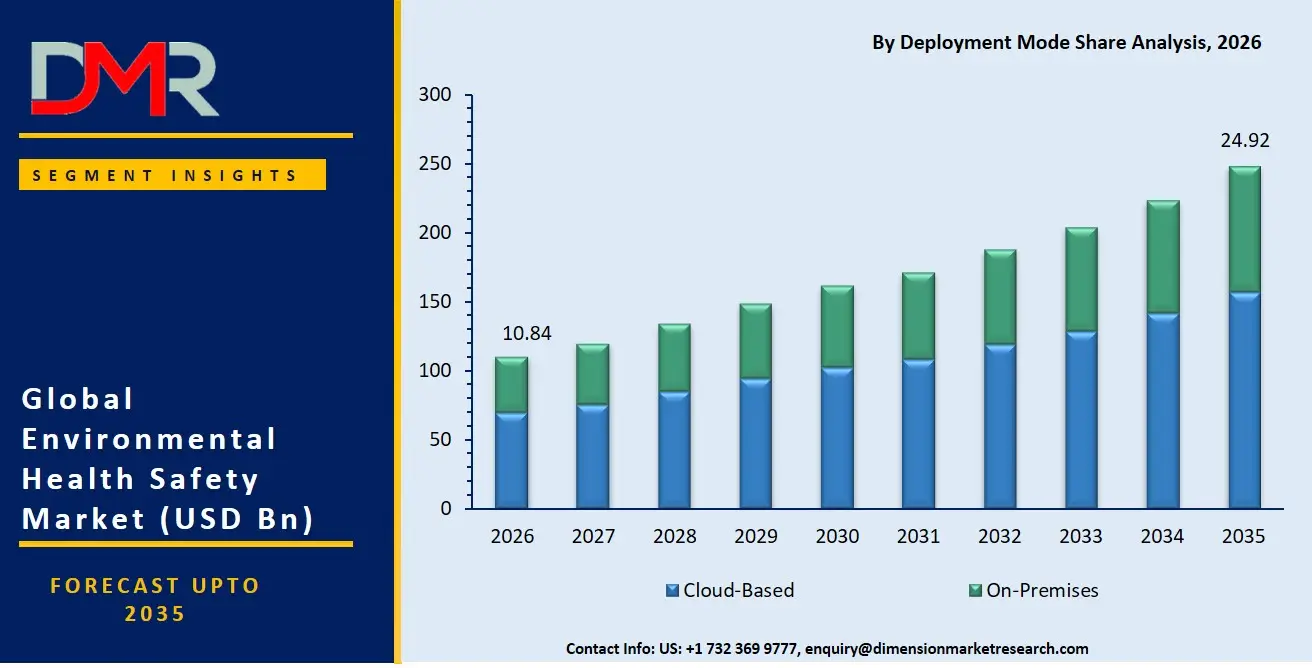
The Cloud-Based segment dominated the Global Environmental Health & Safety (EHS) Market in 2026, accounting for approximately 68.3% of total market revenue. Its leadership is primarily attributed to the growing enterprise preference for Software-as-a-Service (SaaS) platforms that offer lower upfront investment, rapid deployment, centralized data management, automatic software updates, and remote accessibility. Cloud-based EHS solutions enable organizations to manage compliance, incident reporting, inspections, audits, environmental monitoring, and ESG reporting across geographically dispersed operations through a unified platform. The increasing adoption of AI, IoT-enabled workplace monitoring, and predictive analytics further strengthens the value proposition of cloud-native EHS systems. Additionally, cloud deployment simplifies integration with ERP, HR, asset management, and business intelligence platforms, enhancing enterprise-wide visibility and operational efficiency.
ℹ
To learn more about this report –
Download Your Free Sample Report Here
The Cloud-Based segment is also expected to remain the fastest-growing deployment model, expanding at a CAGR of 11.2% during the forecast period, driven by accelerating digital transformation initiatives and increasing SME adoption. Meanwhile, the On-Premises segment represented approximately 31.7% of the market in 2026 and continues to maintain demand among highly regulated industries and government organizations requiring greater control over sensitive operational and employee data.
By Organization Size Analysis
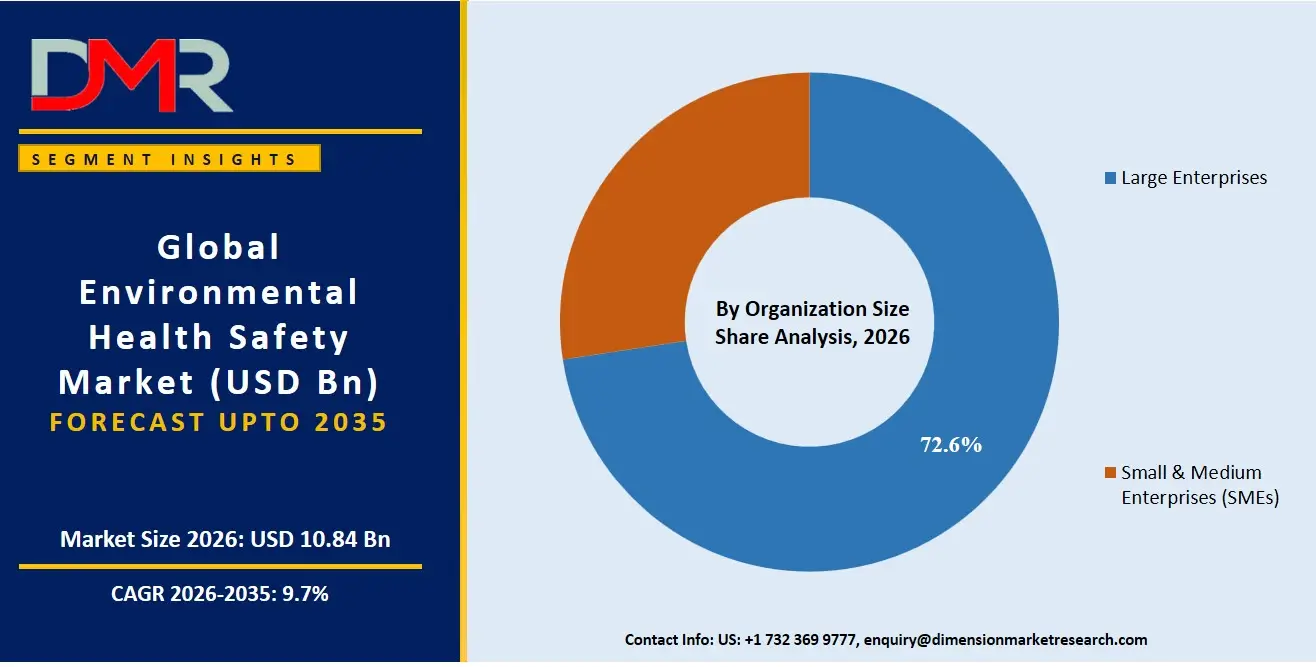
The Large Enterprises segment held the largest share of the Environmental Health & Safety (EHS) Market in 2026, accounting for approximately 72.6% of global revenue. Large multinational organizations operate complex manufacturing facilities, energy assets, construction projects, and global supply chains that require comprehensive EHS management systems to ensure regulatory compliance and workplace safety across multiple jurisdictions. These organizations typically possess greater financial resources and IT capabilities to implement enterprise-wide EHS platforms integrated with ERP, HR, ESG, and operational management systems. Increasing investor focus on ESG performance, sustainability disclosures, and enterprise risk management further encourages large corporations to invest in advanced AI-powered EHS solutions capable of predictive analytics, automated compliance monitoring, and centralized reporting.
The Small & Medium Enterprises (SMEs) segment is projected to register the fastest growth, expanding at a CAGR of approximately 12.4% throughout the forecast period. Increasing availability of cloud-based subscription models, simplified implementation processes, and affordable SaaS offerings is enabling SMEs to adopt modern EHS platforms without substantial capital investment. SMEs are also responding to tightening occupational safety regulations and customer requirements related to supply chain sustainability. In 2026, SMEs accounted for approximately 27.4% of the global market and are expected to steadily increase their market contribution as digital adoption accelerates.
By Application Analysis
Among application segments, Risk & Compliance Management emerged as the dominant category in 2026, accounting for approximately 24.8% of total market revenue. Organizations across manufacturing, oil & gas, chemicals, healthcare, mining, and utilities prioritize regulatory compliance due to increasingly stringent occupational safety, environmental protection, and sustainability requirements. Modern EHS platforms automate regulatory reporting, permit management, compliance tracking, policy management, inspections, and corrective actions, significantly reducing administrative workloads while minimizing legal and financial risks. Continuous regulatory updates, coupled with growing global compliance complexity, continue to reinforce the importance of integrated risk and compliance management solutions.
The Sustainability & ESG Management segment is expected to be the fastest-growing application, registering a CAGR of approximately 13.6% during the forecast period. Organizations are increasingly integrating ESG metrics with traditional EHS systems to improve sustainability reporting, carbon emissions management, environmental performance monitoring, and stakeholder transparency. The Incident Management segment remained the second-largest application in 2026 with an estimated 19.6% market share, supported by widespread demand for automated incident reporting, investigation workflows, root cause analysis, and corrective action management across high-risk industries.
By End User Industry Analysis
The Manufacturing sector represented the largest end-user industry in the Environmental Health & Safety (EHS) Market during 2026, contributing approximately 23.8% of global revenue. Manufacturing organizations operate highly regulated production environments characterized by complex machinery, hazardous materials, and stringent workplace safety requirements. Consequently, manufacturers continue investing heavily in EHS software to improve worker safety, automate compliance, reduce workplace incidents, optimize operational efficiency, and support sustainability initiatives. The growing adoption of Industry 4.0 technologies—including IoT sensors, predictive maintenance, industrial automation, and AI-powered analytics—is further accelerating EHS digitalization throughout the manufacturing sector.
The Healthcare & Pharmaceuticals segment is anticipated to register the highest CAGR of approximately 12.8% during the forecast period. Increasing regulatory oversight, employee health monitoring requirements, hazardous chemical management, infection prevention protocols, and pharmaceutical manufacturing standards are driving significant investments in advanced EHS solutions across healthcare organizations. The Oil & Gas industry remained the second-largest end-user segment in 2026, accounting for approximately 18.4% of market revenue due to stringent environmental regulations, operational risk management requirements, and increasing investments in digital safety technologies across upstream, midstream, and downstream operations.
The Global Environmental Health Safety Software Market Report is segmented on the basis of the following:
By Deployment Mode
By Organization Size
- Large Enterprises
- Small & Medium Enterprises (SMEs)
By Application
- Incident Management
- Risk & Compliance Management
- Environmental Management
- Occupational Health Management
- Audit & Inspection Management
- Chemical Management
- Sustainability & ESG Management
By End-User Industry
- Manufacturing
- Oil & Gas
- Energy & Utilities
- Chemicals
- Construction
- Healthcare & Pharmaceuticals
- Mining & Metals
- Transportation & Logistics
- Food & Beverage
- Government & Public Sector
Regional Analysis
North America is the Leading Region in the Global Environmental Health Safety Software Market
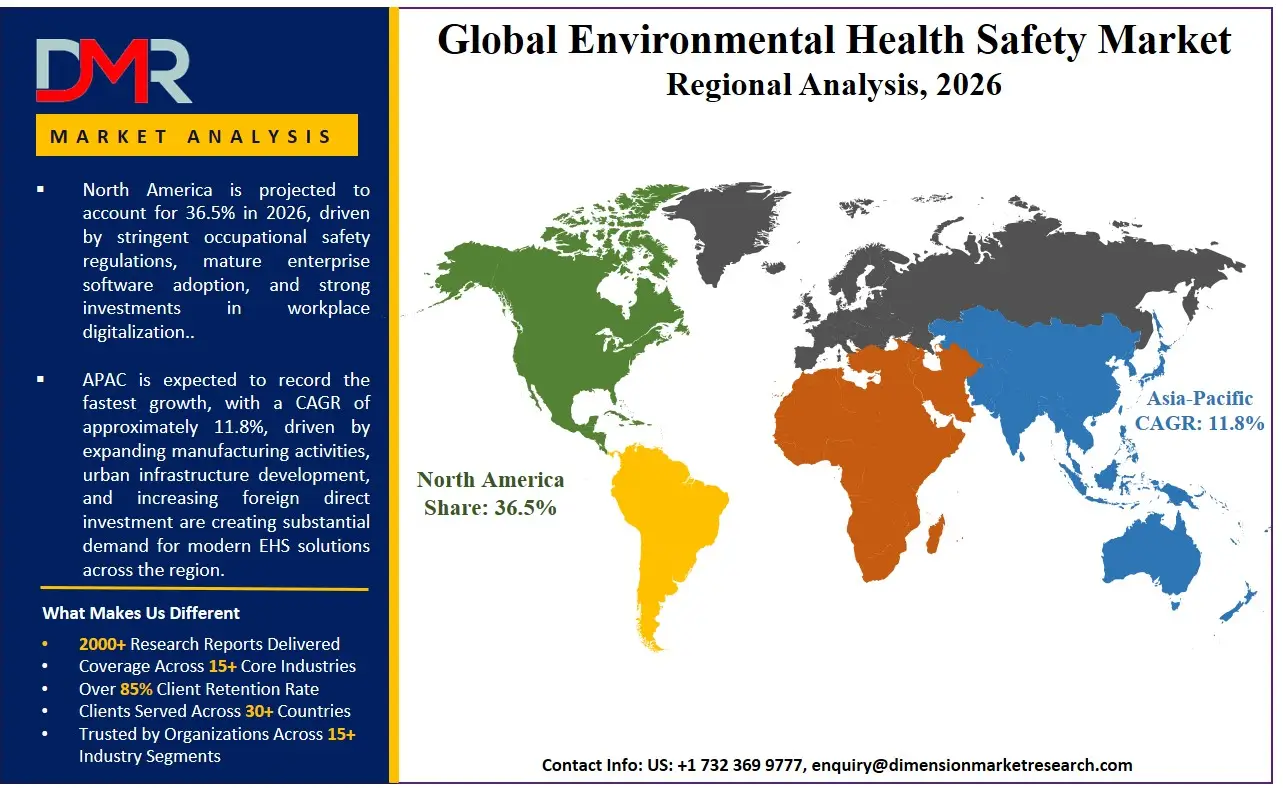
North America accounted for the largest share of the global Environmental Health & Safety (EHS) market in 2026, representing approximately 36.5% of total revenue. The region's leadership is supported by stringent occupational safety regulations, mature enterprise software adoption, and strong investments in workplace digitalization.
ℹ
To learn more about this report –
Download Your Free Sample Report Here
Regulatory agencies such as the Occupational Safety and Health Administration (OSHA), the Environmental Protection Agency (EPA), and various state-level authorities continue to enforce rigorous compliance requirements across manufacturing, healthcare, construction, energy, and transportation sectors. Enterprises throughout the region increasingly deploy cloud-based EHS platforms integrated with artificial intelligence (AI), Internet of Things (IoT), and predictive analytics to improve operational visibility, automate compliance reporting, and strengthen enterprise risk management. High awareness of ESG reporting requirements and continuous investments in digital transformation further reinforce North America's market leadership throughout the forecast period.
Asia Pacific is the Fastest-Growing Region in the Global Environmental Health Safety Software Market
Asia-Pacific is projected to register the highest CAGR of approximately 11.8% during the forecast period, making it the fastest-growing regional market. Rapid industrialization, expanding manufacturing activities, urban infrastructure development, and increasing foreign direct investment are creating substantial demand for modern EHS solutions across the region. Governments in countries such as China, India, Japan, South Korea, and members of ASEAN are strengthening workplace safety regulations and environmental compliance standards while encouraging digital transformation across industrial sectors. Growing adoption of Industry 4.0 technologies, smart factories, IoT-enabled monitoring systems, and cloud-based enterprise software is accelerating the implementation of EHS platforms. Rising awareness of employee well-being, sustainability reporting, and corporate governance among regional enterprises is expected to further support long-term market expansion.
Europe Environmental Health Safety Software Market
The Europe Environmental Health & Safety (EHS) market was valued at approximately USD 2.82 billion in 2026 and is projected to reach nearly USD 6.12 billion by 2035, expanding at a CAGR of 9.0%. The region remains one of the world's most mature EHS markets due to comprehensive workplace safety legislation, strict environmental regulations, and strong commitment to sustainability. The European Union's environmental policies, carbon reduction initiatives, circular economy strategies, and mandatory sustainability disclosures continue to encourage widespread adoption of integrated EHS and ESG platforms. Manufacturing, chemicals, pharmaceuticals, automotive, and energy industries represent major contributors to regional demand. Increasing investments in AI-powered compliance management, environmental monitoring, and digital workplace safety solutions are expected to support continued market growth across Europe.
Latin America Environmental Health Safety Software Market
The Latin America Environmental Health & Safety (EHS) market is estimated at USD 0.71 billion in 2026 and is expected to reach approximately USD 1.55 billion by 2035, growing at a CAGR of 9.1%. Demand is being driven by expanding industrial activities, mining operations, oil & gas production, and increasing government focus on workplace safety standards. Countries including Brazil, Mexico, Argentina, and Chile are strengthening environmental regulations and investing in digital compliance systems to improve industrial safety performance. Growing adoption of cloud-based software, supported by increasing enterprise digitalization, is expected to further accelerate market development throughout the forecast period.
Middle East & Africa Environmental Health Safety Software Market
The Middle East & Africa Environmental Health & Safety (EHS) market reached approximately USD 0.54 billion in 2026 and is forecast to grow to around USD 1.29 billion by 2035, registering a CAGR of 10.2%. Regional growth is supported by major infrastructure projects, industrial diversification strategies, and increasing investments in energy, construction, and manufacturing sectors. Countries across the Gulf Cooperation Council (GCC) continue to implement stricter occupational safety regulations as part of broader economic diversification initiatives. Rising adoption of cloud computing, industrial automation, and smart city projects is creating favorable conditions for advanced EHS software deployment. In Africa, mining, utilities, and infrastructure development remain key contributors to market demand.
Major Countries Analysis
United States Environmental Health Safety Software Market
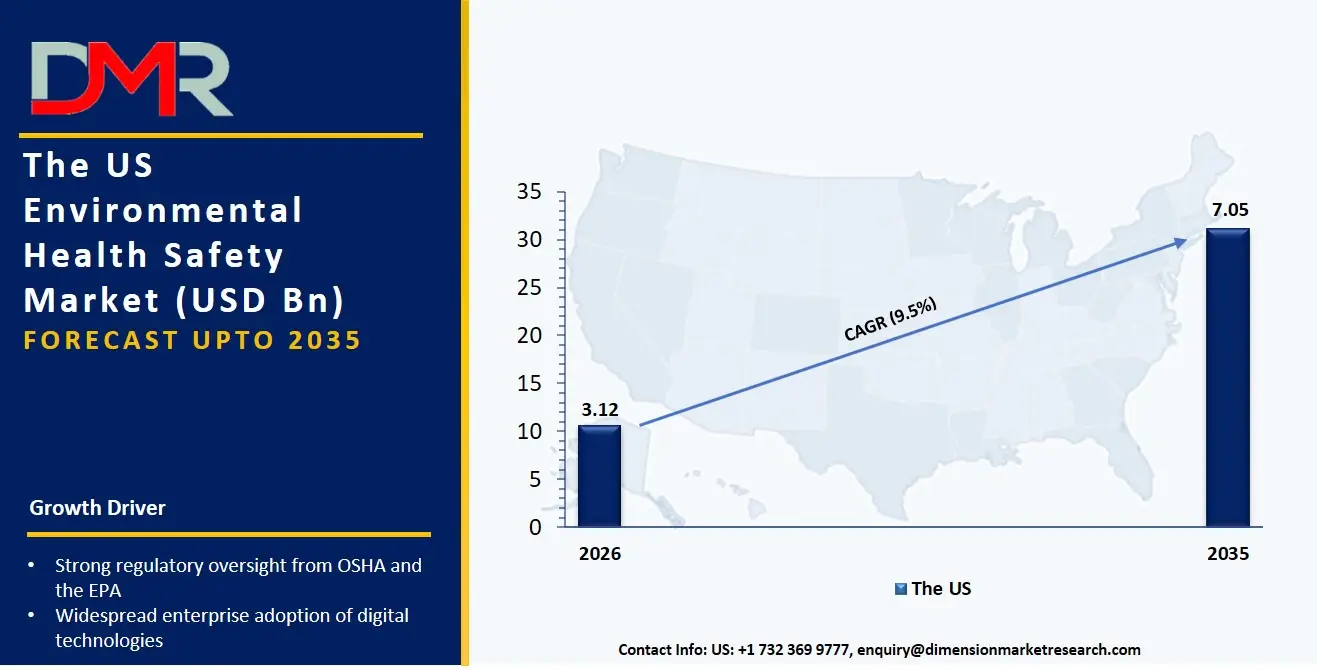
The United States remains the largest national market for Environmental Health & Safety solutions, with an estimated market value of USD 3.12 billion in 2026, projected to reach approximately USD 7.05 billion by 2035, reflecting a CAGR of 9.5%. Strong regulatory oversight from OSHA and the EPA, combined with widespread enterprise adoption of digital technologies, continues to drive market expansion.
ℹ
To learn more about this report –
Download Your Free Sample Report Here
Manufacturing, healthcare, oil & gas, construction, logistics, and utilities remain key adopters of advanced EHS platforms. Growing investments in AI-powered safety analytics, predictive risk management, IoT-enabled workplace monitoring, and ESG reporting are expected to sustain long-term growth. The country's mature cloud infrastructure and strong cybersecurity capabilities further support large-scale deployment of enterprise EHS solutions.
Japan Environmental Health Safety Software Market
Japan's Environmental Health & Safety (EHS) market was valued at approximately USD 0.74 billion in 2026 and is projected to reach nearly USD 1.63 billion by 2035, registering a CAGR of 9.2%. The country's advanced manufacturing sector, high level of industrial automation, and strong commitment to workplace safety continue to stimulate demand for digital EHS platforms. Automotive, electronics, chemicals, and pharmaceutical industries increasingly leverage AI, robotics, and IoT technologies to enhance occupational safety and environmental compliance. Japan's growing emphasis on sustainability reporting, energy efficiency, and operational resilience further supports investments in integrated EHS and ESG management solutions.
Saudi Arabia Environmental Health Safety Software Market
Saudi Arabia's Environmental Health & Safety (EHS) market is estimated at USD 0.19 billion in 2026 and is anticipated to reach approximately USD 0.48 billion by 2035, growing at a CAGR of 10.8%. Government initiatives under Vision 2030, combined with ongoing investments in industrial diversification, smart cities, renewable energy, and large-scale infrastructure projects, are driving demand for advanced workplace safety and environmental compliance solutions. Oil & gas, petrochemicals, construction, and utilities remain the primary end-user industries. Increasing adoption of cloud-based enterprise software, digital compliance management, and AI-enabled safety monitoring technologies is expected to further accelerate market growth over the coming decade.
Regulatory Landscape
The Environmental Health & Safety (EHS) market is significantly influenced by evolving regulatory frameworks that require organizations to maintain safe workplaces, minimize environmental impacts, and ensure regulatory compliance.
Across North America, the Occupational Safety and Health Administration (OSHA) establishes comprehensive workplace safety standards, while the Environmental Protection Agency (EPA) regulates air quality, hazardous waste management, emissions, water pollution, and chemical handling. Internationally, organizations increasingly adopt ISO 45001 for Occupational Health and Safety Management Systems and ISO 14001 for Environmental Management Systems to standardize operational practices and improve compliance across global operations.
In Europe, regulatory initiatives including the Corporate Sustainability Reporting Directive (CSRD), the EU Green Deal, and the Registration, Evaluation, Authorisation and Restriction of Chemicals (REACH) regulation continue to expand sustainability reporting and environmental accountability. Similar regulatory modernization is occurring throughout Asia-Pacific and the Middle East, where governments are strengthening workplace safety legislation, industrial emission standards, and environmental monitoring requirements.
These evolving regulations are encouraging enterprises to adopt integrated cloud-based EHS platforms capable of automating compliance management, regulatory reporting, document control, audits, inspections, and risk assessments. As regulatory obligations become increasingly complex and geographically diverse, demand for intelligent compliance solutions with automated regulatory updates and AI-powered reporting capabilities is expected to grow steadily throughout the forecast period.
Investment and White Space Analysis
The Environmental Health & Safety (EHS) market presents substantial investment opportunities as enterprises accelerate digital transformation, ESG implementation, and workplace modernization initiatives.
Venture capital firms, private equity investors, and strategic technology vendors are increasingly funding companies developing AI-powered safety analytics, cloud-native compliance platforms, IoT-enabled workplace monitoring solutions, predictive risk management software, and sustainability reporting technologies. Growing demand for integrated platforms that combine EHS, ESG, operational risk, and corporate governance into a unified ecosystem is creating significant opportunities for software providers offering comprehensive enterprise solutions.
Several market "white spaces" remain largely underserved. Small and medium-sized enterprises (SMEs), particularly in emerging economies, continue to exhibit relatively low EHS software penetration due to budget constraints and limited technical resources, presenting attractive opportunities for affordable SaaS-based solutions.
Additional growth potential exists in mobile-first EHS applications, wearable worker safety technologies, AI-driven hazard prediction, carbon emissions management, contractor safety management, and digital permit-to-work systems. Emerging markets across Asia-Pacific, Latin America, and the Middle East also represent high-growth investment destinations as governments strengthen workplace safety regulations and enterprises increase investments in industrial automation, smart manufacturing, and sustainability initiatives. Companies capable of delivering scalable, configurable, and industry-specific EHS platforms with strong AI and ESG capabilities are expected to benefit most from these long-term investment trends.
By Region
North America
Europe
- Germany
- The U.K.
- France
- Italy
- Spain
- Rest of Europe
Asia-Pacific
- China
- Japan
- South Korea
- India
- Australia
- Rest of APAC
Latin America
- Brazil
- Mexico
- Rest of LATAM
Middle East & Africa
- Saudi Arabia
- The UAE
- South Africa
- Rest of MEA
Competitive Landscape
Over the forecast period, competition is expected to intensify as enterprises demand intelligent, integrated, and scalable EHS solutions. Artificial intelligence, predictive risk management, digital twins, IoT-enabled monitoring, and automated ESG reporting will become the primary areas of innovation. Consolidation is also expected to continue through mergers, acquisitions, and strategic alliances as vendors seek to expand technological capabilities, enter new geographic markets, and broaden industry coverage. Companies that successfully combine regulatory expertise, cloud scalability, AI-driven insights, and seamless enterprise integration are expected to strengthen their leadership positions and capture a larger share of the rapidly evolving Environmental Health & Safety (EHS) market.
Some of the prominent players in the Global Environmental Health Safety Software Market are
- Cority
- Intelex Technologies
- VelocityEHS
- Enablon
- Benchmark Gensuite
- EcoOnline
- Sphera
- Quentic
- ProcessMAP
- Ideagen
- ETQ
- UL Solutions
- Origami Risk
- IsoMetrix
- SAI360
- Dakota Software
- ComplianceQuest
- Ecochain
- Corva
- KPA
- 3E
- Alcumus
- Workiva
- Benchmark Digital Partners
- EcoWebDesk
- AMCS Group
- Samsara
- Intelex
- Motive
- Anthesis Group
- Arcadis
- ERM
- AECOM
- TÜV SÜD
- Bureau Veritas
- SGS
- DNV
- Intertek
- ERM CVS
- Anthesis
- Other Key Players
Recent Developments
- October 2025: Cority introduced an enhanced AI-powered incident management module that leverages predictive analytics to identify workplace hazards, automate corrective action recommendations, and improve enterprise-wide safety performance.
- September 2025: Wolters Kluwer Enablon expanded its integrated ESG and EHS platform by introducing advanced sustainability reporting capabilities aligned with evolving global disclosure requirements, enabling organizations to streamline environmental and compliance reporting.
- August 2025: Intelex Technologies launched new cloud-based environmental compliance tools featuring automated regulatory updates, configurable workflows, and enhanced mobile inspection capabilities for global industrial enterprises.
- July 2025: Benchmark Gensuite announced strategic enhancements to its connected worker platform by integrating AI-driven safety observations, digital inspections, and operational risk analytics to strengthen workplace safety programs.
- June 2025: Sphera expanded its operational risk management portfolio through enhanced AI-enabled analytics and lifecycle sustainability capabilities, enabling customers to better manage environmental performance and enterprise risk.
- May 2025: VelocityEHS introduced new computer vision functionality capable of identifying unsafe workplace behaviors and missing personal protective equipment (PPE) through AI-assisted video analytics.
- April 2025: EcoOnline expanded its chemical management platform by introducing enhanced regulatory compliance tools designed to simplify hazardous substance tracking and environmental reporting across multinational operations.
Report Details
| Report Characteristics |
| Market Size (2026) |
USD 10.84 Bn |
| Forecast Value (2035) |
USD 24.92 Bn |
| CAGR (2026–2035) |
9.7% |
| Historical Period |
2021 – 2025 |
| Forecast Period |
2027 – 2035 |
| Base Year |
2025 |
| Estimate Year |
2026 |
| Segments Covered |
By Deployment Mode, By Organization Size, By Application, By End-User Industry |
| Regional Coverage |
North America – The US and Canada; Europe – Germany, The UK, France, Spain, Italy, & Rest of Europe; Asia-Pacific – China, Japan, South Korea, India, Australia, Rest of APAC; Latin America – Brazil, Mexico, Rest of Latin America; Middle East & Africa – Saudi Arabia, The UAE, South Africa, & Rest of MEA |
Frequently Asked Questions
What is the current size of the Global Environmental Health & Safety (EHS) Market?
▾ The Global Environmental Health & Safety (EHS) Market is estimated at USD 10.84 billion in 2026 and is projected to reach approximately USD 24.92 billion by 2035, driven by regulatory compliance, ESG adoption, and digital transformation.
What is the expected CAGR of the Environmental Health & Safety (EHS) Market?
▾ The global EHS market is expected to expand at a CAGR of approximately 9.7% between 2026 and 2035, supported by increasing workplace safety requirements, cloud adoption, AI integration, and sustainability initiatives.
What are the major factors driving the growth of the EHS Market?
▾ Key growth drivers include stricter workplace safety regulations, increasing ESG reporting requirements, industrial digitalization, adoption of cloud-based compliance platforms, and growing demand for predictive safety analytics.
Which technology trends are influencing the EHS Market?
▾ Artificial intelligence, IoT-enabled workplace monitoring, predictive analytics, mobile EHS applications, digital twins, automation, and cloud computing are transforming traditional safety management into proactive risk prevention systems.
Which region dominates the Global Environmental Health & Safety Market?
▾ North America is the leading regional market, accounting for approximately 36.5% share in 2026, supported by mature regulatory frameworks, advanced enterprise software adoption, and strong workplace safety investments.
Which region is expected to grow fastest during the forecast period?
▾ Asia-Pacific is projected to be the fastest-growing region, expanding at approximately 11.8% CAGR, due to rapid industrialization, manufacturing growth, regulatory modernization, and increasing adoption of digital technologies.
Who are the key players operating in the Environmental Health & Safety Market?
▾ Major players include Cority, Intelex Technologies, Wolters Kluwer Enablon, VelocityEHS, Sphera, Benchmark Gensuite, EcoOnline, Quentic, Ideagen, Evotix, SAP, IBM, Microsoft, UL Solutions, and ETQ (Hexagon).
How is the EHS Market segmented?
▾ The market is segmented by deployment mode, organization size, application, end-user industry, and region. Key segments include cloud-based platforms, large enterprises, risk management applications, manufacturing industries, and ESG management solutions.