What is the Enzymatic Chemical Synthesis Market Size?
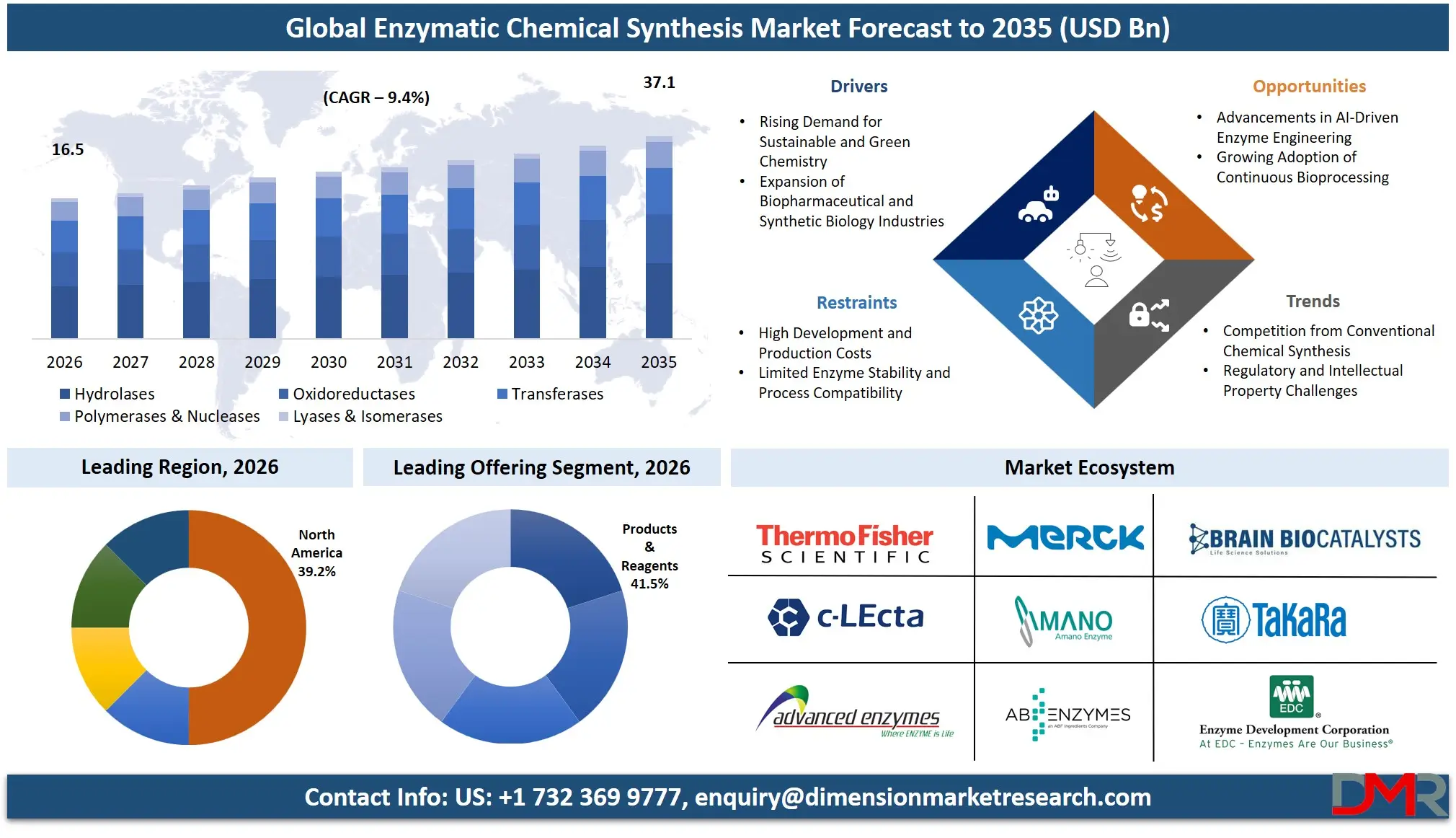
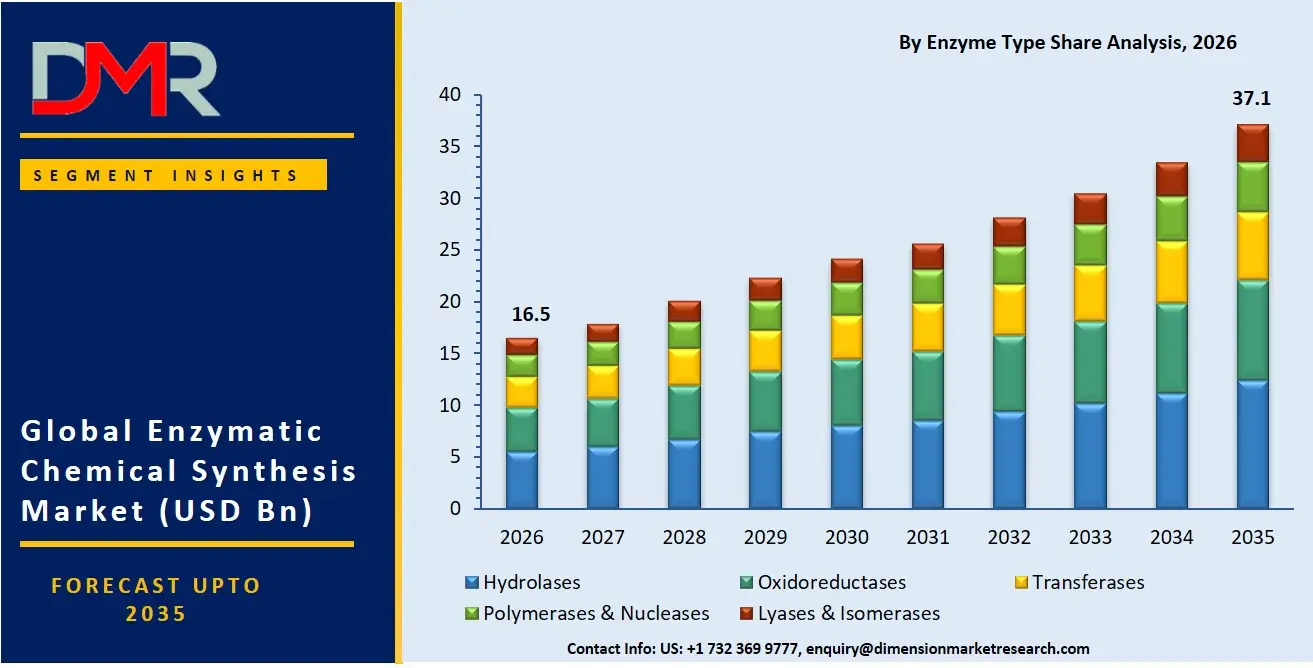
The Global Enzymatic Chemical Synthesis Market is expected to reach a value of USD 16.5 billion in 2026, and it is further anticipated to reach USD 37.1 billion by 2035, growing at a CAGR of 9.4% during the forecast period.
ℹ
To learn more about this report –
Download Your Free Sample Report Here
Enzymatic chemical synthesis market has been expanding at a rapid rate as industries have been accelerating the green chemistry adoption process and moving away from traditional petrochemicals based synthesis to biocatalytic process.
The market can be segmented into products & reagents, enzyme kits, custom enzyme engineering, CDMO services, and process optimization services that help organizations to scale biocatalysis for pharmaceutical, food, and industrial applications. The growing need for multi-enzyme cascades, immobilized enzyme systems, cybersecurity for biologics IP, and AI-driven pathway design is rising the demand for specialized engineering services. Large pharmaceutical companies are the most common adopters and the most popular enzyme classes are still hydrolases and oxidoreductases owing to their specificity and mild reaction conditions. The pharmaceuticals & biotechnology, food processing, and diagnostics industries are key players as they need high-purity, scalable, and cost-competitive enzymatic routes.
ℹ
To learn more about this report –
Download Your Free Sample Report Here
The US Enzymatic Chemical Synthesis Market
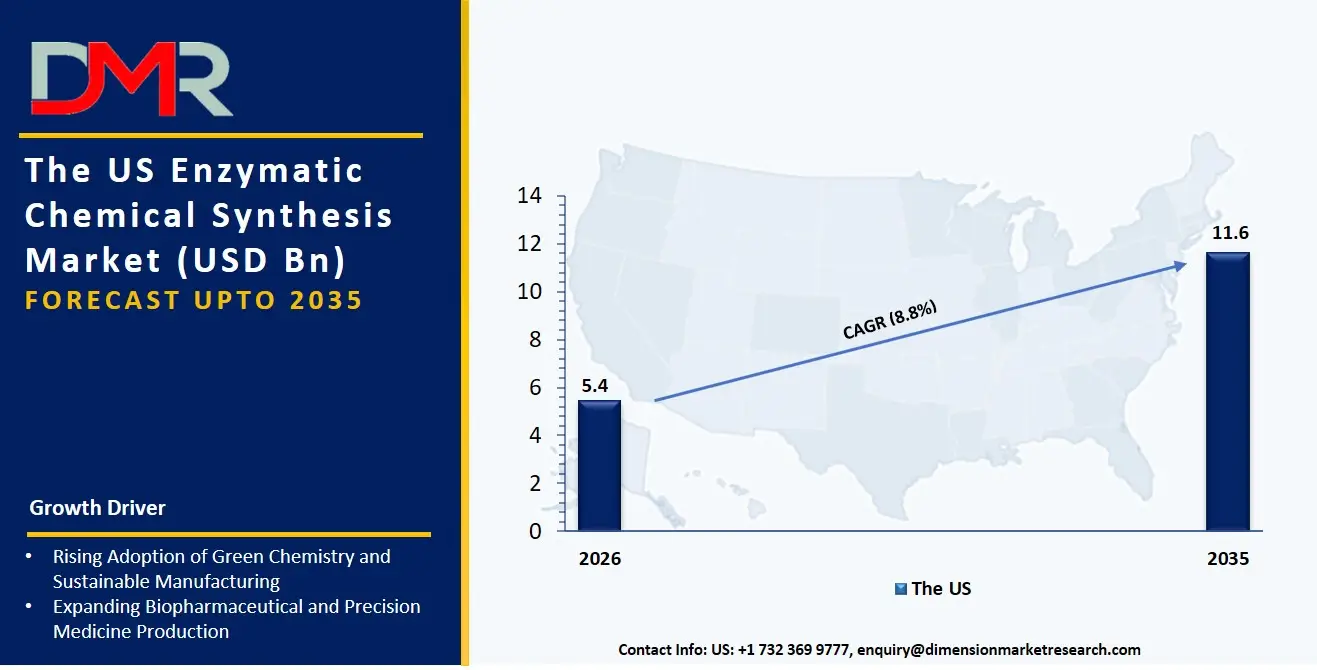
The US Enzymatic Chemical Synthesis Market is projected to reach USD 5.4 billion in 2026 at a compound annual growth rate of 8.8% over its forecast period, culminating in a value of USD 11.6 billion by 2035.
The US continues to be the largest and most developed market in enzymatic synthesis due to the active green chemistry modernization efforts of Fortune 500 pharmaceutical companies and the growing distribution of biocatalytic R&D centers. The market has been characterized by high demand for Custom Enzyme Engineering Services in which organizations seek to optimize legacy chemical processes with an enantioselective enzymatic cascade. Not to mention, the use of Generative AI in enzyme discovery workflows is creating an analogous demand in Process Optimization & Scale-Up Services to control reaction rates and frameworks for recycling biocatalysts at an industrial scale.
ℹ
To learn more about this report –
Download Your Free Sample Report Here
The Europe Enzymatic Chemical Synthesis Market
The Europe Enzymatic Chemical Synthesis Market is estimated to be valued at USD 4.8 billion in 2026 and is further anticipated to reach USD 10.5 billion by 2035 at a CAGR of 9.1%. The regulatory frameworks including REACH and the upcoming EU Green Deal have a significant impact on the European market and drive the need to employ Process Optimization & Scale-Up Services and Contract Development & Manufacturing (CDMO) solutions. Accelerated growth of immobilized enzyme deployment services is also being experienced in the region as food and beverage industries in Germany and France are trying to balance operational technology (OT) safety with biocatalytic analytics. Moreover, projects like the European Biocatalysis Hub are pushing service providers to develop specific enzyme kits & consumables, which will guarantee traceability and interoperability in the European biocatalytic landscape.
The Japan Enzymatic Chemical Synthesis Market
The Japan Enzymatic Chemical Synthesis Market is projected to be valued at USD 2.1 billion in 2026. It is further expected to witness robust growth, holding USD 4.4 billion in 2035 at a CAGR of 8.5%. In Japan, the market is special since there is a corporate push towards Green Transformation (GX) due to a shrinking workforce and dependence on imports of petrochemicals. Custom Enzyme Engineering Services and Process Optimization & Scale-Up Services make up a large part of the spending as large conglomerates migrate mission-critical chemical syntheses off traditional metal catalysis to biocatalysis. Additionally, CDMO services must be strongly involved in the local market to close the existing loop between old fermentation-based processes and new continuous-flow enzymatic processes, establishing a niche for enzyme cascade integration and workflow automation.
Key Takeaways
- Market Size & Forecast: The Global Enzymatic Chemical Synthesis market is projected to reach USD 16.5 billion in 2026, expanding to USD 37.1 billion by 2035, fueled by the dual drivers of green chemistry mandates and the mandatory modernization of toxic, energy-intensive chemical synthesis.
- Growth Rate & Outlook: Global market growth is expected at a CAGR of 9.4%, with a critical scarcity of in-house biocatalysis engineers and the increasing complexity of enzyme immobilization, cofactor recycling and multi-enzyme cascade kinetics.
- Primary Growth Drivers: There is a broad base of migration from hazardous metal catalysis to enzymatic approaches, need for process optimization & scale-up services to prevent costly reaction failures, and there is integration of continuous flow manufacturing which requires special skills in custom enzyme engineering.
- Key Market Trends: Some of the prominent trends in the market include the growing number of industry specific enzyme solutions like food grade enzymes vs pharmaceutical grade enzymes, the advent of AI-powered solutions in Custom Enzyme Engineering Services to auto-design novel enzymes and the increasing trend of Contract Development & Manufacturing (CDMO) as chemical companies focus on biocatalytic route scouting.
- By Enzyme Type Analysis: Hydrolases are expected to dominate enterprise discussions due to there growing demand for professional engineering and services to create seamless multi-enzyme cascade systems, which link batch reactions with continuous flow innovation engines.
- By End-Use Application Area Analysis: Pharmaceuticals & Biotechnology is poised to lead the end user verticals due to stringent chiral purity needs. Enzyme recycling architectures are required with robust process optimization for petrochemical intermediates, which is the fastest growing sector, industrial chemistry & green manufacturing.
- Regional Leadership: North America is poised to dominate this market with 39.2% of the market share in 2026 due to its well-developed biotechnology ecosystem that utilizes this infrastructure to its fullest and makes it a leader in this market.
What is the Enzymatic Chemical Synthesis?
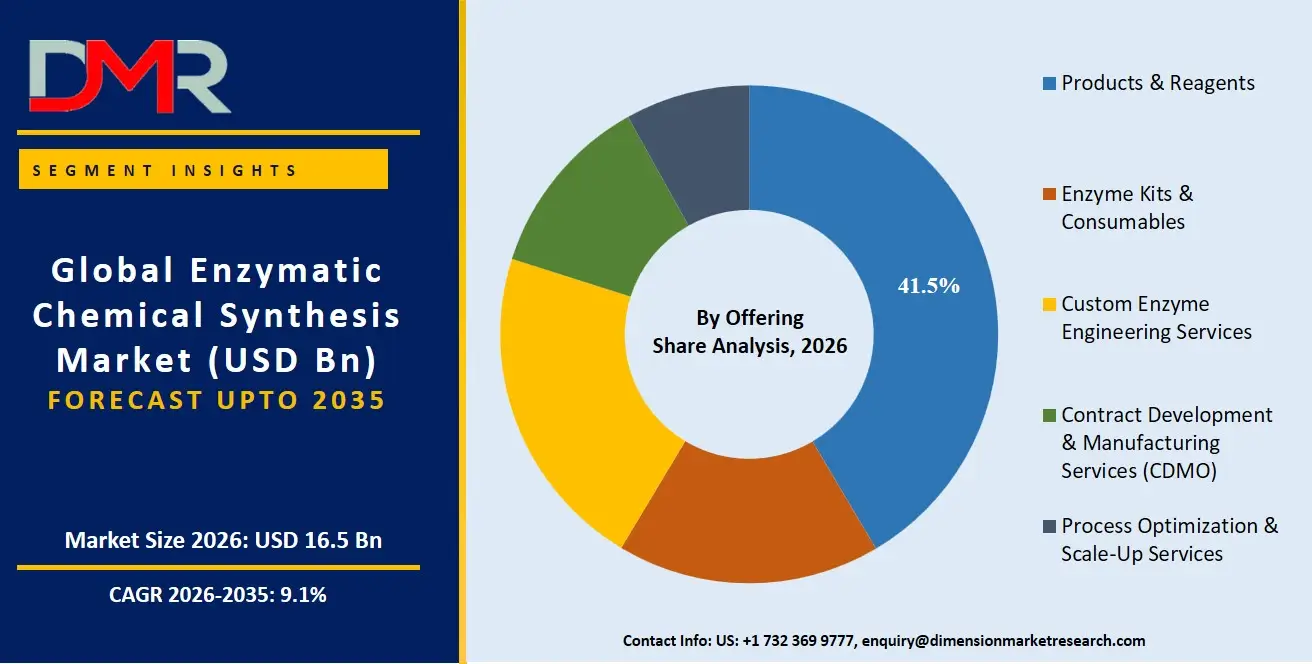
Enzymatic Chemical Synthesis is the process of using isolated enzymes or whole-cell biocatalysts to catalyse chemical transformations in a sustainable, selective and efficient way. The market is segmented into Products & Reagents, Enzyme Kits & Consumables, Custom Enzyme Engineering Services, Contract Development & Manufacturing Services (CDMO), and Process Optimization & Scale-Up Services that will help organizations to substitute traditional chemical catalysis with biocatalysis. In fact, the use of biocatalysis for at least one step in the production of APIs is now a reality for more than 70% of the pharmaceutical industry and biocatalytic investments result in process intensification that can be demonstrated by cost governance, reaction efficiency and scalability - rather than technical complexity.
Use Cases
- Chiral Intermediate Synthesis in Pharmaceuticals: Pharmaceutical companies use Custom Enzyme Engineering Services to re-engineer the hydrolases or oxidoreductases for the purpose of asymmetrical synthesis of chiral amines and chiral alcohols with high enantiomeric excess (>99%) without the presence of heavy metal residues.
- mRNA Vaccine Raw Material Production: Biotech firms are scaling up enzymatic synthesis of nucleotide triphosphates and capped mRNA analogs under GMP compliant conditions using contract development & manufacturing (CDMO) and process optimization services.
- Food Sweetener Manufacturing: Food processors can reduce the cost of downstream purification and can operate the fixed-bed reactor continuously by using immobilized enzyme kits & consumables to convert glucose into fructose or to produce rare sugars.
- Sustainable Fine Chemical Production: Process optimization & scale-up services enables sustainable production of polymer precursors by chemical companies by incorporating oxidoreductases with cofactor recycling to allow green synthesis under ambient conditions.
How AI is Transforming the Enzymatic Chemical Synthesis Market?
AI is reshaping the enzymatic chemical synthesis market by speeding up new enzyme discovery and improving the efficiency of the process. AI-driven tools for protein design, such as AlphaFold and ProteinMPNN, can predict novel variants of enzymes with improved thermostability and substrate specificity, significantly reducing project risks and timelines for manual directed evolution in Custom Enzyme Engineering Services. In the meantime, AI features in Process Optimization & Scale-Up Services can help businesses optimize reaction parameters by predicting the rate of enzyme deactivation, feeding strategies, and recommending immobilization techniques to strengthen continuous manufacturing approaches. In Contract Development & Manufacturing (CDMO) , simulation agents for intelligent processes continuously monitor the performance of biocatalytic cascades, detect potential bottlenecks, pH deviations or cofactor imbalances and ensure compliance with quality by design (QbD) frameworks.
Market Dynamics
Key Drivers in the Global Enzymatic Chemical Synthesis Market
Rising Demand for Sustainable and Green Chemistry
Increasing efforts towards environment-friendly manufacturing processes are significantly creating a high demand for the enzymatic chemical synthesis market. Enzymes allow very specific reactions under mild conditions and low pressure, thereby minimizing the production of dangerous waste, the use of energy and solvents in comparison to conventional chemical synthesis. Enzymes are used for synthesis in pharmaceutical, food and specialty chemical manufacturing, and this approach is becoming more popular as environmental regulations get stricter and ESG agendas gain momentum. Additionally, investment in biocatalysis platforms is being spurred by the encouragement of low-carbon manufacturing technologies by governments and industrial organisations.
Expansion of Biopharmaceutical and Synthetic Biology Industries
Demand for enzymatic synthesis technologies is growing rapidly with the increasing development of biologic and mRNA therapeutics, peptide drugs, and synthetic biology applications. Enzymes are very important to nucleic acid amplification, production of chiral molecules and selective biocatalytic transformations which are necessary for advanced pharmaceutical manufacturing. Because of the complexity of the modern therapeutics, the traditional methods of synthesis have become less efficient and so, companies are opting for enzyme engineered pathways. Moreover, recent developments in protein engineering, the discovery of enzymes through artificial intelligence algorithms, and the use of recombinant DNA technology are increasing the number of commercially viable enzymatic processes.
Restraints in the Global Enzymatic Chemical Synthesis Market
Rising Demand for Sustainable and Green Chemistry
The rising awareness of industries to achieve eco-friendly manufacturing is significantly fueling the enzymatic chemical synthesis market. Enzymes can allow highly selective reactions under mild temperature and pressure and thus reduce the amount of hazardous waste produced, as well as the amount of energy used and the dependency on solvents in comparison to conventional chemical synthesis. With the growing trend towards green regulations and ESG commitments, pharmaceutical, food, and specialty chemical manufacturers are turning towards enzyme-based synthesis. Investment in biocatalysis platforms is also being accelerated by the initiatives of governments and industrial organizations to promote low-carbon manufacturing technologies.
Expansion of Biopharmaceutical and Synthetic Biology Industries
The demand for enzymatic synthesis technologies is accelerating rapidly, as seen in the rapidly increasing demand for (mRNA) therapeutics, peptide drugs and synthetic biology applications. Enzymes are of paramount importance in nucleic acid amplification, production of chiral molecules and selective biocatalytic conversions used in advanced pharmaceutical processing. As therapeutics become more complex, traditional synthesis approaches are not as efficient, so companies are looking to enzyme-engineered pathways. Further, with the development of protein engineering, the discovery of enzymes through artificial intelligence, and the ability to produce enzymes by means of recombinant DNA technology, the number of commercially viable enzymatic processes is growing.
Growth Opportunities in the Global Enzymatic Chemical Synthesis Market
Advancements in AI-Driven Enzyme Engineering
The market is seeing significant opportunities with the introduction of artificial intelligence (AI) and machine learning (ML) technologies, which are helping to speed up the discovery, optimization, and pathway design of enzymes for chemical synthesis. The use of AI models for enzyme structure prediction, catalytic activity, and substrate compatibility can greatly shorten development timelines and lower research expenses. Computational biology platforms are now increasingly being used by companies to modify enzymes to have greater stability, selectivity, and properties suitable for industrial application. The potential of these advances in the enzymatic synthesis of complex pharmaceuticals and specialty chemicals is growing. The ever-changing capabilities of digital biotechnology will lead to more new, valuable synthesis pathways and enhanced process scalability worldwide with the assistance of AI in enzyme engineering.
Growing Adoption of Continuous Bioprocessing
The shift from batch manufacturing to continuous bioprocessing is a great opportunity for enzymatic chemical synthesis providers. In industrial manufacturing settings, continuous flow biocatalysis offers better production efficiency, precise control, waste reduction, and assures product quality. To enhance scalability and lower operating costs, pharmaceutical and specialty chemical companies are making greater investments in continuous manufacturing systems. Immobilized enzyme technologies further complement this opportunity by allowing enzyme re-use and extended lifetimes. The trend toward process intensification, automation and green synthesis is being emphasized by industries and continuous enzymatic synthesis platforms are expected to become more widely accepted in several end-use industries.
Trends in the Global Enzymatic Chemical Synthesis Market
Competition from Conventional Chemical Synthesis
Traditional chemical synthesis methods are still a huge competition to the market of enzymatic chemical synthesis, as they are well entrenched in industrial infrastructure. Many manufacturers use tried-and-true chemical catalysts and production systems which can be scaled up to high volumes and have well-known work flows. Conventional producers are often reluctant to switch to enzymatic production because they may need to redesign their process, modify equipment, and retrain workers. In addition, some of the chemical reactions can be carried out faster or cheaper with the traditional synthetic methods. The high industrial penetration of petrochemical based synthesis technologies may be hampering the transition to enzymatic technologies, especially in industrial sectors that are more focused on short-term economic benefits than sustainability goals.
Regulatory and Intellectual Property Challenges
Some of the challenges facing the market are related to regulatory approval, biosafety standards and protection of the intellectual property of engineered enzymes and biotechnological processes. Systems based on enzymes are frequently used in pharmaceutical and food applications, and their commercialization can be significantly delayed by the requirement for extensive validation by regulatory authorities, adding to the cost of compliance. Smaller companies may be prevented from entering the market by patent issues concerning proprietary strains of enzymes, engineered pathways and biocatalytic platforms. In addition, different international GMOs and industrial biotechnology policies add operational complexity for global manufacturers. Uncertainties in the legal and regulatory environment may slow the pace of innovation and constrain cross-border expansion strategies for the enzymatic synthesis industry.
Research Scope and Analysis
The enzymatic chemical synthesis market is driven by rising adoption across pharmaceuticals, biotechnology, diagnostics, and green manufacturing industries. Growth is supported by advancements in enzyme engineering, increasing demand for sustainable synthesis methods, and expanding applications in biologics, nucleic acids, and fine chemical production.
ℹ
To learn more about this report –
Download Your Free Sample Report Here
By Offering Analysis
The Products & Reagents segment is projected to dominated by large life science and industrial biotechnology companies that possess extensive enzyme libraries, proprietary biocatalysts, and strong global distribution capabilities. Leading players like Novozymes, Codexis and Thermo Fisher Scientific are ahead with their provision of high purity enzymes, reagent systems and optimized synthesis kits for pharmaceutical and industrial use. Contract Development & Manufacturing Organizations (CDMOs) and custom enzyme engineering companies are the dominant players in the Services category as increasing outsourcing of process development and scale up by pharmaceutical companies. Integrated fermentation, enzyme optimization and GMP compliant manufacturing infrastructure are to the benefit of companies such as Lonza and Cambrex. The need for scalability in implementing green chemistry and cost-effective synthesis is still strengthening the position of technologically advanced providers.
By Enzyme Type Analysis
The enzyme type segment is predominantly occupied by hydrolases, which are highly used in the synthesis of peptides, esterification, food processing and pharmaceutical manufacturing because of their catalytic efficiency and operational stability. The most successful subclasses of hydrolases for use in industrial biocatalysis are lipases and proteases. Novozymes and DSM-Firmenich have solid positions based on diversified industrial enzyme portfolios. Oxidoreductases are fast growing enzymes in fine chemical production and in chiral intermediate production, due to the ability to carry out highly specific oxidation-reduction reactions with lower environmental impact. Companies like New England Biolabs and Takara Bio are highly successful in nucleic acid synthesis and molecular biology applications, with specialized enzyme innovation and a good penetration of the research sector.
By Target Synthesis Molecule Analysis
Peptides & Proteins is the largest target synthesis molecule segment as a result of the increase in biologics production, commercialization of therapeutic peptides and the increasing demand for enzyme-enabled selective synthesis pathways. Enzymatic synthesis is now a growing trend in the pharmaceutical and biotechnology industries, where it is being used to increase yield and stereoselectivity in protein production, while also providing a more sustainable synthetic route. Enzymes portfolios and integrated bioprocessing solutions make Merck KGaA and Thermo Fisher Scientific strong market participants. With broadening mRNA therapeutics, gene editing and synthetic biology applications demanding enzyme precision, Nucleic Acids & Oligonucleotides is rapidly growing. However, Fine Chemicals & Chiral Intermediates are still very important as enzymatic catalysis offers efficient enantioselective synthesis for pharmaceutical APIs. Specialty enzyme developers with good engineering skills still drive technologically advanced synthesis applications worldwide.
By End-Use Application Area Analysis
Pharmaceuticals & Biotechnology is the most significant end-use application area as enzymatic chemical synthesis enables the highly selective, environmentally sustainable, and cost-efficient synthesis of active pharmaceutical ingredients, biologics and complex therapeutic molecules. The adoption is gaining momentum in the pharmaceutical production chains due to the increased demand for green chemistry, precision synthesis and biologic drugs. Roche, Pfizer and Amgen are among the companies that are increasingly using enzymatic synthesis in both drug development and production. Diagnostics & Life Sciences is another key segment as a result of the increased demand for enzymes in molecular diagnostics, sequencing and research assays. In the meantime, Industrial Chemistry & Green Manufacturing is steadily growing, with chemical manufacturers looking for ways to make lower emissions products in line with sustainability goals, circular economy models and environmental regulations in developed industrial economies.
The Global Enzymatic Chemical Synthesis Market Report is segmented on the basis of the following:
By Offering
- Products & Reagents
- Enzyme Kits & Consumables
- Custom Enzyme Engineering Services
- Contract Development & Manufacturing Services (CDMO)
- Process Optimization & Scale-Up Services
By Enzyme Type
- Hydrolases
- Oxidoreductases
- Transferases
- Polymerases & Nucleases
- Lyases & Isomerases
By Target Synthesis Molecule
- Nucleic Acids & Oligonucleotides
- Peptides & Proteins
- Fine Chemicals & Chiral Intermediates
- Carbohydrates & Oligosaccharides
By End-Use Application Area
- Pharmaceuticals & Biotechnology
- Food & Beverage Processing
- Diagnostics & Life Sciences
- Industrial Chemistry & Green Manufacturing
- Biofuels & Renewable Chemicals
- Cosmetics & Personal Care Ingredients
- Academic & Research Applications
Regional Analysis
Leading Region by Market Share
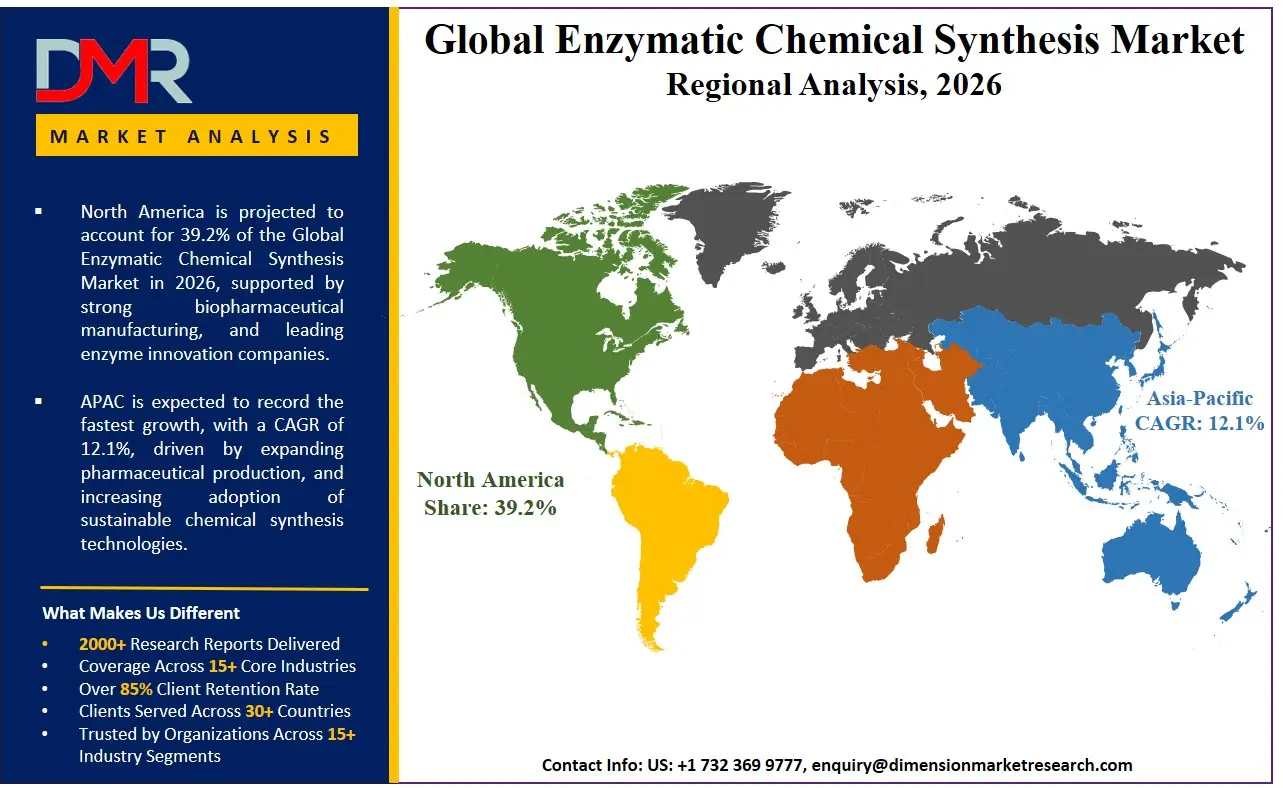
North America is poised to dominate the global enzymatic chemical synthesis market as it is projected to hold 39.2% of the market share by the end of 2026. The United States, which dominates North America, has the highest share due to unmatched concentration of biocatalysis R&D centers and the aggressive green chemistry agendas of the top 20 pharmaceutical companies. The region is home to an existing network of global CDMOs, boutique enzyme engineering companies, and a wealth of protein chemistry and biochemical engineering expertise. Enterprise investment in mRNA therapeutics, peptide APIs, and the overall retirement of legacy heavy-metal catalysis contribute to the continued demand for Custom Enzyme Engineering and Process Optimization services along with continuous manufacturing. Furthermore, an optimistic VC environment has been continuously funding next-generation synthetic biology companies which require experienced engineering for fast scale-up and regulatory clearance.
ℹ
To learn more about this report –
Download Your Free Sample Report Here
Fastest-Growing Regional Market
The Asia-Pacific region is likely to see the fastest growth in the enzymatic chemical synthesis market, as various initiatives to promote green manufacturing are underway by the governments of India, China, Japan, and Southeast Asia. The rapid economic development, the emergence of a middle class and the dynamic growth of generic drug manufacturing is forcing established conglomerates and API manufacturing companies to abandon unproductive and polluting chemical processes. These big organisations are now in dire need of Custom Enzyme Engineering to guide them towards operating models based on biocatalysis. Additionally, there is a huge shortage of qualified bioprocess engineering experts in the area, which has led to outsourcing of Process Optimization and CDMO services to fill the skills void and to facilitate rapid investment in biocatalysis projects.
By Region
North America
Europe
- Germany
- The U.K.
- France
- Italy
- Russia
- Spain
- Benelux
- Nordic
- Rest of Europe
Asia-Pacific
- China
- Japan
- South Korea
- India
- ANZ
- ASEAN
- Rest of Asia-Pacific
Latin America
- Brazil
- Mexico
- Argentina
- Colombia
- Rest of Latin America
Middle East & Africa
- Saudi Arabia
- UAE
- South Africa
- Israel
- Egypt
- Rest of MEA
Competitive Landscape
The competitive environment of global enzymatic chemical synthesis has become highly dynamic with a heterogeneous array of multinational CDMOs, enzyme supplier professional service divisions, and niche synthetic biology consultancies. The key to success will be profound strategic alliances with enzyme discovery platforms (e.g., Codexis, Novozymes, Ginkgo Bioworks) because they will open necessary co-development opportunities and early access to novel enzyme variants. The movement towards market consolidation is rapidly progressing with traditional fine chemical companies acquiring custom enzyme engineering and AI-guided protein design boutiques to stay afloat. Proprietary intellectual property, including automated enzyme screening workflows and industry-specific process simulation accelerators, is becoming a more important basis of competitive differentiation than just contract manufacturing arbitrage.
Some of the prominent players in the Global Enzymatic Chemical Synthesis Market are:
- Novonesis
- Codexis
- BASF
- DSM-Firmenich
- IFF
- Thermo Fisher Scientific
- Merck KGaA
- Roche
- Amano Enzyme
- AB Enzymes
- Advanced Enzyme Technologies
- Biocatalysts
- c-LEcta
- Enzyme Development Corporation
- Takara Bio
- New England Biolabs
- Lonza
- Cambrex
- Chr. Hansen
- Ginkgo Bioworks
- Other Key Players
Recent Developments
- January 2026: Codexis announced a major expansion of its AI-guided Enzyme Engineering Innovation Center, a professional services initiative to assist clients in Pharmaceuticals and Industrial Chemistry to develop proprietary biocatalysts through its CodeEvolver platform and expertise in Custom Enzyme Engineering Services.
- November 2025: Lonza strengthened its collaboration with Ginkgo Bioworks and introduced a specific practice called Process Optimization & Scale-Up Services aimed to support pharma clients in moving API manufacturing to enzymatic routes while keeping compliance with international GMP regulations.
- October 2025: WuXi AppTec acquired a European biocatalysis CDMO to further its Contract Development & Manufacturing (CDMO) and enzyme cascade integration solutions for oligonucleotide synthesis, to support the complicated requirements of gene therapy and RNA therapeutic customers.
Report Details
| Report Characteristics |
| Market Size (2026) |
USD 16.5 Bn |
| Forecast Value (2035) |
USD 37.1 Bn |
| CAGR (2026–2035) |
9.4% |
| The US Market Size (2026) |
USD 5.4 Bn |
| Historical Data |
2021 – 2025 |
| Forecast Data |
2027 – 2035 |
| Base Year |
2025 |
| Estimate Year |
2026 |
| Segments Covered |
By Offering, By Enzyme Type, By Target Synthesis Molecule, and By End-Use Application Area |
| Regional Coverage |
North America – The US and Canada; Europe – Germany, The UK, France, Russia, Spain, Italy, Benelux, Nordic, & Rest of Europe; Asia-Pacific – China, Japan, South Korea, India, ANZ, ASEAN, Rest of APAC; Latin America – Brazil, Mexico, Argentina, Colombia, Rest of Latin America; Middle East & Africa – Saudi Arabia, UAE, South Africa, Turkey, Egypt, Israel, & Rest of MEA |
Frequently Asked Questions
How big is the Global Enzymatic Chemical Synthesis Market?
▾ The Global Enzymatic Chemical Synthesis market is poised to be valued at USD 16.5 billion in 2026 and is projected to reach USD 37.1 billion by 2035, driven by the universal need for sustainable chemistry, high selectivity, and the replacement of traditional metal catalysis.
What is the CAGR of the Global Enzymatic Chemical Synthesis Market from 2026 to 2035?
▾ The market is expected to grow at a CAGR of 9.4% from 2026 to 2035, reflecting the accelerating complexity of multi-enzyme cascades and the persistent shortage of internal bioprocess engineering talent.
What factors are driving the growth of the Global Enzymatic Chemical Synthesis Market?
▾ Key drivers include the global green chemistry skills gap, the imperative to replace toxic heavy metal catalysis, the management complexity of multi-enzyme cascades, and the surge in demand for CDMO and Process Optimization services amid evolving environmental regulations.
Which region held the largest share of the Enzymatic Chemical Synthesis Market in 2026?
▾ North America is poised to dominate this market with 39.2% of the market share in 2026, driven by a mature biotech ecosystem and aggressive pharmaceutical investment in Custom Enzyme Engineering Services and Process Optimization for green chemistry.
Which region is expected to grow the fastest in the Enzymatic Chemical Synthesis Market?
▾ The Asia-Pacific region is expected to grow the fastest, fueled by rapid pharmaceutical and generic API manufacturing expansion in India, China, and Japan, where Custom Enzyme Engineering is critical for transitioning large-scale chemical production to biocatalytic operations.
What are the major trends in the Global Enzymatic Chemical Synthesis Market?
▾ Major trends include the integration of Generative AI into enzyme discovery, the rise of continuous biocatalysis and immobilization engineering services, the demand for oligonucleotide and peptide CDMO services, and the focus on Process Optimization within complex cascade environments.
Who are the key players in the Global Enzymatic Chemical Synthesis Market?
▾ Key players include enzyme engineering specialists like Codexis and Novozymes, large CDMOs like Lonza and WuXi AppTec, diversified chemical companies like BASF and Merck, and synthetic biology platforms like Ginkgo Bioworks.
How is the Global Enzymatic Chemical Synthesis Market segmented?
▾ The market is segmented by Offering (Products & Reagents, Enzyme Kits, Custom Engineering, CDMO, Process Optimization), Enzyme Type (Hydrolases, Oxidoreductases, Transferases, Polymerases, Lyases), Target Synthesis Molecule (Nucleic Acids, Peptides, Fine Chemicals, Carbohydrates), and End-Use Application Area (Pharma & Biotech, Food, Diagnostics, Industrial Chemistry, Biofuels, Cosmetics, Academic).